Introduction
This article examines and problematizes archaeology in terms of both its practice and its theory. The identity of archaeology and its practitioners, its social uses and functions, its social recognition as a discipline, and disputes about its legitimacy are all part of recent debates. Archaeology as an exercise is centred on comprehensive analysis of material culture. The question that I pursue in this article is whether it would be possible to foster an archaeology that also problematizes its own savoir-faire and questions its locus of knowledge.
The first part of the discussion below presents an overview of the archaeological approach in relation to postcolonial theoretical debates. I examine the specificities of the context of globalization in light of political and epistemological disputes over presumed speech and audience. The second section below explores the nature of possible dialogues between archaeology and ethnography, proposing a platform for understanding specific contexts and peoples in their dialogues with material culture. It also seeks to construct theoretical and methodological knowledge through paradigms of alterity, on which the premise of speaking with the other, and not only about the other, is based. The aim is permitting the other's speech while not speaking for the other.
For a postcolonial archaeology—era and episteme
Different agents and agencies focus on the issues surrounding archaeological heritage, where perspectives in understanding practices, representations and discourses are an object of analysis. Various ways of producing archaeological knowledge are widely debated in the contemporary theoretical-methodological context of archaeology, without necessarily promoting further reflection on its practice. These controversies are fundamentally related to the relationships and developments between theory and practice, which led Michael Shanks and Randall McGuire to confirm the existence of an ‘uncertainty about how to connect academic archaeology, rescue archaeology, and cultural resource management, or how archaeology should relate to the public interpretations and uses of the past’ (Shanks & McGuire Reference Shanks, Mcguire and Thomas2000, 56).
The embedded question is whether it is possible to develop an archaeology that is democratic and symmetrical, despite the large quantity and controversial nature of archaeology produced today. However, as this quotation suggests, it is possible to grasp one perspective of fundamental relevance to understanding archaeology practice and its implications for material culture analysis in a more comprehensive way: academic archaeology is a field of practice different from salvage archaeology—also called contract archaeology—both of which, on their own, are distinct from research on cultural heritage.
Shanks and McGuire, while not proposing another new archaeology, illuminate the possibility of resolving some contemporary archaeological dilemmas by mediating or reconciling various spheres of interests and needs, e.g. by uniting theory and practice, cognitive and emotional work, art and crafts, and the present, the past and the future (Shanks & McGuire Reference Shanks, Mcguire and Thomas2000, 61). Archaeological work, after all, should be a combination of social and individual experience; individual experience relates to the social experiences of archaeological practice as belonging to an archaeological community that subscribes to an academic discourse and is therefore scientific. On this point, the debate unfolding in the contemporary panorama is interesting, as it shows a dialogue between ethnography, anthropology, history and archaeology.
From less conciliatory thinking than Shanks and McGuire, the Colombian archaeologist and anthropologist Cristóbal Gnecco proposes to produce archaeology under the prism and from another locus: a postcolonial archaeology better termed by the author as ‘indigenización’, that would be a ‘process of conversion of metropolitan archaeology into national archaeology’ (Gnecco Reference Gnecco2002, 133). It is necessary to make an addendum to the use of the term indigenization, which was widely discussed by Marshall Sahlins in his fierce criticism of cultural studies which includes postcolonial studies. To Sahlins, this would have been a process for centuries, so that the populations of the time of globalization would not be more susceptible to processes of acculturation (Sahlins Reference Sahlins2004, 76). Suggesting a ‘meta-archaeological’ analysis, Gnecco inserts the problematic of postmodern globalization and, therefore, the emergence of local culture and cultural heterogeneity in the archaeological praxis (including both authors of archaeological theory and post-colonial studies). The place where one speaks, to whom one speaks, how one speaks, are central questions for postcolonial studies. And, in this case, the problematics of the statement a scholar makes substantiate their knowledge construction procedures and, therefore, the practice and the métier of the archaeologist.
As an example of this, one might cite a colonial archaeology that denies the indigenous peoples of the western hemisphere a place in the history of the ancient world as its central argument (Steeves Reference Steeves2015). In practical terms, this work demonstrates how substantial scientific production problematizes the Clovis model for the settlement of the Americas by detailing potential pre-Clovis movements into the region. But this research has not been diffused for various reasons; among these, the role of indigenous occupation in the Americas has been relatively obscure, and this makes it difficult to promote the connection of people in the contemporary world with their ancestral past (Steeves Reference Steeves2015). On a global scale, other articles of upcoming discussion can be seen in Oland et al. (Reference Oland, Hart and Frink2012).
To Cristóbal Gnecco, the postmodern understanding of globalization experienced at the end of the twentieth century is even more totalizing than that lived earlier during modernity; postmodernism involves a lively dynamic of cultural homogenization and local heterogeneity. At this point I would invoke the Indian anthropologist Arjun Appadurai in developing the idea that the ‘domesticación local de lo global’ has created a kind of vernacular globalization more prominent than the forces of modernist homogenization. Thus, postmodern globalization brings with it a great and contradictory cultural heterogeneity, but which is translated into localisms, that is, the local cultures of the colonized environments become relevant or outstanding, in the face of the profusion of global information arising especially from the once-metropolitan universe. This, Gnecco argues, is a complex dynamic that should be a focus of interest in archaeologies practiced in colonized environments as opposed to the so-called ‘metropolitan archaeology’ (Gnecco Reference Gnecco2002, 133).
In dialogue with Appadurai (Reference Appadurai1997), Gnecco further establishes the analytical use and applicability of ‘multivocality’—the simultaneous and legitimate existence of distinct historical voices—in discursively examining the disciplinary tradition of archaeology, and in investigating existing archaeologies and the process of ‘indigenization’. Appadurai also emphasizes that territoriality, as a dimension of the modern nation, is relevant to analysis in the postcolonial context; given the implosion of territorial references in postmodern views—which the author treats as ‘translocalities’—this makes national cultural references fragile and, therefore, redefines geographical emphases in postnational contexts.
Postcolonial categories comprise an open field of disputes, especially political and epistemic in nature. These start from initial problematizations of the academic environment of so-called cultural studies, pass through the diaspora studies of colonialism and the colonial experience, and multiply into postcolonial interdisciplinarity as a concept and as a field of studies with reference to the contemporary global situation. The economist and sociologist Sérgio Costa argued that post-colonialism shares the ‘discursive character of the social’, the ‘decentralization of narratives and contemporary subjects’, the ‘deconstruction method of essentialisms’ and the ‘proposal of a critical epistemology to the dominant conceptions of modernity’ (Costa Reference Costa2006, 83–4). In other words, the postcolonial is an epistemic, intellectual and political movement with arguments committed to overcoming colonization, colonialism and coloniality (Ballestrin Reference Ballestrin2013, 91).
A brief genealogy of postcolonialism highlights the use of the term ‘postcolonial’. Initially, it was understood as a category that expresses a certain historical context: the time of national emancipations, the moment of decolonization of the so-called Third World, especially in the situation after the Second World War in which independence processes resulted in economic dependence as liabilities—despite promised political independence—associated with a lack of administrative infrastructure and expertise in the new National State. In addition, the notion of postcoloniality also carries connotations of a corpus of knowledge and an epistemic field that emphasizes the decentralization of narratives and subjects, the deconstruction of essentialisms, and criticisms of the dominant conceptions of modernity. It highlights oppression, taking studies of gender identities, ethnic and racial relations as its foundation. To its authors, postcolonial analysis involves a complex discussion about identities, this being the crucial point that would allow tracking of the colonial bond (cf. Bhabha Reference Bhabha2001; Mignolo Reference Mignolo2008; Said Reference Said1990; Spivak Reference Spivak2010).
These two dimensions—the temporal and the critical—according to the Jamaican sociologist Stuart Hall produce a sense of ambivalence over the postcolonial and differentiate it from other ‘posts’. He argues that this tension, and theoretical and political ambiguity between epistemologies and chronologies, are productive:
the term ‘post-colonial’ is not restricted to describing a particular society or epoch. He relays ‘colonization’ as part of an essentially transnational and transcultural global process—and produces a decentralized, diasporic, or ‘global’ rewriting of the great, nation-centered imperial narratives of the past. … ‘Global’ in this sense does not mean universal, … [but] as the global and the local reorganize and shape each other. (Hall Reference Hall2003, 109)
Postcolonial studies are far from achieving a consensus. Their debates are an arena of ideas which see the concept of culture in tension between representation and the represented, between art and politics, the past and the present, the public and the private. They derive from the crisis contexts of modernity and epistemological hegemony. So, the question remains: are post-colonial scholars contributing in an innovative way to debates in the study of culture?
One observation that seems central to Sahlins’ text is that the author does not transcend other specific forms of rationality, beyond those associated with modern science, technology and economics (Sahlins Reference Sahlins1997a,Reference Sahlinsb). The syncretic, trans-local, multicultural and neo-traditional forms promised by the postcolonialists take flight from more linear views, without affirming the corollary of the ‘end of culture’. They suggest, instead, that culture has assumed a variety of new configurations. In this case, ethnographic re-discovery specifically in anthropology has shaken understandings about cultural diversity that are the agenda for the culturalists. In this case, an inquiry reappears: does archaeology linearly transplant what happened in the theoretical-methodological universe of anthropology?
Archaeology and ethnography: the construction of knowledge from other paradigms
Ethnographic experiences inform reflections about the theoretical scope presented by the authors discussed here. Especially in the case of some ethnographies, to be treated later, it is possible to present possibilities for the construction of knowledge using other paradigms. This debate also broadens the theoretical scope of archaeology by engaging with multiple social theories which over the last two decades have widened archaeology's core propositions and questions. These begin with the possibility of the ‘indigenization’ of archaeology produced in colonized places, as opposed to a ‘metropolitan archaeology’ hitherto homogeneous in the discursive field of our disciplinary tradition. By aiming at alterities and taming the differences, postcolonial archaeology—perhaps we may include ethnographies produced under some conditions of other periods as well—has contributed to constructing national identities in these places, mobilizing the resources of memory in a strategic and, in some cases, even perverse way (Gnecco Reference Gnecco2002, 134).
The postcolonial universe leads to specific readings: it provokes and instigates advances that go beyond epistemologically constituted frontiers, enabling the understanding of specific contexts and the genesis of the epistemological paradigms, themes that are pertinent to this research. They question the role of archaeology and other areas essential to cultural heritage studies, and whether or not it remains a ‘civilizing project’ that seeks to legitimate denial of native cultural continuity and to disprove, for example, the current territorial claims of indigenous societies and other traditional communities that exempt themselves from the implications of most environmental licensing (Given Reference Given2004).
This rationalization of alterity is found as a political agenda that continues to promote the idea of the native as located in another period, in a situation of cultural stasis. This temporal detachment can be considered, according to Gnecco, as one of the most powerful discursive strategies of anthropology in the construction of alterity. It leads to an epistemic subordination whose purpose is to homogenize discourse on contemporary alterity, something related to the disciplined institutionalization of archaeology in Latin America in a way which constitutes a system of control of the discourse production. Under this control, to glimpse and discern the specific contexts of coloniality and postcoloniality would impoverish epistemologically centred analyses of domination.
The Saudi anthropologist Talal Asad points out that this system of thinking, based on direct confrontation between ‘civilized Europe’ and ‘barbaric and savage’ non-European peoples, caused the division between the West and the East and between the First and the Third World, and it consolidated the world hegemony of Europe. It is reflected even in the notions of science and technology, in the disciplinary form of constructing images in contrast to the European, and in the simplified images and various omissions, consents and repressions through which knowledge production about the colonial universe was possible (Asad Reference Asad1973).
Working in the same direction as Cristóbal Gnecco and his archaeology of ‘indigenización’, but dedicating more analysis to the ontological discussion of archaeological knowledge production, Alejandro Haber continues the discussion of the mechanisms of colonization present in archaeology and on the necessity of constructing a postcolonial archaeology in Latin America (Haber Reference Haber2013). To Haber, ontology seems to lend itself to understanding how reality itself is seen as manifold and fluid, beyond the possible associations through which different agents and agencies come to be in the world. It seems also to integrate the meta-theoretical presuppositions about which entities constitute reality and what are the relations between them. The production of this ‘undisciplined archaeology’ is proposed to question its epistemological bases by means of new approaches, new themes, new discursive strategies.
And we will all be clear that as long as we call home or Structure or thing, as I write and you read it, that thing remains the same. It is we, who interpret it, constituting segregation though calling it the same serene thing one way or the other. (Haber Reference Haber2011, 12)
We can draw a parallel of Haber's ‘undisciplined archaeology’ with Walter Mignolo's text on epistemic disobedience, in which the author discusses epistemic agency under the rubric of political decolonization (Mignolo Reference Mignolo2008). Thus, questioning the signified and signifier, which leads archaeologists to interpret and hence designate archaeological vestiges, becomes an important mode of debate, since ‘disciplinary language, by suspending natural language through the introduction of a specialist term creates a rupture, not merely linguistic but social, between lay speakers and specialists’ (Haber Reference Haber2011, 12). The native categories, from this point of view, begin to be visible in the researcher's theoretical panorama in recent archaeological research. This procedure is highlighted by the author as an operation of force and therefore of violence exercised over the means of naming, a process he calls scientific nomination. This process, therefore, is part of relationships established in science, in which words and things possess asymmetric relations. The same is true of other experiences, ‘especially those that sustain locally significant relationships’, which are actively ignored or appropriated by specialists without recognition of the origin native populations stem from. By naming, we create categories of knowledge that may incur interpretive limitations. (Haber Reference Haber2011, 13). The author warns that scientific naming is commonly treated as a mere problem of archaeological interpretation, which obscures the recognition of the social sense and, therefore, of contextual relations and of various assemblages between things and people. It would be an ‘interpretative precaution’ that ‘constitutes a supposedly free interpretation, which does not only introduce the world into a relational fabric that is alien to it, but also conceals the mechanisms of this expropriation’.
In a direction influenced by the ‘Linguistic Turn’ of the 2000s, with its later development in the ‘Ontological Turning-Point’, Haber's perspective problematizes the Western linguistic feat that claims the capacity to translate realities and ontologies different from the one that is considered hegemonic. To Haber, appealing to contextual relations would make it possible to include the individual research experience of all archaeologists in their analysis, since ‘the material contexts are not in themselves donors of sense but in the measure in which they intervene in the praxis of the experience’ (Haber Reference Haber2011, 13). Contextual relations also deal with the experience of local social practice a priori from the perspectives of specialists. The movements, the displacements of position by the archaeologists, are necessary to enable the multiple voices.
Integrating multiple voices and native categories
The inquiries proposed by this line of archaeology, in dialogue with the postcolonial group, are quite seductive, especially in applying new paradigmatic approaches to the processes of knowledge production within the archaeology itself. However, we must ask: would not these guidelines be already deployed in debates in the interpretive anthropology or the ethnography of science and technology? The ‘disturbances of general intellectual peace’ which arise in debates on the contributions and limitations of postcolonial studies, or on the interwovenness of anthropology, archaeology and ethnography, are profitable grounds for analysis. Questions mentioned above merit further study. At most, as Geertz has pointed out, ‘everything is so important and, therefore, as significant as all the rest’; we remain ‘squeezed in a narrow modern European viewpoint’ and, despite our provincialism, it is difficult to remain indifferent (Geertz Reference Geertz2001, 48–9). Up to this point, notions such as ‘indigenización’, ‘multiple voices’ and ‘scientific nomination’, among others, mainly indicate the need to break up paradigms or doxa of knowledge produced in canonical form, which is therefore hegemonic. The consideration of native categories as the guiding axis of knowledge production raises the question of how difference can be present in research, in writing, in the production of knowledge, so that it does not become the record of an appropriation by the researcher of the universe of the other through his or her own cultural references?
There has long been interaction between archaeologists and ethnographers, often resulting in outstanding research. Archaeologists have long been interested not only in material vestiges, for there is the presence of immateriality in everything that is tangible. Relating the material and the immaterial, the factual and the procedural, the object and the social organization, the particular and the cultural context, are already indispensable analyses. Detailed descriptions must go beyond technological analysis of archaeological vestiges and extend to the whole landscape, the quotidian life, the cosmologies. Studies by ethnographers, anthropologists and archaeologists tend to approach their subject from this perspective of their encounters with others, but perhaps one of the greatest Achilles’ heels in these fields is what is called here ‘multiple voices’. If the concern is that the researcher/writer is prominently present in the research and text, can we do the same for and with our interlocutors? Does this concern exist in the same dimension for ethnographers, anthropologists and/or archaeologists?
In a concrete example, Kenneth Read's ‘The High Valley’ ethnography (1965) of the inhabitants of the village of Tofmora in New Guinea was designed as an ethnographic experiment, employing classification to allow us to glimpse certain questions about what was considered to be the canonical ethnographic model until then (Read Reference Read1965). Certainly, a first point of dislocation of Read's ethnography is the detailed exposition of two dimensions of ethnography which until then were not considered in their specificities, that is, the time of fieldwork and the moment of written production. This is an ethnography on the encounter and relationship, inasmuch as we can learn more about Read's point of view than that of the inhabitants of the Tofmora village. ‘Looking back now … [My] discovery of myself joined with compassion for others and gratitude for the lessons in acceptance that they taught me’ (Read Reference Read1965, 6). The author demonstrated that he was affected by the relationships established at the time of the research: ‘They were a part of my life from this time onward, and there have been few others to whom I owe so much of my inner development’ (Read Reference Read1965, 8).
The moment of writing, and the time of encounter, opened space for the idiosyncrasies of the collectivity, for the particularities of the subjects, in order to expose not only the norm, but deviation from it. From this trained look and the dialogue between the general and the specific, a specific conceptual and methodological framework of anthropological analysis was designed, in a specific time of reflection over a lived experience. The moment of writing thus allowed the writer to organize not only the cultural universe he studied, but the emotions and sensations experienced by the researcher himself as well. In other words, the implications of the researcher's subjectivities were not just notes of the field notebook to be incorporated into the text as a frame of reference that countered the native's universe.
The choices that this author made in his ethnographic writing are, therefore, very particular results of his engagement with the group studied. In this regard, the specificities of every ethnography would reside in both the particular engagements and interactions with the natives in the field, and in the re-elaboration of the experiences through writing; this is a point of disjuncture with other classical ethnographies (cf. Evans-Pritchard Reference Evans-Pritchard1956; Malinowski [Reference Malinowski1922] Reference Malinowski1978). This ethnography demonstrates the author's empathy with the collectivity researched to the point of taking the cultural universe of his interlocutors into serious consideration, granting it importance. To Read, moreover, there was no extreme separation of ethnographic fieldwork and the specific deskwork of the anthropological métier, as there was for his contemporary Radcliffe-Brown (Radcliffe-Brown Reference Radcliffe-Brown2013). The notion of experience and theoretical-methodological foundation, this creative tension between research and theory, seem to be inseparable faces of the same coin to Kenneth Read. Essentials are dissolved, thus promoting the historical dynamism of the researched group, without freezing and creating suspensions in time for the natives’ actions. Ethnographic writing is a distancing from lived reality; in Read's text, there is a smaller gap between the researcher and the natives in trying to maintain the ‘co-continuity’ between the time of living and the time of writing (Fabian Reference Fabian2002). If we read the words of Vincent Crapanzano, ethnography would be a symptom of the confrontation with alterity, the dialectical attempt to put an end to the encounter, thus removing oneself from the lives of studied natives (Crapanzano Reference Crapanzano1977; Smith Reference Smith2012).
From two worlds that meet, which are compared, which produce idiosyncrasies, ethnography produces a relationship among its interlocutors, which includes the researcher himself or herself and his/her subjectivity. All ethnography is a self-biographical record par excellence, since it carries within itself, still, an ethnographic moment of analysis of the contexts that cannot be underestimated. The construction of a new heuristic model of ethnography tends to form its basis in the experience of conviviality, so that the approach to ethnographic data is a priority, without, however, giving rise to different possibilities of writing. Whether it is for a biographical model with an approach of themes starting from the particular to the general, or even from a more contextual universe of social and cultural relations to the specificities, approaching the norm and the deviant behaviours, the scientific procedures of monographic writing in which footnotes may disappear, occupy a secondary place, or be employed with multiple functions, interweaves other forms of writing and making other texts coexist.
This occurs from the view of researchers and the natives themselves without seeking to create generalizations, in spite of the anthropological precedents by researchers such as Radcliffe-Brown (Reference Radcliffe-Brown2013). David Kopenawa and Bruce Albert begin the work by treating cosmology and then dealing with the question of social organization, so that the universe of thought proves to be a reference for social relations. Cosmology, therefore, promotes the way of living in the ethnographically studied context, which effectively produces a theory based on shamanic dynamism and creativity (Kopenawa & Albert Reference Kopenawa and Albert2013). This is an exquisite text which, undoubtedly, has increasingly provoked reflection on the ethnographic experiences produced in Brazilian territory, including as it does an indigenous leader as author and, therefore, protagonist of the narrative about their own stories, memories and experiences.
Through such approaches, native categories start to dialogue in a double objectivity/subjectivity, since in addition to simple ethnographic data, they deal with concepts and theories understood in the terms of others. It is in this arena of speaking with the other, not only about the other, that we find the bridge between anthropological theory and its related, fruitful fields such as ethnography and archaeology. The displacement of the axis promotes the search for another balance between what is relevant and structuring for the ethnographically studied group. The polyphony becomes beyond an experience in this case of Albert and Kopenawa; it is the genesis, the narrative model, the paradigm of knowledge construction (Ingold Reference Ingold2000). In a strategic and deliberate way, the textual narrative is constructed with clarity of purpose, so as to prioritize the voice of Kopenawa, which is done by Albert from the inclusion of his anthropological references in the footnotes at the end of the book. In turn, the body of the text, made in the first person, tries to keep Kopenawa's voice reverberating as other engagements of the researchers can promote a different relationship between text and experience. And the time of conviviality legitimates the speeches of both, making it symmetrical and scholarly, prestigious for both authors. The force of speech is therefore in the encounter; the power of knowledge lies in the interlocution.
How can we apply in practice what it sounds so right in theory? What are the barriers we face at the time of writing with the other and not only about the other? Do the others want to be part of this? Do the others want us to talk with them about their heritage, material culture, past and present? What is our role in indigenous land claims? In museum creations? In heritage management?
Experimental postcolonial archaeology in Brazil
I shall return to archaeological practice in just one example of the application of these discussions (Akinruli Reference Akinruli2018a), but it is one which could also be represented by several others from other places (cf. Canuto & Yaeger Reference Canuto and Yaeger2000; Funari et al. Reference Funari, Orser and Schiavetto2001; Lydon & Rizvi Reference Lydon and Rizvi2010; Marín-Aguilera Reference Marín-Aguilera2018; Schmidt & Pikirayi Reference Schmidt and Pikirayi2018). Particularly in the case of Brazil, we highlight some experiences and some debates in the field of postcolonial archaeology (Oliveira Reference Oliveira2016; Rocha et al. Reference Rocha, Jácome, Mongeló, Stuchi and Valle2013). The following report puts my research into dialogue with postcolonial archaeology in order to explore answers to whether we can apply what sounds so right in theory to practical work.
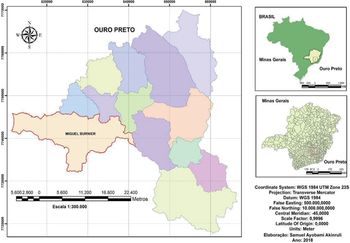
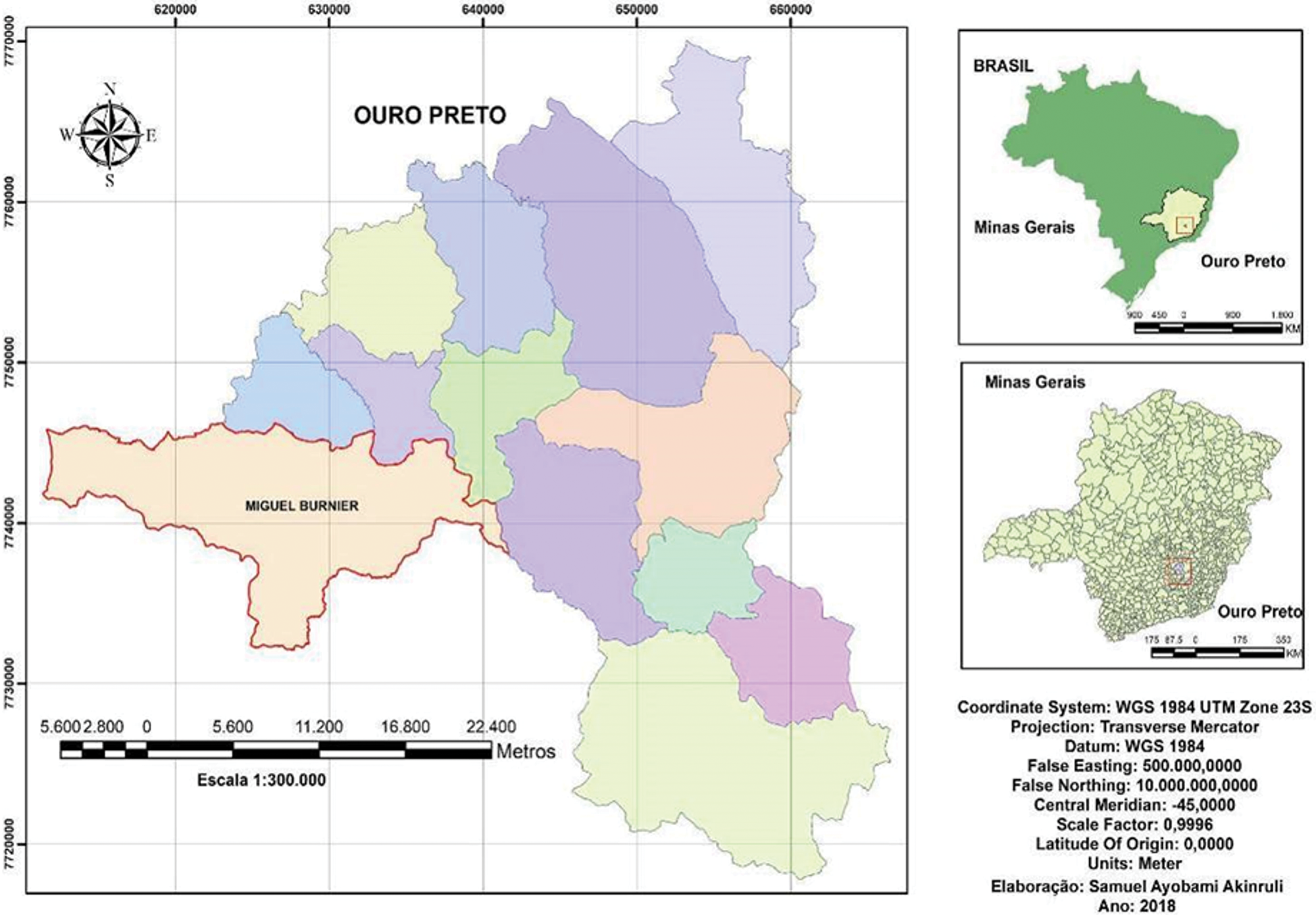
In the city of Ouro Preto, a town founded in the eighteenth century in Brazil for gold production to benefit the Portuguese Crown, the district of Miguel Burnier (Fig. 1) still maintains its economic importance, accounting for about 43 per cent of the total amount of tax collected in the municipality, about R$18,221,322.33 or approximately $5 million in 2015. The current iron-ore mining business ranks 21st in the mining sector. Brazil possesses the world's sixth-largest iron-ore reserves, as well as being the second-largest iron-ore producer in the world. The main producing Brazilian states are Minas Gerais (71 per cent) and Pará (6 per cent).
Geolocation of Miguel Burnier district in Ouro Preto, Minas Gerais, Brazil. (Samuel A. Akinruli, 2018.)
Thus, mining interests in the Miguel Burnier district of Ouro Preto, Minas Gerais, Brazil, interact with an expanding mining context; this takes the form of the Quadrilátero Ferrífero-Aquífero, which further reflects the massive expansion of mineral extractive industry in Latin America. Territories dependent on iron-ore commodities are therefore vulnerable to volatile price fluctuation. Cartographic information shows that few areas (only 3.4 per cent of the district) do not yet have activities related to the mining interest. Miguel Burnier remains the largest district of Ouro Preto municipality, occupying about 195 sq. km. The predominant mineral in the Miguel Burnier area is iron ore, followed by other equally valuable minerals such as gold, manganese, chromium, vanadium, quartz, limestone, topaz and marble. Almost the entire territory of the district of Miguel Burnier has been acquired and is privately owned by a mining company. However, according to Brazilian legislation, some identified traces of archaeological heritage are excluded from mineral resources in these lands. By law, it is mandatory that the owner conduct studies of such remains, in some cases protecting them.
Miguel Burnier is thus an archaeological site, with remains that are often not revealed in environmental studies contracted by the mining company so that they may not be officially identified, studied and safeguarded. In addition to disrupting the company's schedule, their study generates expenses and even limits the use of certain land for mineral extraction. One of the most important mining sites in Brazil, called Fazenda dos Caldeirões, was recorded by my team; this is where the idea of Brazil's independence was conceived and deliberated, a movement known as ‘Inconfidência Mineira’ of 1789. Independence was augmented by the development of an iron factory that gave economic and industrial autonomy to the country, and that would also be associated with those lands by the insurgent (inconfidente) Álvares Maciel, who studied iron-mining techniques in Birmingham between 1785 and 1786. Although his chemical-test notes and geographical indicators of mineral deposits in those suburbs were confiscated by the Crown, the first iron industry in Brazil (Fábrica Patriótica of 1812) was implanted on nearby lands at an old farm known as Fazenda dos Caldeirões. Though it only succeeded for a short period, a mill called Usina Wigg was also developed later. This was an explosive investment for the ‘Brazilian Industrial Revolution’ between the end of the nineteenth century and the beginning of the twentieth, when the mill called Siderúrgica Barra Mansa was brought into production. Mining activities from the eighteenth through the twenty-first century brought about population growth and allotment of land to new owners, who served as miners, settlers, traders, or farmers who supplied foodstuff and livestock to the whole population of the district. Railways were built to convey passengers and cargoes including iron ores to international ports. The main train station was in Miguel Burnier, with a wide range of intersecting tracks connecting the centres of Minas Gerais—Ouro Preto and Belo Horizonte—to Rio de Janeiro and to Bahia, two other important states of Brazil.
A growing population today has its identity embedded in local history, as the old generation passes away and the new one emerges. In this situation, my ethnographic research examines how the locals identify themselves, how they identify archaeological remains and sites and how they are represented with respect to the overwhelming economic and political power of mining activities, which tend to adopt new models of exploration that are less labour-intensive but employ machines that create distance between the locals and the fast-changing company.
Inventories, the safeguarding measure called tombamento, and a variety of technical reports produced for issuing environmental licences for the installation of large enterprises such as mining, all work to create collections which make up the diverse national collection. These collections are also used as lifeboats—especially legally—in the context of territorial and heritage disputes in which culture is situated (Yúdice Reference Yúdice2004). The ambiguity is that the same cultural heritage may serve to obscure the diverse perceptions of the community about their territories and their identities and, consequently, about their cultural references, which become hegemonic and crystallized by the tombamento, records and cultural inventories. In addition, heritage also functions as a financial and cultural asset for the same companies which destroy it, as they appropriate preservation discourses in their favour, granting the right to life or death for selected assets. How should we investigate and discover archaeological sites and a stratigraphy of memory relevant to Brazil and Latin America if we are denied access because almost the entire zone, especially the historic district, now belongs to a mining company? If the community of Miguel Burnier is pressured to leave the site due to the expansion of mining activities? If the community is denied the possibility guaranteed by the law of defending its territorial rights and heritage?
Through practices aimed at controlling territories and managing conflicts, such as independent feasibility studies contracted by the mining company in order to obtain an environmental licence, the licence becomes manipulated to subdue the community and its historic structure systematically, and with it a long-standing tradition of community dissent. This brings inequality into the life of Miguel Burnier's community. In the struggle for the defence of its territory, the community itself is reconstructed as such, that is, as a collective sphere of existence; this happens through the effort of occupation, use, maintenance, debate and symbolic reappropriation of its heritage. The dynamics of territorial defence thus become a unifying element, as the group articulates a discourse in which it presents itself as a collective through the construction of the ‘we’ represented in its cultural heritage, a pronominal category emphasized in the environmental conflict.
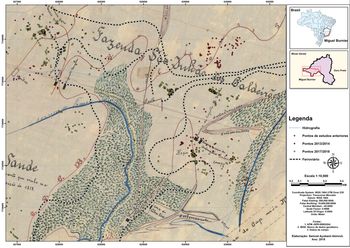
In this context of environmental conflict, access to the interdicts came either from the use of Geographic Information System (GIS) georeferencing technologies, from documentary sources, or from the actions of the community itself, which took the lead role in discussing the relevance of heritage assets to their identity. In addition to facilitating the identification of archaeological sites and remains, individuals themselves have (re)interpreted previous environmental feasibility studies that showed that there were no sites of potential value in the district. On the contrary, our ethnographic research with the community discovered evidence of prehistoric and historic occupancy, historic farming sites, old mining techniques, old mills, historic religious constructions and original forms of transportation from the eighteenth to the twenty-first centuries. These remains indicate deep mining cavities in the landscape, as the day-to-day lives of the people and the factories were investigated, documentary sources were identified and local toponyms indicated by them in collaborative work. The remains of the Barracão do Mato were discovered (Fig. 2), a place popularly treated as associated with the slave quarters (senzala) of the old Fazenda dos Caldeirões, which had a squad of 92 slaves in 1786 (Akinruli Reference Akinruli, Alcántara, García Montero and Sánchez López2018b).
Georeferencing: a historical map of the Caldeirões Farm (1900), on which the contemporary references collected from the community are projected. (Samuel A. Akinruli, 2018.)
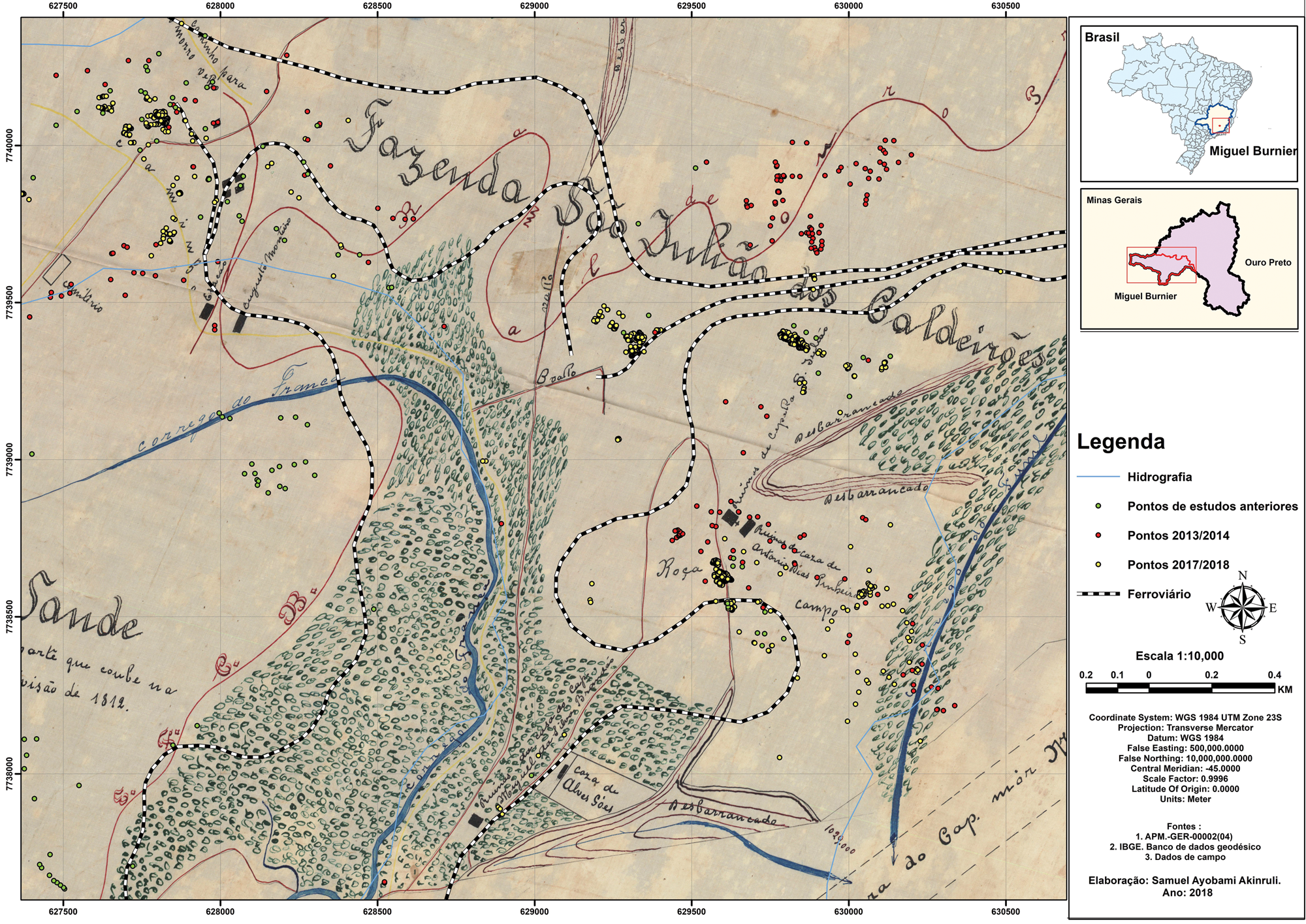
Archaeological studies in Miguel Burnier reveal interaction of the local population with artefacts which have become heritage assets. In several instances, the ruins retain their identity as the subjects of dispute for constitution as monuments, providing assets used to defend the territorial rights of the community. A similar example is presented in the work of Gordillo (Reference Gordillo2014), and other points of view on these processes of ruin can also be seen in Gonzalez-Ruibal (Reference Gonzalez-Ruibal2018, especially ch. 2). Archaeologists have also acted as agents of the state, a situation that promotes a shift of reflexivity to other fields of forces. Occupying a privileged place of observation and understanding, archaeologists, like other researchers, can impose a more or less critical view in this field full of social tensions, thus occupying multiple identities. Archaeology is experiencing times of profound transformation, and this article has tried to point out some aspects of the difficulties of putting the ideas that seem appropriate in our theories into practice. See various contributions on the contemporary points of view of the limits and vicissitudes of this engaged archeology: Atalay et al. (Reference Atalay, Clauss, McGuire and Welch2014); González-Ruibal (Reference Gonzalez-Ruibal2012); Sabloff (Reference Sabloff2016).
One possible way of creating awareness and intervening in the situation of conflict experienced by Miguel Burnier, from an archaeological point of view, is to break the silences that also function as epistemic violence. This can happen in updating the interdisciplinary dialogues central to archaeology, with the effective crossing of sources and methods from fields of knowledge such as historical research, ethnographic data and georeferenced information; this should happen from a perspective of knowledge production together and with the collectivities.
Maps and toponyms provide an example of this process. The (post)colonization experience generates the (re)naming of toponyms: by the surnames of the colonizing or farm elites, watercourses and mountains, they are baptized. Toponyms give indications not only about their owner and location, but about their uses. The natives have place references that, in contrast to charts and maps, not only outline processes of territorial occupation of great relevance to the community, but also represent new ways of building archaeological knowledge and mapping the recognized protagonism of the natives in narratives (Gillings et al. Reference Gillings, Hacıgüzeller and Lock2018). The context of socio-environmental conflict is opposed to the precise measurement of the territory and the identification of toponyms, because there are privileged agents and agencies responsible for describing the territory: officially it is the state that defines and names its territory. However, procedures based on determining geographic coordinates from aerial photos and combining these with historical cartographies and data developed with the community result in other descriptions. This identifies what is in the margins, the interstices, the vulnerable areas. Incorporating the knowledge of subjects who question the established order and using official cartography to counteract the tendency of territorial fragmentation and the centralization of power includes peripheral people who are at risk and makes local cultural references by colonized people visible.
Reading space in this way exposes the contradiction of preserving cultural heritage in the context of expanding mining interests and intensifying social antagonisms. Disqualifying local cultural references, whether through technical studies of environmental licensing, through the non-sensitive listening to the community in field research, or through obliterating their thinking, helps to silence the importance of these places for memory and for local, regional and national history, as well as the community's relationship with its own belonging (Arango Reference Arango2007). This latent contradiction directly influences the forms of knowledge, interpretation, appropriation, dissemination and protection of heritage and, ultimately, of the community itself, which appropriates the legal protection of cultural property that has the right to remain in its territory. Appropriating cultural heritage is one of the forms of Miguel Burnier's community resistance to discussions about belonging and local identity, since cultural heritage is the focus of deep and contradictory discussions about the right to stay or leave the area in the face of the dominance of mineral interests.
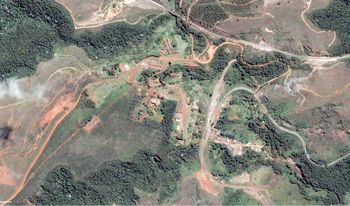
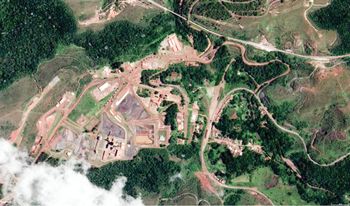
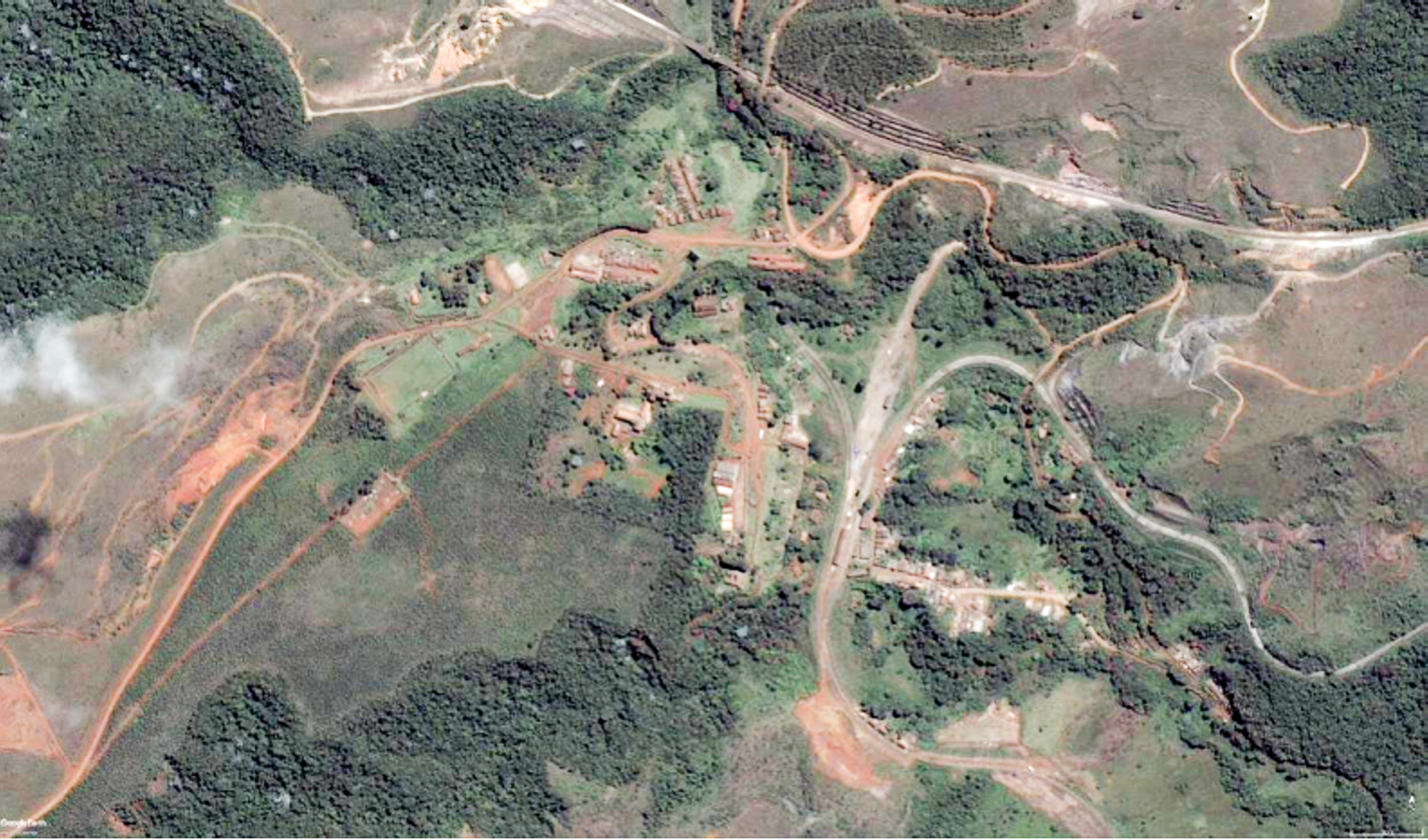
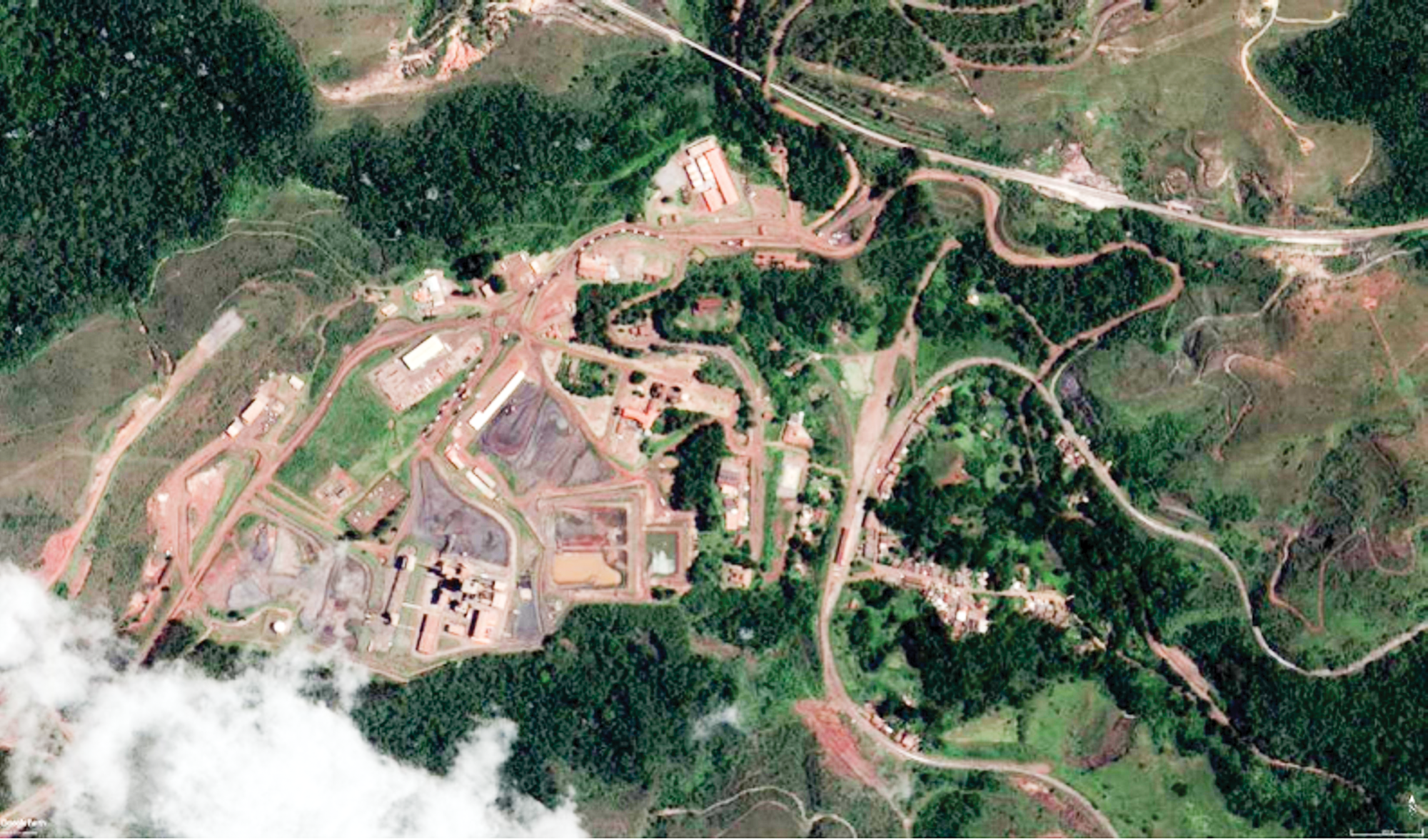
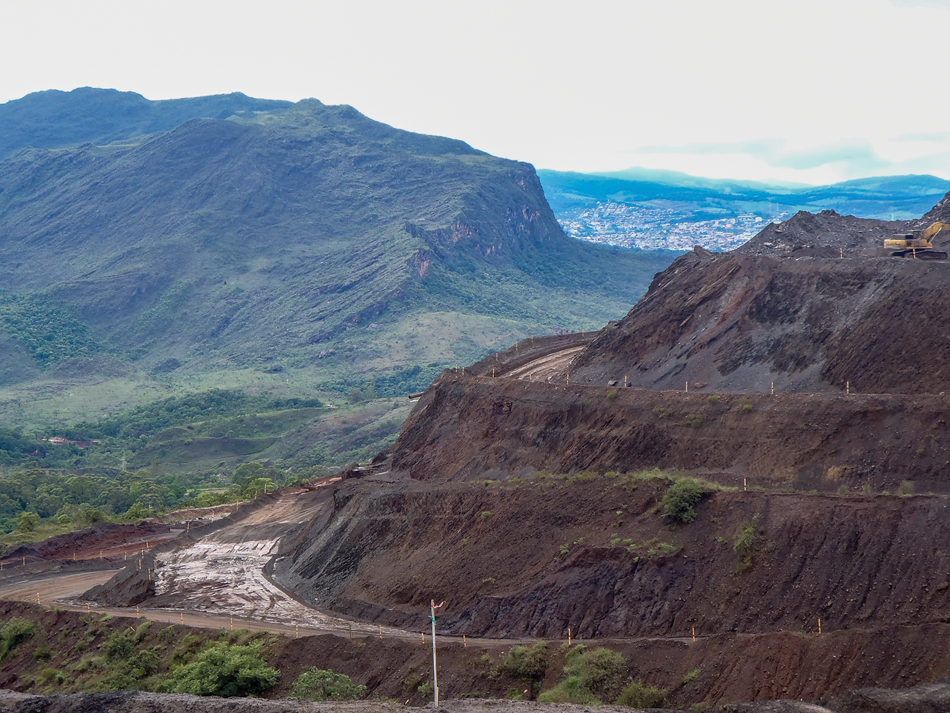
One of the ends of this symbolic violence is real, non-virtual, physical violence. The edits, the fading, the blurring, the erasing, are concretely shown in records not only of experience, but in documentary and material representations: for example, in licensing developed for mining projects at Miguel Burnier's urban headquarters, how map scales do not allow us to identify and recognize space. There are distorted viewing angles that express scale tricks, defining spaces in which ‘tiny’ communities where people who are considered insignificant live and clash with large-scale enterprises. Geospatial treatment can be a tool that can unveil the rationality determined by the logic of capital by challenging the hegemonic discourses that influence the way we read and apprehend territory. From the point of view of both temporalities and spatialities, aerial photographs and their contrasts show the marks of land use, the changes and permanence of the population, its economic bases, the process of urbanization, the paths and routes of people and their heritage, environmental impacts, and the violence (Arango Reference Arango2007; Akinruli Reference Akinruli2017). The colossal developmental projects that promise to bring housing, food, roads, money and progress create landscape aesthetics based on the architecture of destruction, in which the contemplation of rubble becomes a merely aesthetic attitude typical of (post)modernity. The community has been limited in its territorial enjoyment, given the rapid advance of the industrial area over the community living places, creating a stranglehold on the district and its heritage (Figs. 3–4).
Expansion of current mining venture in Miguel Burnier district seat in 2006. (Source: Google Earth, 2018.)
Current expansion of the mining enterprise in Miguel Burnier district seat in 2018. Note the expansion of the industrial area in the urban headquarters. (Source: Google Earth, 2018.)
Our collaborative research has also resulted in understanding the heritage identified by the community as patrimonial/cultural systems that generate a system of social relations, economic arrangements, political processes, cultural categories, norms, values and ideas. This has led to a broader systemic understanding of heritage, allowing us to see the relationship of forces and interests that exist between the local, the national and the international, and the multiple interactions between the parties, to the extent that the cartographic record incorporates cultural references identified by the community (in contrast to preexisting studies of environmental viability), juxtaposed with historical cartographic documents. Thus, to generate knowledge of the territory, a range of views was promoted (Fig. 2). These included material cultural goods, the concrete vestiges of life, the daily life that left marks. Cultural references were considered beyond their lexical limits, as the semantic and epistemological result of a wide understanding about the relationship between identity and territory; this drew upon the legitimacy of the community itself in listing what is of interest, so that each element of local heritage, even in a context of ruin, emerged as part of a joint plan of multiple interactions between the parties.
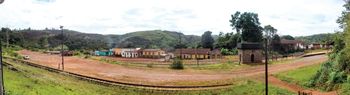
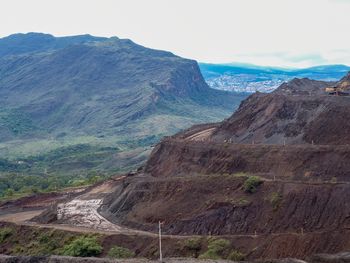
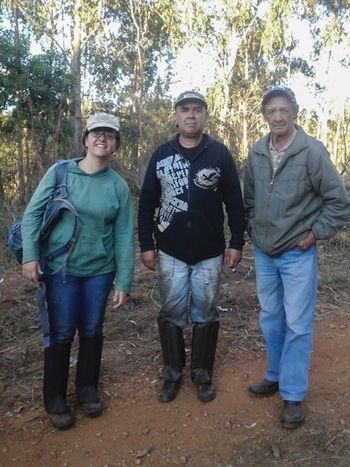
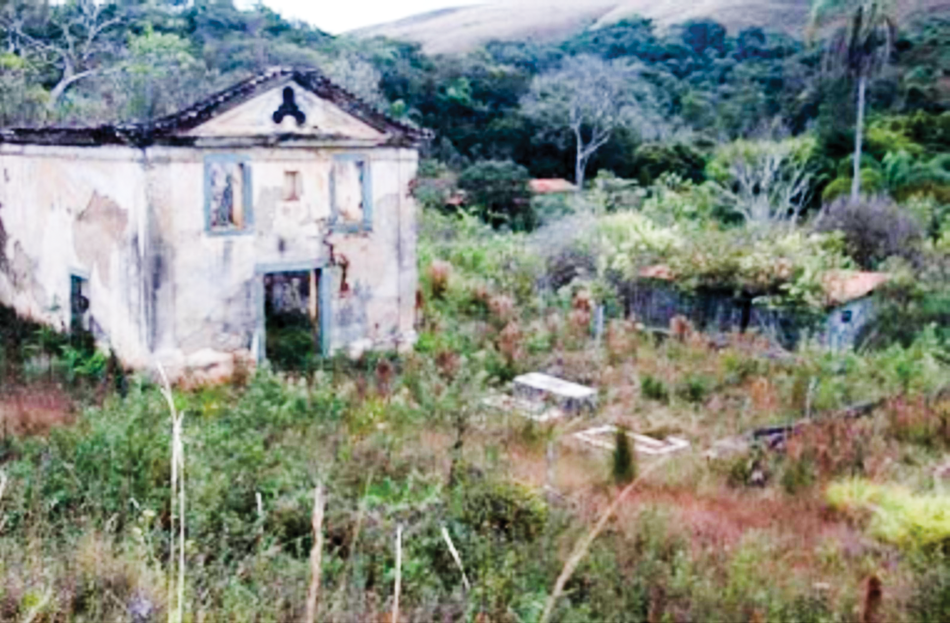
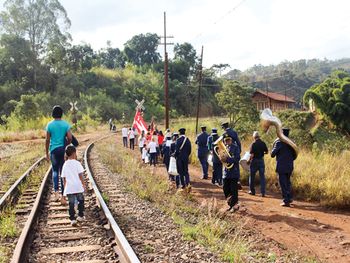
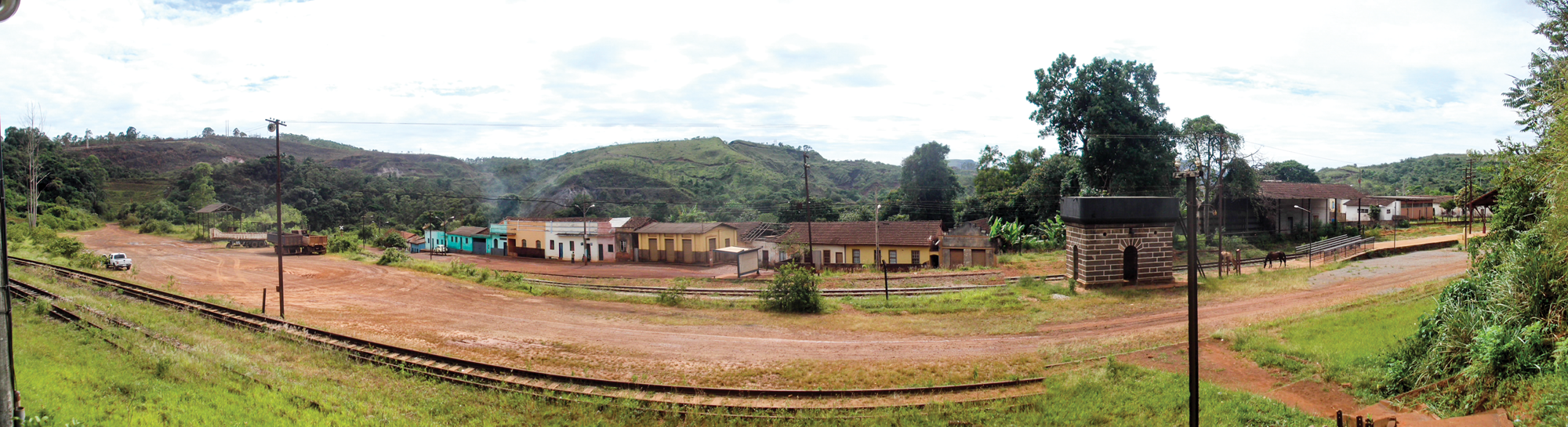
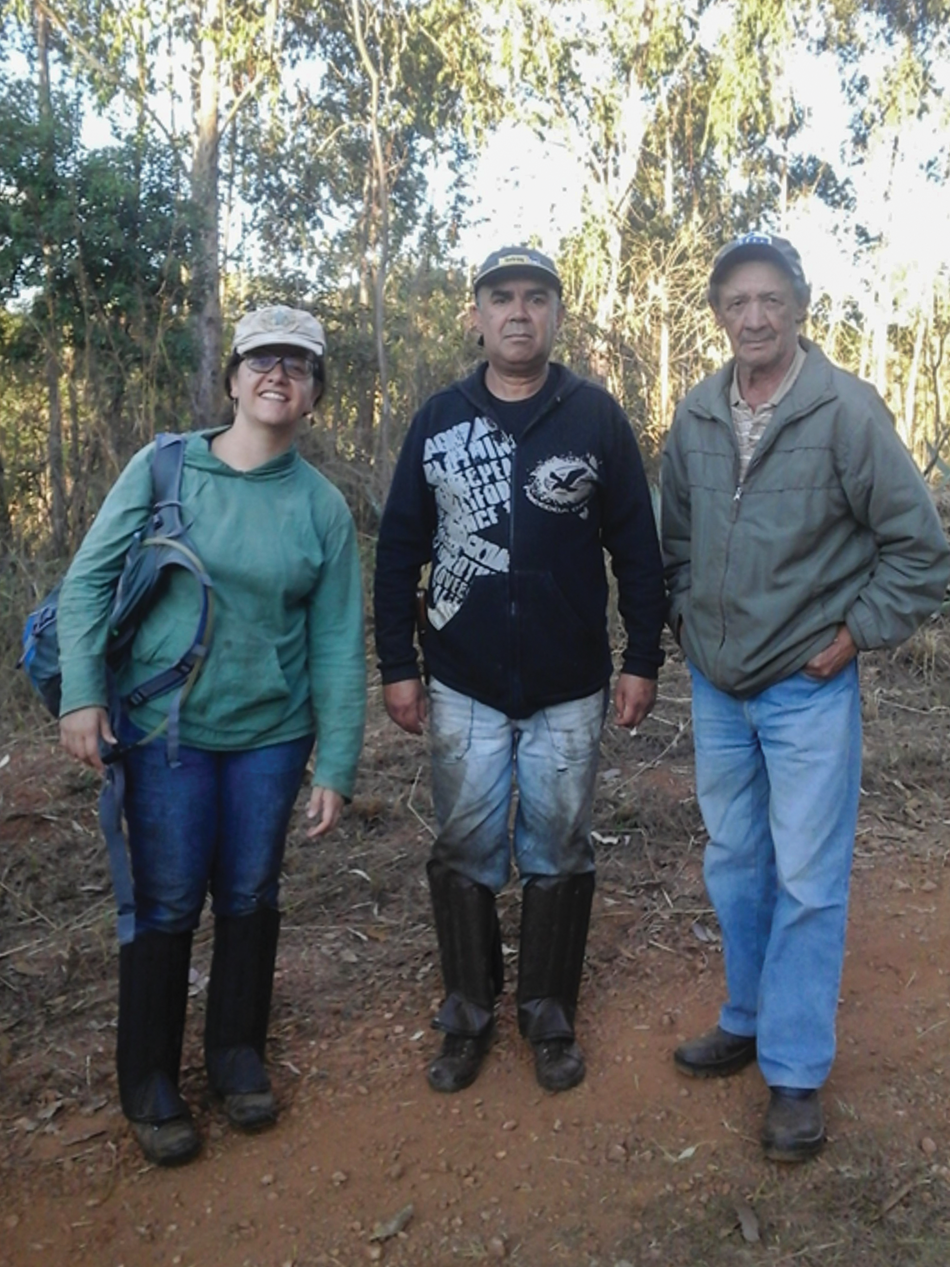
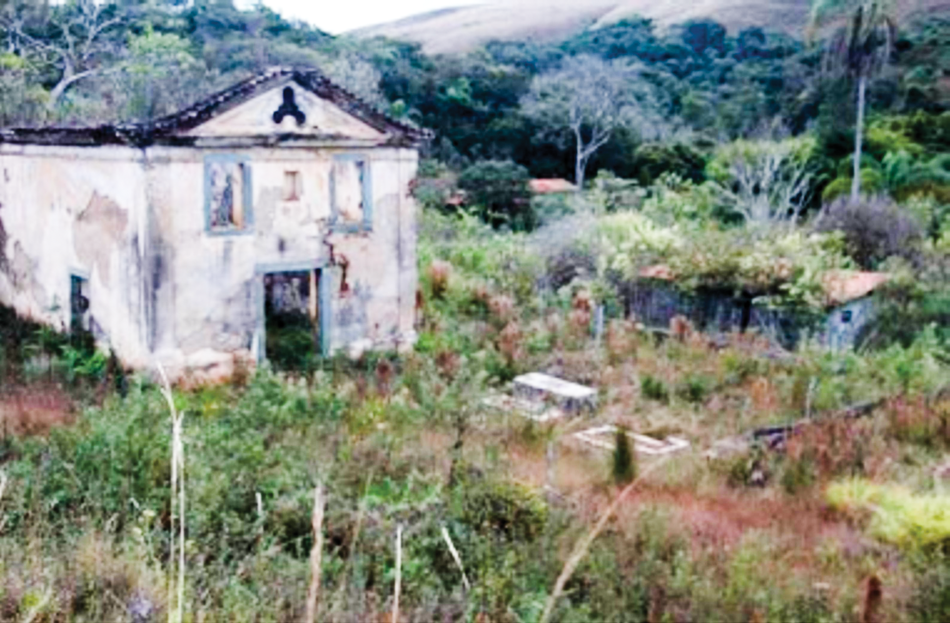
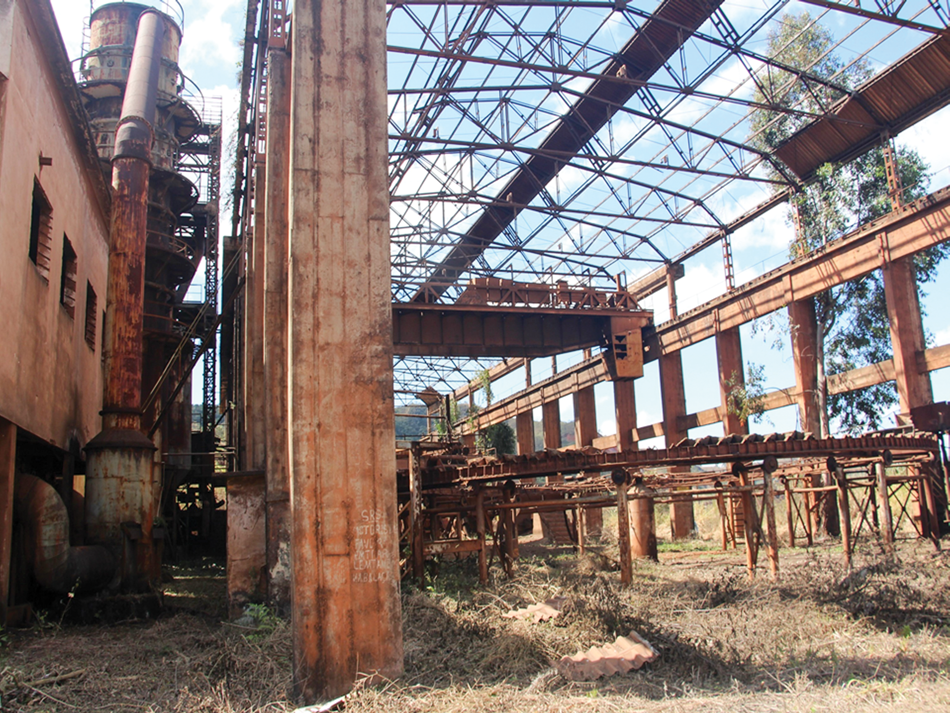
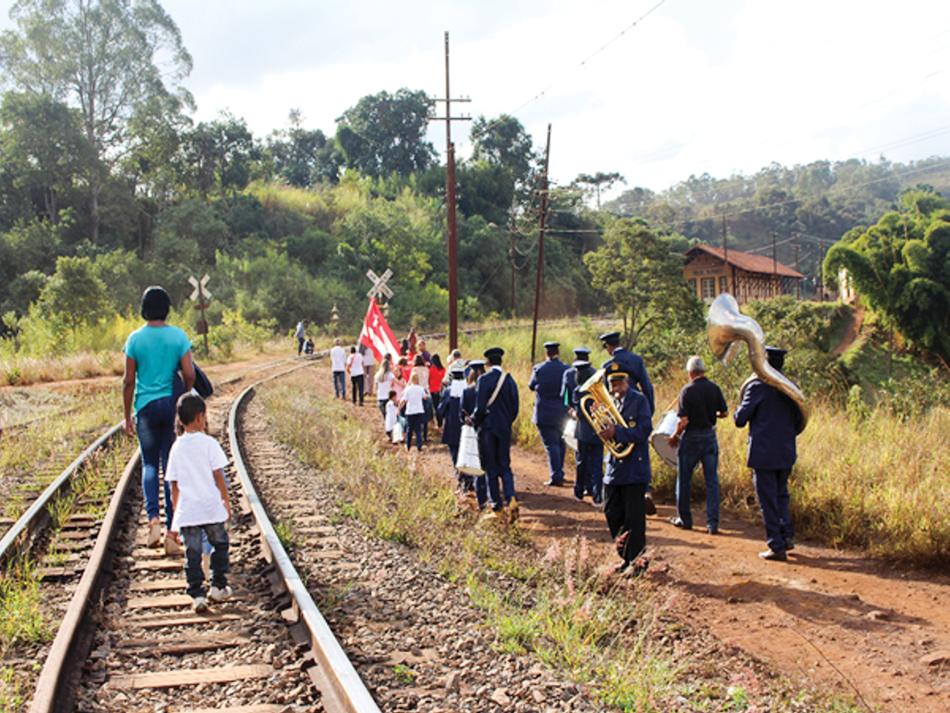
It was uncomfortable to analyse documentary data that added to the ethnographic data but which underscored the impossibility of access to the sites, since much of the territory currently belongs to the mining company. The community, also aware of this, made use of access paths known only to insiders, allowing them to search previously unknown territories. They also relied on memory resources—as few images were taken—but, above all, on narratives and memories when they encountered completely modified places. The experience of encountering the rubble is very strong, especially when previously communal areas have been destroyed by the arrival of the current mining company (Figs. 5–11). Individuals who have been used to working as subordinates to the boss in the mining company try to control their feelings. The group remains in absolute silence when entering sacred places, libraries, churches, cemeteries. Here were houses where many lives had been generated, where daily work took over the hours of the day, where lives had also been cultivated. It was the daily life, the trajectories of life that took over the places.
View of João Gonçalves Street, Miguel Burnier's main urban street, parallel to the railway line. (Photograph: Luana Akinruli.)
View of the Serra de Ouro Branco in the background and the mining pit at the entrance to the district. (Photograph: Luana Akinruli.)
Fieldwork with the community. (Photograph: Luana Akinruli.)
Chapel of Chiqueiro dos Alemães, dating from the first half of the eighteenth century, with cemetery in its churchyard. (Photograph: Luana Akinruli.)
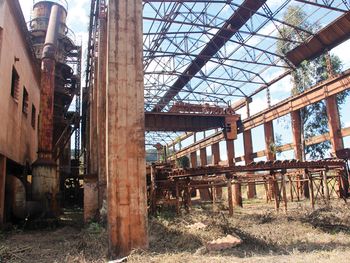
Ruins of Barra Mansa Steel Mill. (Photograph: Luana Akinruli.)
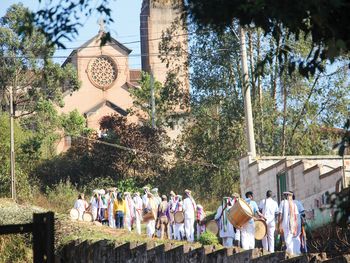
Procession of the Feast of the Sacred Heart of Jesus, patron of the district. (Photograph: Luana Akinruli.)
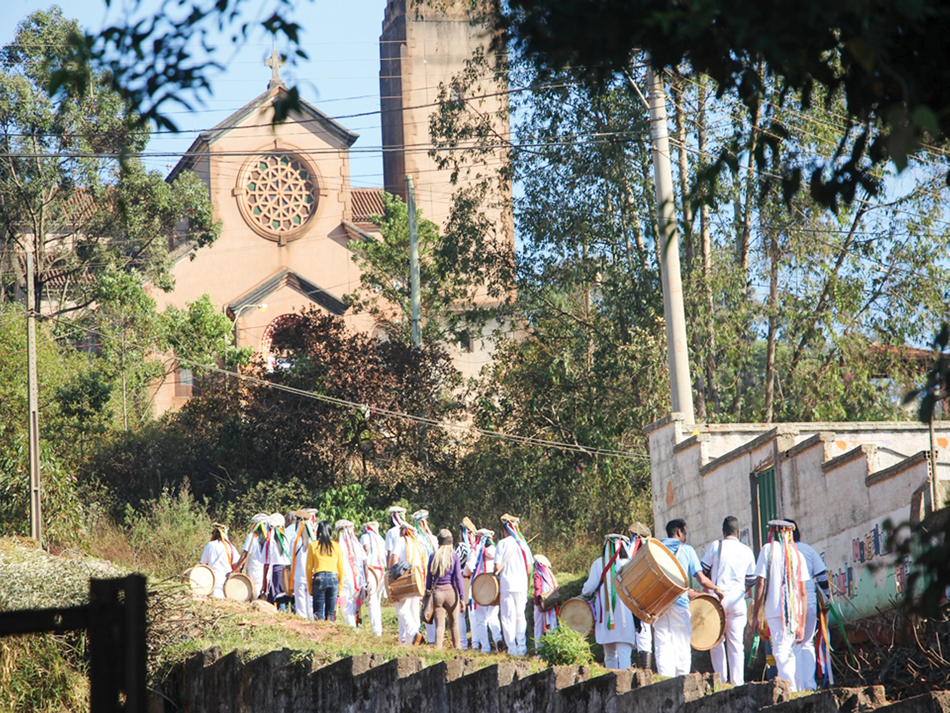
Congado: an Afro-descendant heritage peculiar to Brazil in which black saints within the Catholic syncretism are celebrated in an open and festive procession involving the whole community.
Hence the importance of studying and preserving the archaeological ensemble formed by the site, not taking its remnants in isolation as decontextualized occurrences. This implies broadening both the interpretative scope and the (re)knowledge of that space with its complex dynamics, and it requires the assertiveness to do research with the natives. This also reflects how the knowledge of territory is procedural and relational; toponyms that were only references of memories materialize in archaeological remains, (re)guiding other landscape organizations and the overlapping temporalities that allow their stratigraphy to be understood. Human records in the landscape demonstrate this conjuncture, even though we systematically segment reality, creating analytical categories so that we can handle it. Through this process, the physical, biotic, and anthropic environments of environmental licensing studies lose their meaning in relation to the whole; we reunite archaeological remains with the material and immaterial set of cultural references from which they had been completely divorced.
The understanding and positioning of the researcher in valuing the relevance and social impact of his or her research, the rapprochement and dialogue with the various audiences is urgent and explicit, engaging with and activating alternatives for the preservation of sites and people, cultural heritage and its proprietors. There are conflicting interests between agents and agencies, as well as strategies related to memory and preservation in the contexts of capitalist expansion. If, on the one hand, some cultural assets are inventoried and listed, on the other, such incursions are most often effected for the utilitarian prerogative of meeting the demands of environmental licensing or government arbitration. Uses and (re)appropriations of cultural assets emerge as participatory demands fostered by the archaeologist's work as well as these studies are subverted to serve as a protection amulet against the end of the community and its cultural heritage.
Final considerations
Within so-called canonical knowledge, ways of doing research in the field of human sciences still need to be deepened. These are notes of a research practice rooted in the limits and possibilities between history, anthropology, ethnography and archaeology; it deals with a mirage of the field of social sciences. And, despite the myriad of theoretical influences as reviewed here, the options here are not only epistemic and therefore theoretical-conceptual, but also of political engagement, of researchers solving problems and interpreting present-day history.
The article has sought to provoke interdisciplinary reflections from a postcolonial perspective and the possibilities of its appropriation, on the part of archaeology, of its theoretical and methodological contributions. Ethnographic practice on the part of the archaeologist would promote the expansion of narratives and subjects for the different and specific situations of production in postcolonial contexts. Such an exposition would highlight the relevance of contextual places, displacements, flows and cultural and epistemic frontiers, and new possibilities for the construction of knowledge from the other paradigms would be aired. And among the many possible ethnographies, the construction of a new heuristic model of ethnography would be grounded in the experience of scientist-community-conviviality, so that using ethnographic data is a priority without, however, giving openness to the various possibilities of narratives. This type of ethnography makes a relevant counterpoint to the universalization of concepts, reinforcing the necessary framework for decolonization of methodologies.
The applicability of paradigmatic approaches to the processes of knowledge production within archaeology itself would be an interdisciplinary method that exposes the mechanisms of colonization present in archaeology, and which also calls into question the need to build a postcolonial archaeology in the present.
Acknowledgements
This article is the result of a doctoral research funded by the State of Minas Gerais’ Research Support Foundation (FAPEMIG). The thesis was awarded at the UFMG 2019 Thesis Grand Prix.