From early 2019 to December 2021 the Art and Design School Libraries (ADSL) Division of the Art Libraries Society of North America (ARLIS/NA) focused their time and efforts almost singularly on research for and writing a “state of the field” report.Footnote 1 This article summarizes that process, some of the higher level findings, and recommendations that have been offered in light of current challenges facing our peculiar institutions. Of course, the challenges in this period could not have been imagined when the group was first charged with preparing this report by the Executive Board of ARLIS/NA, as the third in a series that included The State of Academic Art Libraries (2019) and The State of Art Museum Libraries (2016). The moderators of the ADSL Division expected at the start to follow a formula similar to the other two reports: Literature review, membership survey, case study interviews, analysis of data, consideration of areas for recommended actions, writing and presentation of the report.
But just as we were enlisting fellow division members to help with the literature review and development of a survey, the world began to change. Covid shut-downs had us pivoting overnight to new ways of delivering books and services, and renewed anti-racist activism in the wake of highly publicized police killings of Black people saw us reflecting on and rethinking practices and processes across library operations to better align with the values of social equity and inclusion. We knew we would have to incorporate information about the impact of both events into the report, and with this broader remit in our sights, we also benefited from the newly readily available technology of Zoom to keep to a regular meeting schedule and to expand our team to include members from across the United States.
Of the three professional distinctions that define art libraries for the purposes of sub-membership in ARLIS/NA, the ADSL Division membership is the smallest, behind the Art Museum Library and Academic Art Library Divisions. As of March 2021, 278 (29 percent) of 950 ARLIS/NA members work at or were involved with art and design school libraries,Footnote 2 meaning libraries housed within independent institutions that chiefly offer art and design education.
Whether public, private, non-profit, or for-profit, these are (for the most part) freestanding schools and not part of larger educational institutions. They might offer a variety of fine art, design, critical or visual studies degrees, or specialize in one area such as architecture. Art and design school libraries (ADSLs) are a small group of specialized libraries housed in these institutions that support the instructional, research, and inspiration needs of faculty, students, and staff, as well as creative practitioners and researchers in surrounding communities.
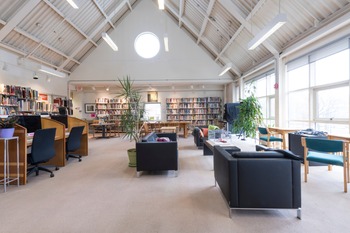
Library of the School of the Museum of Fine Arts, Boston. Photo courtesy Darin Murphy.

The State of Art & Design School Libraries (2021)Footnote 3 report was intended not only for art and design school librarians, but also for paraprofessional staff, library leadership and the academic administrators who provide oversight and advocacy on art and design school campuses, as well as our colleagues in other areas of the art library sector. The report supports the ADSL Division's mission to help our membership develop their professional skills and the resources, programming, and collections needed to support students and faculty in the art and design disciplines. While readers of this article are encouraged to spend time with the report itself to see the full range of data we collected, we are delighted to offer here some of our higher level observations and recommendations, appended to notes on process, in the hope that we might inspire and inform a similarly collective approach to research, analysis, and report writing for other organizations.
Collecting, sharing, and evaluating evidence along the way
Literature Review
By the time we started on the literature review, we were a team of seven from ADSLs in three different time zones. Team members took separate topics to research (outreach, collections, closures/mergers, space, and staffing) and recorded and annotated publications on a shared Zotero account (which would prove extremely helpful in assembling the bibliography for the report). While we found articles on school closures and mergers, with related impacts on libraries, and articles about our museum and academic counterparts, it turns out there is very little published specifically about the ADSL sector. From this first stage of work in early winter 2020/21, we drew two conclusions: We would have to rely more heavily on survey and case study data, and one of our recommendations would be for a greater level of support for members of our field to engage in self-reflective research and publication (more on this later in the article).
Survey
Using the questions and format for the survey devised for the ARLIS/NA sponsored State of Academic Art Libraries (2019) as a model, we created a new survey that reached beyond the topics of our literature review (to encompass collections, budget, programming, space, technology, staffing, outreach), with additional questions about diversity, equity and inclusion (DEI) initiatives and the impact of the COVID-19 pandemic. While primarily multiple choice, for each topical grouping within the 80+ questions, we invited open-ended responses, and at the end of the survey, we also asked respondents to consider the greatest challenges ahead, while adding whatever else they thought important for us to know and consider for the report. We also asked for volunteers for case study interviews; we estimated the survey would take 30-45 minutes to respond.
In mid January 2021, we sent the survey to the ARLIS/NA listserv and, because of overlapping interests, the Association of Independent Colleges of Art and Design (AICAD) library directors listserv. We also individually contacted 46 ADSLs in Canada and the United States. By the time the survey closed in March 2021, 30 libraries had responded, more than meeting our hopes of hearing from half the invited group, with a 65% response rate. Most of these (24 out of 30) were at schools affiliated with AICAD; five were non-AICAD affiliated, and one library was neither affiliated with ARLIS/NA or AICAD. All were from the United States, except for one Canadian respondent. We were delighted with the level of response (from libraries representing a range of school sizes and geographic regions), the thoughtfulness of open-ended responses, and best of all, how many respondents volunteered to be interviewed for case studies.
Case Studies
With the case studies, which took place in April and May 2021, we were able to gather more qualitative information for the report, reveal more fully some of the common concerns in the ADSL sector, gather practical tips and examples of specific innovations that might help others, and determine areas for work to do together as a division in the next couple years. Interviewees represented geographic diversity, different types of art and design schools, a variety of sizes, and both AICAD and non-AICAD affiliated institutions. Two members of the report team remotely interviewed the directors of each of the selected libraries via Zoom, with one of the interviews (Maine College of Art) including both the director and the collections and programming manager. The participating libraries were from Boston Architectural College, Emily Carr University of Art + Design, Maine College of Art, and School of Art Institute of Chicago.
By July 2021, we had completed the summary write-ups of the case study interviews, the interviewees had reviewed them for accuracy, and we were already well into the analysis of both survey and case study data for narrative sections of the report. The team of seven divided the work according to members’ strengths (data analysis and visualization, writing, editing) and interests, and from June to December 2021, we had a weekly Zoom check-in for the team on the calendar; we were working into documents shared on the Google platform. For the structure of the report, just as with the survey, we found the previous two reports helpful as a starting point, but just that. Our case studies, for example, became much more substantial, after we let go of the idea that everything we wanted to discuss could be limited to a paragraph or two.
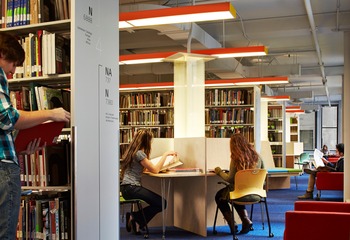
Flaxman Library, School of the Art Institute of Chicago, with students pre-pandemic. Photo courtesy Melanie Emerson.

One of the areas we struggled with - in a good and necessary way - were insights and recommendations: where did we think ADSLs needed to focus attention in the coming years? What strengths did we need to play to and what weaknesses do we need to work on? The open response answers to the survey helped, as respondents brought forth areas of concern we had not thought to ask about. Also tremendously helpful were the opportunities to present preliminary findings to the ARLIS/NA membership as part of the virtual annual meeting of the ADSL Division in May 2021 and, also via Zoom, to the participants of the ARLIS UK & Ireland conference, “Reframing Art Libraries: From Challenge to Opportunity”, in July 2021. The presentation in July 2021 presented both high level observations and specific findings in relation to DEI initiatives and the impact of the COVID-19 pandemic. With the report now complete, we can include updated summaries here, along with reference to the insights and recommendations that were informed by observations, among others, reported at the time of the conference. So what is the state of art and design school libraries?
Summary findings and recommendations
Covid-19 Pandemic Response
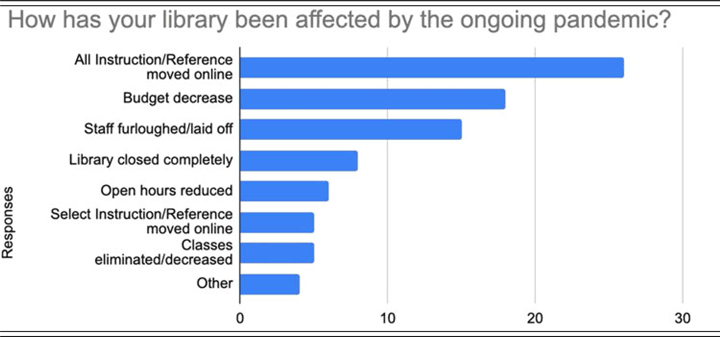
Surveying any service sector at the height of a global pandemic might not seem like the best way to get a read on the steady “state of”. As much as we asked our survey respondents to consider conditions in a given area in the pre-pandemic period, it has become next to impossible to imagine returning to that particular “state of”. The demand for delivery of services to be completely reconceived at a time when budgets were precarious and staff in many libraries were being laid off or furloughed made the tumultuous routine for many of our member libraries in the last two years. (See Table 1 for areas of greatest impact.Footnote 4)
Impact of the COVID-19 Pandemic on art and design school library operations in U.S. and Canada.

ADSLs track with their museum and academic peers in the continuing preference for print publications, making the art library sector overall a bit of an outlier, and for our creative communities perhaps even more so. ADSLs had to figure out a means not only to pivot services and as many resources as possible online, but also how to continue to get physical books into patrons’ hands. Some of these innovations are sticking even as in-person library access once again becomes the norm. Contactless pick-up of books might not continue across the board, but the opportunity, for example, to continue to work and connect remotely - for research appointments, staff meetings, project team check-ins, etc. - could mean reaching more patrons and working more efficiently and flexibly towards a better work/life balance.
Another possible silver lining from the pandemic is a heightened appreciation for both physical and conceptual centrality of the ADSLs in their institutional landscape. In this respect ADSLs differ from both museum libraries and their closer peer - the academic art library, which tends to be either a branch of or subsidiary space/operation within a larger college or university library system. The need for schools to locate essential services, such as testing, in a central and capacious space during the pandemic kept some ADSLs open and active (if looking a little clinical). In other cases, the ability to make information widely accessible in the face of anti-racist protests and demands for greater visibility of BIPOC production, made the ADSL, while still under COVID restrictions, an invaluable partner in and resource provider for campus-wide DEI initiatives.
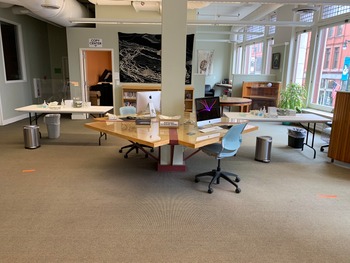
Library at Maine College of Art with covid testing stations. Photo courtesy Shiva Darbandi.

DEI
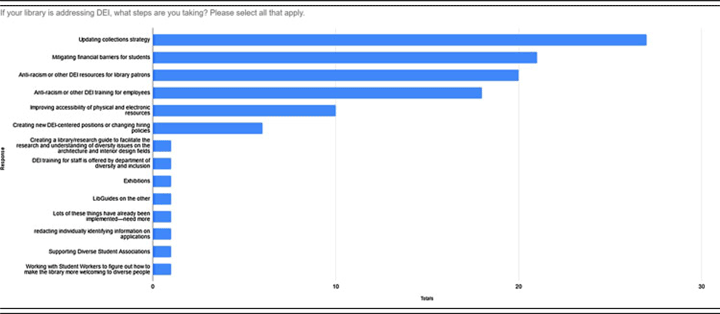
Diversity, equity and inclusion (DEI)Footnote 5 is not a new area of focus for either higher education in general or the libraries that serve college and university campuses, but events of summer 2020 brought both increased awareness and specific demands from students, faculty, and others on campuses throughout North America for renewed, sincere, and lasting efforts to counter systemic racism and assess all activities through a lens of equity and inclusion. For the libraries we surveyed and interviewed this has meant a number of actions (see Table 2), some driven by institutional policies and diversity plans and others decided on by more recently formed DEI working groups within libraries. Addressing accessibility concerns, such as eliminating financial penalties, has gone hand in hand with efforts to increase representation in collections and de-emphasize the traditionally white and western “canon” in acquisitions decisions. Some libraries have designated staff positions to do this work, while others have sought help from faculty and student groups.
DEI strategies for art and design school libraries in U.S. and Canada.

For ADSLs to be truly representative and provide an environment that is welcoming to diverse populations of students, we also have to address the overall lack of diversity in the field of art librarianship. The majority of art librarians are still overwhelmingly white women, with the average age hovering around 50, but as professionals retire, we will increasingly have opportunities to welcome a new generation of dynamic, diverse librarians.Footnote 6 In preparation, we need to make it a priority now to attract BIPOC candidates to MLIS programs and to make the training itself more affordable. Perhaps we can start by re-examining how we recruit student employees on our campuses.
E-Resources and Scholarly Communications
Two other areas of concern and opportunity for ADSLs emerged from the work we did on this report: The first is the continuing rise of both demand and costs for e-resources on our campuses, and the second - returning to an observation above in relation to the literature review - is the minimal contribution by art and design school librarians to publications on art librarianship.Footnote 7 We know this is not because they have nothing to contribute, but more likely that demands to juggle a diverse portfolio of responsibilities limit the opportunities for more self-reflective research and writing. We hope that this report will help to make the case for ADSLs and their host campuses to make more professional development resources and time available for their librarians to participate more fully in scholarly communications.
As for increasing costs for e-resources, this is going to continue to be one of the most difficult challenges to address. Within our sample group of thirty institutions, we currently spend on average $45,000 a year on print purchases (with reports that budgets are generally trending down in this area), while expenditures for e-resources average just over $87,000. This nearly one to two ratio is almost certain to keep widening (given growing demands from general ed requirements for accreditation that are better supported by e-resource purchases, increased pressure on faculty to engage in research, and the emergence of topical programs and centers on art and design school campuses). As generally smaller academic libraries, ADSLs have little individual bargaining power. Negotiations by regional and sector consortia yield some savings.Footnote 8 Harnessing the power of numbers will continue to be one of the most effective ways to achieve greater discounting for ADSLs.
And ADSLs, for their part, might better leverage their uniquely central positioning, made more visible during the pandemic, to advocate with campus administration for better resourcing for the development of both material and human resources.
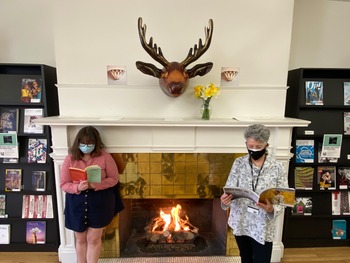
Periodicals Reading Room, Kansas City Art Institute. Photo courtesy of M.J. Poehler.

Final thoughts
Although the last two years have been a generally stressful and overwhelming time for many of us, working together on the State of Art and Design School Libraries within the constraints of the pandemic offered a surprisingly uplifting experience. The technologies that allowed our campuses to pivot overnight to distance learning, allowed for easy long distance communication and collaboration, enabling us to stay connected and on task. Utilizing such technologies beyond these hardships will allow for further collaboration (from consortia meetings to group chats) and collective action. To be effective in addressing the challenges that surfaced in this report, we will need to employ the very collaborative processes described herein. We hope others will find this a useful model - for doing their jobs better, building community, and making necessary change, whether in the field of ADSLs or beyond.