The Oberammergau Passion Play became internationally famous in the latter half of the nineteenth century. Beginning in the 1840s and 1850s and through the early twentieth century, English-speaking foreign tourists from Ireland and the United Kingdom, the United States, Canada, and even Australia published a surprising number and variety of accounts of travel to the village and attendance at the Passion Play. Professional and amateur historians described the production as an evolutionary throwback or curious hybrid of ancient Greek and medieval theatre, regarding it as an object and event of antiquarian interest.Footnote 1 Foreign female travelers attended the play in impressive numbers, and their accounts provide insight into contemporary women's readings of theatre, travel, spirituality, gender inequality, gendered spaces, and cultural difference. Protestant writers reflected uneasily on the play's communication of spiritual truth by means of images.Footnote 2 And all of these accounts, whether published in the popular periodical press or as monographs, in turn encouraged increasing numbers of travelers to make the same journey—represented sometimes as a religious and sometimes as an artistic pilgrimage—to the isolated Bavarian village.
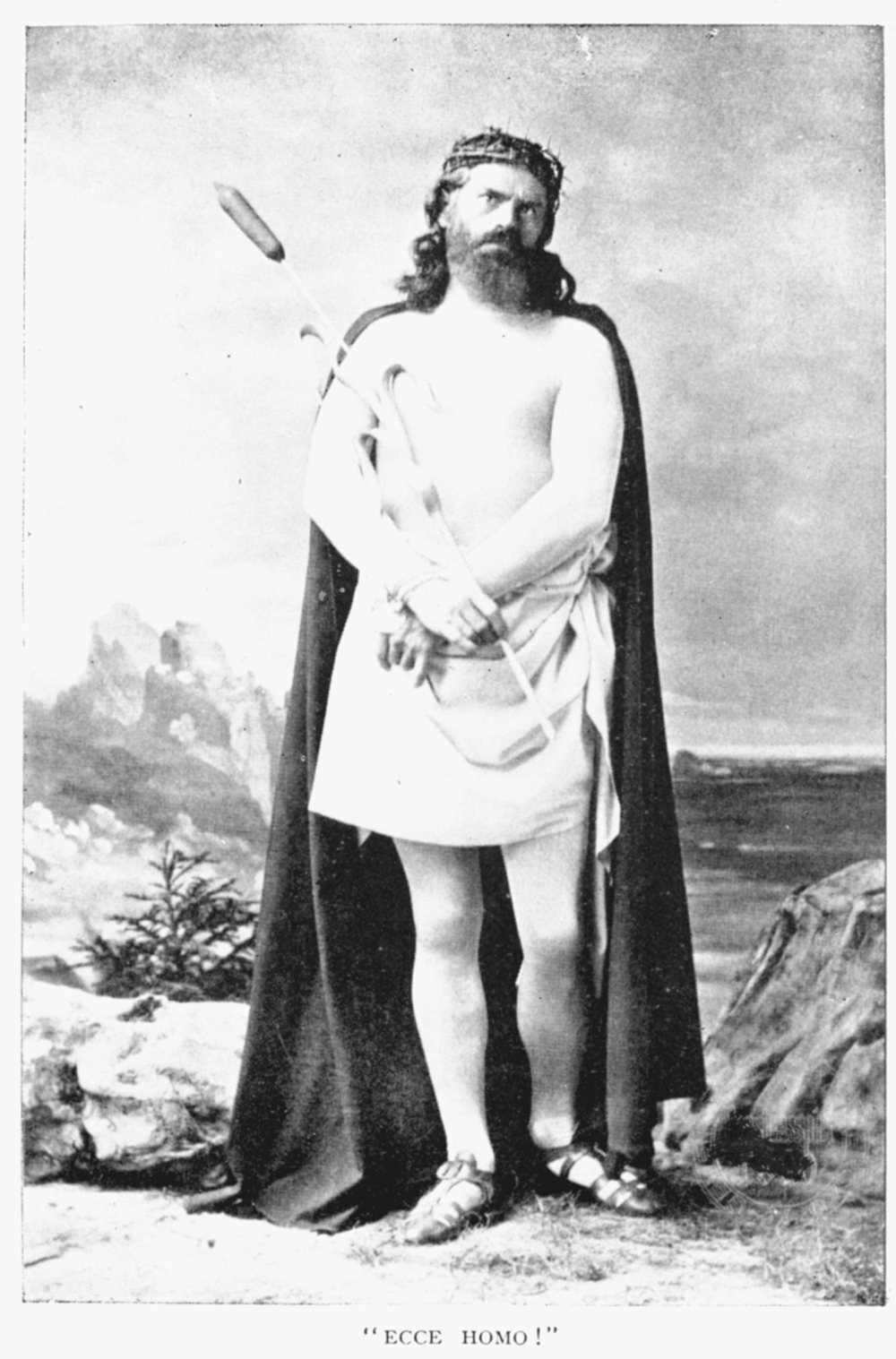
Over the centuries the play developed from a simple performance on a temporary stage in the local churchyard to an elaborate, eight-hour production presented in a permanent theatre building constructed in 1830 and renovated in 1840, 1890, and 1899. Spectators who traveled to see the play would often lodge with the villagers; on the day of the performance, usually a Sunday although overflow Monday performances were added as needed, they could hear mass at the local parish church before the play's 8:00 a.m. curtain. The Passion Play as described by foreign travelers from 1850 combined original music, choral songs, elaborate Old Testament tableaux vivants sometimes including hundreds of villagers dressed in colorful costumes, and New Testament dramatic scenes depicting biblical events from Christ's entry into Jerusalem to his Resurrection and Ascension. Actors were cast according to appearance and ability but also according to moral merit: it was considered a great honor to be selected for a major role, the most coveted being Christ and Mary. Only native-born Oberammergauers could perform in the drama as actors, singers, and musicians, and all costumes and sets were constructed by the villagers (Fig. 1). Receipts from ticket sales first of all covered the play's production costs, while any profits supported the village church and school and paid for necessary improvements to the local infrastructure.Footnote 3
Ecce Homo, 1890. Villager Josef Maier dressed as Jesus for the Passion Play performed at Oberammergau in 1890. Photo: Carl Stockmann, Munich.

According to the Passion Play's myth of origin, the production began in a time of disease. In response to an outbreak of plague in 1633, the villagers vowed to perform a dramatic representation of Christ's Passion and Resurrection every ten years if God would save them from the illness. This widely circulated legend reported that the villagers’ prayers were answered, and writers who later visited the village credited performance of the play with the Oberammergauers’ historical deliverance as well as their (alleged) remarkable subsequent physical and spiritual well-being. Some accounts of course disputed these claims and questioned the villagers’ vigor and morality, attacking the play as sacrilegious and describing its effects on performers and spectators as spiritually dangerous or exploitative. A number of writers suspected that the community's production of the Passion Play was purely mercenary, and behaviors exhibited by its performers, for example smoking and public drinking, were offered as evidence of the villagers’ debauched or simply ignorant (peasant) nature.Footnote 4 However, on balance, as will be argued below, most travelers’ accounts emphasized the “healthfulness” of the village and the spiritual, moral, and even biological benefits gained by participants in the decennial performance.
To date, much of the literature written about the Oberammergau Passion Play has focused on three areas: first, the village's and the play's history since 1634, with writers either accepting or debunking local mythologies about the play's origin; second, the play's long history of anti-Semitism and recent attempts to revise the text to address this problem; and third, the villagers’ resistance against and cooperation with the Nazi party in the 1930s, 1940s, and beyond.Footnote 5 Some work has appeared describing the reception and representation of the play by English speaking audiences and its influence, especially in the United States, on contemporary theatre, film, aesthetics, and even theology and politics.Footnote 6 The Passion Play's international cultural importance, to date underappreciated and insufficiently studied, is now a growing area of research. My article contributes to this scholarship as well as to work in the recently recognized interdisciplinary field of theatre and science. The “springboard for key debates that have helped to define” this field, according to Carina Bartleet and Kirsten Shepherd-Barr, was a special issue of the journal Interdisciplinary Science Reviews entitled “Science and Theatre” (27.3) published in 2002.Footnote 7 Since this volume appeared, important monographs in the area have included Shepherd-Barr's Science on Stage from “Doctor Faustus” to “Copenhagen” and Eva-Sabine Zehelein's Science: Dramatic, which both present analyses of texts for the stage in which science and scientists figure prominently.Footnote 8 More relevant to my analysis are studies that have focused on theatrical engagements with the sciences of genetics, evolution, and eugenics: Jane R. Goodall's Performance and Evolution in the Age of Darwin, Tamsen Wolff's Mendel's Theatre, and Shepherd-Barr's Theatre and Evolution from Ibsen to Beckett.Footnote 9
Goodall's, Wolff's, and Shepherd-Barr's studies mainly focus on the influence of contemporaneous ideas about heredity on the production of theatre: on the writing of dramatic texts and on the creation of staged performance. Audience reception is a secondary focus; in contrast, my analysis centers on representations by English-speaking foreign spectators of the Oberammergau Passion Play, specifically on their readings of the play's alleged social and biological effects on its performers. I begin in my first section with a discussion of midcentury theories of “soft” heredity—the belief that acquired characteristics could be inherited—and of “lapsing intelligence” or inherited acquired instinct, which together help to explain depictions of the Oberammergauers’ alleged exceptional moral, spiritual, artistic, and physical natures. In my second section I discuss the ascendency of theories of “hard heredity” in the 1880s and the effects of that development on accounts of the play and of the villagers. Hard heredity made few allowances for rapid natural evolutionary gains. David Starr Jordan, influenced by Francis Galton, credited the Oberammergauers’ remarkable nature to the evolutionary processes of natural selection and survival of the fittest, but described the Passion Play as a eugenic mechanism that exaggerated and accelerated both, changing what others claimed was an already “racially” advanced population by promoting emigration of the weak and retention of the strong. In my third and concluding section, I discuss suggestions made by spectators of the Passion Play and by Karl Pearson and Victor Branford, two eugenicists who dabbled in theatrical criticism, that similar productions in other communities could produce comparable effects.
All three sections corroborate, complement, and complicate Tamsen Wolff's general observation that heredity and the sciences related to its understanding, represented in the popular press to a wide audience throughout the later nineteenth and early twentieth centuries, “remained a constant source of interest and argument during this period” and “seemed to act as a magnet for many cultural anxieties.”Footnote 10 Nonscientific spectators who described their experiences and understandings of the Passion Play had been saturated with popular representations of inheritance and reproduced these as they considered a cultural product they had not experienced at home and therefore found strange. Wolff has proposed further that during this period “the desire to control for human use the new but intimidating knowledge that science presented was almost overwhelming.”Footnote 11 Discussions of the Passion Play when focused on heredity and inheritance represented attempts to control this new knowledge by employing contemporary science to understand and explain the biological effects of its past productions. Foreign observers of the play demonstrated their familiarity with and reassuring ability to apply the new science by reflecting on an effect not acknowledged or understood by the Oberammergau villagers. The latter were assumed to be innocently unaware of the fact that they had been shaped by the forces of soft or hard heredity and demonstrated qualities attributable to their racial origins. Further, inspired by the effects noted in the Oberammergau community, foreign writers speculated that productions in other places might similarly influence and shape populations judged to be in need of social and biological improvement.
Nineteenth-Century “Soft” Heredity, Acquired Characteristics, and Lapsing Intelligence
In the second half of the nineteenth century, hereditary tendencies in families and populations became a topic of keen interest. Accounts of the Passion Play for this reason increasingly offered heredity as a possible explanation for the villagers’ purported unusual character and physiology. Most scientists before 1880 posited theories of “soft” inheritance, which supposed children receive a blend of some characteristics passed down unchanged through the generations and of others produced by their progenitors’ interactions with their environments. Mothers and fathers passed down not only traits they themselves had inherited from their parents but also those they had developed since birth because of their circumstances and as a result of repeated actions. Further, fetal development was believed to be shaped during gestation by parental behaviors and habits such as indolence or drinking alcohol, behaviors in turn influenced by parents’ immediate physical and social contexts (for example, poverty).Footnote 12
The idea that offspring could inherit traits acquired during their predecessors’ lifetimes had been accepted for centuries. However, the most famous advocate of, and in the later 1800s posthumous figurehead for, this theory was French biologist Jean-Baptiste Lamarck, author of Philosophie Zoologique [Zoological Philosophy] (1809), which suggested that organisms could modify their physiologies to adapt to their physical circumstances. Some adaptations occurred because organisms found themselves in new environments, perhaps with increased or decreased amounts of water, light, or heat. Lamarck offered the example of a meadow grass seed that germinated in a challenging location on a high, rocky plot with little water, suggesting that if it lived, it would adapt, producing “une race véritablement différente de celle qui vit dans la prairie” (“a race fundamentally different from that which lives in the meadows”).Footnote 13 Other adaptations occurred when higher organisms exerted to meet needs in response to particular challenges presented by their environment, as described by Snait B. Gissis: “Lamarck held that modifications of functions, of habits (use and disuse), preceded and caused change in structures, and these changes would be inherited, with cumulative inherited changes bringing about the transformation of species.”Footnote 14 Lamarck offered the giraffe as an example of a species shaped by acquired characteristics and what would later be termed “use-inheritance.” Because giraffes live in an arid climate with little ground vegetation, he reasoned, they must eat the leaves of trees to survive. By repeatedly stretching to reach these leaves, giraffes over their lifetimes gradually acquired front legs longer than those in the back as well as longer and stronger necks. Each successive generation inherited the length in legs and neck acquired by the former and in turn evolved these characteristics further.Footnote 15 This (minor, in Lamarck's scientific theories) point about inherited acquired characteristics and the organism's ability to develop in response to need was eventually set against Charles Darwin's assertion in On the Origin of the Species (1859) that organisms more slowly evolve and change through a process of “survival of the fittest”: in an arid location, short-necked giraffes would starve whereas long-necked giraffes would access sufficient food and reproduce; eventually all giraffes would have longer necks because of this process.Footnote 16
Also important to representations of Oberammergau and its inhabitants were contemporary theories of instinct, what it was and how it formed. Until the third decade of the twentieth century, theorists speculated that instinctive behaviors in species or subgroups could be produced in a number of ways, either exclusively or in combination. When certain innate drives and dispositions within individuals proved advantageous to survival, these instincts might become common within a species through the process of natural selection. Also, or instead, organisms could acquire helpful instincts by learning from and responding to their environment; they could then pass down acquired instinctive behaviors in much the same way they did beneficial physical characteristics such as long legs and necks.Footnote 17 George J. Romanes, a close friend of and research assistant to Darwin, explained the inheritance of instincts through a process he termed “lapsing of intelligence.”Footnote 18 Romanes offered the example (taken from Darwin)Footnote 19 of certain birds and other animals on remote islands who at initial contact showed no fear of humans. After only a brief exposure, these birds and animals learned to fear the new threat in their environment. Later, their offspring demonstrated what appeared to be an instinct, not a learned behavior, to avoid contact with people. The parents’ intelligent response to the introduction of humans became their young's inherited instinctive fear.
Many late-nineteenth- and early twentieth-century travelers implied in their accounts of Oberammergau and its inhabitants that Lamarckian inheritance had produced the exceptional moral and physical qualities observed in the villagers, and/or that an inherited acquired instinct (lapsing intelligence) was responsible for their exceptional artistic skill, which seemed inbred. Because the cost of travel largely prohibited working-class foreign tourism to the production, most who described their experiences of the village and of the play were members of the middle and upper classes. Foreign English-speaking tourists came from various backgrounds and professions, the vast majority not themselves scientists nor apparently particularly interested in topics later described as “eugenic.” They seem to have been primarily influenced by representations of acquired traits and inherited instinct in the popular press. The Oberammergauers themselves, as foreign accounts acknowledged, represented their play and their participation in it primarily as a religious obligation and secondarily as an important cultural tradition they wished to maintain. The notion that the Oberammergauers were unaware of the hereditary forces at work in their bodies and social corpus appealed to foreign observers: as well-read members of the higher classes, the latter recognized scientific effects not understood by the naive peasant performers.
Travel writers frequently claimed that the Oberammergauers they saw on the stage and in the town exhibited an unusual character, spirituality, artistic talent, physical appearance, and health. Often noting and remarking that only native-born villagers performed in the drama, they suggested the villagers had been passively shaped by their environment as well as actively molded and altered by their occupations as artisans and their regular participation in the Passion Play. In 1860, Arthur Penrhyn Stanley, at the time Regius Professor of Church history at Oxford University and later Dean of Westminster, noted that “The inhabitants of the village have been long employed on the carving and painting of wooden ornaments, toys, and sacred images.”Footnote 20 This employment required from them “a degree of culture superior to that of mere peasants, [and] also gave them a familiarity with sacred subjects beyond what would be felt even amongst the religious peasantry of this part of Germany.”Footnote 21 The American journalist, music critic, and translator of Richard Wagner's operas John P. Jackson suggested in 1873 that a combination of seclusion, strict upbringing, and artistic employment had formed the Oberammergauers into a rare people. He claimed that the “actors of the Passion Play, cut off by their geographical position from communication with the outer world, have escaped its contaminating influences.”Footnote 22 In addition, Jackson believed it was “owing to the moral and religious education of the people, that Ammergau alone has been able to retain the Passion-Play in all its purity, never permitting any extraneous element to defile it.”Footnote 23 Finally, he claimed that “The influence exercised by wood-carving upon the villagers is seen in the improvement of taste and in the preparation of the people for the part of the figures they act on the stage. They [have] gradually acquired a feeling for correctness of form and fitness of pose. What they cut out in wood, they represented on the stage.”Footnote 24 “Hence,” Jackson concluded, “we see how erroneous it would be to suppose that mere peasants could perform the Passion Play with anything like the fidelity and art of the people of Ober-Ammergau.”Footnote 25 In American novelist Hannah Goodwin's 1876 Fortunes of Miss Follen, the narrator, in conversation with Herr Vassar, a character who has seen the play, speculates that the villagers “must be greatly superior in moral and intellectual ability to the majority of the working-classes of Europe, so to comprehend the last scenes in our Saviour's life as to represent them in the manner you have described.”Footnote 26 Vassar assures her that she is correct; the Oberammergauers’ vow to perform their Passion Play every ten years had “given a higher tone to their lives,” necessitating as it did close study and intimate knowledge of the Bible.Footnote 27
Catholic priest Wilfrid Dallow in 1900 portrayed the villagers as “an ideal peasantry, sturdy, well-clad, and of simple rustic manners.” Their children were “always scrupulously clean and neat. Not a dirty or ragged child did we see anywhere.”Footnote 28 He marveled that a village of 1,700 could supply 750 performers for the Passion Play production and wondered if any town in England, even of two or three thousand, could find talent sufficient to produce an oratorio of three hours, let alone an eight-hour Passion Play.Footnote 29 English theologian Henry Nutcombe Oxenham described the Oberammergauers as generally “distinguished by a remarkable grace of look and manner.”Footnote 30 English writer Louise Parks-Richards asserted in 1910 that one of the attractions of Oberammergau was “its healthfulness”: “As a proof of this assertion the people attain an exceptional old age, while among children such diseases as scarlet fever and diphtheria are almost unknown. With measles they run about the streets, and rarely does one ever hear of a child being seriously ill.”Footnote 31 According to John P. Jackson, the inferior health of other peasants in the region doomed their attempts to imitate the Oberammergauers by staging similar productions. Jackson dismissed as a complete failure a passion play recently recommenced and performed every five years in the Tyrolese village of Brixlegg. The play was “not the real thing”; “All the higher conditions are wanting.”Footnote 32 “Like other players,” he lamented, “who have sunk into disrepute, and do not enjoy the confidence of earnest-minded men, the conductors of this theatre are totally unfit for the task of representing on the stage such a sublime subject, as the life of the Saviour.”Footnote 33 As evidence of their “unfitness,” Jackson noted that “A terrible disease, the goitre, prevails in the place; and the state of morals is very low. The inhabitants have neither the delicacy nor the intelligence necessary to comprehend the principal characters, particularly that of our Lord.”Footnote 34 Although medical researchers had by this time identified a dietary deficiency as the main cause of goiter, those who suffered were often believed vulnerable to the condition for some other reason. American biologist and eugenicist David Starr Jordan, himself a visitor to Oberammergau in 1890 (as discussed below), explained in 1901 that “The disease itself is not hereditary so far as known, but susceptibility to it certainly is.”Footnote 35 This susceptibility could be considered a biological weakness or flaw.
Radical Unitarian and ex-pat American peace activist Moncure D. Conway in 1871 was “convinced” that “the long presence of this peculiar institution [the Passion Play] has exercised a potent moral influence on the atmosphere of the village.”Footnote 36 “There is about the Ammergauer,” he claimed, “a gentle and pious air, a Samaritan-like tendency to pause with total strangers and ask if it is well with them; a religious tone in every-day life, which suggests that the holy drama in which they have been for so many generations absorbed has made them over into its image and likeness.”Footnote 37 American poet and writer Helen Hunt Jackson claimed that the villagers’ remarkable character evolved in response to their social and physical environments. Noting the religious images painted on the sides of the Oberammergauers’ (and neighboring Unterammergauers’) homes, she suggested in 1883 that
The effect of these on a race for three generations,—one after another growing up in the habit, from earliest infancy, of gazing on the visible representations of God, and Christ, and the Mother of God, placed as if in token of perpetual presence and protection on the very walls and roofs of their homes,—must be incalculably great. Such a people would be religious by nature, as inherently and organically as they were hardy of frame by reason of the stern necessities of their existence.Footnote 38
Recalling the performance of young children in the play in 1890, C. K. S. [A Cook's Tourist] asked, “What can it be but the principle of heredity which makes them act so well, and which produces in them the very embodiment of gracefulness?”Footnote 39 Randolf Harrison McKim, rector of the Church of the Epiphany in Washington, DC, claimed of the 1880 production, “All the best actors of the nineteenth century, supposing them to have been contemporaries, and to have united in presenting this Play, could not have produced this result.”Footnote 40 No attempt to explain “the genesis of the extraordinary phenomenon witnessed at Oberammergau would be at all adequate . . . which left out of account the influence of heredity.”Footnote 41 “What one beholds on that stage,” he continued, “is the evolution of three—or according to some authorities six—centuries of devotion by an entire community to the realization of the great thoughts and events of Christ's Passion. Moreover the genius, the ambition, the energies, as well as the faith of the villagers, have been concentrated in this one channel.”Footnote 42 He concluded, “Cut off by their great mountains from the ambitions and strifes of the great world, they have preserved their hereditary devotion to this one sacred object.”Footnote 43
Participation in the Passion Play not only produced villagers of unusual morality, spirituality, health, and artistic skill; it also produced Bavarians of a distinctive physical type. American journalist Elizabeth Bisland, who famously raced Nellie Bly around the world,Footnote 44 published in December of the same year an article in Cosmopolitan proposing that
Two hundred years of constant study of the tragedy of Judea, of merging their identity in those of the founders of Christianity, of deep personal absorption in the every word of Christ's utterance, two centuries of brooding upon the gospels, has in some strange way physically transfigured these German mountaineers and elevated them far above their neighbors—to be distinguished at once by a high seriousness of mien, by spirituality of expression, and much fineness and beauty of type such as is not to be found elsewhere in people of their class.Footnote 45
The imitation of biblical figures, which required the “merging” of actor and idealized character in performance, effected changes in individual participants over the course of each decennial production and had altered the appearance and behaviors of the community as a whole over the course of centuries. John Johnston, a medical doctor who traveled with his brother from England to the Passion Play in 1900, attributed the villagers’ physical and moral character in equal parts to their education, to their nurture and direction in the play by a “succession of parish priests,” and to their “heredity”; “the grandparents and great-great-grandparents of these people have for over two centuries been at this work,” he noted, “which to them is no mere amusement, but a solemn religious service.”Footnote 46 The “sacred tradition” of the play, according to British visitor Helen Graham, encouraged the villagers “so to live that their own lives in some feeble measure approximate to the ideal characters they have to portray.”Footnote 47 Religion to them was “more of a primitive instinct than a matter of reason or emotion”; the Oberammergauers were “a mass of contrasts,” with “rough hands, shaggy locks and soiled working dress” as well as “the dignity of bearing and simple eloquence that only inward culture can give.”Footnote 48 In Graham's estimation, “The mobile face, the natural pose, the feeling for what is beautiful—these are not acquired with him; they are bred in the bone and inherited from bygone generations of players.”Footnote 49 Louise Parks-Richards described the Oberammergauers as a “highly sensitive people, with an unmistakable artistic bent” whose circumstances had “uplifted them, and kept them from lapsing into the blunt stolidity peculiar to the denizens of other Bavarian districts.”Footnote 50 She claimed they had “become a distinct folk,” with faces unlike those seen in other peasant communities; “their features, especially noses and mouths, where lie the most tell tale expressions of character, are sometimes of astonishingly fine mold, while in the delicate lines and curves, there is often a sensitiveness that betrays little of their peasant origin.”Footnote 51
Historian and theorist Sharrona Pearl has suggested that the basic principle behind what Darwin termed “the so-called science of physiognomy”—that certain facial structures correspond to particular character traits—“achieved almost universal penetration into the Victorian consciousness.”Footnote 52 According to Pearl, physiognomy's popularity was in part a result of challenges posed and anxieties generated by the rapid growth of urban centers in the nineteenth century. In the crowded streets of cities like London, urbanites potentially encountered hundreds of people on a daily basis, experiencing simultaneously an “overload and lack of human information” about those around them.Footnote 53 Physiognomy allowed individuals to make quick judgments about the dispositions of those they met or merely observed. Although no standardized inventory of facial features and corresponding personality traits existed, and physiognomists read many facial features very differently,Footnote 54 one general rule prevailed in most texts written on the subject: that “the best people were the best looking.”Footnote 55
Physiognomy offered anxious travelers, too, a quick means of evaluating the qualities of individuals they encountered in unfamiliar locations and strange cultures. In Oberammergau as well as in London, amateur physiognomists assumed that individuals who exhibited the greatest beauty were the most moral, the reverse also being true: that the most moral individuals should be, or become over generations, the most beautiful. “The tremendous thoughts with which they [the Oberammergauers] live,” British author Algernon Cecil wrote in 1910, “and in which they have their being have passed into the faces of the men. Their splendid features, sunk in the massive background of long curling hair, are refined by the slight physical delicacy attendant on a sedentary life, and the light of the hills is in their eyes.”Footnote 56 Some writers claimed further that the villagers’ long practice of performing biblical roles had transformed their faces and bodies into those of the holy characters they represented. In 1899, Reverend John Jay Lewis, who toured through the eastern United States lecturing on various subjects including the Passion Play,Footnote 57 imagined parents in Oberammergau praying their sons and daughters would someday take on the roles of Christ and Mary.Footnote 58 While young and learning their craft, the children in their turn desired to “impersonate worthily” the minor biblical characters they portrayed and dreamed of the major characters they might someday be assigned.Footnote 59 “The results of this purifying course,” Lewis suggested, “working through many generations upon the peasants themselves, are wonderful to contemplate. Their faces have become so molded and their manners so formed by it that while one is in their valley he seems surrounded by the people of Galilee, of whom Jesus was one, and from whom He gathered the chosen Twelve.”Footnote 60 Josephine Helena Short suggested in 1910 that the villagers “have been so loyal to their ideals and the traditions of their ancestors that they have developed distinct types,—the Christ type, the Apostle type” in their very small population.Footnote 61
“Hard Heredity,” Genius, and Survival of the Fittest
Experiments tracing inheritance in plants as well as new discoveries in cytology and embryology prompted some late nineteenth- and early twentieth-century scientists to question theories of soft heredity. By cross-breeding yellow and green pea plants in the 1860s, Gregor Mendel famously demonstrated that traits such as color could be mathematically predicted in offspring, suggesting inheritance was largely if not solely a product of internal structures (what he termed “factors,” now called “genes”).Footnote 62 In the same decade, German biologist Ernst Haeckel proposed that the nuclei of cells contain hereditary material; in the 1870s, Oscar Hertwig observed that the nuclei of sea urchin sperm and oocytes fused at conception and that the combined cells developed into embryos. Building on his compatriots’ work, August Weismann proposed the existence of a germplasm responsible for the transfer of information from parent to progeny.Footnote 63 Because this germplasm, independent of other somatic or bodily materials, could not contain and pass on to offspring changes to the parental body produced by external factors or by repeated actions, Weismann in the 1880s insisted that natural selection was the only process that produced change within a species and that acquired characteristics could not be inherited.Footnote 64 Weismann's and other theories of “hard” inheritance coexisted, contrasted, and competed with theories of Lamarckian soft inheritance through the turn of the century.Footnote 65 Widespread belief in inherited instincts endured until the 1920s, when theorists of the new science of social psychology began to argue that most tendencies and actions previously identified as instincts—whether believed formed by lapsing intelligence or selected for through a process of survival of the fittest—were instead “habits” acquired in “the postnatal psycho-social environment.”Footnote 66
These scientific developments changed contemporary representations of the Oberammergauers’ exceptional nature. Writers continued to claim that environment had shaped the inhabitants of the small Bavarian community; however, the villagers’ ancestry or “racial” origin became newly and increasingly important in representations of their physical and moral qualities. As well, the villagers’ physiology and even artistic “genius” were more and more understood as products of natural selection enhanced by an accidental, centuries-long experiment in eugenics precipitated in the seventeenth century by the villagers’ vow to perform their Passion Play.
Francis Galton, Charles Darwin's half-cousin and an early enthusiast of theories of hard inheritance, influentially argued that genius, along with other predispositions such as a talent for leadership or a talent for commerce, was selected for rather than acquired. In 1869, Galton published what Tamsen Wolff has described as the “eugenic ur-text” of his age, Hereditary Genius.Footnote 67 Galton asserted that “Intelligence is as much an advantage to an animal as physical strength or any other natural gift,”Footnote 68 and defined “genius” in humans as “a nature which, when left to itself, will, urged by an inherent stimulus, climb the path that leads to eminence, and has strength to reach the summit” (38). Galton set out to demonstrate that a “concrete triple event, of ability combined with zeal and with capacity for hard labour,” together formed genius in human beings, and that this triple event “is inherited” (38). Hindrances to success experienced both by individuals lacking and by individuals possessing genius constituted “a system of natural selection that repressed mediocre men” (39).
Galton believed that the new conditions and requirements of “civilized” life ensured that certain individuals succeeded while others failed. This process over time had changed and continued to change the various races identified by nineteenth-century science. For example, Galton explained that the “social requirements of English life” had discouraged and continued to discourage “Bohemianism” (347) in that population:
No man who only works by fits and starts is able to obtain his living nowadays; for he has not a chance of thriving in competition with steady workmen. If his nature revolts against the monotony of daily labour, he is tempted to the public-house, to intemperance, and, it may be, to poaching, and to much more serious crime: otherwise he banishes himself from our shores. In the first case, he is unlikely to leave as many children as men of more domestic and marrying habits, and, in the second case, his breed is wholly lost to England. (347)
Galton concluded later in his study, “England has certainly got rid of a great deal of refuse, through means of emigration” (361). However, he believed more could and should be done, consciously and with careful planning, to mold the national character. Considered and deliberate eugenic (his coinage)Footnote 69 programs to support the work of natural selection would accelerate improvements in the English race.
Although at the time of its publication Galton's Hereditary Genius was rather tepidly received and reviewed,Footnote 70 his eugenic theories became extremely popular and influential with the book's reissue in the 1880s. Galton's impact on representations of Oberammergau and its inhabitants is first and most apparent in the 1896 account of the play published by David Starr Jordan, the American biologist discussed above who believed those with goiter suffered because of a hereditary weakness. In the first decades of the twentieth century, Jordan would hold important positions in various eugenics organizations—he acted as chair of the eugenics committee for the American Breeders Association; as chair of the board of the Eugenics Record Office at Coal Springs Harbour, Michigan; and as president of the board of the Eugenics Registry, which collected information about the hereditary traits of families in order to classify them as “fit” or “unfit.”Footnote 71
Jordan witnessed the Passion Play on 1 August 1890, when he was president of Indiana University.Footnote 72 In an essay recounting his experience in the village, he quite conventionally observed that “Oberammergau is a cleaner town than most, with a handsomer church, and a general evidence of local pride and modest prosperity.”Footnote 73 The primary (conscious) aim of its Passion Play, he noted, had been and was “the training of the common people” (49). Children learned the Play's music in school, and so the villagers were raised to participate in the drama; the players therefore could “scarcely be called actors” in any traditional sense (53). Like other writers, Jordan suggested that “the effects of accumulated tradition [and] the results of years of training tend[ed] to make of them [the Oberammergauers], not actors at all, but living figures of the characters they represent” (53).
To this point, Jordan's assessment of the village is familiar. However, his description of the mechanism by which the villagers’ exceptional nature had developed is new, and strongly reminiscent of Galton's text:
Many have wondered that in so small a town there should be so many men of striking personality. The reason for this is to be sought in the operation of natural selection. In the ordinary German village, the best men find no career. They go from home to the cities or to foreign lands, in search of the work and influence not to be secured at home. The strongest go, and the dull remain. All this is reversed at Oberammergau. Only the native citizen takes part in the play. Those who are stupid or vicious are excluded from it. Not to take part in the play is to have no reason for remaining in Oberammergau. To be chosen for an important part is the highest honor the people know. So the influences at work retain the best and exclude the others. Moreover, the leading families of Oberammergau . . . are closely related by intermarriage. These people are all of one blood—all of one great family. This family is one of actors, serious, intelligent, devoted, and all these virtues are turned to effect in their acting. (53–4)
Jordan explained this process again in his two-part “The Blood of the Nation,” published in 1901. Here he suggested that
The tendency of emigration, whether to cities or to other countries, is to weaken the rural population. An illustration of the results of checking this form of selection is seen in the Bavarian town of Oberammergau. This little village, with a population not exceeding fifteen hundred, has a surprisingly large number of men possessing talent, mental and physical qualities far above the average even in Germany. The cause of this lies in the Passion Play, for which for nearly three centuries Oberammergau has been noted. The best intellects and the noblest talents that arise in the town find full scope for their exercise in this play. Those who are idle, vicious or stupid are excluded from it. Thus, in the long run, the operation of selection is to retain those whom the play can use and to exclude all others.Footnote 74
Later writers appear to have discovered, accepted, and disseminated this new idea that natural selection had shaped the physical, intellectual, and artistic abilities of the Oberammergauers. American socialite and author Mary E. Sherwood in 1898 claimed that when authorities in Oberammergau strip an individual of his role in the Passion Play because they judge him in some way unworthy, “he suffers terribly and can hardly bear it”; she reported a villager opining, “‘He would either commit suicide or emigrate to America,’” unable to remain at home and “meet his shame.”Footnote 75 Columbia University history professor William M. Sloane claimed that in general the upland Bavarian peasants’ and especially the Oberammergauers’ “horizon is apparently fixed”: they display, he argued, a “local patriotism, the[ir] devotion to the village, the valley, the encircling hills, the stream and wild-wood, to the birds, beasts, and flowers, to the life of the community” that “somehow absorbs all that is strongest, throws off only the freaks and the contaminated.”Footnote 76 Sloane observed “a wide chasm” between the Bavarians and “the intelligent, ambitious, educated, and often refined yeomanry of Anglo-Saxondom”; however, he also observed a marked difference between the Bavarians’ “thrifty, smug comfort and the dissolute shiftiness of pauperism sloughed off by the community in the villages and countrysides of America or England.”Footnote 77 The Bavarians had their faults, Sloane pointed out: “Drunkenness there is among these Bavarian people, and tavern brawls delight many, but the seed of such indulgence falls on stony places and does not produce the awful harvest so regularly and richly reaped among English-speaking peoples.”Footnote 78 According to Sloane, the dissolute in Bavaria did not thrive or as successfully reproduce: “Peasant stock in upper Bavaria, therefore, is persistent, hardy, intense; within the narrow limits of its existence it is proud, self-sufficient, and tenacious.”Footnote 79
The play and the social and physical environments of the village together worked to eliminate unfit individuals from the community and to ensure the retention and reproduction of its morally and physically fit. The inhabitants of Oberammergau had allegedly improved in quality over the three-hundred-year history of its theatrical production—more than enough time, Galton calculated, for tremendous gains, as “Marvellous effects might be produced in five generations (or in 166 years, allowing three generations to a century)” of careful, conscious breeding.Footnote 80 Representations also began to assert that Oberammergau's population had been from the time of its founding of a peculiar stock, with origins different from those of other Germans and sometimes even other Bavarians. Accounts emphasized Oberammergau's ancient position on a Roman road. American physician and author James Walsh in 1900 at first recognized the part played by culture in the villagers’ refinement. Acknowledging that the Oberammergauers “do not seem, on casual acquaintance, any different from other Bavarian peasants,” Walsh suggested that the “best proof” of their difference is “the Passion Play itself”:
Long years of artistic tradition and of conscious effort to reach ideals have had their effect, and a spirit of true culture, in no superficial sense of the term, now seems inbred in the families whose heritage it has been to take in turn the principal characters of the play. . . . Much of this is due to the force of tradition itself, of which enough account seems never to be taken in human history. What men are expected to do they usually rise to, though it may seem to those who see only the surface that they are incapable of it.Footnote 81
Walsh further observed, however, that the Oberammergauers were of “a mixture of national elements that might be expected to make itself felt in the world.”Footnote 82 The village had once been a thriving Roman colony, and Charlemagne purportedly had been born nearby. As Walsh concluded, “there are phases of the history of this neighborhood that helped to account, perhaps, for the people's power. What is in the blood will come out if opportunity presents itself, and if a worthy tradition encourages its expression.”Footnote 83
Munich writer Hermine Diemer's often-cited 1900 text Oberammergau and Its Passion Play Footnote 84 attributed the villagers’ peculiar nature to their long history as an outpost of the Roman Empire and to their resultant complex ethnic makeup:
The dark type of the Ammergauer may well be traced back to this mixing with Roman blood, and who knows how many of the pecul[i]arities of the world-conquerors, of their mental training, of their culture, and also of their character, have not entered into the soul of the Bajuvarian [sic] race, and remained, in the loneliness of the mountains, more uncontaminated than elsewhere. So much in the passionate and easily-moved Ammergau race can be retraced to Roman descent.Footnote 85
Already in 1880, English author Lisbeth Gooch Seguin suspected that a past mixing specifically of Roman, Teutonic, and Celtic blood in Oberammergau had created a remarkable community capable of great artistic achievement.Footnote 86 In her opinion, “the admixture of Southern blood . . . and the lingering traces of Latin civilization which may be detected here and there, at least in the southern portion of the country, [have] the effect of modifying, to a considerable extent, the dull solidity of the Teuton type.”Footnote 87 Josephine Helena Short agreed, suggesting in 1910, “It is probable that the Bavarians, though descended from the Teutons, have also Celtic and Italian blood in their veins. And indeed, though they speak the German tongue, the inhabitants of Oberammergau seem to be, not of the German type, but a type by themselves. The Celtic element in their blood may account partly for their peculiar artistic development.”Footnote 88
Conclusion: The Example of Oberammergau and the Possibility of Other Eugenic Theatres
In Mendel's Theatre, Tamsen Wolff has suggested that “The question of how the past shows up on the human body in the present is inherently theatrical.”Footnote 89 She argues that in the plays of Ibsen and other modern playwrights, the past consists of family secrets, exposed to explain their central characters’ actions and natures as well as their physical qualities and states of health. In the careful analyses of late nineteenth- and early twentieth-century eugenicists, the past similarly consisted of family secrets, of family trees and histories collected and scrutinized for evidence of compromised bloodlines and injurious heredities, exposing the causes of identified “defects” in members of the working, immigrant, indolent, and criminal classes targeted for investigation.
In nineteenth- and early twentieth-century representations of Oberammergau, an additional past that revealed itself in the villagers’ bodies was their communal history: as a village unusually religious, shaped over the centuries by their occupation as artisans as well as by their performance of the Passion Play; and as a Roman colony on a trade route, isolated and pure or successfully interbred. Finally, yet another past manifested apparently uniquely in and through their bodies: that of biblical history. This past shaped the Oberammergauers’ physiologies and personalities into those of the historical religious personages they represented onstage, or aspired someday to portray. Presumably this process would continue to shape the villagers’ physical, spiritual, and moral selves into the near and distant future.
The Passion Play's positive influence on the people of Oberammergau suggested to some that similar artistic projects could and should be pursued elsewhere, particularly with the aim of improving peasant and working-class populations. Accounts emphasized the pedagogical potential of such theatre but sometimes subtly hinted at biological eugenic effects as well. English author and editor William T. Stead maintained that most human beings lack not the “native capacity” for some degree of self-improvement but rather the “guiding brain, the patient love, the careful education, and the stimulus and inspiration of a great idea” necessary for full personal development. Were these supplied, he mused, “every village of country yokels from Dorset to Caithness might develop artists as noble and as devoted as those of Ober Ammergau.”Footnote 90 In his speculative work If Christ Came to Chicago! Stead claimed that
No one who has been to Oberammergau and seen the way in which a population of two or three thousand peasants can supply a whole dramatic troupe, capable of playing not merely the “Passion Play,” but most of the classical dramas of their native land, can doubt that in the theater, rightly conducted, lies the most potent instrument of popular education which human hands have yet grasped.Footnote 91
Also emphasizing the pedagogical potential of theatre, Mary Sherwood marveled at “How study has refined and educated these poor peasants!”Footnote 92 She attributed the “mine of talent, capacity, dramatic and musical” evident in Oberammergau partly to “the stimulus of a great idea to lead on and upward the talent which lies dormant in us all.”Footnote 93 Although she did not believe religious plays should be staged in other locations, she did hope “that in every mountain village there could be the same thorough, careful, and artistic training which these people have had, which has made their face ‘to shine like the face of an angel’; they do not look like peasants.”Footnote 94 These last observations suggest that the effects produced by the play were not merely educational but also biological.
British statistician Karl Pearson, Francis Galton's protégé and himself a dedicated eugenicist, was a great admirer of the passion play genre, regarding it as a powerful expression of what he believed was an integrated medieval cultural life, unfortunately since lost. According to Pearson's biographer Theodore Porter, what “most captivated [Pearson] was the blurring of everyday reality with deep religious truth and of past with present” in medieval performances of the genre, as well as in the very few productions that continued or had been revived.Footnote 95 In an attempt to update the form, Pearson wrote his own passion play, publishing it in 1882; in 1883 he traveled to see the Brixlegg passion play (the one condemned by John P. Jackson), which he described in a letter to his daughter as “simply what they [the peasant actors and audience] thought life was and ought to be”: “Actors & audience,” he explained, “were simply performing a great religious ceremony, absolutely real to all of them, and so I understood how wonderfully the simple folk can portray what they undoubtedly believe.”Footnote 96 Passion plays acknowledged the presentness of the past but also of the future; they recognized that life, socially and biologically, was obligated to become ideal, what it “ought to be”—and could be, with commitment and effort. Passion plays also worked to elevate laborers and artisans by engaging them in a shared purpose, the betterment of all, as Pearson explained in his essay “The German Passion-Play”:
[T]here is something more to be learnt from these plays than sympathy with one of the world's great art-epochs, or than the social value of a communal holiday. I refer to their educative influence on the craftsman. If a man has once realised that he is not working solely for bread and butter, but that he is an essential part of the social machine, which would stand still without him, then he has received not only the best education in self-respect, but also in the dignity of his own labour. . . . When do our craftsmen spend their leisure in providing amusement for a whole town? Where is the folk-festival, religious or social, which brings all sorts and conditions of men together in the pursuit of a common pleasure? I fear our modern life knows nothing of these things.Footnote 97
Although a great admirer of medieval society, Pearson recognized that the passion play was no longer relevant in most contexts. A modern equivalent was needed to produce transformative social effects. He insisted that “The people in each age must work out its own salvation” rather than simply retain or revive obsolete practices and traditions.Footnote 98
British accountant and part-time sociologist Victor Branford believed similarly that theatre had in the past contributed greatly to the social and physical health of communities, and could still effect positive change in the present and future.Footnote 99 In 1914 Branford published “The Eugenic Theatre” in the widely read and highly regarded American monthly The Forum. Branford opened his article by praising the work of a theatre group, the Edinburgh Masquers, established by his mentor and colleague Patrick Geddes.Footnote 100 Geddes, a maverick social scientist interested in city planning, had produced in 1912 a hugely ambitious theatrical spectacle entitled The Masque of Learning. As described by Helen Meller, the play dramatized in separate scenes “every major cultural change in civilisation” as well as important “conventional attitudes to education” taken from earlier cultures and traditions.Footnote 101 The play was later revised into two parts, The Masque of Ancient Learning and The Masque of Mediaeval and Modern Learning; the three versions together “were unique in their scale, their social message and the enthusiasm which they engendered.”Footnote 102 Geddes's productions involved hundreds of performers, all rehearsing separately in small groups with little concept of how their individual performances would contribute to the larger whole.Footnote 103 The masques were intended to educate actors and spectators about their history with the ultimate aim of encouraging participants to choose and create their society's future.
Geddes's and the Masquers’ productions sound very much like the kind of theatre Pearson envisioned. According to Branford, the company had “used all the resources both of historic evocation and of contemporary arousal towards shaping in some measure the opening future, alike in the personal growth of the citizen and in the development of his city.”Footnote 104 The history they represented was that of “the student and interpreter of human evolution” (218), not of the historian, who merely records facts contained in a past long dead and gone. The Masquers worked to shape Edinburgh and its inhabitants in the same way the classical Greeks had shaped Athens and its citizens. The Greeks had performed their theatre in the worship of Dionysus for an important reason: “he it was . . . who expressed and idealized the organic and spiritual significance of adolescence” (221). Representing the individual on the cusp of adulthood, action, and decision, the adolescent was therefore the symbolic agent of the future. Further, Greek plays presented characters who were both human and divine and therefore “bore with them the irresistible appeal of all effective idealism” (226), encouraging citizens themselves to embody and value in others the beauty and nobility they saw represented on the stage. Branford described the resultant improvement in the Athenian population as an evolution by “epic selection” (222). Modern cultures needed to decide upon and represent their own central values to achieve a similar effect. “How to define the ideal types and how to sanctify them afresh in the consciousness of each passing generation,” Branford asked: “is not that the central problem of eugenics, making it continuous in substance and concerns with morals and religion, whose central problem is perhaps no other?” (228–9). He concluded, “The age of ascent by epic selection is not finished. It is beginning, and it will advance as we appreciate the social value of the poet as giver of dreams, and thus inspirer of deeds” (231). Theatre could, both in short order and over the long term, transform communities into their own carefully considered, selected, and propagated ideal forms. Natural (biological) and epic (cultural) selection could work together to ensure humankind's ascent.
According to many who had visited the Bavarian village, epic and natural selection had for at least three centuries already produced this kind of ascent in Oberammergau, shaping the physical appearance and moral character of the villagers into those of the ideal characters they represented (or aspired to represent) on the stage. Productions similar to the Passion Play could initiate comparable responses and effects in other villages, towns, and cities in the British Isles, Ireland, North America, and elsewhere. Ancient and medieval theatres had a great deal to teach modern cultures about the best way to inspire, shape, and even breed and evolve better human beings.
Leanne Groeneveld is an associate professor of theatre studies at Campion College, a Jesuit postsecondary institution at the University of Regina in Regina, Saskatchewan, Canada. She specializes in medieval and modern religious theatre, especially passion plays. Recent publications include “The York Bakers and Their Play of the Last Supper,” Early Theatre 22.1 (2019): 37–69; “Theories of Disease, Sanitary Reform and Nineteenth- and Early Twentieth-Century Tourism to the Oberammergau Passion Play,” Studies in Travel Writing 23.3 (2019): 244–62; and “Modernist Medievalism and the Expressionist Morality Play: Georg Kaiser's From Morning to Midnight,” Acta Universitatis Sapientiae Film and Media Studies 16 (2019): 81–101.