


1. Introduction.
The semantic, or model-theoretic, approach represents theories in terms of families of set-theoretical models. In so doing, it is claimed, this approach is better able to capture various features of scientific practice than that which conceives of theories in terms of sets of statements, whilst maintaining some degree of formalization and, therefore, clarity. In order to accommodate further aspects of scientific practice, in particular the use of iconic and other forms of models, the semantic view has been extended through the introduction of partial structures and the notion of a “partial isomorphism” holding between such structures (see Mikenberg et al. Reference Mikenberg, da Costa and Chuaqui1986; da Costa and French Reference da Costa and French1990, Reference da Costa and French2000; Bueno Reference Bueno1997, Reference Bueno1999; French and Ladyman Reference French and Ladyman1997, Reference French, Ladyman and Shanks1998, Reference French and Ladyman1999). Our aim in this paper is to examine from this partial structures perspective, two forms of applicability of mathematics: at the bottom end, as it were, the applicability of theoretical structures to what van Fraassen calls the “appearances”, and at the top end, the applicability of mathematics to physics. We argue that the partial structures approach needs to be further extended to include a notion of “partial homomorphism” in order to accommodate these two forms of applicability. As a case study, we present London's analysis of the superfluid behavior of liquid helium in terms of Bose-Einstein statistics. This involved not only the introduction of “high-level” mathematics in the form of group theory, but also a degree of modeling at the “phenomenological” level, and thus offers a nice example of the kinds of relationships we are interested in. We conclude with a consideration of the kind of “autonomy” that was forced upon London's model by the use of certain idealizations.
2. The Partial Structures Extension Of The Semantic Approach.
A partial structure is a set-theoretic construct A = <D, R i>i∊I, where D is a non-empty set and each R i is a partial relation. A partial relation R i, i∊I, over D is a relation which is not necessarily defined for all n-tuples of elements of D. (Such relations can be taken to represent the “partialness” of our information about the actual relations linking the elements of D.) More formally (see da Costa and French Reference da Costa and French1990, 255, note 2), each partial relation R can be viewed as an ordered triple <R 1, R 2, R 3>, where R 1, R 2, and R 3 are mutually disjoint sets, with R 1∪R 2∪R 3 = D n, and such that: R 1 is the set of n-tuples that belong to R, R 2 is the set of n-tuples that do not belong to R, and R 3 is the set of n-tuples for which it is not defined whether or not they belong to R. (Note that when R 3 is empty, R is a normal n-place relation that can be identified with R 1.) A partial structure A can then be extended into a total structure via so-called A-normal structures, where the structure B = <D′, R′i>i∊I is said to be an A- normal structure if (i) D = D′, (ii) every constant of the language in question is interpreted by the same object both in A and in B, and (iii) R′i extends the corresponding relation R i, in the sense that, each
 $R^{\prime }_{i}$ is defined for every n-tuple of objects of its domain (Mikenberg, da Costa and Chuaqui Reference Mikenberg, da Costa and Chuaqui1986).
The interrelationships between models can then be captured within this framework in terms of partial isomorphisms holding between the partial structures (French and Ladyman Reference French and Ladyman1999; Bueno Reference Bueno1997). Formally, let us suppose that A = <D, R k>k∊K and A′ = <D′,
 $R^{\prime }_{k}$>k∊K are two partial structures (where R k and
 $R^{\prime }_{k}$ are partial relations as above, so that R k = <R k1, R k2, R k3> and
 $R^{\prime }_{k}$ = <
 $R^{\prime }_{k1}$,
 $R^{\prime }_{k2}$,
 $R^{\prime }_{k3}$>). We then say that a function f from D to D′ is a partial isomorphism between A and A′ if (1) f is bijective and (2) for all x and y in D, R k1xy iff
 $R^{\prime }_{k1}$f(x)f(y) and R k2xy iff
 $R^{\prime }_{k2}$f(x)f(y). Of course, if R k3 =
 $R^{\prime }_{k3}=\varnothing $, so that we no longer have partial structures but “total” ones, then we recover the standard notion of isomorphism (see Bueno Reference Bueno1997). Thus two models may be related not by inclusion but by this somewhat weaker notion of partial isomorphism that captures the idea that they may share parts of their structure (for further details see French Reference French and Dalla Chiara1997; French and Ladyman Reference French and Ladyman1997). It has been argued that this appropriately accommodates aspects of theory change and heuristics (French Reference French and Dalla Chiara1997; French and Ladyman Reference French and Ladyman1997), the nature and role of idealization in physics (French and Ladyman Reference French, Ladyman and Shanks1998), and, from an empiricist perspective, a more general account of empirical adequacy and scientific change (Bueno Reference Bueno1997, Reference Bueno1999).
Finally, we can also represent the hierarchy of models (Suppes Reference Suppes, Nagel, Suppes and Tarski1962)—models of data, of instrumentation, of experiment—that take us from the phenomena to the theoretical level in terms of this framework (Bueno Reference Bueno1997, 600–602Footnote 1):
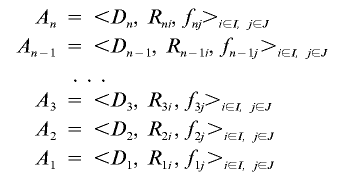
where each R li is a partial relation of the form <R l1, R l2, R l3> — with R l1 representing those n-tuples that belong to R li; R l2 representing the n-tuples that do not belong to R li, and R l3 representing those for which it is not defined whether they belong or not — such that, for every l, 1 ≤ l ≤ n, card(R l3)>card(R (l+1)3) (Bueno ibid., 601). The partial relations are extended as one goes up the hierarchy, in the sense that at each level, partial relations which were not defined at a lower level come to be defined, with their elements belonging to either R 1 or R 2.
This framework allows us to respond to certain criticisms of the semantic approach that have focussed on the role of isomorphism at the bottom level, as it were, in the context of the relationship between models and data, and to accommodate the inter-relationships between mathematical and physical structures at the “top”.
3. At The Bottom: Problems With Isomorphism.
Both realists and anti-realists agree that scientific theories should be empirically adequate. Footnote 2 In terms of the semantic approach, van Fraassen (Reference van Fraassen1980) has famously characterized this notion in terms of isomorphism: in order to be empirically adequate a scientific theory should have a theoretical model such that all the appearances (the structures described in experimental reports) are isomorphic to the empirical substructures of this model (that is, to the theoretical structures which represent the observable phenomena). However, this notion may be criticized both for being too restrictive and too wide. Such a characterization is claimed to be too wide because given two structures of the same cardinality, there are always isomorphisms holding between them.Footnote 3 The problem then is to rule out those that are not interesting (see Collier Reference Collier1992). On the other hand, this characterization is taken to be too restrictive since there have been cases in the history of science where scientific theories were taken to be empirically adequate despite the fact that there was no isomorphism holding between the appearances and the empirical substructures of such theories (see Suárez Reference Suárez1999). Both of these problems can be addressed within our framework.
In answer to the first problem, it has already been argued that the partial structures approach restricts the isomorphisms involved in a claim of empirical adequacy, by stressing the role of partial isomorphism between the appearances and the theoretical structures, and that this illuminates heuristic considerations at the level of theory pursuit (see French Reference French and Dalla Chiara1997, 42–51). Here we develop one aspect of this point and spell out the suggestion that the concept of partial isomorphism, as opposed to total isomorphism, can be used to address the problem of width. Bluntly put, the idea is that some of the uninteresting isomorphisms could be ruled out on the grounds that they do not represent appropriately the relationships holding between the R 1- and R 2-components of the partial relations found in the appearances and their theoretical “counterparts”. They map, so to say, “inappropriately” the relations of the former onto relations of the latter. The crucial notion of “inappropriateness” is a pragmatic concept, which depends on certain aims and expectations. For purely “extensional” considerations there will be many isomorphisms holding between two structures, but not all of them will be appropriate or interesting. So what we need, besides the purely formal requirement that an isomorphism holds between appearances and empirical substructures, are pragmatic considerations to determine which of them are interesting or appropriate.
It is possible to understand such pragmatic considerations in terms of heuristic moves employed in theory pursuit:
What we have when we compare different models as to their similarity is a time-slice of a heuristic process: the family of relations projected into the new domain forms the basis of the partial isomorphism formally holding between the relevant models. And the nature of this set—which relations to project—is delineated by [… ] heuristic criteria. (French Reference French and Dalla Chiara1997, 51)
As is well known, in his (1971) Post examined a variety of theoretical guidelines for theory construction and development, such as simplicity, the preservation of accepted invariance principles and, most contentiously perhaps, the General Correspondence Principle, understood as the demand that a new theory must reduce to its predecessor in the domain successfully modeled by the latter (ibid. , 228). Of course, one might substitute all or some of these criteria for others but our intention here is not to argue for one heuristic package over another. The point is simply that the partial structures framework (with the notion of partial isomorphism) supplies a formal setting in which such heuristic considerations can be accommodated, in the sense that there is room to represent the application of heuristic criteria (which of course are not formal!) to the (partial) models under consideration. Let us see how this works with respect to the issue of empirical adequacy.
Using partial isomorphism we can thus delineate “the sorts of considerations that are typically drawn upon to rule out the uninteresting and unworkable isomorphisms” (French Reference French and Dalla Chiara1997, 46, note 18). This point is made in connection with the accommodation of Hesse's notion of analogy:
One way of understanding this relationship between relationships [ … ] [that is, the relationship between the relations R i in a theoretical model and those in the models of phenomena] is in terms of an isomorphism holding between some members of the R i of one model and some members of the R i of the other. Thus we might say that there is a partial isomorphism between the sets of relations concerned [… ], and this is another way of explicating what Hesse meant by a “positive” analogy. The “negative” analogy of course refers to the dissimilarities between the R i in the two cases and the “neutral” analogy takes in those relations which are not yet known to either hold or definitely not hold in both cases. (French ibid., 47)Footnote 4
So the idea is that a partial isomorphism spells out the connections between the (“incomplete”) information we have from the empirical level, on the one hand, and the way we represent the phenomena from our theoretical models, on the other. Notice that a partial isomorphism leaves open those R 3 relations about which we do not have enough information, suggesting what may be important lines of inquiry for further pursuit (an obvious place to apply heuristic strategies).
It might seem that since there are more partial isomorphisms than isomorphisms between any two structures, use of the former in the semantic approach makes the problem of width worse. In fact, at least as defined in Bueno (Reference Bueno1997), the usual notion of isomorphism is a special case of partial isomorphism. So, given two structures, we shall have more partial isomorphisms than full isomorphisms.
This again is the kind of consideration which assumes that science could be understood in terms of a purely “extensional” characterization of its main concepts, and underestimates, not to say simply disregards, the role of heuristic and pragmatic criteria in scientific practice. Given the interplay stressed by the partial structures approach between heuristics and partiality (emphasizing the role of the R 3-components), it is natural to expect that heuristics play a crucial function at this point. Indeed, one of the roles of theory construction (especially in an empiricist setting) is to articulate, in a reasonable way, the connection between theory and evidence. The partial structures formalism is advanced in order to supply a framework in which the “openness” and “partiality” involved in this process (in particular, with regard to our empirical information) can be accommodated. We stress this point, for in scientific practice the construction of at least one theory that is empirically adequate (in the sense of van Fraassen Reference van Fraassen1980) is already a difficult task. So difficult that, in some points, a theory is accepted as being empirically adequate despite the fact that no isomorphism holds between the appearances and the empirical substructures of any model of the theory.
Let us now turn to the second problem. One possible answer has already been given in Bueno Reference Bueno1997, where it was argued that a convenient, less strict notion of empirical adequacy can be formulated in terms of partial isomorphism, and thus we can adjust the empiricist account with the records of scientific practice. We shall not, however, return to this issue here.Footnote 5
Instead, we wish to consider a related line of argument that runs as follows. The use of isomorphism in order to characterize the notion of empirical adequacy is inappropriate, given that what actually happens is that the cardinality of the domains of the empirical substructures and of the models of phenomena is generally not the same.Footnote 6 It is, therefore, simply pointless to try to establish any isomorphism between them. Thus, any characterization of empirical adequacy that is formulated in terms of the notion of isomorphism is unacceptable. We call this argument the cardinality objection, and it can be seen as the formal counterpart to Suárez's argument against van Fraassen.
Let us suppose, for the sake of argument, that this objection is sound. We shall argue that it does not follow that we cannot articulate a characterization of empirical adequacy having roughly the same formal features as van Fraassen's. In order to do so, the notion of a partial homomorphism should be introduced. The main idea is that, in terms of this notion, a broader version of empirical adequacy can then be formulated, and given that a partial homomorphism, as opposed to an isomorphism, does not depend upon structures whose domains have the same cardinality, the associated notion of empirical adequacy overcomes the difficulty put forward by the cardinality objection.
Let S = <D, R i, >i∊Iand S′ = <D′,
 $R^{\prime }_{i}$,>i∊I be partial structures. So, each R i is of the form <R 1, R 2, R 3>, and each
 $R^{\prime }_{i}$ is of the form <
 $R^{\prime }_{1}$,
 $R^{\prime }_{2}$,
 $R^{\prime }_{3}$>. We say that f: D → D′ is a partial homomorphism from S to S′ if for every x and every y in D,
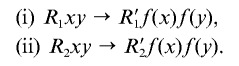
Moreover, it is also possible to introduce partial functions in the partial structures concerned, that is, functions that are not necessarily defined for every value of their arguments. In this case, if S = <D,g,R i, >i∊I and S′ = <D′, g′,
 $R^{\prime }_{i}$>i∊I are partial structures as above, where g and g′ are partial functions (with g: DxD →D and g′: D′xD′→D′), we say that f: D→D′ is a partial homomorphism from S to S′ if not only (i) and (ii) hold for every x and every y in D, but so does

for every x and every y in D where g is defined. (Notice that, in both cases, if we have total structures, the usual notion of homomorphism is obtained.)
In terms of this framework we can accommodate the hierarchy of structures in science, from the “high” level of mathematics to the so-called phenomenological level.
4. At The Top: The Applicability Of Mathematics.
Obviously the relationship between mathematics and science—or better, between mathematical theories and scientific theories—is of profound interest to both philosophers of mathematics and philosophers of science. Taking, first of all, the perspective of the philosophers of mathematics, recent structuralist proposals have attempted to represent this relationship. Thus Shapiro (Reference Shapiro1997) articulates this relationship in terms of “structure instantiation”, in which mathematical structures are taken to be instantiated at the empirical level. This proposal is somewhat rough and it is not precise (Bueno Reference Buenoforthcoming): it is rough because it ignores the complex hierarchy of models occupying the epistemic space between data models and high level theory; it is not precise, because, relatedly, it is not clear what it is to “instantiate” what might be, and often is, in the case of theoretical physics, very high level mathematics. Hellman (Reference Hellman1989), on the other hand, represents the relationship in terms of isomorphisms holding between mathematical and physical domains. In this way, he insists, the preservation of structure from the former to the latter can be accommodated. However, isomorphism is too strong (Bueno op. cit.): it is typically not the case that all of a mathematical structure is imported into the physical domain, but only part.
This leads to a similar proposal developed from the perspective of the philosophy of science. Redhead has argued that physical theories should be regarded as embedded in mathematical ones (Redhead Reference Redhead1975). In particular, one could then capture the heuristic fertility of mathematical “surplus structure”, in the sense that such structure, related to the physical theory via the embedding relationship, might then be interpreted in terms of the theory and thus be used to extend it further. A well known example would be Dirac's relativistic wave equation, which involved a generalization of the Pauli spin matrices from 2 × 2 matrices to 4 × 4 which in turn led to an ontological interpretation of the surplus mathematical structure in terms of, first of all, protons and subsequently, positrons. The structure is genuinely surplus in the sense of bringing new mathematical resources into play and the physical theory should be regarded as embedded not just into a mathematical structure, but into a whole family of such structures.
Thus, in order to represent the relationship between mathematics and science from the model-theoretic perspective, we need something that is less vague than instantiation, but weaker than isomorphism in order to accommodate the openness of scientific practice. From the perspective of the philosophy of science, we need something that can capture the “surplus structure” that mathematics can bring to a physical situation and which can also accommodate the openness of these structures.Footnote 7 Extending the partial structures approach outlined above, we suggest that the relationship between mathematical and physical theories can be thought of in terms of a partial mapping from one domain to the other and that this is conveniently represented by a partial homomorphism between the structures concerned, as defined above.
What this allows us to do, we claim, is to represent, first of all, the partial importation of mathematical structures into the physical domain, and secondly, the inter-relationships between mathematical structures themselves, constituting the surplus structure. The determination of which structure, at the mathematical level, comes to be used in the construction of theories at the physical level, is an issue that falls under the label of heuristics (see French Reference French and Dalla Chiara1997). What is important for present purposes is that with the third component in the family of partial relations—namely R 3—left open, there is structural “space” for the introduction of further parameters in case more structure is needed. Of course, this surplus mathematical structure cannot be represented simply in terms of more n-tuples of objects in the relevant domain. As we have indicated above, this surplus can be represented in terms of a family of structures (
 $S^{K}_{i}$)i∊I, associated with a given structure K (Reference BuenoBueno forthcoming). We can then represent how a given structure can be extended by the addition of new elements to its domain, or the addition of new relations and functions defined over these elements. Each (
 $S^{K}_{i}$)i∊I represents such an extension and the whole family of such extensions represents the surplus structure.
In terms of this framework what we have is the partial importation of the relevant mathematical structures into the physical domain. This partial importation can be represented by a partial homomorphism holding between the structures (
 $S^{K}_{i}$)i∊Icharacterizing the mathematical surplus structure, and the structures of the physical theory under consideration. This effectively allows the carrying over of relevant structural features from the mathematical level to that of the physical theory. The heuristic fertility of the application of mathematics rests on the “surplus” in the sense that more structure from the family can be imported if required; it is this crucial aspect that is captured by the openness of partial structures. It is important to reiterate that the standard, “full” or complete notion of homomorphism cannot capture the fact that only the relevant parts of the family of mathematical structures are imported—namely those that are expressed by the R 1 and R 2 components of the partial relations at the mathematical level.
Of course, the above representation of the hierarchy of models leading from the data to the theory can also be further adapted and so what we have are partial homomorphisms all the way down: from the mathematical to the physical and on down through the hierarchy of structures to the data models.
5. Case Study: Bose-Einstein Statistics And Superfluidity.Footnote 8
5.1. The Liquid Degeneracy Of Helium.
To illustrate the sort of picture we have been developing, let us consider the example of the explanation of the superfluid properties of liquid helium in terms of Bose-Einstein statistics. This is a particularly interesting case study, as the phenomenon to be modeled comes to be regarded as a “macroscopic” quantum phenomenon and the explanation of it ultimately ties in to very high level mathematical structures of a group theoretical nature.
The history is well known (Gavroglu Reference Gavroglu1995, Ch. 4; Brush Reference Brush1983, 172–230; Mehra Reference Mehra1994, Ch. 17). From the late 1920s to the late 1930s a variety of experimental results indicated that below a certain transition temperature, liquid helium entered a different phase possessing extremely non-classical properties. The heat conductivity of helium II, as it was called, was many times higher than that of copper, for example. Its viscosity was extremely low and, most strangely of all, extremely small temperature differences could produce extremely large convection effects—the so-called “fountain effect”. These results all indicated that liquid helium below the transition temperature could not be explained in terms of classical hydrodynamics. Furthermore, and significantly, when the specific heat was plotted against temperature a sharp maximum was noted at the transition temperature.
Fritz London was a brilliant theoretical physicist who made profound contributions to quantum chemistry, the theory of molecular forces, the theory of superconductivity and the theory of superfluidity (see Gavroglu op. cit.). In his last year at Oxford he became interested in what he later called the “mystery” of the “liquid degeneracy” of liquid helium (ibid., 147–148). The demonstration that liquid helium could not be solidified under its own pressure led to the suggestion that the liquid passed into some kind of ordered state below the transition temperature. On the urging of Mott and Heinz London, Fritz published a paper arguing that it had a diamond lattice structure. This model was subsequently abandoned in favor of a new model prompted by the 1937 Congress for the Centenary of van de Waals. Although London had no new work to present at the Congress, many of the papers took his analysis of molecular forces as the basis for further developments (ibid., 152). It was at this Congress that London was led to Einstein's work on what is now called Bose-Einstein statistics (ibid., 153).
5.2. Quantum Statistics And The Introduction Of Group Theory.
As is well known, Einstein had arranged for the publication of a paper by Bose suggesting a new form of statistics for light quanta. In his own paper of 1924 Einstein applied Bose's approach to material gas atoms (Einstein Reference Einstein1924) and noted that, as he expressed it in a letter to Ehrenfest: “From a certain temperature on, the molecules ‘condense’ without attractive forces, that is, they accumulate at zero velocity” (Pais Reference Pais1982, 432). In a further paper the following year, Einstein considered this strange condensation further and, referring to the combinatorial formula characteristic of Bose-Einstein statistics, wrote “The formula, therefore, expresses indirectly an implicit hypothesis about the mutual influence of the molecules of a totally new and mysterious kind” (Einstein Reference Einstein1925; trans. in Duck and Sudarshan Reference Duck and Sudarshan1997, 91–92).Footnote 9 For Einstein this mysterious influence could be understood through de Broglie's hypothesis of matter waves, which, as is now well known, led to Schrödinger's wave mechanics.Footnote 10
The Bose-Einstein theory was subsequently accommodated within a self-consistent framework by Heisenberg and Dirac. Following the work of Fermi, which assumed the validity of Pauli's Exclusion Principle for gas atoms and obtained a very different form of statistics, Heisenberg and independently, Dirac, demonstrated the connection between these two forms and the symmetry characteristics of states of systems of indistinguishable particles (Dirac Reference Dirac1926; Heisenberg Reference Heisenberg1926a and Reference Heisenberg1926b). Fermi-Dirac statistics follows from the requirement that the wave function for the assembly of atoms be anti-symmetrical and Bose-Einstein statistics follows from the requirement that it be symmetrical. Dirac, in particular, noted that quantum mechanics itself could not determine which form of statistics was appropriate in a given situation and that extra-theoretical considerations had to be appealed to. Thus, for example, he wrote that the symmetric form of the wave function could not be the correct one for electrons in an atom since it would allow any number of electrons to be in the same orbit (Dirac 1926, 670).
These papers of Heisenberg's and Dirac's had an enormous influence on Wigner who—followed by Weyl—initiated the introduction of group theory into quantum physics (see French Reference French, Butterfield and Pagonis1999a, Bueno and French Reference Bueno and French1999). The key to this introduction was the perception that an atomic system could be analyzed in terms of two kinds of symmetry: invariance under an arbitrary rotation about the nucleus (idealized as a fixed center of force) and invariance under permutation of the electrons (Weyl Reference Weyl1968, 268). The first symmetry is described by the rotation group, whose representations were the familiar “transformation formulae” for vectors, tensors, etc. Under the action of this group the Hilbert space decomposes into invariant subspaces, in each of which a definite representation is induced. This gives the angular momentum independently of the dynamics, since its components are the operators which correspond to the infinitesimal rotations in the relevant sub-space and the corresponding eigenvalues belong to the relevant representations (for further details see French Reference French, Butterfield and Pagonis1999a).
The second symmetry is described by the finite symmetric group of permutations. Again the Hilbert space reduces to irreducible invariant subspaces, the two most well known being the symmetric, corresponding to Bose-Einstein statistics, and the anti-symmetric, corresponding to the Fermi-Dirac form. Now, as Weyl emphasized, the establishment of this bridge between physics and mathematics was crucially dependent on the existence of further “bridges” internal to the mathematics itself; in particular it depended on the famous reciprocity relationship between the permutation group and group of all homogenous linear transformations. Indeed, he referred to this reciprocity as the “guiding principle” in his work.
Here we see how the application of group theory to quantum mechanics depended on certain crucial relationships internal to the mathematics, as represented by this reciprocity relationship. Furthermore, as we have indicated, not all of the mathematics of group theory was brought to bear, but only those aspects relevant for the symmetries of the situation (French Reference French, Butterfield and Pagonis1999a). Thus group theory can be conceived of as a family of mathematical structures, internally related by Weyl's “bridge” for example, not all of which are involved in the application. What we have then, is precisely the “partial importation” of mathematical structures noted above and the appropriate representation of this relationship is via partial homomorphisms.
5.3. The Application Of Bose-Einstein Statistics.
With the realization that there were now three kinds of particle statistics (classical, Bose-Einstein and Fermi-Dirac), a number of papers were published exploring the relationship between them. Ehrenfest and Uhlenbeck, in particular, tackled the question of whether Bose-Einstein and Fermi-Dirac statistics were required by the formalism of quantum mechanics, or whether classical statistics might still be valid in certain areas (Uhlenbeck Reference Uhlenbeck1927). They concluded that it is the imposition of symmetry requirements on the set of all solutions of the Schrödinger equation for an assembly of particles, obtained by considering the permutations of all the particles among themselves, that produces the symmetric and anti-symmetric combinations. If no symmetry constraints are imposed, then classical, Maxwell-Boltzmann statistics result. In his Ph.D. thesis (ibid.), Uhlenbeck argued that Schrödinger had shown in 1926 that Einstein's gas theory could be recovered by treating the gas as a system of standing de Broglie waves and applying Maxwell-Boltzmann statistics. However, Schrödinger's approach ruled out the possibility of the condensation effect.
During the van der Waals conference in 1937, Born presented a paper entitled “The Statistical Mechanics of Condensing Systems” (Born Reference Born1937). This was based on the work of Mayer, with the same title (Mayer Reference Mayer1937), in which an attempt was made to explain the phenomenon of condensation using classical statistical mechanics. Kahn and Uhlenbeck then showed that this was formally analogous to the theory of a Bose-Einstein gas (Kahn and Uhlenbeck Reference Kahn and Uhlenbeck1938a and Reference Kahn and Uhlenbeck1938b). Even more significantly, perhaps, they retracted the criticism of Bose-Einstein condensation expressed in Uhlenbeck's Ph.D. thesis. Gavroglu has noted that it was this work of Mayer's which led London to Einstein's paper (Gavroglu Reference Gavroglu1995 153).
Thus in his 1938 note to Nature, London writes that “[ … ] in the course of time the degeneracy of the Bose-Einstein gas has rather got the reputation of having only a purely imaginary existence” (1938a, 644). He began by indicating that a static spatial model of liquid helium was not possible, on energetic grounds, but that one could carry over aspects of that sort of approach, specifically the use of a Hartree self-consistent field approximation. On these grounds he claimed that it seemed “[ … ] reasonable to imagine a model in which each He atom moves in a self-consistent periodic field formed by the other atoms” (ibid., 643). This is similar to the way electrons were considered to move in a metal on Bloch's theory with the difference that, with helium atoms instead of electrons, “[ … ] we are obliged to apply Bose-Einstein statistics instead of Fermi statistics” (ibid., 644). This leads him to introduce Einstein's discussion of the “peculiar condensation phenomenon” of the Bose-Einstein gas. Having acknowledged its reputation as a “purely imaginary phenomenon”, London then writes: “Thus it is perhaps not generally known that this condensation phenomenon actually represents a discontinuity of the derivative of the specific heat [ … ]” (ibid.) and, significantly, illustrates this discontinuity with an accompanying figure. It is significant because of the structural similarity with the λ-point of helium, and London continues, “[ … ] it seems difficult not to imagine a connection with the condensation phenomenon of Bose-Einstein statistics” (ibid.), even though the phase transitions are of second and third order respectively. Furthermore, the experimental values for the transition temperature and entropy agree quite favorably with those calculated for an ideal Bose-Einstein gas. This numerical agreement was critical in the initial stages of this investigation of the structural similarity but, as we shall shortly see, it was subsequently demoted in importance as London came to stress the qualitative explanation Bose-Einstein statistics could give of a range of liquid helium phenomena, such as the “fountain effect”.
These phenomena are briefly mentioned at the end of London's note, but before concluding, he also acknowledges the limitations of this model in so simplifying liquid helium as an ideal gas. In particular, according to this model the quantum states of liquid helium would have to correspond to both the electrons’ states and the Debye vibrational states of the lattice in the theory of metals. Both the qualitative explanation and the limitations of the model are taken up in his 1938 Physical Review paper where he writes:
In discussing some properties of liquid helium, I recently realized that Einstein's statement [regarding the condensation effect] has been erroneously discredited. Moreover, some support could be given to the idea that the peculiar phase transition (“λ-point”), that liquid helium undergoes at 2.19°K, very probably has to be regarded as the condensation phenomenon of Bose-Einstein statistics. (London Reference London1938b, 947)
In the first part of the paper London presents “a quite elementary demonstration of the condensation mechanism” (ibid.) and again presents the specific heat graph of an ideal Bose-Einstein gas with its discontinuity. In §2 he considers the nature of this effect and argues that it represents a condensation in momentum space (ibid., 951) with a corresponding and characteristic spread of the wave packet in ordinary space.Footnote 11 Thus what we have is a “macroscopic” quantum effect and London draws the comparison with his work on superconductivity of a few years earlier (London and London Reference London and London1935; London Reference London1935; London Reference London1937).Footnote 12 In the latter case the macroscopic phenomena can be understood in terms of a “peculiar coupling” in momentum space, “as if there were something like a condensed phase” in this space (London Reference London1938b, 952; Gavroglu Reference Gavroglu1995, 158).Footnote 13 However, he then notes, this “assumption” could not be grounded in a specific molecular model, whereas it could in the case of superfluid helium where the degenerate Bose-Einstein gas provides a good example of just such a molecular model (London Reference London1938b, 952).Footnote 14
In §3 of the paper, London re-presents, with added detail, his depiction of liquid helium as a metal in which both the lattice ions and conduction electrons are replaced with He atoms and the Fermi-Dirac statistics used in Sommerfeld's theory of metals is replaced with Bose-Einstein statistics.Footnote 15 In terms of this model the fluidity of the liquid corresponds to the conductivity of the electrons in the metal. This fluidity becomes infinite as the self-consistent field formed by the atoms tends to zero and this occurs abruptly once the temperature dips below the transition temperature (ibid., 953). For a fixed value of the field the “current” is proportional to the fraction of He atoms with zero energy and velocity. Since these atoms do not contribute to energy transport no great increase in heat conductivity should be expected below the transition temperature.
However, London goes on to note, there is another mechanism for producing heat transfer: since the van der Waals force between the walls of the container and the atoms are much stronger than those between the He atoms themselves, there will be a greater concentration of degenerate atoms in a layer next to the walls than in the interior. The situation is analogous to that of a thermocouple, giving rise to a thermoforce which produces a “very great” circulation of matter (ibid., 954). This apparent conduction of heat is strongly dependent on the temperature gradient, so that at very low temperatures, where almost all the He atoms, in both the layer and interior, are degenerate, the thermoforce and the heat effectFootnote 16 disappear. “All this is in qualitative agreement with the experiments” (ibid.), continues London, which show that the heat conductivity becomes “normal” again below a very low temperature. He also notes that “this mechanism of reversible transformation of heat into mechanical energy gives a very simple explanation also for the so-called ‘fountain phenomenon’ [… ] and interprets it as a pump driven by a thermoelement” (ibid.). In the same experiment in which this effect was observed, it was also noticed that in the capillary layer the flow of matter and heat would be in reverse directions as also given by London's model.
Here, then, the emphasis is on the qualitative agreement with experimental observations, rather than the numerical agreement of his earlier note. Indeed, in Superfluids, London suggests that this numerical agreement “would perhaps not have deserved much attention” (1954, 59) had not his model offered the promise of a qualitative interpretation of the “super” properties and “striking peculiarities”. The heuristic moves made by London can be straightforwardly accommodated within the partial structures approach. As we have indicated, what was important was the structural similarity (represented graphically) between the λ-point of helium and the discontinuity in the derivative of the specific heat associated with Bose-Einstein condensation. Note that this similarity presents itself at a rather low level in the hierarchy discussed above—at the level of models of the data in fact. However, it was on the basis of this similarity that the family of relations representing Bose-Einstein statistics at the higher theoretical level was projected into the domain of liquid helium phenomena. The analogy between a Bose-Einstein gas and liquid helium was, significantly, only partial in that the phase transitions are of the third and second order respectively—here we have an example of our R 2 above. As the analogy was extended, further similarities “emerged” from the neutral analogy, corresponding to our R 3, representing London's explanation of the fountain effect.
However, London himself was explicit about his model being “highly idealized” (1938b, 953) and this aspect can also be captured within our framework. Strictly speaking, “ordinary” collision theory cannot be applied in this case where the wave packets are spatially so spread out; Ehrenfest's theorem, which allows one to apply classical mechanics to small wave packets moving in external fields, is no longer valid (London Reference London1938b, 952 and 953). More fundamentally, intermolecular forces are not taken into account (ibid., 947) and one is treating a liquid as if it were an ideal gas. Thus London concludes his 1938 paper by emphasizing that:
Though it might appear that the logical connection between the facts will not be qualitatively very different from the one we have sketched here, it is obvious that the theoretical basis given thus far is not to be considered more than a quite rough and preliminary approach to the problem of liquid helium, limited chiefly by the lack of a satisfactory molecular theory of liquids. (1938b, 954; see also 1938a, 644)
Of course, liquid helium is no ordinary liquid, as its viscosity is rather that of a gas. Thus London later writes:
[… ] this system does not represent a liquid in the ordinary sense. There are no potential barriers as in ordinary liquids to be overcome when an external stress is applied. The zero point energy is so large that it can carry the atoms over the barriers without requiring the intervention of the thermal motion. In this respect there seems to be a greater similarity to a gas than we are used to assume in ordinary liquids. This view is supported by the extremely significant fact that liquid helium I, which on first sight appears to be quite an ordinary viscous liquid, actually has a viscosity of a type ordinarily found only in gases and not in liquids. (1954, 37)
London's model can be appropriately represented in terms of partial structures and the relationships upwards, between the model, the theory of Bose-Einstein statistics and further, the mathematics of group theory, and also downwards, between the model and the behavior of liquid helium. Consider: in some respects, corresponding to our R 1, liquid helium is like a Bose-Einstein gas. Its viscosity, as noted above, is more like that of a gas than a liquid, for example. Yet in other critical respects, corresponding to our R 2, it is clearly dissimilar; intermolecular forces of the kind that are typical for liquids are not taken into account, for example. There are crucial idealizations involved. Clearly, representing the relationships between the London model and both Bose-Einstein statistics on the one hand, and the data models on the other, in terms of isomorphisms would be entirely inappropriate. Bose-Einstein statistics, in turn, came to be understood, at the highest level, via considerations of symmetry represented group-theoretically. As we have indicated, the framework of partial homomorphisms provides an appropriate representation of this latter relationship.
Thus, in terms of the hierarchy given in Section 2 above, and putting things a little crudely, we have something like the following:
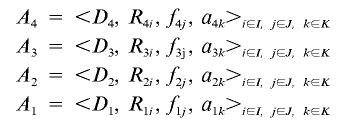
where A 4 represents the mathematical structure of group theory (and where Redhead's surplus structure is represented in terms of an associated family of structures a 4k, k∊K), A 3 represents the theory of Bose-Einstein statistics, A 2 represents London's model, with all its idealizations and A 1, for simplicity, is a condensed representation of the data models, experimental models and so forth.
Furthermore, London's “rough and preliminary” model was open to further developments—in particular with regard to the extension to a model of a Bose-Einstein liquid. Of course, this openness is delimited by the sorts of heuristic considerations mentioned previously, thus reducing the number of possible extensions, but the partial structures not only represent this openness via the R 3 (see, again, French Reference French and Dalla Chiara1997), they also allow us to represent the loci or fixed points of the extensions via the R 1. What is particularly significant about this case is that the points which were held fixed, as it were, represented by our R 1, were the high-level symmetry considerations. Retaining the component associated with Bose-Einstein statistics, understood group-theoretically, new elements were introduced and previous idealisations could be eliminated, corresponding to a move from our R 3 and changes in the R 1 and R 2.
It was Feynman who, convinced that the liquid helium transition “has got to do with statistics” (Mehra Reference Mehra1994, 350),Footnote 17 went on to develop the theory of a Bose-Einstein liquid and, in particular, succeeded in demonstrating that a transition would still occur analogous to that in a gas. In his first paper, Feynman employed his path-integral formulation of quantum mechanics to show that despite interparticle interactions, liquid helium did undergo a phase transition analogous to that found with an ideal gas, because of the symmetry of its states (Feynman Reference Feynman1953).Footnote 18
[ … ] in other words, the suggestion made by London in 1938 that the transition observed in this liquid might be a manifestation of the phenomenon of Bose-Einstein condensation was basically correct. (Mehra Reference Mehra1994, 364)
In subsequent papers Feynman examined the wave function of the excited state of the system, again in terms of fundamental quantum principles and, again, in particular, in terms of symmetry considerations (ibid., 367–387). The end result was a theory which, in predicting quantized vorticity, received conclusive empirical support.
6. The Autonomy Of London's Model.
Recent discussions of models in science have emphasized their supposed “autonomy” from high-level theory (Cartwright et al. Reference Cartwright Nancy, Suárez and Herfel1995; Morgan and Morrison Reference Morgan and Morrison1999). However, one can distinguish different senses of “autonomy” and it is not always clear from these discussions which is being deployed (for criticisms see da Costa and French Reference da Costa and French2000). Here we shall consider two different senses.
A model may appear “autonomous” from high-level theory simply because it cannot be straightforwardly deduced from such theory. An example might be the models of quantum chemistry which cannot be deduced from Schrödinger's equation because of issues of computational complexity having to do with the many-body problem. The partial structures approach is capable of capturing the sorts of relationships that do exist between such models and the high-level theory in question (French and Ladyman Reference French, Ladyman and Shanks1998). Furthermore, even granted the lack of deductive relationships, it is simply not the case that such models are either developed or applied in the absence of theoretical constraints (French and Ladyman Reference French, Ladyman and Shanks1998, da Costa and French Reference da Costa and French2000).
Alternatively, a model may appear “autonomous” in the sense that, at the time it was proposed, it was not clear how it might be obtained from high-level theory in a more or less direct way. In such cases the proponents of the model may have to introduce certain crucial idealizations in order to establish the requisite connections. This was the case with London's model above, where the nature of the idealizations required to establish the connections between the quantum statistics of an ideal gas and the behavior of a superfluid effectively force a kind of “autonomy” on the model. Thus, in Superfluids London writes that:
[ … ] an understanding of a great number of the most striking peculiarities of liquid helium can be achieved, without entering into any discussion of details of molecular mechanics, merely on the hypothesis that some of the general features of the degenerating ideal Bose-Einstein gas remain intact, at least qualitatively, for this liquid, which has such an extremely open structure. This is an assumption which may be judged by the success of its consequences in describing the facts, pending an ultimate justification by the principles of quantum mechanics. (1954, 59–60; his emphasis)Footnote 19
In other words, only some of the structural relationships embodied in the high-level theory of Bose-Einstein statistics (the “general features”) needed to be imported in order to account for the (low-level) qualitative aspects of the behavior of liquid helium and this importation can be represented in terms of our framework of partial homomorphisms holding between partial structures. This framework can also accommodate the manner in which the development of this model ultimately rested on a “structural similarity” at a relatively low level, which drove a re-conceptualization of superfluid phenomena at what might be called the “phenomenological” level,Footnote 20 and, further, the manner in which London's “quite rough and preliminary approach” was open to further extensions at the high-level represented by symmetry considerations.
In such cases the “autonomy” can be regarded as relative and only temporary. What Feynman did, effectively, was to produce a new connection with high-level symmetry considerations which was not dependent on London's idealizations. Of course it is important to acknowledge that a great deal of what goes on in science may involve such idealizations, leading to such temporarily autonomous models, but it is also important to acknowledge (a) the attitude of the proponents of the models themselves, as represented here by London's insistence that his approach should be considered only “preliminary” and (b) the role that is played by both high-level theoretical and mathematical considerations. In this case we move upwards from the qualitative features of superfluid phenomena to Bose-Einstein statistics and ultimately to group theory.
Our overall claim, then, is that, moving now in the reverse direction, from top to bottom, from the mathematics to what is observed in the laboratory, the models involved and the relationships between them can be accommodated by the partial structures approach. Coupled with an appreciation of the heuristic moves involved in scientific work, we believe that it provides a powerful representational tool which offers the possibility of a unitary approach to the nature and role of models and theories in science.


