1. Introduction
About 15% of the world's population aged 18 and older have at least one disability (World Bank 2016), with a variation between high income countries (12%) and low-income countries (18%) (World Bank 2011).Footnote 1 Across Europe, disabled people (from now on, DP) make up between 5% and 24% of the working age population: in Italy the figure is about 6% (Istat 2016).
Disability affects a wide range of socio-economic outcomes, such as labour market participation rates, employment and unemployment rates, earnings, social participation, etc. (see Jones Reference Jones2008; Berthoud Reference Berthoud2008; Mondéjar-Jiménez et al. Reference Mondéjar-Jiménez, Vargas-Vargas, Meseguer-Santamarıa and Mondéjar-Jiménez2009; Lechner and Vazquez-Alvarez Reference Lechner and Vazquez-Alvarez2011; Zwicker, Zaresani and Herb Emery Reference Zwicker, Zaresani and Herb Emery2017). DP demonstrate lower labour market participation and employment rates compared to non-disabled people (Grammenos Reference Grammenos2011; Sloane and Jones Reference Sloane and Jones2012; Pagán Reference Pagán2009). The magnitude of these negative effects varies with impairment characteristics (e.g. type, severity and number of health problems, see Jones Reference Jones2008; Reference Jones2011; Berthoud Reference Berthoud2008) and between countries, as shown in the recent literature for the UK (Kidd, Sloane and Ferko Reference Kidd, Sloane and Ferko2000; Jones, Latreille and Sloane Reference Jones, Latreille and Sloane2006); the US (Hale, Hayghe and McNeil Reference Hale, Hayghe and McNeil1998; Hotchkiss Reference Hotchkiss2004); Ireland (Gannon Reference Gannon2005; Gannon and Nolan Reference Gannon and Nolan2004; Kreider Reference Kreider1999); Australia (Oguzoglu Reference Oguzoglu2010); Italy (Agovino and Rapposelli Reference Agovino and Rapposelli2014; Addabbo, Krishnakumar and Sarti Reference Addabbo, Krishnakumar, Sarti, Malo and Sciulli2014); Western Europe in general (Mussida and Sciulli Reference Mussida and Sciulli2015); and the developing countries (Mizunoya and Mitra Reference Mizunoya and Mitra2013). Other studies have examined whether disability affects the type of employment undertaken and they demonstrate how DP are concentrated in non-standard forms of employment, in lower-skilled and lower-paid occupations (Schur, Reference Schur2002; Reference Schur2003; Meager and Higgins, Reference Meager and Higgins2011).
Low educational attainment and poor skill levels are among the main rationales for poor labour market outcomes (Greve Reference Greve2009; Mitra Reference Mitra, Heymann, Stein and Moreno2014). In Italy, DP are less likely to have an average level of education (34.5%) than non-DP (43.5%) and they are less likely to be awarded a university degree compared with non-DP (Ferrucci Reference Ferrucci2014). Among DP with low educational levels, only one out of five are in employment, compared with 62% of non-DP. In the EU countries, for higher education levels, the employment gap decreases (48% of DP are in employment compared to 85% of non-DP, see Greve Reference Greve2009). In other words, educational achievement reduces the employment gap between DP and non-DP. The lower level of employment among DP also indicates a problem of discrimination by employers (Jones Reference Jones2008). In fact, employers are less likely to hire DP due to both their suspected lower productivity and the additional costs of adjusting workplaces to meet disability requirements.
In line with the principles of the UN Convention on the Rights of Persons with Disabilities (2006), employment is a central factor in social status, equal opportunities and full participation in economic, cultural and social life. Being employed, especially for DP, is essential not only in order to earn an income but also to increase self-esteem, capabilities, autonomy and even a sense of human dignity and social cohesion. In other words, poor labour market outcomes are a cost in terms of economic and psychological well-being (see e.g. Clark and Oswald Reference Clark and Oswald1994; Young Reference Young2012). The lack of integration of DP in the labour market causes social disadvantages and social exclusion (Burchardt Reference Burchardt2003). Furthermore, the non-integration of DP incurs high costs in terms of lost output and tax revenues and it increases welfare payments (social security benefit claimants on public spending, see McVicar Reference McVicar2004). In 2013, public spending on incapacity (i.e. sickness, disability and occupational injuries) amounted to 2.1% of GDP in the OECD countries and 1.7% in Italy, on average (OECD, 2013).Footnote 2 In addition, disability expenditure is still distorted towards passive transfers. Cash transfers are only effective in the short term to avoid the risk of poverty, but activation policies are needed to eliminate it in the long run (Parodi and Sciulli, Reference Parodi and Sciulli2012). In OECD countries, at most 5% of the total budget is spent on occupational and rehabilitation programmes (OECD, 2010).
Tschanz and Staub (Reference Tschanz and Staub2017) analysed the implementation level of three dimensions of disability policies i.e. social protection, labour market integration and social rights, across different welfare systems of European countries. Their analysis identifies four clusters: (i) a cluster covering the Czech Republic, Hungary and Slovakia, with both moderate social protection and labour market integration and low level of rights safeguards; (ii) a cluster encompassing Austria, France, the Netherlands and the United Kingdom, displaying disability policies mainly oriented to activation and rehabilitation; (iii) a cluster of Nordic countries, featuring disability policies of a high level in all three dimensions. Finally, the authors find (iv) a cluster that includes Greece, Ireland, Italy, Luxembourg, Poland, Portugal and Spain, with strong attention to social protection rather than labour market integration (activation and rehabilitation) (Tschanz and Staub Reference Tschanz and Staub2017; see also Prins Reference Prins, Heymann, Stein and Moreno2014). Italy ranks at the bottom of the distribution of social protection resources for DP in the EU-27 – very much lower than the UK. Social services supporting DP are mostly delegated to families, especially in Southern Italy (CIES 2013; Griffo Reference Griffo2017).
In the last decade, the objective of the EU governments has been to reduce the extent of passive measures in favour of active measures to enable DP employment (Roulstone and Barnes Reference Roulstone and Barnes2005; Wittenburg, Mann and Thompkins. Reference Wittenburg, Mann and Thompkins2013; Huang, Guo and Bricout Reference Huang, Guo and Bricout2009; Heymann, Stein and Moreno Reference Heymann, Stein and Moreno2014). This reflects a shift from the medical model of disability to a social model of disability. In particular, policy-makers have implemented a range of policies, known as Anti-Discrimination Laws (ADL) and Mandatory Employment Quotas (MEQ).
Anti-Discrimination Laws
ADL prohibit discrimination and oblige firms to provide a barrier-free workplace environment that enables DP to perform their work tasks effectively. Canada (Canadian Charter of Rights and Freedoms, 1985) and the United States (Americans with Disabilities Act, 1990) were among the first countries to establish such legislation. The European Union issued a directive protecting the rights of disabled people in the fields of employment and training in 2000, but it left member states with large discretion over how the mandates are implemented. ADL operate on the demand side of the labour market. Productivity differences between disabled and non-disabled workers result from the lack of adjustments made in the workplace of DP. However, as pointed out by Acemoglu and Angrist (Reference Acemoglu and Angrist2001), these adjustments imply additional costs for employers, and consequently they have a negative effect on the employment of DP (for the USA see DeLeire Reference DeLeire2000; Acemoglu and Angrist Reference Acemoglu and Angrist2001; Burkhauser, Houtenville and Rovba Reference Burkhauser, Houtenville and Rovba2007; Jones, Reference Jones2008; for the UK, Bell and Heitmueller, Reference Bell and Heitmueller2009).
Mandatory Employment Quotas
MEQ is a regulatory approach for promoting the employment of DP by directly influencing labour demand. In particular, a quota is an obligation to employ a set number or percentage of disabled workers, and it is often adjusted according to the employer's size or the type of industry. The implicit assumption of MEQ is that without a quota, employers are turning away disabled workers either because of discrimination (i.e., a perception that DP are less productive than non-disabled workers) or due to the unwillingness to bear the costs needed to accommodate disabled workers. Over one-third of the OECD countries have some MEQ framework (the quotas ranging from 2% in Spain and Korea to 6% in France and Poland, and even 7% in Italy). The countries that have applied quota schemes both in the public and private sector are Austria, the Czech Republic, France, Germany, Greece, Hungary, Italy, Lithuania, Luxemburg, Malta, the Netherlands, Poland, Portugal, Slovakia, and Spain. Italy is one of the countries with the highest employment quota and non-compliance sanctions (Lalive, Wuellrich and Zweimüller Reference Lalive, Wuellrich and Zweimüller2009). In Belgium, Cyprus, Ireland, and Slovenia, only partial quota schemes apply in both private and public employment. The countries where no quota system is in force are Denmark, Estonia, Finland, Sweden, the UK and Latvia.
Therefore, the Italian experience differs from that of the UK or Scandinavia, areas that have dominated the European literature. Indeed, in Italy the labour market policies for DP mainly focus on the provision of services both to overcome discrimination by employers and to encourage direct employment, while the British and Scandinavian measures mainly focus on the removal of physical and social barriers (Roulstone and Barnes Reference Roulstone and Barnes2005; Heymann, Stein and Moreno Reference Heymann, Stein and Moreno2014). In particular, in Italy Law 68 of March 1999, ‘Regulation on the right to work of disabled people’ is based on mandatory employment quotas and introduces the principle of targeted employment (collocamento mirato), aiming at ‘putting the right person in the right workplace’. This law comprises a benefits framework for employers and financial measures to support adaptation of the work environment. It also introduces sanctions for firms that do not meet the disability employment target, via a compensation fee to a specific fund managed at the regional level. One of the limitations of this law is that it applies only to workplaces with at least 15 employees, even though the vast majority of Italian firms have fewer.
Based on the above, this paper examines the strengths and opportunities of the Italian labour policy for DP, employing a dataset built by the authors using the information contained in the Biennial Reports to the Parliament on the State of Implementation of Law 68/99 over the period 2006–2013.Footnote 3 In particular, we researched this question: which aspects of the Law are likely to generate inefficiencies in the provision of employment for DP?
The remainder of this paper is organised as follows: Section 2 examines employment policies for DP in Italy; Section 3 discusses the characteristics of the labour supply of DP under Law 68/99; Section 4 discusses the quotas criterion, with a focus on the difference between potential demand and effective demand under Law 68/99, and the effect of workplace adjustment costs on labour demand; Section 5 shows the active labour market policies on the demand side and clarifies the role of incentives on the type of hiring; Section 6 presents the penalty system; and Section 7 concludes.
2. Italian policies on the right to work of disabled people
Measures concerning employment protection in favour of DP started gaining importance in Italy at the end of the 1960s, through Law 482 of 1968, ‘General rules on the compulsory enrolment of disabled persons in public administration and private enterprises’ and, subsequently, through Law 104 of 1992 ‘Framework Law on support, social integration and the rights of disabled people’, which extended compulsory employment to DP with psychological impairments. Law 104/92 is an extremely advanced piece of legislation, which has been a source of inspiration for several countries. Its main impact has concerned the reorganisation of schooling, whereas the effect on the employment of DP has been relatively small. In this field, Law 68/1999 was the turning point and it represents a pillar of Italian legislation on the employment of DP, with a different approach to disability. This law, unlike the previous Law 482/68, abandoned the Mandatory Employment of DP in favour of the Targeted Employment of DP. Law 68/1999 anticipates some of the concepts and principles of the International Classification of Functioning, Disability and Health (ICF), although it retains some of the principles related to the medical model. For instance, targeted employment involves the removal of environmental and social problems that make employment of DP difficult. According to the principle of targeted employment (see Article 2 Law 68/99), the disabled person should be placed in a job position compatible with his/her health status and professional characteristics, and useful to the productive needs of the organisation. This eliminates discrimination by the employer and makes a disabled worker more productive because he/she is placed befitting his/her social-working profile.
In summary, Law 68/99 promotes the employment of DP influencing labour demand and labour supply. Indeed, the employment of DP is based on compulsory hiring quotas, but also on a careful assessment of the ability of DP.
3. Participants and labour supply
The targeted population of Law 68/99 is: ‘working-age people suffering from physical, mental or sensory and intellectual disabilities, resulting in a reduced capacity to work by more than 45%’, ‘DP with a degree of incapacity for work of more than 33%’, ‘the blind or the deaf-mute’, ‘war invalids, civil war invalids and services DP ’.
The prerequisite to take advantage of the benefits provided by this law is inclusion in targeted employment lists that are held by the Provincial Employment Services (PES, Article 8). In particular, the disabled person, in order to be entered on the list, must have: i) a certificate of disability; ii) certificates (functional diagnosis and final report) issued by the local medical commission (ASL, Local Health Authority). The functional diagnosis is the analytical description of the psycho-physical and sensorial impairment of the person, which defines the working capacity (actual and potential). The final report also contains information on the types of support and technical tools required for the employment of the DP. After this phase, the disabled person is then able to access the job opportunities provided by Law 68/99.
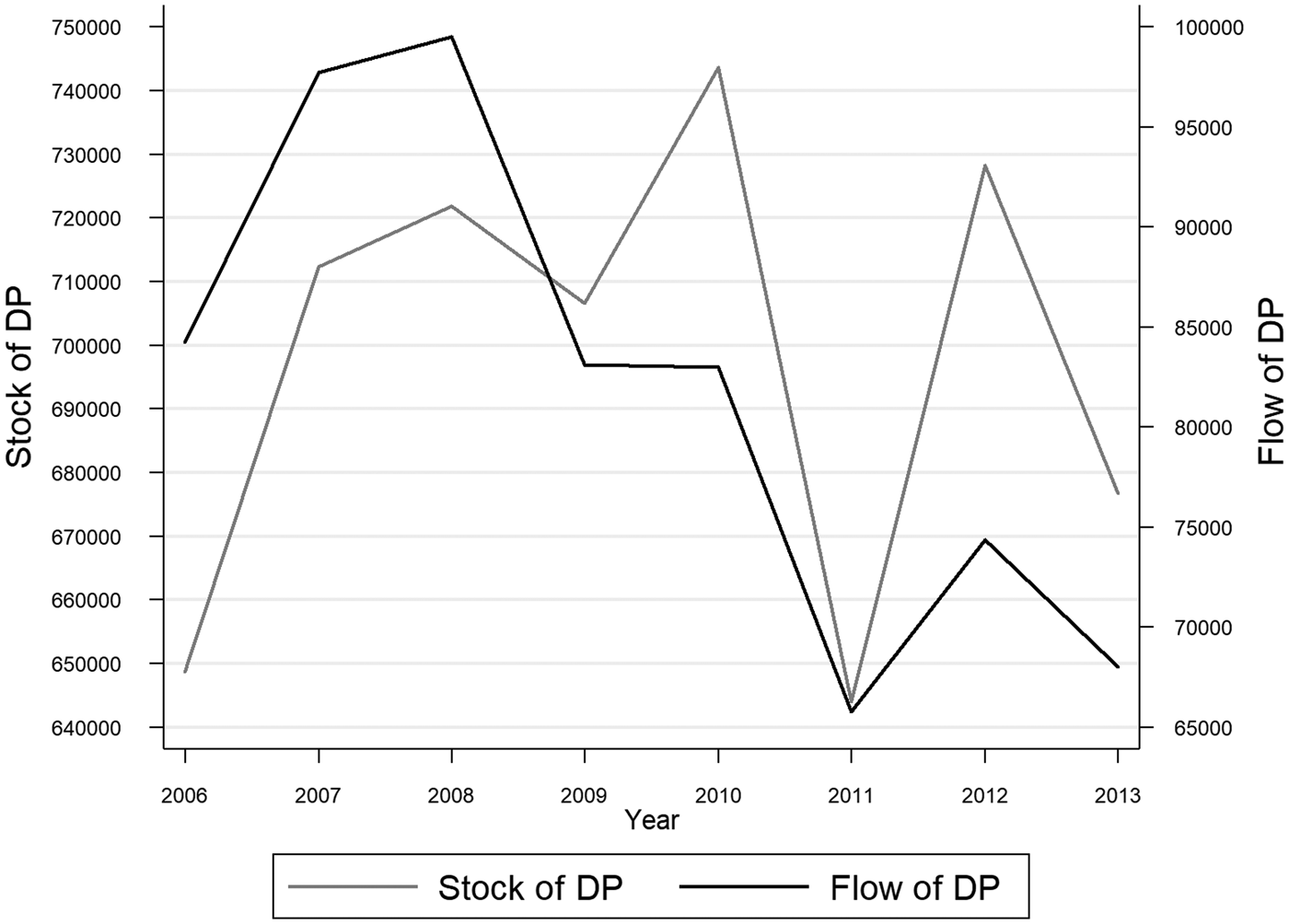
The labour supply of DP by Law 68/99 has changed over the years 2006–2013 and it features a strong territorial dualism. In particular, Figure 1 shows an increasing trend in the stock of DP enrolled on the provincial lists from 2006 (648,785) to 2010 (743,623), while it decreases in 2011 (644,029) with an upturn in the last two years. Conversely, the flow of registered DP shows an increasing trend until 2008 (99,515), while it decreases in 2009 (83,148) with a further decrease in the last four years (2010–2013).
Stock and flow of DP in targeted lists – years 2006–2013

In the years 2006–2008, the upward trend of the stock and flow of DP must be attributed to the law gradually taking effect. Indeed, from 2003 to 2008 the percentage of DP registered with PES rose from 80.9% to 94.5%, while those registered with the Local Health Authority grew from 601, in 2006, to 663 in 2008 (MLPS, 2010). At the same time, the number of PES not accessible to DP decreased (from 45% in 2002 to 25.1% in 2008, see Ferrucci Reference Ferrucci2014). In fact, Law 68/99 was part of a reform process of the employment services (Legislative Decree 469/97), which suffered from a slow implementation. In 2005, 88.1% of the PES were provided with tools and staff to implement targeted employment services, with heterogeneous situations in different regions (see Martini, Rettore and Trivellato. Reference Martini, Rettore, Trivellato, Cantalupi and Demurtas2009). The more advanced services, including work placement of DP (the construction of individual projects, guidance, training and accompanying services to firms), turned out to be still very low in 2005 (42.2%) and consequently the enrolment process of DP was still very much hindered.
From 2008 onwards, the downward trend in the flow of DP is due to the change in Article 13 of Law 118/71, stating: ‘… DP with a 74% or higher disability may apply for a disability pension if they are unemployed’ (Law of 24 December 2007, n. 247). This prescription imposed the enrolment of DP with a disability pension, who were not seeking work. Since 2008, DP can self-certify their condition (i.e. the state of unemployment, without registration in the lists). Thus, before year 2008 the number of those registered does not represent the real labour supply of DP under Law 68/99. Only after 2008 can we be confident that the DP registered are the ones actually seeking employment. Furthermore, the comparison between the upward trend in the stock and the downward trend in the flow shows that DP were registered on the lists for long periods of time, and hence demonstrates the difficulty of their employment.
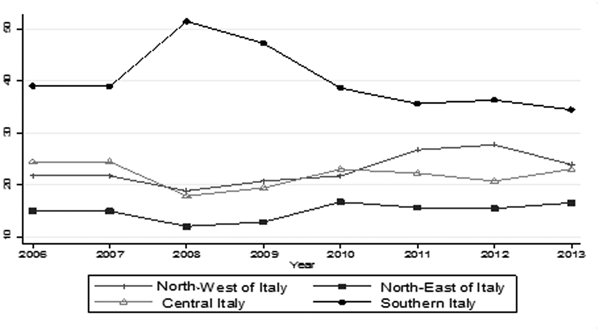
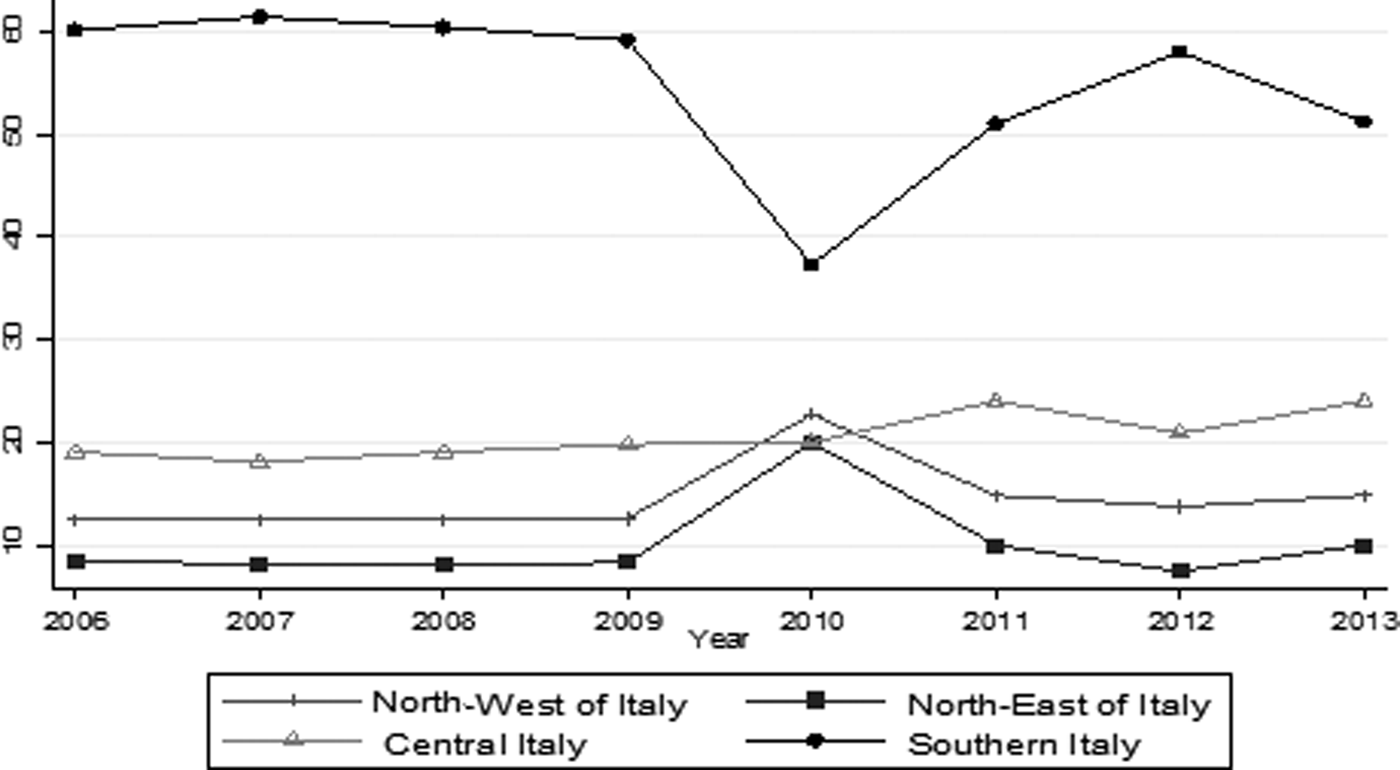
Figures 2–3 show a strong territorial divide in the institutional labour supply, for the years 2006–2013. Southern regions have a high number of DP enrolled (50% on average), in all the years under consideration. These figures may be due to the higher number of people with health problems (physical, psychological, or chronic conditions) in the Southern regions compared with the other geographical areas (Costa et al., Reference Costa, Marinacci, Caiazzo and Spadea2003; Reference Costa, Crialesi, Migliardi., Gargiulo, Sebastiani, Ruggeri and Menniti Ippolito2016). In this area, the concentration of conditions leading to individual social disadvantage (low education, unemployment) explains most of those poor health conditions (Costa et al., Reference Costa, Marinacci, Caiazzo and Spadea2003; Reference Costa, Crialesi, Migliardi., Gargiulo, Sebastiani, Ruggeri and Menniti Ippolito2016). In addition, Figure 2 depicts an upward trend in the flow of DP registered from 2006 to 2008 in the South, but a downward trend in the subsequent years (i.e., when DP can self-certify their entitlement to disability benefits). Conversely, the number of DP registered in the North and in the Centre remains lower over the period considered. After 2008, the decrease in the ‘real’ labour supply of DP by Law 68/99 in the South may be due to the poor functioning of PES, which, in the case of DP who want to work under the provisions of Law 68/99, represents a huge obstacle (Barbieri et al., Reference Barbieri, Gennari, Linfante, Rustichelli and Sestito2003). Cantalupi and Demurtas (Reference Cantalupi and Demurtas2009) show the existence of a territorial gap in the institutions that manage active measures (with better results in the North) and Law 30/2003 has not been able to reduce this gap. Moreover, as suggested by Mussida and Sciulli (Reference Mussida and Sciulli2015), a decrease in labour supply may derive from the special time requirements for the self-care or rehabilitation activities associated with disability. In the South, these services are mainly delegated to families, due to limited public support, inaccessible community infrastructure, and financial inability to pay for personal assistants (i.e., constraints outside the labour market; see Mitra,Reference Mitra, Heymann, Stein and Moreno2014). Framework Law 328/2000, on the integration of social and local services, takes a holistic and multi-problem approach to quality of life, prevention, reduction and elimination of disability, personal and family distress. It requires the network of local structures to work systematically towards the social inclusion of disabled persons (Corbisiero, Reference Corbisiero and Shakespeare2015). However, the related application of the law has been delegated to the emanation of decrees by local government, leading to disparities in its implementation. Finally, the downward trend in the flow of DP registered (Figure 2) and the upward trend in the stock of DP registered (Figure 3) highlight the difficulty in finding employment, especially in the South, and even more so in years of economic crisis.
Flow of DP in targeted lists by macro areas – years 2006–2013

Stock of DP in targeted lists by macro areas – years 2006–2013

4. Employment quotas: real and potential labour demand
Law 68/99 promotes the employment of DP by directly influencing labour demand. The implicit assumption is that without quotas employers are turning away disabled workers, due to discrimination, i.e. a perception that disabled workers are less productive than non-disabled workers (Parodi Reference Parodi2006).
The labour demand under Law 68/99 (i.e. employment quota) is linked to the size of the employer. According to Article 3 of Law 68/99, both public and private firms are obliged to employ disabled workers, in proportion to the total number of their employees. In particular, public and private employers with 15 employees and more must adhere to the following proportions: 15–35 employees: 1 disabled worker; 36–50 employees: 2 disabled workers; more than 50 employees: 7% of the employees, plus 1% of the employees must be widows, orphans or refugees.
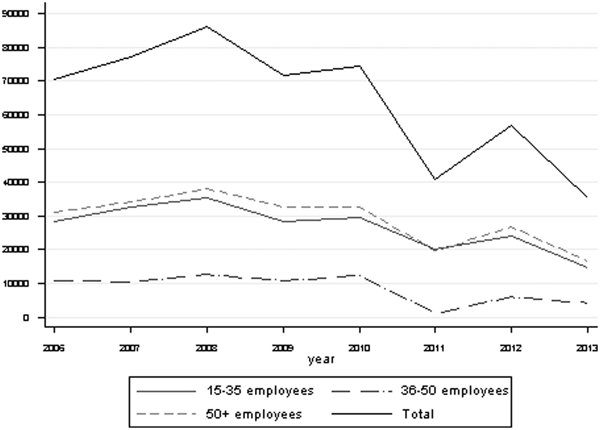
In all the years under consideration, the highest share of the mandated firms in Italy belongs to the 50+ employees category (44.27%), followed by the 15–35 category (41%), and then the 36–50 category (14.62%). Figure 4 shows an upward trend in the number of mandated firms, both public and private, from 2006 (70,324) to 2008 (85,984), and a downward trend from 2009 (71,856) to 2013 (35,487), with slight recoveries in 2010 and 2012. These results are attributable to the effects of the economic crisis. In fact, between 2008 and 2009 the number of firms and the number of employees decreased by 1% and 2%, respectively. These reductions affected all firms, in particular small firms (10–49 employees, see Istat, 2011).
Mandated firms (public and private) by size – years 2006–2013

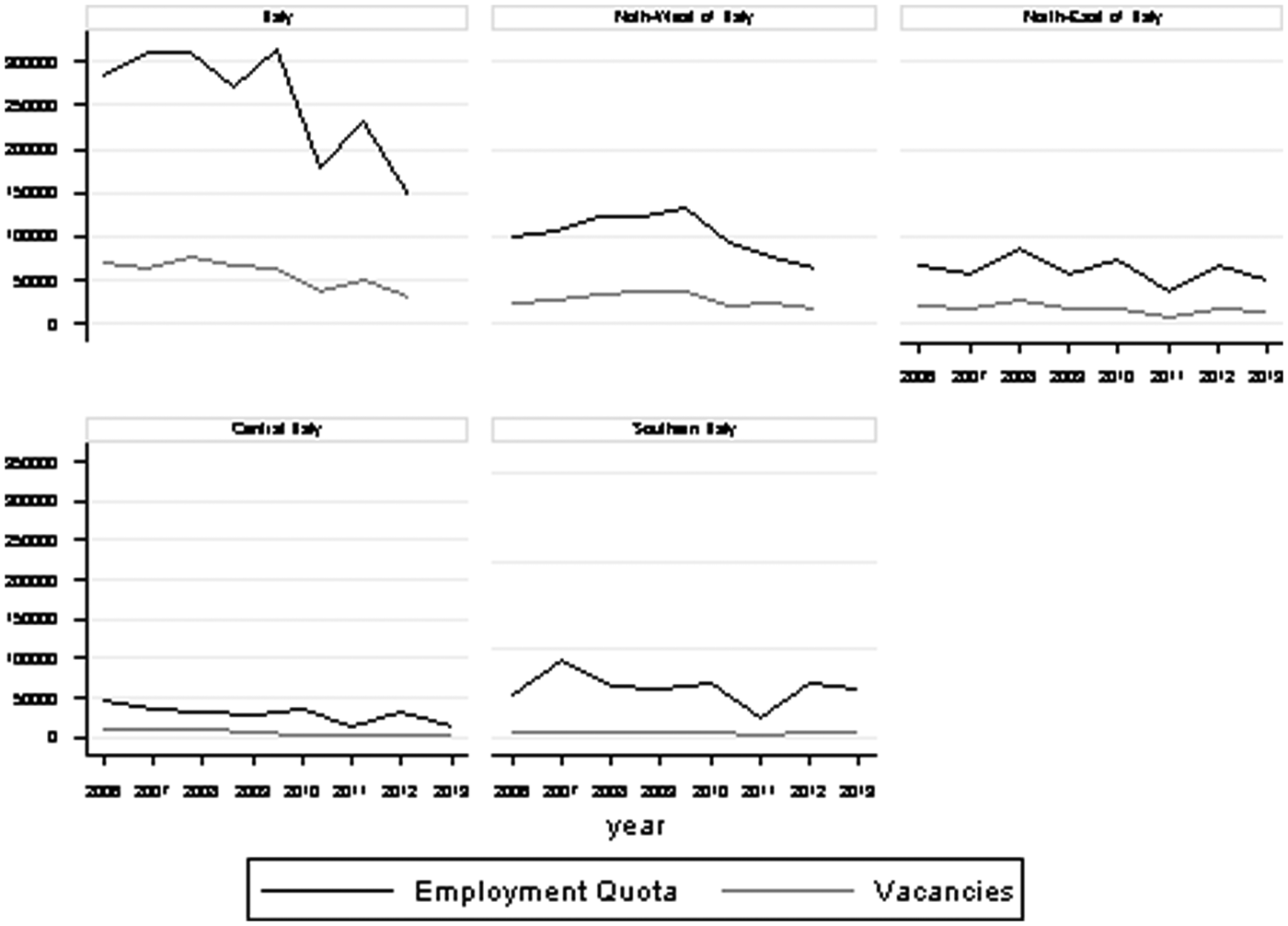
Law 68/99 allows us to define a potential labour demand (i.e. employment quota) and a real labour demand (i.e. vacancies). The real labour demand is derived from the number of DP that firms are forced to hire (i.e. employment quotas) minus the exemptions, suspensions and compensations provided by law. Variations in the employment quota are attributable to: (i) changes in type of employment contract; (ii) layoffs; (iii) firm mortality. Changes in the number of vacancies are due to exemptions and suspensions from obligations. The gap between real and potential labour demand is a proxy of the inefficiency of the law: the higher the gap, the higher the inefficiency of Law 68/99 in the creation of jobs for DP. Part of this inefficiency is explained by the convenience of exemption from recruitment sought by firms (see next subsection), entailing an under-utilisation of the inputs potentially available. Another reason for this inefficiency is the health status of the regional labour market (e.g. Temporary Layoff (TL), see article 3, Law 68/99).
Figure 5 shows a pronounced gap between potential labour demand and real labour demand in all geographical areas. The most pronounced differences are observed in the north-western regions (84,622 jobs on average) and in the southern regions (58,287 jobs on average). Firstly, these two geographical areas have suffered the worst effects of the economic crisis (due to high firm mortality in the South, and a high number of workers on TL in the north-west). Secondly, they have a high number of exemption permissions.
Employment quota and vacancies, by macro-areas – years 2006–2013

4.1 The effect of workplace adjustment costs on labour demand: exemption from recruitment
Public and private firms (with more than 35 employees) may apply for exemption from recruitment if the work on offer: a) is hard b) is dangerous (for example, due to the environmental conditions of the workplace); c) requires special procedures (Article 5, paragraph 3). For each disabled person not hired, exempt firms must pay a daily tax of €30.64 (cost of discharging) to the Regional Fund for the employment of DP.
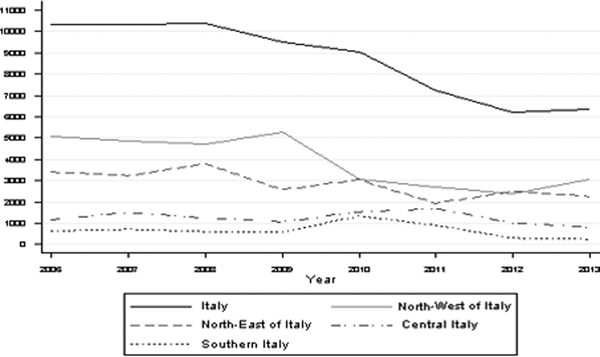
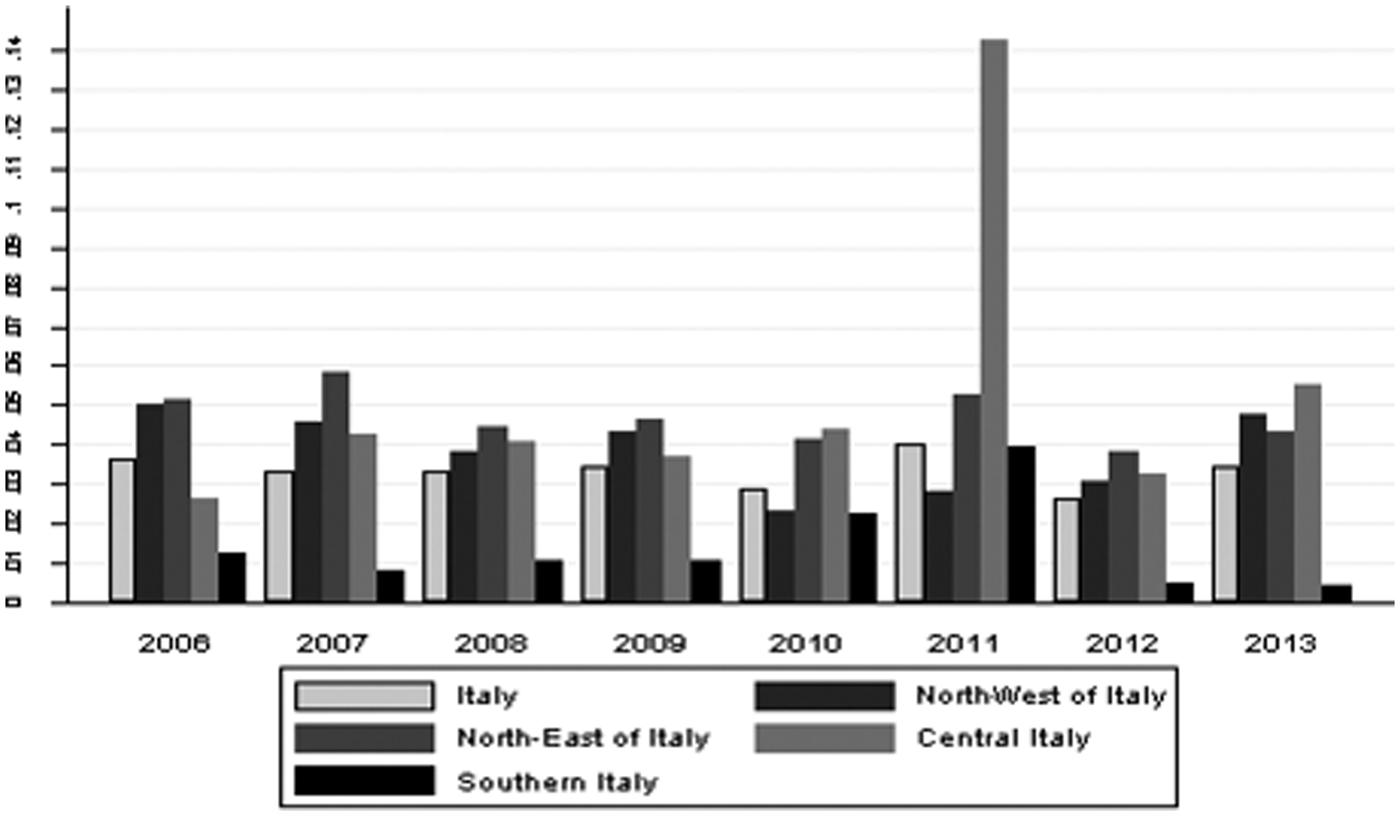
The number of jobs exempted in the years 2006–2008 was on average 10,330, while this number decreased from 2009 to 2013 (Figure 6). This reduction followed the decrease in the number of mandated firms during the same years (see Section 4). In addition, the national trend reflects the number of jobs exempted in Northern and Central regions: 5% (on average) of the employment quota in all the years considered (Figure 7). Southern regions have a lower number of jobs exempted (2% on average).
Jobs exempted by macro-areas – years 2006–2013

Jobs exempted on employment quota – years 2006–2013

In the case of exemptions, no aspect of the job is suitable for a disabled person. So these jobs cannot be adapted by means of a ‘reasonable accommodation of the workplace’ for a disabled worker. In Europe, EU Directive 2000/78/EC is the first attempt to create an obligation for employers to provide reasonable accommodations for DP.Footnote 4 It is a practical example of the shift from the medical model to the social model of disability, which places the onus on society (i.e. employers) to meet the needs of DP.
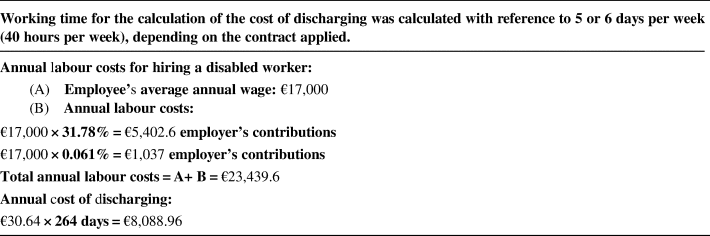
In Italy, Law 68/99 establishes that firms, following the engagement of a disabled person, apply ad-hoc adjustments in order to facilitate the working placement, ‘transforming the workplace to make it suitable to DP with a capacity to work reduced by more than 50%; or providing telecommuting technologies; or removing architectural barriers to the labour integration of the DP’ (Article 13).Footnote 5 However, as outlined by Acemoglu and Angrist (Reference Acemoglu and Angrist2001) these adjustments may have potential negative effects on employers through the imposition of additional costs. This explains why many firms require exemptions, especially in situations where the adjustment of workplaces would be more expensive. However, there is no evidence to explain why these jobs cannot be adjusted for DP with appropriate technologies. So, other things being equal, the probability of a disabled worker being hired is reduced by increasing the permitted exemptions. In the above cases, indeed, it is more favourable for employers to pay the tax and be exempted, than to hire a disabled worker. The numerical example (see Table 1) shows that the annual labour cost (€23,439.6) is three times higher than the annual cost of discharging a worker, or of the exemption tax (€ 8,088.96). This is due to Law 68/99, which does not provide appropriate incentives to adapt workplaces, but only offers a ‘partial refund of the expenditure necessary to transform the workplace’ (Article 13). This refund is not always granted. In addition, ‘the economic and regulatory treatment by collective agreements applies to disabled workers hired by Law 68/99’ (Article 10), so firms cannot offset adjustment costs by paying lower wages to DP than those received by the other non-disabled employees. This would not be a workable solution, as it is discriminatory.
Cost of discharging – numerical example

Source: Our elaboration
In summary, at issue is the extent to which Law 68/99 may raise an employer's cost of discharging a disabled worker, and hence increase the likelihood of such workers being hired by firms. If the Law is ineffective in preventing firms from discharging such workers without some effort to accommodate them, then the Law is likely to adversely affect the employment of DP. The public decision-maker should take account of the firms’ opportunity costs with regard to disability employment and adjust discharging costs and subsidies accordingly. With this approach, the accommodation measures should be deemed proportionate to the costs, the scale and the financial resources of the firms. Without a system of support for creating appropriate work environments, quotas have a limited effect.
Workplace adjustments are linked to the tools of disability management policies (DMP), which are defined as an active instrument available for firms to minimise the effect of an impairment on the individual's capacity to participate competitively in the workplace (Nota et al. Reference Nota, Santilli, Ginevra and Soresi2013; White et al. Reference White, Williams-Whitt, Kube, Wärje, Wagner, Koehn, Cornacchia, Schultz and Gatchel2016). DMP are linked to equal opportunities and to the development of human resources, such as talents and competencies (cognitive heritage) and include among their strategies ‘prevention, rehabilitation treatment concepts, and safe work return programs designed to control the personal and economic costs of workplace injury and disability’ (Shrey and Breslin Reference Shrey and Breslin1992, 184). Aratem-Bergman (Reference Araten-Bergman2016) analyses the relations between managers’ attitudes, intentions, and actual behaviours in the recruitment of DP. This study shows that attitudes, subjective norms, and perceived behavioural controls as well as DMP are significant predictors of intentions to hire DP (see also Nota et al. Reference Nota, Santilli, Ginevra and Soresi2013; Aratem-Bergman Reference Araten-Bergman2016). The adoption of DMP within the organisation may bring benefits to both workers and firms. The main advantages for employees are the increase of employability, the overcoming of physical, skill and social barriers and increases in psychological well-being. The main advantages for employers are cost reductions, increases in innovation, greater flexibility, better problem solving and better reputation (Shrey and Breslin Reference Shrey and Breslin1992, Nota et al. Reference Nota, Santilli, Ginevra and Soresi2013, White et al. Reference White, Williams-Whitt, Kube, Wärje, Wagner, Koehn, Cornacchia, Schultz and Gatchel2016). However, while at the international level firms pay particular attention to DMP, Italian firms are still backward in the implementation of these policies.Footnote 6
5. Active labour market policies: the role of economic incentives
Active Labour Market Policies (ALMP) are a core aspect of the European Employment Strategy. At the international level, the principal ALMP followed by governments focused on: (i) workplace environment, attempting to make it barrier-free (e.g. the UK, more similar to the US work-fare model); (ii) the provision of employment quotas and economic incentives for employers to encourage direct employment (e.g. Italy); (iii) the provision of training and education, in order to increase human capital and to enhance the employability of DP (e.g. Scandinavian countries, and the so-called Nordic model of ALMP). In particular, the Nordic model places a special emphasis on the notions of lifelong learning, training and full employment, which gained much prominence during the 1990s. Unlike the Nordic model, ALMPs of Law 68/99 have mainly concerned the demand side and little attention is paid to the provision of vocational training for DP in Italy (see Art.17 of Law 104/92). Only recently, with Legislative Decree 151/2015, which has modified Law 68/99, have active policy measures on the supply side been strengthened (with e.g. the provision of a service agreement and training for an immediate work placement or for self-employment). However, the effectiveness of the ALMPs needs reliable data to be tested, which in turn requires time. For these reasons, this paragraph mainly focuses on the economic incentives for employers (Article 13 of Law 68/99) needed to offset part of the labour costs to hire a DP. The aim of these incentives is both to encourage the hiring of DP (in particular with a permanent contract) and to prevent firms from preferring non-compliance and the risk of sanctions.Footnote 7
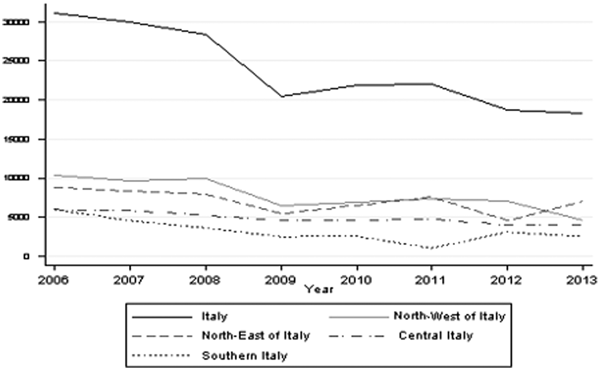
Hiring by Law 68/99 decreased progressively over the years 2006–2013, from 31,093 in 2006 to 18,295 in 2013. Figure 8 shows a strong territorial divide: Northern regions display the highest incidence of hiring, while the South features the lowest figures. Central Italian regions were located in an intermediate position with a rather constant trend over the years.
Hiring of disabled people, by macro-areas – years 2006–2013

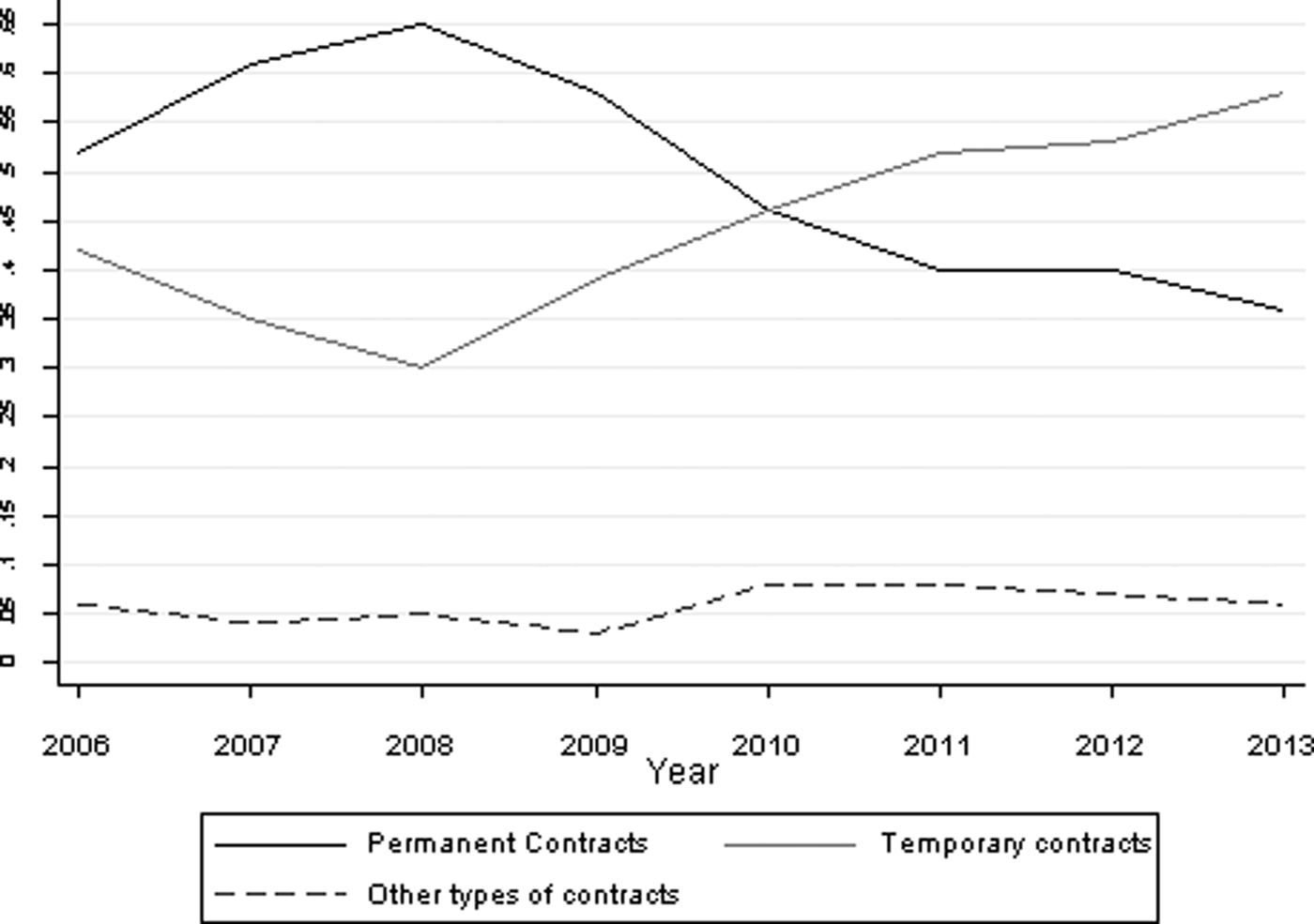
It is important to point out that the system of incentives has been subject to several changes over the years. Prior to 2007, economic incentives had a limited duration of eight years and were granted when firms hired a disabled worker through the training and orientation agreement, or through an agreement oriented to employment. In addition, a disabled worker could be employed with a permanent or temporary employment contract, and these were the two types of contracts most used (respectively 37.2% and 49%). After the amendment of Article 13 by Law 247/2007, economic incentives were provided only to firms that hired a disabled worker with a permanent contract. In these cases, the economic incentives had an unlimited duration and the firms would not need to hire through the agreement. However, with the amendment, the incentive was reduced 0.4% of the wage cost. In 2015, the system of incentives was again modified to provide a slightly higher percentage of subsidies (70% of monthly gross salary) and a limited duration (36 months or 60 months). However, the difference is minimal compared to the annual labour costs and other costs for the adaptation of the workplace (see Table 2).
Economic incentives – numerical example

Source: Our elaboration
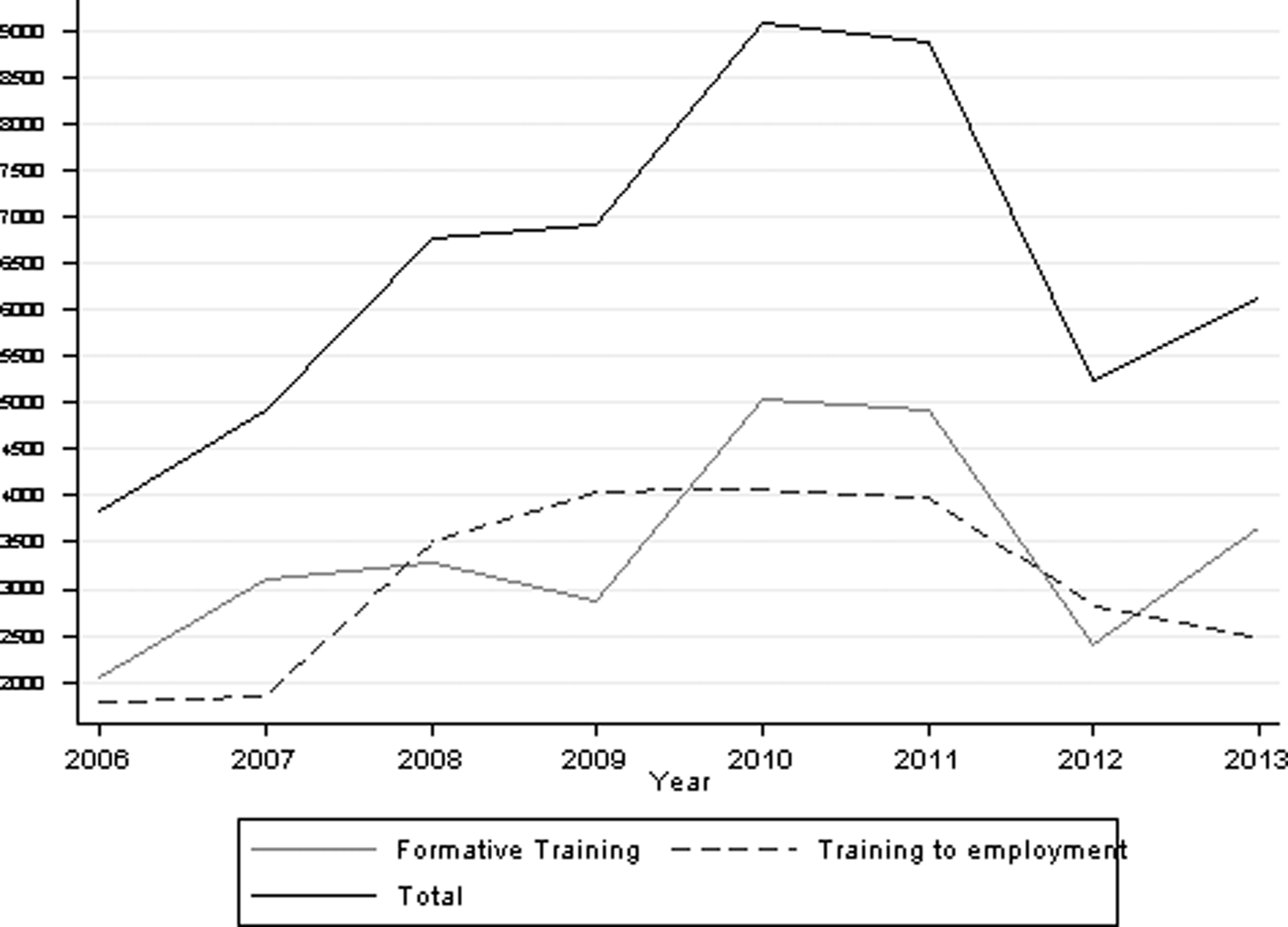
It is interesting to note that the type of hiring and the type of employment contracts reflect the change in the system of economic incentives (in their amount and duration), as well as the health status of the labour market. In particular, Figure 9 shows an upward trend in permanent employment from 2006 to 2008, and a downward trend from 2008 to 2013. On the other hand, temporary employment shows an increasing trend from 2008 to 2013. Indeed, firms – already in trouble due to the economic crisis – have not been sufficiently subsidised (low incentives) to hire a disabled worker with a permanent contract. Therefore, firms (in order to comply) have hired DP with temporary contracts, or through agreements, and even more often by internships (to avoid adjusting their workplaces). In summary, the amount and duration of economic incentives affect the firm's decision to hire a disabled worker as well as the type of hiring contract (temporary or permanent). They were not proportional to the costs of hiring a disabled worker (adjustment costs, social security, etc.). This explains the increasing trend of internships from 2006 to 2011 and the increased use of the training and orientation internships from year 2010 onwards (Figure 10).
Type of employment contracts – years 2006–2013

Type of training – years 2006–2013

From the perspective of the disabled worker, internships can lead to the risk of the so-called ‘training trap’. In particular, some studies for different European countries (Caroleo and Pastore Reference Caroleo, Pastore and Hammer2003; Dietrich Reference Dietrich and Hammer2003) have found evidence of the trap of vocational training – that is, the tendency of some disadvantaged categories (in our case the DP) to experience training of low quality, sometimes in order to obtain the associated subsidies. An explanation of the training trap can be sought in the ‘locking-in effect’ (Van Ours Reference Van Ours2004), that is, a lower intensity of job search by those engaged in the phase of training acquisition. Thus, an increase of mere traineeships rather than contracts oriented to employment could explain the failure of ALMP (Art. 13, Law 68/99). Moreover, the duration of the internships, which may last as much as 24 months, would be a further cause for the failure of ALMP for DP. The final effect of ALMPs is the reduction in the level of efficiency of the regions in the matching process of DP (Agovino and Rapposelli Reference Agovino and Rapposelli2015).
6. Financial penalties
In order to achieve the goal of employment, quotas may need an effective penalty system. In many European countries, the extent of incentives provided by quota systems is rather limited. Furthermore, the exclusive costs related to fees are not central for the decision pro or contra the employment of DP. Costs related to modification measures, workplace adaptations or other special arrangements are by far more significant (Fuchs Reference Fuchs2014).
In Italy, the penalty system by Law 68/1999 sets sanctions (Article 15, Law 68/99) via the following measures: ‘€635.11 for delayed sending of information prospects; €30.76 per day of delay of information prospects; €62.77 per day for each disabled worker not employed. The penalties contribute to the regional fund for targeted placement and finance employment inclusion projects’.
This system, along with the French one, is considered among the strictest in Europe (OECD, 2003; 2010) However, there is no evidence (to our knowledge) of its effectiveness. Theoretically, this system is effective if firms prefer to hire a disabled worker rather than pay the sanction. However, the numerical example shows that for the firms it is preferable to delay hiring a disabled worker. Table 3 shows that the penalty for non-compliance in a period of 59 days is €3,703.43, while the labour cost is €5,238.61. For this reason, firms prefer to pay the sanction, because it is approximately half of the labour costs of DP.
Sanction – numerical example

Source: Our elaboration
In order to overcome the failure of this system of penalties, the cost of non-compliance or the size of wage subsidies offered to employers who employ disabled workers should be increased. Wuellrich (Reference Wuellrich2010) examined a non-compliance tax increase of 30% in Austria on firms not complying with the quotas and he finds that this led to an increase of 2.5% in the employment rate of DP. Lalive, Wuellrich and Zweimüller (Reference Lalive, Wuellrich and Zweimüller2013) analyse policies in Austria.Footnote 8 The system adopted there obliges firms to hire one additional DP for every 25 new employees, with financial penalties imposed on firms that fail to do so. They examine two groups of firms, one that just managed to meet the requirement for disability employment, and another that just failed to do so, incurring penalties. They find firms that had to pay penalties tended to hire more DP than the ones that did not. This shows that financial penalties produce incentives for disability employment, while subsidies tend to cause moral hazards.
7. Conclusion
This article has described the operation of Law 68 of March 1999, ‘Regulation on the right to work of disabled people’. Even though Law 68/99 aims at introducing measures to promote an individual-based plan addressing the integration and placement of DP in the labour market, the significant differences among macro areas and the propensity of private and public firms not to comply with their obligations (preferring the risk of sanctions and counting on delays in public control and verification) do not facilitate its implementation. Law 68/99 specifies that regions have the greatest responsibility in its application. Consequently, its successful implementation depends almost exclusively on their actions and their ability to coordinate efficiently the various actors involved in employing DP (e.g. Local Health Authority, PES; schools). However, each macro area has different socio-economic conditions, contexts that lead to large variations in employing disabled people. For example, the presence of a high unemployment rate or the presence of private firms facing a crisis represent an obstacle to its full implementation (as in the case of South Italy). In addition, the employment of DP is also influenced by local social aspects, such as welfare factors (e.g. assistance and care services) that in some cases may represent an obstacle to labour market participation.
In order for Law 68/99 to have a positive effect on the employment of DP, higher incentives must be implemented for mandated firms (subsidies for the cost of labour), especially for the adaptation and adjustment of the workplace. In this case, firms would be encouraged to recruit and avoid a penalty. In addition, disability management policies in the workplace as well as vocational training have a fundamental role in overcoming physical, skills and social barriers that DP encounter when entering the labour market. These policies have been strengthened only recently and the system of sanctions has been modified (from 1 January 2017), with an increase in the penalty for firms that fail to hire disabled workers. The proper assessment of the effects of this modification on employment of DP requires some time.
Notes on contributors
Massimiliano Agovino is an associate professor of Economic Policy at the Parthenope University of Naples. His research focuses on the macroeconomic approach to the labour market, spatial econometrics, disability and employment, environmental economics and environmental policy. He has conducted major studies on Law 68/99 whose aim is the regulation and promotion of the employment of persons with disabilities in Italy.
Katia Marchesano is currently a research fellow in Economics at the Federico II University of Naples. Her research focuses on the evaluation of labour market policies and social programmes for disabled people, accessible tourism, environmental economics and environmental policy.
Antonio Garofalo is a full professor of Economic Policy at the Parthenope University of Naples and Head of the Department of Economic and Legal Studies. His research focuses on the labour market, work sharing, economic dualism, technological innovation and R&D, spatial econometrics, disability and employment, environmental economics and environmental policy.