Introduction
Traditional metallurgical theories suggest that multiple alloying elements in an alloy may lead to the formation of multiple compounds with some complex microstructures [Reference Miracle and Senkov1, Reference Gao, Yeh, Liaw and Zhang2]. The development of high-entropy alloys (HEAs) adds a new dimension to the alloy design strategy [Reference Cantor, Chang, Knight and Vincent3, Reference Yeh, Chen, Lin, Gan, Chin, Shun, Tsau and Chang4, Reference Ranganathan5]. HEAs have gained a considerable attention in the last decade, due to their outstanding properties, such as higher strength at ambient as well as elevated temperatures, wear resistance, irradiation resistance, and good chemical passivity against corrosive and oxidizing atmospheres [Reference Senkov, Miracle, Chaput and Couzinie6, Reference Lu, Dong, Guo, Jiang, Kang, Wang, Wen, Wang, Jie, Cao, Ruan and Tingju7, Reference Zhang, Zuo, Tang, Gao, Dahmen, Liaw and Lu8, Reference Li, Pradeep, Deng, Raabe and Tasan9, Reference Singh, Wanderka and Murty10, Reference Chattopadhyay and Murty11, Reference Xiao, Zhou, Wu, Diao, Gao, Song and Liaw12, Reference Guo, Wu, Song, Wang and Song13, Reference Guo, Xiao, Wu, Song and Song14]. Many of the HEAs were reported to exhibit exceptionally high tensile as well as compressive strengths (over 2 GPa [Reference Miracle and Senkov1, Reference Gao, Yeh, Liaw and Zhang2, Reference Guo, Xiao, Wu, Song and Song14]). Several hypotheses have been proposed about the characteristics of HEAs and correlating their properties [Reference Miracle and Senkov1, Reference Gao, Yeh, Liaw and Zhang2, Reference Cantor, Chang, Knight and Vincent3, Reference Yeh, Chen, Lin, Gan, Chin, Shun, Tsau and Chang4, Reference Ranganathan5, Reference Wang, Li, Ren, Yang and Fu15, Reference Sharma, Singh, Johnson, Liaw and Balasubramanian16, Reference Manzoni, Daoud, Völkl, Glatzel and Wanderka17, Reference Santodonato, Liaw, Unocic, Bei and Morris18, Reference Manzoni, Singh, Daoud, Popp, Völkl, Glatzel and Wanderka19, Reference Zhang, Zhang, Diao, Gao, Tang, Poplawsky and Liaw20, Reference Pradeep, Wanderka, Choi, Banhart, Murty and Raabe21, Reference Senkov, Miller, Miracle and Woodward22, Reference Ji, Fu, Wang, Wang, Zhang, Wang and Zhang23, Reference Shiratori, Fujieda, Yamanaka, Koizumi, Kuwabara, Kato and Chiba24]. Initially, it was believed that single-phase solid solutions could be formed only when constituents were taken in the equiatomic ratio; however, lately, several alloys have been reported with non-stoichiometric compositions [Reference Miracle and Senkov1, Reference Gao, Yeh, Liaw and Zhang2, Reference Cantor, Chang, Knight and Vincent3, Reference Yeh, Chen, Lin, Gan, Chin, Shun, Tsau and Chang4, Reference Ranganathan5]. It has also been realized that producing a 100% pure single-phase alloy has not been an easy task in most of the cases. Alloys often have some secondary phases, sigma phases or lave phases, and as a result, HEAs with dual phases and multiphases have been widely reported [Reference Miracle and Senkov1, Reference Gao, Yeh, Liaw and Zhang2, Reference Guo, Wu, Song, Wang and Song13, Reference Guo, Xiao, Wu, Song and Song14, Reference Wang, Li, Ren, Yang and Fu15, Reference Sharma, Singh, Johnson, Liaw and Balasubramanian16, Reference Manzoni, Daoud, Völkl, Glatzel and Wanderka17, Reference Santodonato, Liaw, Unocic, Bei and Morris18, Reference Manzoni, Singh, Daoud, Popp, Völkl, Glatzel and Wanderka19, Reference Zhang, Zhang, Diao, Gao, Tang, Poplawsky and Liaw20]. This class of alloys has a huge potential in several high-performance applications in, for example, aerospace, defense, and transportation sectors [Reference Miracle and Senkov1, Reference Gao, Yeh, Liaw and Zhang2, Reference Cantor, Chang, Knight and Vincent3, Reference Yeh, Chen, Lin, Gan, Chin, Shun, Tsau and Chang4, Reference Ranganathan5, Reference Senkov, Miracle, Chaput and Couzinie6].
AlCoCrFeNi alloy has gained a particular interest in the present context, due to the unique combination of ultra-high strength (in the order of about 2 GPa) and relatively larger elongation before fracture (over 30%) [Reference Wang, Li, Ren, Yang and Fu15]. AlCoCrFeNi system is one of the most widely reported alloys to understand phase evolution and to establish phase diagrams, through experimental studies as well as prediction through thermodynamic principles [Reference Wang, Li, Ren, Yang and Fu15, Reference Sharma, Singh, Johnson, Liaw and Balasubramanian16, Reference Manzoni, Daoud, Völkl, Glatzel and Wanderka17, Reference Santodonato, Liaw, Unocic, Bei and Morris18, Reference Manzoni, Singh, Daoud, Popp, Völkl, Glatzel and Wanderka19]. This quinary system shows complex phase evolution from a nearly BCC single phase to mixed phases, depending on composition variations and temperature ranges. At higher temperatures, it turns out to be a multiphase system, containing both ordered and disordered phases. It forms a disordered FCC phase, ordered FCC phase, disordered BCC phase, ordered BCC phase (B2 phase), sigma phase, lave phase, etc. This system also forms eutectic HEAs when the concentration of Ni is increased to about 1.2 at.% [Reference Xiao, Zhou, Wu, Diao, Gao, Song and Liaw12, Reference Guo, Wu, Song, Wang and Song13, Reference Guo, Xiao, Wu, Song and Song14, Reference Mohanty, Maity, Mukhopadhyay, Sarkar, Gurao, Bhowmick and Biswas25, Reference Qin, Xue, Fan, Chen, Wang, Su, Ding and Guo26, Reference Shivam, Basu, Pandey, Shadangi and Mukhopadhyay27, Reference Vaidya, Prasad, Parakh and Murty28].
With its moderate density, it stands out to be considerably lighter than steels and superalloys [Reference Miracle and Senkov1]. It has very high specific strength compared to titanium alloys and other conventional alloys. Density of this alloy may also vary depending on the fraction of constituent phases (i.e., ratio of BCC to FCC phase, etc.). This alloy can be produced through melting route (mostly induction melting or arc-melting processes) or powder metallurgy (PM) route consisting of mechanical alloying followed by sintering. HEA powders are mostly produced through mechanical alloying, although there have been few reports of producing other HEA powders through the atomization process [Reference Eißmann, Klöden, Weißgärber and Kieback29, Reference Liu, Wang, Fang, Liu, Wu and Chen30]. However, the atomization process fails to maintain chemical homogeneity or yields phase separation and segregation. Since PM route offers a near net shape capability and manufacturing flexibility with better chemical homogeneity, the mechanical alloying process has gained widespread attention. High-density components of the AlCoCrFeNi alloy are produced mostly through spark plasma sintering (SPS) or other hot pressing methods [Reference Guo, Xiao, Wu, Song and Song14, Reference Ji, Fu, Wang, Wang, Zhang, Wang and Zhang23, Reference Mohanty, Maity, Mukhopadhyay, Sarkar, Gurao, Bhowmick and Biswas25, Reference Tang, Senkov, Parish, Zhang, Zhang, Santodonato, Wang, Zhao, Yang and Liaw34, Reference Zhang, Han, Meng, Su and Li35]. To produce full-density parts, mechanically alloyed powders were sintered on the SPS system at a temperature range of 900–1100 °C while applying the simultaneous pressure of about 10–25 MPa. Since the sintering cycle is very short, the SPS process offers the advantage of producing alloys with ultrafine grains. However, exploring the commercial viability or shape complexity, widespread adoption of SPS is still limited or is not an economically favorable process. On the other hand, pressureless sintering widens the applications of alloys with significant cost reduction in production. Pressureless sintering and sintering mechanisms of other HEA powders, such as CoCrFeNi [Reference Mane and Panigrahi31], CoCrFeNiMn [Reference Eißmann, Klöden, Weißgärber and Kieback29, Reference Liu, Wang, Fang, Liu, Wu and Chen30, Reference Mane and Panigrahi31, Reference Mane and Panigrahi32], and AlCoCrFeNiMn [Reference Mane and Panigrahi32], have been reported earlier. However, to produce some useful components, alloy powders need to be sintered to nearly full density. This is very critical, particularly in systems like HEAs where diffusion has often been believed to be sluggish in nature [Reference Tsai, Tsai and Yeh33]. Densification under the pressureless condition is very poor [Reference Mane and Panigrahi31, Reference Mane and Panigrahi32]. Achieving high density in HEA powders, through pressureless sintering, is confronted with several challenges; as a result, none of the HEA powders have been sintered to full density so far, other than using the SPS process. While understanding the high potential of the AlCoCrFeNi alloy for a variety of applications, the present investigation aims to produce high-density components of this alloy powder, through the pressureless sintering route. Usually, pressureless sintering of any powder to high densities requires some sintering aids or liquid-phase sintering methods. For the present alloy powder, efforts have been made to develop a liquid-phase sintering method by exploiting the presence of a small fraction of low melting phase in the alloy.
Results
Phase analysis
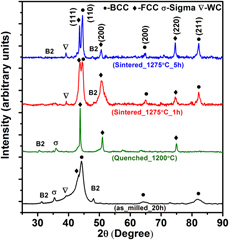
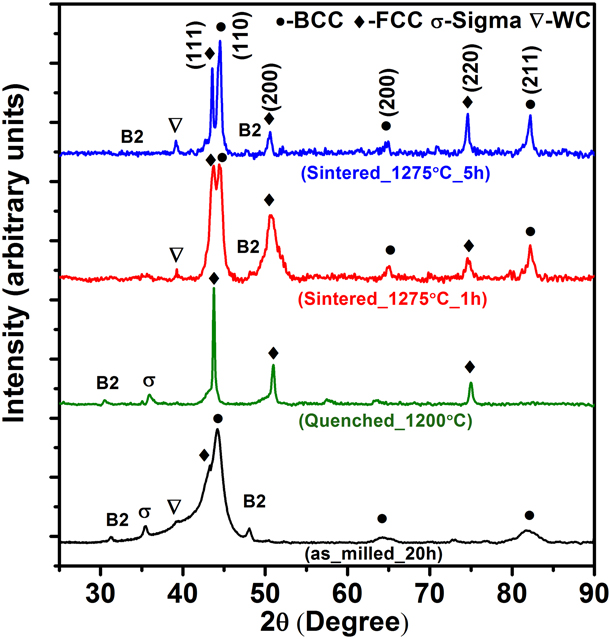
Figure 1 shows the XRD patterns of the powder and sintered samples. As-milled powder shows that all major peaks of (110), (200), and (211) correspond to the BCC phase. Apart from the BCC phase, powder also has a small fraction of the FCC phase, B2 phase and σ-phase. When the sample was sintered at 1275 °C for 1 h, phase composition was changed significantly. The fraction of FCC phase increased significantly, and it appears to have a nearly similar fraction to that of the BCC phase. Peaks belonging to the σ-phase have nearly disappeared, but peaks belonging to the ordered BCC-B2 phase are present. When the sintering time was increased to 5 h, the phases remained nearly the same as when the sample was sintered for 1 h. An increase in the fraction of the FCC phase in this alloy has been widely reported by others too. The crystallite sizes of both the BCC and FCC phases were estimated from the respective XRD peaks. In the powder, the crystallite size of the BCC phase was found to be about 190 ± 5 nm, whereas the crystallite size of the FCC phase was found to be very small, about 20 ± 7 nm. During sintering, there was a significant change in the crystallite size. After sintering at 1275 °C for 5 h, the crystallite size of the FCC phase was found to be increased almost 10 times (to 243 ± 6 nm) compared to that of the powder sample. On the other hand, the crystallite size of the BCC phase was found to be slightly decreased to about 122 ± 5 nm, compared to that of the powder sample. This unusual decrease in the crystallite size of the BCC phase at higher temperatures could be attributed to the conversion of the BCC phase to the FCC phase and also the presence of the B2 phase.
XRD patterns of the mechanically alloyed powder and the sample sintered at 1275 °C for 1 and 5 h.
DSC analysis
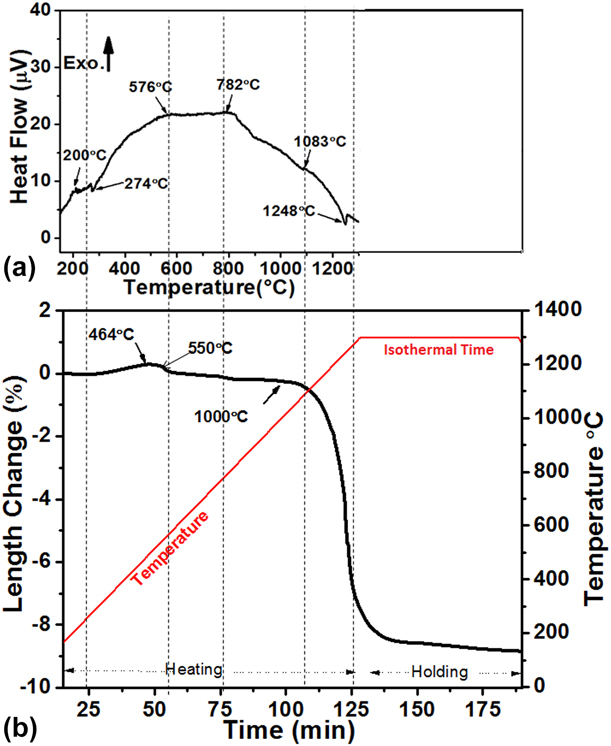
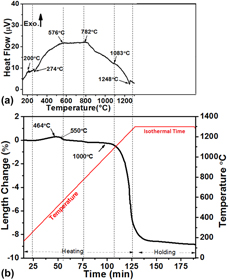
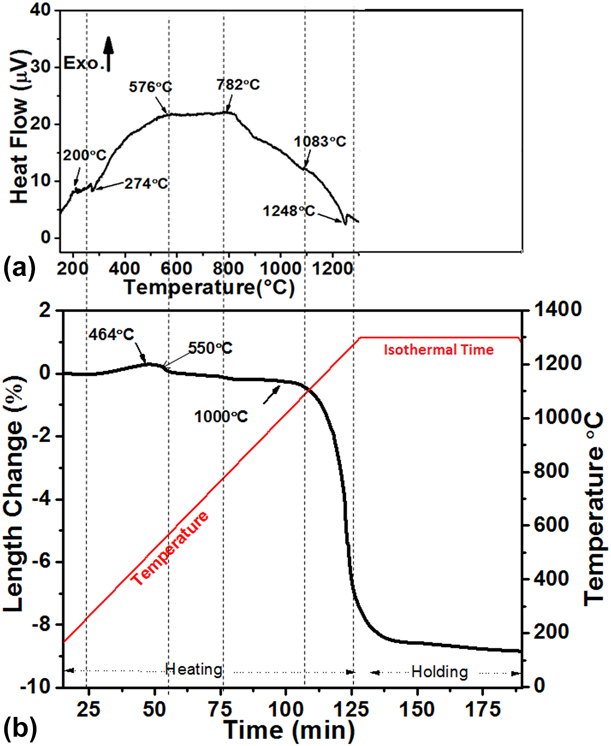
DSC profile of the alloy powder is shown in Fig. 2(a). During initial heating, the powder showed a small exothermic peak in the range of 200–260 °C, followed by a small endothermic peak at about 274 °C. In the temperature range of 576 °C–782 °C, a broad and shallow endothermic region, followed by two very small endothermic peaks at 930 and 1083 °C, was observed. On further heating to high temperatures, one small endothermic peak started appearing at about 1200 °C with a sharp peak at about 1248 °C.
(a) DSC patterns of as-milled powder and (b) dimensional changes recorded through dilatometer, as a function of temperature and time.
Dilatometry
Dimensional changes observed as a function of temperature and time have been recorded and are shown in Fig. 2(b). During heating, the sample showed different features at different temperature ranges. The sample initially showed low expansion of up to about 464 °C. At this point, the slope of the expansion curve decreased slightly, indicating onset sintering temperature. On further heating, the sample exhibited a gradual decrease in height which continued till about 550 °C. At about 1100 °C, the densification rate seemed to be accelerated considerably. When the temperature reached about 1200 °C, a rapid shrinkage was observed. Dimension changed steeply and continued till set temperature (up to about 1275 °C). Sample height decreased to about 9%, and the shrinkage continued during the isothermal period also, yielding the net shrinkage of about 11% in the sample.
Sintering
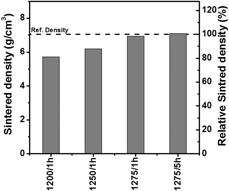
Since the dilatometric study showed accelerated densification from 1200 to 1275 °C, these temperatures were chosen for the pressureless sintering of larger samples (set 2). Density plot of the sintered samples are shown in Fig. 3, where reference bulk density is taken for the sample prepared through SPS [Reference German36] to full density. As discussed earlier, density of this alloy may vary depending on the fractions of various phases in the sample. Therefore, both actual densities (g/cm3) and relative densities were presented. Density reached about 82% when the sample was sintered at 1200 °C. Density was found to be increased rapidly from 1200 to 1275 °C when sintered for 1 h. Density was found to reach about 97% at 1275 °C after sintering for 1 h. At 1275 °C, when the holding time was increased from 1 to 5 h, density was found to reach the near theoretical level or nearly full density (Fig. 3).
Sintered densities of samples at different temperatures and times. Reference density for the sample prepared using SPS [Reference Zhang, Han, Meng, Su and Li35] has been shown as a horizontal line.

Microstructure evolution
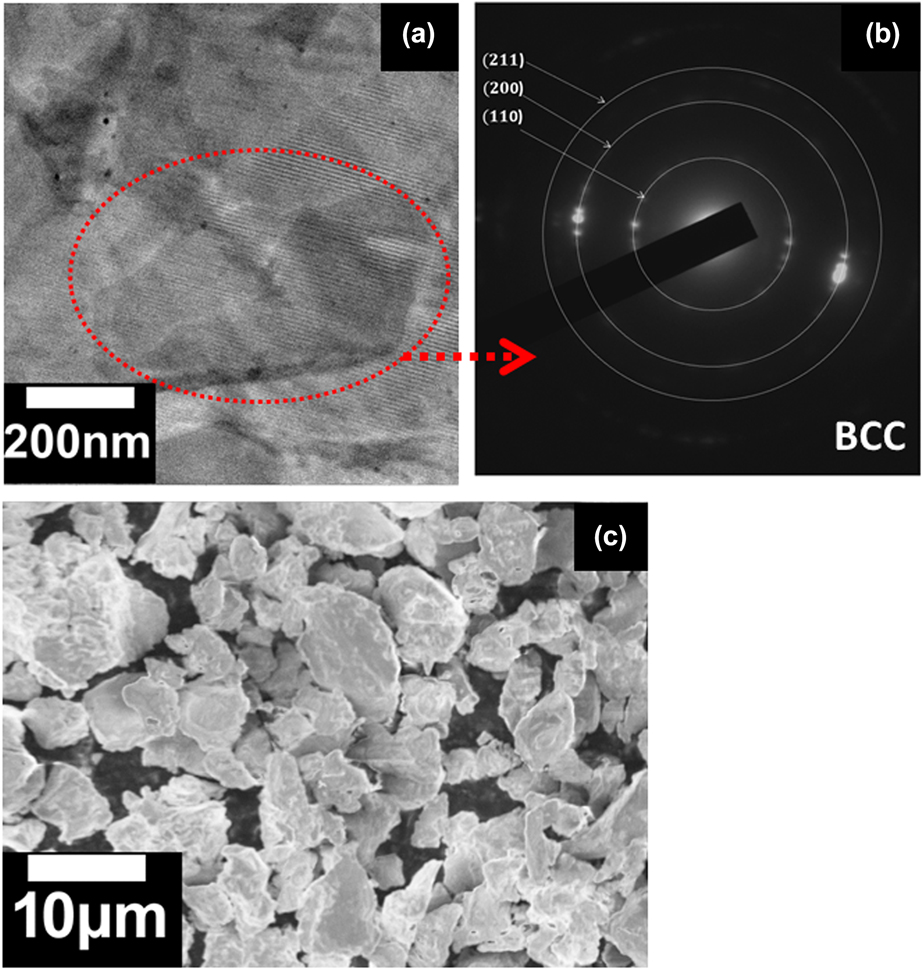
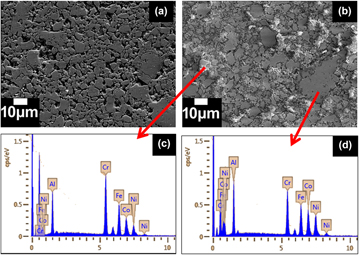
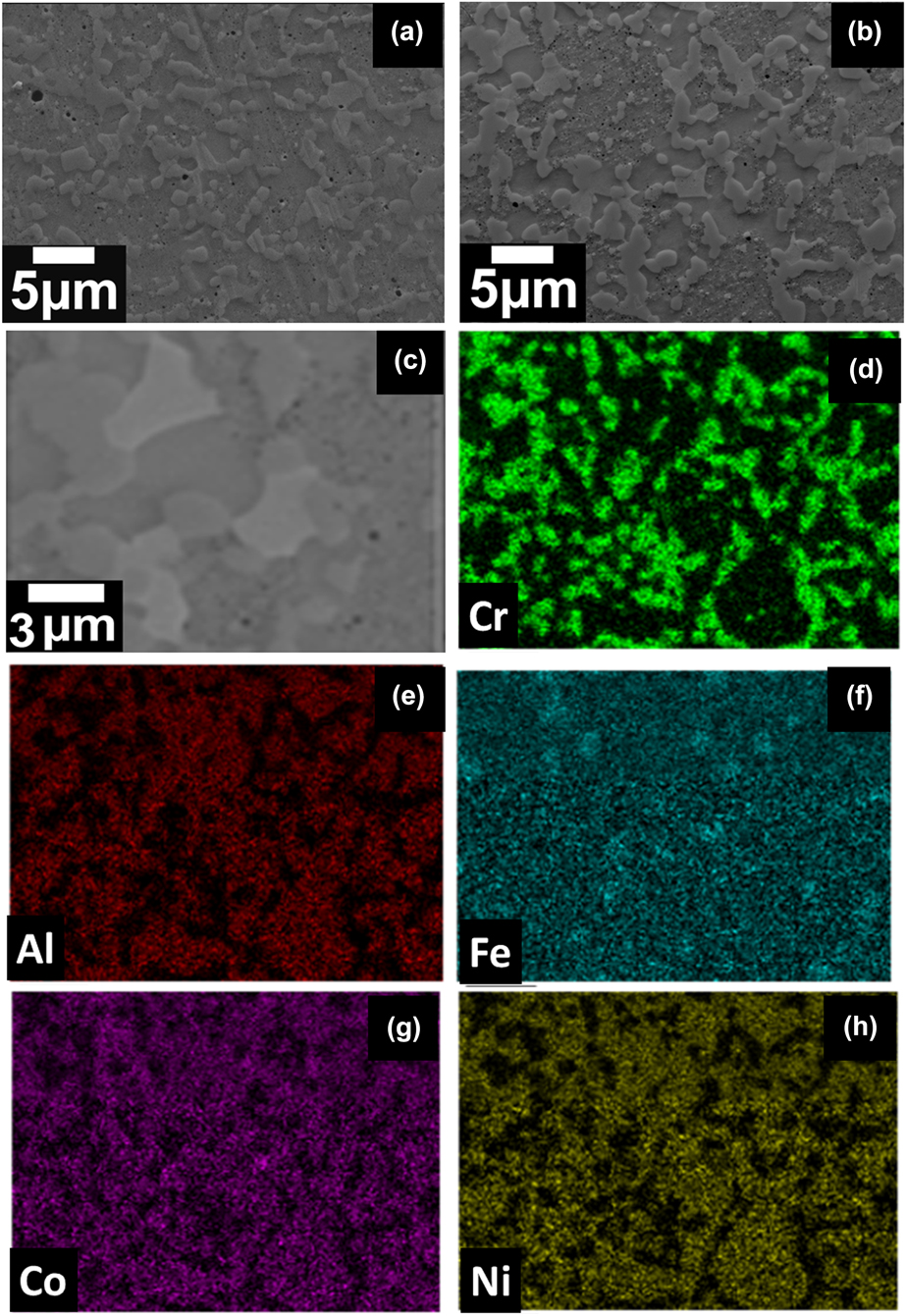
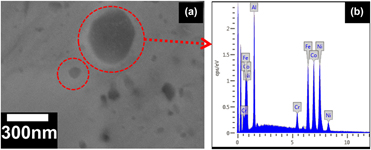
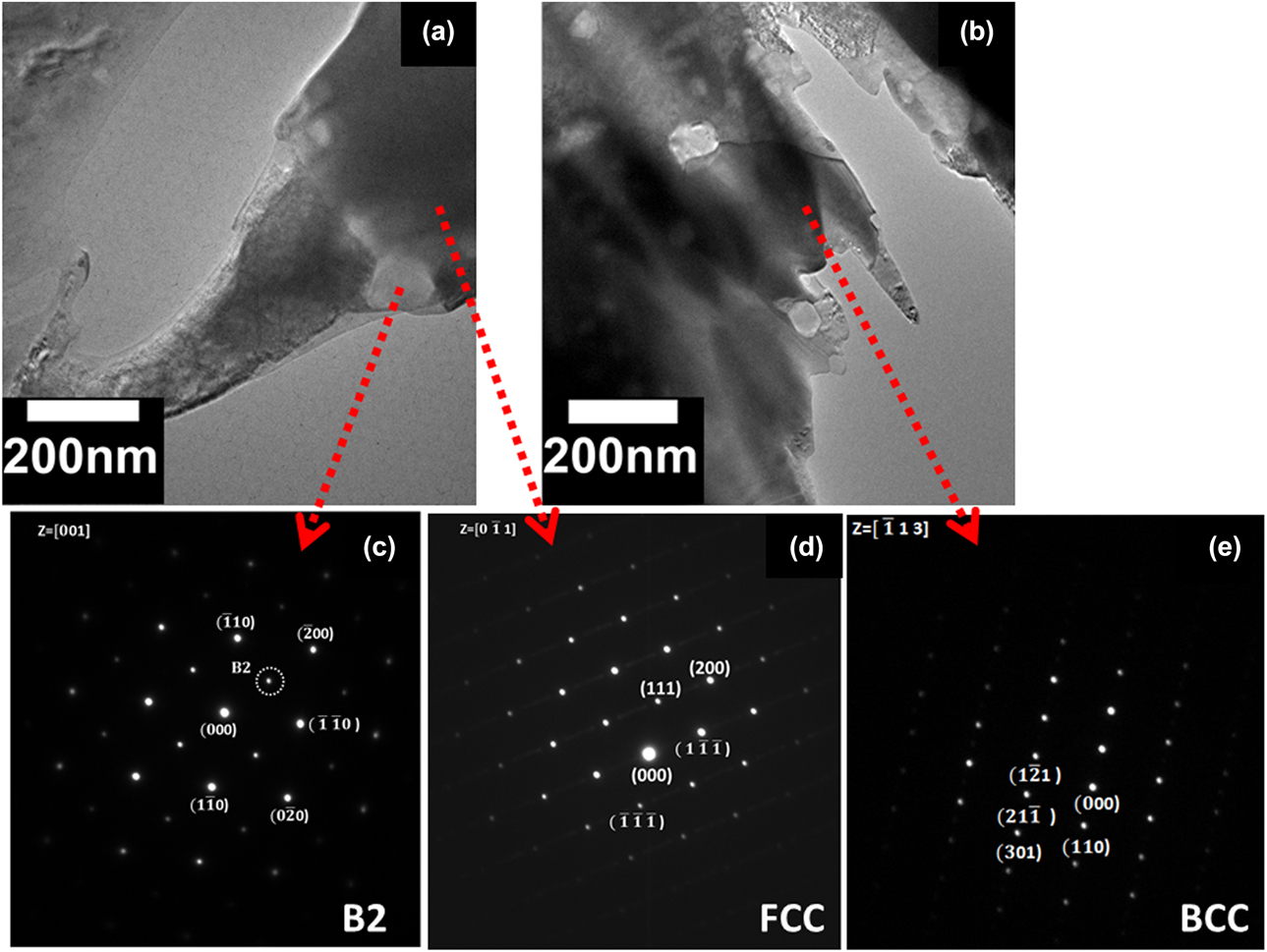
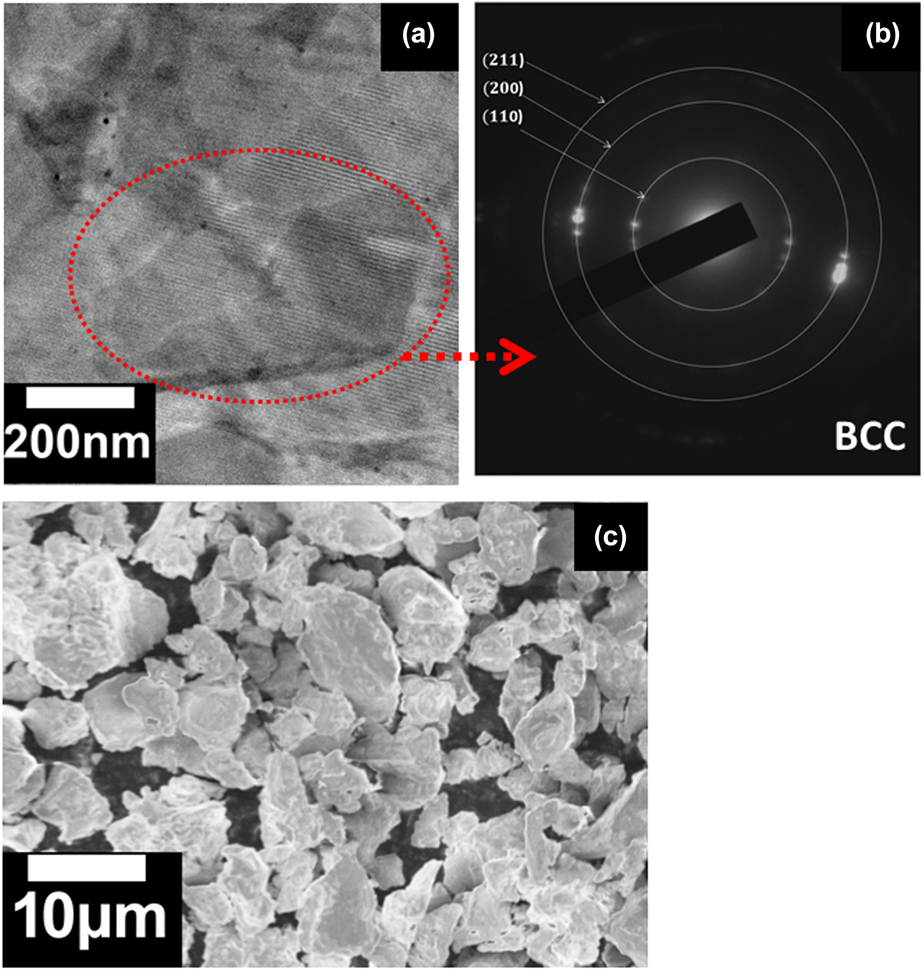
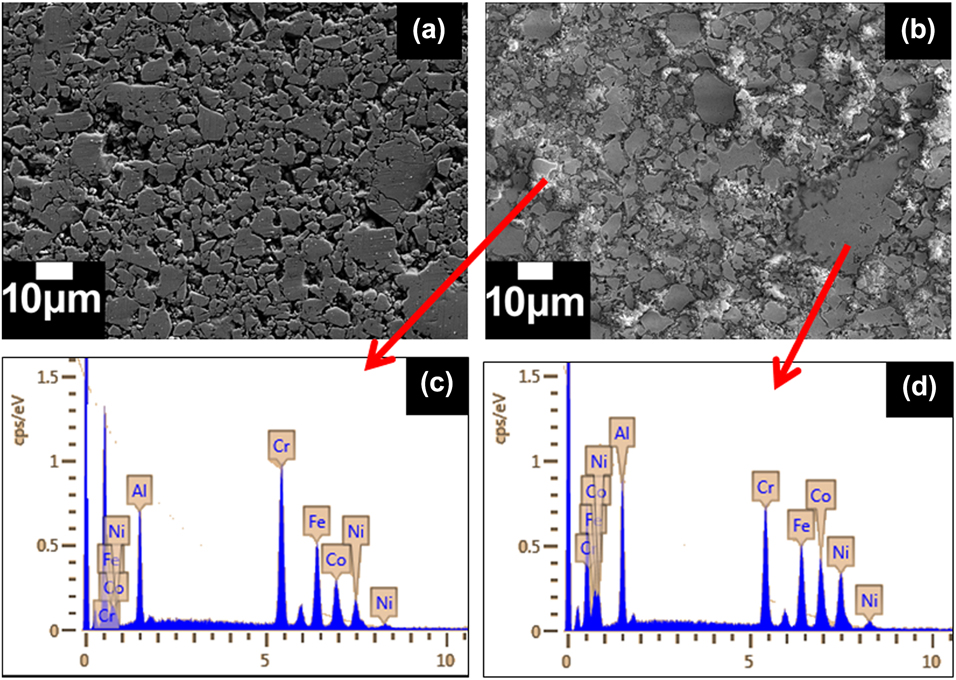
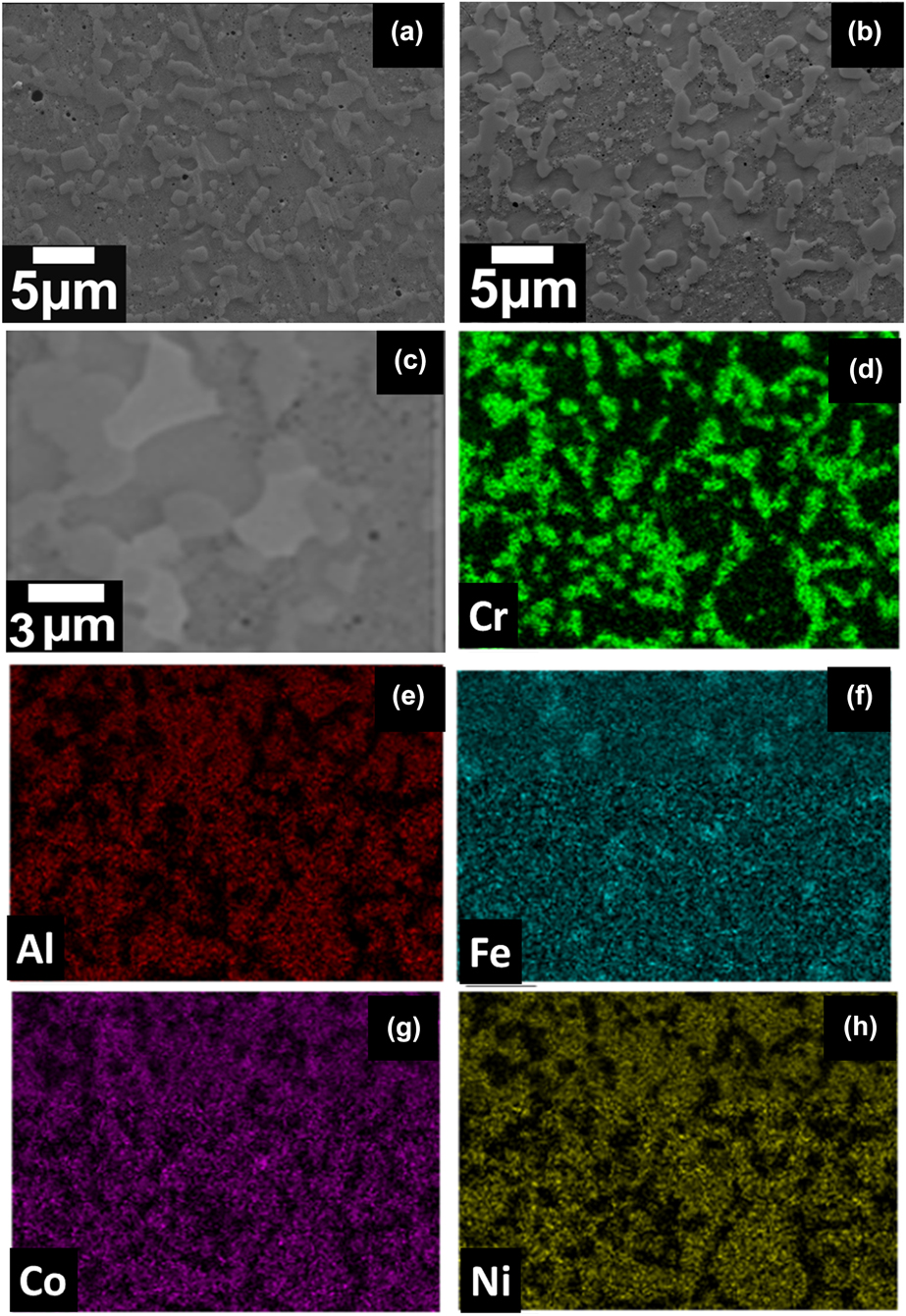
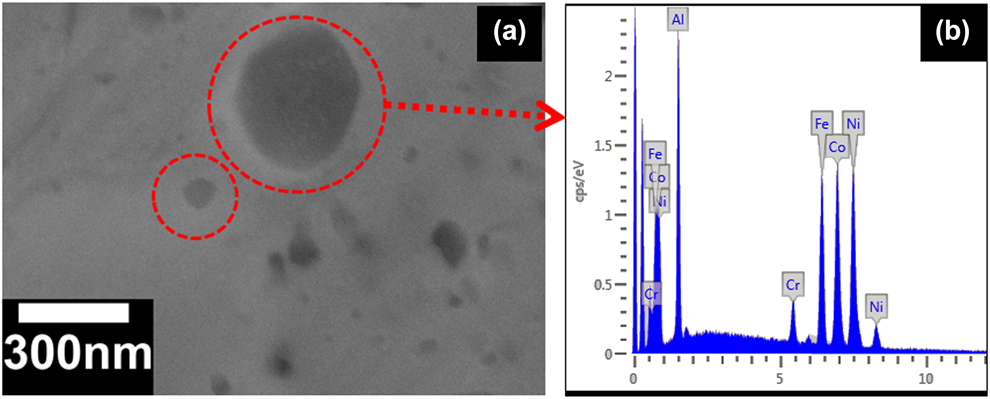
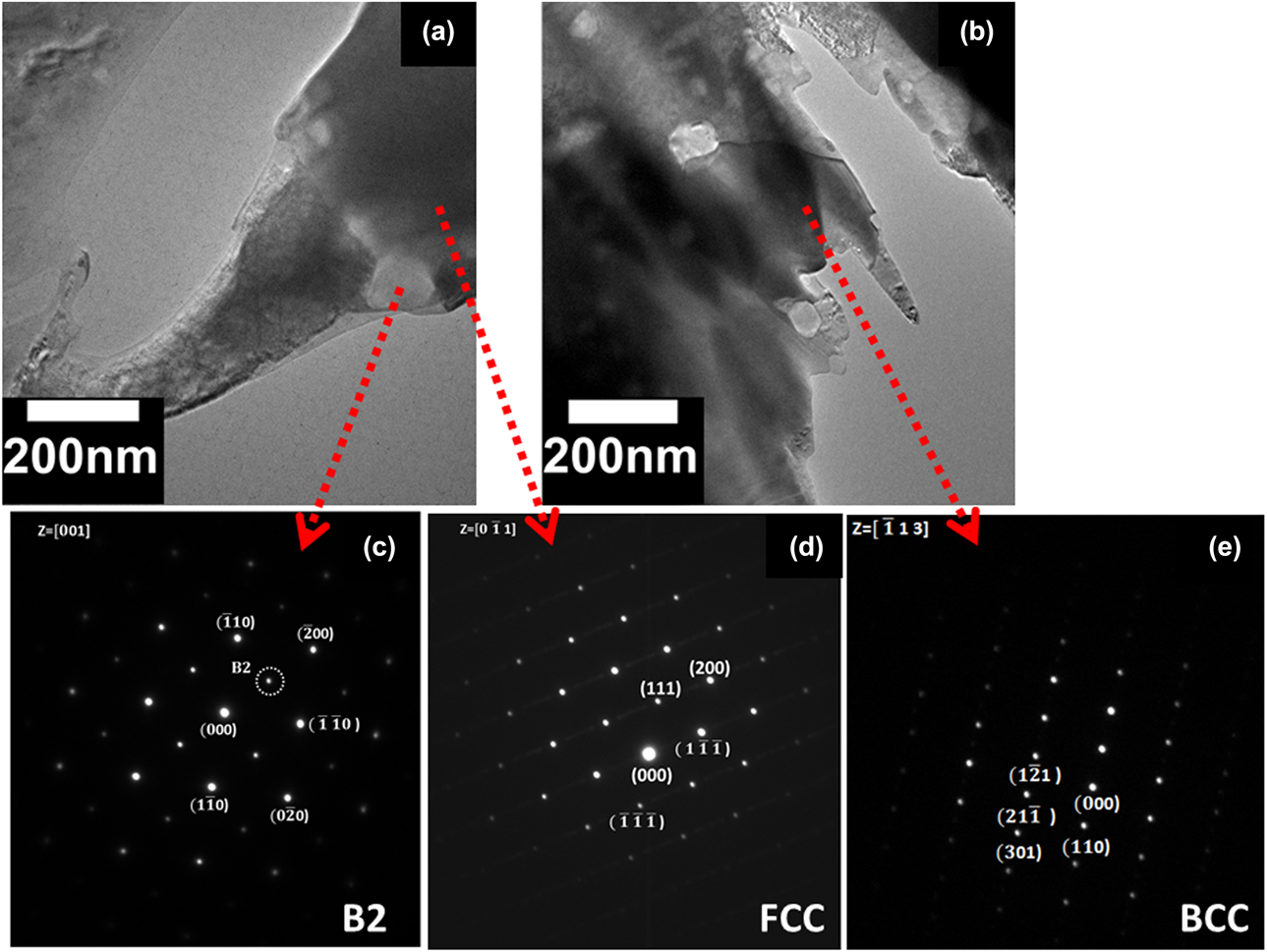
A bright field TEM image of the alloy powder is shown in Fig. 4(a), along with SAED patterns (selected-area electron diffraction). Particles were found to be typically smaller than 200 nm. The SAED patterns showed a BCC lattice with some diffused rings, possibly due to high defect concentrations and residual strains. SEM micrograph of the milled powder is shown in Fig. 4(b), which shows highly irregular shaped and agglomerated particles. The size range varied from about 2 to 15 μm. SEM micrographs [Fig. 5(a)] of the sample quenched from 880 °C showed grains, particle boundaries, and a large number of pores with varied dimensions. When the sample was quenched from 1200 °C, one could see that the morphologies have changed significantly [Fig. 5(b)] compared to the previous sample. Apart from the dark gray grains where boundaries could be clearly seen (similar to that observed at 880 °C), there were few bright regions. In those bright regions, grains seemed to be fused slightly and separations of grains (within those regions) were not very clear. To determine the composition, EDAX analyses were carried out at bright as well as dark regions [Figs. 5(c) and 5(d)]. Although all five elements were detected in both the regions, their fractions were found to vary significantly. The sample sintered at 1275 °C (for 1 h) showed [Fig. 6(a)] the mixture of two phases, bright grains and dark grains with few pores. The sample sintered for a longer time (1257 °C/5 h) showed [Fig. 6(b)] almost fully dense microstructure. On further increase in the resolution, the microstructure revealed a phase separation during sintering [Fig. 6(c)]. Detailed elemental mapping of microstructure (1275 °C/5 h) is also shown in Figs. 6(d)–6(h). A high-resolution image showed [Fig. 7(a)] the presence of very fine precipitates (in the order of 100–300 nm) of the B2 phase. EDAX analysis revealed that these are the Al-containing B2 phase [Fig. 7(b)]. As discussed earlier, the B2 phase formation was reported by others also [Reference Guo, Wu, Song, Wang and Song13, Reference Guo, Xiao, Wu, Song and Song14, Reference Mohanty, Maity, Mukhopadhyay, Sarkar, Gurao, Bhowmick and Biswas25, Reference Shivam, Basu, Pandey, Shadangi and Mukhopadhyay27]. Further, the phases on the sintered sample (1275 °C/5 h) were confirmed through TEM images [Figs. 8(a) and 8(b)] and SAED patterns. SAED patterns of the ordered B2 phase [Fig. 8(c)], FCC phase [Fig. 8(d)], and other BCC phases [Fig. 8(e)] could be clearly seen.
(a) TEM image of the alloy powder with SAED patterns (b) showing BCC lattices and (c) SEM micrograph of the alloy powder showing large agglomerated particles.
SEM micrographs of the sample quenched: (a) from 880 °C, showing fully solid particles, and (b) from 1200 °C, showing the liquid-phase formation. EDAX analysis of: (c) bright grains (liquid-phase region) and (d) dark region (solid state).
SEM micrographs of the sample sintered at 1275 °C: (a) for 1 h and (b) 5 h. Elemental mapping of the constituent elements in the microstructure section (c), for: (d) Cr, (e) Al, (f) Fe, (g) Co, and (h) Ni.
A high-resolution SEM micrograph of the sample sintered at 1275 °C for 5 h, showing the presence of B2 grains within BCC matrix (a) and corresponding EDAX analysis (b).
TEM image (a) and (b) of sintered sample (1275 °C/5 h) and SAED patterns at various grains, showing (c) B2, (d) FCC, and (e) BCC lattices.
Hardness
The hardness of the samples sintered at 1275 °C for 1 h was found to be about 656 ± 47 Hv and increased to about 679 ± 20 Hv (at a load of 4.9 N) when sintered for 5 h. The increase in the hardness could be attributed to the increased densification and the presence of multiple phases with dispersion of B2 grains. The present result was found to be comparable with the literature data. Hardness of about 500 Hv at a load of 9.807 N was reported for the sample produced through electron beam melting [Reference Shiratori, Fujieda, Yamanaka, Koizumi, Kuwabara, Kato and Chiba24]. Hardness values of the samples prepared through the SPS method were reported to be 625 Hv [Reference Ji, Fu, Wang, Wang, Zhang, Wang and Zhang23] and 815 Hv [Reference Mohanty, Maity, Mukhopadhyay, Sarkar, Gurao, Bhowmick and Biswas25] at a load of about 0.49 N.
Discussion
Equiatomic AlCoCrFeNi alloy exhibits a large variation in phase composition, starting from the powder at the milled state to various sintering states. Mechanical alloying was found to promote the formation of BCC-rich solid solution compared to other phases. Phase evolution and microstructure were found to be highly sensitive to the temperature, which could be seen during the XRD analysis [Fig. 1]. DSC analysis was able to reveal phase evolution sequences clearly [Fig. 2(a)]. Accumulation of a large amount of stresses and defect concentrations are common phenomena during long hours of mechanical alloying. When such an alloy is annealed, it tends to recover and release internal stresses, which could be seen as a small exothermic domain in the region of 200–260 °C. It was reported that L12 FCC phase, a prototype of Ni3Al, may evolve during low-temperature heating [Reference Shivam, Basu, Pandey, Shadangi and Mukhopadhyay27]. The endothermic peak observed at about 274 °C in the present work [Fig. 2(a)] could be attributed to the formation of such L12-type FCC phases. When the material was heated further, several phenomena occurred concurrently in this system. Usually, the solid solubility increases with the increasing temperature in a multielement system. A small fraction of non-stoichiometric compounds or impurity phases formed during mechanical alloying have a tendency to form a new solid solution or merge with the existing major solid solution phases. Increasing temperature destabilizes the BCC phase and favors more FCC phase in the present alloy. As a result, a fraction of BCC tends to convert to an FCC phase, ordered BCC phase (B2 phase), σ-phase, etc. This phase evolution and diffusion-led homogenization occurred over a wide temperature range, i.e., from 576 °C to 782 °C, as observed during the DSC analysis [Fig. 2]. Since the process proceeds relatively slowly, it requires a longer temperature range. Thus, energy requirement or heat absorption for these processes also varies gradually, i.e., it yields shallow curves during DSC, instead of the sharp endothermic peaks. It may also form a variety of disordered FCC phases and ordered phases, depending on the localized variation in concentrations of various elements. Very small endothermic peaks at 930 °C and 1083 °C could be attributed to these processes.
Thermal expansion is an inherent property of the solid materials. When the green pellet was heated during the dilatometric measurement [Fig. 2(b)], the sample expanded initially. The recorded expansion till about 464 °C could be attributed to the thermal expansion property of the material. With increasing temperature, the slope of the thermal expansion line seems to be decreased slightly, indicating the beginning of the densification, but at a lower magnitude. When the DSC signal [Fig. 2(a)] of the same region was compared, it was found to have an endothermic domain, suggesting the occurrence of relatively slower processes, such as phase stabilization, continuation of solid solution formation from various metastable phases, and chemical homogenization. These processes provide additional driving forces for the migration of vacancies and atoms, leading to an initiation of densification, as observed during the dilatometric analysis [Fig. 2(b)]. With a further increase in the temperature (a range of about 800–1100 °C), expansion completely stopped and sample started shrinking gradually, i.e., sintering started dominating over the thermal expansion of the material. As the material undergoes phase transformation from the BCC to FCC phase, a significant change in the volume takes place. Since FCC has a higher packing density, it leads to a decrease in the volume, which also contributes to the densification of the sample. At about 1200 °C, the dilatometer curve shows a steep drop in the length or rapid shrinkage. Normally, solid-state sintering does not yield such a sharp change. Such a steep change in the densification curve is an indication of an activated sintering or liquid-phase sintering. It appears that some residual phase has turned into a viscous phase at this region, which leads to this massive densification. The presence of the viscous phase was confirmed by an endothermic peak in the temperature range of 1200–1248 °C during the DSC analysis [Fig. 2(a)]. As soon as the liquid was formed, typical liquid-phase sintering mechanism was activated under highly favorable conditions [Reference German36]. The freshly formed liquid wets the solid surfaces, spreads through capillary action, and leads to particle rearrangements. Since neighboring solids have high solubility in the liquid, high densification is achieved. Because the elements which constitute liquid are the same elements which also form the solid solution, such a liquid is expected to have high solubility for those elements (from adjacent grains). This leads to rapid densification.
To confirm further and to identify the phase or composition which formed this viscous phase, few quenching experiments were conducted, as discussed earlier. When the sample was quenched from 1200 °C, the microstructure [Fig. 5(b)] was significantly different from that of the solid-state sintering region {sample quenched from 880 °C, [Fig. 5(a)]}. Figure 5(b) shows the possible location of liquid phase which are brighter regions, where grain boundaries (within bright phase) are not clearly distinguishable. Grains seem to be fused to each other. EDAX analysis of bright phase [Fig. 5(c)] shows Cr-rich phase with a significant amount of Al too, whereas concentrations of other remaining elements are considerably smaller. On the other hand, at the gray regions, grains and grain boundaries are clearly visible. EDAX analysis of the gray region [Fig. 5(d)] shows an Al-rich phase. The XRD pattern [Fig. 1] of the sample quenched from 1200 °C shows almost a complete FCC phase, along with the small fraction of a B2 phase. No other BCC phase is observed. The viscous phase crystallized as the FCC phase during quenching, whereas other grains (gray regions) were also found to consist of FCC phases at high temperatures, even though they had different compositions. The formation of the fully FCC phase at that temperature range on the phase diagram was predicted as observed by others [Reference Manzoni, Daoud, Völkl, Glatzel and Wanderka17, Reference Santodonato, Liaw, Unocic, Bei and Morris18, Reference Manzoni, Singh, Daoud, Popp, Völkl, Glatzel and Wanderka19]. However, existing phase diagrams of this particular quinary alloy do not show the liquidus region below 1300 °C. It is obvious that the observed viscous phase does not have equiatomic composition and concentrations of every element vary. After the sintering period was over, during normal cooling (under natural cooling of furnace), various phases were precipitated out and hence the sample had mixed phases in the sintered sample (as indicated through XRD patterns in Fig. 1). Information about phase evolution in HEAs is still limited, and more investigation and analysis would help to increase the understanding about the complex nature of phase diagrams as well as sintering mechanisms of these powders in the future.
Conclusions
Mechanically alloyed AlCoCrFeNi HEA powder was successfully sintered to nearly full density at 1275 °C. This achievement could be attributed to the liquid-phase sintering process. Cr-rich viscous phase was formed in the temperature range of 1200–1250 °C, which was confirmed through dilatometric measurements and DSC analysis. Quenching experiment confirms the complete transformation to FCC phase at very high temperatures. However, during the cooling phase separations take place to FCC, disordered BCC and nanosized B2 precipitated, etc. The considerably good hardness in the present work could be attributed to the multiphase nature of the microstructure.
Experimental
High-purity (over 99.5 wt%) elemental powders of Al, Co, Cr, Fe, and Ni were taken in a planetary ball mill (Pulverisette-5, Fritsch, Idar-Oberstein, Germany) in a tungsten carbide (WC) vial with WC balls. Ball-to-powder-weight ratio was about 15:1, and toluene was used as a process control agent. Milling was carried out at a speed of about 300 rpm for a duration of about 20 h. Alloyed powder with toluene was taken on a Petri dish and dried through natural evaporation in a closed fume hood. To understand the phase evolution, a small amount of powder was characterized using differential scanning calorimetry (DSC; STA PT1750, Linseis, Selb, Germany) while heating at a rate of 10 °C/min under high-purity argon atmosphere.
For the sintering studies, two different sets of green pellets were prepared. In the first set, a small cylindrical sample (∼7 mm in diameter and ∼6 mm height) with a relative green density of about 53% was compacted at a pressure of about 100 MPa for the dilatometric study. The sample was then placed on a sample holder of a vertical dilatometer system (Theta Industries Inc., Port Washington, New York). A thin push rod was touching the top surface of the sample, which was balanced by counterweight to avoid additional load on the sample. Sample was heated at a rate of 10 °C/min up to about 1275 °C and isothermally held for about 1 h, under high-purity argon flow. Dimensional changes as a function of temperature and time were recorded throughout the cycle. The second set of compacts (relative green density of about 63%) of about 10 mm diameter and about 5 mm thick were prepared at a pressure of about 200 MPa. These samples were placed in a vacuum furnace (Vacuum Tech., Bangalore, India) while maintaining a vacuum of about 10−5 mbar and heated at a rate of about 10 °C/min to 1200, 1250, and 1275 °C. The samples were sintered for the isothermal periods of 1 and 5 h. Few samples were quenched in water while interrupting the sintering, from 880 to 1200 °C, to capture the high-temperature phases. The samples were kept for about 5 min at set temperatures, before taking out for quenching. The selections of these quenching temperatures were based on the results of DSC and dilatometric measurements.
Hardness of the sintered samples was determined using a microhardness indenter (EMCO Test Dura Scan G5, Kuchl, Austria) at a load of 4.9 N with a dwell period of 10 s. The powder and sintered samples were characterized through X-ray diffraction (XRD; Discover-D8, Bruker, Billerica) using Cu Kα radiation. For the detailed microstructural study, the sintered samples were polished and etched using 40% aqua regia solution with ethanol. A field emission scanning electron microscope (FESEM Supra 40, Carl Zeiss, Jena, Germany) equipped with EDAX (Oxford, Abingdon, U.K.) and a transmission electron microscope (TEM; JEM2100, 200 kV, JEOL Ltd., Tokyo, Japan) were used to characterize the samples. For TEM characterization, the powder was suspended in methanol, whereas the sintered sample was sliced and polished to reduce the thickness to about 50 μm. This was followed by electropolishing using methanol–perchloric acid solution (9:1) as an etchant.
Acknowledgments
Authors thank Dr. S.K. Malladi from MSME, IIT Hyderabad, for their help in TEM work.