The 2016 United States presidential campaign boasted the rhetoric of white male supremacy. The crass, crude, thinly veiled sexist and racist bombastic sound bites from the Republican candidate reawakened and validated aggressive supporters of the bigoted, patriarchal pretences on which the nation was founded. Recognizing the “evolving nature of masculinity in America,” curators Carl E. Moore and Melissa Farris opened The Man Show on 3 June 2016 at L. Ross Gallery in Memphis. The art exhibition featured fourteen male, mid-southern visual artists from diverse backgrounds and included artwork from a variety of media, scale, and meaning. One artist, Richard A. Lou, combined performance, video, and parallels to the past into a poignant commentary on contemporary whiteness and masculinity in a piece titled ReCovering Memphis: ReContexting Bodies.
The piece was presented on a nondescript flat-screen television. The monitor, rotated to portrait format, served as a large photograph frame. A black-and-white image of the artist in mid-nineteenth-century clothing came to life as he blinked and breathed on the screen. As the video transitioned from greyscale to full color, Lou adapted two versions of a southern accent which typically rounds and elongates vowels, faintly articulates consonants, and often emphasizes the first syllables of words. Putting aside his natural pattern of speech shaped by bilinguality, Lou performed and recited historical speeches and sales ads in the harsher accent of Civil War Confederate general Nathan Bedford Forrest and memoirs in the sweeter drawl of President of the Confederate States of America Jefferson Davis. With this piece Lou placed his multiethnic, contemporary, male voice and body into historic clothing to question patriarchal and supremacist discourse in the context of the destructive Civil War past and divisive political present. In becoming these two pillars of rural, southern masculinity, Lou recontextualizes historic figures into present-day context. As Guisela Latorre writes, “Lou wanted to establish a genealogy between current events and longer histories of racism and white supremacy.”Footnote 1 This paper will analyze ReCovering Memphis: ReContexting Bodies by examining historical masculinity in southern states and the significance of whiteness and masculinity in this artwork as they compare to contemporary political rhetoric.
In her book Abolishing White Masculinity from Mark Twain to HipHop, Stephany Rose points out, “Whiteness and masculinity are often presented as invisible normative positions, where those who are civically identified as white and male do not have to engage in their racialized and gendered embodiment daily.”Footnote 2 Lou's artwork attempts to make the invisible visible and provide a platform for privileged individuals to engage in ideas of race and gender. In How Culture Works, Paul Bohannan describes the process of recontexting as reshaping selective cultural ideas to reapply them within the context of the same culture. It is a way to simultaneously grow culturally while keeping consistencies. He argues that the role of the artist in the process of recontexting is to create a “safe place” to allow expression of “unthinkable thoughts” in a way that the viewer gains an expanded “appreciation of the human condition.”Footnote 3ReContexting Bodies was exhibited as an American presidential nominee received endorsements from notorious white nationalist groups, as national protests against institutional racism swelled, and as outrage at evidence of conflicts between police and citizens of color, and of murder, streamed on social media. Richard Lou incorporated elements of (role-)play, using his art to make visible the ingrained machoism and racism of the United States.
In the United States, particularly the South, which for the purposes of this paper refers to the states that fought for the Confederate Army, understanding masculinity follows the defeat of the Confederacy in the Civil War.Footnote 4 A high death toll, shifting gender roles, questioning moral and character values, and economic instability were among the perceived threats to southern manliness. It is well known that the war between the states caused significant casualties. Manhood was literally lost, with death toll estimates of “one-quarter of the South's white male population of military age.”Footnote 5 The lack of men forced women to take on additional and formerly nontraditional duties of daily life. As customs changed, women's new responsibilities branched into legal and economic freedoms such as regaining title and landownership, which further threatened the patriarchy.Footnote 6
Female chastity and male chivalry were exalted virtues of the Old South. As Richard Dyer emphasizes in White, the colonially constructed role of white women's sexuality is that of a “pure vessel for reproduction.”Footnote 7 Leaving home to face war and returning defeated raised men's concerns for women's physical and sexual protection and for the reproduction of the next generation of white southerners. Confederate soldiers worried about failed valor as their absence from the homestead made women vulnerable. Returning soldiers – weary, emaciated, and oftentimes wounded from battle – also feared sexual rejection. As Foster Gaines notes in Ghosts of the Confederacy, they perceived victorious northern soldiers as threats to sway southern women's preferences of sexual partner and protector.Footnote 8 Defeated in the Civil War, the once confident southern men struggled to process the loss of Old South values.Footnote 9
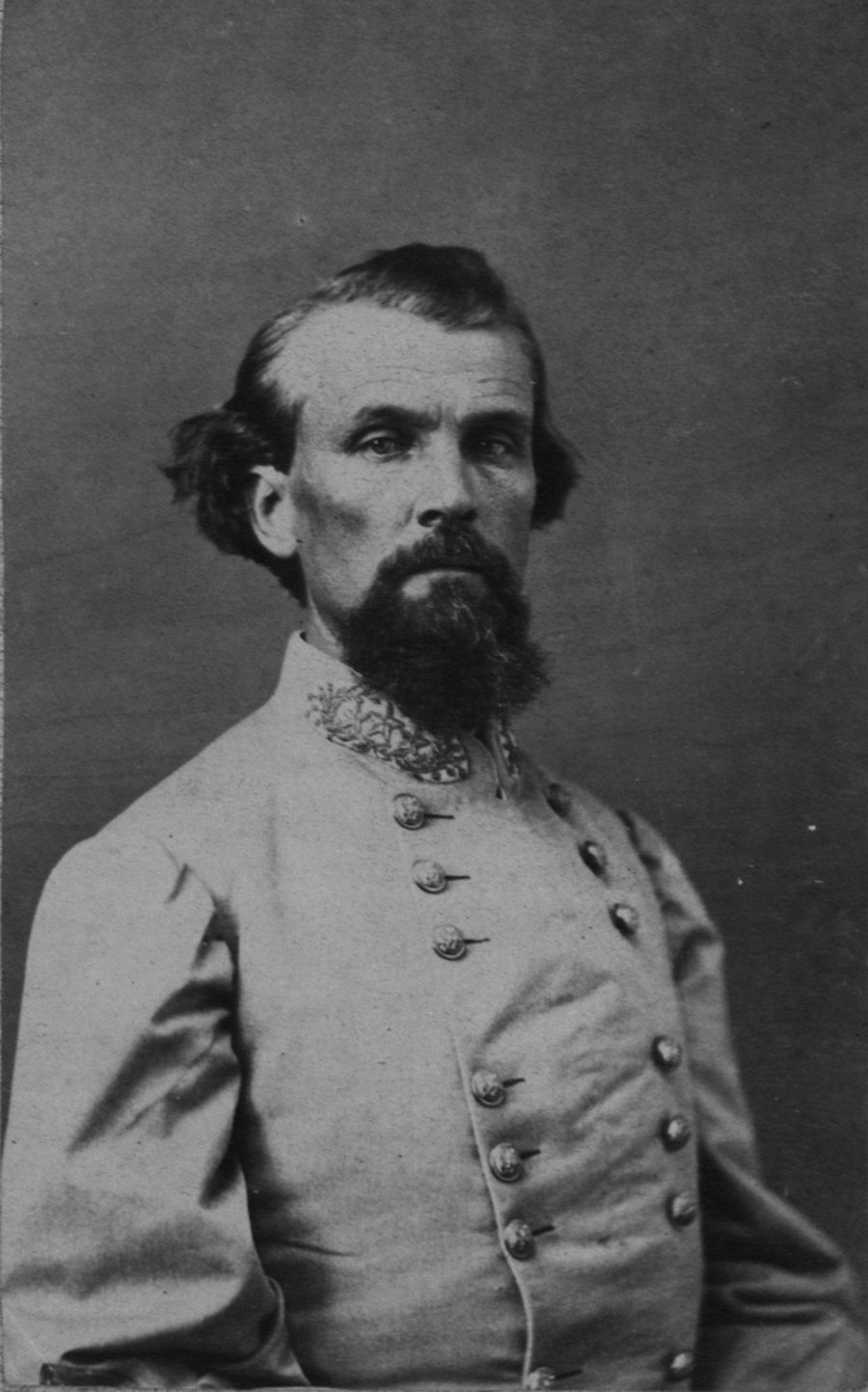
In the years following the Civil War, until the early twentieth century, a period known as Reconstruction, the South had to rethink its values, rebuild its wealth, and redefine its identity. The process led to writings, activities, and monument building for what is now referred to as the Lost Cause, which hyper-romanticized the pre-Civil War, slave economy South. Jefferson Davis and Nathan Bedford Forrest achieved their status as masculine archetypes when regional biographers and historians deemed them figureheads of opposing demeanor, satiating the South's need for a genteel, calculated, pseudo-nobleman (Davis) and an independent, self-made, fierce serviceman (Forrest). Michael Kimmel's use of the terms “hypomasculine” and “hypermasculine” in his book Angry White Men applies respectively to these two archetypes of masculinity.Footnote 10 Monuments to these two men saturate public and civic places in the southern landscape.
During the Civil War, Memphis was quickly captured by the Union Army. Contraband Camps of formerly enslaved African Americans grew in South Memphis near Fort Pickering along the Mississippi river. Following the war and during Reconstruction, Memphis, mostly undamaged due to the lack of major battles in the city, was a place for freed men and women to look for work. As the minority population surged, lower-class white citizens reacted defensively in the name of Old South ideals and often turned to violence against black citizens, resulting in riots.Footnote 11 Only ten years after the end of the Civil War, a yellow fever epidemic caused affluent white citizens to flee to the suburbs of Memphis; African Americans and poor Irish immigrants began working together to serve civil society.Footnote 12 As the disease dissipated, white elites returned. To reinstate power, “white Memphis desperately needed a hero” to reestablish not only white supremacy, but also southern masculinity.Footnote 13 Lost Cause sentiment physically manifested in 1905 with the unveiling of a larger-than-life equestrian statue of former Confederate general Nathan Bedford Forrest in a public park in the center of the city with a goal to “stabilize the political landscape.”Footnote 14 White citizens sought to reinstate power after the war and an epidemic changed the city's racial and political dynamics.
Nathan Bedford Forrest served as city alderman in Memphis before the Civil War. He was praised for growing his wealth from rural, unprivileged poverty to an urban, millionaire businessman specializing in the sale of real estate, cotton, livestock, and, most notoriously, slaves.Footnote 15 The self-made man's mythical status began during the Civil War, rising to the ranks of Confederate general despite his lack of formal military education. He trained soldiers and led them in cavalry raids on Union convoys, gaining the reputation of an unpredictable, cunning enemy and causing widespread fear.Footnote 16 Though praised for encouraging discipline in his troops, Forrest's men massacred over two hundred African American Union soldiers after they surrendered at Tennessee's Fort Pillow in 1864.Footnote 17 Interpretations of this event are unclear as to whether Forrest ordered the attack or “lost control of his men.”Footnote 18 Regardless, the atrocious murders remain controversial and are one of many significant points of contestation regarding the general's life. Another comes at the end of the war when Forrest was elected the first grand wizard of the racial terrorist group the Ku Klux Klan. His role in the organization is debated as records show Forrest quit the group in 1869 and ordered it disbanded as KKK racial violence allegedly escalated.Footnote 19 Afterwards, Forrest gave speeches in Memphis in an apparent attempt to mend racial relations with statements like, “We have but one flag, one country; let us stand together. We may differ in color, but not in sentiment.”Footnote 20 At the end of his life, Forrest reportedly repented, confessed his sins, and was forgiven according to the South's deeply engrained Protestant religiosity.Footnote 21
In life, Forrest was lauded for his business and military achievements and forgiven for his controversy. Twenty-two years after his death, John Allan Wyeth's The Life of General Nathan Bedford Forrest ensured Forrest's iconic status with grandiose stories of his resilience, praising him for his “genius.”Footnote 22 The Forrest Monument Association (FMA) decided to use Forrest's stature to exalt honor, courage, and Old South virtue in Memphis. In 1904, the FMA exhumed the bodies of Forrest and his wife from Elmwood Cemetery in Memphis and reinterred them in the center of the city in Forrest Park, known today as Health Sciences Park. The graves were placed at the base of a marble pedestal. A bronze sculpture of Forrest on a battle horse sat atop; the entire monument was just over six and a half meters tall. After its unveiling, the FMA encouraged celebrations and events in the park, believing that “the children of white Memphis could look to Forrest as a civic role model, since the general had instinctively done what was morally right.”Footnote 23 As Memphis sought to define its identity at the turn of the century, it used Nathan Bedford Forrest's ferocious reputation, hypermasculinity, and rags-to-riches story to shape his identity as an exemplar of southern masculinity.
Sixty years later, the continuation of segregation laws and unjust cultural practices prevented equitable environments for black citizens of Memphis and the South. With the rise of mass-scale nonviolent protests in the early 1960s, freedom fighters increased resistance to racial inequality, and white communities became more aware of the struggle of the nearly 40 percent African American citizens of Memphis's population. White citizens seemed to again be intimidated by the changing demographic and felt the need to reassert supremacy and exalt the Old South. White citizens once more turned to leaders of the Civil War for symbolic figureheads and erected a monument to Jefferson Davis in 1964 along the downtown riverbank. Where Nathan Bedford Forrest was interpreted as assertive and dominant in his hypermasculinity, former President of the Confederate States of America and short-term Memphis resident Jefferson Davis held a more genteel, pseudo-nobleman, hypomasculine reputation.
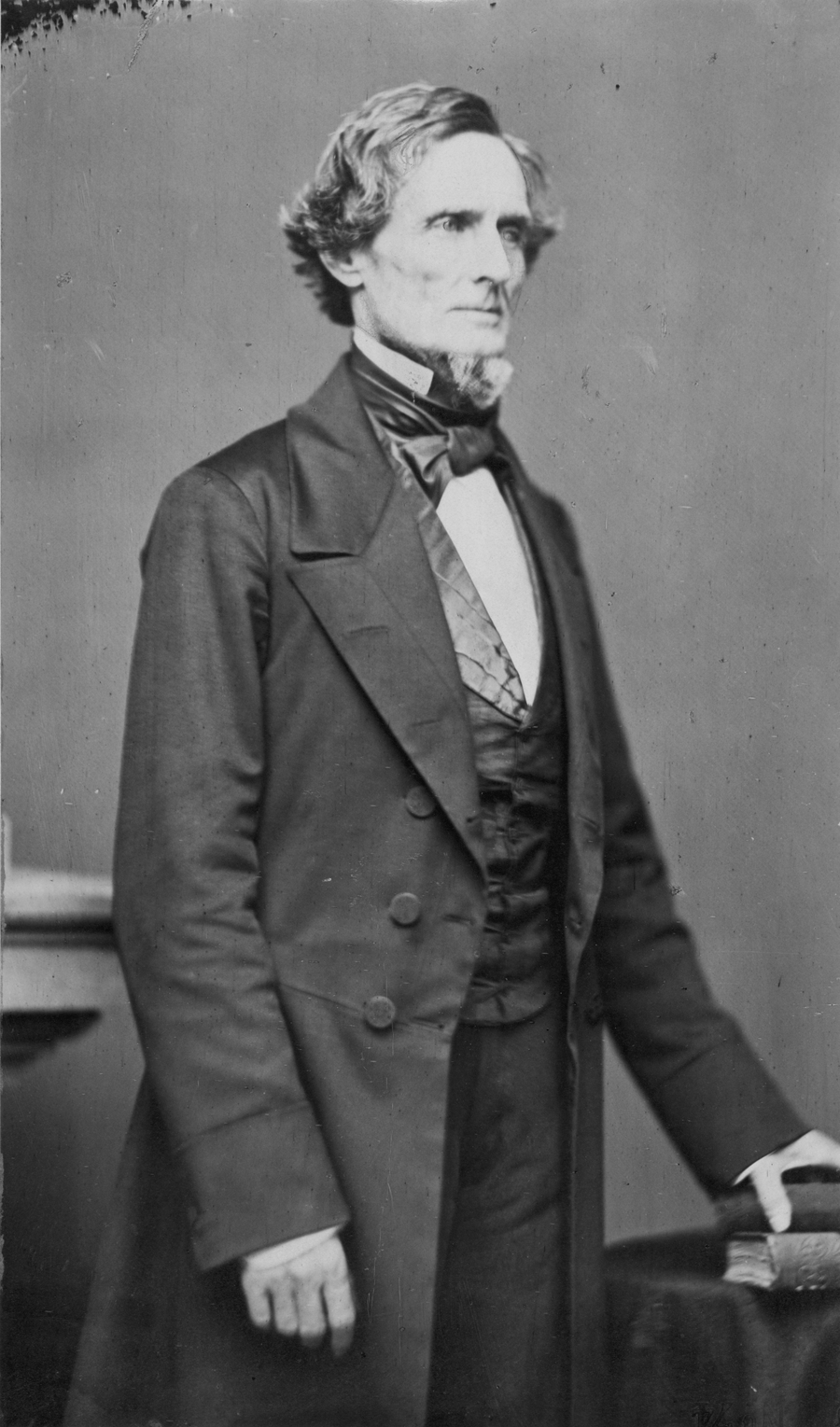
Jefferson Davis's direct connection to the city is a brief residency (only two streets south of the old headquarters of Forrest's slave selling business) from 1875 to 1878 as head of the Carolina Life Insurance Company of Memphis, during which time he traveled, often working to rectify his family and finances following defeat in war.Footnote 24 His life before the ruin of war had been privileged. He was privately educated in law and had proper military training.Footnote 25 His political career as Senator for the state of Mississippi gained him a reputation as a passionate and eloquent speaker. His “Farewell Address,” the most notable of all his speeches, was given in the Senate Chamber on 21 January 1861 to announce the secession of the state of Mississippi from the Union and his own resignation from his position as Senator. It is rumored Davis wept at the end of his farewell speech, further ingraining the Congressmen's hypomasculine reputation among his peers and constituents.Footnote 26 Praised by pro-secessionists in the South, Davis campaigned for the Presidency of the Confederate States of America. Allen Tate writes about the appeal of Davis during the campaign, “His dignified, noble bearing, the suavity of his manner, the eloquent melodiousness of his voice … his very austerity heightened his mystery.”Footnote 27 Though seemingly well loved, Davis's presidency was not without contestation. Scholar William C. Davis highlights the interworking machismo superiority arguments: “in forming the new confederacy, its founding fathers could not leave behind their careers as mid-nineteenth-century southerners. Ambition, boastfulness, even arrogance, were traits often admired and even cultivated by men of the time.” Davis was continually challenged and questioned by Confederate men. Later in the text, the author includes excerpts from Varina Howell Davis, second wife to the Confederate President, in which she discusses Davis as “abnormally sensitive to disapprobation” and falling ill if he received upsetting news or was in disagreement with others.Footnote 28 His illness and sensitivity to disputes further categorized his masculinity as mannerly, aristocratic, effeminate, and hypomasculine. The most egregious insult to Davis's manhood was tailored by northern propaganda after they defeated the South in the Civil War. A rumor spread that Jefferson Davis was captured wearing women's clothing, equating “femininity with failure.”Footnote 29 Soon several cartoons and etchings were published of Davis in drag captured by Union soldiers, who in more than one depiction are lifting Davis's skirts with a long sword, suggesting sexual power. Following the war, Davis found employment in positions like heading the life insurance company, which brought him to Memphis for a short period.
From 1956 to 1964, seventy-eight years after Davis lived in Memphis, the United Daughters of the Confederacy and the Sons of Confederate Veterans, allegedly concerned that the Confederate President would be “forgotten,” gained mayoral approval and raised the funds for a monument to Jefferson Davis in downtown Memphis.Footnote 30 Events in Tennessee during this span suggest that concern was less about forgetting the historical figure of Davis and more about remembering the pro-slavery, minority repressive society of the Old South. During the years of fund-raising for the monument to Jefferson Davis, Memphis State, the local university, desegregated in 1955. Highlander Folk School, where Rosa Parks and several other activists studied nonviolent protest strategies in East Tennessee, was forced to close on “trumped-up charges” in 1958. Adjacent to Shelby County where the city of Memphis is located, a Fayette County jury convicted a likely innocent African American man for killing a white deputy in 1959. In the United States, registering to vote puts citizens in a jury pool. The Fayette County trial sparked an African American voter rights movement. In 1960, their efforts led to a federal judgment to end voting discrimination in their county, and in turn white landlords responded by evicting African Americans from their homes on white-owned land for registering to vote. In 1961, Memphis public schools desegregated.Footnote 31
Despite these events, or perhaps because of them, the monument to Davis was officially completed in 1964 on public property in a prominent position along the downtown riverbank near the judiciary buildings of Memphis. The monument stood around five and three-quarter meters in height, including a large square base and the standing figure of Davis atop. Davis was depicted with his right arm raised with a bent elbow; his hand in an open gesture gave the impression he was speaking passionately. His left hand clutched a scroll in front of his heart. The stance and props demonstrated Davis's reputation for eloquence in speech. Engravings on the base briefly described dates in Davis's political career. The last line read, “HE WAS A TRUE AMERICAN PATRIOT.” The choice of words served as a message to Memphians about true Americanism and patriotism in the same spirit as the citizenship events at the base of the Forrest monument in the early 1900s propagandized the white supremacist values of those in power.
Certainly President Davis's reputation was less threatening than General Forrest's, yet the two men were united in pro-slavery and pro-secessionist philosophies. During their life and since their deaths, various interpretations of the men position them as opposite pillars of the virtues of southern manhood. Forrest's aggressive and fearsome hypermasculinity served as a model for white citizens of Memphis during the turbulent rise of Jim Crow segregation. Davis's milder temperament and passive hypomasculine reputation served white Memphis to parallel the message of freedom fighter nonviolent protests of the early 1960s. Both monuments to these two Confederates served as examples of citizenship, values, and masculinity to (white) residents of Memphis and attempt to undermine advances in the movement for African American equality.
Both long-time Memphis residents and transplants question the exaltation of the leaders of the Confederacy in a city so moved by diversity and heavily populated by people of color. Richard Lou moved to Memphis as professor and chair of the Department of Art at the University of Memphis in 2007. As a Chicano artist, he consistently explores themes of the subjugation of his community by the dominant culture and white privilege.Footnote 32 His portfolio includes a 2009 performance called ReCovering Memphis: Listening to Untold Stories and a 2013 photography piece titled ReCovering Memphis: Courageous Love. Both of these artworks were created at the site of the Nathan Bedford Forrest monument. Listening to Untold Stories was a guerilla-style multifaceted performance in which community members shared their stories as images on stacked blocks obstructed the view of the monument. The artwork layered imagery and untold histories to reclaim public space.Footnote 33Courageous Love invited couples of all orientations and ethnicities to share a kiss or hug photographed in front of the monument, symbolizing that their love is stronger than the negative connotations associated with the Confederate statue. The photography piece drew scathing criticism and nasty letters from Forrest supporters, which the artist explored as part of an artwork in a multi-artist exhibition titled you + me at Crosstown Arts in Memphis in March of 2015.
In 2016, Richard Lou exhibited ReCovering Memphis: ReContexting Bodies throughout the month of June at L. Ross Gallery as a part of The Man Show. The work is a thirty-four-minute digital video playing out on a forty-inch flat screen turned vertically into portrait format in which Lou personifies iconic photographs of Confederate commander in chief Davis and General Forrest through dress, pose, and expression. Using the interpreted masculinity of the two Confederates and their significance to the history of Memphis, Richard Lou's piece uses historical words and bodies to contextualize contemporary political discourse, masculinity, and race. In the digital video work, the artist is able to transform his own multiethnic, contemporary, masculine body into revered men of the Old South, creating a connection in time and place to encourage viewers to critically engage with the ideas presented.
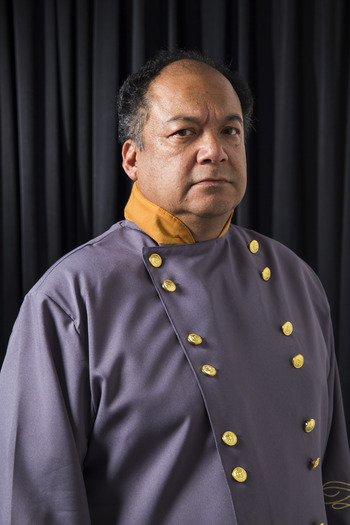
In the first five minutes of the video, the artist, fifty-six years old and of Chinese and Mexican descent, stands facing the camera poised to re-create an iconic photograph of Nathan Bedford Forrest, who was in his late thirties or early forties when the image was created (Figure 1). The artist stands still holding the three-quarter view pose of Forrest's photograph for five minutes, blinking, breathing, but with the same cold stare (Figure 2). His hair frizzes out from the sides of his head to replicate the wild mane of Forrest, a symbol of his dangerous masculinity. The artist's face is clean-shaven where Forrest wears a long goatee and moustache. After holding the pose for five minutes, the artist turns his torso to look directly into the camera as if in confrontation.
Nathan Bedford Forrest, Lieut. General, C.S.A. (Tenn), c.1861–65. Mass Civil War Photograph Collection, Volume 85. Military Order of the Loyal Legion of the United States Massachusetts Commandery. US Army Heritage and Education Center, Carlisle, PA, 17013 US.

Kathy Barnes-Lou, videographer, Richard Lou as Nathan Bedford Forrest in ReCovering Memphis: ReContexting Bodies, 2016.

The double-breasted Confederate militia-styled jacket he is wearing turns to a deeper grey-blue. The brass buttons sparkle; the color shines warm gold, showing that his skin is melanin-tinted, not the pale pink of somebody white. Sans-serif subtitles appear, “Lieutenant General Nathan Bedford Forrest's ‘Farewell Address to His Troops’ May 9, 1865.” The artist posing as Nathan Bedford Forrest begins to speak. Viewers are confronted by multiple juxtaposed messages. The first is visual as a nonwhite man presenting himself as not only a white man, but a Confederate general. Second is the audial. The artist's natural, slightly Chicano, accent tinged with an artificial southern drawl. Both make the viewers pause, tilt their heads, and continue to watch and listen to the recitation. In the speech, Lou as Forrest encourages the last of the Confederate troops to accept the terms of defeat, to return home ignoring natural feelings of hatred or desires for revenge through “a manly, straightforward course of conduct,” and praises their courage and honor for serving as soldiers.Footnote 34
At the conclusion of the reading, the artist turns his torso to the three-quarter position and resumes the pose of the iconic portrait. One minute passes as we watch the artist blink and breathe in black and white. Then, with a slight smile, he turns; the image moves back to color and subtitles announce “Nathan Bedford Forrest's advertisements for his business as a slave dealer.” Lou's solemn portrayal of Forrest's final address to his troops is replaced by a more charismatic version of the general. The artist reads the advertisements with the jolly timbre of an enthusiastic salesman emphasizing (but not mocking) an affected southern drawl. The first advertisement describes the spaciousness, convenience, and comfort of the new buildings Forrest, Jones and Company purchased for the housing and selling of slaves, encouraging patrons to peruse the facilities. The second brief advertisement describes the variety of inventory at Forrest, Jones and Company as a “good assortment of Virginia, Georgia, and Carolina Negros.”Footnote 35
After two of these advertisements, the artist turns back to the iconic portrait pose for five more minutes. This section of the video piece is capped by a black credit screen summarizing “Richard A. Lou reading Lieutenant General Nathan Bedford Forrest's Farewell Address to His Troops May 9, 1865 and advertisements for his business as a slave dealer.” When the text disappears, the saturation is muted to greyscale, and we see the artist in new attire.
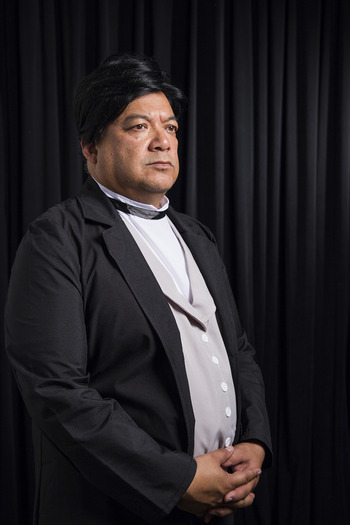
His shirt has a mandarin collar under a vest with slightly billowed shawl lapels. The herringbone pattern on his black-collared coat slightly pulses in the shadows of the film. His brow is furrowed in a distant gaze. He is wearing a wig styled with a part in the center, a more refined style than the wild mane of Forrest. His face and body turned at a quarter view, his face is nearly in profile as he stands in front of black drapery (Figure 3). His hands are folded at his waist as he emulates the polite posture of Jefferson Davis, who was in his early fifties and still a Senator when photographed by Mathew Brady (Figure 4). Lou sways slightly, blinking occasionally. The video plays for five minutes.
Kathy Barnes-Lou, videographer, Richard Lou as Jefferson Davis in ReCovering Memphis: ReContexting Bodies, 2016.

Mathew B. Brady, Jefferson Davis, Three-Quarter Length Portrait, Facing Right, c.1858–60. Library of Congress Prints and Photographs Division, Washington, DC, 20540 US.

The artist licks his lips, opening and closing his mouth, preparing for speech. The film becomes saturated; this time the only colors are the tan of his vest and the golden brown of his skin. Subtitles tell the viewer they are about to hear an “Excerpt from former Confederate President Jefferson Davis’ memoirs published 1881.” The artist remains in the three-quarter stance. Quite the opposite of the aggressive, confident stare into the camera of Forrest, Lou as Jefferson Davis does not meet our gaze. The camera is further away from the artist than in the Forrest segments, as if Davis is best considered at a distance, nonconfrontational and pensive. Lou as Davis personifies a nobleman rather than a relatable layman. When he speaks, his artificial southern drawl is rolling, sweeter than his interpretation of a heavy, rural drawl used for Forrest. Lou as Davis laments the “strong mutual affection” or the “life-long relation” between contented servants and their masters until the “tempter” of freedom came, appealing to the “emotional natures” of the enslaved, and caused them to “devastate their benefactors.”Footnote 36 The romanticizing of the Old South is evident in the Davis text. The language also appeals to the imagery and Christian religiosity of the southern states, much like Forrest's alleged deathbed confessionals.
The artist switches to his natural accent, narrating, “Jefferson Davis responds to Abraham Lincoln's integration of African Americans into the US Army.” The video's saturation fades and the subtitles disappear as the artist resumes the pose for an additional five minutes. A black screen captioned “Richard A. Lou reading from former Confederate President Jefferson Davis’ memoirs, published in 1881, reacting to President Abraham Lincoln's integration of African American troops into the U.S. Army” summarizes the clip. After which the credits roll: Directed by Richard A. Lou; Videographer Kathy Barnes-Lou, Editor Jacqueline Eva Quintanar, © 2016.
As the thirty-four-minute video played on a loop in The Man Show in Memphis in 2016, local and national politics churned, forcing further division between gender and race. Both the Nathan Bedford Forrest and Jefferson Davis monuments to the Confederacy were contemporary sites of controversy in Memphis. An outspoken public in a city with, according to US Census data from 2010, a 63 percent African American and 30 percent white population demanded politicians remove the monuments.Footnote 37 Both Memphis monuments to the Confederate men were regularly vandalized. In the political climate of 2016, the Forrest monument was tagged “Black Lives Matter” in red spray paint.
One month after the exhibition, mounting racial tensions reached a peak. Within a span of a few days in Memphis in July of 2016 at least three major events occurred. A Black Lives Matter protest nearing a thousand participants halted interstate traffic on a major bridge into the city for around three hours. A family filed a wrongful-death lawsuit in the case of a nineteen-year-old shot and killed by a Memphis police officer. Local ministers and community leaders held forums for city officials demanding racial injustice be addressed. More often than not, men were featured: male activists and clergymen, the police chief, the mayor, et cetera, each playing a different role.
Nationally, the presidential campaign elevated verification of American servitude to the patriarchy. Two months following The Man Show, The Atlantic published the article “Trump Is a Climax of American Masculinity: The Error in Equating Aggression with Competence,” in which author James Hamblin addresses the presidential candidate's machismo. Hamblin writes, “Political analysts have repeatedly made the case that Trump is a mirror; that he does not create but only stokes Americans’ deep-seated fears, xenophobia, and racism that surface by way of economic instability.” This paper would argue that those are the same reasons white Memphians erected a monument to Nathan Bedford Forrest in 1905 and to Jefferson Davis in 1964. Hamblin writes further, “Trump is so successful because of the way he does it. His signature traits, confidence and bravado, are hallmarks of masculinity.”Footnote 38
With an understanding of Memphis and masculinity post-Civil War, accounts of the opposing masculine traits of Nathan Bedford Forrest and Jefferson Davis, a detailed description of ReContexting Bodies, and a framework of racial and gendered tensions in 2016, we can use Richard Lou's progressive ReCovering Memphis: ReContexting Bodies as a tool to experience the process of recontextualization as Bohannan described. With this video piece, Lou used technology to fold time, interpreting the present within the context of the past. In a phone interview, Lou described working with the iconic photographs of Forrest and Davis as “going from analog to digital to bring the idea that the trajectory of history continues to have a great hold on our present and still dictates terms on how we behave toward each other.”Footnote 39 Using his art practice to interpret racist patriarchal truisms of our American past, Richard Lou enriches our understanding of present interactions with each other in the wake of racial violence; mass protests; and cocky, virile political lingo by focussing on pillars of Confederate manhood. Through this lens, two central themes emerge in ReContexting Bodies: whiteness and masculinity.
In her paper “The Art of Disruption: Chicana/o Art's Politicized Strategies for Aesthetic Innovation,” Guisela Latorre theorizes that Lou's performance of whiteness disrupts contemporary acceptance of white supremacist arguments. She writes, “by placing his racialized body at the center of the racist discourse, [Lou] understood that the bodies of people of color are contested territory.”Footnote 40 Comparison between the two Forrest excerpts provides evidence of the contestation. As Lou depicts Forrest's changes in temperament, his body language and tone send the message of white supremacy. Lou as Forrest portrays a dignified, stern, commanding officer addressing his troops and advising them to respect the outcome of war. In the moment of gravity of preparing troops for defeat, the speech provides assurance and encouragement. The same respect is not given to the demoralized and dehumanized enslaved individuals as it was to the troops. Whiteness meant power and mastery over nonwhiteness. Lou as Forrest channels the assertive and proud salesman while “underscoring only the enslaveds’ value as commodities and property.”Footnote 41
Black lives and black bodies continue to be regarded as less than equal to white lives and bodies. The hashtag and burgeoning activist movement Black Lives Matter began in 2014 in response to the murder of a black teenager by a police officer in Ferguson, Missouri.Footnote 42 The official Black Lives Matter website explains:
Black Lives Matter is an ideological and political intervention in a world where Black lives are systematically and intentionally targeted for demise. It is an affirmation of Black folks’ humanity, our contributions to this society, and our resilience in the face of deadly oppression.Footnote 43
The supportive network for black people who are often victims of institutional violence, and in some cases death, gives voice to underrepresented and marginalized communities in an effort to make political and systemic change. The phrasing “Black Lives Matter” was politicized further during the divisive 2016 campaign of the primary Republican presidential candidate's habit of frequently and sometimes forcibly removing Black Lives Matter protesters from his speeches. On 28 February 2016, the candidate even responded to a group of protesters being escorted from his rally by two police officers while shaking his head in disapproval and appeasing the crowd with, “Folks, look, we have to love everybody. All lives matter. Remember that.”Footnote 44 The parallel phrase appeals to a white supremacist perspective which incorrectly interprets the original phrase to mean Black Lives Matter (more than other lives) and perceives it as a threat to whiteness. Stephany Rose delves deeper into the psyche, stating, “Racial ideology, quite specifically white supremacist thinking and practice, is the … paranoia of its creators concerning perceived threatening losses of identity, power, and status.”Footnote 45 All Lives Matter is a response to renormalize whiteness, regain a perceived loss of status, and ignore the systemic racism and violence that Black Lives Matter speaks out against.
The text from Nathan Bedford Forrest that Richard Lou chose to perform recontextualizes the messaging of the 2016 presidential campaign. Forrest instructs his troops, “It is our duty to divest ourselves of all such feelings [animosity, hatred, and revenge]; and as far as it is in our power to do so, to cultivate friendly feelings towards those with whom we have so long contended, and heretofore so widely, but honestly, differed.” A contemporary viewer perceives the message parallel to “Folks, look, we have to love everybody. All lives matter. Remember that.”
In ReContexting Bodies, Lou also chose to perform an excerpt from Jefferson Davis's The Rise and Fall of the Confederate Government. The passage establishes the superiority of whiteness, claiming that the ignorant enslaved masses were “reared in heathen darkness,” but once sold “they were transferred to shores enlightened by the rays of Christianity.” While certainly there are several interpretations of the properties and ideologies of whiteness in Davis's text, the terms “darkness” and “enlightened” can be taken in literal context to analyze ReContexting Bodies. The greyscale shots of the artist posed as both Forrest and Davis, if considered as “darkness,” are “enlightened” when the film colorizes and the viewer realizes that the performer (Lou) is not white. Lou explained, “Moving from analog to video, greyscale to color, is literally commenting on issues of color and how they are assigned value and power.”Footnote 46 Further, Lou places his own racialized body within the context and clothing of the historic text. Latorre writes, “Lou sought to make whiteness ‘strange’ by disrupting its assumed naturalness and normalcy within the social fabric of the South and beyond.”Footnote 47
In becoming Davis (and Forrest) in ReContexting Bodies, Lou created what he describes as a “metafictional device,” stating, “The fiction of this piece is me performing whiteness, but the words and actions of the historical figures, what they said and what they did, is not a fiction.”Footnote 48 The implied photograph-to-video component of ReContexting Bodies works similarly within the metafictional realm. In metafictional devices, the characters within the fiction become aware of their position within the fictional world. Lou as a fictional Forrest and Davis is clearly aware of his participation within the nonfictional world he is re-creating. The reenacted, static, historical photograph becomes an active figure delivering his words within a new context of the present. Lou states,
Analog to video would be a great metaphor for that. We're still prisoners of our own history. [The piece] literally animates these historical figures in contemporary life. The figures may be static, but their ideas are very dynamic and elastic in regards to others appropriating them and bringing them to life.Footnote 49
While race and whiteness are a central part of understanding ReContexting Bodies, the piece was selected by the artist for inclusion in The Man Show and should therefore also be examined as a comment on masculinity. This paper has argued Nathan Bedford Forrest and Jefferson Davis as figureheads of two types of Old South manliness. Each was memorialized in Memphis history when white supremacy was threatened. Forrest, seen as a self-made, fear-instilling man of grit, served to assert a new identity for powerful, white Memphians as the city's minority population grew at the turn of the century. Years later the population trend continued while local and national movements for civil rights and equality developed. Davis, seen as an eloquent, pseudo-nobleman and a “true patriot,” served to model a new Memphis identity. Subtly counteracting nonviolent protests and with the approval of the mayor, a monument was erected to be less aggressive than that of Forrest, but no less potent in his Confederate white supremacist beliefs.
Of the two Confederates Lou portrayed, Forrest's “Address from Headquarters” is the most blatant with gendered language. From the text, with author-added emphasis and edits, Lou recites,
The Cause for which you have so long and so manfully struggled, and for which you have braved dangers, endured privations, and sufferings, and made so many sacrifices, is today hopeless … Neighborhood feuds, personal animosities, and private differences should be blotted out; and, when you return home, a manly, straightforward course of conduct will secure the respect of your enemies. Whatever your responsibilities may be to Government, to society, or to individuals meet them like men.Footnote 50
These passages illustrate the Old South virtues of facing danger and hardship, sacrifice, directness, pride, and accountability. With the words, Forrest attempts to reassure the defeated soldiers of their preserved manliness. Military culture shaped Old South masculinity in the early 1800s as a place of “uncontested manhood.” New ideas in masculinity following the American Revolution praised self-made over self-sacrificing men. White male patriarchy in the South was based primarily on visible traits of whiteness and maleness, but after the division between communal man and self-serving male, “the legitimacy of one's manhood was not so readily apparent.” Thus men turned to the militia to “demonstrate their masculinity.”Footnote 51 However, participating as Confederate soldiers in the Civil War led to defeat; therefore, military association did little to ensure southern manliness following the war. Forrest's address encouraged men to redefine and maintain masculinity at the end of military service.
If whiteness meant power and mastery over nonwhiteness; then (white) maleness meant power and mastery over non-masculine. The patriarchal practice included white male dominance over women and nonwhite males. The Old South (and in fact much of America) did not consider black men to be “real men,” but moral and economic others who were not in possession of the “virtuous” traits of southern masculinity.Footnote 52 In ReContexting Bodies, Lou as Jefferson Davis iterated this point with the line, “Never was there happier dependence of labor and capital on each other.” Yet, during the middle of the Civil War, the Emancipation Proclamation freed the enslaved. Black men, no longer property, were less easily subjected to white men's mastery. When the Confederate states lost the war, they also lost mastery over black men. Consequently, the Ku Klux Klan was formed and sought “reclamation of Southern manhood,” with Nathan Bedford Forrest as their first leader.Footnote 53 As discussed earlier, returning Confederate soldiers also anticipated and perceived sexual rejection from southern women as a result of defeat adding to the loss of dominance.
Lou's ReContexting Bodies conjures this history of southern masculinity to explore the violence of contemporary white supremacists like the Alt-Right (or Alternative Right) movement, which grew as a result of the Republican nominee's 2016 presidential campaign. In his 2016 article for Vox, Aja Romano argues sexism as a “gateway” for building the Alt-Right movement: “In many Alt-Right communities, men are encouraged to view women as sexual and/or political targets that men must dominate … they see themselves as fighting against their own emasculation and sexual repression at the hands of strident feminists.”Footnote 54 The popularity of the female Democratic presidential nominee posed a threat not only to her political opponent, but also to the Alt-Right support base, leading to Internet communities on the website Reddit to propagate antifeminine and anti-Hillary Clinton messaging on sub-Reddits such as r/TheRedPill and r/MensRights. This national political context was not the only impetus for The Man Show art exhibition; locally in Memphis, women are not receiving justice as over ten thousand rape kits sit untested in Memphis Police Department storage.Footnote 55 Between conflicts with police and black citizens and not allocating resources to solve rape crimes, the message of white male superiority is evident.
Richard Lou approaches ReContexting Bodies through a postmodernist lens to respond to the contemporary political and actual violence against women and nonwhite people and to trace it to the Civil War era of Nathan Bedford Forrest and Jefferson Davis. In ‘becoming’ these two Confederate men, Lou made himself vulnerable, relinquishing his own identity and body. This artistic practice rejects rigid, masculine modernist methods of art making. ReContexting Bodies meets the criteria for what Amelia Jones terms “body art,” which she argues emerged from the “suppressed crisis of masculinity in the 1950s,” along with the rise in “rights movements,” including feminism. She defines body art as doing two “potentially radical things.”Footnote 56 In the first, body art interprets relationships between self/artist and other/object through the act of performance. Richard Lou considered his identity as a racialized, contemporary male, and his age, which was close to that of Forrest and Davis when their photographs were made. Lou used historic visual culture, photography, and text to better understand the masculine virtues of the Old South. Then Lou explored his relation to the Confederate leaders through a performance in which he became the figures. The process was documented on digital film, which became the object audiences could experience, respond to, and interpret. The second “radical thing” that Jones claims is true for body art is the meaning of the artwork. Because the work is created by the use of the artist's body, the “investedness, biases, and desires” of the artist are contingent upon and particular to the performance. Through his exploration of the relationship between himself and the historic Confederates, Richard Lou desired to connect Civil War-era white male supremacist rhetoric to modern-day resistance to Black Lives Matter and the antifeminine messaging of Alt-Right politics. Lou's “investedness” in exploring relationships of race and gender as they connect to the South and his liberal bias are integral to the meaning of the performance because they are the lens through which Lou interprets the “objects,” or historical photographs and text.Footnote 57ReContexting Bodies helps viewers understand not only contemporary politics, but also the artist's role within sociopolitical discourse.
Lou's approach to art making frequently involves collaboration, another aspect that places his art outside traditionally modernist, masculine approaches to art making. Involved in ReContexting Bodies were videographer Kathy Barnes-Lou and editor Jacqueline Eva Quintanar. Barnes-Lou uses her photography to explore white privilege in a postcolonial context. Her expertise and knowledge of the history of photography were instrumental in framing the video work. Quintanar is an emerging artist developing a portfolio in film production and photography. Her video editing, directed by Lou, shaped the presentation of the work. The two women and their contributions are acknowledged on the credit screen at the end of ReContexting Bodies.
As the credit screen clears, the video restarts. ReCovering Memphis: ReContexting Bodies loops, much like history. From Confederacy to Alt-Right, the cycle of systemic racism and misogyny continues to pose threats to people of color and to women. By making himself vulnerable, Richard Lou uses his body and his artwork within the context of the Civil War South to reveal the ingrained machoism and racism of the United States. Lou commented, “Connecting from Charlottesville backwards, the South is a social laboratory for racism and discrimination of all forms. [In the time of Davis and Forrest] the elites were experimenting with legislature, underhanded terroristic behaviors to make sure that they protect their power.”Footnote 58 Contemporary politics, legal practices, and protests reveal that the foundational systems of power in that United States continue to rely on elitist experimentation. As the national experiment in democracy fluctuates, oppositional voices to the racist patriarchy are louder, stronger, and more unified. Works like ReCovering Memphis: ReContexting Bodies are tools for examining and eliminating inequality.