Introduction
Disturbance caused by anthropogenic and natural forces on an ecosystem is known to greatly affect the plant and animal communities (Foster et al., Reference Foster, Knight and Franklin1998; Nyström et al., Reference Nyström, Folke and Moberg2000; Johnson & Miyanishi, Reference Johnson and Miyanishi2010; Turner, Reference Turner2010). Some of the disturbance caused by natural forces happens suddenly and is therefore difficult to predict. To evaluate the effects of a natural disturbance, it is necessary to collect and compare data before and after the event. In addition to the data collection just before and after the event, long-term monitoring as well as spatial comparison would also be useful to clarify the process of community succession (Jelbart et al., Reference Jelbart, Ross and Connolly2007; Larkum et al., Reference Larkum, Orth and Duarte2007; Hori et al., Reference Hori, Suzuki, Monthum, Srisombat, Tanaka, Nakaoka and Mukai2009).
In marine coastal ecosystems, flooding and tsunamis are typical examples of natural disturbance that directly affect ecosystems and plant and animal communities owing to organisms being swept away and to the drastic changes in, for example, physical, chemical and biological properties of their habitats (Atwater & Moore, Reference Atwater and Moore1992; Nakaoka et al., Reference Nakaoka, Tanaka, Mukai, Suzuki and Aryuthata2006; Jaramillo et al., Reference Jaramillo, Dugan, Hubbard, Melnick, Manzano, Duarte, Campos and Sanchez2012). Furthermore, biological communities at higher trophic levels suffer from indirect effects through changes in habitat conditions (e.g. bottom sediments and plant vegetation; Muraoka et al., Reference Muraoka, Tamaki, Takami, Kurita and Kawamura2017). However, information on the effect of natural disturbances on the fish community is very limited (Shoji & Morimoto, Reference Shoji and Morimoto2016; Noda et al., Reference Noda, Hamaguchi, Fujinami, Shimizu, Aono, Nagakura, Fukuta, Nakano, Kamimura and Shoji2017) while there have been observations on the short-term impact of the disturbances on the benthic communities on seagrass beds (Nakaoka et al., Reference Nakaoka, Tanaka, Mukai, Suzuki and Aryuthata2006; Whanpetch et al., Reference Whanpetch, Nakaoka, Mukai, Suzuki, Nojima, Kawai and Aryuthaka2010), the sandy bottom (Seike et al., Reference Seike, Shirai and Kogure2013) and rocky reefs (Jaramillo et al., Reference Jaramillo, Dugan, Hubbard, Melnick, Manzano, Duarte, Campos and Sanchez2012; Takami et al., Reference Takami, Won and Kawamura2013). The difficulty in quantitative sampling of fish and the greater effort required for fish surveys have restricted the evaluation of the effects of natural disturbance on fish communities (Beck et al., Reference Beck, Heck, Able, Childers, Eggleston, Gillanders, Halpern, Hays, Hoshino, Minello, Orth, Sheridan and Weinstein2001). Monitoring of the fish community through the periods before and after a natural disturbance is indispensable to better understand the impacts of disturbance.
Seagrass Zostera marina beds are one of the most important ecosystems that serve as a habitat for a variety of marine organisms. Among the world's ecosystems, seagrass (including Zostera spp. and related species) beds provide ecosystem services with high economic values (Costanza et al., Reference Costanza, d'Arge, de Groot, Farber, Grasso, Hannon, Limburg, Naeem, O'Neill, Paruelo, Raskin, Sutton and Van den Belt1997; Ellison et al., Reference Ellison, Bank, Clinton, Colburn, Elliott, Ford and Mohan2005; Orth et al., Reference Orth, Carruthers, Dennison, Duarte, Fourqurean, Heck, Huches, Kendrick, Kenworthy, Olyarnik, Short, Waycott and Williams2006). Many fish species are dependent on seagrass beds for their spawning, feeding, refuge from predators and inhabitation (Heck et al., Reference Heck, Able, Fahay and Roman1989; Boström et al., Reference Boström, Jackson and Simenstad2006; Larkum et al., Reference Larkum, Orth and Duarte2007). The abundance of fishes associated with seagrass beds has been reported to fluctuate depending on spatial and temporal variabilities in seagrass vegetation (Jelbart et al., Reference Jelbart, Ross and Connolly2007; Hori et al., Reference Hori, Suzuki, Monthum, Srisombat, Tanaka, Nakaoka and Mukai2009; Raventos et al., Reference Raventos, Ferrari and Planes2009; Shoji et al., Reference Shoji, Mitamura, Ichikawa, Kinoshita and Arai2017). Changes in fish community after the decline of seagrass beds resulting from eutrophication, physical disturbance and a resurgence of wasting disease have been observed in the North Atlantic (Hughes et al., Reference Hughes, Deegan, Wyda, Weaver and Wright2002). In recent studies, drastic changes in the fish community in seagrass beds following an abrupt decrease in seagrass vegetation coverage have been reported. On the Pacific coast of northern Japan after the tsunami following the 2011 Tohoku earthquake off the Pacific coast, the dominant fish species (fishes associated with seagrass beds and substrates: rocky bottom including macrophytes) changed to sand or mud bottom-associated fish species after the disturbance of bottom sediment (Shoji & Morimoto, Reference Shoji and Morimoto2016; Noda et al., Reference Noda, Hamaguchi, Fujinami, Shimizu, Aono, Nagakura, Fukuta, Nakano, Kamimura and Shoji2017). In these previous studies, however, the periods of the observations (one to three years) are limited just before and after the natural disturbances caused by drastic changes in the seagrass vegetation and sea bottom. There is no study that analysed the effect of drastic changes of seagrass vegetation coverage on the fish community based on monitoring for longer periods.
In the present study, data on environmental conditions and fish community in a seagrass bed in the Seto Inland Sea, Japan, affected by a disturbance of the sea bottom and sediment deposition following heavy rain in 2011 was analysed from 2007 to 2016. The hypothesis that temporal variability in seagrass vegetation coverage induces change of fish community structure through a more significant effect on seagrass or substrate-associated fish species was tested.
Materials and methods
Field survey
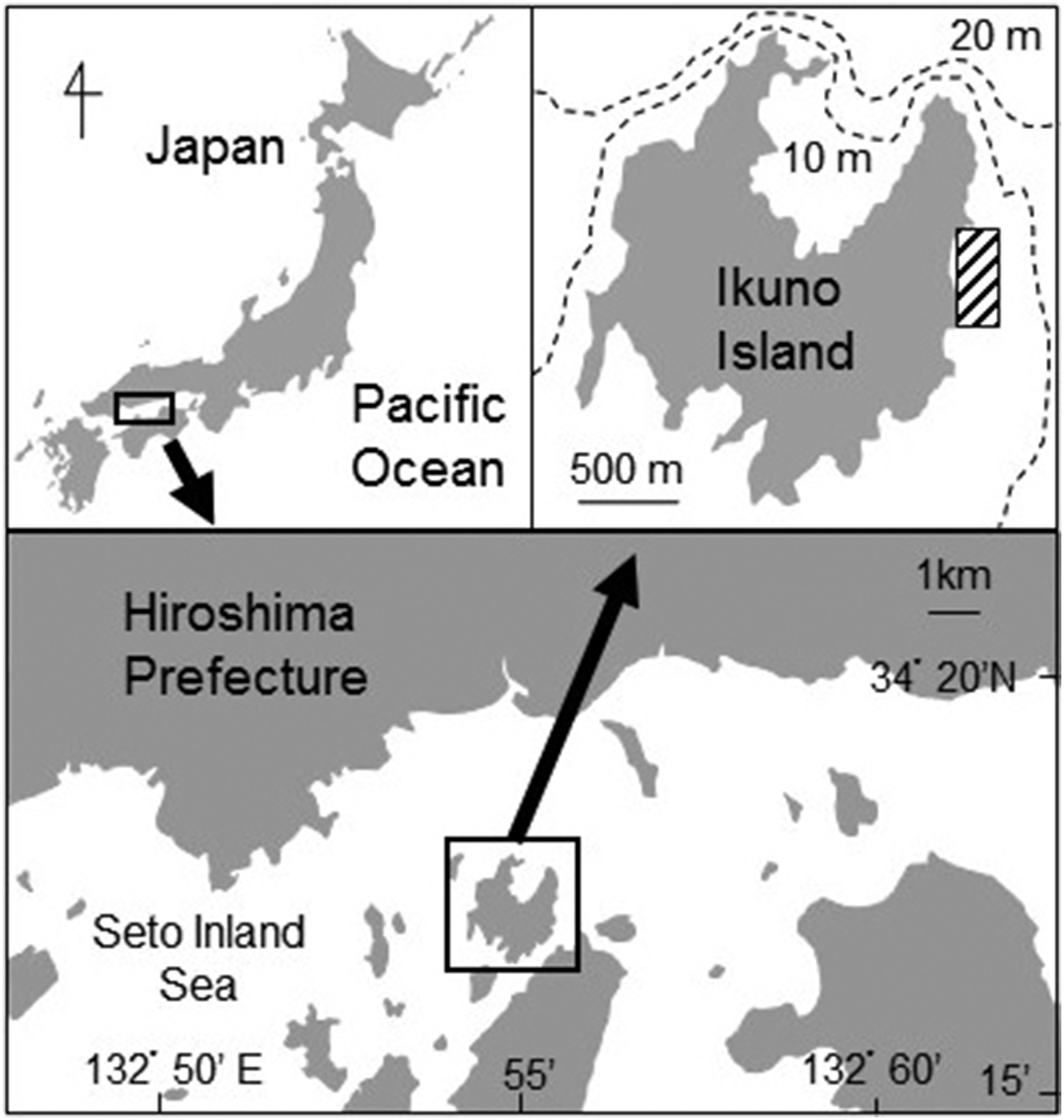
Surveys for seagrass vegetation and the fish community were conducted on a seagrass bed (~10 ha) off the eastern Ikuno Island, central Seto Inland Sea, Japan (34°17′20″N 132°55′32″E; Figure 1). Ikuno Island has a population of ~17, with no human habitation on the eastern coast. The vegetation of the seagrass bed is dominated by the seagrass Z. marina, and the mean shoot density of this plant around the sampling site fluctuates between 20 and 160 m−2 throughout the year (Mohri et al., Reference Mohri, Kamimura, Mizuno, Kinoshita, Toshito and Shoji2013). The bottom of the seagrass area is composed of mud and sand. A heavy rain in the autumn of 2011 induced disturbance of the sea bottom and sediment deposition on the seagrass bed on the eastern shore of Ikuno Island and the area did not recover for the next five years (see the Results section).
Map showing the location of the seagrass bed off Ikuno Island, Hiroshima Prefecture, western Japan, where environmental survey and fish collection were conducted from 2007 to 2016. Depth contours of 10 and 20 m are indicated as dotted lines.

Fish sampling was conducted using a round seine net (2 m high, 30 m long and 4 mm mesh aperture: Kamimura & Shoji, Reference Kamimura and Shoji2013) in the day (1100–1700 h) during the spring tide period in August or September from 2007 to 2016. Fish were collected from four separate locations randomly selected from areas within the seagrass bed (four replicates). Tidal levels were between 50–130 cm (within 2 hours before and after low tide), when the shoreline was close to the edge of the seagrass bed. Three sides of a square (10 m in side length) were surrounded using the net at a speed of ~1.0 m s−1, with another side facing into the shore (around the border of the seagrass bed). Then the net was pulled landward. Each fish collection covered an area of 100 m2. The collected fish were preserved in 10% formalin seawater solution. The temperature and salinity of the surface water were measured at each sampling. Seagrass shoot density was measured in at least four randomly placed 0.5 m square quadrats in the seagrass bed. The length of seagrass leaves from at least 10 shoots was measured.
Data analysis
In the laboratory, fish were identified according to Nakabo (Reference Nakabo2013). Mean number of fish species (no. fish species 100 m−2), abundance (no. fish 100 m−2) and biomass (wet weight of fish 100 m−2) were calculated. The total length (TL, mm) of each fish was measured to the nearest 0.1 mm. To detect the possible effect of the disturbance on seagrass vegetation and the fish community, the mean seagrass shoot density and leaf length, number of species, abundance, and biomass were compared between the periods before and after the event in 2011 using the Mann–Whitney U test.
In the previous studies conducted in northern Japan, the effects of the temporal change in seagrass vegetation on fish species that were associated with the seagrass bed and substrates (rocky bottom including macrophytes) were suggested to be more intensive compared with other fish species (Shoji & Morimoto, Reference Shoji and Morimoto2016; Noda et al., Reference Noda, Hamaguchi, Fujinami, Shimizu, Aono, Nagakura, Fukuta, Nakano, Kamimura and Shoji2017). The collected fishes were divided into three groups according to these previous studies: pelagic or migratory species (PM), sand or mud bottom-associated species (SM) and seagrass (Z. marina) or substrate (rocky bottom including macrophytes)-associated species (ZS). In order to examine possible effects of the environmental conditions on the fish community, a linear model was constructed with the mean seagrass shoot density, water temperature and salinity as explanatory variables and mean biomass of the three fish groups as response variables. The leaf length was not included in the analysis due to positive correlation with seagrass shoot density (r 2 = 0.680, P < 0.01). The model selection was operated based on the Akaike information criterion. Data of Sebastes spp. (juveniles) in 2012 was excluded from the analysis because of a significant effect of its dominance (90.3% in biomass: see the Results). The Bray–Curtis dissimilarity index was calculated for each year based on fish abundance and was processed for non-metric multidimensional scaling (NMDS) to visualize the differences in the fish community for each year because the index has been applied for comparison of marine animal community structures (Field et al., Reference Field, Clarke and Warwick1982; Clarke, Reference Clarke1993; Warwick & Clarke, Reference Warwick and Clarke2001). All statistical analyses were performed in R (3.4.0: R Development Core Team).
Results
Physical environmental conditions and seagrass vegetation
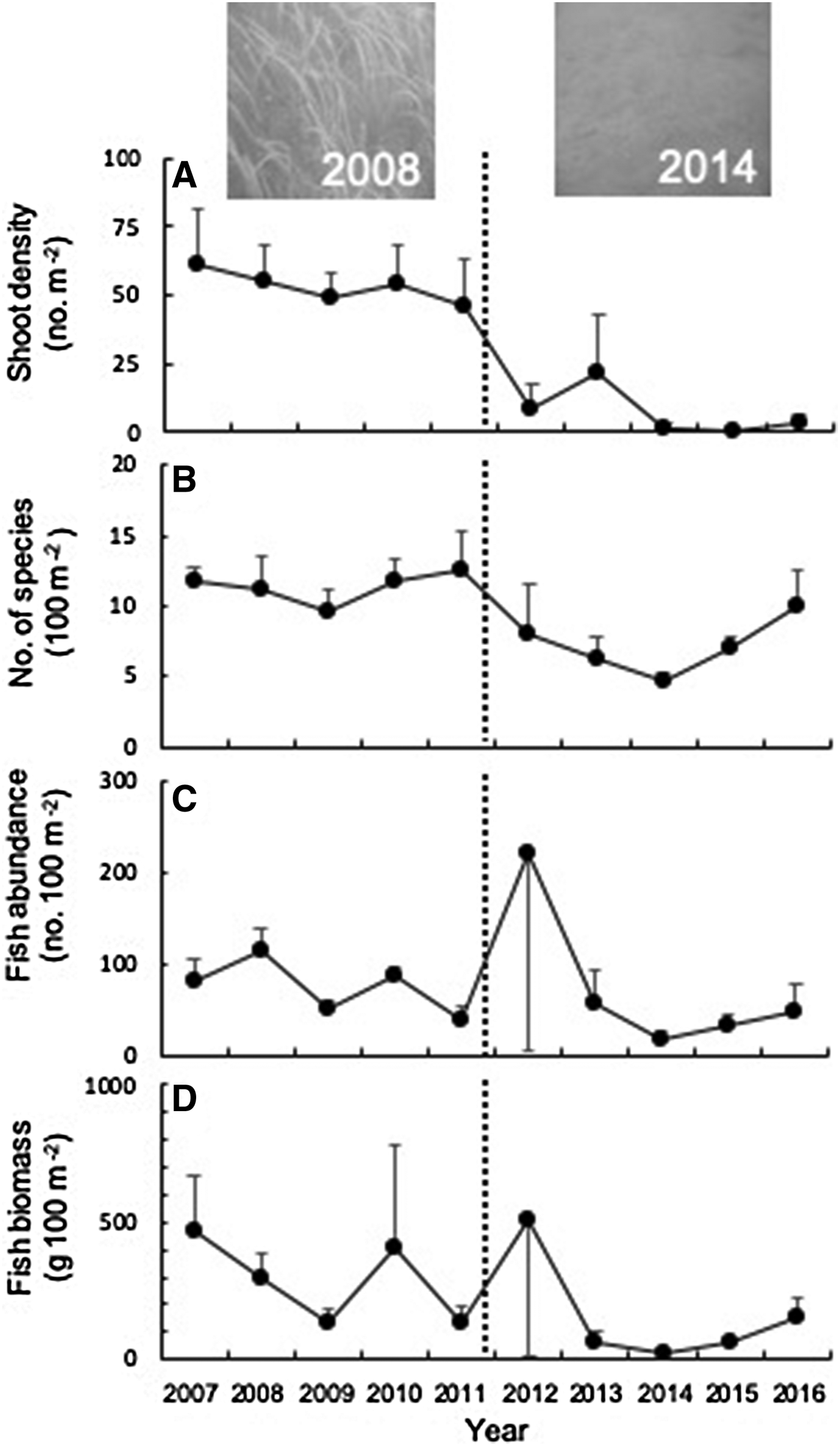
The water temperature ranged between 24.7 °C (2013) and 27.8 °C (2010) and salinity ranged between 27.8 (2013) and 33.0 (2015 and 2016: Table 1). The mean (± standard deviation: SD) seagrass shoot density ranged between 0.3 ± 0.5 shoots m−2 (2015) and 61.8 ± 20.2 shoots m−2 (2007) (Figure 2A). Difference in the mean seagrass shoot density between the periods before and after the disturbance was significant (Mann–Whitney U test, P < 0.01).
Mean shoot density of seagrass (number of shoots 100 m−2: (A), mean number of fish species (B), fish abundance (number of fish 100 m−2; (C) and fish biomass (g 100 m−2; (D) collected in the seagrass bed off Ikuno Island from 2007 to 2016. Dotted lines and the vertical bars indicate the disturbance by the heavy rain in autumn 2011 and standard deviation, respectively. Photographs on top of the figure show an underwater overview of the seagrass bed in 2008 and 2014.

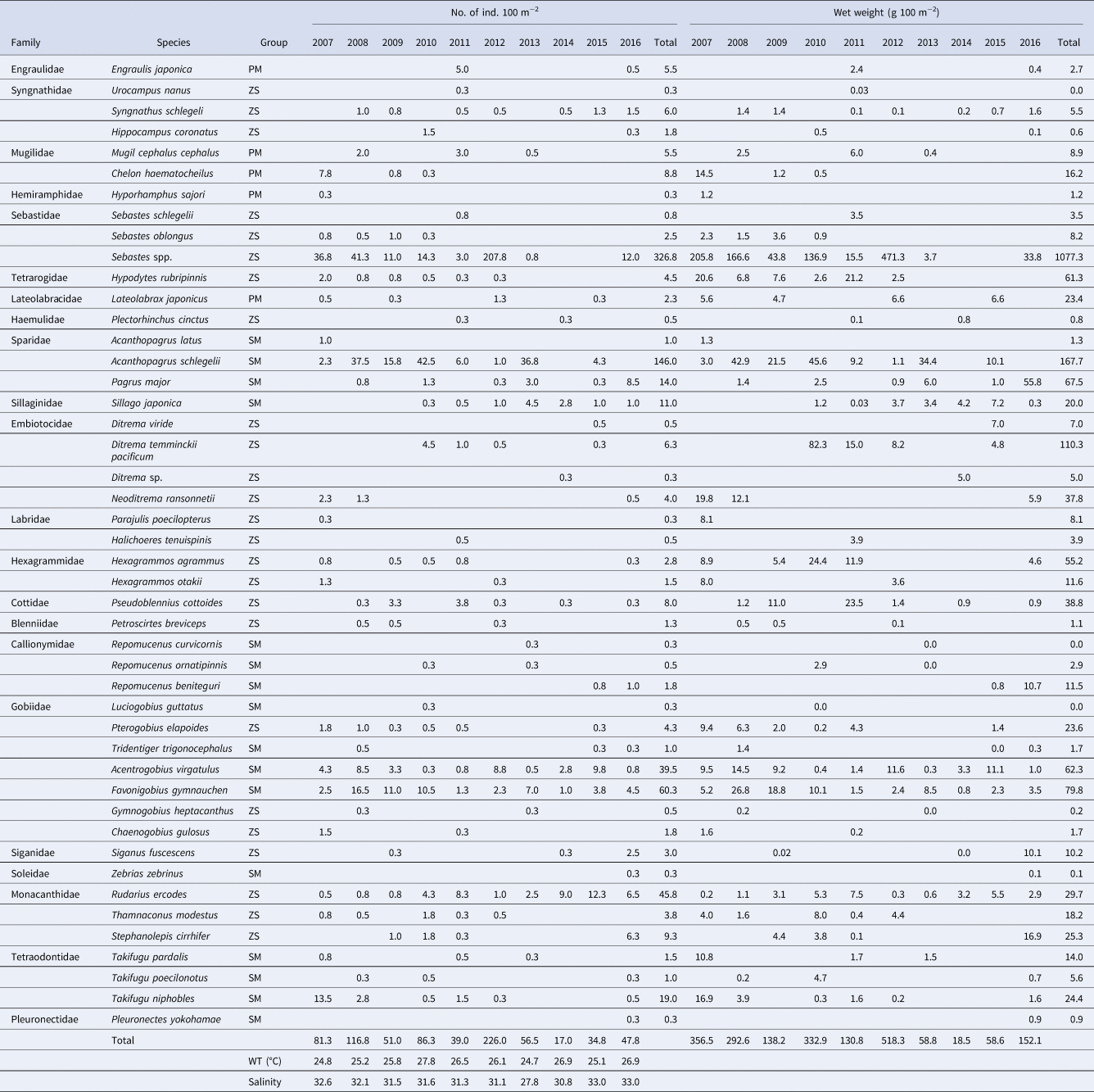
Mean fish abundance (number 100 m−2), biomass (wet weight 100 m−2), water temperature (°C), and salinity at the seagrass bed off Ikuno Island, Seto Inland Sea, western Japan, from 2007 to 2016

Fish were divided into three groups depending on their habitats or lifestyles. PM: pelagic or migratory species, SM: sand or mud bottom-associated species, ZS: seagrass (Z. marina)- or substrate (rocky bottom including macrophytes)-associated species.
Fish community
A total of 3024 fishes belonging to 46 taxa (22 families) were collected during the 10-year survey (Table 1). The mean (±SD) number of fish species ranged between 4.75 ± 0.5 100 m−2 (2014) and 12.5 ± 2.9 100 m−2 (2011: Figure 2B). The mean number of fish species decreased after the disturbance and was the lowest in 2014, with a significant difference between the two periods (Mann–Whitney U test, P < 0.05).
The mean (±SD) fish abundance per 100 m2 ranged between 17.0 ± 9.3 (2014) and 220.0 ± 250.2 (2012: Figure 2C). The mean (±SD) fish biomass per 100 m2 ranged between 18.5 ± 2.6 g (2014) and 504.5 ± 556.1 g (2012: Figure 2D). In 2012, one year post-disturbance, the mean fish abundance, biomass and their SDs increased due to the presence of juvenile black rockfish Sebastes spp. at a remarkably high level of abundance in one of the four collection areas within a scattered seagrass bed (Table 1). The differences in fish abundance and biomass between the two periods were not significant (Mann–Whitney U test, P = 0.42 for abundance and P = 0.31 for biomass).
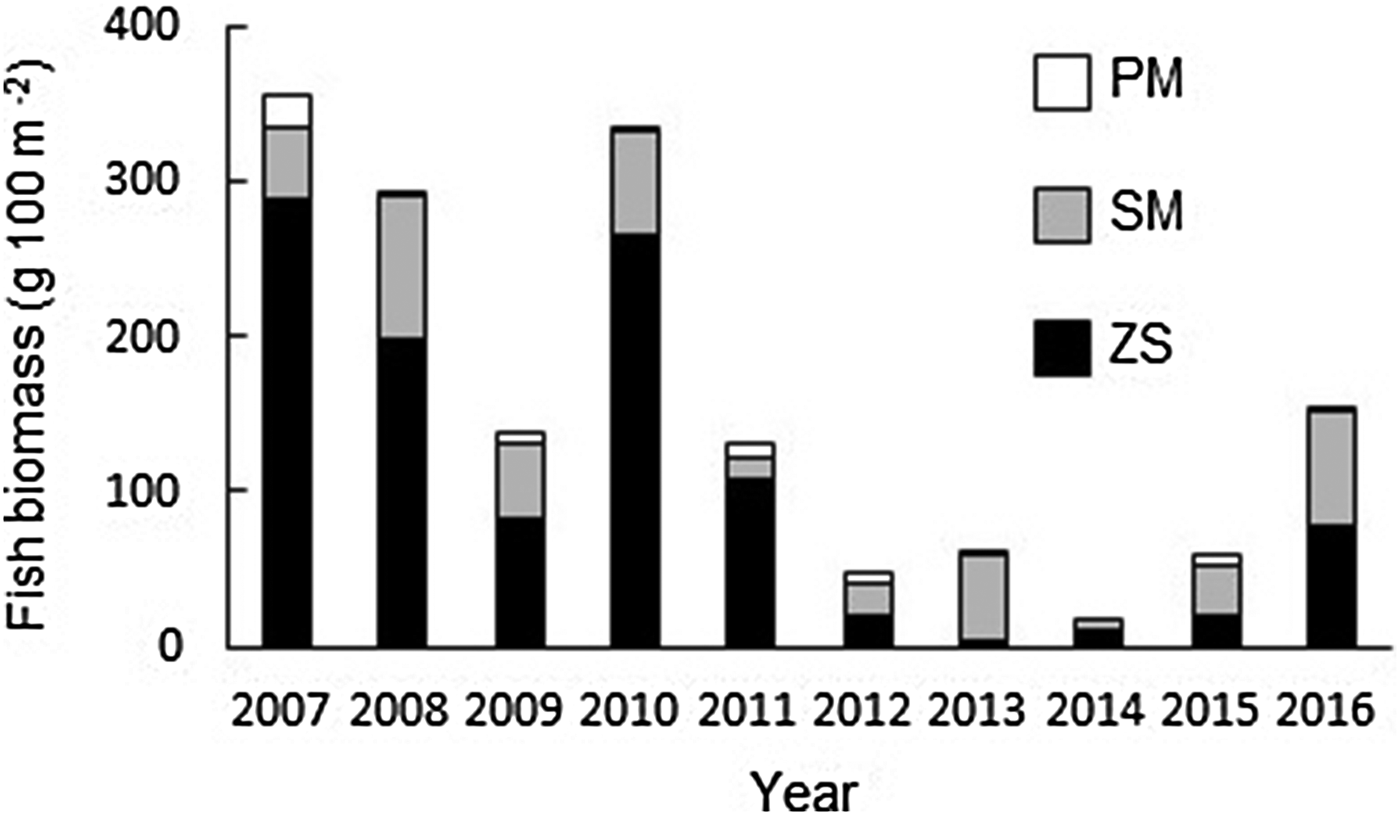
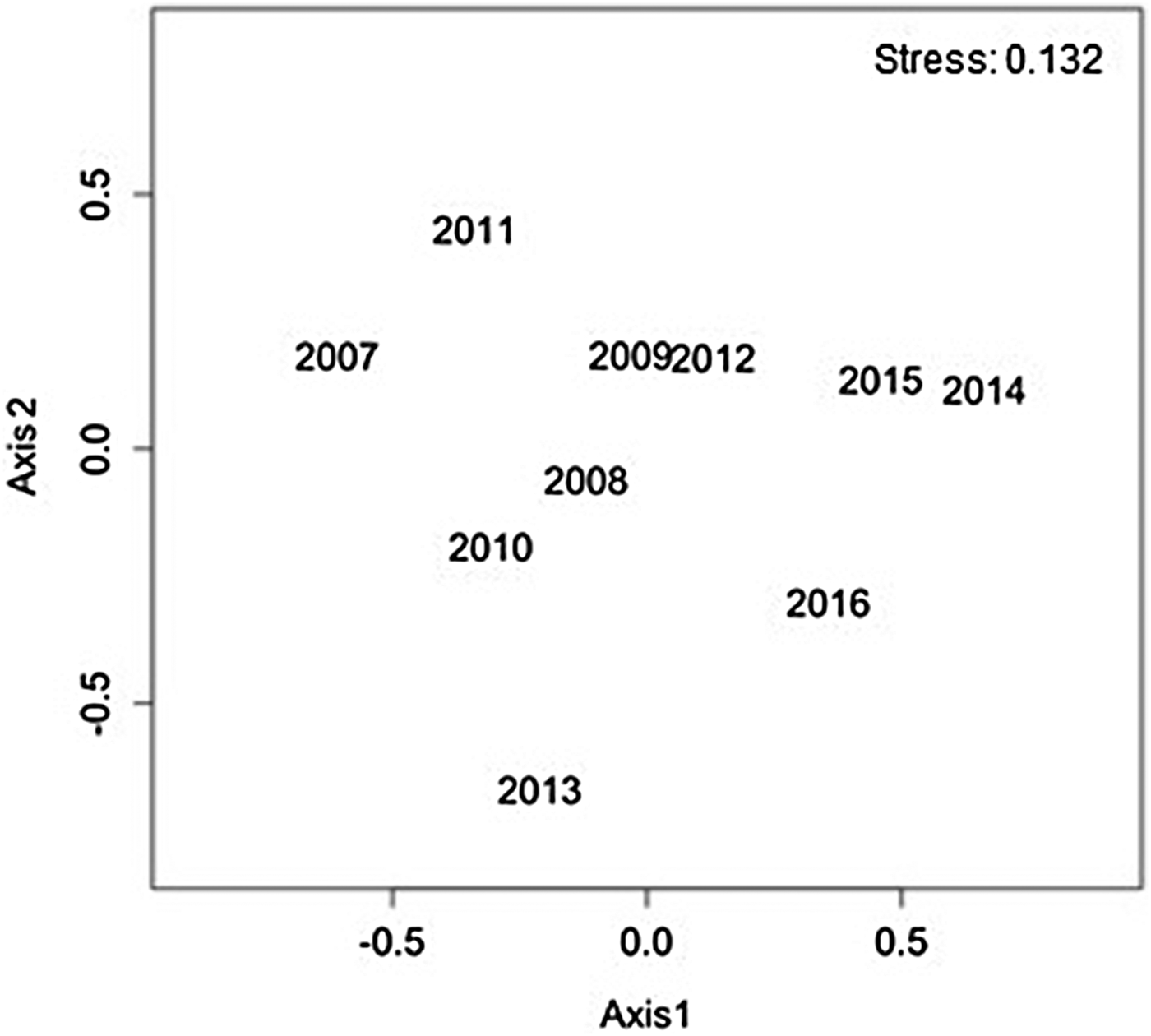
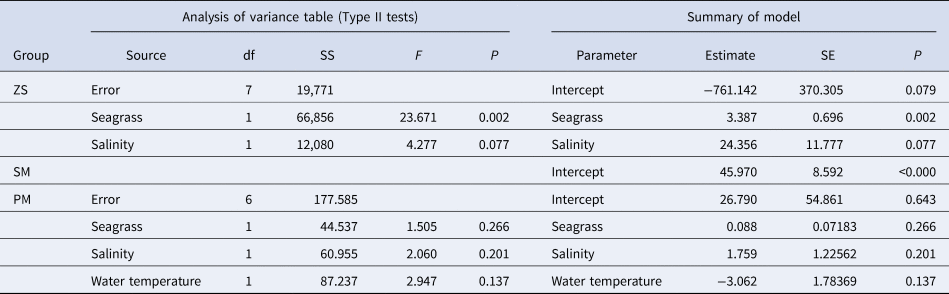
Among the three fish groups (PM, SM and ZS, divided based on their habitats and lifestyles), year-to-year variability in the biomass were larger in SM and ZS (Figure 3). The seagrass shoot density and salinity were selected as explanatory variables for ZS in the model, with higher fish biomass under higher seagrass shoot density and salinity (r 2 = 0.75: Table 2). For ZS, the effect of seagrass shoot density was significant (P = 0.002) and much greater than that of salinity (P = 0.077). All initial explanatory variables were not significant (P > 0.6) and were excluded by the model for SM. For PM type fish, all initial explanatory variables were adopted in the selected model (r 2 = 0.28) but were not significant (P > 0.1). Based on the fish community structures, the years were divided into three or more groups (stress = 0.132, Figure 4). Group 1: 2007 and 2011; group 2: 2008, 2009, 2010 and 2012; group 3: 2014 and 2015 and outgroup: 2013 and 2016.
Mean biomass (wet weight 100 m−2) of three fish groups based on their habitat and/or life cycles from 2007 to 2016. PM, pelagic and migratory group; SM, sand- or mud-bottom associated group; ZS, seagrass- or substrate-associated group.

Non-metric multidimensional scaling (NMDS) ordination using the Bray–Curtis dissimilarity index to differentiate the fish species composition in the seagrass bed off Ikuno Island from 2007 to 2016.

Results of linear model to examine possible effect of environmental conditions (seagrass shoot density, salinity and water temperature) on fish community

Fish were divided into three groups depending on their habitats or lifestyles. PM: pelagic or migratory species, SM: sand or mud bottom-associated species, ZS: seagrass (Z. marina)- or substrate (rocky bottom including macrophytes)-associated species. Response variable was the mean biomass of each group. Initial explanatory variables were seagrass shoot density, salinity and water temperature.
Adjusted R 2: ZS = 0.75, SM = −0.46, PM = 0.28.
Discussion
Effects of environmental conditions on the fish community
The area of seagrass bed has been decreasing at a rate of 5% per year or more worldwide (Waycott et al., Reference Waycott, Duarte, Carruthers, Orth, Dennison, Olyarnik, Calladine, Fourqurean, Heck, Hughes, Kendrick, Kenworthy, Short and Williams2009). The effects of human activity (e.g. low oxygenation concentrations and high turbidity due to eutrophication) and natural effects are considered to affect seagrass growth and vegetation (Larkum et al., Reference Larkum, Orth and Duarte2007). As global warming progresses, fish would also be indirectly affected through the effects on seagrass. Because seagrass is vulnerable to high water temperature, the area of seagrass, which is important as a fish habitat, may decrease under global warming (Kuwae & Hori, Reference Kuwae and Hori2019). In addition, global warming tends to increase the frequency of heavy rains and amount in a single rainfall, which can also cause disturbance to the bottom sediments of seagrass beds. Mitigating the effects of human activity will reduce the rate of disappearance of the seagrass beds. Furthermore, it is possible to prepare for improvement of recovery from environmental fluctuation and damage in the future through maintenance of population structures/networks which enables the supply of seagrass seeds from the surrounding area when seagrass beds disappear (Larkum et al., Reference Larkum, Orth and Duarte2007; Kuwae & Hori, Reference Kuwae and Hori2019).
In the present study, seagrass shoot density showed the significant effect only on seagrass- or substrate-associated (ZS) fish species among the three fish groups (Table 2). In general, spatial and temporal variations in habitat complexity and connectivity to adjacent habitats affect fish community structures of seagrass beds and surrounding areas (Dorenbosch et al., Reference Dorenbosch, Grol, Christianen, Nagelkerken and Van Der Velde2005, Reference Dorenbosch, Grol, Nagelkerken and Van der Velde2006; Grol et al., Reference Grol, Nagelkerken, Rypel and Layman2011). Previous studies have shown higher numbers of fish species, and greater abundance and biomass of fishes in areas with seagrass vegetation coverage, compared with those in surrounding areas with less or without seagrass vegetation (Ferrel & Bell, Reference Ferrel and Bell1991; Larkum et al., Reference Larkum, Orth and Duarte2007). It is likely that the three-dimensional habitat complexity provided by seagrass leaves serves as a predation refuge, feeding ground and as a habitat for fishes. In the present study, it was demonstrated that year-to-year variability of seagrass shoot density was one of the important determinants for the ZS-type fish.
Salinity was the important factor for ZS- and PM-type fish species although the effect was not significant. Seagrass is widely distributed in estuarine waters with high tolerance to low salinity conditions (Nakaoka & Aioi, Reference Nakaoka and Aioi2001). In a laboratory experiment conducted at salinities between 0–33 (0, 5, 10, 15, 20, 25 and 33), seagrass showed the highest germination rates at salinity of 0 under five temperatures tested (5, 10, 15, 20 and 25 °C: Yamaki et al., Reference Yamaki, Ogawa, Yoshikawa and Nanba2006). Therefore, it is plausible that the temporal variability in salinity (especially, low salinity conditions) caused by the heavy rain did not have a negative effect on the seagrass vegetation in the present study site. The indirect effect of salinity through seagrass vegetation on the fish community and direct effect of salinity on fish are also suggested to be minimal because the variability of salinity recorded in the seagrass bed of the study site (27–33) was relatively small (Nakaoka & Aioi, Reference Nakaoka and Aioi2001; Larkum et al., Reference Larkum, Orth and Duarte2007).
Temporal variability of seagrass vegetation
Flora and fauna in coastal habitats are generally subject to high variability in environmental conditions such as temperature, salinity, dissolved oxygen concentration and turbidity at a variety of temporal scales affected by tide, freshwater flow and anthropogenic effects (Schubel, Reference Schubel1968; Valiela et al., Reference Valiela, Foreman, LaMontagne, Hersh, Costa, Peckol, DeMeo-Anderson, D'Avanzo, Babione, Sham, Brawley and Lajtha1992). The succession process of the vegetation and animals after a strong disturbance in a marine ecosystem seems to differ based on the level of disturbance. In seagrass beds, there have been studies on the effects of natural disturbance such as disturbance of sea bottom and sediment deposition on seagrass vegetation (Nakaoka et al., Reference Nakaoka, Tanaka, Mukai, Suzuki and Aryuthata2006), benthic macrofauna (Whanpetch et al., Reference Whanpetch, Nakaoka, Mukai, Suzuki, Nojima, Kawai and Aryuthaka2010) and fishes (Shoji & Morimoto, Reference Shoji and Morimoto2016; Noda et al., Reference Noda, Hamaguchi, Fujinami, Shimizu, Aono, Nagakura, Fukuta, Nakano, Kamimura and Shoji2017). In the present survey area, the seagrass vegetation drastically decreased in 2012 (46.0 shoots m−2 in 2011 to 8.0 shoots m−2 in 2012). The seagrass shoot density has remained lower in recent years than that in the years before 2011. So far, the seagrass vegetation coverage has not increased in the present survey site, although there are plenty of seagrass beds with high shoot density in the surrounding waters. These seagrass beds in the surrounding waters have not experienced a loss of vegetation coverage in recent years and have most likely been able to provide the present survey site with seagrass seeds. Therefore, there may be other continuous factors that have been preventing seagrass growth in the present survey site. Turbidity in the seagrass bed has increased since the inflow of mud caused by the heavy rain in the autumn of 2011. Additionally, an increase in the abundance of herbivore fishes such as Siganus fuscescens (Table 1) may have potentially affected seagrass growth and coverage.
Temporal change in dominant fish species
The dominant fish species were replaced in the present survey area after the decrease of vegetation in 2011. The ZS-type fishes such as Sebastes oblongue, Hypodytes rubripinnis and Pterogobius elapoides had been continuously collected in the seagrass bed before 2011 and were not collected in most of the years after 2011. The decreases in the total fish species richness, abundance and biomass (except for 2012) after 2011 indicate the loss of habitat provided by seagrass vegetation, which affected ZS-type fishes the most. The loss and decrease in habitat and its complexity also can alter the growth and survival of young fishes by affecting feeding conditions and the seagrasses’ function as a predation refuge (Larkum et al., Reference Larkum, Orth and Duarte2007). Therefore, temporal changes in vegetation coverage have a high potential for impact on fish species richness, abundance and biomass in seagrass beds even within the same location. On the other hand, SM-type fishes such as Pagrus major, Sillago japonica and Repomucenus beniteguri were more frequently collected in the seagrass bed after 2012. The seagrass beds surveyed in the present study with decreased vegetation are suggested to be more suitable for these fish species that are associated with sand or mud bottom after 2012.
In 2012, juveniles of Sebastes spp. were collected at a high mean abundance (207.8 100 m−2). These Sebastes juveniles migrate into seagrass and macroalgal beds at about 20 mm in total length in the central Seto Inland Sea (Kamimura & Shoji, Reference Kamimura and Shoji2009). In a previous study, occurrence of three Sebastes juveniles (Sebastes inermis, S. ventricosus and S. cheni) was reported in this area (Kamimura et al., Reference Kamimura, Kawane, Hamaguchi and Shoji2013). Among the three species, juvenile S. cheni was most dominant accounting for 77.6 and 80.0% in numbers in 2007 and 2008, respectively (Kamimura et al., Reference Kamimura, Kasai and Shoji2011). The mean abundance of S. cheni juveniles in 2008 (451.2 individuals 100 m−2) was higher than that observed in the present study in 2012 (207.8 individuals 100 m−2), indicating a large inter-annual variability of juvenile recruits. In 2012, aggregation of the Sebastes juveniles around the scattered seagrass bed after recruiting at a high abundance might have induced the high mean juvenile abundance although the seagrass shoot density was low.
In summary, the fish community in the seagrass bed off Ikuno Island was dominated by seagrass- or substrate-associated species during the pre-disturbance period with high vegetation coverage. After the disappearance of vegetation caused by the heavy rain of 2011, fish species richness, abundance and biomass decreased due to the absence of the species belonging to the dominant fish group. During the five years after the heavy rain, there was no significant recovery of seagrass vegetation coverage. The species richness increased to the same level as that before the heavy rain due to the increase of sand or mud bottom-associated species. The seagrass- or substrate-associated species, that were dominant before the seagrass vegetation loss, were replaced with sand or mud bottom-associated species.
Supplementary material
The supplementary material for this article can be found at https://doi.org/10.1017/S0025315419000845.
Acknowledgements
We express our thanks to Mr Sadaharu Iwasaki and the staff of Takehara Marine Science Station, Hiroshima University, for their assistance in the field survey. Thanks to two anonymous reviewers for their constructive comments on the earlier version of the manuscript.
Financial support
This study was partially supported by the Global Environment Research Fund (J.S., grant number RF-0907 and RF-1102) of the Ministry of the Environment, and Grant-in-Aid for Scientific Research (B) (J.S., grant number 24380107).