

Bullying is not a new phenomenon; however, because of its high prevalence and harmful effects it has commanded increased research attention (Hensley, Reference Hensley2013). Research suggests bullying is positively associated with depression and anxiety in both males and females (Farrow & Fox, Reference Farrow and Fox2011). The experience of bullying is also likely to contribute to the way in which children approach their relationships in life. As an example, victims of bullying may be reluctant to trust their peers or may withdraw from social situations in an attempt to avoid the pain that bullying inflicts (Rigby, Reference Rigby2013; Society for Research in Child Development, 2008). Approximately one in ten children who are bullied at school can experience mental and physical health problems in the short or long term as a result of bullying (Rigby, Reference Rigby1999).
Bullying has been defined in various ways; however, for the purpose of this study, bullying is characterised as repeated and intentional negative acts that involve an imbalance of power, such that it is difficult for the victim to defend him or herself (Olweus, Reference Olweus1993). In Australia, one study revealed 27% of Grade 4 to Year 9 children report being bullied every few weeks or more during a school term (Cross et al., Reference Cross, Shaw, Hearn, Epstein, Monks, Lester and Thomas2009). Figures provided by Kids Help Line (2009) suggest children aged from 10 to 14 years report school-related bullying as a primary concern.
Research continues to reveal children's coping responses play an important role in dealing with bullying. For the purpose of this study, coping represents the cognitive, behavioural, and emotional efforts undertaken by children to manage bullying, with the goal of successful adaptation to these challenging experiences. In a study conducted by Spence, Young, Toon, and Bond (Reference Spence, Young, Toon and Bond2009), the results suggest high levels of victimisation are associated with emotional dysregulation of anger and sadness. Furthermore, research suggests strengthening coping responses through educational interventions is associated with children's greater ability to deal with bullying (e.g., Cross et al., Reference Cross, Monks, Hall, Shaw, Pintabona, Erceg and Lester2011).
Gender differences have been found in the types of bullying behaviour demonstrated and in the types of coping responses children employ. Craig et al. (Reference Craig, Harel-Fisch, Fogel-Grinvald, Dostaler, Hetland and Simons-Morton2009) suggest males are more likely than females to be both a bully and victim. Among males, physical bullying is more common, while verbal and social bullying is more common among females (Rigby, Reference Rigby2007). Naylor, Cowie, and Rey (Reference Naylor, Cowie and Rey2001) found by Year 9 the reported bullying rate for females was almost twice that for males.
Naylor et al. (Reference Naylor, Cowie and Rey2001) found females were more likely to tell someone (either an adult or peer) compared to males, which is consistent with the results obtained by Hunter, Boyle, and Warden (Reference Hunter, Boyle and Warden2004). Machmutow, Perren, Sticca, and Alsaker (Reference Machmutow, Perren, Sticca and Alsaker2012) found females more frequently favoured assertiveness and close support, and less frequently recommended retaliation as a coping response than males. Males recommended retaliation more often than females. Frydenberg and Lewis (Reference Frydenberg and Lewis2000) reported males tend to pursue relaxing diversions or physical recreation, ignore the problem and keep it to themselves, while females tend to engage in tension reduction, self-blame strategies and worry. It is important to ascertain how gender affects the utility of the program being evaluated, as it is clear that the coping responses utilised can be explained by a child's gender.
Investigating factors that can mitigate or exacerbate children's responses to bullying can suggest approaches in which schools can increase positive development (Brownlee et al., Reference Brownlee, Rawana, Franks, Harper, Bajwa, O'Brien and Clarkson2013). Resilience is a personal trait and attribute that allows some children to respond more effectively than others to adversity (Prince-Embury, Reference Prince-Embury2006). Resiliency factors can be related to individual characteristics (intrinsic) or to the family and social context (extrinsic). This research is focused on children's intrinsic resiliency characteristics, such as sense of mastery and emotional reactivity. These two factors involve a number of underlying constructs, such as self-efficacy and emotionality, which have emerged as two important constructs in bullying. Resilience was investigated as a possible mediator of program effectiveness and not as a variable that would be influenced by the program (intervention).
Self-efficacy has been linked with behaviours related to bullying, such as confidence to utilise particular coping strategies (Putter, Reference Putter2007). Furthermore, bullying can cause a range of emotional reactions, given its emotionally arousing nature. Kochenderfer-Ladd (Reference Kochenderfer-Ladd2004) found children who reported they were more likely to respond to peer provocation with anger choose revenge-seeking responses, and were less likely to seek advice or engage in conflict resolution.
A variety of intervention programs have been developed for use in school settings; for example, the Olweus Bullying Program (Olweus, Reference Olweus1993) and Friendly Schools (Cross et al., Reference Cross, Hall, Erceg, Pintabona, Hamilton and Roberts2003). However, despite these programs and their beneficial effects, bullying remains a prominent problem in schools. A review of the literature reported below includes some studies that have investigated gender differences in relation to program efficacy and factors that can change over time.
An examination of the impact of cognitive-behavioural and coping skill programs with children has shown that in a proportion of studies, males and females often respond differently to the same programs. Pahl and Barrett (Reference Pahl and Barrett2010) examined the effectiveness of the Fun Friends (Barrett, Reference Barrett2007) program that is designed to increase social-emotional competence, and decrease and prevent worry and emotional distress. At post-intervention and at 12-month follow-up, both males and females within the intervention group improved on anxiety (effect size = .14). In the intervention group, improvements were also found in behavioural inhibition and in social-emotional skills (e.g., emotion regulation and social skills), with females experiencing the largest improvement from pre- to post-intervention. Koegl, Farrington, Augimeri, and Day (Reference Koegl, Farrington, Augimeri and Day2008) examined the effectiveness of a cognitive-behavioural intervention program, Stop Now And Plan (SNAP) Under 12 Outreach Project (Earlscourt Child and Family Centre, 2001) for children who display aggressive and antisocial behaviour problems. The results showed decreases in delinquency (slightly greater for females) and minor aggression (greater for males) scores (Koegl et al., Reference Koegl, Farrington, Augimeri and Day2008).
A promising approach to empowering children to respond more effectively to bullying is through the Bullying: The Power to Cope program. The program is based on rational emotive behavioural therapy (REBT; Ellis, Reference Ellis1994) and rational emotive education (REE; Knaus, Reference Knaus1974). It specifically aims to aid how children handle being a victim of bullying in a number of ways. Based on the extensive research on the efficacy of REBT and REE on children and adolescents with and without clinical problems (e.g., Bernard, Ellis & Terjesen, Reference Bernard, Ellis, Terjesen, Ellis and Bernard2006; Hajzler & Bernard, Reference Hajzler and Bernard1991), the program teaches children the ideas espoused in the practice of REBT; for example, ‘things are neither good or bad but thinking makes it so’, emotional responses to bullying can vary from strong to weak, choosing to think rational rather than irrational thoughts (‘this is not the end of the world’) and self-acceptance (‘I accept myself no matter what’). The Bullying: The Power to Cope program differs from other programs (e.g., Fun Friends, SNAP) through its heavy emphasis on cognitive interpretation and change, while sharing similar teachings of specific coping skills (actions to take) in response to bullying.
The aim of this study was to evaluate the Bullying: The Power to Cope program. There was also interest on whether gender as well as children's intrinsic resiliency explains the impact of the program being evaluated in this study. The research questions pertaining to this study are:
-
1. Do children who participate in the Bullying: The Power to Cope program show improvement in coping responses (cognitive, behavioural, and emotional) to bullying vignettes in comparison to children who do not participate?
-
2. Do males and females respond differently to the Bullying: The Power to Cope program in terms of coping responses (cognitive, behavioural, and emotional) to bullying vignettes?
-
3. Do children's entering levels of intrinsic resiliency (sense of mastery and emotional reactivity) moderate their coping responses (cognitive, behavioural, and emotional) to bullying vignettes in response to the Bullying: The Power to Cope program?
Method
Participants
The sample consisted of children in Grade 5 (n = 53) and Grade 6 (n = 86) who were selected from three schools in Melbourne, Australia. The schools yielded 182 children who were all invited to take part in the study. Of these children, 143 (78.57%) returned the parent and child consent forms and completed pre-test assessment. At post-test assessment the sample comprised of 139 children, with four of the participants having left the school before completion of the project. Therefore, the final sample comprised of 139 children (71 males and 68 females), with 80 children in the experimental group and 59 children in the control group. Participants were aged from 10 to 14 years (M = 10.79, SD = .65).
Materials
Coping response
Despite the existence of several coping and bullying questionnaires, the review of available questionnaires did not locate any measures that assessed children's cognitive, behavioural, and emotional responses to bullying. Therefore, an innovative questionnaire, the Coping Response Bullying Questionnaire (CRBQ), was designed by the researchers to assess children's cognitive, behavioural, and emotional coping responses to four written bullying vignettes: physical, verbal, social, and cyber (see Appendix). Participants were asked to respond to the same vignettes at pre- and post-test by indicating how they would think, feel, and behave if the incident occurred to them on a 4-point Likert scale ranging from strongly disagree (1) to strongly agree (4). In order to determine emotional reaction to the vignettes, participants completed a Likert scale ranging from a little (1) to very (10) with medium (5) as a midpoint, showing how strongly they would feel if the incident occurred to them. The use of vignettes were chosen to allow coping to be explored in the context of bullying, and for participants to explore sensitive issues in a less threatening way.
The cognitive items were written to represent irrational (not logical, not true, not helpful) evaluations of bullying, including ‘This is the worst thing in the world’, while the behavioural items were written to reflect adaptive and maladaptive responses to bullying, including ‘I would talk to a teacher, friend, or parent’. The emotional items dealt with a range of common negative emotions (e.g., down, angry, and worried), including ‘I would feel worried’.
In order to identify any ambiguities or problems in the questions and layout of the questionnaire, a pilot was conducted. The pilot included five children (two males and three females) in Grades 5 and 6 who shared similar characteristics to the target sample. The children were asked to complete the CRBQ in their own time and to provide feedback to the student researcher within 2 weeks of receiving the questionnaire. The results from the pilot revealed all the words were understood, the range of response choices was used, and the respondents correctly followed the instructions.
In this study, the CRBQ displayed good internal consistency at pre- and post-test for the Cognitive scale (α = .87 and .88), Behavioural scale (α = .79 and .84), and Emotional scale (α = .92 and .91). Forty-four items remained from 48 potential coping responses as a result of the reliability analysis, with four items comprising the Cognitive and Behavioural scales, and three items comprising the Emotional scale.
Resiliency
The Resiliency Scales for Children and Adolescents (RSCA; Prince-Embury, Reference Prince-Embury2006) is designed to assess core personal qualities of resiliency in children that reflect relative strength and vulnerability unique to each child. It consists of three underlying constructs of personal resiliency: Sense of Mastery, Sense of Relatedness, and Emotional Reactivity. For the purpose of this study's interest in resiliency, only the Sense of Mastery and Emotional Reactivity scales were used to measure elements of resilience that were most likely to moderate this type of intervention. Previously reported Cronbach's alphas were α = .88 for the Sense of Mastery scale and α = .95 for the Emotional Reactivity scale (Prince-Embury & Courville, Reference Prince-Embury and Courville2008). In this study, the Sense of Mastery and Emotional Reactivity scales exhibited good internal consistency at pre-test (α = .89 and .90 respectively) and at post-test (α = .91 and .91 respectively).
Knowledge of program
The Knowledge of Bullying: The Power to Cope Questionnaire (KBPCQ) is an 11-item assessment comprised of nine multiple-choice questions and two short answer questions. It was designed by the researchers to assess children's knowledge of bullying and the coping skills taught in the program. The questionnaire contains items such as ‘What is self-talk?’ and ‘How do you feel about your ability to cope with bullying?’, which allowed the student researcher to obtain qualitative data from the children in the experimental group. In a similar manner to the CRBQ, a pilot was conducted with five children (two males and three females) in Grades 5 and 6 who evaluated the survey in terms of ability to understand and answer the questions. Feedback revealed the items were clearly written and comprehensible.
Intervention program
The Bullying: The Power to Cope program is designed to teach children cognitive-behavioural skills to be able to manage their emotions and behaviours when dealing with bullying. The coping skills taught in the program include: positive self-talk, assertiveness, seeking social or professional help, body language communication, self-acceptance, and high frustration tolerance. The coping skills are taught through REBT principles, including identifying, challenging and replacing self-defeating thoughts and beliefs with healthier thoughts that promote emotional wellbeing, goal achievement, and problem solving. According to the program's manual, the program is most suitable for children aged from 10 to 17 years. The program can be taught to classroom-size groups of children or individual children who are being victimised by bullying.
The program is organised in four parts that cover the following topics: Part 1. Bullying and Its Impact; Part 2. Thinking Makes It So; Part 3. Things to Say and Do; and Part 4. Coping in Action. As the content of Part 2 is longer, the current study delivered it in two class periods. Accordingly, the program is to be presented in five separate sessions of approximately 50 minutes. A four-part animated DVD that portrays the lives of three students confronted with the realities of bullying accompanies the program's leader manual. A detailed lesson plan presents the sequence and content of activities for each session.
Procedure
At pre-test (week 1) all participants completed the CRBQ, Sense of Mastery, and Emotional Reactivity questionnaires during one 50-minute class session. During weeks 2 to 6, the program was taught to the children in the experimental group at each school in one 50-minute class session per week, with the teacher present in the classroom. Each session consisted of introductory comments, a segment from the DVD being shown, discussion of the DVD by children, and a number of activities that reinforced the content of the DVD.
In the last teaching session of the program the children in the experimental group were given the KBPCQ to complete. At post-test (week 7) all participants completed the CRBQ, Sense of Mastery, and Emotional Reactivity questionnaires during one 50-minute class session. The children in the control group did not receive the program during the study, thereby serving as a comparison group. Participants in this group continued class as per their regular timetable. However, in order to avoid disadvantaging the comparison group, each school was given the opportunity to implement the program after the completion of the project.
Results
Comparison of the Experimental and Control Groups at Pre-Test
Prior to analyses, data cleaning was conducted separately within each time point and according to protocols provided by Tabachnick and Fidell (Reference Tabachnick and Fidell2007). A one-way between groups MANOVA was performed to investigate pre-test differences in coping responses to bullying vignettes. The total sample size was 139. The independent variable was condition (experimental and control groups). The dependent variable was the CRBQ. The results showed a non-significant difference between the experimental and control groups on the cognitive coping response, F(1, 135) = 0.05, p = .83, partial eta squared = .00 (small), behavioural coping response, F(1, 135) = 0.39, p = .53, partial eta squared = .00 (small), and emotional coping response, F(1, 135) = 1.25, p = .27, partial eta squared = .01 (small). This indicates the experimental and control groups did not differ on reported coping responses at pre-test.
Improvements in Coping Responses to Bullying Vignettes Between the Experimental and Control Groups
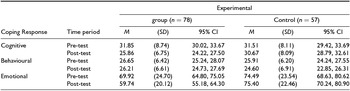
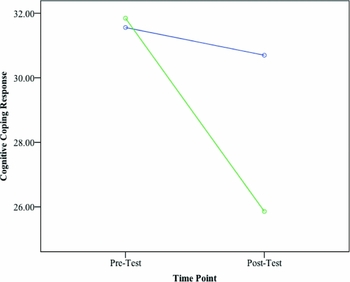
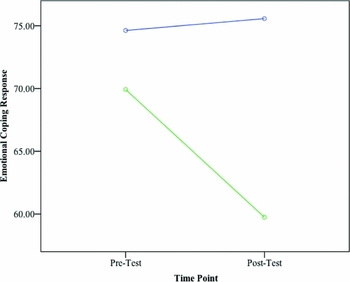
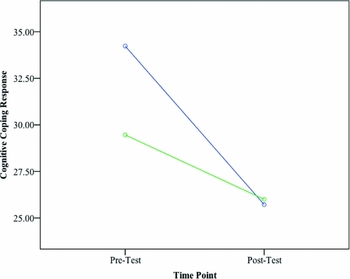
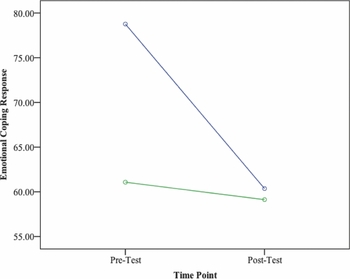
A repeated measures between-groups MANOVA was performed to investigate the differences in coping responses to bullying vignettes between the experimental and control groups. The total sample size reduced to 135 with the deletion of multivariate outliers. Descriptive statistics for each variable of interest at pre- and post-test were calculated (see Table 1). The results showed a significant interaction between time and condition, F(3, 131) = 7.55, p < .01; Wilks’ lambda = .85; partial eta squared = .16 (large). This indicates that there were differences between the experimental and control group on one or more dependent variables from pre- to post-test. When the results for the dependent variables were considered separately, the interaction of time by condition was significant for the cognitive coping response, F(1, 133) = 14.12, p < .01, partial eta squared = .10 (large) and emotional coping response, F(1, 133) = 8.22, p < .01, partial eta squared = .06 (moderate). An inspection of the mean scores indicated the experimental group showed significant improvement in cognitive and emotional coping responses relative to the control group (see Table 1). Figures 1a and 1b illustrate at pre-test that the experimental and control groups reported similar scores for cognitive and emotional coping. However, at post-test the experimental group reported significantly lower scores for cognitive and emotional coping.
Means, Standard Deviations, and Confidence Intervals of the Experimental and Control Groups on the CRBQ

Cognitive coping response between the experimental group (green) and control group (blue) at pre- and post-test.

Emotional coping response between the experimental group (green) and control group (blue) at pre- and post-test.

Gender Differences in Coping Responses to Bullying Vignettes for the Experimental Group
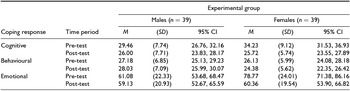
A repeated measures between-groups MANOVA was performed to investigate the differences in coping responses to bullying vignettes between the males and females in the experimental group. The total sample size of the experimental group was reduced to 78 with the deletion of multivariate outliers. Descriptive statistics for each variable of interest at pre- and post-test were calculated (see Table 2). The results showed a significant interaction between time and gender, F(3, 74) = 3.58, p = .02; Wilks’ lambda = .87; partial eta squared = .13 (moderate). This indicates that there were differences between males and females on one or more dependent variables from pre- to post-test. When the results for the dependent variables were considered separately, the interaction of time by gender were statistically significant for the cognitive coping response, F(1, 76) = 7.15, p = .01, partial eta squared = .09 (moderate) and emotional coping response, F(1, 76) = 9.51, p < .01, partial eta squared = .11 (moderate). An inspection of the mean scores revealed females in the experimental group showed greater improvement in cognitive and emotional coping responses relative to males in the experimental group (see Table 2). Figures 2a and 2b illustrate the cognitive and emotional coping responses of females at pre-test were more negative and emotionally intense relative to males. Moreover, at post-test, females and males reported similar cognitive and emotional coping responses.
Means, Standard Deviations, and Confidence Intervals of Males and Females in the Experimental Group on the CRBQ

Cognitive coping responses between the males (green) and females (blue) in the experimental group at pre- and post-test.

Emotional coping response between the males (green) and females (blue) in the experimental group at pre- and post-test.

Resiliency Differences in the Response to the Bullying Program for the Experimental Group
A repeated measures between-groups MANOVA was also conducted to investigate the effect of children's entering levels of intrinsic resiliency on coping responses to bullying vignettes. The independent variables were sense of mastery and emotional reactivity levels (high, medium, and low) at pre-test. The dependent variables were measures of coping responses (cognitive, behavioural, and emotional) to bullying vignettes at pre- and post-test. The total sample size in the experimental group was reduced to 78 with the deletion of multivariate outliers. The results showed a non-significant interaction between time and sense of mastery levels, F(6, 146) = 0.49, p = .81; Wilks’ lambda = .96; partial eta squared = .02 (small), and a non-significant interaction between time and emotional reactivity levels, F(6, 146) = 1.56, p = .16; Wilks’ lambda = .88; partial eta squared = .06 (moderate). This indicates entering levels of intrinsic resiliency did not moderate the effects of the intervention program on children's coping responses.
Children's Comments in Relation to the Bullying Program
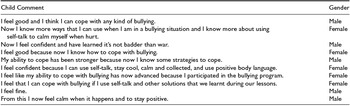
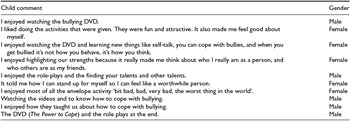
Sixty-four children out of 78 obtained scores greater than 7 on the KBPCQ, suggesting 82% of children learned from the program. The comments (presented as verbatim) displayed in Tables 3 and 4 are data taken from the KBPCQ. Table 3 displays comments taken from the children's responses to question 10 on the KBPCQ, ‘How do you feel about your ability to cope with bullying?’, while Table 4 displays comments taken from the children's responses to question 11 on the KBPCQ, ‘What did you enjoy most about the program?’
Ability to Cope with Bullying at Post-Test

Enjoyable Aspects of the Program at Post-Test

Qualitatively, it appears the children in the experimental group experienced positive effects to the Bullying: The Power to Cope program. The majority of children reported they had learned attitudes and coping skills to employ if and when faced with bullying (see Table 3).
Discussion
This study represents a preliminary evaluation of the Bullying: The Power to Cope program targeting the cognitive, behavioural, and emotional coping responses of children in Grades 5 and 6. In comparison with children in the control group, children in the experimental group showed significant improvement in cognitive and emotional coping responses to bullying vignettes; however, there was no significant improvement in behavioural coping responses.
It is well documented in the literature that bullying is associated with significant psychological, emotional, and academic problems (Cleary, Reference Cleary2000; Eisenberg, Neumark-Sztainer, & Perry, Reference Eisenberg, Neumark-Sztainer and Perry2003; Farrow & Fox, Reference Farrow and Fox2011). The pre- to post-test improvements in cognitive coping responses for children in the experimental group suggest the Bullying: The Power to Cope program is efficacious as an intervention for teaching children to identify and restructure negative (irrational) thoughts into positive (rational) thoughts that promote psychological and emotional wellbeing. According to REBT, it is largely a child's thinking about bullying that leads to emotional and behavioural upset (Ellis & Bernard, Reference Ellis and Bernard2006). Teaching children the ideas and skills espoused in the practice of REBT helps them to recognise the self-defeating effects of irrational beliefs and the beneficial outcomes of rational beliefs on emotions and behaviours, which presumably resulted in improvements in cognitive and emotional coping. The post-test assessment results of coping responses to bullying vignettes provides data on how children's responses to real life situations of bullying changed as a result of the intervention.
Within the limits of the current study, the findings support the application of REBT and REE as a school-based intervention program for bullying. In further support of these findings, Ellis and Bernard (Reference Ellis and Bernard2006) and Morris (Reference Morris1993) have proven REBT to be an effective and efficient treatment for many child and adolescent psychological and emotional problems (e.g., anxiety and ADHD).
There were differences between male and female coping responses to bullying vignettes from pre- to post-test. Females showed very significant changes (lessening) of their cognitive and emotional coping responses to the bullying vignettes at post-test. Their mean scores, which differed significantly from males at pre-test, were the same as the male responses at post-test (see Table 3). This finding is in accord with the results obtained by Koegl et al. (Reference Koegl, Farrington, Augimeri and Day2008) and Pahl and Barrett (Reference Pahl and Barrett2010), who also found males and females respond differently to the same program; and that males and females employ different coping responses and experience various emotions in relation to bullying (Frydenberg & Lewis, Reference Frydenberg and Lewis2000; Naylor et al., Reference Naylor, Cowie and Rey2001; Spence et al., Reference Spence, Young, Toon and Bond2009). Based on these results at post-test, females compared to males showed a decrease in irrational evaluations and negative emotions to bullying vignettes.
Furthermore, an unexpected finding of this study was that females scored significantly higher on the cognitive and emotional scales of the CRBQ at pre-test, indicating greater levels of irrational evaluations and emotionality of the bullying vignettes. Females possessed poorer cognitive and emotional coping responses relative to males, which suggests females are more vulnerable to bullying and its adverse effects. This finding is consistent with previous research conducted by Frydenberg and Lewis (Reference Frydenberg and Lewis2000) and Kochenderfer-Ladd (Reference Kochenderfer-Ladd2004), who reported females experience intense emotional arousal and worry more than males, and admit less ability to cope with adversity. This finding contributes to a growing literature on variations in male and female coping responses to bullying. Gender differences in response to school-based intervention programs offer a way for further exploration regarding the impact of bullying for the psychological and emotional outcomes of the children involved.
The findings also revealed entering levels of intrinsic resiliency (sense of mastery and emotional reactivity) did not impact the Bullying: The Power to Cope program as reflected in children's coping responses to bullying vignettes. A possible explanation for this finding is that the children, prior to participation in the program, possessed low average to high average sense of mastery and emotional reactivity, therefore perceiving themselves as having sufficient personal resources and relative strengths with which to deal with bullying. This means it was not possible to determine whether resilience does in fact moderate responses to bullying.
The findings from the analyses of resulting data imply that coping responses to bullying may reflect resiliency profiles; that is, children who possess intrinsic resiliency strengths (i.e., self-efficacious or capacity to maintain normal functioning when upset) are more effectively able to cope with adverse situations such as bullying (Hamill, Reference Hamill2007).
Implications
The results of this study confirm and extend previous research demonstrating evidence of the efficacy of cognitive-behavioural school-based intervention programs (e.g., Cross et al., Reference Cross, Monks, Hall, Shaw, Pintabona, Erceg and Lester2011; Frey et al., Reference Frey, Hirchstein, Snell, Van Schoiack Edstrom, MacKenzie and Broderick2005). The Bullying: The Power to Cope program allows school staff to work in a coordinated fashion to address school bullying. This is achieved through strengthening the rational beliefs and self-management skills that help children make the very most of their innate potential by minimising unhealthy emotions and irrational beliefs, and maximising their effort and wellbeing (Ellis & Bernard, Reference Ellis and Bernard2006).
The results support the acceptability and feasibility of implementing low-cost programs that equip children with the skills necessary for effectively coping with bullying, while utilising systems and structures that are already in place in schools. Furthermore, this current study demonstrates differences in the profile of female and male coping responses, especially emotional, which can be useful in coping skill intervention programs for bullying. It seems sensible to suggest a profile-based approach to understanding coping responses in relation to bullying, which should involve developing programs that take into account female and male differences in emotional reactions, specifically how strongly the child feels towards bullying.
An additional key implication to consider when intervening in the education of children is the gender of the children for whom the program is being developed or implemented. As an example, the current study's findings indicated females possess greater levels of irrational evaluations and emotionality to bullying vignettes; therefore, focusing on improving female students’ ability to control or regulate negative emotional responses is paramount.
Limitations and Future Research
Given the preliminary nature of the promising findings, further evaluation of the Bullying: The Power to Cope program is important to validate the effectiveness of this school-based intervention program. Effort in this line of research will increasingly move toward the pursuit of improving children's ability to cope with bullying. Future studies could make effort to recruit children in Grades 3 and 4, and Years 7 and 8 in order to further investigate gender differences in relation to coping responses to bullying. It would also be important to include a sample of children who are in fact victims of bullying, with the aim of broadening the applicability of the program. This will essentially empower schools with the tools and skills necessary to efficiently prevent bullying-related problems.
Research is also needed to explore which aspects of the program were responsible for improvement — that is, attitude and/or skill — and whether females are in fact more cognitively and emotionally irrational/reactive in thinking relative to boys. Of note, two of the items that characterise self-acceptance on the CRBQ, ‘I am a real loser’ and ‘I accept myself no matter what’, showed statistically significant pre- to post-test change, indicating the intervention in the package designed to teach self-acceptance was effective.
Child self-report questionnaires were employed in this study to measure coping responses to bullying vignettes and personal qualities of resiliency. The use of children's self-report for all measures is subject to issues of respondent bias and common method variance. While self-report is often used in studies evaluating school-based intervention programs for bullying (e.g., Cross et al., Reference Cross, Monks, Hall, Shaw, Pintabona, Erceg and Lester2011), future studies could benefit from employing additional measures, such as parent or teacher reports and behavioural observations to provide a comprehensive assessment on program efficacy; for example, changes in schoolyard or classroom climate, and to examine group level effectiveness. However, this is not always cost effective and can be difficult to employ in medium- to large-scale research studies.
Furthermore, children were not truly randomly assigned to the experimental and control groups, and the groups comprised of unequal sample size. It was impractical and impossible for the participating schools to complete random allocation of students to obtain equal sample size in groups, due to the coordination of the school timetable and the odd number of student class grades across the three schools. Inspections of the mean scores suggest changes in cognitive and emotional coping responses to bullying vignettes are a true reflection of participation in the Bullying: The Power to Cope program. Nevertheless, studies such as this could be improved by true randomisation and equal number of sample size in groups.
The current study's findings are also limited to two measurement occasions over a 7-week period and cannot necessarily be generalised to longer periods. Children were limited in the amount of time to practise the skills taught in the Bullying: The Power to Cope program. Long-term follow-up of children would allow for a better assessment of program efficacy and skill sustainability (Spence et al., Reference Spence, Young, Toon and Bond2009).
Conclusion
Bullying among school children is an eminent problem associated with negative implications for the psychological and emotional wellbeing of the children involved (Hensley, Reference Hensley2013). The findings from this study, although preliminary, indicate Bullying: The Power to Cope is an efficacious school-based intervention program for improvement in cognitive and emotional coping responses, with females reporting greater improvements relative to males.
The particularly interesting finding was the cognitive and emotional coping responses of females to bullying vignettes (pre-test) that were significantly more negative and emotionally intense than males. This suggests the coping responses utilised to deal with bullying can be explained by a child's gender. The study's findings build upon current understandings of REBT and REE and coping skills training as important and valuable school-based interventions for children. Continual efforts in this field of research will increasingly proceed to establishing and evaluating bullying intervention programs that are applicable and empower schools with the knowledge and skills necessary to effectively prevent bullying and its harmful affects.
Appendix Coping Response Bullying Questionnaire (CRBQ) Vignettes
Vignette 1:
A student who is in your class who is bigger and stronger keeps hitting and kicking you when nobody is looking and tells you that if you tell anyone he will just hurt you more.
Vignette 2:
Your friends laugh at you and keep calling you ‘stupid’ and ‘retard’ because you are experiencing some difficulty in reading and writing.
Vignette 3:
During lunch period you see some classmates sitting at a table. You walk up to them and ask if you can sit with them. They totally ignore you, with one of them replying: ‘There is no way you are sitting with us.’
Vignette 4:
A classmate is spreading hurtful rumours about you by posting messages on Facebook. Many children at school now won't play with you or even speak to you. Even your friends are starting to think the rumours may be true.