People of different cultures have utilized complementary and alternative medicine (CAM) for centuries to treat a myriad of health issues, as well as to maintain emotional well-being of individuals in the community. While about a third of the U.S. population has used CAM over the past two decades, CAM has increasingly become a component of the US health care system (Clarke, Reference Clarke2015). There is a growing body of research related to the use of CAM to manage a variety of medical conditions, such as breast cancer, pain management, and health promotion (Arcury et al., Reference Arcury, Nguyen, Sandberg, Neiberg, Altizer, Bell and Quandt2015; Klagsbrun et al., Reference Klagsbrun, Rappaport, Speiser, Post, Byers, Stepakoff and Karman2005; Zins, Reference Zins2018). Counseling professionals have also increased their utilization of CAM in their treatment and interventions for addiction, anxiety symptoms, stress management, bereavement, etc. (Berger, Cheston & Stewart-Sicking, Reference Berger, Cheston and Stewart-Sicking2017; Chen et al., Reference Chen, Berger, Manheimer, Forde, Magidson, Dachman and Lejuez2012; Nichols, Reference Nichols2015; Winkelman, Reference Winkelman2003). The increase in integrative and holistic health care has resulted in medical and allied health professionals (i.e., physicians, nurses, occupational therapists, and medical and health science students) exhibiting positive attitudes toward CAM (Abbott et al., Reference Abbott, Hui, Hays, Mandel, Goldstein, Winegarden and Brunton2011; Ben-Arye et al., Reference Ben-Arye, Shulman, Eilon, Woitiz, Cherniak, Sharabi and Admi2017; Chang & Chang, Reference Chang and Chang2015; Knupp, Esmail & Warren, Reference Knupp, Esmail and Warren2009; Pettersen & Olsen, Reference Pettersen and Olsen2007; Wahner-Roedler et al., Reference Wahner-Roedler, Lee, Chon, Cha, Loehrer and Bauer2014). However, there is little research regarding the attitudes toward CAM use among counseling professionals. This study explored counseling students’ attitudes toward and beliefs about using CAM in counseling practice as well as and their personal experience with CAM use.
1. Background and Rationale
Several different terms have been used interchangeably to describe CAM including, “complementary medicine,” “alternative medicine,” or “integrative medicine.” The National Center for Complimentary and Integrated Health (2018) described CAM as a nonmainstream approach that collaborates with conventional approaches to optimize the health care and wellness of an individual. It involves mental, emotional, functional, spiritual, social, and community integration, with the emphasis on treating an individual holistically.
When it came to specific CAM usage, Neiberg et al. (Reference Neiberg, Aickin, Grzywacz, Lang, Quandt, Bell and Arcury2011) reported that the users of CAM varied in ethnic backgrounds, socioeconomic status, gender, and age. They identified that biologically based therapies (i.e., herbs, diet-based therapies, megavitamin therapies, folk medicine, and chelation therapy) along with mind–body medicine/energy therapies (i.e., relaxation techniques, such as meditation plus movement therapies, e.g., yoga) were the most commonly used alternatives to traditional medicine and were used both by females and males at the same rates. However, regarding combining different types of CAMs verses using a single CAM, those who were White, female, mid-age, and younger, or had higher education attainment were more likely to utilize multiple CAMs. Upchurch, Dye, Chyu, Gold and Greendale (Reference Upchurch, Dye, Chyu, Gold and Greendale2010) found that Hispanic and African American women were most likely to use prayer, whereas White women tended to use yoga, chiropractic care, and massage as their complementary treatment.
The benefit of using CAM to address mental health concerns is evidenced in medical and allied health professions (Berger et al., Reference Berger, Cheston and Stewart-Sicking2017). The use of CAM by those managing mental illness had been shown to be relatively high (Grzywacz et al., Reference Grzywacz, Suerken, Quandt, Bell, Wei and Arcury2006; Jarman, Perron, Kilbourne & Teh, Reference Jarman, Perron, Kilbourne and Teh2010; Kilbourne, Reference Kilbourne2007; Mamtani & Cimino, Reference Mamtani and Cimino2002; Unutzer et al., Reference Unutzer, Klap, Sturm, Young, Marmon, Shatkin and Wells2000; Woodward et al., Reference Woodward, Bullard, Taylor, Chatters, Baser and Perron2009). For adults who experienced mental health issues such as mood, anxiety, or substance use disorders, there was a tendency to use prayer/spiritual healing methods, vitamins and minerals consumptions, and/or cognitive approaches, such as relaxation techniques, deep breathing, and meditation (Kilbourne, Reference Kilbourne2007; Woodward et al., Reference Woodward, Bullard, Taylor, Chatters, Baser and Perron2009). Grzywacz et al. (Reference Grzywacz, Suerken, Quandt, Bell, Wei and Arcury2006) also noted that adults with mental health disorders commonly integrated relaxation techniques, spirituality practices, and herbs or multivitamins into their treatment. Adults with medical and psychiatric comorbidity were more likely to have used mind–body therapies in the previous year compared with adults with only medical issues (Alwhaibi, Bhattacharya & Sambamoorthi, Reference Alwhaibi, Bhattacharya and Sambamoorthi2015). This fits with the integrative mental health care theory that highlights the clinical benefits of pairing mental health intervention (typically medication) with the treatment of the mind, body, and spirit (Lake, Reference Lake2012).
In counselor education, the research mainly focuses on theories or conceptualizations of how CAM can be integrated into the counseling training program (Lake, Reference Lake2012; Lumadue, Munk & Wooten, Reference Lumadue, Munk and Wooten2005). Lumadue et al. (Reference Lumadue, Munk and Wooten2005) found that over half of counselor education programs stated that they offered courses that included CAM approaches and comprehensive guidelines for delivering CAM in their training program. Moreover, counseling education programs also integrate CAM therapies as self-care approaches for counselors and counseling students.
Although CAM was explored in empirical research as a general topic in counseling (Christopher & Maris, Reference Christopher and Maris2010; Shapiro, Brown & Biegel, Reference Shapiro, Brown and Biegel2007), specific therapies of CAM had been discussed, such as indigenous healing practice (Mpofu, Reference Mpofu2006), expressive art therapy (Shannon, Reference Shannon2002), and yoga in a university counseling center (Milligan, Reference Milligan2006), there is limited research on CAM use in counseling overall, except in dissertation studies. Langeland (Reference Langeland2013) surveyed 130 counselor educators regarding their beliefs, attitudes, knowledge, and experience of CAM. The results of the study revealed that 100% of counselor educators had some experience with using at least one CAM, most commonly with vitamins and herbal supplements. Regarding beliefs about the integration of CAM in counseling education, 78% of educators said that CAM should be included in training and half of the counselor educators said that their profession is behind in doing so. In another dissertation study, Crawford (Reference Crawford2015) conducted a survey on graduate counseling students exploring their attitudes toward CAM use in counseling practice and their personal experience. It was found that the personal use of CAM was a significant predictor of counseling students incorporating CAM use into their clinical practice. However, there is no indication of CAM referral in the study.
Research showed that medical and allied health professionals and students exhibited positive attitudes regarding the integration of CAM into their care program and expressed the need for integrative care training. Ben-Arye et al. (Reference Ben-Arye, Shulman, Eilon, Woitiz, Cherniak, Sharabi and Admi2017) found that older female nurses employed in community care settings hold positive attitudes toward integrating CAM into supportive and palliative cancer care. The common CAM therapies such as acupuncture, nutrition consultation, herbal supplements, and mind–body connection were rated high in improving the quality of life of their patients. Similarly, medical students exhibited positive attitudes toward the use of CAM, particularly in body–mind–spirit connection type of therapies, such as massage, deep breathing exercise, yoga, medication, and praying (Abbott et al., Reference Abbott, Hui, Hays, Mandel, Goldstein, Winegarden and Brunton2011).
On the other hand, a systematic review of the existing literature showed that although 66% of nurses had positive attitudes toward CAM, a large majority of them (77%) lacked the knowledge of the potential risks and benefits of CAM. In addition, about half of the nurses reported feeling uneasy discussing CAM use with their clients (Chang & Chang, Reference Chang and Chang2015). Similarly, Abbott et al. (Reference Abbott, Hui, Hays, Mandel, Goldstein, Winegarden and Brunton2011) reported that medical students had different standards for personal CAM use and for referring their patients. Although about one third of occupational therapists reported using at least one form of CAM within their practice, they expressed hesitation in using CAM mainly because of their lack of training, interest, and supportive evidence (Knupp et al., Reference Knupp, Esmail and Warren2009). Wahner-Roedler et al. (Reference Wahner-Roedler, Lee, Chon, Cha, Loehrer and Bauer2014) reported that although 76% of the physicians who participated in the study had never referred their patients to CAM professionals, about half of them had positive attitudes toward the integration of CAM therapies in their professional practice.
Several recommendations had been made in order to increase the mainstream adaptation of CAM use in medical and allied health professions. It is essential for the research literature to include evidence-based practices for CAM use (Knupp et al., Reference Knupp, Esmail and Warren2009; Wahner-Roedler et al., Reference Wahner-Roedler, Lee, Chon, Cha, Loehrer and Bauer2014) and educational curriculum and training to reflect the changing practice of medicine in the mainstream (Abbott et al., Reference Abbott, Hui, Hays, Mandel, Goldstein, Winegarden and Brunton2011; Wahner-Roedler et al., Reference Wahner-Roedler, Lee, Chon, Cha, Loehrer and Bauer2014). Since the level of knowledge in published clinical research on CAM is low, Ben-Arye et al. (Reference Ben-Arye, Shulman, Eilon, Woitiz, Cherniak, Sharabi and Admi2017) proposed a two-tiered approach to CAM training, starting with a mandatory basic CAM educational program and a comprehensive course for nurses who were proactive in utilizing CAM in supportive and palliative care. Finally, Chang and Chang (Reference Chang and Chang2015) suggested that it is necessary to understand the nature of clients’ integrative care to be able to advocate for the well-being of individuals and the quality of health care of clients, plus to ensure that the necessary resources were accessible to their clients.
As shown in the above review of the literature, there was evidence regarding medical and allied health professionals’ attitudes toward CAM use and the recommendation of the improvement of education and training in CAM integrative care. Berger (Reference Berger2011) had urged counselors and counselor educators in counseling practices to be better equipped to utilize CAM therapies as adjunctive or primary treatments with their clients. Currently, there is no empirical research in investigating counseling students’ attitudes toward CAM use, either in their personal experience, in mental health treatment, or in substance use disorder intervention. In order for counselors to provide a client-responsive, client-centered, holistic, and community-based approach to treatment, an understanding of counselors-in-trainings’ attitudes and beliefs is essential. This knowledge will provide guidance on curriculum development and training in regard to providing CAM integrative care in counseling practices.
2. Statement of Purpose
The goal of this study was to understand the attitudes of graduate counseling students toward CAM use, CAM beliefs, and CAM integration into counseling practice. The knowledge about counseling students’ attitudes toward CAM will inform the development of counseling curriculum in counselor education programs and counseling practice including culturally responsive treatment planning and referrals.
Specifically, the following research questions were explored:
1. What was the prevalence of CAM use among counseling students?
2. What was counseling students’ attitude toward and beliefs about CAM?
3. What are the factors associated with or predictive of CAM integration into counseling practice?
3. Methodology
3.1 Participants and procedures
Study participants were 113 clinical mental health counseling students from a master’s level Counselor Education program accredited by the Council for Accredited of Counseling and Related Educational Programs at a religious secular university located in the Midwestern United States. The ethnicity breakdown of the participants was 69.9% European American (n = 79), 19.5% African American (n = 22), 4.4% Latinx (n = 5), and the rest 6.2% (n = 7) were Asian American, biracial/multiracial, and Native American. The sample consisted of 95.6% female (n = 108) and 4.4% men (n = 5). Over half of the sample, 59% were aged 22–29 (n = 66), 19% were aged 30–39 (n = 23), 14% were aged 40–49 (n = 16), and 8% were aged 50 and older (n = 8).
All participants were recruited from counseling classes in the Counselor Education program that included theories of counseling, multicultural counseling, professional identity and ethics, addiction counseling, and counseling internships I and II. The participation of the study was voluntarily. After explaining the description of the study, an informed consent form was obtained from the participants. No incentive (i.e., course credit or monetary reward) was provided to those who chose to participate in the study. All participants were required to complete a survey package that included a demographic questionnaire, the CAM use, a 20-item checklist of alternative therapies (Woodward et al., Reference Woodward, Bullard, Taylor, Chatters, Baser and Perron2009), the Complementary and Alternative Medicine Beliefs Inventory (CAMBI; Bishop, Yardley & Lewith, Reference Bishop, Yardley and Lewith2005), and three-question survey to elicit participants’ responses regarding their belief in CAM integration in counseling practice. The study was approved by the university Institutional Review Board.
3.2 Measures
A self-report demographic questionnaire was used to collect information on age, gender, and ethnicity. Age was assigned to one of the four categories indicated above.
3.2.1 CAM use
A 20-item checklist was used to measure the frequency of different forms of CAM were used by participants in the past 12 months. This checklist was developed to survey the commonly used alternative therapies and traditional professional services. The participants were asked, “How many times did you use any of the therapies in the past 12 months for problems with your emotions and nerves or your use of alcohol or drugs?” The participants were asked to circle their response for each item, ranging from 0 to more than 7+ times, in the past 12 months. The list of therapies included alternative services, such as acupuncture, biofeedback, chiropractic, energy healing, exercise or movement therapy, herbal therapy (i.e., St. John Wort), massage therapy, meditation technique, self-help and internet support groups, special diets, spiritual healing by others, and any nontraditional remedy or therapy. The list of traditional professional services includes services from the mental health sector (psychiatrists, mental health hotlines, psychologists, and other mental health professionals), the general medical care sector (family doctors, nurses, occupational therapists, and other health professionals), and the nonhealth care sector (religious advisors, counselors, and social workers). There is no report on reliability and validity of this checklist, although it is found that European–American participants were almost twice as likely to report any CAM use (Woodward et al., Reference Woodward, Bullard, Taylor, Chatters, Baser and Perron2009).
3.2.2 Complementary and alternative medicine beliefs inventory
The CAMBI which was developed originally by Bishop, Yardley and Lewith (Reference Bishop, Yardley and Lewith2005) is a 17-item instrument that measures a comprehensive set of beliefs about CAM use. The beliefs about CAM use comprise of three domains: belief in natural treatments, orientation toward holistic health treatments, and preference for participation in health treatments. The version of the CAMBI used in the original study was modified for use in this study. Similar with Grzywacz et al. (Reference Grzywacz, Neiberg, Quandt, Lang, Bell and Arcury2012), the word “treatments” in original items was changed to “health-related treatments” and “patients” was changed to “clients” as clarification for participants to consider mental health and substance use treatments when responding to CAMBI items. Response categories range from 1 (strongly disagree) to 7 (strongly agree). Four items were negatively phrased and in reverse scored to guard against a positive response bias. The minimum score for the scale was 17 and the maximum was 119. High scores on the CAMBI indicated that the individual had strong beliefs about CAM use. CAMBI has been shown to have satisfactory reliability (Berger & Johnson, Reference Berger and Johnson2017; Grzywacz et al., Reference Grzywacz, Neiberg, Quandt, Lang, Bell and Arcury2012). Cronbach’s alpha for the CAMBI was 0.81, and for natural treatments, preference for participation in health treatments, and orientation toward holistic health subscales were 0.75, 0.68, and 0.73, respectively. In terms of criterion validity, the orientation toward holistic health subscales have a moderate correlation with CAM use (Spearman’s rho = 0.47; Grzywacz et al., Reference Grzywacz, Neiberg, Quandt, Lang, Bell and Arcury2012).
3.2.3 CAM integration
CAM integration was measured by adding three questions constructed to elicit participants’ responses regarding their belief in CAM integration in counseling practice: (a) I would refer a client for nontraditional treatments for mental health problem, (b) I would refer a client for nontraditional treatment for substance abuse problem, and (c) nontraditional treatment for mental health or substance use is as effective as traditional counseling. A 7-point Likert-type response scale was used for each item, ranging from 1 (strongly disagree) to 7 (strongly agree) to maintain consistency with the other scales in the survey. Dichotomous variables were created for CAM integration and non-CAM integration. CAM integration was determined by participant’s rating of 5 or higher (agree to strongly agree) in each item (coded as 1), and zero otherwise.
3.3 Data analysis
All statistics were performed using IBM SPSS Statistics Standard V25 (IBM Corp, Armonk, NY). Descriptive statistics were run to determine the prevalence of CAM use among counseling students. To investigate the counseling students’ attitude toward CAM use and CAM beliefs, nonparametric testing, such as chi-squared and Mann–Whitney U was employed to compensate for the small sample size and when the data were not normally distributed (Tabachnick & Fidell, Reference Tabachnick and Fidell2018). Logistic regression analysis was used to investigate the predictive variables of counseling students in CAM integration in counseling practice. The predictors were demographic characteristics (gender, age, and ethnicity) and CAM beliefs, the three subscales in CAMBI (perceived value of natural treatments, preference for participation in health treatments, and orientation toward holistic health). Demographic variables were coded into two dichotomies with male, age 30 years and older, and other ethnicity as reference categories. CAM beliefs were continuous variables.
4. Results
Overall, 89% (n = 101) reported using CAM and traditional professional services in the past 12 months. About 8% (n = 9) reported using CAM only, and 2% (n = 3) reported not using CAM and/or traditional professional services in the past 12 months. The participants reported using an average of 9.4 modalities (standard deviation (SD) = 4.23).
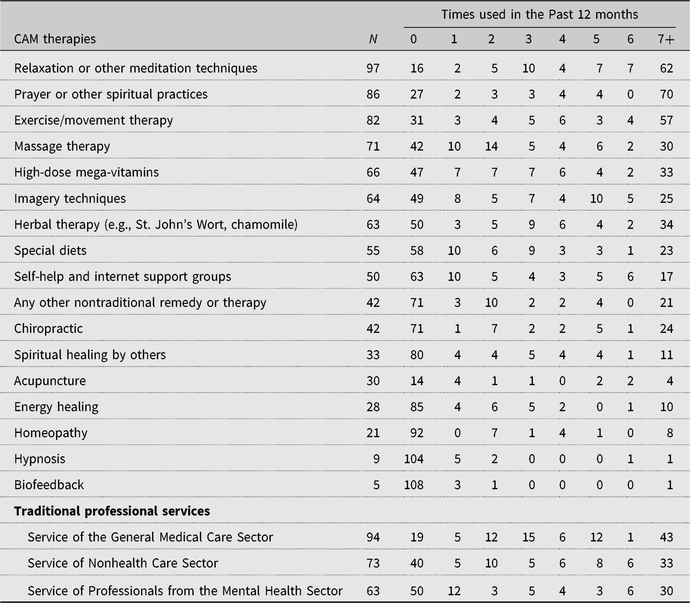
In terms of the specific form of CAM therapies, the majority of the participants used relaxation or other meditation techniques (85%; n = 97), followed by prayers or other spiritual practices (76%; n = 86), and exercise/movement therapy (73%; n = 82). Hypnosis and biofeedback were used the least by the participants. In contrast, traditional professional services in the general medical care sector were used most frequently by the participants (83%; n = 94), followed by service of nonhealth care sector (64%; n = 73). About half of the participants used service of professionals from the mental health sector (55%; n = 63).
When asked how frequently they used certain types of CAM therapies, participants reported using prayer or other spiritual practices most frequently. Seventy participants used prayer or other spiritual practices seven or more times in the previous 12 months. Next, 62 participants reported utilizing relaxation or other meditation techniques seven or more times in the previous 12 months. Exercise or movement therapy was the third most frequently used CAM with 57 participants reported using this type of therapies seven or more times in the past 12 months. The prevalence of the 20 CAM therapies used by counseling students is listed in rank order in Table 1. Chi-squared tests revealed that there is a significant difference in the use of relaxation or meditation techniques [χ2 (1, N = 113) = 5.04, p = 0.025, Cramer’s V = 0.21] among White students (66%) compared to participants of other ethnicity groups (34%). Moreover, female participants significantly used the combination of CAM and traditional professional services (96%) compared with male (4%) [χ2 (2, N = 113) = 6.40, p = 0.041, Cramer’s V = 0.24]. There were no significant age differences in the use of specific CAM therapies or in the use of specific traditional professional services sectors among the participants.
Prevalence of CAM use by counseling students

CAM, complementary and alternative medicine.
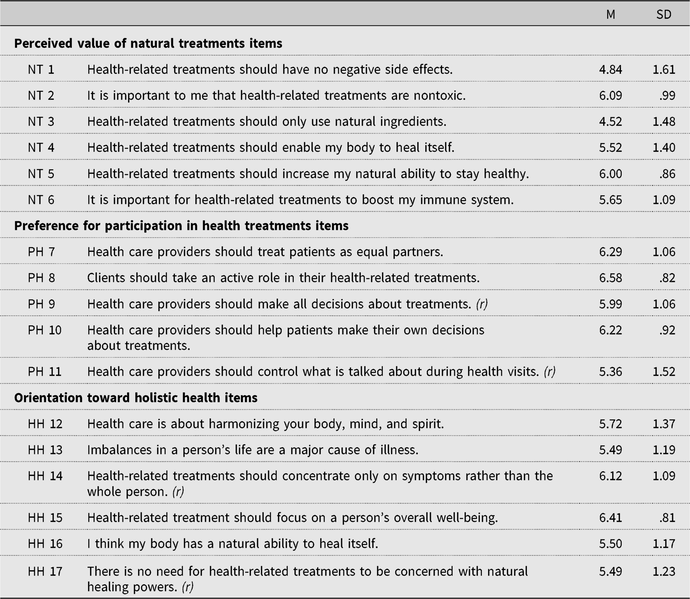
There was substantial variability in responses to individual CAM items among the participants (see Table 2). Overall, response means for CAMBI items ranged from a high value of 6.58 (SD = 0.82) to a low value of 4.52 (SD = 1.48). Among the items that assessed the perceived value of natural treatments, the average responses ranged from a high value of 6.09 (SD = 0.99) for “It is important to me that health-related treatments are non-toxic,” to a low value of 4.52 (SD = 1.48) for “Health related treatment should only use natural ingredients.” In terms of the items that designed to evaluate the preference for participation in health treatments, the average responses ranged from a high value of 6.58 (SD = 0.82) for “Clients should take an active role in their health-related treatment,” to a low value of 5.36 (SD = 1.52) for “Health care providers should control what is talked about during health visit.” Lastly, among items that designed to determine the orientation toward holistic health, means ranged from a high value of 6.41 (SD = 0.81) for “Health related treatment should focus on a person’s overall well-being,” to a low value to 5.49 for two items “Imbalances in a person’s life are a major cause of illness” (SD = 1.19), and “There is no need for health-related treatments to be concerned with natural healing powers” (SD = 1.23).
Descriptive statistics for CAMBI items, by domain of belief

CAMBI, complementary and alternative medicine beliefs inventory; HH, orientation toward holistic health; NT, natural treatments; PH, preference for participation in health treatments; SD, standard deviation; M, mean.
Note: (r) indicates reverse scored items.
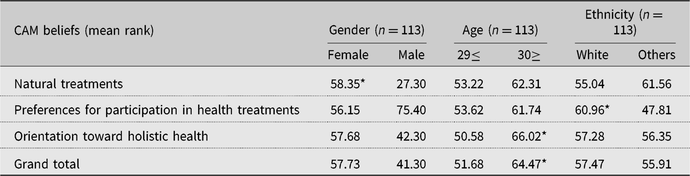
The Mann–Whitney U test was used to compare the three subscales of participants’ belief toward CAM treatment approach: Perceived value of natural treatments, preference for participation in health treatments, and orientation toward holistic health treatments, also including a grand total score. Independent variables were gender, age, and ethnicity. Dependent variables were the three subscales of CAMBI. The Mann–Whitney U test revealed significant differences in the belief in natural treatment between female and male participants (U = 121.50, p = 0.038, r = −0.20). Female participants (median = 37, mean rank = 58.38) significantly scored higher in the belief in natural treatment approach compared with male participants (median = 28, mean rank = 27.30).
A significant difference in grand total scores of CAM belief between the participants who were aged 29 years or younger and the participants who were 30 years old and older (U = 1200.00, p = 0.041, r = −0.19) was found. The participants who were aged 30 years or older (median = 105, mean rank = 64.47) scored higher than the participants who were aged 29 years or younger (median = 91, mean rank = 51.68) on the overall CAM belief. Similarly, there were significant differences in the orientation toward holistic health section between those two age groups (U = 1127.00, p = 0.013, r = −0.23). The participants who were aged 30 years or older (median = 38, mean rank = 66.02) scored higher than the participants who were aged 29 years or younger (median = 31, mean rank = 50.58) on this section of the CAMBI. However, there is no significant difference between these age groups in the natural treatments approach (U = 1301.50, p = 0.145, r = −0.14) and preference for participation in health treatments (U = 1328.00, p = 0.192, r = −0.12), between these two age groups.
When comparing the differences between the ethnicity regarding their CAM belief measured by CAMBI, there were significant differences in participation in health treatments between the groups: White and other ethnicity (U = 1030.50, p = 0.049, r = −0.18). White individuals (medium = 33, mean rank = 60.96) scored significantly higher than individuals who were in other ethnicity groups (medium = 28, mean rank = 47.81) in their belief regarding the participation in health treatments. Also, there were no significant differences in natural treatments (U = 1188.00, p = 0.331), orientation toward holistic health (U = 1321.00, p = 0.890), and grand total (U = 1306.00, p = 0.817) between the ethnicity groups. Table 3 shows the mean rank of participants in CAM belief measured by CAMBI in gender, ethnicity, and age groups.
Mean rank of CAM beliefs by demographic characteristics

CAM, complementary and alternative medicine.
* Mann–Whitney U test, p < 0.05.
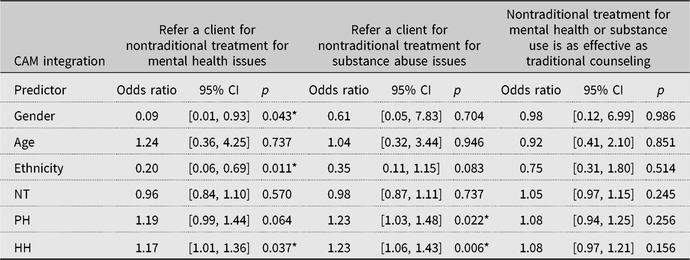
Logistic regression analysis was conducted to explore the predictive variables of counseling students in CAM integration in counseling practice. Using “referring a client to nontraditional treatment for mental health issues” as one of the dependent variables, the logistic regression model was statistically significant, χ 2 (6) = 23.79, p < 0.001. The model explained 32% (Negelkerke R 2) of the variance in the CAM integration, particularly, in referring to nontraditional treatment for mental health issues, indicating a relatively robust effect size (Heppner et al., Reference Heppner, Wampold, Owen, Thompson and Wang2016). The model correctly classified 83.2% of cases. Specifically, females were 0.09 times more likely to refer a client to nontraditional treatment for mental health issues than males (odds ratio (OR) = 0.09; 95% confidence interval (CI) [0.01 – 0.93], p = 0.043). White participants were 0.20 times more likely to refer their clients to nontraditional treatment for mental health issues (OR = 0.20; 95% CI [0.06 – 0.69], p = 0.011). Individuals who are likely to use a natural treatment approach were 1.17 times more likely to refer their clients to nontraditional treatment for mental health issues (OR = 1.17; 95% CI: 1.01 – 1.36, p = 0.037).
By using “referring a client to nontraditional treatment for substance use issues” as another dependent variable, the logistic regression model was statistically significant, χ 2 (6) = 26.33, p < 0.001. The model explained 33.2% (Nagelkerke R 2) of the variance in the CAM integration and correctly classified 83.2% of cases. Increased in the participation in health treatment score would likely increase the referral of clients for substance use issues (OR = 1.23, 95% CI: 1.03 – 1.48, p = 0.022). Likewise, increasing the holistic health treatment approach would likely increasing the referral of the clients to nontraditional treatment for substance use issues (OR = 1.23, 95% CI: 1.06 – 1.43, p < 0.001).
The variables were not statistically significant to predict the CAM integration in terms of believing nontraditional treatment for mental health or substance use is as effective as traditional counseling χ2(6) = 11.06, p = 0.086. Table 4 shows the results of the relationship between the predictive factors and the CAM integration.
Logistic regression analysis: Predictive factors and CAM integration

CAM, complementary and alternative medicine; CI, confidence interval; HH, orientation toward holistic health; NT, natural treatments; PH, preference for participation in health treatments.
* p value < 0.05 significant level.
5. Discussion
The majority of the participants reported using a combination of CAM and traditional professional services. Aside from utilizing the general medical care services, the most common usage of CAM included relaxation and meditation techniques, prayers or other spiritual practices, and exercise/movement therapies. Similarly, the mind–body connection type of CAM modalities had been rated high among medical students and nursing students (Abbott et al., Reference Abbott, Hui, Hays, Mandel, Goldstein, Winegarden and Brunton2011; Ben-Arye et al., Reference Ben-Arye, Shulman, Eilon, Woitiz, Cherniak, Sharabi and Admi2017). Christopher and Maris (Reference Christopher and Maris2010) reported that CAM has been explored as a self-care method to sustain the well-being of counseling students and further provided evidence to the popularity of CAM use. However, the results indicated that only 55% of the counseling students in this study utilized health professionals in mental health sectors. The fact that only 55% of this group of counseling students utilized health professionals in mental health sectors was surprising. The finding might refer to the trend of wellness promotion through mindfulness practices among counselors or university students, rather than utilizing merely mental health counseling services for stress management and self-care needs (Davis & Hayer, Reference Davis and Hayes2011; Newsome, Waldo & Gruszka, Reference Newsome, Waldo and Gruszka2012; Richards, Campenni & Muse-Burke, Reference Richards, Campenni and Muse-Burke2010; Shapiro et al., Reference Shapiro, Brown and Biegel2007). Universities might want to reevaluate their resources regarding mental health services on campus. It appeared that consolidating the traditional counseling services and wellness program that includes CAM therapies is warranted.
Based on the results of this study, the counseling students, especially White female counseling students, showed positive attitudes toward their beliefs about CAM use. Particularly, the counseling students had a higher rating on the beliefs of having a nontoxic health-related treatment, focus on a person’s overall well-being and preference in having the clients to take more active roles in their health-related treatment. These results reflected the previous studies where the most common CAM therapies were biologically based such as megavitamin, herbs, or folk medicine as nontoxic treatment and mind–body energy-based therapies such as relaxation/meditation techniques or yoga to facilitate the well-being of individuals (Alwhaibi et al., Reference Alwhaibi, Bhattacharya and Sambamoorthi2015; Grzywacz et al., Reference Grzywacz, Suerken, Quandt, Bell, Wei and Arcury2006; Neiberg, et al., Reference Neiberg, Aickin, Grzywacz, Lang, Quandt, Bell and Arcury2011). Female graduate students in this study showed preference of using the natural treatment approach. This is consistent with the Bishop and Lewith (Reference Bishop and Lewith2008) narrative review on the demographic characteristics associated with CAM use where the evidence suggested that CAM users were more likely to be middle-aged female with higher education level. In parallel, Neiberg et al. (Reference Neiberg, Aickin, Grzywacz, Lang, Quandt, Bell and Arcury2011) also reported that those who were White, female, mid-age and younger, or had higher education background were most likely to consume multiple CAM therapies.
Demographic characteristics may predict counseling students’ expectation regarding the health promotion of their clients. In terms of age category, counseling students who were 29 years or younger desired to establish therapeutic relationship with their clients, which is based on equal partnership and a belief in the self-efficacy of their clients, where the clients are encouraged to take an active role in the intervention process. The younger participants also agreed that health care is not just about treating the symptoms but should promote the harmonization of body, mind, and spirit. These values amplified the ethical principle of autonomy in counselor’s ethical behavior and decision-making (American Counseling Association, 2014). It also aligned with Nichols’s (Reference Nichols2015) study, which indicated that positive attitudes toward CAM usage could stem from the counseling profession’s promotion on well-being and a holistic approach. However, the association between age and CAM use had not been consistent in the past studies due to the variety of ways of categorizing the age range (Bishop & Lewith, Reference Bishop and Lewith2008). The significant association between age and CAM use in this study could be due to the majority of the counseling students who are younger than 29.
In terms of the relationship between ethnicity and attitudes toward CAM use, this study showed that White participants were likely to agree that health care providers’ roles were to help their clients to make their own decisions about treatment. White participants seemed to adhere with the counseling working alliance model where the counselor and client work together for therapeutic change (Wampold & Imel, Reference Wampold and Imel2015). Furthermore, females and White students were significantly more likely to refer their clients to CAM treatment for mental health issues. Although it was different from the mental health setting, Ben-Arye et al. (Reference Ben-Arye, Shulman, Eilon, Woitiz, Cherniak, Sharabi and Admi2017)’s study also found that older female nurses had positive attitudes toward integrating CAM into supportive and palliative cancer care. The fact that White, female counselors, who are the most common demographic characteristics in the counseling workforce (Data USA, 2018) held a positive attitude toward CAM could be an advantage factor when they work with clients who are from different racial/ethnic backgrounds as they approached their health care treatment differently. Marks (Reference Marks2006) noted that the indigenous healing practices among African Americans were based on the intuitive recognition that these healers have a strong sense of cultural understanding in health. Thirty-eight percent of the individuals interviewed in an urban clinic in Wisconsin representing at least 30 Native American tribal affiliations reported concurrent use of a native healer. The use of a native healer for health care advice among Native American had been high since two decades ago (Marbella, Harris, Diehr, Ignace & Ignace, Reference Marbella, Harris, Diehr, Ignace and Ignace1998). Clients who prefer to use CAM therapies as their community-based treatment could be empowered when they work with counselors who understand the clients’ integrative care and are open to the CAM use.
This study also revealed that counseling students who believed in an active participation in health treatment and in holistic health treatment approach are more likely to refer their clients to nontraditional treatment for substance use issues. Behere, Muralindharan and Benegal (Reference Behere, Muralidharan and Benegal2009) cautioned that due to limited evidence indicating the effectiveness of using biologically based therapies such as acupuncture, herbal therapies, and mind–body interventions in substance use treatment, systematic studies were required before the integration of CAM in substance use issues. For the past decade, there was limited empirical research on the integration of CAM use in substance use treatment. Therefore, counselor education programs in addiction counseling must ensure the appropriate curriculum to support the development of CAM competency of counseling students.
5.1 Limitations
A limitation of this study was that the sample consisted of mostly well-educated female who were nontraditional adults, and who lived in an urban setting. Another limitation is the use of the CAMBI instrument for this study. Grzywacz et al. (Reference Grzywacz, Neiberg, Quandt, Lang, Bell and Arcury2012) indicated “the complementary and alternative behavior inventory (CAMBI) is not well suited for measuring health and healing in a diverse community sample.” Though the current sample was limited in its diversity (33%), there were significant differences in beliefs between ethnic groups and a need for a more diverse sample. Moreover, the effect sizes of this study were relatively small with low practical significant. A well-planned statistical power should be calculated for the future research to obtain meaningful results (Heppner et al., Reference Heppner, Wampold, Owen, Thompson and Wang2016).
5.2 Recommendations for the counseling profession and counselor education
Counselors have been recommended to understand the integrative care system in order to be responsive to the minority community in mental health services. Shelley et al. (Reference Shelley, Sussman, Williams, Segal and Crabtree2009) found that Hispanic and Navajo clients would be open to discuss their CAM use when their primary care physicians initiated the topic. Similarly, a study of First Nations People in Wisconsin found that only 14.8% of clients who received services from healers told their Western physician about their help-seeking from traditional healers (Marbella et al., Reference Marbella, Harris, Diehr, Ignace and Ignace1998). Therefore, it is essential for mental health practitioners to incorporate questions about CAM use as part of their interview process.
Freeman (Reference Freeman2012) urged mental health care providers to be open to collaborating with their clients to discuss CAM therapies in their intervention. To facilitate effective collaborations and openness to CAM integration, Nichols (Reference Nichols2015) suggested that counselors examining their exposure and beliefs toward CAM, their development of CAM competence, and the reinforcement of CAM use in professional practice. Faculty had shown to be vital in teaching and encouraging creative thinking and reinforcing the use of intuition in counseling to support the development of beliefs that are associated with the openness to CAM use. Counselor education programs can be influential in helping counseling students to develop the beliefs and openness associated with the use of CAM in counseling practice (Nichols, Reference Nichols2015).
Counselors are encouraged to utilize a cultural relevant approach to providing clinical services by abandoning the categorization of folk, traditional, indigenous, and culture-based treatments as “complementary and alternative”. One way to implement this type of change is to capitalize on the healing approaches within a community. Mpofu (Reference Mpofu2006) asserted that indigenous healing systems have been utilized by the majority of the world population for their health care. Culturally tailored, community-based health promotion have been shown to be effective in treating asthma in Latino communities (Bearison, Minian & Granowetter, Reference Bearison, Minian and Granowetter2002); Hwa-Byung among older Korean immigrant women (Choi & Yeom, Reference Choi and Yeom2011); and obesity and associated medical conditions (Dietz, et al., Reference Dietz, Solomon, Pronk, Ziegenhorn, Standish, Longjohn and Bradley2015). Counselors can do this by utilizing group interventions, enlisting elders as part of the healing process, engaging community involvement with public and mental health forums and events and considering themselves as an instrumental aspect of the healing process (Denny, Scheidegger, King & Hastings, Reference Denny, Scheidegger, King and Hastings2017).
6. Conclusion
This study showed that younger counseling students exhibited positive attitudes toward CAM use. Close to 90% of the counseling students reported using the combination of CAM and traditional professional services during the last 12 months. Most of the students preferred mind–body therapies such as relaxation or meditation technique, prayers or spiritual practices, and movement therapy. On the other hand, only a little over half of the students used mental health professionals. This could be in response to the evolvement of counseling practice into wellness model and holistic approach in health promotion. This study confirmed the ethical principles of counseling professions where students aspired to establish working alliance, respect clients’ autonomy, and valued the harmony of body, mind, and spirit in well-being interventions. Thus, the advocacy to adopt CAM in counseling curriculum is necessary, especially in cultural humility curriculum. This will strengthen the working alliance between counselors and clients and empowered the autonomy of clients who are from diverse ethnic backgrounds in their health-related care plan. Integrating CAM service or referral in counseling practice will ensure that the clients’ autonomy is respected and they have access to community-based resources to optimize their health care intervention.
Acknowledgements
Hope A. Jackson would like to extend her gratitude and appreciation to her parents and family for continuing to push her and cheer her as she completes her goals and dreams. Thanks to Dr. Jerome Holzbauer and Sister Mary Catherine Dundon for proofreading the manuscript. This manuscript is an original work that has not been submitted to nor published anywhere else. All authors have read and approved this paper and have met the International Committee of Medical Journal Editors (ICMJE) criteria for authorship listed above. All authors have read the discussion provided by the ICMJE on overlapping publications.
Financial support
This research received no specific grant from any funding agency, commercial, or not-for-profit sectors.
Conflicts of interest
None.