




No CrossRef data available.
Article contents
- Extract
- Midwest Political Science Association Annual MeetingSaturday, April 9, 2005Chicago, IL, 9:30AM–3:30PM
- I. Welcome and Report of the President
- II. Report of the Executive Director
- III. Finance and Membership
- IV. Journals and Publications
- V. Annual Meeting
- VI. Governance
- VII. DC Council Meeting Follow-Up
- VIII. APSA Programs
- IX. Items for Review and/or Approval on Consent Agenda
- 2005 Executive Director's Report Tables
- APSA Awards Presented at the 2005 Annual Meeting
Extract
APSA Council meeting final minutes.
Information
- Type
- Gazette
- Information
- Copyright
- © 2005 The American Political Science Association
Midwest Political Science Association Annual MeetingSaturday, April 9, 2005Chicago, IL, 9:30AM–3:30PM
Present: Margaret Levi (President), Ira Katznelson (President-elect), Michael Brintnall (Executive Director), Jennifer Hochschild, Marion Orr, James L. Gibson, Andrew Aoki, Joanna Scott, Manuel Avalos, Tony Affigne, Shirley Geiger, Neta Crawford, Christine Sierra, Rogers Smith, Judy Baer, John Harbeson, Henry Brady, Lee Sigelman, Aili Tripp, John Aldrich, John Garcia, Robert Axelrod, Harvey Mansfield, Joan Tronto
Not Attending: Lisa Anderson, David Vogel
Staff: Rob Hauck, Jeff Biggs, Robin Smith, Linda Lopez, Bahram Rajaee, Rebecca Myers
Guests: Jim Johnson
I. Welcome and Report of the President
President Levi began the meeting by greeting the Council. She informed the Council that parliamentary procedure would be adopted with Joan Tronto serving as the parliamentarian. The meeting would begin as a committee of the whole to allow for free-flowing discussions and employ parliamentary procedures when called for.
Levi reported on her role as APSA president and her travels to various regional political science associations. At these meetings she discussed APSA's public presence initiatives and received a lot of positive feedback. She also attended this year's Teaching and Learning Conference which was a wonderful experience that attracted members that the Association has a difficult time reaching. She encouraged more officers to attend the meeting. Levi mentioned her role as ex officio on a number of APSA committees, which has provided her more insight into the Association as a whole.
II. Report of the Executive Director
Executive Director Michael Brintnall reported that the Association's general operations and programs are running smoothly. Staffing has been stable over the past few months. Recent developments have been the departure of Sarah Dougherty and John Altamura and the promotion of Veronica Jones to program associate for the Congressional Fellowship Program. Other new staff members include Cathy Setzer, development and editorial assistant, and Paul Totah, program operations and initiatives assistant. Brintnall discussed the Association's active external relations through memberships with other social science associations and visits to the annual meeting of other political science associations. He noted it may be time to think strategically about ways to make the most of this type of outreach.
III. Finance and Membership
A. Report of the Treasurer and FY06 Draft Budget
Treasurer Henry Brady reported on the status of APSA's finances and noted the operating budget is within budget and in good shape. Director of Finance Robin Smith provided an overview of the proposed 2005–2006 budget which calls for operating revenues of $4.37 million and expenses of $4.36 million, resulting in a projected surplus of nearly $13,000. She noted that these figures assume a 3.6% increase in revenue over the current-year budget and a 3.4% increase in costs. Highlights from the budget included: a 3% dues increase for all individual members; scheduled departmental membership dues increase; a 10% increase in sales revenue and 7% increase in fulfillment expenses for APSA's journals; an increase in expenses for the Teaching and Learning Conference based on this past year's conference; a slight increase in the budgeted drawdown from the Trust and Development Fund; an increase in the total operating staff cost based on 4% salary increases and 5–10% increase in staff benefits; and an increase in Annual Meeting expenses based on anticipated increases in technology and audio visual costs.
Council Action: Council unanimously approved the proposed 2006 budget.
Brady also reported on the meeting of the Trust and Development Board in which the draft of the Association's investment policy was discussed. One of the recommendations of the board is to rename some of the funds to eliminate confusion over their purpose. Council members inquired into the type of investments within the Association's portfolio. Brady responded that the Association is heavily invested in equities, which results in fluctuations in the value of the portfolio. Council members also inquired into whether the Association participates in socially responsible investing and Brady responded that Loren Ross, the investment manager, is aware of the Association's concerns and is attentive to our interests, but that we have not made this a priority in recent years. Council indicated an interest in having further information on the Association's investments organized in the new ways proposed by the Trust and Development Board for the September meeting and a recommendation regarding socially responsible investing included in an overall investment policy. Levi suggested creating a Council subcommittee dedicated to the issue of socially responsible investing. Neta Crawford agreed to coordinate the working group.
B. 2004 Audit
Director of Finance Robin Smith provided an overview of the unqualified 2004 audit. She noted that the comments included in the letter from the auditors are minor process recommendations that are easily implemented. The Council inquired into the time frame for changing auditing firms, given that this is now recommended practice for non-profit as well as for-profit organizations. Smith responded that the Association has one more year with this firm before she recommends that the re-bidding process begin.
Council Action: Council unanimously approved the FY04 audit.
D. Audit Committee
President Margaret Levi explained the proposal for a new Audit Committee that would consist of the treasurer as chair, one member from the Administrative Committee and one member from the Trust and Development Fund. The audit committee would oversee APSA's engagement of an auditor, receive reports from the auditor, afford “whistle-blower” protections for staff relating to financial matters, and assure APSA has appropriate procedures and standards for internal accounting and financial controls. Council suggested the committee include a member of the Council at large instead of a member of the Administrative Committee.
Council Action: The motion for a change in the composition of the Audit Committee carried with one abstention. Council unanimously approved the formation of the Audit Committee consisting of the treasurer, one member of the Council at large, and one member of the Trust and Development Board.
E. Membership Update
Executive Director Michael Brintnall provided an update on the Association's membership. He indicated that overall membership levels are steady and strong. Specifically, the 2005 student membership total reflects the highest student membership ever for the Association. The memo from Sean Twombly, director of member services, attributed this increase to the Graduate Student Membership program in which participating graduate departments pay for one-half of a student membership and the Association pays for the other. Council inquired into the percentage of political scientists who are APSA members. Brintnall responded that 40% of all American political scientists are members of the Association. He also noted a full membership report, including the increased use of the Graduate Student Membership program and figures for the Association's market penetration will be provided at the fall Council meeting.
Council discussed the issue of non-academic political scientists and the difficulty in persuading them to become members of the Association. President Margaret Levi suggested creating a Council subcommittee to address this issue and look into unconventional methods for attracting these particular political scientists. Marion Orr expressed interest in being involved with this group.
Another concern discussed by the Council was the number of international members and their representation on the Council. International members make up 10% of the Association's membership, but no international members currently have a seat on the Council. Levi informed the Council that the Nominating Committee was made aware of this situation, but no international members were nominated by the membership. However, Levi did appoint international members to her standing and award committee assignments.
IV. Journals and Publications
A. Journal Editors
APSR Editor Lee Sigelman provided an update on the status of the journal. He noted his term is nearing an end and the process to find a new editor took two years to complete when he came on board. He also indicated the number of submissions to the journal is still strong and the addition of the fourth intern has greatly reduced the workload of the editors. November 2006 will be the centennial issue of the journal and will include articles on the evolution of political science. Sigelman has received 65 expressions of interest in submitting articles for this issue. He expects this issue will prove extremely useful both to members of the discipline and to students.
Perspectives on Politics Editor Jennifer Hochschild reported on the current status of the journal and her plans for departing as editor June 1. She informed the Council that submissions are slowing because of the transition, but her last three volumes will be complete and include brief essays from past presidents on what the discipline has learned and what it has not, as well as essays predicting the status of the political scene 10 years from now. Moving forward, Hochschild recommended recalibrating the review process and making it more formal because reviewer overload is very high. Another issue for the new editor is making the journal available to non-members and those outside of the associate member category. In response to an inquiry about the status of the journal, Hochschild indicated that anecdotal evidence suggests publication in the journal is not yet perceived as on the same level as the APSR for consideration in tenure reviews.
B. Editor Search
President Margaret Levi provided an update on the status of the Perspectives on Politics editor search and reported to the Council that Jim Johnson's succession as editor is proceeding as planned. Michael Brintnall further stated that negotiations are currently underway with Jeff Isaac as book review editor. Jim Johnson added that the other candidate for the position of book review editor could not secure the time and resources from his college. President-elect Ira Katznelson acknowledged that the graduate student role in editing a journal is huge and a small liberal arts college cannot provide that type of resource, which is another reason the other candidate could not take the position.
C. Cambridge Contract
Executive Director Michael Brintnall explained the time frame and topics for discussion regarding contract renewal with Cambridge University Press (CUP). The contract is up for renewal in a year and a half, and the negotiating process has already begun. He noted that while the Association is generally satisfied with the level of service provided by CUP, several improvements in the contract will be sought. These include more frequent sales and marketing reporting and enhanced electronic access to the journals. Council members stressed that the electronic version of the journal should be the same as the print version. Council encouraged the Association to keep the option of re-bidding the contract open if need be, but not to commercial vendors.
V. Annual Meeting
A. 2005 Annual Meeting
Annual Meeting Program Co-Chair Jim Johnson reported on the events of the 2005 Annual Meeting. He explained that Secretary of State Condoleezza Rice has been invited and accepted, and that the format of the plenary session would be a roundtable discussion focused on the intellectual background for decision making. A few Council members expressed the need to have the plenary open to questions and answers from the audience. Johnson stressed this would not be an issue as she has agreed to the proposed format. President-elect Ira Katznelson noted that this is an invaluable opportunity for the Association. Council suggested that the conversation with Rice be published in Perspectives and contingency plans be in place in case speakers back out or members decide to protest the event.
Katznelson announced the 2006 Annual Meeting Program Chairs will be Richard Valelly from Swarthmore College and Judith Goldstein from Stanford University. Katznelson also asked the Council to approve the 2006 division chairs with the customary proviso that chairs have the ability to change and add names as necessary.
Council Action: Council unanimously approved the 2006 Annual Meeting Division Chairs with the proviso that chairs have the ability to change and add names as necessary. The designated representative to the Council will be named later.
B. Annual Meeting Copyrights
Michael Brintnall highlighted the memo included in the Council book regarding copyright privileges for Annual Meeting papers. He explained that the Association's provision to ask for full copyright privileges to conference papers is raising concern among paper submitters who are uncomfortable handing off full copyright. In addition, the Association's move toward electronic posting of information, such as PROceedings and PROl, highlight the need for more focused and targeted language regarding such issues. Many facets exist to the issue, so it is necessary to seek legal advice to craft suitable language for the Association. Council supported the proposal to proceed in this direction.
C. Annual Meeting Working Group Proposal
Council discussed the proposal, initiated by APSA staff, for Annual Meeting Working Groups which would allow small groups at the Annual Meeting to interact intensively on a sustained basis over a common set of themes. Council supported the proposal and inquired into whether group members would be recognized for their participation. Council also suggested that groups produce summaries of their discussions. Brintnall suggested that until the type of response from membership is known, the project should proceed with as much flexibility and as little oversight as possible.
D. Annual Meeting Committee Meeting
Deputy Director Robert Hauck reported on the topics discussed at the Annual Meeting Committee Meeting that require Council action. He noted that issues over panel allocation and format underscore the need for a review of the Annual Meeting. The next step is for the Committee to draft a proposal of the review and the Council to authorize it. President Margaret Levi suggested that Council's concerns regarding distributional equity of panel allotments be added to the Committee's proposal.
One of the topics addressed by the Annual Meeting Committee was the resolutions brought forward by the Lesbian, Gay, Bisexuals, and Transgendered (LGBT) Status Committee regarding site selection and hotel policies for the APSA's Annual Meetings. The committee has asked the status committee for clarification on certain issues surrounding the resolutions and agreed not to make a recommendation until the status committee has had a chance to respond.
Another topic of discussion addressed by the Committee was how ongoing labor campaigns may affect the 2006 Annual Meeting in San Francisco. Hauck explained that changes to the language in the contract can be decided in September; however, deciding whether to move the Meeting must be made quickly. Levi informed the Council of the Administrative Committee's recommendation to authorize the Administrative Committee to make decisions relevant to the location of the 2006 Annual Meeting.
Council members inquired into the implications for moving the meeting. Hauck reported that this can be highly valuable depending on timing and circumstances. If we move early and our contractual right to move in the face of labor unrest is unchallenged, the cost could be small. A move that required a contract or relocating after travel plans have been made could cost hundred of thousands of dollars.
Council also inquired into whether the Association could become a player in the negotiations, but Levi reported on one reputable source who claims that the hotels do not consider APSA a major bargaining chip. However, if APSA is one of many conventions who make this decision, APSA action might facilitate the end of the bargaining impasse. In making the decision to move, Levi stated that staff will be considering all types of costs associated with changing the location, as well as addressing the concerns of the Committee on the Status of Lesbians, Gays, Bisexuals and Transgendered (LGBT) in the case that the resolutions are adopted and in being sensitive to those concerns even if the resolution is defeated. A suggestion was made to amend the recommendation authorizing the Administrative Committee to make decisions relevant to the location of the 2006 Annual Meeting by including questions raised by the LGBT Status Committee. Other Council members expressed the need for a more informed discussion of the Status Committee's concerns, as well as a discussion of the types of solutions that may be possible.
Council Action: Citing the need for more informed discussion of the resolutions from the Status Committee, Council voted against the motion to amend the Administrative Committee's resolution.
Council Action: Council approved with one abstention the resolution authorizing the Administrative Committee to make decisions relevant to the location of the 2006 Annual Meeting.
VI. Governance
A. Bylaws
Members of the Council Rules Committee, Shirley Geiger (chair), Tony Affigne, and James L. Gibson, recommended that Council approve removing Chapter VI from the Bylaws on Principles and Guidelines for Educational Programs and Activities. Geiger explained that these guidelines were implemented in the late 1970s when some in the Association wanted to advance and reinforce attention to teaching and learning by putting it into the by-laws. They are now standard practice in principle, though quite outdated in details. The new Teaching and Learning Committee looked at the language and supports the Rules Committee's recommendation.
Council Action: Council unanimously approved the recommendation to remove Chapter VI from the By-laws on Principles and Guidelines for Educational Programs and Activities.
In reference to the Business Meeting Rules and the listing of nominator names on the ballot, Council agreed to maintain the current format for listing names, but advised the Nominating Committee to provide a fuller election agent's statement describing the process and the breadth of the endorsements it receives for the candidates it puts forward. Several Council members felt that listing the names of the Nominating Committee members on the ballot does not reflect the endorsements from the membership those candidates have received.
B. STV
Vice Presidents Robert Axelrod and John Garcia summarized the findings and highlighted the recommendations of their report on the proposed Single Transferable Vote. Council expressed its appreciation for the quality of the report and suggested it be made available to the membership via the web.
Council Action: Council approved with one abstention the report and all of its recommendations. The recommendation to amend the section of the Business Meeting Rules regarding the order of candidate names on the ballot has been implemented.
C. Data Analysis
Election Coordinator Rebecca Myers provided an overview of the data analysis for the 2004 Council Election. Data on who participated in the 2004 election was collected for informational purposes only and authorized by the Council at its 2004 fall Meeting. Data showed that 25% of the membership participated in the election. This was roughly consistent for many descriptive factors, such as type of institution, U.S. versus non-U.S. members, and academic rank. However, service to the Association (i.e., Council, committee, and section participation) did relate to the rate of participation. Those with prior service to the Association participated at a statistically significant higher rate than those without. Council asked that the analysis be made available on the web in its current format.
VII. DC Council Meeting Follow-Up
President Margaret Levi asked Council members to comment on the Council's public presence meeting in Washington, D.C., on March 11. Council members spoke very positively about the experience and felt that the event was interesting and beneficial. Some members suggested that the Council reach out to a different constituency in the future by traveling to New York and meeting with international NGOs.
Council discussed ways to follow up these meetings and to extend public presence capacity to members at large. They suggested developing training opportunities for political scientists to sharpen their skills in writing and speaking to larger audiences for such public activities as submitting op eds and providing congressional testimony. Ideas for special sessions at the Annual Meeting about how to present research to public audiences and linking political scientists with journalists were discussed.
Council members expressed a desire to assess the cost versus the effectiveness of the D.C. Council meeting and agreed that the value of the meeting will be determined most likely by what the Council decides to do with the information it received and the contacts that were made. A Council working group was created to evaluate the D.C. Council meeting and develop guidelines for such public presence outreach by the Council. Members of the group include Joanna Scott, John Harbeson (chair), Henry Brady, and Neta Crawford. They will report to the Council at the next meeting.
VIII. APSA Programs
A. Working Group on Non-Ph.D. Institutions
Chair of the Working Group on Non-Ph.D. Institutions, Joanna Scott, reported on the group's activities and ideas for moving forward with this issue. Scott suggested collecting data on the participation of faculty from these institutions in the Association and perhaps creating a status committee or standing committee, so that the issue will not be dropped. Council members also suggested surveying the membership by adding questions to the departmental survey and noted that the Teaching and Learning Conference, mentoring project, and Departmental Services Committee are also part of the endeavor and should be a resource for future activities.
B. Task Force Review
Marion Orr, chair of the Council Subcommittee charged with reviewing the task force initiatives, reported on the status of the review and the type of data being assessed. He indicated that the full report would be provided in September, but based on the data collected thus far, felt it appropriate for the Council to preliminarily encourage President-elect Ira Katznelson to begin developing a task force idea. Katznelson responded that he is interested in creating a task force with a religion and politics theme.
C. Minority Program Review
Director of Education and Professional Programs Linda Lopez provided an update on the minority program review. She explained that the review is a way to self-assess the Association's diversity programs. Recently, Lopez, Margaret Levi, Michael Brintnall, and Paula McClain met with NSF to discuss the Ralph Bunche Summer Institute. NSF staff are enthusiastic about the Bunche Institute and will be providing additional funds immediately and anticipate continued funding in the future. During these meetings, there was also discussion of a longitudinal study of underrepresented groups and what to do about increasing representation. NSF staff encouraged APSA to submit a proposal. Information from the Graduate Education and Mentoring Task Force reports will be used in the proposal. A Council member encouraged the review committee to note that data on Latinos in political science reveal that the distinction of the various needs of different races and ethnicity are not the same.
D. Mentoring Task Force
Council reaffirmed its commitment to mentoring and opted to transfer oversight of the mentoring program from the Mentoring Task Force, whose term has expired, to the status committees. Staff members were asked to report at the next Council meeting on ways to monitor the status of the mentoring program.
E. International Memberships
Director of International and External Relations Bahram Rajaee provided an overview of the memo regarding the new international membership category. Council recognized the concerns of the International Committee with respect to international memberships and urged the Association to proceed with the new non-OECD membership category, but asked the Association to track the success of the initiative in order to assess whether or not the $40 annual rate is too high.
F. Small Research Grants
Council unanimously approved the recipients of this year's small research grants and authorized the Administrative Committee to approve the list in the future in order to facilitate timing of the approvals. Council also advised the Departmental Services Committee to review whether eligibility for the program should be limited to institutions offering no Ph.D. degree or departments not offering the degree, suggesting a solution might be to limit eligibility to those members who are not part of a “doctoral” faculty.
IX. Items for Review and/or Approval on Consent Agenda
The following items were approved by Council:
A. September 1, 2004 Council Minutes
B. September 4, 2004 Business Meeting Minutes
C. March 10, 2005 Administrative Committee Minutes
D. Review of Decisions since Sept 1, 2004 Meeting
E. Status Committee Review of Textbooks
F. Grantlink
The meeting adjourned at 3:35PM.
2005 Executive Director's Report Tables
APSA Members 1974–2005

Organized Section Membership As of August 2005

Annual Meeting Registration 1973–2005

Market Value of APSA Funds 1989–2005

Operating Budget Summary, FY1988–2005

APSA Awards Presented at the 2005 Annual Meeting
Recognizing excellence in the profession is one of the most important activities of the American Political Science Association. The Association's Annual Awards Ceremony and Luncheon will take place on Thursday September 1 from 12:00pm to 2:00pm. The Luncheon is for Award winners and their guest by invitation. The Ceremony is open to all registrants beginning at 12:45pm. It is made possible through the generous support of the Policy Studies Organization.
Dissertation Awards
Gabriel A. Almond Award ($750)
Awarded for the best doctoral dissertation completed and accepted in 2003 or 2004 in the field of comparative politics.
Award Committee: Alan I. Abramowitz, Emory University; Anna M. Grzymala-Busse, University of Michigan, chair; and Philip Manow, Max Planck Institute.
Recipient: Edmund J. Malesky, University of California, San Diego
Dissertation: “At Provincial Gates: The Impact of Locally Concentrated Foreign Direct Investment on Provincial Autonomy and Economic Reform.”
Dissertation Chairs: Robert O. Keohane and Herbert Kitschelt, Duke University
Citation: Malesky's dissertation addresses a major question in the study of comparative politics and international political economy: the influence of foreign direct investment on institution-building. His central argument is that in some countries foreign investors managed to form coalitions with regional politicians to press the central government for further market preserving and enhancing reforms.
This is a fascinating, novel, and very convincing argument for why some transformation countries managed to escape the “partial reform equilibrium” and settled on a dynamic reform and growth path, while others remained stuck.
The dissertation combines a sophisticated large-n analysis with a well executed case study of the effects of foreign direct investment on economic development at the provincial level in Vietnam. Malesky skillfully demonstrates the mechanisms of the alliances between local elites and foreign investors, and how the former use pressure from the latter to build institutions at the national level. His impressive case study and rich comparative material highlight the central importance of “reform coalitions” between foreign investors and regional politicians to press the central government for further market preserving and enhancing reforms.
This is an extremely rigorous and systematic work: both in tracing the reinforcing dynamic of local government and foreign investor relations, and in showing how foreign direct investment leads to greater decentralization, empowering local leaders, and fomenting reform at the national levels. The work is explicitly comparative, both situating Vietnam in a larger set of cases, and showing how the correlations hold and causal relationships are generalizable. He explicitly tests the competing explanations, focusing on the partial-reform equilibrium model and showing how it both mischaracterizes the transition process, and tells us little about the dynamics of economic and political change.
The result is a rich analysis of the interplay among foreign investors, provincial authorities, and national political leaders. The dissertation is an important contribution to the comparative political economy literature and to the debate about the salutary or detrimental effects of “globalization.” His argument also speaks to the current discussion about good governance in centralized and decentralized political systems.
Honorable mention: Guillermo Trejo-Osorio, University of Chicago
Citation: Trejo-Osorio's dissertation examines the variation in indigenous rebellion in Mexico, and provides a surprising explanation for the geographical pattern of protest and rebellion. Trejo-Osorio shows that the dismantling of two monopolies, the political monopoly of the PRI and the religious monopoly of the Catholic church, can explain the pattern of protest observable among Mexico's native population. These political and social variables were more important than impoverishment or economic grievances in explaining the level of insurgency in Mexico's indigenous areas.
Trejo-Osorio's argument is both innovative and very well documented. The unintended consequences of religious competition and the inadvertent role played by the Catholic Church speak to the growing field of religion and politics, and to all comparativists interested in institutional breakdown and social mobilization. The combination of careful examination of the causal processes, and the skillful use of evidence to buttress the argument, are very convincing. While this dissertation is focused on a single country, Mexico, the author's attempt to explain variations in insurgent behavior at the municipal level gives the study a strong comparative orientation.
William Anderson Award ($750)
Awarded for the best doctoral dissertation completed and accepted in 2003 or 2004 in the field of state and local government, federalism or intergovernmental relations.
Award Committee: Susan E. Clarke, University of Colorado, Boulder, chair; Jonathan Rodden, Massachusetts Institute of Technology; and Jeff Talbert, University of Kentucky.
Recipient: Michael C. Craw, Michigan State University
Dissertation: “Bringing the City Back In: Municipal Governments in U.S. Redistributive Policy.”
Dissertation Chair: Kenneth N. Bickers, University of Colorado, Boulder
Citation: Craw's dissertation asks an extremely important and often ignored set of questions about local government in the United States. Given the need to attract and retain investment, maintain property values, and generate revenue in a competitive environment, the scope for redistribution by local governments in the United States would appear to be particularly limited. Compelling theoretical arguments and a handful of empirical studies have led scholars to assume that redistributive policies within a federalist system are best provided at higher levels of government and least likely to occur at the local level. In contrast, Craw presents a “limited Leviathan” model in which local redistributive spending is variable across time and space.
This insightful dissertation challenges the conventional wisdom about the constraints facing local officials with thoughtful, careful empirical analysis of redistributive expenditures undertaken by U.S. local governments. Drawing on a unique data set constructed for all metropolitan areas in the U.S., Craw shows that there is substantial local spending on redistributive programs and considerable variation in local redistributive expenditures across localities. By employing both quantitative and qualitative methods to analyze these policy patterns and decision processes, he makes a persuasive argument that these variations are driven by the extent to which racial and ethnic minorities and public employees are represented in the policy process, the intergovernmental context, and the ferocity of local competition for mobile revenue sources. Some local governments indeed act as “limited Leviathans” by spending more on redistributive policies than theoretical models would lead us to expect. His analysis elegantly demonstrates that local governments are variably but not decisively limited in the extent to which they can provide redistributive programs.
As in state-level studies or even cross-national studies, redistribution is shaped by the demands of voters, the ways in which these are aggregated through the institutions of representation, intergovernmental factors, and the constraints imposed by factor mobility in an open economy, all of which vary across space and time. Craw sorts out the demands for redistributive policies and the constraints on local jurisdictions in responding to these demands by approaching them as a set of nested choices facing local officials. Interviews with local policymakers and advocacy groups inform and support his statistical analysis of these choice processes. Given the emphasis on a “race to the bottom” dynamic at the local level, Craw's superb study of local redistribution policy in complex federal and intergovernmental contexts is sure to refocus the academic literature. The policy implications are equally strong and compelling, suggesting that local governments can contribute to redistributive equity goals within their own communities.
Edward S. Corwin Award ($750)
Awarded for the best doctoral dissertation completed and accepted in 2003 or 2004 in the field of public law.
Award Committee: Charles R. Epp, University of Kansas; Susan E. Lawrence, Rutgers University, New Brunswick, chair; and Terri Peretti, Santa Clara University.
Recipient: Lori A. Johnson, Mercer University
Citation: Johnson's dissertation is an original and creative examination of the politics of competition between the judicial branch and Congress in controlling federal court policy, a new and important topic for the field. Johnson's exploration of the increasing institutionalization of the federal judicial branch over the course of the 20th century makes a significant contribution to the discipline and increases our understanding of shared power among separate branches with dramatically different views of the appropriate role and function of the federal courts. Johnson focuses on judges as they engage in institutional maintenance rather than adjudication, adding a fresh perspective to our understanding of judicial behavior and pointing to instances in which institutional interests may influence jurisprudential decisions.
Johnson tracks the interaction and competition between Congress's political policy-making process and the judicial branch's administrative policy-making process through in-depth ethnographic and documentary case studies of the making of federal court rules of procedure, federal criminal sentencing reform, and federal versus state jurisdiction questions. Her theory-generating research yields an argument that the degree of institutionalization of the judicial branch at the particular historical moment and the relative politicization of the particular policy question are the two primary factors that explain the shifting dominance of the legislative and judicial branches in setting policy for the operation of the federal courts.
Johnson poses original theoretical questions and concepts, crafts an effective design for examining those questions, and reaches interesting and important conclusions. By providing a distinct treatment of the federal judicial branch as an institution, Johnson opens the door to untrodden avenues of research on the complex interactions between institutional concerns and policy preferences in governmental decision making. Johnson's dissertation makes a significant new contribution to our understanding of law and politics in the American political system.
Dissertation: “Who Governs the Guardians? The Politics of Policymaking for Federal Courts.”
Dissertation Chair: Robert A. Kagan, University of California, Berkeley
Recipient: Martin J. Sweet, Honors College, Florida Atlantic University
Dissertation: “Supreme Policymaking: Coping with the Supreme Court's Affirmative Action Policies.”
Dissertation Chair: John Witte, University of Wisconsin, Madison
Citation: Martin J. Sweet's dissertation presents a creative, novel, and well-developed approach to the study of judicial impact, a long-standing concern of the discipline. Sweet blends quantitative, qualitative, and analytical methods in his policy-based approach to judicial impact, assessing program implementation, goals, and effectiveness both before and after a Court decision. Carefully integrating well-established “top-down” and “bottom-up” empirical approaches to judicial impact, Sweet views Court decisions as part of a broader policy-making process. Sweet uses an exploration of the responses of Philadelphia, Portland, and Miami to the U.S. Supreme Court's affirmative action decision in City of Richmond v. Crosen to develop a policy-based impact theory that highlights judicial signaling and legislative coping mechanisms. Sweet argues that in applying strict scrutiny to Richmond's minority business enterprise affirmative action program, the Court sent both an anti-affirmative action outcome signal and a pro-affirmative action rule-based signal by declaring Richmond's program unconstitutional and providing a list of the conditions necessary to find a minority business enterprise program constitutional. This mix allowed the lower courts to follow Crosen's outcome signal by routinely striking down affirmative action minority business enterprise programs, while local legislative bodies clung to the rule-based pro-affirmative action signal and employed a variety of coping mechanisms to shield their programs from review by the federal courts. Sweet's analysis explains how and why affirmative action programs have grown in the face of consistent lower court compliance with the Supreme Court's decisions. The policy preference divergence model Sweet develops presents a clear alternative to conventional compliance theory which posits that the legislative and judicial branches will achieve policy congruence through a repetitive cycle of legal challenges and legislative amendments.
Throughout, Sweet's dissertation is carefully developed and persuasively argued. Sweet's deft combination of doctrinal, ethnographic, and statistical analysis stands as testament against methodological divides. Sweet's theory of judicial impact provides a new and important corrective to our understanding of the role of the Court in American politics.
Harold D. Lasswell Award ($1,000)
Awarded for the best doctoral dissertation completed and accepted in 2003 or 2004 in the field of policy studies. The award is supported by the Policy Studies Organization and the APSA Organized Section on Public Policy.
Award Committee: Cynthia R. Daniels, Rutgers University, New Brunswick; Michael Goldfield, Wayne State University; and Duane H. Swank, Marquette University, chair.
Recipient: Esther N. Mwangi, Consultative Group on International Agricultural Research
Dissertation: “Institutional Change and Politics: The Transformation of Property Rights in Kenya's Maasailand.”
Dissertation Chair: Elinor Ostrom, Indiana University
Citation: Mwangi's fascinating dissertation examines the causes and consequences of the individualization of property rights in Kenya's Maasailand. The central problem of the dissertation is to explain why the Maasai herders supported a fundamental transformation in heretofore communal property rights institutions. In answering this question, Mwangi applies institutional and property rights theories and a mix of qualitative and quantitative methods to persuasively argue that the Maasai herders' choice of privatization of property rights was a rational response to changes in relative land prices, was embedded in and shaped by extant and prior institutional frameworks and cultural norms, and was fundamentally influenced by power relationships and politics at multiple levels of decision making from the collective ranch to the national state.
Overall, the dissertation is an exemplary demonstration of the application of several streams of institutional and comparative theory, research, and method. It is indeed an impressive example of the command and application of the theories and methods of policy analysis to an important case from the developing world; the dissertation offers many lessons for academic analysts and practitioners in institutional building and development policy in African and beyond.
Recipient: Thad Williamson, University of Richmond
Dissertation: “Sprawl, Justice and Citizenship: A Philosophical and Empirical Inquiry.”
Dissertation Chair: Michael Sandel, Harvard University
Citation: Williamson's dissertation is an impressively innovative use of utilitarian, liberal egalitarian, and civic republican political thought to structure an empirical analysis of the policy problems associated with urban sprawl. Williamson employs these normative theoretical perspectives to highlight fundamental local, regional, and national policy problems likely to be produced by sprawl—for instance, adverse cost-benefit outcomes, socioeconomic inequalities, and impairments of civic virtue such as low political engagement and participation. A massive amount of data from recent survey research and supplementary sources are used to empirically assess theoretically grounded claims made about the policy problems of sprawl. Williamson produces a wealth of potentially important findings about the impact of sprawl on individual utility, equality, and political participation; in the end, Williamson ultimately returns to the normative theories to argue that the principles, predictions, and prescriptions of civic republicanism give us the most leverage for analysis and policy making in the case of urban sprawl.
Overall, this dissertation demonstrates a highly laudable command and application of several literatures—indeed an impressive command of normative political theory, general and urban public policy, and several cognate fields such as urban planning. Of particular note is Williamson's real innovation in the analysis of practical policy issues through the systematic use of normative political thought. Moreover, the dissertation's empirical analysis is expertly crafted and executed, and the author shows an impressive facility with state-of-the-art survey research and econometric statistical methods. This dissertation, like that of the co-winner Esther Mwangi, represents the best in the innovative application of the theories and methods of policy analysis to an important public policy problem. And, like the Mwangi dissertation, insights and lessons for academics and policy makers abound.
Helen Dwight Reid Award ($750)
Awarded for the best doctoral dissertation completed and accepted in 2003 or 2004 in the field of international relations, law and politics. The award is supported by the Helen Dwight Reid Educational Foundation.
Award Committee: Pierre Martin, Université de Montréal; Layna Mosley, University of North Carolina, Chapel Hill, chair; and John R. Oneal, University of Alabama, Tuscaloosa.
Recipient: Emilie Marie Hafner-Burton, Nuffield College, Oxford University
Dissertation: “Globalizing Human Rights? How International Trade Agreements Shape Government Repression.”
Dissertation Chair: Michael Barnett, University of Wisconsin, Madison
Citation : Hafner-Burton's dissertation investigates the extent to which and the mechanisms through which international trade agreements influence governments' observance of human rights. Drawing on liberal and sociological institutional theory, this project assesses a question of tremendous policy relevance: are free trade agreements and respect for human rights at odds with one another?
Hafner-Burton argues that this need not be the case: trade agreements can have positive consequences for human rights practices. The dissertation suggests two main causal pathways through which this can occur. First, trade promotes economic growth; growth and wealth, in turn, help to improve democratization and respect for human rights. Second, trade regimes embed governments in international organizations; leaders' choices and attitudes regarding repression change as they are socialized into these institutions.
These arguments differ from those often heard in policy debates. More importantly, they are supported by systematic empirical analyses, something often lacking in public discussions of globalization and human rights. Hafner-Burton uses both sophisticated quantitative analyses and well-chosen case studies (Mercosur, in Latin America; and COMESA, in sub-Saharan Africa). The combination of large-N and qualitative evidence allows Hafner-Burton to make convincing arguments about the linkages between regional trade agreements and domestic repression. Moreover, Hafner-Burton improves the state of knowledge in contemporary human rights research by extending and refining one of the primary quantitative measures of rights, the Political Terror Scale.
Ultimately, the dissertation concludes that there is wide variation in how states' international trade commitments influence domestic repression. The impact of trade agreements on human rights is contingent on governments' political and economic resources. Interestingly, it is in poor, autocratically-governed nations that trade agreements often are associated with improvements in human rights practices. Hafner-Burton's findings, then, underline the importance of domestic institutions to studies of international law and international political economy.
We commend the dissertation for addressing an important, contentious topic; for its thorough and sophisticated statistical analyses; and for its strategic use of case studies to trace causal processes.
E. E. Schattschneider Award ($750)
Awarded for the best doctoral dissertation completed and accepted in 2003 or 2004 in the field of American government.
Award Committee: Tali Mendelberg, Princeton University, chair; Mark Q. Sawyer, University of California, Los Angeles; and John D. Wilkerson, University of Washington.
Recipient: Markus Prior, Princeton University
Dissertation: “Post-Broadcast Democracy: How Greater Media Choice Changes Politics.”
Dissertation Chair: Shanto Iyengar, Stanford University
Citation: Prior's dissertation is a study of the effects of media institutions on voters. While there have been many studies of media effects, none has examined in a rigorous way the impact of different media choices on voters and on a political system. This dissertation is both deep and wide, linking the nature of media institutions to aggregate political outcomes such as partisan polarization and turnout levels, all the while paying careful, detailed attention to the individual-level mediating mechanisms at work for voters. The dissertation pays attention to both current media arrangements and to those of the past, providing a rare and welcome historical perspective. At the same time, it analyzes a rich array of experimental and survey data on voters and their viewing and political preferences and behaviors. The results illuminate political problems both longstanding and contemporary. These range from the growing inequality in resources such as political information, to the incumbency advantage in Congress, to the balkanization of American voters, to the levels of citizen participation in democratic politics. Prior shows us how the dramatic increase in media outlets creates welcome opportunities for those who are inclined to use media to obtain information about politics, but also produces more inequality in political voice and more partisan polarization.
Leo Strauss Award ($750)
Awarded for the best doctoral dissertation completed and accepted in 2003 or 2004 in the field of political philosophy.
Award Committee: Danielle Allen, University of Chicago, chair; Sammy Basu, Willamette University; and Leslie Paul Thiele, University of Florida.
Recipient: Douglas Casson, St. Olaf College
Dissertation: “Liberating Judgment: John Locke and the Politics of Probability.”
Dissertation Chair: Ruth Grant, Duke University
Citation: This well-written, incisive dissertation argues that the mature Locke responds to the epoch-making epistemological and political problems of Renaissance skepticism (ála Montaigne and Descartes) with a conception of reason as probable or probabilistic judgment, i.e., “proportioning & assent to the available evidence.” Casson offers a portrait of an epistemologically sensitive Locke content to find a kinder and gentler inclusionary political solution to the problem of judgment than the absolutist one that attracted him in his youth. Casson's Locke is a theorist of public reasonableness whose political project was a type of pedagogy. Casson's valuable contribution is to redirect the attention of political theorists to epistemology and to reorient us to the question of how coming to know this or that affects politics.
Leonard D. White Award ($750)
Awarded for the best doctoral dissertation completed and accepted in 2003 or 2004 in the field of public administration.
Award Committee: Christine Thurlow Brenner, Rutgers University; Laura A. Reese, Wayne State University; and Jeff Worsham, West Virginia University, chair.
Recipient: Sergio Fernandez, Indiana University
Dissertation: “Explaining Contracting Effectiveness: An Empirical Analysis of Contracting for Services among Local Governments.”
Dissertation Chair: Hal Rainey, University of Georgia
Citation: This dissertation is an ambitious and imaginative effort to determine the conditions necessary for effective contracting of government services. Fernandez finds that the perception of local government officials regarding the effectiveness of contracting depends not on the usual suspects-contract specificity, competition, monitoring, and a system of sanctions, but on the degree of trust, among other things, established between government players and contracting agents. As such, the dissertation adds another important piece of evidence to those who challenge standard principal-agent accounts, while it expands our understanding of an important puzzle of public administration.
The dissertation creates an eight-item questionnaire scale on which government officials are asked to rate the effectiveness of a contract on which they focused. In including contracts for 67 different types of services and surveying 457 officials in various sized municipalities throughout the United States, Fernandez has created a reliable and inventive means of getting at municipal officials assessment of contracting effectiveness.
In addition to the contributions of the survey, Fernandez employs a relatively new statistical technique—substantively weighted analytical technique (SWAT)—to analyze his survey results. The use of SWAT allows him to determine which techniques work best among the high performing cases in his sample and to identify the practices that could be employed by municipal officials to increase the likelihood of their satisfaction with contracting. In the end, Fernandez has produced a dissertation that will not only be of interest to students of public administration and bureaucracy, but has real world lessons for public managers.
Paper and Article Awards
Franklin L. Burdette/Pi Sigma Alpha Award ($750)
Awarded Annually for the best paper presented at the previous years annual meeting. Supported by Pi Sigma Alpha.
Award Committee: Fabrice E. Lehoucq, CIDE, Mexico; Ronald B. Rapoport, College of William & Mary, chair; and Herbert F. Weisberg, Ohio State University.
Recipients: William T. Bernhard, University of Illinois at Urbana-Champaign and David Leblang, University of Colorado, Boulder
Title: “When Markets Party: Stocks, Bonds and Cabinet Formations.”
Citation: In “When Markets Party: Stocks, Bonds and Cabinet Formations,” William Bernhard and Devid LeBlang address a central issue in political economy and political science by exploring how political events affect financial markets. In addressing this issue, they utilize an impressive combination of theoretical, empirical, and statistical techniques and approaches. They rely upon Laver and Shepsle's well-known model of cabinet formation to model the political side of the equation. This model identifies “strong” parties in parliamentary democracies as those that, because of the distribution of vote shares and preferences, get to participate in every potential cabinet preferred by a majority of legislators. Bernhard and Leblang utilize measures of party ideological positions derived from empirical party manifesto data, created by Ian Budge et al. to model in which cases strong parties exist. Utilizing panel regression models they then show that abnormal returns for stocks do not routinely occur during times of cabinet formation, but only when there is no “strong” party in the system. On the other hand, the long-term component of 10-year bonds insulates these from lower abnormal returns during the cabinet formation process, even in the absence of a “strong” party. Thus, Bernhard and LeBlangs's sophisticated theoretical and empirical methods allow them to explain when the cabinet formation process—the central political transaction in parliamentary systems—leads to financial and market uncertainty, and when it does not. The end result of the paper is to uncover the mechanism that leads from political uncertainty to financial instability, one that is hidden from even repeated observation of these events and trends. The paper, and its conclusions, are of importance to political scientists, economists, financial analysts, and policymakers, and it can be expected to stimulate other work in the field.
Heinz Eulau Award ($750)
Awarded for the best articles published in the American Political Science Review and Perspectives on Politics during 2004.
Award Committee: Stacy Burnett Gordon, University of Nevada, Reno; Fernando Limongi, Universidade de Sao Paulo; Amy G. Mazur, Washington State University; Kenneth Newton, University of Southampton; and Daniel Verdier, Ohio State University, chair.
Recipients: Jonathan Bendor, Stanford University and Adam H. Meirowitz, Princeton University
Title: “Spatial Models of Delegation” (American Political Science Review, Vol. 98, No. 2).
Citation: This year's Heinz Eulau Award Committee has selected Jonathan Bendor and Adam Meirowitz's article, “Spatial Models of Delegation,” as the best article published in the Review in 2004. This article manages to break new grounds in an important and well-studied area of research. The authors proceed to a systematic, critical, and illuminating survey of existing models. The model of delegation has the advantage of being more general than existing ones, relaxing existing assumptions while nevertheless preserving important established results. The Bendor and Meirowitz model also yields several new substantive implications, shifting the emphasis away from risk aversion toward information provision, thereby providing a clearer intuition about delegation, one that is closer to classical treatments, as well as a more tractable formal treatment.
Honorable mention: This year's committee was also enthusiastic about another article in the Review by Avner Greif and David D. Laitin, “A Theory of Endogenous Institutional Change,” tackling the important, multidisciplinary, and complex topic of how institutions change. The committee especially welcomed the authors' strategy to bridge rational choice and historical approaches, opening the way to the use of game theory in historical studies of institutions. Greif and Laitin's article provide a contribution to the systematic study of unintended consequences and the aggregate effect of marginal changes.
Recipient: Mala N. Htun, New School for Social Research
Title: “Is Gender Like Ethnicity? The Political Representation of Identity Groups.” (Perspectives on Politics, Vol. 2, No. 3).
Citation: This year's Heinz Eulau Award Committee has selected Mala Htun's article, “Is Gender like Ethnicity? The Political Representation of Identity Groups,” as the best article published in Perspective on Politics in 2004. This article examines the diversity of policies in which countries provide statutory representation to minority groups. The committee was impressed by several features of Htun's study. First, she looks at an important problem—the under-representation of minorities broadly defined. Second, she establishes a simple and convincing functional correspondence between the type of statutory policy and the minority group. If a group identity crosscuts party lines, as such is the case with gender, Htun argues, the law should request that every party reserves a proportion of its seats for members of that group. If, instead, a group has a specific partisan base, as such is the case with ethnic and racial minorities, the law should request that seats within the legislature be reserved for members of these groups so as to insure the political survival of the minority. Third, she provides us with good evidence that the overwhelming majority of electoral democracies conform to this rule. Fourth, she performs an in-depth and revealing study of the unexplained residual. In some cases, she argues, the historical legacy was so strong that the wrong policy ended up being applied to the wrong group, with expected dysfunctional consequences. Htun's article succeeds in offering an intuitively simple and well-supported answer to a question that bears on an important theoretical problem in the field of electoral politics.
Honorable mention: This year's committee was also enthusiastic about two articles that appeared in Perspectives in 2004. The first is Nicholas Sambanis' “Using Case Studies to Expand Economic Models of Civil War,” a subtle and intelligent article that offers a sharp and critical review of the formal-quantitative models of the causes of civil war. Sambanis offers ways to refine such models with case studies carefully selected to understand the motives and processes that lead to civil wars. The second is Suzanne Mettler and Joe Soss's “The Consequences of Public Policy for Democratic Citizenship: Bridging Policy Studies and Mass Politics,” a look at the important, though underappreciated, question of how do policies influence the electorate. The authors offer a useful framework to study membership, framing, and participation.
Book Awards
Ralph J. Bunche Award ($500)
Awarded for the best scholarly work in political science published in 2004, which explores the phenomenon of ethnic and cultural pluralism.
Award Committee: Tony Affigne, Providence College; Khalilah L. Brown-Dean, Yale University; and Andrea Y. Simpson, University of Richmond, chair.
Recipient: Seyla Benhabib, Yale University
Title: The Rights of Others (Cambridge University Press).
Citation: Benhabib, in this timely and enlightening work, examines notions of citizenship rights within and between borders. Recently, national news programs have featured reports of the activities of the Minutemen, a group of vigilante citizens attempting to stop Mexican citizens from crossing the border into the United States. Patrolling the border between Arizona and Mexico, these armed vigilantes seek to prevent “illegal aliens” from entering the United States.
One wishes that they would read The Rights of Others for a reasoned exposition about why this activity is undemocratic and morally suspect. Benhabib makes the connection between human rights and the rights of individuals to be “legal” persons no matter what territory they find themselves in or to what country they migrate. Benhabib asserts that with “20 million refugees, asylum seekers, and ‘internally displaced’ persons in the world” the conventional concept of protecting borders from so-called outsiders is in contradiction with contemporary notions of human rights (2004, 5–6). Benhabib advocates cosmopolitan federalism, which involves transnational forms of citizenship and the incorporation of those who support with their labor and resources the nations in which they reside while retaining rights and connections with the nation in which they were born.
This work explains how and why we can apply democratic theories of politics must to current dilemmas around citizenship status. Benhabib reminds us that here in the United States, young people without citizenship status are able to join the armed services and die for the country in which they have no “legal” rights. We can correct this injustice and others like it around the globe, with more open and democratic policies toward human beings, wherever they seek to build, or rebuild, their lives.
Recipient: Richard M. Valelly, Swarthmore College
Title: The Two Reconstructions: The Struggle for Black Enfranchisement (University of Chicago Press).
Citation: The Two Reconstructions: The Struggle for Black Enfranchisement, offers scholars of race and ethnicity an unparalleled historical and social scientific explanation of how and why African Americans first won political enfranchisement, lost it, and won it again in the second reconstruction. Valelly convincingly argues that it is institutions—parties and the Courts—which made it possible for coalitional efforts to succeed during the second reconstruction in ways that were impossible during the first. The emergence of friendly courts, the stabilization of parties, and African-American activism accompanied the dawning of the second reconstruction, and the beginning of black political incorporation.
As evidence for this argument, Valelly submits everything from mid-nineteenth- and early twentieth-century data on congressional investigations of Southern election fraud to records of violent and non-violent White supremacist events from the mid-1950s to the mid-1960s. The depth and breadth of historical sources are impressive, as is the original and creative way Valelly applies them to his project.
This book appears during a time of extreme anxiety over the future of one of the institutions featured in this project: the Supreme Court. A few days before this writing, Justice Sandra Day O'Connor submitted her resignation from the Court. Already there is considerable hand wringing over the effect of any possible replacement on a wide range of issues—abortion rights, civil rights, and civil liberties. A shift in the current balance of the Court could result in the further erosion of rights established by the Court in the past several decades. Valelly demonstrates to us why such angst is not without cause: institutions matter. Institutions may help broaden or constrict political participation and policies that support social justice.
Every scholar who cares about race, democratic processes, and institutions should read this work. In engaging and flawless prose, Valelly gives us an analysis that combines a variety of methodologies for a rich and thorough portrait of how people, parties, and institutions may create a place at the political table for marginal groups if certain contextual factors are present.
Honorable Mentions: The quality of several books submitted for this year's award prompted the committee to institute a new tradition—that of offering honorable mentions to one or two deserving authors. This year, the committee would like to announce honorable mentions to the following authors and books:
Melissa Victoria Harris-Lacewell, University of Chicago, for Barbershops, Bibles, and BET: Everyday Talk and Black Political Thought (Princeton University Press).
James L. Gibson, Washington University, St. Louis, for Overcoming Apartheid: Can Truth Reconcile a Divided Nation? (Russell Sage Foundation).
Gladys M. Kammerer Award ($1,000)
Awarded for the best political science publication in 2004 in the field of U.S. national policy.
Award Committee: Evelyn Z. Brodkin, University of Chicago; David Plotke, New School University, chair; and Wendy J. Schiller, Brown University.
Recipient: Charles T. Clotfelter, Duke University
Title: After Brown: The Rise and Retreat of School Desegregation (Princeton University Press).
Citation: Clotfelter's study of racial segregation in schools in the United States addresses a durably important issue in American national life. Of the many works produced around the 50th anniversity of Brown this book is especially valuable in combining rigorous empirical inquiry with thoughtful commentary on relevant policy questions. Clotfelter's careful analysis shows that segregation in schools fell sharply in the decades after Brown, especially but not only in the South. The steep national decline in segregation did not continue, however.
Clotfelter's diagnosis of what has limited the earlier dynamic of desegregation is provocative for students of modern American politics. He argues that Whites have sought to avoid racially mixed schools, and have employed a range of means to do so; that local governments have sought accommodated White efforts to avoid desegregation; and that national political actors, including the courts, have declined to pursue desegregation vigorously or creatively in recent decades. Thus political factors have been crucial both in defining the overall course of substantial desegregation and in significantly reducing the extent and dynamism of that historic shift.
Recipient: Geoffrey R. Stone, University of Chicago
Title: Perilous Times: Free Speech in Wartime from The Sedition Act of 1798 to The War on Terrorism (W. W. Norton & Company).
Citation: Stone's Perilous Times is an excellent analysis of the history of limitations on free speech in the United States. Stone, who is the Harry Kalven, Jr. Distinguished Service Professor of Law at the University of Chicago, takes the reader across more than 200 years of decision making by Congress, the president, and the judiciary. Rather than focusing on one branch of policymakers, Stone weaves together the impact of the separate decisions made by members of Congress, the president, and the judiciary (from District Courts to the Supreme Court) on the exercise of free speech. He analyzes both the legal and political dimensions of his subject in a sequence that allows the reader to gather a much more comprehensive understanding of why free speech has been limited or protected over time.
Stone details the well known and lesser known cases of challenges to free speech with rigor and sensitivity to historical context. He takes us from Matthew Lyon who was jailed for sedition under the Alien and Sedition Act to Fred Korematsu who was imprisoned during the Japanese internment during World War II, to the case of the Pentagon Papers. His work shows the extent to which the Supreme Court's decisions have always been determined partly by the individual views held by the justices on individual rights as well as by public opinion. Perilous Times also shows that there is an institutional tendency in the presidency itself to limit individual expression during wartime. From Adams to Roosevelt, presidents have veered toward suppressing free speech when it has been viewed to undermine U.S. foreign policy. Stone's work could not be more timely or more important reading for political scientists. Anyone who wants to have an informed opinion about the pros and cons, and unintended consequences, of limiting dissent in public discourse must read this book.
Victoria Schuck Award ($1,000)
Awarded for the best book published in 2004 on women and politics.
Award Committee: Wendy Brown, University of California, Berkeley, chair; Anna L. Harvey, New York University; and Christina Wolbrecht, University of Notre Dame.
Recipient: Saba Mahmood, University of California, Berkeley
Title: Politics of Piety: The Islamic Revival and the Feminist Subject (Princeton University Press).
Citation: This extraordinary first book by a cultural anthropologist is a brilliant and sensitive study of women in Egypt's contemporary mosque movement. In addition to its ethnographic sparkle, it makes original contributions to three domains of knowledge rarely treated in one book: feminist theories of agency and embodiment; liberal notions of secularism, personhood, and subjectivity; and understandings of political Islam and Arab nationalisms. Politics of Piety is a model for the kind of interdisciplinary work, and blend of empirical and theoretical analysis, essential to political analysis that captures and exceeds the issue of gender.
Woodrow Wilson Foundation Award ($5,000)
Awarded for the best book published in the U.S. during 2004 on government, politics, or international affairs. The award is supported by the Woodrow Wilson Foundation.
Award Committee: Keith Dowding, London School of Economics; Cathie Jo Martin, Boston University; and Kenneth M. Roberts, Cornell University, chair.
Recipient: Kathleen Thelen, Northwestern University
Title: How Institutions Evolve: The Political Economy of Skills in Germany, Britain, the United States, and Japan (Cambridge University Press).
Citation: Thelen's study is a landmark comparative historical analysis of institutional continuity and change. Thelen begins with a puzzle: the German skills training system, originally designed by authoritarian rulers to weaken the labor movement, was ultimately embraced by workers and transformed into a pillar of social partnership. She identifies this transformation as an example of incremental, yet ultimately monumental, institutional chance. Institutions—whatever their origins—are sites of permanent political contestation, and their supporting coalitions and functional roles may change through endogenous political dynamics. Demonstrating how these processes of “layering” or “functional conversion” may cumulatively produce substantial transformations, Thelen makes a major contribution by offering a theoretical alternative to punctuated equilibrium and critical juncture explanations of institutional change. Thelen supports these arguments with a sweeping survey of the origins and evolution of vocational skills training programs in Germany, Britain, Japan, and the U.S. With both cross-sectional and longitudinal comparisons, she identifies different skills training models, illuminates the actors and interests that undergird their creation, and explores the dynamics of institutional transformation. The theoretical implications of this book reach well beyond the confines of its subject matter; How Institutions Evolve is a seminal contribution to the study of institutional development and change across a broad range of political arenas.
Recipient: Steven I. Wilkinson, Duke University
Title: Votes and Violence: Electoral Competition and Ethnic Riots in India (Cambridge University Press).
Citation: Wilkinson's work is a pathbreaking study of the effects of democratic competition on ethnic violence. Placing the Indian case in a broad comparative perspective, Wilkinson examines how electoral competition at the local and state levels shapes politicians' incentives in ways that can inhibit or inflame Hindu-Muslim riots. At the local level, electoral competition encourages elite-dominated ethnic parties to mobilize voters by employing wedge issues that polarize ethnic communities, thus increasing the probability of Hindu-Muslim violence. Local effects, however, are generally trumped by state-level politics, since state governments control the police forces that are capable of containing communal violence. And at the state level, electoral competition can have quite a different effect: it encourages Hindu politicians to appeal to Muslim voters by restraining ethnic violence, especially in states where minority groups are electorally pivotal. Wilkinson's findings are backed by nuanced theoretical insights, meticulous research on patterns of communal violence, and rigorous empirical tests using both quantitative and qualitative methods. He also compares his analysis with alternative approaches, such as state capacity and consociational explanations of variation in communal violence. In the process, Wilkinson sheds new light on the highly conditional impact of democracy on ethnic conflict. Altogether, this book is a superb example of rigorous empirical research conducted on an issue of considerable substantive and theoretical importance.
Career Awards
John Gaus Award ($2,000)
Awarded to honor the recipients's lifetime of exemplary scholarship in the joint tradition of political science and public administration and to recognize achievement and encourage scholarship in public administration.
Award Committee: Richard C. Feiock, Florida State University, chair; Thomas H. Hammond, Michigan State University; and Katherine C. Naff, San Francisco State University.
Recipient: Vincent Ostrom, Indiana University
Award Address: “Citizen-Sovereigns: A Challenge for Political Science and Public Administration” (Friday, September 2).
Citation: The American Political Science Association confers the 2004 John Gaus Award on Vincent Ostrom in recognition of a “lifetime of exemplary scholarship in the joint tradition of political science and public administration. The Arthur Bentley Professor of Political Science Emeritus and Co-Director of the Workshop in Political Theory and Policy Analysis at Indiana University, Vincent Ostrom has sustained a highly original stream of research publications since the 1950s that has had tremendous impact on scholars of public administration by challenging ideas and developing innovative theory about the connections between constitutions and the public sector. His work has also influenced practitioners and policy makers in developing practical answers to complex issues in fields like resources management, metropolitan and municipal governance, development theory, and constitutional reform.
In a lifetime of exemplary scholarship, Ostrom has challenged and changed our understanding of American politics and administration. In the 1950s he achieved intellectual breakthroughs in the study and practice of water resource management and educational administration; in the 1960s, he introduced a new way of thinking about metropolitan organization and public administration, while being at the same time editor in chief of the leading journal in the profession, Public Administration Review; in the 1970s he offered novel interpretations of federalism and constitutional choice, serving also as co-founder and president of the Public Choice Society. The books and articles he wrote during this period—many translated into other languages—continue to be widely cited and used. Ostrom has remained amazingly productive well past the time most of us hope to retire. During the last 20 years, he has produced work many would deem appropriate to define a career.
Ostrom's dedication to the advancement of theory and policy analysis has been embodied by the establishment of the Workshop in Political Theory and Policy Analysis at Indiana University, with Elinor Ostrom, in 1973. In its more than 25 years of existence, the Workshop codirected by Vincent Ostrom has trained numerous students around the world in the study and practice of public administration and its relationship to constitutional choice as well as institutional analysis and development.
In a career of 60 years, Ostrom has engaged and challenged scholars at all stages in their careers though his teaching and his writing. The John Gaus award honors this lifetime of exemplary scholarship.
Hubert H. Humphrey Award ($1,000)
Awarded in recognition of notable public service by a political scientist.
Award Committee: Pauline Jones Luong,Brown University; Michael Lipsky, Demos, chair; and Susan Shirk, University of California, San Diego.
Recipient: Richard Solomon, United States Institute of Peace
Citation: The Hubert Humphrey Award recognizes notable public service by a political scientist. Most of the previous awardees served in government as appointed officials or legislators. But public service comes in many forms, including the leadership of non-governmental organizations. Non-governmental organizations enrich civic life and provide the underpinning for a vibrant democracy. They contribute information, fresh ideas, and independent analysis to the policy process. Some of them reach out beyond our borders to build bridges to the international community and promote world peace.
The 2005 award is presented to Richard H. Solomon, who has led America's unique international non-governmental organization, the United States Institute of Peace (USIP), since 1993. The USIP is an independent, nonpartisan organization funded by the U.S. Congress. Ambassador Solomon has turned the Institute into a vibrant center of international conflict management analysis and action. He successfully demonstrated that analysis and action could improve one another if they were combined creatively within one organization.
USIP organizes working groups of scholars and practitioners to produce analysis and policy recommendations based on both academic research and real-life lessons. The groups take on critical issues like North Korea's nuclear weapons, defeating the Iraq insurgency, and human rights in Bangladesh. The 2005 USIP Task Force on United Nations Reform chaired by Former House Speaker Newt Gingrich and former Senate Majority Leader George Mitchell is defining the debate on these critically important topics. The Institute is breaking new ground in its work on religion as a tool for peacekeeping in Africa and the Middle East, and in its initiative to reach out to the Muslim world. The cross-cultural negotiation project, inspired by Solomon's own research on political culture, teaches us how cultural differences complicate negotiations like those between Israelis and Palestinians, Chinese and Americans. Under Solomon's leadership, USIP has become known for intellectually creative, practical, objective analysis—a rare commodity in the increasingly partisan environment of Washington, D.C.
Unlike other think-tanks, USIP actually gets its hands dirty in conflict and post-conflict situations. Solomon has taken USIP out into the world to put its analyses into action. The Institute trains future government ministers, legislators, and other leaders in the Balkans, Iraq, Afghanistan, and other countries. It helps mediate the conflict between the Philippine government and the insurgent groups in Mindanao, and stabilize post-conflict Iraq. What USIP learns by working in the trenches of real world situations, it then feeds back into its analyses and policy recommendations.
Solomon was a chemistry student at MIT when he discovered his fascination with political science and China. As a Ph.D. student of Lucian Pye, Solomon learned Chinese and did psychological interviewing of Chinese refugees to understand the distinctive patterns of Chinese political culture. His landmark book, Mao's Revolution and the Chinese Political Culture, identified the Chinese fear of “chaos” (luan) as a core concept. Solomon, a crack photographer who appreciated the power of visual images, also published an original book of photographs and text, A Revolution is Not a Dinner Party.
After five years as a professor at the University of Michigan, Solomon was recruited by Henry Kissinger in 1971 to join the National Security Council staff and provide the expertise to help normalize U.S. relations with China. From 1976–1986, he headed up the political science and social science departments of the RAND Corporation and continued to write and publish on China and Asia. In 1986, he returned to government and had a distinguished career as a senior official in the Department of State. He served as director of Policy Planning (1986–1989), assistant secretary for East Asia and Pacific Affairs (1989–1992), and ambassador to the Philippines (1992–1993). His proudest moment as assistant secretary was the negotiation for the first United Nations peacekeeping agreement for Cambodia. As a highly effective peacemaker himself, Solomon was a logical choice to become head of USIP in 1993.
This year's Hubert H. Humphrey award recognizes the achievements of Richard H. Solomon, an outstanding leader of a premier non-governmental organization who has made important contributions to international peace and democracy.
Benjamin E. Lippincott Award ($1,500)
Biennnially awarded in recognition of a work of exceptional quality by a living political theorist that is considered significant after a time span of at least 15 years since the original date of publication. Supported by the University of Minnesota.
Award Committee: Sara Monoson, Northwestern University; Philip Pettit, Princeton University, chair; and Molly L. Shanley, Vassar College.
Recipient: Carole Pateman, University of California, Los Angeles
Title: The Sexual Contract (Stanford University Press, 1988).
Citation: The Sexual Contract is a striking and highly original account of the problems of freedom and subordination in modern and contemporary political thought. This richly textured study offers a powerful critique of social contract theory, raising questions about its philosophical integrity and its political import. It is widely hailed as an outstanding work in contemporary feminism and democratic political theory: one that has made a deep and unsettling impact in both areas.
Starting from analyses of the social contract theories of Hobbes, Locke, Rousseau, and others, Pateman argues that the social contract they envisage constitutes not an agreement among equal individual actors that submits all to the authority of the state, but a device for ensuring male rule over women. Contract theorists generally assume that women lack the capacities required for consent to the social contract, she observes, and assume in particular that each woman has consented to be ruled by an individual man, her husband. Their theories project a brotherhood of equals that subordinates women through the marriage contract and through exclusion from full membership in political society.
The effect of these theories is to posit a “sexual contract” that precedes the formation of political society by the social contract. Social contract theorists do not leave women behind in the “state of nature,” according to Pateman; instead, they incorporate women into civil society in an explicitly subordinate position. Women are denied any place in the public sphere that is created by the social contract, and they are given an inferior status in the private sphere, yet they are depicted as agreeing in effect to each. Social contract theory establishes and legitimizes the subordination of women in the public and the private world.
The Sexual Contract also offers a striking re-evaluation of an array of contemporary contractual relations that, like the marriage contract, rest on the peculiar myth of property in the person (employment contracts, prostitution contracts, surrogate mother contracts). Pateman argues that feminists and others cannot hope to be able to repair or rescue contract theory, looking for a “proper” contract that might be, for example, uncoerced, undertaken in an “original position,” or entered into by genuinely equal partners. On her account, contracts that assume property in the person will not provide a satisfactory grounding for a theory of liberation.
Arguing that the story of universal freedom underlying social contract theory masks the subordination of half of humanity, The Sexual Contract challenges the premises of liberal political theory. In so doing, it has reshaped scholarship in the fields of democratic theory, political participation, and feminist theory.
James Madison Award ($2,000)
Triennially awarded in recognition of an American political scientist who has made a distinguished scholarly contribution to political science.
Award Committee: Daniel P. Carpenter, Harvard University; Elisabeth R. Gerber, University of Michigan, chair; and Michael A. Jones-Correa, Cornell University.
Recipient: Elinor Ostrom, Indiana University
Award Address: “Converting Threats into Opportunities” (Friday, September 2)
Citation: Over her distinguished 40 year career, Elinor Ostrom's scholarship has made a deep and lasting impact on the study of political, social, and economic institutions. Lin's work in institutional analysis has fundamentally influenced a generation (or two, or three) of scholars. She has provided a sound, compelling, and integrated framework for understanding collective action, resource management, property rights, and institutional design. She has published widely in political science, economics, public policy, and public administration. Her work is self-consciously interdisciplinary, speaking across disciplinary lines to deal with some of society's most vexing social problems—poverty, inequality, and sustainability—in ways that neither political scientists, nor sociologists, nor economists, nor anthropologists would be pursuing without her influence. Her work is innovative and pioneering, taking on problems such as natural resource management that few political scientists had studied previously, developing fresh and inventive theoretical tools and analytical approaches, and then extending the work to a wide variety of settings and applications. Likewise, Lin's methodological approaches, which combine game theory, experimentation, field study, and formal institutional analysis, were just emerging in mainstream political science when she got started; she has done much to popularize these approaches in the last 20 years.
Lin's early work focused on urban politics, particularly on governance and service delivery in American cities. She wrote numerous influential papers and books on local government and especially on community policing, a concept which has regained popularity in urban reform circles today.
Her real groundbreaking work came, though, with the publication of Governing the Commons in 1990. This elegant book starts with a paradoxical observation: rational choice theory predicts that individual people, making individually rational choices, will over-use and ultimately destroy life-sustaining common pool resources (CPRs) unless an outside force (i.e., the state) intervenes to impose a draconian system of private property rights or a heavy regulatory regime that strictly limits individual behavior. In fact, we observe many communities constructing and maintaining governance institutions to manage their commonly shared resources in the absence of outside intervention. Through careful and extensive field research in a wide variety of settings, Lin explores the characteristics of successful and unsuccessful CPR institutions, positing a theory of institutional choice and survival that builds on basic tenants of rationality and basic observations about what people actually do. This book has fundamentally changed how political scientists think about collective action, institutional choice, and self-governance, not only with respect to managing CPRs but in the context of a wide range of human interactions, and has been cited nearly 1,500 times.
Building on the basic framework developed in Governing the Commons, Lin and her colleagues have traveled the world, observing collective action, collecting massive amounts of data, and applying and refining her analytical approach to an ever-wider set of problems, cultures, and human experiences. Her work aggregates up to the conclusion that individuals and communities can and do often achieve cooperation in the pursuit of common benefits and in the face of daunting barriers. And they frequently do so in the absence of coercion.
Lin is a theorist, and she has done much to popularize the use of rational choice and game theory in political science. She is also an empiricist. One of her most significant methodological contributions has been to force theorists to take seriously the vast empirical research that demonstrates how people adapt to a complex and uncertain world, to challenge the validity of our theoretical assumptions, and to extend theory to better ground it in empirical observations.
She is also eclectic. Her body of work includes studies of such diverse topics as social capital, linguistics, culture, and complexity, and the impacts of these important concepts on governance.
Ostrom's influence within the discipline has been great. In addition to her published scholarship, she has had a deep and direct influence on hundreds of scholars, advising some 80 Ph.D. students, interfacing with more than 500 visiting scholars through the Workshop at Indiana, and serving the wider discipline through numerous professional associations, editorial boards, and the like.
Perhaps equally impressive has been her influence beyond the boundaries of political science. She is an ambassador, as it were, to other disciplines, offering the insights of institutional analysis to audiences across the social, natural, and policy sciences.
In recent years, Lin has become more and more involved in real policy debates, consulting with governments and NGOs in developing countries about resource management, governance, and local institutional design. She has endless energy and continues to produce amazing scholarship and to provide outstanding service to the discipline.
Carey McWilliams Award ($750)
Awarded to honor a major journalistic contribution to our understanding of politics.
Award Committee: Timothy E. Cook, Louisiana State University; Christine A. Kelly, William Paterson University; and Steven L. Livingston, George Washington University, chair.
Recipient: Seymour Hersh, The New Yorker
Citation: Seymor M. Hersh was born in Chicago and graduated from the University of Chicago. He began his career in journalism in 1959 as a police reporter for the City News Bureau. He later became a correspondent for United Press International. In 1963, he became a Chicago and Washington, D.C., correspondent for the Associated Press. Five years later, Hersh was hired as a reporter for the New York Times Washington Bureau where he served from 1972 to 1975 and again in 1979.
In 1968, a division of American troops led by Lieut. William L. Calley, Jr., entered the village of Son My (called My Lai 4 on the soldiers' maps) where they killed approximately 500 villagers, all of whom were unarmed, many of them women and children. The following year, Seymour Hersh, then a 32-year-old writer in Washington, received a tip that an army infantry officer was to be court-martialed for the murder of civilians in Vietnam. He found Lieut. Calley held in a military prison in Georgia and convinced him to describe what happened in My Lai 4. Although his story was rejected by several magazines, his account of My Lai eventually ran in 36 newspapers, including the Washington Post, the San Francisco Chronicle, the Boston Globe and the London Times.
In the past year, Hersh has written a number of pieces for The New Yorker detailing military and security matters surrounding the U.S.-led 2003 invasion of Iraq and the subsequent occupation. In May 2004, Hersh published a series of articles describing and showing with photos the torture by U.S. military police of prisoners in the Iraqi prison of Abu Ghraib. As with his reporting on My Lai, Hersh's reports of Abu Ghraib helped clarify the nature of war and the consequences of power abused by military authorities.
For his work, Hersh received the Pulitzer Prize for international reporting, the prestigious George Polk Award, and a host of other awards. The American Political Science Association's McWilliam's Award contributes to the recognition Hersh so well deserves for his career as an investigative journalist.
Charles E. Merriam Award ($500)
Biennially awarded to a person whose published work and career represents a significant contribution to the art of government through application of social science research.
Award Committee: Geoffrey M. Garrett, University of California, Los Angeles; John H. Mollenkopf, CUNY, Graduate Center, chair; and Bo Rothstein, Göteborg University.
Recipient: Kenneth Prewitt, Columbia University
Citation: Like Charles Merriam, Kenneth Prewitt has chaired the political science department at the University of Chicago, served as president of the Social Science Research Council, and advised the federal government, in his case leading the 2000 decennial Census. (Though he has not yet, like Merriam, served as a city council member, he did study them!)
Born in Alton, Illinois, Prewitt received his B.A. at Southern Methodist University, an M.A. from Washington University, was a Danforth Fellow at Harvard Divinity School, and earned his Ph.D. from Stanford University in 1963, where he worked under Heinz Eulau's guidance to carry out a study of city council members in the Bay Area, published as Labyrinths of Democracy. He also began to think about institutional racism, a theme to which he has returned in his current work. From 1965 to 1982, he taught at the University of Chicago, becoming chair of the department and director of the National Opinion Research Center. There, he applied the tools of survey research and attitudinal analysis to a wide variety of problems, including the recruitment of political leaders and the problems of state-building in African nations.
In 1979, Prewitt was called to the Social Science Research Council, serving as its president until 1985, when he became senior vice president of the Rockefeller Foundation, leading its international science-based development program for 10 years in Africa, Asia, and Latin America. In 1995, he returned to SSRC for another three years, before being named director of the Census Bureau by President Bill Clinton. In this capacity, he carried out the largest, most costly, and most difficult data-collection effort ever undertaken by the federal government, showing great skill at dealing with a variety of political cross-currents about how we should define and measure our population. Subsequently he became dean of the Graduate Faculty of the New School University and now Carnegie Professor of Public Policy at Columbia, where he is doing seminal work on the implications of different ways of defining and measuring race for public policy.
In each of his three domains, Prewitt has made critical contributions to the development of knowledge that informs, and sometimes even enlightens, public policy. As a professor, department chair, and survey research director at Chicago, he built one of the profession's strongest departments and augmented the knowledge on which that profession relies. These accomplishments enabled him to lead the Social Science Research Council through two pivotal periods in its development, strengthening not only political science but the allied disciplines. At Rockefeller, he guided philanthropy toward applying social science insights to global development. Finally, as Census Bureau director, Prewitt fought to create perhaps the highest quality Census ever conducted while preserving the integrity of the Bureau against its challengers. As scholar, builder of social science infrastructure, and leader of the Census Bureau, he has dedicated himself to showing how social scientists can wrestle with, and help to resolve, the basic dilemmas of racial division, economic and social inequality, and democratic governance. This makes him a most worthy recipient of the Merriam Award.

APSA Members 1974–2005
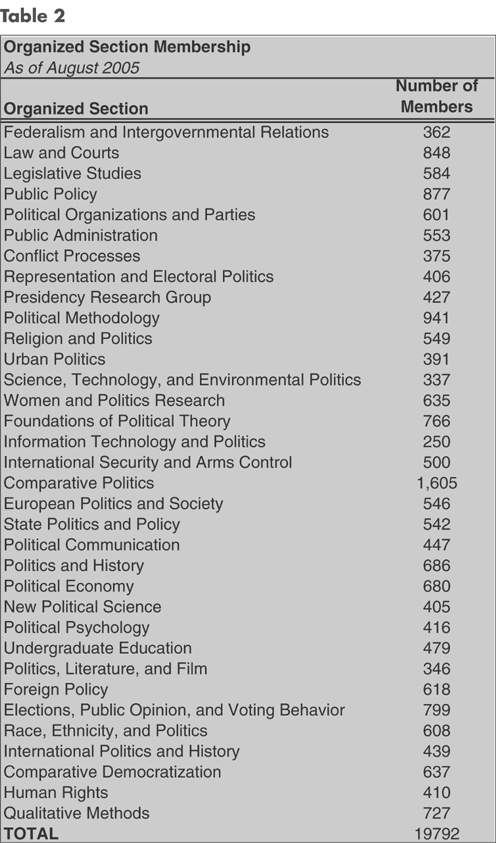
Organized Section Membership As of August 2005
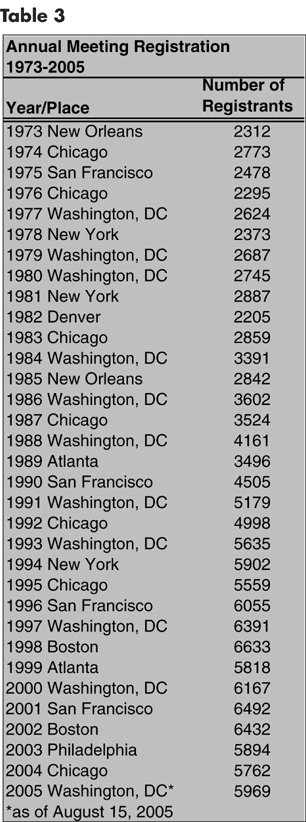
Annual Meeting Registration 1973–2005

Market Value of APSA Funds 1989–2005
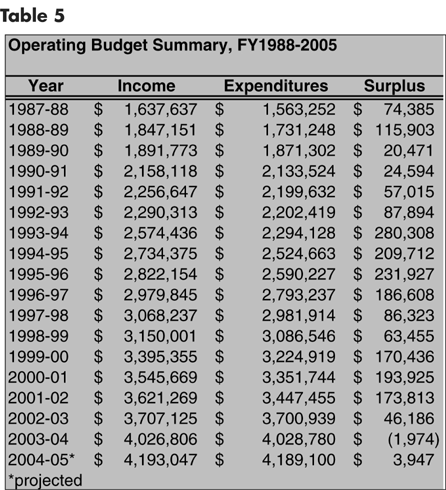
Operating Budget Summary, FY1988–2005
 You have Access