The worldwide expansion of the gambling industry since the 1990s has increased awareness of the various social, psychological, health, and economic impacts of problem gambling. Consistent with a public health approach, problem gambling is often viewed on a continuum that impacts on those who gamble, their families, and others in the community (Neal, Delfabbro, & O'Neil, Reference Neal, Delfabbro and O'Neil2005). These issues include cognitive and health problems such as impaired psychological functioning and lower quality of life (Petry, Reference Petry2005; Grant & Kim, Reference Grant and Kim2005; Crockford & El-Guebaly, Reference Crockford and el-Guebaly1998). A number of psychiatric disorders have also been found to be associated with problem gambling (Lorains, Cowlishaw, & Thomas, Reference Lorains, Cowlishaw and Thomas2011), including Borderline Personality Disorder (BPD), a pervasive and persistent disorder which contains features of emotional dysregulation, impulsivity, identity disturbance, problematic interpersonal relationships, and suicidal/self harm behaviours (American Psychiatric Association, 2000; Fernandez-Montalvo, & Echeburua, Reference Fernandez-Montalvo and Echeburua2004).
Gambling and BPD Co-Morbidities
The association between BPD and problem gambling is not just limited to their co-occurrence. Both share comorbidity and health issues; depression (Stanley & Wilson, Reference Stanley and Wilson2006), anxiety and substance use disorders (Trull, Sher, Minks-Brown, Durbin, & Burr, Reference Trull, Sher, Minks-Brown, Durbin and Burr2000; Kim, Grant, Eckert, Faris, & Hartman, Reference Kim, Grant, Eckert, Faris and Hartman2006; Petry, Reference Petry2007; Ste-Marie, Gupta, & Derevensky, Reference Ste-Marie, Gupta and Derevensky2006), social and relationship issues (Bouchard, Sabourin, Lusier, & Villeneuve, Reference Bouchard, Sabourin, Lussier and Villeneuve2009; Bray, Barrowclough, & Lobban, Reference Bray, Barrowclough and Lobban2007), emotional difficulties (Jacob et al., Reference Jacob, Guenzler, Zimmermann, Scheel, Rüsch and Lieb2008; Kaare, Mottus, & Konstabel, Reference Kaare, Mottus and Konstabel2009; Korman, Collins, Littman-Sharp, McMain, & Skinner, Reference Korman, Collins, Littman-Sharp, McMain and Skinner2005), dissociative symptoms (Berk, Jeglic, Brown, Henriques, & Beck, Reference Berk, Jeglic, Brown, Henriques and Beck2007; Delfabbro, Lahn, & Grabosky, Reference Delfabbro, Lahn and Grabosky2006; Wanner, Ladouceir, Auclair, & Vitaro, Reference Wanner, Ladouceur, Auclair and Vitaro2006; Weinstock, Whelan, Meyers, & McCausland, Reference Weinstock, Whelan, Meyers and McCausland2007), impulsivity (Linehan, Reference Linehan1993; Nower & Blaszczynski, Reference Nower and Blaszczynski2006), higher incidence of suicide attempts (Black, Blum, Pfohl, & Hale, Reference Black, Blum, Pfohl and Hale2004; MacCallum & Blaszczynski, Reference MacCallum and Blaszczynski2003), and interpersonal violence (Korman et al., Reference Korman, Collins, Dutton, Dhayananthan, Littman-Sharp and Skinner2008).
Dialectical Behavior Therapy
A treatment that has shown efficacy for BPD is Dialectical Behavior Therapy (DBT). DBT is based on a biosocial understanding of the etiology of BPD (Linehan, Reference Linehan1987, Reference Linehan1993); an interaction of biological vulnerabilities with emotional regulation difficulties during stressful situations (Crowell, Beauchaine, & Linehan, Reference Crowell, Beauchaine and Linehan2009; Linehan, Reference Linehan1987, Reference Linehan1993; Linehan, Armstrong, Suarez, Allmon, & Heard, Reference Linehan, Armstrong, Suarez, Allmon and Heard1991). Linehan's theory suggests that individuals with BPD have heightened emotional sensitivity, have less ability to regulate intense emotional responses, and are slow to return to base-line.
DBT uses dialectical strategies as the foundation of its treatment. In this approach, polarities are highlighted and clients develop an understanding that awareness of these opposites offers the possibly of change as they learn to better respond to their environment. The DBT counsellor facilitates this change by highlighting both aspects of the dialectic (the two apparently connected opposites) that arise, fostering successive reconciliation and resolution steps at increasingly more functional levels (Linehan, Reference Linehan1987).
The core of the treatment rests in the client's development of the four key process skills; mindfulness (being aware of the present moment and judging less), distress tolerance (coping with painful events by building resilience to reduce the impact of upsetting circumstances), emotion regulation (managing challenging emotions without becoming overwhelmed or reacting in destructive ways), and interpersonal effectiveness (expressing personal beliefs and needs whilst protecting important relationships and treating others with respect; MacKay, Wood, & Brantley, Reference MacKay, Wood and Brantley2007). Acquiring these skills is thought to improve the client's emotional coping across a number of life-domains and thereby reducing the likelihood of engaging in destructive behaviours.
DBT as a Treatment for BPD
Several papers have examined the efficacy of DBT, both in its original and in modified formats, for BPD and other conditions. Notably, the 2002 Cochrane review (Binks et al., Reference Binks, Fenton, McCarthy, Lee, Adams and Duggan2006) of randomised controlled trials of psychological therapies for BPD systematically analysed the DBT literature published up to December 2002. The review suggested that although DBT was no better than treatment as usual on some indices of dysfunction, it was potentially helpful for a wide range of clinical outcomes. Specifically, DBT had better outcomes than treatment as usual for reducing self-harm or parasuicidal behaviour, suicidal ideation, and alcohol free days. More recent investigations revealed that although there may be no significant differences between DBT and general psychiatric treatments (McMain et al., Reference McMain, Links, Gnam, Guimond, Cardish, Korman and Streiner2009), or treatment as usual (Carter, Willcox, Lewin, Conrad, & Bendit, Reference Carter, Willcox, Lewin, Conrad and Bendit2010), DBT significantly reduces the frequency of suicide attempts, self-injurious behaviours, emergency room visits, and hospitalisations for BPD patients (Carter et al., Reference Carter, Willcox, Lewin, Conrad and Bendit2010; Linehan et al., Reference Linehan, Comtois, Murray, Brown, Gallop, Heard and Lindenboim2006; McMain et al., Reference McMain, Links, Gnam, Guimond, Cardish, Korman and Streiner2009).
Evaluation of DBT Processes
Although several studies have shown DBT to have efficacy, few studies have examined the DBT processes hypothesised to effect change. Stepp, Epler, Jahng, and Trull (Reference Stepp, Epler, Jahng and Trull2008) assessed 27 BPD outpatients from a university-affiliated community mental health clinic. Study eligibility was based on clinically significant ‘elevated’ scores on one of the PAI-BOR (Personality Assessment Inventory-Borderline Features Scale) subscales (i.e., affective instability, identity problems, negative relationships, and self-harm). The treatment program consisted of the standard DBT program: (1) individual therapy, (2) weekly skills group, (3) telephone coaching, and (4) team meetings for therapists. Diary cards and progress on assigned homework tasks were also part of the skills group meetings. Treatment lasted 52 weeks and counsellors were specialist gambling counsellors supervised by a psychiatrist. Stepp et al. found the following clinical scores significantly fell: total BPD symptoms, affective instability and negative relationships; while DBT skill use significantly increased: mindfulness, interpersonal effectiveness, and distress tolerance. Multilevel analyses found overall skills use had a significant impact on BPD scores and individual skills use, even after controlling for initial distress levels and diary card compliance.
DBT as a Treatment for Gambling
Despite the similar psychopathology profiles between BPD and problem gambling, and the burgeoning treatment success of DBT as a treatment for BPD, there are only two reported studies that have used DBT as a treatment for problem gamblers. Querney (Reference Querney2006) published an informal report on a modified DBT group intervention for problem gamblers and/or substance users. Participants were recruited from an alcohol, drug and gambling treatment service in Hamilton, Canada. The exclusion/inclusion criteria were: abstinence from gambling and substance abuse, be prepared to work in a group setting, attend weekly group sessions, complete homework assignments, and attend individual counselling sessions. Sessions were run weekly for 9 months, based on the four process skills. Eight clients consented to the program although no data was reported on the number of substance abusers and/or gamblers. Querney reported the treatment was evaluated based on participant responses to the Basis-32 (a measure of illness symptomatology and functioning difficulties), unspecified questionnaires about confidence, timeline follow-back questionnaires on presumably their substance and gambling behaviour, and diary card completion. However, no scores were reported, only overall ‘domain’ scores. ‘Excellent’ scores were reported for the ‘using skills’ and ‘primary target behaviour’ domains, while ‘Degree of emotion’ was also rated as predominantly ‘very good’. Querney (Reference Querney2006) reported no control group data or follow-up information but included comments from clients such as ‘I learned to cope with life better’ and ‘I now have the ability to determine what is triggering my urges’.
Korman et al. (Reference Korman, Collins, Littman-Sharp, McMain and Skinner2005) reported the other intervention. They randomly assigned 42 problem gamblers with comorbid anger problems, half of whom also had substance use problems, to DBT or treatment as usual. The DBT treatment consisted of 12 weekly individual counselling sessions in which counsellors used DBT engagement strategies, a target issue hierarchy, skills training (the four process skills), and diary cards. Participants were mostly male, middle-aged, but came from diverse ethno-cultural backgrounds. Treatment as usual consisted of approximately 12 weeks of 1-hour sessions of individual cognitive behavior therapy that focused on dysfunctional cognitions and relapse prevention. Although there were no significant differences between groups at baseline, the modified DBT program had better treatment retention and reported significantly less gambling at 14 weeks and 26 weeks post-baseline, and less anger at 14 weeks post-base-line. Both treatments showed significant reductions in gambling and anger, while only the modified DBT treatment significantly reduced substance use. No measure of the skills components was reported.
Brief DBT Interventions
As illustrated by the Korman et al. (Reference Korman, Collins, Littman-Sharp, McMain and Skinner2005) study, DBT has been successfully implemented using far fewer sessions (14 vs. 80), for shorter therapeutic durations (1 hour vs. 1–2 ½ hours), over shorter time frames (14 vs. 52 weeks) than traditional applications (Linehan et al., Reference Linehan, Comtois, Murray, Brown, Gallop, Heard and Lindenboim2006). Moreover, a number of similar brief DBT interventions have shown clinical improvements in parasuicidal behaviour, depression, dissociation, anxiety, global distress, identity issues, impulsivity, emotional stability, and interpersonal problems (Bohus et al., Reference Bohus, Haaf, Stiglmayr, Pohl, Bohme and Linehan2000; Miller, Wyman, Huppert, Glassman, & Rathus, Reference Miller, Wyman, Huppert, Glassman and Rathus2000). These improvements appear to be more pronounced than treatment as usual on re-hospitalisation rates, retention, suicidal ideation, and general psychiatric symptoms (Rathus & Miller, Reference Rathus and Miller2002).
Clinical improvements have even been reported using brief manualised DBT treatments with no or minimal therapist involvement. Evans et al. (Reference Evans, Tyer, Catalan, Schmidt, Davidson, Dent and Thompson1999) randomly assigned 34 patients with ‘personality disturbance’ and a recent deliberate self-harm event and a previous parasuicidal episode within the last 12 months to either a manual-based DBT treatment and no or minimal (maximum of six sessions) therapist counselling or standard psychiatric treatment. Assessments at intake and 6 months later found lower rates of suicidal acts in the manual-based DBT treatment group and statistically significant decreases in depression scores compared to standard treatment. These improvements occurred despite an average attendance of only 2.7 sessions in the DBT group out of a maximum of six sessions (no average or total sessions was reported for the standard counselling group). In summary, these studies of brief DBT interventions appear to show some efficacy and would be appropriate for similarly disturbed problem gambling populations.
Summary
Although DBT appears to have some efficacy for treating conditions that co-occur with problem gambling, there have been few analyses of the DBT processes and none in a problem gambling population. The current study is the first (that we know of) to investigate the effectiveness of a brief DBT program for problem gambling, focusing on the four process skills. Based on the aforementioned literature review, the following predictions were made that a brief DBT treatment for problem gambling will: (1) lower gambling expenditure; (2) increase DBT process skill use (mindfulness, distress tolerance, emotion dysregulation, and negative relationships); and (3) reduce alcohol and drug use. Finally, as an alternative measure of treatment effectiveness, the current study will also assess (4) the satisfaction levels of problem gamblers who complete the DBT treatment program.
Method
Participants
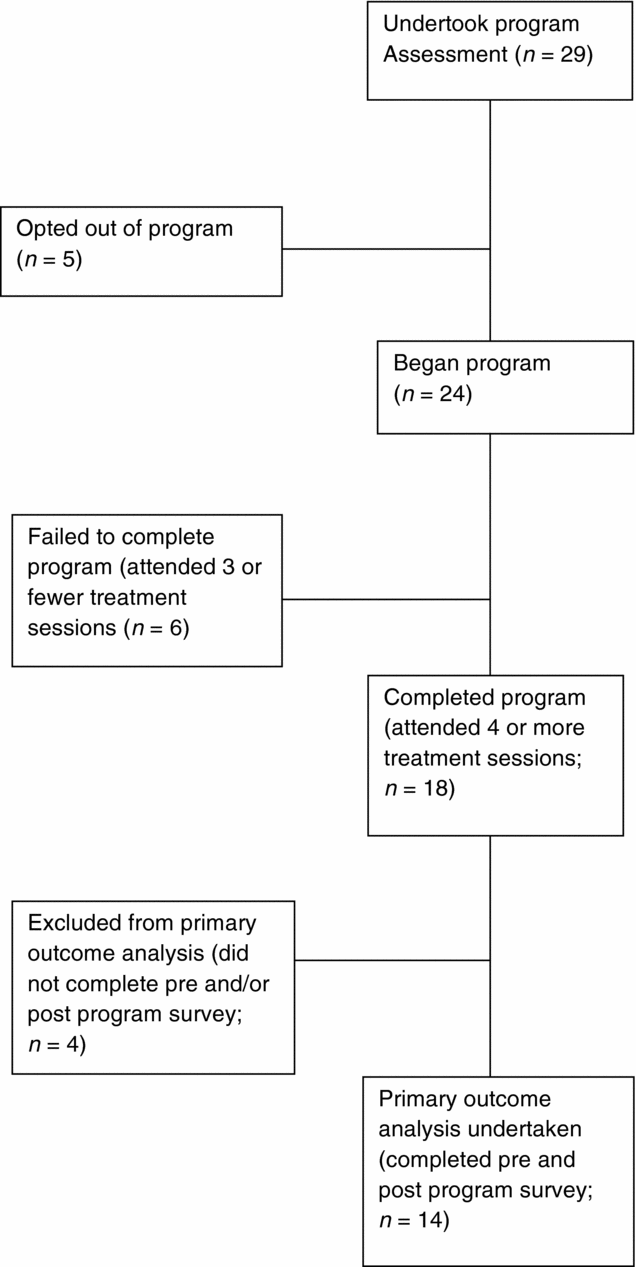
Participants were recruited from the Gambler's Help Service (a free, state-funded community counselling service) client base within the north-western region of Melbourne, Australia. Treatment consisted of nine sessions of an abbreviated DBT skills program targeting problem gambling behaviour and cognitions. This proof of concept program was delivered by specialist gambling counsellors to groups of problem gamblers funded by the Problem Gambling Innovation Grants Program of the Victorian State Government's Office of Gaming and Racing. Figure 1 shows aggregate participant progress through the study. Initially, 29 clients were enrolled who were considered ‘treatment resistant’ or unresponsive to primarily cognitive-behavioural interventions, and willing to commit to the treatment.
Aggregate Participant Progress Through the Study
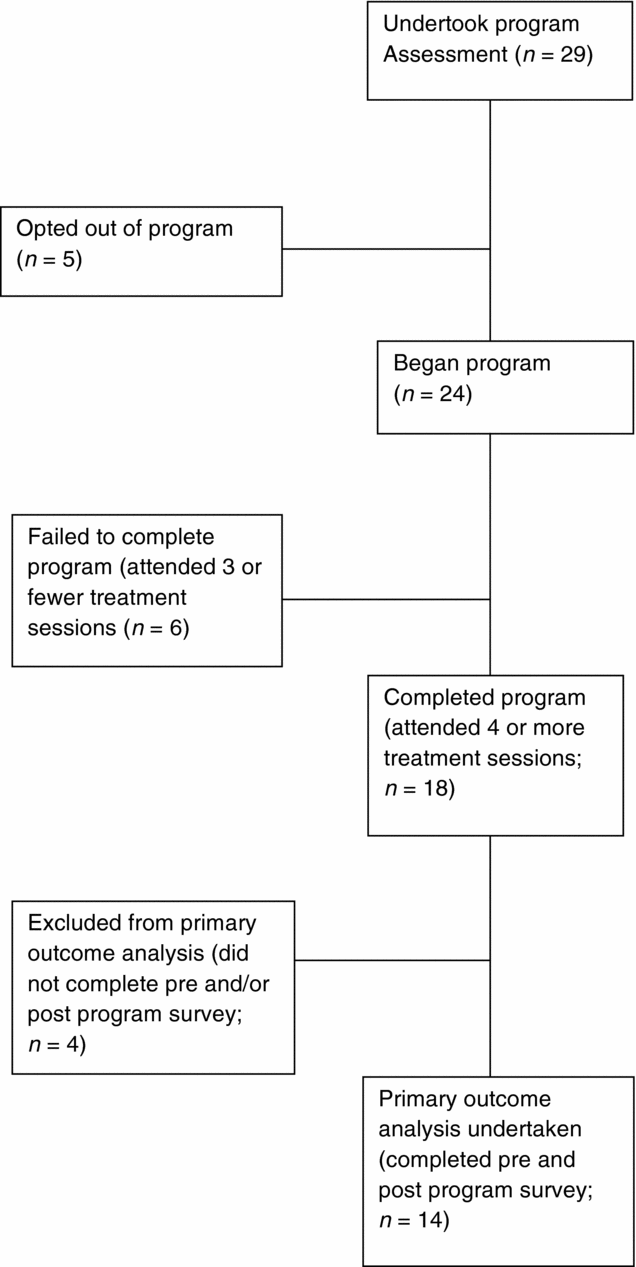
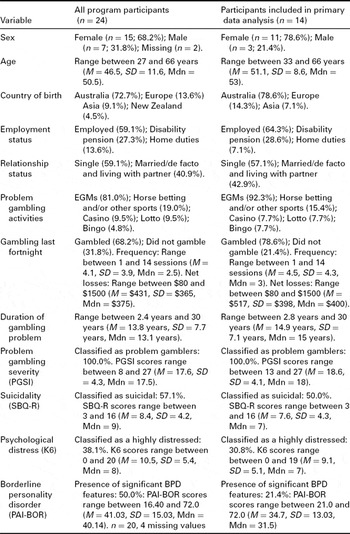
The first session consisted of an overview of the program, an introduction to mindfulness, and a series of pretreatment assessments. Following this session, five clients opted out of the study. Consequently, 24 participants continued with the treatment program, with 18 subsequently completing the study. Analysis was undertaken on the 14 participants who completed both sets of measures (pre- and post-treatment) and attended four or more of the nine treatment sessions. Table 1 describes the demographic and gambling characteristics of the treatment starter group (n = 24) and the treatment completer group (n = 14).
Description of Participants

Note: n = number, M = average, Mdn = Median, SD = standard deviation.
All participants were classified as problem gamblers using the Problem Gambling Severity Index of the Canadian Problem Gambling Index (PGSI; Ferris & Wynne, Reference Ferris and Wynne2001), and also reporting having a problem with their gambling for at least 2 years. Approximately half of the participants were classified as suicidal (57.1%) and/or exhibited the presence of significant BPD features (50%), while more than a third of participants were classified as highly distressed (38.1%). Only one participant scored over 70 on the Borderline Features Personality Subscale, indicating clinical evidence for a borderline personality disorder. Starting and completing participants were then compared on demographic, psychological, and gambling variables (see Table 1). The only significant difference between participants was that completers were significantly older (p = .03).
Descriptive Measures
Problem Gambling Severity
Problem gambling severity was assessed using the nine-item PGSI. Respondents are asked to indicate how often each item applied to them in the last 12 months on a 4-point scale: (0) Never, (1) Sometimes, (2) Most of the time, and (3) Almost always. Scores range from 0 to 27 where higher scores indicate greater problem severity. Scores on the PGSI can be used to classify individuals as non-problem gamblers (score of 0), low risk gamblers (scores of 1 or 2), moderate risk gamblers (scores between 3 and 7), or problem gamblers (scores of 8 or higher). The PGSI has good internal consistency and test–retest reliability (Ferris & Wynne, Reference Ferris and Wynne2001; Holtgraves, Reference Holtgraves2009; McMillen, Marshall, Wenzel, & Ahmed, Reference McMillen, Marshall, Wenzel and Ahmed2004).
Borderline Personality Disorder Symptoms
The 24-item Borderline Personality Features Subscale (PAI-BOR; Morey, Reference Morey1991) of the Personality Assessment Inventory (PAI) was used to assess BPD. The PAI-BOR contains four subscales with six items in each subscale. The four subscales correspond to affective instability, identity problems, negative relationships and self-harm. Participants respond on a 4-point Likert scale (0 = False, 1 = Slightly true, 2 = Mainly true, 3 = Very true). Internal consistency is good at α = 0.88 and correlates well with other measures of BPD symptomatology (Morey, Reference Morey1991).
Suicidality
The four-item Suicidal Behaviors Questionnaire — Revised (SBQ-R; Osman et al., Reference Osman, Bagge, Gutierrez, Konick, Kopper and Barrios2001) was employed to measure multiple dimensions of suicidality. This is a four-item, four-dimension scale of suicidality: lifetime ideation/attempt, ideation frequency, current threat of suicide, and likelihood of future suicidality. Osman et al. (Reference Osman, Bagge, Gutierrez, Konick, Kopper and Barrios2001) examined both clinical and non-clinical samples; inpatient adolescents, high school students, psychiatric inpatient adults, and undergraduates. They found the scale to have good internal reliability for clinical and non-clinical samples.
Primary Clinical Outcomes
Gambling sessions and expenditure
Participants were asked to indicate their primary and secondary gambling activities, and whether they had gambled in the past fortnight. To gain a greater sense of the size of total gambling, responses to both primary and secondary gambling activities were aggregated. Questions asked were; ‘Did you spend any time gambling in the last week?’ and if yes, ‘How much time did you spend gambling?’, ‘For how many sessions?’ and ‘How much money did you lose?’
Psychological distress
The Kessler 6 Psychiatric Distress Scale (K6; Kessler et al., Reference Kessler, Andrews, Colpe, Hiripi, Mroczek, Normand, Walters and Zaslavsky2002) was used to measure current and non-specific psychological distress. K6 comprises six questions asking participants to indicate how frequently they experienced specific symptoms of psychological distress, such as nervousness, agitation, psychological fatigue, and depression in the past 4 weeks. The response options for each item range from 0 (None of the time) to 4 (All of the time). Item scores are summed to obtain a total score between 0 and 24 where respondents are classified as being at low, moderate, high, or very high risk. This measure has demonstrated high internal consistency and reliability (α = 0.89) across major socio-demographic subsamples (Kessler et al., Reference Kessler, Andrews, Colpe, Hiripi, Mroczek, Normand, Walters and Zaslavsky2002).
DBT Processes
Mindfulness
The Cognitive and Affective Mindfulness Scale — Revised (CAMS-R; Feldman, Hayes, Kumar, Greeson, & Laurenceau, Reference Feldman, Hayes, Kumar, Greeson and Laurenceau2007) is a 12-item measure that assesses everyday mindfulness and focuses on the degree to which respondents experience their thoughts and feelings. Items are rated on a 4-point Likert scale from 1 (Rarely/not at all) to 4 (Almost always). Higher scores reflect greater mindfulness. The CAMS-R has acceptable internal consistency (α = .74) and has been demonstrated to have convergent and discriminant validity with concurrent measures of mindfulness, distress, well-being, emotion-regulation, and problem solving (Feldman et al., Reference Feldman, Hayes, Kumar, Greeson and Laurenceau2007).
Distress Tolerance
The 15-item Distress Tolerance Scale (DTS; Simons & Gaher, Reference Simons and Gaher2005) measures the ability to tolerate negative psychological states. Responses are provided on a 5-point scale, with higher scores indicating greater distress tolerance. DTS has excellent internal reliability (α = .91; Huang, Szabo, & Han, Reference Huang, Szabó and Han2009).
Emotional Dysregulation
The 36-item Difficulties in Emotion Regulation Scale (DERS; Gratz & Roemer, Reference Gratz and Roemer2004) was used to measure multiple aspects of emotion dysregulation. It uses a 5-point Likert-type scale, with responses ranging from 1 (Almost never; 0–10%) to 5 (Almost always; 91–100%), with higher scores indicating greater difficulties in emotion regulation. The DERS has excellent internal reliability (α = .93; Gratz & Roemer, Reference Gratz and Roemer2004).
Negative Relationships
A subscale of the Borderline Personality Features Subscale (PAI-BOR; Morey, Reference Morey1991) ‘negative relationships’ was used to measure changes in interpersonal effectiveness. High scores on the negative relationships subscale represent greater difficulties in interpersonal effectiveness. The scale has been demonstrated to have adequate reliability (α = 0.69; Morey, Reference Morey1991).
Substitution Effect
Alcohol and drug use
Alcohol abuse was measured using the third item in the AUDIT scale (Saunders, Aasland, Babor, De La Guente, & Grant, Reference Saunders, Aasland, Babor, De La Guente and Grant1993), an item found to be effective at detecting risky drinking behaviour (Bush, Kivlahan, McDonell, Fihn, & Bradley, Reference Bush, Kivlahan, McDonell, Fihn and Bradley1998). The drug use item was developed specifically for the purposes of the current study as a general measure of non-medical drug use. Clients were asked ‘How often do you have six or more drinks on one occasion’ and ‘How often do you use a prescription or illicit drug other than for medical use’? Responses are Never, Less than monthly, Monthly, Weekly, or Daily or Almost daily.
Client Satisfaction
Treatment satisfaction was assessed by the eight-item Client Satisfaction Questionnaire developed by Larsen, Attkisson, Hargreaves, & Nguyen (Reference Larsen, Attkisson, Hargreaves and Nguyen1979). These scores were also summed to provide a total score. Participants were required to rate each of the items on a 4-point scale at the end of the final session of treatment. A sample item from the Client Satisfaction Questionnaire is ‘How would you rate the quality of service you received?’ Although the adjectives used to describe the scale are idiosyncratic to each item, each item was scored on a 4-point scale, with a score of 1 representing the lowest possible satisfaction level and a score of 4 representing the highest possible satisfaction level. The total score ranges from 8 to 32, where a higher score indicates greater satisfaction.
Procedure
The treatment program was a substantially scaled down and modified version of the typical 6-to 12-month DBT approach. DBT was selected as the treatment approach because counsellors from the partner services had noticed a rise in complex clients with personality disorders who were resistant to traditional counselling approaches, and from their formative literature searches, DBT appeared successful in treating similarly ‘treatment resistant’ clients. Further, as these clients were seen as requiring some psychosocial training, the DBT group-based approach was seen as a valuable addition to existing treatments. The abbreviated design was chosen to be minimally disruptive to the existing service structures. Nonetheless, the group sessions followed a standard DBT format, and counsellors were instructed to follow a DBT-orientation in their individual counselling sessions. The extent to which they did this, however, could not be confirmed as it was not possible to conduct fidelity checks on these sessions.
The program adopted a ‘train-the-trainer’ model for the training of the DBT facilitators in order to maximise the development and retention of skills and knowledge within the Gambler's Help Services. In order for group facilitators to sufficiently develop the skills necessary to run DBT groups they were provided with weekly support from a psychiatrist with expertise in DBT for the duration of the program. This support session or ‘supervision group’ was comprehensive and included working through and reflecting on material covered in the skills groups, as well as the discussion of supervision and training issues. In addition, all counsellors received 3.5 days of introductory training in DBT by the supervising psychiatrist.
Recruitment and Eligibility
Participants were recruited by counsellors from all three agencies and were approached based on their counselling histories. The eligibility criteria were: a client of the north-west region Gambler's Help Service who had made little progress in previous counselling, had significant issues with emotion regulation and impulse control, a willingness to commit to the DBT program, and a commitment to remain in individual counselling for the duration of the program.
Treatment Structure
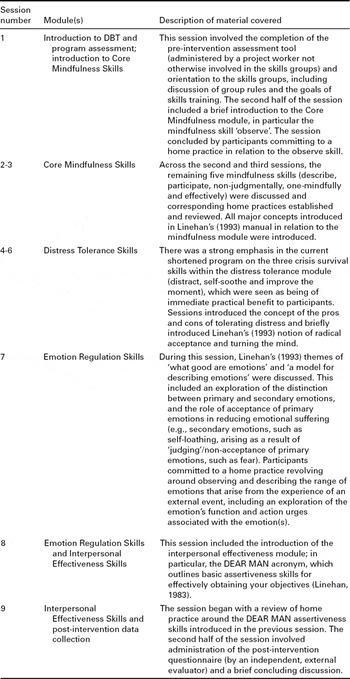
An abbreviated DBT skills group treatment was funded as part of a state-wide Problem Gambling Innovations Program that aimed to undertake proof of concept studies of local interventions deemed to be novel to their treatment environment. One group operated in each of the three services, and each group was co-facilitated by two problem gambling counsellors. Skills group sessions ran on a weekly basis across a 9-week period, with the first session devoted to assessment and providing study information and the remaining eight sessions focusing on skills training. Each session was approximately 2½ hours in duration. Participants were required to also attend individual counselling — a standard requirement in traditional DBT programs (e.g., Linehan, Reference Linehan1993). In group sessions, all four DBT skills modules (core mindfulness, distress tolerance, emotion regulation and interpersonal effectiveness) were introduced. However, mindfulness in particular, and to a lesser extent distress tolerance, were the focus of the program as these two were deemed by the consortium of agencies to be of most benefit to their clients, given the abbreviated nature of the program. An overview of the material is provided in Table 2.
Description of Skills Group Program

The structure of the group session followed typical DBT practice outlined by Linehan (Reference Linehan1993). Sessions began with a review of home practice, which tended to last between 30 and 60 minutes. Following a short break, the facilitators then introduced and discussed new material. Each session concluded by participants committing to a particular home practice of relevance to the material covered during the session. The first session involved a pre-intervention assessment, obtaining client consent, and providing clients with a more comprehensive introduction to skills groups. Sessions 2 to 9 comprised the core of the skills group program while post-intervention data was collected at the end of Session 9.
Data Analysis
Differences between pre- and post-treatment data were explored using a series of non-parametric one-tailed Wilcoxon's signed rank t tests (Hills, Reference Hills2005). Additionally, effect size was calculated using Cohen's d (Cohen, Reference Cohen1988). Complementing these analyses, and in recognition of the small sample size (Jacobsen & Truax, 1991), participant-level analyses of gambling and psychological measures were run using a clinically significant change analysis (Jacobsen & Truax, 1991). Clinically significant change investigates whether clinical membership of participants across a range of clinical measures changes from pre- to post-treatment. This is achieved through a two-stage process: examining pre- and post-treatment scores in relation to a predetermined cut-off point, and examining whether pre–post difference scores are of a sufficient magnitude so are not attributable to measurement error (within a 95% degree of confidence) and therefore constitute ‘reliable change’ (Jacobson & Truax, Reference Jacobson and Truax1991).
The normative data representing the process skills were obtained from the following psychological measures: mindfulness (Feldman et al., Reference Feldman, Hayes, Kumar, Greeson and Laurenceau2007); distress tolerance (Huang et al., Reference Huang, Szabó and Han2009); emotional dysregulation (Gratz & Roemer, Reference Gratz and Roemer2004); and negative relationships (Morey, Reference Morey1991). The normative data for the clinical outcomes were derived from Kessler et al. (Reference Kessler, Barker, Colpe, Epstein, Gfroerer, Hiripi and Zaslavsky2003).
Results
Primary Clinical Outcomes
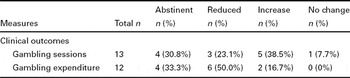
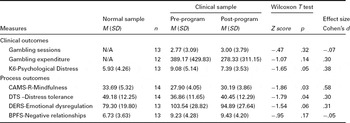
Table 3 reports changes in individual gambling behaviour while Table 4 reports the clinical and process outcomes at the group level.
Changes in Gambling Behaviour

Note: n = number.
Clinical and Process Outcomes: Group-Level Analysis

Note: M = average, n = number, SD = standard deviation.
Table 3 shows approximately one third of participants were non-gambling at post-intervention (30.8–33.3). Further, 10 participants (83.3%) were either abstinent or had reduced their gambling expenditure at post-treatment, while approximately half (53.9%) were abstinent or reduced the number of gambling sessions at post-treatment.
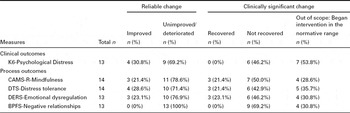
Table 4 shows psychological distress significantly reduced pre- to post-treatment (p = .05), while gambling sessions and expenditure did not. The corresponding effect sizes indicated that treatment had a small positive effect on group gambling expenditure and psychological distress while mean gambling sessions increased. Table 5 shows a minority of participants achieved a reliable improvement in psychological distress (30.8%), but none achieved a clinically significant change.
Clinical and Process Outcomes: Individual-Level Analysis

Note: n = number.
DBT Processes
Table 4 shows statistically significant increases in mindfulness (p = .03) and distress tolerance (p = .04), and a non-statistically significant fall in emotion dysregulation (p = .06). The corresponding effect sizes were medium for mindfulness, and small for distress tolerance and emotional dysregulation.
Table 5 shows a minority reliably improved (21.4–28.6%), while the majority were either unimproved or deteriorated (71.4–78.6%). Approximately a fifth (21.4–23.1%) of participants achieved clinically significant change in mindfulness, distress tolerance, and emotional regulation. However, a slightly larger group began in the normative range (28.6–35.7%), while an even larger group (42.9–50.0%) did not recover. By comparison, there was no improvement in the negative relationships scale at either the group or individual level.
Substitution Effect
There was no evidence that the participants replaced gambling with increased alcohol or drug use in the current study. When comparing pre- and post-treatment data, most participants reported that they did not change their level of alcohol consumption (85.7%) or use of illicit drugs and/or irregular use of prescription medication (92.9%) from pre- to post-treatment.
Client Satisfaction
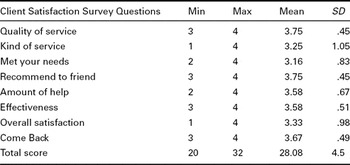
Generally, participants completing the program reported very high satisfaction levels, especially in relation to the quality of service received and whether they would recommend the treatment to their friends (Table 6). While they were somewhat less inclined to agree that the treatment met their needs, most would seek DBT as at treatment again for future problem gambling issues. These results indicate participants believed the treatment was valuable, probably wanted it to continue, and were generally very positive about their experience (as indicated by the average total satisfaction score of 28 out of a possible score of 32).
Client Satisfaction Survey Results (n = 12)

Note: N = number, Min = minimum, Max = maximum, SD = standard deviation.
Discussion
This study aimed to determine the efficacy of a 9-week modified DBT skills group treatment program for problem gamblers, primarily focused on upskilling gamblers with mindfulness skills. Further, this study is the first to measure changes in the four core DBT psychological processes: distress tolerance, mindfulness, emotion dysregulation, and interpersonal effectiveness, for problem gamblers. Referring to the stated predictions: (1) the results revealed no statistically significant changes in the number of gambling sessions or expenditure, although 83% of participants were either abstinent or had reduced their gambling expenditure; (2) the total sample showed statistically significant improvements in mindfulness, and distress tolerance; there was also a non-significant improvement in emotion dysregulation, but no improvement in personal effectiveness; (3) there were no significant changes in alcohol and drug use; and (4) participants were highly satisfied with the treatment they received.
Limitations
Before considering the practical implications of the findings of this study, it is important to note several methodological limitations associated with our ‘proof of concept’ study. Perhaps most importantly, the absence of a control group limits an assessment on the relative effectiveness of DBT as a treatment for problem gambling. Further, given the relatively small sample size, a future scientific demonstration and replication with larger samples is required in order to fully establish the efficacy of DBT as a treatment for problem gambling. Moreover, while the results of this study suggest that the intervention was effective in the short term, it is recommended that future studies examining DBT as a treatment for problem gambling continue to follow up participants for at least 1 year after treatment completion (Lopez Viets & Miller, Reference Lopez Viets and Miller1997). Finally, the effect of treatment drop-out needs further examination. As this was a proof of concept investigation we had insufficient participants to examine treatment drop-out, but as noted earlier, a larger study should address this issue.
Implications
First, the results from the current study show that DBT can be a useful intervention for participants who counsellors determine as ‘treatment resistant’ problem gamblers, particularly for reducing psychological distress. This finding is compatible with research suggesting DBT improves features associated with BPD (e.g., Koons et al., Reference Koons, Robins, Tweed, Lynch, Gonzelez, Morse and Bastian2001; Linehan et al., Reference Linehan, Comtois, Murray, Brown, Gallop, Heard and Lindenboim2006), and studies suggesting high rates of comorbidity and overlapping symptomatology between personality disorders, particularly BPD and problem gambling (Bagby, Bachon, Bulmash, & Quilty, Reference Bagby, Bachon, Bulmash and Quilty2008; Echuburua & Fernandez-Montalvo, 2008).
Second, the study sheds light on the DBT processes within the clinical DBT literature, providing support for the suggestion that single components of DBT can still be efficacious when used alone. The current study was able to produce significant reductions in psychological distress, primarily using one component of the DBT framework, suggesting that individual DBT components may have independent treatment efficacy. Specifically, mindfulness appears to be singularly effective. This finding is consistent with emerging evidence that mindfulness-based interventions can be successfully employed to treat problem gambling (e.g., de Lisle, Dowling, & Allen, Reference de Lisle, Dowling and Allen2011; Toneatto, Vettese, & Nguyen, Reference Toneatto, Vettese and Nguyen2007) and affect various BPD features (Stepp et al., Reference Stepp, Epler, Jahng and Trull2008).
Third, the study offers some early evidence that the DBT modules are the mechanisms responsible for subsequent positive behavioural and psychological change, and supports previously published studies investigating the impact of DBT skills on participant outcomes (Stepp et al., Reference Stepp, Epler, Jahng and Trull2008; Axelrod, Perepletchikova, Holtzman, & Sinha, Reference Axelrod, Perepletchikova, Holtzman and Sinha2011). However, because of the pilot nature of this project and the associated small sample size, we were unable to conduct statistical analyses to investigate the degree to which changes in the DBT processes mediated treatment outcomes. Further work using larger samples is needed to determine the exact DBT mechanisms affecting change.
Fourth, the results of the current study provide support for the notion that relatively brief treatments delivered in group contexts for problem or pathological gambling populations can be efficacious. Moreover, very high levels of participant satisfaction were reported, indicating that individuals with problem gambling issues value group-based work. Further, there are likely to be a number of significant benefits associated with group treatment: cost-effectiveness, a positive normalising impact (e.g., reducing the stigma associated with gambling), increased peer connections (e.g., mutual support), strengthen interpersonal skills, and the facilitation of observational learning (Dowling, Smith, & Thomas, Reference Dowling, Smith and Thomas2007). However, despite the benefits of group therapy, several studies have reported that individual therapy may be more efficacious than group therapy, particularly when assessing the maintenance of positive behavioural and psychological change over the longer term (Dowling et al., Reference Dowling, Smith and Thomas2007; Ladouceur et al., Reference Ladouceur, Sylvain, Boutin, Lachance, Doucet, Leblond and Christian2001, Reference Ladouceur, Sylvain, Boutin, Lachance, Doucet and Leblond2003). Consequently, it is not surprising that our strongest result was only of a medium effect size.
Conclusion
We find these results encouraging for DBT as a treatment for problem gambling, especially since this was a brief treatment focusing primarily on one DBT process skill. Moreover, as DBT was part of a range of treatments provided by the partner services, these results also imply that treatment providers can offer complements to their existing service without engaging in wholesale service change. This is likely to suit agencies wanting to engage in a limited training program while looking to offer more alternatives for matching individual client needs to in-house services. Further, providing a brief and group-based alternative to traditional individual problem gambler counselling allows providers to offer services that are relatively quick to set-up, cost-efficient, and effective.
Acknowledgements
This ‘proof of concept’ pilot was funded through the Problem Gambling Innovation Grants Program by the Victorian State Government's Office of Gaming and Racing.