


The Supreme Court's invalidation of democratically enacted statutes has been variously described as a tool of partisan entrenchment, a reflection of policy disagreement, and an expression of legal principle. Because the justices are nominated and confirmed by partisan officials, they might use their authority to promote the interests of their own partisan coalition, perhaps by striking down objectionable statutes leftover from the previous partisan order, recently adopted by a new governing coalition, or enacted by the justices' partisan opponents during a period of divided government. Alternatively, the justices might use their power of judicial review simply to promote their own policy preferences. Even if these preferences are usually consistent with those of the governing coalition, they will sometimes diverge, in which case the justices will follow the former rather than the latter. With each justice voting to strike down those statutes he or she would have opposed if he or she were a legislator, the Court will exercise judicial review whenever the median policy preference on the Court (at the time of the constitutional challenge) is different from the pivotal policy preference in Congress (at the time of enactment). Then again, it may be that the justices sometimes act for reasons that are specific to their job description. The justices might, that is, invalidate a congressional statute because it violates some institutionally rooted conception of the duties of Article III judges, and they might do so even when they themselves support the policy they are invalidating.
Each of these explanations, it turns out, makes sense of some of the Court's recent exercises of judicial review, and a comprehensive account will have to incorporate all three. The contemporary Court was built almost entirely by Republican presidents, and some of the Court's decisions have been straightforward reflections of the national GOP platform. In other cases, however, the justices have pretty clearly acted against the wishes of governing elites, including their own purported partisan allies. They have sometimes done so because the policy preferences of Republican justices diverge from the preferences of Republican legislators on a particular issue. After all, although the judicial appointment process makes it likely that the Court will “follow the election returns” over the long run, the particular constellation of ideas and interests represented on the Court at any given time is likely to be somewhat different from the particular constellation represented in the elected branches. Less widely noted, but equally significant, the justices of the contemporary Court have sometimes acted on institutional motivations that are distinct from their own policy preferences.
When reviewing the constitutionality of federal statutes, much of the Court's decision making over the past 25 years was animated by four concerns that had little resonance in legislative politics during this same period: a general libertarian orientation toward free speech, a demand for some constitutional regularity during the war on drugs, a concern for the Constitution's horizontal and vertical divisions of lawmaking power, and a defense of judicial independence and authority. With respect to all four concerns, the most significant line of conflict has pitted judges against legislators rather than liberals against conservatives or Democrats against Republicans. For example, justices of all political persuasions and ideological orientations have tended to be more protective of free expression than their partisan or ideological counterparts in Congress. This sort of institutional conflict has not eclipsed the partisan and policy conflicts on the Court, but the simultaneous operation of these three dimensions of conflict—layered atop one another in a complex matrix—suggests that any comprehensive account of judicial review will have to attend to their interaction.
PARTISAN COALITIONS, JUDICIAL ATTITUDES, AND INSTITUTIONAL MISSIONS
For the past 50 years, most empirical studies of judicial review have been framed by Robert Dahl's influential 1957 article on the subject. Surveying the first 167 years of the Court's history, Dahl found that the justices struck down federal statutes quite rarely, and that those that they did strike down were almost always either outdated or trivial. Dahl's explanation for this pattern was straightforward: judicial decisions are motivated by judicial policy preferences, and the appointment process ensures that these preferences will mirror those of the president and the Senate majority. Because the justices will generally be acting on the same set of motivations as members of the other two branches, they will rarely be inclined to strike down statutes that those elected leaders have enacted.
Dahl himself noted one exception to this pattern, and his scholarly heirs have identified several others. During the “short-lived transitional periods” of partisan realignment, membership change on the Court generally lags behind the other branches, and the justices representing the old partisan order are likely to strike down significant statutes recently enacted by legislators representing the new (Dahl 1957, 293; Funston 1975). Once a partisan realignment has been consolidated, the justices are likely to assist their partisan allies by striking down leftover statutes from the previous order (Whittington 2005a, 584). During periods of divided government, it seems likely that the justices who control the Court will side with their partisan allies in the other branches. Even during periods of unified party control, moreover, they will sometimes be called on to take sides in intraparty disputes. As Mark Graber has noted, elected legislators may urge the Court to step in whenever they are “confronted with crosscutting issues that threaten to disrupt the existing bases of partisan cleavage.” On this account, when “prominent elected officials consciously invite the judiciary to resolve those political controversies that they cannot or would rather not address,” the justices are likely to respond, particularly when the invitation is issued by the presidential wing of their own party (Graber 1993, 36–38; see also Adamany 1980; Gates 1984; Graber 2006a; McMahon 2004; Whittington 2005a, 589– 93).
The point of this literature, broadly speaking, is that partisan elites regularly attempt to use the Court to promote their own policy preferences and political fortunes. The chief empirical question here is how often (or under what conditions) those elites are successful, and the answer most often given is that they are very successful indeed. In a recent assessment of this literature, Terri Peretti (1999, 100, 113–19) noted a “consensus among scholars [that] presidents historically and on average have enjoyed a 75 percent ‘success rate’” in appointing justices who decide constitutional cases in accordance with the president's policy views. Conducting her own review of the history, Peretti found similar results, concluding that “the value premises of a justice's decisions can be and largely are consciously chosen by the elected representatives through the selection process.”
A second possible explanation for judicial review is that the justices are seeking simply to promote their own policy preferences. Jeffrey Segal and Harold Spaeth, the leading advocates of the attitudinal model of Supreme Court decision making, agree with Dahl (1957) and Peretti (1999) that “[t]he Supreme Court will generally support policies passed by the dominant law-making coalition [because of] the shared values that the appointment process produces.” When judicial preferences and partisan commitments diverge, however, Segal and Spaeth (2002, 413) argue that the justices will follow the former rather than the latter. Elaborating this account with a number of coauthors in recent years, Segal has argued that “ideological considerations predominate in the decision to strike legislation,” with liberal justices “strik[ing] laws that infringe on individual liberties” and conservative justices equally willing to strike business regulations or other “laws of which they disapproved” (Segal and Howard 2004, 138, 133: see also Norpoth and Segal 1994; Segal, Timpone, and Howard 2000; Segal and Westerland 2005). In short, Dahl and the attitudinalists agree that justices act on the same sort of policy preferences as legislators; they simply disagree on what happens when the Court's policy preferences diverge from those of Congress. Dahl suggested that the justices will be reluctant to challenge regime commitments, but Segal and Spaeth argue that the justices will actively impose their own will.
The significance of this disagreement depends on how closely judicial and legislative policy preferences mirror one another. It is clear enough that some presidents try to use the appointment power to create a Court in their own image, but in doing so, they sometimes mistakenly appoint an ideologically incompatible justice, either because they are focused on other ends or because of sheer miscalculation. President Eisenhower named William Brennan in an effort to appeal to a traditionally Democratic constituency, and President Reagan did the same with Sandra Day O'Connor; Presidents Nixon and Bush may have thought that Harry Blackmun and David Souter were reliable conservatives. If these and other presidential “mistakes” produced a Court that was more liberal than the governing Republican coalition, then a policy-motivated Court would be likely to invalidate some policies enacted by that coalition. Even where the president's appointment efforts are quite successful, moreover, there is a strong likelihood at any given time that intraparty factions will be differently distributed in the Court and Congress because of the disproportionate influence of the president (compared to his partisan allies in Congress) on the selection process; and because of the importance of legal credentials for Supreme Court (but not congressional) service (Graber 2006a).
Other scholars have suggested that judges and legislators sometimes act on different sorts of motivations altogether, rooted in the distinctive missions of their respective institutions. In an influential article in this journal, for example, Rogers Smith (1988, 95) noted that “[p]olitical institutions appear to be ‘more than simply mirrors of social forces.’” Although they are created by, and can be altered by, “human political decisions… [t]hey also have a kind of life of their own. They influence the self-conception of those who occupy roles defined by them in ways that can give those persons distinctively ‘institutional’ perspectives.” These perspectives are significant because they may well shape “the senses of purpose and principle that political actors possess. And sometimes, at least, those purposes and principles may be better described as conceptions of duty or inherently meaningful action than as egoistic preferences.” As Karen Orren and Stephen Skowronek (2004, 117) have emphasized for some years now, institutional contexts shape the behavior of their incumbents in a variety of ways. At the very least, institutional actors are likely “to defend [their] own authority against potential incursions from competing authorities,” even when those competing authorities are pursuing similar policy goals.
As applied to the Court, this notion of institutional mission has been developed most fully by Howard Gillman, whose 1993 book was devoted to “encourag[ing] a renewed appreciation of the extent to which judicial behavior…may be motivated by a set of interests and concerns that are relatively distinct from the preferences of particular social groups, the policies prescribed by particular economic theories, or the personal social and political loyalties and sympathies of individual judges” (1993, 11). Rather than assuming that justices are always pursuing an exogenous set of policy preferences, Gillman (67–68; 79–80) has recommended investigating “whether certain institutional contexts generate distinctive purposes, perspectives, or routines.” If they do, then “actors like Supreme Court justices may sometimes view themselves as stewards of institutional missions, and…this sense of identity [may] generate[] motivations of duty and professional responsibility” which sometimes pull against their policy preferences and partisan commitments. These institutional motivations are likely to lead liberal and conservative justices alike to defend judicial authority against legislative incursions. More broadly, they may lead the justices “to resolve legal disputes in accordance with their best understanding of the law,” in the sense of “maintaining coherent and defensible jurisprudential traditions” that are distinct from “conventional partisan or ideological preferences.” As Keith Whittington (2000, 624) has phrased the point, “[t]he justices may adhere to the law because, in an important sense, that is what justices do. Litigants and justices make reference to statutory text, legislative intent, or judicial precedent in part because they expect judges to be responsive to such considerations, to recognize their authority within the institutional context of the judiciary. Legislators and lobbyists, by contrast, are relatively unlikely to employ such argumentative tools because their intended audiences see such things neither as particularly important parts of their normative environment…nor as familiar cognitive heuristics that facilitate decision making.”
These considerations of party, policy, and duty should not be understood as mutually exclusive. After all, it is easy to imagine a judicial vote that simultaneously promotes GOP commitments, conservative policy goals, and judicial independence. Nonetheless, the three accounts do produce different expectations regarding the incidence and directionality of judicial review. On the partisan realignment account, we would expect the justices to divide along partisan lines, with the majority coalition on the Court invalidating statutes enacted by their partisan opponents in Congress. Because Republican appointees have had at least a seven-justice majority for the past 30 years, we would expect the contemporary Court to strike down federal statutes either leftover from the New Deal era of Democratic control or enacted primarily by Democrats during the more recent era of divided government. In either case, we would expect the Court's Democratic appointees to dissent from these holdings. We would not expect this Court to strike down any significant number of statutes recently enacted with substantial Republican support, except perhaps on issues that crosscut the Republican coalition. In these cases, the Court might sometimes side with the presidential wing of the GOP against Congress.
The attitudinal model produces similar expectations. After all, if Dahl was right that judicial preferences will usually be consistent with regime commitments, then it will often be difficult to determine whether the justices are following the election returns or their own attitudes. Still, the modern Court has included a number of Republican appointees widely regarded as judicial liberals, and the attitudinal model would predict that these justices join with their fellow liberals rather than with their fellow Republicans. The current Court, that is, would divide on ideological rather than on partisan lines. Depending on the ideological location of the median justice on any given issue, a conservative judicial coalition would invalidate some liberal statutes and a liberal coalition would invalidate some conservative statutes. In both cases, the ideologically opposed justices would be in dissent. We should not expect to see very many judicial invalidations of federal statutes that lack ideological valence, as there is no obvious reason why a policy-motivated judge would devote his or her limited resources to such a decision. Nor should we expect to find very many judicial review decisions issued by mixed coalitions of liberal and conservative justices.
The institutional account, however, would predict precisely such coalitions. If judicial motivations are shaped in part by a sense of institutional duty—no matter how contested the content of that duty—then we should at least sometimes find liberal and conservative justices (and Democratic and Republican justices) uniting to defend an inherited jurisprudential tradition against majoritarian infringement. If the justices never do so, we would have good reason to be skeptical of any claim that they are acting in distinctive judgelike ways. If they do unite across partisan and ideological lines with some regularity, however, then any explanation focused purely on party and policy would seem incomplete. We can be particularly confident in inferring institutional motivations when a mixed coalition of liberal and conservative justices invalidates a statute that had been enacted by a mixed coalition of Democratic and Republican legislators.
ASSESSING MOTIVATIONS FOR JUDICIAL REVIEW
Given these observable implications, summarized in Table 1, a comparison of the enacting, invalidating, and dissenting coalitions in the Court's judicial review decisions should shed some light on the relative weights of party, policy, and duty in shaping judicial behavior. In conducting such a comparison, I have sought to integrate what are too often seen as incommensurable methodological approaches. Rather than examine a few particularly significant episodes of judicial review in great detail, like Graber (1993) and Whittington (2005a), or tabulate some key features of every judicial review decision in the Court's history, like Dahl (1957) and Richard Funston (1975), I identify all decisions striking down a federal statute during the Court's 1981 through 2005 terms.1
Whittington (2005b) has recently conducted a similar analysis of all of the federal judicial review decisions issued from 1890 to 1919.

It may be worth emphasizing here that there is no necessary association between the particular substantive explanations of judicial behavior and the particular methods most often used to test those explanations. Gillman (2001b, 493–94) has long argued that interpretive methods are well suited to uncovering “the institutional considerations that shape a judge's understanding of her or his professional obligations,” but Michael Klarman (2004, 292–312) has recently used such methods to support a thoroughly persuasive attitudinal account of Brown v. Board of Education, 347 U.S. 483 (1954). For that matter, Gillman (2001a) has used them to support a thoroughly persuasive partisan account of Bush v. Gore, 531 U.S. 98 (2000). Similarly, while large-n statistical studies have long been associated with the attitudinal model, several such studies have recently documented the influence of legal ideas on judicial decision-making (Richards and Kritzer 2002).
By comparing the enacting and invalidating coalitions in every judicial review decision over a 25-year period, I hope to identify a range of plausible motivations for such decisions and to indicate how often each of those motivations seems to be present. A shorter time frame would have made it harder to identify decisional patterns and more likely that those patterns would be idiosyncratic, whereas a longer time frame would have precluded any detailed attention to what Graber (1993, 71) has called the “actual political histories” of the individual judicial decisions. For a variety of reasons, moreover, the past quarter century provides a useful context in which to test the competing accounts of judicial review. Most importantly, partisan control of the elected institutions shifted regularly during this time, whereas partisan control of the Court remained constant. The presidency and Senate each switched from Republican to Democratic control and then back again, and the House witnessed a historic Republican takeover in 1994, but the third branch was a Republican Court throughout. Whether we think of it as the Burger and Rehnquist Court (to emphasize its formal leadership) or the O'Connor Court (to emphasize its most decisive member), it would seem as good a candidate as any for a partisan Court. (Because my time frame coincides almost exactly with O'Connor's tenure, I often use the latter designation here.) An assessment of how often these Republican justices voted with one another, and what sort of statutes they struck down, should reveal much about the sources of judicial review.
To identify all decisions in which the O'Connor Court struck down a federal statute, I combined the results from two widely used sources, which produced a total of 53 decisions.2
The Congressional Research Service (CRS) report on the Constitution, available online at http://www.gpoaccess.gov/constitution/index.html, identifies 50 judicial review decisions during this period. To these, I have added three from Spaeth's Original U.S. Supreme Court Judicial Database: U.S. v. Booker (2005), which was decided after the most recent CRS update in 2004; and U.S. v. Bajakajian (1998) and Saenz v. Roe (1999), each of which Spaeth codes as having invalidated a federal statute, despite some ambiguity in the Court's opinions. The Spaeth database is available on-line at http://www.as.uky.edu/polisci/ulmerproject/sctdata.htm.
In constructing these procedures, I sought to provide a generous test for the attitudinal model by understating the frequency of ideologically mixed judicial coalitions. First of all, I aligned the justices on the basis of their career liberalism scores rather than the more commonly used Segal–Cover scores because the latter measure has overstated the conservatism of liberal Republicans like Stevens and Souter. As a result, using the Segal–Cover scores would produce an overestimation of the incidence of ideologically mixed coalitions; every coalition that included Stevens and Ginsburg, for example, would be (wrongly) identified as ideologically mixed. For a recent description of Segal–Cover scores, see Epstein and Segal (2005, 111–12), and for a recent critique of their accuracy, see Young (2006, 10). I have understated the frequency of ideologically mixed coalitions still further by assigning seven justices to the moderate category, including three arguable liberals (Blackmun, Souter, and Breyer). As a result, I identify an invalidating coalition as mixed only where justices from the Court's two extremes join one another. Last, for identifying the ideological direction of the Court's holding, I have relied on Spaeth's own coding, which seems to err on the side of ideological attribution, as I note further below.
I then identified each of the 53 statutory provisions which the Court invalidated and the year in which that provision had been enacted. This task was straightforward in most instances, but some of the statutes had been amended multiple times in Congress before being invalidated by the Court. In these cases, I sought to identify the most recent legislative amendment (or reenactment) that was relevant to the Court's constitutional analysis. In Greater New Orleans Broadcasting Association, Inc. v. U.S., 527 U.S. 173 (1999), for example, the Court struck down the casino advertising provision of the federal Communications Act. Though the Act had first been adopted in 1934 and had been amended many times since, the Court explicitly referenced a set of 1988 amendments in the course of its analysis, and I used that later date as the year of enactment.
Having identified the relevant legislative act, I then characterized its enacting coalition as Democratic, Republican, or bipartisan. To do so, I looked first to the roll call votes. Where a majority of one party supported the statute in both houses, and a majority of the other party opposed it in both houses, I coded as such. As Keith Krehbiel (1998) has pointed out, however, most winning legislative coalitions in the U.S. Congress are large and bipartisan rather than minimum and partisan. As such, I also looked to the legislative history for evidence of a partisan divide, seeking to err on the side of partisan attribution. If the bill originated in one partisan caucus and all or almost all identifiable opponents were members of the other caucus, I coded as such, even if it was ultimately enacted by bipartisan majorities. For example, the 1985 Balanced Budget and Emergency Deficit Control Act originated as a Republican priority but was enacted, in the end, with significant bipartisan support. Although congressional Democrats succeeded in forcing some legislative compromises, a narrow majority of House Democrats continued to oppose the bill, whereas Senate Democrats were evenly divided. In contrast, Republicans in each house supported the bill by at least a four to one margin. Similarly, congressional Republicans were responsible for the 1988 prohibition of so-called “dial-a-porn” services, though it was ultimately enacted as part of a bipartisan education bill. Erring on the side of partisan attribution, I coded each of these statutes Republican.4
Six other statutes presented similar coding decisions. Again erring on the side of partisan attribution, I coded the 1971 Presidential Election Campaign Fund Act, the 1992 Coal Industry Retiree Health Benefit Act, and the 1994 Violence Against Women Act as Democratic; and the 1954 Internal Revenue Code Bill, the 1984 Sentencing Reform Act, and the 1996 welfare reform bill as Republican.
DEMOCRATS VERSUS REPUBLICANS: PARTISAN REALIGNMENT AND JUDICIAL REVIEW
The leading scholarly treatments of the contemporary Court have emphasized the partisan character of its decisions striking down federal statutes, particularly those doing so on federalism grounds. Mark Tushnet (2005, 343, 277), for example, has argued that the late Rehnquist Court's unusually frequent exercises of judicial review were “entirely compatible with Dahl's observation” that the Court would “never [be] out of line for very long with…the national political consensus.” On this account, the Republican Court and Congress were jointly moving to impose limits on the scope of the national welfare-regulatory state, with “the Court…striking down statutes that the Congress of the late 1990s wouldn't have enacted anyway.” Tushnet is one of many scholars who have followed Dahl in emphasizing the role of the judicial appointment process in building a Republican Court, and some have pointed to the constitutional litigation of the Reagan administration as a significant influence as well (Balkin and Levinson 2001; Clayton and Pickerill 2006; Johnsen 2003; Pickerill and Clayton 2004). Others have noted that the GOP's 1994 capture of Congress encouraged the Republican justices to strike the “enactments of an earlier (more liberal, Democratic) Congress” by freeing them from any fear of congressional reprisal (Friedman 2005, 317–18; see also Friedman and Harvey 2003; Pickerill 2004, 56–57).
If these accounts are correct, we would expect to find a number of cases in which a Republican judicial coalition invalidates a statute that was Democratic in origin. In Eastern Enterprises v. Apfel, 524 U.S. 498 (1998), for example, five Republican appointees relied on constitutional property rights in striking down an important provision of the 1992 Coal Industry Retiree Health Benefit Act. Though enacted as part of a bipartisan energy bill in late 1992, the coal retiree act was clearly a Democratic policy effort. Earlier that year, it had been introduced by Democratic Senator Rockefeller, enacted with only one Republican vote in the House (and none in the Senate), and vetoed by President Bush. Congressional Republicans (and some conservative Democrats) argued that Rockefeller's effort to require coal industry operators to fund health care benefits for retired miners represented an unwarranted expropriation of these companies' profits. Congressional Democrats eventually succeeded in enacting the statute despite this opposition, but the Republican Court then struck it down. The two Clinton appointees dissented, and although they were joined by Republican Justices Stevens and Souter, that may simply indicate that Republican presidents accidentally named two judicial liberals to the Court.
Even when there are some Republican judicial defections, that is, any decision in which a Republican coalition invalidates a Democratic policy is fully consistent with the partisan account. As table two indicates, however, Eastern Enterprises is one of only four such decisions. Applying a more generous test, I examined the 21 decisions in which at least 1 of the 2 conditions held—that is, those that were either issued by a GOP coalition (indicated in the left two columns of the table) or invalidated a Democratic statute (indicated in the top row). Among these 21 decisions, 2 sets seem particularly good candidates for a partisan explanation.
Four decisions from the top row involved federal restrictions on campaign spending, a longstanding Democratic legislative effort with clear partisan implications. The Court's decision in FEC v. National Conservative Political Action Committee, 470 U.S. 480 (1985) is the single most partisan decision on my list, with Rehnquist writing for the seven Republican appointees in holding that a provision of the 1971 Presidential Election Campaign Fund Act could not constitutionally prohibit the National Conservative Political Action Committee from making independent expenditures in support of President Reagan's 1984 reelection campaign, thus ending a lawsuit initiated by the Democratic National Committee and prompting a sharp dissent from the two sitting Kennedy–Johnson appointees. The partisan dynamic is less clear cut in the other three cases, as liberal Democrat Thurgood Marshall joined the majority in one of them, moderate Democrat Stephen Breyer did so in another, and all nine justices did so in the third. Still, because the free speech claims were advanced by a pro-life organization, a state Republican campaign committee, and a Republican senator, it seems safe to characterize these holdings (at least in part) as judicial efforts to defend Republican interests.5
In FEC v. Massachusetts Citizens for Life (1986) and Colorado Republican Campaign Committee v. FEC (1996), bipartisan judicial coalitions invalidated two significant provisions of the Federal Election Campaign Act, as amended in 1976. In McConnell v. FEC (2003), Senator McConnell and his fellow plaintiffs called for the invalidation of the two major provisions of the 2002 McCain-Feingold Act. This statute had bipartisan sponsorship and was signed by President Bush, but congressional Republicans opposed it by a four to one margin and Bush essentially called for the Court to strike it down (Whittington 2005a, 585). Four Republican justices answered this call, but their colleagues were willing to invalidate only two minor provisions of the statute.
The same is true for the 10 decisions invalidating congressional acts on constitutional federalism grounds, 9 of which were issued by the same five-justice Republican coalition as Eastern Enterprises. The partisan account is particularly apt for Printz v. U.S., 521 U.S. 898 (1997) and U.S. v. Morrison, 529 U.S. 598 (2000), in which these justices invalidated two legislative provisions enacted during the brief window of unified Democratic control during the early Clinton years. Both the Brady Handgun Violence Prevention Act and the Violence Against Women Act (VAWA) received some prominent Republican endorsements—including former President Reagan in the first case and Senator Orrin Hatch in the second—but they each represented a primarily Democratic legislative effort (Nourse 2000; Pickerill 2004, 103–16).
The other eight federalism decisions invalidated bipartisan statutes, but these too may be explicable as Republican judicial efforts to impose limits on a Democratic legislative priority. Consider Alden v. Maine, 527 U.S. 706 (1999) and Kimel v. Florida Board of Regents, 528 U.S. 62 (2000), in which the Court struck down provisions of an important New Deal statute (the Fair Labor Standards Act) and an important Great Society statute (the Age Discrimination in Employment Act), each of which had been amended in relevant respects by the Nixon-era Democratic Congress. No matter how many Republican votes these legislative acts received in 1974—and they were broadly bipartisan—Tushnet (1999:81) seems right in suggesting that they could not have been enacted after the GOP took control of Congress in 1994. The same is true of the Gun Free School Zones Act and the Americans with Disabilities Act (ADA). Each was enacted by large bipartisan majorities in 1990, but once the GOP recaptured Congress, the prospects dimmed considerably for federal gun control regulation or sweeping new civil rights laws. The new Republican Congress was free to repeal or amend these statutes if it chose, but the Court's holdings in U.S. v. Lopez, 514 U.S. 549 (1995) and University of Alabama v. Garrett, 531 U.S. 356 (2001) made it unnecessary for GOP leaders to take that politically controversial step.
In this light, even when most of the Republican justices are invalidating a statute that most Republican legislators had supported, the Court's action may be explicable on partisan grounds. Recalling Graber's central insight that governing elites often support the active exercise of judicial power, there are a variety of circumstances in which members of Congress may vote for a popular bill, knowing full well—and perhaps even hoping—that the Court will then strike it down (Graber 1993; see also Lovell 2003; Whittington 2005a). Republican congressional leaders have advocated a reduction in the scope of national regulatory authority for several decades now, but political realities make it difficult for members of Congress to adhere to this principle in practice. Thus, the O'Connor Court's federalism decisions allow Republican legislators to posture for their constituents by enacting popular civil rights statutes like the ADA, while pursuing their broader ideological agenda of limited government through the courts.
Framed somewhat differently, the conservative justices might have invalidated bipartisan statutes because they were siding with a particular faction within their own partisan coalition. Even during periods of unified party control, after all, the governing coalition may be internally divided on important issues, and when this is so, there is no reason to expect that the particular lineup of preferences in the elected and judicial institutions will mirror each other exactly. As I have noted, the judicial appointment process makes it particularly likely that the justices will side with the presidential wing of their own partisan coalition, and a number of the O'Connor Court's decisions are consistent with such a prediction.
Ordinarily, the best indicator of the president's constitutional views is the position taken by the Department of Justice when the question arises in the course of litigation. When the constitutionality of a federal statute is challenged, however, there is a general presumption that the Solicitor General's Office will defend the statute in the Supreme Court. The Reagan and Bush Justice Departments overturned this presumption in several cases—particularly those in which the statute at issue infringed on executive authority (cases which I take up below)—but their adherence to the presumption in other cases should not be read to indicate that the Republican White House fully supported the statute. In addition, more than half of the O'Connor Court's judicial review decisions (29 of 53) were argued during the Clinton years, rendering the Solicitor General's views irrelevant to the hypothesis that the justices were following the wishes of the Republican presidential coalition. Looking elsewhere for evidence, however, a number of scholars have attributed the Court's federalism holdings to the judicial agenda of the Reagan administration (Balkin and Levinson 2001; Johnsen 2003; Pickerill and Clayton 2004; Whittington 2005a, 594). On this account, the conservative justices struck down federal regulatory statutes so frequently because they represented a partisan faction committed to imposing stricter limits on the regulatory state. The congressional arm of that faction was too weak to block popular legislative proposals before 1994—and too weak to repeal them after 1994—but the executive and judicial arms were sometimes in a position to help.
This account fits Lopez, Alden, Kimel, and Garrett quite well, but the partisan character of the other decisions from this box in Table 2 is less clear, with the Court invalidating relatively noncontroversial provisions of bipartisan bills on the subjects of radioactive waste disposal, Indian gaming, patent and trademark enforcement, mushroom sales, and pharmaceutical advertising. There is no obvious reason why the Republican governing coalition would have wanted to undo these legislative compromises in court, but neither were the Court's decisions inconsistent with Republican interests in any obvious way. Similarly, the three decisions from the top row, which I have yet to mention, do not seem fully explicable on partisan grounds—they were issued by votes of, eight to one, eight to one, and nine to zero—but because they each struck down a Democratic statute, a generous test of the partisan model might count these as consistent as well. Of the 21 decisions examined here, I can rule out a partisan explanation for only 1 of them: the 1991 Metropolitan Washington Airport case, in which a Republican judicial coalition invalidated a Reagan-era Republican statute.

Even with a generous test, though, more than 60% of the O'Connor Court's judicial review decisions seem inconsistent with the partisan hypothesis. Nine of them struck down Republican statutes, and the other 24 struck down statutes enacted with substantial Republican support. In each of these 33 cases, at least three Republican justices were willing to invalidate the statute despite this partisan history. Hardest of all to explain on partisan grounds are those in which the Republican Court invalidated a recently enacted Republican statute. On four occasions, the Court did so with a Reagan-era statute, twice within 1 year of its enactment. On four other occasions, the Court struck down a post-1994 Republican statute inspired by the “Contract with America”: the Line Item Veto Act (a major plank of the Contract); a small provision of the sweeping welfare reform bill (also a major plank); a prohibition on the use of Legal Services Corporation funds to challenge state or federal welfare laws (inspired by both the welfare reform and tort reform planks); and a restrictive regulation of pornography on the internet (inspired by the Contract's call for “stronger child pornography laws”).6
These statutes were invalidated in Clinton v. New York (1998), Saenz v. Roe (1999), Legal Services Corp. v. Velazquez (2001), and Ashcroft v. Free Speech Coalition (2002). Note also Reno v. ACLU (1997) and U.S. v. Playboy (2000), in which the Court invalidated two other restrictive pornography regulations enacted by the post-1994 Republican Congress, and U.S. Term Limits v. Thornton (1995), which effectively precluded the enactment of yet another key plank of the Contract, a congressional term limits law.
LIBERALS VERSUS CONSERVATIVES: POLICY PREFERENCES AND JUDICIAL REVIEW
Of the 20 decisions which are consistent with the partisan realignment account, most are also explicable on other grounds. Recall that Segal and Spaeth (2002) endorse Dahl's assumption that the judicial appointment process will usually produce a Court with policy preferences similar to those of the governing coalition, but simply insist that the justices will follow their own preferences whenever they diverge. If this account is correct, then we should find a pattern in which ideologically coherent judicial coalitions strike down ideologically opposed congressional policies. The liberal justices will strike down conservative statutes whenever they can attract enough moderates to form a majority, and the conservative justices will do the same with liberal statutes. Given that the O'Connor Court was dominated by Republican appointees, we might expect the latter scenario to be more common, but the former is equally consistent with the attitudinal model. If Republican presidents made enough appointment mistakes to allow a liberal coalition to maintain a judicial majority on certain issues, then the Court will strike down some conservative policies.
Comparing the ideological character of each invalidating coalition with the ideological direction of the decision—erring on the side of ideological attribution on both dimensions—I found 17 cases that are clearly consistent with the policy account. In 12 cases, listed in the upper left corner of Table 3, a conservative judicial coalition issued what Spaeth (2006) characterizes as a conservative result. Eleven of these 12 are also consistent with the party account—the 10 federalism cases plus Eastern Enterprises—but the attitudinal model seems at least as plausible an explanation. Republican justices may have invalidated so many bipartisan statutes on federalism grounds because they were siding with the presidential wing of their party (or because of some other intraparty cleavage), but they may also have done so simply because the median justice's preferences regarding the proper scope of government regulatory authority are different from the pivotal legislator's preferences on that issue. The federalism decisions, in short, call attention to the significant possibility at any given time that the particular constellation of preferences represented on the Court will be somewhat different from the particular constellation in the elected branches. The judicial appointment process, after all, is not precise enough to guarantee a congruence of interests on all issues at all times (Graber 2006a).

Perhaps more notably, at least half a dozen decisions are consistent with the policy account but not the partisan account. In United States v. IBM Corp., 517 U.S. 843 (1996), the final case in the upper left corner, Justice Thomas was joined by Rehnquist, O'Connor, Scalia, Souter, and Breyer in striking down an Eisenhower-era provision of the federal tax code as inconsistent with the export clause of Article I. From one angle, this decision represented a bipartisan judicial invalidation of a Republican statute; from another, it was a conservative judicial coalition invalidating a federal statute to reach what was (at least according to Spaeth) a conservative policy outcome. Similarly, the five decisions in the bottom right corner of the table do not make much sense as the actions of a Court that is allied with the governing Republican regime, but they may be attributable to the median justice's policy preferences on particular issues. The attitudinal model, that is, seems better able than the partisan realignment account to explain why a Court with seven Republican appointees has sometimes been captured by a liberal judicial coalition.
Interestingly, all five of these decisions were issued on free speech grounds. In FCC v. League of Women Voters, 468 U.S. 364 (1984), Brennan wrote for five justices in striking down a recently amended ban on editorializing by federally funded public broadcasting stations. In United States v. National Treasury Employees Union, 513 U.S. 454 (1995), Stevens wrote for five justices (who were joined in part by O'Connor) in striking down a 1989 statute prohibiting federal employees from accepting honoraria for speeches or articles. The following year, Breyer wrote for this same coalition (again joined in part by O'Connor) in striking down two provisions of a bipartisan 1992 statute regulating indecent and offensive television programming (Denver Area Educational Telecommunications Consortium v. FCC, 518 U.S. 727 [1996]). In Bartnicki v. Vopper, 532 U.S. 514 (2001), these same six justices (with O'Connor joining in full this time) struck down a 33-year-old statutory prohibition on the publication of illegally intercepted electronic communications, and in Legal Services Corporation v. Velazquez, 531 U.S. 533 (2001), Kennedy wrote for five justices in striking down a 1996 prohibition on the use of Legal Services Corporation funds for welfare rights suits. By striking down recently enacted statutes in four of these five decisions, the justices made clear that they are sometimes willing to challenge the unambiguous preferences of contemporary governing elites. The 1984 League of Women Voters decision is particularly noteworthy in this regard. While the constitutional challenge was proceeding through the lower courts, a bipartisan Congress amended the Public Broadcasting Act to address the constitutional concerns, and President Reagan's Department of Justice made a widely noted decision to defend the constitutionality of the newly amended statute (thus reversing the Carter administration's decision not to defend the original statute). Despite this clear, recent, and united statement from the elected branches, the Court struck down the law. Like the other four decisions in this column, the holding certainly did not reflect the preferences of the governing regime, but it may have reflected the judicial attitudes of a surprisingly liberal Court.
In addition to the 17 decisions in the top left or bottom right of Table 3, there are several others for which a good case can be made for a policy explanation. Spaeth's (Spaeth 2006) coding rules specify that virtually all first-amendment decisions which favor civil liberties claimants should be considered liberal decisions. As a number of scholars have noted in recent years, however, judicial conservatives have increasingly deployed the first amendment as a constitutional limit on liberal policy goals, particularly state and federal regulations of campaign spending and commercial advertising (Balkin 1990; Tushnet 2005, 302–18). With occasional exceptions such as McConnell v. FEC, 540 U.S. 93 (2003), Spaeth continues to code pro-speech decisions in these contexts as liberal, but coding them conservative instead would shift seven cases from the bottom row to the top of table three, with Colorado Republican and Thompson v. Western States Medical Center, 535 U.S. 115 (2002) falling in the upper left-hand corner. With a conservative judicial coalition defending the speech rights of the Republican Party and a pharmaceutical company against legislative interference, these decisions are certainly explicable on ideological grounds. In addition, two of the decisions in the middle column of Table 3 might be thought of as ideologically predictable despite the presence of an ideologically mixed majority coalition. In Babbitt v. Youpee, 519 U.S. 234 (1997), eight justices voted to invalidate the Indian Land Consolidation Act of 1984 on property rights grounds, but the one dissenter was Stevens, the Court's most liberal member at the time. Similarly, in Saenz v. Roe, 526 U.S. 489 (1999), the dissenters were Rehnquist and Thomas, the two most conservative sitting justices.
As with the party model, then, a significant number of the O'Connor Court's judicial review decisions are consistent with an expectation of policy-motivated judging, but even with a generous test, most of them are not. In the first place, some of the legal disputes have no obvious directionality in conventional ideological terms. Spaeth (2006) codes the policy results as unspecifiable in 7 of the 53 decisions, as indicated in the middle row of Table 3. There are others for which the ideological content seems pretty minimal, but these 7, at the very least, are fully inexplicable on policy grounds.7
Other decisions that do not seem to implicate liberal and conservative policy preferences very directly include Northern Pipeline v. Marathon Pipe Line (1982), U.S. v. IBM, and U.S. v. United States Shoe Corporation (1998).
Proponents of the attitudinal model typically assume that judicial preferences can be arrayed along a single dimension, with the Court's extreme liberals and conservatives almost always supporting opposite results. Though not entirely fair, Segal and Spaeth's argument is often summed up by quoting a single sentence from their influential 1993 book: “Simply put, Rehnquist vote[d] the way he [did] because he [was] extremely conservative; Marshall voted the way he did because he [was] extremely liberal” (65). Of the cases I have examined here, however, Rehnquist and Marshall participated jointly in 17 of them, and they voted together 11 times. Even more strikingly, Scalia and Marshall voted together in 5 of the 6 cases in which they both participated. No other voting pair is quite so surprising, but Rehnquist, Scalia, and Thomas each joined Breyer in more than a third of their shared cases, and Rehnquist and Thomas each joined Ginsburg in more than a third as well.
When Segal and Spaeth (2002, 412–16) have examined judicial review themselves, they have presented data that suggest that the justices often cross ideological lines to invalidate statutes on constitutional grounds. As one test of the attitudinal model, they reviewed the 170 cases from the 1986–1998 terms in which at least one justice voted to strike down a federal, state, or local statute. Coding the challenged statutes as either liberal or conservative (with no category for “bipartisan”), they read the results to show that every justice except White and Rehnquist “display[ed] an attitudinal pattern: They vote[d] to uphold either conservative laws or liberal laws, but never both.” This is not, however, the only plausible reading of their results. Even if we focus just on the Rehnquist Court's five most conservative justices—leaving aside the less predictable moderates like Souter—Segal and Spaeth's data still indicate that Rehnquist, Scalia, Thomas, Kennedy, and O'Connor each voted to strike down a significant portion of the conservative statutes that were challenged (with Kennedy coming in on top at 57.0%) and each voted to uphold a significant portion of the liberal statutes that were challenged (with Rehnquist coming in on top at 60.0%). One result of these voting patterns is that mixed coalitions of liberal and conservative justices are quite frequent, with almost two-thirds of the judicial review decision issued by such a coalition, and almost half of those unanimous or nearly so.8
Of the 33 decisions issued by ideologically mixed coalitions, nine were unanimous and six others had only one dissenter. Theoretically, unanimous decisions can be consistent with the attitudinal model, so long as the case facts fall either to the left or the right of all nine justices, but there is no obvious way to test for this, and proponents of the model have generally focused on the Court's nonunanimous decisions.
JUDGES VERSUS LEGISLATORS: INSTITUTIONAL MISSIONS AND JUDICIAL REVIEW
Whether measured in partisan or ideological terms, most of the O'Connor Court's judicial review decisions were issued by mixed judicial coalitions, suggesting the possibility of some distinctive judicial motivation. Juxtaposing the legislative coalition data from Table 2 with the judicial coalition data from Table 3 makes particularly clear that some constitutional conflicts divide judges from legislators rather than (or at least more than) Democrats from Republicans or liberals from conservatives. How else to explain the 20 decisions in the center of Table 4, in which a mixed coalition of liberal and conservative justices invalidated a statute that had been enacted by a mixed coalition of Democratic and Republican legislators?

I have said very little so far about the justices' doctrinal justifications for their judicial review decisions. From the party and policy perspectives, after all, these legal arguments represent mere window dressing for decisions reached on other grounds. It seems noteworthy, however, that 22 of the 53 decisions were issued on free speech grounds. Some of these first-amendment holdings are consistent with an expectation of policy-motivated judging, but many of them are not. If we think of support for civil liberties as a liberal policy preference in certain contexts and a conservative preference in others, then we would expect to find a bimodal distribution of free speech holdings, with liberal justices uniting to strike down anti-pornography regulations, for example, and conservative justices uniting to strike down regulations of tobacco advertising. Some decisions do reflect such ideologically charged deployments of the first amendment, but more of them are characterized by broad judicial agreement that elected legislators have gone too far.
Consider the commercial speech decisions. In the mid-1970s, the Burger Court reversed a longstanding precedent to hold that commercial advertising is included within the first amendment's protection (Bigelow v. Virginia, 421 U.S. 809 [1975]). This holding was controversial at the time, but it developed into a professional commitment that all justices were willing to enforce. Thus, in Bolger v. Youngs Drug Products Corp., 463 U.S. 60 (1983), Rubin v. Coors Brewing Company, 514 U.S. 476 (1995), and Greater New Orleans Broadcasting Association, the Court struck down congressional prohibitions on mailing unsolicited advertisements for contraceptives, displaying alcohol content on beer labels, and broadcast advertising by private casino gambling establishments. The first two of these statutes had been on the books for decades, so it is difficult to assess whether they still had any significant support, but the casino advertising provision had recently been amended in relevant respects by bipartisan congressional majorities. The justices invalidated all three of them unanimously, indicating an apparently nonideological conviction that Congress had gone too far in restricting speech. This unanimity did not always hold, but Stevens joined two moderates and three conservatives to invalidate the compulsory mushroom advertising program in United Foods, and O'Connor, Kennedy, and Souter joined Scalia and Thomas to invalidate a recently enacted regulation of pharmaceutical advertising in Thompson v. Western States.
In short, although business interests and the Republican Party have played a key role in fashioning the first amendment into a limit on state and federal regulations of commercial advertising, the Court's ideologically mixed holdings along these lines are at least in part the result of a judicial commitment to legal precedent or constitutional principle. Put another way, the commercial speech decisions may well reflect a policy commitment to unfettered economic markets, but they also reflect a legal commitment to unfettered speech. Because a similar pattern holds for the campaign finance decisions—where judicial conservatives have actively resisted a largely Democratic legislative project, but have usually been joined by liberal judges in confining that project within constitutional limits—it seems clear that whereas the first amendment is a tool that increasingly serves conservative ends, it is also an institutional commitment that cuts across ideological and partisan lines.
This institutional commitment manifested itself in some decisions that were relatively noncontroversial and others that sparked sharp debate. In the first category, consider Regan v. Time, Inc., 468 U.S. 641 (1984), which struck down a federal ban on illustrations of U.S. currency, or United States v. Grace, 461 U.S. 171 (1983) and Boos v. Barry, 485 U.S. 312 (1988), which each invalidated a restrictive congressional regulation of political demonstrations in the nation's capitol. All three of these statutes had been on the books for at least 30 years, and all three were invalidated by ideologically mixed coalitions, two of them by eight-justice majorities.
In the more controversial category, the justices were willing to challenge the preferences of contemporary lawmaking majorities in a series of decisions defending sexually explicit expression. In Sable Communications of California v. FCC, 492 U.S. 115 (1989), the Court unanimously invalidated a congressional ban on so-called “dial-a-porn” services that had been enacted by congressional Republicans and signed by President Reagan just one year earlier. This decision indicated a fairly clear divide between the judicial and legislative wings of the Republican Party, an institutional battle that was reignited by the Republican Congress a few years later. In 1996, congressional Republicans enacted no less than three anti-pornography statutes, two of which were supported by most congressional Democrats as well. As Whittington (2005a, 592) has noted with respect to one of these bills, congressional leaders of both parties were fully aware that they were on shaky constitutional ground, but elected officials sometimes face strong political incentives to enact unconstitutional infringements on expression. For obvious institutional reasons, Supreme Court justices face fewer such incentives, and a mixed coalition of liberal and conservative justices wasted little time in casting provisions of all three statutes aside.9
These decisions were Reno v. ACLU, U.S. v. Playboy, and Ashcroft v. Free Speech Coalition. As I have noted, the Court also struck down a bipartisan 1992 regulation of indecent television programming in the 1996 Denver Area case.
For a similar example, consider the flag-burning dispute of 1989 and 1990. Responding to the Court's invalidation of a state ban on flag burning in Texas v. Johnson, 491 U.S. 397 (1989), Congress quickly enacted the Flag Protection Act by a vote of 91–9 in the Senate and 380–38 in the House. Despite this overwhelming bipartisan support, a small but ideologically diverse judicial majority—Brennan, Marshall, Blackmun, Scalia, and Kennedy—struck it down in United States v. Eichman, 496 U.S. 310 (1990). In doing so, these justices defended their own constitutional holding from the Texas case, pointedly declining the Bush administration's “invitation to reassess [our] conclusion in light of Congress' recent recognition of a purported ‘national consensus’ favoring a prohibition on flag-burning. Even assuming such a consensus exists, any suggestion that the Government's interest in suppressing speech becomes more weighty as popular opposition to that speech grows is foreign to the First Amendment.”10
496 U.S. 310, 318 (1990).
Like the pornography decisions, the flag-burning holding provoked sharp dissent, and it is clear that the justices disagree with one another on the scope of constitutionally protected speech. Still, some of them clearly define this freedom in ways that cut across ideological categories, and all of them define it more broadly than the average legislator. The “liberal” free speech holdings were often joined by conservative justices—Scalia in Eichman and Thomas in all 3 decisions invalidating the 1996 obscenity regulations—and the “conservative” free speech holdings were often joined by liberal justices—Stevens in four of the five commercial speech decisions, and Souter in all 4 in which he participated. Perhaps most revealing, Kennedy joined the majority in all 15 decisions invalidating federal statutes on free speech grounds since he joined the bench. Nine of those statutes had been enacted by bipartisan legislative coalitions, three by Democrats and three by Republicans, but they all ran afoul of Kennedy's first amendment (see Keck 2004, 250; Volokh 2001).
There is nothing inevitable about this judicial commitment to civil liberties, and it has not always been present. As Dahl (1957, 292) pointed out in 1957, the Court had never invalidated a federal statute on first-amendment grounds in its entire history to that point. During the O'Connor era, however, the Court has done so almost annually, a development that has led some of Dahl's heirs to characterize the Court's free speech jurisprudence as an unusual instance of countermajoritarian judicial action. As Jeffrey Rosen (2006, 21) has recently put it, the civil libertarian tradition was not created by judges, but “[o]nce the Court embraced the principle, justices of all political persuasions were willing to enforce it, even in the face of congressional attacks.” In the contemporary American political system, judicial and legislative perceptions of the legitimate range of free expression diverge quite regularly. Whatever one calls these competing commitments, the justices appear willing to defend a normative principle that is often ignored by elected officials and that produces liberal outcomes in some contexts and conservative outcomes in others. This willingness is best understood as institutionally rooted.
The speech cases are not the only instances in which the contemporary justices have been willing to challenge congressional policy on the basis of some distinctive judicial concern. Consider the six decisions policing the line between legislative and executive power, each of which appears in the center column of table four. In Immigration and Naturalization Service (INS) v. Chadha, 462 U.S. 919 (1983) and two other 1983 decisions, the Court held that Congress may not pass legislation providing for a one-house veto of executive action. A variety of legislative coalitions had purported to do so in almost 200 separate statutory provisions over the past 50 years, but at least seven justices (and probably eight) concluded that all of these statutes were in conflict with the original Constitution.11
White dissented alone in Process Gas Consumers Group v. Consumer Energy Council (1983) and U.S. Senate v. FTC (1983). Rehnquist joined him in dissent in Chadha, but he avoided the key constitutional issue, on which he appeared to agree with the majority (Craig 1988, 230).
Over the next 15 years, the Court relied on related separation-of-powers principles to strike down three recently enacted Republican statutes. The Reagan and Bush administrations raised constitutional concerns about two of those statutes, complaining that Congress had infringed on executive authority in the 1985 Balanced Budget and Emergency Deficit Control Act (popularly known as the Gramm–Rudman–Hollings bill) and that it had come close to doing so in the 1986 Metropolitan Washington Airports Act. Thus, the decisions in Bowsher v. Synar, 478 U.S. 714 (1986) and Metropolitan Washington Airports Authority v. Citizens for the Abatement of Aircraft Noise (1991) might be understood as the actions of a Court allied with the Republican White House. In Clinton v. City of New York, 524 U.S. 417 (1998), however, this same Court struck down a legislative expansion of executive authority long sought by presidents of both parties. Like the Gramm–Rudman–Hollings Act, the 1996 Line Item Veto Act was a largely Republican effort to reduce federal spending; in both cases, a Republican appointee wrote for a mixed judicial coalition in striking the statute down. All of these holdings provoked some dissent, but none of the judicial disagreements reflected a partisan or ideological divide. In each case, the Court's liberal and conservative justices joined in surprising ways, and it is difficult to say whether they voted in a liberal or conservative direction. Spaeth codes the results in all six cases as unspecifiable.
When the Court defends judicial authority against legislative encroachment, Spaeth (2006) codes the holding as liberal, but this characterization seems far from obvious. After all, no one is surprised when the conservative justices join a decision defending their own institutional turf. The judicial compensation clause is not often subject to litigation, but when Congress amended the Social Security law in such a way as to impose new payroll taxes on sitting federal judges, the justices held unanimously (with two recusals) that the statute imposed an unconstitutional reduction of judicial salaries (United States v. Hatter, 532 U.S. 557 [2001]). Similarly, when Congress sought to establish a set of federal bankruptcy courts whose judges were granted neither life tenure nor fixed salaries, an ideologically mixed six-justice majority held that those courts could not constitutionally exercise Article III judicial power (Northern Pipeline Const. Co. v. Marathon Pipe Line Co., 458 U.S. 50 [1982]). Both statutes had been enacted by bipartisan congressional majorities after an explicit consideration of the constitutional questions involved. When the challenges reached the high Court, the Reagan administration defended the latter statute, and both the Clinton and George W. Bush administrations defended the former. In each case, however, a group of liberal, moderate, and conservative justices joined to invalidate the statute.
In several other decisions, the justices were faced with intermingled questions of judicial power and substantive law, making it more difficult to untangle their actual motivations. In these too, however, at least some of the justices appeared to be influenced by a desire to defend judicial turf in addition to a desire to promote some particular policy outcome. In Plaut v. Spendthrift Farm, Inc., 514 U.S. 211 (1995), for example, the Court invalidated a statute that purported to reverse a series of recent legal judgments in particular cases. The decision appears in the left column of table four because the Court's two sitting liberals (Stevens and Ginsburg) both dissented, but it is nevertheless difficult to characterize the result in conventional ideological terms. In June 1991, the Court had imposed a federal statute of limitations on a certain category of securities fraud lawsuits, displacing the patchwork of state limitations then governing those claims. In dissent, O'Connor and Kennedy objected to the particular limitation period that the Court adopted, but complained even more sharply about the Court's retroactive application of this new limit, a holding that “shuts the courthouse door on respondents because they were unable to predict the future.” Perhaps surprisingly, when Congress responded to this decision by quickly passing a statute designed “to give the victims [of securities fraud] a fair day in court,” O'Connor and Kennedy joined five of their colleagues in Plaut to strike this statute down.12
Lampf, Pleva, Lipkind, Prupris & Petigrow v. Gilbertson, 501 U.S. 350, 370 (1991); Plaut, 514 U.S. 211, 264 (1995), quoting statement of Senator Bryan.
514 U.S. 211, 218–19 (1995).
Similarly, whenever Congress purports to overturn one of the Court's prior constitutional decisions by ordinary statute, the judicial resistance to this effort is likely to be the product of both policy preferences and institutional commitments. I have already mentioned the flag-burning conflict of 1989 and 1990, but there are other examples as well. When conservative lawyers rediscovered and sought to enforce a 1968 federal statute purporting to overrule Miranda v. Arizona, 384 U.S. 436 (1966), the Court replied by reasserting its own authority, with seven justices insisting that “Congress may not legislatively supersede our decisions interpreting and applying the Constitution.”14
Dickerson v. U.S., 530 U.S. 428, 437 (2000).
The institutional conflict was even more pronounced when Congress responded to a recent high Court decision narrowing the scope of constitutionally protected religious liberty. The 1993 Religious Freedom Restoration Act (RFRA) purported to replace the Court's holding in Employment Division, Department of Human Resources of Oregon v. Smith, 494 U.S. 872 (1990) with a broader guarantee of religious freedom drawn from several Burger Court precedents. RFRA was enacted unanimously in the House and with only three negative votes in the Senate, but the Court did not hesitate to strike it down in City of Boerne v. Flores, 521 U.S. 417 (1997). As in Plaut, the decision reflected in part the justices' underlying preferences regarding the substantive policy issue at stake, but at least some of the justices appeared more concerned with defending the Court's prerogative to decide. Particularly revealing was O'Connor's dissenting opinion, which argued at length that Congress's reading of the free exercise clause was preferable to the Court's, but nonetheless agreed that “Congress lacks the ability independently to define or expand the scope of constitutional rights by statute. … [W]hen it enacts legislation in furtherance of its delegated powers, Congress must make its judgments consistent with this Court's exposition of the Constitution.”15
521 U.S. 507, 536, 545 (1997).
It is not surprising that whenever Congress has challenged the Court's reading of the Constitution, the justices have responded by defending their own authority. Some of the justices may have strong preferences regarding securities regulation, and they all have strong preferences regarding police interrogations, welfare rights, and religious freedom. Nonetheless, even justices who disagreed with the Court's original holdings on these issues have commonly objected when Congress has tried to reverse those holdings by ordinary statute. This desire to defend the authority of the federal courts—like the judicial commitment to civil liberties—does not always unite the justices. They disagree with one another on the precise scope of that authority, and they are influenced by other competing motivations as well. When the justices all vote consistently with their own policy preferences, their citations to Marbury—or any other alleged institutional concerns—might be dismissed as mere window dressing. But when some of the justices appear to depart from their own preferences, uniting with one another across lines of party and policy, we must consider the possibility that their decisions are institutionally motivated.
There are seven cases from the middle column of Table 4 that I have yet to mention, and each seems to fit this description. Five of the seven decisions invalidated Reagan-era statutes enacted with substantial Republican support, while the other two struck bipartisan laws enacted during the Carter administration. Most of these holdings reflected a relatively uncontroversial judgment that Congress had run afoul of the constitutional text, with Railway Labor Executives Association v. Gibbons (1982), Hodel v. Irving (1987), Babbitt v. Youpee (1997), U.S. v. U.S. Shoe Corporation (1998), and Feltner v. Columbia Pictures (1998) each joined by at least eight justices. The Court was somewhat more divided in the other two decisions, but in each case, an ideologically mixed coalition invalidated a statute dating from the Reagan administration's “war on drugs.” The 1986 Money Laundering Control Act, which authorized the forfeiture of property involved in certain specified criminal acts, was enacted as part of a bipartisan, election-year, anti-drug law, but Thomas joined the four most liberal justices in holding that this provision violated the excessive fines clause (U.S. v. Bajakajian [1998]). The 1984 Sentencing Reform Act had also received substantial Democratic legislative support, but it clearly reflected a Republican policy priority. It originated with President Reagan's call for a sweeping overhaul of federal criminal law in his 1983 State of the Union address, and although the Senate votes were nearly unanimous, the debates in the House were significantly more partisan. House Democrats objected to many elements of the Senate crime bill, including the mandatory sentencing guidelines later invalidated by the Court, but they were largely unsuccessful in forcing any changes. Despite this partisan history, Republican appointees Scalia, Thomas, Souter, and Stevens joined Ginsburg to hold that the federal sentencing guidelines were being applied in such a way as to violate the Sixth Amendment, and Republican appointees O'Connor, Kennedy, and Rehnquist joined Ginsburg and Breyer to remedy this constitutional wrong by invalidating the provision of the 1984 act that made the guidelines mandatory.
In sum, more than 60% of the O'Connor Court's judicial review decisions are consistent with the institutional hypothesis. For each of the 33 constitutional disputes in the middle column of Table 4, at least some of the justices were acting on motivations that divide judges from legislators rather than (or more than) they divide Democrats from Republicans or liberals from conservatives. The most obvious candidate for such a motivation is the desire to defend judicial authority itself against incursions from the other branches. As Publius noted long ago, the constitutional system of separated powers was designed to provide each institution with “the necessary constitutional means and personal motives to resist encroachments of the others.” Having connected “[t]he interest of the man… with the constitutional rights of the place,” the framers assumed that judges would defend judicial authority just as surely as presidents would defend executive authority (Publius 1788).
Beyond such defenses of judicial turf, however, the justices also appear willing, under certain conditions, to defend settled law against majoritarian override. In the constitutional realm, the law is never settled for all time, and neither is it ever fully divorced from policy and political conflict. Nonetheless, legal commitments often become temporarily entrenched in the Court's mission, and for that time, are likely to be supported by judges from across the political spectrum (Richards and Kritzer 2002). As Gillman has put it, legal texts are indeterminate and hence subject to manipulation by judges, but it is nonetheless true “that the meanings extracted from [such] texts [often] settle into consistent patterns which, for a time anyway, are considered relatively coherent and controlling by members of a particular ‘interpretive community’” (1993, 16–17; see also Smith 1988, 98). For this reason, as Graber (2006b, 47, 35) has pointed out, “judicial rules once best explained by strategy (or values) may over time become best explained by law,” as the justices sometimes feel “legally obligated to follow precedents [which were originally] decided partly on nonlegal grounds.”
This sort of judicial enforcement of settled law is the best explanation of the O'Connor Court's regular invalidation of federal statutes on first amendment grounds. The Warren and Burger Court justices who decided to bring sexually explicit expression and commercial advertising within the first amendment's protection may have done so to further their own policy preferences, but the O'Connor Court justices who enforced these rules year in and year out appear to have done so for other reasons. When bipartisan congressional majorities enact anti-pornography laws, and ideologically mixed judicial majorities strike them down, it seems clear that the justices are acting to promote something other than their own conventional political preferences. Again and again, the O'Connor Court has held that Congress must tolerate even unpopular and offensive expression, just as it has required Congress to adhere to the specific lawmaking procedures detailed in Article I even when seeking to corral the federal budget and to obey the literal commands of the sixth amendment even when engaged in a “war on drugs.”
POLITICAL REGIMES AND THE INDEPENDENT JUDICIARY
Most of the O'Connor Court's judicial review decisions fit uneasily, at best, within the party and policy frameworks that have dominated empirical studies of judicial review. Though this Court never included more than two Democratic appointees, more than 70% of its judicial review decisions were issued by bipartisan coalitions, and more than 80% invalidated statutes that had been enacted with substantial Republican legislative support. Similarly, more than sixty percent of the decisions are inconsistent with a model of policy-motivated judging, either because they were joined by both liberal and conservative justices or because they reached results that are difficult to place in ideological space. Although this Court was built to rein in the liberal state, fewer than half of its decisions invalidating federal laws reached a conservative result: 18 of the 53 by Spaeth's count (Spaeth 2006), or 25 of the 53 if we include all the commercial speech and campaign finance holdings. More often than not, the invalidating coalition on the Court looked quite different from the opposition coalition in Congress, either because there was no legislative opposition to speak of (i.e., the statute was enacted more or less unanimously) or because the justices were acting on some distinctly judicial set of motivations.
Decisions striking down federal statues represent a small portion of the Court's work, and they may not be representative. Some of the most politically divisive constitutional conflicts of recent decades have been absent from this article because the justices have refrained from striking down federal statutes in these contexts. The O'Connor Court's landmark holdings on abortion, gay rights, and the like all involved the judicial review of state legislation, which may indicate that the justices are deferential to (or in agreement with) Congress on such issues, while they remain willing to enforce this shared national sentiment against local outliers. Then again, it may indicate that members of Congress are deferential to the Court on such issues, generally reluctant to challenge the Court's constitutional holdings, at least compared to their legislative counterparts at the state level. When Congress has challenged the Court in recent years, after all, the justices have not generally backed down, as the flag-burning, pornography, and religious freedom cases make clear.
To assess whether the decisions I have examined are outliers, we need greater attention to the possibility of institutionally motivated judicial action in these various contexts. The point of this attention, I should reiterate, is not to focus on institutional motivations instead of partisan and policy commitments, but to examine the interaction of these competing pulls for judicial loyalty. Given their simultaneous status as partisan appointees, policy proponents, and independent judges, Supreme Court justices will ever be pulled in competing directions, and we are not likely to understand their behavior without attending to these cross pressures. As Graber has recently noted, our understanding of judicial decision-making is advanced more by investigations of such interactions than by “fruitless contests to determine which single factor explains the most” (2006b, 60; see also Keck 2004, 254–83; Whittington 2000, 628–29).
In the contemporary literature, the best starting point for this effort is the “regime politics” account of the Court, though its leading proponents and I would frame the inquiry somewhat differently. Emphasizing the external political supports for the exercise of judicial authority, while also acknowledging the possibility of independent judicial action, this recent literature has improved on previous accounts in significant ways. Still, it has too often followed Dahl in presuming that partisan interests are the primary sources of the Court's decisions, relegating the significance of other influences to the margins. In a series of recent studies, for example, Cornell Clayton and J. Mitchell Pickerill have traced the constitutional decisions of the Rehnquist Court to the national platform of the Republican Party. They acknowledge that “[t]he institutional features that tie the Court to the political system operate at the macro level [and] do not produce lockstep coordination between regime politics and individual Court decisions,” but they insist that these deviations are unlikely to challenge the regime's “core values and constituencies” and are likely to be short-lived in any event (Pickerill and Clayton 2004, 236; see also Clayton and Pickerill 2006; 1393). As I have noted, this Dahlian presumption is sometimes correct, but it does not appear to capture the full story. In the particular context of judicial review, we should remember that while partisan elites may have numerous reasons for wanting their allies in the judicial branch to invalidate federal statutes, the Court's decisions which do so are, often as not, reflections of a “legal sensibility” rather than a “partisan platform” (Whittington 2005b, 856–57; see also 2005a).
Whittington (2005b) was writing here of judicial review during the Lochner era, but the description holds true for the O'Connor Court as well, a fact which is obscured by the many recent efforts to trace this Court's actions to the partisan commitments of the contemporary GOP. The O'Connor Court's review of federal statutes makes clear that the judicial and legislative wings of the Republican Party often respond to different demands. Republican judges do not vote like Republican members of Congress, or even like any distinctive bloc of such members, at least not when they are striking down federal statutes. The Court's recent decisions limiting the scope of executive power during wartime reveal a similar divide between the judges and the White House (Hamdi v. Rumsfeld, 542 U.S. 507 [2004], Rasul v. Bush, 542 U.S. 466 [2004], Hamdan v. Rumsfeld, 126 S. Ct. 2749 [2006]). These latter decisions, in fact, rebuked one of the central constitutional priorities of the Republican presidential coalition for the past 25 years. So long as the justices think that the purpose of an independent judiciary is to defend certain fundamental principles against majoritarian interference, that normative commitment is likely to shape at least some of their decisions. This institutional motivation will sometimes be modulated, modified, or abandoned in the face of other considerations, but if Publius was right, its influence will not be insignificant.
For comments on and assistance with this essay, I would like to thank Keith Bybee, Elizabeth Cohen, Amanda DiPaolo, Rogan Kersh, Wayne Moore, Jason Plume, Sarah Pralle, Hans Peter Schmitz, Lee Sigelman, Brian Taylor, and three anonymous reviewers, as well as participants in the Sawyer Law and Politics Program Faculty Colloquium at the Maxwell School and a panel at the annual meeting of the American Political Science Association.
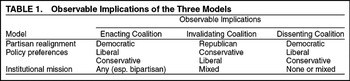
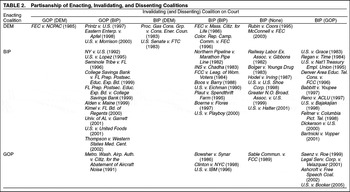
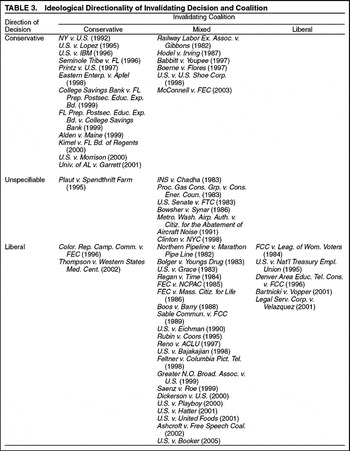
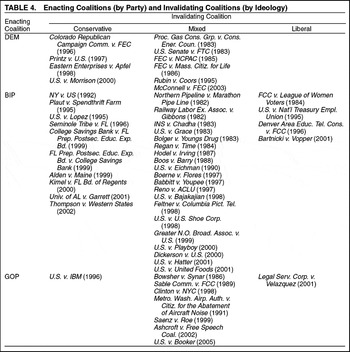



Comments
No Comments have been published for this article.