Introduction
A perforation in the tympanic membrane is mostly a sequel of chronic otitis media and can cause a conductive hearing loss up to 50 dB.Reference Mehta, Rosowski, Voss, O'Neil and Merchant1 The location and size of the perforations vary between patients. Today, there is no general agreement regarding the degree and the configuration of the hearing loss caused by different types and locations of tympanic membrane perforations. Therefore, many studies evaluate the effect of tympanic membrane perforations on hearing, and there are contradictory reports in the literature, especially regarding the location.Reference Mehta, Rosowski, Voss, O'Neil and Merchant1,Reference Pannu, Chadha, Kumar and Preeti2 A study by Mehta et al. contradicts the common clinical view that perforations over the region of the round window (i.e. the posterior-inferior quadrant) result in significantly greater hearing losses than anterior perforations.Reference Mehta, Rosowski, Voss, O'Neil and Merchant1 On the other hand, there is a definite agreement regarding the size of the perforation: hearing loss will increase with the increasing size of a tympanic membrane perforation.Reference Mehta, Rosowski, Voss, O'Neil and Merchant1–Reference Choffor-Nchinda, Djomou, Meva'Abiouele, Mindja, Bola and Kewe3 The volume of the middle ear and mastoid cell complex, involvement of manubrium mallei, and duration of perforations are other factors that may affect hearing.Reference Mehta, Rosowski, Voss, O'Neil and Merchant1,Reference Carpenter, Tucci, Kaylie and Frank-Ito4,Reference Voss, Rosowski, Merchant and Peake5
The main goal of this study was to evaluate the effect of size, location and shape of the perforations on hearing by analysing pre-operative pure tone average (PTA) and air–bone gap (ABG) values of a large study group treated in a tertiary referral centre, which included over 400 cases. We aimed to share our experience regarding the effect of perforations on hearing in patients with normal middle-ear findings. Unlike similar studies, we analysed the perforations of patients who had middle-ear pathologies during the surgical procedures that can contribute to conductive hearing loss: ossicular chain pathologies and tympanosclerosis. We aimed to find if there was a relationship between these pathologies and specific types of perforations.
Materials and methods
Medical data of 458 patients who were diagnosed with non-complicated tympanic membrane perforations between January 2014 and January 2020 in a tertiary referral centre were reviewed. The research protocol was approved by the faculty's research ethics committee, and informed consent was collected from all participating patients by means of previously documented patient information leaflets and consent forms.
Subjects and methodology
Patients with central or marginal and dry (for at least three months before surgery) perforations of the tympanic membrane were included in the study. Patients with inflamed or infected middle-ear mucosa, previous otological surgical procedures and patients who had accompanying pathologies of the tympanic membrane remnant (e.g. retraction, adhesion, granulation tissue or cholesteatoma) were not included.
All patients underwent tympanoplasty at the same institution, and patients who had accompanying pathologies in the middle ear that could affect hearing (tympanosclerosis, ossicular chain pathologies) were noted. Only patients who had normal middle-ear mucosa and intact and functional ossicular chain during the surgical procedures were included in the analysis regarding the role of perforations on hearing. Pre-operative pure tone audiometry tests were evaluated and PTA and ABG values were calculated using 0.5, 1, 2 and 4 kHz air-conduction thresholds.Reference Mehta, Rosowski, Voss, O'Neil and Merchant1 All audiometric tests were performed in the same institution using the same model of audiometry device (Interacoustics AC40, Interacoustics, Middlefart, Denmark).
Demographic data of the patients, size, shape and location of the perforations, pre-operative PTA, and ABG values were documented. The sizes of the perforations were grouped as: smaller than 50 per cent of the membrane, larger than 50 per cent of the membrane, and subtotal or total. The locations of the perforations were grouped according to the quadrant or quadrants involved. Shapes of the perforations were grouped as annular, ellipse, kidney-shaped and pinpoint. Patient groups were composed according to the combinations of the variables above, and PTA and ABG values were compared between the groups.
For perforations located in only one quadrant, four groups were composed: anterior-superior, anterior-inferior, posterior-inferior and posterior-superior. Another four groups were composed according to the quadrant or quadrants involved: inferior, posterior, anterior and total perforations. Patients with tympanosclerosis or ossicular chain pathologies were included in a different analysis; the relationship of these pathologies with the locations and properties of the perforations were assessed.
Statistical analysis
Categorical variables are presented with a number (n) and frequency (per cent). Mean and standard deviation (SD) values are detected for scale variables. The relationship between the perforations and ossicular chain defect or tympanosclerosis was analysed with the chi-square test. The effect of the perforations on pre-operative PTA and ABG values were assessed with linear regression analysis. The mean difference of pre-operative PTA and ABG values between the subgroups are calculated with one way analysis of variance (ANOVA). Multiple comparisons between subgroups were performed with the post-hoc least significant difference test. Data were analysed using SPSS® (version 22.0) statistical software. The difference was accepted as statistically significant if p < 0.05.
Results
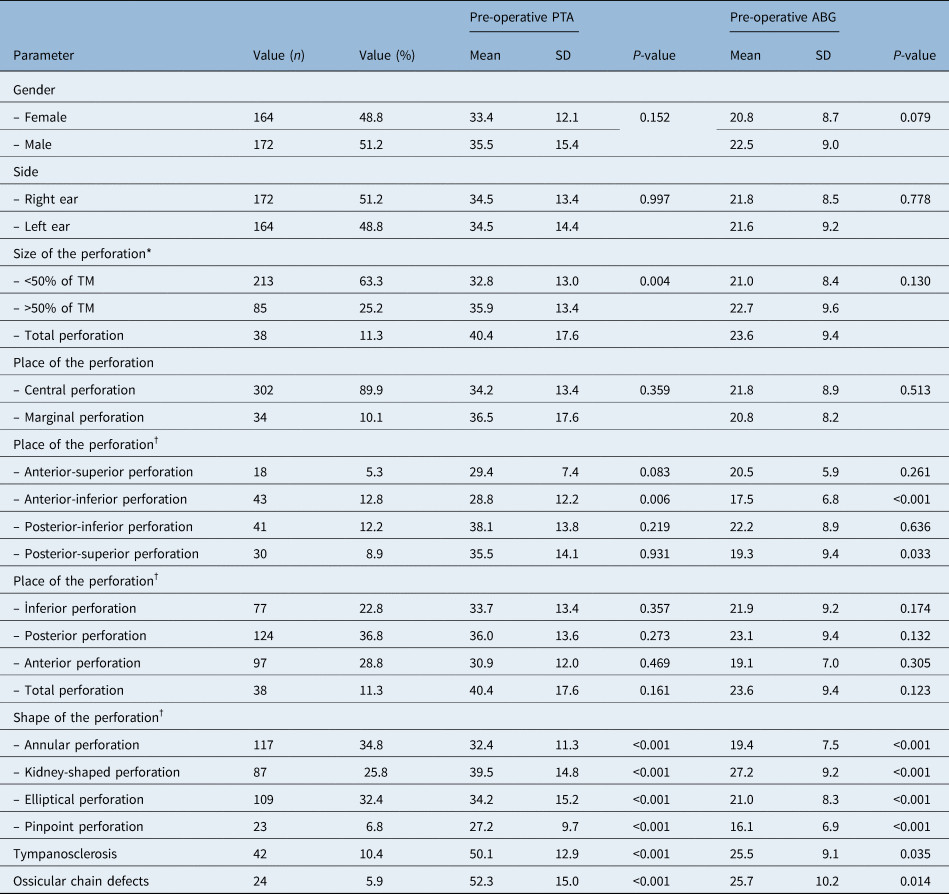
Medical data of 402 patients were evaluated in the study. Forty-two patients had tympanosclerosis with ossicular chain involvement, and 24 patients had a defect of the ossicular chain. Twenty-two of these patients had a defect of the incudostapedial joint, whereas two patients had absent stapes. A total of 336 patients had normal middle-ear findings, and these patients were included in the analysis regarding the effect of perforations on hearing. There were 164 female patients (48.8 per cent) and 172 male patients (51.2 per cent). The mean age (± SD) was 32.4 ± 13.7 years. The mean and SD for pre-operative PTA was 37.1 ± 5.1 dB and for ABG was 22.3 ± 9.1 dB. The findings are summarised in Table 1 according to sub-groups after patients with tympanosclerosis (n = 42) and ossicular chain defects (n = 24) were excluded.
Summary of the findings of the study group

*One way analysis of variance; †linear regression analysis. PTA = pure tone average; ABG = air–bone gap; SD = standard deviation; TM = tympanic membrane
In patients with total perforation, the pre-operative PTA (± SD) was 7.5 ± 2.4 dB greater than the patients with perforation size less than 50 per cent of tympanic membrane, and the difference was statistically significant (p < 0.002). Pre-operative ABG values were similar in multiple comparisons of groups according to perforation size (p > 0.050; one way ANOVA, post-hoc least significant difference test; Table 1).
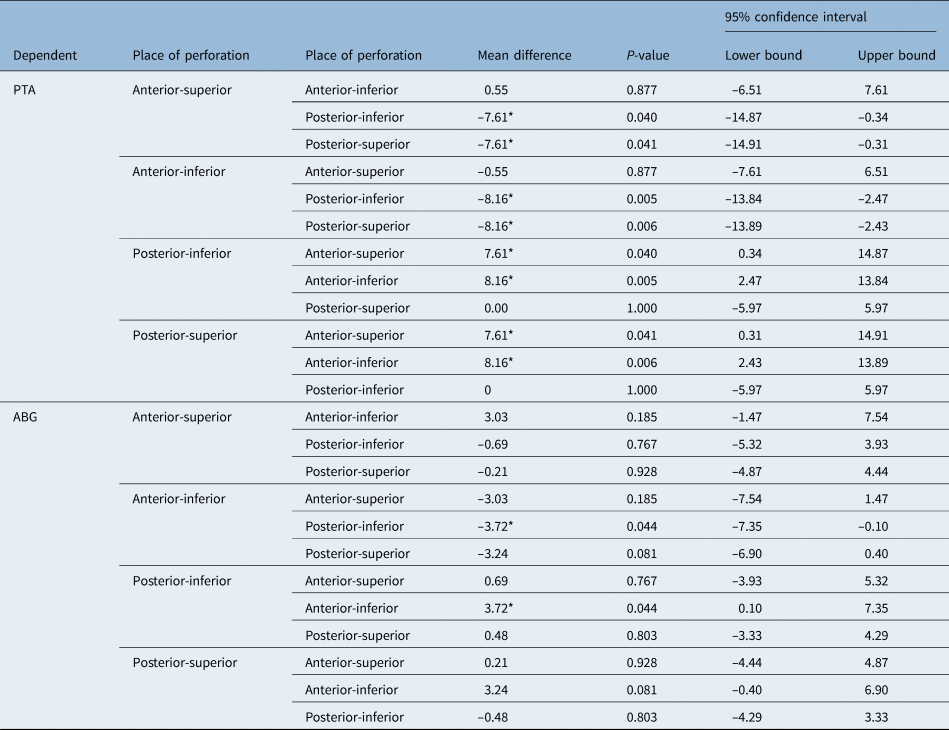
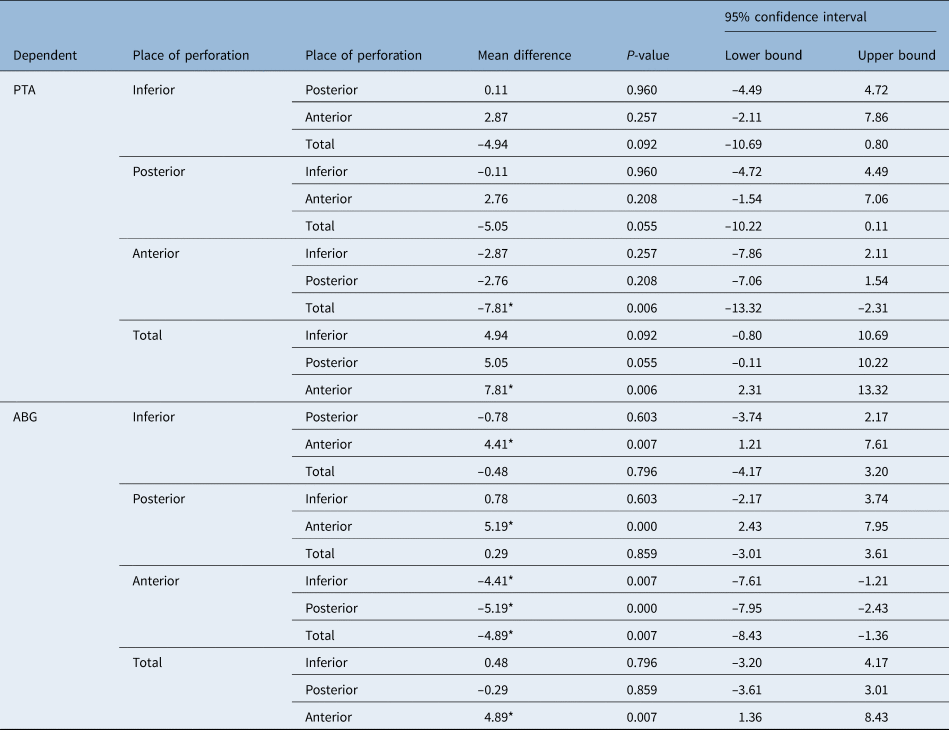
Pre-operative mean PTA and ABG values were significantly lower (better) in patients with anterior-inferior perforations according to linear regression analysis (PTA ± SD = 28.8 ± 12.2 dB; ABG ± SD = 17.5 ± 6.8 dB; p = 0.006 and p < 0.001, respectively). Patients with posterior-inferior perforations had the worst hearing outcomes with a mean PTA ± SD of 38.1 ± 13.8 dB and ABG ± SD of 22.2 ± 8.9 dB. There was a significant difference in terms of mean PTA and ABG values between posterior-inferior and anterior-inferior perforations. The mean PTA ± SD difference was 8.16 ± 2.8 dB (p = 0.005) and the mean ABG ± SD difference was 3.72 ± 1.8 (p = 0.044). The difference between posterior-inferior and anterior-superior perforations in terms of PTA values was also significant (p = 0.04). Multiple comparisons of pre-operative PTA and ABG values between the location of perforations (four quadrants) with post-hoc least significant difference test are presented in Table 2. The mean pre-operative PTA was not significantly affected by the location of the perforation within three quadrants as posterior, inferior and anterior (p > 0.005). However, the mean pre-operative ABG value was significantly higher in posterior perforations than anterior perforations, with a mean ± SD difference of 5.1 + 1.4 dB (p < 0.001). Multiple comparisons of the locations of perforations (three quadrants) alongside total perforations are presented in Table 3.
Multiple comparisons of pre-operative PTA and ABG values between perforations located in different quadrants with post-hoc least significant difference test

*The mean difference is significant at the 0.05 level. PTA = pure tone average; ABG = air–bone gap
Multiple comparisons of pre-operative PTA and ABG between place of perforations (three quadrants) with post-hoc least significance test

*The mean difference is significant at the 0.05 level. PTA = pure tone average; ABG = air–bone gap
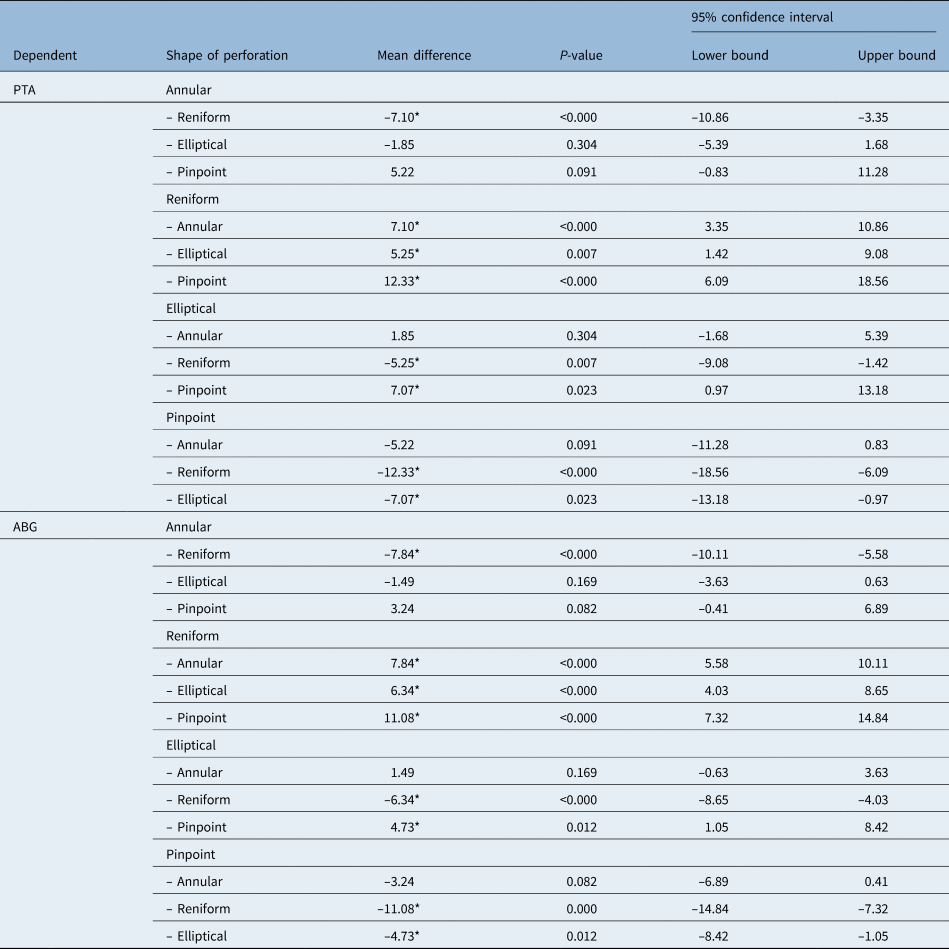
The shape of perforations was found as a significant factor for pre-operative PTA and ABG according to linear regression analysis (p < 0.001 and p < 0.001, respectively; Table 1). According to the post-hoc least significant difference test, the mean pre-operative PTA ± SD was 12.3 ± 1.9 dB higher in patients with kidney-shaped perforations than patients with pinpoint perforations (p < 0.001). Also, the mean pre-operative PTA ± SD was 7.1 ± 1.4 dB higher in kidney-shaped perforations than annular perforations and 5.3 ± 1.9 dB higher in elliptical perforations than pinpoint perforations (p < 0.001 and p = 0.007, respectively). In addition, the mean pre-operative ABG value of kidney-shaped perforations was significantly higher than annular, elliptical or pinpoint perforations (p < 0.001 for all comparisons; Table 4).
Multiple comparisons of pre-operative PTA and ABG values between shape of perforations with post-hoc least significant difference test

*The mean difference is significant at the 0.05 level. PTA = pure tone average; ABG = air–bone gap
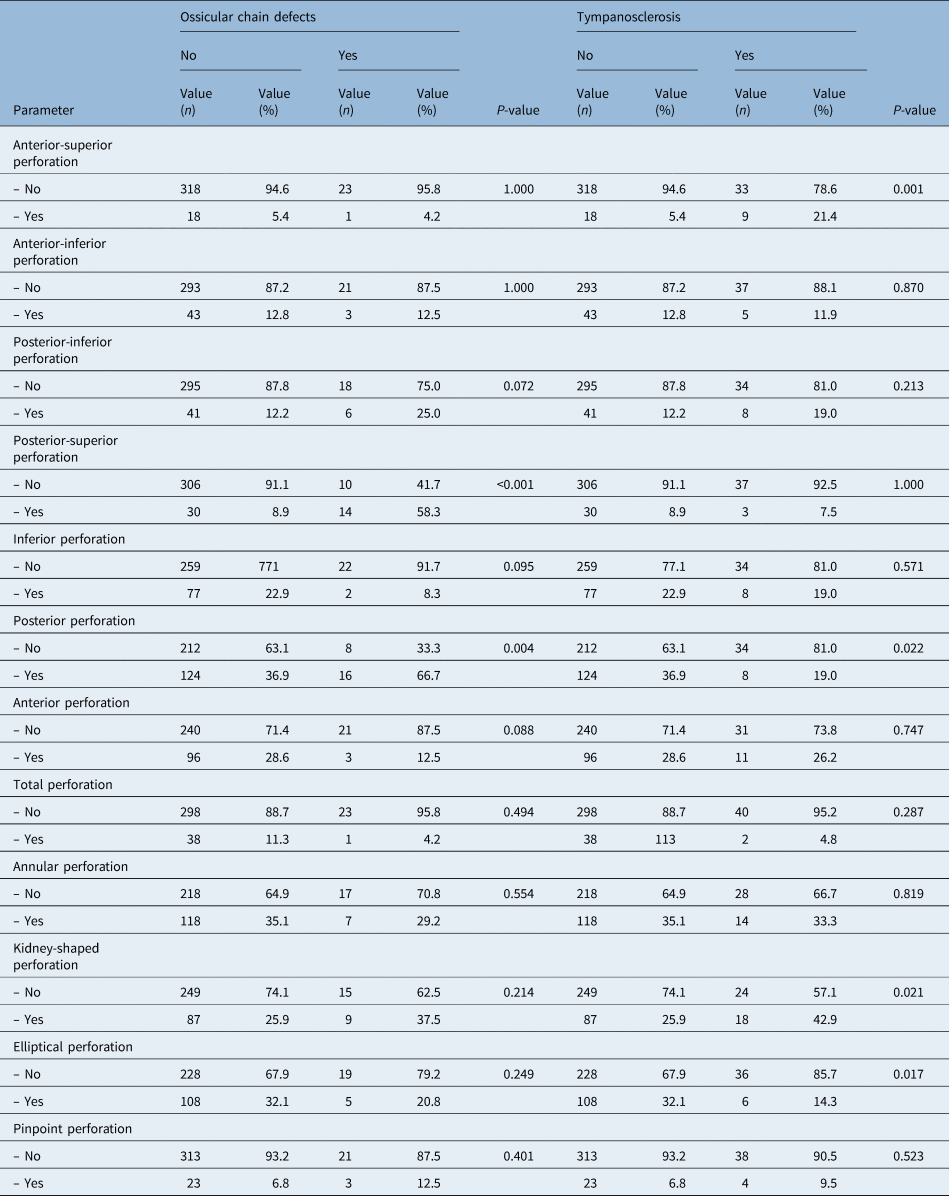
Posterior-superior and posterior perforations were detected as significant indicators for ossicular chain defects (p < 0.001; odds ratio, 14.2 and p = 0.004; odds ratio, 3.4, respectively; chi-square test). Interestingly, anterior-superior perforations were found as significant risk factors for tympanosclerosis (p = 0.001; odds ratio, 4.8). The rate of tympanosclerosis was found to be significantly lower in posterior perforations (p = 0.022; odds ratio, 0.40). The shape of the perforation was not detected as a significant factor for ossicular chain defects. However, the rate of tympanosclerosis was significantly higher in kidney-shaped perforations and significantly lower in elliptical perforations (p = 0.021; odds ratio, 2.1 and p = 0.017; odds ratio, 0.35, respectively; chi-square test; Table 5).
Frequency of tympanosclerosis and ossicular chain defects according to perforation placement and shape

P-values were obtained from the chi-square test
Discussion
Various studies researching the effects of the perforation location on hearing suggest that perforations localised to the posterior quadrant eliminate the phase difference discrimination and cause more hearing loss than other quadrants.Reference Gaur, Sinha, Bhushan and Batni6,Reference Rana, Upadhyay, Yadav and Prasad7 These findings correlate with the commonly accepted view that kidney-shaped perforations located in posterior or inferior quadrants cause the highest hearing loss when compared with other perforations. However, the experimental and modelling studies by Mehta et al. predicted that conductive hearing loss will increase with increasing perforation size but will be independent of perforation location, which is contrary to popular otological belief.Reference Mehta, Rosowski, Voss, O'Neil and Merchant1 The authors added that the phase-cancellation effect, which was held responsible for increased hearing loss, was not valid on theoretical or experimental grounds.
Another experimental study was conducted by Voss et al.Reference Voss, Rosowski, Merchant and Peake8 The authors made measurements regarding middle-ear function on normal cadaver ears in which controlled perforations were made with argon laser. They stated that the measurements showed no systematic differences between hearing losses that resulted from perforations at different locations. Interestingly, the findings of many clinical trials do not correlate with these findings. A study by Rana et al. included 700 patients with 769 perforated membranes, and the authors concluded that perforations involving the posterior half of tympanic membranes showed greater loss than those involving the anterior or inferior half of the membrane. The maximum loss (mean ± SD, 51.56 ± 5.1 dB) was seen in perforations involving all four quadrants.Reference Rana, Upadhyay, Yadav and Prasad7 A study by Gaur et al. included 100 cases and the authors also suggested that perforations in the posterior-inferior quadrant cause more hearing loss than those situated in the anterior-inferior quadrant.Reference Gaur, Sinha, Bhushan and Batni6 The authors added that anterior-superior perforations cause less hearing loss than the anterior-inferior perforations. Contradictory clinical findings are reported by Park et al.Reference Park, Hong, Kim, Han, Chung and Seo9 The authors evaluated ABG values of 42 patients with tympanic membrane perforations and stated that perforations in anterior versus posterior locations showed no significant differences in mean ABG. Likewise, Lerut et al. reported that the position of the perforation itself did not play a role, whereas the involvement of the umbo at the perforation margin may worsen hearing by 5–6 dB.Reference Lerut, Pfammatter, Moons and Linder10
In the current study, we observed that posterior-inferior perforations caused the greatest hearing loss, and the difference between posterior-inferior and anterior-superior or inferior perforations was statistically significant. Regarding the ABG values, we detected that posterior perforations caused significantly higher ABG when compared with anterior perforations. Considering our findings and clinical experience, we suggest that the site of perforation has a significant impact on hearing. Both experimental and clinical studies report that hearing loss increases as the size of the perforation increases. Our findings concur with this; in patients with total perforation, the pre-operative PTA was significantly higher than those with perforation size less than 50 per cent of the membrane (p < 0.002).
In the current study, we also aimed to show whether the shape of the perforation had a significant effect on hearing. Although the locations and sizes of the perforations were diverse, we observed that kidney-shaped perforations had the worst hearing results for both PTA and ABG values. As expected, pinpoint perforations caused less hearing loss than other perforations. As a clinical experience, we also observed that in most of the cases a kidney-shaped perforation caused more hearing loss than an annular perforation located in the same quadrant. The surface area of the perforation and the transmission of the sound waves into the middle ear could also play a role here. In the literature, there is a lack of data regarding the effect of the shape of the perforation, and we believe that this topic could be further investigated with perforations that have the same properties except for shape.
Ossicular chain pathologies are the main cause of additional hearing loss in patients with tympanic membrane perforations. When encountered, these pathologies change the course of the surgery and require additional interventions when possible. In most cases, it is not possible to suspect and detect this pathology pre-operatively. In our study group, 42 patients had tympanosclerosis with limited ossicular chain movement and 24 patients had a defect of the ossicular chain. We observed that anterior-superior perforations were significant risk factors for tympanosclerosis, whereas posterior-superior and posterior perforations were significant factors for ossicular chain defect. The close relation between the perforation and the incudostapedial joint, which leads to chronic exposure of this delicate structure to the outside environment, may affect this outcome. Again, there are a lack of data in the literature regarding this topic, and it is not possible to come to a solid conclusion.
• The common clinical view is that perforations located over the region of the round window result in significantly greater hearing losses
• Clinical and experimental studies report contradictory findings on this topic
• The data suggest that perforations located in the posterior-inferior quadrant cause the greatest hearing loss
• Total perforations cause significantly worse hearing than perforations less than 50 per cent of tympanic membrane area
• Posterior perforations have a significant relationship with ossicular chain pathologies
• Kidney-shaped perforations cause higher pure tone average and air–bone gap values than annular, elliptical or pinpoint perforations
Middle-ear mastoid volume and involvement of manubrium mallei are among other factors researched in the literature.Reference Mehta, Rosowski, Voss, O'Neil and Merchant1,Reference Pannu, Chadha, Kumar and Preeti2,Reference Voss, Rosowski, Merchant and Peake8,Reference Park, Hong, Kim, Han, Chung and Seo9 The common view is that hearing loss varies inversely with middle-ear volume (ABGs are larger in ears with smaller middle-ear volumes).Reference Mehta, Rosowski, Voss, O'Neil and Merchant1,Reference Aslier, Ozay, Gurkan, Kirkim and Guneri11,Reference Voss, Rosowski, Merchant and Peake12 In these studies, either tympanometry or computer software is used to measure the middle-ear mastoid volume. But both of these techniques have limitations regarding accuracy.Reference Mehta, Rosowski, Voss, O'Neil and Merchant1,Reference Park, Hong, Kim, Han, Chung and Seo9 Pannu et al. stated that malleolar perforations had significantly greater hearing loss than non-malleolar perforations.Reference Pannu, Chadha, Kumar and Preeti2 But the mechanism of this effect is not clearly understood. The main limitation of our study is that these factors were not evaluated in the analysis and could add value to our findings.
Conclusion
In the current study, data of 402 patients with tympanic membrane perforations were assessed. We observed that perforations located in the posterior-inferior quadrant caused the greatest hearing loss, and the difference between posterior-inferior and anterior-superior or inferior perforations was statistically significant. Also, posterior perforations had a significant relationship with ossicular chain pathologies. Patients with total perforations had significantly worse hearing than the patients with perforation size less than 50 per cent of tympanic membrane. Kidney-shaped perforations caused higher PTA and ABG values than annular, elliptical or pinpoint perforations.
Competing interests
None declared