





No CrossRef data available.
Use of environmental DNA (eDNA) to monitor terrestrial mammal diversity following riparian outlets along the Colombian Pacific coast in armed conflict areas
Published online by Cambridge University Press: 07 November 2025
Abstract
In Colombia, monitoring biodiversity studies is hindered due to logistical, economic and security issues due to armed conflict. This study aimed for the application of environmental DNA (eDNA) to monitor mammalian diversity following riparian outlets along the Colombian Pacific coast. Fieldwork was conducted during two different periods, August to November 2021 and February to May 2022. A total of five orders of terrestrial mammals were recorded, distributed in ten families and 17 species. The most abundant orders were Rodentia and Didelphimorphia, with a total of six and five species each. Our methodology can detect relevant and emblematic terrestrial species reported for the region with traditional methods, such as Chironectes minimus and Cabassous centralis, as well as species that had not been confirmed to occur in that area, like Speothos venaticus. Our results demonstrate the high potential for the development of the eDNA tool in Colombia for detection of vulnerable species and, in the future, supporting conservation processes.
Information
- Type
- Insight
- Information
- Copyright
- © The Author(s), 2025. Published by Cambridge University Press
References
Anderson, RP (1999) Preliminary review of the systematic and biogeography of the spiny pocket mice (Heteromys) of Colombia. Revista de la Academia Colombiana de Ciencias Exactas, Físicas y Naturales 23 (Suplemento especial), 611–630.Google Scholar
Axtner, J, Crampton-Platt, A, Hörig, LA, Mohamed, A, Xu, CC, Yu, DW and Wilting, A (2019). An efficient and robust laboratory workflow and tetrapod database for larger scale environmental DNA studies. GigaScience, 8(4), giz029.10.1093/gigascience/giz029CrossRefGoogle ScholarPubMed
Barnes, MA, Turner, CR, Jerde, CL, Renshaw, MA, Chadderton, WL and Lodge, DM (2014) Environmental conditions influence eDNA persistence in aquatic systems. Environmental Science & Technology 48(3), 1819–1827. https://doi.org/10.1021/es404734p.CrossRefGoogle ScholarPubMed
Baudry, T, Mauvisseau, Q, Goût, JP, Arqué, A, Delaunay, C, Smith-Ravin, J, Sweet, M and Grandjean, F (2021) Mapping a super-invader in a biodiversity hotspot, an eDNA-based success story. Ecological Indicators 126, 107637. https://doi.org/10.1016/j.ecolind.2021.107637.CrossRefGoogle Scholar
Beever, EA (2006) Monitoring biological diversity: Strategies, tools, limitations, and challenges. Northwestern Naturalist 87(1), 66–79. http://www.jstor.org/stable/4095760.10.1898/1051-1733(2006)87[66:MBDSTL]2.0.CO;2CrossRefGoogle Scholar
Brito, J and Ojala-Barbour, R (2014) Presencia de la rata invasora Rattus rattus (Rodentia: Muridae) en el Parque Nacional Sangay, Ecuador. Therya, 5(1), 323–329. https://doi.org/10.12933/therya-14-190
CrossRefGoogle Scholar
Caballero, S, Ortiz-Giral, MC, Bohorquez, L, Lozano Mojica, JD, Caicedo-Herrera, D, Arévalo-González, K and Mignucci-Giannoni, AA (2021) Mitochondrial genetic diversity, population structure and detection of Antillean and Amazonian manatees in Colombia: New areas and new techniques. Frontiers in Genetics 12, 726916. https://doi.org/10.3389/fgene.2021.726916.CrossRefGoogle ScholarPubMed
Camacho, C, Coulouris, G, Avagyan, V, Ma, N, Papadopoulos, J, Bealer, K and Madden, TL (2009). BLAST+: Architecture and applications. BMC bioinformatics, 10(1), 421.10.1186/1471-2105-10-421CrossRefGoogle ScholarPubMed
Ceballos, G and Ehrlich, PR (2006) Global mammal distributions, biodiversity hotspots, and conservation. Proceedings of the National Academy of Sciences of USA 103(51), 19374–19379. h
https://doi.org/10.1073/pnas.0609334103.CrossRefGoogle ScholarPubMed
Chacón-Pacheco, J, Figel, J, Rojano, C, Racero-Casarrubia, J, Humanez-López, E and Padilla, H (2017) Actualización de la distribución e identificación de áreas prioritarias para la conservación de una especie olvidada: El hormiguero gigante en Colombia. Edentata. 18, 12–25. https://doi.org/10.2305/iucn.ch.2017.edentata-18-1.3.en.Google Scholar
Civade, R, Dejean, T, Valentini, A, Roset, N, Raymond, JC, Bonin, A, Taberlet, P and Pon, D (2016) Spatial representativeness of environmental DNA metabarcoding signal for fish biodiversity assessment in a natural freshwater system. PLoS ONE 11(6), 0157366, https://doi.org/10.1371/journal.pone.0157366.CrossRefGoogle Scholar
Collins, RA, Wangensteen, OS, O’Gorman, EJ, Mariani, S, Sims, DW and Genner, MJ (2018) Persistence of environmental DNA in marine systems. Communications Biology 1, 185. https://doi.org/10.1038/s42003-018-0192-6.CrossRefGoogle ScholarPubMed
Costello, MJ, Vale, MM, Kiessling, W, Maharaj, S, Price, J and Talukdar, GH (2022) Cross-chapter paper 1: Biodiversity hotspots. In Pörtner, H-O, Roberts, DC, Tignor, M, Poloczanska, ES, Mintenbeck, K, Alegría, A, Craig, M, Langsdorf, S, Löschke, S, Möller, V, Okem, A & Rama, B (eds.), Climate Change 2022: Impacts, Adaptation and Vulnerability. Contribution of Working Group II to the Sixth Assessment Report of the Intergovernmental Panel on Climate Change, Cambridge and New York, NY: Cambridge University Press, 2123–2161, https://doi.org/10.1017/9781009325844.018.Google Scholar
Coutant, O, Richard-Hansen, C, de Thoisy, B, Decotte, JB, Valentini, A, Dejean, T, Vigouroux, R, Murienne, J and Brosse, S (2021) Amazonian mammal monitoring using aquatic environmental DNA. Molecular Ecology Resources 21, 1–14. https://doi.org/10.1111/1755-0998.13393.CrossRefGoogle ScholarPubMed
De Matteo, KE, Rinas, MA, Argüelles, CF, Zurano, JP, Selleski, N, Bitetti, MSD and Eggert, LS (2014) Noninvasive techniques provide novel insights for the elusive bush dog (Speothos venaticus). Wildlife Society Bulletin 38(4), 862–873. https://doi.org/10.1002/wsb.474
CrossRefGoogle Scholar
De Oliveira, TG, Michalski, F, Botelho, ALM, Michalski, LJ, Calouro, AM and Desbiez, ALJ (2018) How rare is rare? Quantifying and assessing the rarity of the bush dog Speothos venaticus across the Amazon and other biomes. Oryx 52(1), 98–107. https://doi.org/10.1017/S0030605316000624
CrossRefGoogle Scholar
de Souza Lima, E, DeMatteo, KE, Jorge, RS, Jorge, ML, Dalponte, JC, Lima, HS and Klorfine, SA (2012) First telemetry study of Speothos venaticus: providing information on home range, activity, and habitat selection. Wildlife Research 39, 512–519. https://doi.org/10.1071/WR11176
CrossRefGoogle Scholar
Deiner, K and Altermatt, F (2014) Transport distance of invertebrate environmental DNA in a natural river. PLoS ONE 9(2), 88786. https://doi.org/10.1371/journal.pone.0088786
CrossRefGoogle Scholar
Edgar, RC (2010). Search and clustering orders of magnitude faster than BLAST. Bioinformatics, 26(19), 2460–2461.10.1093/bioinformatics/btq461CrossRefGoogle ScholarPubMed
Figel, J, Botero-Cañola, S, Sánchez-Londoño, J and Quintero-Ángel, A (2016) Unexpected documentation and inter-Andean range expansion of a vulnerable large mammal (Mammalia, Pilosa, Myrmecophaga tridactyla) in Colombia. Mammalia 80(4), 449–452. https://doi.org/10.1515/mammalia-2015-0037
CrossRefGoogle Scholar
Frøslev, TG, Kjøller, R, Bruun, HH, Ejrnæs, R, Brunbjerg, AK, Pietroni, C and Hansen, AJ (2017). Algorithm for post-clustering curation of DNA amplicon data yields reliable biodiversity estimates. Nature communications 8(1), 1188.10.1038/s41467-017-01312-xCrossRefGoogle ScholarPubMed
Gardner, AL and Creighton, GK (2008). Genus micoureus lesson 1842. In Gardner, AL (ed), Mammals of South America. Volume 1. Marsupials, Xenarthrans, Shrews, and Bats. Chicago, Illinois: The University of Chicago Press, 74–82.10.7208/chicago/9780226282428.001.0001CrossRefGoogle Scholar
GBIF.org (2024), GBIF home page. Available at: https://www.gbif.org (accessed 14 September, 2024].Google Scholar
Habel, JC, Rasche, L, Schneider, UA, Engler, JO, Schmid, E, Rödder, D, Meyer, ST et al. (2019) Final countdown for biodiversity hotspots. Conservation Letters 12, e12668. https://doi.org/10.1111/conl.12668
CrossRefGoogle Scholar
Hanson, T, Brooks, TM, Da Fonseca, GAB, Hoffmann, M, Lamoreux, JF, Machlis, G, Mittermeier, CG, Mittermeier, RA and Pilgrim, JD (2009) Warfare in biodiversity hotspots. Conservation Biology 23, 578–587. https://doi.org/10.1111/j.1523-1739.2009.01166.x
CrossRefGoogle ScholarPubMed
Humanez-López, E and Chacón Pacheco, J (2013) Nuevo registro de Myrmecophaga Tridactyla para el departamento de Córdoba, Colombia con anotaciones sobre comportamiento agonistico interespecifico. Revista Colombiana de Ciencia Animal - RECIA 5(2), 422–426. https://doi.org/10.24188/recia.v5.n2.2013.454
CrossRefGoogle Scholar
Jane, SF, Wilcox, TM, McKelvey, KS, Young, MK, Schwartz, MK, Lowe, WH, Letcher, BH and Whiteley, AR (2015) Distance, flow and PCR inhibition: eDNA dynamics in two headwater streams. Molecular Ecology Resources 15, 216–227. https://doi.org/10.1111/1755-0998.12285
CrossRefGoogle ScholarPubMed
Juhel, JB, Marques, V, Fernández, AP, Borrero‐Pérez, GH, Martinezguerra, MM, Valentini, A, Dejean, T, Manel, S, Loiseau, N, Velez, L and Hocdé, R, 2021. Detection of the elusive Dwarf sperm whale (Kogia sima) using environmental DNA at Malpelo island (Eastern Pacific, Colombia). Ecology and Evolution, 11(7), 2956.10.1002/ece3.7057CrossRefGoogle ScholarPubMed
Lozano, JD and Caballero, S (2020) Applications of eDNA metabarcoding for vertebrate diversity studies in northern Colombian water bodies. Frontiers in Ecology and Evolution 8, 1–16 https://doi.org/10.3389/fevo.2020.617948
Google Scholar
Martin, M. (2011). Cutadapt removes adapter sequences from high-throughput sequencing reads. EMBnet. journal, 17(1), 10-12.10.14806/ej.17.1.200CrossRefGoogle Scholar
Marwayana, ON, Gold, Z, Meyer, C P and Barber, PH (2022) Environmental DNA in a global biodiversity hotspot: Lessons from coral reef fish diversity across the Indonesian archipelago. Environmental DNA, 4, 222–238. https://doi.org/10.1002/edn3.257
CrossRefGoogle Scholar
McNeely, JA (2003) Conserving forest biodiversity in times of violent conflict. Oryx 37, 142–152.10.1017/S0030605303000334CrossRefGoogle Scholar
Meyer, N, Moreno, R, Valdes, S, Méndez-Carvajal, P, Brown, E and Ortega, J (2015). New records of bush dog in Panama. Canid Biology & Conservation 18(10), 36–40. http://www.canids.org/CBC/18/bush_dog_in_panama.pdf.Google Scholar
Guerra, FM, Trujillo, F, Cuero, CA, Jiménez-Ortega, AM and Mantilla-Meluk, H (2019) Nuevos registros de cámara trampa de Speothos venaticus (Lund 1842) (Canidae: Carnivora) en la altillanura colombiana. Revista Biodiversidad Neotropical 9(2), 1–6. http://dx.doi.org/10.18636/bioneotropical.v8i4.521
Google Scholar
Muñoz-Saba, Y and Alberico, M (2004) Mamíferos en el Chocó biogeográfico.In Rangel-Ch, J.O.. (ed), Diversidad biótica IV. El chocó biogeográfico/Costa Pacífica. Bogotá, D.C: Universidad Nacional de Colombia, Instituto de Ciencias Naturales, Conservación Internacional, 559–598.Google Scholar
Myers, N (1988) Threatened biotas: “Hot spots” in tropical forests. Environmentalist 8, 187–208.10.1007/BF02240252CrossRefGoogle ScholarPubMed
Myers, N and Mittermeier, RA (2003) Impact and acceptance of the hotspots strategy: response to Ovadia and to Brummitt and Lughadha. Conservation Biology 17(5), 1449–1450.10.1046/j.1523-1739.2003.03158.xCrossRefGoogle Scholar
Nuquí (Chocó – Colombia) (2012). Estrategia Municipal de Respuesta a Emergencias, Nuquí – Chocó [Plan municipal]. Gestión del Riesgo de Desastres del Municipio de Nuquí. Available at: https://repositorio.gestiondelriesgo.gov.co:8443/bitstream/handle/20.500.11762/434/PMGR%20Nuqui.pdf?sequence=1&isAllowed=y
Google Scholar
Pérez-Gómez, K, Fernández-Rodríguez, CR, and Moreno-Niño, N (2025) Guía ilustrada de los mamíferos de Colombia. 1st ed Cali-Colombia: Editorial MacMullan Publishers SAS pp. 324
Google Scholar
Pinto, D, Rodríguez-Bolaños, A and Jiménez-Ortega, A (2012) Mamíferos del Valle (Bahía Solano-Chocó): Una aproximación al conocimiento de la dinámica de la relación Fauna y Comunidad Local. (1st ed) Spain: Editorial academica española. ISBN: 9783659023316.Google Scholar
Polanco, FA, Mutis Martinez guerra, M, Marques, V, Villa-Navarro, F, Borrero Pérez, GH, Cheutin, MC, Dejean, T, Hocdé, R, Juhel, JB, Maire, E, Manel, S, Spescha, M, Valentini, A, Mouillot, D, Albouy, C and Pellissier, L (2021) Detecting aquatic and terrestrial biodiversity in a tropical estuary using environmental DNA. Biotropica 53, 1606–1619. https://doi.org/10.1111/btp.13009
CrossRefGoogle Scholar
Pont, D, Rocle, M, Valentini, A, Civade, R, Jean, P, Maire, A, Roset, N, Schabuss, M, Zornig, H and Dejean, T (2018) Environmental DNA reveals quantitative patterns of fish biodiversity in large rivers despite its downstream transportation. Scientific Reports 8, 10361. https://doi.org/10.1038/s41598-018-28424-8
CrossRefGoogle ScholarPubMed
Ramírez-Chaves, HE, Ortega-Rincón, M, Pérez, WA, Marín, D (2011) Historia de las especies de mamíferos exóticos en Colombia. Boletín Científico del Museo de Historia Natural de la Universidad de Caldas. 15:139–156. ISSN 0123-3068.Google Scholar
Ramírez-Chaves, HE, Ossa-López, PA, Velásquez-Guarín, D et al. (2022) New genetic information and geographic distribution of charismatic carnivores: the olingos (Procyonidae: Bassaricyon) in Colombia. Mamm Biol 102, 2045–2059. https://doi.org/10.1007/s42991-022-00318-3
CrossRefGoogle Scholar
Riaz, T, Shezad, W, Viari, A, Pompanon, F, Taberlet, P and Coissac, E (2011) EcoPrimers: Inference of new DNA barcode markers from whole genome sequence analysis. Nucleic Acids Research 39, e145. https://doi.org/10.1093/nar/gkr732
CrossRefGoogle ScholarPubMed
Rodríguez-Castellanos, P, Garrote, G and Trujillo, F (2017) New camera-trap records for bush dog (Speothos venaticus) in Colombia. Galemys, 29, 1–4. https://doi.org/10.7325/Galemys.2017.N1.CrossRefGoogle Scholar
Ruppert, KM, Kline, RJ and Rahman, MS (2019) Past, present, and future perspectives of environmental DNA (eDNA) metabarcoding: A systematic review in methods, monitoring, and applications of global eDNA. Global Ecology and Conservation 17, e00547. https://doi.org/10.1016/j.gecco.2019.e00547
CrossRefGoogle Scholar
Saenz-Agudelo, P, Delrieu-Trottin, E, DiBattista, JD, Martínez-Rincon, D, Morales-González, S, Pontigo, F, Ramírez, P, Silva, A, Soto, M and Correa, C (2022) Monitoring vertebrate biodiversity of a protected coastal wetland using eDNA metabarcoding. Environmental DNA, 4, 77–92. https://doi.org/10.1002/edn3.200
CrossRefGoogle Scholar
Sales, NG, Kaizer M da, C, Coscia, I, Perkins, JC, Highlands, A, Boubli, J P, …and Mcdevitt, AD (2020) Assessing the potential of environmental DNA metabarcoding for monitoring Neotropical mammals: A case study in the Amazon and Atlantic Forest, Brazil. Mammal Review 50(3), 221–225. https://doi.org/10.1111/mam.1218310.1111/mam.12183
CrossRefGoogle Scholar
Singh, V (2024) Biodiversity conservation. In Singh, A.N. and Singh, A.K. (eds.) Textbook of Environment and Ecology. Springer, Singapore, 225–236. https://doi.org/10.1007/978-981-99-8846-4_15
CrossRefGoogle Scholar
Solari, S, Muñoz-Saba, Y, Rodríguez-Mahecha, JV, Defler, TR, Ramírez-Cháves, HE and Trujillo, F (2013). Riqueza, endemismo y conservación de los mamíferos de Colombia. Mastozoologia Neotropical 20(2), 301–365. ISSN: 0327-9383.Google Scholar
Stephenson, P (2020) Technological advances in biodiversity monitoring: Applicability, opportunities and challenges. Current Opinion in Environmental Sustainability 45, 36–41. https://doi.org/10.1016/j.cosust.2020.08.005
CrossRefGoogle Scholar
Suárez-Castro, A F, Ramírez-Chaves, HE, Noguera-Urbano, EA, Velásquez-Tibatá, J, González-Maya, JF and Lizcano, DJ (2021) Vacíos de información espacial sobre la riqueza de mamíferos terrestres continentales de Colombia. Caldasia 43(2):247–260. https://doi.org/10.15446/caldasia.v43n2.85443
CrossRefGoogle Scholar
Suren, A, Burdon, F and Wilkinson, S (2024) eDNA Is a useful environmental monitoring tool for assessing stream ecological health. Environmental DNA 6, e596. https://doi.org/10.1002/edn3.596
CrossRefGoogle Scholar
Unoise, ER (2016). Improved error-correction for Illumina 16S and ITS amplicon reads. bioRxiv.Google Scholar
Urrutia, NS (2018) Caracterización Ecológica de los Mamíferos del Cerro Jánano. v1.3. Instituto de Investigaciones Ambientales del Pacifico John Von Neumann (IIAP). Dataset/Occurrence. Available at https://doi.org/10.15472/6ukz9t
CrossRefGoogle Scholar
Urrutia, NS and Cuesta Ríos, EY (2018) Mastofauna presente en el Alto del Buey, Bahía Solano, Chocó. Version 2.2. Instituto de Investigaciones Ambientales del Pacífico John Von Neumann - IIAP. Occurrence dataset https://doi.org/10.15472/2aqllc accessed via GBIF.org on 2023-08-02. Available at https://www.gbif.org/occurrence/1570685811
Google Scholar
Valsecchi, E, Bylemans, J, Goodman, SJ, Lombardi, R, Carr, I, Castellano, L, Galimberti, A and Galli, P (2020) Novel universal primers for metabarcoding environmental DNA surveys of marine mammals and other marine vertebrates. Environmental DNA 2, 460–476. https://doi.org/10.1002/edn3.72
CrossRefGoogle Scholar
Zhao, J, Cao, Y, Yu, L, Liu, X, Yang, R and Gong, P (2022) Future global conflict risk hotspots between biodiversity conservation and food security: 10 countries and 7 biodiversity hotspots. Global Ecology and Conservation 34, e02036 ISSN 2351-9894, https://doi.org/10.1016/j.gecco.2022.e02036.CrossRefGoogle Scholar

Figure 1. A. Colombian map with eDNA studies. B. Tribuga Gulf map with sampling locations and principal rivers. Maps produced with Arcmapⓒ and ArcGisⓒ software. Map author: Sebastian Barbosa.

Figure 2. Terrestrial mammal genera registered in this study (eDNA) in comparison with traditional survey methods for the Gulf of Tribugá as published by Urrutia (2018). Grey colour reflects detection with both methods.
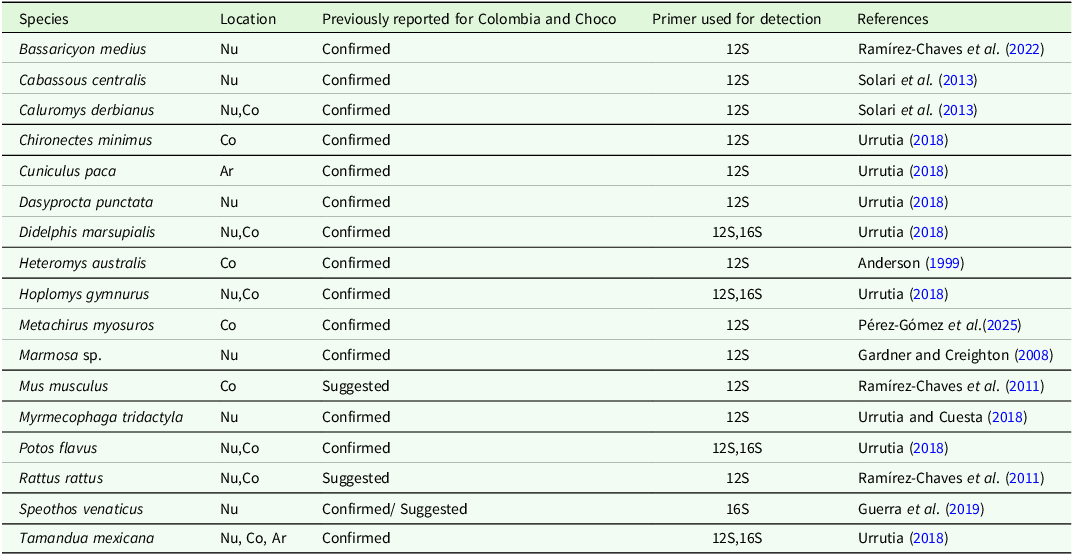
Table 1. Genera and species registered by means of eDNA in the current study, referring to their alignment with previous reports with traditional sampling methods and primers used for detection. Two-letter codes denote location: Ar for Arusí, Co for Coquí, Nu for Nuquí

Caicedo et al. supplementary material 1
Caicedo et al. supplementary material

File
2.9 MB
Caicedo et al. supplementary material 2
Caicedo et al. supplementary material
File
13.1 KB
Caicedo et al. supplementary material 3
Caicedo et al. supplementary material
File
2.9 MB
Caicedo et al. supplementary material 4
Caicedo et al. supplementary material
File
1.9 MB
 You have
Access
Biodiversity hotspots have become a tool for setting conservation priorities on the basis of their high concentration of endemic species (Myers Reference Myers1988, Ceballos and Ehrlich 2006) and the fact that an estimated 40% of all terrestrial species facing imminent threat of habitat destruction localise to these areas (Myers and Mittermeyer Reference Myers and Mittermeier2003, Zhao et al. Reference Zhao, Cao, Yu, Liu, Yang and Gong2022). South America is a privileged location with at least 6 regions that are catalogued as biodiversity hotspots (Habel et al. Reference Habel, Rasche, Schneider, Engler, Schmid, Rödder and Meyer2019). Colombia is one of the countries hosting the largest number of these areas (Costello et al. Reference Costello, Vale, Kiessling, Maharaj, Price, Talukdar, Pörtner, Roberts, Tignor, Poloczanska, Mintenbeck, Alegría, Craig, Langsdorf, Löschke, Möller, Okem and Rama2022), with the Pacific region, the high Andean mountains, and the Amazon among the most prominent ones.
A reality that has received little attention, however, is that over 90% of the major armed conflicts between 1950 and 2000 occurred within countries containing biodiversity hotspots, and more than 80% took place directly within hotspot areas (Hanson et al. Reference Hanson, Brooks, Da Fonseca, Hoffmann, Lamoreux, Machlis, Mittermeier, Mittermeier and Pilgrim2009). These armed conflicts not only impact biodiversity directly (McNeely Reference McNeely2003) but also hinder our ability to monitor and subsequently develop appropriate management efforts. Colombia is one of those places where highly diverse areas have witnessed decades of armed conflict. Locally, among the areas that have been most affected by the armed conflict is the biogeographic area of Chocó (Comisión Interétnica de la Verdad, 2019), which also harbours an estimated 25% of endemism in an area of little over 42,000 km2 (Myers Reference Myers1988).
Ecological monitoring encompasses the assessment of biological communities across time and space (Beever Reference Beever2006), and it constitutes the way to identify whether biodiversity efforts are working or identify new threats (Singh Reference Singh, Singh and Singh2024). In Colombia, monitoring biodiversity studies is hindered due to logistical, economic and security issues due to armed conflict. In these contexts, the use of indirect monitoring tools could offer a viable alternative to periodically follow the status of species over time. Enabled by technological advances, indirect monitoring tools have been on the rise (Stephenson Reference Stephenson2020). Among the tools currently used for the analysis of global biodiversity, environmental DNA (eDNA) has become one of the most promising, due to all the advantages it offers, highlighting its high sensitivity, non-invasiveness, and good cost-effectiveness (Ruppert et al. Reference Ruppert, Kline and Rahman2019, Suren et al. Reference Suren, Burdon and Wilkinson2024). This technique is currently defined as the analysis of DNA present in the environment (aquatic, soil, air, mud, etc.) (Ruppert et al. Reference Ruppert, Kline and Rahman2019). Different studies have been carried out worldwide using eDNA in areas considered as biodiversity hotspots, such as coral reefs (Marwayana et al. Reference Marwayana, Gold, Meyer and Barber2022), islands (Baudry et al. Reference Baudry, Mauvisseau, Goût, Arqué, Delaunay, Smith-Ravin, Sweet and Grandjean2021) and rivers (Coutant et al. Reference Coutant, Richard-Hansen, de Thoisy, Decotte, Valentini, Dejean, Vigouroux, Murienne and Brosse2021), highlighting the usefulness of this technique for biodiversity monitoring analysis.
In Latin America, the application of eDNA to assess biodiversity is becoming more widespread. It has mostly been applied in the estimation of taxonomic diversity of complex microbial communities, but only a handful of studies have looked at more emblematic species for conservation efforts, such as vertebrates (Caballero and Lozano Reference Lozano and Caballero2020; Caballero et al. Reference Caballero, Ortiz-Giral, Bohorquez, Lozano Mojica, Caicedo-Herrera, Arévalo-González and Mignucci-Giannoni2021; Polanco et al. Reference Polanco, Mutis Martinez guerra, Marques, Villa-Navarro, Borrero Pérez, Cheutin, Dejean, Hocdé, Juhel, Maire, Manel, Spescha, Valentini, Mouillot, Albouy and Pellissier2021; Juhel et al. Reference Juhel, Marques, Fernández, Borrero‐Pérez, Martinezguerra, Valentini, Dejean, Manel, Loiseau, Velez and Hocdé2021) In Colombia, these studies are recent. For example, Lozano and Caballero (Reference Lozano and Caballero2020) conducted eDNA studies in different water bodies in northern Colombia to identify aquatic vertebrate species. Even though their study focused on aquatic species, some terrestrial organisms were detected with the eDNA, including monkeys, birds and terrestrial mammals. Also, Polanco et al. (Reference Polanco, Mutis Martinez guerra, Marques, Villa-Navarro, Borrero Pérez, Cheutin, Dejean, Hocdé, Juhel, Maire, Manel, Spescha, Valentini, Mouillot, Albouy and Pellissier2021) conducted an eDNA study in an estuarine ecosystem in the Caribbean region, obtaining similar results, identifying not only aquatic species but also terrestrial ones. Nonetheless, these efforts are still scattered, and their application has not been widely recognised for its potential to monitor biodiversity in areas affected by the armed conflict.
This research study aimed to evaluate the potential application of eDNA to monitor mammalian diversity following riparian outlets along the Colombian Pacific coast. The water sampling for eDNA was carried out in the department of Chocó, in the Gulf of Tribugá, which belongs to the jurisdiction of the municipality of Nuquí, a region known to be a biodiversity hotspot and historically affected by the armed conflict. The design of this study was proposed at the riparian outlets at the coast to identify mammals in brackish, freshwater and terrestrial ecosystems. The Gulf of Tribugá is irrigated by more than 10 micro-basins distributed throughout the entire Gulf. The selected sampling points are under the influence of several of these micro-basins, in particular the rivers Nuqui, Jovi, Coqui, and Arusi (Figure 1). The interaction of these hydrological factors allows movement of biological material downstream, the latter being deposited in the areas of inlets and places near the outlets of these tributaries. The biological material constitutes remains of faeces, blood or even the corpses of some vertebrates, which persist as eDNA in marine environments (Pont et al. Reference Pont, Rocle, Valentini, Civade, Jean, Maire, Roset, Schabuss, Zornig and Dejean2018).
A. Colombian map with eDNA studies. B. Tribuga Gulf map with sampling locations and principal rivers. Maps produced with Arcmapⓒ and ArcGisⓒ software. Map author: Sebastian Barbosa.
Terrestrial mammal genera registered in this study (eDNA) in comparison with traditional survey methods for the Gulf of Tribugá as published by Urrutia (Reference Urrutia2018). Grey colour reflects detection with both methods.
Fieldwork was conducted during two different time brackets, from August to November 2021 and between February and May 2022. Four eDNA samples were collected per month (one for each sampling area) during an eight-month period to cover different points in the Gulf of Tribugá. Sample collection was conducted using NatureMetrics collection kits, for a total of 32 filters used (Supplementary Table S1). Samples were extracted, purified, amplified, and sequenced at NatureMetrics specialised laboratories in the UK. The amplifications were performed with the 12S_V5 hypervariable region (ca. 95–106 bp) of the mitochondrial ribosomal RNA for general vertebrate lineages (Riaz et al. Reference Riaz, Shezad, Viari, Pompanon, Taberlet and Coissac2011) and the 16S ribosomal RNA variable region (ca. 245 bp) usually referenced for marine vertebrate lineages (Valsecchi et al. Reference Valsecchi, Bylemans, Goodman, Lombardi, Carr, Castellano, Galimberti and Galli2020). Sequencing data were processed using Cutadapt 2.3 (Martin, Reference Martin2011), USEARCH v11 (Edgar, Reference Edgar2010), UNOISE (Edgar, Reference Unoise2016), in a custom bioinformatics process for quality filtering, Operational Taxonomic Unit (OTU) clustering and taxonomic assignment respectively. Taxonomic information was added to each OTU using sequence similarity searches Basic Local Alignment Search Tool (BLAST) (Camacho et al., Reference Camacho, Coulouris, Avagyan, Ma, Papadopoulos, Bealer and Madden2009) in the National Center for Biotechnology Information (NCBI) nucleotide database (GenBank) and PROTAX (Axtner et al. Reference Axtner, Crampton-Platt, Hörig, Mohamed, Xu, Yu and Wilting2019), which performs assignments at each taxonomic level. BLAST hits had a minimum e-score of 1e-20 and a hit length of at least 90% of the query sequence (Caballero et al. Reference Caballero, Ortiz-Giral, Bohorquez, Lozano Mojica, Caicedo-Herrera, Arévalo-González and Mignucci-Giannoni2021). Species-level assignments were maintained if supported by unambiguous matches to reference sequences of ≥99%. Genus-level assignments were maintained if supported by ≥95%. OTUs that were ≥99% similar and had similar co-occurrence patterns were combined with LULU (Frøslev et al., Reference Frøslev, Kjøller, Bruun, Ejrnæs, Brunbjerg, Pietroni and Hansen2017). Finally, OTUs with low abundance from each sample (<0.025% or <10 reads) were removed. Common contaminating sequences such as humans and livestock were also removed (see Appendix S1 for detailed methods). Once the data were obtained, all taxonomic results were reviewed one by one, and the suggested taxonomic classification provided by NatureMetrics was reconfirmed to the species level (where possible) using scientific articles and a dataset of mammal records for mammals in the sampled region (Solari et al. Reference Solari, Muñoz-Saba, Rodríguez-Mahecha, Defler, Ramírez-Cháves and Trujillo2013, Urrutia Reference Urrutia2018). In addition, BLASTn was used to confirm the identity of the taxa against the nt database (August 2022). Upon inspection of confirmed taxonomies, filters obtained from Morromico were discarded for further analyses, as these samples did not show evidence of amplification for terrestrial mammals; thus, leaving us with 24 filters from three locations used in this study (Figure 1). Recorded species of terrestrial mammals were shared with the hunters of Coquí, who provided information about presence, distribution, and confirmation of the species registered for the area.
We performed statistical analyses to test this potential bias, particularly regressing number of detected taxa on DNA yield, and also exploring the relationship between volume of water filtered vs. detected taxa (Supplementary material, Figure S1). These analyses showed there is no significant correlation observed (p > 0.3 in both cases), suggesting that filtering larger volumes of water does not necessarily increase the number of mammalian taxa detected. The low correlation observed in the case of the number of detected mammalian taxa by filtered volume (R = 0.18; Appendix, Figure S1 A), and the number of detected terrestrial mammalian taxa (Appendix, Figure S1 B) further supports this conclusion. On the other hand, total mammalian taxa (Figure S1 C) and terrestrial mammalian taxa (Figure S1 D) versus DNA yield show a clearer positive correlation between the number of detected taxa and the amount of DNA recovered, though it is not statistically significant (p ≈ 0.3). These analyses show that DNA yield may have a stronger influence on the number of detected mammalian taxa, compared to the volume of water filtered. Nonetheless, detection was highly uneven across samples: over 50% of mammalian taxonomic assignments originated from just two of the 32 samples (May-Co-2 and May-Nu-3). This pronounced clustering is notable and not easily attributable to sampling effort or volume alone. One possible explanation may lie in local hydrological and ecological conditions. For instance, the Nuquí River drains a much larger catchment area compared to the other sampling points, extending over 30 km and fed by multiple tributaries before reaching the sea, potentially transporting more eDNA than shorter or less complex basins (Nuquí Chocó – Colombia 2012). While this could partly explain the elevated signal in samples from this area, the observed distribution highlights the inherent variability of eDNA detection in dynamic coastal systems and the challenges associated with the development of effective monitoring strategies.
A total of five orders of terrestrial mammals were detected, distributed in ten families and 17 species (Table 1). The most abundant orders were Rodentia and Didelphimorphia, with a total of six and five species each, followed by Carnivora, Pilosa and Cingulata, with three, two and one species respectively. Sixteen out of the 17 species were detected with the universal primer for vertebrates (Riaz et al. Reference Riaz, Shezad, Viari, Pompanon, Taberlet and Coissac2011), including emblematic species reported for the region with traditional methods, such as giant anteater (Myrmecophaga tridactyla), water opossum (Chironectes minimus) and naked-tailed armadillo (Cabassous centralis) (Table 1). In contrast, a total of five out of the 17 mammalian species were recorded with the 16S rRNA primer, including what we consider to be the most interesting report, the bush dog (Speothos venaticus). These records were distributed in three of the four sampling points: Arusi, Coquí and Nuqui. The sampling area with the highest number of records was Nuqui with a total of 12 species, followed by Coquí with 10 species and Arusi with 2 species (Table 1).
Genera and species registered by means of eDNA in the current study, referring to their alignment with previous reports with traditional sampling methods and primers used for detection. Two-letter codes denote location: Ar for Arusí, Co for Coquí, Nu for Nuquí
Among the recorded terrestrial mammal species, there are some of outstanding interest either due to their category of invasive or due to the difficulty in detection through traditional methods, such as the Bush dog (Speothos venaticus). The presence of invasive species, such as Rattus rattus and Mus musculus, could well result from transport, since the Gulf of Tribugá is a port area and receives many supplies by medium-sized cargo ships, which could introduce these species into the ecosystem, with implications for native fauna that have not been studied in this context thus far (Ramírez-Chaves et al. Reference Ramírez-Chaves, Ortega-Rincón, Pérez and Marín2011, Brito and Ojala-Barbour Reference Brito and Ojala-Barbour2014, Suárez-Castro et al. Reference Suárez-Castro, Ramírez-Chaves, Noguera-Urbano, Velásquez-Tibatá, González-Maya and Lizcano2021).
The distribution of the giant anteater (Myrmecophaga tridactyla) in Colombia is unclear at the moment (Chacón-Pacheco et al. Reference Chacón-Pacheco, Figel, Rojano, Racero-Casarrubia, Humanez-López and Padilla2017). This mammal is the largest anteater species and has been severely threatened by the loss of its habitat, yielding its current IUCN status as Vulnerable. It has been reported in Colombia through traditional sampling methods, such as trail cameras, with presence in the Amazon and the Colombian Orinoquia (Solari et al. Reference Solari, Muñoz-Saba, Rodríguez-Mahecha, Defler, Ramírez-Cháves and Trujillo2013, Figel et al. Reference Figel, Botero-Cañola, Sánchez-Londoño and Quintero-Ángel2016). However, there are also records in other departments such as Antioquia, Santander and Bolivar (Humanez and Chacón-Pacheco Reference Humanez-López and Chacón Pacheco2013). In the Gulf of Tribugá, there is only one visual record, towards the north of the Gulf (Urrutia and Rios Reference Urrutia and Cuesta Ríos2018); thus, our study provides the second record of this species for the area and the first in Colombia using the eDNA technique.
One exceptional record in our study is the bush dog (Speothos venaticus), with a sequence identity match of over 99%. This small, carnivorous mammal lives near water sources, such as small streams in forests located below 1,500 a.s.l. (Guerra et al. Reference Guerra, Trujillo, Cuero, Jiménez-Ortega and Mantilla-Meluk2019), which most likely aided our record along the riparian outlet. S. venaticus is notoriously elusive and rarely detected using traditional methods, contributing to limited information on its distribution and ecology (Table S2). Most confirmed records across its range have been obtained through extensive use of trail cameras (De Oliveira et al. Reference De Oliveira, Michalski, Botelho, Michalski, Calouro and Desbiez2018), highlighting the challenges of monitoring this species. In this context, our result demonstrates the potential of eDNA as a complementary tool for detecting elusive carnivores in remote tropical habitats. While the species’ presence has been confirmed in the broader Biogeographical Chocó region
Although its distribution is confirmed for Biogeographical Chocó (Muñoz-Saba and Alberico, Reference Muñoz-Saba, Alberico and Rangel-Ch2004), there is no information or any record of this species in Chocó department, Colombia, despite its distribution has been suggested (Solari et al. Reference Solari, Muñoz-Saba, Rodríguez-Mahecha, Defler, Ramírez-Cháves and Trujillo2013, Guerra et al. Reference Guerra, Trujillo, Cuero, Jiménez-Ortega and Mantilla-Meluk2019, GBIF 2024). Thus, to the best of our knowledge, this record would be the first formal record of S. venaticus in Chocó, Colombia and the first record for Colombia using eDNA. In Latin America, there is another record of this organism through eDNA, which was achieved in French Guiana along three rivers (Coutant et al. Reference Coutant, Richard-Hansen, de Thoisy, Decotte, Valentini, Dejean, Vigouroux, Murienne and Brosse2021).
Although the technique is very accurate, its wide range of results due to the resolution of the primers used (metabarcoding) has generated indirect or direct results in some investigations, related to samples taken in aquatic environments, whether lotic, lentic or marine, which have yielded records of semi-aquatic or completely terrestrial species (Sales et al Reference Sales, Kaizer M da, Coscia, Perkins, Highlands, Boubli and Mcdevitt2020, Coutant et al. Reference Coutant, Richard-Hansen, de Thoisy, Decotte, Valentini, Dejean, Vigouroux, Murienne and Brosse2021, Saenz-Agudelo et al. Reference Saenz-Agudelo, Delrieu-Trottin, DiBattista, Martínez-Rincon, Morales-González, Pontigo, Ramírez, Silva, Soto and Correa2022). The record of these organisms has been explained by the persistence of eDNA in these water bodies and how DNA can move through them (Barnes et al. Reference Barnes, Turner, Jerde, Renshaw, Chadderton and Lodge2014, Pont et al. Reference Pont, Rocle, Valentini, Civade, Jean, Maire, Roset, Schabuss, Zornig and Dejean2018). According to Pont et al. (Reference Pont, Rocle, Valentini, Civade, Jean, Maire, Roset, Schabuss, Zornig and Dejean2018), eDNA can move downstream in high flow rivers up to a total of 130 km. However, in rivers of smaller width and flow, there are reported detections ranging from 240 m to 9 km (Deiner and Altermatt Reference Deiner and Altermatt2014, Jane et al. Reference Jane, Wilcox, McKelvey, Young, Schwartz, Lowe, Letcher and Whiteley2015, Civade et al. Reference Civade, Dejean, Valentini, Roset, Raymond, Bonin, Taberlet and Pon2016). Plus, factors such as physicochemical parameters can affect the distance, due to the degradation of eDNA in these water bodies. Finally, these streams deposit the eDNA in the ocean, where, according to Collins et al. Reference Collins, Wangensteen, O’Gorman, Mariani, Sims and Genner2018, it can last up to 48h depending on some environmental variables such as salinity, pH, among others. These results have explained the phenomena of detection of terrestrial species in samples taken in aquatic environments and, in turn, have demonstrated the usefulness of the tool to support traditional diversity analysis techniques (Sales et al. Reference Sales, Kaizer M da, Coscia, Perkins, Highlands, Boubli and Mcdevitt2020, Baudry et al. Reference Baudry, Mauvisseau, Goût, Arqué, Delaunay, Smith-Ravin, Sweet and Grandjean2021, Coutant et al. Reference Coutant, Richard-Hansen, de Thoisy, Decotte, Valentini, Dejean, Vigouroux, Murienne and Brosse2021, Saenz-Agudelo et al. Reference Saenz-Agudelo, Delrieu-Trottin, DiBattista, Martínez-Rincon, Morales-González, Pontigo, Ramírez, Silva, Soto and Correa2022, Suren et al. Reference Suren, Burdon and Wilkinson2024).
For example, Lozano and Caballero (Reference Lozano and Caballero2020) conducted eDNA studies in several water bodies in northern Colombia, finding in their results different vertebrate taxa, including terrestrial mammals such as Didelphis marsupialis, Tamandua mexicana and Alouatta sp. Polanco et al. (Reference Polanco, Mutis Martinez guerra, Marques, Villa-Navarro, Borrero Pérez, Cheutin, Dejean, Hocdé, Juhel, Maire, Manel, Spescha, Valentini, Mouillot, Albouy and Pellissier2021) conducted an eDNA study in an estuarine ecosystem in the Caribbean region. Among their findings, they highlighted 14 mammal species, including Caluromys lanatus, Tapirus terrestris, and the endemic red-crested tree rat, Santamartamys rufodorsalis. These results demonstrate the high potential for the development of the tool in Colombia and how its use can enhance diversity analyses in different regions, collecting data not only on aquatic species but also on terrestrial species in the region, even if they weren’t the direct target.
Concluding remarks
Although our results reveal several limitations that affect the consistency of detection across sites, we show that eDNA can be a valuable complementary tool for detecting terrestrial mammals in regions of high socioeconomic and political complexity. Further, the species registered in our study suggest the usefulness of the eDNA tool for detection of vulnerable species and, in the future, supporting conservation processes, studying their distribution. Our results also demonstrate the usefulness of eDNA for tracking species that are difficult to find with traditional sampling methods. It is important to keep in mind, however, that records obtained through eDNA do not yet allow us to delve into the abundance of the organisms or into the details about these species’ ecology. For this purpose, it is essential to work in conjunction with traditional techniques.
Finally, while our study demonstrates the potential of eDNA for detecting both marine and terrestrial species, several challenges must be addressed before it can be reliably used as a standalone monitoring tool. One primary challenge is the variability introduced by environmental factors, such as water currents and the dilution of DNA in marine environments, which can lead to detection inconsistencies across time and space. Additionally, the reliance on DNA yield as a proxy for biodiversity requires careful interpretation, as eDNA can be patchy and subject to stochasticity. Our results also highlighted the difficulty of precisely localising species due to the natural movement of eDNA, which integrates signals from both upstream and nearby habitats, thus limiting spatial resolution compared to traditional monitoring methods like camera trapping. Lastly, while eDNA offers a non-invasive, cost-effective approach, it is necessary to address these limitations through methodological improvements, such as the implementation of a large number of replicates both in DNA extraction and Polymerase Chain Reaction (PCR) replicates across space and time, to further enhance the reliability and scope of eDNA as a tool for biodiversity monitoring.
Supplementary material
The supplementary material for this article can be found at https://doi.org/10.1017/S0266467425100199.
Data availability statement
The data that support the findings of this study are openly available in Dryad at https://doi.org/10.5061/dryad.vq83bk407.
Acknowledgements
We thank ‘Proyecto Semilla’ from Universidad de los Andes, Conservation International and CEMarin Corporation for funding this research. Also, we thank Vakii crowdfunding supporters.
We would like to thank the community of Coqui and ‘Consejo Superior Los Riscales’ for granting us permission to work in the territory collecting samples and staying in the communities. Special thanks to Kevin, Kaleth and Elian Martinez for their support with the sampling. Genaro Moreno, who transported us to the different sampling points in the Gulf, and Cruz Melida Martinez who provided us with lodging in the fieldwork. Thanks to Sebastian Barbosa, author of map in Figure 1.
Author contributions
ODCS carried out the field work and drafted a preliminary version of the manuscript; MCDM contributed with data analyses and helped to draft the manuscript; SC conceived the study, participated in its coordination and helped to achieve the final version of the manuscript. All authors contributed intellectually to this study and read and approved the final manuscript.
Financial support
This work was supported by Universidad de los Andes ‘Proyecto Semilla’ (grant number 2021–10); CEMarin Corporation (Convocatoria no. 21); Conservation International (BAF Project, grant number 6007760).
Competing interests
The authors do not declare any competing interests.