Often referred to as the “coal capital” (meidu 煤都) of China, Datong 大同市 is a medium-sized city located in the north of Shanxi province. In recent years, the city has garnered attention for its ambitious city centre redevelopment projects, implemented by former mayor Geng Yanbo 耿彦波, which seek to move away from the extractive industry.Footnote 1 As Tim Oakes notes, “urban redevelopment is a highly political, traumatic and emotionally wrenching process in which an older socio-spatial order of industrialism is torn to shreds by new spaces of tourism, leisure consumption, and commodity housing.”Footnote 2 Datong’s older socio-spatial order of industrialism was particularly shaped by the coal industry. During fieldwork, I noticed that many minibuses were bearing destination boards for Penghuqu 棚户区, and I was curious to know what kind of a place could have a name that literally means “shantytown.” I learned that Penghuqu is the name locals use to refer to Heng’An New Area (Heng’an xinqu 恒安新区), a large-scale neighbourhood built for resettled mining communities. This article investigates mining-induced displacement and resettlement as a technology of government within the framework of extractive governmentality. From mining settlements to the resettlement neighbourhood, the trajectory of housing policy implementation by Tongmei (TM), a state-owned coal mining enterprise, sheds light on extractive power beyond labour. Mining-induced displacement and resettlement have improved the living standards of the mining population and reinforced TM’s legitimacy through urbanization. However, in the context of China’s coal industry restructuring, this type of resettlement programme has become part of the public problem of SOE debt. Measures aimed at reducing overcapacities and externalizing coal SOE benefits have induced new governance mechanisms that are better understood by looking into the changing inhabiting practices of coal communities and their specific agency.
Urbanization, Displacement and China’s Governmentalities
Research on contemporary China has addressed urban renewal, displacement and resettlement amid the country’s rapid urbanization. Urban planning has transformed not only the landscapes of cities but also the power dynamics in both urban and rural areas.Footnote 3 Scholarly publications on displacement focus on inner-city neighbourhoods,Footnote 4 urban villages,Footnote 5 rural urbanizationFootnote 6 and development-induced resettlement.Footnote 7
The theoretical framework based on the concept of governmentality has proven useful for studying the role of large state-owned enterprises (SOEs) in housing provision and local governance. China’s urbanization has led to a restructuring of state power and the development of new governing techniques.Footnote 8 Until the end of the 1990s, urban society was organized around work units (danwei 单位). However, in the early 2000s, economic reforms and the emerging real-estate industry began to effect a shift in danwei-based governance, as housing became decoupled from the workplace and was instead governed by the neighbourhood community (shequ 社区) unit.Footnote 9 Governance through commodity housing has been analysed as a form of “neoliberal”Footnote 10 or “neo-socialist governmentality.”Footnote 11 Access to new housing is not just a power strategy of the state; home ownership represents a social achievement after decades of housing shortage.Footnote 12 Yet still today, SOEs continue to be deeply involved in social affairs beyond labour, particularly in the provision of housing.Footnote 13 This article enriches this body of research by studying mining-induced displacement and resettlement as a set of governing techniques developed by coal SOEs and analysing the related territorial subjectivities.
Extractive governmentality at home: entanglements of coal, power and dwelling
The spatial dimension of power resonates with particular strength in the case of extractive industries, where resources are extracted in situ. Mining companies are key actors in shaping both extractive landscapes and workers’ lives. These corporations engage in housing provision and power technologies to stabilize their workforce through the promotion of a “healthy” and “happy” lifestyle beyond the sphere of work. Paternalism, as defined by Gérard Noiriel, is a social contract between the workers and the company, marked by the provision of social benefits that reinforce the domination of the company.Footnote 14 Such paternalism is especially evident in urban planning through utopianFootnote 15 or biopoliticalFootnote 16 initiatives such as garden cities or company towns for the working class, as exemplified by the corons in Northern France. As such a form of paternalism manifests in China’s coal industry, this article contributes to investigating the relationships between power, place and belonging in extractive contexts.Footnote 17 It builds upon Foucault’s concept of governmentality, underscoring the territorialization of power technologies through the lens of mining.Footnote 18 Chinese coal mining has been understood as a “technopolitical system grounded in the idealization of extensive fossil fuel exploitation through mechanical and managerial means.”Footnote 19 While the concept of “extractive governmentality at work” has proven useful for analysing how local populations appropriate global standards in labour,Footnote 20 my focus extends beyond labour to explore how extractive regimes govern complex segregated units of land, people and institutions.
The geographical, social and political specificities of territorialization in extractive contexts are illustrated by the Chinese expression “independent industrial mining areas” (duli gongkuang qu 独立工矿区). These are areas defined by geographers as having emerged primarily through the exploitation of mineral resources.Footnote 21 In Shanxi province, neither urbanization nor transport infrastructure was a primary factor in the establishment of coal enterprises.Footnote 22 The term “independent” is ambiguous here, meaning both isolated and autonomous. Generally located inland or in mountainous regions far from urban and economic centres, these areas predominantly house mining employees and their families. They are generally afflicted with environmental degradation, costly infrastructure, limited investment and economic marginalization. Developed around concentrated mineral resources, these areas are largely dependent on extraction, processing and heavy industry. Within the coalfields, there are various categories of mines, ranging from state-owned to collectively owned.Footnote 23 Governance is complex, marked by the dual authority of province-managed mining SOEs and city-level governments, a situation which often results in administrative friction.Footnote 24 The notion of “independent industrial mining areas” also appears in official regulatory documents, especially in relation to housing challenges.Footnote 25 Analysing power dynamics in these territories therefore requires a broad perspective that extends beyond labour relations, focusing on housing provision and everyday inhabiting practices.
Research on coal mining has examined the industry’s economic, environmental and social impacts, including labour conditions, health issues, pollution, farmers’ rights and land subsidence caused by intensive underground mining.Footnote 26 However, the social, spatial and political implications of mining-induced territorialization remain overlooked. In China, large state-owned mining enterprises play a central role in both labour and social affairs, unlike small-scale or private coal mining companies.Footnote 27 The long-term extraction in Shanxi province has generated socio-economic tensions associated with mining-induced ground subsidence. The existing legal framework lacks clear provisions regarding land subsidence, leaving villagers vulnerable and without protection or compensation unless visible damage occurs.Footnote 28 Moreover, the resettlement process often perpetuates resource-dependent livelihoods.Footnote 29 An ethnographic approach reveals the complex power dynamics embedded in everyday practices and subjectivities shaped by resettlement. Using the concept of extractive governmentality at home, this article explores mining-induced urban renewal in Datong’s Mining District (Kuangqu 矿区), highlighting the role played by a large SOE in shaping resettled families’ territorial subjectivities.
Criss-crossing urban studies and political sociology, the extractive governmentality at home framework examines how displacement and resettlement reshape the relationship between mining populations and mining corporations. Large Chinese resource SOEs are not only economic actors but also agents of governance beyond the sphere of labour. In long-established mining cities like Datong, extractive industries shape local inhabiting patterns, creating “place-based communities.”Footnote 30 Displacement here refers to the uprooting of people while resources and infrastructures remain. Unlike other resettlement cases in China, miners continue to commute to the extraction sites, which remain a spatial anchor. The mining industry is further distinguished by its destructive effects on the environment and on its massive workforce. Through housing provision programmes, coal SOEs induce both specific workers’ subjectivities and administrative particularism. Aligned with the scholarship linking housing to state rationalities,Footnote 31 this framework reveals how extractive power operates in the urban interface of Datong’s Mining District. Since the mid-2000s, the Chinese coal industry has reconfigured around large SOEs that manage not only affiliated workers (zhigong 职工) but also their families (jiashu 家属). In Shanxi, workers’ settlements were historically located directly on the hills surrounding the mines. Resettlement programmes only began in 2006, after decades of severe land subsidence and poor living standards caused by the local underground coal extraction. My fieldwork demonstrates that such recent governmentalization produces complex inhabiting subjectivities. I explore not only SOE governance but also how resettled residents experience and narrate their environment.Footnote 32 Territorial subjectivities – especially in contexts where extraction shapes large territories – warrant exploration because, as Anke Schwarz and Monika Streule note, “the continuously produced and contingent territories that emerge from these processes also call on, encourage, and frame specific territorial subjectivities.”Footnote 33
Shanxi province serves as an exemplar of China’s coal industry, with a long history of extraction that has had dramatic consequences for the local environment and its population. In particular, land subsidence has generated a process of “social disintegration.”Footnote 34 Extractive governmentality at home explains how coal SOEs initiated this socializing process, as illustrated in Datong. During coal’s “golden decade” (huangjin shinian 黄金十年) (2003–2012), displacement and resettlement redefined the boundaries of privacy and contributed to the making of extractive subjects with new “expectations,” anticipating what a future urban life would entail in terms of comfort and prosperity.Footnote 35 Later on, resettled miners were confronted with new measures guiding China’s coal transition. Extractive governmentality reconfigured following changing state policies, public discourse and related social activism.Footnote 36 Studying China’s “extractive governance” beyond labour and environmental issues sheds light on overlooked socio-political dynamics of resource-dependent territories.Footnote 37 Extractive governmentality at home fluctuates with the coal industry, impacting miners’ work and urban lives. By retracing the development of housing provision measures up to the recent initiatives related to coal restructuring, this paper contributes to the empirical knowledge of the current research on China’s “just transition,” which discusses the economic, environmental and social impacts – including employment issues – of decarbonization measures on the impacted populations and territories.Footnote 38
Methodology
Datong offers a compelling case as a historic mining city and a current pilot city for China’s coal transition. This article draws from a broader ethnographic study on the city’s urban and extractive transformations (2015–2024). Research methods included direct observation, informal interviews, photography and document analysis. For this article, I focus on data collected in three mining settlements and in Penghuqu, the relocation neighbourhood. I undertook 13 observation visits to the mining settlements and held informal conversations with 22 residents, including TM miners, their family members and local farmers. I also visited Penghuqu 13 times and spoke with 18 residents, including TM miners, their family members and neighbourhood management staff. Although participants were aware of my research, conversations were not recorded due to people’s discomfort, and so data were documented through fieldnotes.Footnote 39 I also scrutinized political and administrative documents, reviewed the local news and monitored online content, including social media posts.
The rest of the article is arranged as follows. First, I analyse mining-induced residential displacement from mining hills to an urban neighbourhood as a form of governmentalization of housing, where the mine SOE builds not only production spaces (shengchan qu 生产区) but also workers’ living spaces (shenghuo qu 生活区). Next, I examine how selective paternalism, shaped through displacement and resettlement, generates an internal order marked by distinctions and unequal benefits while simultaneously fostering an imaginary of urbanity and comfort linked to an extractive ethos. In the final section, I discuss how the exercise of power shifts from SOE to city management in the relocation neighbourhood and how local residents manage social stigma in the context of China’s energy transition.
The Governmentalization of Housing in Datong’s Mining District
Previously, the coal sector in Shanxi province was organized around scattered enclaves, each being managed by a coal company, with limited integration into the surrounding urban fabric. While energy production contributed to the country’s development, the large labour force was socially marginalized, especially workers in private coal mines.Footnote 40 Even in state-owned mines, workers’ welfare was limited and housing issues remained unresolved for decades. Many workers and their families lived in self-built houses in settlements close to the coal mines, often in unsafe and unsanitary conditions, until the mid-2000s. In response to widespread land subsidence in Datong, public authorities and the mining SOE embarked on a resettlement programme in 2006, relocating the population to an area that now houses 400,000 inhabitants. This project, which emerged during the coal industry’s “golden decade,” initiated a form of paternalistic power. This extractive governmentality at home began with the relocation of miners from remote mining settlements to a concentrated neighbourhood in Datong. Through urban planning, the SOE improved its workers’ living conditions and bolstered its legitimacy. The large-scale, mining-induced displacement and resettlement not only restructured the local territory but also reinforced state-corporate authority through housing infrastructure.
Intense coal extraction in Shanxi has long created a cycle of “disaster reproduction,” with land subsidence being one of the disasters.Footnote 41 Shanxi’s coal sector began to develop and grow in the early 20th century, particularly during the Japanese occupation. After 1949, settlements sprang up around the mines as the sector expanded and coal SOEs, like TM, were established, providing dangerous but relatively secure employment for workers. After the 1950s, housing was deprioritized as China’s extractive regime followed a “production first” principle. During the reform era, deregulation led to a proliferation of township and collective enterprises, contributing to China’s economy between 1978 and the late 1990s. The privatization of the 1990s ushered in a growing private sector dominated by coal owners (mei laoban 煤老板) who amassed considerable wealth during the coal boom of the early 21st century.Footnote 42 In response to the appalling accident rates and heavy pollution issues, the government attempted to regulate the sector but struggled to enforce closures.Footnote 43 Coal SOEs, which were initially loss-making with profit rates below national SOEs in the 1980s, began to recover in the 1990s and saw rapid growth in the early 2000s.Footnote 44 However, extraction generated serious environmental and social issues: “By the end of the 1990s, mining disasters had become a serious ecological, survival, and societal problem, but a systematic plan of treatment and rescue was non-existent.”Footnote 45
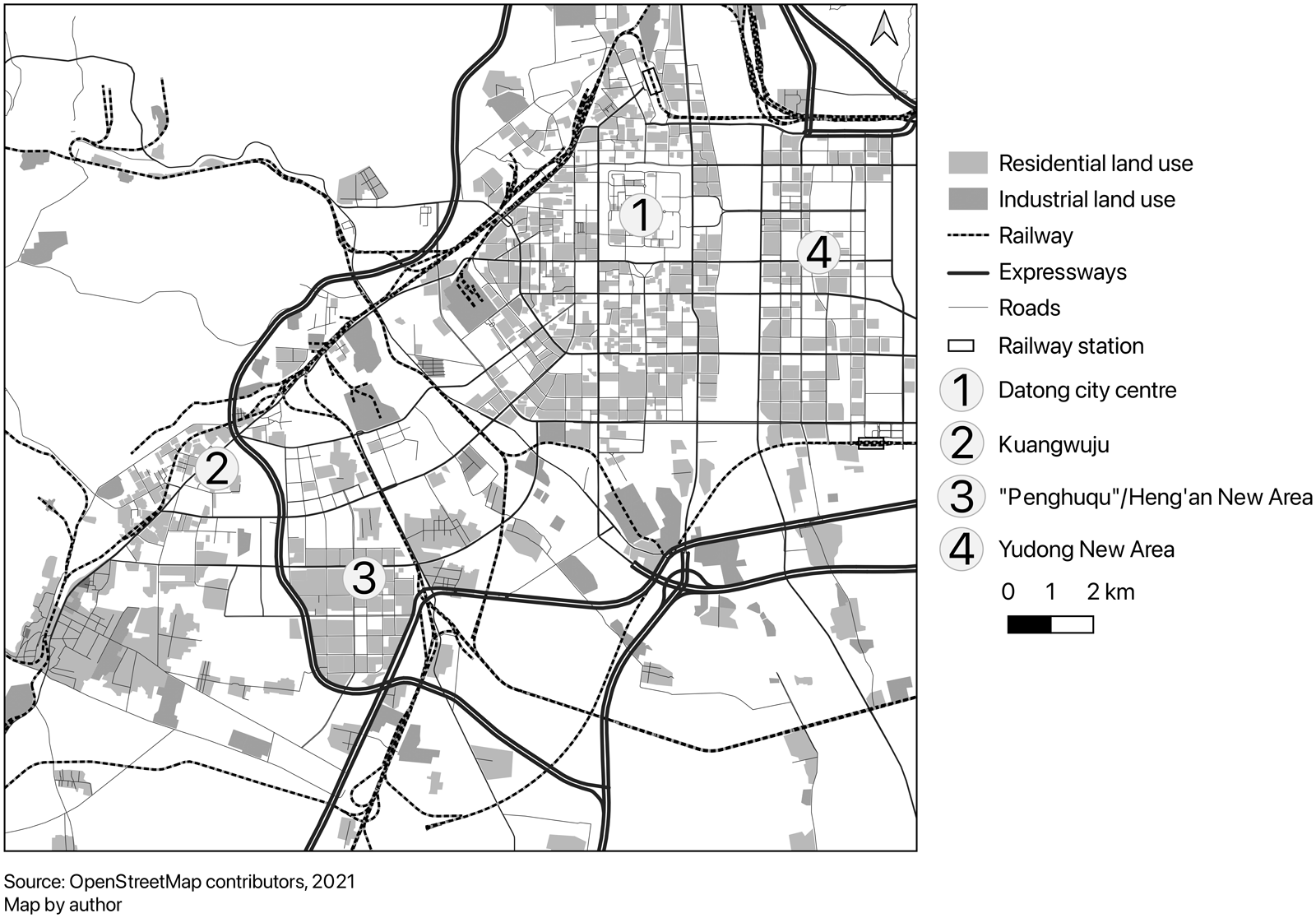
Scattered across the hillsides close to the mines, Datong’s mining settlements primarily comprised makeshift dwellings built with local materials, reflecting both an environmental vulnerability and a deep-rooted connection to place and land. Many homes, some inspired by the traditional yaodong 窑洞 architecture, lacked basic infrastructure such as running water or safe electricity. Residents lived in highly polluted conditions, using coal not only for work but also for cooking and heating. Alongside these village houses were poorly maintained TM-built apartment blocks, which were also vulnerable to land subsidence. As the coal industry expanded in the 1990s and 2000s, urban development intensified around the mining bureau (kuangwuju 矿务局), forming a secondary city centre for Datong. This area housed the TM headquarters and accommodated higher-ranking employees (see Figure 1). In contrast, underground miners and their families remained in precarious housing near the mines in areas prone to land subsidence. Residents described the area as uninhabitable. Two security guards in Penghuqu spoke of the hazardous conditions in some mining settlements and the rumours of related accidents:
Social and Spatial Distribution of Urban Areas in Datong City

The relocation programme began due to the dangers posed by underground mining – houses were collapsing as the ground sank … People slept at night and, suddenly, their house would collapse on them … Coal dust was everywhere; living there was unbearable because of mining-related pollution and dirtiness.Footnote 46
In 2003, Shanxi authorities conducted a survey of mining-related subsidence across nine major sites affecting over 1,000 square kilometres, and devised a plan to resettle 181,000 households (approximately 600,000 people).Footnote 47 In June 2004, the Commission for National Development of Reform stated:
The mining subsidence areas left from the past are of a large scale and have caused serious damage, creating difficulties for local residents and threatening their safety as well as their property. Furthermore, the mass incidents resulting from these conditions have negatively impacted social stability. The CCP Central Committee and the State Council attach great importance to the treatment work in mining subsidence areas and have visited these areas many times for in-depth investigation and research.Footnote 48
Datong was among the first cities to implement resettlement after high-level visits exposed these difficult living conditions. In a media report, the governor of Shanxi province, Yu Youjun 于幼军, recounted witnessing Datong’s mining shantytowns in 2005:
I saw seven or eight people, living in a shed less than two metres high, made with mineral fibre tiles as a roof … There was no running water, no toilets, a dim electric light. They lived in nothing but bare walls and one kang 炕.Footnote 49 There was just a single bench outside. I asked how many people lived there. They said five daughters and one couple. I asked them, how can you live with only one bed? They said the mother and five daughters slept on the kang, and the father slept and ate on the bench. They had lived like that for several decades. I looked at dozens of houses like that, and I cried … I said: we apologize to the workers, we apologize to the coalminers. It’s been several decades since the foundation of the PRC, the working class constitutes the basis of our social structure and we rely on its strength. They have been suffering from digging coal for several decades, it’s so dangerous. They have contributed so much, but they live in such dilapidated shantytowns … They said there are 300,000 people in this situation in Datong. How many in the province? 1.11 million. I said if we still turn a blind eye to this and do nothing, do we still deserve to be called the Communist Party?Footnote 50
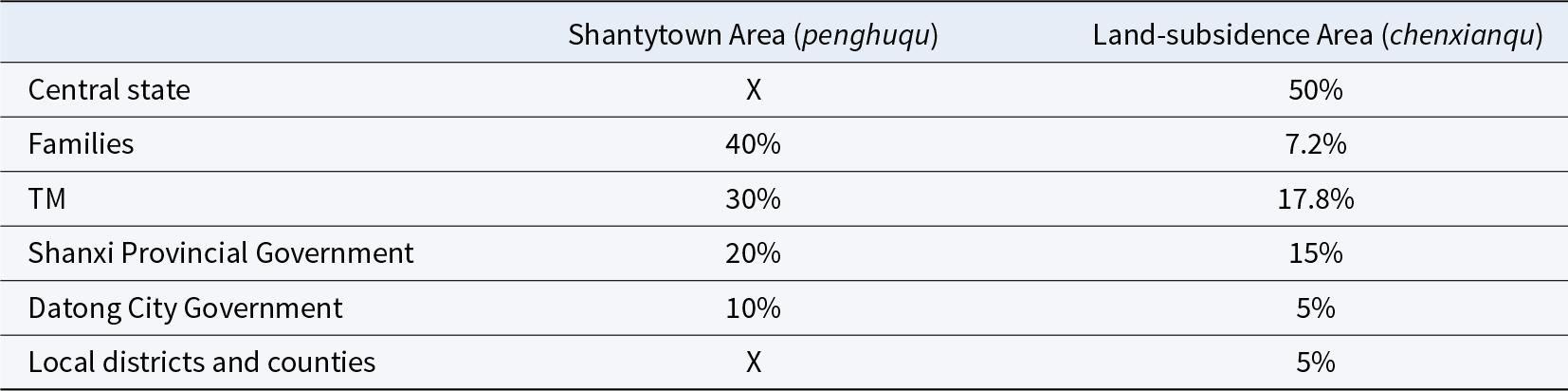
The relocation programme began in April 2006, led by TM and supported by provincial and municipal governments (see Table 1). Datong’s subsidence areas (caimei chenxian qu 采煤沉陷区) were estimated to cover 4 million square metres, and the shantytown areas more than 7 million square metres. From 2006 to 2013, 95,000 households (260,000 residents) were resettled.Footnote 51 However, local governments were generally poor at communicating with residents about the relocation – only 24 per cent of residents received information directly from the authorities, compared to 38 per cent who received information from TM and 38 per cent who were informed by neighbours. Additionally, the government struggled to coordinate the interests of stakeholders, resulting in unresolved financial gaps.Footnote 52 TM repeatedly absorbed unplanned costs, totalling 9.7 billion yuan, underscoring its central role in territorial governance. The programme coincided with a decision to have TM take over most of Datong’s private mines. By 2008, TM controlled 15 mines in Datong, employing 200,000 workers and providing services to 800,000 family members. These measures were quickly followed by a wider provincial and national crackdown on private and small-scale mining and efforts to consolidate production under SOEs.Footnote 53 Coal production was concentrated mostly in large state-owned coal hubs in the Shanxi-Shaanxi-Inner Mongolia region.Footnote 54 This territorial concentration not only increased TM’s de facto large-scale local influence but also contributed to its debt.
Financing Structure for Resettlement in Datong’s Mining District, 2006

Source: Administrative documents published by Shanxi province and Datong city government.
Notably, relocation housing was primarily funded by residents and TM. This financing structure, where families had to finance 40 per cent of their resettlement, transferred “part of the responsibilities to the victims,” obliging them to purchase their new homes (see Table 2).Footnote 55 The purchase of resettlement housing by miners reflects both extractive subject formation and coal SOE legitimization. Rather than blaming TM for causing land subsidence issues, residents praised the SOE for delivering affordable new homes. The shift from isolated extractive enclaves to mining-led housing provision shaped Datong’s extractive governmentality at home. Heng’an Xinqu emerged as a “typical resource-dependent community.”Footnote 56
Official Rates of Resettlement Apartments

Source: Datongshi Kuangqu zhi bianzuan weiyuanhui 2020, 101.
Extractive Governmentality at Home During the “Golden Decade” of Coal
“Strengthening TM, benefiting workers”
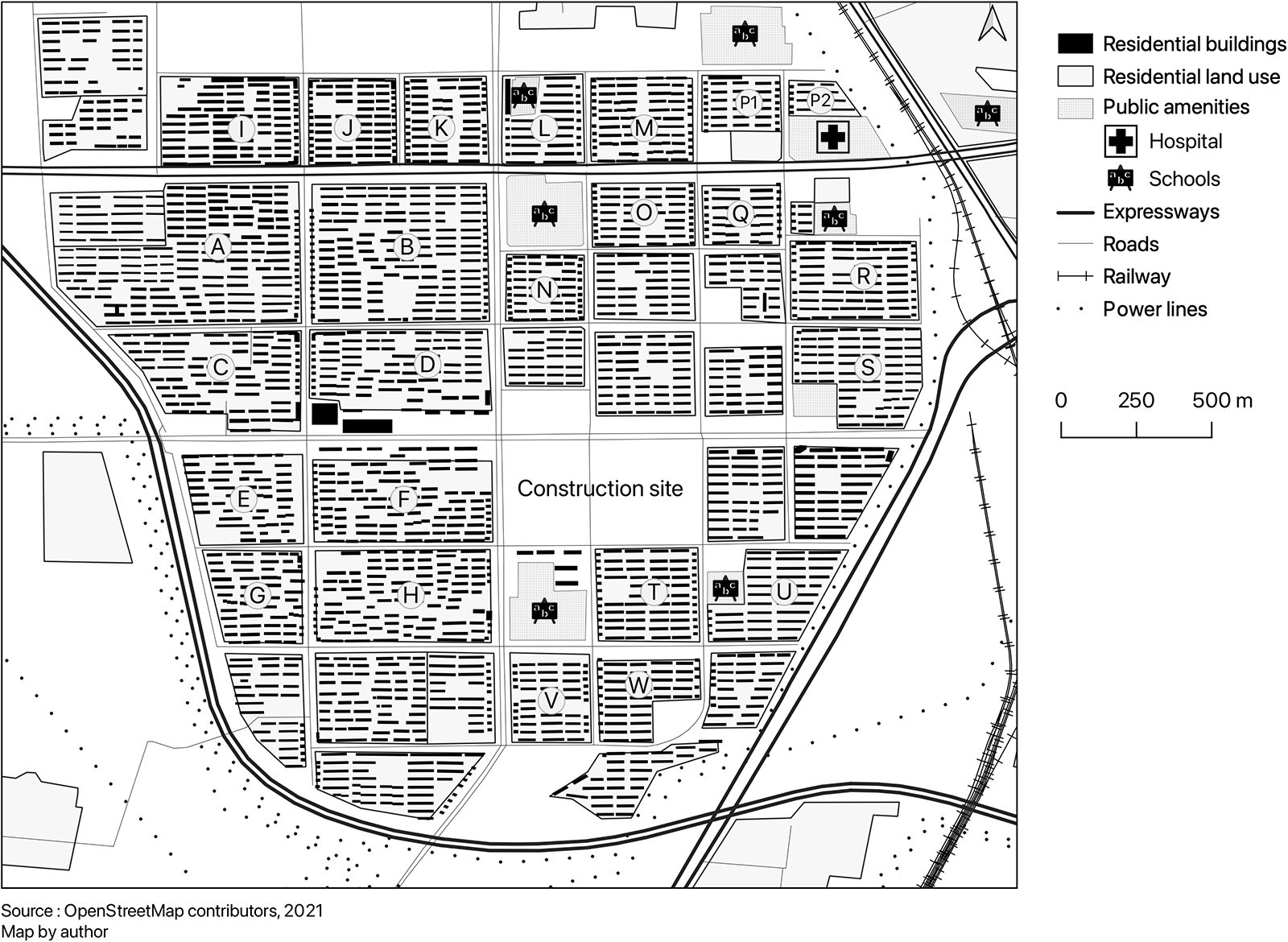
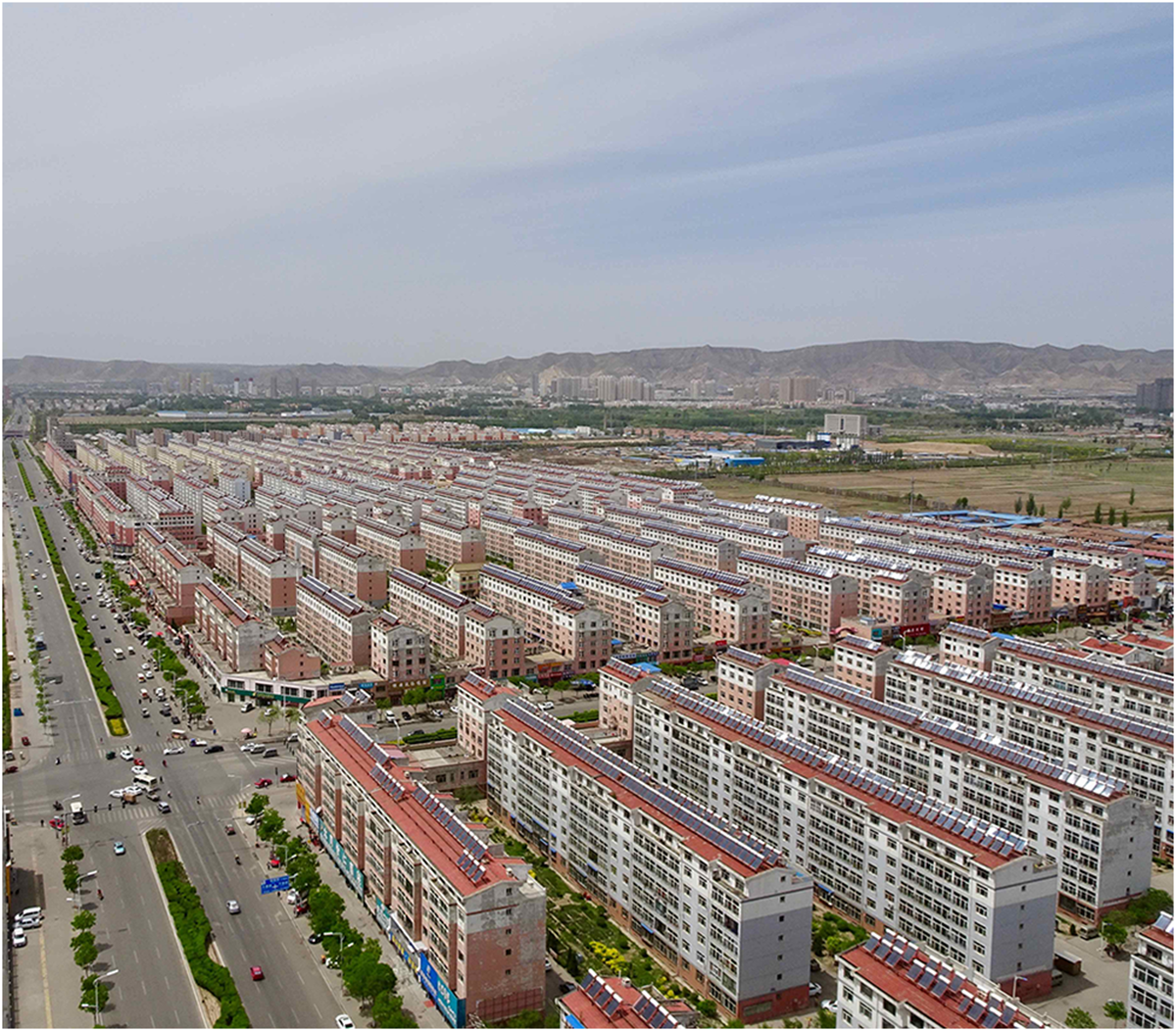
TM’s 2008 objective was to link innovative development with shared prosperity. According to its secretary, the principles of “solidarity and harmony” formed the ideological basis for strengthening the company and improving employee welfare.Footnote 57 TM’s resettlement project effectively territorialized the working class. This SOE-led approach to spatialization highlights the rise of paternalistic power. The standardized layout of Penghuqu, featuring 2,090 six-storey buildings labelled A–Z, echoes the danwei model (see Figures 2 and 3).Footnote 58
Social and Spatial Organization in Penghuqu

Penghuqu Landscape, May 2018

Although the project suggests uniformity, it actually institutionalized selective paternalism. The SOE’s paternalistic intervention was until then relatively new and limited in scope, co-existing with a prevailing logic of self-reliance among mining populations. However, relocation created distinctions between miners and other villagers, as well as within mining communities themselves. This phase of extractive governmentality at home operated by “formalizing distinctions” within paternalism, functioning as “a technology that not only helps to monitor, control and differentiate the population, but also helps to create a desire in them to be classified as internal to the system … and thus to be controlled themselves.”Footnote 59
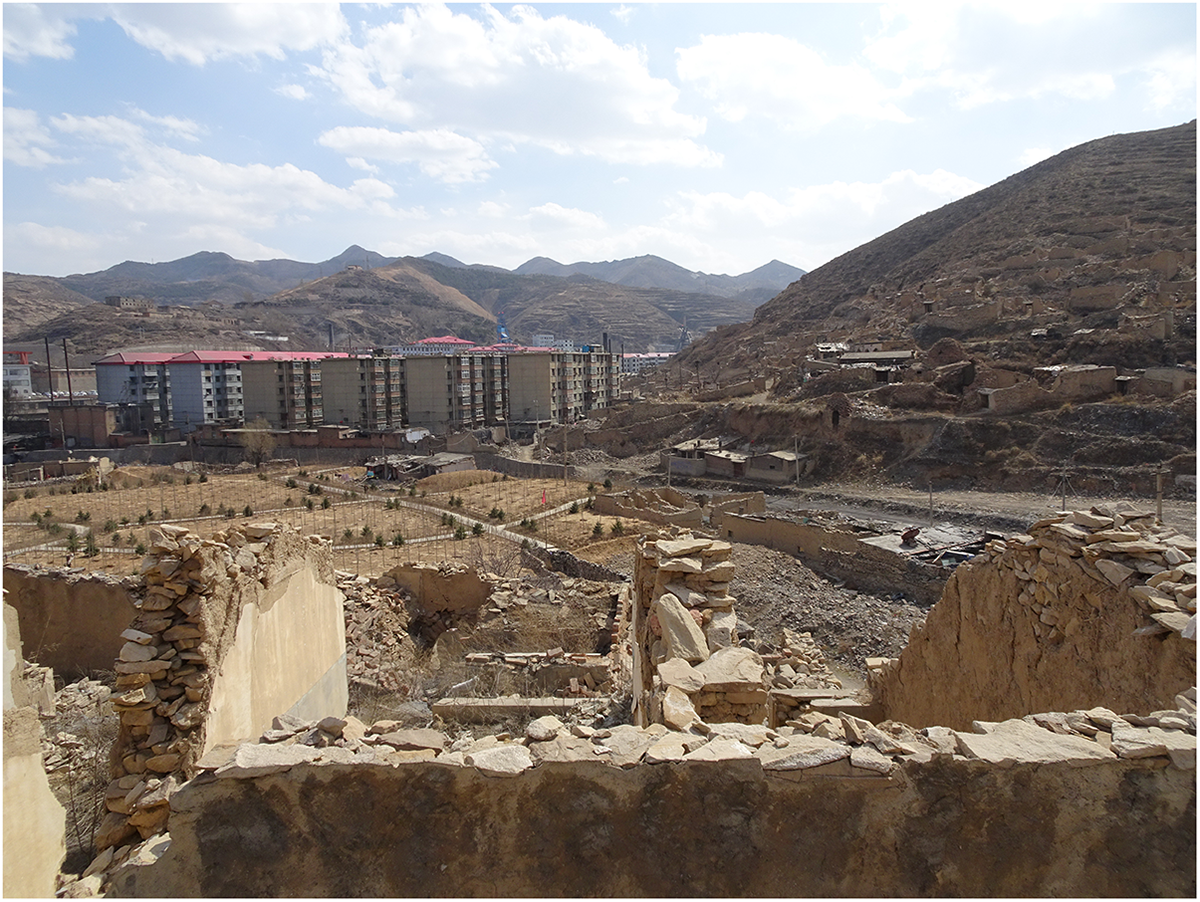
The principle of “common prosperity” (gongtong fuyu 共同富裕) applied mainly to officially affiliated workers (zhigong 职工); others, such as temporary workers (linshigong 临时工) or those unable to pay for the new housing, were excluded. Mrs Liao, who lived in a self-built house near a mine, explained that “temporary workers did not get a relocation agreement. Long-term miners were treated better.”Footnote 60 As Table 1 and Table 2 indicate, subsidence-affected households paid less towards their new housing than the shantytown households. There was also selective paternalism exhibited in the differential treatment of resettled residents and those still awaiting relocation. Once the first phase of the project had been completed, miners living in the shantytowns near a particular mine were moved to their new homes; however, relocation of villagers from the same settlement had yet to start. This situation created a huge “institutional schism” between urban and mining areas, as well as between workers and farmers who had previously lived in the same region under similar conditions.Footnote 61 Miners who could not afford the financial commitment needed for the new housing remained in deteriorating housing in areas now labelled “shantytowns” and categorized as “informal.”Footnote 62 Buildings and village houses that were once at the core of mining community life were mostly abandoned, neglected and surrounded by ruins (Figure 4). Extractive governmentality through selective resettlement reinforced internal hierarchies and perpetuated the long-standing housing issues in “independent industrial mining areas.”
Demolished and Partially Inhabited Mining Settlement, April 2016

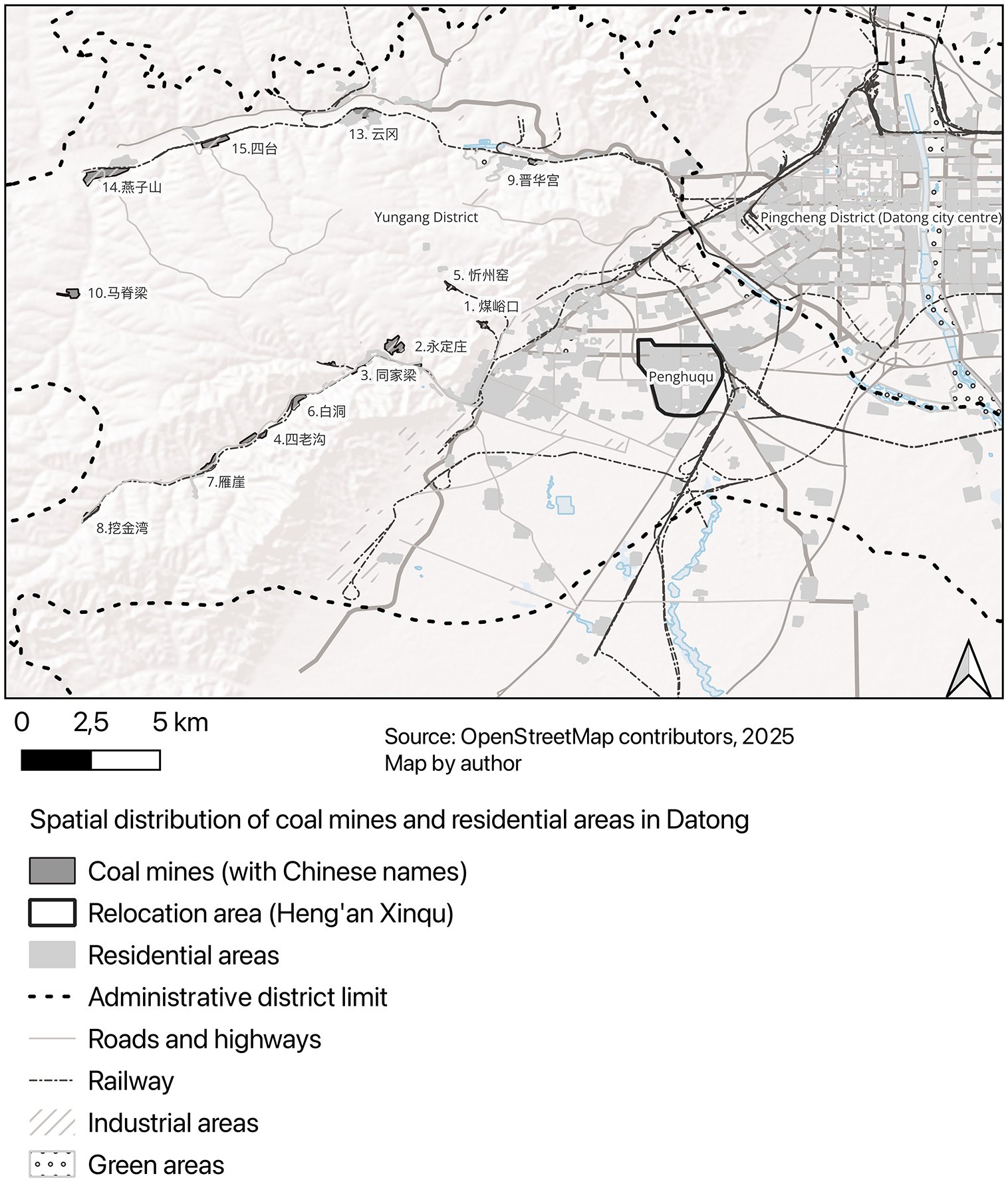
The relocation of coal miners to resettlement housing not only legitimized the SOE but also reshaped the subjectivities of the relocated residents. Gaining access to personal space and engaging in everyday consumption were accompanied by a weakening of workers’ solidarities. Previously, each settlement revolved around a single mine and had its own unique territorial features, culture and neighbourhood life. In Penghuqu, however, families from 15 different mines were resettled without regard to their original neighbourhood, weakening their ties to their original mines (see Figure 5). Resettled residents, now living in buildings where they no longer knew their neighbours, felt less “united” (tuanjie 团结). The social fabric of mining settlements attached to mines dating from before 1960 had evolved over many years. Residents had lived in a single-function area supported by mine-centred community services (canteens, schools, hospitals, community spaces).Footnote 63 Housing had developed alongside the extractive industry and was deeply connected to the surrounding land. Miners and farmers “had weathered hardships together and used to be in harmony with each other.”Footnote 64 Resettlement uprooted these collectives, reassembling affiliated mineworkers – or at least those able to afford resettlement prices – into a large, spatially concentrated yet socially stratified (according to their mine) urban group in Penghuqu, while marginalizing those falling outside of TM’s social net.
Spatial Organization of Penghuqu and the Coal Mines

Although resettlement maintained symbolic and material ties to each mine, it also created a new sense of urban belonging: “The biggest change is that before, in the mining hills, we had a rural lifestyle; now we are in the city. Yes, that’s it. We have a sense of urbanity (chengshi de ganjue 城市的感觉).”Footnote 65 Resettled families were keen to highlight their improved living conditions, including increased privacy, better hygiene and access to modern amenities, as is typical in rural-to-urban displacement in China:
It’s much more convenient than before. We could move in and everything was already there, ready to live in it … Before, it was dangerous, dirty, polluted and so small.Footnote 66
The living standards are beyond comparison. Before, we didn’t even have running water.Footnote 67
Mining-induced displacement and resettlement shaped new subjectivities through inhabiting, consumption and leisure, with shops, supermarkets, restaurants and karaoke bars as the markers of material comfort and evolving consumption habits: “Before, there was not much to do apart from work. We would just hang around in the hills. Now, I go to the gym.”Footnote 68
This urban transformation remains embedded within a framework of extractive governmentality. Penghuqu exemplifies a type of corporate homeownership, which the older residents often described as partial (40 per cent), that exists outside of the conventional property market, with resale restricted to an “internal” (neibu 内部) network. This SOE-led project thus operated as a tool of corporate governance, stabilizing populations through spatial concentration. This process is similar to the danwei system of housing provision in that basic apartment buildings are built rapidly by SOEs for their workers. However, although seemingly similar, housing provision and subjectification differ significantly. First, the large-scale resettlement in Datong was driven by the destruction and loss of housing due to subsidence, a phenomenon unique to underground mining. Second, affected residents were encouraged to co-finance their relocation, and lastly, the resettlement neighbourhoods remained administratively and symbolically distinct, as part of China’s “independent industrial mining areas.” Despite the physical relocation of residents, the SOE and the mining industry remained central to local livelihoods (Figure 5). Work teams remained mine-based, shuttle buses provided daily transport from Penghuqu to workplaces, and neighbourhood staff were often former miners who had been redeployed as residential managers. Community centres funded by TM offered ongoing social support, particularly for retired workers, sustaining a corporate presence in residents’ everyday lives.
Resettlement also reconfigured gender and family roles while maintaining indirect connections to mining. As SOE salaries declined, many miners’ wives, who had previously been housewives, sought employment or started small businesses. For instance, Mrs Zhao worked as a domestic cleaner and post-partum cook before opening a bubble-tea shop in Penghuqu.Footnote 69 Mrs Cai, whose husband had retired early from underground mining and now earned less working in TM’s neighbourhood management company, launched an online business from home:
His job in the mine was too dangerous! However, TM is not doing as well as before, so this year he only received his salary every two months. I care for our son … but life can be a bit boring, so I found a small job. You see, in this room of our apartment, I pile up boxes of feminine hygiene products, and I sell them online … I earn a little and stay busy.Footnote 70
The younger generations were increasingly looking for employment outside of the mining industry – for example, in small businesses, budget tourism and self-employed driving services.
While resettlement profoundly alters lifestyles, extractive governmentality at home reshapes a “sense of belonging” (guishugan 归属感), rooted in a shared extractive ethos. Although Penghuqu felt more diverse and anonymous, its large scale and corporate management sustained the residents’ mining identity and collective memory. Citing official media reports, residents were proud to call it “Asia’s largest residential neighbourhood.” This extractive governmentality at home reconfigures socialization patterns while maintaining a strong corporate influence in urban affairs. For instance, TM-affiliated employees could transition into roles as security guards and neighbourhood management staff.
Alongside paternalist structures, extractive territories exhibit a strong culture of self-reliance. Local residents actively filled the governance voids left by public authorities and coal SOEs, revealing an important complementary dimension constitutive of extractive governmentality at home. This culture of self-reliance was evident in public spaces. Many residents ran small businesses from their apartments – selling dumpling dough, for example. A street culture had developed. Every evening, children played outside and families socialized. Retired workers played cards or mah-jong during the day and took part in street dancing in the evening. One local tradition in particular continued, that of women performing songs for audiences of male miners, who tip them.Footnote 71 In 2016, the streets were filled with private minibuses signed “Penghuqu–destination,” connecting the neighbourhood to Datong’s urban core and forming a dense network. Gaining access to homeownership and improved comfort has reshaped the neighbourhood’s social dynamics while maintaining a strong collective identity rooted in the mining culture of SOE paternalism and self-reliance This territorialized sense of belonging reflects a distinct extractive ethos, both shaped by and reshaping the power relations of extractive governmentality at home.
Governing “Independent Industrial Mining Areas” Amid China’s Coal Transition
“Building a new TM, inventing a new life”
In 2016, the slogan “Building a new TM, inventing a new life” (jianshe xin TM, dazao xin shenghuo 建设新TM, 打造新生活) was posted on public billboards throughout Datong’s mining areas. It evokes the interpenetration of labour and personal lives for TM workers, as well as the challenge of reinventing life in the context of China’s restructuring coal industry.
Extractive governmentality at home fluctuates alongside the ups and downs of the coal sector. In 2013, a period of uncertainty followed the “golden decade.” Due to increased output in nearby provinces, coal prices in Shanxi province began to fall, and TM reported a 37.25 per cent slowdown in growth that year.Footnote 72 In 2014, Datong city government reported “difficulties in the coal industry, pressure on the economy and a tough situation due to the emergence of contradictions threatening social stability.”Footnote 73 As a result, displacement and resettlement operations stalled. In Penghuqu, a large space in the centre of the 2,090 uniform residential buildings and services (schools, hospital) stood empty for 12 years (Figure 2). One shopkeeper told me: “that should be a central square, but it has not been built yet. For now, it’s a wasteland (huangdi 荒地).”Footnote 74 This vision of unfinished planning reminded residents of the left-behind population: “There have been four waves of relocation. The first one was ten years ago, the second one eight years ago, the third one two years ago. During the first three waves, almost everyone was relocated. But the programme has been interrupted since.”Footnote 75 In addition, with TM facing economic slowdown and management difficulties, residents worried about job security and unpaid wages.
Between 2013 and 2016, China implemented a transition plan for 262 resource-based cities.Footnote 76 The extent of coal SOE debt was drawing significant media attention.Footnote 77 These enterprises were tasked with implementing measures for “capacity reduction” (quchanneng 去产能) and promoting low-carbon sustainable development.Footnote 78 In 2014, Datong was designated as a pilot city for Shanxi’s “energy revolution” (nengyuan geming 能源革命), which included policies aimed at a “general governance” of land-subsidence areas.Footnote 79 This initiative led to a rapid expansion of sustainable energy and reforestation projects.Footnote 80 Amid increased environmental scrutiny, coal governance evolved,Footnote 81 and anti-corruption campaigns increased. Investigations into TM cadres suggest that efforts were made to curb coal SOEs’ autonomy.Footnote 82
In 2015, TM’s paternalistic power started to shift. Due to the coal SOEs’ massive debts, social responsibilities were being reframed, from being welfarist (fuli 福利) to being burdensome (fudan 负担).Footnote 83 This transition marked a broader reconfiguration of Datong’s extractive governmentality at home within the context of China’s coal restructuring. One significant development was the transfer of the management of coal-dependent urban neighbourhoods from SOEs to district-level authorities. In 2018, Datong’s Mining District (Kuangqu) and South Suburban District (Nanjiaoqu 南郊区) were merged to form Yungang District (Yungangqu 云冈区).Footnote 84 Subsequently, in 2020, TM and two other Shanxi SOEs were incorporated into a larger coal and energy conglomerate, further distancing the enterprise from miners’ daily lives. As part of this restructuring, Datong became a pilot city for the decoupling of SOEs from their social functions through a policy known as “separation and transfer” (fenli yijiao 分离移交). This new context reconfigured Datong’s extractive governmentality at home, as illustrated by the cases of neighbourhood management and pensioners’ welfare. In 2016, the central government introduced the “three provisions and one management” (sangong yiye 三供一业) policy, aiming to shift responsibility for electricity, water and heating provision, as well as urban management, away from SOEs in their affiliated neighbourhoods.Footnote 85 An official directive emphasized that “central SOEs must highlight their core business, refrain from undertaking public service functions that do not align with their primary development orientation, reject the responsibilities and activities related to the sangong yiye that fall outside their core focus.”Footnote 86 Datong was among the first cities in Shanxi to implement the sangong yiye measures in December 2016. TM’s residential management company, which was created in 2007, became independent in 2017. In a report, TM revealed that the sangong yiye policy had resulted in savings for the company of 1.6 billion yuan in 2018. In a further step, in June 2019, welfare responsibility for 110,000 retired TM miners was transferred to the city government. However, Yungang District officials reported experiencing increasing fiscal pressure, as mining areas struggled with unstable revenue streams.Footnote 87 China’s coal-induced “long-standing problems” (lishi yiliu wenti 历史遗留问题) have proven difficult to resolve, especially those related to housing provision, management and land subsidence issues. Furthermore, despite the formal involvement of local authorities, most residents still considered TM to be their primary administrator: “the city government does not administer here, TM does everything.”Footnote 88
Resettlement also triggered issues of territorial stigmatization. Although relocation improved living conditions, Penghuqu’s peripheral location and industrial surroundings (farmland, warehouses, expressways) reinforced its marginal status, both spatially and socially, as it is distant from both the mines and Datong’s city centre (Figure 1). Officially named Heng’an New Area, meaning eternal peace and referencing the nearby Buddhist site, Mount Heng, locals continued to refer to the neighbourhood as “Penghuqu” (“shantytown”), a name originating from the relocation programme itself. A local cadre explained that the name had persisted due to the absence of an official designation during the relocation process.Footnote 89 Over time, the name Penghuqu became normalized, prolonging the extractive ethos discussed above. This toponym also paradoxically reflects territorial stigmatization: Penghuqu carries a negative image and external residents regarded it as unsafe and full of low “quality” (suzhi 素质), “vulnerable groups” (ruoshi qunti 弱势群体) who hail from the “mining hills” (kuangshan 矿山).
Similar to the residents of danwei communities, resettled residents exhibited a similar ambivalent attachment to Penghuqu.Footnote 90 While their living conditions had improved, the residents regarded the buildings and infrastructure as low-quality, old and poorly maintained. Residents were also critical of the high density of housing and the lack of green spaces. Several miners expressed a preference for the proximity and familiarity of their former mining communities, as commutes to the mines now exceeded an hour for some. Safety was a concern, especially at night, with frequent reports of theft: “There is no violence but a lot of stealing.”Footnote 91 Additionally, residents were unclear about the division of management responsibilities between the SOE and Datong city government.
Extractive governmentality at home, composed of both a strong extractive ethos and culture of self-reliance, explains how the locals did reclaim public spaces and develop a “pride in place” despite stigmatization.Footnote 92 In the unbuilt central square, locals appropriated their own spaces. In the summer heat, young children had fun playing in an inflatable swimming pool set up by a local.Footnote 93 However, this extractive ethos, rooted in self-reliance, led to tensions when the city administration took over local public policy implementation. For example, the many private minibuses whizzing back and forth to Penghuqu were a practical response to the lack of transportation in the district. This display of corporatist SOE welfare combined with a self-help logic came into conflict with the city administration’s new governing strategies when these private minibuses, which compensated for the poor level of public transport, were banned in 2019. The residents complained – the minibuses were more convenient than the crowded, slow city buses. The weight of the masses is also a significant aspect of the moral economy surrounding coal restructuring. Many miners told me that TM had to ensure everyone was well treated: “There are so many people … We don’t know what they will do, but these people have to live. How could they survive otherwise?”Footnote 94 Coal miners still valued their affiliation with the state-owned mining complex, which they considered too big to fail. Amid uncertainty, residents viewed homeownership and public education as current and future anchors of stability, while remaining deeply attached to their SOE.
City government officials attempted to promote a more positive image and erase the social stigma associated with the resettlement area by transforming Heng’an “problem area” (wenti qu 问题区) into Heng’an “happiness area” (xingfu qu 幸福区).Footnote 95 The central square was finally constructed in 2020, alongside a public park. Local cadres, however, highlighted the issues associated with the “independent industrial mining area,” including its economic fragility, massive population, high criminality and lack of integrated urban administration.Footnote 96 “Independent industrial mining areas” have come to signify special needs: in 2021, Datong’s Yungang District received central state recognition under this designation and was allocated 2.597 billion yuan to carry out displacement and resettlement in land-subsidence areas, build public service infrastructure, develop alternative industries and undertake environmental restoration projects.Footnote 97 In Yungang District, the coal industry continues to wield a heavy influence over local governance as well as residents’ ethos.
Conclusion
In China’s resource-based cities, home-making has long been intertwined with extractive industries. Since the 1950s, the everyday lives of coal miners have been shaped by the spatial logics of extraction. Exploring the social impacts of current coal restructuring requires looking beyond employment to broader aspects of workers’ daily lives – such as housing – especially in cases like coal mining, where extraction often leads to large-scale environmental degradation, rendering surrounding areas uninhabitable. The framework of extractive governmentality at home examines how the domestic sphere has been affected by extractive industries, particularly through territorial strategies designed to manage local populations.
Amid China’s coal restructuring, interrogating “just transition” involves linking evolving government rationalities of mining to localized territorial subjectivities. In coal mining areas, housing provision illustrates the interplay of power among SOEs, local governments and residents. Based on fieldwork conducted in Datong, this article explores how resettlement policies have reshaped miners’ lives. In Shanxi’s coal cities, housing provision had long been neglected. Prior to 2006, many miners lived in unsafe, self-built housing near production sites. After decades of land subsidence and poor living conditions, TM initiated a relocation programme, moving families to newly built urban neighbourhoods.
This process of displacement and resettlement reflects corporate governance, which strengthens SOE authority and produces unequal access to urban rights. While some miners gained improved living conditions, others waited over a decade for relocation. Rather than dissolving mining identity, resettlement in Penghuqu reinforced a collective ethos and maintained a dependency on TM alongside a culture of self-reliance. However, locating the new neighbourhoods far from both the former mines and Datong's economic core only served to perpetuate the social marginality of the relocated residents.
As SOEs grow into industrial “giants” and increasingly “separate and transfer” their social responsibilities, local governments are confronted with expanding administrative tasks. Housing resettlement often poses a delicate challenge for grassroots officials,Footnote 98 and this is especially true in the case of “independent industrial mining areas,” where the process of resettlement reveals frictions in the governance of transition and creates a paradoxical dynamic of both stabilization and precarization for the affiliated populations.
Through the framework of extractive governmentality at home, this article contributes to current debates on China’s “just transition.” It underlines the spatial dimensions of governance and the shifting relationships between housing policies and inhabiting subjectivities. This framework explores a way to approach mining communities beyond work and employment issues, through place making around ordinary dwellings, in order to grasp the full complexity – economic, territorial and socio-political – of current ongoings transformations. As welfare functions are being transferred to local administrations, more empirical research is needed on China’s highly diverse “independent industrial mining areas.” Dwelling practices and territorial attachments offer useful insights into the broader socio-political transformations unfolding in China’s coal heartlands.
Acknowledgements
The author would like to thank Isabelle Thireau, Liao Liao, Jingyue Xing and the Geomatics and Digital Humanities Platform at EHESS, as well as the editorial committee and the anonymous reviewers for their constructive suggestions and comments. All shortcomings are my own. This research was funded by the MEDIUM project (2015–2017), the Centre d’études français sur la Chine contemporaine (CEFC), Hong Kong (2017–2019) and the CNRS (2023–2024).
Competing interests
None.
Judith AUDIN is a CNRS researcher at PRODIG, Aubervilliers, France. Her research criss-crosses political sociology, urban studies and social anthropology. She currently studies neighbourhood life amid China’s urbanization, resource transition and ruination.