

The economic and political expansion of the Republic, starting from the second half of the 3rd c. BCE, brought the Romans from Italy into contact with lands they perceived as exotic. These included the coastal regions of Northern Africa during the course of the Punic Wars and the Eastern Mediterranean, specifically the kingdom of the Ptolemies in Egypt. With this contact came a growing interest in exotic animals, including monkeys, which could be displayed in the victor’s parade and then kept in the homes of the Roman elite in particular. By the 1st c. CE, exotic animals had become a staple of Roman entertainment in the circuses and an addition to the array of domestic pets, mainly dogs and cats, that were already kept in Roman households. Martial’s epigrams suggest that wealthy Romans entertained themselves with small simia in their homes.Footnote 1 Pliny the Elder notes the variety of monkeys that were known to the Romans by about the middle of the 1st c. CE.Footnote 2 This is reflected in the different zoonyms used for these animals: simiae, cercopitheci, cynocephali, sphinges, satyri, callithrices. At least some of these names refer to features characteristic of a given “genus.” Following Pliny, among others, Solinus describes in some detail the origin of particular “varieties” of monkeys, listing a land called Ethiopia as well as Nubia and eastern India.Footnote 3 Modern scientific zoological identification of species based on ancient accounts should be critical, taking into consideration the completely different purposes of ancient narratives.Footnote 4 Nevertheless, for the purposes of this paper it suffices to say that, during the 1st and 2nd c. CE, there was widespread awareness among the Romans of the existence of different species of monkeys originating from very distant lands and of their appeal as the most human-like of pets.
Direct archaeozoological evidence of the presence of monkeys in urban complexes comes from Pompeii. The skeleton of a young monkey identified as a Barbary macaque (Macaca sylvanus) was discovered in the ruins of a bath complex. It had died there during the eruption of Vesuvius in 79 CE.Footnote 5 Monkey burials (identified as Barbary macaques) are also known from Roman Gaul,Footnote 6 and monkey remains have been found in other northern provinces of the empire.Footnote 7 Two burials have been discovered in possible military contexts: one in the assumed legionary cemetery of 2nd-c. Cutry on the Moselle River,Footnote 8 the other in a 5th- to-6th-c. grave at the camp of Iulia Lybica in the foothills of the Pyrenees.Footnote 9 The latter in particular is an exceptional find, the monkey having been buried with military decorations (belt buckles and bronze plaques). The taxonomic identification of these animals as Barbary macaques may have been prompted by the geographical range of that species. The monkey’s presence in the Gibraltar area (African coast) would have made it most easily accessible to Europeans, especially from the Iberian Peninsula. So far, there has been no zooarchaeological or archaeological evidence to indicate the importation of monkeys from more distant areas, such as India. Admittedly, monkeys living “in the mountainous districts of the eastern parts of India” were mentioned by Pliny the Elder,Footnote 10 who refers to them as satyrus and describes them as creatures of extremely intolerable character and not suitable for keeping at home. Because of their “dark face” they are now identified as one of the gibbons (Hylobatidae), primates that do not yield easily to taming. All other varieties of primates described in the ancient sources are usually identified as species of vervet monkeys inhabiting northeastern Africa.
Exploration of the sea route down the Red Sea coast to East Africa and beyond had already started in Pharaonic times, but it was not until the Roman period that contacts across the Indian Ocean, taking advantage of the monsoon winds, became important from a commercial point of view. Tamil literature from southern India also mentions journeys across the Indian Ocean. These poems, epics, and heroic texts, composed between 300 BCE and 300 CE, include the well-known Purananiru and Akananuru, which refer to the trading port of Muziris (Muchiri), now identified with Pattanam in Kerala.Footnote 11 One of the best-known sources of information on trade between Rome and India is the Periplus of the Erythraean Sea (PME).
The three dozen graves of taxonomically diverse monkeys that have been excavated in the animal cemetery at Berenike, a Red Sea port on the Egyptian coast that enjoyed its heyday as a Roman trade emporium in the 1st and 2nd c. CE, constitute the richest source to date of zooarchaeological and archaeological knowledge on primates kept as pets in antiquity. The finds shed light on Rome’s intensive contacts with India during the Early Imperial period, giving a glimpse of what was likely a thriving market in live animals imported for the entertainment of people in Rome and elsewhere. They also intimate a practice of monkeys being kept as exotic pets by individuals whose life and work were dedicated to travel and exploration. The military men posted in Early Roman Berenike, officers and soldiers of the III or XXII legion used for exploratory missions in Africa and the Near East,Footnote 12 fit this description very well. Their possession of such exotic animals may have influenced an elitist soldierly tradition that was evoked in the following centuries by the Gallo-Roman elite and others. The archaeological discovery of some of the monkeys buried at the Berenike site has brought this very special phenomenon into focus.
Archaeological background
Ptolemy I and his son, Ptolemy II Philadelphos, invested in the establishment of a port at Berenike in the mid-3rd c. BCE.Footnote 13 One of the main reasons for this endeavor was to import African elephants, in lieu of the Indian species of the animal, to which the Ptolemies had no access, in an effort to build up this strategic element of the Ptolemaic army. More importantly for the subject at hand, there are some indications that other animals, including monkeys (sphinx), were also brought in via the same route.Footnote 14 Upon incorporating Egypt into their empire in 30 BCE, the Romans took control of the lucrative Far Eastern and South Arabian trade. As early as the beginning of the 1st c. CE, the somnolent port of late Ptolemaic times became a thriving transshipment center, taking advantage of the monsoon-based trade route connecting India, Central Asia, the Arabian Peninsula, and East Africa with Egypt and Europe (Fig. 1).
Berenike and other locations mentioned in the text contextualized on a map of 1st-c. CE land and maritime routes from the Periplus (PME) and current zones of natural habitat of three Macaca and Chlorocebus aethiops species. 1: Bir Samut; 2: Pompeii (Macaca sylvanus/Ms), 3: Iulia Lybica (Ms); 4: Le Clos de la Lombarde (Ms); 5: Lemonum (Ms); 6: Cutry/Moselle (Ms?); 7: Cataractonium (Ms?); 8: Shahr-i Sokhta (Macaca mulatta?). (Map by P. Osypiński.)

Archaeological research in the city, which started in 1994, has concentrated in part on remains from the time of direct Roman imperial control over the port (1st–3rd c. CE). Continuing work in what was initially considered an Early Roman urban rubbish dump in the northwestern suburbs led, in 2011, to the identification of a burial ground dedicated to small animals. It was also noted that the same area must have served as a convenient stop for the camel and donkey caravans supplying the inhabitants of the port with drinking water and goods from the Nile Valley.Footnote 15 Abundant evidence from this area, both written and artifactual, illustrates the presence on site of clerical staff and army officers overseeing the flow of goods and information through this transcontinental port.
Characteristics of the animal cemetery
To date, the burial ground, located on a small sandy hill in the foreground of the city, has yielded almost 800 burials (see Supplementary Table 1) spread over an area of 127 m2.Footnote 16 Cats (Felis silvestris catus) were by far the most dominant species, accounting for 88.2% (688 individuals). The second most abundant species in the cemetery were dogs (Canis lupus familiaris), 54 individuals (7%) having so far been recorded. The third important taxonomic “component” in Berenike were monkeys from the Cercopithecinae sub-family (35 individuals; see Supplementary Table 2). These included two identified genera of macaque species (Macaca), and a representative of the Chlorocebus species, the grivet. Monkeys accounted for 4.5% of the total number of burials. The zooarchaeological data, that is, age at death, sex, morphology, and pathological changes, clearly indicate that the animals buried in this cemetery were companion animals: brought in, cared for, fed, and well treated.Footnote 17
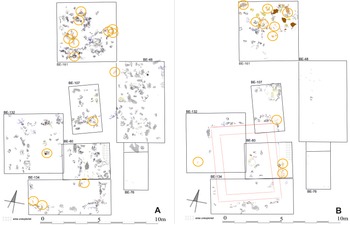
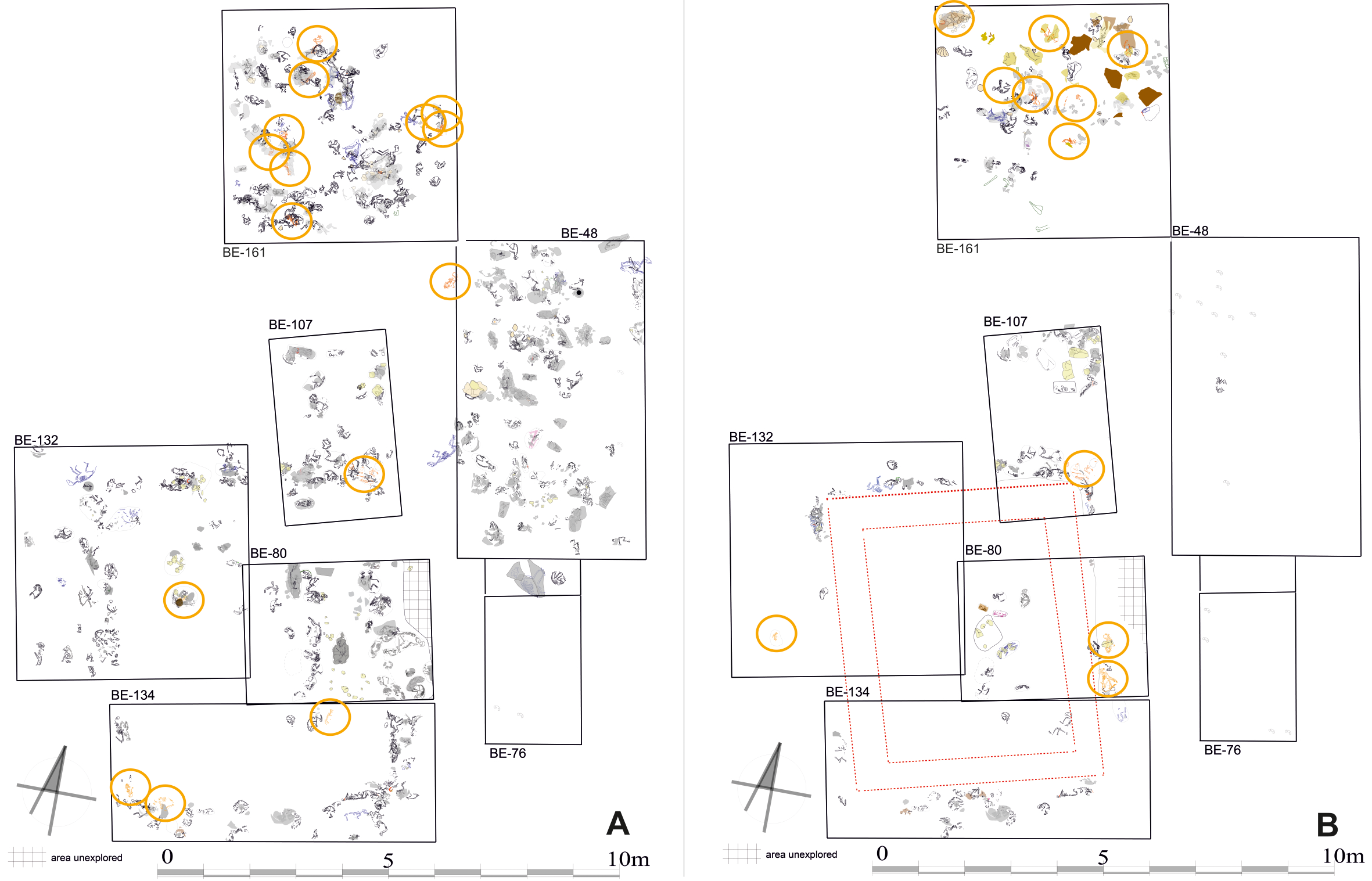
The first animals were buried in dune sand in the later part of the first half of the 1st c. CE. The small sand hill would have been a fairly distinct landmark in an otherwise empty landscape in the foreground of the town (Fig. 2A). In the mid-1st c. CE, a stone structure was built directly in the center of the burial ground. This evidently disturbed some older animal graves. The bones were collected with reverence and reburied in collective graves. The structure was used extensively in the subsequent phase, apparently for burning organic matter. A layer of ash, 20–30 cm thick, filled the interior and entrance, which faced south. While the identification of this structure remains speculative, it is reminiscent of Roman altars of the Ara Pacis type.Footnote 18 It undoubtedly served a ritual purpose related to the surrounding animal cemetery (Fig. 2B).
Plan of areas excavated at the pet cemetery at Berenike. Circles mark the monkey burials. A (left) – Phase I (till mid-1st c.); B (right) – Phase III (mid-1st c. to late 2nd c.). (Map by P. Osypiński.)
The presumed shrine or altar was dismantled during the final operational phase of this port suburb. By this time, the practice of burying cats, dogs, or monkeys had ceased. The only animal burials found were two goats, interred outside the northeastern and northwestern corners of the defunct structure. The disappearance of the cemetery is evidence of deep cultural and ethnic changes within the Berenike community. Most significantly, the Roman elite who had previously resided at the harbor left along with the Roman army that was eventually transferred to the Near East.
Monkey burials
Zooarchaeological data
Most of the primates buried in the animal cemetery at Berenike were identified as either one of two species of macaques.Footnote 19 Identification was based on differences in skull morphology, with variations in tooth and skeletal morphology playing a slightly lesser role. The identification was made using digital 3D models,Footnote 20 a reference collection at the zooarchaeological laboratory of the Institute of Archaeology at the University of Wrocław, and extensive online archives.Footnote 21 The most numerous species was the rhesus macaque (Macaca mulatta) – as many as 19 (and most likely more individuals if some poorly preserved skeletons are included). Three skeletons of the bonnet macaque, also known as zati (Macaca radiata) were also identified, as well as one skeleton of the grivet (Cercopithecus aethiops). The zooarchaeological identification definitely ruled out Barbary macaques, usually identified at European sites.
All the buried primates discovered so far at Berenike share the same age-at-death and sex profile. They died at a very young or young age, either the infans (0–2 years of age) or juvenis stage (2–3 years of age). A few skeletons could be identified as juvenis/subadultus (ca. 3–4 years of age), but no adults have been discovered to date. There was one case of a young female either in an advanced stage of pregnancy or buried with a newborn. Indeed, distinctive dental and cranial features have left no doubt that all the monkeys buried in Berenike were of the female sex. This contrasts with the sex and age profiles of the other species buried at the cemetery, namely the cats and dogs.Footnote 22 The sex ratio for the cats is balanced, and the age-at-death corresponds to that naturally occurring in the population. As regards dogs, both sexes were present, and the age-at-death profile of the animals ranged from young to adult and old.Footnote 23
Burial practice – expediting a monkey to the netherworld
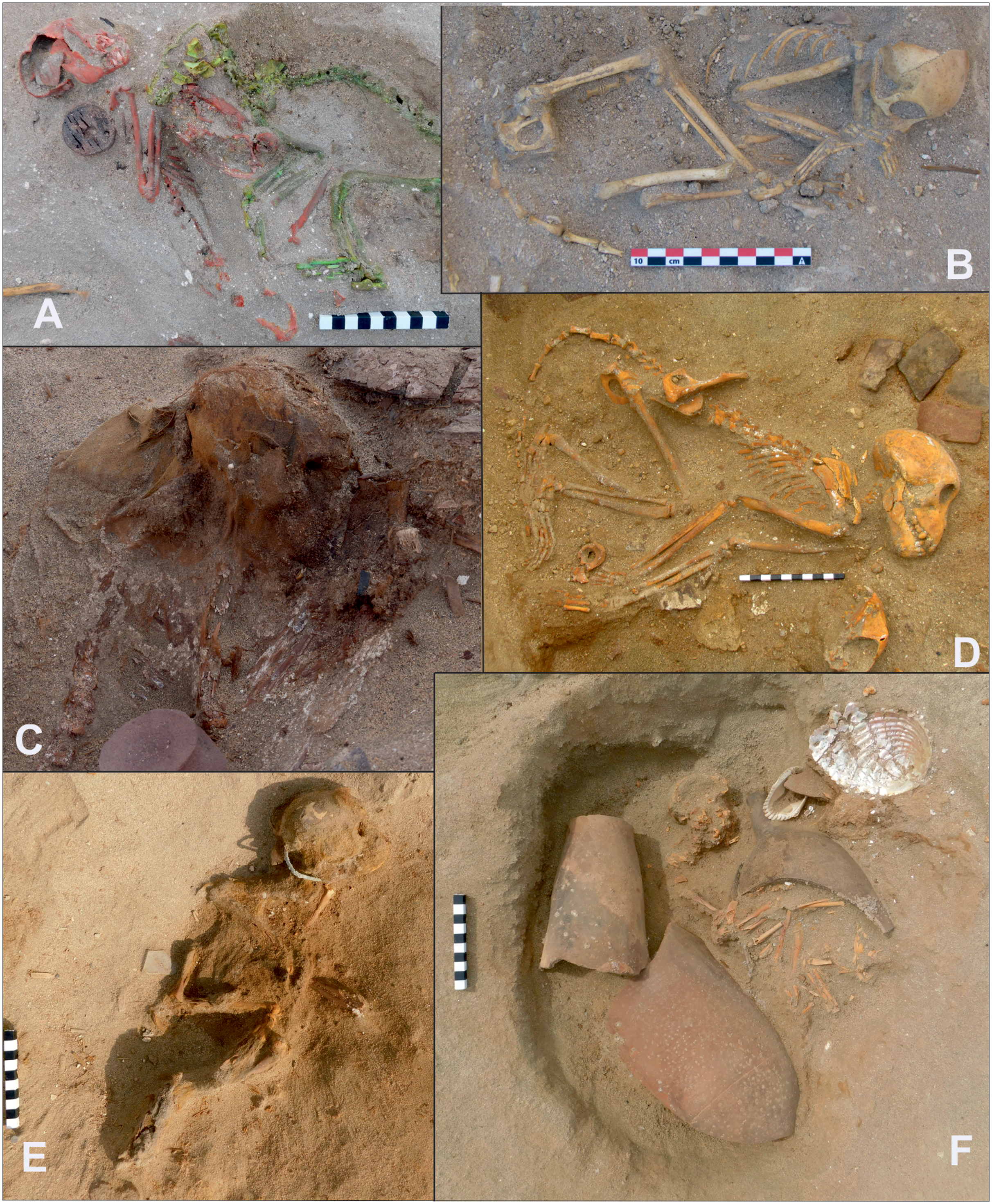
The monkey burials at Berenike were distinguished by the mortuary gifts placed in their graves (Figs. 3–5).Footnote 24 This practice was contrary to what occurred for cats and dogs: the buried dogs received almost no special equipment, while cats (but no more than roughly 3% of the total number of buried animals) were furnished with either adornments in the form of bead necklaces or plain utility pieces like iron and copper-alloy restraining collars, sometimes with tags.Footnote 25 In the case of the monkeys, the percentage of animals equipped with gifts for the beyond increases to 40%. These gifts, as a rule, had attributes related to their lives and daily activities and, in that sense, each of these furnished burials is unique.
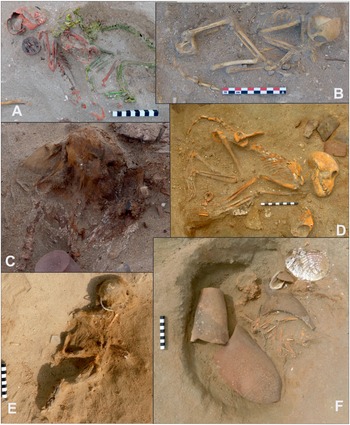
Selected monkey burials from the Berenike pet cemetery. A: BE-161/056, grivet with a circular wooden clasp, hugging a kitten; B: BE-107/022, partly preserved Macaca radiata skeleton; C: BE-161/017, Macaca mulatta burial covered with textile; D: BE-80/042, well-preserved Macaca mulatta skeleton; E: BE-161/013, Macaca mulatta with copper-alloy collar and feet coated with resin; F: BE-132/011, best furnished burial of Macaca radiata. (Photos by P. Osypiński, M. Osypińska.)
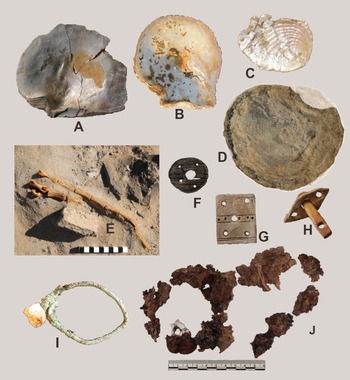
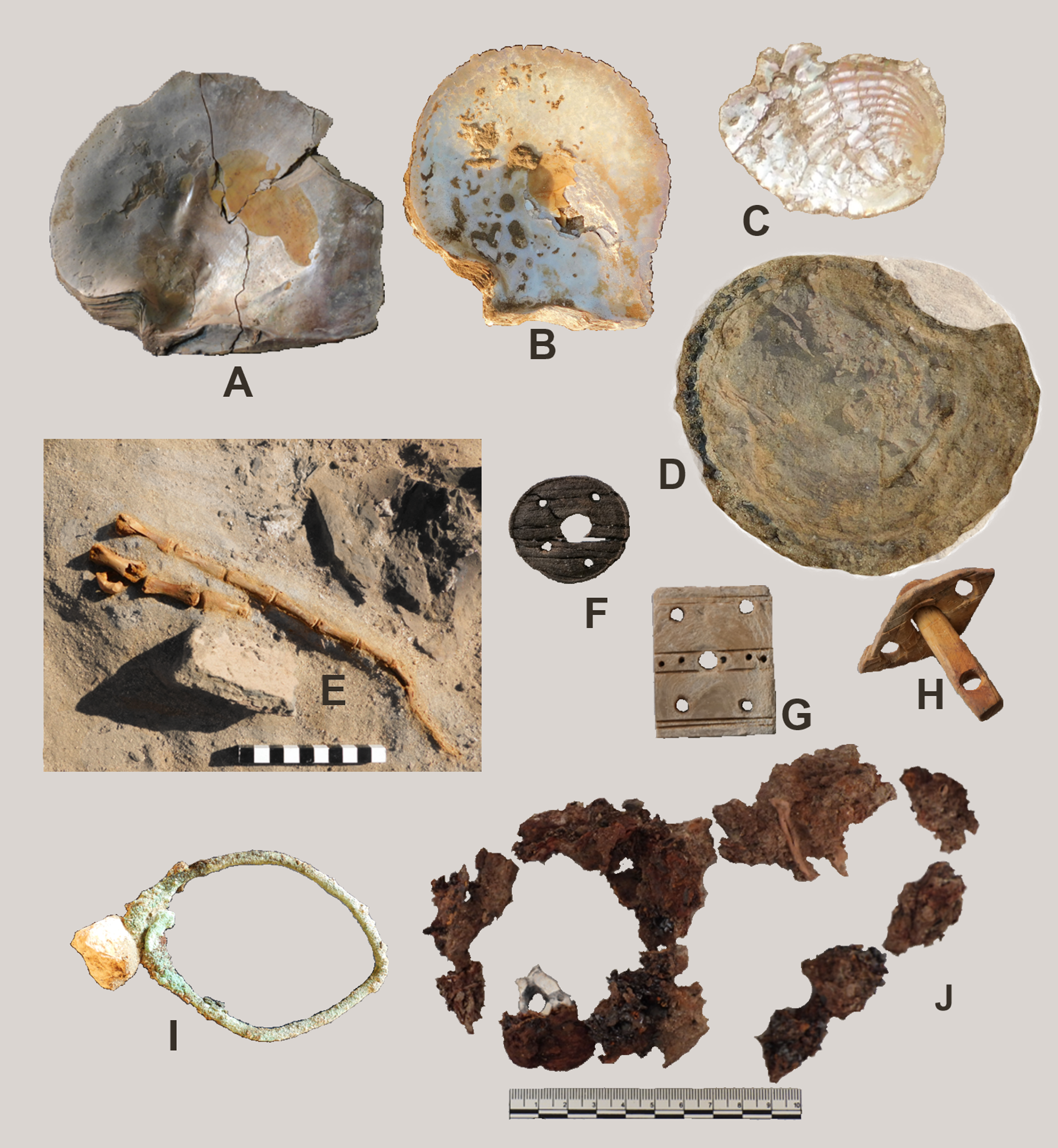
Selected furnishings of monkey burials from Berenike. A–C: iridescent shells of pearl oysters and a Haliotis; D: woven grass basket with greasy content; E: big ruminant’s tail; F–H: clasps made of various raw materials; I–J: copper and iron collars. (Photos by P. Osypiński, I. Zych.)
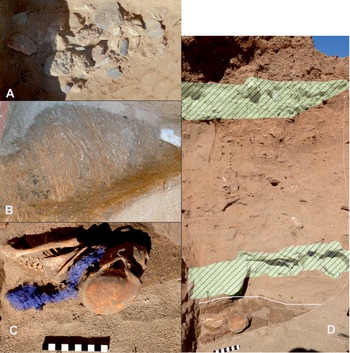
Macaca mulatta burial BE-161/034 from Berenike. A: uppermost level of stones/shells marking the grave; B: reed mat covering the monkey’s body; C: iron collar with a chain; D: stratigraphy of a grave with two levels of covering and a bottom layer permeated with an oil substance holding moisture. (Photos by P. Osypiński, M. Osypińska.)

The macaque BE-132/011 Footnote 26 (Fig. 3F) has been dated to the initial phase of the cemetery in the first decades of the 1st c. CE. It lay directly below layers connected with the use of the structure described above and tentatively identified as a shrine in the center of the burial ground. The construction work levelled the ground in this area, possibly slicing off the top of the grave pit but without disturbing the burial itself. The choice of this particular place for the presumed shrine may actually have emphasized the central location of this early burial, possibly near the top of the original sandy mound. The grave pit was circular, the diameter approximately 0.50 m. Next to the body of the young monkey, which had been laid on its left side, two large amphora fragments were preserved, containing, in one case, the skeleton of a very young piglet and, in the other, a peculiarly folded piece of cloth reminiscent of a rag doll. A third item was a small circular woven-grass basket (Fig. 4D) with some kind of “greasy” substance inside it: either a cosmetic, a medicine, or a delicacy for the monkey. Two large shells were placed next to the macaque’s head. One was a Tridacna and the other a large specimen of a Haliotis (Haliotidae sp.) (Fig. 4C). Both taxa are encountered in the Red Sea, East Africa, and the Indian Ocean.Footnote 27 Buried together with the macaque, in the same grave pit but on a level above the monkey, were the skeletons of three young cats (also infants), wrapped in textiles and mats (or baskets). The relationship between the five animals in this grave is unclear. As there are no signs of intentional killing, this accumulation of burials could reflect either a high mortality rate among young animals in a closed population or the placement of newly dead animals with those that had died earlier. Notwithstanding, the piglet, shells, rag doll, and basket with its contents undoubtedly “belonged” to the young macaque.
A similar burial of a monkey with additional animals in the grave pit (BE-161/030) was, on stratigraphic grounds, assigned to a period in the second half of the 1st c. CE. A young rhesus (juvenis) was laid at the bottom of the pit on its left side. A few shells from the Red Sea were placed next to its body and a broken ruminant’s tail (perhaps intended as a quirt) was laid by the legs (Fig. 4E). Inhumed over the monkey’s body in the same grave pit were the skeleton of a young cat (approximately 12 months old), wrapped in cloth, and the skeleton of a very young dog (approximately five months old). A kind of pavement of broken amphora sherds sealed this grave pit.
From the same phase comes another distinctive primate burial (BE-161/056, Fig. 3A). In this case, a young grivet (Cercopithecus aethiops) appears to have embraced in its arms a young cat (3–6 months old). The kitten was facing the monkey and clutching its body. A wooden clasp (Fig. 4F) next to the grivet’s body was most likely part of a body harness/collar that the monkey had worn. Similar remains of collars, made of various materials, were discovered in many monkey and cat graves in Berenike.
One of the latest burials in the cemetery was an exceptionally well-preserved grave of a young female rhesus (BE-161/034, Fig. 5). The bottom of the grave pit, which was some 0.70 m deep, had been lined with a substance that retained moisture much longer than the surrounding sand. It formed a layer approximately 5 cm thick. The substance was identified as a type of plant oil, possibly floral (the fragrance could still be smelled at the time of exploration). The animal laid on this layer had an iron collar around its neck with a chain attached (Figs. 4J and 5C). Lying near the animal’s head was a large specimen of a Pinctada margaritifera shell (common name, pearl oyster) shell (Fig. 4A).Footnote 28 The body was covered with a reed mat (Fig. 5B), secured in place with large amphora potsherds; the pit was then filled with sand. Numerous large fragments of ceramic vessels and stones formed a tomb marker on the ground surface (Fig. 5A), in this way resembling human graves.
Finally, the bodies of most of the monkeys had been wrapped for burial in fine linen or thin woolen fabrics (Fig. 3C). Too little survives of these textiles to be able to reconstruct either shape or color.
Monkey health
Unlike the skeletons of dogs and particularly cats from Berenike, none of the primate skeletons has shown any signs of limb bone fractures. However, the skeletons of two young rhesus females displayed cribra orbitalia, or porotic hyperostosis of the orbital roof, a condition associated with malnutrition (Fig. 6). The porotic hyperostosis changes observed in both rhesus monkeys are active in nature and primarily affect the cranial skeleton. They are particularly advanced in one of the individuals. Were these human remains, these changes would be identified as the highest, 5th grade.Footnote 29 They were most likely caused by nutritional deficiencies. The deficit of certain elements and vitamins, which can lead to anemia or scurvy in humans, may have been responsible. Clinical studies indicate that a diet rich in C4 plants and marine resources, including raw fish consumed along with their parasites, increases the risk of this type of pathological change. Consuming seawater – that is, contaminated drinking water – is also considered a risk factor. These findings provide insight into the diet of monkeys during their stay in Berenike. The age-at-death profile of the monkeys, meaning the high mortality rate of individuals at a young age, indicates that most of them died shortly after arriving in the town. It is unlikely that they crossed the ocean at such a young age, and yet there are infant monkeys buried in Berenike. This suggests that some of the monkeys may have been born locally in Berenike, where the logistics of supplying food and drinking water were extremely challenging. The diet of the primates must have been extremely poor with little or no fresh fruit or vegetables. Botanical records from Berenike indicate that figs in dried form or dates were the only fruits available to supplement their diet.Footnote 30 The negative effect of C4 plants, including sorghum – the main cereal grain used for making bread in northeastern Africa – on animal health makes it possible to assume that bread was also part of the diet of the monkeys at Berenike. An ostracon from Bir Samut, a caravan station on the road connecting the Nile Valley with the Red Sea coast a century or two earlier, includes the phrase: “Give 3 pieces of bread to the little sphinxes.”Footnote 31 The “sphinxes” in this case should be identified as small primates that were transported to the Nile Valley via the Eastern Desert at the time when Berenike had just emerged as an unloading and transfer point for elephants from Meroe intended for the Ptolemaic army. It may also, incidentally, have been an import route for monkeys. Pliny mentioned sphingi as a commodity imported from Adulis,Footnote 32 a port located south of Berenike in modern Sudan (Fig. 1).
Two examples of porotic hyperostosis changes on rhesus skulls from Berenike. A–B: BE-161/042; C: BE-161/095. (Photo by M. Osypińska.)

The etiology of the lesions on the monkeys’ bones suggests that, like dogs and cats, the monkeys were also fed fish, crabs, and marine mollusks. While such a diet – poor in fresh fruit and rich in gluten and seafood – was probably similar to that of humans, it was detrimental to the health of the macaques at Berenike and not conducive to their long-term survival there. The absence of adult individuals may also suggest that the animals were not meant to remain in Berenike and that those that survived the journey and a stay of a few weeks to a couple of months were then transported to the Nile Valley, presumably to be traded as exotic animals.
Another find indicative of the health of macaques imported from India to Berenike was the skeleton of a juvenile female buried either in advanced pregnancy or with its newborn baby shortly after birth. Since we have not yet recorded any skeleton of a male rhesus macaque, it is likely that the female was already pregnant when brought to Berenike (the gestation period for rhesus macaques is ca. 165 daysFootnote 33 ). This female was observed to have the most active and advanced porotic hyperostosis skull lesions (Fig. 6A–B), which may indicate severe vitamin deficiencies and anemia. These could have resulted from the pregnancy itself, as well as from the difficulty in providing the animal with adequate nutrition.
Zooarchaeological observations made at Berenike also provided indications of attempts to treat the monkeys for apparent health conditions. A burial of a rhesus from the turn of the 1st c. CE, where elements of the body’s soft tissues, skin, and fur were preserved in very good condition, revealed a substance identified as resin coating the metatarsals/feet (Fig. 3E). The resin of Commiphora trees, for example, the source of myrrh, used in antiquity for healing, as a painkiller, and for embalming corpses, was undoubtedly imported via Berenike.Footnote 34
Discussion
The macaque burials from Berenike, unprecedented in Mediterranean and Egyptian archaeology because of their number and the Indian provenance of the animals, are more than merely a source of zooarchaeological knowledge about animals in antiquity. They bring a broader understanding of past human–animal relations precisely because of the unique context – social, cultural, economic, and historical – in which they have been discovered. After all, data on pets, let alone exotic pets, is particularly hard to come by.
Semi-humans of antiquity in Berenike
The ancient Romans valued animals for their psychological and social qualities rather than their economic value, and in this sense, they assigned primates an almost semi-human status.Footnote 35 The manner in which primates were buried in the Berenike animal cemetery, similar to the way humans were buried, and the placement in graves of items that the monkeys may have relished during their lifetimes, confirms this hypothesis based on ancient literature. The many physical similarities between monkeys and humans, such as hands and facial expressions, were undoubtedly significant, but so were the interspecies comparisons of character traits, with monkeys proving to be more like humans than any other animal. Another sign of exceptional treatment was dressing monkeys like humans.Footnote 36
The cemetery in Berenike, where hundreds of cats and dogs – companion animals par excellence – were buried along with the monkeys, corresponds in time to the heyday of the imperial emporium in the first two centuries of our era. It was a time when the harbor was peopled not only by an indigenous population, but also by an archaeologically attested resident social and economic elite consisting of merchants, officials, and army personnel associated with the administration and security of a lucrative global trade. This community may have originated in different parts of the Mediterranean world, but it was part of the classical Roman tradition in the cultural sense. More importantly, the animals buried in the Berenike cemetery, identified largely as companion animals, did not live in the wild on the Red Sea coast. Berenike’s isolated location – separated from the Nile Valley by desert and mountains – meant that pets had to be brought there from the outside world. If not imported deliberately from the Nile Valley, cats could have arrived on board ships as stowaways. Over time, the cat population would probably have grown sufficiently for local litters to appear; hence the mortality structure corresponding to that of urban populations with a high share of very young individuals.Footnote 37 In the case of dogs, there is no way to assess whether and to what extent the Berenike canine population was descended from dogs living locally with nomadic shepherds in the Eastern Desert. Nonetheless, there is no doubt that the significant morphological variation (height differences, dolichocephaly, brachycephaly), and especially the presence of miniature (toy) dogs, testifies to the purposeful importation of these animals – and by no means for utilitarian purposes like hunting or guarding, which the Romans obviously valued as well.
The macaques, which had to be transported live from India, undoubtedly presented the greatest logistical and economic challenge. The Berenike burials of monkeys of this species are the first unequivocal indication of organized importation of non-human primates from beyond the Ocean.Footnote 38 The scale of the Indian macaque presence in this port community on the Egyptian coast suggests that, in the case of these animals, importation was an organized practice that continued for as long as the Roman community was resident there – corresponding to the chronological range demonstrated by the burials in the animal cemetery; that is, the period from the early 1st c. to the late 2nd c. CE. The animals most likely came from northwestern India, including the Indus Valley, although the fairly wide distribution of the rhesus macaque in South and Southeast Asia makes the actual source difficult to determine. Moreover, the bonnet macaque – the second species of monkey recorded at Berenike – has a much narrower natural range, limited to the south of the Indian subcontinent. The origin of the Berenike monkeys is supported by the overall material evidence of contacts with India, including pottery studies.Footnote 39
Whether macaques were kept as pets in India in the first centuries CE is a matter for further research, but they are most certainly commensal animals, living close to people today in villages, towns, temples, and gardens.Footnote 40 They are also considered to be animal personifications of certain gods – Hanuman, for example – consequently enjoying protected-animal status. This is not to suggest, however, that the macaque burials in the Berenike cemetery are in any way associated with religiosity of this kind. There are also indications that rhesus monkeys may have been the object of exclusive exchange much earlier, although this involved areas much closer to their natural range (see Fig. 1, site Shahr-i Sokhta).Footnote 41
The final destination
Given the significant time and distance involved in bringing live monkeys across the ocean, it seems reasonable to assume that Berenike was not their intended final destination. They must have been meant for, perhaps even specially ordered by, recipients across the Empire or indeed in Rome itself. That some of them did not make their way any further than Berenike and were buried in the manner described shows that they were not merely a “living commodity.” The individual approach to the burials, the grave furnishings and attention to detail that would ensure a good life in the beyond, testifies that the monkeys already had caring guardians in Berenike.
It is therefore puzzling that Indian macaques have not yet been identified in archaeological contexts outside the site under study. Given the scale of their importation into Berenike, one might expect to find remains of these animals in the homes of provincial Roman elites in Egypt, and possibly in Europe as well. The very limited scope of archaeological research, including zooarchaeological research, may be a key reason for this lack. The difficulty in identifying closely related species of primates, but also the a priori approach of linking such finds with primates inhabiting areas close to Europe, notably the northern coast of Africa, may have influenced the dominant perception to date that the primates kept as pets in antiquity were Barbary macaques. As it is, a taxonomic affiliation based on DNA analysis has been determined only for the monkey discovered at Pompeii.
A centurion’s monkey?
The presence of a community identified, at least locally, as a Roman elite in the harbor of Berenike in the first centuries CE is undisputed, based on long-term archaeological research. Recent excavations at the animal cemetery have also revealed that burials of companion animals are specifically associated with the period during which this elite community was resident in the town. Interestingly, there is a substantial body of evidence suggesting a close relationship between ownership of exotic and luxurious monkeys and the Roman legionary officer corps. Monkey burials have been found in legionary camps on at least two occasions,Footnote 42 alongside several dog burials at least.Footnote 43 However, the exceptional nature of these two monkey burials suggests that they may not reflect common practice. Not every legionnaire presumably had the resources to bury his pet animal (or indeed to own one in the first place). At the Berenike cemetery, the phenomenon appears to have reached mass proportions, yet even so, the monkey burials are clearly the most elaborate. Therefore, owning monkeys may have been an element of identity, a distinct marker of one’s elite place in local society. Nor should it be excluded that owning a monkey added a certain exotic flair: someone with an Indian macaque on a leash would have basked in the glory of being recognized as an explorer of exotic lands, a person of extraordinary experience and connections.
Conclusions
The Romans were undoubtedly familiar with primates and imported some species to Europe. Written accounts, particularly those of Pliny, indicate that these animals were treated differently to other companion animals, primarily due to their perceived resemblance to humans, which imparted to them an unusual, semi-human status. The discoveries from Berenike have rewritten what is known today about the import patterns of these animals during the Early Imperial period. They have also provided an idea of the scale of this endeavor and currently represent the richest source of archaeological and archaeozoological data.
Until now, primates other than the Barbary macaque have not been considered as possible antiquity-era pets. For the Romans, monkeys of that species were the most readily available in their natural habitat, but the Berenike finds suggest that easy access was not the deciding factor in the choice of either species or source area. Rhesus macaques could have enjoyed preferential status because they are easily tamed and highly intelligent, the same factors that today drive the selection of primates for scientific and laboratory research, as well as for pets.
The natural habitats of the two macaque species found in Berenike are an important indication of their places of origin, which can be narrowed down to two possibilities: the northwestern part of the subcontinent, including the Indus Valley, and southern India. Transporting the monkeys across the ocean required a thorough understanding of their nutritional and behavioral needs, but also good logistics. At this stage, it is impossible to determine whether such transportation involved single individuals or a larger number in one shipment. The animals would undoubtedly have needed an additional supply of fresh water, as well as plant food, including fruit. Thus, in terms of diet, the macaques would have been “competing” in a way with the crews on transoceanic ships.
It is believed that the rhesus macaques brought to Berenike were selected based on sex and age. This selection favored animals that were gentle and easy to keep as pets, confirming that this may have been the primary objective of their importation. However, it seems that the new owners were often unable to provide the sophisticated accommodation necessary for the monkeys to survive. This encompassed behavioral and social conditions, as well as adequate nutrition. Providing a suitable diet for a young monkey was particularly difficult in a place as distinctive and environmentally challenging as Berenike (not to mention the journey further on).
The data from Berenike also seem to confirm suggestions in the literature that link primates with individuals associated with the military. The greatest concentration of primate burials in the cemetery was recorded in relation to an apparent accumulation of archaeological artifacts associated with legionary life, particularly that of the officers. These artifacts included ornaments (such as a fibula and signet rings), writing utensils, and the textual documents themselves (ostraka and papyri). There were also distinctive terracotta oil lamps and luxury tableware, frequently stamped terra sigillata from Italy. This provides a unique opportunity to reconstruct the lives of early imperial legion elites in regions that have previously gone under-recognized and underrepresented in the archaeological discourse, namely the African frontiers of the Empire.
Supplementary material
The supplementary materials provide detailed zooarchaeological data in four tables. Supplementary Table 1: General list of pet-animals buried in the Berenike cemetery (until 2024); Supplementary Table 2: Records of monkey burials from excavations in Berenike, Red Sea (Egypt); Supplementary Table 3: Age profile of animals buried in the Berenike cemetery; Supplementary Table 4: Furnished animal burials from the Berenike cemetery. To view the Supplementary Materials for this article, please visit https://doi.org/10.1017/S1047759425100445
Acknowledgments
Project funded by the National Science Centre (NCN- 2021/43/B/HS3/02749), carried out in cooperation with the University of Wrocław, the Polish Centre of Mediterranean Archaeology, the University of Warsaw, and the Ministry of Antiquities and Tourism in Egypt.