Why do scientists popularize their own research? In recent decades historians of science and scholars of STS have produced a large body of work that shows a whole range of different uses of popularization. Scientists may address the general public in order to legitimize or even establish a new discipline, to present their own claims or to attack the theory of an opponent, to push a specific agenda or ideology inside and outside academia, to enlarge their public visibility, and to obtain more funding, to mention just a few of the motives for practising ‘expository science’.Footnote 1 The field of human origins research (HOR) is a particularly promising area for the study of the uses of popularization. From its very beginning in the second half of the nineteenth century to the present day, HOR may be described as a ‘public science’. In a field notorious for its fundamental epistemological uncertainties and fierce controversies, ‘proactive’ popularization and the public launching of claims have proved time and again to be an important resource for the debate within the scientific community.Footnote 2
Yet even within the ‘popular’ field of HOR, the sheer magnitude of the popularization efforts of the Spanish Atapuerca research project is extraordinary and arguably without equal. As a Spanish journalist commented in 2007, ‘An industry of popularization, literature, tourism and scientific spectacle has been built around Atapuerca.’Footnote 3 To be sure, the Equipo de Investigación de Atapuerca (EIA) popularizes for quite the same reasons as other scientists mentioned above: to establish (often controversial) claims, gain visibility and obtain funding. Yet the scope of this popularization industry, as well as its profound impact on Spanish society, goes much further. The seminal importance of science popularization in the Atapuerca project has aroused the interest of historians of science and of scholars in neighbouring disciplines like media studies and STS. The close connection – one might even call it a symbiosis – between the EIA and the Spanish media has been highlighted.Footnote 4 Specific attention has been paid to the enormous production of popular-science books written by the three co-directors of the excavation.Footnote 5
This article will take the analysis of the uses of popularization one important step further. It will show that the engaging stories that this popularization industry produces deal not only with prehistory as such, the world of early humans, but also and just as importantly with the history of the EIA itself and its wider scientific and national significance. In order to unpack this host of narratives, we will focus on the popular science of Juan Luis Arsuaga, José María Bermúdez de Castro and Eudald Carbonell, co-directors since 1991. They are the public faces of the EIA and its popularization industry, as we shall see.Footnote 6 This focus on the ‘three tenors’ (as some Spanish prehistorians jokingly refer to them) will enable the form and function of their different narrative practices to be distinguished. This article will begin by providing an overview of the numerous discoveries and claims of the EIA, their public presentation and how these points relate to the way that the research project has positioned itself in post-Francoist Spain. It will go on to interrogate the storytelling practices of the three co-directors, showing how they have become ever more adept at using a whole range of narrative devices, including the self-commodification of their scientific personae. The third section of the paper will analyse the ways in which the co-directors utilize the history of science and the history of their project to style themselves a humble, but heroic, Spanish team, overcoming all odds to rise to international acclaim. In the final section, the paper investigates how the co-directors engage with palaeofiction, their own and that of Björn Kurtén and Jean Auel, to enable them to tell gripping stories about compassion and solidarity in human prehistory and to show how close ‘they’ are to ‘us’.
The making of a magic mountain
‘Atapuerca’ refers to the Sierra de Atapuerca, a small mountain fifteen kilometres east of Burgos in northern Spain, comprising numerous caves filled with sediments, some of them ‘cut open’ by a railway track that was constructed in the early twentieth century but only in use for a few years. Speleological explorations, archaeological surveys and sporadic excavations followed, and then in 1978 the EIA was established. From the outset, popularization was integral to the research project. It must be remembered that in the late 1970s Spain was making its transición to democracy. Evolutionary theory was not taught during Franco's national–Catholic dictatorship (1939–1975) and could only be discussed in elite circles and in a highly controlled way. For ideological reasons the regime favoured a teleological version of evolution leaving room for divine creation.Footnote 7 Hence ‘illiteracy’ among Spaniards with respect to evolutionary theory was high in the mid-1970s. Tellingly, the founder of the Atapuerca project and the leading Spanish palaeoanthropologist at the time, Emiliano Aguirre (b. 1925), was a former Jesuit, who in his early career had adhered to finalist views of evolution. Those interested in HOR knew that they would need to convince the Spanish public of the relevance and importance of their work.
For the next fifteen years, however, the popularizing imperative languished – until Atapuerca began to yield, from the early 1990s, a series of spectacular hominid fossils. The sierra comprises a number of different excavation sites of different ages, spanning more than a million years and revealing traces of four different hominid species. In 1995 the EIA published news of fossils that were 800,000 years old (Gran Dolina), leading to the naming of a new hominid species (Homo antecessor) in 1997, known as ‘the oldest European’. In 2008, they beat that record with a mandible dated at around 1.2 million years (Sima del Elefante). The Sima de los Huesos, a unique prehistoric treasure, has yielded more than seven thousand hominid fossils, believed to be about 400,000 years old. By 2009 the EIA had produced thirty PhD theses and 650 articles in peer-reviewed journals.Footnote 8 Its work achieved global recognition during the 1990s, appearing on the covers of Science and Nature.Footnote 9
This was the necessary condition for doing popular science on a large scale. Since the late 1990s, several dozen popular-science books have been published, and thousands of articles in newspapers and magazines. Itinerant exhibitions tour Spain, while visiting centres, an archaeological park, guided tours through the excavation sites, television documentaries and (since 2010) an enormous museum in Burgos (the Museo de la Evolución Humana (MEH)) reach millions of viewers and visitors. The EIA lays claim to the first documented evidence of cannibalism (Gran Dolina), the first burial, the first symbolic act in human history, a funeral gift and the ‘first homicide’ (Sima de los Huesos). Adjectives such as ‘first’ and ‘oldest’, ‘largest’ and ‘only’ are common currency in the self-presentation of the project, both in the public and in the academic spheres. As early as 1999, Arsuaga was celebrating the sierra's successes: ‘This exceptional Palaeolithic and archaeological collection makes this one of the best ensembles of sites in the world, the most historic place in Europe, the rocky heart of Spain, a magic mountain.’Footnote 10
The most tangible impact of the popularization efforts is that Atapuerca has become at least in the popular imagination the point of origin for Spanish history, supplanting Altamira. This might sound like the ‘classical’ nationalist appropriation of stones and bones – that is to say, the construction of ethnic or ‘racial’ continuities between a remote past and the present – a major topic in HOR historiography.Footnote 11 Yet the case of Atapuerca is more complex. While people may joke about the ‘first Spaniard’, the official wording is always the ‘first European’. None of the three co-directors play the ‘nationalist card’ with respect to the hominids of Atapuerca. The nationalist appropriation can, however, be seen in the histories of their own project, a ‘scientific’ rather than a ‘biological’ nationalism.Footnote 12 The researchers are emphatic: the EIA is a Spanish team, and part of the recent democratic history, beginning as it did in the year (1978) when the new Spanish Constitution was drafted.Footnote 13 The three co-directors neatly represent the whole of Spain, including the two regions historically well known for striving for more autonomy or even independence: Carbonell is Catalan, Bermúdez de Castro is from Madrid and Arsuaga's family is from the Basque country. In this way, the EIA provides not only a scientific but also a political model: unlike Spanish politics, it excels as a team, overcoming short-sighted wrangling between different elements and thus – metaphorically – unites the country.Footnote 14
Storytellers
In her book Narratives of Human Evolution, Misia Landau argues that representations of human origins researchers inevitably follow a specific narrative structure. In these accounts and within a given variation of possible sequences, human evolution is the long and arduous but ultimately successful journey of ‘man’ becoming ‘himself’.Footnote 15 Although criticized from various vantage points, Landau's main idea did strike a chord among many palaeoanthropologists.Footnote 16 So, for example, in 1998 the first popular-science book by members of the EIA was published: La especie elegida: La larga marcha de la evolución humana (The Chosen Species: The Long March of Human Evolution).Footnote 17 Although the title and even more so the subtitle seem to fully confirm Landau's thesis, the use of narrative structures by the EIA is more complex. The authors of La especie elegida, Juan Luis Arsuaga and Ignacio Martínez, acknowledge her argument about the narratives of human evolution resembling mythical tales, while also disapproving of the teleological implications of the book title. They would have much preferred a question mark at the end but had to yield to the request of the publisher for an appealing title.Footnote 18
Hence Arsuaga (b. 1954), a professor of palaeontology at the Complutense University (Madrid) and scientific director of the MEH (Burgos), is fully aware of the importance of rendering the research of the EIA intelligible and appealing to the general public. In 2003 he maintained that ‘the narrative structure of science is a tale that tells us about the world we live in’, and thus needs ‘cultural points of reference’, which are often global in scope. For example, the hand axe found in the Sima de los Huesos, interpreted as a funerary gift that represented the first known symbolic act, was named ‘Excalibur’, after the sword of the mythical British King Arthur.Footnote 19 More recently, Arsuaga compared the existence and dynamic evolution of the multitude of hominid species that populated Europe in the Middle Pleistocene to a ‘scenario … from Game of Thrones’.Footnote 20 Alongside such memorable metaphors, chosen to resonate in the media, Arsuaga develops in his popular writings a kind of ‘deep history’ of this magic mountain. In the year 2000, to commemorate Atapuerca's recognition as a World Heritage Site by UNESCO, he published an article in El País entitled ‘The mountain of our ancestors’. In this article he skilfully creates the connection between the present-day, Spain's medieval history (the Battle of Atapuerca in 1054) and the remote past of the hominids of the sierra.Footnote 21 One may read a nationalist narrative into this construction: the long continuity of Spanish history, reaching back into prehistoric time. Yet Arsuaga rather aims at creating a sense of unity, enabling his audience to connect with the prehistoric world.
‘We see the same river and the same mountain’, he writes in his semi-fictional book El mundo de Atapuerca (The World of Atapuerca).Footnote 22 The first part tells the story of an adolescent boy in around 1900, who finds animal fossils while labouring on the railway track through the sierra, the beginning of prehistoric research, so to speak. The second and main part of the book is told by two fictitious tourist guides, who are reflecting on how best to popularize the ‘content’ of the excavations. They role-play, taking turns at being guide and visitor, discussing how to adapt their discourse to the knowledge and expectations of the visitors. Should there be powerful images to captivate the visitor, for example a lion preying on hominids? The two guides argue that it is crucial to reach the ‘entire’ visitor, not only the mind but the senses and emotions, to enable them to experience the chill of being in the dark and remote depth of the Sima de los Huesos.Footnote 23 In this way, Arsuaga shares his own reflections on storytelling with the reader – in the form of a story. Scientific pretensions notwithstanding, he says, ‘we … cannot avoid imagining those scenes of the past in our heads, and we project spectacular movies which we direct ourselves’.Footnote 24 Arsuaga would like his readers to feel the same awe when they approach the ‘Sierra de Atapuerca, the holy mountain’.Footnote 25
In comparision with Arsuaga, a drier, more didactic style was adopted by Bermúdez de Castro (b. 1952). A palaeoanthropologist by training, he was the founding director of the CENIEH (National Centre for Research in Human Evolution) in Burgos from 2004 to 2012. He now leads the research group on human evolution at the CENIEH. His use of rhetorical resources is more muted – at least in relation to scientific content. His first popular-science book, El Chico de la Gran Dolina (2002), deals largely with his own speciality, hominid teeth, showing what dentition can tell us about the ontogenesis of a species. The title of the book as well as its cover – a reconstruction of the boy's face by palaeoartist Mauricio Antón – refers to ten-year-old El Chico, the cannibalized ‘poster boy’ of Atapuerca, who was apparently butchered and devoured by a competing group of hominids. While this dramatic story has been told and visualized in different media within the popularization industry, Bermúdez de Castro did not make use of this ‘narrative potential’ in his popular-science book. Yet there is at least a rudimentary storyline in El Chico.Footnote 26 Crucially, it focuses on the discovery of the fossils in the TD6 stratum (Gran Dolina) and the challenges the EIA faced in the mid-1990s leading to the naming of a new species, Homo antecessor. As the next section will show, Bermúdez de Castro fleshes out this narrative in his later popular-science books: the epic rise of the EIA from humble beginnings to becoming one of the most successful teams in HOR worldwide.
The final co-director, Eudald Carbonell (b. 1953), trained as an archaeologist, holds a chair in prehistory and was until 2015 director of the IPHES (Catalan Institute of Human Palaeoecology and Social Evolution), both at the University of Rovira and Virgili in Tarragona (Catalonia). Since the year 2000, Carbonell has published over a dozen philosophical ‘essays’, which he prefers not to call books. They are concerned with the need to ‘socialize’ knowledge through ‘good popularization’ in order to complete the process of ‘humanization’.Footnote 27 Carbonell writes in Catalan, which is usually immediately translated into Spanish, and uses a very abstract discourse, which might even be called an anti-narrative. Illustrative examples or anecdotes are rare, as he focuses on the scientific character of his method and the importance of ‘critical thinking’. His goal is to contribute to the formation of a ‘critical consciousness’ as a base and guide for political action. But in apparent stark contrast to his abstract pretensions of ‘critical thinking’, some of Carbonell's popular work is highly personalized. In the autobiographical Els Somnis de l'evolució (Dreams of Evolution, 2003) his account of his professional and private life is juxtaposed with broader developments in archaeology and world politics. Similarly, in 2013 he published L'arqueòleg i el futur, a series of letters to his two-year-old son Olopte, pictured on the cover. This book, addressed to his son's future self, deals both with his views on the future of Western society and with more private reflections, such as when and why to have children – even his dislike of soccer.Footnote 28 This mix of abstract essays and highly personal accounts might appear peculiar. Indeed, Carbonell is an unusual case: a self-declared Marxist who is also an avowed political Catalanist and a staunch advocate of ‘Spanish science’.Footnote 29 Yet in Carbonell's view these positions are not mutually contradictory: archaeological research, outreach to the general public and a political commitment to progressive causes cannot be separated from each other. He espouses and to an extent embodies ‘scientism as the supreme epistemology’, in many respects fitting the description of the ‘celebrity scientist’ as described by Declan Fahy.Footnote 30
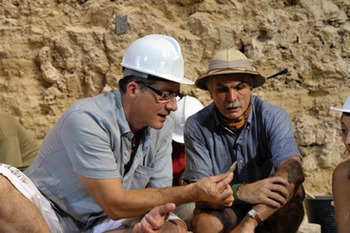
In a sense, Carbonell turns himself into the hero of his own narrative. He continuously reinforces his public identity as a scientist by wearing excavation gear regardless of whether he is actually digging, giving a public talk or opening a museum in the presence of the Spanish queen. His ‘costume’ includes khaki-coloured cloth, usually shorts, heavy boots and – most characteristically – a sun helmet. Carbonell's distinctive features make him easily recognizable and lend themselves to iconographic use – in Fahy's words, ‘the creation of a public signature, the commodification of the self’.Footnote 31 The man with the moustache and smoking a pipe – Carbonell – has become part of the corporate image of the EIA (Figure 1).Footnote 32 His conscious evocation of the adventurer–archaeologist à la Indiana Jones is clear.Footnote 33 It was this image and his fame in Catalonia that qualified him to take the role of the lead scientist in Sota Terra, a reality television show based on the BBC's Time Team, produced by the Catalan television station TV3.Footnote 34 Carbonell played himself, so to speak, and his name and appearance were central to the show's publicity.
Eudald Carbonell with his iconic sun helmet in the archaeology reality show Sota Terra, here with actor Fermí Fernàndez. Used with permission of TV3. Copyright CCMA.

The three co-directors are zealous in their efforts to reach out to the general public in order to combat the widespread ‘illiteracy’ with respect to evolutionary theory and the origin of man that characterized the post-Francoist period.Footnote 35 And they were successful. It is thanks to Atapuerca that ‘nowadays one can talk about human evolution with a taxi driver, the postman or the man from the gas company’, a Spanish archaeologist commented in 2001.Footnote 36 Yet clearly their approaches in popularizing Atapuerca differ significantly. We may distinguish Arsuaga's desire to encourage the present population to identify with the prehistoric people of Atapuerca, the more didactic Bermúdez de Castro, and Carbonell with his particular mix of ‘anti-narrative’ and self-commodification. All three co-directors have been involved in organizing and curating several itinerant exhibitions on Atapuerca since the late 1990s and in the conception of the MEH in Burgos, in advising or producing documentaries (Arsuaga but also Carbonell), and in reality shows (Carbonell). In recent years all three of them have started to write blogs. They are also in high demand as public speakers all over Spain. In the past two decades the three co-directors have undergone a significant learning process, both in terms of their adoption of new genres of communication, and in the fluency with which they present their work and their personae to the general public. All three of them have become, in different ways, storytellers – and each also takes a different approach to history.
Historians of science
Most popular-science books on HOR contain a section devoted to its history, outlining the author's assessment of previous important discoveries, the naming of new species and their impact on the human pedigree. This serves the purpose of both contextualizing the author's own research and highlighting their particular achievements, and is a strategy also adopted in the popular books written or co-authored by the Atapuerca co-directors. Their readers learn about, for example, the path-breaking discoveries of Eugène Dubois, Raymond Dart, the Leakey dynasty and Donald Johanson.Footnote 37 Yet these books contain an added historical dimension owing to the EIA's specific situation, rising suddenly to fame in the late 1990s. The excavation and the contexts in which it took place had to be put into meaningful order. How did this project originate and why was it so successful? Beginning with the new century, the Atapuerca popularization industry began to create the story, in a variety of media, of a few humble Spanish prehistorians who, with very limited resources and against all odds, built a magic mountain. This engaging story of unflagging perseverance is particularly explicit and elaborate in exhibition catalogues, commemorative publications and book-length histories of the project – which, crucially, document how the researchers want the project to be seen.Footnote 38 This vision of the EIA is most strongly present in Bermúdez de Castro's writings but is also substantial in Carbonell's. Bermúdez de Castro might be dry and didactic when dealing with ‘scientific content’, but his history of the EIA is alive and vivid, using literary devices such as anecdotes, personalization, humour and colourful descriptions.
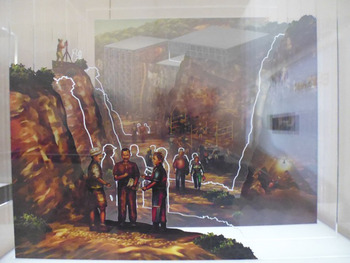
Essentially, the story is as follows. The early years of the project were marked by penury and lack of recognition. Spanish science was considered – by the Spanish themselves – backward and chronically underfunded.Footnote 39 According to the researchers, ‘During eight extended field seasons we worked in lamentable and precarious conditions more like in a Third World country.’Footnote 40 Working in the remote cave of the Sima de los Huesos was exhausting, dark, claustrophobic and dangerous due to the lack of oxygen.Footnote 41 ‘It was a heroic epoch.’Footnote 42 Against this is set a subplot: successful resistance against the dominant foreign powers in HOR. For most of the twentieth century, many Spanish prehistorians felt that despite the country's possession of a number of promising sites, Spanish HOR researchers were marginalized, the subjects of ‘scientific colonialism’, as richer foreign scholars sought to exploit their sites. This rhetoric was mainly directed at their compatriots, as a means of justifying funding and political support for indigenous prehistoric research.Footnote 43 Bermúdez de Castro and Carbonell pick up on this discourse: ‘For sure, in those days it was common for French or American prehistorians working in those few Spanish sites to have no respect at all for our heritage. Fortunately, things have changed a lot and it pleases us that we have contributed to this change.’Footnote 44 The members of the EIA see themselves as Spanish researchers, defending their national heritage and fending off attempts by foreigners to take control of the excavations in the 1980s and 1990s.Footnote 45 The retention of Atapuerca by the Spanish signified the end of this scientific colonialism for the co-directors, who hailed their project as exemplary for Spanish science as a whole, in a storyline that was seized on and further developed by the Spanish media.Footnote 46 This version is, to date, the authoritative account of the history of the research team, and is told as such in the Museo de la Evolución Humana in Burgos, where Arsuaga, Bermúdez de Castro and Carbonell are omnipresent, talking from screens, as silhouettes on the walls or as cut-out figures in dioramas (see Figure 2). The EIA – most prominently represented by its three co-directors – fuses completely with the site and its deep history.
Cut out to make history. Representation of the three Atapuerca co-directors in the Museo de la Evolución Humana in Burgos. From left to right: Carbonell, Bermúdez de Castro, Arsuaga. Photo: Hochadel.

But this is not the only way in which history of science is deployed at Atapuerca. In his philosophical essays, Carbonell barely mentions the site or the history of the EIA.Footnote 47 Rather, he invokes the ‘great men’ – Galileo, Newton, Darwin, Einstein – in support of his own ideas and without any kind of historical contextualization.Footnote 48 On several occasions Carbonell retells the story of Huxley's encounter with Wilberforce in Oxford in 1860, describing a brave scientist defending Darwin's new theory and defeating the haughty bishop by the force of reason alone.Footnote 49 Carbonell consistently opposes science and religion, typical for a Marxist in post-Francoist Spain.Footnote 50 His Whiggish history of science is based on the steady growth of progress and rationality advancing through the ages. Fascinatingly, it is a blind spot of his ‘critical’ epistemology: Carbonell hardly ever questions science itself, and his use of the history of science is purely instrumental.Footnote 51 This is clear in his deployment of Thomas S. Kuhn. In the mid-1990s prehistorians were intensely debating the dates of hominid presence in Europe. Carbonell used Kuhn to position the EIA on the side of scientific progress, overcoming the ‘old paradigm’ (the so-called short chronology, according to which Europe had not been populated for more than 500,000 years) to establish a new one (on the basis of the Gran Dolina discoveries, which turned out to be older than 800,000 years.Footnote 52 )
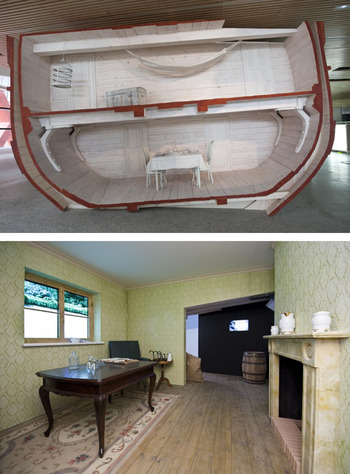
Arsuaga, however, prefers Charles Darwin. In the Darwin jubilee year of 2009, he dominated the Spanish commemorations, through his numerous talks and publications, particularly his book El reloj de Mr. Darwin (Mr Darwin's Clock). He, rather than any historian of science, is treated in Spain as the expert on Darwin. His authority as co-director of Atapuerca also extends to the history of science as far as the Spanish mass media are concerned.Footnote 53 In fact, Arsuaga is the co-director with the strongest interest in the history of evolutionary theory and of HOR, and to be fair his understanding of Darwin is sophisticated, drawing on a number of professional historians of science, both Spanish and foreign.Footnote 54 His version of the Huxley–Wilberforce encounter is far more nuanced than that of Carbonell, but his use of Darwin is pragmatic, to explain the theory of evolution to the general public.Footnote 55 Due to Arsuaga's initiative, Darwin is the only foreign scientist with any significant presence at the MEH in Burgos. A sizeable reconstruction of parts of the Beagle and of his study in Downe honour the British naturalist amidst the celebration of the feats of the Spanish EIA (Figure 3). The history of the theory of evolution thus forms part of the grand narrative of Atapuerca as told by Arsuaga, enabling researchers and audience to move from the national to the universal.
Commemorating Darwin in Burgos: reconstructions of the Beagle and of Darwin's study in Downe. Used with permission of the Museo de la Evolución Humana.

Thus the three co-directors use the history of science in distinctive, yet always utilitarian, ways: extolling the ‘historic’ achievements of the EIA, ennobling them as ‘revolutionary’ (establishing a new paradigm), enlisting Darwin within the Atapuerca popularization industry. They frame the history of the site as a ‘national’ story of resistance to foreign authority, and at the same time they invoke ‘great men’ but also theoretical concepts from the ‘global’ history of science in order to establish their individual authority as public intellectuals. In Landau's analysis the hero in the narratives of human evolution was the object of research, the struggling hominid who eventually became man. The heroes in the stories of the three co-directors are the historical figures who opposed religion and superstition: Darwin himself and the EIA and its scientists themselves. In a sense, the three co-directors of the EIA pick up on Landau's suggestion that narratives should be used consciously, when she suggested that ‘an awareness of narrative can benefit the study of human evolution’.Footnote 56 While they avoid teleology in accounting for human evolution, the depiction of the history of the EIA follows a well-known and intrinsically mythical scenario of success through overcoming mighty odds.
Writers and readers of palaeofiction
The literary genre of palaeofiction is as old as the discipline of prehistory itself, and these fictitious early humans have influenced not only the public imagination but arguably researchers themselves.Footnote 57 The encounter of Neanderthals and modern humans has become a classic topic of this genre, featuring violent clashes but also intimate relationships producing hybrid offspring.Footnote 58 In 1978 Finnish palaeontologist Björn Kurtén (1924–1988) published Dance of the Tiger (in Swedish). Two years later – the same year as the English-language version of Tiger appeared – The Clan of the Cave Bear by US novelist Jean Auel (b. 1936) was published. In both novels, it is the encounter between the two human species that provides the dramatic fuel and the epistemological undercurrent. Both Kurtén and Auel systematically note the cognitive differences between Sapiens and Neanderthal, a point which has caught the attention of both literary scholars and practising palaeoanthropologists.Footnote 59
Interestingly, the three co-directors received and appropriated the novels of Kurtén and Auel in a different and possibly more productive way. Kurtén's Dance of the Tiger was translated into English in 1980 and soon afterwards also into other languages. Yet there was no translation into Spanish until 2001. It was, in fact, Arsuaga himself, an admirer of the ‘great palaeontologist Björn Kurtén’,Footnote 60 who had urged the translation and wrote the preface to the first edition of La danza del tigre. In it, Arsuaga highlighted the value of palaeofiction, a term coined by Kurtén himself: ‘Yet I do believe that a good story is more important than scientific exactitude: for rigour there are already the textbooks.’Footnote 61
A few years later, in 2005, Arsuaga published Al otro lado de la niebla: Las aventuras de un hombre en la edad de piedra (On the Other Side of the Fog: The Adventures of a Man of the Stone Age).Footnote 62 The influence of Dance of the Tiger is quite tangible. Like Kurtén's main character, Tiger, the protagonist Sole of the Winds in Al otro lado de la niebla is a wanderer between different communities with an unruly mind, and a gifted artist. But Arsuaga's novel is based in the world of Atapuerca. The geographic centre of the novel is ‘la Roca’. This hill, rich in natural resources, where the tribe spends the winter, is deliberately modelled on the landscape of the sierra near Burgos. In the end the prehistoric humans move north and the protagonist is supposed to decorate the cave they discover with animals. ‘I see bisons’ are the last words of the novel, an explicit reference to the famous cave paintings of Altamira in Cantabria. Arsuaga thus connects the two best-known prehistoric sites in Spain, Atapuerca and Altamira.Footnote 63 The poetic license of palaeofiction gives Arsuaga the freedom to explore the prehistoric ‘magical’ mind, something stones and bones tell us very little about. In Al otro lado de la niebla the characters tell each other numerous stories, mostly legends reflecting the mythical ways in which early humans made sense of their world, its origin and the animals and plants that surrounded them. In the foreword, Arsuaga states that ‘rather than a legend for prehistoric men or Aborigines, who will not read it’, his novel ‘is directed at the prehistoric man that hides within us’.Footnote 64 Palaeofiction is yet another medium to ‘experience’ the connection between ‘them’ and ‘us’.
With the six books of her Earth's Children series Jean Auel ranks among the best-known writers of palaeofiction. The saga of the female hero Ayla has sold worldwide over 45 million copies, and been translated into over thirty languages. In preparation for the two last books of the series, ‘the most celebrated Jean Auel’, as Arsuaga calls her, travelled to Spain.Footnote 65 In 2001, the three co-directors personally showed the famous author around the sites of the Sierra de Atapuerca, and in 2009 Auel visited the Catalan Neanderthal site of Abric Romaní, an excavation directed by Carbonell. It is a great asset for the public profile of Abric Romaní to feature – not by name but implicitly – in Auel's The Land of Painted Caves, first published in 2011.Footnote 66 The relationship between Auel and prehistorians is reciprocal. Auel insists that her novels are imbued with ‘scientific rigor’. Keeping up with the latest research, making well-planned visits to excavations, being able to knap stone tools herself are all elements crucial to her public image.Footnote 67 In return prehistorians extol her in-depth knowledge and unrelenting commitment to archaeological research. The approval of highly visible figures such as Bermúdez de Castro and Carbonell has helped Auel to promote her last two books in Spain. Both repeatedly praised her for her factual accuracy and the interest she created in prehistory among millions of readers. Carbonell called her ‘the prehistorians’ friend’.Footnote 68 Auel called him a ‘great guy’.Footnote 69
Palaeofiction allows Kurtén and Auel to delve deep into the human drama of our ancestors. Crucially, while both deal in their novels with conflict, they also emphasize altruism, empathy and solidarity among early humans: potentially even anticipating certain research questions. In recent years, HOR has become increasingly concerned with emotions, and in particular the role of compassion in hominid species preceding Homo sapiens.Footnote 70 In Dance of the Tiger an older member of the Neanderthal group – Mister Silverbirch – has only one tooth left. He survives thanks to his companions, who prepare food ‘palatable’ for him.Footnote 71 More than twenty years later a skull with one tooth was found at the site of Dmanisi in Georgia, dated at around 1.8 million years. Because the individual obviously had lived for many years after the loss of his teeth, David Lordkipanidze and his collaborators suggested that his group must have ‘prechewed’ his food for him.Footnote 72 For Bermúdez de Castro the nearly toothless hominid of Dmanisi shows – in conjunction with later examples – that ‘we are a solidary and compassionate species’.Footnote 73 But perhaps the most famous invalid in prehistory is the Neanderthal Shanidar 1, who, despite a number of disabilities, lived to reach the advanced age of thirty-five to fifty years, and hence must have depended heavily on the help of his group.Footnote 74 The character of the disfigured and one-eyed Neanderthal shaman Creb from Auel's first novel is modelled on Shanidar I.Footnote 75 As Bermúdez de Castro comments in his blog, ‘Each individual unearthed from the cave of Shanidar lent itself to the creation of a very personal story whose characters appear in this novel’, stressing the importance of solidarity between members of the group.Footnote 76
The issues of altruism and group cohesion have recently also taken centre stage in the research of the EIA. It would be simplistic and reductionist to say that the EIA was ‘inspired’ by Kurtén and Auel, but clearly palaeofiction and palaeoanthropology move in the same cultural context, share questions and anxieties, and feed off each other dialectically.Footnote 77 Like Shanidar, the Atapuerca project has its own two ‘famous invalids’, Elvis and Benjamina. In the 1990s, a nearly complete pelvis was retrieved from the Sima de los Huesos. Due to its impressive size the fossil was nicknamed Elvis the Pelvis. Later, however, several parts of the spine of the same individual were also unearthed, clearly showing that this male suffered from injuries and deformations in his lower back: what might today be diagnosed as Baastrup's disease. His posture was crooked and he could certainly not walk well, let alone hunt. With these later discoveries, the focus of the ‘story’ had shifted. In 1998, Arsuaga had hailed the pelvis as ‘the most important palaeontological find that Spain contributed to the history of science’: its size suggested that the females of the species would have had a wider birth canal than Homo sapiens, hence enabling babies to be born relatively more physically developed.Footnote 78 In 2010, however, Alejandro Bonmatí, Arsuaga and colleagues chose to stress instead the advanced age that Elvis had managed to reach – forty-five years. One year later the same researchers concluded, ‘The survival of this handicapped individual could be indicative of the social care given to the elderly in the distant past.’Footnote 79 The palaeolithic rock star Elvis the Pelvis had become simply Elvis, the ‘first’ human senior citizen.
This reflected an important earlier development. In 2009, ‘Benjamina’, a young individual from the Sima de los Huesos, had made headlines. Benjamina's skull, SH Cranium 14, was reconstructed from more than thirty fragments by Ana Gracia and her fellow researchers, who concluded that this individual suffered from a rare symptom called craniosynostosis. In her case this disorder led to a premature fusion of one of the sutures of the skull and hence deformed it in the growth process. Not only was her face disfigured, it is also most likely that Benjamina was developmentally disabled. The members of her group must have cared deeply for the little creature – otherwise she would have never reached the age of approximately ten years.Footnote 80 The EIA baptized her Benjamina, the ‘loved child’, although Ana Gracia admits that she cannot say whether her fellow hominids actually loved her, or even what sex ‘she’ was: turning the individual into a girl was a conscious choice of the researchers.Footnote 81
The research was published in the Proceedings of the National Academy of Sciences (PNAS) on 31 March 2009. As part of the press release, the EIA provided a reconstruction of Benjamina's presumed appearance, a sketch provided by the palaeoartists Alfons and Adrie Kennis. On the day of the publication of the article in PNAS alone there were over fifty news items of different length in the Spanish press which dealt with Benjamina. Although the idea that the handicapped girl needed extensive help was mentioned only briefly at the end of the article, this point dominated the media coverage. It is a heart-warming story, and its great public impact might be related to the deep economic crisis that erupted in Spain in 2008: see, for example a 2013 article entitled ‘The recipe from Atapuerca against the crisis’, by the blogger César-Javier Palacio. This praised the exemplary solidarity among early humans, arguing that the hominids from the Sima de los Huesos who cared for Benjamina should be emulated today.Footnote 82 The case of Benjamina shows that these narratives do not have a single author and are not only written by the researchers of the EIA. The full story was constructed in the public sphere with the contribution of press officers, palaeoartists and journalists – and picked up by bloggers and novelists.Footnote 83
The issue of altruism features prominently in one of the Atapuerca novels, La tribu maldita, by Víctor Fernández Correas, published in 2012. The Spanish writer modelled two of his characters, Anar, ‘the old guy’, and Nira, ‘the girl’, explicitly on Elvis, ‘who depended in each moment on the help of his companions’, and on Benjamina, ‘object of the attentiveness and special care of her tribe during her short existence’.Footnote 84 As we have seen, Arsuaga composes his own fictional accounts rooted in the Atapuerca landscape, and Carbonell acts as adviser and promoter to all forms of representation of prehistoric life, writing acclamatory forewords to palaeofiction novels and giving public visibility to little-known authors.Footnote 85 Fossils such as Shanidar 1, SH Pelvis 1 and SH Cranium 14 – or, to use their given names, Creb, Elvis and Benjamina – move through revolving doors between research and fiction. Their sheer rhetorical power as embodied characters with resonating names and engaging fates means that the hominid fossils of Atapuerca are able to engage their audiences’ emotions, permitting them to identify with their ‘forebears’.
Conclusion
Juan Luis Arsuaga, José María Bermúdez de Castro and Eudald Carbonell are versatile storytellers, historians of science in their own idiosyncratic way, and avid writers, readers and promoters of palaeofiction. Their vast range of popular-science products in the past two decades demonstrates their increased skill at using various genres and media in their different ways: for example, Arsuaga and, even more so, Carbonell are willing to commodify their scientific personae, while Bermúdez de Castro is rather reticent. But through their narratives they parlay their expertise in palaeoanthropology and archaeology into an expertise in the history of science and the nature of humanity.
The popularization industry of Atapuerca, which they preside over, may best be understood as a highly productive generator of different narratives. One reason for this variety of narratives is the diversity among the three co-directors themselves, their individual approaches and abilities as communicators and their partially distinct audiences. Carbonell addresses mainly the Catalan general public, while the other two cover ‘the rest’ of Spain. Yet more than just geographically, their audiences also differ in the way the three co-directors imagine them. Carbonell's Marxist convictions lead him to treat his public as rationalists, while for Arsuaga it is crucial to reach the hearts as well as the minds of his audience and Bermúdez de Castro appeals to the national sentiments of his audience and their pride in Spanish science. In this sense the narratives can be placed on a spectrum ranging from the national to the universal through the individual, which seemingly coexist without friction. The cultural references produced by the Atapuerca popularization industry in close symbiosis with the Spanish media oscillate between the national – El Chico de la Gran Dolina and Benjamina – and the global – Elvis and Excalibur – imaginaries. The EIA deploys these icons to tell the moving story of their fossils while at the same time the researchers successfully resist ‘foreign’ authority and tutelage. Their stories have been, by and large, conceived for the Spanish public, appealing to both their national pride and their intellectual curiosity as regards what makes us human – although more recently the EIA has also tried to reach out to foreign audiences.Footnote 86
The different narratives reconstructed in this article go beyond the epistemological claim-staking that other authors have identified as key motivators for popularization. Genuinely, the principal aim of the three co-directors in telling these stories is to engage the audience with early humans and to help them to identify with ‘their’ ancestors as well as with the researchers themselves. The EIA's popularization industry has succeeded in merging the site with its excavators. ‘Atapuerca’ has come to mean both the sierra, with its prehistoric riches, and the research project. Overcoming the alleged backwardness of Spanish science is key to the self-historicization of the EIA. The EIA thus pre-empts the attention of historians of science by writing its own history, drawing on iconic figures, in which the scientists include themselves, and by appealing to the national pride of the Spanish public. The inevitable blanks and shortcomings of HOR with respect to the inner life of our forebears are filled in through the use of palaeofiction, a vital resource for a field that self-consciously depends on hypothesizing, developing a plausible account of the deep past, dependent on potentially contradictory interpretations of sparse and fragmentary findings. This confluence between research, popularization and palaeofiction is at its maximum with respect to topics such as altruism and compassion, topics at the cutting edge of contemporary palaeoanthropological research.
But despite the narrative richness of the Atapuerca universe, the three co-directors do not explore the critical potential of storytelling. They do not deploy their tales to question their own claims, for example by presenting alternative interpretations of evidence or deconstructing scientific authority. The ‘facts’ presented in the narratives are not up for discussion. This might be explained by the specific history of the EIA and its rise from ‘below’, the need to carve out a niche in the public sphere and in academia in post-Francoist Spain, to establish scientific credibility and authority which does not allow for epistemologically ‘subversive’ accounts.