





Impact statement
The transition toward a circular economy requires alternatives to petrochemical-derived materials that are sustainable, durable, and industrially scalable. This research suggests that biodegradability and durability are not independent properties but closely correlated: it is necessary to operate on both in parallel and evaluate them jointly to understand the possible potential of grown biomaterials.
The findings have direct implications for all sectors implementing animal leather coverings or unsustainable synthetic alternatives, from furniture to automotive, from fashion to the nautical sector. Through 18-month observation of bacterial cellulose-mycelium composite, this study provides phenomenological observations of stable performance over time, suggesting promising conditions for biological materials that could compete in the future with conventional alternatives in terms of reliability while remaining completely biodegradable at end-of-life.
The methodological impact of the research resides in demonstrating the value of systematic temporal observation of biomaterials in ready-to-use prototypes. Currently, scientific literature on bacterial cellulose (BC) concentrates on short-term performance tests or accelerated laboratory conditions, with limited documentation of behavior after months or years in functional prototypes. This study contributes to filling this gap by encouraging designers and researchers working with biomaterials to document the temporal evolution of performance, providing a complementary approach to standardized testing that can inform future industrial validation.
On the social level, the research valorizes accessible Do-It-Yourself (DIY) methodologies, aligned with design discipline, demonstrating that significant innovations in biomaterials can emerge from democratic experimentation, not only from highly specialized laboratories, expanding the possibilities for distributed innovation across territories.
Finally, by arguing the relationship between hydrophobicity and aging in two different stabilization approaches, the study provides observations potentially transferable to other grown biomaterials (algae, bacteria, fungi). While not conclusive for industrial scalability, these findings contribute to partially reducing the uncertainty around long-term performance that currently complicates investment decisions in this emerging materials sector.
Introduction
The climate crisis and the depletion of fossil resources demand a radical rethinking of production paradigms, driving the shift toward bio-based materials as alternatives to petrochemical derivatives. In this context, biodesign emerges as an innovative approach that integrates living systems into design processes, transcending mere biomimicry to create functional hybrids between biology and fabrication. Myers and Antonelli (Reference Myers and Antonelli2012) defines biodesign as “the incorporation of living organisms as essential components of design” (Myers and Antonelli Reference Myers and Antonelli2012), dissolving the boundaries between nature and technology for applications ranging from architecture to fashion (Lee and Congdon Reference Lee and Congdon2020; Myers and Antonelli Reference Myers and Antonelli2012). This perspective requires a “more-than-human” ethical approach, decentering the designer’s role to adequately support the biological agents involved, thereby transforming traditional industrial protocols into symbiotic processes (Armstrong Reference Armstrong2022).
Within this landscape Growing Materials (GMs), materials cultivated directly from living organisms such as bacteria, fungi, and algae, have established themselves as a consolidated field of design research, offering unprecedented opportunities while posing complex methodological challenges in the transition from experimental to applicative scale. Among GMs, BC stands out as one of the most promising alternatives due to its unparalleled biological synthesis efficiency: whereas plant cellulose requires the timeframes of forest regeneration or the seasonal cycles of textile crops such as cotton, BC is capable of generating pure biomass in extremely reduced temporal cycles, on the order of two to three weeks (Laavanya et al. Reference Laavanya, Shirkole and Balasubramanian2021). Beyond its growth speed, BC offers unique morphological versatility linked to different cultivation methods, static or dynamic, which allow density and conformation of the material to be influenced already during the synthesis phase (Bolzan and Papile Reference Bolzan and Papile2024). This flexibility extends to the possibilities of coupling with other supports or components, which can occur in situ (during growth) or ex situ (post-harvest (Bolzan et al. Reference Bolzan, Casciani and Regaglia2022)), enabling the production of composite materials or specific forms that drastically reduce manufacturing waste.
However, despite its native biodegradability making it an ecologically preferable material, BC presents critical limitations that condition its reliability over time. Water instability and aging phenomena represent the main obstacles to genuine industrialization (Molina-Romero et al. Reference Molina-Romero, Arteaga-Ballesteros, Guevara-Morales, San Martín-Martínez and Vieyra2021; Provin et al. Reference Provin, Dos Reis, Hilesheim, Bianchet, De Aguiar Dutra and Cubas2021). The central focus of this paper lies in investigating how different water stabilization strategies, necessary to render the material usable, could influence its aging behavior. To date, there is a lack of studies highlighting the relationship between stabilization treatments and BC’s long-term performance; this knowledge gap is currently mostly addressed either through chemical stabilization, often at the expense of sustainability (Leal et al. Reference Leal, Cristelo, Silvestre, Fortunato, Sousa, Alves, Correia, Lanceros-Mendez and Gama2020; Wang et al. Reference Wang, Zhao, Wahid, Zhao, Qin, Bai, Xie, Zhong and Jia2021), or by adopting “design for end-of-life” strategies, which consciously accept the material’s limited temporality.
The objective of this research is to contribute phenomenological observations to this under-investigated area by examining how biological water resistance strategies influence BC’s long-term behavior from a design perspective. Positioned at the intersection of GMs research and design practice, this study focuses on design implications rather than materials chemistry, investigating the effectiveness of biological stabilization strategies accessible through DIY methodologies in the upholstered furniture sector. Through phenomenological observation of two case studies over 18 months, both employing biological approaches but differing in structural form and design strategy, the paper documents how different technical responses could influence material aging trajectories. This comparative analysis, while acknowledging the structural differences between prototypes, provides contextualized insights that inform design visions based on material resilience and conscious management of product life cycles within a perspective of collective resource stewardship.
Literature review
Within biodesign, GMs are defined by their biotechnological fabrication process, in which they are cultivated directly from living organisms (microorganisms, fungi, bacteria) through controlled fermentations, representing a specific subcategory within the broader spectrum of biomaterials. These materials offer unique characteristics such as field-driven functionality and self-regeneration during growth, yet they face critical post-harvest limitations: inconsistent scalability (TRL 4–7), short shelf-life, and the “valley of death” between prototype and industrial production (Camere and Karana Reference Camere and Karana2017; Lee and Congdon Reference Lee and Congdon2020).
Within the GMs family, BC stands out as one of the most studied and mature cases due to its accessible production derived from kombucha fermentation processes (Laavanya et al. Reference Laavanya, Shirkole and Balasubramanian2021). This experimental approach does not require sophisticated sterile environments and can be conducted under simple ambient conditions at room temperature, being achievable through DIY approaches (Rognoli et al. Reference Rognoli, Bianchini, Maffei and Karana2015) at reduced scale, thereby democratically expanding the possibilities for experimentation with this material. The cultivation method addressed here, particularly aligned with DIY production and experimentation open to the design discipline, is static fermentation (Bolzan and Papile Reference Bolzan and Papile2024), which allows for structural variability ranging from thin paper-like sheets to thick leather-like materials, depending on the nutrients provided and the bacterial strain used (Camere and Karana Reference Camere and Karana2017).
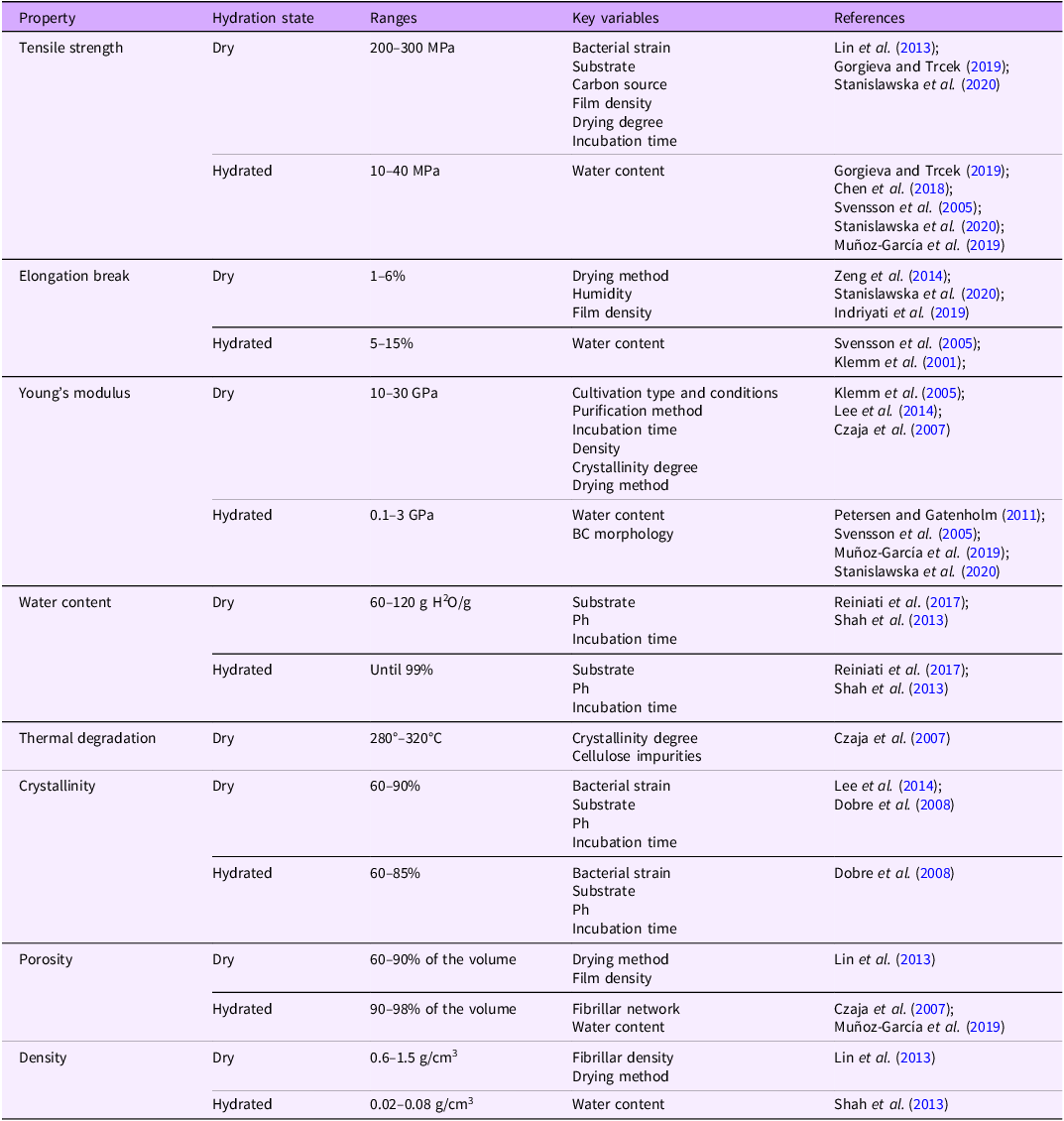
Pure BC obtained through static culture in standard medium exhibits mechanical properties that evolve significantly, as they are strongly influenced by numerous environmental factors and starting medium parameters (Mohammadkazemi et al. Reference Mohammadkazemi, Azin and Ashori2015), such as temperature (Vermette Reference Vermette2024), pH (Vermette Reference Vermette2024), Brix degrees (Halib et al. Reference Halib, Perrone, Cemazar, Dapas, Farra, Abrami, Chiarappa, Forte, Zanconati, Pozzato, Murena, Fiotti, Lapasin, Cansolino, Grassi and Grassi2017), glucose concentration (Vermette Reference Vermette2024), oxygenation (Mohite and Patil Reference Mohite and Patil2014), and drying method (Gullo et al. Reference Gullo, La China, Falcone and Giudici2018). Consequently, the values determining mechanical performance vary significantly within the ranges reported in Table 1.
Properties of BC obtained through static fermentation process

Table 1. Long description
The table lists eight mechanical and physical properties of Bacterial Cellulose (BC), comparing dry and hydrated states. The properties presented are: Tensile Strength, Elongation Break, Young’s Modulus, Water Content, Thermal Degradation, Crystallinity, Porosity, and Density.
Despite promising mechanical properties, the challenging scalability of BC stems not only from production limitations but also from intrinsic constraints related to the material’s poor hydrophobicity. Among the various properties illustrated, it is necessary to emphasize how BC exhibits marked sensitivity to moisture and liquids, which represents one of the main obstacles for applications in durable product design. This intrinsic hydrophilicity, linked to the nanometric porous structure, causes super-contraction when exposed to water, compromising structural integrity and technical properties (Armstrong Reference Armstrong2022; Provin et al. Reference Provin, Dos Reis, Hilesheim, Bianchet, De Aguiar Dutra and Cubas2021).
This temporal instability worsens with aging: water absorption disrupts hydrogen bonds between nanofibers, increasing chain mobility and reducing structural rigidity (Izakura et al. Reference Izakura, Koga and Uetani2021), while hydrolytic degradation causes irreversible chain scission after repeated exposure to moisture (Molina-Romero et al. Reference Molina-Romero, Arteaga-Ballesteros, Guevara-Morales, San Martín-Martínez and Vieyra2021). These limitations compel designers to implement end-of-life design strategies that validate targeted applications with premeditated and circular duration, or to develop stabilization solutions that preserve BC’s mechanical performance and significantly extend its service life.
Numerous inorganic stabilization solutions are effective in achieving superhydrophobicity in BC, yet they irreversibly compromise its native biodegradability. Examples include TiO/PDMS nanoparticles (Wang et al. Reference Wang, Zhao, Wahid, Zhao, Qin, Bai, Xie, Zhong and Jia2021), ultrasonic silane treatments (Ybañez and Camacho Reference Ybañez and Camacho2021), oxygen plasma and CVD fluorosilanes (Leal et al. Reference Leal, Cristelo, Silvestre, Fortunato, Sousa, Alves, Correia, Lanceros-Mendez and Gama2020), and silica coatings (Gao et al. Reference Gao, Li, Bao, Hu, Nian, Feng, An, Li, Xian and Zhang2019). As highlighted by Lee and Congdon (Reference Lee and Congdon2020), such chemical processes create a conflict between durability and end-of-life: “the same act of fixing the material may affect its ability to degrade at the end of its life” (Lee and Congdon Reference Lee and Congdon2020). Precisely to preserve the essential biodegradability of biomaterials within the framework of circular transition, research is developing various stabilization attempts with organic agents. In this field, modifications are systematically classified according to whether they occur concurrently with BC biosynthesis, in situ strategies, which influence nanofiber assembly during fermentation, or are applied post-production to the already-formed membrane, ex situ strategies, encompassing physical, chemical, and biological surface treatments (Cazón and Vázquez Reference Cazón and Vázquez2021). This taxonomic distinction has become a standard reference framework in BC research and proves particularly relevant when evaluating the compatibility of any stabilization approach with accessible, non-specialized production contexts.
Organic stabilization solutions currently present in the literature offer promising approaches, still in the experimental phase, improving moisture resistance without sacrificing BC’s native biodegradability. The field has progressed considerably in recent years, confirming that water resistance and compostability are not mutually exclusive objectives in BC-based materials. Examples include crosslinking with citric acid (Yu et al. Reference Yu, Yang, Wang, Zhang and Sun2023), Pickering emulsions based on beeswax (Xie et al. Reference Xie, Zhang, Luo, Wang, Li, Li and Liu2020), and BC-chitosan composites with vapor barrier and antimicrobial properties (Strnad and Zemljič Reference Strnad and Zemljič2023). Organic ex situ esterification strategies applied to kombucha-derived BC, using long-chain alkenyl succinic anhydrides as acylating agents, have demonstrated the feasibility of achieving robust gains in resistance to water, water vapor, oxygen, and UV light, while preserving compostability (Jiang et al. Reference Jiang, Shi, Cheung and Ngai2023). Further confirming this direction, surface modification of SCOBY-derived BC with stearic acid and apple powder, both biodegradable modifiers, yielded water contact angles (WCA) up to 125°, with theoretical modeling confirming that the hydrophobization effect is primarily governed by component interactions rather than surface roughness alone (Bryszewska et al. Reference Bryszewska, Pareja, Kaczmarek, Sobczyk-Guzenda, Piotrowska and Batory2024). At the intersection of biotechnology and materials science, biodegradable protein-based coatings represent a further ex situ strategy of growing interest: applying recombinant BslA protein, a bacterial biofilm surface layer protein, via spray coating to BC non-woven textiles yielded WCAs of 109°, soil degradation rates of 80% within seven days, and demonstrated recyclability of the protein itself through enzymatic recovery, establishing a fully circular approach to textile waterproofing (Gilmour et al. Reference Gilmour, Dell’Agnese, Bonney, Unthank, White, Scott, Sherry, James, Jiang, Dade-Robertson and Zhang2025).
Collectively, these studies confirm that the theme of BC water resistance is an active and expanding research frontier, capable of producing results that are both technically significant and environmentally coherent. However, all these approaches share a critical limitation that is rarely addressed explicitly: they are systematically disconnected from the accessible, DIY-oriented production context that characterizes BC cultivation in design research and experimental practice. Organic esterification requires pre-swelling with synthetic solvents and controlled reaction conditions; recombinant protein production demands specialized biotechnological infrastructure; SCOBY-based chemical modifications, while conceptually aligned with fermentation culture, still depend on laboratory-grade reagents and equipment. This gap between technical performance and experimental accessibility is particularly significant in the context of material driven design (MDD), where the designer’s ability to work hands-on with a material at reduced scale, understanding its behavior across applications, sectors, and timeframes, is itself a form of design knowledge (Rognoli et al. Reference Rognoli, Bianchini, Maffei and Karana2015). Furthermore, none of these studies systematically address the long-term behavioral evolution of the treated material, leaving unresolved how surface hydrophobicity, structural integrity, and aesthetic performance develop over time under repeated exposure to moisture, a fundamental gap when designing for extended service life.
Within experimental research, an interesting case, albeit still constrained to laboratory activity, is that of fungal proteins entrapped by Kim et al. (Reference Kim, Song and Kim2021) on BC through immersion/compression, which demonstrated significant durability improvement while maintaining native biodegradability. This approach demonstrates the possibility of exploiting the complementary properties of mycelium, particularly its natural hydrophobic cuticle (Cai et al. Reference Cai, Gao, Zhao, Ding, Jiang, Yagtu, Zhu, Zhang, Ebner, Mayrhofer-Reinhartshuber, Kainz, Chenthamara, Akcapinar, Shen and Druzhinina2020), which offers a symbiotic solution to BC’s hydrophilic limitations.
Mycelium is of particular interest not only for its hydrophobic characteristics but also because it represents one of the most studied and accessible GMs for DIY experimentation, not requiring particularly sophisticated sterile environments (Jones et al. Reference Jones, Mautner, Luenco, Bismarck and John2020).
It has also been experimentally demonstrated in literature that mycelium can grow symbiotically through BC, forming robust bio-hybrid composites for bio-leather and packaging with strong natural adhesion, without the need for adhesives (Hoenerloh et al. Reference Hoenerloh, Ozkan and Scott2022). Studies such as MYCOlullose demonstrate that BC stabilizes mycelial growth, creating bio-hybrids with excellent structural cohesion (Piórecka et al. Reference Piórecka, Scully, Salmane, Parker, Cruz, Thomsen, Ratti and Tamke2024). However, despite studies demonstrating that the natural hydrophobicity of mycelium effectively mitigates BC’s water sensitivity in bio-hybrid composites, systematic analyses linking this property to the material’s aging behavior are lacking.
Specifically, while organic ex situ strategies have demonstrated that hydrophobicity and biodegradability can coexist at the material level, the long-term behavioral evolution of these properties has not yet been systematically documented in literature. This gap carries particular weight for design practice, which has so far integrated GMs through MDD method and DIY experimentation primarily by embracing planned end-of-life as a design strategy, accepting the material’s temporal limits as a project constraint rather than resolving them. Expanding this approach requires, nonetheless, understanding what degree of moisture resistance these materials can achieve within the bounds of DIY-compatible methods: not to replace laboratory-grade solutions, but to broaden the design possibilities available to practitioners working directly with GMs, and to inform more differentiated project decisions about durability, application contexts, and end-of-life scenarios. The present study contributes to this understanding by systematically observing the long-term behavior of two DIY-compatible stabilization strategies under repeated moisture exposure.
Methodology
With the objective of investigating the relationship between material stabilization strategies and their preservation over time, the applied methodology identifies in the comparison between two case studies the tangible representation of the research hypotheses. The comparison operates specifically on the shared material base, BC in both cases, and on the common observed parameter of hydrophobic performance and aging over time, rather than on the structural, formal, or scalar equivalence of the two artifacts, which differ significantly in design approach and configuration. The investigation specifically focuses on hydrophobicity, a parameter closely correlated with aging phenomena. Hydrophobicity constitutes the critical variable for the durability of cellulose-based materials: the hygroscopic nature of BC renders it extremely vulnerable to environmental humidity and direct contact with liquids, factors that drastically alter its mechanical performance, dimensional stability, and chemical composition through swelling processes and subsequent hornification (Aghajanzadeh et al. Reference Aghajanzadeh, Haminiuk and Hublik2025). Within the scope of this phenomenological investigation, determining how different design responses protect BC from water action means evaluating not only their functional effectiveness within the product-system but also identifying preliminary criteria relevant to understanding the conditions that might support future industrialization pathways for the material.
The research analyzes the effectiveness of solutions adopted within a complex application such as upholstered furniture covering, excluding the analysis of isolated specimens in favor of a real-use context. The stool was selected as a common demonstrative object, configured as a typology of minimal complexity within the reference sector, in which the material is subjected to a combination of stresses: the structural tension necessary for the covering, surface wear due to continuous contact with the user, and exposure to thermo-hygrometric environmental variations.
The choice of case studies allows mapping two distinct yet complementary approaches to the same problem: (1) Tensioni Molecolari analyzes the optimization of BC in large-format sheets to obtain, in the shortest possible time, a single padded component; here, water and moisture resistance is achieved through finishing treatments applied in the post-drying phase; (2) Un_Skin experiments with biological and structural stabilization through coupling with fungal mycelium, prioritizing the possibilities of growth optimization and obtaining a good material combination, namely a material characterized by an effective mycelial coating.
Both projects were developed within the same methodological framework of MDD (Karana et al. Reference Karana, Pedgley and Rognoli2014, Reference Karana, Barati, Rognoli and Zeeuw van der Laan2015) integrated with the DIY approach (Rognoli et al. Reference Rognoli, Bianchini, Maffei and Karana2015), a framework that proves particularly generative when applied to experimental and emerging materials such as BC, precisely because it foregrounds the designer’s direct, embodied engagement with material behavior as a legitimate form of design knowledge. It is precisely this shared methodological grounding that makes the two case studies comparable: not in terms of formal, scalar, or structural equivalence, because the two artifacts differ significantly in design approach and configuration, but in terms of the conditions under which they were produced and observed. In both cases, the designer directly managed the entire process of material growth and transformation using accessible instrumentation and low-intensity technological processes, making it reasonable to attribute variations in long-term performance primarily to the chosen stabilization strategy rather than to disparities in production means, while acknowledging that full experimental control is not achievable within a DIY-oriented research context. The formal diversity of the two objects is not a limitation but a consequence of this approach: applying the same methodological framework to the same material and application context, each project interpreted the design challenge in the way that best suited the specific properties and possibilities of the material under experimentation.
This research therefore positions itself at the intersection of grown materials science and design practice, offering phenomenological observations from functional prototypes rather than controlled laboratory testing. The findings do not conclusively determine industrial scalability pathways but rather identify relevant criteria and promising conditions that merit further investigation through standardized testing protocols.
The two case studies are analyzed separately, identifying for each project objectives, the material production method, the resulting material characteristics, and observations conducted 18 months after realization. Subsequently, the nature of these artifacts, functional prototypes already subjected to a natural aging process, enabled the adoption of a comparative phenomenological analysis.
The a posteriori analysis and comparison of physical artifacts contribute to evaluating the material under actual use conditions, offering contextualized observations that complement but do not replace controlled laboratory assessment. It is necessary to specify that the prototypes were not subjected to standardized or continuous usage cycles during the 18-month observation period. The artifacts were manipulated in numerically limited situations, configured as demonstrative objects rather than products in intensive daily use. This methodological choice, while limiting the possibility of evaluating resistance to repeated mechanical wear, allows isolating and documenting natural aging phenomena induced primarily by environmental exposure (thermo-hygrometric variations, oxidation, chemical degradation) rather than by usage stresses. The objective is therefore not the quantitative performance comparison between the two systems, but the phenomenological documentation of how different biological stabilization strategies influence the material’s degradation trajectory over time.
Through systematic and qualitative observation of material experience (Giaccardi and Karana Reference Giaccardi and Karana2015; Karana et al. Reference Karana, Pedgley and Rognoli2014), the fundamental parameters most relevant to biomaterial reliability over time are mapped. Chromatic stability constitutes a key indicator of chemical degradation: chromatic shift in cellulosic materials is directly correlated with oxidative processes that alter molecular structure during aging (Zou et al. Reference Zou, Gurnagul, Uesaka and Bouchard1994), negatively influencing aesthetic perception and visual quality of the finished product. Surface texture alteration is recognized as a determining parameter for acceptability in the textile and upholstered furniture sectors, where tactile properties, including roughness, softness, and smoothness, directly influence perceived comfort and purchasing decisions (Salopek Čubrić and Čubrić Reference Salopek Čubrić and Čubrić2024). The persistence of the hydrophobic barrier provides an indication of the material’s ability to maintain its functional performance when exposed to environmental humidity and daily use, a critical factor for textiles intended for applications in direct contact with users. Finally, elastic qualities represent a fundamental requirement for upholstery textiles: the loss of elasticity and consequent embrittlement compromise the material’s ability to accommodate mechanical deformations, drastically reducing its durability and suitability for use (Salopek Čubrić and Čubrić Reference Salopek Čubrić and Čubrić2024). Observations conducted 18 months after production offer a situated overview of bio-composite behavior under real-use conditions, treating time as a design-relevant variable through which material performance can be contextually evaluated.
Case studies analysis
The application of BC in the upholstered furniture sector represents a relatively recent field of experimentation, in which the transition from laboratory specimens to functional prototypes requires direct confrontation with the performance requirements of the use context. Unlike conventional materials, for which consolidated testing protocols and sector regulations exist, GMs need to be validated through prolonged observation that considers not only initial performance but especially their temporal evolution (Camere and Karana Reference Camere and Karana2018). This observation, however, necessarily reflects the specific conditions of each prototype rather than producing generalizable performance data: the absence of standardized testing protocols and the inherent variability of DIY-based production processes mean that findings should be read as contextualized design insights rather than as conclusive material assessments. Nevertheless, phenomenological observation of functional prototypes retains significant value within design research, as it generates material knowledge oriented toward practice: understanding how chromatic stability, surface texture, hydrophobic persistence, and elastic behavior evolve over time in DIY-produced BC artifacts can offer the design community contextualized guidance toward stabilization choices that are both accessible and durable, progressively expanding the range of viable design strategies beyond programmed end-of-life.
In the upholstered furniture sector, expectations toward covering materials include mechanical resistance, aesthetic durability, tactile comfort, and maintainability over time. These requirements clash with BC’s intrinsic criticalities, particularly moisture sensitivity and temporal instability, making stabilization strategies necessary that do not compromise the material’s native biodegradability. The design challenge therefore consists in balancing protection and sustainability, developing solutions that extend the material’s service life while maintaining its circularity characteristics.
The two analyzed projects address this challenge through different yet methodologically coherent paths, both rooted in the culture of MDD and DIY experimentation. It is important to acknowledge upfront that the two case studies differ substantially in form, scale, construction method, and finishing approach, which limits the scope of direct comparison. What the two projects share, and what makes their parallel analysis meaningful, is the base material (BC produced through accessible fermentation processes) and the reference sector (upholstered furniture covering), within which each project developed distinct design responses to achieve the desired material performance. The analysis will indeed identify and discuss these divergent design decisions, in terms of production, finishing, and stabilization strategy, precisely to illuminate how different approaches to the same material and application context produce different aging trajectories. The comparison should therefore be understood as operating at the level of material trajectories rather than product equivalence; the specific differences between the two prototypes and the consequent implications for comparability will be addressed explicitly in the conclusions.
The following analysis documents not only the material results obtained but also the decision-making processes that led to specific choices in production, finishing, and application. It is worth noting that longitudinal data on the temporal behavior of grown materials under real-use conditions remains rare in the literature, as most studies focus on short-term performance tests or accelerated laboratory protocols that do not capture the complexity of natural aging. The two case studies presented here offer an unusual opportunity in this sense: both artifacts are functional prototypes that have undergone 18 months of uncontrolled environmental exposure, including fluctuating ambient humidity, temperature variation, and indirect UV exposure typical of indoor domestic settings, without being subjected to the mechanical wear of intensive daily use. Attention is therefore devoted to observing the transformations that occurred in this period, which, while insufficient to draw definitive conclusions, proved sufficient to highlight early degradation phenomena or, conversely, signs of structural and surface stability.
The documentation of the two cases therefore offers an empirical basis (situated, qualitative, and bound to the specific conditions of these artifacts) for exploring which BC stabilization approaches prove most effective in a real application context. The observation that mycelium-coupled BC appears to age more favorably than beeswax-treated BC, under these specific and scarcely controlled conditions, constitutes the central finding of this study. This finding is presented not as a generalizable conclusion but as a design-relevant signal that warrants further investigation through controlled and reproducible testing. These findings will subsequently be analyzed in parallel with the purpose of understanding how the different approaches and production contexts influence the material’s behavior during aging, offering design indications potentially transferable to other experimentations in the field of GMs for design.
Case study 1: tensioni molecolari
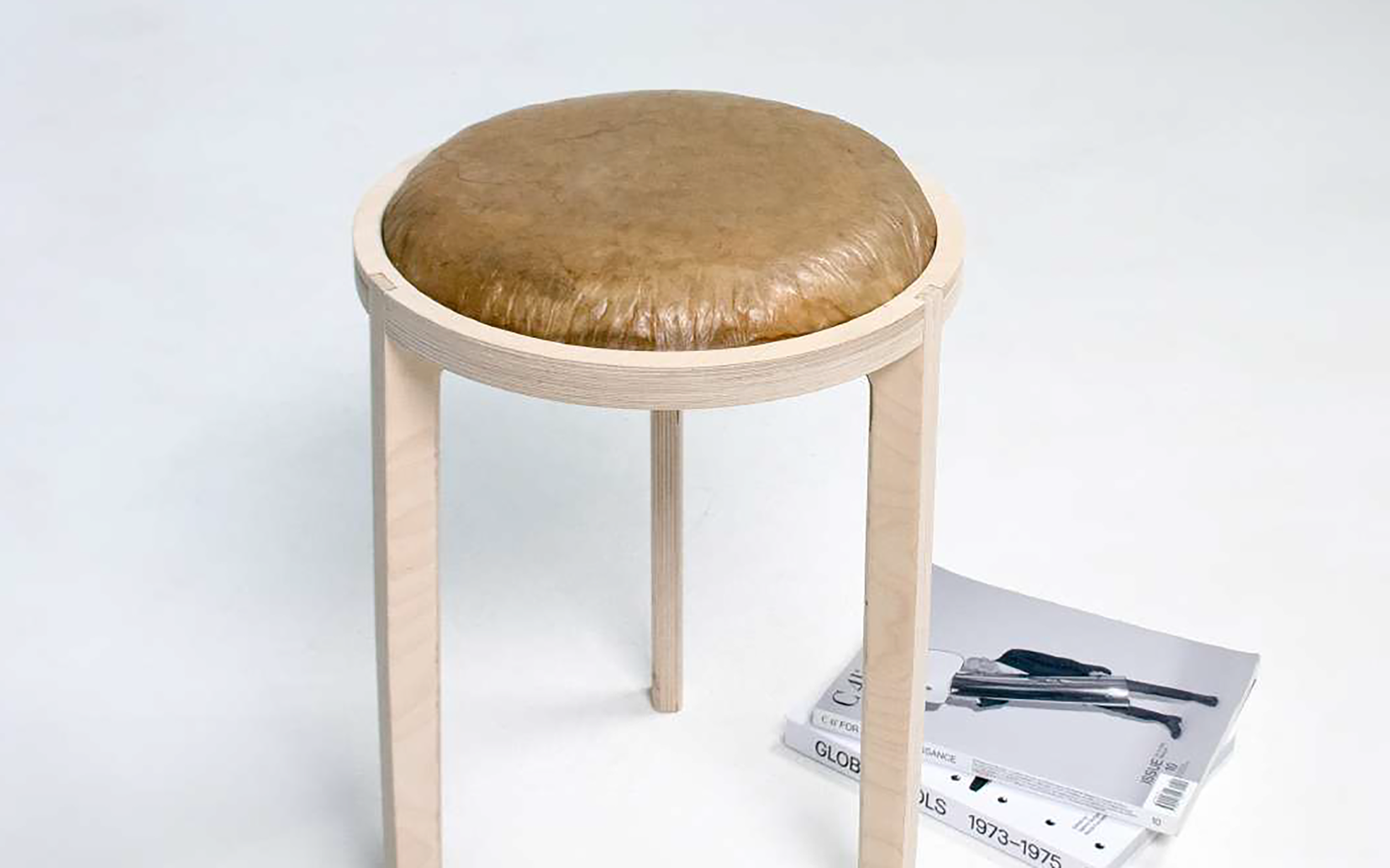
The Tensioni Molecolari project explores the application potential of BC in the upholstered furniture sector, proposing the material as a functional covering for cushioning made entirely from natural materials (Zeccara Reference Zeccara2023). The research investigates BC’s elastic and structural capabilities to replace traditional manufacturing processes, eliminating seams, adhesives, or permanent mechanical joints. The construction process exploits a peculiar property of BC: self-welding. During the advanced drying phases, when the material has already expelled most of the water but still retains plasticity, the padding made of carded wool and natural latex foam is inserted between two cellulose sheets. The edges of the sheets, kept in contact until the end of drying, spontaneously fuse creating a unique and sealed component, without the need for additional joints. This method produces an easily disassemblable element for disposal or recycling, since BC can be removed through environmental exposure (Bueno et al. Reference Bueno, Fultz, Husseneder, Keenan and Sathivel2023), while being easily tensionable within the specifically designed wooden structure (Figure 1).
Tensioni Molecolari, Zeccara Reference Zeccara2023. Photo by Francesca Zeccara.

Figure 1. Long description
A strool features a light wooden frame with three legs supporting a circular rim. The round seat is upholstered, and covered with Bacterial Cellulose, which has a golden-brown colour and an irregular, organic surface texture.
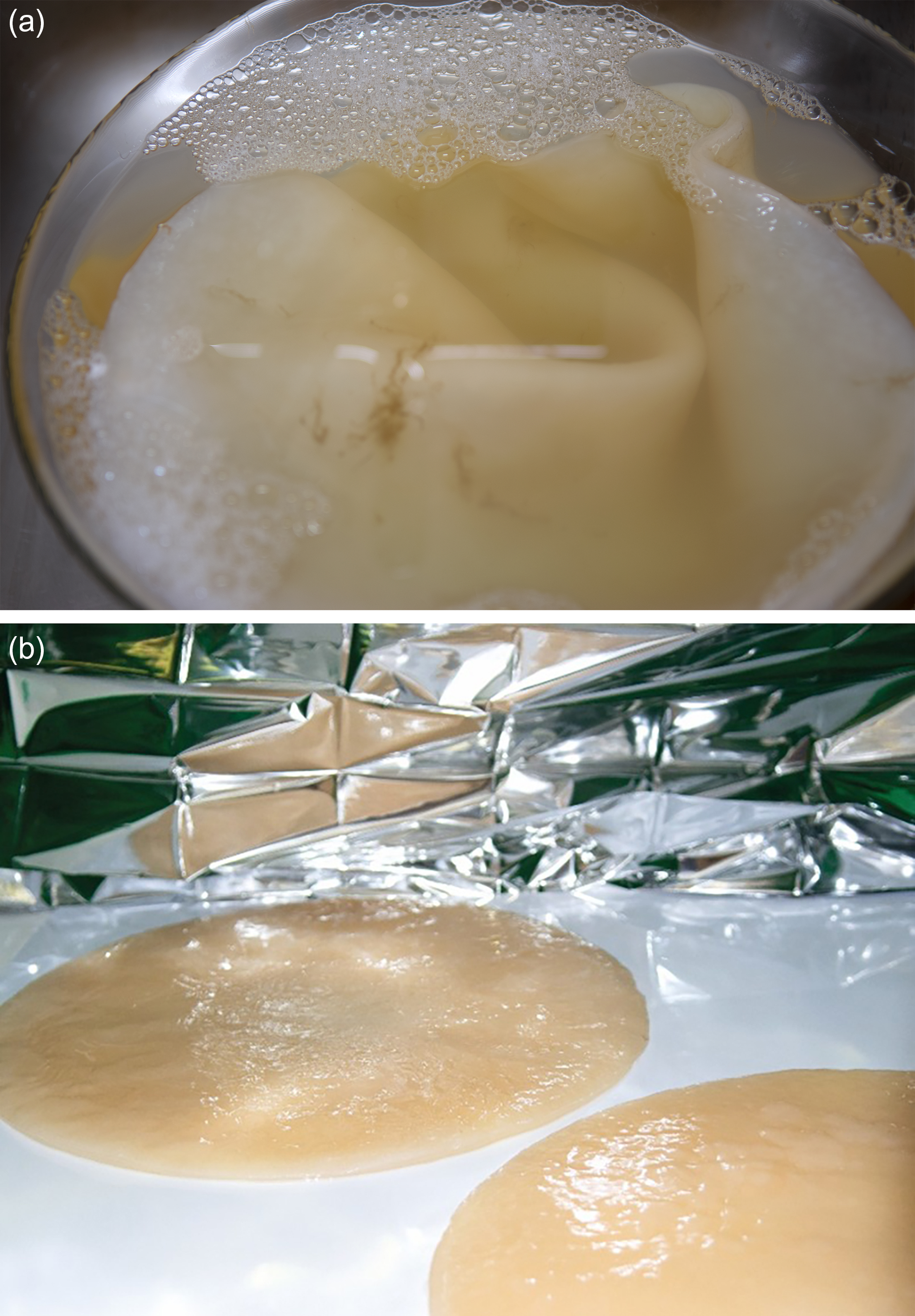
Skin represents the fundamental aspect of the project: the mechanical stress imparted by the external frame eliminates any permanent connection between covering and structure. This design strategy requires BC sheets equipped with high mechanical resistance to withstand constant tensile forces without tearing, and of large dimensions to minimize the number of components to be assembled. For the realization of a single cushion, BC sheets with a diameter of 35 cm were produced (Figure. 2).
BC cultivation process for Tensioni Molecolari stool’s padding component. From the top: (a) Post-cultivation BC sheet after washing; (b) drying phase. Photos by Zeccara Reference Zeccara2023.

Figure 2. Long description
Two phases of the Bacterial Cellulose cultivation process used for the padding component of the Tensioni Molecolari stool. Image (a) shows a glass container holding a BC sheet submerged in water for the post-fermentation washing phase. Image (b) shows two circular-shaped BC sheets placed for the drying phase; the drying area is covered by a thermal blanket.
To operate with these dimensions on an experimental scale, the research focused on optimizing the nutrients necessary to obtain pure BC in the shortest possible time, maximizing fermentation productivity. By concentrating exclusively on the growth of natural cellulose to ensure the physico-mechanical performance required by the tensioning system, in situ hydrophobicity experimentation was not pursued, that is, through the addition of modifying substances directly to the culture medium. Consequently, water resistance was addressed only in the finishing phase through manual application of beeswax, a natural hydrophobic agent commonly employed to improve liquid barrier in porous cellulosic materials without compromising their compostability (Xie et al. Reference Xie, Zhang, Luo, Wang, Li, Li and Liu2020). Pure BC exhibits a WCA of approximately 53°, indicative of a strongly hydrophilic material. Surface application of beeswax temporarily improves moisture barrier properties, increasing the contact angle up to 96–110° (Bayés et al. Reference Bayés, Aguado, Tarrés, Planella and Delgado-Aguilar2023), but this protection remains limited over time due to the pure physical nature of the coating. This solution enabled achieving the initial project objectives while maintaining the desired dimensions and conferring initially optimal tactile properties to the prototype, additionally eliminating the sticky sensation typical of dried BC.
However, the adoption of a purely surface treatment revealed critical limitations in protecting the cellulosic matrix from aging phenomena and environmental degradation. Monitoring of the artifact twelve months after its realization highlighted three main criticalities related to the material’s temporal instability in prolonged use contexts.
First, a significant compromise in elasticity was observed: the covering underwent progressive embrittlement, losing the ability to accommodate the mechanical deformations of the internal padding. This phenomenon is attributable to hornification, an irreversible physico-chemical process in which the removal of interstitial water induces the formation of extremely stable intra-fiber hydrogen bonds, preventing the structure from regaining its original flexibility even in the presence of moisture (Aghajanzadeh et al. Reference Aghajanzadeh, Haminiuk and Hublik2025).
Second, the prototype manifested a marked chromatic alteration: BC shifted toward an intense dark-brown tonality, a phenomenon attributable to the oxidation of the cellulosic structure during aging, with formation of carbonyl and carboxyl groups that act as chromophores (Ahn et al. Reference Ahn, Zaccaron, Zwirchmayr, Hettegger, Hofinger, Bacher, Henniges, Hosoya, Potthast and Rosenau2019).
Finally, an alteration in tactile qualities was observed: approximately six months after the beeswax treatment, the surface began to manifest pronounced stickiness. Since beeswax, applied at the end of drying, does not establish chemical bonds with the cellulose structure but acts as a physical coating, it tends to degrade or migrate outward. This instability alters sensory interaction with the user and favors the accumulation of environmental impurities on the material surface.
The Tensioni Molecolari case study validates BC’s effectiveness as an integrated and disassemblable covering system but underscores the need to develop deeper stabilization strategies to overcome the material’s intrinsic vulnerability to aging and preserve its mechanical and tactile qualities in the long term.
Case study 2: un_skin
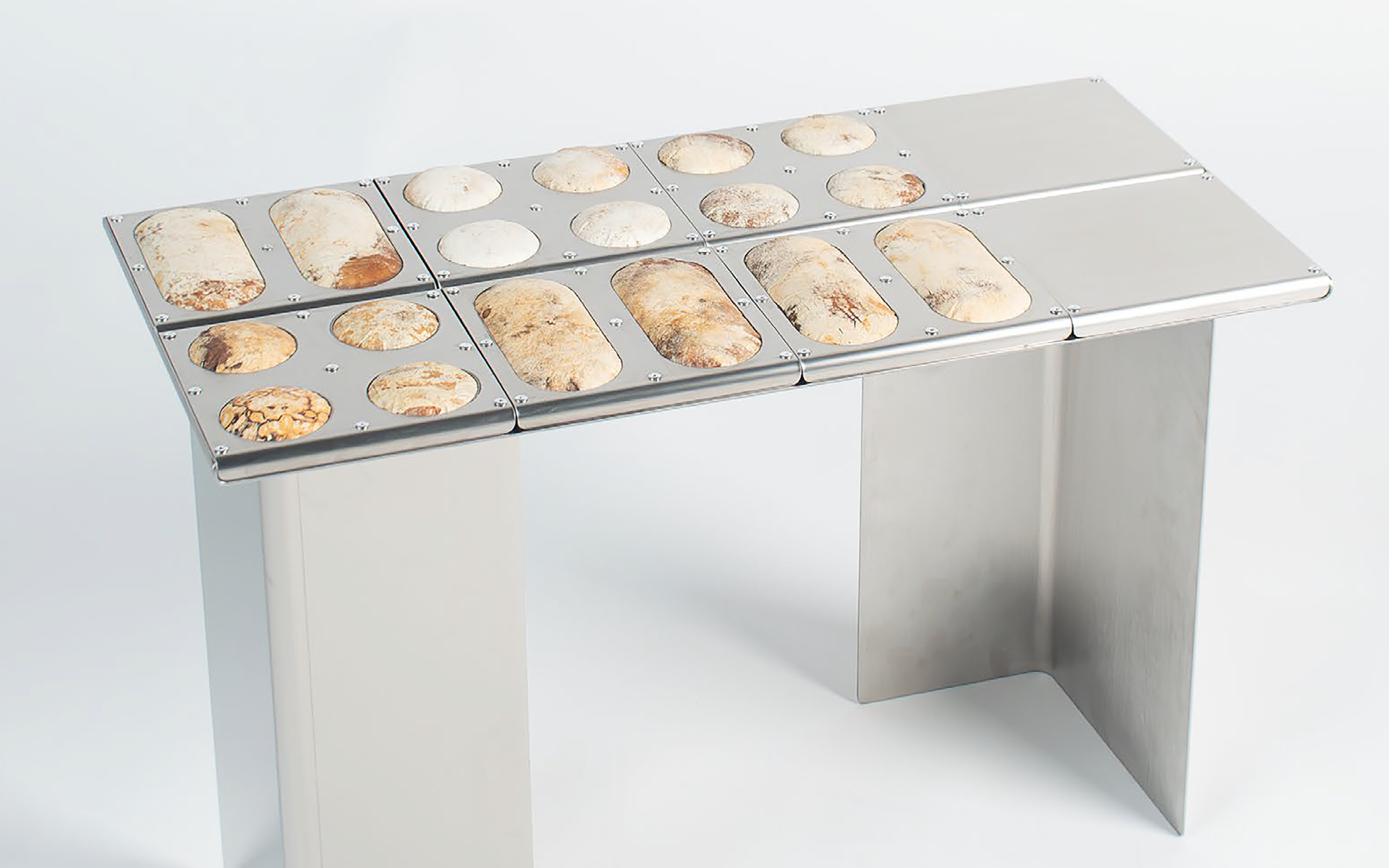
The Un_Skin project, developed by Francesca Fedele, aims to overcome BC’s water resistance limitations through a biological stabilization strategy. Unlike surface treatments, the research explores the creation of a bio-hybrid material by integrating BC with fungal mycelium. The primary objective is designing a material that maintains native biodegradability while being capable of resisting environmental stresses thanks to the intrinsic properties of fungal organisms (Fedele Reference Fedele2024). The obtained material was applied as a covering for small natural latex foam paddings, placed under tension on a metal matrix (Figure 3).
Un_Skin project, Fedele Reference Fedele2024. Photo by Francesca Fedele.

Figure 3. Long description
A bench made of a stainless steel base with two flat U-shaped legs supporting a rectangular seat. The seat is composed of modular metal panels, each containing padded elements upholstered in Bacterial Cellulose and mycelium in two shapes: rounded rectangles and circles.
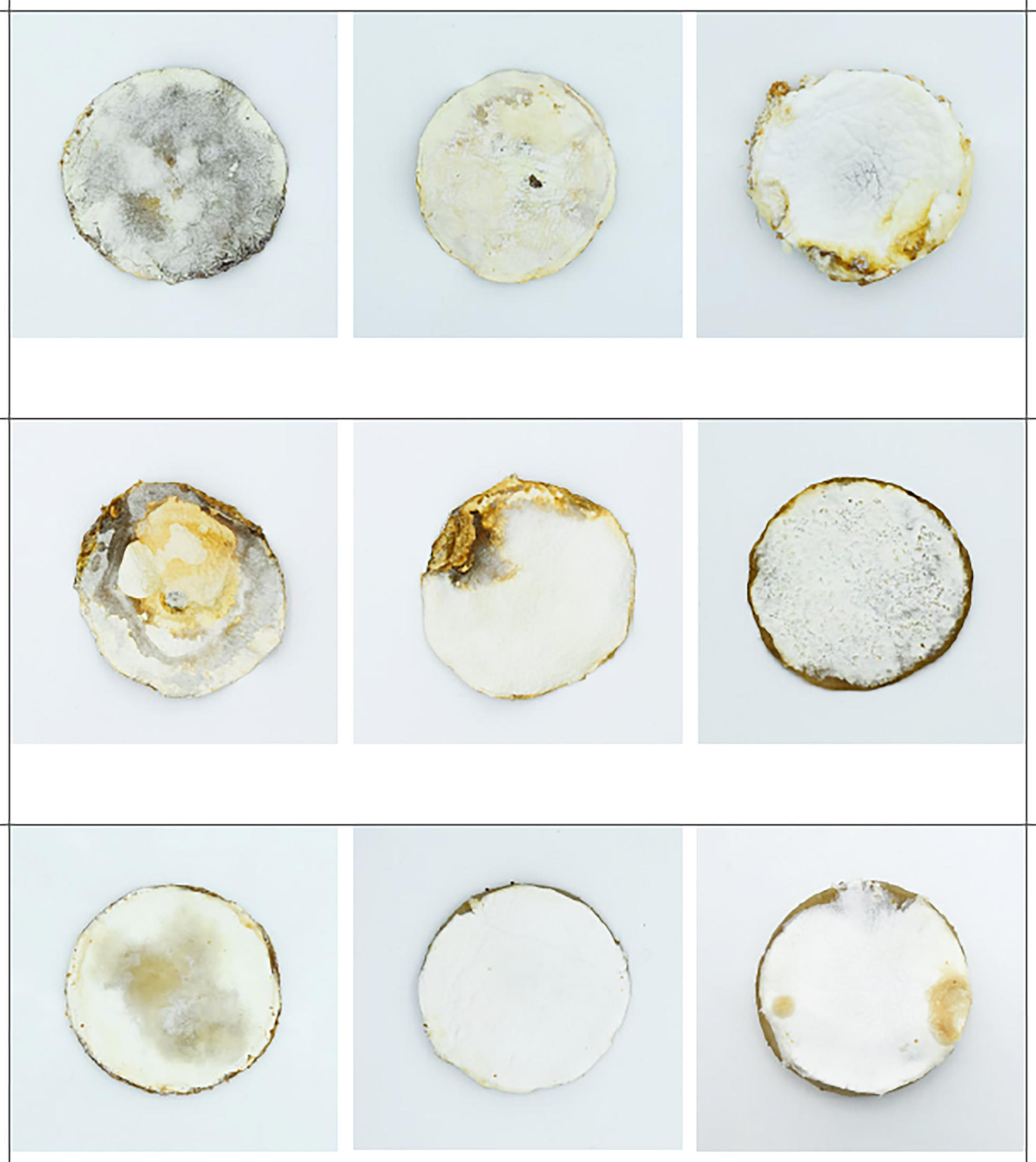
The bio-hybrid material was obtained by growing mycelium directly onto the surface of pre-formed BC sheets, not through the cellulose matrix, but as a biological coating that progressively and completely covers the underlying cellulose layer. The process involved preparing a pre-inoculated substrate with fungal spores, which was applied onto kombucha-derived BC sheets and cultivated under controlled ambient conditions until full mycelial coverage was achieved (Figure 4). The precise compositional ratio between the BC and mycelial layers was not quantified within this DIY-oriented experimental framework; the thickness of the fungal layer varied across samples depending on growth conditions and was evaluated qualitatively through visual and tactile inspection. The most effective samples were those in which the BC surface was uniformly and completely covered by a dense mycelial layer, with no areas of sparse or absent growth, a condition that proved critical for the consistency of both hydrophobic performance and long-term aging behavior. The project’s innovation resides in the symbiotic coupling between the two organisms: the hyphae, the microscopic tubular filaments that constitute the vegetative apparatus of fungi, intertwining on and within the immediate surface of the BC sheet, forming a dense network that acts simultaneously as a mechanical reinforcement and as a biological hydrophobic barrier. This strategy exploit the natural water resistance of proteins produced by the fungus, particularly hydrophobins, low molecular weight proteins present in the fungal cell wall that confer hydrophobicity to the surface (Wösten Reference Wösten2001), which act as an internal and deep protective barrier, mitigating cellulose’s tendency to swell in the presence of moisture (Haneef et al. Reference Haneef, Ceseracciu, Canale, Bayer, Heredia-Guerrero and Athanassiou2017).
Selection of BC-mycelium composite samples from the Un_Skin project, showing varying degrees of mycelial coverage across different production batches. Photos by Fedele Reference Fedele2024.

Figure 4. Long description
Nine circular BC-mycelium composite samples arranged in a 3x3 grid. The samples display a wide range of mycelial coverage and colour variation across different production batches. Some samples show predominantly mycelium covering, while others display a largely uncovered BC surface. The variation across samples reflects the natural, unpredictable growth behaviour of the living materials.
From a performance standpoint, the coupled material exhibits greater dimensional stability, namely a reduced tendency to vary in volume, contract, or deform when exposed to environmental humidity changes. This occurs because the hyphal network acts as a mechanical structural reinforcement that constrains cellulose fibers, limiting their molecular movements and the hydrothermal collapse typical of pure cellulosic materials (Elsacker et al. Reference Elsacker, Vandelook, Van Wylick, Ruytinx, De Laet and Peeters2020). Aesthetically, the material acquires an opaque and velvety texture, eliminating the characteristic stickiness typical of natural BC. These properties, however, are contingent on the quality and uniformity of mycelial coverage: in areas where the fungal layer is thin or absent, the BC substrate remains exposed and behaves comparably to untreated material.
The effectiveness of biological stabilization is confirmed by contact angle analysis, which measures the degree of surface hydrophobicity. While pure BC exhibits low contact angles (indicative of a hydrophilic material), the bio-hybrid composite shows significantly higher values, often exceeding 90–100°, suggesting that the mycelial surface layer substantially reduces water penetration into the porous cellulose structure (Fedele Reference Fedele2024). These values should be read as indicative rather than definitive, given the variability inherent in DIY-produced biological composites and the absence of standardized measurement protocols in this experimental context.
However, biological integration reduces the material’s ability to deform without breaking: while on one hand it increases tear resistance thanks to the fungal reinforcement, on the other hand the material becomes less elastic and denser compared to pure BC.
The prototyping phase highlighted significant limitations related to the management of production times and volumes. To resolve dimensional criticalities and ensure homogeneous mycelium coverage, the research opted for producing sheets of reduced dimensions. This choice allowed better control of biological growth and achieving perfect adhesion between the two materials, limiting areas of necrosis or sparse growth typical of large surfaces cultivated in non-industrial contexts. Modularity therefore became the design strategy for the final application, transforming a biological limitation into an aesthetic and functional characteristic of the covering (Fedele Reference Fedele2024).
Observations conducted twelve months after production offer contextualized data on the material’s behavior over time. The bio-hybrid composite shows reduced chromatic shift, with limited color alterations in areas of complete mycelial coverage. This stability appears to depend directly on the thickness of the fungal portion and the effectiveness of the drying process: it is indeed visible, in sample areas where mycelium has adhered partially or is missing, that aging processes are more pronounced and accelerated, suggesting that the continuity of the biological layer is the primary determinant of long-term performance. The presence of mycelium appears to support maintenance of water resistance performance over time and may contribute to slowing the overall aging of the matrix. Moreover, this solution does not require periodic maintenance or reapplications, since the protection is structurally integrated into the material itself thanks to biological symbiosis (Elsacker et al. Reference Elsacker, Vandelook, Van Wylick, Ruytinx, De Laet and Peeters2020).
The observations of the two case studies
The parallel observation of the Tensioni Molecolari and Un_Skin case studies does not respond to a simple logic of performance verification, but rather offers a situated investigation into how different DIY-compatible offers a situated investigation into how different DIY-compatible biological stabilization strategies may influence BC’s aging trajectory. The adopted methodology departs from standardized laboratory protocols on specimens, such as WCA measurement or tensile tests according to ISO standards, to embrace a phenomenological observation approach conducted on finished products, where material properties are intrinsically linked to the form and real stresses related to the artifact’s structure. Where quantitative indicators are reported, such as contact angle values at 18 months, these should be understood as single-point cross-sectional data reflecting the comparative hydrophobic state of the two materials at the same temporal reference, rather than as longitudinal tracking of performance evolution; the absence of baseline measurements at t = 0 limits their interpretive scope accordingly.
The comparative analysis is articulated across four fundamental parameters considered most relevant to the material’s behavior over time in the upholstered furniture sector: chromatic alteration, as an indicator of oxidation processes and chemical degradation that in BC systems has been correlated with the formation of carbonyl and carboxyl chromophores during aging (Ahn et al. Reference Ahn, Zaccaron, Zwirchmayr, Hettegger, Hofinger, Bacher, Henniges, Hosoya, Potthast and Rosenau2019), though the specific dynamics in bio-hybrid composites remain incompletely understood; tactile properties, relevant for the acceptability in upholstery furniture sector, where surface qualities directly influence perceived comfort; hydrophobicity, a critical parameter for evaluating resistance to environmental humidity in materials intended for daily use; and elasticity, whose progressive loss through embrittlement poses functional risks for covering applications subject to structural tension. Across all four parameters, observations are reported as phenomenological evidence specific to these artifacts and their production conditions; where mechanistic explanations are offered, these draw on analogies with documented behavior in comparable cellulosic systems and should be read as interpretive hypotheses rather than demonstrated causal accounts. The signs of chromatic alteration, surface transformation, and temporal change documented here are not read exclusively as performance failures, but also as material expressions of biological aging that carry aesthetic and informational value, a reading aligned with the framework of graceful aging and material imperfection as a design resource (Rognoli and Karana Reference Rognoli, Karana, Karana, Pedgley and Rognoli2014).
Chromatic alteration and visible indicators of aging
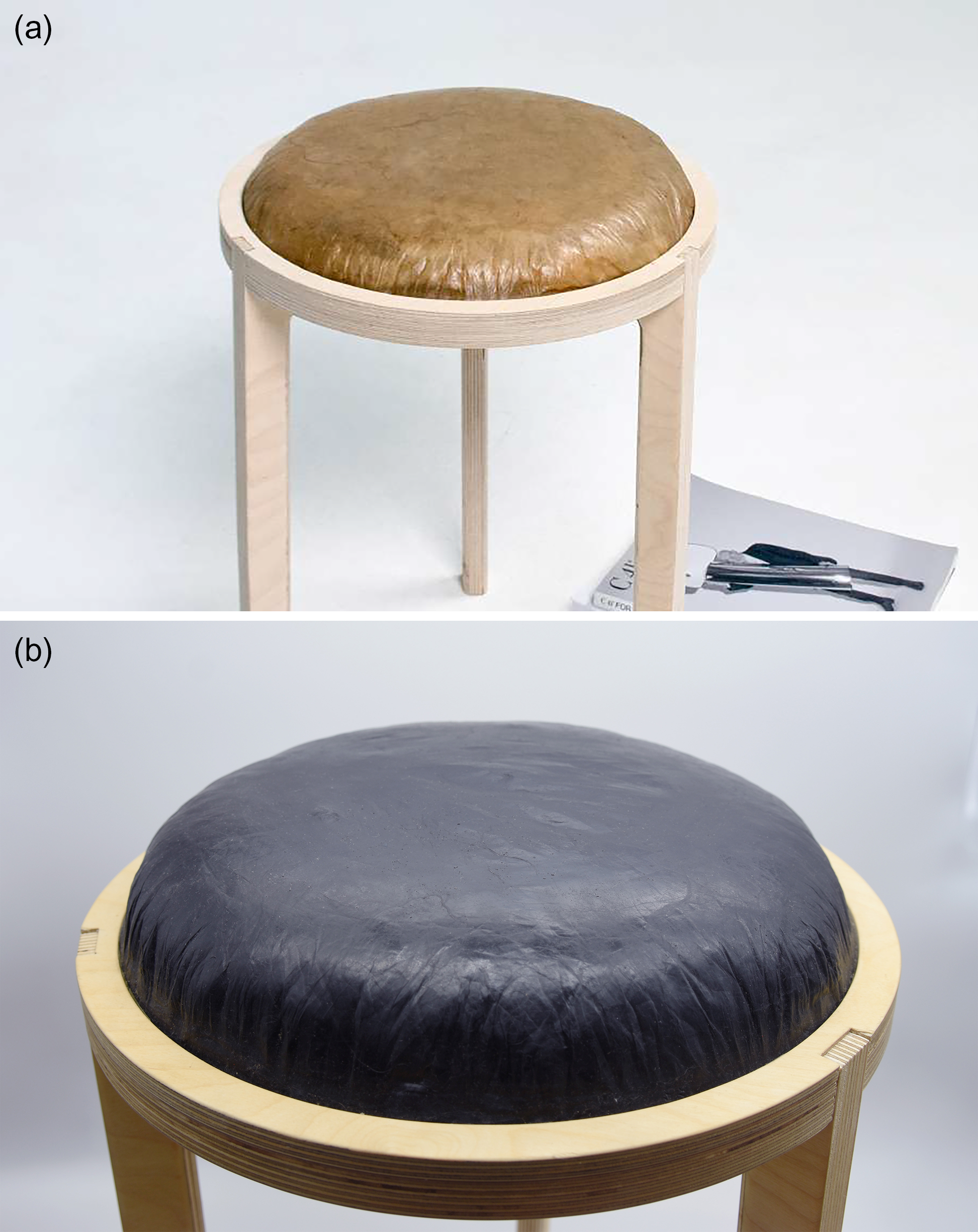
Color alteration represents the most explicit visual marker of cellulose’s chemical-physical aging, a phenomenon associated in cellulosic materials with oxidation processes and degradation of polymer chains induced by environmental exposure (Ahn et al. Reference Ahn, Zaccaron, Zwirchmayr, Hettegger, Hofinger, Bacher, Henniges, Hosoya, Potthast and Rosenau2019); the specific dynamics of this process in bio-hybrid BC composites remain, however, less documented and are here interpreted by analogy with behavior observed in conventional cellulosic systems. In the case of Tensioni Molecolari, a significant and widespread chromatic modification is observed, with a shift toward brownish tonalities (Figure 5b) that substantially alters the artifact’s original aesthetics (Figure 5a).
Tensioni Molecolari prototype. From the top: (a) Immediately after fabrication; (b) after 18 months. Photos by Zeccara Reference Zeccara2023–2025.

Figure 5. Long description
The figure documents the chromatic transformation of the stool over time through two images. Image (a) shows the stool immediately after fabrication: the round BC seat displays a golden-brown colour with a smooth, slightly glossy surface. Image (b) shows the same stool after 18 months: the BC seat has undergone a significant chromatic transformation, turning almost entirely dark brown to black, with visible surface markings and texture changes.
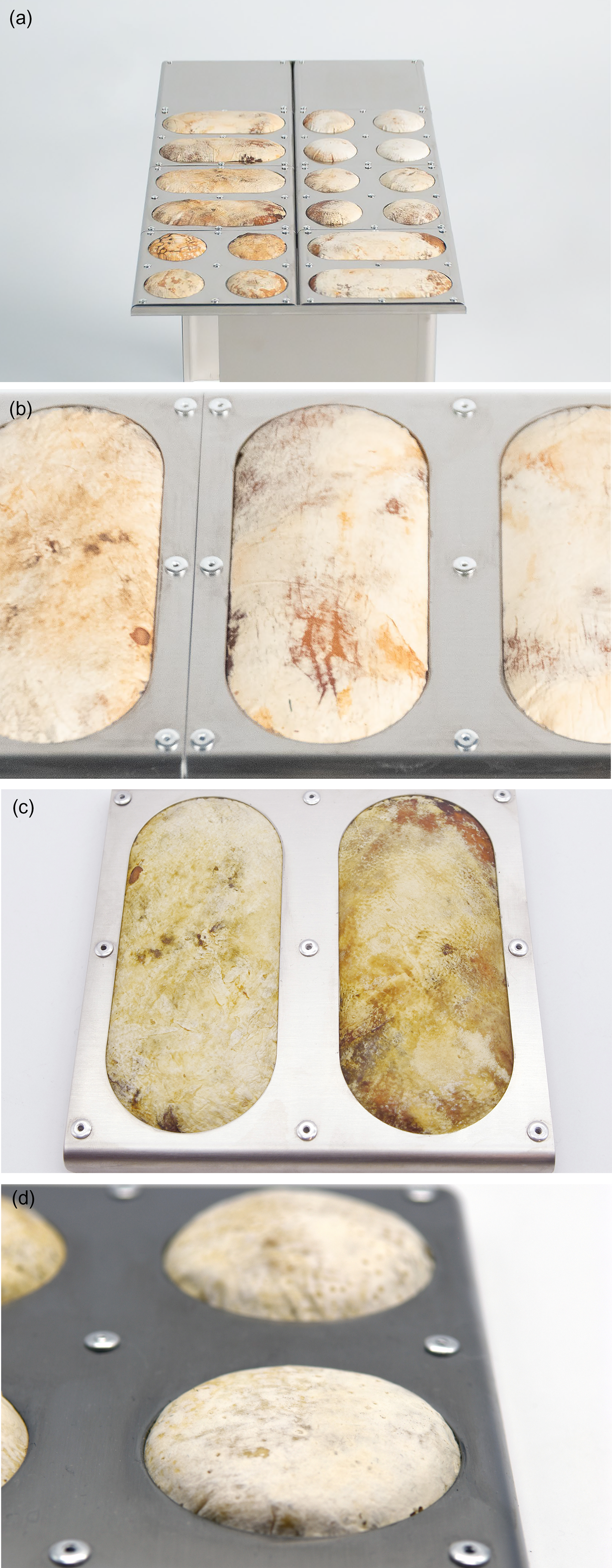
In the Un_Skin project’s paddings, a different aging pattern is observed: in areas where mycelium has completely adhered to BC, the surface appears to maintain greater chromatic stability, with mycelium showing only limited yellowing of its original color. This is visible in the comparison between paddings in the post-prototyping phase (Figure 6a, b) and after 18 months (Figure 6c, d). Whether this stability is attributable to the physical shielding effect of the mycelial layer, to the chemical properties of fungal proteins such as hydrophobins, or to a combination of both, cannot be determined from phenomenological observation alone; the finding nonetheless suggests that biological coupling may represent a relevant strategy for chromatic preservation in this type of application.
Un_Skin prototype: initial state and aging. From the top: (a) Prototype immediately after fabrication; (b) detail of a padding module at fabrication; (c) the same padding module after 18 months; (d) detail of a second padding module after 18 months. Photos by Fedele Reference Fedele2024.

Figure 6. Long description
Image (a) shows a top view of the bench immediately after fabrication: the stainless steel modular seat features padding, displaying a range of beige and golden-brown tones with organic surface textures. Image (b) shows a close-up detail of three rounded rectangular padding modules, revealing the varied surface markings and colour variations of the BC-mycelium composite, ranging from pale beige to golden-brown spots. Image (c) shows a top view of a single stainless steel panel containing two rounded rectangular padding modules after 18 months: the BC-mycelium surface displays a more beige-yellow tone with darker areas. Image (d) shows a close-up detail of circular padding modules housed in a dark grey panel after 18 months, with a predominantly white surface and subtle beige and grey markings, indicating continued material transformation over time.
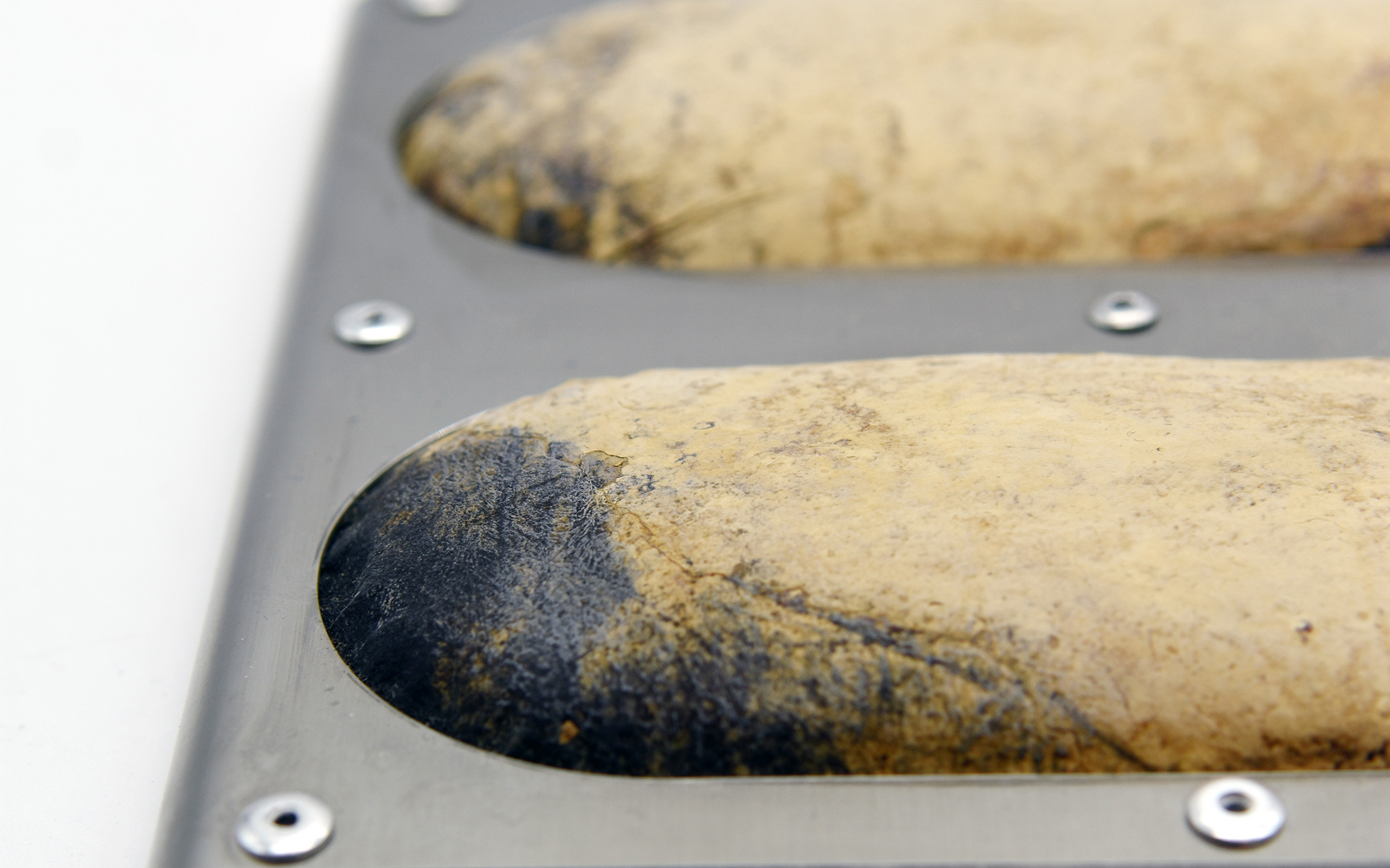
In areas where BC has remained partially uncovered by the mycelial coating, a chromatic shift of comparable intensity and tonality to that observed in Tensioni Molecolari is visible (Figure 7). This observation is consistent with the hypothesis that unprotected BC undergoes aging regardless of the stabilization strategy applied to adjacent areas and suggests that beeswax application alone may have limited effect on preventing chromatic modification over this timeframe. Within this specific observational context, the biological coupling strategy appears to offer an interesting tool for aesthetic management: mycelium’s relative chromatic stability may contribute to preserving the artifact’s visual integrity over time.
Un_Skin prototype after 18 months, Fedele Reference Fedele2024. Photo by Francesca Zeccara. The image highlights the marked chromatic shift visible in the area where mycelial growth was less uniform, in contrast with the greater chromatic stability of the fully covered surface.

Figure 7. Long description
The figure shows a close-up detail of two rounded rectangular BC-mycelium padding modules from the bench prototype after 18 months. The modules are housed in a stainless steel panel. The surfaces display a predominantly beige-golden tone in the areas where mycelial coverage was uniform and complete. In contrast, the areas where mycelial growth was less uniform show a marked chromatic shift toward dark grey and black, particularly concentrated along the edges of the modules.
These observations invite a broader reflection on how chromatic alteration and the visible signs of biological aging can be read not only as performance indicators but also as expressive material qualities. Within the framework of graceful aging and material imperfection as a design resource (Rognoli and Karana Reference Rognoli, Karana, Karana, Pedgley and Rognoli2014), the chromatic transformations documented here, both the browning of unprotected BC and the differential aging between covered and uncovered areas, carry aesthetic and communicative value that a design approach oriented toward DIY experimentation and grown materials may choose to incorporate, rather than exclusively suppress.
Assessment of sensory and tactile properties
The evaluation of sensory properties represents a relevant step in the phenomenological assessment of emerging biomaterials within design research, particularly in relation to their potential acceptance within the furniture market (Salopek Čubrić and Čubrić Reference Salopek Čubrić and Čubrić2024).
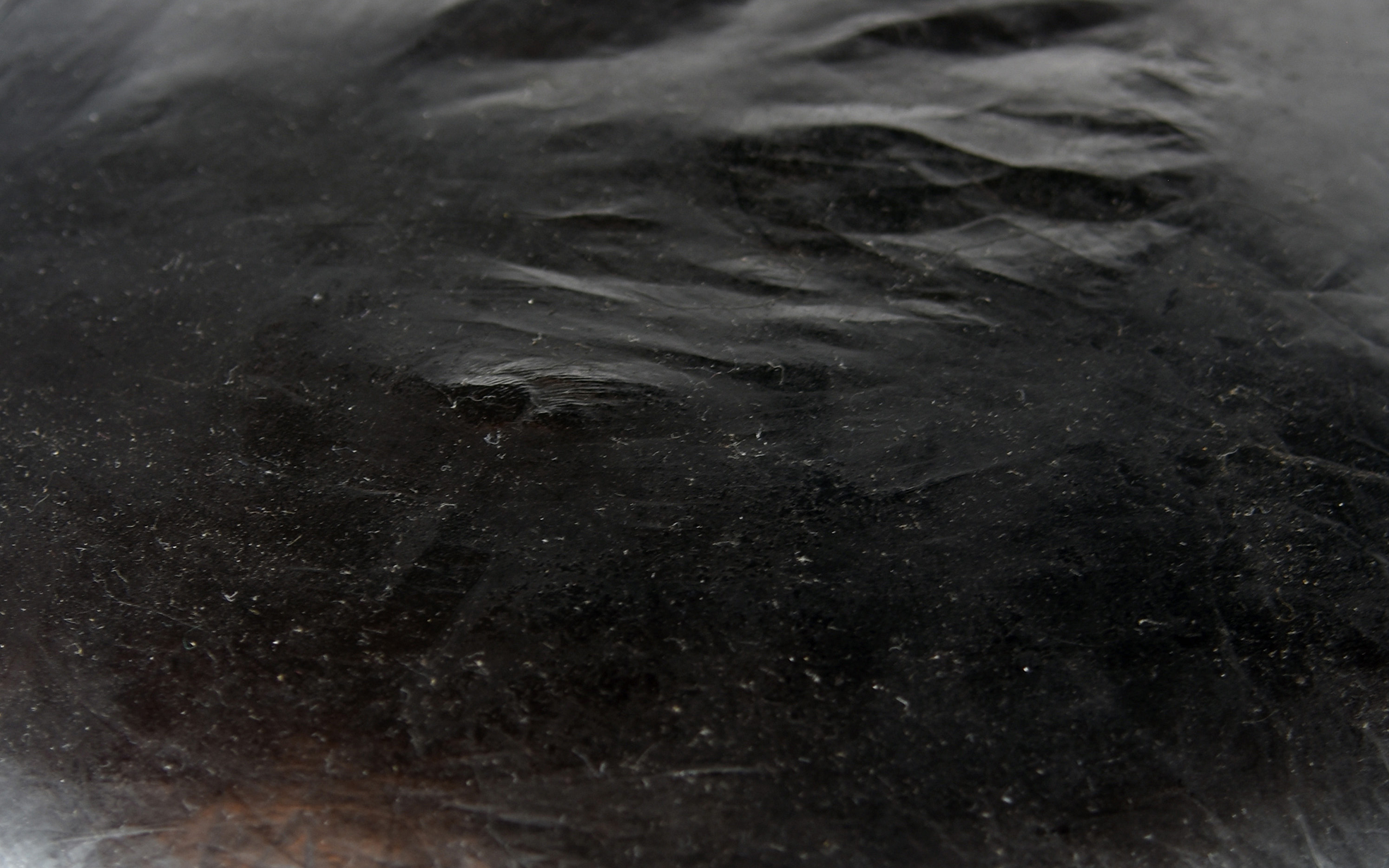
BC, in its natural state, exhibits pronounced stickiness, a characteristic that not only impairs use pleasantness but also favors surface adhesion of dust and impurities, accelerating the artifact’s aesthetic degradation. Observing the surface of the Tensioni Molecolari project’s padding, it is possible to note how the addition of beeswax appears to significantly modify this property: the material largely loses its natural viscosity yet conveys to the user a perception of rigidity and surface hardness. It is also possible to observe the adhesion of dust and impurities on the support surface (Figure 8), highlighting how surface treatment with beeswax, while initially reducing stickiness, does not appear to prevent the accumulation of environmental contaminants over time.
BC padding detail, Tensioni Molecolari prototype after 18 months, Zeccara Reference Zeccara2023. Photo by Francesca Zeccara.

Figure 8. Long description
The figure shows a macro close-up of the Bacterial Cellulose padding surface of the Tensioni Molecolari prototype after 18 months, documenting the surface cracking that developed over time. The image reveals a network of cracks and fractures distributed across the darkened BC surface, alongside fine fibrous filaments and subtle surface undulations.
Conversely, in Un_Skin, the tactile feedback observed is markedly different: mycelium integration appears to confer to the surface a velvety and soft effect, consistent with the filamentous structure of fungal hyphae. This sensory quality seems to eliminate BC’s original stickiness and conveys a perception of warmth and superior tactile comfort, that, in the context of this prototype and this observer’s evaluation, appears more aligned with the expectations typically associated with the upholstered furniture sector. It is relevant to emphasize how this tactile sensation appeared unchanged compared to the post-prototyping phase, maintaining constancy for 18 months, demonstrating the sensory stability of the bio-hybrid composite over time, suggesting a degree of sensory stability in this specific bio-hybrid composite under the conditions documented here, an observation that, while limited to a single prototype evaluated qualitatively, may offer a useful reference point for designers working with grown materials in similar application contexts.
Assessment of hydrophobic properties
The evaluation of water resistance represents a critical parameter for exploring the potential suitability of materials intended for upholstered furniture. Although the WCA constitutes the standardized theoretical reference for quantifying hydrophobicity, rigorous measurement requires controlled laboratory conditions, planar surfaces, and dedicated instrumentation (optical goniometers, calibrated illumination, environment with constant temperature and humidity). In the context of this research, where materials are applied on shaped paddings and observed under uncontrolled environmental conditions, quantitative WCA measurement under fully controlled conditions was not feasible. Furthermore, baseline WCA measurements were not conducted at the time of fabrication for either prototype; this absence means that it is not possible to track how hydrophobic performance evolved over the 18-month period, and the observations reported here reflect the comparative state of the two materials at a single temporal reference point rather than a longitudinal assessment of change. The analysis therefore focused on qualitative phenomenological observation of the dynamic interaction between liquid (water) and material, photographically documented as a contextual comparative indicator of hydrophobic behavior at 18 months from prototyping.
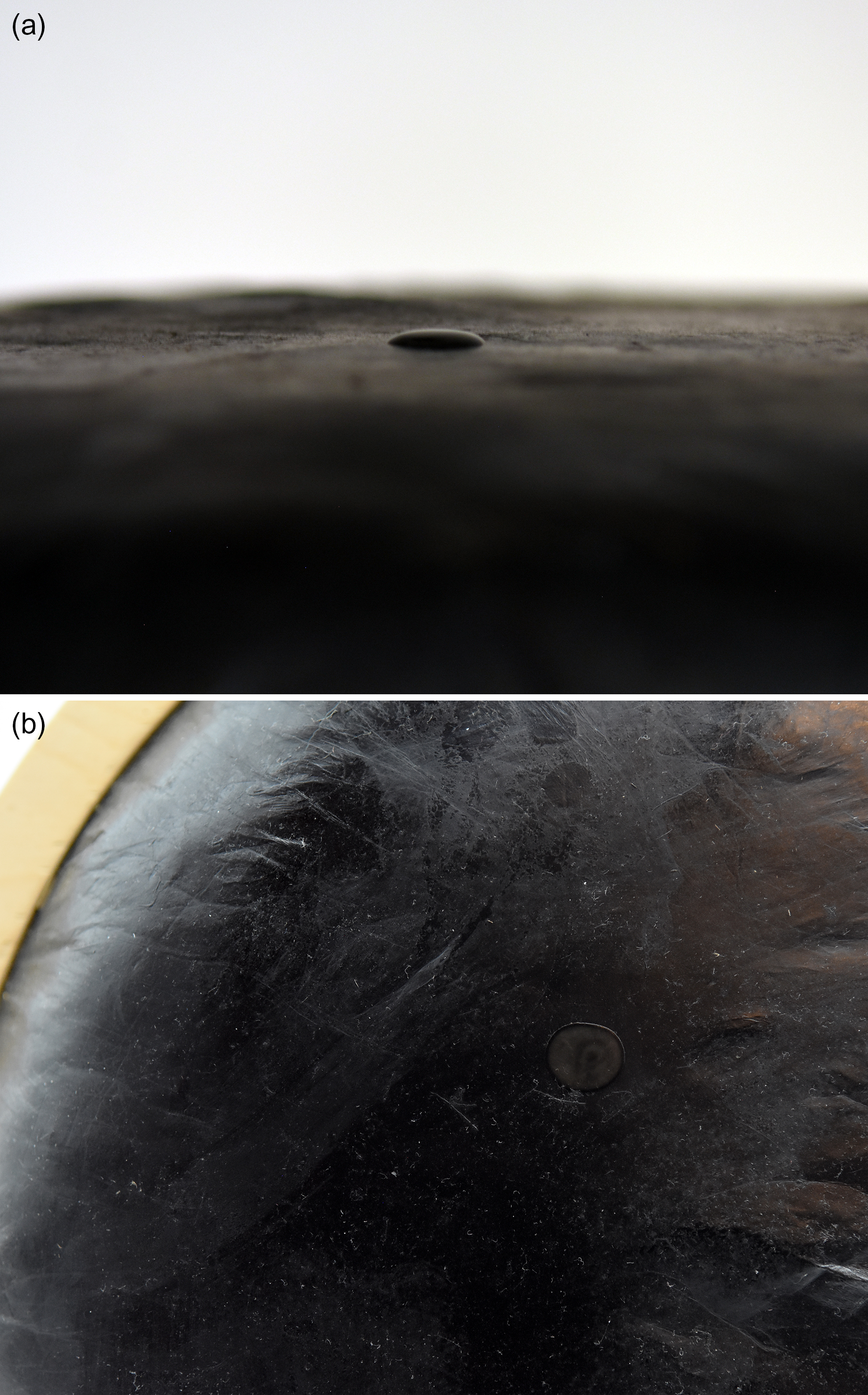
In Tensioni Molecolari, water resistance was initially entrusted to beeswax, which over this timeframe proves to be a limited and partial solution: although the droplet is initially repelled and maintained on the surface (Figure 9a), BC’s hygroscopic nature appears to draw moisture through micro-fissures in the waxy layer, marking the material and modifying its color and consistency (Figure 9b). This behavior is consistent with the physical, rather than chemical, nature of the beeswax coating, which does not establish covalent bonds with the cellulose substrate and is therefore susceptible to progressive migration and redistribution over time; this interpretation, however, is offered as an analogical hypothesis rather than a mechanistically demonstrated account.
Water resistance test on Tensioni Molecolari prototype after 18 months. From the top: (a) Lateral view showing water droplet contact angle on the beeswax-treated surface; (b) top view showing the mark left by water absorption. Photos by Francesca Zeccara.

Figure 9. Long description
The figure a waterdrop on the beeswax-treated BC surface of the Tensioni Molecolari prototype after 18 months. Image (a) shows a lateral close-up view of the darkened BC surface with a small water droplet on it, showing a partial absorption . Image (b) shows a top view of the BC padding after water contact, displaying the mark left by partial water absorption on the surface, visible as a lighter area against the dark background of the aged material.
Moreover, manual application entails relative precision, which may favor localized moisture penetration in areas of thinner coverage.
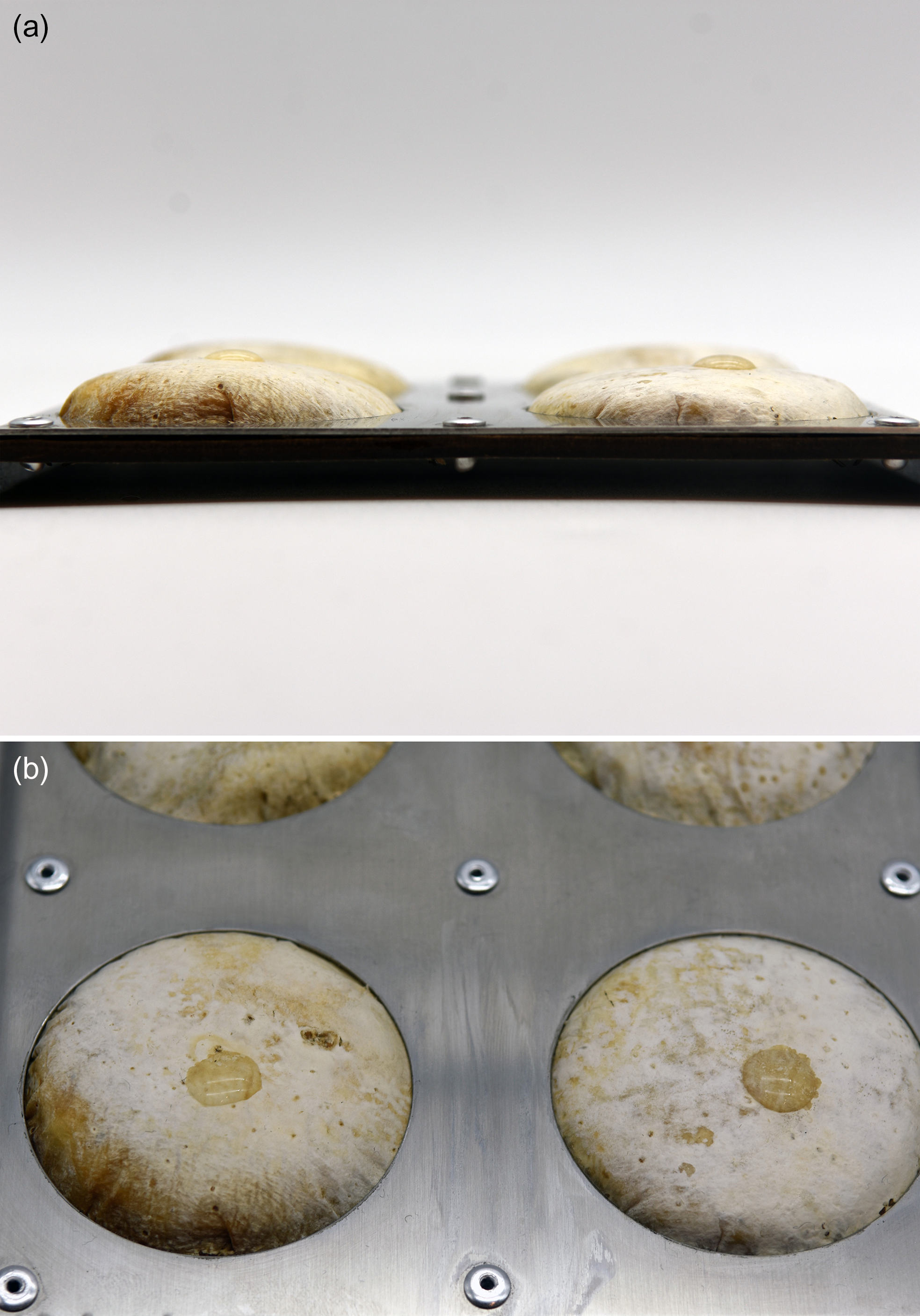
In Un_Skin, the observed interaction between water and the mycelium-covered surface differs notably from that of the beeswax-treated BC: the water droplet tends to remain on the surface without being rapidly absorbed by the underlying structure (Figure 10). It should be noted, however, that the contact angle visible in Figure 9a appears to fall below 90°, which would technically classify the surface as hydrophilic rather than hydrophobic according to conventional WCA thresholds. This observation is acknowledged as a significant limitation in the interpretation of these results: rather than demonstrating hydrophobicity in the strict sense, the mycelium-covered surface appears to offer meaningful moisture resistance relative to unprotected BC, slowing absorption without necessarily achieving full water repellency.
Water resistance test on Un_Skin prototype after 18 months. From the top: (a) Lateral view showing water droplet interaction with the mycelium-covered surface; (b) top view showing the absence of absorption marks. Photos by Zeccara 2024.

Figure 10. Long description
The figure documents a water droplet on the BC-mycelium padding modules of the Un_Skin prototype after 18 months. Image (a) shows a lateral view of a stainless steel panel with two circular padding modules: small water droplets are visible resting on top of the mycelium-covered surfaces, indicating no visible penetration. Image (b) shows a top view of two circular padding modules in a stainless steel panel, each displaying a small water droplet sitting on the surface without leaving absorption marks.
This relative resistance is consistent with mycelium’s documented hydrophobic properties in comparable biological systems, primarily associated with the presence of hydrophobins on the fungal cell wall surface (Wösten Reference Wösten2001). Within the scope of this phenomenological observation, biological coupling appears to offer a more durable moisture management strategy than beeswax surface treatment under these specific conditions, a finding that, despite its methodological limitations, may provide useful orientation for designers exploring DIY-compatible stabilization strategies for BC in upholstered furniture applications.
Evolution of mechanical properties and permanent deformations
The elasticity analysis addresses the methodological limitation of the impossibility of performing comparable load tests, given the substantial structural and dimensional differences between the two artifacts. The investigation therefore focused on morphological evidence accumulated in the 18 months since prototyping, interpreted as qualitative indicators of how each stabilization strategy may influence the material’s mechanical behavior over time under natural aging conditions.
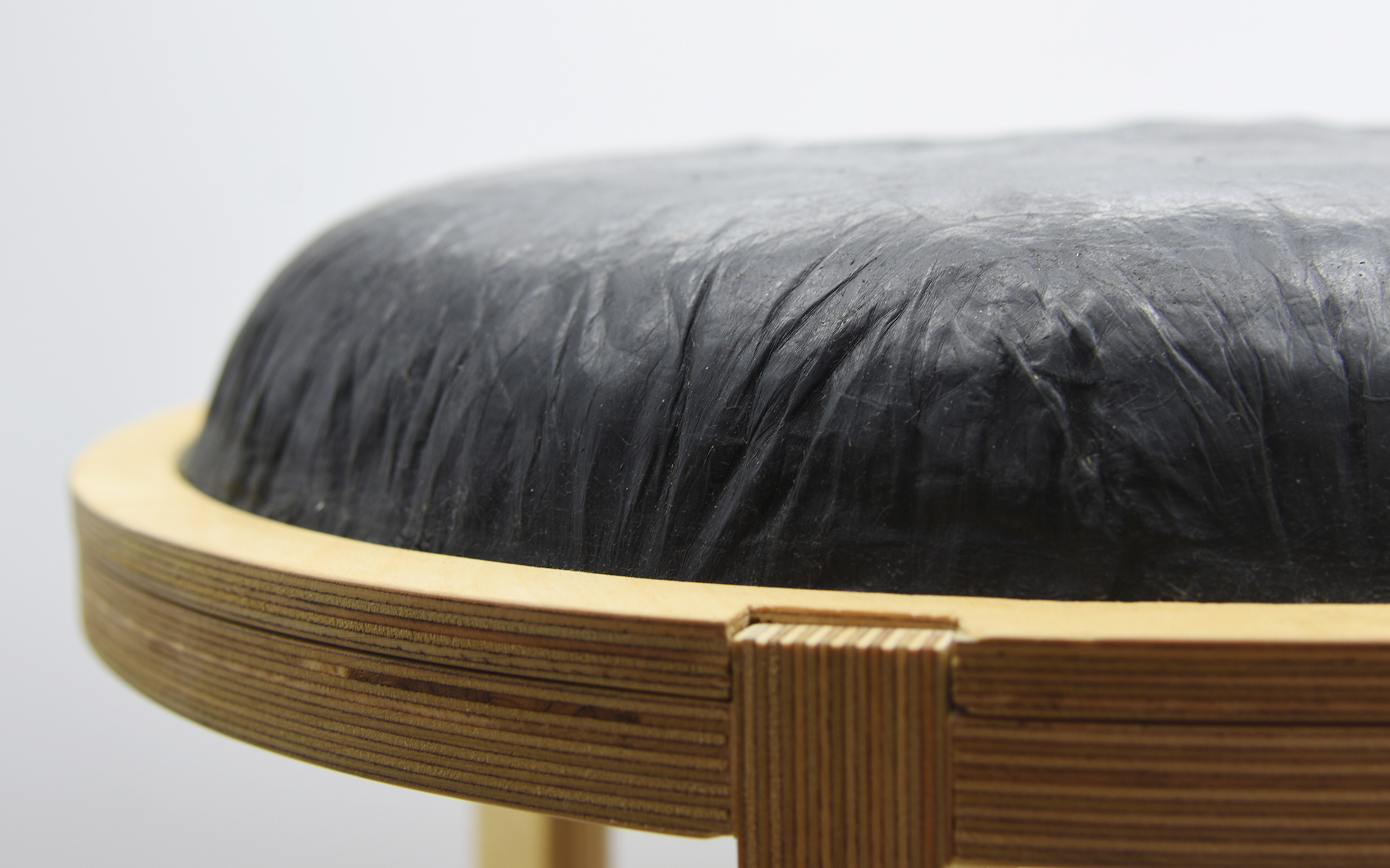
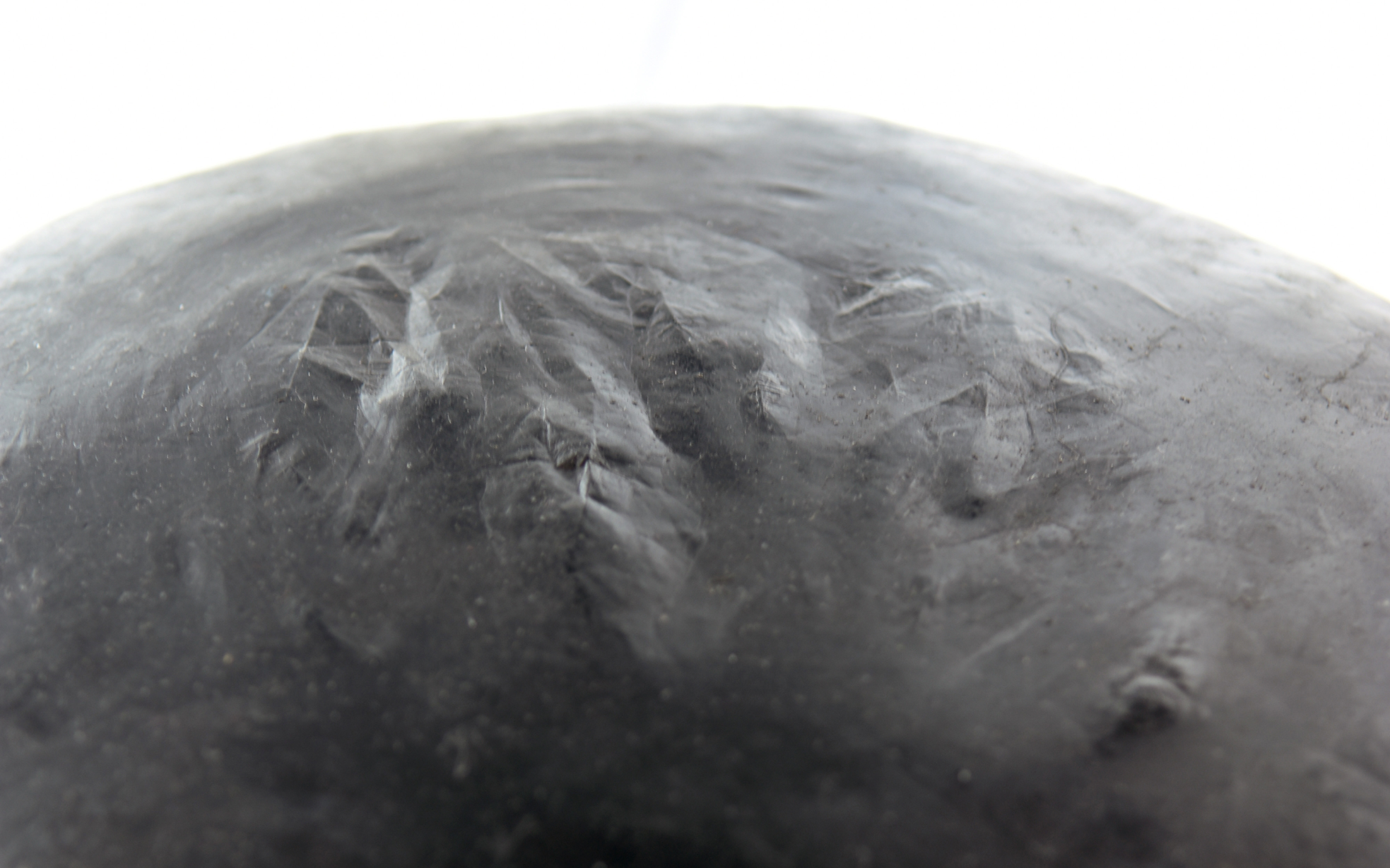
Analyzing the Tensioni Molecolari project, it is possible to observe how aging appears to manifest through evident stiffening: in areas subjected to strong mechanical tensioning, rigid and permanent wrinkles are visible (Figure 11) while in the seating area, plastic deformations of the BC film are observed (Figure 12).
Wrinkles of Tensioni Molecolari prototype after 18 months, Zeccara Reference Zeccara2023. Photo by Francesca Zeccara.

Figure 11. Long description
The figure shows a close-up detail of the BC padding of the Tensioni Molecolari stool after 18 months, focusing on the wrinkling that developed on the material’s surface over time. The BC seat has turned dark grey to black and displays pronounced surface wrinkles and folds, particularly visible along the edges where the padding meets the wooden frame.
Permanent deformations of Tensioni Molecolari prototype after 18 months, F. Zeccara Reference Zeccara2023. Photo by Francesca Zeccara.

Figure 12. Long description
Close-up of the BC padding surface of the Tensioni Molecolari stool after 18 months, documenting the permanent deformations that developed through use over time. The surface is uniformly dark grey to black and displays a pattern of indentations, grooves, and compressed areas distributed across the dome-shaped padding, indicating the material has permanently recorded the mechanical stress of repeated use. Fine fibrous filaments are visible across the surface.
These signs are consistent with progressive material desiccation combined with externally applied forces and tensioning, which together appear to reduce the material’s capacity to recover from mechanical stress over time. The observed stiffening and loss of flexibility are consistent with hornification, a process in which the removal of interstitial water induces the formation of extremely stable intra-fiber hydrogen bonds, preventing the structure from regaining its original flexibility. Notably, BC has been identified as particularly susceptible to this phenomenon compared to plant-derived cellulosic materials, precisely because it lacks the hemicellulose and lignin molecules that act as molecular spacers during drying in plant cellulose, limiting fibril aggregation (Aghajanzadeh et al. Reference Aghajanzadeh, Haminiuk and Hublik2025).
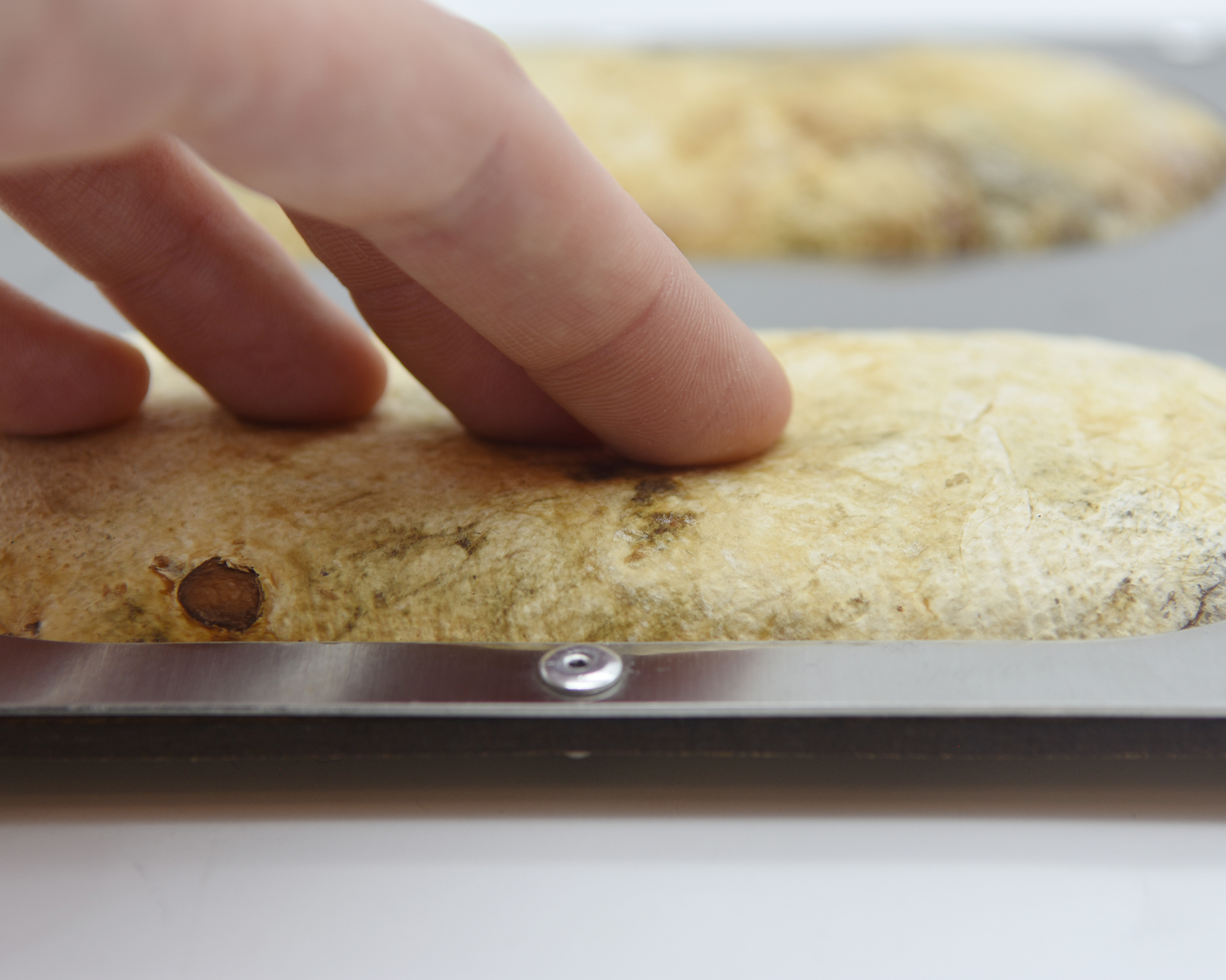
Observing the Un_Skin project’s modular paddings, elasticity appears relatively stabilized: although the elongation capacity was already reduced compared to pure BC in the post-prototyping phase due to integration with mycelium, the material, under compression, shows no visible signs of further change in mechanical properties after 18 months (Figure 13). Whether this apparent stability is attributable to the mechanical reinforcement provided by the hyphal network, to reduced moisture exchange at the surface due to mycelial coverage, or to the combined effect of both, cannot be determined from morphological observation alone. The absence of visible accidental plastic deformations over this period suggests that the bio-hybrid configuration may offer greater dimensional coherence than beeswax-treated BC under comparable natural aging conditions, though this observation remains specific to these prototypes and their stress configurations.
Elastic behavior of Un_Skin prototype after 18 months, Fedele Reference Fedele2024. Photo by Francesca Zeccara.

Figure 13. Long description
The figure shows a hand pressing fingers onto a rounded rectangular BC-mycelium padding module of the Un_Skin prototype after 18 months. The image demonstrates the integrity of the BC-mycelium surface under compression, showing no signs of cracking or delamination despite prolonged aging.
It is necessary to emphasize that the comparison between the two case studies in terms of mechanical behavior is neither direct nor equivalent: the prototypes differ substantially in geometry, constraint system, stress distribution, and load application mode. Actual usage cycles during the 18-month observation period were neither documented nor standardized, making quantitative comparisons of performance under repeated loading not viable within this research framework. The mechanical observations reported here are therefore best understood as phenomenological indications of how different DIY-compatible biological stabilization strategies may influence BC’s aging trajectory under natural conditions, findings that, despite their methodological limitations, may offer relevant orientation for designers approaching these materials in experimental practice. What emerges as potentially relevant is the degree to which each strategy appears capable, or incapable, of preserving original material properties over time, within the specific conditions of these artifacts and this observational context.
Conclusion
The present study has offered a parallel phenomenological observation of two DIY-compatible biological stabilization strategies for BC, focusing on the evolution of observable material properties after 18 months of natural aging. The comparison between the two case studies is not empirical in the strict sense: the two prototypes differ substantially in form, geometry, scale, and stress configuration, and were observed under uncontrolled conditions without standardized usage cycles or baseline measurements at fabrication time. The findings should therefore be read as contextualized design insights, phenomenological indications that identify promising conditions and relevant criteria for future, more systematic investigation, rather than as conclusive scientific evidence. Within these limits, the observations suggest that the capacity to manage moisture exposure over time over time may represent one of the relevant parameters in determining the conditions under which BC might overcome the experimental phase and move toward broader application contexts.
The parallel analysis of aesthetic-sensory yields design implications worth considering. The chromatic and tactile transformations observed in Tensioni Molecolari appear to indicate structural instability that may compromise the perception of material quality and reliability in application contexts where long-term aesthetic consistency is expected. In the framework of graceful aging and material imperfection as a design resource (Rognoli and Karana, Reference Rognoli, Karana, Karana, Pedgley and Rognoli2014), these transformations can alternatively be read as expressive qualities of biological aging, a reading that opens different, though equally legitimate, design directions. The relative constancy demonstrated by the BC-mycelium composite over 18 months observation period suggests that biological coupling may offer a more stable aging trajectory than surface beeswax treatment under these specific conditions. This observation is potentially relevant for the design community’s approach to grown materials: rather than exclusively accepting temporal instability through programmed end-of-life strategies, designers may find in biological co-growth a direction worth exploring for applications where greater material persistence is desirable. The capacity to apparently preserve perceptual integrity over time opens a question about whether it may be possible to shift partially from a logic based on programmed product brevity to a greater durability, a question that this study can only begin to articulate, and that requires further systematic investigation before any industrial design implications can be drawn with confidence.
Regarding the relationship between moisture management and aging, observations suggest that beeswax acts as a temporary limited solution that, in this prototype and under these conditions, does not appear to slow the aging processes of the underlying cellulosic matrix. Biological stabilization through mycelium coupling, by contrast, appears to offer more integrated moisture management, though it is important to note that the WCA observed at 18 months in the Un_Skin prototype appears to fall below the 90° threshold conventionally associated with hydrophobicity, suggesting that the mycelium layer confers meaningful moisture resistance rather than full water repellency in the strict technical sense. Flexibility observations are consistent with this picture: while beeswax-treated BC showed visible signs of progressive stiffening and plastic deformation attributable to hornification processes (Aghajanzadeh et al. Reference Aghajanzadeh, Haminiuk and Hublik2025), though this mechanism has not been directly demonstrated in BC, the mycelium-coupled material showed no visible signs of further mechanical change over the same period. Whether this apparent stability derives from the mechanical reinforcement of the hyphal network, from reduced surface moisture exchange, or from the combined effect of both, cannot be determined from these observations alone.
The contribution of this research resides in having systematically documented the temporal dimension of material aging across four parameters (chromatic stability, tactile properties, moisture behavior, and mechanical integrity) in two DIY-produced BC prototypes observed over 18 months. This temporal dimension remains underexplored in the literature on BC, which tends to concentrate on short-term performance tests or accelerated laboratory conditions. By focusing specifically on DIY-compatible stabilization strategies, the study also contributes to a growing body of design research that seeks to expand the material knowledge available to practitioners working directly with grown materials, knowledge oriented toward practice rather than toward industrial validation, and relevant to a community of designers for whom experimental accessibility is itself a research and project criterion.
Based on the observations collected, the following indications may offer practical orientation for designers approaching BC stabilization in similar contexts. First, beeswax surface treatment, while initially effective and fully compatible with DIY production methods, appears to require periodic reapplication and does not prevent chromatic or mechanical aging of the underlying BC matrix; it may therefore be more appropriate for applications where temporal change is accepted as an aesthetic dimension, or where maintenance interventions are feasible. Second, mycelium co-growth appears to offer more integrated and durable moisture management without periodic reapplication but introduces production constraints related to dimensional control and growth homogeneity that currently favor modular rather than large-format applications. Third, the uniformity and completeness of mycelial coverage emerge as a critical variable: areas of incomplete coverage behave comparably to unprotected BC, suggesting that quality control of biological growth is a primary challenge for any scaling attempt. These indications are offered not as design prescriptions but as preliminary reference points to be verified through more controlled experimentation.
The path toward broader application validation remains substantially open and presents challenges that this study can identify but not resolve. Dimensional scalability, particularly for the BC-mycelium composite, where modular production currently represents a biological and technical necessity, has not been addressed here and constitutes a primary open question. Resistance to mechanical wear deriving from intensive and prolonged usage cycles likewise remains unquantified. Quantitative evaluation of durability under repeated loading, through standardized mechanical aging protocols, would represent a necessary next step to complement the phenomenological understanding developed here with empirical parameters more directly applicable to design and production contexts. This study does not resolve the question of BC’s scalability as a material for sustainable product design; it contributes, within its specific scope and methodological limits, to identifying which stabilization directions appear more promising and which criteria may deserve priority in future, more controlled investigation.
Data availability statement
The authors confirm that the data supporting the findings of this study are available within the article.
Author contributions
Conceptualization, F.Z. and P.B.; methodology and experimental design, F.Z. and F.F.; writing, original draft preparation, F.Z.; writing, review and editing, P.B. All authors have read and agreed to the published version of the manuscript.
Financial support
This research received no specific grant from any funding agency, commercial or not-for-profit sectors.
Competing interests
None.
Ethical standards
This study did not involve human participants, animal subjects, or the collection of personal data, and therefore did not require Institutional Review Board approval or informed consent procedures. The research is based exclusively on the observation and documentation of material artifacts developed within a design research practice. The authors confirm that the study complies with all applicable ethical standards and legal requirements of the country in which it was conducted, and that it adheres to the COPE guidelines on publishing ethics. This manuscript was submitted in conjunction with the Biodesign Conference, TU Delft, 2026.

 Open access

