Introduction
Growth performance of pigs, carcass composition, and quality of pork and pork products depend on multiple interactive effects of genotype (genetic background, presence of unfavourable alleles at the major genes hal and RN −), rearing conditions (feeding level, housing and environmental conditions, production system), pre-slaughter handling, and carcass and meat processing (reviews by Sellier, Reference Sellier1998; Monin, Reference Monin2003; Rosenvold and Andersen, Reference Rosenvold and Andersen2003; Terlouw, Reference Terlouw2005). This paper focuses on the influences of feeding and rearing system on growth performance, carcass and muscle composition, and eating and technological qualities of pork.
The effects of feeding level, composition (protein : energy ratio) and pattern (restriction–re-alimentation) as tools to manipulate growth rate, composition of weight gain and intramuscular fat (IMF) deposition are described. Indeed, IMF proportion is generally associated with improved meat sensory traits (DeVol et al., Reference DeVol, McKeith, Bechtel, Novakofski, Shanks and Carr1988; Fernandez et al., Reference Fernandez, Monin, Talmant, Mourot and Lebret1999; Wood et al., Reference Wood, Nute, Richardson, Whittington, Southwood, Plastow, Mansbridge, da Costa and Chang2004a), even though some studies report only little influence of IMF on the eating quality or pork (Rincker et al., Reference Rincker, Killefer, Ellis, Brewer and McKeith2008) or show that this positive relationship depends on the ultimate pH classification of the meat (Lonergan et al., Reference Lonergan, Stalder, Huff-Lonergan, Knight, Goodwin, Prusa and Beitz2007). Variations in muscle lipid composition and nutritional value of meat through dietary supplementation (fatty acids, antioxidants) are also presented.
Considering pig rearing systems, the specific effects of housing conditions (ambient temperature, floor type, space allowance, etc.), and outdoor and free-range rearing systems on animal performance and carcass and meat quality are described. Organic pig production systems, in which various feeding and rearing conditions can occur, are also considered. Finally, special attention is paid to specific production systems from the Mediterranean area, involving local breeds that are extensively pastured and slaughtered at advanced age for the production of high-value dry-cured products.
Except for the section on traditional Mediterranean production systems, the results presented in this paper concern ‘conventional’ breed of pigs or crossbreeds, i.e. animals issued from lines that have been genetically improved for growth rate and carcass leanness.
Feeding
The feeding level (restriction), pattern (restriction–re-alimentation) and the protein : energy ratio of the diet, together with the genetic growth potential of pigs, determine the growth rate and the composition of weight gain at both whole-body and muscle levels. These factors are therefore used to modify growth rate and/or carcass and muscle composition at slaughter.
Feed restriction
Restricted feeding (up to 35% compared to ad libitum feed intake) can be applied to reduce growth rate and thereby increase age at slaughter at a given body weight (BW). A 25% restriction in feed allowance during the growing-finishing period decreases growth rate by about 27% (Quiniou et al., Reference Quiniou, Noblet, van Milgen and Dourmad1995; Lebret et al., Reference Lebret, Juin, Noblet and Bonneau2001). Since body fat deposition rate highly increases with age, in contrast to protein deposition rate, which remains almost constant during the growing-finishing period (Reeds et al., Reference Reeds, Burrin, Davis, Fiorotto, Mersmann and Pond1993), feed restriction affects more fat tissue deposition than lean tissue deposition when applied during the finishing period. Therefore, restricted feeding leads to leaner carcasses compared with ad libitum feeding (Ellis et al., Reference Ellis, Webb, Avery and Brown1996; Wood et al., Reference Wood, Brown, Nute, Whittington, Perry, Johnson and Enser1996; Lebret et al., Reference Lebret, Juin, Noblet and Bonneau2001). IMF deposition is also reduced by up to 25% in the m. Longissimus of restricted compared with ad libitum fed animals (Candek-Potokar et al., Reference Candek-Potokar, Lefaucheur, Zlender and Bonneau1998; Lebret et al., Reference Lebret, Juin, Noblet and Bonneau2001). Consequently, eating quality of pork can be adversely affected with lower tenderness and juiciness (Ellis et al., Reference Ellis, Webb, Avery and Brown1996), even though some studies do not report any significant effect of feed level on loin sensory traits (Wood et al., Reference Wood, Brown, Nute, Whittington, Perry, Johnson and Enser1996; Candek-Potokar et al., Reference Candek-Potokar, Lefaucheur, Zlender and Bonneau1998). Muscle fibre type composition, glycolytic potential as well as technological meat traits (pH1, pHu, drip loss, colour) remain generally unaffected by feed restriction (Candek-Potokar et al., Reference Candek-Potokar, Lefaucheur, Zlender and Bonneau1998; Candek-Potokar et al., Reference Candek-Potokar, Lefaucheur, Zlender and Bonneau1999; Lebret et al., Reference Lebret, Juin, Noblet and Bonneau2001).
Compensatory growth response
Compensatory growth response is a physiological phenomenon of accelerated final growth rate induced by a restricted food supply during the growing period, followed by subsequent ad libitum feeding (Campbell et al., Reference Campbell, Taverner and Curic1983). The level of animal response to this feeding strategy depends on the onset, duration and intensity of the feed restriction, and the onset and duration of re-alimentation (Campbell et al., Reference Campbell, Taverner and Curic1983; Therkildsen et al., Reference Therkildsen, Riis, Karlsson, Kristensen, Ertbjerg, Purslow, Aaslyng and Oksbjerg2002). When restriction occurs during early growth (28 to 90 days), a full compensatory response can be observed at slaughter at 140 days (Therkildsen et al., Reference Therkildsen, Vestergaard, Busk, Jensen, Riis, Karlsson, Kristensen, Ertbjerg and Oksbjerg2004). Besides, pigs exhibiting compensatory growth might have increased muscle protein turnover and thereby improved pork tenderness, especially in females, compared with controls slaughtered at similar age and BW (Kristensen et al., Reference Kristensen, Therkildsen, Aaslyng, Oksbjerg and Ertbjerg2004; Therkildsen et al., Reference Therkildsen, Vestergaard, Busk, Jensen, Riis, Karlsson, Kristensen, Ertbjerg and Oksbjerg2004).
At the whole-body level, restriction affects more the adipose tissue deposition than lean tissue deposition, as described above. By contrast, compensation in the rate – and often efficiency – of weight gain with re-alimentation mainly results from an increase in adipose tissue and internal organ growth, but not from a higher carcass lean deposition, generally giving rise to similar carcass composition at slaughter in re-fed pigs as in control pigs (Bikker et al., Reference Bikker, Verstegen, Kemp and Bosch1996; Heyer and Lebret, Reference Heyer and Lebret2007; Lebret et al., Reference Lebret, Heyer, Gondret and Louveau2007). In pigs, storage capacity for IMF (i.e. number of adipocytes) increases with age, whereas IMF deposition increases with energy intake (Gondret and Lebret, Reference Gondret and Lebret2002). Therefore, we could hypothesize that increasing slaughter age and final energy intake through a restriction–re-alimentation feeding strategy could enhance final muscle lipid accretion and IMF level at slaughter. In a recent study, we indeed reported a higher lipid deposition rate in the m. Biceps femoris of pigs with re-feeding from 80 up to 110 kg BW after restriction from 30 up to 80 kg BW (Lebret et al., Reference Lebret, Heyer, Gondret and Louveau2007). However, at the end of restriction (80 kg BW), these pigs had much lower IMF than controls, and their increase in lipid deposition rate during re-alimentation remained too low to exceed the IMF level of the controls at slaughter at 110 kg BW. By contrast, we could not show any positive effect of re-alimentation on lipid deposition rate and IMF in the m. Longissimus of pigs re-fed from 80 up to 110 kg BW, i.e. 28 days (Lebret et al., Reference Lebret, Heyer, Gondret and Louveau2007), or even after a longer re-feeding period (70 to 110 kg BW, i.e. 34 days; Heyer and Lebret, Reference Heyer and Lebret2007). Therefore, meat eating quality was not improved in compensatory pigs compared with controls (Heyer and Lebret, Reference Heyer and Lebret2007). It was concluded that elevated IMF level and improved pork quality might be achieved by modifying the onset or duration of the restriction and re-alimentation periods.
It is worth noting that in the traditional Mediterranean production systems, local pig breeds are finished during autumn in forests of oaks or chestnut trees. Due to their high consumption of acorns or chestnuts, which are rich in starch, pigs exhibit a compensatory growth characterized by a very high lipid accretion at both whole-body and intramuscular levels (Lopez-Bote, Reference Lopez-Bote1998; Secondi et al., 2007). In that case, the rearing conditions (advanced slaughter age, compensatory growth with acorns feeding during finishing) allow pigs to express their high genetic potential for IMF deposition, with subsequent positive consequences on the eating quality of pork and pork products.
Dietary protein level and protein : energy ratio
Diet composition, particularly the protein : energy ratio, can be used to modify the composition of growth and increase IMF deposition. Indeed, feeding pigs ad libitum with protein or lysine-deficient but adequate energy diets during the growing or finishing phases has been shown to increase IMF proportion and improve meat tenderness and juiciness. Growth rate is reduced as a consequence of limited protein or lysine intake. However, back fat thickness or percentage of dissectible fat is also increased, even though the effect is much lower on carcass than on muscle lipid deposition (Castell et al., Reference Castell, Cliplef, Poste-Flynn and Butler1994; Essén-Gustavsson et al., Reference Essén-Gustavsson, Karlsson, Lundström and Enfält1994; Wood et al., Reference Wood, Nute, Richardson, Whittington, Southwood, Plastow, Mansbridge, da Costa and Chang2004a). For example, Castell et al. (Reference Castell, Cliplef, Poste-Flynn and Butler1994) reported values of 15.3 v. 14.9 mm back fat thickness (P < 0.10) and 3.4% v. 1.4% IMF (P < 0.001) for pigs fed ad libitum a diet containing 13.3% v. 17.6% crude protein, respectively. Since IMF is late developing compared to other fat depots (Lee and Kauffman, Reference Lee and Kauffman1974; Hauser et al., Reference Hauser, Mourot, De Clercq, Genart and Remacle1997), Cisneros et al. (Reference Cisneros, Ellis, Baker, Easter and McKeith1996) evaluated the influence of diet composition in the late fattening period on carcass and muscle fat deposition. They showed that pigs given an amino acid (AA)-deficient diet (5.6 v. 4.0 g/kg lysine) during 5 weeks prior to slaughter had higher IMF levels in the Longissimus (5.7% v. 3.8%; P < 0.05), but only moderated higher back fat thickness compared to controls (23.4 v. 19.9 mm; P = 0.06). However, these results were obtained in pigs exhibiting a high potential for IMF deposition; studies remained to be undertaken in leaner genotypes.
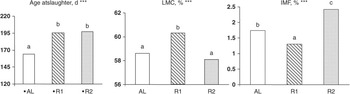
By contrast, a progressive decrease in lysine : energy ratio combined with limited energy allowance (80% of the ad libitum level) all over the growing-finishing phase leads to extended growing-finishing period and older pigs at slaughter, in order to fulfil the requirements of the french Label Rouge quality label (minimum 182 days at slaughter). This feeding strategy increases IMF deposition (+40% in the m. Longissimus) but does not modify back fat thickness and carcass lean meat content, compared with controls fed ad libitum (Figure 1) (Lebret et al., Reference Lebret, Juin, Noblet and Bonneau2001). On the contrary, a global feed restriction (75% of ad libitum level) over the same period leads to similar overall growth rate, but leaner carcasses and lower IMF proportion. Therefore, a progressive reduction in the lysine : energy ratio together with limited energy intake seems to be a more efficient strategy to modify rate and composition of growth at both carcass and muscle levels for improved pork quality, rather than ad libitum distribution of a protein-deficient diet or, worst, feed restriction alone. However, despite its large influence on muscle composition, we could not demonstrate any positive effect of our feeding strategy on pork eating quality, suggesting that IMF would not markedly influence eating traits within the range of concentrations observed in this study. Other muscle traits, such as myofibre type composition, as well as technological meat quality, are generally unaffected by the dietary protein or lysine : energy ratio (Castell et al., Reference Castell, Cliplef, Poste-Flynn and Butler1994; Essén-Gustavsson et al., Reference Essén-Gustavsson, Karlsson, Lundström and Enfält1994; Lebret et al., Reference Lebret, Juin, Noblet and Bonneau2001).
Influence of feeding strategy between 30 and 110 kg body weight on age at slaughter, carcass lean meat content (LMC) and intramuscular fat (IMF) level in the m. Longissiums of Duroc crossbreeds; AL: ad libitum, R1: feed restriction, R2: progressive decrease in the dietary lysine : energy ratio. Significance level of feeding strategy: ***P < 0.001; average values affected with different letters differ significantly (P < 0.05). Adapted from Lebret et al. (Reference Lebret, Juin, Noblet and Bonneau2001).

Dietary fatty acids and antioxidants
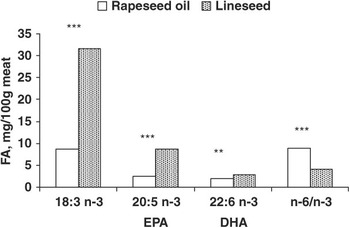
Fatty acid composition of pork can be easily manipulated through the feeding regime, as a consequence of the well-known influence of the dietary fatty acids on fatty acid deposition in both subcutaneous and intramuscular lipids in pigs (Flanzy et al., Reference Flanzy, François and Rerat1970; Mourot et al., Reference Mourot, Chauvel, Le Denmat, Mounier and Peiniau1991; Wood et al., Reference Wood, Richardson, Nute, Fisher, Campo, Kasapidou, Sheard and Enser2004b). There has been an increased interest in recent years in manipulating the lipid composition of pork to produce healthier meat, i.e. with increased n-3 PUFA (polyunsaturated fatty acids) level and decreased n-6 : n-3 PUFA ratio (Legrand and Mourot, Reference Legrand and Mourot2002; Wood et al., Reference Wood, Richardson, Nute, Fisher, Campo, Kasapidou, Sheard and Enser2004b). Feeding sources rich in n-3 PUFA such as rapeseed oil and especially crushed linseed have been shown to increase the n-3 PUFA level in meat, particularly the C18:3 and C20:5 (EPA), and C22:6 (DHA) to a lesser extent, thereby reducing the n-6 : n-3 ratio close to the target level of 4, compared to a value of 10 in control pigs (Wilfart et al., Reference Wilfart, Ferreira, Mounier, Robin and Mourot2004). Even though the long-chain n-3 PUFA are heat-sensitive, these authors demonstrated that the level of n-3 PUFA and the n-6 : n-3 ratio were not modified in cooked meat (loin roast) compared with the raw Longissimus muscle (Figure 2).
Influence of dietary fat on the concentration in n-3 fatty acids and n-6 : n-3 ratio in cooked m. Longissimus. Significance levels: ***P < 0.001; **P < 0.01. Adapted from Wilfart et al. (Reference Wilfart, Ferreira, Mounier, Robin and Mourot2004).

Increasing the n-3 PUFA concentration in pork must be accompanied with increased antioxidant concentration to prevent lipid oxidation and thereby avoid the development of unfavourable flavours in meat. Diet supplementation with vitamin E has been shown to prevent PUFA oxidation (Monahan et al., Reference Monahan, Buckley, Gray, Morissey, Asghar, Hanrahan and Lynch1990; Mourot et al., Reference Mourot, Chauvel, Le Denmat, Mounier and Peiniau1991) and even improve colour stability and water-holding capacity during storage, through reduced cellular membrane damages with high supplementation levels (200 to 500 mg/kg) (Monahan et al., 1992; Cheah et al., Reference Cheah, Cheah and Krausgrill1995). It is worth noting that lipid composition and antioxidant levels in adipose and muscular tissues of pigs can be highly modified via grazing during the rearing period (see below).
Rearing systems
Influences of pig rearing system on animal performance, carcass and meat traits result from the interactive effects of: (1) housing conditions: floor type, space allowance, ambient temperature, outdoor access or free-range rearing, etc. that influence physical activity and feed requirements; (2) feeding level and composition; and (3) genotype, especially in specific production systems with local pig breeds.
Housing conditions: ambient temperature
The ambient temperature influences the energy requirements and the growth performance of pigs, the energy maintenance requirement increasing as temperature decreases below the lower critical temperature. On the contrary, an ambient temperature over the higher critical temperature leads to decreased feed intake and growth rate of pigs. The thermoneutral zone for growing-finishing pigs is generally considered within the range of 22°C to 25°C, even though it depends on the housing conditions (individual or in groups) and the genotype (Le Dividich et al., Reference Le Dividich, Noblet, Herpin, Van Milgen and Quiniou1998). Rearing at 17°C compared to 24°C considered as control led to increased growth rate of pigs due to higher voluntary feed intake (Lebret et al., Reference Lebret, Massabie, Granier, Juin, Mourot and Chevillon2002). Back fat and muscle thickness, IMF content and technological meat quality were not affected by the decrease in ambient temperature, but the fatty acid profile was modified with higher monounsaturated fatty acid (MUFA) and lower PUFA and saturated fatty acid (SFA) proportions in back fat of pigs reared at 17°C. Cold environment led to lighter and less homogeneous colour of dry-cured hams, but did not affect texture or flavour (Lebret et al., Reference Lebret, Massabie, Granier, Juin, Mourot and Chevillon2002). On the contrary, warm exposure (31°C v. 18.5°C) reduced growth rate as a consequence of the reduced feed intake of pigs, and decreased the MUFA level in back fat (Rinaldo and Le Dividich, Reference Rinaldo and Le Dividich1991).
Great effects of ambient temperature on carcass and muscle traits were reported by Lefaucheur et al. (Reference Lefaucheur, Le Dividich, Mourot, Monin, Ecolan and Krauss1991) when comparing a cold (12°C) with a warm (28°C) environmental temperature in pigs fed ad libitum. The cold environment had no effect on carcass fat percentage, but strongly influenced its distribution with increased external fat at the expense of internal adipose tissues, and its composition with higher MUFA and lower PUFA and SFA levels in back fat. Pigs raised at 12°C were also shorter and more ‘squat’, altogether indicating animal adaptation to environmental conditions. Cold exposure enhanced the glycolytic capacity of the m. Longissimus and led to lower initial and ultimate post mortem pH, thus decreasing the technological meat quality (Lefaucheur et al., Reference Lefaucheur, Le Dividich, Mourot, Monin, Ecolan and Krauss1991). Therefore, ambient temperature could affect carcass composition and muscle properties with possible subsequent consequences on pork quality, especially for temperature levels distant from the thermoneutral zone of pigs.
Indoor floor type and space allowance
The variations in environmental conditions that result from the floor type in pig buildings, in particular ambient temperature and space allowance, together with the possibly higher level of physical activity of pigs, can affect growth performance and carcass and meat traits. Compared to slatted floor (0.76 m2/pig), pigs reared on straw bedding (3.5 m2/pig) exhibited higher feed consumption, growth rate and carcass fatness (Beattie et al., Reference Beattie, O’Connell and Moss2000; Gentry et al., Reference Gentry, McGlone, Blanton and Miller2002a), the higher voluntary feed intake being likely explained by the lower ambient temperature and the easier access of pigs to the feeder provided in the enriched system (Lebret et al., Reference Lebret, Meunier-Salaün, Foury, Mormède, Dransfield and Dourmad2006a). However, a smaller increase in space allocation in a deep-bedding finishing system (0.70 up to 1.13 m2/pig) would not have any significant effect on pig growth rate or feed efficiency, according to Patton et al. (Reference Patton, Huff-Lonergan, Honeyman, Kerr and Lonergan2008).
The positive influence of enriched housing conditions on increased investigative activity of pigs is now clearly established (Lyons et al., Reference Lyons, Bruce, Fowler and English1995; Petersen et al., Reference Petersen, Simonsen and Lawson1995; Beattie et al., Reference Beattie, O’Connell and Moss2000) and may be interpreted as improved animal welfare. The possible effects of animal behaviour during the rearing period on their physiological responses to stress during transport and slaughter, and consequently on pork quality, are of great interest (Terlouw, Reference Terlouw2005). Several studies aimed at evaluating the effect of the enrichment of indoor environment (extra space and straw v. conventional) on pig behaviour and physiology during pre-slaughter handling and subsequent meat quality (Geverink et al., Reference Geverink, De Jong, Lambooij, Blokhuis and Wiegant1999; De Jong et al., Reference De Jong, Prelle, Van de Burgwal, Lambooij, Korte, Blokhuis and Koolhaas2000; Klont et al., Reference Klont, Hulsegge, Hoving-Bolink, Gerritzen, Kurt, Winkelman-Goedhart, De Jong and Kranen2001). Although housing conditions affected animal activity during transport and salivary cortisol levels both in the home pen and during transport, these differences were generally no longer significant at the end of the lairage period. This led to only small effects (decreased muscle lactate and drip loss (Klont et al., Reference Klont, Hulsegge, Hoving-Bolink, Gerritzen, Kurt, Winkelman-Goedhart, De Jong and Kranen2001)), or even non-significant consequences on biochemical or technological meat quality traits (Geverink et al., Reference Geverink, De Jong, Lambooij, Blokhuis and Wiegant1999).
Maw et al. (Reference Maw, Fowler, Hamilton and Petchey2001) assessed meat produced from different farms in Scotland, taking into account the effects of genotype and husbandry conditions (floor type, space allowance, air quality, etc.). They demonstrated that bacon from pigs reared on bedding (straw) had higher greasiness score and superior eating quality, particularly flavour, compared to that from pigs reared on slatted or concrete floor without bedding. A possible explanation for the improved pork flavour could be a higher IMF proportion that would parallel the higher carcass fatness generally found for pigs reared on straw bedding (Beattie et al., Reference Beattie, O’Connell and Moss2000; Gentry et al., Reference Gentry, McGlone, Blanton and Miller2002a).
Alternative housing system with outdoor access
Alternative pig rearing systems with indoor space and free outdoor access constitute an interesting intermediate situation between indoor-enriched and free-range systems, as it positively influences the perception of pork by the consumers (Rainelli, Reference Rainelli2001; Dransfield et al., Reference Dransfield, Ngapo, Nielsen, Bredahl, Sjöden, Magnusson, Campo and Nute2005), but with reduced drawbacks on labour conditions and production (feeding) costs for the producer, compared with free-range rearing. Moreover, it corresponds to terms and conditions for improved quality pork, i.e. the ‘Scharrel’ pigs in the Netherlands and the Label Rouge Fermier in France, and to the European standards for housing of organic pigs.
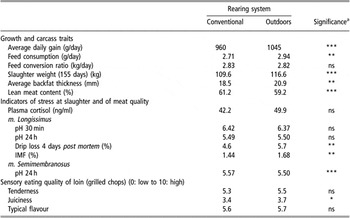
An experimental evaluation of two production systems for growing-finishing pigs was conducted to evaluate animal welfare and health, growth performance, and carcass and meat quality traits (Lebret et al., Reference Lebret, Meunier-Salaün, Foury, Mormède, Dransfield and Dourmad2006a; Meunier-Salaün et al., Reference Meunier-Salaün, Dourmad and Lebret2006). Sawdust-shave bedding (1.3 m2/pig) with free access to a sheltered outdoor area on concrete floor (1.1 m2/pig) (O) was compared with a conventional system (totally slatted floor, 0.65 m2/pig, controlled ambient temperature at 22°C) considered as control (C). The O system improved the health status at slaughter, and allowed a higher fulfilment of the investigative motivation of pigs (Meunier-Salaün et al., Reference Meunier-Salaün, Dourmad and Lebret2006). Altogether, this suggests that the enriched system would improve animal welfare, in agreement with Guy et al. (Reference Guy, Rowlinson, Chadwick and Ellis2002). Pigs reared in the O system exhibited higher growth rate due to their higher feed intake, higher back fat depth and lower lean meat content (Table 1). The rearing system did not influence the behavioural activities of pigs during lairage at the slaughterhouse, or the levels of plasma ACTH, cortisol and creatine kinase immediately after slaughter. This indicates that the rearing environment (i.e. the prior experience of pigs) did not influence their behavioural or physiological response to pre-slaughtering and slaughtering procedures, and the pattern of muscle peri and post mortem metabolism in ham and loin (muscle temperature, lactate concentration and rate of pH fall) (Lebret et al., Reference Lebret, Meunier-Salaün, Foury, Mormède, Dransfield and Dourmad2006a). However, in a more stressful environment, the animal response to pre-slaughter handling could have differed according to their rearing conditions (Terlouw, Reference Terlouw2005). In the m. Longissimus, ultimate pH was not affected, but the O pigs had higher drip loss and higher IMF. By contrast, a higher glycolytic potential and a lower ultimate pH were observed in the m. Semimembranosus and m. Biceps femoris of O compared with C pigs (Table 1). Therefore, the influence of pig rearing system on muscle glycogen store or use, and consequently ultimate pH seems to be muscle-dependent, the ham muscles being more affected than the loin, confirming the results of Gentry et al. (Reference Gentry, McGlone, Blanton and Miller2002a) and Bee et al. (Reference Bee, Guex and Herzog2004). The higher glycogen level in the ham muscles of pigs reared in the enriched system might have resulted from their higher spontaneous physical activity, which was shown to enhance muscle oxidative capacity and thereby spare intramuscular glycogen (Petersen et al., Reference Petersen, Henckel, Oksbjerg and Sorensen1998). Concerning eating quality, the O system increased loin meat juiciness, which may have resulted from its higher lipid concentration, whereas odour, flavour and tenderness remained unaffected (Table 1). Pig production system did not influence the overall appreciation of meat by consumers when no information on the pig production system was provided. However, awareness of the production system strongly influenced the perception of pork, with 59% of the French consumers under study choosing the meat labelled ‘outdoor’ and 8% the meat labelled ‘indoor’ (34% inconsistent choices) (Dransfield et al., Reference Dransfield, Ngapo, Nielsen, Bredahl, Sjöden, Magnusson, Campo and Nute2005). These results highlight the differences between the ‘perceived’ and ‘actual’ quality of pork products issued from outdoor systems and conventional genotypes, as previously discussed by Edwards (Reference Edwards2005).
Effects of rearing conditions on growth performance, indicators of physiological response of pigs to pre-slaughter handling, carcass and muscle composition, and meat quality (adapted from Lebret et al., Reference Lebret, Meunier-Salaün, Foury, Mormède, Dransfield and Dourmad2006a)

aSignificance levels: ***P < 0.001; **P < 0.01; *P < 0.05; ns = P > 0.05.
Free-range rearing
Several studies have been conducted to evaluate the effects of free-range rearing of ‘modern’ pig genotypes on performance and meat quality. In these systems, pigs are submitted to various and changing climatic conditions; they are offered a lot of space and environmental diversity, allowing physical activity and expression of investigative behaviour, and potential to forage for a range of different foodstuffs complementarily to the ‘conventional’ food provided. All these factors interact to determine the animal response in terms of growth and meat quality.
Pigs raised outdoor are generally kept in large groups, thus avoiding or limiting the mixing of pigs from different pens during transport or lairage at the slaughterhouse, and its consequences on animal behaviour and meat quality. However, the occurrence of mixing during pre-slaughter handling depends on the group size and the management practices, and can vary between the systems – and the experiments – considered. It is therefore an important point to take into account when evaluating the influence of rearing system on pork quality, especially since the stress reactions of pigs to the slaughter procedure can depend on their prior experience (Terlouw, Reference Terlouw2005).
Many studies show that outdoor rearing in mild climate has only slight or even no significant effects on growth rate and carcass composition (Gentry et al., Reference Gentry, McGlone, Blanton and Miller2002a), but reduced growth rate and back fat thickness have been observed for pigs reared outdoors in cold climates, particularly when the average ambient temperature is below the thermoneutral zone (Enfält et al., Reference Enfält, Lundström, Hansson, Lundeheim and Nyström1997; Sather et al., Reference Sather, Jones, Schaefer, Colyn and Robertson1997; Bee et al., Reference Bee, Guex and Herzog2004). As for carcass composition, influence of extensive outdoor rearing on muscle composition, particularly lipid concentration, differs according to the actual rearing conditions of the animals (climate, feeding level). Both decreased (Enfält et al., Reference Enfält, Lundström, Hansson, Lundeheim and Nyström1997; Sather et al., Reference Sather, Jones, Schaefer, Colyn and Robertson1997; Bee et al., Reference Bee, Guex and Herzog2004) or similar (Nilzen et al., Reference Nilzen, Babol, Dutta, Lundeheim, Enfält and Lundström2001; Gentry et al., Reference Gentry, McGlone, Miller and Blanton2002b) muscle lipid contents have thus been reported for outdoor compared with conventional reared pigs.
Grazing, or the consumption of different feedstuffs by pigs reared outdoors, strongly influences the fatty acid composition of animal tissues. For instance, the level of linolenic (C18:3) and other n-3 PUFA is highly increased, and the n-6 : n-3 ratio is decreased in meat from pigs reared on pasture compared with controls, as a consequence of the very high amount of C18:3 in the grass (Nilzen et al., Reference Nilzen, Babol, Dutta, Lundeheim, Enfält and Lundström2001; Bee et al., Reference Bee, Guex and Herzog2004; Lebret and Guillard, Reference Lebret and Guillard2005). The higher n-3 PUFA is accompanied by an increased vitamin E (α- and γ-tocopherols) deposition in both external fat and intramuscular lipids, thus preventing further excessive lipid oxidation and development of thiobarbituric acid-reactive substances (TBARS) during meat storage (Andres et al., Reference Andres, Cava, Mayoral, Tejeda, Morcuende and Ruiz2001; Nilzen et al., Reference Nilzen, Babol, Dutta, Lundeheim, Enfält and Lundström2001; González and Tejeda, Reference González and Tejeda2007). Therefore, outdoor rearing beneficially modifies the nutritional quality of meat. In a similar manner, the consumption of grass, which contains high concentrations of n-3 fatty acids or acorns very rich in oleic acid (C18:1n-9) during finishing of pigs in the traditional Mediterranean production systems, highly influences the fatty acid profile and the quantities of antioxidant compounds in pig muscles, and the subsequent quality of pork products (see below) (Lopez-Bote, Reference Lopez-Bote1998).
Regarding the technological qualities of meat, Gentry et al. (Reference Gentry, McGlone, Miller and Blanton2002b) and Bee et al. (Reference Bee, Guex and Herzog2004) reported no differences in the rate and extent of post mortem pH drop in the m. Longissimus of outdoor compared with indoor pigs, whereas Enfält et al. (Reference Enfält, Lundström, Hansson, Lundeheim and Nyström1997) observed reduced ultimate pH and water-holding capacity in the loin of outdoor reared pigs. Again, the consequences of outdoor rearing on muscle technological traits are likely muscle-dependent, with greater negative effects in ham than in loin muscles (Gandemer et al., Reference Gandemer, Pichou, Bouguennec, Caritez, Berge, Briand and Legault1990; Bee et al., Reference Bee, Guex and Herzog2004).
An important and often debated question is whether pigs reared in different environments cope differently with pre-slaughter stress, thereby leading to differences in meat quality. Terlouw et al. (2004) evaluated the behavioural and physiological responses of pigs to pre-slaughter mixing, depending on their rearing conditions (outdoor v. conventional). They showed that, when mixed, outdoor pigs exhibited lower fighting levels than indoor pigs, resulting in lower skin damage, higher pre and post mortem muscle glycogen level, and lower pH for the former. Barton-Gade (2008) also reported less aggressive events and serum creatine kinase activity for outdoor than for indoor reared pigs after mixing at loading, suggesting that mixing is more stressful for conventional than for outdoor reared animals. Consequences on meat quality indicators remained low in the study of Barton-Gade (2008), but can be of greater extent when pre-slaughter handling conditions (high level of mixing of pigs from different farm pens) promote aggressive behaviour and physical activity (fights) during lairage in conventional reared pigs, compared with a group of outdoor, non-mixed pigs, as can be observed in practical conditions (Lebret et al., Reference Lebret, Foury, Mormède, Terlouw, Vautier and Chevillon2006b).
Eating quality of loin meat issued from conventional genotypes reared outdoors in mild climate conditions and controlled (low stress) pre-slaughter handling is only slightly improved (higher tenderness score; Gentry et al., Reference Gentry, McGlone, Miller and Blanton2002b) or even not modified (Gandemer et al., Reference Gandemer, Pichou, Bouguennec, Caritez, Berge, Briand and Legault1990). In contrast, Enfält et al. (Reference Enfält, Lundström, Hansson, Lundeheim and Nyström1997) reported decreased tenderness and juiciness of loin from outdoor reared animals compared with controls, which could be explained by the lower IMF and ultimate pH values of the former in this study.
Organic farming
Organic pigs must be reared in accordance with the European Community standards for organic livestock and livestock products (Council Regulation EC 1804/1999, amending Directive EEC 2092/91) with additional requirements sometimes being imposed at the national level (France, for instance). Briefly, pigs in an organic system must have access to an outdoor area and should have more space allowance. They receive an organic diet (which consists of a minimum of 90% of organic feed ingredients according to EU Directive) and roughage is provided, either from pasture in extensive organic farms of from supplementary feed (silage or root crops) in other systems. The use of synthetic AA, antibiotic growth promoters and products from GMO are prohibited. Among these factors, the ban of synthetic AA and the use of roughage as part of the diet are likely to have the most important consequences on animal growth and carcass and muscle traits, but their influence largely depends on husbandry methods. Indeed, Hansen et al. (Reference Hansen, Claudi-Magnussen, Jensen and Andersen2006) showed that pigs reared in organic housing conditions (outdoor access) and fed reduced concentrate (70%) plus ad libitum intake of roughage (either barley/pea silage or clover/grass silage) had reduced daily gain (−27%) and increased carcass lean meat content (+1.0 point) compared with pigs fed 100% concentrate and reared under either organic or conventional housing. Restricted concentrate feeding did not influence meat pH or drip, but led to lower meat lipid content and impaired tenderness. On the contrary, Millet et al. (Reference Millet, Raes, Van den Broeck, De Smet and Janssens2005) evaluated the influence of organic feeding (100% organic v. 100% conventional including AA supplementation) and housing (outdoor access, 4 m2/pig v. indoor on concrete floor and slats, 1 m2/pig). They found greater effects of housing than of feeding conditions, with improved growth rate and decreased lean meat percentage in organic-housed pigs, whereas the feeding, or the housing × feeding interaction, had no significant effects. Meat pH values or colour remained unaffected by housing or feeding systems.
The main difficulty in organic feeding is the availability of organic protein adequate for pig growth. In contrast with the study of Millet et al. (Reference Millet, Raes, Van den Broeck, De Smet and Janssens2005), it is more likely that organically reared pigs receive a reduced supply in the key essential AA. This feeding regimen has been shown to reduce growth rate and increase carcass fatness and IMF (2.9% v. 1.2%) and could thereby improve eating quality (Sundrum et al., Reference Sundrum, Büftering, Henning and Hoppenbrock2000).
In conclusion, the influence of organic rearing on animal growth performance and quality traits largely depends on the feeding management, and housing conditions to a lesser extent. Therefore, the eating quality or organic pork is likely to present a high variability, and depends on the production system considered (feeding × housing interaction effects).
Traditional Mediterranean production systems: genotype × rearing system interactions
The traditional Mediterranean sylvopastoral system is based on local breeds that are extensively pastured in natural forests for the production of high-value dry-cured products, in particular, hams. These breeds exhibit slow growth rate, great fatness and poor conformation, and a greater predisposition to deposit oleic acid than conventional breeds (Edwards and Casabianca, Reference Edwards and Casabianca1997). In addition, in the traditional systems, the finishing takes place during autumn in forests of oaks or chestnuts. The animals convert large quantities of acorns or chestnuts (rich in starch) into fat deposits at both whole-body and intramuscular levels, resulting in very high eating quality (juiciness, flavour) of dry-cured products. Further to its advantages for the pork chain, in particular for the quality of products, this traditional production system is also of major significance for forest management and landscape conservation: pig production is deeply bound to the ecosystem and significantly collaborates in its preservation (Lopez-Bote, Reference Lopez-Bote1998; Edwards, Reference Edwards2005).
The use of local breeds together with the utilization of the natural environment for the production of specific and high-quality pork products is explicitly recognized through the ‘Protected Designation of Origin’ (PDO) European label, even though all PDO terms and conditions for pork products do not necessarily involve local breeds. For example, in Spain, four PDO labels (Dehesa de Extremadura, Guijuelo, Huelva, Pedroches) involve either pure Iberian pigs or Iberian crossbreeds, as described below. Other European pork PDO labels are based on the use of pure local breeds: Alantejano in Portugal, and projects that are underway in Italy with the Nero Siciliano and Cinta Senese, and in France with the Corsica, Basque and Gascon breeds. In contrast, white pigs are used for the production of the PDO Jamon de Teruel in Spain, and many Italian PDO labels (Prosciutto di San Daniele, Prosciutto di Parma) are issued from heavy pigs of conventional genotypes raised in indoor systems.
The production systems of dry-cured Iberian hams, where different genotypes and rearing conditions can be encountered, are interesting examples of the positive consequences of genetic × environment interactions on pork quality. All these combinations are included in the PDO regulation. Regarding genotype, pigs are issued from pure Iberian sows and pure Iberian, Duroc, Duroc-Jersey or their crossbreeds as sire. Therefore, the ‘Iberian ham’ denomination includes hams from purebred Iberian up to 50% Iberian–50% Duroc pigs. These crosses have been carried out to increase prolificacy, growth rate, feed efficiency and lean content without serious damage to the quality characteristics of the meat products according to Lopez-Bote (Reference Lopez-Bote1998), even though a recent study showed that differences in ham-eating properties are noticeable by consumers (Ventanas et al., Reference Ventanas, Ruiz, Garcia and Ventanas2007a).
Besides genotype, different feeding systems during finishing can be encountered (Lopez-Bote, Reference Lopez-Bote1998; Daza and Lopez-Bote, Reference Daza and Lopez-Bote2007):
• ‘Cerdo de bellota’: the late fattening phase (90 to 120 up to 140 to 160 kg) takes place on oak woodland pasture (montanera) in specified regions between November and January, which corresponds to the maturation period of acorns: pigs are fed only the natural resources present on the land, i.e. mostly acorns (7 to 10 kg per day) and variable quantity of grass. The average growth rate of pigs is highly increased during this finishing period, which can therefore be considered as compensatory growth. The high proportions of starch and fat in the acorns lead to a very high accumulation of body lipids, whereas the grass supply is an important source of protein and fibre and compensates for the low protein concentration of acorns. Moreover, the high proportions of C18:1n-9 linoleic in acorns and n-3 fatty acid in grass modify the back fat and IMF composition towards increased proportions of C18:1n-9 and long-chain n-3 PUFA, and decreased proportions of SFA and linoleic (C18:2n-6) fatty acid (Rey et al., Reference Rey, Daza, Lopez-Carrasco and Lopez-Bote2006; González and Tejeda, Reference González and Tejeda2007; Ventanas et al., Reference Ventanas, Ventanas, Tovar, Garcia and Estevez2007b). As mentioned above, grass is also an important source of both α-tocopherol and the more specific γ-tocopherol, which prevents subsequent lipid oxidation during storage, together with the other micronutrients ingested by the pigs during extensive finishing (Rey et al., Reference Rey, Lopez-Bote and Sanz Arias1997; Andres et al., Reference Andres, Cava, Mayoral, Tejeda, Morcuende and Ruiz2001; Ventanas et al., Reference Ventanas, Tejeda and Estevez2008).
• ‘Cerdo de recebo’ (mixed system): pigs start the finishing period in the montanera system and afterwards receive supplementary feed based on cereals and leguminous plants. This production system is encountered in case of insufficient production capacity or too high stocking charge of the woodland. The classification between montanera and recebo depends on the fatty acid composition of the subcutaneous adipose tissue, the thresholds being determined every year by the Spanish Ministry of Agriculture and the Interprofessional Association for Iberian pig production (Daza and Lopez-Bote, Reference Daza and Lopez-Bote2007).
• ‘Cerdo de pienso’: pigs are finished indoors or outdoors in free-range systems and receive formulated feeds. This system enables one to produce Iberian pigs throughout the year, and has therefore led to the expansion of the Iberian pork industry.
As for the pig production system, the process of Iberian dry-cured hams is also well adapted to the natural environmental conditions of the mountainous regions in the south-west of Spain, with very long process duration in comparison to other meat products of the Mediterranean area (18 to 24 months for hams). This of course affects the specific characteristics of the Iberian pork products that have been recognized and are valued through the PDO label.
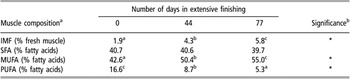
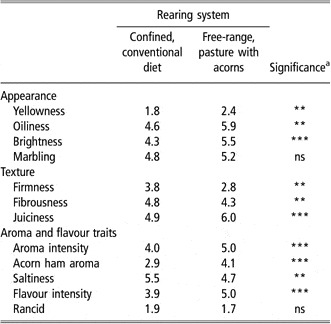
Within genotypes, studies have been carried out to show how the characteristics of the fat and muscle tissues, and thereby eating traits, are modified during the finishing regime: for example, Cava et al. (Reference Cava, Ventanas, Ruiz, Andres and Antequera2000) and Rey et al. (Reference Rey, Daza, Lopez-Carrasco and Lopez-Bote2006) for Iberian pigs, Gueblez et al. (Reference Gueblez, Labroue and Mercat2002) for Basque and Gascon pigs, and Pugliese et al. (Reference Pugliese, Bozzi, Campodoni, Acciaioli, Franci and Gandini2005) for Cinta senese and Nero Siciliano pigs. As for the extensive finishing system of Iberian pigs, Secondi et al. (Reference Secondi, Gandemer, Luciani, Santucci and Casabianca1992) showed that finishing of Corsican pigs on chestnut plantation leads to a compensatory growth response of pigs with very high fat deposition. These authors indeed demonstrated that the succession of a moderate followed by a fast growing period due to extensive finishing conditions would be necessary to express the potential for muscle lipid accretion of the Corsican pigs (Secondi et al., 2007). During extensive finishing with chestnuts feeding, IMF proportion is increased by a 3-fold factor, mainly due to accumulation of triglycerides (storage lipids) in muscle. The proportion of MUFA in muscle triglycerides is increased, and that of PUFA is decreased (Table 2). The type of finishing system strongly influences the quality of dry-cured products, as shown by Cava et al. (Reference Cava, Ventanas, Ruiz, Andres and Antequera2000) when comparing the sensory characteristics of dry-cured hams from Iberian pigs reared either in a free-range system based on acorns and pasture, or in confinement with a concentrate feed (Table 3). The influence of the rearing system (and crossbreeding for Iberian ham production) is also noticeable by consumers. Indeed, Ventanas et al. (Reference Ventanas, Ruiz, Garcia and Ventanas2007a) reported that dry-cured loin from pure Iberian pigs finished outdoors on acorns and grass was preferred to those from Iberian pigs reared indoors and fed a conventional diet enriched with MUFA and antioxidants, or to meat from Iberian × Duroc crossbreds despite similar IMF levels. Altogether, these results demonstrate the actual effects of genotype × environment interactions on animal growth pattern, carcass and muscle properties, and their positive consequences for the sensory quality and the acceptability of pork products.
Changes in lipid concentration and composition of m. Longissimus of Corsican pigs during extensive finishing on chestnuts (adapted from Secondi et al., Reference Secondi, Gandemer, Luciani, Santucci and Casabianca1992)

aIMF: intramuscular fat content; SFA, MUFA, PUFA: saturated-, monounsaturated-, polyunsaturated-fatty acids.
bMeans in the same row with different superscripts differ significantly. Significance levels: *P < 0.05.
Influence of rearing system on the sensory characteristics of the m. Biceps femoris of Iberian hams evaluated by a trained panel on a scale from 0 (low) to 10 (high) (adapted from Cava et al., Reference Cava, Ventanas, Ruiz, Andres and Antequera2000)

aSignificance levels: ***P < 0.001; **P < 0.01; ns = P > 0.05.
Conclusion
This article shows that both feeding and rearing systems influence growth performance and carcass composition in pigs, through the relative growth deposition of fat and lean tissues. Muscle composition can also be affected, in particular the IMF level, thereby influencing pork eating quality. Other muscle components also impact pork eating quality, especially the glycogen stores at slaughter and the post mortem muscle metabolism traits, which largely depend on the pre-slaughter handling procedure, and also on the rearing conditions of the animals (space allowance, ambient temperature, physical activity, etc.). Therefore, meat quality can be manipulated through feeding and rearing systems, but studies generally show limited effects on sensory quality when using conventional (‘improved’) pig genotypes. However, pigs from local breeds reared in extensive finishing conditions lead to high-quality pork products, thereby demonstrating the positive genotype × environment interactions. These local breeds of pigs show a high potential for IMF deposition that can be expressed by their specific rearing conditions, but they exhibit very likely other differences in composition and ultrastructure of muscle that could impact pork quality. Therefore, local breeds are interesting models for the studies on the relationships between muscle properties and subsequent pork quality. A better understanding of the relationships between muscle phenotypical traits at a ‘deep’ level (muscle composition, metabolism, fibre typing, transcriptomics and proteomics approaches to characterize the expression of genes and proteins, etc.) and their relationships with eating quality traits should be achieved through the current European Q-Porkchain project, allowing further improvement of the quality of pork by rearing and genetic factors.
Acknowledgements
The author is grateful to Dr M. Bonneau for helpful comments on the manuscript.