Introduction
November 19, 2016
I am online, and on Facebook early in the morning. Several friends in Khartoum posted photos from the agid (religious marriage ceremony) of activist Had El Zein El-Obeid. Had El Zein’s photo in a tobe (a garment that women in Northern Sudan wrap around their bodies), with simple henna designs on her hands was refreshing. Had El Zein had asked for a dowry of two silver Ginehs (pounds), which was equally refreshing. The reason is that for two years, images of expensive gifts from grooms and news of high dowry that members of groupat albanat (girls/women’s only groups) shared inundated my newsfeed on Facebook. Group members shared such news alongside advice on how to “find and keep a wealthy husband,” meet society’s expectations, and achieve financial and social security.
Advice often includes tips for beautifying the body through “al-nadafa” (literally: cleanliness or hygiene, but in the groups, it refers to achieving white or light skin-color, after using skin-bleaching creams).Footnote 1 Married women and women preparing for marriage combine these cosmetics with traditional beautification rituals such as al-dukhan (smoke baths) al-dilka (scented traditional scrub) and “seductive” henna drawings. Other advice on how to find or keep a husband includes using a low and seductive “feminine” voice when speaking; enlarging one’s backside and achieving “a Kim Kardashian waist” (see figure 1 online). Some of these desired features mirror traditional body aesthetics in Sudan, while others (such as being slim), are the product of exposure to global media messages and aesthetics.
Online groups also serve social and economic functions. On any given day, members may exchange relationship advice, market home-made beautification products, or post adverts on behalf of businesses such as beauty parlors based in the capital, Khartoum, or in big towns in Sudan. The ads often contain imagery that does not reflect the varied historical and contemporary constructions of beauty in Sudan (Ali Reference Ali2015). Instead, they reflect dominant “Western” global definitions of what constitutes an aesthetically pleasing body (see figures 1–3 online), neoliberal ideology, and consumerism.
This article critically examines discourses on everyday aesthetic practices and beauty rituals that women from across Sudan, and in the diaspora, articulate in selected groupat al-banat (girls/women’s only groups) on Facebook. It is part of a broader, digital ethnography that I started in 2014. At the time, I was finalizing my first book, a multi-site ethnography. In the aftermath of the 2010/2011 protests that led to the overthrow of autocratic regimes in Egypt, Libya, and Tunisia, I was exploring possible research on social movements and social media in Sudan.Footnote 2 Then, I stumbled upon and joined a women-only group on Facebook formerly known as Geihat Al-sudaniat Al-nairat Al-nadifat (the Grooming of Sudanese Radiant, Clean [i.e., possessing an even-toned, light skin] Women). The group had 1,600 members, a number I considered high at the time. Because the word Nairat (radiant) rhymed with Thairat (revolutionary), and the word Geihat (grooming) rhymed with the term Gabhat (front), words that were/are apparently on my mind, I often misread the title of the group as Gabhat Al-sudaniat Al-thairat (Sudanese Women Revolutionary Front). Hence the title of this article and of the project.
The question “Nairat or Thairat?” is not merely semantic, however. A key question I ask is whether Sudanese women’s groups on Facebook offer platforms for women who have access to an electronic device, can afford the cost of Internet connectivity, and who can read and write, to build communities, produce and exchange knowledge, and work toward social change; or whether these platforms reproduce dominant constructions of beauty that are detrimental to women. These questions are crucial in the context of Sudan, a militarized former colony that is subject to the workings of market-driven neoliberal globalization processes that affect diverse women in a unique gender-specific manner, depending on their race/ethnicity, social class, or regional location within or outside Sudan.
To engage these questions, I highlight and analyze some of the discussions in Al-nairat and in selected other groups active on Facebook, particularly fasikh wa galikh (F.G.), a group dedicated to skin bleaching, munbarshat (flirts), and zeit Al-shallabat (shaming husband-snatchers). I focus on these groups not only because they, too, articulate discourses on Al-geiha, but also because their members played an important role in staging civil disobedience in November 2016, when the prices of medicine and other commodities skyrocketed.
Among other factors, the participation of members of these groups in civil disobedience disrupts the binary in the question “Nairat or Thairat?” Not only are discourses and practices about aesthetic rituals and the body political, but they also offer opportunities to engage with and understand the body politic from new angles. In Nimo’s War, Emma’s War, for example, Cynthia Enloe shares insights on the war in Iraq, based on conversations in a beauty salon run by a woman named Nimo. According to Enloe, the salon provided a space for women who could afford the cost of hair styling to discuss political events as these events affected them and their communities. Enloe has urged researchers, policy makers, and journalists to seek non-conventional venues for their research so as not to shrink the parameters of politics:
Women looking at themselves in the mirror as tanks roll up their streets. Women thinking about the curl of their hair while their country is occupied by foreigners. Women spending money on their looks…and gossiping about marriage gone sour when serious people are struggling for power. Such trivializing dismissive images grow out of unexamined presumptions…: that femininity itself is not a battleground; that anxieties about women’s beauty are pre-political; that marriage is not about power, and that the same men who are immersed in national politics do not try to control women’s bodies. (Enloe Reference Enloe2010:22)
Enloe is careful not to romanticize beauty parlors or other feminized spaces. She acknowledges that salons are not universally inclusive and may seem “a world away” from the lives of women living in rural areas. Enloe further argues that while beauty parlors may offer women economic opportunities, these are often low-paid inhospitable spaces to certain women because of their perceived class or ethnicity. Enloe also argues that while the beauty parlors offer safe spaces for women to trade news and opinions away from the scrutiny of their male kin, the parlor can simultaneously “reinforce the already potent assumption that a woman’s physical appearance is her most valuable asset (or liability)” (Enloe Reference Enloe2010:42).
Enloe’s theorizing of the politics and aesthetics of beauty parlors in wartime Iraq is based on an analysis of a series of newspaper reports by U.S. journalist Sabrina Tavernise. Yet, as discussed later, her analysis mirrors insights in feminist literature on body aesthetics in Africa. Importantly, Enloe’s analysis of the complexities and paradoxes involved in engaging “feminine spaces” helps shed light on the workings, politics, and the shifting nature of groupat albanat on Facebook.
Like Nimo’s Salon, I consider women’s groups active on Facebook legitimate and rich platforms where, through voice and narratives, but also through silences, women produce and share insights about contemporary Sudanese politics, society, and the economy while engaging in meaning-making and conversations on everyday aesthetic rituals, beauty, and constructions of the body. Women also advertise, market, and purchase traditional perfumes and beauty products, or sell and buy imported natural and chemical beauty products through these groups. In the process, women construct idealized bodies and gendered and racialized identities (Irvin Reference Irvin and Irvin2016). Such groups offer glimpses into the diverse social lives of formally educated Sudanese women who have access to an electronic device such as a mobile phone, a laptop, a desktop computer, or an iPad, and who have access to, or can afford, the cost of the Internet.
The rest of this article offers a selective review of the scholarship on the body and aesthetics in Africa and Sudan, and on social movements and social media in Africa and in Sudan. Some of the literature on Sudan will also illuminate the social and cultural dynamism as well as the changing nature of aesthetic rituals and constructions of the body in Sudan. Next, it provides a brief context on the use of Internet services, body aesthetics, and on the political and economic context within which discourses on body aesthetics take place. After discussing the methodology used in this study, I outline and analyze the themes that dominated the discussions in one group, Al-nairat, between August and September 2016, without directly quoting participants. I then focus on discourses on Al-geiha (beautification). Finally, I discuss the role members of groups such as F.G. and Munbarshat played following the skyrocketing of prices in Sudan in November 2016. The conclusion sums up the discussion in this article and provides insights on body aesthetics and possibilities that groupat al-banat offer in relation to constructions of the body and society, the body politic, and knowledge production in Sudan.
Body Aesthetics and Social Media
An important body of Sudan studies literature has explored the politics of fashion, the body, and aesthetics (Brown Reference Brown2017; Gruenbaum Reference Gruenbaum2001; Boddy Reference Boddy1989, Reference Gruenbaum2016), including the use of bleach by Sudanese (and South Sudanese) women in neighboring countries to construct a certain identity (Fabos Reference Fabos2011; Sudan Cultural Digest Project 1997). A few recent studies examine social media and Internet technologies in Sudan (Kadoda & Hale Reference Kadoda2016). Research that engages questions about fashion, the body, and aesthetics with reference to social media in Sudan is a nascent terrain in Sudan studies. One exception is a study that discusses how women entrepreneurs in greater Khartoum use Internet applications such as WhatsApp and social media sites such as Facebook to market beauty products and other consumer goods from their homes, with the help of “delivery boys” (Steel Reference Steel2017).
In Africa, scholarship on the body and aesthetics emphasizes the political nature of women’s diverse beauty rituals. Various studies highlight the relevance of discourses about body aesthetics to questions of identity, modernity, nation-building, and power. The 2016 special issue of Feminist Africa is a case in point. As editor of the issue Simi Dosekun, put it: “In Africa, as elsewhere, women’s fashion and beauty are always political matters… They are structured and shaped by power, and they constitute and stir deeply subjective and affective considerations about who we are, and who we can and indeed should be” (Dosekun Reference Dosekun2016:6).
Not only are body aesthetics political and constitutive of identity, they are also fluid, and vary from one area to the other in Sudan. For example, women were formerly prized for being plump, and being thin was not seen as desirable. Fashion and beauty norms have changed substantially in Sudan, including among middle class urbanites, and especially in the late 1980s and early 1990s, following the imposition of a dress code by the government of Gafar Numeiry after the introduction of a distorted version of Sharia (Islamic law) in 1983, and following the ascendance to power of the National Islamic Front/National Congress Party in the late 1980s. Migration to countries of the Arabian Gulf following the oil boom in the 1970s also influenced fashion in Sudan. Exposure to global media in the Western hemisphere, and in other parts of the world such as South Asia, especially India, also contributed to shaping women’s fashion “choices” and desires.
Marie G. Brown (Reference Brown2017) emphasizes the political nature of women’s fashion in Sudan, with emphasis on the tobe, a rectangular cloth that women wrap around the body (see figure 2 online). Until the late 1980s, the tobe was considered the national dress in Northern Sudan. In group conversations, the tobe is not only a commodity, but it is also a fashion statement, a class marker, and a status marker for married women. A historian, Brown traces the introduction of tobe in colonial Sudan, during the second half of the nineteenth century. The colonial project, argues Brown, instigated desires for imported products. Dominant understandings of honor and protection had restricted women’s movement in towns. The tobe played a strategic function when women ventured outside their homes to study, or to participate in political rallies: women were able to enter these public spaces while preserving local notions of modesty. For nationalists, the tobe effectively marked a desired merger between tradition and modernity. According to Brown, “As an object of trade, the tobe placed its wearer in a surprisingly wide global market. As a garment worn next to the skin, the fabric of the tobe provided Sudanese women with an intimate sensory experience that was often accented by other imported luxuries such as lotions, cosmetics, and perfumes.” Brown works to restore this experience into the formal historical record, as it redefines (Northern) Sudanese women “as active and eager participants in a rapidly changing world” (Brown Reference Brown2014:502–4).
Another relevant body of literature concerns the political significance of social media platforms in amplifying the voices of activists and social movements. The 2010/2011 uprisings in North Africa and beyond underlined this important role, as social media networks enabled activists to build social capital, communicate and converse locally and globally, share information about injustice and abuse, and exchange strategies for addressing injustice (Howard & Hussain Reference Howard and Hussain2011:35–6, 48). Elsewhere, in Eritrea, Victoria Bernal’s (Reference Bernal2014) Nation as Network details how the Eritrean diaspora used websites to engage national politics in ways that reconfigured sovereignty and citizenship. Bella Hwang (Reference Hwang2013) documents a successful transnational feminist campaign that stopped an “undies for Africa” initiative targeting Zambia, which “challenged human dignity” (144) and trivialized sexual and gender-based violence.
Feminist campaigns focused on gender-based violence and harassment—such as #MeToo and other forms of hashtag activism such as #Black Lives Matter and #Say Her Name in the United States and #Bring Back our Girls in Nigeria—have been the subject of significant recent research. In addition, feminist scholarship that focuses on the Middle East and Africa emphasizes the impact of digital connectivity on feminist political and social struggles. These studies demonstrate the important role social media activism has played in countries such as Egypt (Thawrat Al-Banat [girls’ revolution] 2015), Nigeria (Njoroge Reference Njoroge2016), and Zimbabwe (Mpofu Reference Mpofu and Mutsvairo2016). They challenge rescue narratives and negative representations of African women and communities (Ranchod Reference Ranchod2013). Feminist Africa’s 2013 special issue on “e-Spaces: e-Politics” covered digitally enhanced activisms in Kenya, Zimbabwe, and South Africa around gender equality, sexuality, and economic empowerment of women in rural areas. This literature offers opportunities for rich comparisons with women’s digital practices in Sudan.
Despite social media’s important role in boosting social movement activisms, it is important to avoid falling into the trap of cyberoptimism. Researchers have warned against “techno-determinism” (Barassi Reference Barassi and Hjorth2017), the tendency to consider digital connectivity the primary factor in effecting social or political change. Writing about the Arab uprisings of 2010/2011, for example, Fouad Ajami (Reference Ajami2012) warned against overestimating the role social media played in Egypt, Tunisia, and beyond. Mohamed Bouazizi, the Tunisian street vendor whose act of protest and self-immolation sparked the protests, did not have a Facebook or a Twitter account. Social media can help expand a movement’s reach but does not replace on-the-ground activism that can eventually build a movement’s capacity and define its leadership, factors that can make or break a movement.
Depending on the context, digital activism may expose movement activists to the scrutiny of governments that restrict freedom of opinion and association in countries such as Sudan. In a world characterized by the “rapid expansion of trade, finance, technologies, migration, and associated financial flows, and …imported environment problems,” social media users are exposed to the workings and surveillance of profit-seeking global capitalism, which undermines the liberatory potential of social media, especially in countries incorporated into “the information and communication technology and industry…at the lower end of the value chain” (Ndikumana Reference Ndikumana2015:16) such as Sudan. The saga involving Facebook in early 2018, which revealed that the company has shared the information of 87 million users with businesses, and with the political firm Cambridge Analytics, confirms Tavia Nyong’o’s (Reference Nyong’o2012) argument that that social media activists communicate over an infrastructure that reflects the interests of profit-seeking neoliberal capitalism. Beyond the rhetoric of Facebook’s Chief Executive Officer Mark Zuckerberg (who is worth USD74 Billion as of this writing), that he envisioned Facebook as “a global community that works for all of us” “lies a cynical, aggressive project – of building a global data vacuum cleaner that sucks from all of us… Facebook makes money by drilling deep into our data selves – pokes and likes is simply how our data comes to the surface – much like energy firms drill deep into the oil wells: profits first, social and individual consequences later” (Morozov Reference Morozov2018).
Nonetheless, Facebook, and other social media and Internet applications also provide economic opportunities for women entrepreneurs. In Khartoum, women entrepreneurs use mobile phone technology strategically to challenge their limited mobility arising from affluent social class background, family responsibility, such as child care, or restrictive gender norms (Steel Reference Steel2017:237–38).Footnote 3
Social media and the Internet are part of an “informatics of domination” (El-Battahani Reference El-Battahani, Hale and Kadoda2016). This concept, which refers to the use of information and information technology as means of control (Terranova 2003, Haraway Reference Haraway, Bell and Kennedy2000 [1991]), is particularly relevant to the current study, given that Haraway (2000:301) used it with reference to a complicated form of white capitalist patriarchy that contributes to the production and circulation of a dominant aesthetics of the body globally. Such dominant constructions of what constitutes aesthetically pleasing bodies are evident in the discourses, marketing strategies, and representations of everyday aesthetics by Sudanese women’s groups on Facebook such as Al-Nairat (see Figures 1–3 in the accompanying online resource [hereinafter, ‘online’]). It is thus useful to investigate the political and social manifestations of women’s daily aesthetic rituals and constitution of the body online, and to explore women’s and feminist mobilizations, without falling into the trap of uncritical cyberoptimism. But first it is important to understand the context within which such discourses evolve.
Internet Technology, Aesthetics, and the Body in Sudan
During the past two decades, the use of mobile and internet technology has expanded in Sudan. The percentage of Internet users increased from 0.1 percent in 2000 to 30 percent of the population in 2016. In 2016, Facebook was the most widely used internet social network among mobile phone owners in Sudan, where 91.85 percent of mobile phone owners have accounts on Facebook. Twitter, where 6.98 percent of mobile phone users are active in Sudan, ranks next. Next ranking was Google+, followed by YouTube and other social networks. Facebook and WhatsApp enable women, men, families, and communities to connect and discuss their daily lives, dreams, and aspirations, and to exchange social and political news. Women’s groups on Facebook, or groupat al-banat (some with over 100,000 members) also offer such platforms, even though some of these groups have been shunned for being preoccupied with issues considered “trivial” such as beauty rituals, skin-bleaching, and strategies for finding, keeping, or “snatching” a rich husband; even though these preoccupations reflect dominant norms and social expectations in many parts of contemporary Sudan.
Digital narratives on aesthetics and the body occur in the context of economic and political crises, and against the backdrop of extreme inequalities along gender, racial, ethnic, rural/urban, and class lines—the result of Sudan’s colonial history and post-colonial political processes that shaped the nature of the social groups governing contemporary Sudan following political independence in 1956. Ruling elites established and consolidated institutions and power structures that sanctioned social, economic, and political exclusion, and imposed a singular identity that favored Arabism. In “Resisting ‘Blackness’: Muslim Arab Sudanese in the Diaspora,” Anita Fabos links the tendency of some of the Sudanese women in Egypt (where whiteness is associated with privileged social class status) to use cosmetic whitening with a desire to confirm an “Arab” identity, associated with light skin color (Fabos Reference Fabos2008), and defined as superior (Beswick Reference Beswick2005).Footnote 4 On rare occasions, some of the members in groupat al-banat acknowledge this. As a member with the username Um Doaa (Doaa’s mother) wrote:
These days most girls bleach their skin as a form of cleansing. As if brown or black skin color is dirt that should be eliminated: Black women want to be white, and those who have light skin seek lighter skin… Women usually use skin-whitening bleach because they want acceptance from society and because they want self-acceptance. [People in our society] have lost their sense of collective identity…. This is cultural alienation. It undermines… the beauty standards that are more suitable to our [sunny, hot] environment. (posted as an article on Al-nairat on September 8, 2016. Translated from Arabic by the author)
Socio-economic and political exclusion and hierarchies, including those based on ethnicity and regional location, and the imposition of a singular identity over a diverse population have driven Sudan’s conflicts since the 1950s. Although the government of Sudan negotiated a series of agreements with opposition groups that ended several conflicts in 2005 and 2006, war, militarism, and insecurity dominate Darfur, the Blue Nile, the Southern Kordofan areas, and Eastern Sudan. Nonetheless, the wars rarely factor in conversations within the groups I discuss in this article. The name of the capital of the Blue Nile State, Al-Damazin, for example, only surfaces in discussions on where to find good Talih, the wood women burn for al-dukhan.
Like most other African countries, Sudan has been incorporated into the global economy as marginalized and exploited (Ndikumana Reference Ndikumana2015:8). The country has followed a neoliberal, market-driven development path since the late 1970s. The current regime has also hoarded the country’s resources. A short period of prosperity, following the start of processing and marketing of Sudan’s oil internationally in 1999, ended following the secession of South Sudan in 2011, given that most of the oil fields are in South Sudan. To address this economic crisis, the government introduced a series of austerity measures between 2011 and 2018. These resulted in resistance in the major cities in 2013 and 2016, where young men and women protested the rise in the prices of major commodities. The government generally responds to such protests with brutality.
As I discuss elsewhere (Ali Reference Ali2015), discriminatory laws also contribute to the subordination of women, given that the governments in power have used religion since the early 1980s to exert control over Sudanese women and society. Sudan’s constitution has provisions which, if fully respected, could significantly improve the situation of women and advance gender equality and women’s rights in Sudan. The government has also signed or ratified several human rights conventions including the Protocol on Human and People’s Rights on the Rights of Women in Africa in 2008. The government also signed and ratified the International Conference on the Great Lakes Region’s (ICGLR) protocol on the Prevention and Suppression of Sexual Violence against Women and Children in 2008. Nonetheless, the government still uses the law to police women’s bodies. Sudan’s Criminal Act and Public Order laws impose a dress code on women, violations of which can result in fines and flogging (up to forty lashes) under Article 152, which applies to a variety of vaguely defined “immoral acts” including “indecent or immoral dress.” Veterans in the women’s movement, (e.g., the late Mahasin Abd Elal [2010]) have questioned the government’s focus on women’s dress, rather than on other provisions in Islam that guarantee justice for women.
Women and women’s organizations in Sudan continue to resist discrimination within and outside of the household. A comprehensive discussion of this resistance is beyond the scope of this article, but it is worth noting that various civil society organizations have campaigned for legislative reform in recent years. Activists formed the “No to Women’s Oppression” initiative after the arrest of journalist Lubna Hussein for wearing trousers in 2010. This initiative organizes press conferences, sit-ins, and protests in response to discrimination under Sudan’s criminal act. It also engages broader social, economic, and political questions in Sudan, with an active online presence. Some of its members have joined groupat al-banat in recent years.
It is, perhaps because of the above political, economic, and security dynamics that groupat albanat are trivialized in public discourse. Yet such platforms have the potential for revealing harmful gender stereotypes. They allow us to engage dominant ideas that contribute to the above forms of subordination and the political, economic, and social context that enables them. As Enloe (2010:21) reminds us, it is important “to look and listen for politics outside the conventional venues of polling booths and the corridors of power, in areas that often are dismissed as ‘private’ or ‘domestic’ or ‘feminine.’”
A Digital Ethnography?
As discussed above, this research is part of a broader digital ethnography (that is, ethnographic research that takes place on and beyond digital space). Such research raises important methodological and ethical considerations, some of which concern ethnographic research in general, while others are specific to the nature of cyber-research. Anthropologist Ellen Gruenbaum, for example, discusses the use of images and photos one obtains from the Internet. She asks: “under what circumstances can people also be identified in photographs?” (2016:69). Because of these considerations, I have avoided using images (in the body of this article and on the accompanying online resource), that women posted of the henna on their hands, feet and legs, for example, even if it would not be possible to identify the woman by looking at these images. I have only reproduced images members posted for marketing purposes, which they often ask other members to circulate widely. These images resemble the imagery that members posted on the group’s page, showing their own henna designs and fashion items. Other images I added to the accompanying online resource are of members of women’s groups on Facebook who participated in demonstrations protesting the rising cost of medicine in Sudan. These photos circulated widely in public space within and outside the groups. The faces of participants are not visible. I have also refrained, at this stage of my research, from quoting group discussions on body aesthetics directly, and I have deliberately avoided exoticizing traditional beauty rituals. While I would never use skin-bleaching products, I do not have negative value judgment toward women who do use them.
A key methodological question I faced was how to deal with the fluctuating “population” of the study. Between 2014 and 2016, for example, as women who have access to the Internet started finding out about and joining groupat al-banat, membership in Al-nairat increased from 1,600 to over 20,000. The digital archive of these groups is also unstable, messy, and humongous. To address this challenge, I focused on one theme: Al-geiha (grooming), which dominated discussions in several groups, especially Al-nairat. I also focused on discussions that took place on Al-nairat between August 29 and September 29, 2016, which generally resembled conversations before and after the month I focus on. I also discuss conversations that took place in the run-up to, and immediately following, the civil disobedience that took place in November 2016.
How do I relate to social media? I first established a Facebook account in 2007. I also have accounts on LinkedIn, Twitter, and WhatsApp. Each of these accounts serves a different social, political, and professional function, although the functions of the different accounts often overlap. While I keep an active presence on Facebook, my participation in the discussions and conversations in the groups I observe for research purposes has initially been minimal. When I first joined Al-nairat, I wrote or shared information in Arabic on HIV/AIDS on World AIDS Day on December 1. I also posted about gender-based violence during the annual sixteen days of activism against gender-based violence campaign, which takes place between November 26 and December 10. These posts attracted a small number of “likes” and a couple of comments, given that I avoided using provocative language.
I also responded to posts asking group members about the place of birth, current location, the age difference between married members and their husbands, and favorite films, books, and songs or singers. In Al-nairat, such posts provided me with a general idea about the demographics of the group’s membership—regarding age, education, place of birth, place of residence, marital status of members, etc. Given that not all members respond to these posts, it is not possible to carry out a systematic analysis of the demographics of the group.
Nairat or Thairat? Online Narratives on Body Aesthetics and Civil Disobedience
Al-Geiha: Grooming/Beautification
Members of Al-nairat (mostly young women living in urban Sudan) and other closed groups often engage in meaning-making, in constructions of the body, and in productions of the self. They share their daily aesthetic practices and explain the significance of these practices. Initially, al-geiha was almost the sole focus of these discussions. Group narratives reflected society’s expectations of how urban women should look and what beauty rituals they should carry out. Reaching the ideal of Al-mugayaha (glamorous), a woman needs excessive resources and time—although some women posted ideas on ways to use “products in our kitchens” to achieve a soft skin or silky hair.
To achieve this goal, group members wrote elaborate posts, which thousands of group members “liked.” Members shared tips on how to look and feel good, exchanged views on henna designs and shared images of their henna. Participants frequently discussed their experiences of the ritual of al-dukhan, a sauna-like ritual where a woman’s body is exposed to fragrant, burning wood (from local trees) while wrapped in a blanket. Sudanese women have traditionally used this ritual for skin beautification and as an aphrodisiac. Al-dukhan is also believed to have distinct health benefits, and both men and women use it to cure backache and arthritis.
The ritual of al-dukhan offers a space for a woman to sit in a yoga-style pose for thirty minutes to two hours, chill out, relax, and reflect on her life. In some households, women respond to social pressure by motivating one another through taking turns during al-dukhan. In online discussions, women motivate one another to use al-dukhan, and exchange information on the best creams and oils to rub on the body before and after al-dukhan, to “improve” skin color. Apart from this, online conversations reduced the ritual to a mere tool to seduce, please, or keep a husband. If it had not been for my prior knowledge of the multiple uses and functions of al-dukhan in daily life, I would have thought the mere function of the ritual was to seduce men.
In Sudan, scent has important aesthetic and social values. It marks a woman’s marital status and identity as a Sudanese and sends subtle clues related to sexuality and sexual practices. Members of Al-nairat discussed different methods of preparing and using Khumra (see the bottles in figure 4 online), a traditional perfume that is a marker of marriage for women, and that is also an aphrodisiac. Women also discussed ways to make and apply Al-dilka, a collection of scented scrubs made of natural ingredients such as flour and orange peel, mixed with perfumes. Women posted elaborate guidelines on how to make traditional dilka for married women. Again, members discussed how the scrub could “cleanse” (brighten) the skin and thus enable married women to please and keep their husbands. Very few members mentioned the value of the scrub and the perfume for pampering, pleasure, and for enhancing a woman’s connection to her body. In 2017, the discourses in some of the groups evolved. Several members posted advice on Al-nairat and on other pages, on the need to use Aldilka and other beauty rituals “Lei rouhik di” (for your own soul).
In addition to discussing and sharing images of various traditional beauty products, members of Al-nairat and other groups also discussed and shared information about skin bleaching products. Some marketed these products on behalf of owners of small businesses, or through buying in bulk and importing products for sale online. Members posted photos of skin-whitening ointments, asking whether these products “worked” for other women. Women also often posted “before” and “after” photos of hands, legs, or part of their faces.
Many of the narratives reflected unrealistic standards of beauty, which some argued were crucial for finding employment, or for finding a husband and guarding him from Alshallabat (husband or fiancée snatchers). Group members counselled several women who complained that their husbands had extra marital relations or planned to marry a second wife, on the importance of “not deviating from feminine norms” and of paying more attention to their beauty rituals such as al-dukhan so they can keep their husbands. In such posts, at least one entrepreneur would add information about a beauty product she sells. These discussions often reinforced dominant patriarchal constructions of femininity, encouraging women to add to their exhaustive household and childcare schedules, and work schedules in some cases, a regime for daily beauty rituals, with the aim of “preserving their homes.” It is noteworthy that conversations on groupat al-banat have since changed. While women still give peer advice similar to the above, participants increasingly emphasize self-care. We should not overlook the opportunities for social bonding, meeting of spiritual needs, pleasure, self-expression, and self-care that such settings promise (Rhode Reference Rhode and Irvin2016:87).
A related concern in Al-nairat and other groups is overcoming Al-bora (delayed marriage). In some posts, participants have urged unmarried members who expressed anxieties about lack of marriage to pay attention to their skin tone, hair, and body shape so they can “catch” a “wealthy husband.” Young women preparing for their marriage ceremonies often posted photos of money (dowry), and presents they received from their grooms.
As discussed earlier, the construction of ideal types of beauty was also evident in the advertisements for cosmetics that women, particularly traders, posted. Models in many of the photos had light skin, sleek hair, and small waists. Women should be free to choose whether and how to engage in everyday aesthetics of the body, although such aesthetics may reflect dominant societal norms and expectations, or dominant informatics. For some women, engaging in such practices may count (or be portrayed by advertisers) as self-care. C. J. Heyes (Reference Heyes2006), for example, demonstrates that weight-loss companies at times appropriate the language of self-care to conceal their implication in practices that normalize society’s expectations and definition of what an ideal woman’s body should look like. A. J. Cahill (Reference Cahill2003), who, like Heyes, focuses on global North settings and who engages feminist debates on beautification, has argued that while the process of beautification may constitute a positive experience for women, viewing women as beautified objects in contemporary Western societies is almost always antithetical to gender equality. Such practices also involve time and financial commitments. They may reflect social norms of attractiveness that women have internalized. They may also constitute strategies to avoid social and economic penalties for non-compliance (Rhode Reference Rhode and Irvin2016, in Irvin Reference Irvin and Irvin2016:4). In Sudan, the representative of the Union of Tea Sellers, for example, said tea sellers often used bleach to attract customers (author communication with program officer in a youth organization in Khartoum, July 15, 2017). Feminist scholars have also highlighted the financial repercussions of investing in beauty products. These concerns are particularly relevant to Sudan, given high inflation and socioeconomic inequality. During the period covered in this article, participants in group discussions rarely shared information on how they financed these rituals. Some women stated that a husband or a fiancé funds their beauty rituals. A few women purchase these products from their earnings or using the resources of their parents. Nonetheless, in novellas that women published on some of the groups, we meet female protagonists who come from affluent backgrounds, or who are married to wealthy men. We also meet students who pay owners of Gadri Ziroufak Kiosks (small pay-as-you-go shops where women can purchase small amounts of bleaching cream or use cosmetics for a low cost). We also meet female protagonists who tolerate sexual harassment, befriend older men, or engage in transactional sex, to cover the cost of cosmetics, bleaching creams, and raseed (purchase of pay-as-you-go phone and internet services).
Added to the above, the preoccupation with skin bleaching and body size carries health risks (Rhode Reference Rhode and Irvin2016). These include premature aging of skin, complicated skin health conditions, and other risks arising from harmful chemicals in some of the products. On rare occasions, some women posted pictures of skin which the bleaches damaged, but only to warn against the use of one product, and not the damages skin-whitening products in general may cause. The few members who warned against the dangers of using chemical skin bleaching products were shunned or excluded from the group. As a result, one member created a separate closed group, which she named “Glamorous and Natural” and invited women with similar views to join. I joined this group, which is not as active as Al-nairat.
It is important to note that the above discussions do not fully reflect the diverse ways Sudanese communities and individuals constitute their bodies aesthetically to achieve personal, political, or moral ends. For example, women members of the Republican Brothers movement often wear white Tobe.Footnote 5 Young women from war-affected Southern Kordofan engage in what I refer to elsewhere as “decolonial body aesthetics” (Ali Reference Ali2016), (see figure 5 online).
For the Republican sisters, the white Tobe marks modesty, “business-like simplicity,” and practicality. The white Tobe also reflects Republican Sisters’ ties to one another. It is part of an overall commitment to simplicity, reflected also in the simple marriage ceremonies and low dowry of one Sudanese Gineh that grooms pay in this community. Even this practice of wearing exclusively white Tobes has shifted in recent years. Republican Sisters in exile and in the Diaspora have started wearing colorful Tobes or abandoned the Tobe, as some felt the white Tobe loses meaning outside Sudan (Howard 2017:119–22).
Another narrative that disrupts dominant notions of beauty, fashion, and aesthetic practices is evident in the aesthetic practices of some of the politically and socially active women from the war-affected region of South Kordofan, or the Nuba Mountains. The Nuba communities, displaced by war into greater Khartoum, hold an annual cultural festival that celebrates Nuba culture and identity. Events include a beauty pageant which prohibits contestants’ use of face bleaching creams (see Figure 5, online). Women’s platforms on Facebook have the potential of hosting conversations that shed light on the multiplicity of bodies and aesthetics, and that may reshape aesthetic judgements of bodies, and productive engagement with major questions that are at the heart of belonging in Sudan. Such objectives will need cultivation with intention, however.
In the summer of 2016, the administrator of Al-nairat announced the group would be divided into several Facebook groups. In September 2016, the admin of the group asked members to join a group by the name Rufia’at Al-Jalsa (Adjourned), because she planned to shut down Al-nairat. Several Al-nairat groups launched on Facebook, each with a distinct specialty area, such as marketing of clothes, furniture, and cosmetics, tips for beauty and glamor, cooking, etc. Although the admin of Al-nairat responded to earlier text messages via Facebook’s inbox, where I explained the nature of my research to her and asked her to complete a short survey, she did not respond to my queries about the reason for this shift. One explanation, however, is that as new groups with playful titles mushroomed, conversations became less frequent in Al-nairat. Most prominent among these groups is Fasikh wa Galikh (F.G.) (de-skinning and Whitening). For English speakers, the name of the group will appear as “Friends’ Group.” This group focuses mainly on fashion, beauty, and skin bleaching.
In another group, Munbarshat (Female Flirts), members subject young men whom they decide are handsome to the female gaze, by posting men’s pictures (often without permission), declaring an infatuation with the man in the photo, and asking others to get his Zeit (literally oil, but it refers to a request for information about the man in a nutshell). Such posts often also serve as mechanisms of social control, given the large number of members, which has resulted at times in uncovering concurrent relationships that the man under question is involved in. Both F.G. and Munbarshat also offer platforms for relationship advice.
Until early November 2016, members of these two groups were mocked by Sudanese social media, although a small group of self-identified young feminists criticized the mocking of women’s groups on Facebook. Posts on my Facebook timeline described members of these groups as “farghat” (empty-heads), “ghabiyat” (stupid), women who “have nothing better to do.” These constructions echo narratives that criticized Iraqi women for using beauty parlors despite the war. In post-independence West Cameroon, Mougoué (Reference Mougoué2016) argues the urban elite criticized women’s focus on certain beauty rituals and tried to regulate women’s cosmetic rituals because this at time denoted women’s access to money and status. Yet women’s discourses of beauty rituals are rooted in changing societal expectations. Such platforms contain the potential for mobilizing women for wider political and social change.
Thairat? #Civil Disobedience
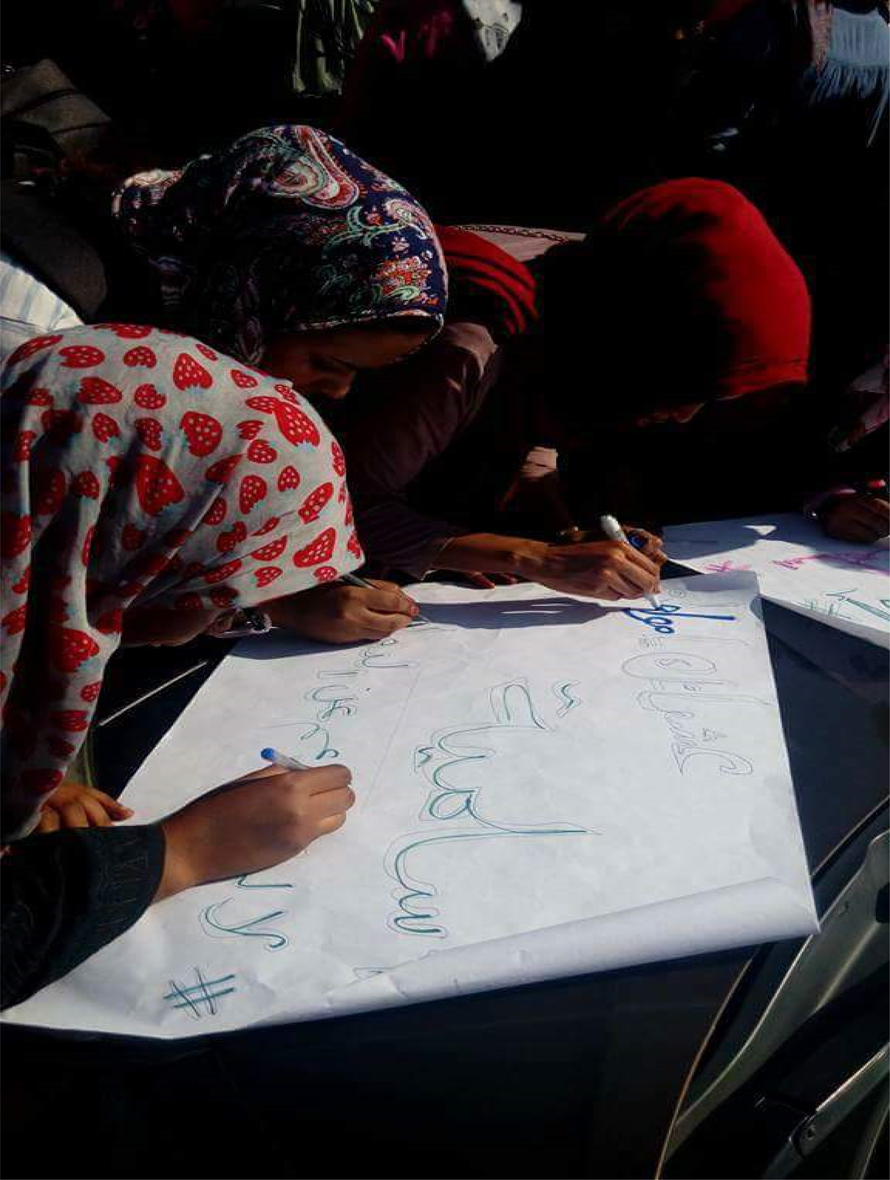
One major event that illustrates the significant political potential for groupat al-banat is the involvement of members of some of these groups in civil disobedience, to protest the rise of the cost of medicines in Sudan in November 2016 (See Figure 1). During this month, the government of Sudan introduced austerity measures to address a large budget deficit. This was not the first time the government introduced austerity measures. Successive governments had imposed Structural Adjustment Programs (SAPs), often enforced by the International Monetary Fund and the World Bank, in return for loans or development assistance to promote the liberalization of markets. SAPs have exacerbated class-based inequalities and increased women’s burden of work within the household, as they started shouldering healthcare responsibilities or working in the informal economy to augment family income. In November 2016, these measures included the devaluation of Sudan’s currency (SDG). The government also cancelled a competitive currency exchange rate that allowed pharmaceutical companies to exchange one US dollar for 6 SDGs. Consequently, the prices of medicines increased by between 100 and 350 percent. Over 200 pharmacies went on strike as the cost of medicines, according to pharmacists interviewed by newspapers and on TV, was already out of the reach of middle and low-income households. The photos of closed pharmacies, with notes from pharmacists explaining why they had gone on strike (see figure 6 online), dominated my newsfeed.
Members of Fasikh wa Galikh (F.G.) and Alda’am Al Saree’ (Rapid Support) protesting the increase in the prices of medicine ©Khansaa Kantosha and Rashan Oshi, posted on November 20, 2016 on Facebook, including in Munbarshat, F.G., and Mihera.

When a member of one of the women’s groups on Facebook posted an emotional note, announcing the death of her sister because of the lack of access to asthma medicine, the digital landscape of groupat al-banat changed immediately. The hashtag Restore_Subsidies_to_Medicine (in Arabic), dominated F.G. and Munbarshat. Numerous posts that garnered thousands of “likes” mobilized members to protest, posted photos of closed pharmacies, offered free medicine for those in need (See figures 8 and 9 online), and wished Godly punishment on the government and the president of Sudan. Importantly, a small number of women from both groups ventured into the streets, with their faces covered, and led a protest. Activist members of these groups posted advice on ways to avoid tear gas and dodge security and the police.
Groupat al-banat also played an important role in mobilizing Sudanese citizens to participate in Civil Disobedience on November 20, 2016. According to a poll published by the British Broadcasting Corporation (BBC), 68 percent of Sudanese citizens who took part in the poll stayed at home in civil disobedience. Fourteen percent said they did not hear about the campaign, and 18 percent did not participate. The latter were members of the ruling NCP or worked for government security agencies in Sudan. Importantly, the #Civil Disobedience campaign impacted Sudan’s stock exchange substantially. The country lost USD380 million on the first day of civil disobedience. Activists and intellectuals who had hitherto stigmatized F.G., Munbarshat, and Zeit Al-Shallabat declared on Facebook and on Twitter that platforms such as Fasikh and Galikh and Munbarshat offered opportunities for young women to organize and to resist. The former president of Khartoum University’s Students Union Walaa Salah captured this spirit:
Girls’ groups on Facebook that are interested in skin whitening, hair and skin care, and that stigmatize Playboys; the[man] snatching, and gossip groups, the platforms that some educated/intellectuals and activist women snubbed have turned into places for organizing protests, and for…. articulating critiques of the economic status quo. The lesson is: do not trivialize social gatherings regardless of the reason for these gatherings: be it …a gathering over coffee or to forecast the future through reading shells, or in the groups Fasikh and Galikh and Munbarshat. (Post on Facebook by Walaa Salah on November 20, 2016 [in Arabic], translated by the author)
This does not mean members entirely abandoned concern with beauty and aesthetics, or that they started conversations on the wars in Sudan. Nor does it mean they abandoned stereotypes and bodily constructions and practices that reinforced society’s unrealistic expectations of how a woman should look like. Instead, members of the groups used these established fora for new purposes. They also used the tools they had developed to dig background information about potential suitors in the case of Munbarshat, or to achieve glamour in the case of F.G.—to engage the political questions of the hour playfully in their own ways. Below I provide two examples of this tendency.
“Photoshopping” A State Minister of Health into Glamor and producing alzeit (information) of Security Agents
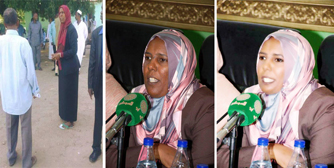
Following the protests and civil disobedience in November 2016, government officials responded by denying the cost of medicine had been liberalized. When a female state minister of health belittled the impact of inflation and removal of subsidies on medicine and basic commodities on citizens on BBC, members of F.G. circulated a photo of the minister wearing plastic slippers (reportedly because of a toe injury) and criticized her lack of “style.” F.G. members named the minister “Sumaia Sifinga” (Sumaia with the slippers). Numerous members commented on the minister’s dark complexion and suggested she should use “something to ‘cleanse’ [read whiten] her skin.” Members of the group soon started to playfully post altered photographs in which they photoshopped the minister’s photo into a more “glamorous look,” in which the minister also looked subdued (see Figure 2).
A ‘glamorous look’ for the state minister of health. Courtesy of F.G. members.

Another incident in which members of groupat albanat used tools at their disposal to engage political events is when Munbarshat quickly produced the name and address of a security agent who was about to arrest an activist on November 27, 2016. Sudan’s National Security is known for its brutality against government opponents. Upon arrest, the activist told the security agent he was “live on Facebook,” to which the security agent replied: “Live da Shinu?” (What is that thing called “live”?) Activists captured the photo of the security agent, and soon, members of Munbarshat produced Alzeit: information that included the name and the home address of the security agent (see Figure 10 onine). Members of Munbarshat continued to play this role in the protests that erupted in Sudan in December 2018 and continues into 2019.
Conclusion
I began this article by asking whether women’s groups on social media constituted platforms for networking, producing and exchanging knowledge, engaging in self-care, and potentially organizing for social change, or whether the same groups reproduced harmful stereotypes and body aesthetics, and whether they reinforced gender and social inequality. The findings of this research revealed the complex ways women’s written and visual narratives constructed and discussed the body and body politic. Like Nimo’s Salon, groupat al-banat enabled women to exchange news and knowledge and to build solidarities. Narratives on everyday beauty rituals are also significant, in that they reveal the workings of patriarchy and neoliberalism in Sudan. It is true that group members often enter digital spaces as consumers of a technology that exposes them to a predominantly white capitalist patriarchy, which produces and circulates a global “dominant aesthetic of the body” (Haraway Reference Haraway, Bell and Kennedy2000:301). At times, digital activities render women vulnerable to an informatics of domination. Yet the same groups (and newer groups that I discuss elsewhere), at times expose members to local and global critical discourses about these dominant aesthetics and informatics of domination while amplifying the voices of young women as active knowledge-producers and seekers.
This is particularly important in a context where structural inequalities, based on gender, regional location, social class, ethnicity, and other aspects of difference shape women’s experiences, and where groupat al-banat may also serve as platforms for mobilization around certain causes. The #Civil Disobedience that members of groupat al-banat spearheaded in November 2016 may seem like a short, one-off event. Yet it shows the potential for possible future mobilization and organizing for social change. This invites us to challenge the binary opposition inherent in the question Nairat (glamorous) versus Thairat (revolutionaries). It points to possibilities for articulating narratives that “constitute and stir deeply subjective and affective considerations about who we are, and who we can and indeed should be” (Dosekun Reference Dosekun2016:6).
Without falling into the trap of cyberoptimism, dare one also dream of possibilities for collective action to achieve social change, transformation, and gender equality in Sudan, perhaps through conversations within these groups with feminist activists and activists in the Sudanese women’s movement committed to social and political change? Such engagement should reflect humility on both sides, but especially at the part of feminist activists and intellectuals. It should arise from and reflect a genuine desire to negotiate rather than impose an agenda for social change on the members of groupat al-banat. It should complement and enhance community-based activism, including in areas affected by war and in areas with no access to electricity or the Internet. Perhaps such praxis can offer, in the long run, opportunities to reach out to anti-globalization feminist movements outside Sudan, and to playfully envision “counterhegemonic alternatives” that may challenge not only gender-based and other inequalities and economic injustice in Sudan, but also “oppressive forms of globalization… associated with global economic restructuring” (Naples Reference Naples, Naples and Desai2002:10) as they play out in Sudan and elsewhere in Africa.
Supplementary Material
To view supplementary material for this article, please visit https://doi.org/10.1017/asr.2018.146
Acknowledgments
I presented an earlier version of this paper at the African Studies Association meeting in 2016. I thank fellow panelists and the audience for generous comments on the paper. I am also grateful to the editors of ASR and of the issue, and to two ASR anonymous reviewers for insightful and generous comments. I thank the members of groupat al-banat for all that I learned from them.