Introduction
The questions of when, by what route and with which technologies humans first dispersed onto the Tibetan Plateau are vigorously debated. Recent archaeological discoveries confirm that the north-eastern part of the plateau, with an elevation over 3000m asl, was colonised by Denisovans at c. 160 ka BP during the late Middle Pleistocene (F.H. Chen et al. Reference Chen, Qu, Zhang, Gu, Wang and Wang2019); and Chang Tang in the central plateau, with an elevation over 4000m asl, was occupied by blade-making groups at c. 30–40 ka BP (X.L. Zhang et al. Reference Zhang, Xia and Chen2018). This new evidence suggests that the peopling of the mid-elevation (between 3000 and 4000m asl, according to Brantingham et al. Reference Brantingham, Gao, Madsen, Rhode, Perreault, Woerd and Olsen2013) or even the high-elevation (above 4000m asl) areas of the Tibetan Plateau occurred much earlier than previously thought. The question arises, therefore, whether there were other early occupants on the mid- or high-elevation areas of the plateau prior to the Last Glacial Maximum (c. 24–18 ka cal BP).
The lithic assemblages discovered on the Tibetan Plateau provide important information about the operational sequences of different prehistoric populations. These sequences could be maintained as technological traditions, unchanged for tens of thousands of years (e.g. Lyman & O'Brien Reference Lyman and O'Brien1998; Shennan Reference Shennan2008; Bar-Yosef & Belfer-Cohen Reference Bar-Yosef and Belfer-Cohen2013; Bar-Yosef Reference Bar-Yosef2015). Knapping sequences, therefore, provide not only chronological data but also information that may allow us to identify distinct prehistoric groups within a broad spatial framework. In this way, these data may help us to establish the timing of the peopling of Tibetan Plateau and the routes taken.
To date, the most commonly encountered lithic assemblages found on the Tibetan Plateau belong to the microblade industry (mode five; modes one to five were summarised by Clark (Reference Clark1969)), represented, for example, by the sites of Heimahe locality one (13.1 ka cal BP) and Jiangxigou locality one (14.6 ka cal BP) on the margin of Qinghai Lake, and Xidatan locality two (9200–6400 BP) in the Kunlun Pass area (e.g. Brantingham & Gao Reference Brantingham and Gao2006; Madsen et al. Reference Madsen, Ma, Brantingham, Gao, Rhode, Zhang and Olsen2006; Brantingham et al. Reference Brantingham, Gao, Madsen, Rhode, Perreault, Woerd and Olsen2013; Tang et al. Reference Tang, Zhou, Li and Liang2013; Madsen et al. Reference Madsen, Perreault, Rhode, Sun, Yi, Brunson and Brantingham2017). Most scholars agree that the producers of these microblades originated in northern China during the late Upper Palaeolithic and entered the Tibetan Plateau via its north-eastern margin (e.g. Zhang et al. Reference Zhang, Dong, Wang, Ren, Ha, Qiang and Chen2016; D.J. Zhang et al. Reference Zhang, Xia and Chen2018).
Blade industries (mode four) have also been found on the Tibetan Plateau, including both prismatic and Levallois blade assemblages. The former has been recorded at the stratified site of Nwya Devu (40–30ka BP) and in surface collections at Chang Tang (Brantingham et al. Reference Brantingham, Olsen and Schaller2001; X.L. Zhang et al. Reference Zhang2018). A Levallois blade industry is reported from the Lenghu locality one site (Brantingham & Gao Reference Brantingham and Gao2006). These blade assemblages have been attributed to groups dispersing from the Siberian Altai region and Mongolia, through the northern hinterland of the Tibetan Plateau (e.g. D.J. Zhang et al. Reference Zhang, Xia and Chen2018; X.L. Zhang et al. Reference Zhang, Xia and Chen2018). In addition, a few mode-two and mode-three products have been discovered. The latter is represented by prepared cores recovered from the surface at Chang Tang, and Quina-like scrapers at Siling Co; mode two is represented by surface-collected handaxes from Xiadacuo on the western Tibetan Plateau (Brantingham et al. Reference Brantingham, Olsen and Schaller2001; Yuan et al. Reference Yuan, Huang and Zhang2007; Lu Reference Lu2011; Wang et al. Reference Wang2018). Some scholars have suggested that these artefacts may represent a south-western dispersal route from the Indian subcontinent (Lu Reference Lu2011; Wang et al. Reference Wang2018).
In contrast to the modes-two to -five assemblages, the mode-one industry has been under-explored in the Tibetan Plateau. This core-and-flake industry has been reported at three regions in the Plateau, including Chang Tang, Qaidam and the northern piedmont of the Himalaya Mountains (Zhang Reference Zhang1976; Huo et al. Reference Huo, Li and Geng1993; Huang Reference Huang1994; Brantingham et al. Reference Brantingham, Olsen and Schaller2001). The assemblage from Chang Tang, however, is only briefly described by the excavators, with no further information available on the knapping sequence (Brantingham et al. Reference Brantingham, Olsen and Schaller2001). Equally controversial are the simple cores and retouched flakes from Xiao Qaidam, which were originally dated to 33 000±3300 (Huang Reference Huang1994), and then revised to 11–3 ka BP (Sun et al. Reference Sun, Lai, Hao, Liu and Fan2010). The recovery of microblade cores from the same surface at Xiao Qaidam led Brantingham et al. (Reference Brantingham, Gao, Madsen, Rhode, Perreault, Woerd and Olsen2013) to argue that the site dates to much later in the Holocene. In addition, archaeologists have reported small flake tools in Dingri County (Zhang Reference Zhang1976) and large cobble choppers in Jilong County (Huo et al. Reference Huo, Li and Geng1993). The location of both these findspots in the northern piedmont of the Himalaya Mountains suggests the possibility of the presence of mode-one industry in the Tibetan Plateau, although there is no direct dating or detailed analysis of the lithics available.
To provide a better understanding of the prehistoric peopling of the Tibetan Plateau, this article presents newly discovered core-and-flake assemblages from the Tongtian River valley in the south-eastern hinterland of the Tibetan Plateau. These discoveries have important implications for our understanding of the south-eastern dispersal routes onto the plateau.
Materials and methods
Our survey area in the Tongtian River valley is located on the border of Yushu City and Chengduo County, at an elevation of >3500m asl. Today, the climate is semi-humid and cold, with an average annual rainfall of 500–528mm and an average year-round temperature of about 0–2°C. The local plant biosphere is characterised by alpine meadow-scrub. Our surveys in 2018 and 2019 identified two sites on the terraces of the Tongtian River featuring knapped artefacts: Tangda and Xiege.
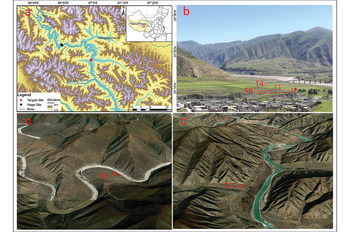
The Tangda site is located near Tangda Village, Zhongda Town of Yushu City, on the right bank of the Tongtian River, close to the mouth of a tributary (33°16′1.092″ north, 97°0′48.8268″ east; 3670m asl; Figure 1). The site comprises four well-preserved alluvial terraces (T1–4), with T4 roughly 40m above the level of the river. In total, 67 knapped artefacts, or pieces thereof, were found on the surfaces of T2–4, and 19 sherds of pottery on T2. Typologically, all the T2 pottery sherds are estimated to date to the historical period (c. 2000–1000 BP).
Geographic location of the Tangda (a–b & d) and Xiege (a & c) sites (figure by the authors).

The Xiege site is located near Xiege Village, Zhongda Town of Yushu City, on the right bank of the Tongtian River (33°19′29.01″ north, 96°50′37.2048″ east; 3585m asl; Figure 1). Here, two alluvial terraces (T1–2) have been identified, the latter around 29m above the river level. Forty-three knapped artefacts and a few pottery sherds were found on the surface of T2. Typologically, this pottery is considered to date from the Bronze Age to the historical period (c. 4000–1000 BP).
We conducted test excavations on all the terrace surfaces of both sites. No original cultural layers at either Tangda (T2–4) or Xiege (T2) were uncovered, however, due to erosion. All excavated surfaces revealed only thin, loose topsoil probably dating to the historical to modern periods, sitting above natural gravel layers. Radiocarbon dating of two samples of calcium carbonate adhering to lithics from T4 at Tangda yielded dates of 1894–1733 cal BP (Beta-521873) and 1884–1728 cal BP (Beta-521874). Nevertheless, the date of adhering calcium carbonate sediments does not equate with that of the associated lithics, which could be much older.
Of course, more recent sites can be found on older terraces, and, conversely, older sites may be embedded in more recent terraces (e.g. Bar-Yosef Reference Bar-Yosef2015). Given that the pottery sherds from the two sites are dated stylistically to as late as the Late Holocene, these areas were probably heavily utilised by Bronze Age to historical-period populations after the fluvial terraces were formed, before being subsequently buried by the overlying loess. Considering the lack of fine alluvial sediment in the upper deposits (T2–4) of all the terraces due to erosion, it is possible that the lithics relate to the Bronze Age to historical-period populations. It should, however, be noted that no ceramics were found on T3–4 at Tangda, suggesting that the lithics on T3–4 and the ceramic sherds on T2 are from different depositional contexts. Given the lack of abrasion on the lithic edges and their fresh condition, it is more likely that they were produced by much earlier populations, and were buried during the formation of terraces—embedded in the fluvial sediments by hydraulic forces—before being exposed on the surface in a much later period.
The true date(s) of the lithics can therefore not be distinguished by the topographic features (i.e. the location or the height of the terrace). It is also difficult to infer any stratigraphic relationships between the lithics and the ceramic sherds due to the lack of in situ cultural layers. Almost all of the lithics from the different terraces at both Tangda and Xiege are made of the same high-quality raw materials, and exhibit the same reduction sequence, suggesting that the lithics from the two sites are possibly contemporaneous and cover a relatively large chronological span. As absolute dating of the sites is not currently possible, we focus on the lithic reduction sequences at Tangda and Xiege, and infer the date and identity of the lithic producers through a detailed comparison with lithic assemblages from regions surrounding the Tibetan Plateau.
Results
The lithic assemblage at Tangda
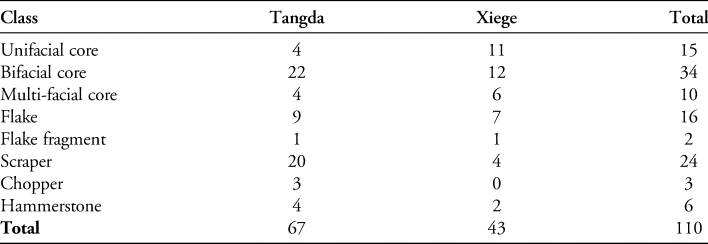
A total of 67 lithic artefacts (Table 1) were collected from T2–4 at the Tangda site (Table 1), and all stages of reduction and manufacture are represented. Due to the similar techno-morphological attributes of the lithics, here, we describe and discuss them together. Nearly 98.5 per cent of the lithic artefacts are made of large cobbles that are available in the local riverbed. Most of the artefacts are made from siliceous rock (n = 62; 93.9 per cent), followed by phyllite (n = 3; 4.5 per cent) and dolerite (n = 2; 3 per cent). The siliceous rock, the high quality of which makes it more suitable for knapping, comprises less than ten per cent of the riverbed cobbles. Thus, the high frequency of this material in the assemblage suggests the active selection of raw materials for making these artefacts.
Technological composition of the lithic industry from the Tangda and Xiege sites.

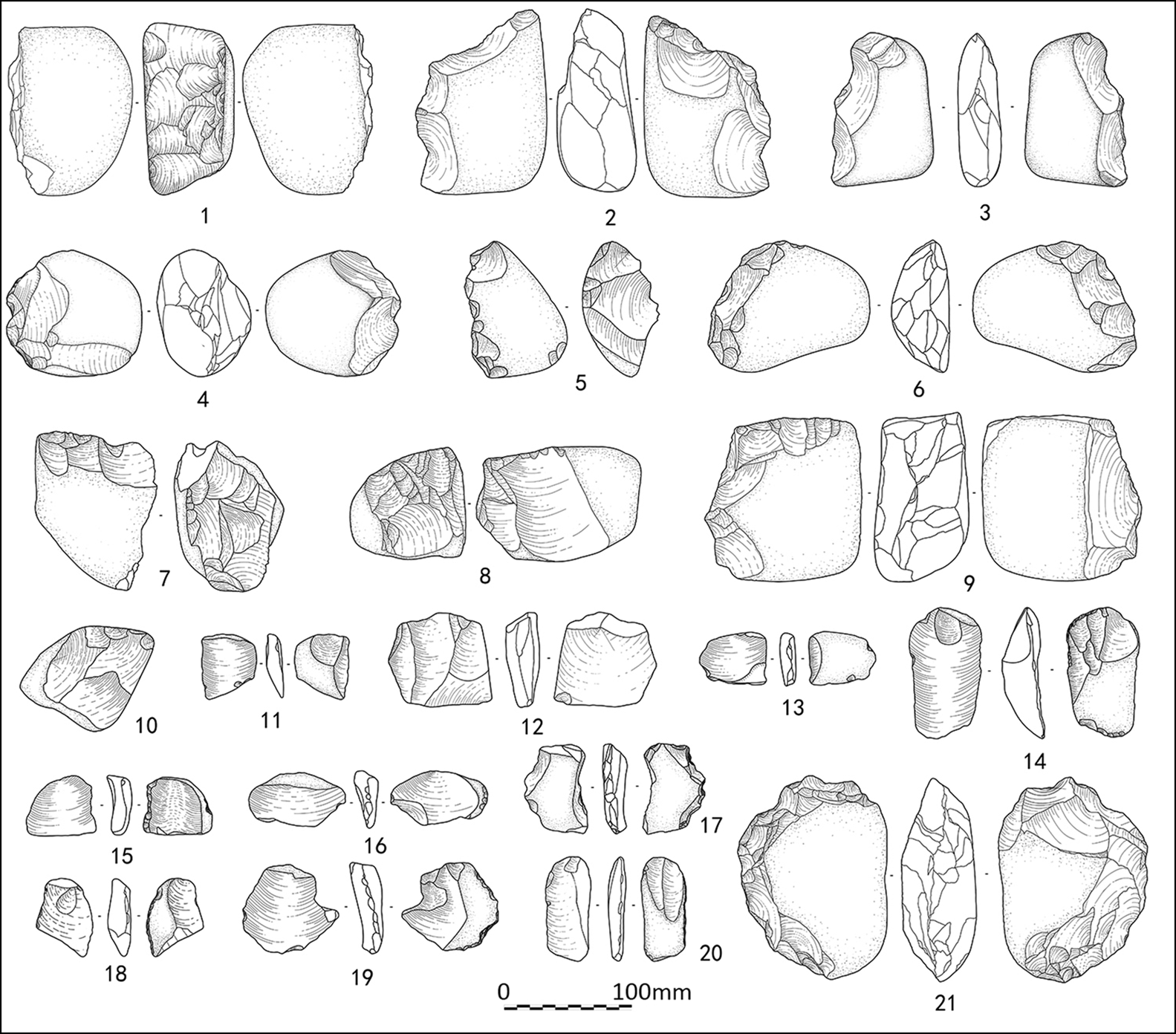
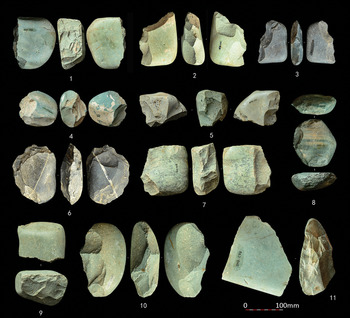
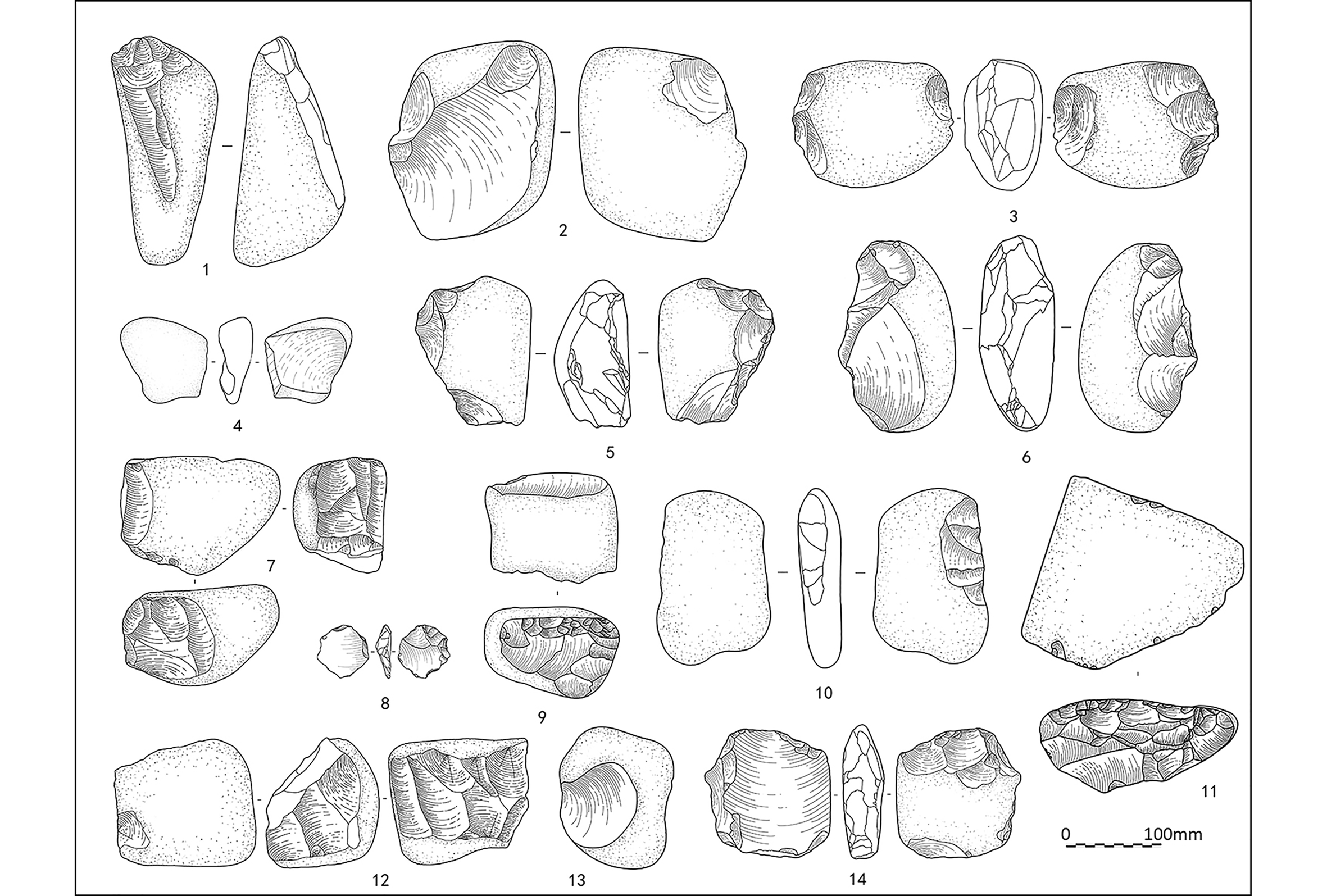
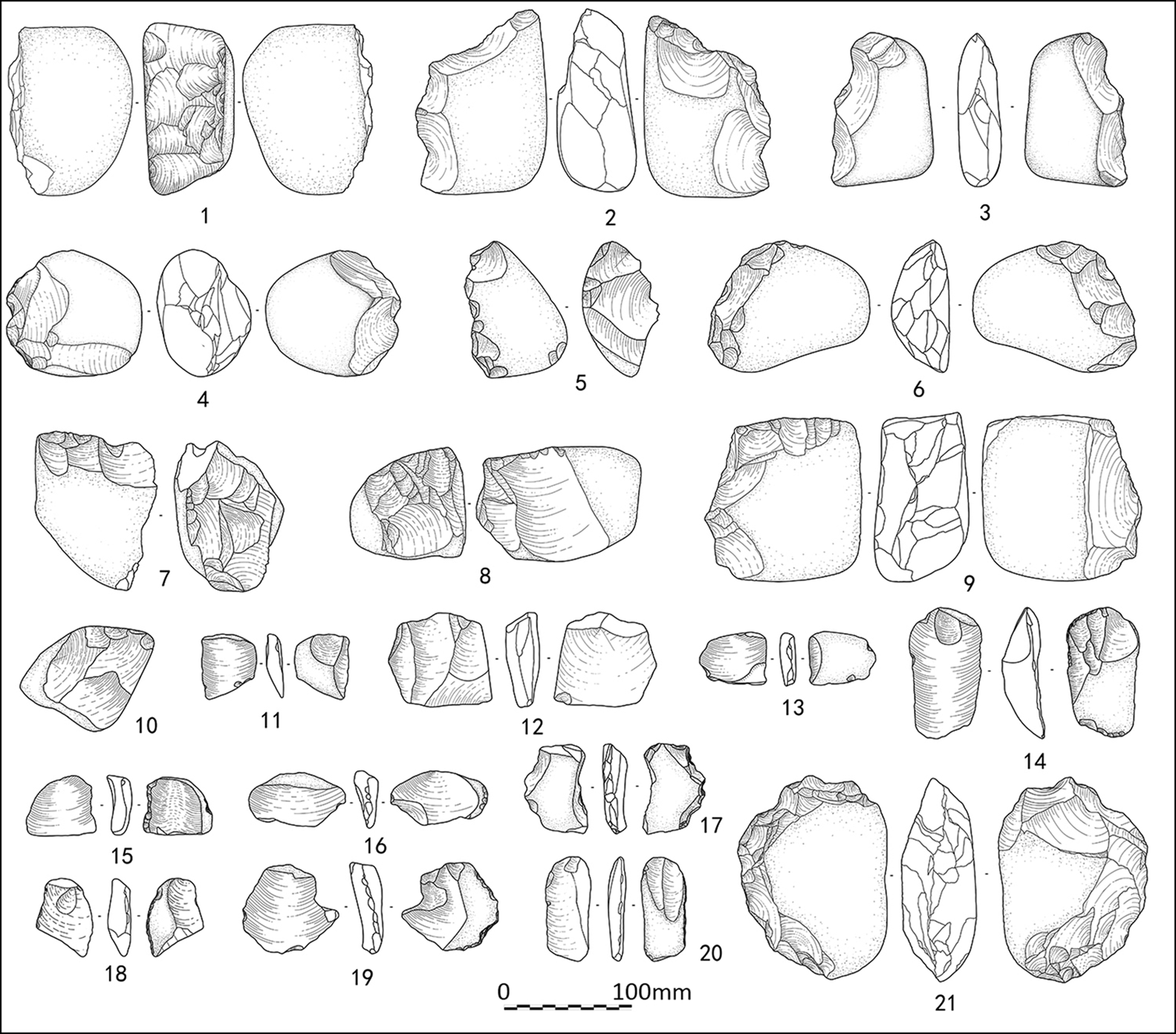
The assemblage includes 30 cores, representing 44.8 per cent of the total assemblage. The cores were all produced by direct hammer percussion and, based on reduction sequences, can be divided into unifacial, bifacial and multi-facial cores. The unifacial examples (n = 4; 13.3 per cent of the cores) have a single reduction face (Figure 2.1 & 2.10 & Figure 3.1), and can be further divided into unifacial unidirectional (n = 3) and unifacial bidirectional cores (n = 1). Bifacial cores (n = 22; 73.3 per cent of the cores) have two reduction faces, with each face being used as a striking platform for the other (Figure 2.2–6 & Figure 3.2–4). Characterised by three or more reduction faces (Figure 2.7–9 & Figure 3.5 & 3.7), multi-facial cores (n = 4; 13.3 per cent of the cores) comprise the rest of the core assemblage. Most of the cores are relatively large, with mean dimensions of 81.5mm in length, 77.8mm wide, 48.9mm thick and a weight of 442.6g. The cores also demonstrate high amounts of cortex, covering at least 50 per cent on average of each core, indicating a moderate core-exploitation strategy and a relatively good supply of raw materials.
The lithic industry of the Tangda site: 1 & 10) unifacial core; 2–6) bifacial cores; 7–9) multi-facial cores; 11–13) flakes; 14–20) scrapers; 21) chopper (figure by the authors).
The lithic industries of the Tangda (1–8) and Xiege (9–11) sites: 1) unifacial core; 2–4 & 10) bifacial cores; 5, 7 & 9) multi-facial cores; 6) chopper; 8) hammerstone; 11) scraper (figure by the authors).

Nine flakes (13.4 per cent of the assemblage) produced by direct hammer percussion were found at Tangda (Figure 2.11–13). Flakes are classified into six categories (types one to six following Toth (Reference Toth1985) and defined by their place within the reduction sequence (Toth Reference Toth1985). The Tangda flakes comprise type two (n = 4), type three (n = 2), type four (n = 2), type five (n = 1) and type six (n = 1). No type-one flakes were found at Tangda. Most of the flakes are of medium size, with mean dimensions of 52.1mm in length, 50.2mm wide, 22.3mm thick and a weight of 66.2g.
A total of 27 tools (40.3 per cent of the assemblage) were collected at Tangda, comprising 20 scrapers, three choppers and four hammerstones. Fourteen of the scrapers (74.1 per cent of the tools) are single-edged, and six are double-edged. All are retouched on flakes using unifacial hard-hammer percussion. The scrapers are generally of medium size, with mean dimensions of 63.8mm in length, 47.9mm wide, 18.2mm thick and a weight of 69.3g (Figure 2.14–20). Choppers (n = 3; 11.1 per cent of the tools) were made on cobbles using bifacial (n = 1) and unifacial (n = 2) hard-hammer percussion, with stepped retouching scars. The choppers are generally of a large size, with mean dimensions of 151.8mm in length, 117.5mm wide, 52.8mm thick and a weight of 1755.5g (Figure 2.21 & Figure 3.6). Hammerstones (n = 4; 14.8 per cent of the tools) are identified as cobbles exhibiting concentrated pitting scars at both ends, with mean dimensions of 100.5mm in length, 72.2mm wide, 35.6mm thick and a weight of 386.8g (Figure 3.8).
The lithic assemblage at Xiege
A total of 43 lithic artefacts were collected from T2 at the Xiege site. Given the similarities in the lithic industry between Tangda and Xiege, we use the same classification scheme for both assemblages. As at Tangda, all of the Xiege lithic artefacts are made from green siliceous cobbles. A total of 29 cores (67.4 per cent of the assemblage) were collected, including unifacial (n = 11; 37.9 per cent of the cores; Figure 4.1, 4.4, 4.10 & 4.13), bifacial (n = 12; 41.4 per cent of the cores; Figure 3.10 & Figure 4.2–3 & 4.5–6) and multi-facial cores (n = 6; 20.7 per cent of the cores; Figure 3.9 & Figure 4.7, 4.9 & 4.12). The cores have mean dimensions of 106.5mm in length, 94.4mm wide, 75.8mm thick and a weight of 303.9g. A total of seven flakes (16.3 per cent of the assemblage) were found in Xiege, comprising type one (n = 1), type two (n = 3), type four (n = 1) and type five (n = 2) items. The flakes have mean dimensions of 64.3mm in length, 41.4mm wide, 31.2mm thick and a weight of 81.2g.
The lithic industry of the Xiege site: 1, 4, 10 & 13) unifacial core; 2–3, 5–6) bifacial cores; 7, 9 & 12) multi-facial cores; 8, 11 & 14) scrapers (figure by the authors).
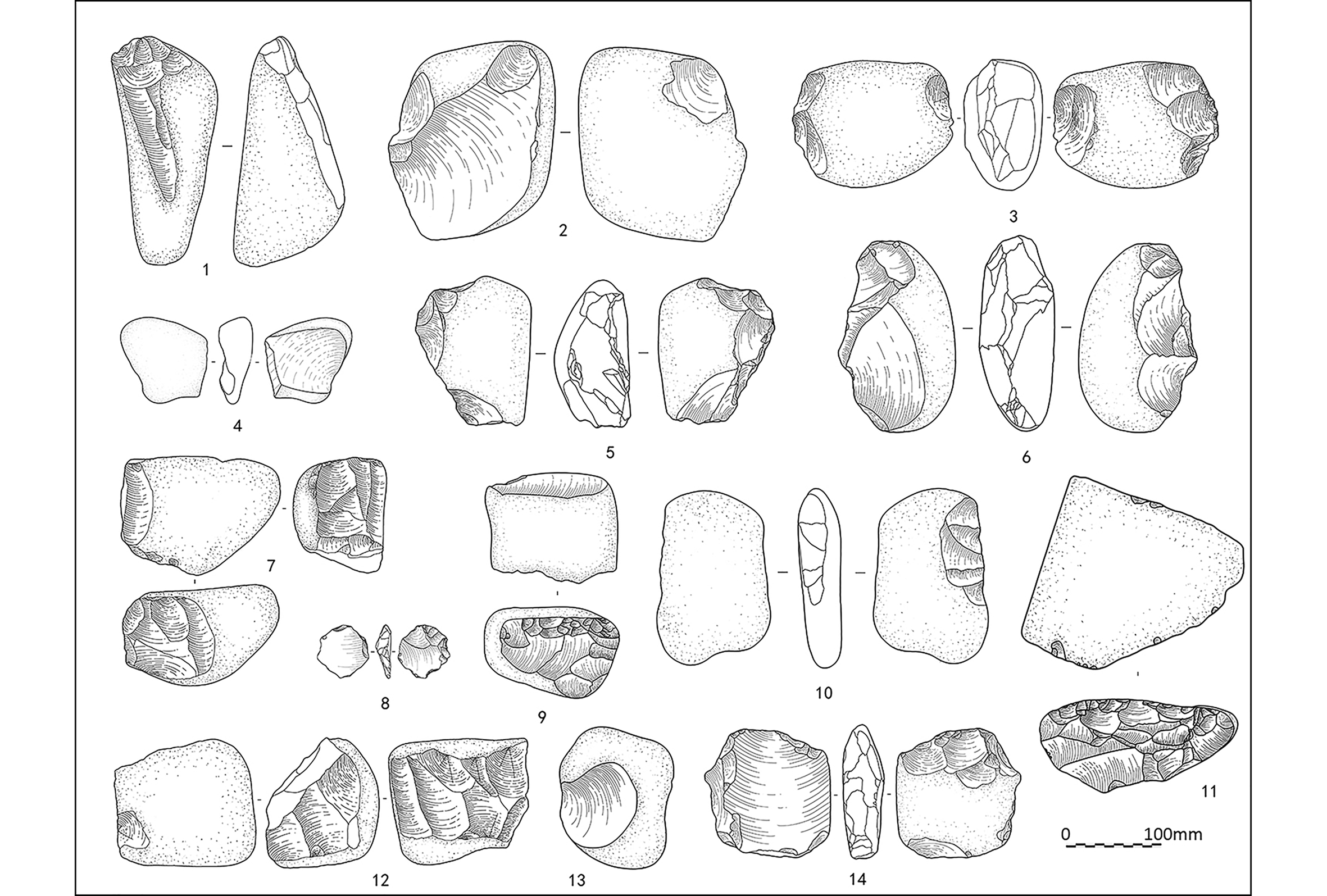
Six stone tools (14 per cent of the total assemblage) were collected from Xiege, comprising four scrapers and two hammerstones. Three of the scrapers were made on flakes and one on a chunk (an incomplete core or incomplete cobble that we could not identify definitively); all have single edges with unifacial retouch. The scrapers have mean dimensions of 90.5mm in length, 83.4mm wide, 51.4mm thick and a weight of 124.2g (Figure 3.11 & Figure 4.8, 4.11 & 4.14). The two hammerstones average 165.3mm in length, 139.5mm wide, 106.6mm thick and a weight of 653.9g.
Discussion
The lithic assemblages from both Tangda and Xiege were each distributed over large areas of more than 1000m2. The low percentages of flakes and tools in the assemblages may suggest that these artefacts were transported off-site following knapping. The lithic assemblages are characterised by typical mode-one technology (Clark Reference Clark1969), with the main objective being to produce flake tools. The artefacts are comparatively large in size, and the majority of the tools are expedient scrapers, along with a few choppers (Figure 3). The type of core-and-flake industry present at Tangda and Xiege—with no evidence for microblades or ground-stone tools—has not previously been identified at any Holocene sites on the Tibetan Plateau. The core-and-flake industries at Tangda and Xiege, combined with their geographic location, aligns these sites with the mode-one industry of Pleistocene East Asia (e.g. Gao & Pei Reference Gao and Pei2006; Bar-Yosef & Wang Reference Bar-Yosef and Wang2012; Gao Reference Gao2013; Gao et al. Reference Gao, Peng, Fu and Li2018).
Zhang (Reference Zhang1990, Reference Zhang1999) has defined two predominant lithic technologies of the Chinese Palaeolithic, with northern and southern industries separated by the Qingling Mountains and Huai River. The main northern industry refers to small flake tools (e.g. scrapers and points), while the southern one is characterised by large cobble choppers. The core-and-flake industry of Tangda and Xiege relates most closely to the northern industry.
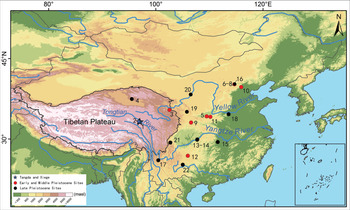
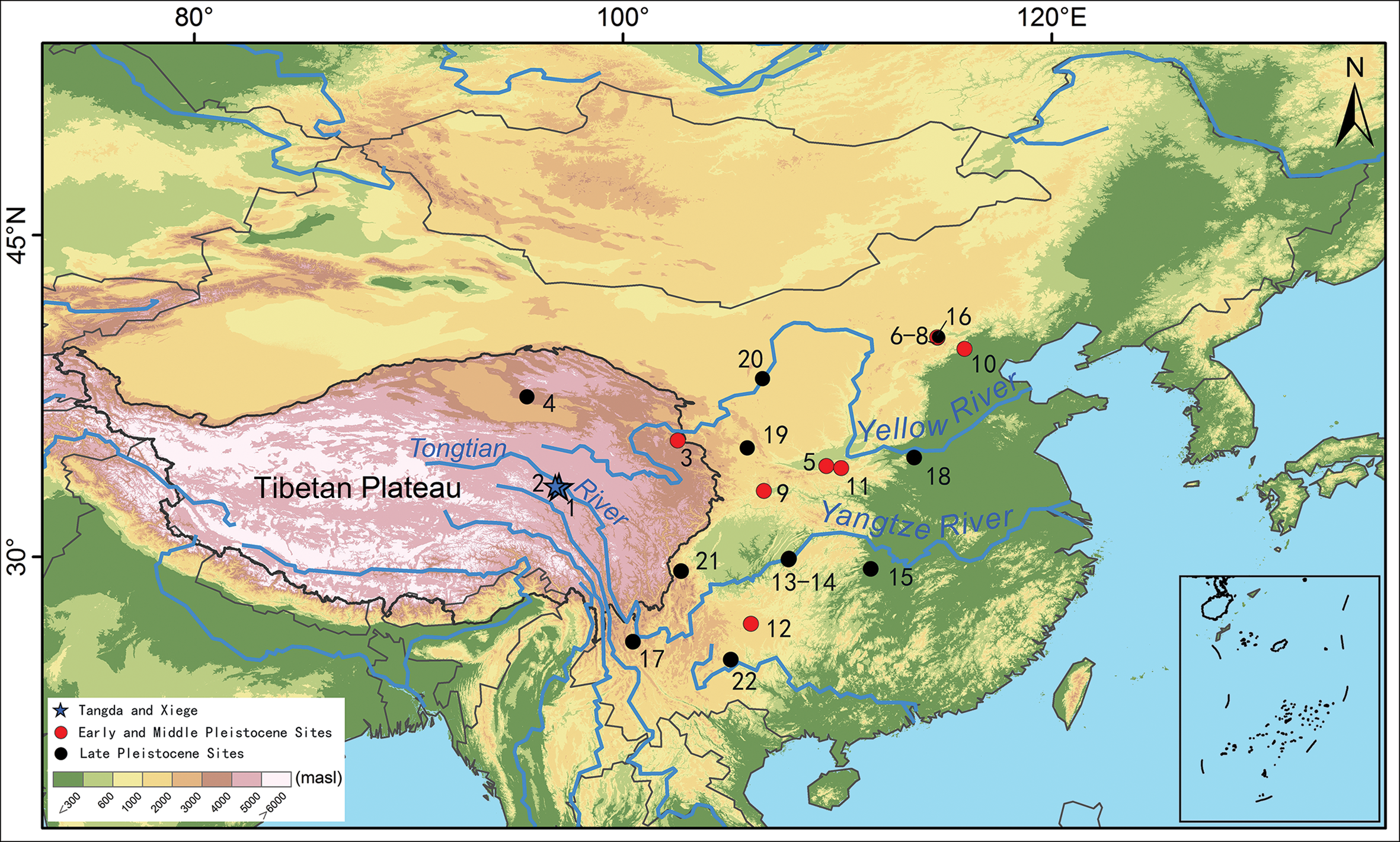
The core-and-flake (small flake tool) industry is widely distributed across northern China from the Early Pleistocene to the middle Late Pleistocene (c. 2.12 Ma to 30 ka BP). Many such sites have been systematically dated and analysed (Figure 5). The Early Pleistocene sites are represented by Shangchen in Shaanxi Province (2.12–1.26 Ma), Majuangou (1.66–1.55 Ma), Xiaochangliang (1.36 Ma) and Donggutuo (1.1 Ma) in Hebei Province, and Longgangsi locality three in Shaanxi Province (1.2–0.7 Ma) (Zhu et al. Reference Zhu2001, Reference Zhu2004; Zhu et al. Reference Zhu2018; Hou Reference Hou2003; Xie et al. Reference Xie, Li and Liu2006; Yang et al. Reference Yang, Hou, Yue, Petraglia, Deng and Zhu2016, Reference Yang, Hou, Yue, Petraglia, Deng and Zhu2017; Xia et al. Reference Xia2018). The Middle Pleistocene sites are represented by Zhoukoudian locality one in Beijing (c. 0.7–0.2 Ma) and Longyadong in Shaanxi Province (c. 0.4–0.25 Ma) (Pei & Zhang Reference Pei and Zhang1985; Wang Reference Wang2008; Wang & Lu Reference Wang and Lu2016). The key Late Pleistocene sites include Banjingzi in Hebei Province (108–74 ka BP), Xujiacheng in Gansu Province (43–36 ka BP), Laonainaimiao in Henan province (44–45 ka cal BP) and the upper layer of Shuidonggou locality two in the Ningxia Hui Autonomous Region (33–27 ka cal BP) (Xie et al. Reference Xie, Li and Liu2006; Li et al. Reference Li, Chen, Wang, Liu, Wang, Zhang, Li, Zhang and Gao2012, Reference Li, Chen and Gao2014, Reference Li, Li, Gao, Kuhn, Boeda and Olsen2019; Wang & Wang Reference Wang and Wang2014; Ren et al. Reference Ren, Li, Wang, Chen and Gao2018; Y.C. Chen et al. Reference Chen, Qu, Zhang, Gu, Wang and Wang2019).
Major core-and-flake sites on and around the Qinghai-Tibetan Plateau: 1) Tangda; 2) Xiege; 3) Baishiya; 4) Xiao Qaidam; 5) Shangchen; 6) Majuangou; 7) Xiaochangliang; 8) Donggutuo; 9) Longgangsi locality three; 10) Zhoukoudian locality one; 11) Longyadong; 12) Guanyindong; 13) Jingshuiwan; 14) Ranjialukou; 15) Tiaotougang; 16) Banjingzi; 17) Tianhuadong; 18) Laonainaimiao; 19) Xujiacheng; 20) Shuidonggou locality two; 21) Fulin; 22) Maomaodong (figure by the authors).
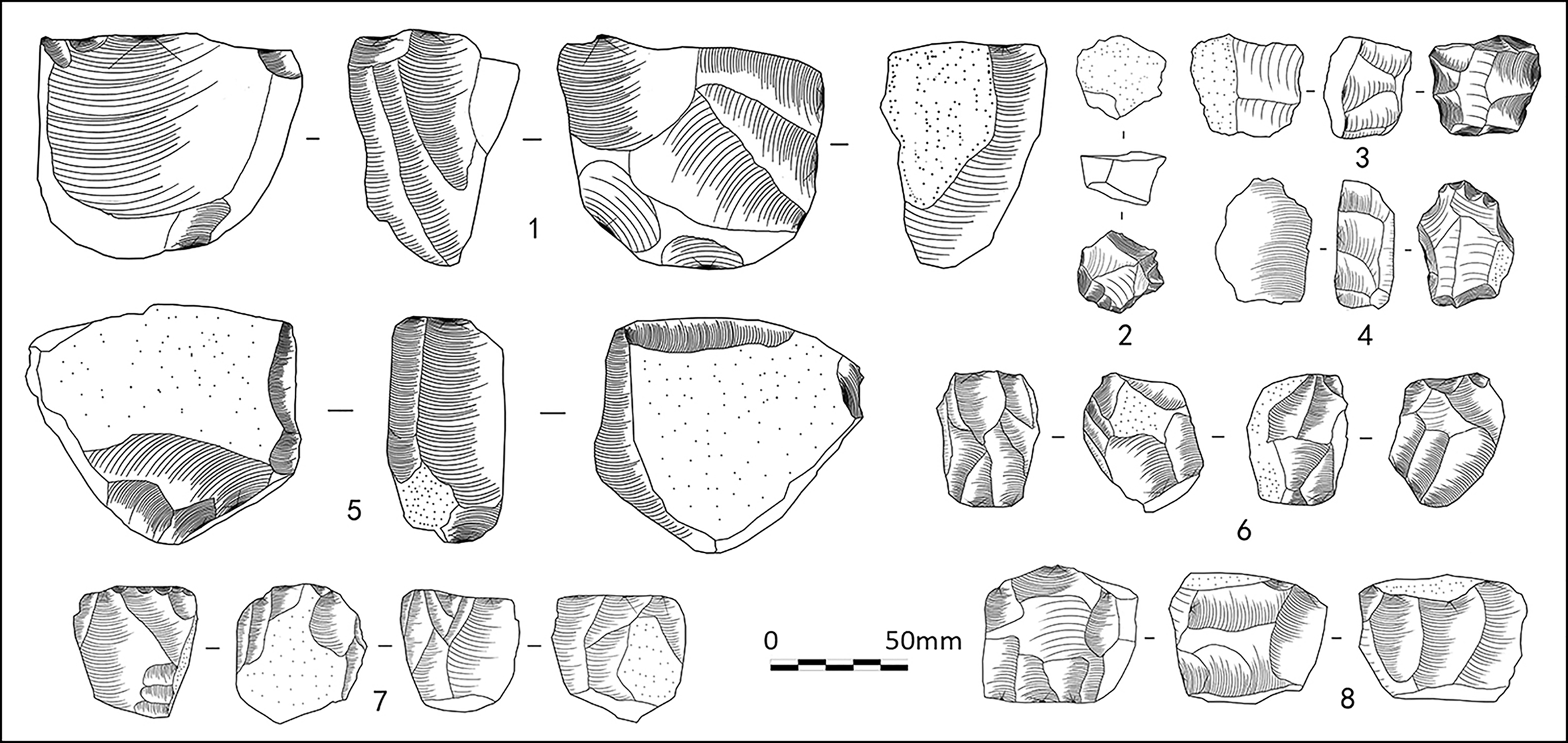
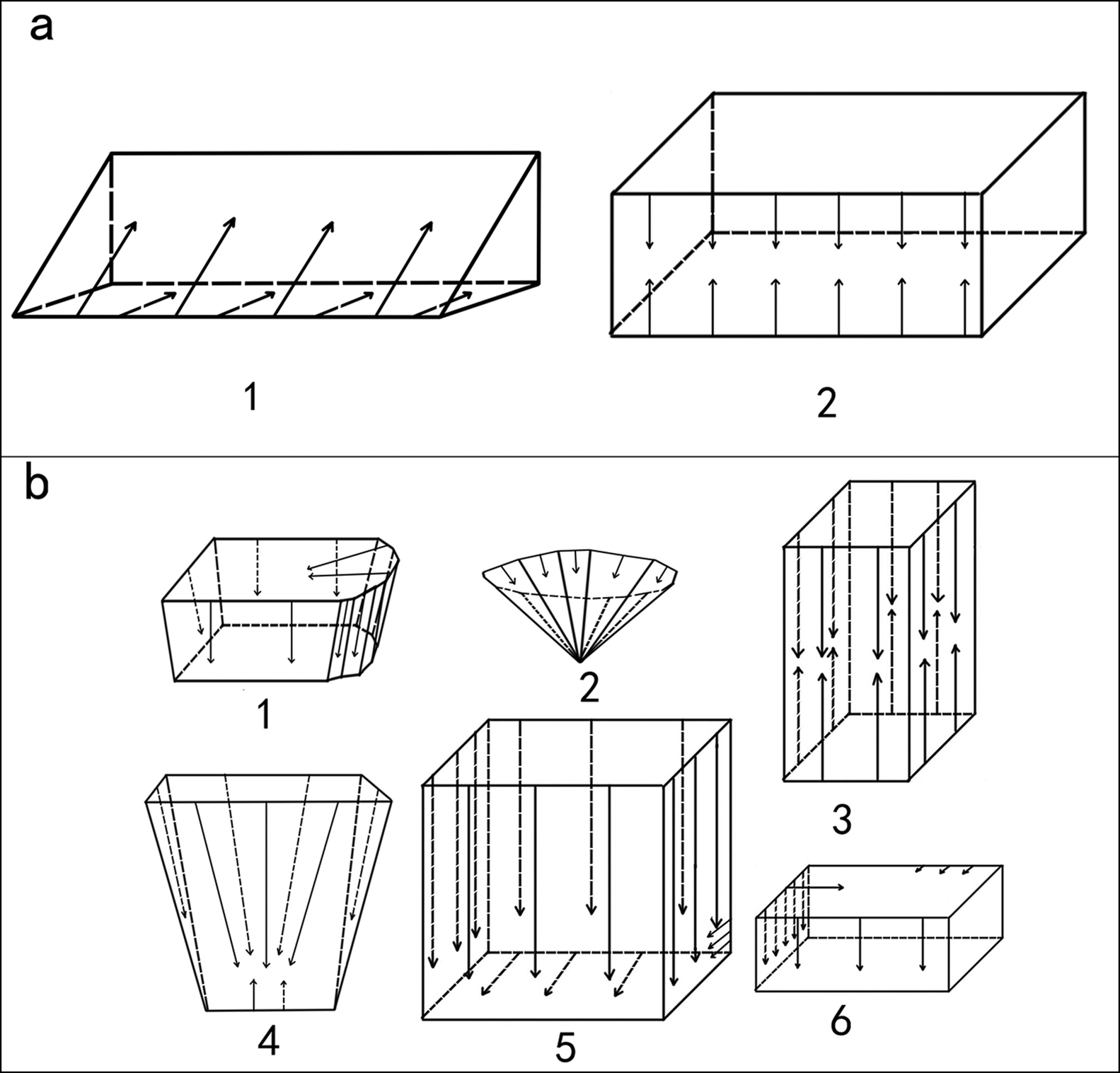
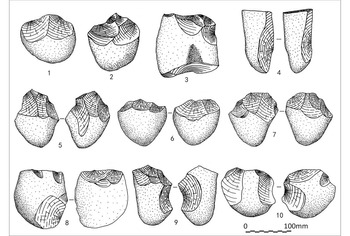
The knapping sequences of the Early Pleistocene lithic industries at Shangchen and Majuangou are simple and irregular (Xie et al. Reference Xie, Li and Liu2006; Zhu et al. Reference Zhu2018), while Xiaochangliang and Donggutuo reveal diverse knapping strategies to exploit one or more faces of the cores (e.g. Hou Reference Hou2003; Yang et al. Reference Yang, Hou, Yue, Petraglia, Deng and Zhu2016, Reference Yang, Hou, Yue, Petraglia, Deng and Zhu2017). The Middle Pleistocene lithic assemblages from Zhoukoudian locality one and Longyadong are generally characterised by multi-facial reduction, with frequent rotation of the core during knapping (e.g. Pei & Zhang Reference Pei and Zhang1985; Wang Reference Wang2008). This reduction strategy is also documented at Late Pleistocene Xujiacheng and Shuidonggou locality two (Li et al. Reference Li, Chen, Wang, Liu, Wang, Zhang, Li, Zhang and Gao2012, Reference Li, Chen and Gao2014). A contemporaneous, diachronic trend towards a more structured reduction process is observed at Banjingzi and Laonainaimiao (Figures 6–7), with an overall increase in the frequency of more geometric shapes (Ren et al. Reference Ren, Li, Wang, Chen and Gao2018; Y.C. Chen et al. Reference Chen, Qu, Zhang, Gu, Wang and Wang2019). In contrast, the cores from Tangda and Xiege do not demonstrate such geometric diversity but, rather, are characterised by bifacial and unifacial reduction—a technique rarely encountered in northern China.
The cores of the Laonainaimiao site (44–45 ka cal BP) in northern China: 1) wedge-shaped core; 2) conical-shaped core; 3–4) boat-shaped core; 5-8) cube-shaped core (figure after Y.C. Chen et al. Reference Chen, Qu, Zhang, Gu, Wang and Wang2019).

Comparison of the main core-reduction patterns at (a) Tangda and Xiege and (b) Laonainaimiao: a: 1) bifacial core; 2) unifacial core; b: 1) boat-shaped core; 2) conical-shaped core; 3 & 5–6) cube-shaped cores; 4) wedge-shaped core (figure by the authors).

It has previously been proposed that the distribution of the main northern industry extended to the Yunnan-Guizhou Plateau, which is located to the south-east of the Tibetan Plateau (e.g. Zhang Reference Zhang1990; Wang Reference Wang2005), as documented, for example, by the small flake-tool industry at the Fulin site in Sichuan Province (Zhang Reference Zhang1977). Furthermore, a regional technological trait known as large null-platform flakes produced by bipolar technology is also present in this area, and is represented at the Maomaodong site (c. 14.6 ka) in Guizhou Province (e.g. Zhang & Cao Reference Zhang and Cao1980). Recently, Levallois and Levallois-like technology have been reported, respectively, at Guanyindong Cave (c. 170–80 ka) in Guizhou Province and Tianhuadong (c. 95–50 ka) in Yunnan Province (Hu et al. Reference Hu2019; Ruan et al. Reference Ruan, Liu, Hu, Li, Yang and Luo2019), although some have questioned the presence of Levallois technology in this area (e.g. F. Li et al. Reference Li, Li, Gao, Kuhn, Boeda and Olsen2019; Y.H. Li et al. Reference Li, Li, Gao, Kuhn, Boeda and Olsen2019). The Yunnan-Guizhou Plateau appears to be dominated by a core-and-flake industry similar to the main northern industry, as characterised by the small flake-tools at the Fulin site and the multiple knapping operative schemes at Guanyindong Cave (Zhang Reference Zhang1977; Li & Wen Reference Li and Wen1986; Li et al. Reference Li, Hou and Boeda2009); this is very different to the industry documented at Tangda and Xiege.
Meanwhile, it has been argued that in southern China, the main southern industry was replaced by the main northern industry during the Late Pleistocene (e.g. Wang Reference Wang1998, Reference Wang2005, Reference Wang2019; Zhang Reference Zhang1999). This is clearly documented by the upper layer of Tiaotougang in Hunan Province, and in a cluster of Palaeolithic sites in the Three Gorges area of Chongqing Municipality. The upper layer of Tiaotougang (c. 100–50 ka) is characterised by a core-and-flake industry with a diversity of geometric core-forms (e.g. discoidal, conical-shaped and wedge-shaped) (Li Reference Li2019). While this industry is similar to that of the Banjingzi and Laonainaimiao sites in northern China, it differs from Tangda and Xiege in the geometric form of its cores.
Finally, but most significantly, the Three Gorges area presents a different picture. Here, Palaeolithic sites have been discovered on the fourth, third and second terraces of the Yangtze River, with Yangdunbao on T4, Ranjialukou, Gaojiazhen, Chibaling and Fanjiahe on T3, and Jingshuiwan and Zaoziping on T2 (Pei et al. Reference Pei, Gao, Wu, Li and Bae2013). Jingshuiwan was dated by optically stimulated luminescence (OSL) to 70 ka BP and Ranjialukou was OSL-dated to c. 143–78 ka BP (Pei et al. Reference Pei, Gao, Feng, Chen and Dennell2010, Reference Pei, Gao, Wu, Li and Bae2013). The lithic assemblages on all of these different terraces show remarkable similarities with those from Tangda and Xiege, including the procurement of local cobbles, the frequent use of bifacial and unifacial flaking strategies (Figure 8), and the dominance of scrapers in the tool assemblage, alongside a few choppers (Pei et al. Reference Pei, Gao, Wu, Li and Bae2013). The lithic industry in the Three Gorges area provides by far the closest parallels for that from Tangda and Xiege.
The lithic industry of the Jingshuiwan site (70 ka BP) in the Three Gorges area: 1–3) unifacial cores; 4–10) bifacial cores (figure after Pei et al. Reference Pei, Gao, Feng, Chen and Dennell2010).

Conclusions
The typical core-and-flake industry at both Tangda and Xiege represents the first unequivocal evidence for unmixed mode-one industry in the south-eastern hinterland of the Tibetan Plateau, and thus helps to fill a gap in our understanding of the peopling of the region. The core-and-flake industry possibly suggests the occurrence of an early immigration event in the plateau, pre-dating the Holocene. In contrast to modes two to five, the simple technological organisation of the lithic industry indicates the inhabitants’ low levels of mobility, which further reinforces similarities with Early Palaeolithic foragers of East Asia, as defined by Gao and Norton (Reference Gao and Norton2002), and different to the Late Palaeolithic East Asian blade and microblade populations with greater mobility.
The strong typological affinities between Tangda/Xiege and Three Gorges lithic industries provide an opportunity for closer tracking of the knappers at Tangda and Xiege. Although these sites are located almost 1000km from the Three Gorges area and are more than 3000m higher in elevation, the prehistoric inhabitants of the two regions occupied different stretches of the same river valley, and both exploited open environments on the valley floor. While the similarity in lithic industry does not, of course, confirm that the inhabitants of Tangda and Xiege migrated directly from the Three Gorges area, it may suggest the direction and chronology of general migration between the two regions. Accordingly, we infer that the lithic assemblages at Tangda and Xiege probably date to the early and middle Late Pleistocene, and that the knappers dispersed along the river valley to the Tibetan Plateau via the upper reaches of the Yangtze River (or other nearby rivers to the south-east). Such movements were possibly driven by increasing population pressure in the areas surrounding the plateau during the interglacial periods (MIS5 or MIS3) of the Late Pleistocene.
Although further research is required, the lithic industry at Tangda and Xiege in the Tongtian River valley offers important insight into the peopling and lithic technology of the early inhabitants of the Tibetan Plateau, as well as the routes by which they arrived and the forces driving such movement. The current archaeological evidence suggests that the prehistoric Tibetan Plateau was not isolated, but a vast area comprising different geographical units and connecting different parts of Eurasia. During the Late Pleistocene, hunter-gatherers from different parts of East Asia probably occupied the plateau by different routes, under different driving forces and with different lithic technologies. The early peopling of the Tibetan Plateau by such groups probably laid an important foundation for the further occupation of the plateau by agricultural populations in the Holocene.
Acknowledgements
We thank Yunfei Liu, Qiongyue Zhou, Jingyi Wang, Zhouyi Han and Anran Li for their help with the lithic research. We are also grateful to Youping Wang, Shuwen Pei, Tongli Qu, Rowan K. Flad and Amy E. Clark for their valuable suggestions and encouragement.
Funding statement
This work was supported by the Natural Science Foundation of Qinghai Province (grant 2021-ZJ-917), the National Natural Science Foundation of China (grant 41761018), the National Philosophy and Social Science Foundation of China (grant 16CKG004), and the Strategic Priority Research Program of the Chinese Academy of Sciences, Pan-Third Pole Environment Study for a Green Silk Road (grant XDA2004010101).