INTRODUCTION
Munida rutllanti Zariquiey Alvarez, 1952 is an Atlanto-Mediterranean species occurring on the north-western coast of Spain to Morocco and in the entire Mediterranean basin. This species is mostly found on muddy and shell–sand grounds of the continental shelf and upper slope, frequently occurring along with M. intermedia and M. tenuimana (d'Udekem d'Acoz, Reference d'Udekem d'Acoz1999; Abelló et al., Reference Abelló, Carbonell and Torres2002; Huguet et al., Reference Huguet, Maynou and Abelló2005; Politou et al., Reference Politou, Maiorano, D'Onghia and Mytilineou2005). According to Abelló et al. (Reference Abelló, Carbonell and Torres2002) M. rutllanti constitutes well-established populations in the western Mediterranean and recently it has been more frequently reported from the eastern Mediterranean (Koukouras et al., Reference Koukouras, Kallianiotis and Vafidis1998; Kocatas & Katagan, Reference Kocatas and Katagan2003; Politou et al., Reference Politou, Maiorano, D'Onghia and Mytilineou2005; Ungaro et al., Reference Ungaro, Marano, Ceriola and Martino2005; Kocak et al., Reference Kocak, Leblebici, Ozaydin and Katagan2008). Due to its progressive spread, it is not surprising that the species has been reported in the Adriatic only after 2000 (Froglia & Gramitto, Reference Froglia and Gramitto2005; Ungaro et al., Reference Ungaro, Marano, Ceriola and Martino2005; Morello et al., Reference Morello, Antolini, Gramitto, Atkinson and Froglia2009). Compared to limited data about biology of M. rutllanti, other species of this genus are well studied throughout their geographical distribution (Attrill, Reference Attrill1989; Hartnoll et al., Reference Hartnoll, Rice and Attrill1992; Gramitto & Froglia, Reference Gramitto and Froglia1998; Tapella et al., Reference Tapella, Lovrich, Romero and Thatje2002; Hudson & Wigham, Reference Hudson and Wigham2003; Mori et al., Reference Mori, Sbrana, Sartor and De Ranieri2004; Huguet et al., Reference Huguet, Maynou and Abelló2005; Tapella & Lovrich, Reference Tapella and Lovrich2006; Kassuga et al., Reference Kassuga, Silva-Ferreira, Ostrovski and Costa2008). Most of the studies on M. rutllanti report on its depth distribution and abundance, however only within other crustacean assemblages (Koukouras et al., Reference Koukouras, Kallianiotis and Vafidis1998; Abelló et al., Reference Abelló, Carbonell and Torres2002; Politou et al., Reference Politou, Maiorano, D'Onghia and Mytilineou2005; Morello et al., Reference Morello, Antolini, Gramitto, Atkinson and Froglia2009). In the western Mediterranean, Huguet et al. (Reference Huguet, Maynou and Abelló2005) studied small-scale distribution and population structure of this squat lobster, while Sanz-Brau et al. (Reference Sanz-Brau, Mezquita and Sanz1998) provided data on its reproductive biology. Recently, morphometric characters of M. rutllanti from the Aegean Sea were investigated by Kocak et al. (Reference Kocak, Leblebici, Ozaydin and Katagan2008).
By frequent sampling of a large number of M. rutllanti, we isolated an epicaridean isopod Pleurocrypta sp., parasitizing the gill chamber of both female and male specimens. Bopyridae conform to the isopod pattern of distinct segmentation, having seven pairs of pereopods and a brood pouch formed from oostegites (Lester, Reference Lester and Rohde2005). The larval parasite generally infects a young decapod and metamorphoses to an adult female that occurs in the gill chamber or less commonly attached to the pleon of shrimps and crabs. Females feed on host haemolymph by piercing a blood sinus usually on the inside wall of the gill cover (branchiostegite). It is assumed that the isopod may take up to 25% of the host's haemolymph in one day, but parasitic castration that results in inhibition of gonad maturation, is a far more complex and long-term consequence affected by the isopod (Reinhard, Reference Reinhard1956). Except host castration, bopyrids exert reduced growth rates, interfering with metabolic processes and interacting with host ecdyses (Reinhard, Reference Reinhard1956; Van Wyk, Reference Van Wyk1982).
Epicaridean isopods of the family Bopyridae have been reported in several crustaceans, like shrimps (Calado et al., Reference Calado, Bartilotti and Narciso2005; Kirkim et al., Reference Kirkim, Kocatas, Katagan and Sezgin2008), hermit crabs (Boyko & Williams, Reference Boyko and Williams2004) and squat lobsters (Williams & Brown, Reference Williams and Brown1972; Bursey, Reference Bursey1978; González & Acuña, Reference González and Acuña2004). On Munida species the most frequently observed bopyrids belong to genera Pseudione Kossmann, 1881 (Zariquiey Alvarez, Reference Zariquiey Alvarez1958; Mori et al., Reference Mori, Orecchia and Biagi1999; Kazmi & Boyko, Reference Kazmi and Boyko2005) and Pleurocrypta Hesse, 1865 (Markham, Reference Markham1973; Lemos de Castro & Brasil-Lima, Reference Lemos de Castro and Brasil-Lima1975). According to available literature, only two Pleurocrypta species were found parasitizing on M. rutllanti; P. amphiandra (Délye, Reference Délye1955) and P. intermedia (Codreanu et al., Reference Codreanu, Codreanu, Pike and Corradetti1966), both affecting the host sexual characters.
Even though bopyrid castration has been reported previously, taking into account differences in the gonadosomatic index or morphology of gonadal development in infected versus uninfected crustaceans (Van Wyk, Reference Van Wyk1982; Calado et al., Reference Calado, Bartilotti and Narciso2005), no histological evaluation of gonads in two groups was done simultaneously at the same host population. By relating host population dynamic and reproduction with the effect of the parasitic castrator, we would be able to gain valuable insights into their ecological interaction. The objective of our study was dual; to characterize the relative growth and aspects of reproductive biology of M. rutllanti from the eastern Adriatic Sea as an ecologically intriguing species that has been only recently reported in the Adriatic, and secondly, to evaluate seasonal population dynamic and effect on the external morphology and oogenesis of epicaridean bopyrid parasitizing M. rutllanti.
MATERIALS AND METHODS
Growth and reproductive analysis
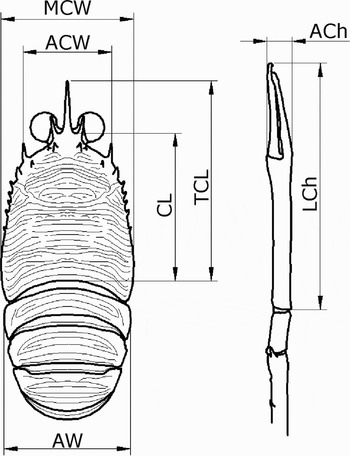
The investigation was carried out in the eastern part of the central Adriatic Sea from May 2008 to April 2009. Samples of Munida rutllanti were collected at depths from 110 to 200 m with commercial bottom trawl of 1.5 m vertical opening and 48 mm mesh size net, trawled at a speed of 2.7–2.9 knots. Specimens were frozen on board and transported to the laboratory for further analysis. A subsample of fresh infected and uninfected specimens was fixed in Davidson's solution for later histological processing. In the laboratory, individuals were sorted by sex and ovigerous condition. Sex was determined by the position of gonopores and presence of first and second pleopods. In males, first and second pleopods are modified to gonopods while the other three pleopods are small and flap-like. The first pleopods in females are absent and the remaining three pleopods are well-developed with long setae for carrying the eggs. Specimens with both male and female secondary sexual characters were classified as morphological intersexes. For testing the sex-ratio a simple Chi-square test was used. In order to determine morphometric traits of M. rutllanti, the following measurements were made using a caliper (precision of 0.1 mm): total length from the tip of the cheliped to the end of the telson (TL); carapace length (CL); total carapace length (TCL); maximum carapace width (MCW); anterior carapace width between the anterolateral spines (ACW); abdomen width (AW); cheliped length from the tip of the dactylus to the ventral end of the coxa (ChL); propod length of cheliped (LCh) and propod width of cheliped (ACh) (Figure 1). For comparing morphometric characteristics between sexes and infected/uninfected specimens Student's t-test (P < 0.05) was used. In order to provide linear relationships between body size and weight of the specimens, wet mass (not blotted with filter paper) (W) of the specimens was determined using a digital balance with a precision of 0.01 g. Specimens with damaged or broken carapaces and chelipeds were excluded from length measurements. Carapace length was chosen to be the reference for all morphometric and reproductive analyses. For relative growth studies, the allometric equation y = axb was used in its logarithmic form log y = log a + b log x where the constant b indicates the allometry. In this study we considered that values higher than 1.1 (b > 1.1) indicate positive allometry, values between 0.9 and 1.1 (0.9 < b < 1.1) indicate isometry and values lower than 0.9 (b < 0.9) indicate negative allometry (Moraes-Riodades & Valenti, Reference Moraes-Riodades and Valenti2002). Since the change in the allometry of cheliped growth represents the acquisition of secondary sexual characters (Hartnoll, Reference Hartnoll1978), the same was used to determine size at morphometric maturity of males. Comparison of slopes for length–weight relationship, using log-transformed data, between infected and uninfected hosts was made.
Morphometric measurements made on Munida rutllanti Zariquiey Alvarez, 1952 specimens from the eastern Adriatic: carapace length (CL), total carapace length (TCL), maximum carapace width (MCW), anterior carapace width (ACW), abdomen width (AW), propod length of cheliped (LCh) and propod width of cheliped (ACh).

Ovigerous condition of females was determined by presence or absence of eggs on pleopods, observing the egg mass colour. Ovigerous females were classified as ‘non-eyed’ (embryo without ocular pigment) and ‘eyed’ (embryo with ocular pigment) according to the stage of embryonic development. After morphological analysis, ‘non-eyed’ females were stored in 5% formaldehyde for fecundity studies. Fecundity was regarded as realized reproduction, which represents the number of eggs per clutch (Corey, Reference Corey, Wenner and Kuris1991). To estimate fecundity only ‘non-eyed’ females were examined. Their whole egg clutch was carefully removed from the pleopods and counted under a dissecting microscope. For the purpose of this study, fecundity was expressed by the regression equation of log-transformed number of eggs on carapace length at ‘non-eyed’ eggs of ovigerous females. To determine egg diameter, a subsample of 28 ovigerous females carrying eggs at the same stage of embryonic development (uniform yolk and no ocular pigment visible) was selected. From each female an average of 50 eggs were randomly chosen, and photographed with an Olympus DP-25 digital camera with their diameter measured to the nearest 0.001 mm using Olympus cell∧A Imaging Software.
Parasite infection and gonadal histology
The presence of epicaridean bopyrid parasite and its position on the left and right side of the cephalothorax was noted. The wet weight of each bopyrid was measured to the nearest 0.01 g and was compared to host weight using linear regression and correlation statistics.
Munida rutllanti gonads were not morphologically visible by naked eye after opening the carapace, so histological sections were made from three distinct areas after cutting in the median line; proximal area lateral to the heart, medial area lateral to the digestive gland and distal area of the cephalothorax. Tissue was dehydrated in a graded ethanol series (from 70% to 100%), cleared in xylene and embedded in paraffin. Histological sections were cut at 5–9 µm, stained with haematoxylin–eosin and then mounted permanently for microscopic analysis. Pictures were loaded in Olympus DP-Soft 3.1 software to measure oocyte area (mm2) and perimeter (mm) (average ± SD). Area/perimeter of oocytes (N = 30, sectioned through the nucleus, along the length of a connective tissue, measured at three different areas) from infected and uninfected females was measured first by selecting magnification and then selecting measurement by area/perimeter (Mylonas et al., Reference Mylonas, Pavlidis, Papandroulakis, Zaiss, Tsafarakis, Papadakis and Varsamos2009). Student's t-test (P < 0.05) was used to evaluate difference in area/perimeter between infected and uninfected females.
RESULTS
Growth and reproductive analysis
From a total of 938 Munida rutllanti specimens, 701 individuals (380 females, 315 males and 6 morphological intersexes) were used for morphometric, relative growth and reproductive analysis and 237 individuals for histological observation.
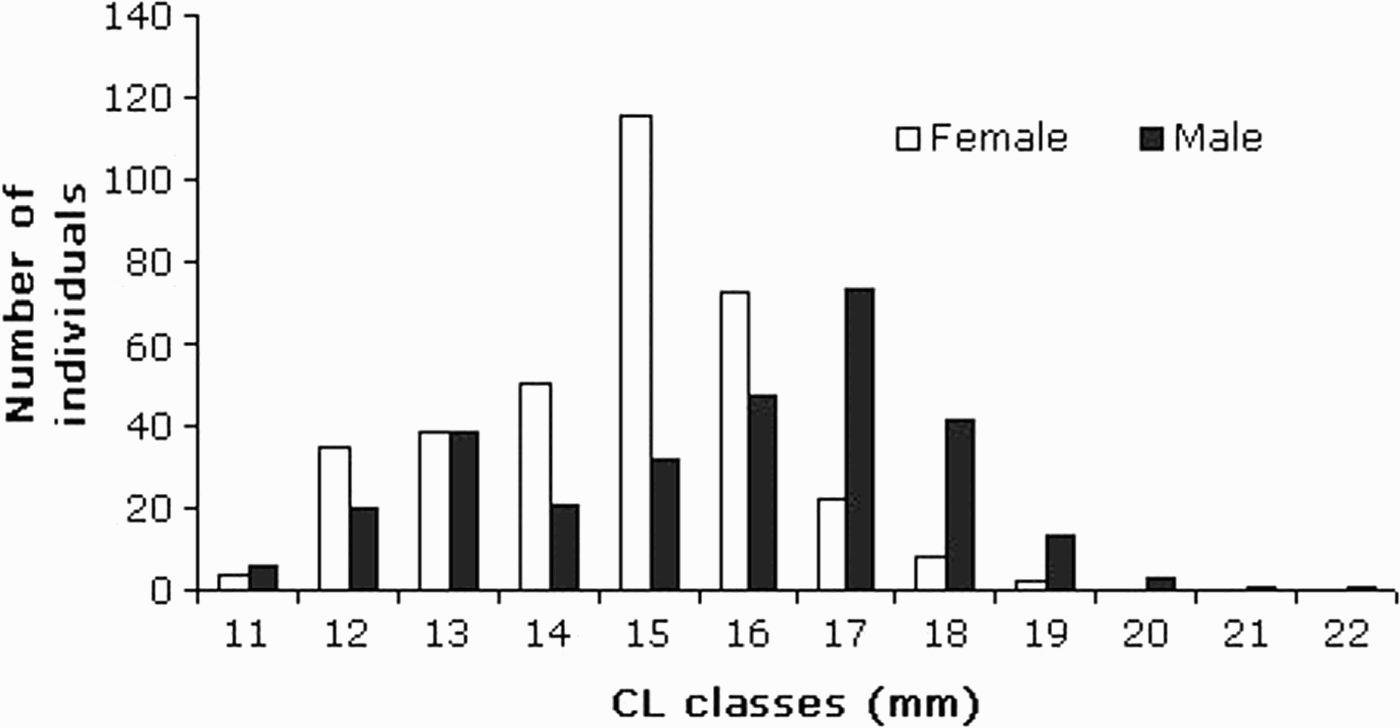
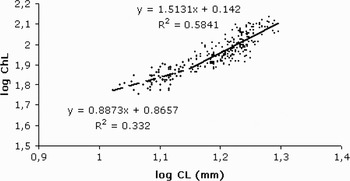
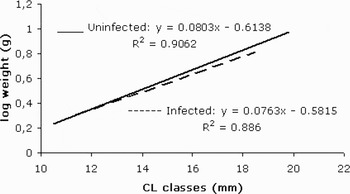
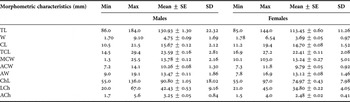
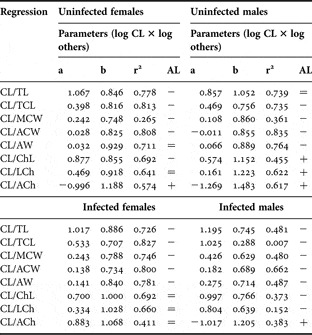
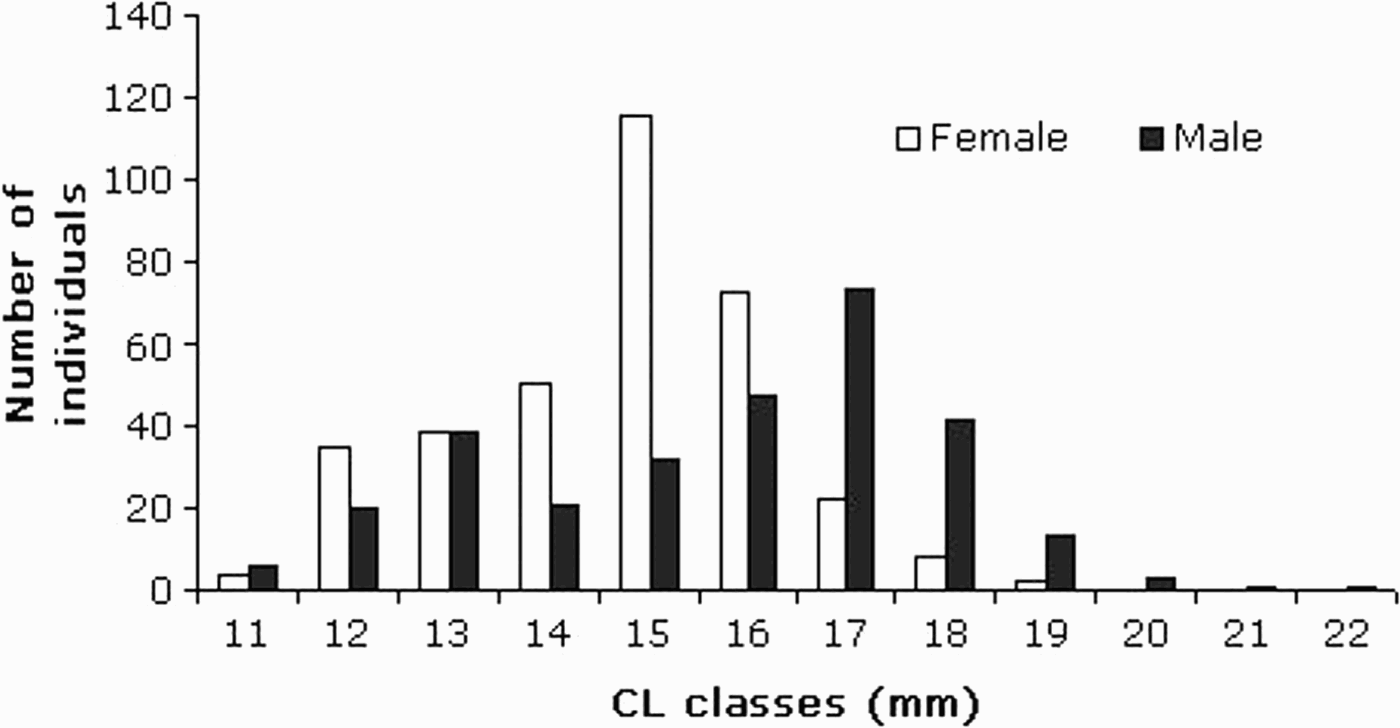
The sex-ratio differed statistically from expected 1:1 (χ2 = 3.04; P < 0.05). Basic statistical values of length, weight and other morphometric features are presented in Table 1. Total length (TL) ranged from 86 to 184 mm for males and from 85 to 144 mm for females. Carapace length (CL) of males ranged from 10.5 to 21.5 mm and from 11.2 to 19.4 mm for females. For males, the modal class was the 17 mm CL class, whereas for females it was the 15 mm CL class (Figure 2). Mean values of total length (TL), total carapace length (TCL), anterior carapace width (ACW), abdomen width (AW), cheliped length (ChL), propod length of cheliped (LCh) and propod width of cheliped (ACh) of males were statistically larger compared to females (t-test: t0.05 = 12.23, P = 0.0005; t0.05 = 6.01, P = 0.0005; t0.05 = 5.10, P = 0.0005; t0.05 = 2.65, P = 0.008; t0.05 = 13.38, P = 0.0005; t0.05 = 13.28, P = 0.0005; t0.05 = 14.39, P = 0.0005, respectively). Differences between two morphometric values of infected and uninfected specimens were statistically significant. Mean value of maximum carapace width (MCW) of infected (15.05 mm) versus uninfected specimens (13.35 mm) was larger (t-test: t0.05 = 6.38, P = 0.0005) while mean value of propod width of cheliped (ACh) of uninfected (2.85 mm) versus infected specimens (2.61 mm) was larger (t-test: t0.05 = 2.67, P = 0.009). The allometric growth equations demonstrated isometry for CL/TL growth in uninfected males and negative allometry in both infected sexes and uninfected females (Table 2). Negative allometry for either infected males and females or uninfected males and females was observed for CL/TCL, CL/MCW and CL/ACW growth. CL/ChL growth showed positive allometry for uninfected males but negative allometry for infected males and uninfected females. Generally, infected males exhibited negative allometry for all relations except for CL/ACh. However, infected females showed positive allometry for all relations concerning cheliped measurements: CL/ChL, CL/LCh and CL/ACh. The analysis of the cheliped length (ChL) for males showed an inflexion point at a CL value of 13.9 mm. For immature males growth of the ChL showed negative allometry and the growth of adults was characterized by a positive allometry (Figure 3). The length–weight relationship of infected and unifected M. rutllanti specimens were analysed, and a linear model was fitted. Results are presented in Figure 4 suggesting lower body weights in infected versus uninfected specimens.
The carapace length-class of Munida rutllanti Zariquiey Alvarez, 1952 specimens from the eastern Adriatic.
Relative growth between cheliped length (ChL) and carapace length (CL) for Munida rutllanti Zariquiey Alvarez, 1952 males in the eastern Adriatic.

Length–weight relationship of infected (- - -) and uninfected (—) Munida rutllanti Zariquiey Alvarez, 1952 specimens from the eastern Adriatic.

Basic statistical values for morphometric features of Munida rutllanti Zariquiey Alvarez, 1952 in the eastern Adriatic.

Min, minimal values; Max, maximum values; SE, standard error; SD, standard deviation.
Statistics for morphometric equation log y = log a + b log x between independent (x) and dependent (y) dimension of uninfected and infected males and females of Munida rutllanti Zariquiey Alvarez, 1952 in the eastern Adriatic.

a, intercept constant; b, allometric constant; r2, coefficient of determination; AL, allometry.
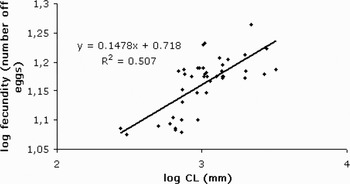
Throughout the whole year, ovigerous females were firstly observed during summer months and represented 27.45% of total females, of which 76.19% were carrying ‘non-eyed’ embryos. In autumn, 48.95% of total females were ovigerous and most of them also brood ‘non-eyed’ embryos (65%). The colour of ‘non-eyed’ embryos varied between light green and green, while ‘eyed’ embryos had pink to red coloration. The carapace length (CL) ranged between 11.3–19.4 mm for ‘non-eyed’ females and 11.5–18.1 mm for ‘eyed’ females. Overall, the mean value of ovigerous females was 14.92 mm CL. An average brood size of ‘non-eyed’ females (N = 43) was 1182 and it varied from 273, for female of 12.2 mm CL, to 3250 eggs for female of 15.4 mm CL. The smallest female carried 301, and the largest 2192 eggs. Realized fecundity of M. rutllanti showed positive correlation between the number of eggs and female size, with egg number increasing with female carapace length (Figure 5). The regression analysis of carapace length versus number of eggs is given with the equation: log F = 0.718 + 0.1478 log CL, (R2 = 0.507). The egg diameter for 1152 eggs (N♀ = 28) ranged in size between 0.28 and 0.46 mm, with average size of 0.36 mm (SD±0.038 mm). Newly extruded eggs of M. rutllanti were spherical and light green in colour.
Log-fecundity (number of eggs) plotted against log-carapace length (mm) of Munida rutllanti Zariquiey Alvarez, 1952 in the eastern Adriatic.

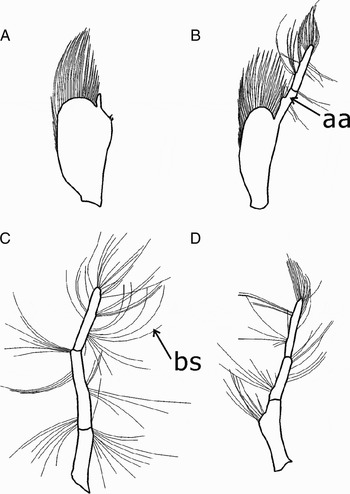
The prevalence of intersex individuals was 0.86% in the total sample and 11% in the infected sample. Carapace length ranged from 13 to 16 mm, mean size 14.7 mm (SD±1.06 mm). Uninfected male and female individuals were easily distinguished by the appearance of their abdominal appendages. Uninfected males have five pleopods. The first pleopod is uniramous with expanded endopod and the second pleopod has longer protopod and distally expanded endopod. Both pleopods have function in spermatophores transfer. Other three pleopods are wide and flap-like with apical appendix and setae (Figure 6A). Unlike males, uninfected females have four pleopods. The first pair of pleopods is absent and the remaining three are well-developed with long breeding setae (Figure 6B). The second pleopods are uniramous with one-segmented endopod that bears numerous long setae, while the endopod of third pleopod has two segments, also with long setae. Intersex individuals possessed both male and female type of pleopods with genital opening on the base of the third pereopod. The first pair of pleopods was absent and the remaining ones showed different degrees of modification. Within these modifications two situations were observed: three individuals had the second and the fifth female-like pleopods with the third and the fourth male-like, while in the other three individuals only the second pleopod was female-like. Male-like pleopods are wide and foliaceous, but the apical appendix is elongated, bears setae and has appearance of typical female pleopod (Figure 6C). Female-like pleopods are somewhat shorter then uninfected female pleopod with decrease in setae number (Figure 6D).
Pleopods of Munida rutllanti Zariquiey Alvarez, 1952 from the eastern Adriatic. (A) Third flap-like pleopod of unifected male; (B) fourth pleopod with breeding setae (bs) of uninfected female; (C) fifth male-like pleopod with prolongated apical appendix (aa) of infected intersex; (D) fourth female-like pleopod of infected intersex.

Parasite infection
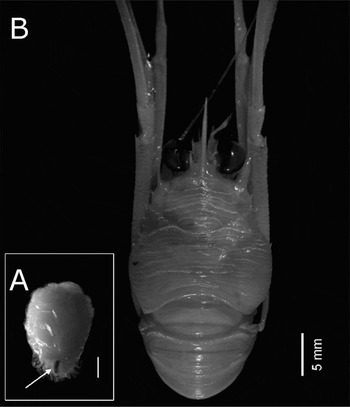
The overall prevalence of bopyrid isopod Pleurocrypta sp. parasitizing Munida rutllanti was 7.85%. Of the total 55 infected individuals, 19 were females, 30 males and 6 intersexes. There was no significant difference in the number of infected females versus males (χ2 = 2.46; P = 0.12). The smallest and the largest infected M. rutllanti measured 11.4 mm and 21.5 mm in carapace length, respectively. Overall abundance of bopyrids was 0.08. Female bopyrids were found firmly attached under the carapace in the gill chamber area. All bopyrid females were carrying large number of eggs, with the single male bopyrid embedded posteriorly (in brood pouch) (Figure 7A). In 25 individuals, bopyrid was present in the left and in 28 individuals in the right gill chamber. Two individuals had parasites on both sides (Figure 7B). No statistical difference between right and left gill infection rate was found (χ2 = 0.17; P = 0.68). Parasite weight ranged between 0.04 and 0.14 g, making on average 2.1% of the host's weight. The weights of hosts and their isopods showed positive correlation (Wisopod weight = 0.0137 Whost weight + 0.037; R2 = 0.449), indicating synchronous growth.
(A) Ventral view of adult female Pleurocrypta sp. with dwarf adult male (white arrow). Scale bar: 2 mm; (B) dorsal view of male Munida rutllanti Zariquiey Alvarez, 1952 from the eastern Adriatic infected by the bopyrid on the both sides of the cephalothorax.

Gonadal histology in bopyrid-infected and uninfected Munida rutllanti
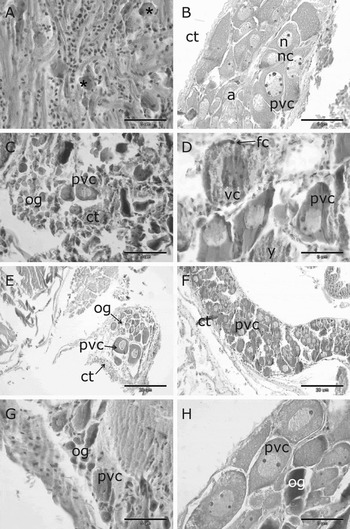
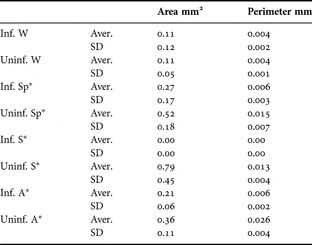
Histological sections of 128 uninfected and 109 infected individuals were analysed throughout one year. Female gonads were positioned dorsolaterally to the digestive gland, in the cephalothorax. Production of oocytes was continuous through the whole year and no spent uninfected females were observed. In summer, infected females showed no gametes at all. Connective tissue surrounding digestive gland was abundant, thick, staining acidophilic, with scattered fibroblasts and haemocytes (Figure 8A). Large, spherical acidophilic cells with eccentric flattened nuclei were observed in connective tissue. Uninfected females developed gonads with abundant previtellogenic oocytes, filling loose, light pink connective tissue area (Figure 8B). Mostly previtellogenic cells were noticed, even though a scarce number of oogonia were observed as well. Previtellogenic oocyte had a centrally located large nucleus incorporating one nucleolus and many clumps of heterochromatin staining dark eosinophilic. Cytoplasm had a relatively small area, staining light eosinophilic and with discreet granulation at the periphery. Atretic oocytes in the process of absorption were noticed at the periphery of the gonadal tissue, staining light pink. In autumn, infected females developed first small oogonia scattered in clusters in the connective tissue (Figure 8C) with large central nucleus and a scarce rim of dark eosinophilic cytoplasm. Rarely few previtellogenic oocytes were noticed and acidophilic large cells with eccentric nuclei were observed in gonadal tissue as well. Uninfected females developed large vitellogenic cells that accumulated acidophilic granular yolk (Figure 8D). As oocytes matured, the nucleus became smaller. Previtellogenic cells were present as well, having a larger rim of cytoplasm that stained deep eosinophilic. A single layer of follicular cells encircled mature oocyte. In winter, infected females had scarce previtellogenic oocytes and small oogonia embedded in the developed connective tissue (Figure 8E), while uninfected females showed accumulation of numerous previtellogenic cells in the loose connective tissue (Figure 8F). In spring, infected females developed mostly scattered oogonia, while previtellogenic cells undergo necrosis and absorption (Figure 8G). Cells were present only scarcely in small clusters. Uninfected females still had large numbers of previtellogenic cells as well as few oogonia (Figure 8H). Statistical difference in area and perimeter between infected and uninfected females was significant during all seasons except in winter time (t-test: spring t0.05 = 11.41, P = 0.004, summer t0.05 = 3.38, P = 0.0002, autumn t0.05 = 5.12, P = 0.009) (Table 3).
Female gonads of Munida rutllanti Zariquiey Alvarez, 1952 in the eastern Adriatic throughout the seasons. (A) Summer, infected; (B) summer, uninfected; (C) autumn, infected; (D) autumn, uninfected; (E) winter, infected; (F) winter, uninfected; (G) spring, infected; (H) spring, uninfected. ct, connective tissue; a, atretic folliculi; n, nucleus; nc, nucleolus; pvc, previtellogenic oocytes; og, oogonia; fc, follicular cells; vc, vitellogenic cells; y, yolk.

Average (Aver.) and standard deviation (SD) of area (mm2) and perimeter (mm) of oocytes measured in infected (Inf.) and uninfected (Uninf.) Munida rutllanti Zariquiey Alvarez, 1952 in winter (W), spring (Sp), summer (S) and autumn (A). *Statistically significant difference between infected and uninfected at P < 0.05.

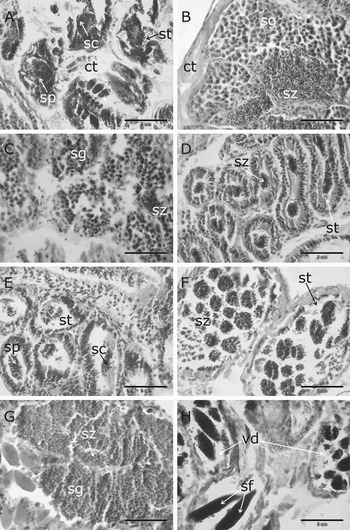
Male gonads are located in the anterior cephalothoracic region, ventrally to the heart and dorsolaterally to the digestive gland, enveloped by a basal membrane. In summer, infected males display seminiferous tubules embedded in rich connective tissue, filled with numerous spermatogonia I and II, staining dark to light eosinophilic (Figure 9A). In uninfected males, fusiform spermatozoa filled seminiferous tubules along with a thick layer of primordial cells, cuboid in shape, with condensed dark nucleus and pink cytoplasm (Figure 9B). In autumn, infected males showed the same histological characteristics as uninfected males from the previous season (Figure 9C), while uninfected males had spermatogonia and spermatozoa present in the tubules (Figure 9D). Pedunculate spermatophores were formed in vasa deferentia, showing an outer gelatinous translucent layer. In winter, while infected males had relatively spent tubuli with emerging of new spermatogonia (Figure 9E), uninfected males still showed mature spermatozoa grouping in spermatophore (Figure 9F). In spring while infected males showed abundant proliferation of spermatogonia with first spermatids and spermatocytes (Figure 9G), testes of uninfected males were flattened and spent, with few remaining spermatophore in vasa deferentia (Figure 9H).
Male gonads of Munida rutllanti Zariquiey Alvarez, 1952 in the eastern Adriatic throughout the seasons. (A) Summer, infected; (B) summer, uninfected; (C) autumn, infected; (D) autumn, uninfected; (E) winter, infected; (F) winter, uninfected; (G) spring, infected; (H) spring, uninfected. sp, spermatids; sc, spermatocytes; ct, connective tissue; st, seminiferous tubules; sg, spermatogonia; sz, spermatozoa; sf, spermatophores; vd, vasa deferentia.

DISCUSSION
The present study is the first report on growth and reproductive aspects of the Munida rutllanti population in the Adriatic Sea. Data on the morphology of the Munida species are limited (Gramitto & Froglia, Reference Gramitto and Froglia1998; Mori et al., Reference Mori, Sbrana, Sartor and De Ranieri2004; Huguet et al., Reference Huguet, Maynou and Abelló2005; Kassuga et al., Reference Kassuga, Silva-Ferreira, Ostrovski and Costa2008), especially those concerning M. rutllanti (Sanz-Brau et al., Reference Sanz-Brau, Mezquita and Sanz1998; Huguet et al., Reference Huguet, Maynou and Abelló2005; Kocak et al., Reference Kocak, Leblebici, Ozaydin and Katagan2008). Huguet et al. (Reference Huguet, Maynou and Abelló2005) indicated that M. rutllanti males reach larger sizes than females in the western Mediterranean, which agrees with the information for the eastern Mediterranean M. rutllanti population (Kocak et al., Reference Kocak, Leblebici, Ozaydin and Katagan2008). Our work confirmed pervious studies; males being larger than females, with mean values of seven morphometric measurements being larger in males (total length, total carapace length, anterior carapace width, abdomen width, cheliped length and propod length and width). This sexual dimorphism is also reported for M. intermedia (Gramitto & Froglia, Reference Gramitto and Froglia1998; Mori et al., Reference Mori, Sbrana, Sartor and De Ranieri2004; Huguet et al., Reference Huguet, Maynou and Abelló2005), M. tenuimana (Huguet et al., Reference Huguet, Maynou and Abelló2005) and M. microphthalma A. Milne-Edwards, 1880 (Kassuga et al., Reference Kassuga, Silva-Ferreira, Ostrovski and Costa2008). Kocak et al. (Reference Kocak, Leblebici, Ozaydin and Katagan2008) studied morphology of M. rutllanti in the Aegean Sea, and the size of 9.00–13.44 mm CL in males and 9.03–12.75 mm CL in females, contrasts with males in the size range of 10.5–21.5 mm CL and females in the size range 11.2–19.4 mm CL, observed in the present study. This discrepancy could be due to different sampling depths in the Aegean Sea (150–380 m) compared to the Adriatic (110–200 m), where specific environmental conditions in these habitats could impose different growth rates. However, our results are similar to those observed for M. rutllanti specimens from the western Mediterranean (Sanz-Brau et al., Reference Sanz-Brau, Mezquita and Sanz1998), where the maximum value of carapace length for males was 21.9 mm, and for females 21.2 mm.
Munida rutllanti reproduction has been studied only in the western Mediterranean (Sanz-Brau et al., Reference Sanz-Brau, Mezquita and Sanz1998), however, information on reproductive biology of other Munida species has been reported from the Atlantic and Adriatic waters (Williams & Brown, Reference Williams and Brown1972; Hartnoll et al., Reference Hartnoll, Rice and Attrill1992; Gramitto & Froglia, Reference Gramitto and Froglia1998; Tapella et al., Reference Tapella, Lovrich, Romero and Thatje2002). The smallest ovigerous female measured 11.3 mm carapace length and in respect to this observation, we suggest 11 mm CL as the size at physiological maturity in females. Similar length at first sexual maturity was observed for other members of this genus. In the Atlantic waters, Tapella et al. (Reference Tapella, Lovrich, Romero and Thatje2002) reported 11.2 mm CL for mature M. gregaria, while Hartnoll et al. (Reference Hartnoll, Rice and Attrill1992) considered immature those individuals of M. sarsi and M. tenuimana smaller than 10 and 11.5 mm CL, respectively. For the Adriatic, Gramitto & Froglia (Reference Gramitto and Froglia1998) reported that M. intermedia mature at carapace length around 11 mm which corresponds to the end of the first year of life. Unlike our results, Sanz-Brau et al. (Reference Sanz-Brau, Mezquita and Sanz1998) recorded ovigerous females of M. rutllanti throughout the whole sampling period with the highest values observed in summer months. In their findings, the smallest ovigerous female measured 12.5 mm CL, which is slightly higher then in the Adriatic. Some authors suggested that M. rutllanti is a species with shorter life span than the other Munida species (Hartnoll et al., Reference Hartnoll, Rice and Attrill1992; Gramitto & Froglia, Reference Gramitto and Froglia1998), as well as Huguet et al. (Reference Huguet, Maynou and Abelló2005) who, based on differences of size–frequency distributions, compared the life-span of shallower M. rutllanti to a deeper-dwelling M. intermedia and M. tenuimana. In the Adriatic, unlike M. intermedia with the reproductive cycle peaking in winter (Gramitto & Froglia, Reference Gramitto and Froglia1998), the reproductive period of M. rutllanti is centred in the summer/autumn months, reported as well for the M. rutllanti in the western Mediterranean (Sanz-Brau et al., Reference Sanz-Brau, Mezquita and Sanz1998). This temporal offset of species reproductive cycles could be a strategy to reduce the inter-specific competitions between these two overlapping species as suggested by Huguet et al. (Reference Huguet, Maynou and Abelló2005).
Since male gonads were not morphologically visible by naked eye, we were unable to determine size at physiological maturity based on the development of testes. Therefore, for males we used morphological size at maturity. In crustaceans, relative growth can indicate transition to sexual maturity (Hartnoll, Reference Hartnoll1978). Barreto et al. (Reference Barreto, Batista-Leite and Aguiar2006) used the allometric relation between body size and other organs to estimate size at sexual maturity of crab Callinectes danae, assuming that the secondary sexual characters change their growth in transitional phase. In M. gregaria the change in cheliped growth rate indicates the transition to morphometric maturity (Tapella et al., Reference Tapella, Lovrich, Romero and Thatje2002). The same authors stated that male and female physiological sizes at maturity occurred at very similar sizes. This may not be the case for M. rutllanti, since the morphological size at maturity observed in our work for males (CL = 13.9 mm) is higher when compared to the smallest ovigerous female (CL = 11.3 mm). Kassuga et al. (Reference Kassuga, Silva-Ferreira, Ostrovski and Costa2008) presented similar results for M. microphthalma, whose morphological size at maturity was very high when compared to smallest ovigerous females. In this study where 74.41% of males were morphologically mature, we can assume that they will ensure the next offspring production.
Results presented in this study indicate a wide variation in realized fecundity from 273 to 3250 eggs (average 1182 eggs). Furthermore, egg number increased with female carapace length, which is in agreement with reports for other Munida species (Hartnoll et al., Reference Hartnoll, Rice and Attrill1992; Tapella et al., Reference Tapella, Lovrich, Romero and Thatje2002; Mori et al., Reference Mori, Sbrana, Sartor and De Ranieri2004). It appears that the average fecundity value we obtained is somewhat lower than those reported for other Munida species: 4300 for M. gregaria (Tapella et al., Reference Tapella, Lovrich, Romero and Thatje2002) and 2000 for M. sarsi (Hartnoll et al., Reference Hartnoll, Rice and Attrill1992). Similarly, observed egg diameter for M. rutllanti (0.28–0.46 mm), with average size of 0.36 mm is also rather small compared to 0.69 mm for M. gregaria (Tapella et al., Reference Tapella, Lovrich, Romero and Thatje2002), 0.7 mm for M. intermedia (Gramitto & Froglia, Reference Gramitto and Froglia1998), 0.73 mm for M. sarsi or 0.86 mm for M. teniumana (Hartnoll et al., Reference Hartnoll, Rice and Attrill1992). Hartnoll et al. (Reference Hartnoll, Rice and Attrill1992) suggested that shallow-dwelling species like M. rutllanti, have lower fecundity than deeper-dwelling ones, including those aforementioned, which explains observed egg diameters in this study.
An epicaridean bopyrid Pleurocrypta sp., considered as a decapod castrator, was found parasitizing the gill chamber of both female and male specimens of M. rutllanti. Bopyrids show relatively small prevalence in the host populations, ranging usually from 1–7% in species of genus Munida (Rasmussen et al., Reference Rasmussen, Jakobsen and Collins2008) while in the Adriatic host population the level is slightly increased (7.85%). The infestation rate for Munida species parasitized by different bopyrid isopods varied from 0.06% for M. teniumana (Mori et al., Reference Mori, Orecchia and Biagi1999), 0.6% for M. intermedia (Gramitto & Froglia, Reference Gramitto and Froglia1998), 1–2% for M. rugosa (Bourdon, Reference Bourdon1968), 2.4% for M. iris (Bursey, Reference Bursey1978) and to highest 10% for M. iris (Williams & Brown, Reference Williams and Brown1972). Whereas previous studies have found preference of the right gill chamber as a parasitization site (Rasmussen et al., Reference Rasmussen, Jakobsen and Collins2008), we did not observe any significant difference in respect to left/right gill chamber. Only in rare cases, hosts were infected with two adult female bopyrids, implying that strong intraspecific competition or hosts response usually result in single-individual parasitation and intensity-independent castration, common for bopyrids (Fogelman et al., Reference Fogelman, Kuris and Grutter2009). We also observed statistically higher mean value of maximum carapace width (MCW) of infected specimens, explainable by carapace deformation due to parasite position. Our findings, like those from Williams & Brown (Reference Williams and Brown1972) study, showed that there was no significant difference in the number of infected females versus males. However, Bursey (Reference Bursey1978) observed the lack of parasitized females in his collection.
Growth inhibition, modification of secondary sex characteristics, as well as retardation of oogenesis and failure of oviposition, are repercussions of bopyrid Pleurocrypta sp. parasitization on M. rutllanti in the Adriatic Sea. Hechinger et al. (Reference Hechinger, Lafferty, Mancini and Kuris2008) reported that parasites that castrate their hosts can weigh as much as 39% of their host's body weight although bopyrids in our study averaged 2.1% of the total M. rutllanti weight. We observed negative effect of bopyrids on host condition, where growth inhibition was altered through length–weight relationship of M. rutllanti. The growth of infected and uninfected specimens was congruent until 14 mm CL, diverging after this length in such a way that parasitized M. rutllanti had lower body weights than uninfected specimens at the same carapace length. The same was observed in males and females of galatheid Cervimunida johni parasitized by Pseudione humboldtensis, where significantly lower body weight was shown compared to uninfected individuals (González & Acuña, Reference González and Acuña2004).
Modification of secondary sex characters is common and has been previously documented for bopyrid and rhizocephalan infestations of decapod crustaceans (Reinhard, Reference Reinhard1950; Zariquiey Alvarez, Reference Zariquiey Alvarez1958; Williams & Brown, Reference Williams and Brown1972; Attrill, Reference Attrill1989). In the sampled population of M. rutllanti, 0.86% of infected hosts displayed morphological intersex characteristics. Results showed that intersex individuals possessed both male and female type of pleopods, with different degree of modification, and all had female gonopore on the base of the third pereopod. Therefore, they exhibited secondary sex characteristics of both sexes. Unfortunately, we cannot confirm if alteration of gonads or hermaphroditism occurred in our samples. The three last male pleopods were modified towards the female type by elongation of the apical appendix that develops characteristic breeding setae of the female, while female pleopods experienced suppression of the normal development of endopod and breeding setae. This parasitic effect on the host secondary sex characters is commonly known as feminization or juvenilization of male host. Another aspect of feminization can be seen through the reduction in chela size of infected compared to uninfected males and their resemblance to those of uninfected females. Relative growth analysis in our study confirmed reduction in chela size of infected males. The CL/ChL relationship showed that in respect to carapace length, cheliped grows faster in uninfected males and slower in uninfected females. However, infected males showed the same pattern like uninfected females, suggesting that the chelipeds of the infected males undergo a definite feminization in its growth and proportions. Although the reasons for modification of secondary sex characters are still poorly understood, feminization could indicate that an alteration in the production of sex-determining substances (e.g. gonad-inhibiting hormone and androgenic gland hormone) occurred (Baudoin, Reference Baudoin1975; Beck, Reference Beck1980).
We observed a continuous and synchronous production of gametes in M. rutllanti, where immature oogonia and spermatogonia were present throughout the whole year, and spawning characterized with mature oocytes and spermatophore peaked in summer/autumn. No histological evidence for either male or female gonads being completely spent was observed, except in females infected with the bopyrid in summer time. This complete absence of oogenesis in infected females coincided with some scarce atretic activity in the ovaria of uninfected females, indicating that indeed spawning may occur in summer time under different conditions. Throughout the whole sampling year, uninfected female gonads consisted of two (oogonia and previtellogenic cells) or three (scarce oogonia, previtellogenic and vitellogenic cells) different stages of oogenesis, but vitellogenic oocytes abundant in yolk were observed only in autumn, suggesting economical investment of nutrients in oocytes only once in a year. Comparing area and perimeter of gametes in infected and uninfected females, difference was always observed, except in the winter season that corresponds to a postspawning period. This difference in infected females reflects delayed gametogenesis for one developmental stage per season, e.g. when uninfected females develop first vitellogenic cells, previtellogenic cells are observed in infected females. The number of such gametes was also evidently scarcer, and their development was suppressed after the previtellogenic stage, when gametes started to undergo atresia and absorption, failing to produce any mature yolk-filled oocytes. This indicates parasitic depletion of lipids and other nutrients, otherwise engaged in final maturation of oocytes. Mature spermatozoa as well as spermatophore, were observed throughout the whole year in uninfected males, suggesting potential female capacity for longer storage of spermatophores, even though M. rutllanti do not possess developed seminal receptacle. Infected males achieved the production of spermatozoa and spermatophore, but had delayed development for one season compared to uninfected males. This is not surprising since nutritive requirements of males during the reproductive period are of far lesser energetic demand compared to females (Reinhard, Reference Reinhard1956).
In conclusion, we observed that the epicaridian bopyrid Pleurocrypta sp. suppresses functional oogenesis in infected females, enabling final maturation and hatching of eggs. In infected males it delays for a season the maturation of spermatozoa and formation of spermatophora, nevertheless allowing their evacuation during the spawning season. Also, chelipeds of the infected males undergo a definite feminization in its growth and proportions, while small part of infected hosts show secondary sex features of both sexes. Given the small prevalence of the bopyrid in the M. rutllanti Adriatic population, we assume that for the moment there is no severe effect on the whole host population dynamic. Finally, there is an indication of an annual and seasonal reproductive cycle with distinct summer/autumn breeding period for M. rutllanti in the Adriatic Sea, however, only a further study based on monthly samples throughout at least a two-year period will provide a better understanding of seasonality of the reproductive cycle.
ACKNOWLEDGEMENTS
The authors wish to thank the captain and crew of the commercial trawler ‘Tomiša’ for all help and provided support. We wish to express our gratitude to Christopher Boyko (American Museum of Natural History) who helped with identification of the parasite. Special thanks to Nenad Prizmić for his help with the drawings and two referees whose competent comments greatly helped in finalizing this study.