The word “humanitarian” is used today to characterize a selfless and transcendent impulse to save suffering others, usually others who are far from home. This definition reflects the liberal approach to the human community, first framed during the Enlightenment, that has been narrated in a history that begins with early eighteenth-century antislavery movements and continues to today's debates about international aid and intervention. However, although they do not figure in recent histories of humanitarianism, it was French romantic socialists of the 1830s and 1840s—critics of liberal individualism and the burgeoning capitalism of their day—who were the first to be labeled with, and also the first to embrace, the moniker “humanitarian” [humanitaire].Footnote 1 In doing so, they significantly reframed what it meant to be a lover of humanity as they had inherited it from the eighteenth century and developed a program that differed radically from the liberal version that has been the subject of extensive scholarly inquiry over the past several decades.Footnote 2
The humanity that socialists sought to save was one to which they themselves belonged, and their solutions challenged the dominant power structures of their societies from within, aiming to remedy human suffering through transformative social change. Where antislavery activists, and liberal advocates of humanity more generally, invoked individualized actors and recipients of their care, socialists privileged solidarity within their community and rejected the foundational logic of liberal individualism. Their humanitarianism points to an unexplored path through this history, one that identifies a collective humanity as the source of its own salvation, rather than an external, well-meaning benefactor. As this article demonstrates, this approach is not without pitfalls of its own, even while it shines a light on central problems with the contemporary humanitarian mindset.
This article excavates early nineteenth-century humanitarianism and maps a critical, overlooked episode of its intellectual history, in which the relationship between the advocates of humanity and their objects of care differed notably from the way they are conventionally understood, both historically and in the present. The comparisons are stark: for liberals committed to the cause of humanity, humanitarian sentiments express, then and now, a unidirectional sense of empathy, one which rests upon implicit notions of civilizational superiority and which rarely entails challenges to the prevailing economic and political regimes within which such sentiments arise.Footnote 3 For socialists, the same language evoked comprehensive fellow-feeling, a sense of collective engagement for the benefit of all through the efforts of all, and a willingness to reconstruct the standing order to achieve this goal. Although both liberal and socialist approaches shared a concern for the suffering body, for socialists this was a collective body whose health could only be restored through comprehensive societal reconstruction, while for liberals it was the individualized body of the suffering and distant “other.” This focus beyond their own sociopolitical context operated to preclude the necessity of domestic political costs or power shifts.Footnote 4 As a result of these differences, liberal humanitarians aimed at exporting the “good” of their world to other peoples while leaving the power relations from which they benefited standing, while socialists sought to undo the corruption and destructiveness of their own society and reconceptualize their community in a new space.
Romantic socialist humanitarianism emerged in the context of postrevolutionary attempts to restore social cohesion in France and its empire. Largely excluded from the governing and economic structures of July Monarchy France, socialists were willing to challenge the status quo of their day. In seeking a realm in which to rebuild society on a more equal footing, however, romantic socialists participated in what are retrospectively problematic ways in the imperial project of their day, identifying colonial sites as opportunities to realize their humanitarian agenda. The social turmoil of postrevolutionary France informed their commitment to humanity, while its exclusive power structure and restrictive franchise offered few opportunities to realize their ambitions. Of equal salience is the contemporaneous rebuilding of the French Empire beginning with the conquest of Algeria in 1830. Facing a limited arena of influence and activity in France, socialists imagined the empire as a context in which to resituate the human community on a new footing, one unhindered by metropolitan strictures and regimes of privilege. Driven by this ambition, socialists endorsed France's imperial agenda, causing colonial and transnational logics and concerns to be inextricably embedded in humanitarianism from its earliest inception.Footnote 5
* * *
The version of humanitarianism articulated by French romantic socialists has been omitted from the histories of both socialism and humanitarianism.Footnote 6 This oversight results from the temporal frames during which early socialism and humanitarianism became objects of scholarly analysis. A significant body of work in the 1970s, 1980s, and 1990s documented the variety and importance of pre-Marxian socialism, primarily in France but also in the UK and the US.Footnote 7 Part of the wave of social and labor history, this scholarship paid little attention to the extra-hexagonal context of French imperial resurgence that was contemporaneous with early socialism, although more recent work on romantic socialism has explored these connections.Footnote 8 Where scholarly discussions of the term humanitaire do appear, it is in literary studies of romanticism which, like histories of early socialism, do not consider the colonial implications of the term.Footnote 9 Because the most fertile period of study of romantic socialism pre-dated the recent historiographical turn to humanitarianism and human rights, this earlier humanitarianism has to date not been examined.
More recently, interest in the histories of human rights and humanitarianism has been pursued through two major avenues, neither of which has focused on romantic socialism. The earlier of these stems from the study of the antislavery movements of the eighteenth and nineteenth centuries—a literature that often conflates antislavery with humanitarianism—with a primary focus on the Anglo-American context. Historian Thomas Haskell's 1980s scholarship was foundational to this line of investigation. Due to its imbrication in the debate over the relationship between capitalism and antislavery, this work has focused on liberal and bourgeois forms, and the bulk of this scholarship is in fact about British humanitarianism, even when accounts are presented in more general terms.Footnote 10 At the same time, because French antislavery was elitist and anemic during the heyday of British and American antislavery, it has not generated the sustained inquiry that British and American variants have.Footnote 11
As a growing critique of the scholarship on human rights and humanitarianism has highlighted, many of these histories treat the concepts themselves as transparent and transhistorical goods rather than phenomena that require historicization.Footnote 12 Notably, histories of these linked ideas regularly situate their origins in the Enlightenment, and as a result skim or even skip over the first half of the nineteenth century, an approach that occludes the contribution of romantic socialists to the invention of humanitarianism.Footnote 13 While scholars of more recent movements and organizations have demonstrated the importance of French humanitarian sentiment and organizations, these historical narratives only pick up in the late nineteenth century.Footnote 14 The failure to engage this earlier humanitarianism has resulted in an incomplete historical genealogy of the concept, with a consequent privileging of liberal humanitarianism as the only imaginable way to think about the problem of human suffering and attendant obligations to alleviate it. This article bridges that gap in the historiography in order to chart the divided—liberal and socialist—origins of this pervasively important modern concept and reintroduce the socialist approach to humanity into the conversation about historical and contemporary humanitarianism.
* * *
Coined in French in the 1830s, humanitaire, like its Enlightenment precursor and cognate, “humanity,” underwent a significant redefinition over the course of the nineteenth century. In English usage, the term dates to the eighteenth century, when it had a purely theological meaning. By the 1830s in France, however, a discernibly socialist connotation had emerged. At inception, the term resonated religiously in an age of increasing separation of religious and governmental functions, in particular in the wake of the dis- and reestablishment of the Catholic Church that transpired through the decades of the French Revolution and Napoleonic empire.
Humanitaire began to appear in French in the early 1830s at the same time as socialisme, another neologism of the era, and they both reflect the preoccupations and politics of the moment.Footnote 15 The two terms—and those who espoused their philosophies—were closely linked in print media at the time and by scholars of romantic socialism since.Footnote 16 Conservative romantic writer René-François de Chateaubriand lumped together the “saint-simonien, phalanstérien, fouriériste, humanitaire” systems in his memoirs, denouncing them as “diverse heresies.”Footnote 17 Poet and dramatist Alfred de Musset noted in 1838 that humanitaire appeared in the press despite his sense that it was superfluous, as “philanthropist” was well established to connote the same sentiments: “for the last five years there has been . . . bitter argument over this great word humanitarian.”Footnote 18 Literary scholar Paul Bénichou describes a broad shift through which the collective “body” of humanity became the particular focus of the romantics’ “religious faith in the future.”Footnote 19 Linguist Maurice Tournier locates the origin of the term in the “utopian and romantic times” of the early 1830s and argues that in the decade 1830–40 the term took on political connotations that surpassed its more general meaning as a designation for someone who had the universal well-being of humanity in mind.Footnote 20 Technology not available to earlier scholars yields striking evidence of the newness of the word in the early 1830s, and its rapid rise in relation to de Musset's preferred term (see Fig. 1).Footnote 21 Regardless of the actual date of entry into the French lexicon, the term had gained appreciable resonance by the early 1840s when Raymond Brucker's profile “L'Humanitaire” appeared in the popular multivolume work Les français peints par eux-mêmes (1840–42).Footnote 22
Frequency of humanitaire and philanthrope in French sources, Google ngram search, 1820–50.

Humanitaire derived from the socialist interpretation of the broadly used term humanité, and its usage indicated a commitment to the material life of the human community here and now—as did romantic “socialist.” The term came into usage in the postrevolutionary decades to articulate what preexisting concepts could not. Hostility to the liberalism of the July Monarchy, especially its capitalist “egoism,” as the socialists described liberal individualism, was a central tenet of this stance, according to which competitive economic and social relations were antithetical to the humanitarian project. A particularly radical, antiestablishment version of this agenda appeared in the short-lived journal L'humanitaire, published just twice in 1841. The editors proclaimed that their project was radical egalitarianism and asserted that the violent revolutions that repeatedly “overwhelm humanity” are the “protest of human nature against a social order that guarantees neither the complete satisfaction of all of its needs nor the complete development of all of its faculties.”Footnote 23 After long study of social problems and research into their solutions, the editors announce they have “acquired the CERTITUDE that the EGALITARIAN SETTING alone could resolve all” such problems.Footnote 24 In doing so they articulated a key dimension of socialist humanitarianism: the aspiration to re-create, in a new “setting,” the conditions of life for humanité.
This aspiration was embodied in the various proposals for new ways to organize labor and community put forth by what Marx and Engels pejoratively and enduringly labeled the “utopian” socialists, but it also has significant implications for their views on the overseas colonial expansion in which France was engaged during the heyday of the movement. In various socialist publications in the 1830s and 1840s, humanitaire appears in discussions of international peace initiatives, of endeavors that cross religious and ethnic lines, and of imperial expansion, usually without any moral distinction drawn among them. In these instances, humanitaire evokes the themes of unity and cohesion that were so important to romantic socialists and suggests an extraterritorial setting as one possibility for the remaking of the collective life of humanity. Closely linked to the contemporary socialist agenda, humanitaire was used to articulate that cause in contexts that surpassed the boundaries of metropolitan France. This humanitarian project at once critiqued the operations of the French nation-state and lauded a deified French people, a formulation of the humanitarian cause that meshed with the contemporary rebuilding of the French Empire and the emerging project of settler colonialism that was so central to it.Footnote 25
FRENCH CONCEPTIONS OF HUMANITÉ IN HISTORICAL CONTEXT
The conflict between broadly inclusive concepts of humanity and particular forms of hierarchical inequality has been the subject of crucial scholarly intervention in recent decades.Footnote 26 This discussion has focused on a thoroughgoing deconstruction of liberalism and, in the French context, republicanism, and has highlighted the internal contradictions embedded within the universalist rhetoric that dominates modern European political cultures. In Enlightenment discourses of natural equality that characterize contract theory and that of the “rights of man” foundational to republicanism, unarticulated exclusions—especially those of gender and race—have been shown to be constitutive of these discourses. The tension between the particular and the universal is especially salient to French national identity, and derives from France's privileged relationship with the Catholic Church, and its self-image as the “new Rome.”Footnote 27 This body of scholarship has called into question the key manifestations of French universalist political culture, the republican idea of citizenship, and the French mission civilisatrice; demonstrated the internal contradictions of both; and shown how particular agendas were championed in each case through universalizing rhetoric. Humanitarian idealism is another variant of this kind of logic.
Although the scholarship devoted to the French “mission to civilize” has focused for the most part on republican regimes and the imperial project after 1870, Jennifer Pitts and Sankar Muthu have documented a crucial shift in thinking about the legitimacy of colonial expansion from 1750 to 1850. Muthu's work analyzes the ways in which Enlightenment thinkers who opposed imperialism developed a notion of cultural difference that posited the incomparability of distant cultures, best captured in Diderot's notion of the “partial incommensurability” of moeurs.Footnote 28 As Pitts has shown, by the nineteenth century, liberal thinkers widely adhered to a progressive understanding of societal development, positing Western modernity as the realization of civilization.Footnote 29 What had been a widespread “critical posture” toward empire among Enlightenment thinkers had disappeared, and in its stead emerged “a nearly universal acceptance of colonial rule as a justifiable fact of global politics.”Footnote 30 A view of human development as plotted on a “temporal scale” formulated during the Enlightenment became foundational to the views of postrevolutionary liberal thinkers such as J. S. Mill and Alexis de Tocqueville, both of whom endorsed European colonial expansion while at the same time arguing for individual liberties within the nation-state.
Romantic socialists’ notion of humanité was structurally similar to republican universalism in its assertions about a common humanity and use of abstract and transcendent language; it is thus legitimately subject to similar critiques on grounds of inconsistency. However, its internal contradictions were unique in ways that reflect the postrevolutionary context in which the idea developed. Like many of their contemporaries across the political spectrum, socialists were keenly sensitive to the fragmentation and disorder that was the legacy of the French Revolution, and which was compounded, in their view, by the acceleration of industrial development and the liberal economic policies of the July Monarchy. In responding to these centrifugal forces, socialists formulated their critiques in the concept of humanité, which they posited as an alternative social foundation to the secular individualism championed by the regime of Louis Philippe.
In articulating their vision of the good society, and the role of this entity, humanité, in it, romantic socialists drew on two long-standing traditions, Catholic universalism and natural rights. By the eighteenth century, these schools of thought approached the recently “invented” idea of universal humanity via markedly different understandings of the priority of the individual and his/her relation to community. As these views were articulated in the postrevolutionary era, a central question—what is the proper grounding for a coherent and healthy society, the human individual or the human collective?—came to be definitive of the distinction among liberal, republican, and socialist ideologies. Drawing on Enlightenment and revolutionary traditions, both liberal and republican thinkers focused on the rights and liberties of the individual as the foundational universal in modernizing French society, albeit weighing rights and obligations differently.Footnote 31 Romantic socialists, however, while building on the democratic and egalitarian dimensions of the republican tradition, eschewed its privileging of the discrete individual and the language of individual rights. For these thinkers, as for many of their contemporaries, a spiritually bound, collective entity was the only possible basis for the social order in need of rebuilding and the only means of reestablishing social coherence.
The distinct characteristics of these traditions are discernible in the different ways that the term “humanity” was used in the eighteenth and nineteenth centuries. The contours and content of this idea during the Enlightenment differed markedly from the socialist version that gained currency after the revolution of 1830.Footnote 32 Enlightenment usages of the term described an empathic sensibility toward one's fellow man with attendant ethical obligations. Rousseau famously asserted that “it is certain that compassion is a natural feeling,” innate to mankind and pre-dating civilization.Footnote 33 The Encyclopédie entry “Humanity” defines the term as “a feeling of good will toward all men. This noble and sublime enthusiasm is tortured by the sufferings of others and tormented by the need to relieve such suffering; it fills men with the desire to traverse the world in order to do away with slavery, superstition, vice, and misfortune.” There are clear continuities between this individualized emotion and the social ties that were connoted by the term for socialists. For example, the Encyclopédie author asserts that humanity “turns us into better friends, better citizens, and better spouses; it delights in doing good deeds and thus pours out its benefits over those whom nature has placed next to us.” However, this quality is conspicuously not common to all humankind. The author concludes, “I have discovered this virtue, which is the source of so many others, in many heads but in very few hearts.”Footnote 34 The exclusivity of this attribute reflects the class-specificity of the “age of the philanthropists,” as Catherine Duprat refers to it. Marked by its elite modes of sociability—in the form of poor-relief societies, antislavery organizations, and public-health committees—philanthropy was a privileged social formation with domestic reform and social control at the forefront.Footnote 35
The humanity that was spoken of by socialists made no such distinctions of virtue. By the 1830s the term had come to connote not a feeling exclusively held by some but an entity that transcended—indeed, for some early socialists, superseded—the individual.Footnote 36 Pierre Leroux's widely influential 1840 work De l'humanité is the most comprehensive articulation of this idea, but some version of it appears across romantic socialist writings.Footnote 37 Where Enlightenment invocations of humanity referred to the sentiment and action of the individual, romantic-era uses of the term spoke of the bonds that held individuals together in what Pierre Leroux, most notably, referred to as a milieu and repeatedly characterized as a “universal.” Thus, while the humanitaire of the 1830s and 1840s may have felt the Enlightenment sentiment of humanity, his (or her) individual feelings and actions no longer defined “humanity.” Instead, “humanity” was in itself the source of spiritual and ethical obligation external to the individual, and the cornerstone for social renewal. For socialists, humanité was a vast human network, a conception that was formulated in opposition to the liberal notion of man as “absolutely distinct” from his fellows.Footnote 38 As Leroux explained his doctrine, the “religion” of humanity rests on the fact that what man “calls his life does not belong to him entirely, and is not in him only . . . it lives . . . undivided in his fellows and in the world that surrounds him.”Footnote 39 Constantin Pecqueur similarly considered the tie between the individual and humanity as a principle according to which “each individual must turn toward the social center, to the great soul of humanity that has given him life.”Footnote 40 For its partisans, it was this earthly famille humaine that was the source of spiritual mission, not a disembodied divinity, and it was the only footing on which they believed society could be reconstructed.
This shift in the meaning of “humanity” was part of a widespread response to social, political, and religious fragmentation by romantic-era thinkers of all stripes.Footnote 41 Michael Behrent has described the emergence during these years of “a distinct ideological space on the French left, defined by the conviction that republicanism required a far denser conception of society than that which could be elicited from the social contract or individual rights alone.”Footnote 42 Although there were deep divides in French society over the republican and egalitarian legacy of the Revolution, the importance of religious and spiritual bonds was a common element in writing and organizing by critics of the July Monarchy's politics of enrichissez-vous, including among conservative Catholics.Footnote 43 As Carol Harrison notes, romantic Catholics “abhorred liberalism in all its forms,” and saw the “elevation of the rights-bearing individual man to the apex of the political community [as] the Revolution's original sin.”Footnote 44 Similarly, conservative Catholic leaders such as Louis Veuillot were convinced that the newly defined “social” realm required a religious foundation for its cohesion and saw much to admire in the “organic unity and spirituality of Islamic civilization,” which they favorably compared to the state of affairs in France at the time.Footnote 45 Joseph Peterson thus observes, “Catholics, liberals, and socialists alike felt that the relationship between state and society was broken and that a new (or restored) civil religion was needed to resacralize the body politic.”Footnote 46
Although romantic socialists drew on the revolutionary legacy in positive ways—indeed, many identified as republicans—they nonetheless also deplored what they called the “egoism” of their era. At a fundamental level the socialist idea of humanité that gained currency in the 1830s, and upon which the identity of the humanitaire was based, was a material embodiment of the universal community posited by Christianity. A key figure in the articulation of this social Christianity, for both romantic Catholics and those on the socialist left, was the radical ex-priest Félicité Lamennais.Footnote 47 Lamennais's strain of antiestablishment Catholicism was deeply influential for religious seekers during the 1830s and 1840s. His influence on romantic socialists was profound, particularly his 1834 Paroles d'un croyant, which described a “decomposing monarchical system that will be replaced by a Christian community defined by mutual love, social solidarity, and justice.”Footnote 48 Romantic socialism was closely linked to this renegade Christian tradition and socialists integrated many aspects of it in their quest to realize heaven on earth. Notably, Lamennais did not use the term humanitaire in his own works, nor were his engagements external to France.Footnote 49
Like Lamennais, socialists were critics of the institutionalized church and looked instead to the early history of clandestine Christianity, where they saw models of primitive socialism and communism.Footnote 50 By contrast to conventional Christianity, which focused on the salvation of the believer's soul, socialists were deeply engaged with the material life of the community and spoke of terrestrial issues in spiritual terms. They widely drew on the gospel in their social analyses and practiced a form of Mariolatry that had implications for their views on women's status as well.Footnote 51 In these works Christ was frequently depicted as a worker.Footnote 52 As Fourierist Victor Considerant asserted, “Christ's doctrine has been falsely applied—its main object was the social health of humanity in this world, not the exceptional health of the individual in the other world.”Footnote 53 Pierre Leroux looked to the Roman-era monastic community of the Essenes for a model of communal living.Footnote 54 A popular genre of the romantic era was retellings of the Gospel that were aimed at the French workingman and lauded the holiness of le peuple; these “democratic catechisms” were understood by state authorities– rightly—as critiques of the July Monarchy's promotion of capitalist individualism, and the authors were often prosecuted for their views.Footnote 55
Christian and natural-rights universalisms posited the general applicability of ethical norms and values to the members of the communities they delimited, whether through religious or legal structures. A pivotal difference between the two traditions—and one with significant implications for romantic socialists’ humanitarianism and its relation to colonial expansion—is the way the frontiers of the communities on whose behalf they advocated were conceptualized. Christian universalism, though incontestably imperial in many instances, nonetheless espoused a notional community of all believers, and European missionary work pursued conversion into Christianity of non-European peoples throughout the early modern and modern eras, albeit often through violent means. This salvation project was mobilized through a proselytizing expansionism that in later decades intersected with the mission civilisatrice.Footnote 56
By contrast, Enlightenment universalism rested, as Samuel Moyn has argued, upon a notion of rights as universally applicable to members of a specific body politic. In challenging the historiographical tradition that claims eighteenth-century rights discourses for the prehistory of contemporary human rights, Moyn asserts that “revolutionary-era rights [were] the justification for the creation or renovation of a citizenship space, not the protection of ‘humanity’.”Footnote 57 Such rights were articulated and claimed through the mechanisms of a political unit, in the name of a body of citizens that was, by definition, exclusive. Rights discourses, in this understanding, spoke in the name of a community of individuals. Socialists drew on these two traditions in specific ways that shaped the content of the humanity they promoted: their project was aimed at deconstructing existing social hierarchies to undo the inequalities and injustices of the existing order, and this project of social “renovation” was framed through Christian universalist language.Footnote 58 But their project also drew significantly on the exclusive notion of the community that undergirded natural-rights discourses, despite their relative disinterest in the vocabulary of individual rights per se. The connection between socialist humanitarianism and colonial projects reflects this dual heritage, as well as the specific context in which these doctrines developed. During the formative period of socialism and humanitarianism, the French public sphere was deeply engaged with rebuilding the French colonial empire, an endeavor that posed a twofold problem: how to restructure the “old” slave-based colonial model in an era of emancipation, and whether and how to rebuild an overseas empire on a new model, a question made particularly pertinent by the invasion of Algiers by the prior regime in June of 1830.Footnote 59
During the nineteenth century, we can generally see three forms of imperial justification at work in French politics. As David Todd has shown, up until around 1840 those advocating a greater French imperial presence argued for informal empire rooted in access to trade goods and markets.Footnote 60 Although after 1840 liberal politicians such as Tocqueville and Guizot shifted position to endorse territorial conquest for pragmatic reasons, both agendas were driven by domestic French political and economic concerns. To the extent that universalizing, missionary language was used in relation to imperial conquest during these years, it was by Christian missionaries, not by liberals or republicans.Footnote 61 After the consolidation of the republic in the last third of the century, moralized justifications for imperialism gelled as the mission civilisatrice. Drawing on the revolutionary rhetoric of rights and the universalism of Christianity—albeit in a very different combination than had the socialists—this version of empire was justified on the ground of the civilizational superiority of the French nation-state and the imperative to transport that superiority to the “savages” of the uncivilized reaches of the earth.
Romantic socialists espoused a logic of colonial expansion that differed in key ways that reflected the specificities of the “humanity” they described and the context of the idea's formulation. Despite using Christian universalist rhetoric to describe their community, socialists, like the rights proponents of prior generations, imagined a specific community, one that was transportable to other lands as a means of extricating them from the binding ties of what Charles Fourier pejoratively called civilisation. Early proponents of settler expansion, they envisioned the remaking of human community on virgin territories, free of the corruption of the old-world order they despised. The condition of indigenous populations– objects of purportedly “assimilationist” projects a few decades later—were a secondary consideration at best. Where these discussions occurred, they were vehicles to comment on the affective experience of the “missionaries, the martyrs, humanitarians all” rather than on lived colonial realities.Footnote 62 Socialists’ deep suspicions of the industrial and political elites of the July Monarchy, as well as their marginalization from the political system prior to the declaration of universal manhood suffrage in March 1848, made them natural antagonists of the informal empire-endorsing liberals of their own day. Their “humanity” and the humanitarianism that grew out of the concept were deeply embedded in a deified French nation, but not the French nation-state as they found it. While liberal writers cleaved to values and policies tied to French territory and pride, for socialists France was quite literally a body of people, one that could, and arguably should, be moved to new sites to better realize their heaven on earth. These distinctions surface in the commentary on the humanitaire offered by liberal and conservative writers of the July Monarchy, and in the use of the term by socialists during the same period. Contemporary debates about the nature of the social body, the value of the French nation, and the role of France in global contexts were elaborated through commentary on what it meant to be a lover of humanity, or l'humanitaire.
HUMANITARIAN TEMPERAMENTS
During the 1830s and 1840s, several authors of varying prominence penned sarcastic or disparaging profiles that depicted the humanitaire as a personality type of their contemporary social landscape. Alfred de Musset, Raymond Brucker, and Louis Reybaud used the term to indict figures whom they found ridiculous, misguided, or outright subversive. With some consistency, they used the term to depict an individual who was idealistic, religiously ecstatic, and challenging of social convention. “His gaze embraced the world, and God spoke to him . . . [and] his form has something tough and belligerent about it,” observed Raymond Brucker.Footnote 63 In his 1838 “Lettres du Dupuis et Cotonet,” Alfred de Musset described them as “honest and brave men . . . the best of our youth,” but also “poor young people who are led astray by a spirit, as Faust was . . . their hearts are worth more than their heads.”Footnote 64 Louis Reybaud, the most damning and successful critic of his left-leaning compatriots, devoted a chapter to les humanitaires in an 1842 work, taking a biting, dismissive tone toward their “vast and confused designs.”Footnote 65 According to these profiles, the humanitaire was a zealot full of idealistic faith in the perfectibility of man, and at the same time disrespectful of the traditions of the religious and social establishment. A radical, with a penchant for “legislation” and egalitarian “leveling,” and an internationalist—sometimes described as a cosmopolitan—his commitment to humanity comes at the (perceived) expense of French national pride and power. The association between romantic socialists (and communists, which distinction was slippery during these years) and humanitarians is evident in discussions of this character type, particularly in regard to issues of international or transnational importance.
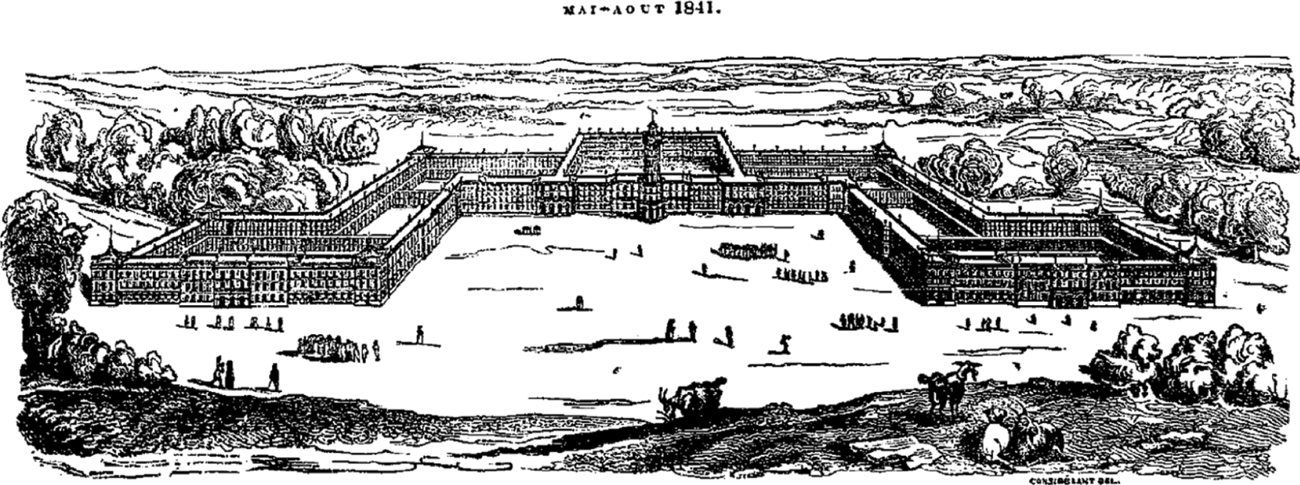
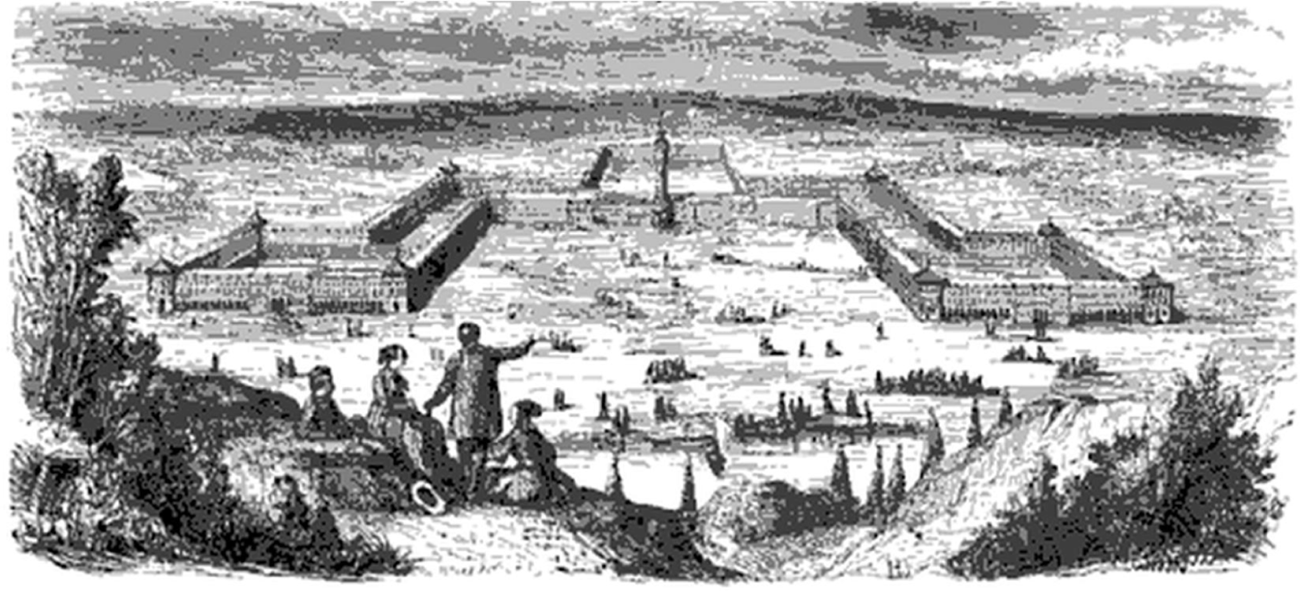
Writing in 1841 Raymond Brucker observed that “the humanitarian is the zealot of a recent sect, born from disgust at our political troubles,” evincing the connection between the humanitaire and the socialiste, and reflecting the broader religious questioning that was a constituent element of the movement. In Brucker's view, the humanitaire exceeded the ambitions of the socialist, and was a dangerous fanatic, “the radical par excellence.” Brucker was a well-informed critic, having been a Fourierist and an “Evadamiste” (a follower of the self-styled androgynous prophet Le Mapah), who had recently (re)converted to Catholicism.Footnote 66 Brucker's profile is illustrated with a depiction of the view from a low hill of a massive, symmetrical building complex, the Fourierist colony, the phalange. The illustration would have been recognizable to his well-read contemporaries as a riff on the masthead from the Fourierist journal La phalange, with the suggestive difference that Brucker's illustration includes several figures—presumably eponymous– standing and looking at the promised new world from distant heights (see Figs. 2, 3).Footnote 67
Masthead, La phalange, 1841.

Illustration to Raymond Brucker, “L’humanitaire,” in Les français peints par eux-mêmes: Encyclopédie morale du dix-neuvième siècle, vol. 2 (Paris, 1841), 17–24, at 17.

His preconceived biases notwithstanding, the description Brucker offered in this profile is a telling and in many ways accurate portrayal of the landscape of the left during the 1830s and 1840s. Internecine struggles over issues such as materialism, sexuality, social hierarchy, and authoritarianism divided the socialist écoles; in Brucker's sardonic account, tolerance of differences is a “rare thing,” and disputes explode at the smallest provocation.Footnote 68 The religious messianism of the socialist circles appears here as well: describing them as “apostles,” Brucker notes that one could hardly spit out of a window without hitting a révelateur, and that there are not enough sergents de ville to arrest them all. He lampoons the humanitarians’ passionate belief that “their truths are entirely new truths” with no “roots” in past ideas, and expresses skepticism that “the harmony that the humanitarians promise us” is anything but a folk tale.Footnote 69 Brucker concludes that “la race humanitaire” is nothing original, but rather the “echo—better said, the reincarnation [metempsycose]”—of “ecstatic monks” from another era, seeking to build a new form of community, or, as he put it, a “transfigured monastery.”Footnote 70 These “zealots” claim that their “discoveries” herald the material and spiritual realization of the “fraternal communion of interest, pleasures, meals, and collective occupations” of all of humanity, in a line that evokes the Fourierist preoccupation with material pleasures.Footnote 71 Despite the parallels Brucker draws between the humanitarian and the broader socialist cohorts, he also distinguishes between the two groups in ways that reflect the extra-national bent of humanitarianism. He thus observes that while the humanitaire “claims to formulate a cosmopolitan program,” the socialist's views are “timidly contained within the current boundaries of national constraints.” Although Brucker remained dubious about the feasibility of the humanitarians’ project, he was grudgingly admiring of the devotion of these “missionaries of the future.”Footnote 72
Alfred de Musset evokes the intellectual and political landscape in which the humanitarians figured in somewhat different terms, noting that, however well intentioned, they are creating quite a “commotion” and are internally divided over priorities. In what is apparently a reference to discussions of free love and women's status that exploded among the Saint Simonians and Fourierists in the 1830s, he writes, “one party demands divorce; another wishes heredity abolished so that there will be no nobles or rich people; still another wishes everything in common; polygamy, an abominable state of affairs, but anyhow somewhat diverting. What does the fourth party want? It prays for the poor and wishes people treated according to their capacity.”Footnote 73 Like Brucker, Musset highlights the quasi-religious devotion of these figures, also calling them “missionaries of the future,” and describing them as austere, self-sacrificing, and devoted to their cause.Footnote 74 He echoes another conservative theme when he observes that “in the capital there are a number of young people, [including] women . . . who daily sigh dreamily when the future is mentioned . . . one of their favorite expressions is perfectibility.”Footnote 75 This critique reflects the discomfort of the conservative—and largely Catholic—social hierarchy with socialists’ rejection of conventional Catholic pessimism about human nature. Socialists, and, by Musset's account, humanitarians, believed that a joyous and generous human nature would flourish once released from the corrosive influence of the ill-fitting society of the day. In Musset's view, the humanitarians were radicals of a very particular type: willing to disregard (or coopt, perhaps) their antecedents, trampling established practice and tradition in order to create a radically new approach to human community. The iconoclastic, egalitarian religiosity of the early socialists provided fodder for the liberal establishment that critics discussed here. Musset alludes to it in observing that “the state no longer has any religion, and no matter what the humanitarians say, it is a great misfortune for the people.”Footnote 76 Reybaud, similarly, ridiculed the messianic pretensions of the romantic socialists like Pierre Leroux, whom he called out for his recycling of Christianity: “In other words, Jesus Christ preceded M. Pierre Leroux, as charity preceded solidarity . . . the superior principle that [Leroux] has come to reveal to the world.”Footnote 77
By the 1840s, socialists’ different conception of the body politic, “humanity,” was seen as subversive, and it set them at odds with mainstream nationalist and liberal economic priorities. Louis Reybaud put it most concisely when he noted, “there are two schools in political economy, the one I would qualify as humanitarian, the other I would call French.”Footnote 78 Brucker raised similar concerns, drawing a distinction between the “socialist properly called, [a] variety of economist” who focuses on national concerns, and the cosmopolitan humanitarian. Evoking the radical “legislator” discussed above, he notes that, for the humanitarian, “Small or large, in his eyes all reforms make sense . . . to transform a village or the entire surface of the globe . . . it is all the same for the humanitarian.”Footnote 79 Musset also hits this note in denouncing the most radical kind of humanitarian who considers himself “a prophet in spite of his country.”Footnote 80
In these profiles, the question of national allegiance was sometimes characterized in terms of the distinction between philanthropy—construed as domestically focused—and humanitarianism, which throughout these discussions is unmoored from geography or national aims. Louis Reybaud makes this distinction clear: he considers philanthropy to be “a special and defined charity,” and humanitarianism a “general and indeterminate” one.Footnote 81 In one of his more pointed comments, Reybaud attacks the cosmopolitan bent of self-styled humanitarians, observing that their worst “tendency” is “precisely to weaken the national spirit and to soften the love of country, that most noble of sentiments.”Footnote 82 Reybaud traces the humanitarian sensibility to the “chimera” of perpetual peace proposed in the prior century by the Abbé de Saint-Pierre, whom he considered the progenitor of the humanitarians.Footnote 83 Challenging the critique of the nation offered by Saint-Pierre, the humanitarians, and the “poets” (especially Lamartine), Reybaud questions their underlying premise, and cautions against “abandoning reality in order to run in pursuit of a dream, and of sacrificing for a chimerical association effective, powerful, and fertile ones.”Footnote 84
Brucker, Musset, and Reybaud used humanitaire as a catchall for the romantic idealism, political naïveté, and questionable national allegiances of the champions of the cause of “humanity.” Although these authors used the term to express their scorn for the figures they profiled, socialist writers of the period embraced it. In doing so, they shifted and broadened its meaning to describe their project of remaking the human community on new terms and in new terrains.
EXCEEDING THE NATION
Like their liberal contemporaries, socialist writers linked the identity of the humanitarian with an agenda that surpassed that of the nation-state of France, but they reversed the valence of the term in order to critique the policies and values of the liberal regime. The editors of the Fourierist journal La phalange, whose goal was to grasp “the means to advance the work of humanitarian progress,” in their “ardent polemics” against “egoism and partisanship,” described what they called the “two philanthropies” of their era.Footnote 85 Denouncing the policies of then minister of foreign affairs, Guizot, toward colonial slavery, the authors argue that any kind of love of humanity that is limited only to the legal abolition of colonial chattel slavery—“Abolir, toujours abolir!”—is purely a “negative” philanthropy. The “positive” philanthropy that La phalange proposes is one that is comprehensive in reach, attacking the broader problem of “divided and repugnant labor” that encompasses colonial slavery and proletarian working conditions. This “positive” approach will effect “the emancipation and the happiness of the black race and of all the human races” more completely than the British or French antislavery programs could. Evidencing the questionable national allegiance deplored by their critics, they conclude by calling “all enlightened minds and generous hearts” to “positive philanthropy,” because “only it will resolve the problem of the Organization of Labor, and not only for the French and the Europeans, but also for Asians, Americans, for the Africans, for all of the human race.”Footnote 86
As this quote suggests and as recent scholarship has highlighted, early socialists were deeply involved in colonial debates and projects during the 1830s and 1840s. However, unlike their liberal contemporaries, they were skeptical about the benefits that French control of overseas territories might bring to the French people, and instead saw in settler colonialism the answer to many of the problems they deemed irremediable in French society.Footnote 87 That the language they used to describe this program was humanitarian highlights the extent to which the altruistic, empathic resonance of the term was limited to the content of a humanity that was French, despite the overseas associations they attached to the term, and reflected domestic political and ideological conflicts. Thus, for the authors of “two philanthropies,” the point was to highlight the relative enslavement of the workers of France as much as, if not more than, it was to denounce French colonial slavery. Where their pro-empire contemporaries saw the conquest underway in Algeria in the 1830s and 1840s as part of the rehabilitation of French glory, and recognized, in Tocqueville's words, the “unfortunate necessities” entailed in that conquest, socialists conceptualized empire as potentially beneficial to humanity for the space it opened to “renovate,” in Moyn's terminology, the political body for the benefit of the French people.Footnote 88
The mechanisms to realize this agenda took different forms and were developed in a variety of contexts, both metropolitan and colonial.Footnote 89 The issue of international peace was a frequent topic—for example, Henri de Saint Simon's 1814 “On the Reorganization of European Society” proposed a European union that would originate between still warring France and Great Britain. Michel Chevalier's well-known 1832 “Système de la Méditerranée” proposed a system of international alliances and cooperation with the goal of alleviating economic and political conflicts in Europe, eventually extending to include the Ottoman Empire.Footnote 90 Less well-known Fourierist Eugène Nus, in an article in Démocratie pacifique, “Utopias,” praised free-trade routes—the brainchild of Charles Fourier, in his account—as a means of connecting disparate human populations and enabling economic cooperation and more liberal exchanges of ideas.Footnote 91 Fourier's commitment to this idea dates from the British blockades of France during the Napoleonic Wars, but Nus's championing of it during the Second Republic also suggests broader, colonial, applications that foreshadow late nineteenth-century imperial politics. Such ideas were still anathema to French national pride in 1840 when former Saint Simonian Gustave d'Eichthal again argued for “European unity,” endorsing a model of unified governance for European nations with a supranational “arbiter of their differences.”Footnote 92 Constantin Pecqueur, similarly, called for European unity as a means of putting an end to warfare, which he considered a “contradiction of Christianity.” He later notes that “this notion of the nation is false, hateful, and profane; because one can have only one nation . . . Humanity.” Socialists worked with other “friends of peace” to organize a series of international peace congresses—“civil society initiatives”—some of the earliest such efforts in Europe, in attempts to concretize these ambitions. These plans often had an imperial angle, as when Constantin Pecqueur proposed collective colonization as a means of cementing European solidarity.Footnote 93 This ideal of international governance was also invoked, if somewhat abstractly, by Jules Lechevalier, who described the Fourierist colony, the phalange, as the “humanitarian individual . . . the link between provinces, empires, and finally unitary government of the globe.”Footnote 94
Elsewhere the specifically colonial dimensions of humanitarianism are more explicit. For example, an essay in Démocratie pacifique from 1844 by Eugène Pelletan voices “humanitarian” ambitions and frankly describes the global power dynamics embedded within them.Footnote 95 Pelletan directly challenges liberal disparagement of the humanitaire, rejecting those who would “condemn certain inspirations by calling them humanitarian. Without a doubt they are humanitarian and grand because of it.” He elaborates the reasons for his enthusiastic endorsement:
And what vast thought, holy inspiration, or useful invention is there in the moral or material world, which is not humanitarian? Wasn't Christ's word humanitarian? Conversion, preaching, mission, aren't these humanitarian works, tending to realize brotherhood? And this vessel whose keel draws a belt round the continents, is it not like a divine envoy who must bind all the races in the circle of universal association?Footnote 96
Pondering the contrast between artistic genius and those poets “who are not humanitarian,” he leaves to the latter the egoism according to which “their inspiration is specific, reduced to the state of the smallest atom.”Footnote 97 Pelletan here brings together the ideals of unity and brotherhood under the heading of a mission in the name of humanity, inflecting the key socialist conceit, universal association, with global significance.
Romantic socialists, not surprisingly, were devoted to the material improvement of human life, a fact attested to by the frequency with which they promoted concrete programs for social change. That such improvements often came at the expense of national, cultural, or religious autonomy for other peoples is vividly illustrated in an 1842 article in La phalange by J. A. Durand, a follower of Fourier from Rodez. Durand puts forth a detailed plan for the “[a]pplication of the army to public works,” in which he directly links military conquest and humanitarian development. In an extended proclamation intended for the ears of a standing army, Durand describes the integral role these soldiers will have in the realization of a glorious future for all of humanity. Before laying out a rather grandiose vision of international cooperation for the betterment of mankind, however, he acknowledges the war in Algeria in a surprising way, promising that “the African war is nothing but a foretaste of the profound peace that aims to establish itself throughout the world.” He argues that this peace will be fulfilled through a great collective effort led by the French, for whom “a war against some barbarian hordes cannot be a sufficient meal for [their] energy and activity.” The author continues, “and the respect which the French name enjoys among all civilized nations frees the fatherland to draw on the noble devotion which you have proven on many occasions.” These and other observations in his proposal make clear that Durand does not see the war in Algeria as a breach of international peace or a violation or betrayal of anyone's humanity. Thus he states, apparently without irony, “if you are jealous of your rights, you respect the rights of others. If your noble character is offended at the idea of a foreign invasion, you are no less repulsed at invading without reason the territory of an inoffensive neighbor.”Footnote 98
Durand concludes by assuring the soldiers to whom he speaks that they will set an example “of pacific conquests” for the world. “Let all of the armies of the globe join in these gigantic undertakings in the common interest of the entire world.” At their call, he assures his audience, “a phalanx [phalange] from each army on earth will appear, in the theater of [some] great humanitarian project . . . [railroads, canals, and other major works].” For Durand, and for the editors of Démocratie pacifique who reprinted his proposal with glowing praise, the collaborative effort of an international corps embodies their humanitarianism and suggests the dawning of a new era of international accord and community building. Evoking the image of France as the universal nation, Durand proposes the erection of a monument to “memorialize the accomplishment of the first collective work of all peoples” to mark its arrival. Not surprisingly, a “French hand” will plant “the omnicolor flag of Humanity” amidst the flags of all nations. Thus “consecrated by the fraternal accolades of the representatives of all races and all peoples, let the universal era of Association begin!”Footnote 99
The assumptions about civilizational, and specifically French, superiority evident in Durand's plan are also clear in an article by an anonymous author (un inconnu) in late 1845 in Démocratie pacifique. Praising the universalist ambitions of the much-maligned humanitarians, the author notes that they are “destined to oppose the narrow, nationalist, and egoistic sentiments of twenty or thirty million men,” and describes the “ever greater intimacy” of peoples in a world marked by exchanges of arts, literature, science, and industry. Given the realities of international contact, the author continues, “wouldn't it be better to understand each other, to settle our affairs in common” rather than through fighting? “Wouldn't it be better to aim for the unity, the solidarity among peoples which establishes confidence, tranquility, and riches everywhere?” A fine vision, even today, of an interconnected globe governed by mutual understanding and cooperation. The author's expansive vision does not end here, however. He continues,
When we see the European race, the most beautiful, the most intelligent, the most humane [race], replace everywhere the primitive ones . . . [and] in the savannas and forest of America permanently repress the remainders of aboriginal tribes, we must ask ourselves, isn't this work of absorption and fusion of the whole world done with the goal of unity, and thus with a humanitarian goal? What was Christianity itself? What can we call preaching, conversion, mission, if not a sublime aspiration to breach all the vain barriers that confine peoples in order to associate them in a true commune?Footnote 100
For these authors, European colonial expansion, and the opportunity it provided for the redefinition of human community in new terrain, was the mechanism by which humanitarian unity could be achieved; indeed, they posited it as integral to the realization of their goal. Whatever modern readers might make of the implications of this position, the unknown author never deviates from the idealism for which Reybaud chastised the humanitarians, reasoning, “There are men whose souls are holy enough to be saddened by human miseries three thousand leagues away, to hear on the wind the moaning voices of races unknown to him: these are the missionaries, the martyrs, humanitarians all.”Footnote 101 The humanitarian that emerges from these socialist texts is devoted to an egalitarian and spiritualized human community, the community they saw as so damaged by the governance and values hegemonic in contemporary France and the fragmentation that their generation inherited from the Revolution. That the renovation of their own human community came at the expense of the indigenous populations of the lands they saw as virgin soil, and that they nonetheless conceptualized this project as humanitarian, suggests the parameters of the political and cultural context in which these ideas flourished. Socialists were motivated in their antiestablishment critiques, in their humanitarianism, and in their support for colonialism by a pervasive desire to set French society on a new footing, one informed by the deep ties that religion reinforced, and one that approached the entire “human” community as a coherent body. July Monarchy France offered scant opportunity to effect this agenda prior to the revolution of 1848; during these same years, the overseas empire seemed the most promising venue for the realization of their program. The failure of the “democratic and social” Second Republic, in turn, spurred another redefinition of the concept of the humanitaire, that, likewise, reflected domestic considerations. By contrast, however, the post-1848 version had the preservation of the metropolitan hierarchy and the social pacification of le peuple as a key element in its constitution, and in this way dovetailed with the liberal humanitarianism that remains the dominant form today.
DOMESTICATING THE HUMANITAIRE
The term humanitaire came into usage initially to characterize the starry-eyed youth of the romantic era—the antithesis of the individualistic, ambitious, and pragmatic man of the July Monarchy juste milieu. The earliest incarnations of the humanitaire were marginal figures, devoted to radical and improbable plans to reconstitute society on a more egalitarian and interdependent footing. By 1848, however, humanitaire was being used to describe the agenda of the right-minded and prosperous middle classes, closely akin to the meaning of philanthropist, an identity besieged by radicals and socialists after 1840.Footnote 102 One Dr Gasc-Hadancourt, for example, described the humanitarians as “all the people who, in each department, among the rentiers, landlords, bankers, merchants, industrialists, know how to put their fortunes to a noble use . . . to collectively organize a vast system of moral and material amelioration for the benefit of urban and rural populations.”Footnote 103 The perceived antagonism between humanitarianism and French nationalism had abated at this point. “The humanitarian association must never lose sight of divine law, the only means to do all the good that God rightly expects of a nation which, like France, marches at the head of civilization.”Footnote 104 While passing references to transnational unity among men remain associated with this humanitaire, they all refer to settler colonial contexts and resonate with the paternalism of the metropolitan humanitarianism that is the larger focus of these texts. Thus Dr Gasc-Hadancourt included in his plan the insistence that “all departments of the association humanitaire, departmental or colonial, will have as their goal to protect the interests of religion, and to destroy the prejudices which retard the march of civilization.”Footnote 105
This shift reflects a broader set of dynamics that crystalized in 1848, in particular the mounting bourgeois concern for the volatility of the French laboring classes, who had become politically activated during the July Monarchy, in no small part due to the failure of social reform promised by the revolution of 1830, but also as a result of severe economic instability in the late 1840s.Footnote 106 Humanitarianism in this context emerged as a mechanism of social pacification, a means to quell incipient social upheaval. For example, J.-I.-B. Coulon, “docteur en droit, juge au tribunal de Cosne,” offered his Plan social et humanitaire, his “utopia,” in order to alleviate the conditions of life for the poor while ensuring “peace and security for proprietors [and] union and fraternity among all men.”Footnote 107 The terms of Judge Coulon's proposal reveal the class suspicions and condescension toward the popular classes that were hallmarks of the era. On the one hand, his program is aimed at remediating the suffering of the abject of the “grand human family”: “Look at the impoverished who seek to change and ameliorate their position, behold the hunted, massacred, exterminated, or bowed, crushed under a yoke even heavier than before!” On the other hand, the motivating force for his proposal is clearly the specter of violent social revolution: “History proves these lamentable assertions . . . witness these helot hunts, slave wars, these popular uprisings and retreats, the massacres of Saint Domingue . . . with all their furies and terrifying excess.”Footnote 108 Tellingly, Coulon underscores his position by citing the threats of communism and quoting at length the 27 January 1847 speech by Alexis de Tocqueville in the Chamber of Deputies, in which he warned his peers, “we are sleeping on a volcano.”Footnote 109 Coulon's plan for social stability, moreover, invokes historic colonial violence to underscore the riskiness of the current situation, and to urge humanitarian initiatives designed to buttress the standing order.Footnote 110
Calling out the ulterior motives of establishment humanitarians, Karl Marx and Friedrich Engels wrote in The Communist Manifesto of 1848, “A part of the bourgeoisie is desirous of redressing social grievances in order to secure the continued existence of bourgeois society. To this section belong economists, philanthropists, humanitarians, improvers of the condition of the working class, organizers of charity, members of societies for the prevention of cruelty to animals, temperance fanatics, hole-and-corner reformers of every imaginable kind.”Footnote 111 As they sharply observed, the rhetoric of humanitarianism was, from the mid-nineteenth century onward, inextricably tinged with paternalist notions of class and race superiority. Nonetheless, Coulon and Gasc-Hadancourt, like their more radical fellow travelers, both invoked a moral agenda in making their proposals, and Coulon insisted that he was “free of all . . . personal ambition, [and had] only the happiness of his compatriots in view.”Footnote 112 The interlaced dynamics that characterized romantic-era humanitarianism remain legible here, with the language of universalism, altruism, and social welfare ever present, but alongside it sits the dominance of the bourgeoisie in the aftermath of 1848 and the imperatives of social pacification. The bourgeois humanitarianism bitingly critiqued by Marx and Engels emerged as the embodiment of the liberal state in the aftermath of the French “civil war” of June 1848, and humanitarianism became a central mechanism for maintaining the social hierarchy and the economic order. This humanitarianism contrasts strikingly with that of romantic socialists, who conceived of their mission as one of societal restructuring in the name of the collective of humanity and who were willing to deconstruct the social hierarchy in pursuit of that goal.
CONCLUSION
Contemporary humanitarianism is integral to conflicts about the good society, national sovereignty, cultural integrity, and global power, and its philosophy and mechanisms have been subject to devastating critiques in both academic and geopolitical contexts in recent decades.Footnote 113 Such analyses have focused especially on the “white-savior” mentality embedded in the do-gooder idealism of the West, highlighting the paternalism and neocolonialism within the discourse and industry of humanitarianism.Footnote 114 Feminist scholars have dissected the rhetoric of salvation, demonstrating the ways that women and children are depicted as passive suffering bodies in need of humanitarian rescue, and critiquing the deployment of these depictions in the service of thinly masked geopolitical aims.Footnote 115
Some of these dynamics echo the history recounted here, such as the skepticism about the motives and altruism of humanitarian actors that is akin to that voiced by liberal critics in the 1840s, and the unequal valuing of human life—illustrated in the disregard for indigenous populations implicit in socialists’ pro-colonial stance—which remains a feature of the contemporary landscape.Footnote 116 Similarly persistent today is the imbrication of humanitarian programs with mechanisms of social control, both domestic and global. As Michael Barnett observes, “any act of intervention, no matter how well intended, is also an act of control.”Footnote 117 Throughout this long history we can also see evidence of the depoliticizing effect of alleviating human suffering in lieu of meaningful political change, as Marx and Engels identified in 1848.
Despite certain continuities in this history, what is most significantly missing from humanitarianism since the collapse of romantic socialism is the imperative to engage in a wholesale reconceptualization of society as fundamental to its mission. Instead, in the predominant form that humanitarianism assumes today, charity and benevolent aid are posited as both alleviating the suffering of others and allaying the guilt of the giver in the same gesture.Footnote 118 In this constellation, the moral integrity of the latter appears unassailable.Footnote 119 In failing to move beyond tactical considerations, however, humanitarianism effectively leaves standing the structural sources of the problems it seeks to remedy. As Miriam Ticktin observes in her analysis of the incorporation of gender-based violence into the humanitarian agenda, attention to bodily pain “works to depoliticize the issue, thereby limiting the ability to address this violence in all its manifestations.”Footnote 120 Moreover, it provides powerful insulation for the humanitarian actors, especially at the individual level, from a full reckoning with their role in these structures of inequality and disempowerment.
By recovering the romantic socialist episode of this history, this article charts humanitarianism's dual origins in liberal and socialist conceptualizations of humanity. More specifically, it offers a novel entry point into contemporary debates about human salvation that moves beyond the seemingly inescapable paternalism of contemporary humanitarianism and its presumption that empowered and generous subjects are best able to help those who cannot help themselves. Whereas this liberal approach, whether historical or contemporary, hinges upon the distance between the body of the abject, alien “other”—enslaved people of the Americas, subjects of colonial empires, or debased and impoverished populations the world over—socialist humanitarianism linked its mission to the life of the community to which its proponents belonged. The salvation of humanity, in this view, could only come from within and through the disruption and reconstruction of the existing social order and power relations. In the circumstances in which socialists developed their approach, however, only the resurgent colonial empire presented tangible possibilities for realizing their ambitions. As a result, the imperative these thinkers felt to transport their community to new, supposedly untainted, lands in order to realize its renewal entailed complicity with French colonial conquest. Nonetheless, their insistence on the linkage between humanitarian salvation and a thoroughgoing reimagining of the terms of the social, economic, and political order of early nineteenth-century France can usefully inform debates about humanitarianism today. The geopolitics of the modern world require ways of reconciling mutual obligation with self-determination, cultural autonomy, and political and economic equality, and the binary structures of liberal humanitarianism repeatedly impede these goals. The socialist orientation inward and the self-reflexivity that it entailed provide a historical example that eschews the hierarchical relationship between the humanitarian and those whom he or she would help, in favor of imagining, at least in theory, the possibility of constructing a community bound by reciprocal ties of responsibility.