Introduction
Creativity is defined as the generation of novel and useful ideas by an employee or a group of employees working together (Amabile & Pratt, Reference Amabile and Pratt2016). It plays an increasingly important role in ensuring an organisation’s longevity and competitiveness (Anderson, Potocnik, & Zhou, Reference Anderson, Potocnik and Zhou2014; Chen, Liu, Zhang, & Qian, Reference Chen, Liu, Zhang and Qian2018). Scholars have explored the antecedents of creativity, with an emphasis on a work environment that incorporates not only job tasks but also workplace social relationships (Amabile & Pratt, Reference Amabile and Pratt2016; Gong, Kim, & Liu, Reference Gong, Kim and Liu2019). One relevant, but hitherto largely neglected, phenomenon in this regard is the pervasive negative social experience known as workplace ostracism (Nezlek, Wesselmann, Wheeler, & Williams, Reference Nezlek, Wesselmann, Wheeler and Williams2012). Workplace ostracism refers to ‘the extent to which an individual perceives that he or she is ignored or excluded by others’ in the workplace (Ferris, Brown, Berry, & Lian, Reference Ferris, Brown, Berry and Lian2008, p. 1348). In a survey of over 10,000 Chinese working adults, some 71.2% reported that they had been ostracised at work (Zhao, Reference Zhao2009). Likewise, in a survey conducted by O’Reilly, Robinson, Berdahl, and Banki (Reference O’Reilly, Robinson, Berdahl and Banki2014) of 1,300 American working adults (with demographics similar to the larger US population), 71% reported experiencing some act of ostracism over the previous 6 months.
Given the prevalence of workplace ostracism, research attention is increasingly directed towards this area. Emerging findings suggest that workplace ostracism provides a negative context that is detrimental to employee creativity (Kwan, Zhang, Liu, & Lee, Reference Kwan, Zhang, Liu and Lee2018; Tu, Cheng, & Liu, Reference Tu, Cheng and Liu2019). However, at least two research gaps remain, which constitute the focus of this study. First, the underlying mechanism that explains how workplace ostracism translates into reduced creativity is largely underspecified. Of the limited research on the topic, the main focus is on creativity-specific processes as an explanatory mechanism for the impact of workplace ostracism (e.g., creative process engagement, Kwan et al., Reference Kwan, Zhang, Liu and Lee2018; creative self-efficacy, Tu et al., Reference Tu, Cheng and Liu2019) on creativity in the workplace. Notwithstanding their contributions, this focus overlooks the agentic, self-regulatory capability of people in mobilising resources (e.g., cognitive) in response to environmental stimuli (Bandura, Reference Bandura2001). According to social cognitive theory (SCT), when facing environmental stimuli, individuals will exert their own initiatives, and then regulate subsequent tendencies or behaviours at the cognitive level (Bandura, Reference Bandura1986). Second, extant research on the topic relies on single-level analysis (Chenji & Sode, Reference Chenji and Sode2019; Jahazeb, Bouckenooghe, & Mushatq, Reference Jahazeb, Bouckenooghe and Mushatq2021; Kwan et al., Reference Kwan, Zhang, Liu and Lee2018; Tu et al., Reference Tu, Cheng and Liu2019), which is insufficient to capture the practical reality that workplace ostracism occurs at the team and even the organisational level (Ferris et al., Reference Ferris, Brown, Berry and Lian2008).
The aim of this research is therefore to address the above-mentioned research gaps by examining the underlying mechanism and boundary condition that explains the workplace ostracism – creativity relationship. We draw from SCT (Bandura, Reference Bandura1986) to propose that workplace ostracism has different implications for self-regulatory thought processes in the form of reflection and rumination respectively, which in turn influences employees’ creativity. When feeling ostracised, employees tend to exert more self-focused repetitive thought associated with negative outcomes (manifested as rumination) and less cognitive processing that is more constructive (manifested as reflection). The resultant increase in rumination and decrease in reflection subsequently influences employees’ creativity. In addition, SCT argues that cognitive processes are affected by contextual factors, among which organisations are a proximal context for employees (Bandura, Reference Bandura1986). In this study, we introduce high-involvement work practices (HIWPs) as an important organisational buffer that may attenuate the negative impact of workplace ostracism on employee creativity. HIWPs refer to human resource practices that emphasise information sharing, employee participation in decision-making, rewards and continuous competence development (Macky & Boxall, Reference Macky and Boxall2008; Maden, Reference Maden2015). Unlike other HR practices, HIWPs stress creating communication channels to provide employees with information about plans and goals and giving employees the chance to express their opinions (Ollo-López, Bayo-Moriones, & Larraza-Kintana, Reference Ollo-López, Bayo-Moriones and Larraza-Kintana2011). Job rotation and open training, for instance, are an exemplary HIWP practice (Rehman, Ahmad, Allen, Raziq, & Riaz, Reference Rehman, Ahmad, Allen, Raziq and Riaz2019; Song, Gu, & Cooke, Reference Song, Gu and Cooke2020). As HIWPs provide members with information sharing opportunities and a supportive work environment (Guthrie, Reference Guthrie2001), they enable employees who are excluded to access alternative channels to obtain information. Therefore, we argue that HIWPs play a moderating role in the linkage between workplace ostracism and employee creativity.
The current study contributes to extant literature in several ways. First, it clarifies the underlying mechanism through which workplace ostracism influences team members’ creativity at work. By drawing on SCT, we explicitly acknowledge the self-regulatory processes that employees engage in as a response to workplace ostracism. This finding provides a timely complement to the available research on contextualising ostracism within workplace ostracism. Second, we provide fresh insights into the boundary condition of the workplace ostracism – creativity relationship by introducing the moderating role of HIWPs. As an organisational context, the introduction of HIWPs responds to Ferris et al.’s (Reference Ferris, Brown, Berry and Lian2008) call for research examining new ways to neutralise ostracism’s negative effects. Third, it has practical implications for individuals, leaders and organisations in terms of how to foster creativity by creating a more conducive environment that encourages team members’ creativity in the workplace.
Theory and hypotheses
Social cognitive theory
SCT started as social learning theory concerning observational learning and modelling behaviours before developing into a comprehensive theoretical framework in the 1980s (Bandura, Reference Bandura1965, Reference Bandura1977, Reference Bandura1986). It has flourished in the fields of athletic attainment, clinical dysfunction, education and organisational context (Bandura, Reference Bandura2001). According to SCT, human behaviour is explained by cognitive processing in response to environmental stimuli. Accordingly, the theory emphasises that human agency materialises in self-regulatory mechanisms (e.g., individuals’ initiative) when faced with environmental stimuli (Bandura, Reference Bandura1986), including intentionality, forethought, self-reactiveness and self-reflectiveness.
Within the self-regulatory process, SCT argues that people exercise influence over their own behaviour through their attention to relevant aspects of their performance and behaviours (i.e., the observation function), evaluative efforts and development of internal standards for social referential comparisons (i.e., the judgement function), and the establishment of incentives for action (i.e., the self-reactive function) (Bandura, Reference Bandura1986). Throughout these response functions, self-focused repetitive thoughts are a prerequisite for accurate self-knowledge (Trapnell & Campbell, Reference Trapnell and Campbell1999), internalisation of self-regulation and goal pursuit (Watkins, Reference Watkins2008). Research shows that these thoughts can be either constructive or unconstructive, manifested as reflection and rumination respectively (Thomsen, Tonnesvang, Schnieber, & Olesen, Reference Thomsen, Tonnesvang, Schnieber and Olesen2011). According to Trapnell and Campbell (Reference Trapnell and Campbell1999), reflection is a constructive form of self-regulation because of its involvement in accurate self-perception, whereas rumination is an unconstructive form because of its orientation towards negative affect/events and compulsive attention to perceived threats and losses. While reflection and rumination are important self-regulatory mechanisms that enable self-awareness, evaluation and goal-directed efforts (Jones, Papadakis, Hogan, & Strauman, Reference Jones, Papadakis, Hogan and Strauman2009; Lavallee & Campbell, Reference Lavallee and Campbell1995), they are relatively independent of each other (Nolen-Hoeksema, Wisco, & Lyubomirsky, Reference Nolen-Hoeksema, Wisco and Lyubomirsky2008; Trapnell & Campbell, Reference Trapnell and Campbell1999).
Workplace ostracism and team members’ creativity
Creativity is a complex behaviour involving a high degree of uncertainty and requiring investment of valuable, limited personal resources (Yuan & Woodman, Reference Yuan and Woodman2010). However, workplace ostracism represents a negative environment that has been shown to tax employees’ cognitive, emotional and psychological resources, resulting in burnout (Qian, Yang, Wang, Huang, & Song, Reference Qian, Yang, Wang, Huang and Song2019), lack of citizenship behaviour (Gkorezis & Bellou, Reference Gkorezis and Bellou2016) and poor performance (Xia, Wang, Song, Zhang, & Qian, Reference Xia, Wang, Song, Zhang and Qian2019). Drawing from SCT, we argue that workplace ostracism is negatively associated with team members’ creativity.
SCT considers the social environment in which an individual performs the behaviour (Bandura, Reference Bandura1986); it rejects the internal determinist view that behavioural tendencies are independent of the context (Bandura, Reference Bandura2001). In the management literature, social interactions are salient environmental clues that influence team members’ mobilisation of their personal resources towards a specific goal (Wang, Wang, & Liang, Reference Wang, Wang and Liang2014; Wu et al., Reference Wu, Qu, Zhang, Hao, Tang, Zhao and Si2019). On the surface, being overlooked, excluded or ignored by others in the workplace is a harmful experience that can deplete one’s emotional and social resources (Williams, Reference Williams2001). In addition, it triggers the victims of workplace ostracism to expend their limited cognitive resources on trying to make sense of the mistreatment they are experiencing; for instance, trying to figure out why they have been targeted, how to avoid future occurrences of this and which coping strategies they might adopt (Howard, Cogswell, & Smith, Reference Howard, Cogswell and Smith2020). For example, a team member may not receive a group email sent to all the other group members (Chung, Reference Chung2015). This exclusion might lead him or her to feel a reduced sense of meaningful existence as a team member, and to exert energy attempting to figure out why the sender enacted the social exclusion (e.g., out of neglect or intentionally). Research also suggests that the detriment of workplace ostracism not only applies to psychological resources, but also to physical health, such as in the form of physical pain (Robinson, O’Reilly, & Wang, Reference Robinson, O’Reilly and Wang2013). Indeed, a recent meta-analysis on workplace ostracism shows that it has a strong significant relationship with emotional exhaustion, reduced belongingness and impaired self-perception (Howard et al., Reference Howard, Cogswell and Smith2020). Therefore, workplace ostracism suggests that team members’ cognitive, emotional, social and physical resources will be stretched, depleting resources they might otherwise use to undertake risky, extra-role behaviours such as creativity. Therefore, we propose:
Hypothesis 1: Workplace ostracism is negatively associated with team members’ creativity.
The mediating role of reflection and rumination
According to SCT, the self-regulatory system lies at the very heart of causal processes. They not only mediate the effects of most external influences, but provide the very basis for purposeful action (Bandura, Reference Bandura1991, p. 248). The mediating role of the self-regulatory system arises from its functions of forming beliefs, anticipating consequences and setting goals (Bandura, Reference Bandura1986; Wood & Bandura, Reference Wood and Bandura1989). In this process, individuals engage in active, persistent and prudent thinking about their beliefs or knowledge based on external clues (Bugg & Dewey, Reference Bugg and Dewey1934). Trapnell and Campbell (Reference Trapnell and Campbell1999) maintain that this cognitive processing can be positive or negative (Arditte & Joormann, Reference Arditte and Joormann2011; Michl, Mclaughlin, Shepherd, & Nolenhoeksema, Reference Michl, Mclaughlin, Shepherd and Nolenhoeksema2013). For the former, reflection refers to individuals’ objective self-exploration of their own emotions and behaviours, in line with their interests and curiosity (Trapnell & Campbell, Reference Trapnell and Campbell1999). For the latter, rumination refers to individuals’ self-attentiveness motivated by perceived threats, losses or injustices to the self (Trapnell & Campbell, Reference Trapnell and Campbell1999). In this paper, we argue that workplace ostracism serves as a social context that affects cognitive processing in the form of reflection or rumination, which then influences team members’ creativity.
First, as mentioned above, workplace ostracism involves counter-normative negative actions, which is a painful experience to victims (Howard et al., Reference Howard, Cogswell and Smith2020). Examples of actual ostracism behaviours include systematic exclusion of a team member or rejection of a team member who seeks to form a social bond. In this context, team members who are ostracised are less likely to see themselves as insiders of the social group, with access to valuable social network resources. Likewise, they are likely to perceive a lower chance of achieving their task goals in such a team environment. Research shows that when individuals do not see themselves progress towards their goals, they have a greater tendency to focus on negative aspects of behavioural consequences, such as a perceived threat or loss (Martin & Tesser, Reference Martin and Tesser1996; Thomsen et al., Reference Thomsen, Tonnesvang, Schnieber and Olesen2011).
Meanwhile, the perceived low chance of goal pursuit makes them less likely to fully internalise such goal in their beliefs, values and self-schemes (Emmons & King, Reference Emmons and King1988). Also, workplace ostracism often has an ambiguous intent (Howard et al., Reference Howard, Cogswell and Smith2020), such that interpretation of this environmental factor is difficult to mentally digest (Deci & Ryan, Reference Deci and Ryan2000). Thus, during this self-regulatory response, team members tend to mobilise fewer resources on playfully exploring novel, unique or alternative self-perceptions through reflection as a response to the ostracism experience (Trapnell & Campbell, Reference Trapnell and Campbell1999).
Therefore, we argue that workplace ostracism, as a serious negative stimulus, creates salient external cues for the targeted member that inhibits reflection and reinforces negative rumination. For example, when a member experiences ostracising behaviours, such as suppression, disgust or holding back of information (Bedi, Reference Bedi2021), they will integrate the experience into their own self-concept, and consequently, immerse themselves in a negative rather than a positive emotional experience (Williams, Reference Williams and Kowalski1997). Moreover, empirical studies on ostracism have shown that a member believing that he or she is excluded triggers subconscious introspection about the cause (Yan, Zhou, Long, & Ji, Reference Yan, Zhou, Long and Ji2014). As pointed out by Twenge, Baumeister, Tice, and Stucke (Reference Twenge, Baumeister, Tice and Stucke2001), socially excluded individuals tend to engage in cognitive deconstruction, demonstrate lethargy and lose interest in their work. Therefore, we hypothesise that:
Hypothesis 2a: Workplace ostracism is negatively associated with reflection.
Hypothesis 2b: Workplace ostracism is positively associated with rumination.
Next, we argue that reflection and rumination affect team members’ creativity differently. Again drawing from SCT, reflection is a positive self-regulatory mechanism that motivates employees to exert efforts on risk-taking behaviours such as creativity. Specifically, through reflection, team members gain more accurate information about their purposive and intentional action (Kolb, Reference Kolb1984; Wang, Meng, Cai, & Jiang, Reference Wang, Meng, Cai and Jiang2020). In anticipatory control, goals are constructed in concert with realistic future states (Bandura, Reference Bandura2001). Research shows that members whose cognitive reactions involve positive reflection are most likely to be motivated by curiosity or epistemic interest (Trapnell & Campbell, Reference Trapnell and Campbell1999). Thus, they prefer to try new ways of doing a job with an objective attitude, particularly when tasks are unfamiliar or ambiguous (Matsuo, Reference Matsuo2018; Wang, Liu, & Cai, Reference Wang, Liu and Cai2019).
By contrast, through rumination, team members are preoccupied with negative emotions or experiences, focusing their attention on threats and losses, perceived or actual (Bandura, Reference Bandura1986). SCT research shows that attending only to failure drives limited improvement, or even lowers performance (Gottman & McFall, Reference Gottman and McFall1972). Indeed, rumination has been found to impair wellbeing and performance (Binnewies, Sonnentag, & Mojza, Reference Binnewies, Sonnentag and Mojza2009; Ott, Haun, & Binnewies, Reference Ott, Haun and Binnewies2019). Therefore, team members engaging in rumination are more likely to be motivated by perceived threats or losses (Michl et al., Reference Michl, Mclaughlin, Shepherd and Nolenhoeksema2013). They are more likely to think about potential threats when they come across risks and challenges (Casper, Tremmel, & Sonnentag, Reference Casper, Tremmel and Sonnentag2019). Thus, they are reluctant to engage in creative production or processes. Therefore, we hypothesise that:
Hypothesis 3a: Reflection is positively associated with team members’ creativity.
Hypothesis 3b: Rumination is negatively associated with team members’ creativity.
In summary, the preceding discussion suggests that workplace ostracism reduces team members’ creativity by inhibiting reflection and promoting rumination, which influence creativity differently. In other words, reflection and rumination serve as a mediator between workplace ostracism and team members’ creativity. To explore this mediating effect, we hypothesise that:
Hypothesis 4a: Reflection mediates the relationship between workplace ostracism and team members’ creativity.
Hypothesis 4b: Rumination mediates the relationship between workplace ostracism and team members’ creativity.
The moderating role of HIWPs
Furthermore, SCT argues that the varying environments in which human beings are contextualised differ in the extent to which they provide means and resources that facilitate self-regulatory functions (Bandura, Reference Bandura1986). In this regard, HIWPs are human resource management practices that emphasise the active participation and collaborative interaction of employees (Maden, Reference Maden2015). A primary characteristic of HIWPs is that they can make team members feel they are supported and cared for by the organisation (Shin, Jeong, & Bae, Reference Shin, Jeong and Bae2018). This positive environmental stimulus would be meaningful in a workplace where employees experience ostracism. Therefore, we expect HIWPs to weaken the negative form of cognitive processing (i.e., rumination) and enhance the positive form of cognitive processing (i.e., reflection) that are a result of workplace ostracism.
Specifically, when organisations are characterised by a higher level of HIWPs, there are formal organisational systems and practices in place that build trust among team members (Camuffo, De Stefano, & Paolino, Reference Camuffo, De Stefano and Paolino2017) and enhance identification of team members with their organisation (Lepak, Liao, Chung, & Harden, Reference Lepak, Liao, Chung and Harden2006). The increased psychological resources enable team members to exert efforts less on negative aspects of behavioural tendencies and more on positive aspects as a result of workplace ostracism. For instance, organisations with a higher level of HIWPs are likely to have designed and implemented appropriate communication channels, compensation schemes and internal mobility systems through which team members are up-skilled and better motivated (Lepak et al., Reference Lepak, Liao, Chung and Harden2006). Hence, even if ostracised by team members, they have the resources and channels via which to lodge grievances and cope with adversity, enabling them to focus on the positive and reduce negative rumination resulting from limited exposure to information in the workplace (cf. Gond, Igalens, Swaen, and Akremi, Reference Gond, Igalens, Swaen and Akremi2011; Kickul, Gundry, and Posig, Reference Kickul, Gundry and Posig2005). HIWPs not only ensure that employees complete their jobs, but also facilitate their value orientation, work attitudes, ability and motivation (Searle et al., Reference Searle, Den Hartog, Weibel, Gillespie, Six, Hatzakis and Skinner2011). For instance, empirical findings from prior studies show that HIWPs enhance employees’ intrinsic job motivation (Shin et al., Reference Shin, Jeong and Bae2018), work engagement (Maden, Reference Maden2015) and psychological empowerment (Rehman et al., Reference Rehman, Ahmad, Allen, Raziq and Riaz2019). These positive implications embedded in HIWPs means that, even in face of workplace ostracism, team members may still have the motivation to engage in positive reflection. For example, Kim and Sung-Choon (Reference Kim and Sung-Choon2013) show that HIWPs, such as employee training and strategic participation, positively moderate the effects of strategic human resource functions on corporate performance.
In contrast, in organisations characterised by a lower level of HIWPs, employees generally lack participation opportunities and receive limited organisation attention. When workplace ostracism occurs, the targeted team members are under social pressure (Williams, Reference Williams2001), but may find it difficult to seek help or access resources to cope with such adversity. Consequently, their attitudes and motivations may further deteriorate, and they may tend to engage more in negative rumination and less in positive reflection. Altogether, we propose:
Hypothesis 5a: HIWPs negatively moderate the relationship between workplace ostracism and team members’ reflection. This negative relationship is weaker with higher levels of HIWPs.
Hypothesis 5b: HIWPs negatively moderate the relationship between workplace ostracism and team members’ rumination. This positive relationship is stronger with lower levels of HIWPs.
Overall moderated mediation model
Hypotheses 4a and 4b suggest that self-reflection mediates the relationship between workplace ostracism and team members’ creativity, while hypotheses 5a and 5b suggest that HIWPs moderate the relationship between workplace ostracism and team members’ self-reflection. To offer an integrated framework, we further argue that HIWPs influence the linkage from workplace ostracism to team members’ self-reflection and their creativity. Thus, it is hypothesised that:
Hypothesis 6a: HIWPs negatively moderate the indirect relationship between workplace ostracism and team members’ creativity through reflection, such that this indirect relationship is weaker with higher levels of HIWPs.
Hypothesis 6b: HIWPs negatively moderate the indirect relationship between workplace ostracism and employee creativity through rumination, such that this indirect relationship is weaker with higher levels of HIWPs.
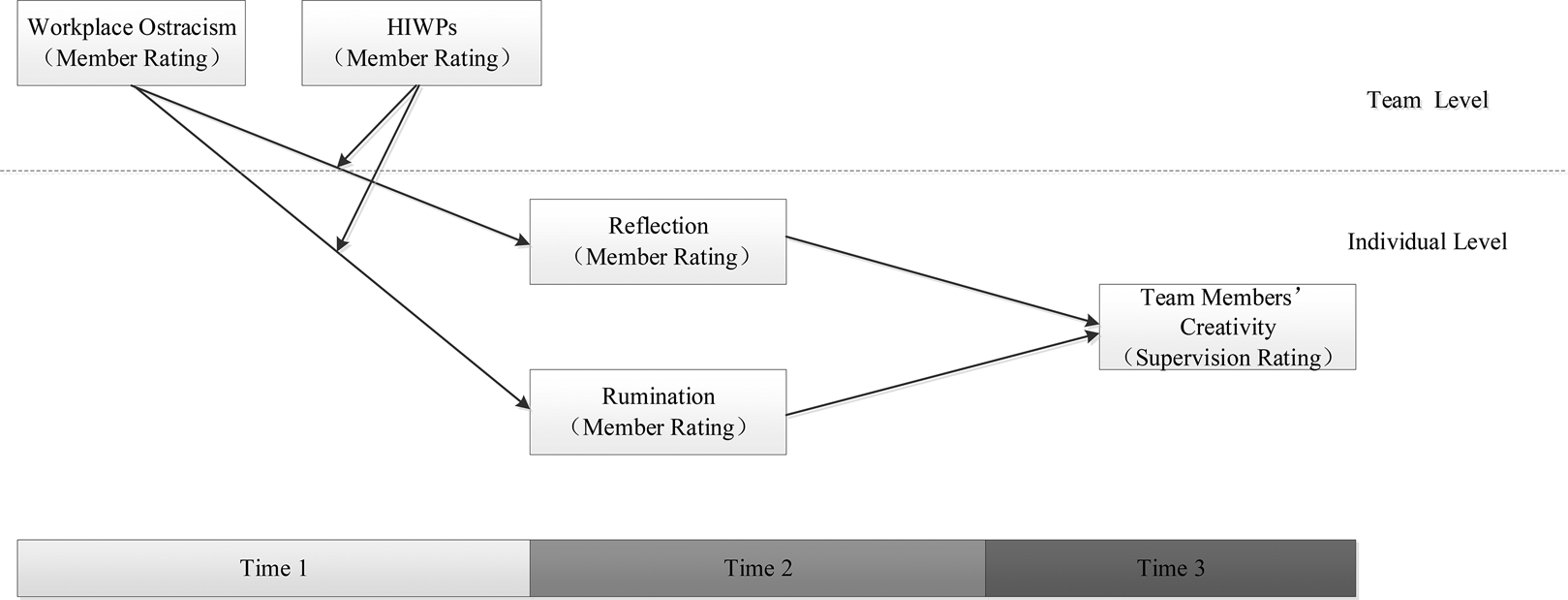
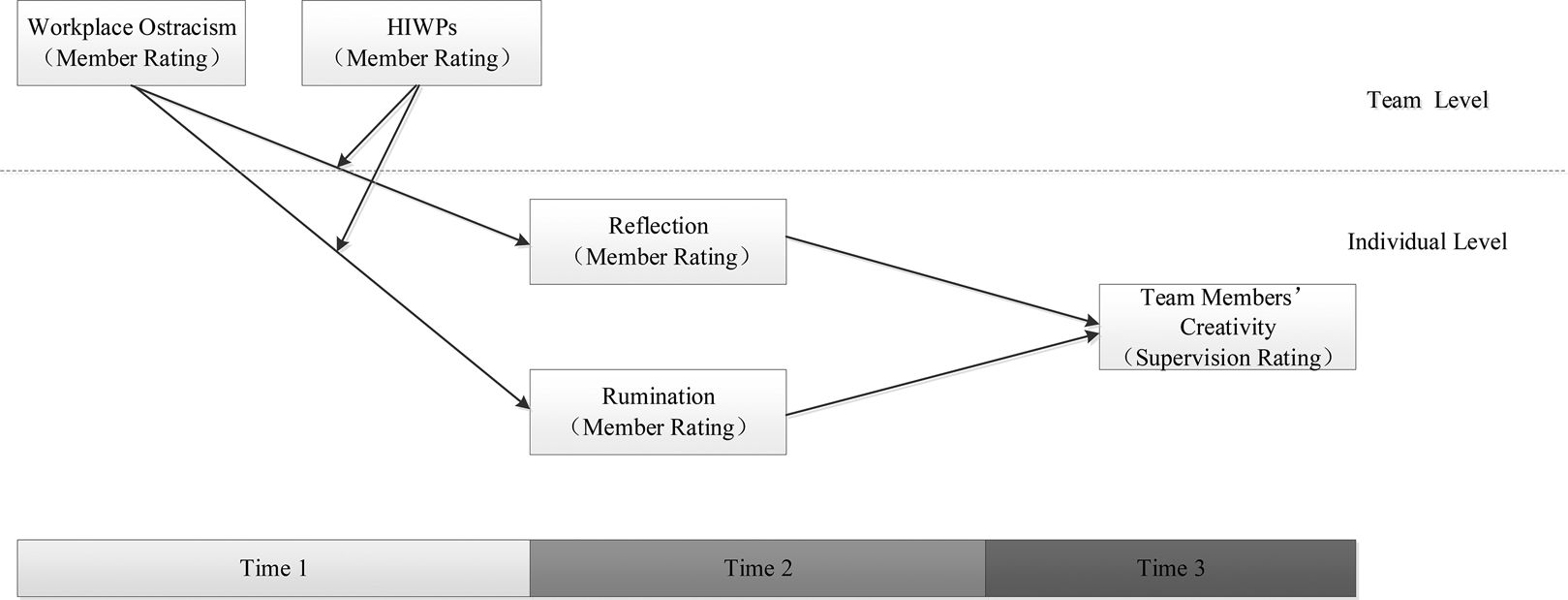
In summary, we contribute to the literature on team members’ creativity by addressing the relationships among workplace ostracism, reflection/rumination, HIWPs and team members’ creativity in one multilevel moderated mediation model. Our research model is presented in Figure 1.
Research model.
Method
Sample and procedure
We collected data from employees across various industries (e.g., finance, manufacturing, services and retail) in Jiangsu Province, China. We obtained access to sample participants through MBA graduates of a major business school in China, who had progressed to serve as chief executives or general managers. With the help of these MBA graduates, we selected 605 employees (from 122 teams) and sent them invitations by email. In the email, we asked for their voluntary participation, provided a link to an online survey and explained that they would receive a small token of appreciation after completing the questionnaire.
To attenuate the potential common method bias, our data were collected from team members and their direct supervisors, respectively, with questionnaires administered at three different time points. At time 1, the first survey assesses employees’ basic demographics, workplace ostracism and HIWPs. We received 496 (from 101 teams) completed questionnaires, for a response rate of 82%. At time 2 (after 2 weeks), we sent a follow-up survey to those who participated at time 1, asking them to provide ratings regarding their reflection and rumination. In this round, we received 443 (from 91 teams) completed surveys, for a response rate of 89%. At time 3 (two additional weeks later), we sent emails to the supervisors of these 91 teams, which again included a plain language statement about the research and questionnaire items evaluating their team members’ creativity. In this round, we received complete responses from 81 team leaders. In total, 393 matched employee–supervisor surveys (from 81 teams) were obtained.
Among the focal participants, 46% were men, 54% were women; 21% were 21–30 years old, 26% were 31– 40 years old, 25% were 41–50 years old and 28% were over 51 years old; 28% had received junior college or vocational education, 29% had received undergraduate education, 19% had received graduate education and 25% received had doctoral education or above; 14% had tenure of less than 1 year, 21% had tenure of 1–3 years, 23% had tenure of 3–5 years, 26% had tenure of 5–7 years and 16% had tenure of over 7 years.
Measures
The questionnaire items were adapted from scales developed by prior studies, to ensure the reliability and content validity of latent variables. To fit the context of the current study, we made further modifications to the items. Unless otherwise indicated, the items were measured using a Likert-type scale, with 1 = ‘completely disagree’ and 7 = ‘completely agree’.
Workplace ostracism
Workplace ostracism was measured by a 10-item scale developed by Ferris et al. (Reference Ferris, Brown, Berry and Lian2008). Sample items included ‘In our team, my supervisor or colleagues ignore me at work’ and ‘In our team, my supervisor or colleagues make me involuntarily sit alone in the crowded lunchroom at work’. The Cronbach’s α of the scale was .93.
Self-reflection
Trapnell and Campbell’s (Reference Trapnell and Campbell1999) 12-item scales were adapted to measure reflection and rumination. Example items include ‘I love analysing why I do things’ and ‘I often find myself re-evaluating things I’ve done’. The Cronbach’s α for the two constructs were .91 and .92, respectively.
High-involvement work practices
We adapted a 9-item measure of HIWPs from Searle et al. (Reference Searle, Den Hartog, Weibel, Gillespie, Six, Hatzakis and Skinner2011). Sample items include ‘In our team, there is an effort to locate opportunities for members to apply their expanding knowledge and abilities’ and ‘In our team, members can openly voice their opinions and concerns without fear of retribution’. The Cronbach’s α of the scale was .95.
Employee creativity
Employee creativity was measured by a 4-item scale developed by Farmer, Tierney, and Kung-Mcintyre (Reference Farmer, Tierney and Kung-Mcintyre2003) in the context of China to access subordinates’ creativity. A sample item is ‘This employee generates ground-breaking ideas related to the field’. The Cronbach’s α for this scale was .87.
Control variables
We included employee gender (0 = male; 1 = female), employee age (0 = under 20 years; 1 = 21–30 years; 2 = 31–40 years; 3 = 41–50 years; 4 = over 51 years), employee education (0 = high school or technical secondary school; 1 = junior college or vocational education; 2 = undergraduate; 3 = graduate; 4 = doctor of philosophy or above), employee duration (0 = under 1 year; 1 = 1–3 years; 2 = 3–5 years; 3 = 5–7 years; 4 = over 7 years) as control variables.
Data aggregation
We conducted two analyses to examine the adequacy of our data structures for aggregation. First, we conducted a one-way random-effects analysis of variance. ICC (1) values of workplace ostracism, HIWPs were .37 and .29, respectively, while ICC (2) values of these constructs were .74 and .66, respectively. These results indicate that workplace ostracism and HIWPs differ across teams. Second, we calculated mean of Rwg (reliability of score within group) across teams by using a uniform null distribution. The values are .98 and .97 for workplace ostracism and HIWPs, respectively. These results suggest that the data structures for workplace ostracism and HIWPs are appropriate.
Results
Confirmatory factor analyses
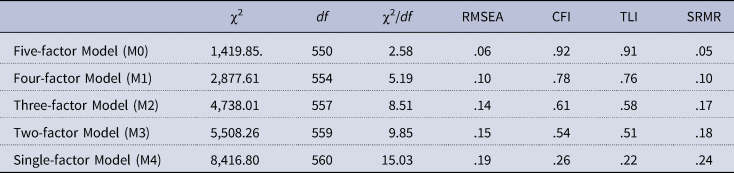
To evaluate our measurement model, we used a multilevel path analysis in Mplus Version 7.4 to perform a confirmatory factor analysis (CFA). The hypothesised five-factor model (M0), which included constructs such as workplace ostracism, reflection, rumination, team members’ creativity and HIWPs, fit the data well (χ2[550] = 1,419.85, χ2/df = 2.58, RMSEA = .06, CFI = .92, TLI = .91, SRMR = .05). We compared the hypothesised model with (1) a four-factor model (M1), which merged reflection and rumination into one factor; (2) a three-factor model (M2), which combined workplace ostracism, reflection and rumination into one factor; (3) a two-factor model (M3), which combined workplace ostracism, reflection, rumination and team members’ creativity into one factor and (4) a single-factor model (M4), which combined all the items into a common factor. As shown in Table 1, M1, M2, M3 and M4 all performed worse than M0, supporting the distinctiveness of the five focal variables.
Results of confirmatory factor analysis
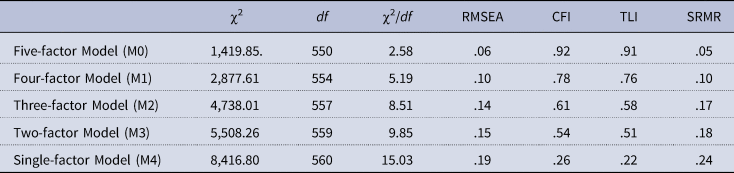
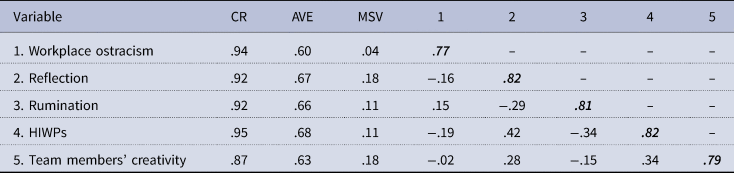
In addition, to test the reliability and discriminant validity of the five constructs included in M0, we calculated their composite reliability (CR), average variance extracted (AVE) and maximum shared variance. As shown in Table 2, the AVEs all exceed the recommended threshold of .50, and the CR of these constructs ranged between .87 and .95, exceeding the threshold of .70 (Hair, Black, Babin, & Anderson, Reference Hair, Black, Babin and Anderson2010). The square root of the AVE score for each construct was greater than with the absolute correlations with other constructs. Therefore, the reliability and discriminant validity of the constructs are deemed adequate (Fornell & Larcker, Reference Fornell and Larcker1981).
Reliability and validity analysis
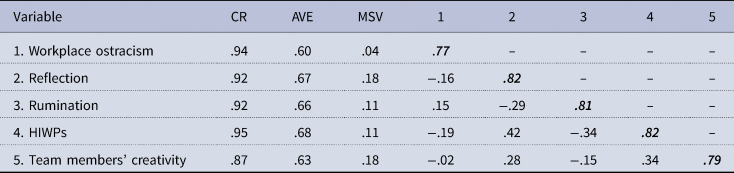
AVE, average variance extracted; CR, composite reliability; MSV, maximum shared variance.
Note. N = 393. Bold, italicised numbers denote Fornell and Larcker (Reference Fornell and Larcker1981) AVE test.
Descriptive statistics
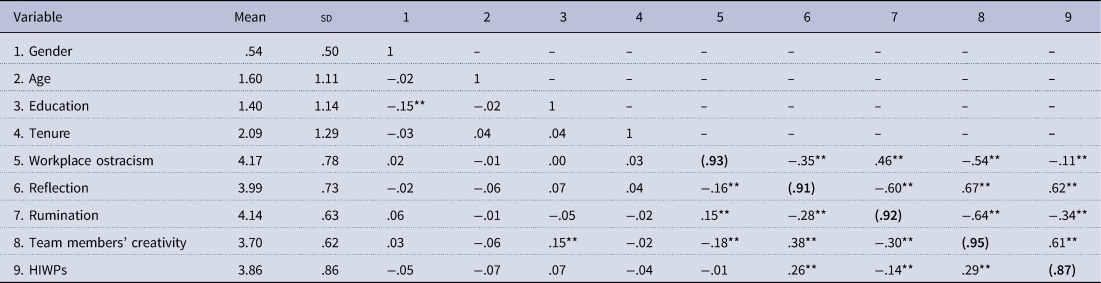
Table 3 presents the means, standard deviations, internal consistency reliability and correlations of the study variables and control variables.
Descriptive statistics and variable correlation
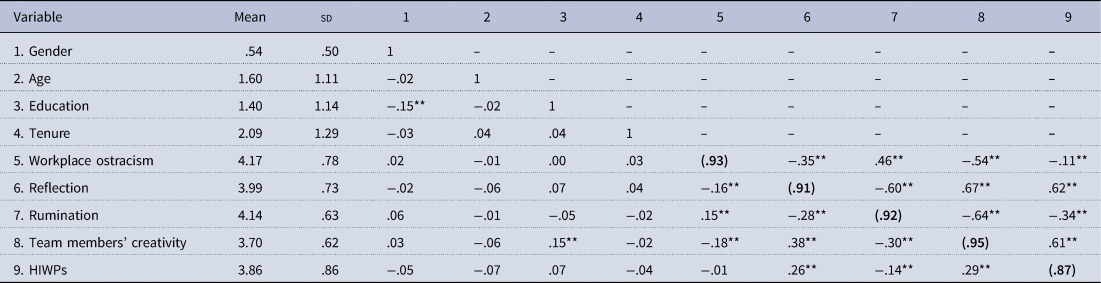
Notes. N = 393, two-tailed test. Correlations below the diagonal represent individual level correlations, and correlations above the diagonal represent team level correlations.
*p < .05; **p < .01.
Hypotheses testing
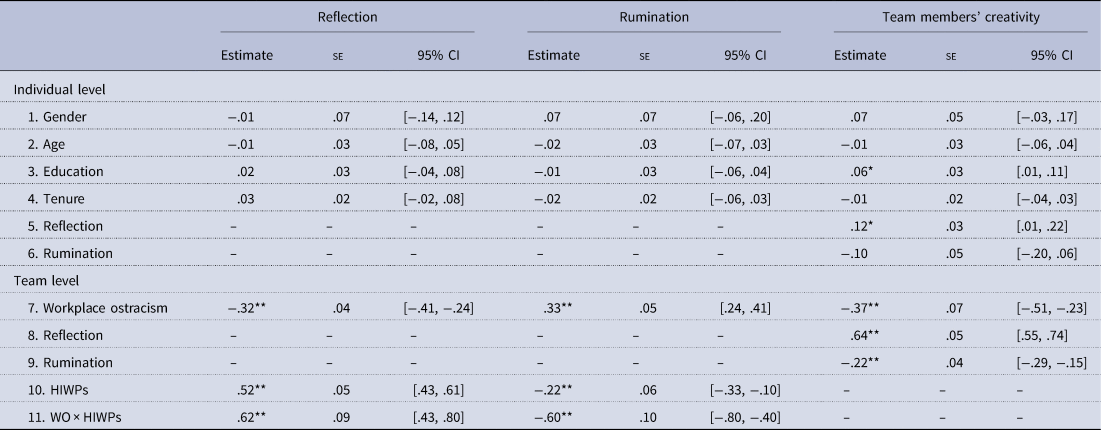
We tested all hypothesised relationships simultaneously in Mplus Version 7.4. Table 4 summarises the results. Workplace ostracism is negatively and significantly related to team members’ creativity (β = −.37, p < .001). Workplace ostracism is negatively and significantly related to reflection (β = −.32, p < .001) and positively related to rumination (β = .33, p < .001). Reflection is positively and significantly related to team members’ creativity (β = .64, p < .001), while rumination is negatively and significantly related to team members’ creativity (β = −.22, p < .001). These results support hypotheses 1, 2a, 2b, 3a and 3b. Reflection mediated the effects of workplace ostracism on team members’ creativity (β = − .21, p < .001), supporting hypothesis 4a, while rumination mediated the effects of workplace ostracism on team members’ creativity (β = − .07, p < .001), supporting hypothesis 4b.
Hypothesis results
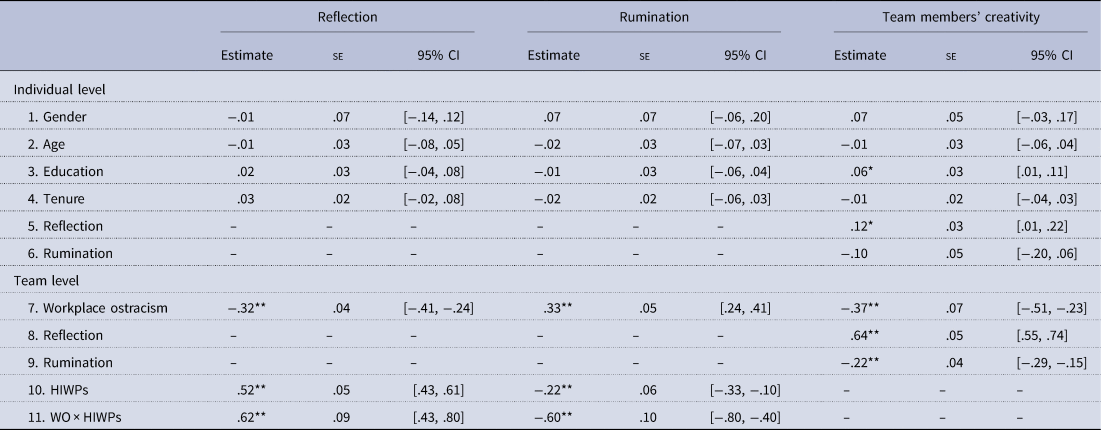
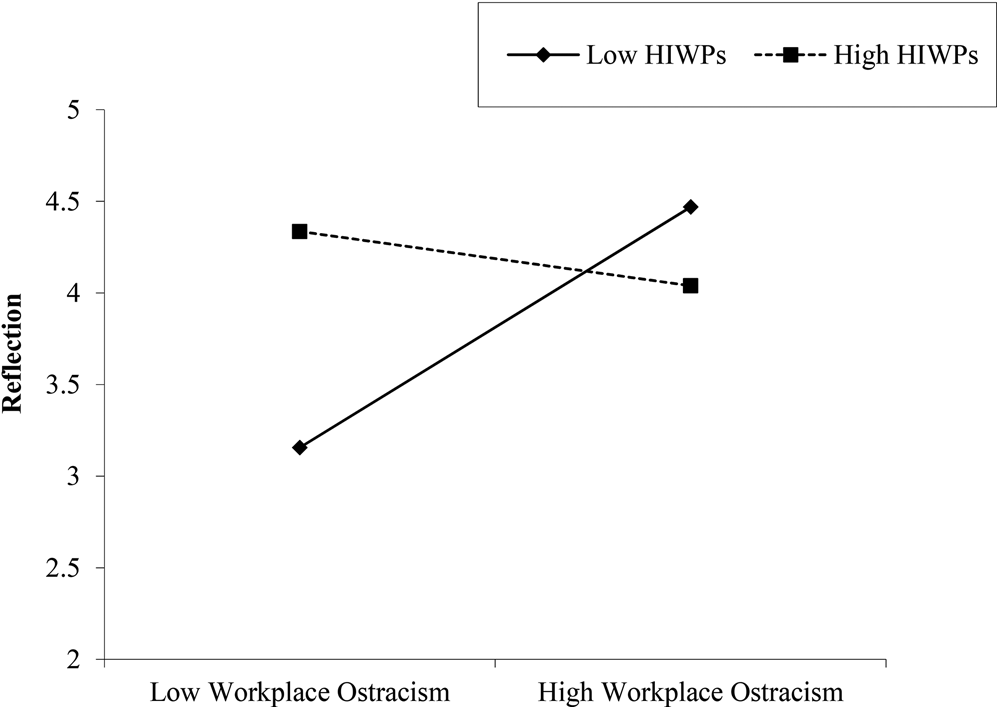
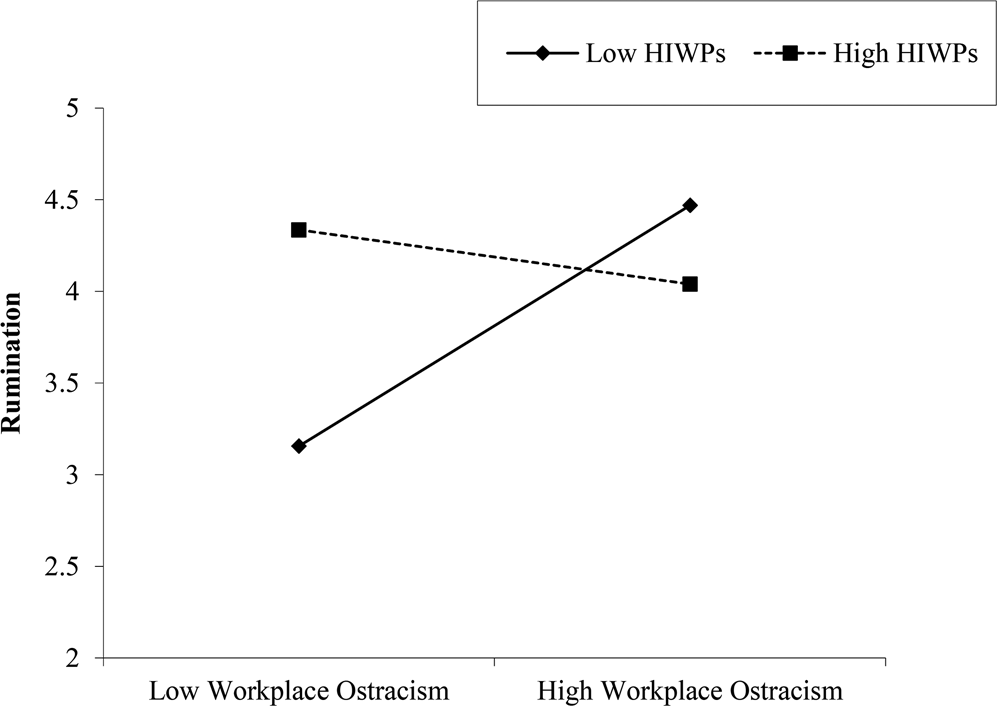
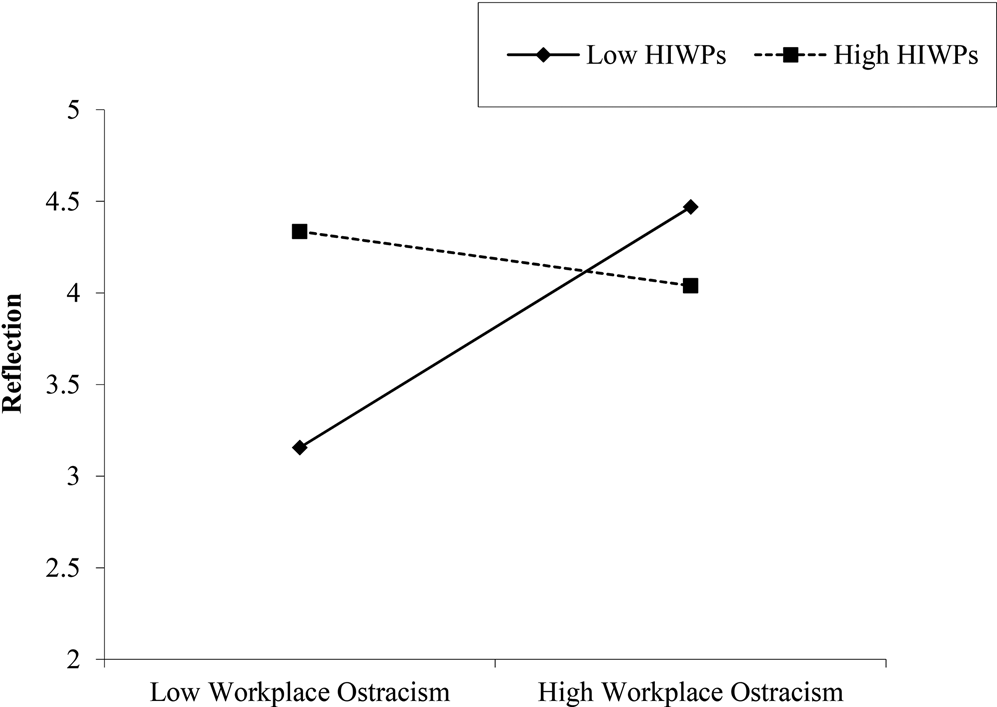
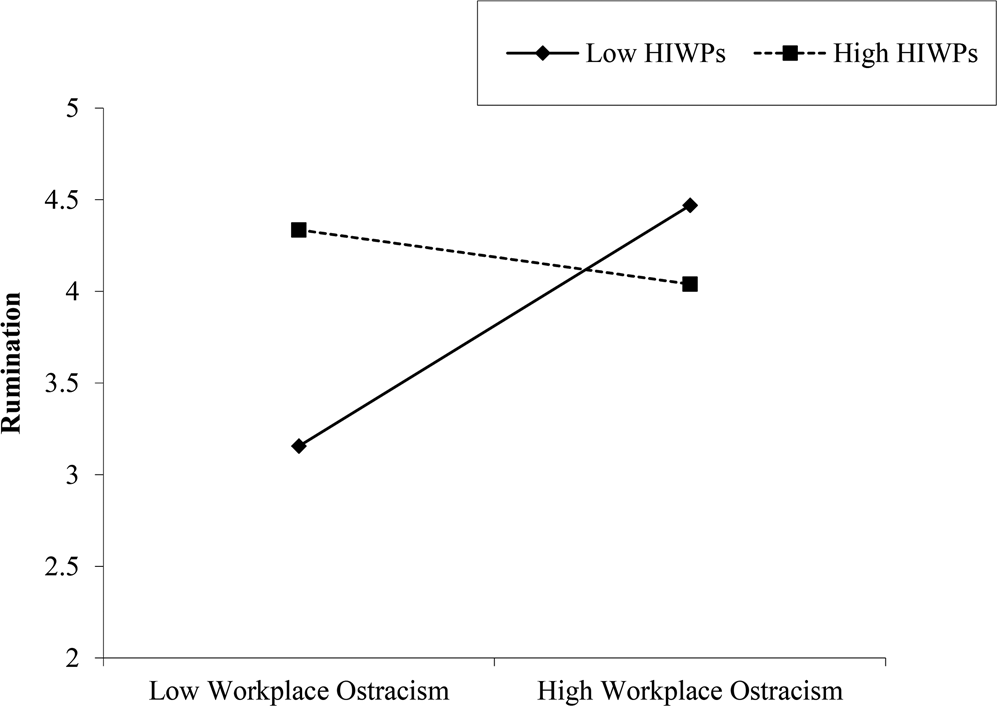
We also tested whether HIWPs moderated the relationship between workplace ostracism and self-reflection at the team level. As shown in Table 4, the moderating effect of HIWPs on the linkage between workplace ostracism and reflection is significant (β = .62, p < .001), thus supporting hypothesis 5a. HIWPs negatively moderated the relationship between workplace ostracism and rumination (β = −.60, p < .001), supporting hypothesis 5b. The simple slope test of this interaction is presented in Figures 2 and 3. As shown in Figure 2, with a low level of HIWPs, the relationship between workplace ostracism and reflection is stronger (β = −.69, p < .001) than that with a high level of HIWPs (β = .02, p = .74). As shown in Figure 3, with a low level of HIWPs, the relationship between workplace ostracism and rumination is stronger (β = .66, p < .001) than that with a high level (β = −.01, p = .90).
Hypotheses 6a and 6b predict that HIWPs moderate the linkage of workplace ostracism → self-reflection → team members’ creativity.
Interaction of workplace ostracism and HIWPs on reflection.
Interaction of workplace ostracism and HIWPs on rumination.
We utilised a Monte Carlo simulation procedure to estimate the conditional indirect effects and 95% confidence intervals (see Table 5). Specifically, we found that the differences between the linkages of ‘workplace ostracism → reflection → team members’ creativity’ across the different levels of HIWPs is significant (diff = .44, p < .001). Thus, hypothesis 6a was accepted. We also found significant differences between the linkages of ‘workplace ostracism → rumination → team members’ creativity’ across different levels of HIWPs (diff = .15, p < .001), supporting hypothesis 6b.
Analysis of moderated mediation effect

Note. N = 393.
*p < .05; **p < .01.
Discussion
Ostracism occurring in the workplace domain is a negative experience increasingly recognised as detrimental to employees’ psychological wellbeing and work-related outcomes (Chen & Li, Reference Chen and Li2020; Qian et al., Reference Qian, Yang, Wang, Huang and Song2019; Wu et al., Reference Wu, Qu, Zhang, Hao, Tang, Zhao and Si2019). It has been reported to cost organisations billions of dollars every year (Bennett & Robinson, Reference Bennett and Robinson2000). In this research, we theorise and test one downstream consequence of workplace ostracism by taking a particular focus on creativity-critical to organisations’ overall sustainable development. Drawing from a multilevel analysis, our results show that workplace ostracism indirectly influences team members’ creativity through reflection/rumination, and that HIWPs moderate the influence of workplace ostracism on reflection and rumination. The findings fully support our hypotheses and provide important theoretical and practical implications to both organisations and work teams.
Theoretical implications
The originality of our research first lies in the clarification of the underlying mechanism that captures how workplace ostracism influences team members’ creativity. In the available research, the mediating mechanisms are largely drawn from processes specific to creativity, such as creative process engagement (Kwan et al., Reference Kwan, Zhang, Liu and Lee2018) or creative self-efficacy (Tu et al., Reference Tu, Cheng and Liu2019), and hence limited to capturing generic, self-regulatory functions that individual employees resort to in response to a workplace context characterised by ostracism. We base our hypothesis development firmly on SCT (Bandura, Reference Bandura1986, Reference Bandura2001) to develop a model depicting the underlying mechanism through which ostracism exerts its effects by influencing reflection and rumination. Specifically, we identify reflection and rumination as important mediators in the relationship between workplace and team members’ creativity based on SCT.
On the one hand, this finding complements the conservation of resources theory (Babalola, Kwan, Ren, Agyemang-Mintah, Chen, & Li, Reference Babalola, Kwan, Ren, Agyemang-Mintah, Chen and Li2021) and social control theory (Jahazeb, Bouckenooghe, & Mushatq, Reference Jahazeb, Bouckenooghe and Mushatq2021) used in previous research on ostracism. On the other hand, it adds to the emerging research that applies a SCT view to understand the implications of ostracism (Tu et al., Reference Tu, Cheng and Liu2019) and provides empirical evidence towards the line of research that suggests that when individuals are excluded, the experience negatively affects their cognitive processing and subsequent work-related behaviours (Chung, Reference Chung2015; Twenge, Catanese, & Baumeister, Reference Twenge, Catanese and Baumeister2003). Applying SCT in the context of negative social interactions (workplace ostracism here) answers the calls from previous researchers (e.g., Robinson et al., Reference Robinson, O’Reilly and Wang2013) for researchers to pay more attention to enriching understandings of the mechanisms that explain the impact of workplace ostracism on important employee outcomes.
A further contribution of this research is to provide a more nuanced understanding of how workplace ostracism negatively influences team members’ creativity by investigating the boundary condition of an important organisational context (i.e., HIWPs). Again drawing from SCT, we have shown how the organisational factor of HIWPs buffers the detrimental effects of workplace ostracism on creativity. In SCT terms, HIWPs can be seen as a contextual factor that offers team members an environment with more autonomy, enabling them to engage in positive problem-focused reflexivity (Daniels, Tregaskis, & Seaton, Reference Daniels, Tregaskis and Seaton2007). Our study provides empirical support for the importance of HIWPs in organisations when tackling ostracism. It also concurs with research on negative workplace experiences in general in suggesting that human resource practices, when integrated with purpose and meaning, can serve as a viable solution to reduce harm and manage conflicts (Tornroos, Salin, & Hanson, Reference Tornroos, Salin and Hanson2020).
Furthermore, this research makes a positive contribution by responding to Ferris, Lian, Brown, and Morrison’s (Reference Ferris, Lian, Brown and Morrison2015) call for more research to seek effective buffers to mitigate the negative effects of ostracism. The value of investigating the boundary condition of the indirect effect of workplace ostracism on creativity provides a fine-grained understanding that it is not just social interactions such as ostracism that matter – in the context of adversity, workplace ostracism interacts with HIWPs to influence the downstream consequences of team members’ creativity. The knowledge of this interaction effect is important because both workplace ostracism and HIWPs are organisational factors extrinsic to employees. They capture an organisational reality that a workplace can be characterised by the co-existence of positive formal organisational programmes (e.g., HIWPs) and negative informal social interactions (e.g., ostracism). Therefore, this study makes novel contributions to the literature on ostracism by showing how two extrinsic factors interact to influence employees’ self-regulatory processes and subsequent creativity.
Practical implications
Our findings offer several implications for practice. First, organisations should pay more attention to the phenomenon of ostracism in teams and provide appropriate interventions to control its negative effects. Such interventions include, but are not limited to, identification of team members who are often excluded by others, psychological assistance and counselling for rejected team members, establishing monitoring and complaint mechanisms, and encouraging excluded employees to actively seek support and help, such as reporting workplace ostracism to their manager.
Second, our findings show that reflection mediates the relationship between ostracism and creativity. If companies intend to improve creativity, they need to enhance team members’ individual reflection and reduce their rumination. This is because workplace ostracism not only directly affects creativity but also indirectly affects it by reducing reflection and enhancing rumination. Therefore, enterprises may provide team members with training on self-reflection, thereby facilitating creativity. Furthermore, they could provide various information exchange platforms for team members. They may also establish work environments suitable for individuals to engage in reflection. Additionally, they need to make efforts to reduce the level of stress in workplaces, since a stressful environment may lead to self-rumination, which is detrimental to employees’ creative performance.
Finally, to weaken the negative effect of workplace ostracism on rumination, enterprises should strive to improve HIWPs. In this regard, they need to pay attention to the impacts of corporate policies, especially training plans and performance system, on team members’ individual benefits. They also need to care about team members’ individual psychological needs and family life, and build an atmosphere of harmony, tolerance and respectful communication. These practices could mitigate a workplace atmosphere of exclusivity, and thus reduce team members’ perceptions of exclusion. Eventually, this would enhance organisational innovation and result in sustainable competitive advantage.
Limitations and future research
This research has several limitations, which offer important research directions. First, the current study collected cross-sectional data to verify the linkage among workplace ostracism, self-reflection (reflection and rumination) and team members’ creativity. However, such data make it difficult to identify a causal relationship among the constructs. Future studies may collect data by using a longitudinal design to further verify our findings. Second, future research may seek to identify other mediators or moderators for the relationship between workplace ostracism and creativity. This could provide a better understanding of the mechanism through which workplace ostracism decimates creative outcomes. Finally, we conducted our study in a single country, China. Future studies may seek to investigate whether our findings can be generalised to other countries.
Conclusion
This study has added to extant research on creativity by theorising and testing how and when workplace ostracism influences creativity at work. The findings provide fresh insights into the underlying mechanism (i.e., reflection and rumination) and boundary condition (HIWPS) through which workplace ostracism undermines team members’ creativity. We hope the current work inspires future research to further explore the self-regulatory processes that employees engage in response to workplace ostracism and broaden the investigation of its potential implications for employees, teams and organisations.
Financial support
This research is partly supported by The Fundamental Research Funds for Central Universities in China (Grant No. 2017XKQY087), The Humanities and Social Sciences Research Funds of the Chinese Education Ministry (Grant No. 17YJA630104), The Social science Research Funds of Jiangsu province of China (Grant No. 19GLB014) and The Double First-Class Initiative Project for Cultural Evolution and Creation of China University of Mining and Technology (Grant No. 2018WHCC03/05).
Conflict of interest
The authors have no conflict of interest.
Ethical standards
This study has compliance with ethical standards.