
I was pleased to be given the opportunity along with our President Pat Smedley to attend the 11th Irish Anaesthetic and Recovery Nurses Association (IARNA) Conference on behalf of British Anaesthetic and Recovery Nurses Association (BARNA). Kilkenny is Ireland's most beautiful historical medieval city, a hub for arts and Irish culture and of which I wished I had more time to enjoy.
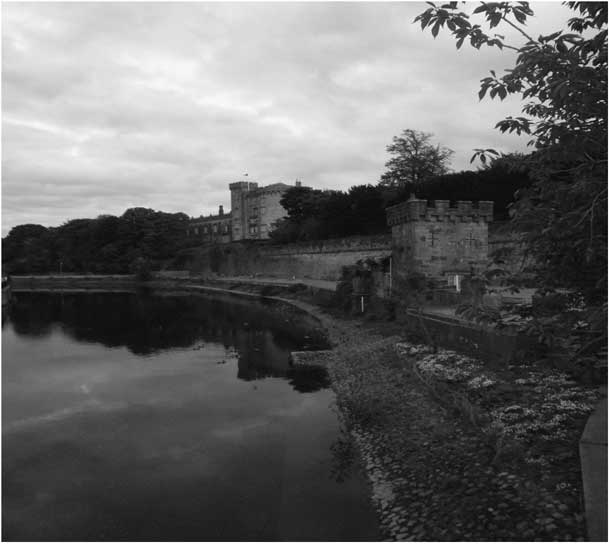
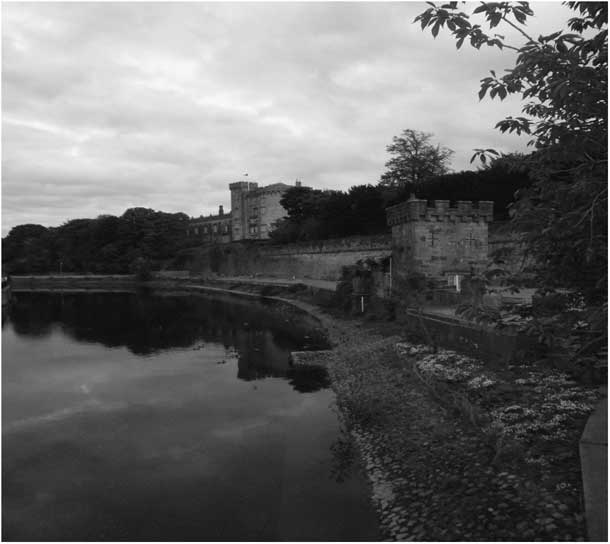
Kilkenny castle.
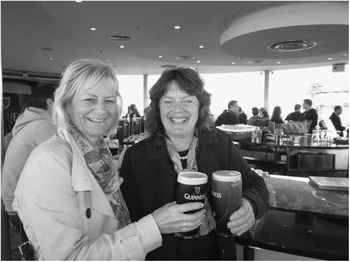
This was my first visit to Ireland and I landed in Dublin after an early morning flight with enough time to take an open top bus around the city of Dublin before meeting Pat at the famous Guinness Storehouse for a whistle top visit. We reached the 7th floor to enjoy a perfect pint of Guinness while taking in the breathtaking panoramic 360° view of Dublin city. Of course it would have been rude not to! We then took our onward journey by train.
President Pat Smedley and Pauline Guyan at the Guinness storehouse.

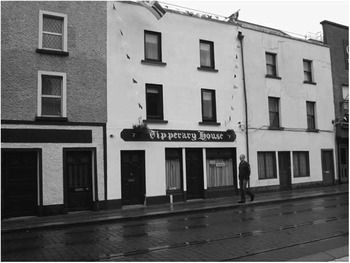
What struck me on this visit was how friendly and chatty everyone was, which of course I have always associated with the Irish people. Even the gentlemen at Tipperary House in Dublin who took in my suitcase for a few hours (as there was no left luggage at the station) could not be kinder but did cause some amusement! I think it could be said he was homing in on an opportunity in the downturn in this economic climate. There was no advertising at the B&B so I rang the bell on the closed outside door. Out popped an elderly gentleman saying ‘do you want to leave your case?’ As I caught sight of the storage area and lounge. I agreed with some trepidation on the table in the hall was a dish of mints and some business cards, which looked quite out of place; however, I exchanged the small suitcase for a raffle ticket and under the stairs disappeared the case. Wondering if I would see my suitcase again he asked what time I would be back because he did not want to put my case to the back of the cupboard if I was only going to be a few hours. Mine was the only one in there! However, when I called back he was there, cheerful, chatty and showed a genuine interest in my visit and he was now five Euros better off!
Tipperary house.

After a lovely warm welcome from IARNA Chair Ann Hogan, the committee and a good night's sleep, conference commenced early with airway workstations. Our opening chairperson Ann Marie Garbutt, Director of Clinical Services (Nursing), from Aut Even Hospital in Kilkenny registered the theme as ‘Through continuous Professional Development to Clinical Excellence’, which she continued by suggesting that continuous professional and personal development should be our ‘norm’.
The opening address by Jim Collins, an external Lean lecturer from the University of Limerick and Grace Reidy, a National lead for The Productive Operating Theatre (TPOT) delivered on management systems for improving strategy, safety and quality and are now being used in healthcare to enhance the pathway for patients. I listened with interest as I was aware that the LEAN system started in manufacturing industries and was keen to learn how this is now being applied to healthcare. Lean is an improvement approach to improve flow and eliminate waste that was developed by Toyota. Lean is basically about getting the right things to the right place, at the right time, in the right quantities, while minimising waste and being flexible and open to change. An interesting figure given was that, for every dollar, 75% is spent on non-patient care activities! It was stressed that this was not purely about cost reduction but is about being clear about the value seen from the patients’ and caregivers’ perspective. Frontline staff are crucial to embedding this in the workplace.
This system has been in operation in Bolton Hospital, United Kingdom for 10 years now and may be worth contacting for those wishing to learn more about this system and if you choose to develop in this programme you may secure a coloured belt similar to that of Judo, black, yellow or green it seems.
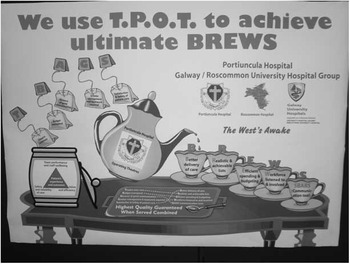
TPOT poster.
TPOT = The Productive Operating Theatre.

TPOT, discussed by Grace Reidy also looks at improvements to patients’ experience and outcomes of care bearing in mind safety and reliability of care; team performance; staff well-being; value and efficiency. It utilises Lean and concentrates on the ‘How’ not the ‘What.’ The positives of this programme shows that without measure we cannot show improvement; by using data we can understand progress and identify opportunity.
Both sessions were very interesting from a managerial aspect but also for the frontline staff nurses it is good to know why these processes are utilised in our hospitals and the value of the staffs input and innovative ideas.
Chris Price Immediate Past President of American Society of PeriAnesthesia Nurses (ASPAN) followed with a very thorough run down of the opportunities available to peri-anaesthetic nurses in the States in order to expand and develop professionally within this environment. These include some roles that are mirrored in this country such as Clinical Nurse Specialist, Clinical Practice Leads, Clinical Researchers and Facilitators. All will contribute to evidence-based resourcing for nursing colleagues and benefit patients, institutions and the communities.
During the course of the morning and into the afternoon, we turned to more clinically based subjects commencing with Myrna Mamaril who is currently the Nurse Manager of the Paediatric Pre-Op Unit and Post-Anesthesia Care Unit (PACU) at the John Hopkins Children's centre in Baltimore, Maryland. Myrna took us through the American Society of Anaesthesiologists (ASA) physical status and assessment from Grade 1 (normal and healthy) to V1 (clinically dead and kept alive for organ harvesting) and the ‘E’, which is used to modify any of the other grades if having emergency surgery. Capt. Mamaril is a commissioned Nurse Corps Officer in the US Navy Reserve and has recently served as a Critical Care Trauma Nurse as well as the Director of Nursing Services at the NATO Role 3 Multinational Medical Unit in Kandahar, Afghanistan. She kept us thoroughly engaged with some of her experiences while out there. Although some were very sad and scary, there were some lovely good news stories mainly due to the commitment, knowledge and skills by all those serving and caring out there.
Dr Niall Kavanagh, a Consultant Anaesthetist at St. Lukes Hospital, Kilkenny spoke to the delegates on peri-operative haemodynamic monitoring. There is a large variation in mortality levels and the level of monitoring is related to the outcomes. He suggested that high-risk surgical groups have up to 30% mortality. Dr Kavanagh identified the monitors that are available for use in both theatre, PACU and intensive care units (ICUs) and how these will assist in management of fluid responsiveness through cardiac index by measuring ‘beat to beat’ stroke volume. He stressed that the pre-load was the most important parameter that we have to get right, if the patient is to do well. He went on to give practical indications for identifying when fluid challenges were required to optimise patient outcomes.
Dr Niamh Hayes currently working in Rotunda and Mater Hospital in Dublin, informed us about the number and causes of obstetric deaths and emergencies in Ireland but in particular in the Rotunda Hospital. The seven noted were due to emergencies such as airway management, opioid toxicity; incompatible blood transfusion; aspiration, haemorrhage and post-cardiac arrest due to cardiac irritability. She demonstrated through evidence that regular skills and drills training have been effective in addressing such emergencies and reducing deaths. She promotes a team-based multi-professional emergency drill training course and reports that similar programmes in other settings have improved maternal and neonatal outcomes and are now examining the impact on adverse events in their hospitals. For those that may be interested in an important paper that has been orchestrated in this work; T. Draycott et al (BJOG: An International Journal of Obstetrics and Gynaecology, 2006) was cited. I note that there are more up to date papers relating to this in this journal.
After a very acceptable sit down lunch, Professor Richard Costella, Consultant Physician in Respiratory and Sleep medicine at Beaumont Hospital, Dublin, was given the formidable task of keeping us all awake by speaking to us on a very apt topic ‘Sleep Apnoea’. He did this admirably sharing with us the symptoms surgical patients present with and the assessments that are then vital for ensuring positive outcomes following surgery. One of his suggestions was that these patients should have continuous positive airway pressure in PACU following surgery and assess and manage the risk that opioids may present.
He was followed by a very interesting session on ‘The Opioid Tolerant Patient’, delivered by Dr Laserina O'Connor, a Registered Advanced Nurse Practitioner in pain management at the Mater Misericordiae University Hospital. Within this session, we received some very useful tips on gathering or retrieving information from the patient, not only for those that may choose to abuse this type of medication but also those taking opioids for other medical conditions such as cancer and how to give an accurate and relevant handover. She demonstrated the importance of planning with regard to continuing with, for example, methadone while prescribing additional multimodal analgesia for surgery and the planned reduction by reversing the analgesia ladder before discharge.
Interspersed with these clinical sessions, we had a more sobering subject delivered by Dr Ailis Quinlan, Head of the Clinical Indemnity Scheme who shared her knowledge on Anaesthetic Clinical claims. Surprisingly, for me these account for only 1% of claims but 80% of these can be accounted for as human factors such as poor communication, inadequate monitoring and failure to cross-check drugs or equipment. Claims have arisen from adverse events such as medication with wrong drugs being drawn up and incorrect doses administered, equipment failure or accidents, wrong site surgery whereby consent is also an issue and anaesthetic awareness (awake paralysis, syringe swaps, labelling, infusion errors) and recall maintenance phase (lack of volatile agent or nitrous-narcotic relaxant technique). With regard to the later ones, Ailis reminds us to always be professional in our communications and behaviours within the theatre.
For what appears to be an international problem, discussion pursued on whether ICU patients should come to PACU (Recovery) by representatives from four countries. Ireland (IARNA), United states (ASPAN), Denmark (DSACCARN) and Britain (BARNA). In an ideal world, PACU is not the place for ICU patients as the two areas cater for patients with differing acuity and needs. However, this is not an ideal world and with a constant pressure on beds it can be difficult for the PACU manager to refuse permission for the ICU patient (P. Smedley). Should a contingency plan be made to manage ICU overflow? (P. Lohan). Quality and safe patient care is paramount in recovery nursing and flow through the department must not be compromised (B. Buch). Can a balance be maintained between recovery and ICU patients? Discussions include utilising and achieving support from established resources such as ASPAN nursing standards and practice recommendations (C. Price) as surgery is rarely cancelled due to lack of ICU beds.
Critically ill patients frequently present in groups of 2–3 patients or more, which in Phil Logan's area is classed as a surge. Phil suggests this requires an ICU surge capacity plan should be done and the recovery room should have a contingency plan to react to this. Adequate planning and effective communication is required and responsibility taken by ICU if by definition it is an ICU patient. Patient classification will determine this.
Following on from this debate, we experienced real situations that are occurring within this critical care environment, which are putting pressure on frontline staff to undertake duties in which they feel they do not have the competencies to fulfil or are not being listened to when they voice their fears. It is hoped that through audit and open discussion the organisations here present can through standards, competencies and further open debate do something to help support staff finding themselves in these situations.
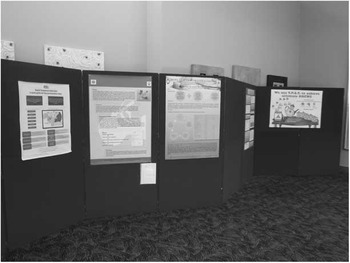
At the close of a very pleasant and informative day, prizes were issued to the winner of the poster display. A lot of hard work had been put in by all the entrants and this must have been a difficult decision for the judges. Congratulations to the winner but very well done for all of you who gave so much time to preparation. A novel way of ensuring the delegates visited all the company stands of which there were 15 to find new or different equipment and innovative ideas for safer practice resulted in a prize also.
Poster presentations.

It was with some degree of sadness we had to leave on the Sunday morning expecting a quiet trip back to Dublin on the train. A time to reflect and catch 40 winks perhaps, but alas as we got near to the station we realised we were caught up in the spirit of the All-Ireland Hurling final replay between Kilkenny and Galway. We should have realised when even the waitresses at breakfast were dressed in a colourful hurling shirt. There was, it seemed to be so much support for Kilkenny on this train, so many high-spirited youngsters and elderly alike, so much support and enthusiasm. We could not by the end of our journey hear ourselves think. At Dublin station, we were to bade them all goodbye. We boarded our bus to the airport just as the heavens opened and the supporters waiting for their buses to Croke Park were standing wet through. What a shame, but we hoped they enjoyed the match nevertheless. Cannot imagine what the train journey home would possibly be like especially as we gather Kilkenny were the winning team!
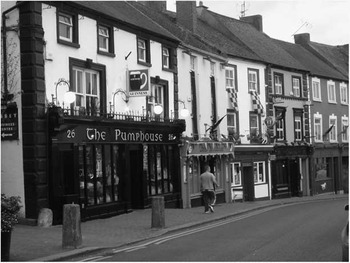
Kilkenny.