

Introduction
Human, canine and equine endurance athletic competitions are popular events throughout the world, testing the physical capabilities of these species through extreme physiological demands. Competing in these events requires extensive conditioning to improve fitness and may result in changes to the physiology of many organ systems to improve fitness. Performance failure in endurance and ultra-endurance events can result from injuries or unforeseen accidents that occur prior to or during the event, but some performance failure may be due to lack of sufficient conditioning for the physiological demands of the eventReference Hinchcliff1.
In ultra-endurance sled dog racing, veterinarians and mushers rely on pre-event physical examinations and sometimes blood testing to detect illnesses that might preclude the successful completion of such events. These procedures permit the exclusion of few dogs, but up to 50% of dogs that start ultra-endurance races such as the Yukon Quest or Iditarod are dropped prior to completion of the race (removed from the team to be transported back to the kennel). Although some of these dogs are dropped due to acquired injuries that are inevitable in an athletic event, some may fail to complete the event due to subtle illness or lack of adequate conditioning that nevertheless falls within the boundaries of ‘normal’ clinical examination. Common causes cited for dogs to be dropped from a race include dehydration, fatigue, non-specific lamenesses and gait abnormalities that could be suggestive of exertional rhabdomyolysisReference Long2.
Our belief is that within a narrowly defined population, the definition of ‘normal’ could be tightened to identify dogs that, although clinically normal, did not have sufficient conditioning to complete such an event. Our hypothesis is that resting pre-event haematology and serum chemistry values can be used to identify dogs with insufficient conditioning to successfully complete ultra-endurance exercise. To test this hypothesis, we employed routine haematological and biochemical testing of dogs less than 1 week prior to the start of the 2008 Yukon Quest, and constructed multivariate formulae that predicted the outcome (dropped vs. completed) of the dogs based on their pre-race blood testing.
Materials and methods
All procedures were approved by the Oklahoma State University Institutional Animal Care and Use Committee and the Yukon Quest International Sled Dog Race. Informed consent was obtained from the owners of the dogs before the start of the study.
The Yukon Quest sled dog race is a 1000-mile race that takes place every year in February between Fairbanks, Alaska and Whitehorse, Yukon, Canada; it alternates the start and finish locations each year between these two cities. Ambient temperatures generally range from − 50 to +30°F ( − 45 to − 1 °C). Teams comprised one musher and 14 dogs, and completed the race in between 9 and 15 days. The age of the dogs ranged from 2 to 10 years (mean 4.5 years), and most weighed between 18 and 30 kg. All participating dogs underwent a pre-race physical examination by veterinarians to be deemed healthy and athletically capable of participating in a 1000-mile sled dog race. All dogs were trained for approximately 5 months prior to the start of the race. Dogs typically had accumulated at least 1500 miles of training before starting the race.
Blood samples (8–12 ml) were collected from 162 dogs from ten teams competing in the 2008 Yukon Quest International Sled Dog Race. Mushers were allowed to have up to three additional dogs examined and tested at the pre-race physical examination. Blood samples were obtained within 7 days prior to the start of the race, at least 48 h after any training run lasting more than 2 h and at least 24 h following any transportation lasting more than 6 h. Blood samples were collected via jugular venipuncture into plain 9 ml glass tubes and 3 ml glass tubes containing 7.5% ethylenediaminetetraacetic acid (EDTA). Samples in plain tubes were allowed to clot for 30 min, and serum was separated via centrifugation and the serum fraction was removed. Samples in tubes with EDTA were chilled. All samples were taken to a local laboratory (Fairbanks Memorial Hospital) and processed within 12 h. Samples were analysed with an automated chemistry analyser (Beckman Coulter LX20 clinical chemistry analyser, Brea, CA, USA) and haematology analyser (Beckman Coulter AcT Diff haematology analyser). Completed tests on blood samples included a complete blood count, including a differential white blood cell (WBC) count and red blood cell (RBC) indices evaluation, and a complete serum chemistry panel, including blood urea nitrogen (BUN), creatinine, alanine transaminase (ALT), alkaline phosphatase (ALP), total bilirubin (TB), albumin, total protein (TP), glucose, calcium, sodium, potassium and creatine kinase (CK). Additional derived variables included the square of each variable, the ratio of Na:K and the ratio of albumin:total protein.
χ2 analysis was used to test the hypothesis that dog gender was related to finishing status. Student's t-test was used to test the hypotheses that dog age and pre-exercise analyte concentrations were different between dogs that completed the race and dogs that failed to complete the race. Logistic regression was used to derive equations that used haematological and biochemical values (as well as the derived variables) to predict the individual dog's finishing status in the race. In all cases, the raw values for the various independent variables were standardized within a kennel by dividing the individual values by the standard deviation of the values for the kennel. This is represented in the formulae by the lowercase ‘s’ appended to each variable. This standardization was done to remove variation, which may be due to different kennel management practices that otherwise tended to dominate the analysis. This inverse weighting techniqueReference Kutner, Nachtsheim and Neter3 corrected the severe heteroskedasticity problem present in the unweighted regression analysis. These standardized variables were included as potential regressors in a logistic regression analysis predicting the probability of a dog finishing the race. SAS/GLIMMIX (SAS version 9.1; SAS Institute, Cary, NC, USA) was used to conduct the analysis. Significance of the variables (P < 0.15 to stay in the model) and the optimization of fit statistics determined a candidate set of equations.
Results
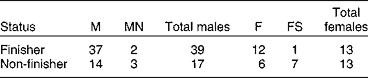
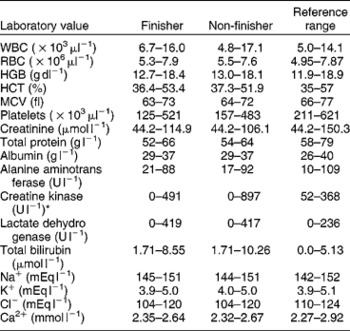
Data from blood samples of dogs that did not start the race were eliminated from the database prior to statistical analysis. All data from teams that did not complete the race were also eliminated since a team's withdrawal necessarily dictates that that team's dogs did not finish, thus biasing the results. The remaining data that represented 82 dogs from six teams were used for the construction of predictive equations. Breakdown of genders of included dogs was 51 intact males, 5 neutered males, 18 intact females and 8 spayed females (two dogs on the finishing teams were not available for sample collection prior to the race and are not represented in the database). Of these dogs, 52 (63%) finished the race and 30 (37%) were dropped at checkpoints at various distances from the start. There was no significant difference in gender between finishers and non-finishers (Table 1). The mean age of finishers (4.6 ± 1.8 years) and of non-finishers (4.2 ± 2.0 years) did not differ (P = 0.32). There was no difference in any haematological or clinical chemistry parameter between finishers and non-finishers except for serum CK, which was higher in non-finishers than in finishers (Table 2).
Demographics of study subjects
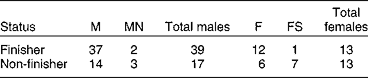
M, male; MN, male neutered; F, female; FS, female spayed. Finisher: dog that completed the 2008 Yukon Quest International Sled Dog Race. Non-finisher: dog that started the 2008 Yukon Quest International Sled Dog Race on a team that ultimately completed the race, but the individual dog was removed from the team prior to completion of the race.
Haematology and serum chemistry values (95% confidence interval) of sled dogs competing in the 2008 Yukon Quest Sled Dog Race

Finisher: dog that completed the 2008 Yukon Quest International Sled Dog Race. Non-finisher: dog that started the 2008 Yukon Quest International Sled Dog Race on a team that ultimately completed the race, but the individual dog was removed from the team prior to completion of the race. Reference range: published normal confidence interval for domestic dogsReference Latimer, Mahaffey and Prasse18. * P < 0.05 when finishers are compared with non-finishers.
Equations that best characterized finishing status as a function of haematological or serum chemistry variables were constructed. Due to the multi-collinearity of some subsets of the independent variables, specifically those related to erythrocyte abundance, RBC or a variable closely associated with RBC was included in each of the model equations. The following models were selected:


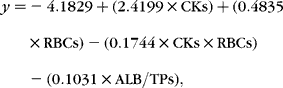
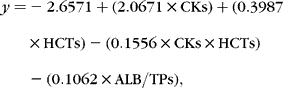
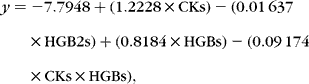
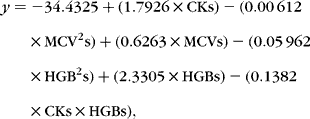
where y is the logit of p (the proportion that finishes the race). Note the estimate of p = exp(y)/[1+exp(y)]. Equation (1) was preferred since it exhibited better fit as determined by fit statistics, parameter significance and residual analysis.
All candidate equations contained elements representing erythrocyte abundance and CK. Equations (3), (4) and (6 contained expressions that used mean corpuscular volume and the ratio of albumin: total protein. No other routine haematological or serum chemistry measurements were found to have better predictive value.
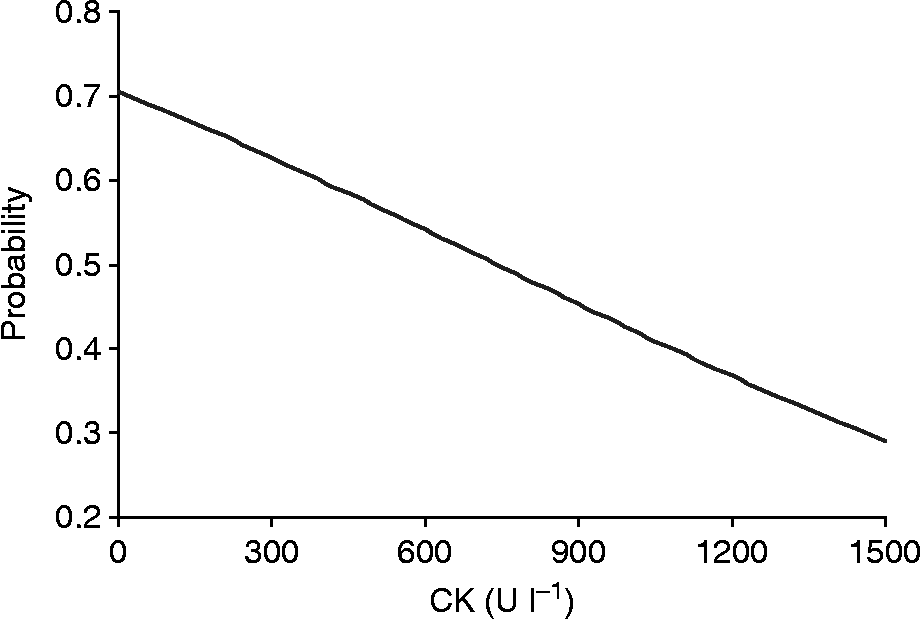
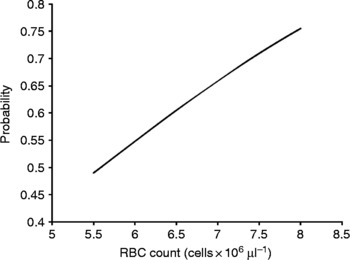
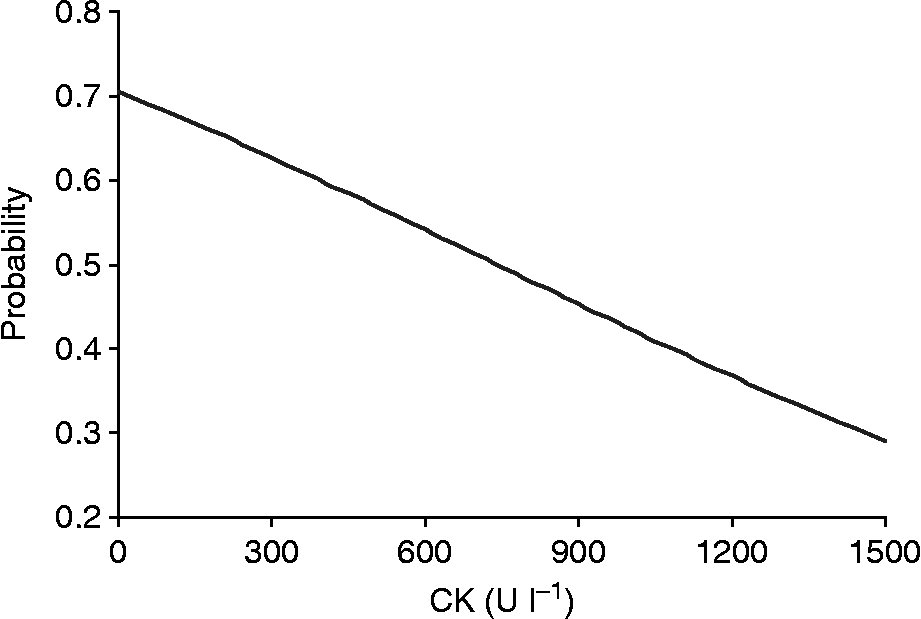
Equations (2–6) all had similar behaviour within the database. Optimal model performance was envisioned as maximizing the identification of non-finishers without excluding dogs capable of finishing; therefore, the maximum probability that yielded a negative predictive value (NPV) of 1 (probability threshold) was identified for each equation through an iterative process. Using probability thresholds of 0.4, 0.4, 0.4, 0.36 and 0.3, respectively, each of these five equations identified five non-finishers (out of 30 non-finishers in the database) without misidentifying one finisher, yielding a NPV of 1 and a positive predictive value (PPV) of 0.667. Equations (2–4) identified the same five dogs. Of the six dogs identified as non-finishers by at least one equation, three were identified correctly by all five equations, one was correctly identified in three of the five equations, one was correctly identified in two of the five equations and one was identified in only Equation (5). These equations also had similar qualitative patterns to the effects of the individual variables on calculated probability. CK was negatively associated with finishing (Fig. 1), and increased erythrocyte concentration was positively correlated with finishing (Fig. 2).
Effect of serum CK concentration on probability of finishing using predictive Equation (2), when variables in other equations are held constant at the population mean value. To evaluate CK, all other values were changed to the respective means of the entire database and standardized using the mean standard deviation calculated for each of the kennels
Effect of erythrocyte concentration on probability of finishing using predictive Equation (3), when variables in other equations are held constant at the population mean value. To evaluate RBC count, all other values were changed to the respective means of the entire database and standardized using the mean standard deviation calculated for each of the kennels

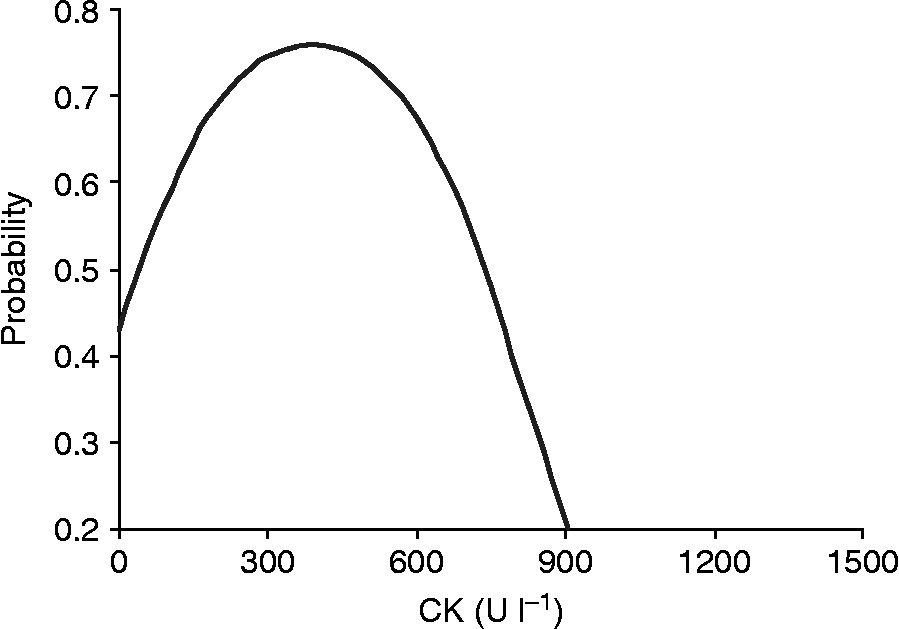
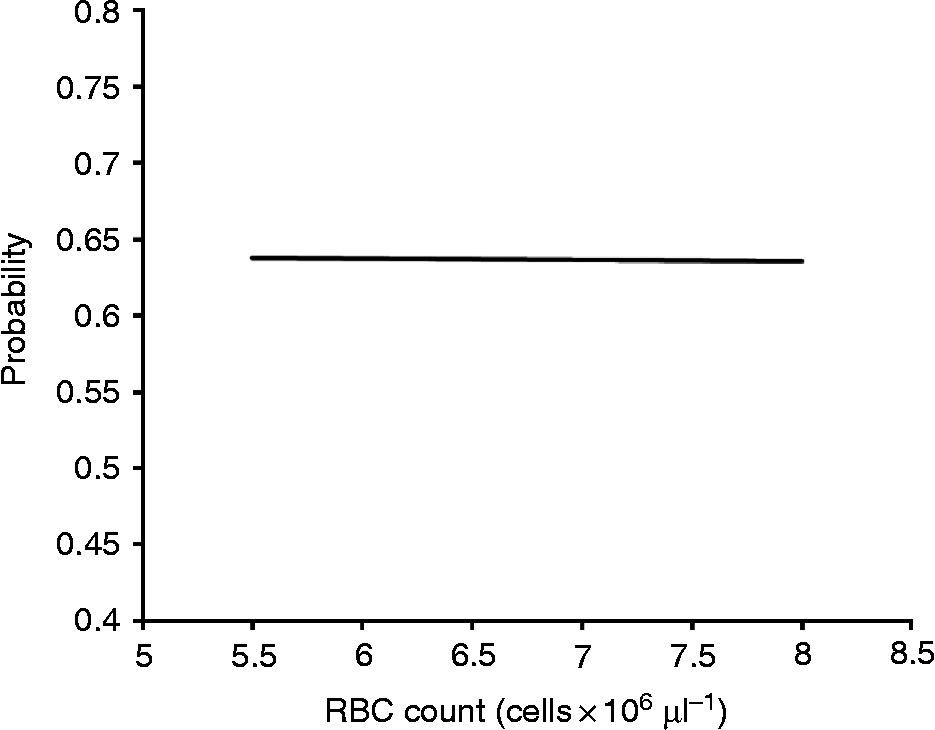
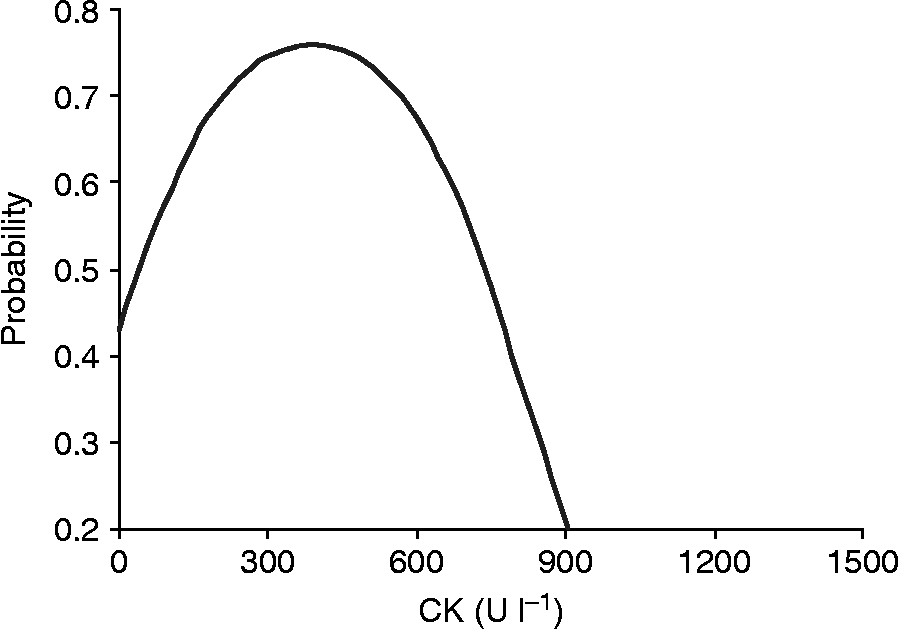
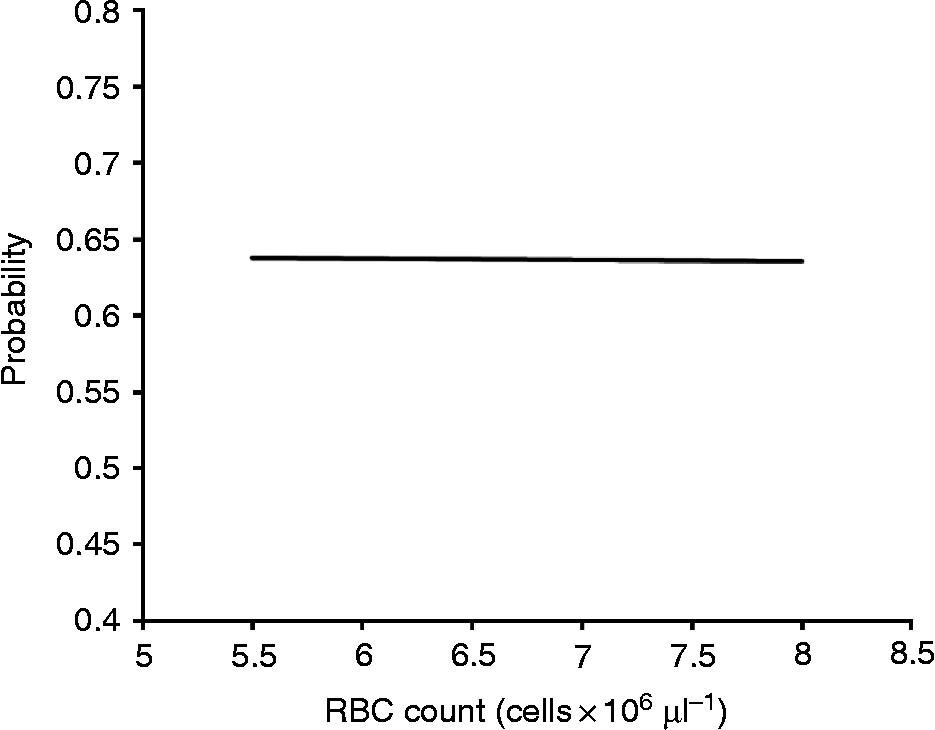
Equation (1) was strikingly different from the pattern of the other equations. In Equation (1), CK had a biphasic relationship with the probability of finishing the race (Fig. 3), with values approximately from 0 to 400 being positively associated with finishing and values 400 and higher being negatively associated with dogs with RBC at the mean value of 6.57 × 10⁶ cells μ− l. Also, despite the inclusion of two terms incorporating erythrocyte count as an independent variable, the effect of physiologically relevant variation in total erythrocyte count within Equation (2) had virtually no effect on finish probability when CK was held constant at the database mean (Fig. 4). A biphasic pattern was observed relative to haemoglobin concentration in Equation (6), but only at the highest extreme of this variable and the effect on probability was minimal. The probability threshold (0.36) that yielded an NPV of 1 also yielded a PPV of 0.68, correctly identifying seven non-finishers – the five dogs most commonly identified by the other equations, and two additional dogs that were not correctly identified as non-finishers by any of the other equations.
Effect of serum CK concentration on probability of finishing using predictive Equation (1), when other parameters are held constant at the population mean value. To evaluate CK, all other values were changed to the respective means of the entire database and standardized using the mean standard deviation calculated for each of the kennels
Effect of erythrocyte concentration on probability of finishing using predictive Equation (1), when variables in other equations are held constant at the population mean value. To evaluate RBC count, all other values were changed to the respective means of the entire database and standardized using the mean standard deviation calculated for each of the kennels
Discussion
Results of this study demonstrate that sled dogs with a lower CK and a greater erythrocyte or haemoglobin abundance (RBC, HCT or HGB) prior to a 1000-mile endurance race have a greater probability of finishing these types of races than dogs with a higher CK and lower erythrocyte or haemoglobin abundance. These results support the use of serum chemistry profiles and complete blood counts not only to identify subjects with occult disease that could be exacerbated by the stress of sustained exercise, but also to allow participants and veterinary professionals to make an educated decision as to whether or not particular dogs should be included in a race team, even if their serum chemistry and haematology values are within the published normal ranges.
Husbandry of sled dogs varied from kennel to kennel and was a potential source of variability in the study. Although we were unable to control for variables such as pre-race training, diet and other management practices between kennels, the effect of this potential variability was minimized by normalizing the values for the individual analytes within the kennel by dividing the values by the standard deviation of that analyte for the particular kennel. While this process would be necessary to compare animals from different kennels, it is not necessary to make decisions regarding the relative suitability of dogs within a given kennel.
Most racing sled dogs are Alaskan huskies, which is not a specific breed recognized by kennel clubs. These dogs are bred for specific phenotypic traits, such as protective fur coats, durable feet and athletic aptitude. This is not a representative sample population of all domesticated dogs, although pre-race haematological and biochemical values are typically consistent with normal values found in domestic dogs (Table 2). These dogs possess characteristics comparable to other domesticated dogs, yet they have been shown to have physiological differences related to the intense physical conditioning typical of this sport. For example, Davis et al. Reference Davis, Davis, Ensign, Hinchcliff, Holbrook and Williamson4 showed that sled dogs have significant decreases in erythrocyte concentration in response to training, presumed to be the result of conditioning-induced plasma volume expansion. Lee et al. Reference Lee, Hinchcliff, Piercy, Schmidt and Nelson5 showed a decrease in this population of dogs in plasma thyroxine (T4), free thyroxine (fT4) and thyroid-stimulating hormone (TSH) following a long-distance sled dog race. They also reported that rested sled dogs had T4 and fT4 values lower than the normal reference ranges for non-sled dogs. In these cases, both authors suggested new reference ranges of their respective variables for sled dogs to improve the diagnostic utility of these assays in specialized populations. The current study provides a new reference range that can be narrowly defined in a very useful manner; that is, reference ranges for common haematology and serum chemistry values for dogs capable of completing a 1000-mile exercise challenge (finishers; Table 2).
Endurance exercise has been studied extensively in humans, horses and sled dogs, but there are few to no data available in the literature that might help predict whether an individual athlete is expected to finish an endurance event. To the authors' knowledge, this study is the first to show an epidemiological association between endurance capabilities and commonly tested haematological variables when the latter are measured pre-exercise challenge. One study looked at plasma vitamin E concentration and its correlation with completion of a long-distance race. It demonstrated that dogs with elevated plasma vitamin E concentrations (>40.7 μg ml− 1) were 1.9 times more likely to finish and were 1.8 times less likely to be dropped from the raceReference Piercy, Hinchcliff, Morley, Disilvestro, Reinhart and Nelson6. This is useful information regarding supplementation of vitamin E orally; however, assays of serum vitamin E levels are not a standard piece of pre-race bloodwork.
It is not surprising that skeletal muscle health would be a major influence on endurance performance, and that serum CK concentration would thus be a predictor of performance. CK reversibly catalyses the conversion of creatine to phosphocreatine. This process consumes adenosine triphosphate (ATP) and produces adenosine diphosphate (ADP). Increases in the concentration of CK indicate muscle damage, including rhabdomyolysis, myocardial infarction, myositis, muscular dystrophy and malignant hyperthermia. The shorter half-life of CK (6 h), compared with lactate dehydrogenase (10 h) and aspartate aminotransferase (~17 h), is the best indicator of recent muscle pathologyReference Blot, Ettinger and Feldman7. Previous studies evaluating changes in serum concentrations of CK in dogs finishing long-distance exercise have shown increases in the enzymeReference Hinchcliff, Olson, Crusberg, Kenyon, Long and Royle8–Reference McKenzie, Jose-Cunilleras, Hinchcliff, Holbrook, Royer and Payton10, despite the absence of histological evidence of muscle damageReference McKenzie, Holbrook, Williamson, Royer, Valberg and Hinchcliff9. Despite the occasional “episode” (and rare fatality due to), exercise-induced increases in serum CK are documented in this population and are not generally associated with overt muscle pathologyReference McKenzie, Jose-Cunilleras, Hinchcliff, Holbrook, Royer and Payton10–Reference Piercy, Hinchcliff, Morley, DiSilvestro, Reinhart and Nelson12. In fact, it is typical to see an initial elevation in serum CK concentrations during multi-day exercise events, with subsequent progressive decreasesReference McKenzie, Jose-Cunilleras, Hinchcliff, Holbrook, Royer and Payton10, Reference Hinchcliff, Shaw, Vukich and Schmidt13. Pre-race elevations in CK are probably due to subtle injury caused by training, and the absence of these subtle elevations in the face of training may represent successful adaptation of the muscle to the training intensity.
CK isoenzymes were not measured in this study. It is possible that the cardiac isoenzyme is partially responsible for the increased overall CK concentration, although there is not a great degree of evidence on necropsy that a large proportion of these dogs have significant cardiac lesionsReference Dennis, Nelson, Cantor, Mosier, Blake and Basaraba11. Elevated cardiac troponin-I concentrations have been demonstrated in this population of dogsReference McKenzie, Jose-Cunilleras, Hinchcliff, Holbrook, Royer and Payton10, and increases in cardiac troponin-I and -T concentrations have been demonstrated in human endurance athletes, as well as changes in their electrocardiograph findingsReference Rifai, Douglas, O'Toole, Rimm and Ginsburg14. Canine troponin-I is not a typical data point on a serum chemistry panel and may not be readily accessible in helping to predict a dog's finishing status, but may be worthy of further investigation.
The role of erythrocyte abundance on endurance performance was expected to be complex. Aerobic conditioning will result in plasma volume expansion and decreased erythrocyte concentrationReference McKeever, Schurg and Convertino15, and thus a lower value could be interpreted as the presence of greater fitness for endurance exercise. However, gastric ulceration has been well documented in racing sled dogsReference Davis, Willard, Nelson, Mandsager, McKiernan and Mansell16, Reference Royer, Willard, Williamson, Steiner, Williams and Davis17 and could result in decreased erythrocyte concentration due to the presence of subclinical disease. The presence of occult gastrointestinal disease would be expected to be negatively associated with performance. In most predictive equations, the fact that described a positive association between performance and RBC count suggests a reasonably important influence of the presence of occult gastrointestinal disease on erythrocyte concentration in trained endurance sled dogs.
This study demonstrates that even in subjects with normal haematology and serum chemistry values, a dog with a higher pre-race HCT and lower CK concentration has a greater chance of finishing an endurance sled dog race of 1000 miles or more. This may hold true for events shorter in distance. These results may be conveyed to other species participating in endurance events, such as human and equine; it would be interesting to test the hypothesis in these species. These data may afford veterinary officials and mushers data as to whether to allow a dog's inclusion in a race in efforts to decrease morbidity and mortality. It may also provide predictive information regarding human endurance physiology that could be useful in many contexts.
Acknowledgements
The authors would like to thank the mushers who volunteered the use of their dogs to participate in this study, the Yukon Quest International Sled Dog Race and the Banner Health System – Fairbanks Memorial Hospital for providing logistical and in-kind support of this study. The study was funded by the American Kennel Club Canine Health Foundation and DARPA (US Department of Defense and Army Research Office).