



The word Anthropocene originates in geologic practices of stratigraphy (Malhi Reference Malhi2017), where it draws attention to the disproportionately large role of humans in transforming the Earth and atmosphere via the extraction, transformation, and transportation of resources. What, then, are the defining features of the stratigraphic record of recorded and amplified stage musics, especially the popular music forms most dependent upon heterogeneous assortments of technology? One would be disposable recorded music media – where shellac and PVC are produced, transported, used, and then dumped far afield (Devine Reference Devine2015; Smith Reference Smith2015). Another would be the technological objects that are made for and only usable in studios and stages. Although some studio/stage technologies are not regarded as disposable (e.g. higher-end outboard gear and microphones), they entail massive amounts of resources that come from afar and are consolidated into aestheticised forms. This is compounded by the sheer number of technological objects that are stockpiled and hoarded in many studios: even ‘one-room’ private studios may entail several tons of ‘gear’. Thinking stratigraphically, the sudden post-World War II presence of tons of purified tantalum, germanium, neodymium, and many other elements in North America and Europe that do not exist ‘naturally’ there (and may not exist ‘naturally’ in pure forms to begin with) is a clear marker of some kind of pronounced planetary scale effect produced in substantial part by the infrastructure of popular/recorded/staged music. Examining the broader range of sites involved with enabling the Earth to be transformed into audio gear reveals a much more pronounced planetary-scale effect, however – and considerable (but not insurmountable) problems regarding the term Anthropocene and its theorisations. Beyond the simple fact that audio technologies use energy, this examination encompasses the broader set of social, environmental, economic, and political problems that transpire with contemporary extractive and electronics manufacturing industries in general.
It is one thing to identify a set of relations between humans and resource extraction/transformation/transportation, but a term that glosses stratigraphy does not by necessity tell us anything about why such resource relations took place, or what kinds of effects they may produce beyond changes to the physical environment.Footnote 1 Even in his earliest publications on the topic, Paul Crutzen (Reference Crutzen2002, p. 23) stated that ‘the Anthropocene’ had technological origins: James Watt's 1784 design of the coal-powered steam engine. However, as Andreas Malm has argued, the conventional narrative that steam power became necessary owing to its technological superiority or insufficient human productive power falls apart when investigating the first sites where steam-powered technologies were widely adopted, for example the English cotton industry. Steam, and the first ‘automated’ industrial technology, the self-acting mule, did not truly supplant watermills and human labour power in England until the 1830s, and did so despite the added cost of coal since they enabled capitalist production to be situated in the sites of the cheapest labour markets – cities – and also enabled much greater managerial control over labourers (Malm Reference Malm2016). Therefore, even in the first paradigmatic case study of the so-called Anthropocene, the ‘need’ for fossil fuel power was not at the scale of anthropos (mankind), but rather came about since it ‘augmented the power of some people over others’ (Malm Reference Malm, Hornborg, Clark and Hermele2012, p. 119).
Malm is not alone in finding the term Anthropocene to be problematic and misleading. Other scholars have suggested alternatives: Capitalocene, highlighting the constitutive role of ‘capitalism as a way of organizing nature’ (Moore Reference Moore2016, p. 6); Entropocene, noting the role of algorithms in producing a ‘closed system’ via the liquidation and automation of knowledge (Stiegler Reference Stiegler2018, p. 51); and Technocene, showcasing how the fetishisation of technological objects leads to them standing in for interpersonal social relations (Hornborg Reference Hornborg2016).Footnote 2 Adding to this is the widespread conceptual confusion in many recent posthumanist publications over what should be uncontroversial matters (e.g. the ontological differences between nature and society or between humans and non-humans, or the question of whether economies or capitalism actually ‘exist’). For the purposes of this essay, post-postmodern ontological antics and chicken-and-egg games are the ultimate distraction from a serious and pragmatic task – a paradigmatic instance of ‘dithering while the planet burns’ (Hornborg Reference Hornborg2017). Langdon Winner, with his typical sardonic wit, puts it a different way:
The basic sensibility that emerges from the notion ‘Anthropocene’, I would argue, is one that blends a familiar, threadbare, human-centred worldview, often with lavish infusions of techno-triumphalism, the latest version of a narrative tradition that includes ‘progress’, ‘development’ and ‘innovation’, this time enhanced with austere rituals of hand-wringing. (Winner Reference Winner2017)
The phenomenon I investigate obligatorily involves people, economics, things, automation and technologies. I take up Alf Hornborg's call to understand things as things – and not as representations of representations of things – within political ecologies, while resituating his arguments and expanding their purview within electrical engineering and resource ecology literatures. I provide a material-semiotic account of a fairly conventional ‘British’ microphone preamp, focusing on two essential materials without which the object could never exist – its capacitors and the solder used to electrically connect components – to reject the cop-out of regarding technological objects, their components and resources as ‘hyperobjects’ that lie beyond human comprehension (Morton Reference Morton2013). Before doing this, I will detail a view of the Anthropocene extending from electronics components outwards, analyse how electronics are typically understood within STS and music studies, establish the resource ecology and political economic framework for how I assess a piece of mundane audio gear, and discuss my specific methodology and research process.
The Anthropocene I investigate arises when metallurgy, manufacturing and the long-distance transport of resources and technologies become organised around capitalist logics – and when human–human social relations are replaced by relations between things. This does not encompass the entirety of the Anthropocene, but by restricting ourselves to this specific interplay between material practices (resources to gadgets) and psychological desires (a dehumanised sociability) we can demystify and defetishise technological objects, and articulate a pragmatic ethical account of the technologies essential to post-1920s popular music that better understands them as technical individuals (Simondon Reference Simondon2017). Thinking through tangible anthropocenic formations forces us to articulate direct linkages: holes in the ground and human/biological/zoological calamities at specific sites within the DRC and Indonesia, toxic waste seepage at smelting and component manufacturing sites in the United States and China (among a broader set of sites) directly led to this black box sitting at a recording studio in the anglophone first world. Adopting such a global accounting (Smith and Mantz Reference Smith, Mantz and Kirsch2006) is imperative for understanding the ontology of recorded and amplified music and its technologies, and clarifies whether adopting yet more extractivist technologies is ‘worth it’ in relation to the purported sociopolitical and aesthetic gains of this music. Whilst the Anthropocene transpires at a planetary scale, it is not experienced the same by everyone, just like the uneven resource and monetary flows that are constitutive of the Anthropocene to begin with:
The Anthropocene as caused and experienced by a Western urbanite is very different from that experienced by an African subsistence farmer, for example; however, much Anthropocene writing tends to refer to humanity as a collective ‘we’ that ignores and occludes huge disparities in power, impact, and the corresponding issues surrounding justice and equity. (Malhi Reference Malhi2017, p. 97)
(Re)articulating long-standing colonial maps of power, desires in first world metropolises are realised by exploiting the resource curse (Auty Reference Auty1993) and precarious labour of the third world and of the first world's own peripheries. Subsequently, first-world fetishisations of technology are sold throughout the world alongside their supporting technological objects, expanding the bedrock of desire for capitalocenic resource extractivism.
The ready-made box that you buy at a gear store is designed to conceal the stories of its resource origins. Consumers do not typically know anything about what any of the parts inside are or do, or may know a little about one part (e.g. the alleged audible signature of an esoteric vacuum tube that is widely discussed on online forums) but not any of the others. Although I had made a few audio devices from kits or schematics before and teach my students how to breadboard a three-oscillator synthesiser (Collins Reference Collins2009), I only learned the ramifications of musical-technological participation while researching this article. Accordingly, a global accounting of electronics cannot derive from nor remain within just one academic field or domain of practical knowledge. Analogue circuit layout engineers might recognise the parts and why they were chosen for the task, but would not know how the individual parts were made, what they are made of, and where the stuff came from. A component manufacturer might know how to combine refined materials, but not where the materials originated or how they were refined into a usable form. A miner removing ore from a pit knows more than anyone where resources come from, but not what happens to them after they have been sold to buyers. Environmental scientists, resource ecologists, and local communities around extraction or refining or manufacturing sites experience first-hand the ‘environmental effects’. Compounding things, since at least the 1940s, mining, resource smelting/purification, component manufacturing, design, assembly, retail, and consumption sites are likely to be located in different countries.
The Focusrite Red 8 microphone preamp: opening the (red) box
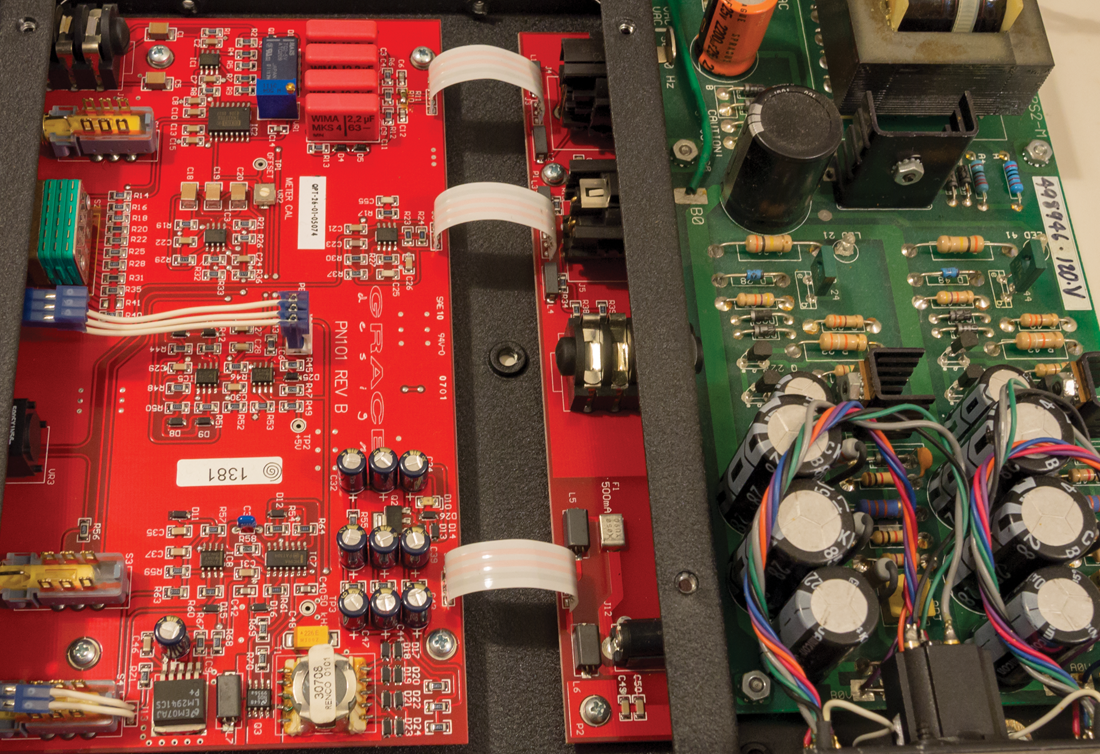
A microphone preamp is a device that takes the output of a microphone and brings it up to the standard level of other professional studio technologies. There are many ways to make a mic preamp, but every device will either use vacuum tubes or transistors (Lojek Reference Lojek2007) to do the actual amplification, alongside many standard ‘passive’ components (capacitors, resistors, diodes) used within the signal path, in the device's power supply, and in supporting the front-panel controls that make up the device's user interface. In 1993, the UK-based company Focusrite released their Red series of gear, including their Red 8 preamp (Figure 1). The circuit topology had been designed by Rupert Neve (who was no longer with the company), and the striking red panel and milled aluminium case (Figure 2) was the concept of Focusrite's tech director Richard Salter and draftsman Barry Neale. The device is credited with transforming the look of recording studio rack gear from the ubiquitous black or silver test equipment look to more unique, appealing aesthetic designs (Lockwood Reference Lockwood2019). Aside from appearances, this 1990s–2000s preamp, like most contemporaneous studio gear, incorporated a mix of older and newer technologies. The assembly is ‘through-hole’, meaning that each component has solder-covered lead wires that fit through holes on the circuit board, and someone hand-soldered it all together to electrically connect components. No attempt had been made to miniaturise things. The unit weighs in at a hefty 7.3 kilograms, which is two orders of magnitude heavier than available integrated circuits that nominally accomplished the same technical task.
Focusrite Red 8 preamp, revision 3 of the main circuit board. Photograph by author.

The red box. Photograph by author.

So what is all this stuff, and where does it all come from? Very few of the several hundred components, aside from the Swedish-made Lundahl mu-metal transformers, are specifically designed for musical purposes; they can be found on all manner of electrical devices. We know precisely where a few components were manufactured (e.g. Wima's German-made capacitors and Signetics/Phillips’ French-made NE5534 operational amplifiers [opamps]),Footnote 3 but the dozens of other tantalum and aluminium electrolytic capacitors, metal film resistors and diodes are more nebulously ‘from Asia’. Where did the components manufacturers themselves get the raw materials for their parts? Knowing that there are often substantial ethical and environmental problems involving resource extraction and electronics manufacturing, what stories can be told about this Focusrite box assembled in 2002, or about any of the other audio or synthesiser gear that we work, play and teach with? Beyond the energy it consumes while in use in a studio, what specific contribution (environmental, economic, and/or sociopolitical), if any, did this device make towards producing the Anthropocene itself?
Technological origins are discussed to a limited extent within academic literature (Wurtzler Reference Wurtzler2007; Sterne Reference Sterne2012), but the geographical purview of these works rarely moves beyond the locale of design and final assembly. STS applications towards music studies, especially those using the SCOT (social construction of technology) paradigm, have been engaged in opening up the ‘black box’ of technology (Pinch Reference Pinch1992) predominantly by attending to its ‘social construction’ (Pinch and Bijker Reference Pinch, Bijker, Bijker, Hughes and Pinch1987; Harkins Reference Harkins2019) through recourse to the human mediators involved in the design, distribution, and use of the black boxes. However, the blatantly obvious black box that has not been opened up is the metal case of the black box itself (or, here, a red box). Doing so reveals stuff that comes from dozens of countries in South and Central America, Africa, Central and Southeast Asia – places not typically regarded as having a constitutive role in technological production. Attending to this decentres the typical teleological invention narrative (Pinch and Trocco Reference Pinch and Trocco2002; Patteson Reference Patteson2016) or the alleged genius of (nearly always) male tinkerer-inventors.Footnote 4 It situates these objects and the ‘stuff’ inside them with recourse to the resource ecologies and political economies that made their very construction possible. This additionally provides a necessary corrective to the terms of the debates about the role of certain cheaper objects, especially digital things, in ‘democratising’ music production, which for proponents (Goodwin Reference Goodwin and Frith2004) and sceptics (Théberge Reference Théberge1997) alike have been excessively focused on technological consumers. Beyond technological use, modes of labour organisation such as the maker/DIY movement encouraged previously underrepresented groups (most notably women and residents of once-peripheral Eurozone countries such as Latvia and the Czech Republic) to participate in technological object design and assembly – a ‘movement’ alternately represented as ‘democratising’ (Flood Reference Flood2016) or more pessimistically as a ‘rapacious consumerist ouroboros’ (Wasielewski Reference Wasielewski2017, p. 148). If the use or assembly of technological objects might be in some way democratic, for whom is it democratic and in what ways, and who is excluded from participation?
An example of the kind of ‘black-box opening’ I am advocating, and a significant inspiration for me, is Kyle Devine's essay in this journal that compares the materialities and infrastructures of three forms of recorded music media: 78 rpm shellac discs, vinyl records and MP3s. Avoiding the ‘rhetoric of digital dematerialisation’ (Devine Reference Devine2015, p. 383), or the ‘hermeneutic ecology’ (370) approach of much ecomusicological work, he argues for the contribution that political ecology could make towards understanding the entire lifecycle of recorded music media, from extractivism to landfill. His provocative conclusion provides a hint of the stakes of the recorded music industry's routine attempts to render obsolete prior recorded music formats:
In terms of political ecology, the move to a data-based musical materiality could represent a step in the wrong direction: from the use of raw materials that are relatively renewable (shellac) and commodities which are readily recycled in secondary economies (LPs) to delivery infrastructures that weigh heavily on the environment (server farms) and musical commodities with short life expectancies (accessory electronics) and ambiguous afterlives (MP3s). (Devine Reference Devine2015, p. 384)
Although representative of a different conceptualisation of political ecology, this reminded me of a statement made by David Graeber concerning the ideology of consumption:
Society can thus be seen as a gigantic engine of production and destruction in which the only significant human activity is either manufacturing things or engaging in acts of ceremonial destruction so as to make way for more, a vision that in fact sidelines most things that real people actually do and insofar as it is translated into actual economic behaviour is obviously unsustainable. (Graeber Reference Graeber2011, p. 502)
Political economies and resource ecologies
My research initially serves as an instantiation of what Smith and Mantz term global accounting, a proposed social science field that analyses ‘explicit and intelligible commodity flows’ rather than reducing or abstracting them to postmodern concepts of flexible accumulation (2006, p. 78). As such, for the purposes of this essay I am not especially interested in representations of materiality or in abstract economic theories, but instead in accounting for how we get from holes in the ground to complex contemporary technologies used in the world of music and sound, and what happens along the way to the environment, to animal and plant life, to economic livelihoods, to workers of many sorts, and to the sociocultural formations these workers live in. Mimi Sheller (Reference Sheller2014, p. 10) traces a similar arc, investigating (in part) the paradox that aluminium is simultaneously for some ‘a renaissance material for the “green” design of a lighter, recyclable set of transition technologies that will reduce our carbon footprint’, while for others is ‘a major cause of environmental devastation, warfare, and human suffering’. Complementary to this approach, Dicken et al. (Reference Dicken, Kelly, Olds and Wai-Chung Yeung2001, p. 106) argue for a relational ‘network’ methodology of studying global economies through recourse to ‘grounded mechanisms through which a web of international relationships is actually created and reproduced’. These three works, emerging respectively from anthropology, sociology and geography, suggest a wider interest within the social sciences to more accurately understand the relation between particular global flows of material, capital and labour. However, these works are unclear about the concept of ‘technology’ and its relation to economies. What happens when the aforementioned global flows coalesce into technological objects that become objects of desire?
My theoretical framing comes most directly from Alf Hornborg, who for over two decades has been relentlessly arguing for understanding technology as a phenomenon dependent upon unequal exchanges within ‘the global political economy of material flows’ (Hornborg Reference Hornborg2018, p. 6). One premise of his work is that ‘technological progress in the core has been founded on the appropriation of human time and natural space in the periphery’ (Hornborg Reference Hornborg2018, p. 6). For example, he demonstrates how the European industrial revolution, arising in large part from the lack of arable land in Europe, was only partly a result of ingenuity and ‘technological progress’ (Hornborg Reference Hornborg2016, p. 115). Rather, it was dependent upon mass slavery and the control and use of disproportionately large amounts of land and resources in the new world. He introduces the term ‘time–space appropriation’ to combine ‘the Marxian focus on the unequal exchange of embodied labour with more recent ecological concerns with the unequal exchange of embodied land’ (Hornborg Reference Hornborg2014, p. 122).Footnote 5 Capitalism, as a result, is not just a system for determining the exchange value of commodities, but rather is defined by its ‘relentless pursuit of ever higher rates of resource destruction’ (Hornborg Reference Hornborg2014, p. 133).
For Hornborg, three kinds of objects – money, commodities and machines – all constitute ‘fetishes’ since ‘they mystify unequal relations of exchange by being attributed autonomous agency or productivity’ (Reference Hornborg2014, p. 121). The fetish nature of technologies, and the material resources of which they are made, is not sufficiently recognised, however, perhaps because ‘it is difficult for most modern people to equate bounded material objects with the intangible fields of relations which make them possible’ (Reference Hornborg2016, p. 155; see also Cubitt Reference Cubitt2017, p. 65). Hornborg is quite critical of the new materialists, posthumanists, and actor-network theorists for their methodological confusion in dissolving subject–object and society–nature distinctions, and pervasive adoption of animist and fetishist tropes when attributing ‘agency’ to technological artefacts – all the while failing to attend to the conditions of the global trade in the resources necessary to make, sustain and use these artefacts. I agree that the dominant contemporary methodological and theoretical paradigms for considering the relations between people and technological artefacts such as actor–network theory (ANT, see Latour Reference Latour2005), the social construction of technology (SCOT, see Pinch and Bijker Reference Pinch, Bijker, Bijker, Hughes and Pinch1987), affordances (Gibson Reference Gibson1979), and user studies (Oudshoorn and Pinch Reference Oudshoorn and Pinch2003) are woefully insufficient, on their own or in aggregate, for doing the kind of work Hornborg is arguing for: situating these relations within political economies predicated on structural inequalities and ‘the impoverishment of people and environments in other parts of the world’ (Hornborg Reference Hornborg, Hornborg, Clark and Hermele2012, p. 21). However, approaches such as ANT continue to be potentially useful for other tasks, such as understanding the strong role of design aesthetics in changing the causal relations of actor networks – even if the subsequent attribution of agency to these aestheticised objects might be widely regarded as a result of magical, delusional or irrational beliefs (Bortolotti Reference Bortolotti and Bortolotti2018). Dismissing the fetish quality of technologies outright hampers our ability to understand why ‘consumers’ and ‘makers’ alike feel that the complexity and heterogeneity of technologies, or their alleged agentive capacities, renders them beyond our comprehension – and beyond ethical scrutiny.
Hornborg wants to resuscitate the concept of ecology to understand the contemporary machinations of capitalism at global and local scales. As he argues:
A truly global environmental history would need to systematically examine: (1) how particular constellations of cultural demand have encouraged specific strategies of accumulation and export production; (2) how such interconnected strategies of accumulation have entailed net transfers of energy, embodied land, and/or embodied labour; and (3) how these processes of extraction, production, and transport have affected societies and environments in different parts of the world-system. (Hornborg Reference Hornborg, Hornborg, Clark and Hermele2012, p. 16)
The most obvious initial site to see this intertwining of political economy and resource ecology is in the massive expansion of resource extraction in postcolonial/neocolonial nation-states, in large part a direct result of certain dominant modes of global finance. In particular, International Monetary Fund Structural Adjustment Programs and World Bank loans (Cheru Reference Cheru1992), and more recently the opaque world of private loans by Chinese state-sponsored businesses, have been tethered to the promises to privatise the natural resources of so-called ‘less developed countries’ (LDCs), opening them up to development on the part of foreign firms – especially Russian, Chinese, Canadian and Australian resource extraction companies (The Straits Times 2018). As we will see, beyond the obvious presence of massive foreign-owned mines and exodus of capital from LDCs, this consistently leads to the decline in the ability for indigenous citizens to live within subsistence or non-extractive economies, or to participate in livelihoods not tethered to foreign exports, resulting in labour moving into the unregulated field of artisanal and small-scale mining (ASM, see Lahiri-Dutt Reference Lahiri-Dutt2018), which in 2009 directly accounted for the livelihoods of 20–30 million people, and indirectly the livelihoods of 100 million worldwide (Jacka Reference Jacka2018, p. 64).
That said, centre–periphery models and totalising ideas about the neocolonial nature of this need to be nuanced to account for the different kinds of corporate actors and business practices, and the range of sites of resource extraction – not all of which are located in LDCs. Many component manufacturers (e.g. Vishay, Analog Devices, Nippon) and mineral extraction firms (e.g. African Metals Corporation) are publicly traded companies obligated to pursue shareholder interests, reduce risks and ensure short- and medium-term profitability. In contrast, key Chinese companies in the mineral supply chain (e.g. the Duoluoshan Sapphire Rare Metal Co.) are privately held, family-run businesses with considerably different business models that are better situated to weather risk and uncertainty in the short term. They can strategically mine unprofitable minerals with the goal of establishing a monopoly, monopsoly or oligopoly position that could become profitable when global demand for the mineral eventually increases. Whether their extraction sites are located in LDCs or in the United States or Europe, contemporary publicly traded mining companies that intend to continue operating in the future have considerable motivations to maintain a positive public reputation, and towards this end often put considerable effort and expense into negotiating local consent for mining contracts and providing services for mining communities (Welker Reference Welker2014), although this does not always in practice extend past the ‘corporate greenwash’ of legitimate ecological concerns (Ballard and Banks Reference Ballard and Banks2003, p. 291). The operations of mineral smelters are far less visible and documented (there is no ‘anthropology of smelting’ subfield concurrent to the ‘anthropology of mining’). Therefore, although the general principles identified by Hornborg apply to an extent, we require a nuanced, ethnographically informed understanding about specific local and transnational resource-economic formations (Ballard and Banks Reference Ballard and Banks2003).
One key theoretical concept that has been explored within economic geography, econometrics, resource ecology, and the anthropology of mining literatures since the 1990s is the ‘resource curse’, the proposition that resource-rich countries may experience slower development/growth than resource-lacking ones. Since Auty's coining of this term (Reference Auty1993), numerous studies have reaffirmed the paradox that some of the countries with the highest rates of extraction of high-value minerals continue to have among the lowest GDPs in the world, attributed primarily to modes of rent-seeking and patronage (Papyrakis Reference Papyrakis2017). For ‘developing’ countries and LDCs, pursuing large-scale mineral extraction is very unlikely to improve either the national economy or the economic livelihoods of citizens. Recent work has more critically examined the binary framing of this, noting that the effects of the resource curse are less pronounced in countries with sounder fiscal policies (Auty Reference Auty2007) or greater education in democracy and politics (Collier Reference Collier2017), and where extractive companies adopt greater ‘transparency’ initiatives (Papyrakis et al. Reference Papyrakis, Rieger and Gilberthorpe2017) – although the datasets supporting these studies did not sufficiently consider economic losses owing to environmental damage. More worryingly, the discursive trope of the ‘resource curse’ has been insidiously appropriated by corporations as part of so-called ‘corporate social responsibility’ initiatives and what Gilberthorpe and Rajak (Reference Gilberthorpe and Rajak2017, p. 198) term a ‘global ethical regime’. This enabled corporations to perversely invert the findings of social science research and prop up a self-fulfilling prophecy that economic gain should not be an expected outcome of resource extraction, although this tends to be conveniently ignored at the moment multinational extractive corporations are negotiating with local communities to create a new mine (Welker Reference Welker2014).
Methodologically, my approach to global accounting and resource ecology began with formal and semi-structured interviews with a number of gear designers and makers based in the United States, UK, Belgium, Denmark, and Australia, informal interviews with components manufacturers based in Japan and Sweden, and components buyers who buy from legal and black-market wholesale markets in China. Analysis of the specific global trade of components was aided by analysing web discussions on gear designer forums (groupdiy.com, the ‘Geekslutz’ subforum of gearslutz.com, and the DIY subforum of muffwiggler.com), where users share BOMs (bill of materials) and shopping carts for parts available at distributors like Mouser, Farnell/Newark, Digikey, Alibaba, and eBay.Footnote 6 Using this information, as well as creating my own BOMs of gear I own or use, I attempted to learn more about select supply chains through historical 10-K annual reports of major companies like Kemet, Vishay, TSMC, and Analog Devices, and through incidental discussions of supply chain issues for non-traded companies. Patent documents for electrical components and mineral refinement processes, and supply chain monitoring guidelines published by mining consortiums, provided a range of materials that should be tracked. To understand the resource extraction origins of the supply chain, I relied upon news coverage; mining industry reports; lobbying efforts by Global Witness to increase the transparency of mining operations in conflict zones and counter-measures by industry lobbying groups such as the National Association of Manufacturers; and various stages of reporting on several US Environmental Protection Agency (EPA) superfund cleanup sites. When primary sources were unavailable, I worked with analyses of the ecological, human, and economic effects of mining within the environmental, development studies, indigenous studies, and anthropology of mining literatures. For space reasons I will restrict my analysis in this essay to two ‘things’ that are vital for contemporary electronics – solder and capacitors – and then investigate two metals – tin and tantalum – which worldwide are extracted primarily in order to make these things.
Solder: tin
Tin and copper are the most important materials for connecting everything within electronics. You typically cannot use copper without tin, since copper on its own will oxidise and tarnish, ceasing to conduct electricity. The substance known as solder makes electronics assembly possible, since it melts at a low temperature, does not oxidise and conducts electricity reasonably well. Tin has always been the main ingredient in electronics solder, ranging from 63% of lead-based solder to 96% or more of lead-free silver solder. Solder also contains rosin flux (derived from pine sap or synthesised from other materials) to help the solder flow into the correct place and shape on the circuit board. Beyond this standard use, tin and tin alloys are used to prevent exposed copper on motherboards or integrated circuits from tarnishing, constitute the standard coating for all metal leads in passive and active components, and accomplish other tasks when they are part of different metal alloys. Over 50 per cent of global tin production goes into these types of electronics applications. And among the many kinds of electronics products, audio electronics use a lot of solder. Technological objects that use miniaturised surface-mount components that are wave or reflow soldered to a circuit board (Strauss Reference Strauss1998), instead of full-sized through-hole components where hand-soldered lumps of solder protrude above the circuit board, require considerably less tin (Figure 3). However, the low price of tin, the lack of a significant price difference between functionally identical components of different sizes, the habitual inertia of older artisanal assembly methods (hand vs. machine soldering), and a continuing fetishisation of through-hole gear makes minimising solder consumption not always a priority for electronics design.
Comparing surface-mount (left) and through-hole (right) assembly.
Studies of mining have not just been important for understanding the origins of electronics supply chains; they have been formative in broader developments of contemporary social science including organisational theory (Gouldner Reference Gouldner1954a), the Marxist study of worker ideologies (Nash Reference Nash1979), and interpretive anthropology (Taussig Reference Taussig1980). The first postcolonial mining sector to be analysed by multiple anthropologists was in Bolivia. Nash analyses the long-standing system by which Bolivia's integration into a world market and the colonial siphoning of resource profits led to the highest rates of impoverishment in South America. The revolutionary tendencies of Bolivian tin miners led them to develop a form of socialism that was respectful of individual values (Reference Nash1979, p. 6), and Nash's work is characterised by her reflexive representation of the ideologies of mine workers. In contrast, Taussig had not spent substantive time in Bolivian tin mines and had a more limited understanding of the actual practice of mining, but interpreted the symbolic representations of icons of el Tío – the devil – and ‘the virgin of the mineshaft’ (Reference Taussig1980, p. 147) and how they are in conflict with images of Pachamama (‘the Earthmother’) (p. 148). The site and structure of the global tin economy have changed somewhat since these studies were done. Today the highly regulated and tracked tin market has transformed from one consisting of monopoly producers to a monopsony. There is only one consumer and one ‘pipeline’ (Vogel et al. Reference Vogel, Musamba and Radley2018, p. 77), the Malaysia Smelting Corporation, which serves as the main agent increasing smelting capacity abroad (including in the DRC and Rwanda) and importing Central African tin (Diemel Reference Diemel2018).
Tin has a much longer history in Indonesia, however, having been extracted in the island of Bangka since the seventh century (by river panning methods) and becoming a key resource interest of the Dutch East India Company in 1783 (Erman Reference Erman2008). Especially after Cornwall's mines were depleted in the 1800s (Leifchild Reference Leifchild1862), tin became ‘a key element in the expansion of Europe's industrial empire into the tropical world’ (Ross Reference Ross2014, p. 455), as well as a site of imperial conflict between the Dutch, the English and the Sultan of Palembang. As was the case with many imperial mining operations, not only Bangka's residents participated in mining. Billiton Maatschappij started importing Chinese workers in the 1850s, who were encouraged to bring innovative but environmentally impactful approaches to open pit mining. During Indonesia's New Order period (1966–1998), Bangka was the location of 57% of the ‘contract of work mines’ managed by the state subsidiary PT Tambang Timah, who like Billiton continued to largely employ ethnic Chinese workers. Alongside this, considerable artisanal/informal labour was done by ethnically Malay locals (Erman Reference Erman, Nordholt and van Klinken2007, p. 180). Mining currently accounts for 5% of Indonesia's GDP, and extractive industries (including oil, gas, and metals) account for about one-third of Indonesian exports. However, the 2000s tin mining expansion in Bangka and neighbouring Belitung is less a national project than it is a byproduct of the growing post-2000 autonomy of the Bangka Belitung Islands Province regional government from the central authority of Indonesia (Erman Reference Erman, Nordholt and van Klinken2007).
Tin mining, in its present formation, is a very hazardous form of work. Mine collapses and landslides cause over 100 mining-related deaths annually in Bangka alone (Hodal Reference Hodal2012). The short-term profits from tin mining lead to long-term problems concerning potential use of post-mining sites. The removal of overburden (the layer above the desired ore, in this case, topsoil) and toxic runoff from water and air interacting with mine tailings (the 99.985% of the gravel and rock that is stirred up that does not contain sufficient tin) has rendered much of the land of Bangka incapable of efficiently growing agricultural crops (Asmarhansyah et al. Reference Asmarhansyah, Badayos, Sanchez, Sta Cruz and Florece2017), similar to the role tin mining had on topsoil degradation in Nigeria (Godoy Reference Godoy1985). Sometimes pepper plantations were directly converted to ‘tin plantations’ (Erman Reference Erman, Nordholt and van Klinken2007, p. 199). The land also became much less conducive for replanting traditional high-carbon-capture trees such as mangroves, whose land cover reduced by 55% between 1995 and 2015, representing a loss of 7,075,973 tons of blue carbon stock in Belitung alone (Hermon et al. Reference Hermon, Ganefri, Putra and Oktorie2018). However, tin mining is not just done on land anymore, and Bangka has been a key site for the suction dredging of the seafloor (Cubitt Reference Cubitt2017, p. 73), which now extends up to 8 km from the coast of the island. Within a one-year period alone, the unregulated expansion of suction dredging produced demonstrable ‘negative environmental impacts, such as sedimentation, the death of nearly 30% of the local coral reef (within one year), water contamination, coastal erosion, and pollution’, as well as destroying the livelihood of 35% or more of fishers in Bangka (Rosyida et al. Reference Rosyida, Khan and Sasaoka2018, p. 165). The traditional dusun practice fishing was important for providing food, but perhaps more important as part of the cultural identity of Bangka's residents (Rosyida et al. Reference Rosyida, Khan and Sasaoka2018). Therefore, we see how the expansion of extractive industries quite suddenly impacts not just local economies, but also cultural identities, carbon capture potential and agricultural practices. This is exacerbated by the decreasing role of the state in effectively mediating between the interests of transnational corporations and local citizens.
Components: tantalum and electrolytic capacitors
While tin has long been mined for numerous purposes and is a household word, many of the other metals and minerals used in electronics are comparatively more esoteric in origin and specific in use. Tantalum and niobium are two transition metals discovered in 1801–1802, but it was not feasible until the mid-20th century to use them for electronics or other purposes owing to the form in which they occur in nature. Tantalum and niobium do not occur by themselves; they exist only in the form of ores such as coltan (short for columbite-tantalite), which themselves appear as small deposits within pegmatite rocks and alluvial soil. Only 0.04% of coltan ore results in usable tantalum (Mancheri et al. Reference Mancheri, Sprecher, Deetman, Young, Bleischwitz, Dong, Kleijn and Tukker2018). That said, tantalum is not rare per se and like tin comprises approximately 2 ppm of the Earth's crust, but like other transition (e.g. niobium) and rare earth elements it has only been commercially mined in the past few decades. While the global trade in and supply chain for metals like gold, copper, silver, and tin are well established, these more specialised elements are typically unearthed through ‘artisanal’ mining. The global tantalum trade is ‘shrouded in secrecy’ (Bleischwitz et al. Reference Bleischwitz, Dittrich and Pierdicca2012, p. 20), meaning that global consumption ranges from being twice to more than four times higher than the officially reported figures (Manchieri et al. Reference Mancheri, Sprecher, Deetman, Young, Bleischwitz, Dong, Kleijn and Tukker2018, p. 62).
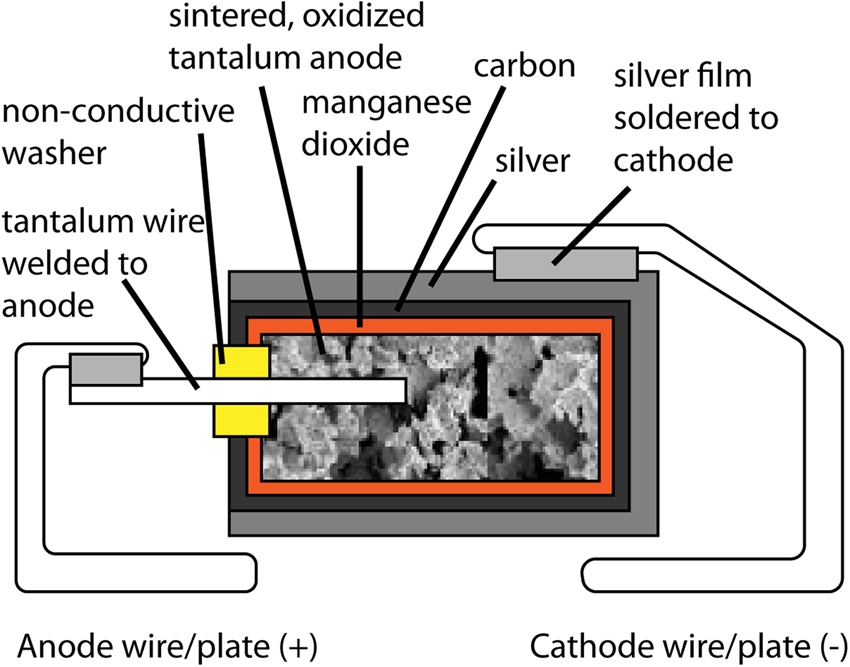
Sixty per cent of the global tantalum supply is used for miniaturised electronics components (Wakenge Reference Wakenge2018), especially capacitors, where it is critical for the practical realisation of modern electronics. A capacitor, in a gross simplification, is a passive component that stores electrical charges, where one wire is connected to the substance that stores the charge (the anode) and the other wire (the cathode) is electrically separated from the anode by insulating dielectric layers. While other materials have long been used for the anodes of electrolytic capacitors (e.g. the silver mica capacitors patented by Samuel Ruben in 1925, or the aluminium capacitors introduced on the market by Cornell-Dubilier in 1931), the relative permittivity of the tantalum pentoxide (Ta2O5) dielectric layer surrounding tantalum powder allows sintered tantalum capacitors to be smaller than those made with other substances (Both Reference Both2016; Freeman Reference Freeman2017). In other words, materials scientists located in the United States, Japan and Germany found that a desired property (permittivity) could be achieved by doing things to tantalum (purifying, sintering) and wrapping it in successive layers of manganese oxide, carbon, and silver foil, and sticking a couple of wires into the right places of the contraption (Figure 4).Footnote 7 The best known capacitor companies tend to be perceived or designated as ‘American’ (Kemet, Vishay, Cornell-Dubilier, AVX),Footnote 8 ‘Japanese’ (Nichicon) or ‘German’ (Wima). However, with the exception of Wima, all are effectively transnational, with subsidiaries managing component operations overseas (especially in China), and their overseas subsidiaries further outsourcing component manufacturing to Southeast Asia and Central America owing to the laxer environmental laws, looser workplace safety regulations and cheaper labour markets (Gevao et al. Reference Gevao, Alegria, Jaward, Beg and Harrad2010).
Dry tantalum electrolytic capacitor.
The impetus for this relocation of component manufacturing is straightforward, and has to do with the long history of massive environmental problems stemming from capacitor manufacture: many EPA superfund cleanup sites in the United States are at places where capacitor manufacturers dumped significant quantities of polychlorinated biphenyl compounds (PCBs) and volatile organic compounds, contaminating soils and groundwater, including sites operated for decades by P.R. Mallory & Co (EPA 2018), AVX, General Electric (EPA 2001) and Cornell-Dubilier (EPA 2011). The AVX (New Bedford Harbor, MA, USA) and General Electric (upper Hudson River, NY, USA) cases are two of the most extensive and expensive superfund cleanup projects of all time, with the Hudson project in part entailing the dredging of 2.65 million cubic yards of sediment from the bottom of a 40 mile stretch of the Hudson River. The making of PCBs was effectively banned in the United States in 1978 and internationally in 2001, but PCBs continue to circulate, including illegal dumping of the existing Euroamerican inventory in Africa and South America (Gevao et al. Reference Gevao, Alegria, Jaward, Beg and Harrad2010), and the local ‘vandalism’ of the Kenyan power grid where older American-made power transformers (produced in the same Hudson River plant as GE's capacitors) have been ‘stolen’ and drained of their PCB-laden oil to use for cooking oil (Iraki Reference Iraki2014). While the electrolytic capacitors used for most post-1970s audio equipment used solid dielectrics rather than toxic oils,Footnote 9 capacitors are never just bits of inert metals thrown together; their making entails considerable amounts of potentially toxic material, whether it is the sulphuric acids used for sintering tantalum or the fluoride compounds that are the primary waste of the sintering process. Importantly, many of the very same companies who once produced PCB-laden capacitors and polluted American waterways now produce tantalum and niobium capacitors in markets where their environmental effects are less likely to be monitored – or to result in financial penalties.
The outsourcing of component manufacture to LDCs conceals the more complex and transnational supply chain of tantalum, and the peculiarity that in the 21st century comparatively little tantalum originates in those mining-active countries with the highest amounts of tantalite deposits (e.g. Australia, Brazil). Most of the world's supply today originates in informal artisanal mines in central Africa, is transported to smelting and refinement operations in China (especially in Jiangxi and Guangdong), Kazakhstan and elsewhere, and ends up in a resource market controlled by Chinese corporations. China's role in tantalum–niobium trade arose less because of any deliberate attempt to create a monopoly market than owing to the idiosyncratic relationship between corporate reputation management and the voluntary reporting requirements that emerged from a patchwork of national and transnational regulatory policies (Cuvelier et al. Reference Cuvelier, Bockstael, Vlassenroot and Iguma2014). Understanding why and how regulations came to take the form that they did is far from intuitive.
Beyond its vitality for miniaturised electronics, tantalum became publicly known and much demonised owing to its alleged role in the financing of the Second Congo War (1998–2003), a war originating in the DRC that expanded to nine countries and led to the death of over 5 million people (Stearns Reference Stearns2012). While certainly not the only war associated with the extractive industries, the Second Congo War led, somewhat belatedly, to an unusual set of national and international regulations. Citizens in the Global North inadvertently became aware of tantalum supply chains in 2000 when Sony was unable to meet demand for their PlayStation 2 game system owing to a shortage in the global supply for tantalum (Smith Reference Smith2011); the subsequent spike in the price of tantalum in turn encouraged the expansion of coltan and cassiterite ore mining in the DRC and the broader Great Lakes region. However, most of this mining was, and continues to be, artisanal, consisting of informal networks of miners using basic hand-tools who are typically independent or sometimes affiliated with a mining cooperative. They sell coltan and cassiterite ore to middlemen known locally as comptoirs and negociants (Manchieri et al. Reference Mancheri, Sprecher, Deetman, Young, Bleischwitz, Dong, Kleijn and Tukker2018; Diemel Reference Diemel2018). Awareness of the importance of three specific materials – tantalum, tin, and tungsten – in funding the militias and elites that were responsible for the killings, as well as the systems whereby ‘mineral wealth is exchanged for drugs and guns’ (Jackson Reference Jackson2002, p. 519) led to subsequent efforts on the part of Global Witness and other non-governmental organisations to define the term ‘conflict resources’ and create international pressure to stop the financing of human rights abuses. Beyond killings, mining was directly linked to many other long-lasting devastating phenomena, including widespread bodily mutilation and rape (Hunt Reference Hunt2008), the collapse of local agricultural economies (Jackson Reference Jackson2002), massive toxic waste dumps and water pollution in national forests (Bleischwitz et al. Reference Bleischwitz, Dittrich and Pierdicca2012), and school/educational abandonment (Cuvelier et al. Reference Cuvelier, Bockstael, Vlassenroot and Iguma2014). It led to a greatly reduced life expectancy of mine workers, owing in part to the considerable exposure of Congolese miners to other substances found in coltan/cassiterite pits: miners were routinely exposed to unsafe levels of radioactive isotopes including 226Ra, 238U and 232Th (Mustapha et al. Reference Mustapha, Mbuzukongira and Mangala2007).
However, none of this initially led to regulations. Rather, geographical migrations of people to set up artisanal mining operations in wildlife refuges led to a frightening spike of killings of gorillas and elephants for bushmeat (Hayes and Burge Reference Hayes and Burge2003), which was the initial impetus for the local ‘Durban Process’ and the first regulations of mining in the DRC (Cuvelier et al. Reference Cuvelier, Bockstael, Vlassenroot and Iguma2014, p. 3). Subsequently, in response to the broader range of sociopolitical issues, the Organisation for Economic Co-operation and Development released a ‘due diligence guidance’ for conflict minerals (OECD 2010), and stalled legislation in the United States was rolled into Section 1502 of the Dodd–Frank reforms of financial institutions, leading to the odd situation that the US Security and Exchange Commission became tasked with regulating mineral supply chains – a domain it had previously had no involvement with. Dodd–Frank Section 1502 was in effect voluntary (as were the OECD guidelines), but publicly traded companies quickly attempted to comply with it to avoid reputational harm (e.g. the ‘blood in your smartphone’ meme). It is difficult to assess the effectiveness of Dodd–Frank, in part since it coincided with a six-month ban on artisanal mining imposed by President Kabila in the DRC, but in the short term there was no obvious reduction in the rate of killings or financing of armed groups (Stoop et al. Reference Stoop, Verpoorten and van der Windt2018). The failures of Dodd–Frank appear to stem from factors including the lack of understanding on the part of policy-makers concerning the constitution of and role of militias, regional divergences in social dynamics between the Kivus and Katanga/Bukama regions (Diemel Reference Diemel2018), an over-trust in the ability of the nascent DRC government to enforce supply chain transparency (Whitney Reference Whitney2015), unawareness of the strategies used by locals to move minerals across the Rwanda border in order to evade the supply chain tracking initiatives (Manchieri et al. Reference Mancheri, Sprecher, Deetman, Young, Bleischwitz, Dong, Kleijn and Tukker2018), and the reduction of individual miner agency in relation to authority (Vogel et al. Reference Vogel, Musamba and Radley2018). However, it did lead to the DRC government taking a stronger position against informal mining, and provided an impetus to adopt the iTSCI (the ITRI Tin Supply Chain Initiative) ‘bag-and-tag’ supply chain processFootnote 10 for tantalum (Cuvelier et al. Reference Cuvelier, Bockstael, Vlassenroot and Iguma2014, p. 5). Today, two factors keep the global price of tantalum low: the preponderance of unreported or mistagged tantalum resulting from ASM, and China's ability as the world's largest importer to continue to trade in lower-cost tantalum that is not certified as ‘conflict free’. A low global price reduces the incentives for established/regulated mining companies to engage in commercial mining or for component manufacturers to choose alternative materials (Manchieri et al. Reference Mancheri, Sprecher, Deetman, Young, Bleischwitz, Dong, Kleijn and Tukker2018, p. 67).
Tantalum provides a paradigmatic case for understanding the conflicting ethical problems (economic, health, labour, environment, inter-species) surrounding a resource (tantalum) and its main derivative form (capacitor), while attempting to apply Smith and Mantz's global accounting approach. The demand for tantalum capacitors stems from the Global North's desire for miniaturised electronics, which necessitates reliable capacitors in small surface-mountable package sizes that do not run afoul of the EPA and the EU Restriction on Hazardous Substances prohibitions. The considerable price volatility of both tantalum and niobium (an alternative to tantalum that also results from coltan mining) led to some of the largest corporate miners (e.g. Talison in Australia) suspending tantalum mining in 2008, and has discouraged established mining companies from prospecting (Bleischwitz et al. Reference Bleischwitz, Dittrich and Pierdicca2012). Global demand therefore became largely filled by ASM. In light of the demonisation of corporate mining elsewhere for numerous factors ranging from the deceptive tactics that are used to enlist local ‘consent’ for mining operations (Rosyida et al. Reference Rosyida, Khan and Sasaoka2018) to undermining labour relations and endangering worker health (Gouldner Reference Gouldner1954b; Kirsch Reference Kirsch2014; Jacka Reference Jacka2018), and producing large-scale environmental devastation within especially sensitive ecosystems (Bridge Reference Bridge2004), this could initially seem like a positive outcome. However, 21st-century transnational mining companies do have some incentives to protect (to an extent) the health of their workers, to reduce the environmental consequences in the areas surrounding the mine and to engage in some form of land rehabilitation, at least in comparison with other actors who do not have a specific concern for reputational issues. If companies repeatedly fail on these counts, they lose their power to secure new mining contracts, especially in areas with more natural resources oversight.
ASM is at times romanticised when framed as an entrepreneurial response to dysfunctional governance and income inequality, or as non-corporate (but intensely corporeal) labour that might be imagined to resist the evils of global capitalism. However, current configurations of ASM in the DRC, dependent as they are upon foreign buyers, are in no way outside of capitalism. The lack of any accountability framework and weak governance in the DRC meant that the price premium that ‘conflict free’ certification brought was offset by the illegal smuggling of ASM-mined coltan to Rwanda where it inaccurately entered the ‘conflict free’ supply chain (Moran et al. Reference Moran, McBain, Kanemoto, Lenzen and Geschke2015). Moreover, the ‘informal’ working practices of ASM miners lead to them experiencing the worst health effects (e.g. radiation-related illnesses and respiratory problems), and the unregulated nature of their work means they neither follow any best practices to reduce the environmental damage of their mining work, nor take responsibility for post-mining rehabilitation of mined land (Jacka Reference Jacka2018). As mentioned earlier, population migrations to take up artisanal mining work (more than commercial mining operations) were the specific cause of an alarming drop in gorilla and elephant populations—the specific conditions that led to the Durban Process.
Conclusion
To understand tangible anthropocenic effects, rather than attitudes towards them, it matters little what people believe about things or how they choose to represent them (or represent other people's representations of them) – it matters what things are, and how they change on account of embodied and material practices. A mic preamp, even an expensive one like this Focusrite, is nonetheless a fairly mundane object, insofar as it is assembled from generic parts that are used across a wide range of electronics. We only got to know about two of the essential parts for the preamp – capacitors and solder – but the approach is readily extensible to account for the other parts. In the case of capacitors, we only explored one of several kinds (tantalum electrolytic), and much more could be said about this building block of electronics and its importance in popular music – and all recorded and amplified stage music.
The problem with capacitors is one of scope: trillions of capacitors are manufactured in the world every year, billions have gone into audio electronics, and those that do are comparatively resource inefficient on account of their size and bulk. If we didn't ‘need’ capacitors, ‘we’ wouldn't mine coltan ore and refine tantalum and niobium at all. Popular/recorded music needs to be understood and resituated as milieus dependent upon and implicated in this mass scale extractivism, and as I have argued, doing so requires expanding our vocabularies and critical toolkit. It may seem like a burden to attend to overburden, humanistic social scientists are trained more in dialectics than dielectrics, and much sauntering is necessary to track down the sites of sintering, but doing so is a first step towards a global accounting. Doing so concomitantly raises serious ethical questions about popular/recorded music as a practice, and the obligations within these milieus to evaluate just how extensive popular/recorded music is as an anthropocenic contributor, and whether popular/recorded music could be supported by a more ethically sound infrastructure. That said, as I have tried to show here, the ethically problematic aspects do not solely emerge owing to the basic act of extraction, even as the stratigraphic record of trillions of capacitors (and similar numbers of all the other elementary passive electronics components) and the widespread biodiversity, ground cover and coral reef loss are obvious and irrefutable effects of cumulative extractive acts. Instead, they are due to the mismanagement of extractivism within a particular capitalist political economy, where material and monetary relations substitute for human relations and lead to the fetishisation of technologies.
This furthermore raises questions about how we go about analysing audio technologies, their ‘invention’, their provenance, their cultural resonances and their social aspects. It calls into question where we need to travel to see the range of activities wholly essential for bringing a thing into reality. Although the story is often troubling, it is also eclectic and illuminating, insofar as it makes tangible and durable transnational and local practices and materials. Considering the often-improvisatory nature of artisanal and experimental mining and metallurgical practices, attending to technology's many sites allows for a much wider range of stories concerning the planetary-scale nature of human activity that makes recorded/amplified music possible. Global accounting recentres the narrative around numerous extractive sites (I discussed Bangka, Bolivia and the Kivus, but owing to space constraints could not write about manganese oxide mining done primarily in the Kalahari District of South Africa), refinement/smelting sites (for this preamp, the Chinese provinces of Jiangxi and Guangdong, although smelting operations have recently blossomed in Rwanda and Kazakhstan), and component manufacturing sites (in China, Japan, Mexico, Costa Rica, and more recently in much of Southeast Asia). Through ethnographic approaches to analysing resource ecologies, we learn not just about catastrophic environmental/ecological effects from extraction and smelting sites, but about the limits of human and animal negotiations with these effects and with a hegemonic political economy. The Anthropocene that becomes sensible to us is much more than a stratigraphic record or environmental ‘effect’: it constitutes fundamental reorganisations of human social and cultural life, and irreversible loss of biodiversity.
Moreover, a global accounting approach theorised through a conceptualisation of political economy equally attentive to people, technologies, economic relations and social formations has the potential to be used not just as an assessment of what went wrong, but proactively for assessing the ethical and anthropocenic potential for a proposed new technology or expanded application of existing technologies. Bernard Stiegler's proposal for initiating a neganthropocene that resists both the ‘computational epistēmē of capitalism’ (Stiegler Reference Stiegler2018, p. 138) and growing entropy of the world through a loss of knowledge seems suitable as a general disposition but is thin on pragmatic details. Instead, we collectively need to, for example, know enough to recognise that Crutzen's (Reference Crutzen2002, p. 23) offhand suggestions for reversing the Anthropocene via ‘large-scale geo-engineering projects, for instance to “optimise” climate’ would be an utter disaster if put into practice. Trying to solve the climate crisis through exponential increases in solar and wind energy (often mislabelled as ‘renewable energy’ sources) just replaces one regime of extractivism (fossil fuels) with a multitude of insidious ones (silicon, gallium arsenide, cadmium telluride, neodymium, silver, lithium, and lots of aluminium); this should not be left to the whimsy of ‘market forces’ but should first be globally accounted. Any solution to social problems built upon a proof-of-stake or proof-of-work blockchain – there are currently 17 such music-focused blockchains being promoted as solutions to royalty/gig payments and song crediting – needs to be immediately recognised for the profoundly wasteful and anthropocenic cyberlibertarian pipe-dream that it is (Golumbia Reference Golumbia2016).
As Sean Cubitt asks in the conclusion of his frenetic consideration of the extractivist basis of media ecologies, ‘might it be the case that today's faith in inexhaustible human creativity, especially its ability to generate technological solutions to contemporary crises, masks an impending technological crisis in the near future?’ (Cubitt Reference Cubitt2017, p. 167). It might, but we can't answer that question, or assess any proposed technological solution, through the extant literature on technological ethics. Two highly cited recent works (Verbeek Reference Verbeek2011; Hansson Reference Hansson2017) restrict themselves to assessing ethics within the continuum of design to use and ignore resources, extraction, the Anthropocene, environmental degradation, biodiversity loss, or any of the (other) aspects of political economy considered by Hornborg and Malm.
As someone whose professional life is wholly intertwined with many of these technologies – they are what I primarily research and teach, and things I make myself and use for ‘creative’ musical production – I am myself implicated in the first-world, Global North technological desires that drive the continuation of these resource ecologies and political economies, and that is not something I feel good about. I am in the early stages of assessing what tangible changes I will make in relation to my own engagements with audio technology, but am aware that there is no readymade fix yet. Parallel to what Devine noted about the replacement of physical media with MP3s, simply replacing physical boxes with digital objects (e.g. VST plugins or virtual instruments) does not render them immaterial, and the increased computational demands mean more extractivism. The good news, limited as it may be, is that we have seen that consumers can pressure specific companies to change their business practices. Dodd–Frank section 1502 and OECD declarations on conflict minerals represented the right idea, but were insufficiently informed by ethnographic research within the anthropology of mining, geography and development studies literatures – the same problem as with the ‘ethics of technology’ theorists. For such initiatives to have the maximum effect requires the accurate identification of specific ethical problems within an expanded conceptualisation of the ethics of technology. If the practitioners of and scholars researching popular/recorded music are to push seriously for a neganthropocene, and I do see the potential for music to be at the vanguard of such a movement, this will require us to better account for the role of recorded/staged music in production of the Anthropocene to begin with.
Acknowledgements
This research is a part of a broader collaborative research project that Samantha Bennett and I are doing entitled Gear Cultures, which will produce a range of individually authored and co-authored work. This essay is one of the individually authored results, but I wish to thank Samantha for her comments on an earlier draft, and to thank Australian National University and the City University of New York for providing institutional support for our research. I also thank Ladi Dell'aira, François Ribac and Paul Harkins for their constructive input during the development of the essay.



