Introduction
The road that led to many ecological problems caused by invasive species was littered with good intentions. Australians live with some glaring vertebrate examples: the rabbit and fox introduced by acclimatizers, the cane toad introduced for biological control, starlings and mynah birds released by both groups. There have also been great success stories, such as the biological control of prickly pear cactuses by the Cactoblastis moth. Other than silkworms and honeybees, insects were not favoured by nineteenth-century acclimatization groups and no current insect pests are the inadvertent result of early biological-control efforts.Footnote 3
Many insect pests were accidentally introduced as a result of agricultural imports, however. Settler societies exchanged large quantities of domesticated plants and products and in doing so unwittingly shared insects from the new environments, as well as many from Europe. Concern over such unfortunate imports in the Australian colonies led to the first phytosanitary measures in the late nineteenth century.Footnote 4 The early dominion government was not in a position to centralize entomological knowledge and only made import biosecurity uniform in 1908, with the Quarantine Act.
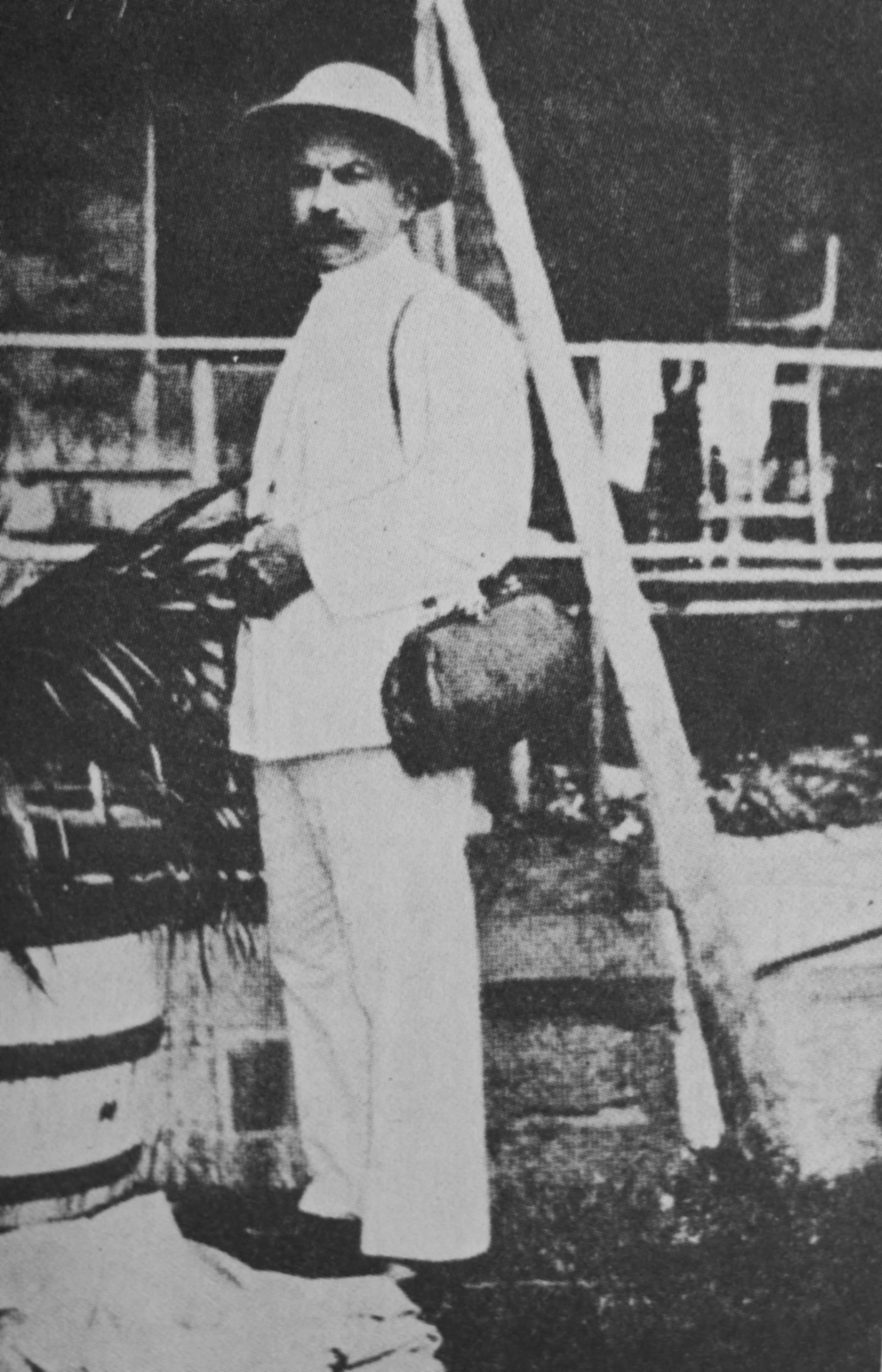
While the historiography of biological control of arthropods find its roots in eighteenth-century natural history, it emerged as a successful scientific enterprise in the late nineteenth century, with the orchard industry of California an early centre of experimental exchanges.Footnote 5 Born in Davenport, Iowa, George Compere (1858–1928, Figure 1) came to California and worked in the booming Riverside orchard industry, becoming a manager in his twenties.Footnote 6 He was one of the converts to the ‘parasite theory’ of biological control by natural enemies after seeing ‘ladybirds make the woolly aphids curl up’. He gave up selling ‘spraying dope’, and joined the Board of Horticulture as an inspector in 1891 and then as insect collector in 1899.Footnote 7 Biological control was taken up enthusiastically by entomologists worldwide and numerous trial introductions were made in the following decades under various degrees of scientific control. There was a variable rate of establishment of candidate species and subsequent calculations show a 5 to 15 per cent success rate in terms of control of target species throughout the twentieth century.Footnote 8
George Compere, foreign insect collector for California and Western Australia, as he appeared in China in 1908. Image and caption from E.O. Essig, History of Entomology, New York: Hafner, 1965, Figure 118, p. 372.

The growth of biological-control science in the early twentieth century was a response to ‘alien incursions’ of animals and plants that came with agricultural development. There was hardly any new crop that did not entrain ‘mobile nature’ in the form of pests to halt its progress.Footnote 9 Sometimes an emergent pest was ‘native’, more often it was ‘foreign’, but biogeographic origin and cultural or even racial nuances were irrelevant to its universal condemnation as unwanted.Footnote 10 Nor did origin taint the positive image of any potential biocontrol saviour, unless time revealed it to be a destructor. This unpredictable lag in consequences was the principal reason for the development of stringent international codes applied to the import or release of exotic biological control agents.Footnote 11
In contrast to the inadvertent arrival of many insect pests, the acclimatization movement chose foreign plants and vertebrate animals for deliberate introduction. Some were selected and justified because of their reputation as pre-eminent destroyers of insect pests. The European starling achieved an expansion of its range to include North America, South Africa, Australia and New Zealand as a result of nineteenth-century acclimatization.Footnote 12 It was promoted in Victoria and Western Australia (WA) for acclimatization as a biological control agent for insect pests. It was not officially released in WA, but the continuing ambivalence over whether it was the grazier's old friend or the orchardist's ‘bitter enemy’ was expressed as late as 1929.Footnote 13
By the 1890s most of the Australian colonies had a dedicated department and a government entomologist to contribute to progressive agriculture through scientific practice. Expertise in addressing the problem of pest insects was fostered by the new discipline of economic entomology, formalized in the United States in 1889, and the entomologists' role became as much educational and political as scientific.Footnote 14 The first government entomologists were either native-born, self-taught naturalists or Britons coopted from colonial museums. The exception was George Compere, appointed by the Western Australian Department of Agriculture in 1901 from the Californian Board of Horticulture.Footnote 15
Compere was hired amid a great popularization of acclimatization in Perth and belief in unlimited prospects for biological control. The decade-long defence of Compere by the agricultural bureaucracy in WA owed much to this belief, which was held strongly by the individuals who hired him. His specialist role would be to implement the ‘parasite theory’ and for nine years he scoured the globe searching for parasites of pest insects. Compere's Californian connection, particularly with the famous entomologist Albert Koebele, lent authority to the programme and was seen as enhancing WA's international profile and giving its scientific enterprise a modern, progressive status.
When Compere's methods drew criticism from entomologists in the eastern Australian states, particularly from Walter Froggatt in New South Wales (NSW), the conflict was taken up by the press and the agricultural community in WA as symbolic of a wider political divide and of their independent and outward-looking identity. Compere became a ‘scientific celebrity’. His notoriety rested on several factors, not least self-promotion. The dynamics between government, emerging professional science and agriculturalists, and their representation in the press through a narrative of conflict between experts, also enhanced his public visibility. Compere was the cat put amongst the entomological pigeons and an inter-state war of words, inflamed by his increasingly public attacks on the methods of his ‘eastern state’ counterparts, contributed to a hiatus in entomological exchanges with the east. The resulting myth that only Western Australia believed in biological control persisted into the 1940s.
The Western Australian context
In 1901 the political climate in WA was dominated by the impending referendum on federation, which was to unite the British colonies that became Australia. There was a strong push for a ‘no’ vote, both in the capital, Perth, and among the establishment's agriculturalists.Footnote 16 This was a boom time in the west and the prospect of WA's having to share its new gold wealth, and the loss of income from intercolonial tariffs, were seen as economic negatives to federation. However, WA's population had tripled in the previous decade to 180,000, with a large influx from the east to the new gold mining centres around Kalgoorlie. This, combined with the promise of a federal rail link, swayed the vote in favour of the federation. Despite the outcome, a continuing secessionist mood prevailed, contributing to a view in some circles of the eastern states, particularly New South Wales and Victoria, as remote, condescending and controlling.Footnote 17
The strength of the Acclimatisation Committee in Perth in the late 1890s, with a membership of prominent politicians and businessmen, set the mood for experimental introductions of all kinds.Footnote 18 Politician and newspaper editor John W. Hackett presided over the committee and organized the appointment of Ernest Le Souëf from Melbourne as director of the new Perth Zoological Gardens in 1897. With the ceremonial release of two white swans from the Thames among the black swans in the ponds of East Perth Park, conducted before the premier and local dignitaries, there was fresh interest in the acclimatization of animals from other continents. This was despite the fact that acclimatization was already out of favour in the eastern colonies, not least because some released animals had already become serious pests.Footnote 19 The acclimatization fervour came thirty years later in WA than in other Australian colonies. However, a parallel may be drawn with post-gold rush, booming Victoria, where the Acclimatisation Society was established on the English model. As Lyndon Gillbank has argued, its official and public support came from recognition of the need to diversify Victoria's economic base from its dependence on wool.Footnote 20
Like its predecessor, Melbourne Zoo, established in 1862 and directed by Le Souëf's father Alfred, Perth Zoo was one of a handful created with the dual purpose of displaying exotic animals to the public and serving as an acclimatization and breeding centre for the introduction of potentially useful animals.Footnote 21 Le Souëf favoured releasing animals such as hares, deer and starlings that were already becoming pests in Victoria. The Acclimatisation Committee challenged the Bureau of Agriculture's 1895 prohibition on the importation of the European starling because it was such a useful insectivorous bird.Footnote 22 The Agriculture Department biologist, Richard Helms, pointed out the potential problems with these and numerous other suggested introductions, such as moles and oxbirds. He noted, moreover, that the starling had changed its habits in different climates, so it remained on the prohibited-imports list.Footnote 23 The corresponding public was similarly sceptical and enjoyed the disagreements between the experts.Footnote 24
The introduction of parasites and predators of problem insects had already been trialled locally by Claude Fuller (1872–1928) in 1896 and the new field of biological control presented the promise of a natural, pest-free future for agriculture.Footnote 25 The method focused on alien invasive pests by introducing natural enemies from their original range. These parasites or predators were therefore ‘useful’ species for acclimatization. James McWilliams has described the late nineteenth and early twentieth centuries as the ‘heyday of biological control’, when farmers, entomologists and state institutions joined in a transnational exchange of organisms, ideas and people.Footnote 26 Many of the exchanges were between the ‘Anglo new wests’, and Australia played an early central role.Footnote 27
The first big success came with the introduction in California of the vedalia beetle (Rodolia cardinalis) from Australia and New Zealand by Albert Koebele, which saved California's citrus industry from the cottony cushion-scale (Icerya purchasi) in 1889. Within a decade of its detection in California's citrus orchards, the trees were covered in white egg masses of Icerya. The visibility of both pest and predator and the dramatically rapid demise of the scale, along with grower involvement in the solution, produced a positive ideology concerning natural enemies that would last decades, despite few other clear successes.Footnote 28
The appointment of a ‘travelling entomologist’
In 1899, after the Californian citrus industry provided funding for overseas scouting for biological-control species, George Compere, the ‘special agent’ for the State Board of Horticulture, came to Australia looking for parasites of insects. His visit drew the attention of agricultural bureaucrats as well as entomologists and he was invited to Perth by the director of agriculture, Lindley Cowan, and the agriculturalist and politician Charles Harper, who, with John Hackett, was proprietor of the West Australian, the Western Mail and the Daily Mail newspapers. Compere convinced them he could easily solve their insect pest problems and he was offered the position of government entomologist that had become available with the departures of Arthur Lea to Tasmania and Claude Fuller to Natal in South Africa.Footnote 29 Compere also persuaded them that he would need to continue to collect parasites from those places where each pest originated.
In early 1901, Charles Harper and Adrian Despeissis (1860–1927), the departmental horticultural and viticultural expert, paved the way for employing Compere by airing his Californian credentials in the press, even suggesting that the Acclimatisation Committee should assist in rearing potential introductions to ensure a continual supply:
Such a man as Mr. Compere or Mr. Koebele is trained to the work … Any blunder or mistake made in the introduction of exotic insects, or the parasites of useful ones, might lead to such serious consequences that no one but a competent and responsible entomologist should be entrusted with the work.
(Signed) A. Despeissis.I feel confident that it only requires a little more financial aid to fire the energies and enthusiasm of the Acclimatisation Committee, who … might work with the Department of Agriculture in a systematic endeavour … maintaining an ever ready supply of our silent but active allies in the lower forms of life.
(Signed) Charles Harper.Footnote 30The parasite programme commenced in 1902 and for the next eight years Compere travelled the world searching for parasites of pest insects, transporting them back to Perth and California, and releasing them.Footnote 31 During his almost continual global travels he was in Perth just often enough to check on his latest imports, give newspaper interviews and pack for his next trip.Footnote 32 Despeissis, in the supervisory role, was involved in the release of parasites around Perth and bathed in some of the media limelight during Compere's overseas trips.Footnote 33 One of Compere's skills was the preparation of glowing reports of actual and potential successes, often touting those in California and Hawaii, with many details of pests defeated and costs saved. Another skill was his engaging verbal style, which matched that of an unnamed ‘pressman’ from the Western Mail, whose interviews with Compere read more like those in current celebrity magazines than accounts from the 1900s.Footnote 34
A FAMOUS ENTOMOLOGIST
He was already a famous man, but his next triumph put his name in every paper. This was the discovery of the codlin moth parasite … Mr. Compere rubbed his nose, reflectively. ‘The American papers have been full of the codlin moth parasite find, and magazine editors have written to me from all sides asking me to write them articles. One American said that “Compere had a nose for parasites.” But I'm too busy to worry over papers. Anyhow, this parasite business has been the best advertisement Western Australia ever had, by a long way.’Footnote 35
This was a new, strident style of science communication in Australia, as was Compere's antagonistic disciplinary rhetoric criticizing other public entomologists. While many economic entomologists had learnt to make skilful use of the media to mobilize agriculturalists and sell their message to the public, Compere appears as a master propagandist of the period.Footnote 36
After several of his overseas trips there was already a polarization of views on Compere as either a prophet or charlatan around Perth and in the orchards, but the department remained firmly behind the promise of the ‘parasite theory’ he promoted.Footnote 37 The ‘theory’ held that every insect had its own parasites in its original range, and that the balance of nature would be restored by finding and reuniting them. Compere provided a vision of the Entomology Branch as a dispensary service of parasites by return mail for every orchard pest.Footnote 38
Compere's enthusiasm was not shared by all entomologists, however. Even by 1902, NSW government entomologist Walter Froggatt (1858–1937) had written of the apparent east–west divide of opinion in the United States over the utility of parasites for agriculture.Footnote 39 While the Californian school appeared to be confident that parasites would liberate farmers from pest problems, the more reticent eastern school represented by the US Department of Agriculture emphasized that only in ‘exceptional and isolated’ cases had parasites ‘checked the ravages’ of insect pests.Footnote 40 A parallel east–west divide soon developed in Australian entomological opinion, as Froggatt saw a danger in the laissez-faire, ‘let-it-slide’ approach.Footnote 41 He believed it would compromise concerted collective actions crucial to the success of economic entomology by allowing insect pests to increase and spread.
In 1903 the WA department failed to entice either the eastern states or New Zealand to share the funding of Compere's travels and this rejection served to heighten a sense of separation from the east and a firm link with the modern innovations of California, which from 1904 funded half the costs.Footnote 42 Referring the ‘bitter opposition’ the offer had met, the director of agriculture pointed out defensively that Queensland at least ‘was becoming alive to the value of this new scientific discovery of killing pests by introducing their natural enemies’.Footnote 43 Aided by the press, Compere and Despeissis commenced an unprecedented denigration of the eastern states’ ‘kerosene entomologists’ who clung to ‘failed methods’, alluding to pressure spraying with soap and oil emulsions. They singled out Froggatt as conservative and unwilling to admit his ignorance of the methods of introducing parasites.Footnote 44
Among Compere's claims were discoveries of parasites for two major horticultural pests: parasites of the fruit fly in India and South America, and of the codling moth in Spain.Footnote 45 California and WA offered the moth parasite to the eastern Australian states and New Zealand for £1,000 each, but none agreed, despite the promise that they could ‘cry off’ the bargain if it failed.Footnote 46 Their attitude, as that of the South African entomologists, was to wait for any success. After all, free exchange of discoveries had characterized the biological-control movement.
Assistant entomologist Frederick Lowe ‘dispensed with’
Compere had attributed the failure of parasites to slow shipping or poor husbandry on arrival.Footnote 47 An entomologist was therefore needed to receive and care for the imported parasites in the newly built brick ‘insectorium’ and to deal with general enquiries during Compere's long absences.Footnote 48 While in London in January 1905, Compere visited the Natural History Museum and on the recommendation of senior entomologist George Hampson arranged for Frederick A. Lowe to be appointed his assistant. Soon after his arrival in Perth, and in Compere's absence, Lowe requested and obtained direct operation of Entomological Branch business from Despeissis.Footnote 49
When Compere returned from China in July, he had the previous administrative arrangement immediately reinstated. Despite having complimented Lowe on the preparations he had made for the accommodation of the insects before leaving in May, his view now changed. The trail of minutes suggests an affront at Lowe's assuming control without his instruction, but apparently there was ‘a difference of opinion’, and things ‘rubbed along’ until November when Compere was leaving for California.Footnote 50 He had Lowe transferred to other duties ‘on account of his lack of diligence and enterprise and also on account of Mr. Compere's distrust of Mr. Lowe’, requesting that his services be ‘dispensed with’.Footnote 51 On learning of his removal, Lowe sent a minute criticizing Compere's methods to the new public service commissioner and later complained it had been delivered via Despeissis in a ‘mutilated condition’. He then ‘ventilated his case’ in the West Australian and included a damning list of his views on Compere's methods:
(1) The fruit fly parasite is a farce and a myth, a snare to fruit-growers, and a danger to the welfare of the fruit industry. (2) Mr. Compere has plainly served California where he came from, at the expense of Western Australia. (3) His trips are calculated to allow him to see different countries at the Government's expense. (4) The parasites he has presumed to import already exist here; moreover, they are inefficient. (5) The parasites Mr. Compere lays claim to were either introduced with their hosts or were aboriginal to this State, and have turned their attention to the imported pests. (6) The methods Mr. Compere adopts to import parasites from different places are impracticable for even short distances or times. (7) The system, as a means to combating insect pests as adopted by Mr. Compere in Western Australia, is futile and a waste of public funds. (8) Mr. Compere has again changed the hands engaged in this work, hoping thus to hide his tracks.Footnote 52
The following day the minister for lands announced in the press that ‘economy’ was the sole reason for the abolition of Lowe's position, but pointedly included the director of agriculture's notes on the apparent discrepancy between Lowe's current criticism and the glowing comments he had made earlier in the year.Footnote 53
These events precipitated an advisory board inquiry into the programme. Lowe feverishly prepared a detailed ninety-foolscap-page submission to the public service commissioner, Mr Jull, which dealt with numerous instances of the uncontrolled, unverified and failed releases, including the potential introduction of new pests. When the inquiry was held in May 1906, Lowe performed badly in his witness appearance, accusing the chairman, Mr Harper, of not being neutral because he had instigated the parasite programme. Lowe refused to answer technical questions because the board could not provide any ‘technical authority’.Footnote 54
The findings of the board of inquiry were in favour of Compere, although some questioned its impartiality:
Report of the alleged agricultural inquiry board on Compere's bugs plainly indicates bias. Believers in the parasitical theory – which is still only a theory, even in California – are styled ‘practical entomologists’; unbelievers are scornfully described as ‘professional, museum-trained entomologists.’ In spite of all which cheap satire and misuse of terms the fact remains that Compere's bugs haven't done anything except die in this State.Footnote 55
The submissions of numerous orchardists and departmental officers were mediated by the chief inspector of insect pests, Mr T. Hooper, who had replaced Lowe. Even Lowe's nominated orchardists turned against him and his formal entomological qualifications were found to compare poorly with Compere's ‘practical entomology’ skills, as the newspapers reported:Footnote 56
WHEN EXPERTS DIFFER
Mr Compere, whose name has been familiarised in the State by his tireless pursuit of pest parasites the world over, is undoubtedly an enthusiast with a fixed, firm, and immutable faith in his theory. He is a man of wide experience who has succeeded in convincing the Agricultural Bureau of the State of California that he is neither a crank nor a faddist and he has established himself in the good opinion of hard-headed practical men in the State of Western Australia. His theory, therefore, must be regarded with respect and cannot be permitted to be shattered by the casual assertions of Mr. Lowe, of whose qualifications not so very much appears to be generally known.Footnote 57
Compere's confident, polished performance at the inquiry repeated the vague local and shining overseas successes, and included an ultimatum for the board to confirm his appointment as California wanted him to work exclusively for them.Footnote 58 Lowe returned to Britain, where he later reported negatively on worldwide parasite programmes at the 1912 International Congress of Entomology.Footnote 59 Sceptical comment about Compere's parasites continued in the local and eastern state press. WA remained upbeat, however. One headline proclaimed that WA ‘beat’ the ‘set’ that was ranged against it; the article that followed referred to their progressive projects being viewed as ‘experimental, socialistic and visionary’ in Melbourne, perhaps to emphasize that WA was a scientific innovator for the public good, and not in the thrall of bureaucratic self-interest or political conflict.Footnote 60
The inter-state ‘parasite war’
In 1907 the department tried once more to get the eastern states to cooperate financially in Compere's travels. But by this time, perhaps fearing they were being left behind, and criticized by their orchardists for refusing to buy the codling moth parasite, the agriculture departments of NSW, Victoria, Queensland and Tasmania had jointly decided to send Walter Froggatt on a fact-finding trip to investigate the efficacy of parasites in controlling insect pests in other countries.Footnote 61 Alluding to the inflated claims made by Compere, one Sydney paper wrote that Froggatt did not go abroad ‘to pluck marvels by the wayside and transmit these to the first newspaper or magazine office which he finds agape for sensational “copy”’.Footnote 62
The inter-state ‘parasite war’ came to a head in 1908 when Froggatt returned to Australia from his year-long investigation. When his ship docked in Perth, Froggatt visited the director, Despeissis, and the parasite facilities being maintained by the new assistant entomologist, Leslie J. Newman (1878–1939).Footnote 63 Newman was unable to show him any specimen collections, which existed only in Compere's private locked cabinet, and there was little to see in the insectorium. Froggatt infuriated the department in a press interview by stating, ‘I do not place the degree of importance on the parasite as the eradicator of fruit pests that Mr Compere … does, and on this particular question I find myself at all times antagonistic to his theories’.Footnote 64 An inter-state diplomatic incident ensued. The chief offence, however, was not about scientific practice but appeared instead to hinge on whether or not Froggatt had ‘point blank refused’ an offer by Despeissis to be shown the results in the gardens around Perth.Footnote 65 Despeissis went on the attack, declaring that Froggatt ‘must have been blind during his travels in California’ and he had ‘merely to cross the Bight’ to see what the parasites were doing.Footnote 66
Compere too defended himself in the local and Sydney press, attacking Froggatt and Charles French as ‘spray pot’ entomologists. He claimed that Froggatt had always dismissed the parasite theory and was now unwilling to admit he was wrong.Footnote 67 Compere, moreover, accused Froggatt of selectively visiting overseas officials ‘opposed to the work from its infancy’ and for good measure damned the US Department of Agriculture, claiming he would fix their gypsy moth problem if given the chance. The conflict erupted again in 1909 when Froggatt's official report was due and apparently was not supplied to WA. Every bureaucratic detail was covered by the press, which seemingly took delight in making an inflammatory defence of ‘Westralian’ rights against the eastern expert. Harper's Daily News devoted a full page to it, including a letter from Hawaii criticizing Froggatt, and one from the NSW minister to his WA counterpart, concerned over the delicacy of the situation.Footnote 68 There was even a call for an official apology from the NSW government.
Although Froggatt's communiqués from different countries had appeared in the NSW Agricultural Gazette, the agricultural journals were not seen as a forum for open critical discourse on scientific theory or practice. His final report, which contradicted Compere's descriptions of parasites being kept in check in either their native or introduced countries, was published as a separate booklet by the department. It reviewed the state of overseas agricultural developments and attendant pest control technologies, emphasizing accredited scientific and institutional arrangements. It was openly critical of adherents of the parasite theory, quoting numerous entomological authorities on failed control and elaborating on ecological reasons for fluctuating, partial effects. Froggatt saw blind faith in the parasite theory as dangerous because it compromised other sanitary practices of economic entomology. He claimed that it had delayed the passage of the NSW ‘Vegetation Disease Bill’ for several years because of a ‘natural, if mistaken, outcry’ by orchardists against spending money when the department could just send out to other countries for parasites that would do the job.Footnote 69
Things went quiet after that flurry of exchanges, chiefly because Compere ‘disappeared’ for eighteen months. When he resurfaced with a resignation letter in 1910, he was again working in California as an orchard inspector. Newman, Compere's assistant since 1906, took over as entomologist in the department and was described as a ‘prophet’, being the only one who could continue the Californian exchanges.Footnote 70 Newman classed himself as an economic entomologist and worked on biological and conventional insect control until 1938. William Gurney, Froggatt's successor in NSW, presented a paper at the 1926 Australasian Association for the Advancement of Science Congress in Perth, giving Newman credit for his work on biological control and lure-trapping of fruit flies.Footnote 71
The forces of agricultural entomology
Because the practice of biological control hinged on human and non-human interactions in various systems and locations, the actor-network sociological perspective and its methods might elucidate the ‘heterogeneous networks’ of actants in the making of George Compere. While the approach risks becoming lost in the plethora of technologies, ideas and practices that defined entomological science and drove the growth of the orchard industry, adopting Bruno Latour's terms of analysis for the WA parasite programme does provide a useful descriptive framework in exploring the association of various institutional ‘control groups’ and other novel historical agents.Footnote 72
Compere was the product of interacting forces within the WA agriculture department to secure funding and strengthen the position of a comprehensive biological-control revolution. Exploiting its close links to the WA press, the agricultural hierarchy created publicity promoting the successes of the programme and found that it also fitted well with deeper political undercurrents. The interests of the few entomological and horticultural experts, and of the agricultural bureaucrats, ‘hybridized’ to create a combined force of ‘biocontollers’ that gained the power to create ‘truth’ about parasites, pests and their interaction.Footnote 73 The enrolment of the orchard and agricultural community was essential to the alliance.Footnote 74 As in California, growers’ group conferences served to maintain a progressive consensus on the value of the parasite programme. Once the biocontrollers were entrenched there was no place for dissent, as Frederick Lowe found out.
The insects themselves were central to the revolution, since success or failure depended on their interactions within the architecture of orchard plants in new environments. Both the pest host and the candidate biocontrol species needed to play their part. Without any obvious dramatic demise of common pests, what drove the programme was the apparently limitless set of overseas insects amongst which to find a controlling parasite. The control of various scale pests was frequently claimed a success, but even that was contested.Footnote 75 Because of their minute size the success of any parasitism was hard to measure in the contingencies of orchard life, so control over the results through the department's orchard inspectors completed the power relations. The insects became visible through their ‘transformation’, which took place in the special building and in the office where they were displayed. Unlike in the field, they were visible here, eating or parasitizing in their silk-covered glass jars, as evidence of scientific expertise. In this insectorium they were described in inflated terms to represent the controlling potential of science, although at least one journalist described a more chaotic scene.Footnote 76
Part of the attraction of parasites was that they were technology- and labour-free, while sanitary methods relied on mechanical devices – the pressure spray pump and bait mixers, kerosene emulsions and the sure ‘kill-all’ of various of arsenic compounds. As the biocontrollers pointed out, these were costly and not particularly successful, and had to be continually repeated. A single visible parasite success would ‘displace’ all other scientific components and requirements, so entomological collections and taxonomic details were not given high priority in WA. Those in control of the programme in Perth believed it would pay off, even if only ‘one in fifty’ were successful.
Compere was certainly a convincing entrepreneur of biocontrol, but he had a zealous personal agenda. He used Perth and the orchards of WA as his trial laboratory, bothering little over the taxonomic intricacies of his parasites and often impatiently releasing them before identification: methods viewed as unscientific by the economic entomologists. But it earned him admiration for ‘action’ and a practical ‘instinct of observation’ among the orchardists.Footnote 77 It was his exaggerated claims for the ‘parasite theory’ and his own successes that made public conflict with his counterparts in the eastern states inevitable. They were forced to a take a stand because of the expectation and local criticism that Compere's reports generated.
Those taking responsibility for the ‘sanitation’ of the orchards, the entomologists represented by Froggatt, could not join forces with the biocontrollers because the two methods were seen as incompatible. Their remedies were ‘needed for today’ and they designed laws to ensure the growers' compliance.Footnote 78 Parasites and sprays became alternatives, although, as Froggatt reported being told in Perth, ‘we can't get the growers to clean up their orchards, so we need the parasites'.Footnote 79 Controversy was the result and, as a feedstock for the popular press, this became a central issue in the public sphere. The orchardists remained hopeful and their representative bodies kept faith with the biocontrollers' elegant theory and application. In 1905, the NSW Fruitgrowers' Union petitioned the state government to contribute to Compere's programme and in 1908 the Conference of Central Fruitgrowers in Perth still declared that the parasite theory had practical value.Footnote 80
The texts that form this material historic record are newspaper and agricultural journal ‘mediators'. The entomologists used both to convince their constituents and the newspapers interpreted the interests of their readers. Other instruments of economic entomology, such as artists (of which NSW employed two in 1900), were not available in WA and illustrations of parasites were little used.Footnote 81 Technical taxonomic descriptions in journals, such as Fuller had produced in 1897, were also absent as Compere left the identifications to the Californians.
Biological control in the two new Wests
Western Australia's close identification with the agricultural miracle taking place in America's golden West was not new to Australian jurisdictions. Ian Tyrrell has described the linkage between Victoria and California in sharing the vision of creating a garden landscape, based on irrigated horticulture in similar environments. He dates its commencement to the 1880s with the visits to California by the Melbourne journalists brothers Thomas and John Dow.Footnote 82 It was Victoria which first emulated the Californian citrus industry, with the establishment of the irrigation ‘colony’ at Mildura by Canadian American entrepreneurs, brothers George and William Chaffey, in the 1890s.Footnote 83
In 1901 fruit growing was no more important in WA than in NSW. It was a local industry occupying about two thousand hectares, dispersed over numerous pockets of alluvial soil. But there were high hopes that refrigerated shipping and southern hemisphere seasonality would make WA fruit a major export to Britain. The total area had doubled by 1907 and, after trial shipments to Britain and Germany, commercial shipments of apples to London began in 1910.Footnote 84
Not surprisingly, the historiography of the Californian biological-control movement comes largely from American environmental history and often focuses on the first ‘happy accident’ with the cottony cushion scale. The rivalries between the US Department of Agriculture and the Californian Board of Horticulture over credit for defeating the scale are covered in Richard Sawyer's book To Make a Spotless Orange.Footnote 85 Standard texts depict Alfred Koebele as the hero explorer who ‘quickly discovered’ the vedalia in Australia, but a more complex story of local knowledge is revealed from its native home.Footnote 86
The agricultural community in South Australia had long considered that there was a need for entomological education, having thought through the implications of the arrival of foreign insect pests in the absence of their natural enemies.Footnote 87 Frazer Smith Crawford (1829–1890), an observant naturalist and horticultural adviser whose paid job was as lithographer of town survey plans for the South Australian Lands Department, had earlier corresponded with Eleanor Ormerod in England over the origin of the cottony cushion scale. He had suggested the introduction of a parasitic fly found in Adelaide to South African citrus orchards, where the scale had been called the ‘Australian bug’ since 1882.Footnote 88 In Crawford's brief account, the Californian entomologist Valdemar Klee then wrote to him in 1887 requesting the parasites of I. purchasi for trial. He sent specimens of a fly identified as Cryptochaetum and a larger Monophlebus species to Klee and to Charles Riley's assistant Daniel Coquillett in southern California.Footnote 89
Koebele came to Australia in September 1888 but could find no I. purchasi around Sydney, Brisbane or Melbourne. In Adelaide, however, Crawford advertised in newspapers for people to bring likely specimens to Koebele at Botanic House in Norwood and also took him to known pockets of the scale.Footnote 90 Several samples of the parasitic flies were despatched to California and Koebele mentioned he had also seen Coccinelidae larvae eating Icerya.Footnote 91 Koebele later reported collecting several hundred of these near Mannum on the Murray River in October, bringing them to Adelaide for shipment. Just before leaving Australia, and somewhat surprisingly, he reported finding more in the garden of the Sydney Town Hall.Footnote 92 In New Zealand in early 1889, he collected thousands of R. cardinalis beetles on I. purchasi in orchards near Hamilton.Footnote 93
Crawford's description of events suggests that he was not informed of Koebele's R. cardinalis collections in Australia, as in 1889 he thought the species was not known in South Australia.Footnote 94 However, some confusion may have arisen when another USDA entomologist, Francis M. Webster, visited in 1889 and they collected a species that Webster identified as ‘Coccinella concinna’.Footnote 95 Crawford corrected the impression in local newspapers that he could claim having proposed the parasite introduction to Riley, but, in giving the credit for the source of the vedalia to New Zealand, he wrote of Koebele's diversion:
when learning from that enthusiastic and intelligent agriculturist, Mr. R. Allen Wight, of New Zealand, that the Icerya was rapidly disappearing in some parts of that colony from some unknown cause, I telegraphed to Mr. Koebele, then at Sydney, recommending him to proceed to New Zealand instead of returning to Adelaide as intended.Footnote 96
Compere appears only briefly, as a later output of the hubris of the Californian biocontrollers, in most American historiography. This view of Compere in the USDA was expressed privately by Bureau of Entomology head L.O. Howard, who dismissed him as an uneducated and dangerous ‘charlatan’ likely to damage the reputation of economic entomology.Footnote 97
Compere was a product of the Californian State Board of Horticulture that was still engaged in denigrating both the USDA, to claim credit for the vedalia success, and University of California academics, for continuing with fumigation research.Footnote 98 During his travels for WA, he reported back to his mentors Alexander Craw, Ellwood Cooper and E.M. Erhorn in California and was immersed in the rhetoric they used against the Bureau of Entomology, borrowing their term ‘kerosene entomologists' to criticize those in the eastern Australian states. An article emphasizing use of both natural enemies and spraying in the Journal of Agriculture W.A. reflected on the wasted ‘energy’ of the ongoing vedalia dispute, attributing it to ‘human nature’, and concluded that the ‘historian with judicial mind’ would give equal credit both to US parties and to Crawford.Footnote 99
The Californian parasite intrigues were part of the process of professionalization of agricultural science explored by Charles Rosenberg and Paolo Palladino, when scientific authority and research moved to academically trained entomologists stationed at agricultural experiment stations linked to state universities.Footnote 100 Contributions of independent agriculturalists yielded to professional scientific expertise, but continued in California with political support for practical entrepreneurial figures like horticulturalist Luther Burbank.Footnote 101 Entomologists in Australia were required to satisfy their agricultural, bureaucratic and scientific constituents in the manner of ‘research entrepreneurs', but without the complex federal–state, academic–agricultural interplays and scale of the US professionalization process. Government agricultural appointments were guided by qualification and experience, but university faculties of agriculture were only established in 1911.Footnote 102
Direct funding from the citrus industry and the state insulated the Californian Horticulture Board from research-enterpreneurial pressures between 1900 and 1910. The inspection and enforcement powers of the boards (whose entomological staff were agricultural businessmen or former inspectors), and their political connections, enabled the ‘parasite’ programme to continue independently. The momentum was maintained by positive feedbacks of knowledge from the board and funding from the economically and politically powerful citrus industry representatives.Footnote 103 University field experiment stations had been established in the 1880s, but biological control only became part of the Berkeley agriculture programme in the 1920s.Footnote 104
In WA it was the Agriculture Department that provided the funding and controlled the knowledge through its agricultural journal. It also managed quarantine and orchard inspections as well as several experimental farms. The Californian antipathy toward federal control of entomological authority was transposed to other state government entomologists in Australia and was expressed in the same terms, driven by a perception of the national government seated in, and representing, the ‘eastern states’.
Politics and celebrity science
Western Australia might have thought that inter-state financial cooperation in the parasite programme would be a logical outcome of federation. The rejections became a point of political contention and perceived insult at multiple levels. The eastern state agriculture ministers’ decisions were based on the advice of their entomologists, in whose expertise they expressed faith. But Compere had become a celebrity and his frequent, convincing presence in the newspapers spread his claims far and wide. In NSW it became a political issue from 1902 and the agricultural public were watching. The State Member for the horticultural district around Sydney, Frank Farnell, questioned the agriculture minister in Parliament about ‘bringing nature’ to the aid of pest control as was evident in California and WA.Footnote 105 A local candidate even took the ‘parasite theory’ to the 1907 election platform, declaring there was ‘something in it’ that should be investigated.Footnote 106
During the 1900s, the heyday of the Australian local newspaper, the metropolitan and regional press transmitted knowledge by reprinting one another's articles.Footnote 107 For practical scientific knowledge they also lifted from agricultural journals. Scientific good news and controversy travelled relatively quickly via the telegraphic network. Through his reports, Compere controlled knowledge of insects from the overseas locations he visited and the positive view of parasitic control in WA was bolstered by the coverage the parasite programme received in the Californian press and horticulture journals. The eastern states' decision to send Froggatt overseas reflected their difficulty in reconciling both sensational and indifferent reports, and goes some way to explaining the detailed counterexamples in his official report.
Compere and Froggatt were portrayed in the press not only as having polar approaches to insect pest control, but also as scientific opposites. Compere's public appeal came, in a manner similar to Luther Burbank's, from his image as a self-made practical man challenging scientific convention.Footnote 108 Froggatt was represented in WA as interference by ‘stiff-necked’ eastern experts and an encroachment of rigid scientific authority into agricultural practice.Footnote 109 He, too, held no academic credentials but had adapted to the norms of the scientific community. He had paraphrased L.O. Howard in 1898 to the effect that suspicion of and resistance to entomologists by farmers was a major challenge to his discipline. In reality their expertise was respected by most Australian agriculturalists, who had few traditions to defend.Footnote 110 Froggatt was singled out for attack because he was Compere's most public critic and was perceived to have approached the issue with preconceived bias.
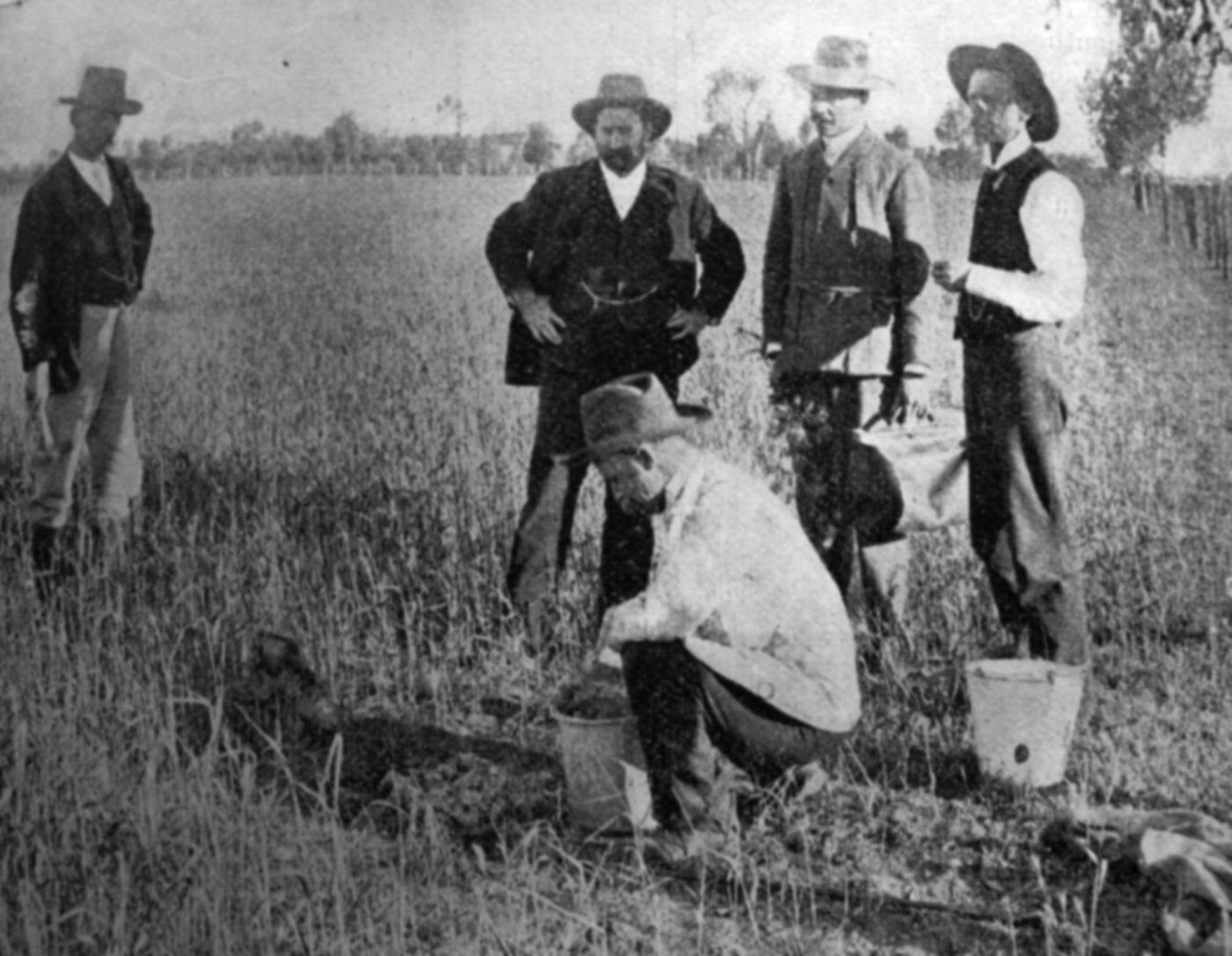
Despite Compere's claims of eastern states' denial of parasites, biological control had been scientifically investigated by the economic entomologists both before and during his Australian tenure. Their exchanges were through more official channels and they were careful to stress that successes would be rare.Footnote 111 Henry Tryon in Queensland had discussed parasites of insects as early as 1896 and was a member the prickly pear control committees in 1912.Footnote 112 Froggatt investigated parasites of caterpillars, blowflies and orchard pests. They all fostered the education of agriculturalists in identifying beneficial insects, searched for locust parasites and trialled Charles French's entomophyte ‘Cape fungus' (Figure 2).Footnote 113
‘Government Entomologist, Mr Walter Froggatt, conducting locust exterminating experiments at Goodwill, Condobolin, NSW’, The Australasian, 17 November 1902, p. 33. The trials were part of a biological-control programme using the imported ‘Cape fungus' to kill locusts.
The idea that the eastern states' entomologists not only knew nothing of biological control but purposely denigrated the concept was a myth that grew along with that of Compere. And myth is hard to shake once entrenched, particularly when state pride is involved. Reviewing the contributions of ‘Science in Agriculture’ in 1933, the year there was a majority vote in favour of separation from the federation in a WA referendum, the minister for agriculture, G.L. Sutton, called Newman ‘Compere's apprentice’ and recalled,
on my arrival in this State some 20 years ago, the present Government Entomologist (Mr. L.J. Newman) was practically the only entomologist resident in Australia who believed and advocated biological control methods; other entomologists preferred to rely upon the spray pump, and other artificial means of control. It is to Mr. Newman's credit that, despite opposition and some-times ridicule, he had consistently advocated biological control throughout this period. The principle is now generally accepted throughout Australia and in other parts of the world.Footnote 114
That view was not just political rhetoric but also persisted in the scientific sphere. In the presidential address to the Royal Society of WA in 1946, Newman's successor, Clee F. Jenkins, summarizing the status of biological control in WA, said that the early critics were ill-informed and that Froggatt had ‘rather bitterly attacked’ Compere's work. But Compere's provocations had been in the press rather than in official documents, and so were lost to Jenkins's domain of historical enquiry.Footnote 115
Popular public science
Economic entomology was public science in the historical sense of government-funded ‘applied’ science, linked to government policies and under the imperative to demonstrate its worth to agriculturalists. It was part of the grand project of building Australian identity through agricultural development.Footnote 116 It communicated through agricultural journals, lectures and demonstrations, but the ‘parasite theory’ was also ‘public science’ because of its popularization in the press.
In light of James Secord's reminder that ‘popular science’ is an inadequate descriptor for the complexities of public engagement in scientific histories, there was more to the exposure that ‘parasites’ received in the press than simple scientific exposition to have ideas accepted.Footnote 117 The conflict between experts made it all the more popular. As Michel Biesunski identified in the early reception of relativity theory in France, ‘people were excited by the fact agreement had not been reached’, opening a simple schema of popularization as transmission of knowledge to instances of ‘scientific controversy’.Footnote 118
Biological control was also popular science because any observant person could contribute to its discovery and application. The government entomologists' and plant pathologists' rooms in the eastern states were at times crowded with a backlog of candidate organisms sent in by the public for evaluation.Footnote 119 The principles and proof of ‘parasites’ were not esoteric or removed from everyday experience.Footnote 120 Rather they were understandable in terms of the familiar concept of the ‘balance of nature’ and the arcane issues of Latinate taxonomies confounded even the experts.
When correspondents from the east and the west contributed poems about the flaws they saw in this public science, the science had clearly entered what Katherine Pandora has identified as ‘vernacular culture’, producing diverse, unauthorized scientific discourses.Footnote 121 The satire was directed mainly at government, questioning its role and ability to direct agricultural development in its ‘alliance’ with science, but the ‘disagreements between experts’ also appealed to people who were reluctant to yield their own natural-historical experience to experts seen as their scientific equals.Footnote 122 The early professionalization of agricultural science may have drawn out lingering tensions over the nineteenth-century establishment of scientific authority by professional accreditation and expertise.Footnote 123
Conclusion
In Australia, biological control was initially an extension of acclimatization, because the establishment of imported controlling organisms in the new environment was a necessary precondition to any success, and the justification for introducing numerous animals was as insect pest controllers. This connection was specified during the late, brief blooming of acclimatization in WA.
While the historiography of acclimatization societies in the second half of the nineteenth century often focuses on the ‘ecological imperialist’, sentimental, or otherwise odd motivations of some of its practitioners, it was justified at the time in Australia by its agricultural economic merits.Footnote 124 Thus the Queensland and South Australian Societies, when petitioning government for grants in the 1860s, used the argument that existing agricultural industries were based on introduced species and gave long lists of potential organisms, particularly plants, to be acclimatized.Footnote 125 The movement played a significant role in early agricultural development in Australia, as its societies were a conduit for the free exchange of information, cultivars and seeds of potential crops, and trees and forage grasses.Footnote 126 By 1905, when the Queensland society disbanded, it had distributed more than five hundred accessions of tropical grasses and legumes.Footnote 127 But the practice of acclimatization continued during the twentieth century. Pastoralists in northern Australia continued the deliberate introduction and dissemination of many tropical grasses and legumes to boost cattle production, and were assisted in the selection of species by scientists during the 1970s and 1980s.Footnote 128
Although the negative consequences of some acclimatizations were already clear in 1901, the prior risks for parasitic insects were hard to foresee and in WA were deferred to Compere's expertise. Froggatt's concerns perhaps arose from naturalist interests and instincts that were broader than entomology. He had been against the active 1890s acclimatizations of starlings in the east and was a prescient lone voice in the wilderness against the release of the cane toad for biological control of cane grubs in the 1930s.Footnote 129
Political, institutional and individual motivations all influenced the early growth and practices of biological control in Australia, reflecting the social and local emplacement of science. Knowledge was largely produced by overseas experience and was differently transmitted, filtered and interpreted in local contexts in west and east Australia. The Western Australians were reassured by news of great successes and the scale of infrastructure being committed to biological control in California and Hawaii, while in the east the science of economic entomology stood firm with established practices and a more cautious view of parasites' potential.
The sense of separateness in the west was reinforced by claiming a scientific ‘disciplinary space’ around the attractive logic of parasites as ‘nature's own remedy’ for pests.Footnote 130 With Compere as its famous ‘younger-school’ emblem, WA agricultural bureaucrats established scientific authority over methods of biological control, defending and defining them by opposition to ‘old-fashioned’ eastern entomological ideas and practice.Footnote 131 Their ideological commitment to the programme was used as a scientific symbol of state identity, comparing it to revolutions in medical science decried by entomologists in the east still ‘clinging as tenaciously to their spraying-pumps as did the medico of old to his leeches'.Footnote 132
The principle of the ‘parasite theory’ was based on ecological ideas of natural population regulation and remains a fundamental methodology of classical biological control. Compere argued, perhaps following ideas of William Fiske about ‘superparasitism’, that, while a single parasite would never completely eliminate an introduced pest, the combined action of several would free producers from the cycle of spraying.Footnote 133 He managed to ‘find’ parasites for those pests he was told were most needed and had rightly warned of potential hyperparasites in one of his shipments to California.Footnote 134 But he was also well aware of the potential economic gain a major success might bring.Footnote 135
Although at the colourful end of the spectrum, Compere was part of a much wider phenomenon. Other entomologists, such as Claude Fuller and Charles P. Lounsbury working in South Africa, were also travelling overseas to find parasites, including to South America to find Compere's ‘fruit fly Staphylinid’.Footnote 136 The USDA sent Charles Marlatt to China to find scale parasites and, in 1905, L.O. Howard commenced a major federal–state project for a biological solution to destruction of forests by the gypsy moth.Footnote 137 But Compere and the Californians were outsiders in established entomological circles and were dismissed as methodological renegades, making them passionate advocates of the ‘theory’.
The biological-control ‘heyday’ continued for several decades and in 1927 Britain embraced the concept as part of a post-war ‘defensive imperialism’.Footnote 138 The Empire Marketing Board (EMB) funded the conversion of a country house in Buckinghamshire into a ‘parasite zoo’ for the evaluation, breeding and dispensing of insects for biological control throughout the British dominions. Scientists from the Imperial Bureau of Entomology reportedly equipped Farnham Royal ‘to provide the sinews of a war to the death on insects that are the deadly enemies of farmers and fruitgrowers in every country under the sun’.Footnote 139
In Australia, the first chief of the new Council for Scientific and Industrial Research (CSIR) Division of Economic Entomology, Robin Tillyard, outlined a programme to attack the major insect and weed pests of agriculture by biological control in 1928. The very real prospect for biological control of prickly pears at that time lent CSIR head David Rivett's support for his approach.Footnote 140 While on a visit to Perth, Tillyard was reminded of and acknowledged WA's foresight in the new science.Footnote 141 Australia fared better financially than other dominions during this period of ‘science for empire’ in consequence of the shared enthusiasm for biological control. Tillyard's hopeful linkage with Farnham Royal resulted in his failed release of a French blowfly parasite, but the significant outcome was the EMB effectively funding half the divisional budget during its first five years, which allowed the completion of the CSIR laboratories in Canberra and the continued operation of its entomology programmes during very uncertain times.Footnote 142
By way of a postscript to Compere's contribution to classical biological control, there were many insect introductions in Western Australia between 1901 and 1910; in fact more than in any other decade of the twentieth century throughout Australia.Footnote 143 Clee Jenkins's meticulous 1946 reconstruction of releases shows, however, that most of the few successes were arranged through official channels, either from the eastern states or from South Africa. This was one place Compere did not visit and apparently he rarely contacted officials in other, more exotic, places. His connection with the Californian Board of Horticulture did allow several parasites that had already proven viable in orchards there to be sent to WA, but it remains unclear if any of the more than a hundred largely unknown species released from his world travels were successful.Footnote 144