






1. Introduction
In this paper, we will show the existence of weak solutions for the following normalized Hamiltonian system:
 \begin{align*}
(H)
\begin{cases}
- \Delta u = \lambda u + |v|^{q-2}v \quad \text{in } \mathbb{R}^{N}, \\ - \Delta v = \lambda v + |u|^{p-2}u \quad \text{in } \mathbb{R}^{N}, \\ \int_{\mathbb{R}^N}(|u|^2 + |v|^2) = m,
\end{cases}
\end{align*}
where 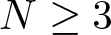 $N \geq 3$ and the exponents
 $2 \lt p,q \lt 2^{*}=\frac{2N}{N-2}$ satisfy certain conditions specified later; see Theorems 1.1 and 1.2 below. This class of problems arises when one looks for solutions with prescribed mass for the nonlinear Schrödinger system,
 \begin{align*}
(S)
\begin{cases}
i\partial_t \psi(x,t) + \Delta \psi(x,t) + F_{\varphi}(\psi,\varphi)=0, \quad t\geq 0 \quad \text{in } \mathbb{R}^{N}, \\ i\partial_{t} \varphi(x,t) + \Delta \varphi(x,t) + F_{\psi}(\psi,\varphi)=0, \quad t\geq 0 \quad \text{in } \mathbb{R}^{N},
\end{cases}
\end{align*}
which have applications in the propagation of light in some nonlinear optical materials (see, for instance, [Reference Berestycki and Lions5, Reference Byeon and Wang8, Reference Strauss23] and references therein).
A standing wave solution  $(\psi, \varphi)$ for system
 $(S)$, with
 $F_{\psi}(\psi,\varphi) = |\varphi|^{p-2}\varphi$ and
 $F_{\varphi}(\psi,\varphi) = |\psi|^{q-2}\psi$, is of the form
 \begin{equation*}
(\psi(x,t), \varphi(x,t)) = (e^{i\lambda t}u(x), e^{i\lambda t}v(x) ),
\end{equation*}
for some  $\lambda \in \mathbb{R}$, where
 $(u,v)$ satisfies
 \begin{equation}
- \Delta u = \lambda u + |v|^{q-2}v \quad \text{and } \quad - \Delta v = \lambda v + |u|^{p-2}u \quad \text{in } \mathbb{R}^N.
\end{equation}
Following [Reference De Figueiredo9], this type of strongly coupled system is also called an elliptic system of Hamiltonian type. For some fixed values of  $\lambda$, the existence of nontrivial solutions for (1) has been extensively studied; we refer readers to the surveys [Reference Bonheure, dos Santos and Tavares7] and [Reference De Figueiredo9] for a more detailed introduction to Hamiltonian elliptic systems.
Another important way to find the nontrivial solutions for (1) is to study the problem  $(H)$ by searching for solutions with prescribed mass, meaning that the mass
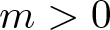
 $m \gt 0$ is prescribed by the
 $L^2$-norm, while the frequency
 $\lambda$ is unknown and will come out as a Lagrange multiplier. This approach is particularly meaningful from the physical point of view, because there is a conservation of mass along the time evolution. Hence, to find normalized solutions for
 $(H)$, it is sufficient to search for critical points of the energy functional
 $J(u,v)$ associated with
 $(H)$ constrained on
 $S_m$, where
 \begin{equation}
J(u,v) = \int_{\mathbb{R}^N}\nabla u \nabla v - \frac{1}{p}\int_{\mathbb{R}^N}|u|^p - \frac{1}{q}\int_{\mathbb{R}^N}|v|^q ,
\end{equation}
and
 \begin{equation*}
S_m := \left\lbrace (u,v) \in H^{1}_{\mathrm{rad}}(\mathbb{R}^N) \times H^{1}_{\mathrm{rad}}(\mathbb{R}^N); \int_{\mathbb{R}^N}|u|^2 + \int_{\mathbb{R}^N}|v|^2 = m\right\rbrace.
\end{equation*}
After the seminal work [Reference Jeanjean15] was published, a great deal of attention was devoted to studying problems with prescribed mass. For elliptic equation systems with prescribed mass, to the best of our knowledge, the pioneering works are [Reference Bartsch and Jeanjean1, Reference Bartsch, Jeanjean and Soave2, Reference Bartsch and Soave4], in which the authors studied variational systems of the type
 \begin{equation}
\left\{\begin{array}{ll}
\Delta u = \lambda_1 u + \mu_1 |u|^{p_1 -2}u + r_1 \beta |u|^{r_1 - 2} |v|^{r_2}u, \\ \Delta v = \lambda_2 v + \mu_2 |v|^{p_2 -1}v + r_2 |u|^{r_1}|v|^{r_2 -2}v,
\end{array}\right.
\end{equation}
with restriction
 \begin{equation}
\int_{\mathbb{R}^N}|u|^2 = a_1 \text{and } \int_{\mathbb{R}^N}|v|^2 = a_2.
\end{equation}
These authors studied (3)–(4) for different scenarios of  $2 \lt p_1,p_2 \lt 2^{*}$ and
 $\mu_1,\mu_2, r_1, r_2 \gt 0$. Specifically, in [Reference Bartsch and Jeanjean1], the strategy used to deal with (3)–(4) having
 $L^2$-subcritical growth,
 \begin{equation*}
p_1, p_2, r_1 + r_2 \lt 2 + \frac{4}{N},
\end{equation*}
is to show that the functional  $I:H^{1}_{\mathrm{rad}}(\mathbb{R}^N) \times H^{1}_{\mathrm{rad}}(\mathbb{R}^N) \rightarrow \mathbb{R}$, given by
 \begin{equation*}
I(u,v) =\frac{1}{2} \int_{\mathbb{R}^N} (|\nabla u|^2 + |\nabla v|^2) - \int_{\mathbb{R}^N} \left(\frac{\mu_1}{p_1}|u|^{p_1} + \frac{\mu_2}{p_2}|v|^{p_2} + \beta |u|^{r_1}|v|^{r_2} \right),
\end{equation*}
is bounded from below and coercive on  $S(a_1)\times S(a_2)$, where
 \begin{equation*}
S(a_i) : = \left\lbrace u \in H^{1}_{\mathrm{rad}}(\mathbb{R}^N); \int_{\mathbb{R}^N} |u|^2 = a_i \right\rbrace \quad \text{for } i=1,2.
\end{equation*}
After a careful analysis, they were able to show that the critical point of 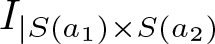 $I_{|S(a_1)\times S(a_2)}$ solves (3)–(4). Still in [Reference Bartsch and Jeanjean1], to show the existence of normalized solutions when
 \begin{equation*}
p_1, p_2, r_1 + r_2 \gt 2 + \frac{4}{N},
\end{equation*}
they use an argument based on the linking of two subspaces constraint to  $S:= S(a_1) \times S(a_2)$ and then use a mountain pass argument on
 $S$ to show a min–max level. Then, to find a bounded Palais–Smale sequence associated with this min–max level, they restrict the functional to a Pohozaev set. Finally, to ensure the strong convergence of the Palais–Smale sequence, they use some estimates combined with a Liouville-type argument. Finally, a variation of this problem, with a critical (in the Sobolev sense) perturbation, was studied in [Reference Bartsch, Li and Zou3]. For other related results, we also mention [Reference Gou and Jeanjean11, Reference Gou and Jeanjean12, Reference Li and Zou19, Reference Wang and Zhou26] and the references therein.
On the other hand, to our knowledge, no published works have addressed the existence of normalized solutions, for  $2 \lt p,q \lt 2^{*}$, for Hamiltonian systems like
 $(H)$. One complication in studying Hamiltonian elliptic systems via variational methods is that the energy functional associated with the problem is strongly indefinite; that is, its quadratic part is respectively coercive and anti-coercive in infinite-dimensional subspaces of the energy space. Another complication is due to the lack of a normed term in the energy functional, which makes it difficult to find a minimizing sequence and determine the sign of the Lagrange multiplier
 $\lambda$. Therefore, we cannot replicate the arguments from the aforementioned papers. We also remark that the embedding
 $H^{1}(\mathbb{R}^N) \hookrightarrow L^{2}(\mathbb{R}^N)$ is only continuous (even in the radial setting), which causes a loss of compactness and makes it difficult to ensure that weak limits of minimizing sequences remain on the constraint manifold
 $S_m$. Below, we present our main results and sketch our strategy to overcome these difficulties.
Summarizing, our main Theorems are as follows.
Theorem 1.1 Suppose 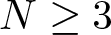 $N\geq 3$, if
 $p$ and
 $q$ satisfy
 \begin{equation}
2 \lt p,q \lt 2 + \frac{4}{N},
\end{equation}
then the problem  $(H)$ has a weak solution
 $(u,v) \in H^{1}_{\mathrm{rad}}(\mathbb{R}^N) \times H^{1}_{\mathrm{rad}}(\mathbb{R}^N)$.
Theorem 1.2 Suppose that
 \begin{equation}
N \geq 3 \quad \text{and} \quad 2 + \frac{4}{N} \lt p,q \lt 2 + \frac{8}{N}
\end{equation}
or
 \begin{equation}
{N=3} \quad \text{and} \quad 2 + \frac{8}{N} \lt p,q \lt 2^{*},
\end{equation}
then the problem  $(H)$ has a weak solution
 $(u,v) \in H^{1}_{\mathrm{rad}}(\mathbb{R}^N) \times H^{1}_{\mathrm{rad}}(\mathbb{R}^N)$.
The condition (5) is usually referred to in the literature as  $L^2$-subcritical growth. We say that the problem has
 $L^2$-supercritical growth or
 $L^2$-critical growth if
 $2 + 4/N \lt p,q$ or
 $p,q=2 + 4/N$, respectively.
From the previous literature on normalized solutions, the reader may note that the  $L^2$-subcritical case is, in general, the easiest to deal with; however, the fact that our problem is strongly indefinite brings a profound change even in this case. Our approach allows us to obtain the existence of solution for both
 $L^2$-subcritical and supercritical cases in a similar way. This approach is motivated by [Reference He, Lv, Zhang and Zhong14] and [Reference Jeanjean and Lu16], whose authors study the energy functional constrained on a Pohozoaev-type set intersected with the sphere. We shall introduce an adequate constraint for our problem. In our framework, the constraint set is given by
 \begin{align}
\mathcal{P}:= \left\lbrace\vphantom{\int_{\mathbb{R}^N}} (u,v) \in E \setminus E^{-} \subset E; P(u,v)=0 \text{ and } \right.\cr
\qquad \left.{J'(u,v)z = \int_{\mathbb{R}^N}(u-v)\phi}, \forall z = (\phi,-\phi) \in E^{-} \right\rbrace\!,
\end{align}
where
 \begin{equation}
P(u,v) =\int_{\mathbb{R}^{N}}\nabla u \nabla v - \frac{N(p-2)}{4p}\int_{\mathbb{R}^N}|u|^{p} - \frac{N(q-2)}{4q}\int_{\mathbb{R}^N}|v|^{q}
\end{equation}
and the sets  $E$ and
 $E^{-}$ are defined in Section 2.
The definition of  $\mathcal{P}$ is inspired by the generalized Nehari manifold or Nehari–Pankov manifold, introduced by Pankov in [Reference Pankov21] (see also [Reference Szulkin and Weth24]) and by the Pohozaev identity. We point out that in works with free mass (fixed
 $\lambda$), the definition of the Nehari–Pankov set requires that
 $J'(u,v)z = 0$ for all
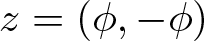 $z=(\phi,-\phi)$. However, in our case, since we deal with a constrained problem, the definition in (8) is more suitable for our setting. Even working with this constraint, we have difficulties to bypass. One, which emerges from the definition of
 $\mathcal{P}$, is to show that
 $\mathcal{P} \cap S_m \neq \emptyset$. Because of this, we will work with the intersection
 $\mathcal{P}_m:= \mathcal{P} \cap \tilde{S}_m$, with
 \begin{equation}
\tilde{S}_m := \left\lbrace (u,v) \in E; \int_{\mathbb{R}^{N}}(|u|^{2}+|v|^{2}) \leq m \right\rbrace.
\end{equation}
Adapting arguments from [Reference Wang, Xu and Zhang25], we derive some properties of the generalized Nehari manifold to the set  $\mathcal{P}_m$ and
 $J_{|\mathcal{P}_m}$, combining such properties with Gagliardo–Nirenberg inequality, we can show in the
 $L^2$-subcritical case that
 $\mathcal{P}_m$ is bounded (Lemma 3.2) and for the
 $L^2$-supercritical case that the minimizing sequence at the critical level of
 $J_{|\mathcal{P}_m}$ is bounded (Lemmas 4.1 and 4.2). Then using some well-known compactness arguments for Hamiltonian systems, we are able to show that the minimum of
 $J$ restricted to
 $\mathcal{P}_m$ is attained for some
 $(u,v)$. By the end, inspired in the arguments from [Reference Bieganowski and Mederski6], we are able to show the following inequality (Lemma 2.8):
 \begin{equation*}
\inf_{w \in S_m \cap \mathcal{P} } J(w) \lt J(u,v).
\end{equation*}
Thus, the minimizer  $(u,v)$ of
 $J$ on
 $\mathcal{P} \cap \tilde{S}_m$ is attained in
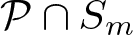 $\mathcal{P} \cap S_m$.
Even though our work is pioneering in regard to Hamiltonian systems with prescribed mass, there are still issues we have not been able to address. We highlight some of the following:
• Unlike (3) and the references related to this system, we work with the same frequency
 $\lambda$ in both lines in
$(H)$. In the case where we have to deal with different frequencies
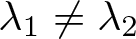
$\lambda_1 \neq \lambda_2$, we would set
$ S(m_1, m_2) := \left\lbrace (u,v) \in E; \int_{\mathbb{R}^N} |u|^2 = m_1 \text{and } \int_{\mathbb{R}^N} |v|^2 = m_2 \right\rbrace $ instead of
$S_m$, and we cannot replicate some of the arguments presented in Sec. 2 for this case. We also note that this type of restriction is not unusual and has been used in the literature before [Reference Guo and Hua13, Reference Liu and Yang20].
• In the
$L^2$-supercritical case, i.e., Theorem 1.2, we do not have an optimal result, since we have a solution under the conditions (6) or (7), that is, we cannot show the existence of a solution for the case
$2 + 4/N \lt p \lt 2 + 8/N \lt q \lt 2^*$. We remark that restrictions in the conditions (6) and (7) are needed to show that
$\mathcal{P}_m$ is a natural constraint for our problem (see Lemma 2.4).• Our methodology does not work when one of the exponents is an
$L^2$-subcritical exponent and the other one is an
$L^2$-supercritical exponent.





The rest of the paper is structured as follows: in Section 2, we give some preliminary definitions and present some results about the set  $\mathcal{P}_m$, which play an important role in the proof of our main results. Sections 3 and 4 are dedicated to the proof of Theorems 1.1 and 1.2, respectively.
2. The constrained functional
We start by introducing some notation required to express our results. Let  $E= H^{1}_{\mathrm{rad}}(\mathbb{R}^{N}) \times H^{1}_{\mathrm{rad}}(\mathbb{R}^{N})$ and consider the decomposition
 \begin{equation*}
E = E^{+} \oplus E^{-},
\end{equation*}
where for each  $z=(u,v) \in E$, we have
 \begin{equation*}
z = z^{+} + z^{-} = \left(\frac{u+v}{2}, \frac{u+v}{2} \right) + \left(\frac{u-v}{2}, \frac{v-u}{2} \right)
\end{equation*}
and
 \begin{equation*}
E^{\pm}= \lbrace z=(u,v) \in E: v= \pm u \rbrace.
\end{equation*}
Throughout this work, we consider the space 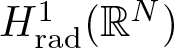 $H^{1}_{\mathrm{rad}}(\mathbb{R}^{N})$ with the usual inner product and norm,
 \begin{equation*}
\langle u, v \rangle = \int_{\mathbb{R}^{N}} \nabla u \nabla v + \int_{\mathbb{R}^{N}}uv \quad\text{and }\quad ||u||^{2} = \langle u, u \rangle.
\end{equation*}
Further, the space  $E$ is a reflexive Banach space equipped with the norm
 \begin{equation*}
||(u,v)||_{E} = ||u||^{2} + ||v||^{2},
\end{equation*}
where  $||\cdot||$ denotes the norm in
 $H^{1}_{\mathrm{rad}}(\mathbb{R}^{N})$.
We recall that the energy functional associated with  $(H)$, written
 $J:E \rightarrow \mathbb{R}$, is a functional of class
 $C^1$ and is given by
 \begin{equation*}
J(u,v) = \int_{\mathbb{R}^N}\nabla u \nabla v - \frac{1}{p}\int_{\mathbb{R}^N}|u|^p - \frac{1}{q}\int_{\mathbb{R}^N}|v|^q.
\end{equation*}
A pair  $(u,v)$ is a weak solution for
 $(H)$ if
 $(u,v) \in S_m$ and
 \begin{align*}
\int_{\mathbb{R}^N} \nabla u \nabla \psi + \int_{\mathbb{R}^N} \nabla v \nabla \varphi &= \lambda\int_{\mathbb{R}^N}(u \psi + v \varphi) \\ &+ \int_{\mathbb{R}^N} (|u|^{p-2}u\varphi + |v|^{q-2}v\psi), {\text{for all } (\varphi,\psi) \in E.}
\end{align*}
Finally, for each 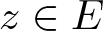 $z \in E$, we define
 \begin{equation}
\hat{E}(z) = E^{-} \oplus \mathbb{R}^+ z, \quad \text{where } \mathbb{R}^+ z:= \lbrace tz; \lt textrm \gt \lt /textrm \gt t \gt 0\rbrace.
\end{equation}
Note that we cannot minimize the functional  $J$ over
 $S_{m}$ directly, because the functional is strongly indefinite. As discussed in Section 1, to overcome this difficulty, we shall minimize
 $J$ over
 $\mathcal{P}_m = \mathcal{P} \cap \tilde{S}_m$, where
 $\mathcal{P}$ and
 $\tilde{S}_m$ are defined in (8) and
 $(10)$, respectively. So, our first task is to show that
 $\mathcal{P}_m$ is a nonempty set.
For any  $u \in H^{1}_{\mathrm{rad}}(\mathbb{R}^{N})$, we define the fibre map
 \begin{equation*}
(s\star u)(x):= e^{Ns/2}u(e^s x) \text{a. e. for } x \in \mathbb{R}^N.
\end{equation*}
It is not difficult to see that  $s\star u \in H^1_{\mathrm{rad}}(\mathbb{R}^{N})$ and that it preserves the
 $L^2$ norm, that is,
 $| s \star u|_{L^{2}} = | u |_{L^{2}}$ for all
 $s \in \mathbb{R}$. Moreover,
 \begin{align}
& \int_{\mathbb{R}^{N}}|s\star u|^{\xi} = e^{\frac{(\xi-2)Ns}{2}}\int_{\mathbb{R}^{N}}|u|^{\xi}, \quad \int_{\mathbb{R}^{N}}|\nabla (s\star u)|^{2} = e^{2s}\int_{\mathbb{R}^{N}}|\nabla u|^{2} \text{and } \cr
& \int_{\mathbb{R}^{N}}\nabla (s\star u) \nabla (s\star v)= e^{2s}\int_{\mathbb{R}^{N}}\nabla u \nabla v.\end{align}
Lemma 2.1. Under the conditions of Theorems 1.1 and 1.2, the set  $\mathcal{P}_{m} $ is nonempty.
Proof. We shall split the proof into three steps.
Step 1: There exists  $w_0= (w_0^1 , w_0^2) \in E$ such that
 $J'(w_0)(\phi,-\phi) = \int_{\mathbb{R}^N}(w_0^2 - w_0^1)\phi$ for all
 $\phi \in H^1_{\mathrm{rad}}(\mathbb{R}^N)$.
Without loss of generality, let us consider  $z_0 = (u_0,u_0) \in E^{+}$ and
 $s \in \mathbb{R}$ fixed. We define the map
 \begin{equation*}\mathcal{J}_{u_0,s}: {E^{-}} \rightarrow \mathbb{R},\end{equation*}
given by
 \begin{align*}
& \mathcal{J}_{u_0,s} (h,-h) = - J( s\star (u_0 + h), s\star (u_0 - h)) + {\int_{\mathbb{R}^N}|s \star h|^2} = \\
& {e^{2s}}\left(\int_{\mathbb{R}^N}|\nabla h|^2 - \int_{\mathbb{R}^N} |\nabla u_0|^{2}\right) + e^{\frac{(p-2)Ns}{2}}\frac{1}{p}\int_{\mathbb{R}^N}|u_0 + h|^{p} + e^{\frac{(q-2)Ns}{2}}\frac{1}{q}\int_{\mathbb{R}^N}|u_0 - h|^{q} \\
&\quad + {\int_{\mathbb{R}^N}|h|^2}.
\end{align*}
Note that since  $u_0 \in H^1$ and
 $s \in \mathbb{R}$ are fixed, if
 $||h|| \to +\infty$, then
 $\mathcal{J}_{u_0,s}(h) \to +\infty$, which ensures that
 $\mathcal{J}_{u_0,s}$ is coercive and then bounded from below. Therefore, there exist a constant
 $c_{u_0,s} \in \mathbb{R}$ and a sequence
 $(h_n)$ in
 $H^1_{\mathrm{rad}}(\mathbb{R}^N)$ such that
 \begin{equation*}
c_{u_0,s} : = \inf_{h \in H^{1}_{\mathrm{rad}}(\mathbb{R}^N) }\mathcal{J}_{u_0,s}(h,-h) \quad \text{and} \quad \lim_{n \rightarrow \infty }\mathcal{J}_{u_0,s}(h_n,-h_n) = c_{u_0,s}.
\end{equation*}
Thus,  $(h_n)$ is a bounded sequence in
 $H^1_{\mathrm{rad}}(\mathbb{R}^N)$, and there exists
 $h_0$ such that, up to a subsequence,
 $h_n \rightharpoonup h_0$ in
 $H^1_{\mathrm{rad}}(\mathbb{R}^N)$. Combining the Sobolev compact embedding
 $H^1_{\mathrm{rad}}(\mathbb{R}^N) \hookrightarrow L^p(\mathbb{R}^N)$, for
 $p \in (2,2^*)$, with the fact that the integral of the gradient term is weakly lower semicontinuous, we obtain
 \begin{equation*}
\mathcal{J}_{u_0,s} (h_0,-h_0) \leq \liminf_{n \to \infty} \mathcal{J}_{u_0,s}(h_n,-h_n) = c_{u_0,s}.
\end{equation*}
Therefore, it follows that  $\mathcal{J}_{u_0,s}(h_0,-h_0) = c_{u_0,s}$.
Hence, let  $ w_0 = (w_0^1, w_0^2)= (s \star (u_0 + h_0), s \star (u_0 - h_0))$, where
 $h_0$ is the critical point of
 $\mathcal{J}_{u_0,s}$. For
 $z = (\phi,-\phi) \in E^-$, we have
 \begin{align*}
\langle \mathcal{J}_{u_0,s} ' (h_0,-h_0) ,z \rangle = -J'(s \star (u_0 + h_0), s \star (u_0 - h_0))(\phi,-\phi) + 2\int_{\mathbb{R}^N} (s\star h_0) \phi= 0,
\end{align*}
and so,
 \begin{align*}
J'(w_0)(\phi,-\phi) = 2\int_{\mathbb{R}^N} (s\star h_0)\phi&= \int_{\mathbb{R}^N}\left[s\star(u_0 +h_0) - s\star(u_0 -h_0) \right]\phi \\ & =\int_{\mathbb{R}^N}(w_0^1 - w_0^2)\phi, \qquad \text{for all } \phi \in H^{1}_{\mathrm{rad}}(\mathbb{R}^N).
\end{align*}
To finish this step, we show that  $c_{u_0,s} \lt 0$ if we fix
 $u_0$, with
 $||u_0||$ sufficiently small. In fact, if
 $h \rightarrow 0$ in
 $H^1_{\mathrm{rad}}(\mathbb{R}^N)$, we obtain
 \begin{align*}
\mathcal{J}_{u_0,s}(h,-h) \rightarrow \mathcal{J}_{u_0,s}(0,0) &= -{e^{2s}} \int_{\mathbb{R}^N} |\nabla u_0|^{2} + e^{\frac{(p-2)Ns}{2}}\frac{1}{p}\int_{\mathbb{R}^N}|u_0 |^{p} \\ &+ e^{\frac{(q-2)Ns}{2}}\frac{1}{q}\int_{\mathbb{R}^N}|u_0|^{q}.
\end{align*}
Taking  $u_0 = tv_0$ and remembering that
 $2 \lt p,q \lt 2^*$, we have
 \begin{align*}
\mathcal{J}_{t v_0,s}(0,0) &= -{e^{2s}} t^2 \int_{\mathbb{R}^N} |\nabla v_0|^{2} + e^{\frac{(p-2)Ns}{2}} \frac{t^p}{p}\int_{\mathbb{R}^N}|v_0 |^{p}\\
&\quad+ e^{\frac{(q-2)Ns}{2}}\frac{t^q}{q}\int_{\mathbb{R}^N}|v_0|^{q} \lt 0, \quad \text{for t \gt 0 small}.
\end{align*}
Thus  $c_{u_0,s} \leq \mathcal{J}_{u_0,s}(0,0) \lt 0$.
Moreover, we can choose  $u_0$ such that
 $||u_0||$ is sufficiently small and then
 $\mathcal{J}_{u_0,s}(h) \lt 0$ for
 $h \rightarrow 0^{+}$, for all
 $s \in \mathbb{R}$. Therefore, we have that
 $c_{u_0,s} \lt 0$.
Step 2: There exists 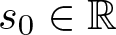 $s_0 \in \mathbb{R}$ such that
 $P(s_0 \star (u_0 + h_0), s_0 \star (u_0 - h_0))=0$, where
 $P$ is defined in (9).
As in Step 1, let  $z_0 = (u_0,u_0)$ fixed and
 $h_0:= h_0(s)$ the critical point of
 $\mathcal{J}_{u_0,s}$. Now, we define the map
 $\mathcal{F}: \mathbb{R} \rightarrow \mathbb{R}$, given by
 \begin{align*}
\mathcal{F}(s)&= {e^{2s}}\left(\int_{\mathbb{R}^N} |\nabla u_0|^{2} -\int_{\mathbb{R}^N}|\nabla h_0|^2 \right) - e^{\frac{(p-2)Ns}{2}}\frac{1}{p}\int_{\mathbb{R}^N}|u_0 + h_0|^{p} \\ &- e^{\frac{(q-2)Ns}{2}}\frac{1}{q}\int_{\mathbb{R}^N}|u_0 - h_0|^{q}.
\end{align*}
Since  $c_{u_0,s} \lt 0$ for all
 $s \in \mathbb{R}$, we know that
 \begin{equation*}
\int_{\mathbb{R}^N} |\nabla u_0|^{2} -\int_{\mathbb{R}^N}|\nabla h_0|^2 \gt 0.
\end{equation*}
Hence, if (5) holds, we have that
 \begin{align*}
& \mathcal{F}'(s) \gt 0, \quad \text{when } s\rightarrow +\infty \\ & \mathcal{F}'(s) \lt 0, \quad \text{when } s\rightarrow -\infty.
\end{align*}
Otherwise, if (6) or (7) hold, we obtain
 \begin{align*}
& \mathcal{F}'(s) \lt 0, \quad \text{when } s\rightarrow -\infty \\ & \mathcal{F}'(s) \gt 0, \quad \text{when } s\rightarrow -\infty.
\end{align*}
In both cases, there exists  $s_0 \in \mathbb{R}$ such that
 $\mathcal{F}'(s_0) = 0$. Thus, one can easily check that
 \begin{equation*}
\mathcal{F}'(s_0) = \frac{1}{2}P(s_0 \star (u_0 +h_0), s_0 \star (u_0 -h_0)) = 0
\end{equation*}
Step 3:  $(s_0\star (u_0 + h_0), s_0 \star (u_0 - h_0)) \in \tilde{S}_m$, where
 $\tilde{S}_m$ is defined in (10).
Observe that the critical level  $c_{u_0,s_0} \in \mathbb{R}$ obtained in Step 1 depends on
 $u_0$. Since
 $\inf \mathcal{J}_{u_0,s} \leq 0$, it follows that the minimum
 $c_{u_0} \rightarrow 0$ as
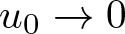 $u_0 \rightarrow 0$. Consequently, the critical point
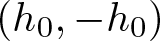 $(h_0,-h_0)$ (which also depends on
 $u_0$) is such that
 $||(h_0,-h_0)||_{E} \rightarrow 0$ as
 $||u_0|| \rightarrow 0$. Therefore, for
 $||u_0||$ sufficiently small, we have that
 $|s_0 \star (u_0 \pm h_0)|_{L^2} = |u_0 \pm h_0|_{L^2}$ is small, ensuring that
 $(s_0\star (u_0 + h_0), s_0 \star (u_0 - h_0)) \in \tilde{S}_m$.
The next two lemmas show us that  $\mathcal{P}_m$ is a natural constraint for our problem. In what follows, for
 $w=(u,v)$, we will denote
 \begin{equation*}
J_w(s): = J(s\star w) = J((s \star u), (s \star v)).
\end{equation*}
Lemma 2.2. For any critical point of  $J_{|\mathcal{P}_m}$, if
 $(J_{w})''(0)\neq0$, then there exists some
 $\lambda \in \mathbb{R}$ such that
 \begin{equation*}
J'(u,v) = \lambda I'(u,v) \text{in } {E^{*}},
\end{equation*}
where  $E^{*}$ is the dual space of
 $E$ and
 $I(u,v)= \frac{1}{2}\int_{\mathbb{R}^N}(|u|^2 + |v|^2)$.
Proof. Let  $w=(u,v)$ be a critical point of
 $J_{|\mathcal{P}_m}$. From the Lagrange multipliers theorem (p. 55, [Reference Kavian17]), there are
 $\lambda, \mu \in \mathbb{R}$ such that
 \begin{equation}
J'(u,v) = \lambda I'(u,v) + \mu P'(u,v) \text{in } {E^*}.
\end{equation}
We shall prove that  $\mu =0$ and then obtain the stated result. Note that a function
 $(u,v)$ solving (13) must satisfy
 \begin{equation*}
\mathcal{E}_{w}'(0):= \frac{d}{ds}\mathcal{E}(s\star w)\displaystyle\vert_{s=0} =0,
\end{equation*}
where  $\mathcal{E}(w):= J(u,v)- \lambda\int_{\mathbb{R}^N} uv -\mu P(u,v) $ is the corresponding functional of (13). Observe that
 \begin{align*}
\mathcal{E}_{w}(s):\!&= \mathcal{E}(s\star w) = J(s\star w) -\lambda\int_{\mathbb{R}^N} (s\star u) (s\star v) -\mu P(s\star w)\cr
&= J_{w}(s) - e^{Ns}\lambda \int_{\mathbb{R}^N}u(e^s x)v(e^s x) - \mu (J_{u})'(s),
\end{align*}
and then
 \begin{equation*}
\mathcal{E}_{w}'(s)= \frac{d}{ds}\mathcal{E}(s \star w) = J'_{w}(s) -\mu J''_{w}(s) - \left[e^{Ns}\lambda \int_{\mathbb{R}^N}u(e^s x)v(e^s x) \right]'.
\end{equation*}
Hence,
 \begin{equation*}
0= (\mathcal{E}_{w})'(0) = (J_{w})'(0) - \mu(J_{w})''(0)= P(w) - \mu(J_{w})''(0),
\end{equation*}
which implies that  $\mu =0$ since
 $(J_{w})''(0)\neq 0$.
Lemma 2.3. Under the condition (5), we have that  $J''_{w} (0) \gt 0$ for any
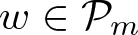 $w \in \mathcal{P}_{m}$, and thus
 $\mathcal{P}_{m}$ is a natural constraint.
Proof. Letting  $w=(u,v)$, a straightforward calculation gives us that
 \begin{align*}
& J''_w (0) = 4\int_{\mathbb{R}^N}\nabla u \nabla v - \left( \frac{N(p-2)}{2} \right)\frac{N(p-2)}{4p}\int_{\mathbb{R}^N}|u|^p \cr
&- \left( \frac{N(q-2)}{2} \right)\frac{N(q-2)}{4q}\int_{\mathbb{R}^N}|v|^q.
\end{align*}
Using the fact that  $P(w)= P(u,v)=0$, we note that
 \begin{align*}
J''_w (0) & = \frac{N(p-2)}{p}\int_{\mathbb{R}^{N}}|u|^p + \frac{N(q-2)}{q}\int_{\mathbb{R}^{N}}|v|^q - \left( \frac{N(p-2)}{2} \right)\frac{N(p-2)}{4p}\int_{\mathbb{R}^N}|u|^p \\ & - \left( \frac{N(q-2)}{2} \right)\frac{N(q-2)}{4q}\int_{\mathbb{R}^N}|v|^q \\ & = \left( 1 - \frac{N(p-2)}{8} \right)\frac{N(p-2)}{p} \int_{\mathbb{R}^N}|u|^p \\
&+ \left( 1 - \frac{N(q-2)}{8} \right)\frac{N(q-2)}{q} \int_{\mathbb{R}^N}|v|^q \gt 0.
\end{align*}
Under the condition (6) or (7), we have an analogous result to Lemma 2.3. More specifically, we have the following.
Lemma 2.4. Under the conditions of Theorem 1.2, for any  $w \in \mathcal{P}_{m}$, we have that
(i)
$J''_{w} (0) \lt 0$ if
$2+ (4/N) \lt p,q \lt 2 + (8/N)$,(ii)
$J''_{w} (0) \gt 0$ if
$2 + (8/N) \lt p,q \lt 2^{*}$.


Thus,  $\mathcal{P}_{m}$ is a natural constraint.
Proof. Following the same steps as in Lemma 2.3, the conclusions follow immediately.
Proposition 2.5. Let  $\lbrace w_n= (u_n, v_n) \rbrace \subset \mathcal{P}_m$ be such that
 $J(u_n,v_n)$ approaches a possible critical value
 $E_m$, then
 $ J'(u_n,v_n) - \lambda_n(u_n + v_n) \rightarrow 0$.
Proof. Repeating the arguments from Lemma 2.3, we have that  $J_{w_n}''(0)\neq 0$, hence there exist sequences
 $\lambda_n, \mu_n \in \mathbb{R}$ such that
 \begin{equation*}
J'(u_n,v_n) - \lambda_n I'(u_n,v_n) - \mu_n P'(u_n,v_n)=o_n(1) \text{in } {E^*}.
\end{equation*}
From Lemma 2.2, one can show that  $\mu_{n}J''_{w_n}(0) \rightarrow 0$. Moreover, if
 $\int_{\mathbb{R}^{N}}(|\nabla u_n|^2 + |\nabla v_n|^2 ) \nrightarrow 0$, we observe that
 \begin{equation}
J'(u_n,v_n) - \lambda_n(u_n + v_n) \rightarrow 0 \text{in } E^{*},
\end{equation}
where  $E^{*}$ is the dual of
 $E$.
Lemma 2.6. Let  $f(s):= |s|^p$,
 $g(s):= |s|^q$ and
 $F(s)= \int_{0}^{s} f(t)dt$,
 $G(s)= \int_{0}^{s} g(t)dt$. Then, given
 \begin{equation*}
N_1(s):= \left(\frac{1}{2}s^2 +s\right)f(u)u + (1+s)f(u)h + F(u) - F((1+s)u +h),
\end{equation*}
 \begin{equation*}
N_2(s):= \left(\frac{1}{2}s^2 +s\right)g(v)v - (1+s)g(v)h + G(v) - G((1+s)v -h),
\end{equation*}
then  $N_1 (s) + N_2 (s) \lt 0$ for
 $u,h \in H^{1}(\mathbb{R}^N)$,
 $h \not\equiv 0$, and
 $s \geq 0$.
Proof. See [Reference Wang, Xu and Zhang25], item (i) in Lemma 2.3.
Proposition 2.7. If  $z= (u,v) \in \mathcal{P}_{m}$ and
 $2 \lt p,q \lt 2^{*}$, then
 \begin{equation*}
\begin{aligned}
J(z) & \geq \sup_{\substack{s \geq 0 \\ h \in E^{-} \setminus \{0\}}} \left\{J(su + h, sv - h) + (1+s) \int_{\mathbb{R}^N} (u - v)h \right\}
\\ & = \sup_{w \in \hat{E}(z)} \left\lbrace J(w) + (1+s)\int_{\mathbb{R}^N}(u-v)h \right\rbrace,
\end{aligned}
\end{equation*}
where  $\hat{E}(z)$ was defined in (11).
Proof. Letting  $z= (u,v) \in \mathcal{P}_{m}$ and
 $w = (su+h,sv-h)\neq 0$ with
 $s \gt 0$ and
 $0 \not\equiv h \in H^{1}(\mathbb{R}^N)$, then
 \begin{align*}
J(z+w) - J(z) &= \int_{\mathbb{R}^N}\nabla((s+1)u +h)\nabla((s+1)v -h) - \int_{\mathbb{R}^N}\nabla u \nabla v \\
& - \int_{\mathbb{R}^N} G((s+1)v-h) + F((s+1)u+h) + \\
\int_{\mathbb{R}^N}(G(v)+F(u)) & = -\int_{\mathbb{R}^N}|\nabla h|^2 + (s^2+2s)\int_{\mathbb{R}^N}\nabla u \nabla v - (s+1)\int_{\mathbb{R}^N}\nabla u \nabla h \\ & + (s+1)\int_{\mathbb{R}^N}\nabla v \nabla h - \int_{\mathbb{R}^N} G((s+1)v-h) + F((s+1)u+h)\\
& + \int_{\mathbb{R}^N}(G(v)+F(u)).
\end{align*}
Using the fact that  $P(u,v)=0$ and
 $J'(u,v)(h,-h)= \int_{\mathbb{R}^N}(u-v)h$, we obtain
 \begin{equation*}
\begin{aligned}
& \int_{\mathbb{R}^{N}}\nabla u \nabla v = \frac{N(p-2)}{4p}\int_{\mathbb{R}^N}|u|^{p} + \frac{N(q-2)}{4q}\int_{\mathbb{R}^N}|v|^{q} \text{and } \\ & \int_{\mathbb{R}^N} \nabla(v - u) \nabla h + \int_{\mathbb{R}^N} \left( |v|^{q-2}v - |u|^{p-2}u \right) h = \int_{\mathbb{R}^N}(u-v)h.
\end{aligned}
\end{equation*}
Thus,
 \begin{equation}
\begin{aligned}
J(z+w) - J(z) &\leq \frac{N(p-2)}{4p} (s^2 + 2s)\int_{\mathbb{R}^N} |u|^p + \frac{N(q-2)}{4q} (s^2 + 2s)\int_{\mathbb{R}^N} |v|^q \\ & + \int_{\mathbb{R}^N}[(1+s)f(u)h + F(u) - F((1+s)u +h) ] \\ & + \int_{\mathbb{R}^N}[-(1+s)g(v)h + G(v) - G((1+s)u -h)] \\ & - {(1+s)\int_{\mathbb{R}^N}(u-v)h.}
\end{aligned}
\end{equation}
Now, noting that  $N(p-2)/2p \leq 1$ and
 $N(q-2)/2q \leq 1$,
 \begin{align*}
& \frac{N(p-2)}{2p}\left(\frac{1}{2}s^{2}+s\right)\int_{\mathbb{R}^N}|u|^p + \frac{N(q-2)}{2q}\left(\frac{1}{2}s^{2}+s\right)\int_{\mathbb{R}^N}|v|^q \cr
&\quad \leq \left(\frac{1}{2}s^{2}+s\right)\int_{\mathbb{R}^N} (|u|^{p} + |v|^q) \cr
&\quad = \left(\frac{1}{2}s^{2}+s\right)\int_{\mathbb{R}^N} (f(u) +g(v)).
\end{align*}
So, it follows from (15) and Lemma 2.6 that
 \begin{equation*}
J(z) \gt J(z+w) + (1+s)\int_{\mathbb{R}^N}(u-v)h,
\end{equation*}
which completes the proof.
The next result plays a crucial role in showing that if the infimum of  $J$ over
 $\mathcal{P}_m$ is achieved, it must be attained on
 $S_m$.
Lemma 2.8. Suppose that  $\inf_{\mathcal{P}_m} J$ is attained. For each
 $(u,v) \in (\tilde{S}_m \setminus S_m) \cap \mathcal{P}_m$, it holds that
 \begin{equation}
\inf_{S_m \cap \mathcal{P}_m } J \lt J(u,v).
\end{equation}
Proof. Suppose, by contradiction, that there exists  $(\tilde{u}, \tilde{v}) \in \mathcal{P}_m$, with
 $|\tilde{u}|_2^{2} + |\tilde{v}|_2^2 \lt m$, such that
 \begin{equation*}
c= J(\tilde{u}, \tilde{v}) \leq \inf_{S_m \cap \mathcal{P}_m} J.
\end{equation*}
Thus  $(\tilde{u}, \tilde{v})$ is a local minimizer for
 $J$ on
 $\mathcal{P}_{m}$. Therefore, there is a Lagrange multiplier
 $\mu \in \mathbb{R}$ such that
 \begin{align*}
& J'(\tilde{u}, \tilde{v})(\varphi,\psi) + \mu\left(\int_{\mathbb{R}^N} \nabla \tilde{u} \nabla \psi + \int_{\mathbb{R}^N} \nabla \tilde{v} \nabla \varphi - \frac{N(p-2)}{4}\int_{\mathbb{R}^N}|\tilde{u}|^{p-2}\tilde{u}\varphi \right.\cr
&\left.\qquad -\, \frac{N(q-2)}{4}\int_{\mathbb{R}^N}|\tilde{v}|^{q-2}\tilde{u}\psi \right)\cr
&\quad {=0},
\end{align*}
for any  $(\varphi, \psi) \in E$. Consequently,
 $(\tilde{u}, \tilde{v})$ solves (in the weak sense)
 \begin{equation}
\left\{\begin{array}{ll}
-(1+\mu)\Delta \tilde{u} = |\tilde{v}|^{q-2}\tilde{v} + \mu \frac{N(q-2)}{4}|\tilde{v}|^{q-2}\tilde{v} \text{in } \mathbb{R}^{N}, \\[4pt] -(1+\mu)\Delta \tilde{v} = |\tilde{u}|^{p-2}\tilde{u} + \mu \frac{N(p-2)}{4}|\tilde{u}|^{p-2}\tilde{u} \text{in } \mathbb{R}^{N}.
\end{array}\right.
\end{equation}
From Theorem 1 in [Reference Sirakov22], and by using a standard bootstrap argument (see [Reference Gilbarg and Trudinger10]), we can see that the solution  $(u,v)$ is in fact a classical solution. Hence, multiplying the first line in (17) by
 $\tilde{v}$ and the second line by
 $\tilde{u}$, it follows from an integration by parts that
 \begin{equation}
2\int_{\mathbb{R}^N} (1+\mu) \nabla \tilde{u} \nabla \tilde{v} = \int_{\mathbb{R}^N}|\tilde{u}|^p + \mu \frac{N(p-2)}{4}\int_{\mathbb{R}^N}|\tilde{u}|^p +\int_{\mathbb{R}^N}|\tilde{v}|^q + \mu \frac{N(q-2)}{4}\int_{\mathbb{R}^N}|\tilde{v}|^q.
\end{equation}
By the Pohozaev identity (see [Reference Korman18]), we also obtain the identity
 \begin{align}
& 2(N-2)\int_{\mathbb{R}^N}(1+\mu)\nabla \tilde{u} \nabla \tilde{v} \cr
&\quad = 2N \left[ \int_{\mathbb{R}^N}\left(\frac{1}{p} + \mu \frac{N(p-2)}{4p} \right)|\tilde{u}|^p + \int_{\mathbb{R}^N}\left(\frac{1}{q} + \mu \frac{N(q-2)}{4q} \right)|\tilde{v}|^q \right].
\end{align}
Multiplying (18) by  $N$ and subtracting (19), we see that
 \begin{align*}
& 2N\int_{\mathbb{R}^N}(1+\mu) \nabla \tilde{u} \nabla \tilde{v} - 2(N-2) \int_{\mathbb{R}^N}(1+\mu) \nabla \tilde{u} \nabla \tilde{v} \cr
& \quad = \left( N - \frac{2N}{p}\right)\int_{\mathbb{R}^N}|\tilde{u}|^p +\left( N - \frac{2N}{q}\right)\int_{\mathbb{R}^N}|\tilde{v}|^q \cr
&\qquad + \mu \left(\frac{N^2(p-2)}{4} - \frac{N^{2}(p-2)}{2p} \right) \int_{\mathbb{R}^N}|\tilde{u}|^p \cr
&\qquad + \mu \left(\frac{N^2(q-2)}{4} - \frac{N^{2}(q-2)}{2q} \right) \int_{\mathbb{R}^N}|\tilde{v}|^q.
\end{align*}
This is equivalent to
 \begin{align}
& \int_{\mathbb{R}^N}(1+\mu) \nabla \tilde{u} \nabla \tilde{v} = \frac{N(p-2)}{4p}\int_{\mathbb{R}^N}|\tilde{u}|^{p} + \frac{N(q-2)}{4q}\int_{\mathbb{R}^N}|\tilde{v}|^{q} \cr
&\quad +\frac{\mu N}{4}\left( \frac{N(p-2)}{4} - \frac{N(p-2)}{2p} \right)\int_{\mathbb{R}^N}|\tilde{u}|^{p} \cr
&\quad + \frac{\mu N}{4}\left( \frac{N(q-2)}{4} - \frac{N(q-2)}{2q} \right)\int_{\mathbb{R}^N}|\tilde{v}|^{q}.\end{align}
However,  $(\tilde{u}, \tilde{v}) \in \mathcal{P}_m$, so
 \begin{equation*}
\int_{\mathbb{R}^N}\nabla \tilde{u} \nabla \tilde{v} = \frac{N(p-2)}{4p}\int_{\mathbb{R}^N}|\tilde{u}|^p + \frac{N(q-2)}{4q}\int_{\mathbb{R}^N}|\tilde{v}|^q.
\end{equation*}
Plugging the last identity into (20), we obtain
 \begin{align*}
& \mu \left( \frac{N(p-2)}{4p}\int_{\mathbb{R}^N}|\tilde{u}|^p + \frac{N(q-2)}{4q}\int_{\mathbb{R}^N}|\tilde{v}|^q\right) = \\ & \frac{\mu N}{4}\left( \frac{N(p-2)}{4} - \frac{N(p-2)}{2p} \right)\int_{\mathbb{R}^N}|\tilde{u}|^{p} + \frac{\mu N}{4}\left( \frac{N(q-2)}{4} - \frac{N(q-2)}{2q} \right)\int_{\mathbb{R}^N}|\tilde{v}|^{q}.
\end{align*}
Therefore, if  $\mu \neq 0$, we have
 \begin{equation*}
\frac{N(p-2)}{2} \int_{\mathbb{R}^N}|\tilde{u}|^p \left(\frac{1}{2p} - \frac{N}{8} - \frac{1}{p} \right) + \frac{N(q-2)}{2} \int_{\mathbb{R}^N}|\tilde{v}|^q \left(\frac{1}{2q} - \frac{N}{8} - \frac{1}{q} \right) =0,
\end{equation*}
which is impossible because
 \begin{equation*}
\left(\frac{1}{2p} - \frac{N}{8} - \frac{1}{p} \right) + \left(\frac{1}{2q} - \frac{N}{8} - \frac{1}{q} \right) \lt 0.
\end{equation*}
Thus, we must have  $\mu =0$, and then
 $(\tilde{u}, \tilde{v})$ satisfies
 \begin{eqnarray*}
\left\{\begin{array}{ll}
-\Delta \tilde{u} = |\tilde{v}|^{q-2}\tilde{v} \quad \text{in } \mathbb{R}^{N}, \\ -\Delta \tilde{v} = |\tilde{u}|^{p-2}\tilde{u} \quad \text{in } \mathbb{R}^{N}.
\end{array}\right.
\end{eqnarray*}
So, we can conclude that
 \begin{equation*}
\int_{\mathbb{R}^N}\nabla \tilde{u} \nabla \tilde{v} = \frac{1}{2}\int_{\mathbb{R}^N}(|\tilde{u}|^p + |\tilde{v}|^q)
\end{equation*}
and using again that  $(\tilde{u}, \tilde{v}) \in \mathcal{P}_m$, we obtain
 \begin{equation*}
\left( \frac{N(p-2)}{4p} - \frac{1}{2}\right)\int_{\mathbb{R}^N}|\tilde{u}|^p + \left( \frac{N(q-2)}{4q} - \frac{1}{2}\right)\int_{\mathbb{R}^N}|\tilde{v}|^q = 0,
\end{equation*}
which is also impossible, because  $p,q \lt 2^*$. Then (16) holds.
3. The
$L^2$-subcritical case

In this section, we always consider that  $p$ and
 $q$ satisfy the hypothesis (5).
An important step to show existence of normalized solutions in this case is to show that the functional  $J$ is bounded from below in
 $\mathcal{P}_{m}$. To this end, we combine Proposition 2.7 with the famous Gagliardo–Nirenberg inequality. In the next, we recall such referred inequality.
Lemma 3.1. (Gagliardo–Nirenberg inequality)
For any  $\xi \gt 2$, the following inequality holds:
 \begin{equation*}
|u|_{L^{\xi}}^{\xi} \leq C(\xi,N)|\nabla u|_{L^{2}}^{\gamma{\xi}}|u|_{L^2}^{(1-\gamma){\xi}},
\end{equation*}
where  $\gamma = N\left(\frac{1}{2} - \frac{1}{\xi}\right)$.
We highlight that if  $(u,v) \in \mathcal{P}$, then
 \begin{align}
J(u,v) &= J(u,v) - P(u,v)\cr
& = \left(\frac{N(p-2)}{4p} - \frac{1}{p} \right)\int_{\mathbb{R}^N}|u|^{p} + \left(\frac{N(q-2)}{4q} - \frac{1}{q} \right) \int_{\mathbb{R}^N}|v|^{q} \lt 0.
\end{align}
Lemma 3.2. The set  $\mathcal{P}_{m}$ is bounded in
 $E$.
Proof. Suppose on the contrary that  $\mathcal{P}_{m}$ is unbounded in
 $E$. Then there exists
 $z_n=(u_n,v_n)$ such that
 $||z_n||_{E} \rightarrow +\infty$ in
 $E$. From Proposition 2.7, we know that
 \begin{equation}
{J(z_n) \geq \sup_{w\in \hat{E}(z_n)} \left(J(w) + \int_{\mathbb{R}^N}(u_n-v_n)h \right), \text{for each } n \in \mathbb{N}. }
\end{equation}
Now, we observe that
 \begin{equation*} \left(\frac{u_n + v_n}{2}, \frac{u_n + v_n}{2} \right) \in \hat{E}(z_n), \end{equation*}
since
 \begin{equation*}
\left(\frac{u_n + v_n}{2}, \frac{u_n + v_n}{2} \right) = (u_n,v_n) - \left(\frac{u_n - v_n}{2}, \frac{v_n - u_n}{2} \right).
\end{equation*}
Hence, denoting  $w_n= (u_n+v_n)/2$ and
 $h=(u_n-v_n)/2$, we conclude from (22) that
 \begin{equation*}
\begin{aligned}
J(u_n, v_n) &\geq J(w_n,w_n) + \frac{1}{2}\int_{\mathbb{R}^N}(u_n-v_n)^2 \\ &\geq \int_{\mathbb{R}^N} |\nabla w_n|^{2} -\frac{1}{p} \int_{\mathbb{R}^N}|w_n|^p - \frac{1}{q}\int_{\mathbb{R}^N} |w_n|^q.
\end{aligned}
\end{equation*}
Using the Gagliardo–Nirenberg inequality, we have
 \begin{equation*}
J(u_n, v_n) \geq |\nabla w_n|^{2}_{2} - C(N,p)m^{p(1-\gamma_{p})}|\nabla w_n|_{2}^{p\gamma_p} - C(N,q)m^{q(1-\gamma_{q})}|\nabla w_n|_{2}^{q\gamma_q},
\end{equation*}
where  $\gamma_p = N\left(\frac{1}{2} - \frac{1}{p}\right)$ and
 $\gamma_q = N\left(\frac{1}{2} - \frac{1}{q}\right)$. Since
 $||(w_n, w_n)||_{E} \rightarrow +\infty$ as
 $||(u_n, v_n)||_{E} \rightarrow +\infty$, and remembering from the hypotheses for
 $p$ and
 $q$ in (5) that we have
 $p\gamma_{p}, q\gamma_q \lt 2$, we can infer that
 \begin{equation*}
J(z_n) = J(u_n,v_n) \rightarrow + \infty \quad\text{as} \quad ||(u_n,v_n)||_{E} \rightarrow + \infty.
\end{equation*}
However, this contradicts (21), so  $\mathcal{P}_{m}$ must be bounded in
 $E$.
Corollary 3.3. There exists an  $E_m \in \mathbb{R}$ such that
 \begin{equation*}
E_m:= \inf_{w \in \mathcal{P}_m} J(w),
\end{equation*}
and  $E_m \lt 0$.
Proof. Since  $J$ is a
 $C^1$ functional and by Lemma 3.2, the set
 $\mathcal{P}_m$ is bounded, the existence of
 $E_m$ is assured. Moreover, from (21), we infer that
 \begin{equation*}
\inf_{w \in \mathcal{P}_m} J(w) \leq \sup_{w \in \mathcal{P}_m} J(w) \leq 0,
\end{equation*}
so  $E_m \leq 0$. If
 $E_m = 0$, then
 $\sup_{w \in \mathcal{P}_m} J(w)=0$, implying that
 $\mathcal{P}_m = \lbrace 0 \rbrace$, which is a contradiction.
Proof of Theorem 1.1: Letting  $(u_n, v_n) \in \mathcal{P}_m$ be a minimizing sequence for
 $J_{|\mathcal{P}_m}$, then from Lemmas 2.2 and 2.3, together with Proposition 2.5, we obtain that
 \begin{equation}
\langle J'(u_n,v_n), (\varphi,\psi)\rangle = \lambda_n \langle I'(u_n, v_n), (\varphi,\psi) \rangle \quad \text{for all } (\varphi,\psi) \in E,
\end{equation}
where  $I(u_n,v_n) = \frac{1}{2}\int_{\mathbb{R}^N}(|u_n|^2 +|v_n|^2)$. From Lemma 3.2,
 $\lbrace(u_n,v_n)\rbrace$ is bounded in
 $E$, hence there exists
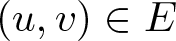 $(u,v) \in E$ such that
 $(u_n, v_n) \rightharpoonup (u,v)$ in
 $E$ and, since
 $H^1_{\mathrm{rad}}(\mathbb{R}^N) \hookrightarrow L^p(\mathbb{R}^N)$ compactly for
 $p \in (2, 2^{*})$, we have that
 \begin{equation}
\int_{\mathbb{R}^N}|u_n|^p + \int_{\mathbb{R}^N}|v_n|^q \rightarrow \int_{\mathbb{R}^N}|u|^p + \int_{\mathbb{R}^N}|v|^q \text{as } n \rightarrow +\infty.
\end{equation}
We claim that  $(\lambda_n)$ is bounded. In fact, for any
 $(\varphi,\psi) \in C_{0}^{\infty}(\mathbb{R}^N) \times C_{0}^{\infty}(\mathbb{R}^N)$ in (23), we have
 \begin{align}
& \int_{\mathbb{R}^N}\nabla u_n \nabla\psi + \int_{\mathbb{R}^N}\nabla v_n \nabla\varphi - \int_{\mathbb{R}^N}|u_n|^{p-1}\varphi - \int_{\mathbb{R}^N}|v_n|^{q-1}\psi = \cr
& \lambda_n\int_{\mathbb{R}^N} (u_n \psi + v_n \varphi). \end{align}
Taking  $n \rightarrow +\infty$ on both sides of the equality above, and using the weak convergence together with (24), we obtain that
 \begin{align*}
& \int_{\mathbb{R}^N}\nabla u \nabla\psi + \int_{\mathbb{R}^N}\nabla v \nabla\varphi - \int_{\mathbb{R}^N}|u|^{p-1}\varphi - \int_{\mathbb{R}^N}|u|^{q-1}\psi = \\ & \lim_{n \rightarrow + \infty}\lambda_n\int_{\mathbb{R}^N} (u \psi + v \varphi),
\end{align*}
and then either  $(\lambda_n)$ is bounded or
 \begin{equation*}
\int_{\mathbb{R}^N} (u \psi + v \varphi) =0, \quad \text{for all } (\varphi,\psi) \in C_{0}^{\infty}(\mathbb{R}^N) \times C_{0}^{\infty}(\mathbb{R}^N).
\end{equation*}
In the latter case, by a density argument, we have that
 \begin{equation*}
\int_{\mathbb{R}^N}u \psi = 0, \quad \text{for all } \psi \in H^{1}(\mathbb{R}^N).
\end{equation*}
In particular, for 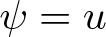 $\psi =u$, we have that
 $ \int_{\mathbb{R}^N} |u|^{2} = 0$, which implies (from the weak convergence
 $u_n \rightharpoonup u$ in
 $H^{1}(\mathbb{R}^N)$) that
 $u(x) \equiv 0$ a.e. in
 $\mathbb{R}^{N}$. However, in that case,
 \begin{equation*}
\int_{\mathbb{R}^N}|u_n|^p \rightarrow \int_{\mathbb{R}^N}|u|^p = 0,
\end{equation*}
and then
 \begin{equation*}
0 +o_n(1) = J(u_n,v_n) - P(u_n,v_n) = E_m + o_n(1) \lt 0,
\end{equation*}
a contradiction. So  $(\lambda_n)$ is a bounded sequence in
 $\mathbb{R}$ and up to a subsequence
 $\lambda_n \rightarrow \lambda$, for some
 $\lambda \in \mathbb{R}$. Hence, taking
 $n\rightarrow +\infty$ in (25) and using a density argument, we obtain
 \begin{align}
\int_{\mathbb{R}^N}\nabla u \nabla\psi + \int_{\mathbb{R}^N}\nabla v \nabla\varphi &= \lambda\int_{\mathbb{R}^N} (u \psi + v \varphi) + \int_{\mathbb{R}^N}|u|^{p-1}\varphi \cr
&\quad +\int_{\mathbb{R}^N}|v|^{q-1}\psi , \text{for all } (\varphi, \psi) \in E.
\end{align}
Therefore,  $(u, v)$ solves (in the weak sense)
 \begin{equation}
\left\{\begin{array}{ll}
-\Delta u = \lambda u + |v|^{q-2}{v} \text{in } \mathbb{R}^{N}, \\ -\Delta v = \lambda v + |u|^{p-2}{u} \text{in } \mathbb{R}^{N}.
\end{array}\right.
\end{equation}
Claim:  $(u,v) \neq (0,0)$.
Assuming by contradiction that  $u \equiv 0$, and choosing
 $(\varphi, \psi) = (v,0)$ in (26), we conclude that
 $v \equiv 0$. We have two cases to consider.
Case 1:  $u_{n}$ converges strongly to
 $u \equiv 0$; that is,
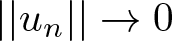 $||u_{n}|| \rightarrow 0$. Using the fact that
 $(u_{n})$ is bounded by the Cauchy–Schwarz inequality, we obtain
 \begin{equation*}
\lim_{n\rightarrow +\infty}\int_{\mathbb{R}^{2}}(\nabla u_{n} \nabla v_{n} + \lambda u_{n} v_{n} ) \rightarrow 0,
\end{equation*}
and from the compact embedding  $H^1_{\mathrm{rad}}(\mathbb{R}^N) \hookrightarrow L^p(\mathbb{R}^N)$ for
 $p \in (2, 2^{*})$, we also obtain
 \begin{equation*}
\int_{\mathbb{R}^N}|u_n|^p + \int_{\mathbb{R}^N}|v_n|^q \rightarrow 0, \text{as } n\rightarrow +\infty.
\end{equation*}
These two convergences imply that
 \begin{equation*}
J(u_n,v_n) \rightarrow E_m= 0,
\end{equation*}
which is a contradiction.
Case 2:  $u_{n}$ converges weakly to
 $0$ in
 $H^{1}_{\mathrm{rad}}(\mathbb{R}^N)$ but does not converge strongly. In other words,
 $u_{n} \rightharpoonup 0$ in
 $H^{1}_{\mathrm{rad}}(\mathbb{R}^N)$, and there is a constant
 $C \gt 0$ such that
 $\displaystyle\liminf_{n\rightarrow +\infty}||u_{n}|| \geq C$. In that case, by the compact embedding,
 $v_n \rightarrow 0$ in
 $L^{q}(\mathbb{R}^N)$, so
 \begin{align*}
\lim_{n\rightarrow +\infty} P(u_n,v_n)\! & =\! \lim_{n\rightarrow +\infty}\!\left( \int_{\mathbb{R}^N}\nabla u_n \nabla v_n - \frac{N(p-2)}{4p}\!\int_{\mathbb{R}^N}|u_n|^{p} \!-\! \frac{N(q-2)}{4q}\!\int_{\mathbb{R}^N}|v_n|^{q}\right)
\\ & = \lim_{n\rightarrow +\infty}\int_{\mathbb{R}^N}\nabla u_n \nabla v_n,
\end{align*}
and then
 \begin{equation*}
\lim_{n\rightarrow +\infty}\int_{\mathbb{R}^N}\nabla u_n \nabla v_n = 0,
\end{equation*}
which contradicts  $J(u_n,v_n) \rightarrow E_m \lt 0$. So, this case cannot occur.
Now we shall show that  $\lambda \gt 0$. For this, we consider
 $(\varphi,\psi)=(0,u^-)$ in (26), where
 $u^-$ is the negative part of
 $u$. Hence,
 \begin{align*}
& \int_{\mathbb{R}^N}\nabla u \nabla u^- = \lambda \int_{\mathbb{R}^N} u u^- + \int_{\mathbb{R}^N}|v|^{q-1}u^- \Rightarrow \\
&\quad -\int_{\mathbb{R}^N}|\nabla u^-|^2 = -\lambda \int_{\mathbb{R}^N}|u^{-}|^2 + \int_{\mathbb{R}^N} |v|^{q-1}u^-.
\end{align*}
Since the left-hand side is negative and  $\int_{\mathbb{R}^N} |v|^{q-1}u^- \gt 0$, we must have that
 $-\lambda \int_{\mathbb{R}^N}|u^{-}|^2 \lt 0$, which implies that
 $\lambda \gt 0$.
To conclude the proof, it remains to show that  $(u,v) \in \mathcal{P}_m \cap S_m$. As shown in Lemma 2.8, the pair
 $(u,v)$ satisfies
 $(27)$ in the classical sense. Consequently, combining the Pohozaev identity with
 $(26)$, we infer that
 $P(u,v)=0$. Moreover, using the fact that
 $P(u,v)=0$ and the weak convergence
 $(u_n,v_n) \rightharpoonup (u,v)$ in
 $E$, we obtain
 \begin{align*}
&\lim_{n \to \infty}\int_{\mathbb{R}^N}\nabla u_n \nabla v_n
= \int_{\mathbb{R}^N}\nabla u \nabla v, \quad
\lim_{n \to \infty}J'(u_n,v_n)(h,-h)
= J'(u,v)(h,-h), \cr
& (h,-h) \in E^- \quad\text{and}\quad \int_{\mathbb{R}^N}(|u|^2 + |v|^2) \leq m.
\end{align*}
Therefore,  $(u,v) \in \mathcal{P}_m$ and
 $J(u,v)=E_m$. Finally, by Lemma 2.8, we conclude that
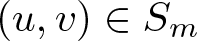 $(u,v) \in S_m$.
4. The
$L^2$-supercritical case

In this section, we are going to show the existence of solutions for  $(H)$ under the conditions imposed in Theorem 1.2. The set
 $\mathcal{P}_m$ is the same as defined previously and, in the same way, we can show that
 $\mathcal{P}_m \neq \emptyset$, but in this case, if (6) or (7) holds and if
 $(u,v) \in \mathcal{P}_m$, then
 \begin{align}
J(u,v) = J(u,v) - P(u,v) &= \left(\frac{N(p-2)}{4p} - \frac{1}{p} \right)\int_{\mathbb{R}^N}|u|^{p} \cr
&\quad+ \left(\frac{N(q-2)}{4q} - \frac{1}{q} \right) \int_{\mathbb{R}^N}|v|^{q} \gt 0.
\end{align}
This shows that  $J$ is bounded from below in
 $\mathcal{P}_m$. The next lemma shows us that the infimum of
 $J$ restricted to
 $\mathcal{P}_m$ is nonzero.
Lemma 4.1. There exists an  $\tilde{E}_{m} \in \mathbb{R}$ such that
 \begin{equation*}
\tilde{E}_{m} : = \inf_{w \in \mathcal{P}_m}J(w) \gt 0.
\end{equation*}
Proof. The existence of an infimum is guaranteed by (28). To see that  $\tilde{E}_{m} \gt 0$, we observe from Lemma 2.6 that
 \begin{equation*}
{ J(z) \geq \max_{w \in \hat{E}(z)} \left(J(w) + \int_{\mathbb{R}^N}(u-v)h \right), \quad \text{for } z \in \mathcal{P}_m,}
\end{equation*}
and then
 \begin{equation*}
\inf_{z \in \mathcal{P}_m}J(z) \geq {\inf_{z \in \mathcal{P}_m} \max_{w \in \hat{E}(z)}\left(J(w) + \int_{\mathbb{R}^N}(u-v)h \right).}
\end{equation*}
However, since  $\mathcal{P}_m \subset E \setminus E^{-}$,
 \begin{align}
\inf_{z \in \mathcal{P}_m} J(z) & \geq \inf_{z \in \mathcal{P}_m} \max_{w \in \hat{E}(z)}\left(J(w) + \int_{\mathbb{R}^N}(u-v)h \right)\cr
& \geq \inf_{z \in E \setminus E^{-}} \max_{w \in \hat{E}(z)}\left(J(w) + \int_{\mathbb{R}^N}(u-v)h \right).
\end{align}
Now, for any  $a \gt 0$, let
 \begin{equation*}
S^{+}_a : = \lbrace z \in E^+ ; ||z||_{E} = a\rbrace \quad \text{and } \quad\mathbb{R}^{+}z:= \lbrace tz; t\geq 0 \rbrace.
\end{equation*}
Note that from the definition of  $\hat{E}(z)$, we can conclude that
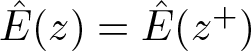 $\hat{E}(z) = \hat{E}(z^{+})$ and then
 \begin{align}
\inf_{z \in E \setminus E^{-}} \max_{w \in \hat{E}(z)}\left(J(w) + \int_{\mathbb{R}^N}(u-v)h \right) & = \inf_{z \in E^{+}\setminus \lbrace 0 \rbrace} \max_{w \in \hat{E}(z)}\left(J(w) + \int_{\mathbb{R}^N}(u-v)h \right) \cr & = \inf_{z \in S^{+}_{a} } \max_{w \in \hat{E}(z)}\left(J(w) + \int_{\mathbb{R}^N}(u-v)h \right) \cr
& \geq \inf_{z \in S^{+}_{a} } \max_{w \in \mathbb{R}^{+}z}\left(J(w) + \int_{\mathbb{R}^N}(u-v)h \right).
\end{align}
We note that if  $w= sz + (h,-h) \in \mathbb{R}^{+}z$, then
 $h=0$. Hence, for any
 $z=(u,u) \in E$ with
 $||z||_{E} =a$, we have
 \begin{align*}
\max_{w \in \mathbb{R}^{+}z}J(w) \geq J(z) = \int_{\mathbb{R}^N}|\nabla u|^2 - \frac{1}{p}\int_{\mathbb{R}^N}|u|^{p} - \frac{1}{q}\int_{\mathbb{R}^N}|u|^{q}.
\end{align*}
Using the Gagliardo–Nirenberg inequality and (6) or (7), we have
 \begin{align*}
J(z) & \geq |\nabla u|^{2}_{2} - C(N,p)|u|_{2}^{p(1-\gamma_{p})}|\nabla u|_{2}^{p\gamma_p} - C(N,q)|u|_{2}^{q(1-\gamma_{q})}|\nabla u|_{2}^{q\gamma_q} \\ & = |\nabla u|^{2}_{2} \left( 1 - C(N,p)|u|_{2}^{p(1-\gamma_{p})}|\nabla u|_{2}^{p\gamma_p - 2} - C(N,q)|u|_{2}^{q(1-\gamma_{q})}|\nabla u|_{2}^{q\gamma_q-2} \right).
\end{align*}
Thus, taking  $a \gt 0$ fixed but small enough, for any
 $z= (u,u) \in S^{+}_a$, we can estimate
 \begin{equation*}
\max_{w \in \mathbb{R}^{+}z}J(w) \geq J(z) \geq \varepsilon (a) \gt 0.
\end{equation*}
Lemma 4.2. Letting  $2 + \frac{4}{N} \lt p,q \lt 2^{*}$, if
 $(u_n,v_n) \in \mathcal{P}_m$ be a sequence such that
 \begin{equation*}
J(u_n,v_n) \rightarrow \tilde{E}_m = \inf_{w \in \mathcal{P}_m}J(w),
\end{equation*}
then 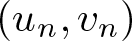 $(u_n,v_n)$ is bounded in
 $E$.
Proof. Letting  $(u_n, v_n) \in \mathcal{P}_m$ be a minimizing sequence for
 $J_{|\mathcal{P}_m}$, then
 \begin{align*}
& 0 \lt \tilde{E}_m +o_n(1) = J(u_n , v_n) - P(u_n , v_n) = \\ & \left(\frac{N(p-2)}{4p} - \frac{1}{p} \right)\int_{\mathbb{R}^N}|u_n|^{p} + \left(\frac{N(q-2)}{4q} - \frac{1}{q} \right) \int_{\mathbb{R}^N}|v_n|^{q},
\end{align*}
which implies that there exists a  $C \gt 0$ such that
 \begin{equation}
\int_{\mathbb{R}^N}|u_n|^{p} + \int_{\mathbb{R}^N}|v_n|^{q} \leq C.
\end{equation}
Now, since
 \begin{equation*} \left(\frac{u_n + v_n}{2}, \frac{u_n + v_n}{2} \right) = (u_n,v_n) - \left(\frac{u_n - v_n}{2}, \frac{v_n - u_n}{2} \right) \in \hat{E}(u_n,v_n), \end{equation*}
we have from Proposition 2.7 that
 \begin{equation*}
\begin{aligned}
J(u_n,v_n) &\geq J\left(\frac{u_n + v_n}{2}, \frac{u_n + v_n}{2} \right) + {\frac{1}{2}\int_{\mathbb{R}^N}(u_n-v_n)^2} \\ &\geq \frac{1}{4}\int_{\mathbb{R}^{N}}|\nabla (u_n+v_n)|^2 - \frac{1}{p}\int_{\mathbb{R}^N}|u_n+v_n|^p - \frac{1}{q}\int_{\mathbb{R}^N}|u_n+v_n|^q.
\end{aligned}
\end{equation*}
Therefore, if  $|\nabla u_n|_2$ or
 $|\nabla v_n|_2$ were unbounded, from (31) we would have
 \begin{equation*}
\tilde{E}_m +o_n(1) =J(u_n,v_n) \geq J\left(\frac{u_n + v_n}{2}, \frac{u_n + v_n}{2} \right) \rightarrow + \infty \quad \text{as } n\rightarrow +\infty.
\end{equation*}
With this contradiction, we finish the proof.
Proof of Theorem 1.2:
We also observe that, from Lemmas 2.2 and 2.4 together with Proposition 2.5, we can obtain that
 \begin{equation*}
J'(u_n,v_n) = \lambda_n I'(u_n, v_n) \text{in } \mathbb{R}^{N},
\end{equation*}
where  $I(u_n,v_n) = \frac{1}{2}\int_{\mathbb{R}^N}(|u_n|^2 +|v_n|^2)$. Since
 $(u_n,v_n)$ is bounded in
 $E$ (Lemma 4.2), we can follow the same steps as in the proof of Theorem 1.1 to obtain the desired result.
Acknowledgements
The first author would like to thank DM/UFSCAR São Carlos for the hospitality and support. This work was carried out while he was visiting that institution. Braulio B. V. Maia was partially supported by Grant No. FAPESP/Brazil-Proc 2023/09656-8. O. H. Miyagaki was partially supported by FAPESP/Brazil-Proc 2002/16407-1 and CNPq/Brazil-Proc 303256/2022-2. The authors are grateful to the anonymous referees for their careful reading and constructive comments, which significantly improved the manuscript.



