Background
Steel is vital to infrastructure in most economies and represents a key construction material. Its use in infrastructure applications ranges from buildings to mass transit to utility and energy systems. From the 1800s, technological advances and economic forces brought steel into construction, replacing cast and wrought iron, and today, these forces challenge and push forward the use of steel in construction. Bessemer patented his steelmaking process in 1856, enabling the mass production of steel. Reference Mowey and Rosenberg1 By 1879, Gilchrist Thomas overcame the problems associated with using phosphoric iron ores, improving the ductility of steel and widening its application beyond rails to structural uses. Reference Shamsuddin2 Further developments, such as the Siemens-Martin process of open-hearth furnace steel production using a large, shallow, brick-lined furnace to retain and reutilize the heat of the reactions, Reference Hillstrom and Hillstrom3 as well as fundamental understanding of thermochemical reactions, Reference Fruehan4 increased the production of steel, leading to its part in industrialization and urbanization across the globe. As steel construction developed, buildings became larger and more complex.
Although post-World War II shortages favored reinforced concrete in construction, since the mid-1980s, steel’s market share of the buildings sector has grown. More than 95% of single-story industrial and 70% of multi-story nonresidential buildings use hot-rolled steel as the primary framing material, and there is significant use in infrastructure applications, including rail tracks, road barriers, and bridges. In Europe, the UK is set to lead the growth rate of steel use in construction at 2.8% per annum compared to a European average of 1.8%, with one-half of the demand coming from the residential sector by 2030. Reference Mowey and Rosenberg1 The World Steel Association reports that the sector with the largest consumption of steel, using around 50% of all steel produced, is the construction and housing sector. Reference Mowey and Rosenberg1 Predictions indicate the use of steel will be 50% greater by 2050 in response to the demands of the growing population. Reference Mowey and Rosenberg1
Current demographic trends toward increased urbanization will play a key role in driving greater use of steel in infrastructure applications as well as large construction and housing developments. The versatility and adaptability of steel opens new opportunities, providing massive potential for novel steel-based solutions to address the challenges faced by future cities.
Overview of steel construction
Approaches to steel construction vary depending on application. Bridges normally use hot-rolled plate, typically with a yield strength between 355 and 460 MPa, which is fabricated into girders or boxes where the element thickness may exceed 50 mm. Buildings normally use hot-rolled sections connected by a combination of bolts and welds to form frames suitable for use in long-spanning floors and high rises. In contrast to bridges, the element thickness in buildings typically ranges from 5 to 40 mm, and the elements are often used with concrete in a “composite” construction to make the most of the two materials. Reference Simms and Hughes5
Traditionally, hot-rolled plates and hot-rolled open sections have been the mainstay of steel framing, but developments in alloy composition and forming processes have led to greater use of hollow-section frame elements, often chosen for architectural reasons.
Thinner-gauge steel elements also contribute significantly to the buildings market. Light steel structural elements use cold-formed steel channel sections with depths between 75 mm and 300 mm. Reference Yandzio, Lawson and Way6 Advances in steel metallurgy opened the market to these higher-strength (typically >450 MPa yield strength), cold-formable steels for construction. As a result, light steel framing sections are much thinner than hot-rolled sections, having element thicknesses that are typically in the range of 1 to 2.5 mm (although thinner or indeed thicker is possible). The sections are manufactured using cold-roll forming from sheet that is galvanized to provide corrosion protection. Light steel framing is typically used in structures up to eight stories high when employed as the primary framing material.
The use of light steel framing depends on region and building type—typical applications of light steel framing are in the residential market, where light steel outperforms timber framing in a number of ways. Reference Yandzio, Lawson and Way6 The frames typically comprise a combination of different section sizes and contain floor joists, columns, and load-bearing and nonload-bearing walls and partitions. Individual stick elements may be joined into panels or volumetric modules in the factory to reduce time and labor on-site. The variety of joining methods for these sections—welding, bolting, clinching, and self-drilling, self-tapping screws—facilitates this range of degrees of modularity. Light steel is also employed as secondary elements in conjunction with hot-rolled steel or concrete frames where the lightweight framing forms infill walls.
Thin steel of around 1 mm finds further use in construction. Applications include the building envelope (cladding) where colored polymeric overlay coatings may be applied for decorative panels. Further uses are in secondary steelwork, purlins, and side rails, to span between mainframe members and as flat- and rolled-profile roofing panels, which may also be coated. Reference Heywood7
The competition
The main competitor material for hot-rolled steel sections and plates in both bridges and buildings is reinforced and prestressed concrete. In building applications, concrete is often chosen because of the perceived benefits of greater thermal mass. Thermal mass is the ability of the fabric of a building to absorb heat and to store it. Designing with thermal mass exploits inherent material properties to passively control building temperature, reducing temperature variations and providing a low-carbon, sustainable solution to building control by reducing running costs.
The perception that concrete floor slabs provide better thermal mass has been challenged by a study of five floor constructions, Reference Lim8 all of which have exposed thermal mass, including (a) Tata Slimdek lightweight steel Reference Rackham, Couchman and Hicks9 (137 mm), (b) composite flat slab—ComFlor70 (104 mm), Reference Rackham, Couchman and Hicks9 (c) precast concrete (200 mm), (d) reinforced concrete (300 mm), and (e) hollow-core precast concrete (200 mm)—the modeled equivalent concrete thickness is given in parentheses. The analysis showed a relatively minor difference in the thermal mass performance between the lightweight steel floor constructions and the heavyweight constructions. It was proposed that the profiled steel decking increased the available surface area, raising the heat-transfer effect of the available thermal mass. Often missed from oversimplistic arguments is the fact that thermal mass alone is not enough to regulate temperature, and a strategy that allows the stored heat to escape overnight is essential. This cyclic nature of temperature regulation is why excessive mass serves no purpose. The use of lightweight composite steel-concrete floors has further advantages, such as reduced floor depths compared to traditional massive concrete construction, allowing for reduced building height or for extra floors to be built.
Although reinforced concrete dominates construction in many countries as a result of conservative industry practice, politics, and tradition, steel construction can offer benefits. The longer-spanning ability of steel beams (typically ∼30 m, but spans of up to 60 m are possible) provides flexibility of internal space, both initially in design, and later, in adaptability during refurbishment. Foundation requirements can be reduced by these longer spans combined with the relatively low superstructure weight offered by steel frames. Further benefits include the increased speed of construction of steel-concrete composite structures, including the potential for off-site construction. The flexibility and longer spans also facilitate new architectural possibilities and highly efficient designs, particularly for single-story industrial buildings. The greater ability of steel to go higher has long been recognized and demonstrated by the number of steel-framed skyscrapers around the world. Figure 1 illustrates the use of steel in modern construction with hot-rolled steel members showing a rust-colored top surface along with profiled galvanized steel decking. The hot-rolled members provide the supporting frame for the steel decking. Reference Rackham, Couchman and Hicks9
Hot-rolled steel frame with reentrant profiled steel decking (type of steel decking R51) ready for placement. Photo courtesy of Structural Metal Decks.

New and future trends for steel in construction
Labor costs are typically high globally compared to the cost of construction materials. This imbalance may lead to excess material and waste on-site. A future trend arises from the inevitable revision of the balance between monetary cost and the carbon footprint of construction. The trend of life-cycle analysis will increase in significance during both design and construction to determine the overall environmental impact, in terms of volume of material used, energy consumed, or emissions. In terms of construction, the use of lightweight steel-framed composite structures lends itself to efficient material use and deconstruction, allowing the possibility of high recycled or reused content in structures. Life-cycle analysis of the overall project will place emphasis on minimal material on-site, redressing the balance between high labor costs and low material costs. Reference Bayer, Gamble, Gentry and Joshi10,Reference Kotaji, Schuurmans and Edwards11 Architects are designing more sophisticated and complex buildings, both in terms of aesthetics and functionality, with design fees potentially becoming a larger part of a construction budget. This trend leads to the need to have earlier expert and specialist input from all along the supply chain down to the primary steel producers. Input will allow the integration and optimization of design, fabrication, and construction with materials selection. The treatment of these aspects in an integrated fashion will allow cost savings, better design, and targeted selection of materials as well as challenges for the material producers to provide new solutions.
New steel solutions continually reach the market, and new challenges in manufacturing and processing push alloy development. Since the early days of mild steel production and cast-iron and steel construction, considerable changes have been seen in alloy development. The important alloying additions in structural steels play a range of roles and are summarized as follows: Reference Davison and Owens12 Increasing the carbon content results in higher strength but lower ductility and, in structural steels, the carbon content varies between 0.15 and 0.3 wt%. Typically, for structural steels with carbon below 0.15%, the strength will be too low and above 0.3%, the ductility would not be sufficient. Structural steels contain manganese levels between 0.50 and 1.70 wt%. Like carbon, increasing the amount of manganese increases strength while lowering ductility. Structural steel alloy development uses carbon and manganese in appropriate combination to produce the required properties. Manganese also aids the hot-rolling of steel. Details of roles of elements in steels are widely detailed in textbooks and publications. Reference Mantal13
Other elements include aluminum, which is used in combination with silicon during the steelmaking process as a deoxidizer. Small amounts of chromium may be added to improve corrosion resistance, often with nickel and copper. Nickel also improves the low-temperature properties and is used in varying amounts between 0.025 and 1.50 wt%, depending on the specific grade of structural steel. Niobium and molybdenum increase strength and are added in small amounts. Elements such as phosphorous and sulfur are undesirable as they reduce the ductility and weldability of the steel, and amounts are therefore typically restricted to less than 0.04–0.05 wt%. For additional information, see Reference Reference Bhadeshia and Honeycombe14.
A typical carbon-manganese mild steel used for construction in the 1990s was ASTM A570 (UK designation S275), used for applications such as plates, beams, and columns. This steel contains a maximum of 0.23 wt% C, 0.90 wt% Mn, 0.05 wt% Si, 0.05 wt% S, and 0.04 wt% P, with a guaranteed yield stress of 275 N/mm2.
Alloy development as well as new thermomechanical processes led to high-strength, low-alloy (HSLA) steels. In 2015, two common HSLA grades used in construction were ASTM A572 (UK designation S355) and A588. ASTM A572 originally found use in offshore construction, and is now finding use in buildings. The composition of this grade is a maximum of 0.23 wt% C, 1.35 wt% Mn, 0.4 wt% Si, 0.01–0.05 wt% V, 0.005–0.05 wt% Nb, 0.05 wt% S, and 0.04 wt% P, with a guaranteed yield stress of 355 N/mm2. For additional information, see Reference 15.
A588 is classified as a HSLA steel with resistance to atmospheric corrosion and is known as a weathering or corrosion-resistant steel. This grade has a guaranteed yield strength of 240 N/mm Reference Shamsuddin2 and contains copper, chromium, and nickel in addition to carbon at about 0.15–0.2 wt% and manganese at levels between 0.75 and 0.8 wt%. The high resistance to atmospheric corrosion is due to the formation of a protective, adherent, and self-healing oxide when the metal is exposed to the atmosphere, promoted by the presence of copper and nickel. The weathering cycles not only form the protective oxide during atmospheric corrosion, but also result in a rust-colored patina. In other low-alloy steels, the rust layer formed is porous and readily detaches from the surface, allowing continued cyclic corrosion, unlike in the weather-resistant steels. Weathering steels are primarily used for bridges and other structures where the added benefits of strength-to-weight ratio (typically a factor of 10 greater in structural steel than concrete) for lightweighting and durability are needed. They have also been used in some prestigious buildings, due to their appearance, for architectural and aesthetic properties.
High-strength quench and tempered (Q&T) steels can also be used for structural purposes with the primary grade available being ASTM A514, available only in plate form. This steel has a yield stress in the range 620–690 N/mm2. Reference Davison and Owens12
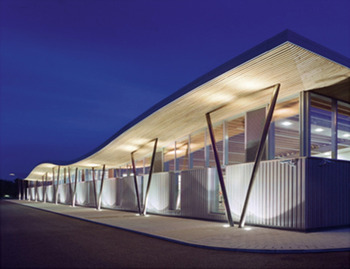
The introduction of light, strong steel products sets the trend for new designs and less material. Stronger hot-rolled elements are ideal for high-rise construction or where strength-to-weight ratio is important, such as in bridges. These hot-rolled sections can be produced with a range of cross-sectional geometries and allow integration of structural support with aesthetic design, as seen by the use of elliptical cross-section roof supports along the front of the building shown in Figure 2 . For cold-formed products, stronger steels means thinner structural members in framing. Advances in forming technology, such as three-dimensional roll forming opens opportunities for complex cold-formed cross sections that vary in both width and depth. These advances also support the increasing innovation in building design.
St Mary’s Sports Centre, UK (Celsius 355 Elliptical Hollow Section, Tata Steel).

In addition to using less steel in construction, the ability to demount and disassemble for recyclability or reuse is increasing in importance. Steel-concrete composite structures are efficient, but the component materials can sometimes be difficult to separate. Modular construction using joints that can be disassembled lends itself to reduced life cycle impact and also to use in ever-increasing urbanization where movement from site to site for reuse is minimal. Steel in construction still faces competition from timber and, to a greater extent, concrete, but steel provides solutions in key growth areas—high-rise buildings (typically >35 m), long-span bridges (sometimes > 1500 m) and large-span (30–35 m) single-story industrial buildings. With changes to demographics and supply chains, these types of construction will need current and future grades of structural steel. While new steel grades and construction solutions are the answer to many of the needs of future cities, the development of coatings that can be applied to steel offers opportunities for novel design and innovation for future cities.
Coatings for steel in construction
Coatings are widely used for steel in construction, from galvanizing for corrosion protection, and intumescents that expand to provide thermal insulation when exposed to heat for safety, to colored and embossed polymeric coatings for cladding. The development of functional coatings on steel allows for a range of applications that addresses the needs of the development of construction for future cities, particularly with respect to the building envelope.
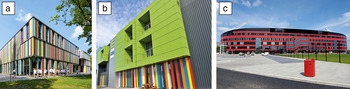
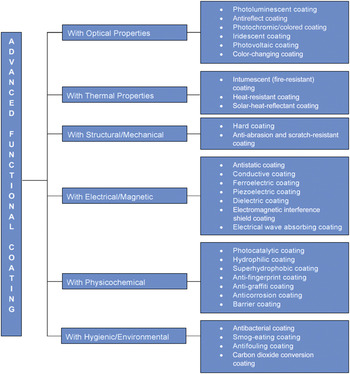
In construction, coatings are mainly applied to surfaces for protective and decorative reasons with the range of colors demonstrated in Figure 3 ; however, the range of functionality of coatings is ever-increasing as new technologies and new manufacturing routes are developed. Functional coatings, whether they are organic, inorganic, or a hybrid, can be tailored to provide an array of functions, often in response to external stimuli. Advances in the synthesis of nanomaterials have accelerated the range and development of novel coatings, with this trend likely to continue. Functions that may be incorporated into coatings include self-cleaning, superhydrophobicity, and anti-graffiti; self-cleaning glass already finds wide-ranging use in construction. In the case of steel, galvanizing alone or in combination with organic coatings such as paint and decorative polymeric overlays provide corrosion protection and aesthetic attributes. Current and future coating developments include multiple functionality, such as corrosion protection with self-healing and hydrophobicity to prevent and mediate atmospheric attack. Figure 4 provides an overview of the range of functional coatings available. Reference Hillstrom and Hillstrom3
(a) School Mollercollege, The Netherlands (Colorcoat HPS200 Ultra, Tata Steel). (b) Sustainable Building Envelope Centre, Shotton, UK (Colorcoat Prisma and Colorcoat HPS200 Ultra, Tata Steel). (c) AZ Stadium, Alkmaar, The Netherlands (Colorcoat Prisma, Tata Steel).

Schematic diagram illustrating the range of functional coatings, Adapted with permission from Reference Reference Hillstrom and Hillstrom3. © 2005 ABC-CLIO.

In terms of construction, coating development broadly addresses energy efficiency and safety. The trend toward low-carbon buildings is driving the demand for solar heat-reflective coatings. Existing color-coating lines for steel strips can be adapted to include functional particles that reflect solar radiation to mediate temperature fluctuations.
The urban environment benefits from buildings with facades that can be thermally managed. Below-ambient surface temperatures not only decrease the cooling loads for managing the internal building environment, but reduce the ambient external air temperature around buildings, mitigating the “heat island” effect. Light-colored coatings on external building surfaces decrease the cooling load required during hot weather; however, during colder periods, an increase in solar gain is needed to reduce the energy consumption for heating.
Thermochromic coatings that produce a thermally reversible color change from dark to light as temperature increases can also assist in climate management by reflecting near-infrared radiation in hot environments and absorbing thermal energy at low temperatures. Microcapsules of thermochromic compounds Reference Karlessi, Santamouris, Apostolakis, Synnefa and Livada17 can be incorporated into paints and other coating media. Reference Feng, Patel, Young, Zunino and Xanthos18 Future functional coatings may sense the external environment—wind, humidity, and temperature—to feed back into building services to control the internal environment efficiently in response to these stimuli. Transpired thermal collectors are solar thermal systems used to preheat ventilation air as a low-cost, integrated solution for space heating and hot water, and for cooling of buildings. Currently, the technology provides only low-grade heat—typically ambient external air temperature plus 10–15°C—for incoming ventilation air. Combining these collectors with temperature-responsive coatings may boost the performance of transpired solar collectors. Reference Shukla, Nkwetta, Cho, Stevenson and Jones19
Other functions can be stimulated by the sun, for example, incident solar radiation can be converted into illumination using photoluminescent coatings. Reference Barletta, Rubino, Tagliaferri and Vesco20 These coatings absorb daylight, or even artificial light, and provide an afterglow. Applications include assisting in the location of emergency exits and, if applied over large areas, potential low-level background lighting. To find widespread uptake, further developments must include low-cost photoluminescent pigments with increased emittance. Photovoltaic coatings 21 applied directly onto steel cladding for the building envelope can harness significant electrical energy and, considering the overall area of strip steel produced worldwide, could provide a significant contribution to low-carbon energy production.
Future city developments aim to reduce environmental impact through approaches such as reduced heating and cooling demands in buildings, minimal waste in construction and the ability to reuse materials, as well as sustainable transport. Further reduction in atmospheric pollution could be achieved by the use of coatings that can neutralize pollutants using photocatalysis. For example, incident UV radiation can promote electrons at the surface of a titanium-dioxide coating. The excited electrons return to their lower energy level by emitting light—those that do not return to the lower state react with water to produce free radicals such as O2– and ·OH. These free radicals can oxidize organic contaminants on the building surface and atmospheric pollutants such as NOx. Although no steel-based products currently exist on the market, Alcoa Architectural Products markets a coil-coated aluminum architectural panel based on its prepainted Reynobond product with a thin titanium-dioxide coating, called EcoClean, using HYDROTECT technology from TOTO.
Coatings for external building facades include anti-graffiti and surfaces that are self-cleaning or easily cleaned. Reference Zhu, Bartos and Porro22 Anti-graffiti effects typically rely on coating additives that prevent spray paint from reacting with the surface to form a permanent bond. The aim is to allow cleaning with water. Self-cleaning coatings form a broader category of relevance to the building envelope. These coatings use specific nanoparticles or hydrophobic layers that allow water to form beads that also collect dirt and surface contaminants. Repair of damage can be facilitated by designing self-replenishing surfaces using spontaneous reorientation of functional groups in polymer networks. Hydrophobic and oleophobic behavior induced by surface chemistry can be complemented with surface texturing, which aids in repelling water and dirt.
Interior applications include anti-condensation coatings, particularly those that can absorb and store moisture then release it when conditions allow it to evaporate. Soft-feel and soft-touch coatings improve the tactility of surfaces and can find wide use in interior environments. Specific internal environments of buildings, such as hospitals and food-handling facilities, may benefit from antibacterial surfaces. Antibacterial coatings function to either kill or inhibit the growth of bacteria. Reducing microbial loading on a surface in a safe, nontoxic, chemically inert and taint-free way must meet regulations set by bodies such as the US Food and Drug Administration (FDA). Antibacterial coatings for use on surfaces contain organic or inorganic biocides. Inorganic biocides include silver, zinc oxide, copper oxide, titanium oxides, and selenium, while examples of organic biocides include polymers, tertiary alkyl amines, and organic acids. Reference Yamauchi, Yao, Ochiai, Sakai, Kubota and Yamauchi23–Reference Sauvet, Dupond, Kazmierski and Chojnowski26 Incorporating microcapsules containing active compounds can increase the longevity and efficiency of antimicrobial coatings. Reference Xu and Xie27,Reference Borkow28 To maintain aesthetics and reduce cleaning, internal surfaces may also use anti-fingerprint coatings. These coatings are typically optically transparent and rely on optical contrast to render the fingerprints invisible to the naked eye.
Hybrid coatings can provide a range of properties. Functional coatings to provide acoustic properties and intumescent protection may be developed in an easy-to-use spray form. More exotic functions can be achieved when oleophobic compounds, nanoparticles, hydrophobic, and amiphiphobic are used in combination to produce a coating with multifunctionality. While sophisticated functions may be appealing, in the construction sector, the cost of coating, its ease of manufacturing/application, and its durability will be deciding factors in use. These attributes must be considered when developing new coatings for this market. 29
Conclusion
Steel has been used in construction during the last two centuries, driven forward by the Industrial Revolution. Its continued application has been supported by advances in alloy development to produce new steels such as HSLA steels that provide strength-to-weight benefits over previous steel grades, concrete, and timber. Advances in forming processes now allow production of a wide range of profile geometries. The portfolio of steel products available for construction is ever-increasing, making it an attractive option for a range of structures. Future development for steel in construction, particularly in the context of future cities, lies in novel coatings. Galvanized steel has long been used in structures, but the range of functional coatings now becoming available opens the possibility of new architectural uses that provide additional benefits via the building envelope—from building environment control to cleaning and pollution management.

Barbara A. Shollock is the Tata Steel Research Chair in Advanced Characterization and Coatings in the Warwick Manufacturing Group (WMG) at the University of Warwick. She joined WMG in 2012 after 20 years at Imperial College London. Prior to Imperial, she held Rolls-Royce Research Fellowships at Keble College, University of Oxford. She completed her BS degree in metallurgical and materials engineering at Lehigh University, Bethlehem, Pa., and received her MS degree from the same institution while working at AT&T Bell Labs. Her research interests include structure and chemistry of surfaces, interfaces, and coatings and their performance and interaction with a range of environments. Shollock can be reached by phone at +44 (0) 24 761 50298 or by email at b.shollock@warwick.ac.uk.

Digvijay Thakur is principal researcher at the Tata Steel UK R&D. He began his career with Tata Steel in 2014. Prior to this, he worked at BASF in Ludwigshafen, Germany, as a postdoctoral research scientist developing advanced carbon materials. He obtained his PhD degree in 2010 in chemical technology and material science from the University of Twente, The Netherlands. He received his MSc degree in 2005 in chemical and process engineering from the Otto von Guericke University Magdeburg, Germany. His research interests include surface engineering using advanced coatings on steel and metal surfaces for their application in various sectors, including construction, automotive, packaging, energy, and power. Thakur can be reached by phone at +44(0) 1536 404019 or by email at Digvijay.Thakur@tatasteel.com.

Graham Couchman became CEO of the Steel Construction Institute (SCI) in 2009. He began his career with Taylor Woodrow working on various sites and in the office of Nuclear Design Associates. This was followed by the Swiss Federal Institute of Technology in Lausanne working in the area of composite construction. He joined the Building Research Establishment in 2004, and returned to the SCI in 2007. He has been chairman of CEN\TC250\SC4 (the committee responsible for EN1994) since 2011. Couchman can be reached by phone at +44(0) 1344 636 525 or by email at g.couchman@steel-sci.com.