INTRODUCTION
In general, marine productivity is expected to be higher in the high-latitude seas around the poles. Waters in high latitudes have higher nutrient concentrations, and the marine organisms reach larger body sizes than in low latitudes. Conversely, tropical species breed continuously throughout the year, in contrast to their intra- and interspecific relatives at higher latitudes (Bauer, Reference Bauer1989). The high abundance of organisms and the marked lack of seasonality in tropical regions might allow an increase in productivity to levels comparable to the productivity of larger-bodied organisms at high latitudes.
In marine environments, copepods (Crustacea) comprise over 70% of the mesozooplankton abundance and biomass (Kiørboe & Nielsen, Reference Kiørboe and Nielsen1994; Leandro et al., Reference Leandro, Morgado, Pereira and Queiroga2007), and are the main primary consumers and secondary producers in these systems (Chisholm & Roff, Reference Chisholm and Roff1990a; Miyashita et al., Reference Miyashita, Melo Júnior and Lopes2009). Because of this dominance, copepods can be used as a model to understand the distribution pattern of secondary production of mesozooplankton assemblages. Most of the available information on copepod production is derived from studies in temperate coastal areas and polar regions, and is usually restricted to the dominant species (Miyashita et al., Reference Miyashita, Melo Júnior and Lopes2009). In the south-west Atlantic, estimates of zooplankton/copepod biomass and production rates are still incipient, with little available data on growth and production (Ara, Reference Ara2004; Lopes et al., Reference Lopes, Dam, Aquino, Monteiro-Ribas and Rull2007), mainly for oceanic areas. Few studies have been conducted in estuarine systems and neritic waters or reef areas along the Brazilian coast. On the central coast of Brazil, the influence of nutrients on the diel and seasonal variations in abundance, stage, sex composition, body length, dry weight, chemical composition, biomass and production rate of the planktonic copepods were studied in estuarine systems and on the adjacent inner shelf (Ara, Reference Ara2001a, Reference Arab, Reference Ara2002; Miyashita et al., Reference Miyashita, Melo Júnior and Lopes2009). These studies showed that the annual copepod biomass and productivity in tropical and subtropical estuaries can be relatively high compared with other estuarine and neritic waters of the world.
The Campos Basin is a petroleum-rich area located off the coast of the state of Rio de Janeiro, Brazil. The local oceanographic dynamics impose specific conditions on the local water mass, i.e. horizontal vortices and vertical movements (upwelling and downwelling) associated with the influence of the winds and the morphology of the deep ocean floor (Stramma et al., Reference Stramma, Ikeda and Peterson1990). Despite these water movements and the continental influence from the Paraíba do Sul River, which act to enrich the region, Campos Basin waters are oligotrophic. Most of the few studies in this area have examined the composition and abundance of zooplankton species down to the 200-m depth in the region of Cabo Frio (Valentin, Reference Valentin1984; Valentin et al., Reference Valentin, Monteiro-Ribas and Mureb1987). Information on the mesopelagic and bathypelagic community is non-existent, except for copepods (Dias et al., Reference Dias, Araujo, Paranhos and Bonecker2010).
In this study, we examined the spatial and temporal changes in abundance, biomass, production and assemblage structure of copepods living in the subsurface water between the 25- and 3000-m isobaths in a tropical area in the south-west Atlantic Ocean. We also examined the relationship of the copepod production and assemblage structure with the environmental factors (temperature, salinity, chlorophyll-a and suspended particulate matter).
MATERIALS AND METHODS
Study area
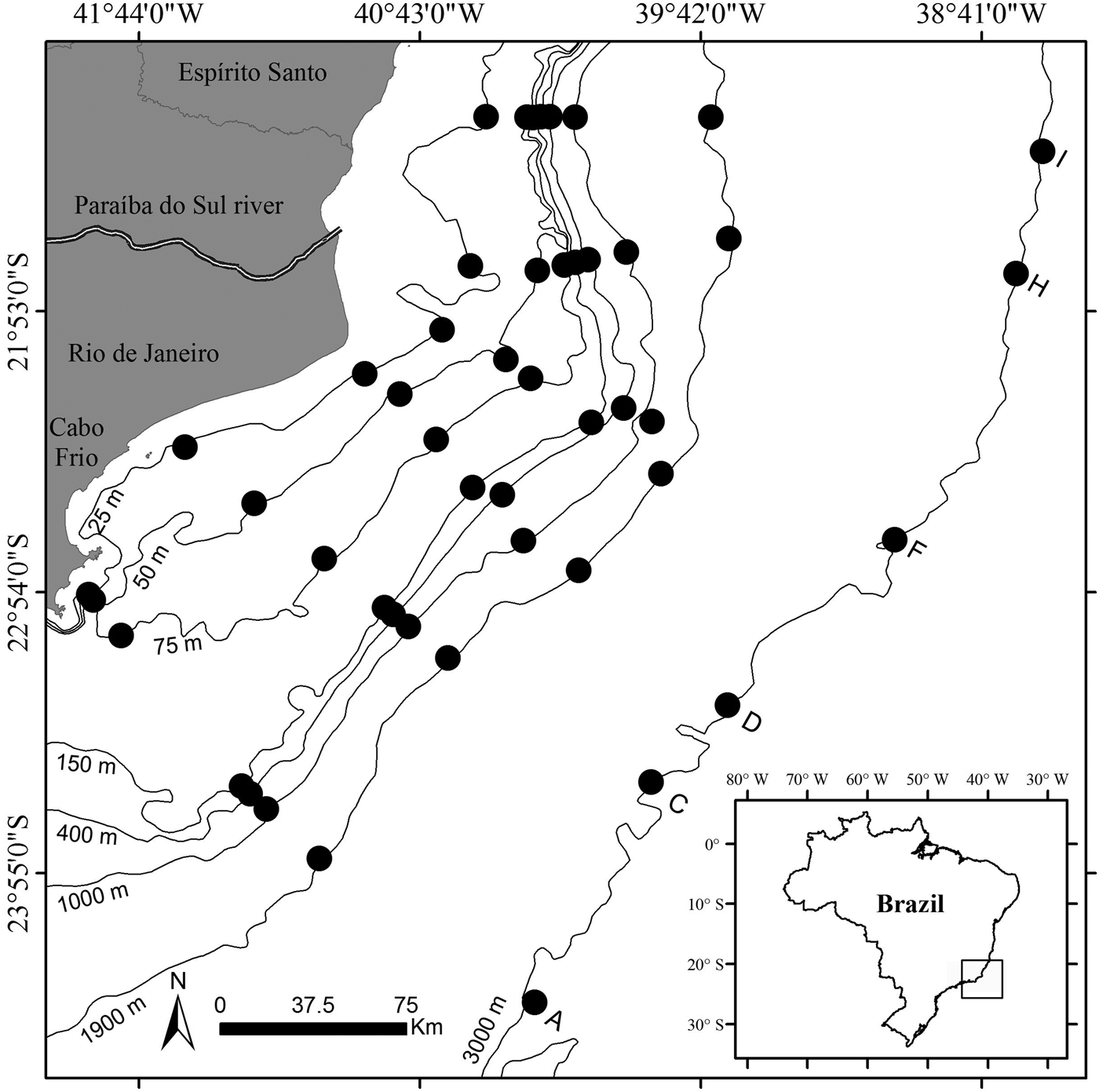
The Campos Basin is located between 20.5 and 24°S off the central Brazilian coast (Figure 1) and covers an area of approximately 100,000 km2. In this region, the continental shelf has a mean width of 100 km, and the shelf break is located between the 80- and 130-m isobaths in the northern and southern portions, respectively. The slope extends over a width of 40 km and has a mean declivity of 2.5°. Its base is shallower at the northern limit (about 1500 m), and deeper near the southern limit (about 2000 m; Viana et al., Reference Viana, Faugères, Kowsmann, Lima, Caddah and Rizzo1998). The regional climate is warm and humid, with a rainy summer season and a dry winter.
Map of the study area showing the location of sampling stations.

This region is influenced by different water masses with distinct properties (e.g. temperature, salinity and dissolved oxygen) that provide different potential habitats for pelagic species. The upper depth levels, the nutrient-poor subsurface water (Subsurface Water – SS) is registered. Below it, the relatively cold, nutrient-rich South Atlantic Central Water (SACW, 142–567 m depth), with temperatures and salinities below 20°C and 36.4, is recorded.
To the south end of the study area, the Cabo Frio region has climatic peculiarities, which have been explained by factors such as the emergence of the SACW on a coast dominated by warm currents (upwelling phenomenon). This phenomenon results in attenuation of precipitation and climate dynamics during the months of January and February (Barbiére, Reference Barbiére1975). This upwelling is intermittent and is intensified by strong north-east winds, especially in the spring and summer. Because of the coastal upwelling, the southern area of the Campos Basin has been the focus of most studies, mainly on circulation, nutrients, microplankton and epipelagic mesoplankton (Valentin, Reference Valentin1984; Valentin et al., Reference Valentin, Monteiro-Ribas and Mureb1987).
Sampling method and treatment of samples
The biological material was obtained as part of a project to study the zooplankton and ichthyoplankton of the Habitats Project – Campos Basin Environmental Heterogeneity by CENPES/PETROBRAS. Sampling was carried out during two oceanographic cruises in 2009, one in the rainy season (25 February to 13 April) and the other in the dry season (5 August to 17 September). The stations were distributed along six transects perpendicular to the coast (A, C, D, F, H and I) in the south–north direction. Each transect contained eight sampling stations distributed across the shelf, from the 25– to 3000–m isobaths (25, 50, 75, 150, 400, 1000, 1900 and 3000 m), four on the continental shelf and four on the slope (Figure 1).
Water temperature and salinity at 1 m depth were determined using a Rosette system with a Sea-Bird® Electronics Inc. CTD profiler attached (Bellevue, Washington, USA). Water samples at 1 m depth were collected using a GO–FLO bottle for analysis of suspended particulate matter (SPM) and chlorophyll-a.
To estimate the chlorophyll-a concentration, 2-L water subsamples were filtered through cellulose membrane filters (Millipore HAWP 0.45 µm) under low vacuum, and stored in liquid nitrogen. The filters were extracted overnight in 90% acetone at 4°C, and analysed with a Turner TD–700 fluorometer (Parsons et al., Reference Parsons, Maita and Lalli1984). For suspended particulate matter (SPM), a 4-L water subsample was filtered through a Whatman GF/F filter pre-combusted at 510°C for 4 h, and weighed to an accuracy of ± 0.0001 g. SPM was obtained from the difference between the initial weight of the sample and the weight after drying at 40°C for 4 days.
To study the abundance, biomass and copepod production, the zooplankton samples were collected by horizontal subsurface hauls (1 m depth). The hauls were made using a MultiNet® (Hydro–Bios, 200 µm mesh) fitted with a digital flowmeter attached to the inner net mouth and also an external meter to assess the filtration efficiency (filtered water volume: rainy season range, 61–240 m3 and mean, 133.06 m3; dry season range, 60–280 m3 and mean, 132.26 m3). In the dry season, no samples were collected on the 3000-m isobath of transects H and I, due to logistical problems. A total of 94 samples were analysed, 48 in the rainy season and 46 in the dry season.
The samples were fixed and preserved in 4% buffered formalin. All samples were collected at night, from 18:18 p.m. to 05:08 a.m. during the rainy season and from 17:57 p.m. to 05:46 a.m. during the dry season.
In the laboratory, the preserved samples were divided into fractions between one and ten times with a Folsom Plankton Splitter (Hydro-Bios) (McEwen et al., Reference McEwen, Johnson and Folsom1957) to provide subsamples, which were then identified. Taxon abundance per cubic metre and copepod species composition were determined in all samples, according to Bradford-Grieve et al. (Reference Bradford-Grieve, Markhaseva, Rocha, Abiahy and Boltovskoy1999) and Dias & Araujo (Reference Dias, Araujo and Bonecker2006). The total abundance of each species was estimated from adult and juvenile forms.
Calculation of biomass and daily copepod production
Immediately after they were identified, the copepods were inspected under a stereomicroscope; about 20 organisms of each taxon were measured using the Image–Pro Plus 6.1 software. When the taxon was rare (<20) in the samples, we measured all individuals present. We estimated the dry mass (DM) of each copepod species from its prosome length, using length–weight equations for marine tropical copepods proposed by Chisholm & Roff (Reference Chisholm and Roff1990b) and Webber & Roff (Reference Webber and Roff1995). Taxon-specific equations were used whenever possible. Weights of taxa for which no equations exist were estimated by applying the regression for a taxon with similar body proportions and size range. The general regressions for calanoids were used for the younger forms. For Harpacticoida, in which the prosome and urosome are not clearly discriminated, we used the following allometric equation:
 $${\rm CM}\, = 2.65 \times 10^{ - 6} \times {\rm TL}^{ 1.95}$$
where CM is the body carbon mass (μg C ind−1) and TL is the total length (μm) (Uye et al., Reference Uye, Aoto and Onbé2002).
The dry mass was calculated as the product of weight multiplied by the number of individuals (ind. m−3).
We converted DM of Calanoida to carbon mass, assuming the carbon content of copepods to be 44.7% of DM (Bamstedt, Reference Bamstedt, Corner and O'Hara1986). The carbon content of Cyclopoida was assumed to be 42.5% (James & Wilkinson, Reference James and Wilkinson1988) and Poecilostomatoida, 53%. Nishibe & Ikeda (Reference Nishibe and Ikeda2008) reported carbon contents of Poecilostomatoida of 49–57% of DM, and we used the mean of this range.
We calculated the biomass of the total copepod assemblage from the sum of the carbon mass of the individuals at each sampling station.
We estimated the production rate (Pc, mg C m−3 d−1) by the following equation:
 $${\rm Pc}\, = \, \sum {{\rm N}\, \times \, {\rm Wc}\, \times \, {\rm G}}$$
where N is abundance (ind. m−3), Wc is the individual carbon weight (mg C) and G is the individual weight–specific growth rate (d−1). Here, G was estimated using the model proposed by Hirst & Sheader (Reference Hirst and Sheader1997), where the growth rate is dependent on carbon weight (Wc) and temperature, expressed as:
 $${\rm G}\, = 1.0 583^{\rm T} \times \, {\rm Wc}^{ - 0. 2962} \times 13. 6616^{ - 1} .$$
According to the authors, this equation may be the most appropriate for estimation of growth and production for suites of organisms when growth-rate data are lacking. The global model without chlorophyll-a was chosen because we preferred not to exclude species that are known to be entirely carnivorous (e.g. Candacia spp.), feed by piercing and sucking metazoan prey (e.g. Corycaeus spp.) or feed on aggregates or macroscopic particles (e.g. Oncaea spp.).
Secondary and tertiary production rates were calculated separately on the basis of the feeding habits of each genus. Suspension feeders (e.g. Acrocalanus, Calanoides, Calanopia, Clausocalanus, Ctenocalanus, Paracalanus and Temora) and detritivores (e.g. Corycaeus, Oncaea and Scolecithrix) were assigned to secondary production. Carnivores (e.g. Candacia, Euchaeta and Heterorhabdus) were assigned to tertiary production.
Data analysis
We tested the effect of the region (continental shelf and slope) along each transect (A, C, D, F, H and I) on the copepod biomass and production, using a non-parametric factorial multivariate analysis of variance (np MANOVA). To perform the np MANOVA, the isobaths on each transect were paired according to proximity. In the dry season, due to missing samples for the last isobaths (transects H and I), the data for the previous isobaths were used. The variance analyses (np MANOVA) were performed in the PERMANOVA program.
The relationship between the major species contributing to the daily copepod production (seven species, representing about 50% of the daily copepod production) and the environmental parameters, was determined by Canonical Correspondence Analysis (CCA), using the PC ORDER program. Data on the most-productive copepod species were used, as abundance transformed as log (x + 1). Data for temperature, salinity, chlorophyll-a and suspended particulate matter (SPM) were used as environmental parameters. The Monte Carlo test using 999 unrestricted permutations was performed to test the significance of the correlations.
We calculated the Shannon diversity index (H') and richness to evaluate the degree of organization of the copepod assemblage. We used the Analysis of Similarity (ANOSIM) to assess whether the copepod assemblage structure varied according to the sampling region (continental shelf and slope) and the sampling period (rainy and dry season). The SIMPER (similarity of percentages) test was used to identify those species that contributed most to similarities within groups. These analyses were done using the statistical package Primer 5.
RESULTS
Hydrography
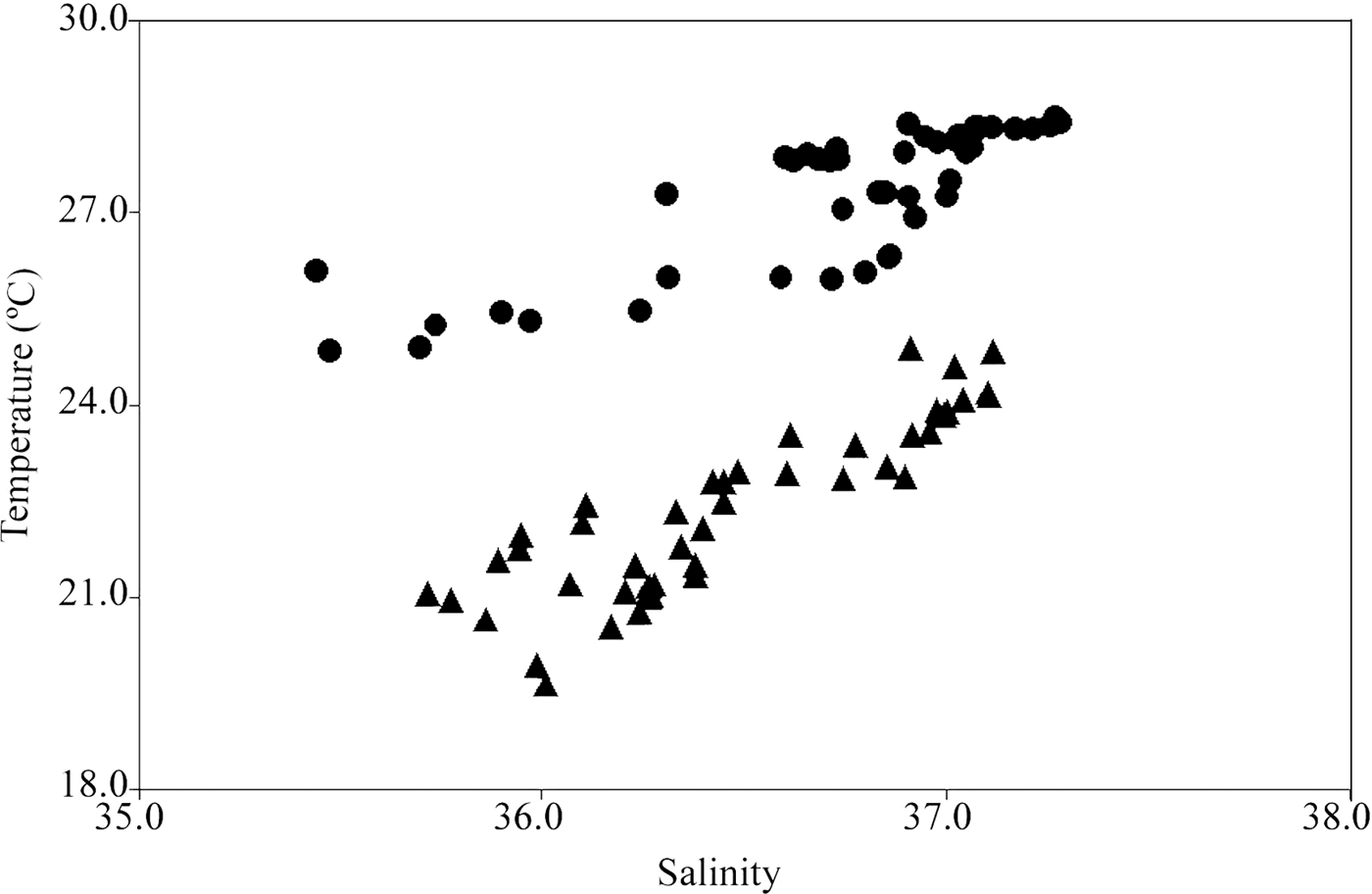
The water temperature ranged from 24.82 to 28.50 °C during the rainy season and from 19.94 to 24.89 °C during the dry season. Salinity showed low variation in both sampling periods, ranging from 35.44 to 37.28 during the rainy season and from 35.71 to 37.11 during the dry season (Figure 2). Temperature and salinity were lower in the dry season, mainly at stations located in the southern part of the study area, over the continental shelf near Cabo Frio; and in the northern part, under the continental influence of the Paraíba do Sul River. The highest values were found over the slope (mean temperature 27.96 ± 0.56°C during the rainy season and 23.26 ± 0.94°C during the dry season; mean salinity 37.00 ± 0.17 during the rainy season and 36.74 ± 0.7 during the dry season). Over the continental shelf, the mean temperatures were 26.67 ± 1.04°C during the rainy season and 21.66 ± 0.93°C during the dry season, and the mean salinities were 36.45 ± 0.55 during the rainy season and 36.20 ± 0.28 during the dry season.
Temperature–salinity diagram of the water masses found in the Campos Basin (Rainy season, circles; Dry season, triangles).
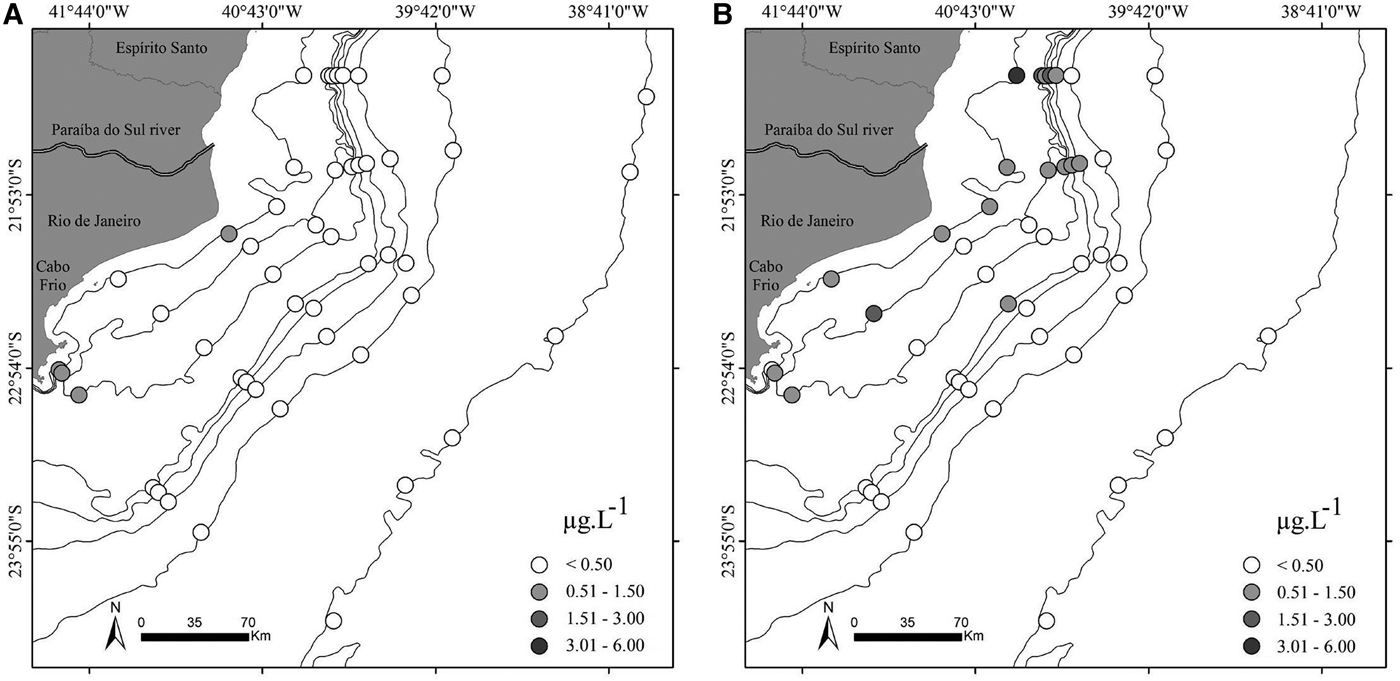
Chlorophyll-a concentration reached its lowest levels during the rainy season, ranging from 0.03 to 1.26 µg L−1. During the dry season the concentration ranged from 0.06 to 5.93 µg L−1. Chlorophyll-a concentrations showed a decreasing gradient from coastal to oceanic areas, varying from 0.14 to 1.26 µg L−1 and 0.06 to 5.93 µg L−1 in the coastal region during the rainy and dry seasons, respectively. In the oceanic area, chlorophyll-a varied between 0.33 and 0.79 µg L−1 in both periods (Figure 3). The same pattern was recorded for the suspended particulate matter (SPM) concentration, which varied from 0.29 to 3.99 mg L−1 during the rainy season and from 0.15 to 6.50 mg L−1 during the dry season. The highest values of these parameters were found at stations located in the southern part of the study area, over the continental shelf near Cabo Frio; and in the northern part, under the continental influence of the Paraíba do Sul River during both sampling periods.
Study area, showing the seasonal variation of chlorophyll-a (μg.L−1). (A) rainy season, (B) dry season.
Abundance, biomass, production and assemblage structure of Copepoda
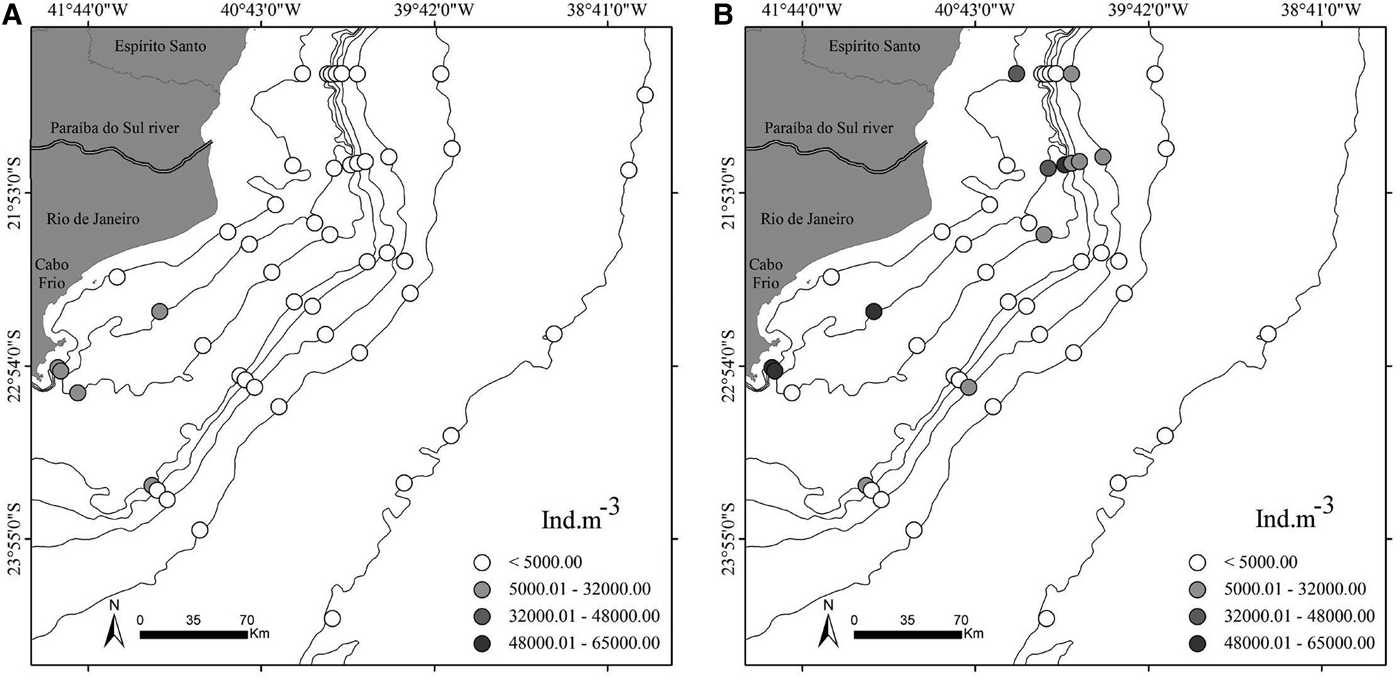
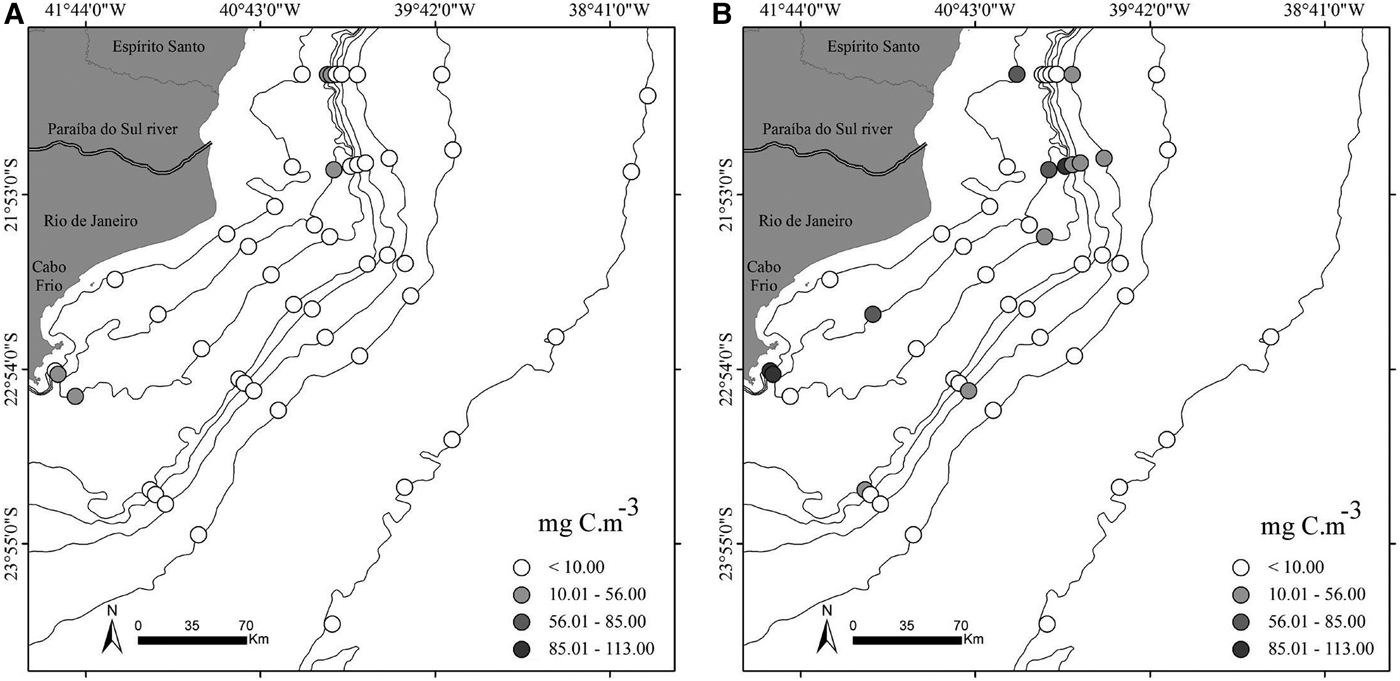
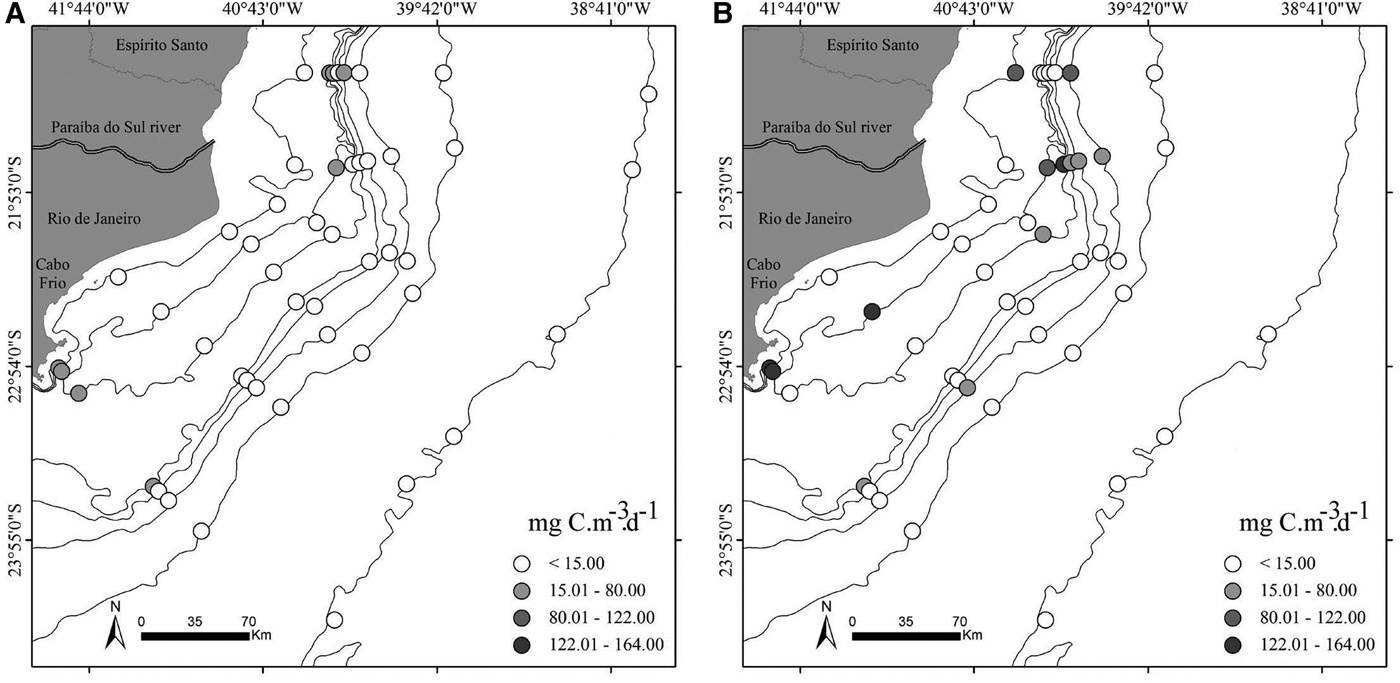
In SS, abundance, biomass and daily copepod production were about three times higher in the dry season than in the rainy season (Table 1; Figures 4–6). In both sampling periods, about 60% of the sampling stations showed low values of daily copepod production (<5 mg C m−3 d−1).
Study area, showing the seasonal variation of copepod abundance (ind. m−3). (A) rainy season, (B) dry season.
Study area, showing the seasonal variation of copepod biomass (mg C m−3). (A) rainy season, (B) dry season.
Study area, showing the seasonal variation of the daily copepod production (mg C m−3 d−1). (A) rainy season, (B) dry season.
Variations of biotic variables during the rainy and dry seasons in the study area.
Copepod abundance, biomass and production decreased toward the offshore region and showed latitudinal variability (between transects; Figures 4–6). The maximum values of these parameters were found at stations located in the southern part of the study area (more than 8000 ind. m−3, 15 mg C m−3 and 20 mg C m−3 d−1, respectively) during the rainy season, and in the southern and northern parts (more than 60,000 ind. m−3, 100 mg C m−3 and 150 mg C m−3 d−1, respectively) during the dry season (Figures 4–6). Abundance, biomass and daily copepod production showed a longitudinal variation (continental shelf × slope) on all transects during both sampling periods (np MANOVA test, P < 0.05), except abundance during the rainy season. In this period, abundance showed a significant difference only on transect A (in the southern part of the study area near Cabo Frio).
With respect to daily copepod production, secondary production varied from 0.01 to 66.23 mg C m−3 d−1 (overall mean: 4.56 ± 12.21 mg C m−3 d−1), and from 0.01 to 157.64 mg C m−3 d−1 (overall mean: 14.22 ± 32.33 mg C m−3 d−1) during the rainy and dry season, respectively. Secondary production constituted 98.28–98.68% of the entire copepod production for both sampling periods. Copepod tertiary production (carnivores) varied from 0.004 to 3.34 mg C m−3 d−1 (overall mean: 0.49 ± 0.89 mg C m−3 d−1) during the rainy season, and from 0.02 to 5.95 mg C m−3 d−1 (overall mean: 1.36 ± 2.15 mg C m−3 d−1) during the dry season.
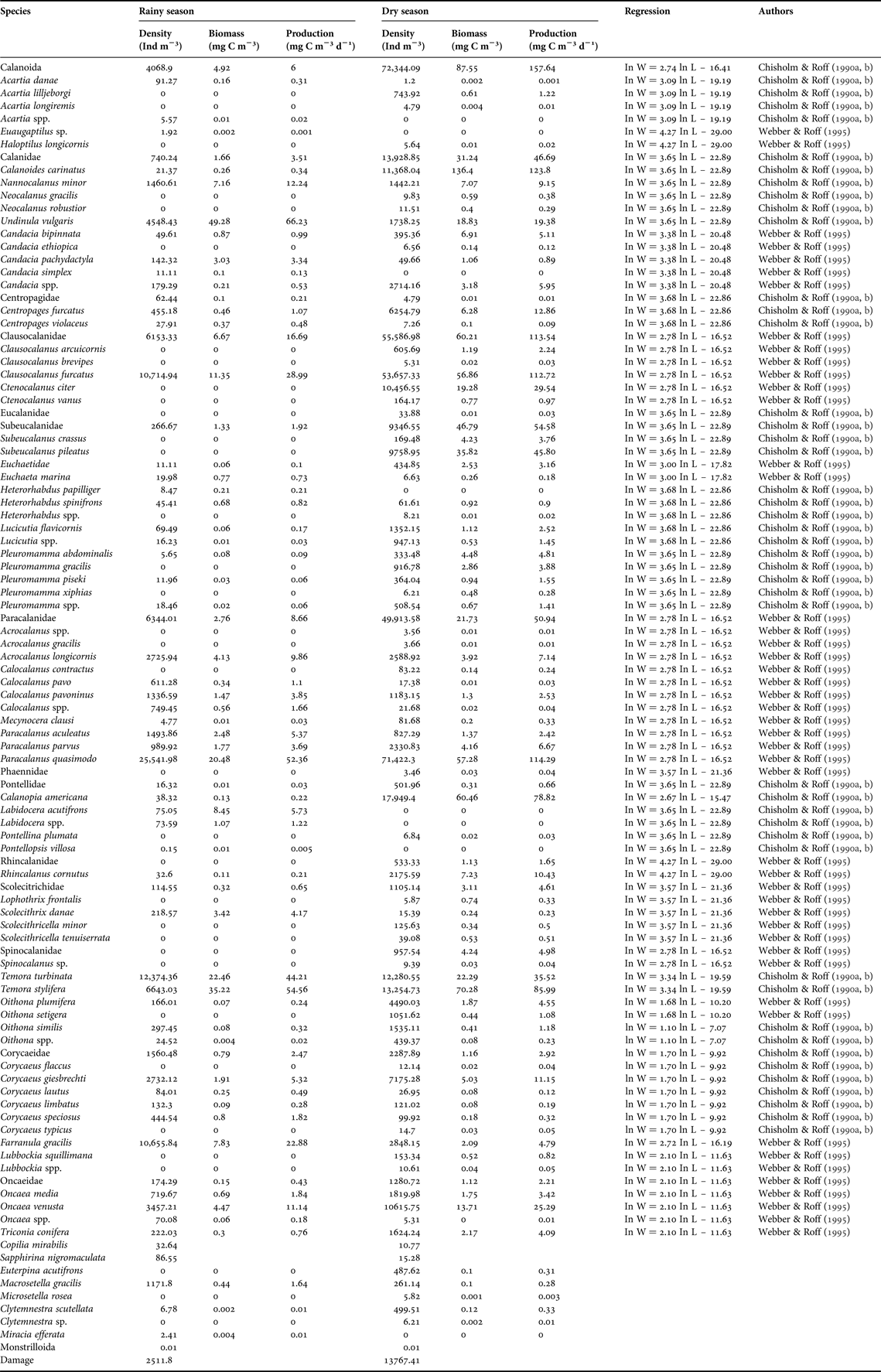
One hundred and one copepod taxa were identified during the study period: 73 Calanoida, 4 Cyclopoida, 17 Poecilostomatoida, 6 Harpacticoida and 1 Monstrilloida; 71 of these are widely distributed species. Eight taxa and 35 species were recorded exclusively in the rainy and dry season, respectively (Table 2). Over the continental shelf, 48 species were found, and over the slope, ~40 species. The maximum number of species was found in the dry season over the slope (58 species) and the minimum in the rainy season over the continental shelf (36 species).
List of copepod taxa from the study area, with the values for density (ind. m−3), biomass (mg C m−3), daily copepod production (mg C m−3 d−1) and length–weight regressions applied for biomass calculation of different copepod taxa. Blank cell: biomass and production were not calculated.
The species diversity index (H') showed a similar pattern to the number of species. Species diversity was higher over the slope than over the continental shelf, with a peak in the dry season (rainy season: continental shelf, mean: 2.71, and slope, mean: 2.86; dry season: continental shelf, mean: 2.69, and slope, mean: 3.09).
The contributions of Calanoida, Poecilostomatoida, Cyclopoida and Harpacticoida to total copepod abundance were 80–92%, 18–6%, 0.4–2% and 1–0.3% during the rainy and dry seasons, respectively. Monstrilloida occurred during the rainy season, but their contribution was small (<0.001%). The number of unidentified copepods was also small (<3% of the entire copepod assemblage).
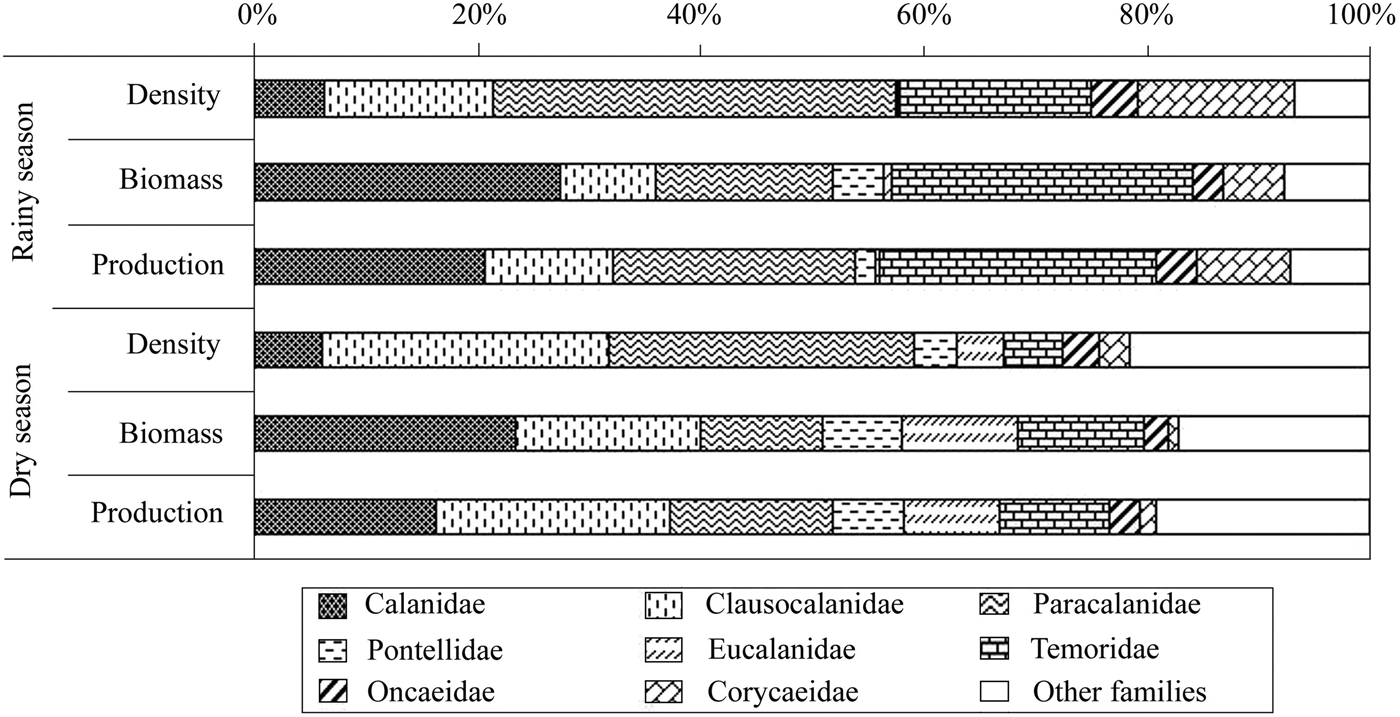
The most numerous copepods were the calanoids Paracalanus quasimodo Bowman, 1971, Clausocalanus furcatus (Brady, 1883), Ctenocalanus citer Heron & Bowman, 1971, Temora turbinata (Dana, 1849), Temora stylifera Dana, 1849, Calanopia americana F. Dahl, 1894, Calanoides carinatus (Krøyer, 1849), Oncaea venusta Philippi, 1843 and Farranula gracilis (Dana, 1849) (Table 2). Paracalanus quasimodo, T. turbinata, C. furcatus and F. gracilis (52%) were the most abundant taxa during the rainy season, and P. quasimodo, Clausocalanidae, C. furcatus and Paracalanidae (48%) during the dry season (Figure 7).
Composition of copepod families in relation to abundance (ind. m−3), biomass (mg C m−3) and daily copepod production (mg C m−3 d−1) for the rainy and dry seasons.
Biomass and copepod production of the four copepod orders followed the same pattern as abundance; Calanoida was the dominant order (92–96% and 88–95% of the total copepod biomass and production, respectively). The contribution of Poecilostomatoida was 8–3% and 12–5%, Cyclopoida was 0.1–0.3% and 0.2–0.6%, and Harpacticoida was 0.2–0.1% and 0.4–0.1%, for copepod biomass and production during the rainy and dry seasons, respectively (Figure 7).
In terms of copepod biomass and production, the dominant taxa were C. carinatus, T. stylifera, P. quasimodo, C. furcatus, Undinula vulgaris (Dana, 1849) and C. americana (Table 2). The percentage contributions of the different taxa to the total biomass and copepod production varied between seasons. The main contributors to biomass and copepod production during the rainy period were Temoridae (T. turbinata and T. stylifera), U. vulgaris and P. quasimodo (biomass ~60% and copepod production ~55%). During the dry period, the main contributors included Clausocalanidae, C. carinatus, Temoridae (T. turbinata and T. stylifera), Paracalanidae, Subeucalanidae and C. americana (biomass and copepod production ~70%).
During the study period, the copepod assemblage comprised mainly small individuals: on average, individuals <1000 µm in total prosome length contributed 94% (93.6–94.1%, rainy and dry season, respectively) of the total copepod abundance. The contribution of individuals <1000 µm to total copepod abundance was higher than to biomass (63.8–71.3%) and copepod production (75.21–80.89%).
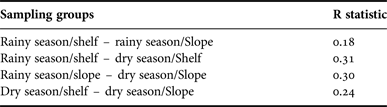
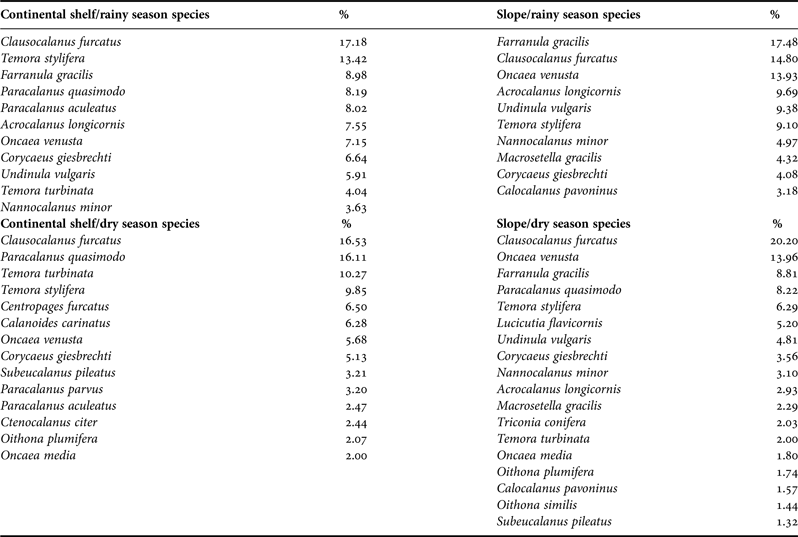
ANOSIM analyses demonstrated that the distribution patterns of copepod communities could be separated into four significantly different groups (Table 3). Each group was well separated from the others in relation to the sampling season and the longitudinal variation: rainy season–continental shelf (1), dry season–continental shelf (2), rainy season–slope (3) and dry season–slope (4). Epipelagic–mesopelagic species contributed, mostly, to the similarity of the groups (SIMPER test, Table 4). Clausocalanus furcatus, T. stylifera, O. venusta and Corycaeus (Onychocorycaeus) giesbrechti F. Dahl, 1894 were important in all copepod assemblages. Nannocalanus minor (Claus, 1863) and U. vulgaris were important in all groups except the continental-shelf group during the dry season, when C. carinatus and C. citer were important in this area.
ANOSIM analyses of similarity between sampling groups in the Campos Basin.
R, strength of the difference between groups (significant differences to P<0.05).
Species contribution (%) to the community similarity during the rainy and dry seasons, over the continental shelf and slope in the study area (SIMPER).
Association of assemblage structure with environmental parameters
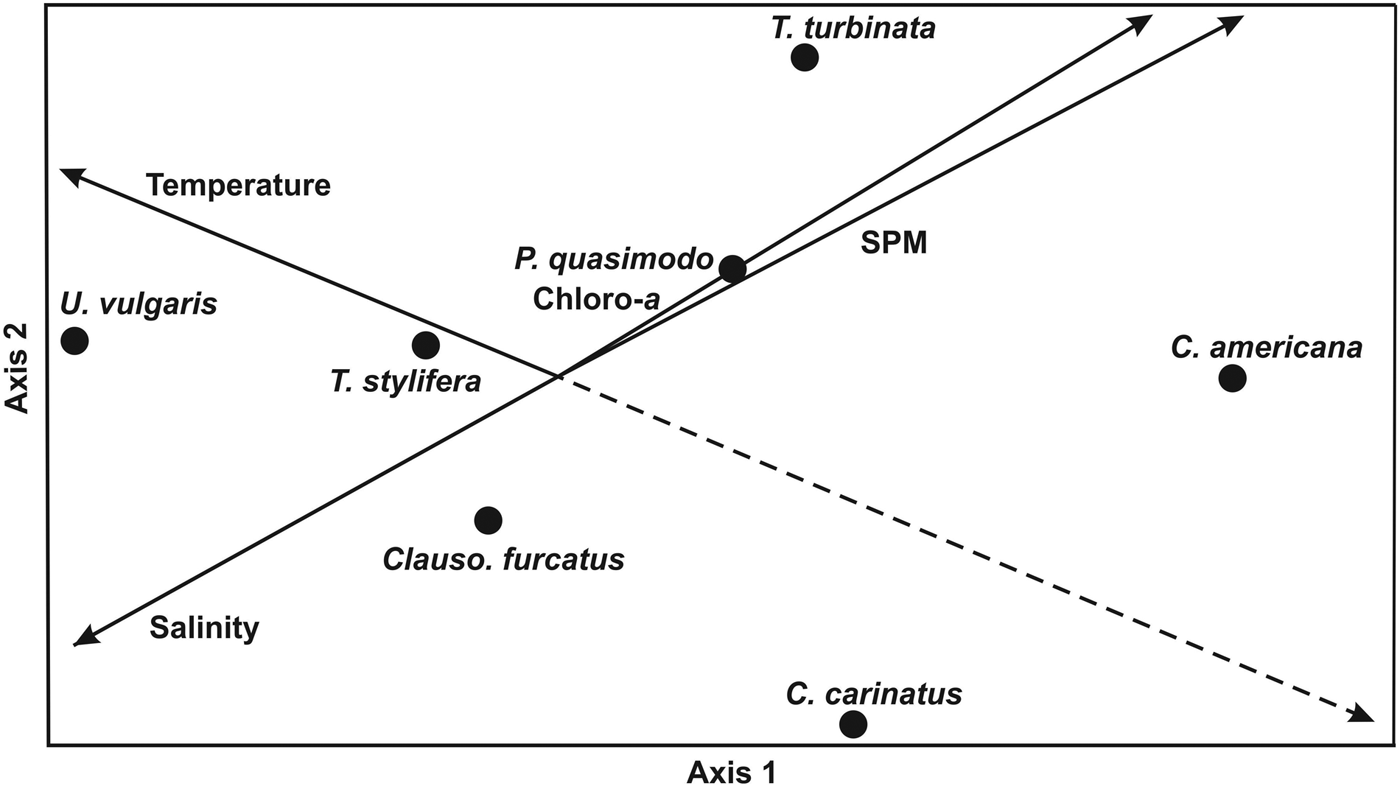
Temperature, salinity, chlorophyll-a and SPM explained 45% of the variance of the distribution of the seven copepod species that showed the highest daily production (axis 1 = 28%, axis 2 = 11%, axis 3 = 6%). The Monte Carlo test showed that the environmental parameters analysed were correlated with the daily copepod production data. The daily production of C. americana, P. quasimodo and T. turbinata was positively correlated with the highest chlorophyll-a and SPM values. Calanoides carinatus was inversely correlated with temperature (Figure 8), while the daily production of T. stylifera and, mainly, U. vulgaris was correlated with the highest temperature and salinity. Clausocalanus furcatus showed a positive correlation with salinity, and inverse correlations with the other parameters (Figure 8).
CCA analyses of the major species contributing to the daily copepod production, with respect to the environmental parameters (temperature, salinity, chlorophyll-a and suspended particulate matter – SPM). Individual species in the plot: T. stylifera, Temora stylifera; T. turbinata, Temora turbinata; U. vulgaris, Undinula vulgaris; C. americana, Calanopia americana; C. carinatus, Calanoides carinatus; Clauso. furcatus, Clausocalanus furcatus.
DISCUSSION
Coastal and oceanic epipelagic species of copepods, typical of the tropical and subtropical southwest Atlantic, were identified in the sampling area. The oceanic copepod assemblage was low in abundance but showed high species diversity. The species richness observed in this study was higher than that found off the central coast of Brazil, in the region of the Vitória–Trindade chain, off the north-eastern Brazil coast and over the continental shelf of northern and north-eastern Brazil, where species richness did not exceed 70 species (Dias, Reference Dias1994, Reference Dias1996; Gusmão et al., Reference Gusmão, Neumann-Leitão, Nascimento-Vieira, Silva, Ilva, Porto-Neto and Moura1997; Lopes et al., Reference Lopes, Brandini and Gaeta1999; Cavalcanti & de Larrazabal, Reference Cavalcanti and de Larrazábal2004; Dias et al., Reference Dias, Araujo, Paranhos and Bonecker2010). However, caution is needed in comparing richness in different environments, because the heterogeneity of environments, the sampling effort and the gear used should be considered.
The species Paracalanus quasimodo, Clausocalanus furcatus, Temora turbinata and Farranula gracilis can be considered resident populations in the subsurface layer in the study area, where the shelf and oceanic regions are affected by the presence of warm waters. A similar species composition has frequently been observed at the same site (e.g. Lopes et al., Reference Lopes, Brandini and Gaeta1999; Dias et al., Reference Dias, Araujo, Paranhos and Bonecker2010), in other oceanic regions along the coast of Brazil (e.g. Dias, Reference Dias1996; Cavalcanti & Larrazábal, Reference Cavalcanti and de Larrazábal2004; Lopes et al., Reference Lopes, Katsuragawa, Dias, Montú, Muelbert, Gorri and Brandini2006) and in tropical regions elsewhere (Chisholm & Roff, Reference Chisholm and Roff1990a, Reference Chisholm and Roffb; Webber & Roff, Reference Webber and Roff1995).
Clausocalanidae, Paracalanidae, Calanidae and Temoridae were the most important families in terms of abundance, biomass and daily copepod production. These copepod families are highly adapted to oligotrophic conditions, and can exploit other forms of food besides phytoplankton (Miyashita et al., Reference Miyashita, Melo Júnior and Lopes2009). They can affect the microbial food webs, serving as a link between the micro- and nanozooplankton, and the larger zooplankton and fish larvae (Sommer & Stibor, Reference Sommer and Stibor2002). These copepods were proportionally more important in the rainy season, when conditions were apparently more oligotrophic than in the dry season.
Clausocalanus furcatus comprised 51% of the members of this genus, with a peak of abundance in the dry season; the population increased gradually to the 1300 m isobath, and then decreased sharply toward the 1900 and 3000 m isobaths. Clausocalanus furcatus is a warm-water species and its distribution is typically superficial, above the thermocline (Paffenhöfer & Mazzocchi, Reference Paffenhöfer and Mazzocchi2003), in the surface layers of the CW + TW. Previous studies have reported that C. furcatus occurs predominantly in the TW (Lopes et al., Reference Lopes, Brandini and Gaeta1999).
In the south-west Atlantic, Paracalanus is one of the most important genera in the neritic region off the Brazilian coast. They are common copepods off this coast, as has been reported by Valentin & Monteiro-Ribas (Reference Valentin and Monteiro-Ribas1993), Dias (Reference Dias1996), Vega-Pérez & Hernandez (Reference Vega-Pérez and Hernandez1997), Lopes et al. (Reference Lopes, Brandini and Gaeta1999), |Neumann-Leitão et al. (Reference Neumann-Leitão, Gusmão, Silva, Nascimento-Vieira and Silva1999, Reference Neumann-Leitão, Eskinazi Sant'anna, Gusmão, Nascimento-Vieira, Paranaguá and Schwamborn2008), Dias et al. (Reference Dias, Araujo, Paranhos and Bonecker2010) and Miyashita et al. (Reference Miyashita, Melo Júnior and Lopes2009). In the present study, P. quasimodo was the dominant and most frequent species. Their mean densities remained high out to the 75-m isobath, and decreased from the 350- to the 3000-m isobaths. Paracalanus quasimodo has been cited as the most abundant copepod species associated with coastal, neritic and shelf waters of tropical regions (Campaner, Reference Campaner1985; Vega-Pérez & Hernandez, Reference Vega-Pérez and Hernandez1997; Lopes et al., Reference Lopes, Brandini and Gaeta1999; Araujo, Reference Araujo2006).
One of the most characteristic aspects of the copepod assemblage structure in this area was the size composition: small individuals (<1000 µm in prosome length) accounted for much of the total copepod abundance, biomass and copepod production. This pattern has been observed not only in tropical and subtropical regions (Hopcroft et al., Reference Hopcroft, Roff, Webber and Witt1998; Ara, Reference Ara2004), but also in high-latitude regions (Hopcroft et al., Reference Hopcroft, Roff and Chavez2001). Off south-eastern Brazil (Ara, Reference Ara2004) and in Kingston Harbor, Jamaica (Hopcroft et al., Reference Hopcroft, Roff, Webber and Witt1998), individuals <450 µm (including nauplii) contributed over 55% of the total copepod biomass and production. In oligotrophic waters, the dominance of small copepods is explained by their greater efficiency than larger species in capturing pico- and nanoplankton. The dominance of small planktonic marine copepods is due to their feeding ecology and aspects of their reproductive biology which allow sufficient reproductive success to counter predation losses (Turner, Reference Turner2004).
The daily production of the dominant species was the highest over the continental shelf, with the exception of Undinula vulgaris. The same pattern was observed for copepod abundance and biomass. The highest levels of these parameters occurred in the southern part of the area, near the Cabo Frio region; and in the north, in the area of continental influence from the Paraíba do Sul River plume during the dry season. In this period, biomass and production were more than three times higher than in the rainy season. The high levels of copepod abundance, biomass and production in the area off the Paraíba do Sul River were associated with the potential area of influence of its plume on the inner continental shelf. This area forms a cone that extends north and south from the mouth and reaches out to the 50-m isobath (Souza et al., Reference Souza, Godoy, Godoy, Moreira, Carvalho, Salomão and Rezende2010). In the Cabo Frio region, the high values found in the southern part of the study area can be attributed to the influence of an upwelling event that occurred before the sampling period. Upwelling is an important fertilizing mechanism in this region, and could have positively influenced copepod productivity. Although water temperatures were lower during the dry season, we did not observe an SACW intrusion over the continental shelf during the sampling period. The presence of Ctenocalanus citer and Calanoides carinatus in the continental-shelf assemblage during the dry season supports this scenario. Ctenocalanus citer is found in coastal and oceanic cold waters and upwelling areas in subtropical regions (Dias & Araujo, Reference Dias, Araujo and Bonecker2006). Calanoides carinatus is widespread in the tropical neritic zones of the Atlantic, Pacific and Indian oceans and in the western Mediterranean. It is considered an indicator of subtropical-water upwelling off Brazil, and has been studied in upwelling areas off western Africa (Campaner & Honda, Reference Campaner and Honda1987 and references therein; Avila et al., Reference Avila, Pedrozo and Bersano2009). This species was among those responsible for the higher copepod production observed during the dry season.
Production can be defined as the amount of tissue or biomass generated in a certain area within a period of time, and is expressed as mg C m−3 d−1 (Rigler & Downing, Reference Rigler and Downing1984). The methodology employed to determine the animal growth rate is the major problem in estimating production. In general terms, the degrees of influence of temperature, food deprivation and size of organisms are used as factors affecting the growth rate (Avila et al., Reference Avila, Machado and Bianchini2012). Here, because we used the entire copepod assemblage, including carnivores, we preferred to use a global model with temperature. Differences in estimated production levels using different standardized mathematical methods to estimate the zooplankton growth rate (G) have been reported elsewhere. Ara (Reference Ara2001a), in his study of a Brazilian estuarine system, using three models with few easily measurable parameters (temperature, individual weight and abundance), estimated significantly higher production values using the Ikeda-Motoda and Huntley-Lopez models than with the Hirst-Sheader model. Ara (Reference Ara2001a) suggested that the first two models may have overestimated the production rates. This possibility was also pointed out by Hirst & Sheader (Reference Hirst and Sheader1997), Leandro et al. (Reference Leandro, Morgado, Pereira and Queiroga2007) and Miyashita et al. (Reference Miyashita, Melo Júnior and Lopes2009). Therefore, differences among the estimation capacity of the mathematical models can be expected. The mathematical model employed in the present study is a reliable tool to estimate production, since this model includes ecologically important parameters such as biomass and growth rate, which have been studied for longer periods.
No previous study has evaluated the biomass and production of the copepod assemblage in the oceanic region of the south-west Atlantic or in any other oceanic region along the Brazilian coast. In studies of biomass and secondary production in estuarine systems and neritic waters off the north-eastern (Neumann-Leitão, Reference Neumann-Leitão2010) and central Brazilian coasts (Ara, Reference Ara2004; de Melo Junior, Reference de Melo2009), the production ranged from 1.13 to 17 mg C m−3 d−1. It is generally expected that tropical oceanic areas will support a lower rate of secondary production than tropical neritic waters, because of the low food level and the dominance of small-sized phytoplankton, which are not directly available to copepods, in tropical oceanic areas (Miyashita et al., Reference Miyashita, Melo Júnior and Lopes2009).
Copepod biomass and production in tropical and subtropical waters have historically been believed to be lower than in temperate waters (e.g. Raymont, Reference Raymont1983). Although there are many reports on seasonal variation in biomass and/or production of planktonic copepods in temperate coastal waters, it is difficult to strictly compare the values for biomass and production obtained in the present study with other reports. This difficulty is due to differences in the characteristics of the animals targeted (size, species, developmental stage), collection methods (frequency, mesh size, type of net tows, etc.), techniques, times, frequencies and estimation (calculation) of biomass and production, and units for expressing the values. Nonetheless, the biomass and production rates (means: 4.44 mg C m−3 and 8.31 mg C m−3 d−1, respectively, during the rainy season; and 18.10 mg C m−3 and 26.94 mg C m−3 d−1, respectively, during the dry season) obtained in the present study were similar to or higher than those in other highly productive waters in temperate regions. For instance, in the western Seto Inland Sea of Japan, the maximum biomass was 44.6 mg C m−3 and the mean production rate was 5.28 mg C m−3 d−1; Koga, Reference Koga1986); and in Osaka Bay, Japan, the biomass ranged from 9.5 to 11.10 mg C m−3 and copepod production ranged from 0.98 to 4.48 mg C m−3 d−1 (Joh & Uno, Reference Joh and Uno1983). Ara & Hiromi (Reference Ara and Hiromi2007), off the central coast of Japan, found biomass levels ranging from 0.95 to 81.50 mg C m−3 (mean = 8.85 mg C m−3) and copepod production rates ranging from 0.097 to 7.77 mg C m−3 d−1 (mean = 0.94 mg C m−3 d−1), based on samples collected with nets of the same mesh size (200 µm). Uye et al. (Reference Uye, Kuwata and Endo1987), in the Inland Sea of Japan, and Uye and Liang (Reference Uye and Liang1998), in Fukuyama Harbor, Japan, found similar copepod production levels (4.90 and 6.85 mg C m−3 d−1, respectively), using a plankton net with a smaller mesh size (<100 µm). The possible combination of an abundant food supply, attributed to the influence of an upwelling event prior to the sampling period; and a scarcity of large predators may account for the high copepod biomass and production. In addition, it is expected that different production levels will be found in years when upwellings do not occur.
The present study is the first attempt to examine the copepod biomass and daily production in oceanic waters in the south-west Atlantic Ocean. This study showed that copepod biomass and production in a tropical region can be relatively high compared with other regions of the world. Future studies should be directed to dominant copepod populations and also to the definition of a copepod growth model specific to this ecosystem.
ACKNOWLEDGEMENTS
The authors are grateful to the members of the Integrated Zooplankton and Ichthyoplankton Laboratory of the Federal University of Rio de Janeiro for sorting samples. We thank Drs Maron Galliez and Sérgio Rosso for their suggestions regarding the statistical treatments, and Pedro Freitas for the drawings. We are also grateful to Petrobras, which made the sampling possible.