


Introduction
Food-based dietary guidelines (FBDG) are a key public health tool, providing evidence-based recommendations to support a healthy diet(2). They are developed by government bodies and authoritative organisations(Reference Bechthold, Boeing and Tetens3) and are designed to inform national food and nutrition policies and educational programmes(2), as well as to be communicated to a range of stakeholders including policy makers, health professionals, the food industry, and the public(Reference Bechthold, Boeing and Tetens3).
Country-specific FBDG are available globally for over 100 countries and are updated regularly on the Food and Agriculture Organisation of the United Nations (FAO) website(4). The guidelines are typically hosted on government websites and accompanied with varying educational tools and resources. The majority of FBDG have a visual representation of some or all the key messages of the dietary guidelines(Reference Van’t Erve, Tulen and Jansen5–Reference Rong, Liao and Zhou7). These are commonly presented visually in the shape of a food plate or food pyramid. They typically depict recommended food groups in suggested proportions for a good diet and some also make recommendations for physical activity and water consumption. Additionally, some countries provide a series of adapted guidelines for specific population groups, including different ages in the lifecycle and indigenous communities(4).
Sustainability is not explicitly mentioned in the majority of national FBDG(Reference Culliford, Bradbury and Medici8). However, FBDGs that emphasise a higher proportion of plant-based foods including vegetables, fruits, legumes, wholegrains, nuts, and seeds are associated with having a lower carbon and land footprint(Reference Culliford, Bradbury and Medici8).
Food based dietary guidelines in the UK
In the UK, FBDG are represented by the Eatwell Guide(9), published in March 2016. Developed by Public Health England, the guide provides evidence-based dietary recommendations using a visual plate model that illustrates the segment sizes of five key food groups that make up a healthy, balanced diet: fruit and vegetables (40%); potatoes, bread, rice, pasta and other starchy carbohydrates (38%); beans, pulses, fish, eggs, meat and other protein (12%); dairy and alternatives (8%); and oils and spreads (1%)(10).
Foods high in fat, salt and sugar are positioned outside of the main plate to indicate that they should be consumed only occasionally and in small amounts. Additional messages cover hydration, energy requirements for adults, and guidance on selecting healthier packaged foods using the front-of-pack traffic-light food labelling system(10).
A public-facing NHS Eatwell website advises that the Guide ‘applies to most of us, whether we’re a healthy weight or overweight, whether we eat meat or are vegetarian and no matter what our ethnic origin’ (11). Individuals with special dietary requirements or medical conditions are advised to consult a registered dietitian to adapt the guide to meet their individual needs(12).
Health and environmental benefits of FBDG
The Eatwell Guide was developed with the primary consideration of public health: to improve health and reduce rates of obesity and diet-related non-communicable disease (including cardiovascular diseases, type 2 diabetes and certain types of cancer)(Reference Culliford, Bradbury and Medici8,Reference Cobiac, Scarborough and Kaur13,Reference Eriksen, Gibson and Lamb14) .
According to the Health Survey for England (2022)(15), nearly two-thirds (64%) of the population are overweight or living with obesity. Obesity is estimated to cost the National Health Service (NHS) over £11.4 billion every year, with broader societal costs from ill health reaching £74.3 billion annually(16). While the causes of obesity and diet-related non-communicable diseases are complex and multilayered, diet remains the single most important contributors, which itself is influenced by a whole range of considerations(4).
Data from The Lancet Countdown on Health and Climate Change(17) reported that in 2021 over 38,500 UK deaths were associated with excessive consumption of red meat and dairy, while nearly 36,000 deaths were linked to insufficient consumption of nutrient-rich plant-based foods, including fruits, vegetables, legumes, wholegrains, nuts and seeds. Together these accounted for 32% of all diet-related deaths in the UK in 2021.
FBDG can play a role in guiding a wide range of food and nutrition-based health and education policies and programmes, favourably impacting on diets and the wider food system and reducing rates of non-communicable diseases. An analysis of 85 countries with FBDGs found that dietary changes towards those recommended by the national FBDGs could be associated with reductions in premature mortality, particularly from non-communicable diseases(Reference Springmann, Spajic and Clark1). In the UK, evidence from the UK Biobank(Reference Fadnes, Celis-Morales and Økland18) indicates that sustained dietary change towards the Eatwell Guide recommendations is associated with increasing life expectancy by nearly nine years (8.9 years males, 8.6 years females).
Globally, some FBDGs are designed with health and sustainability in mind. Whilst there is no explicit mention of sustainability in the Eatwell Guide, a post-hoc Carbon Trust sustainability assessment of the Eatwell Guide, commissioned by Public Health England to better understand the environmental impact of the Eatwell Guide, concluded that widespread adoption of the Eatwell Guide would appreciably lower the environmental impact compared to the current UK diet(19).
Adherence to the Eatwell Guide
Despite the health benefits of adopting diets aligned with FBDG, a systematic review across 19 countries concluded that nearly 40% of the population in these countries do not adhere to national FBDG(Reference Leme, Hou and Fisberg20). In the UK, evidence from the National Diet and Nutrition Survey indicate that adherence to the Eatwell Guide recommendations is extremely low, with less than 0.1% (0.078%) of the UK population adhering to all nine recommendations which focus on total fat, saturated fat, salt, sugar, fibre, oily fish, non-oily fish, fruit & vegetables, and red & processed meat. Approximately 30.6% of the population adhere to five or more of these recommendations(Reference Scheelbeek, Green and Papier21).
More recent evidence from The Food Foundation’s Broken Plate Report(22,23) corroborates these findings, indicating that the majority of UK adults and children do not currently meet Government’s recommendations. Intakes of free sugars, saturated fatty acids and salt exceed recommended levels in both adults and children, while consumption of dietary fibre, fruits and vegetables, and oily fish remain below target.
Shifting the UK population to high adherence to the Eatwell Guide which emphasises wholegrains, fruits, vegetables and plant-based protein sources could substantially improve health outcomes and reduce rates of non-communicable diseases in the UK. In addition, greater adherence could support a reduction in the environmental impact of what we eat, including a 7% reduction in all-cause mortality risk and a 30% decrease in greenhouse gas emissions, with fruit and vegetable intake contributing the largest reduction in total mortality risk(Reference Scheelbeek, Green and Papier21).
Why consider health professionals views on the Eatwell Guide
Health professionals, including registered dietitians and nutritionists, possess expert knowledge in both the science of food and nutrition and its practical application into dietary practice. In the UK, there are over 10,000 registered dietitians(24) and 4,636 registered nutritionists(25). Together with other health professionals, they influence public health through multiple avenues including individual consultations, group sessions, community intervention programmes, public campaigns, retail, product reformulation in industry, PR and communications, food policy, media and in the workplace.
Given the pivotal role that dietitians, nutritionists and other health professionals play in translating dietary guidance into practice for citizens, their views on the Eatwell Guide matters.
Overview: is it time for a shake-up of the Eatwell Guide?
The Eatwell Guide and its resources are available to citizens via the NHS website(11) and through public health campaigns such as NHS Better Health: Healthier Families(26).
The NHS ‘The Eatwell Guide’ website provides information about each of the segments of the FBDG plate model, a brief overview of the recommendations and links to downloadable resources, including the Eatwell Guide visual plate(27) and booklet providing further details about foods included in each segment(10). Additional guidance on the NHS website is provided for children under two years, advice on reducing salt, saturated fat and sugar in the diet, and links to find out more about ‘5 a day’, tips for healthy eating, guidance on interpreting food labels and managing body weight(11).
Practical resources aligned with the Eatwell Guide are also provided through the NHS campaign Better Health: Healthier Families(26) (incorporating the previous Change4Life), which aims to centralise NHS tools and resources to support families making healthier choices(26). It includes healthy recipes and snack ideas, food swaps, information on ‘5 a day’, tips to reduce salt, sugar and fat, a calculator to determine amount of sugar in a children’s diet, and a supermarket ‘NHS Food Scanner’ app which offers healthier food swaps for commonly purchased food items. Additionally, it suggests activities to keep children active and information about children’s body weight, including a recommendation to eat a balanced meal and a link to the Eatwell Guide(26).
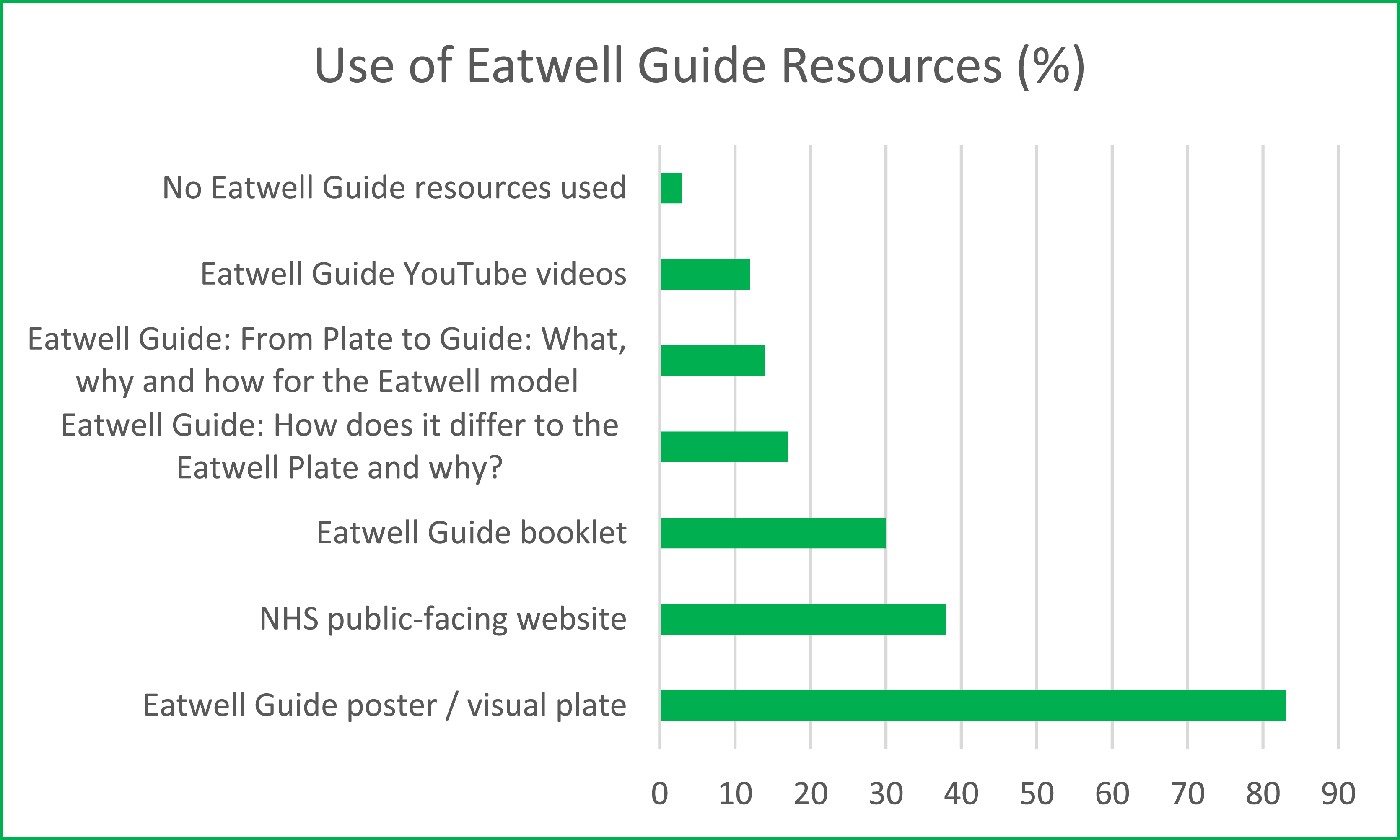
A national survey undertaken by MyNutriWeb and the British Dietetic Association (BDA) found that 88% of health professionals use the Eatwell Guide when providing advice on healthy eating(Reference Haffner, Bolt and Bauer28). The online survey, shared via email to members of the BDA and MyNutriWeb community, collated the views of 2,357 health professionals (74% who were dietitians and nutritionists) to gain insights into dietitians, nutritionists, and other health professionals’ perceptions of the UK Eatwell Guide and how it could be better communicated to help optimise citizen adherence. They found that the majority (83%) of those that use the Eatwell Guide in their work find the poster/visual plate helpful, over a third (38%) use the NHS public-facing website, and 30% use the Eatwell Guide booklet(Reference Haffner, Bolt and Bauer28), Fig. 1.
Eatwell Guide resources that health professionals reported using(Reference Haffner, Bolt and Bauer28). (from a survey carried out by MyNutriWeb and the British Dietetic Association of 2,357 health professionals in 2022 asking about their perspective on the Eatwell Guide: how can we better communicate it for better adherence?).

Fig. 1. Long description
The bar graph titled Use of Eatwell Guide Resources percentage compares the percentage of health professionals using different Eatwell Guide resources. The graph features seven horizontal bars, each representing a different resource. The x-axis ranges from 0 to 90 percentage, while the y-axis lists the resources: No Eatwell Guide resources used, Eatwell Guide YouTube videos, Eatwell Guide: From Plate to Guide: What, why and how for the Eatwell model, Eatwell Guide: How does it differ to the Eatwell Plate and why, Eatwell Guide booklet, NHS public-facing website, and Eatwell Guide poster / visual plate. The bars are colored green. The Eatwell Guide poster / visual plate resource is used by the highest percentage of health professionals, followed by the NHS public-facing website and the Eatwell Guide booklet. The least used resource is No Eatwell Guide resources used. All values are approximated.
While the Eatwell Guide is regarded as a ‘good overview’, views of health professionals, collated from both surveys and roundtable discussions(Reference Haffner, Bolt and Bauer28,29) , highlight the ‘frustrations’ with limited resources available to support the translation of the generic FBDG into tailored and personalised advice for individuals and population groups, specifically mentioning the limited guidance on portion sizes, meal planning, ‘practical translation to cooking and what it looks like for a meal’ and eating on a budget.
With a need for evidence-based and practical approaches to support the delivery of the UK FBDG, health professionals report using additional resources to that provided by the Eatwell Guide(Reference Haffner, Bolt and Bauer28,29) , with half (50%) of health professionals using tools and resources available on a third-party website such as the BDA, British Heart Foundation, Diabetes UK, British Nutrition Foundation, Carbs & Cals (approved by Diabetes UK, NHS and BDA), and FBDG websites from other countries. Others cite using other sources including local NHS Trust and in-house resources, and creating their own resources to support the guidance.
Concerns have been raised about the consistency of nutrition messaging with health professionals using tools and resources to support the UK FBDG from several different sources, leading to a call from health professionals for a more comprehensive communication strategy to be available in a central location(Reference Culliford, Bradbury and Medici8,29–31) . Together with growing evidence and the need to update the UK FBDG in line with health and sustainability goals(32), the MyNutriWeb community of health professionals is asking ‘is it time for a shake-up of the Eatwell Guide?’.
This review will consider some of the key issues related to a need for a ‘shake up’ of the Eatwell Guide highlighted by health professionals.
Need for a joined-up approach and single reference point for FBDG in the UK
There is clear evidence that a collaborative approach to food policymaking, incorporating cross-sector policy discussions with other groups – for example those working on climate change policy, and a joined-up approach within Government, and across food-related business sectors and communities – is essential for delivering healthy and sustainable FBDG in the UK(Reference Culliford, Bradbury and Medici8,32,33) .
The UK Government commissioned National Food Strategy review recommended developing a legislative framework to create a healthier, more sustainable food system in the UK including a Good Food Bill, that would expand the remit of the Food Standards Agency is cover both healthy and sustainable food. It further advised establishing and periodically updating a healthy and sustainable ‘reference diet’ for the nation, in line with health and sustainability goals, to serve as a single point of reference to underpin policy and advice(32).
Scotland has been at the forefront, as the first UK nation to have a national food plan, setting out an overarching framework for a clear, consistent, and coherent Scottish food policy that will be taken forward at national and local levels(33). As part of the national Good Food Nation Plan, polices aimed at improving the diet of people in Scotland are supported by user-friendly new dietary guidance resources for people living in Scotland: Eat Well, Your Way (34). Based on the Eatwell Guide, Eat Well, Your Way provides evidence-based resources and practical support including shopping on a tight budget, guidance in the kitchen on equipment, meal and snack suggestions, portion sizes, cook-along videos, advice on making more sustainable choices and tailed advice for those with children.
In England over 50 Local Authorities, including Birmingham and Manchester, have developed food strategies in partnership with their communities(32,35–Reference Hills and Jones37) . The Birmingham Food System Strategy(36) identified that while the Eatwell Guide may be a useful tool for many, it can be difficult to interpret and hard to follow as a FBDG for those where it does not reflect different cultural diets. As part of the city-wide strategy, new eating guidance has been created that will provide resources that support healthy and sustainable diets tailored to different cultures, health conditions and needs of the local community.
Health professionals support the ambition to amalgamate efforts at a local level by developing a central point of government-created and funded practical tools, resources, and campaigns to improve adherence to the UK FBDG(Reference Haffner, Bolt and Bauer28,29) . Such a hub should be underpinned by a joined-up comprehensive communication strategy that provides clear and consistent advice, and becomes the go-to source of trustworthy, accessible, and credible advice on healthy eating(Reference Culliford, Bradbury and Medici8,Reference Kellow30,31) . Dietitians and Nutritionists, particularly those working at the intersection of science and communication in digital communication and PR roles, could be well placed by the Government to bring alive such resources.
Need to develop a wide range of practical tools and resources to support the Eatwell Guide
The development of a centralised hub of resources should incorporate a broad range of practical tools to support the translation of FBDG into educational, motivational, and practical advice for individuals and communities(Reference Haffner, Bolt and Bauer28–31,36) .
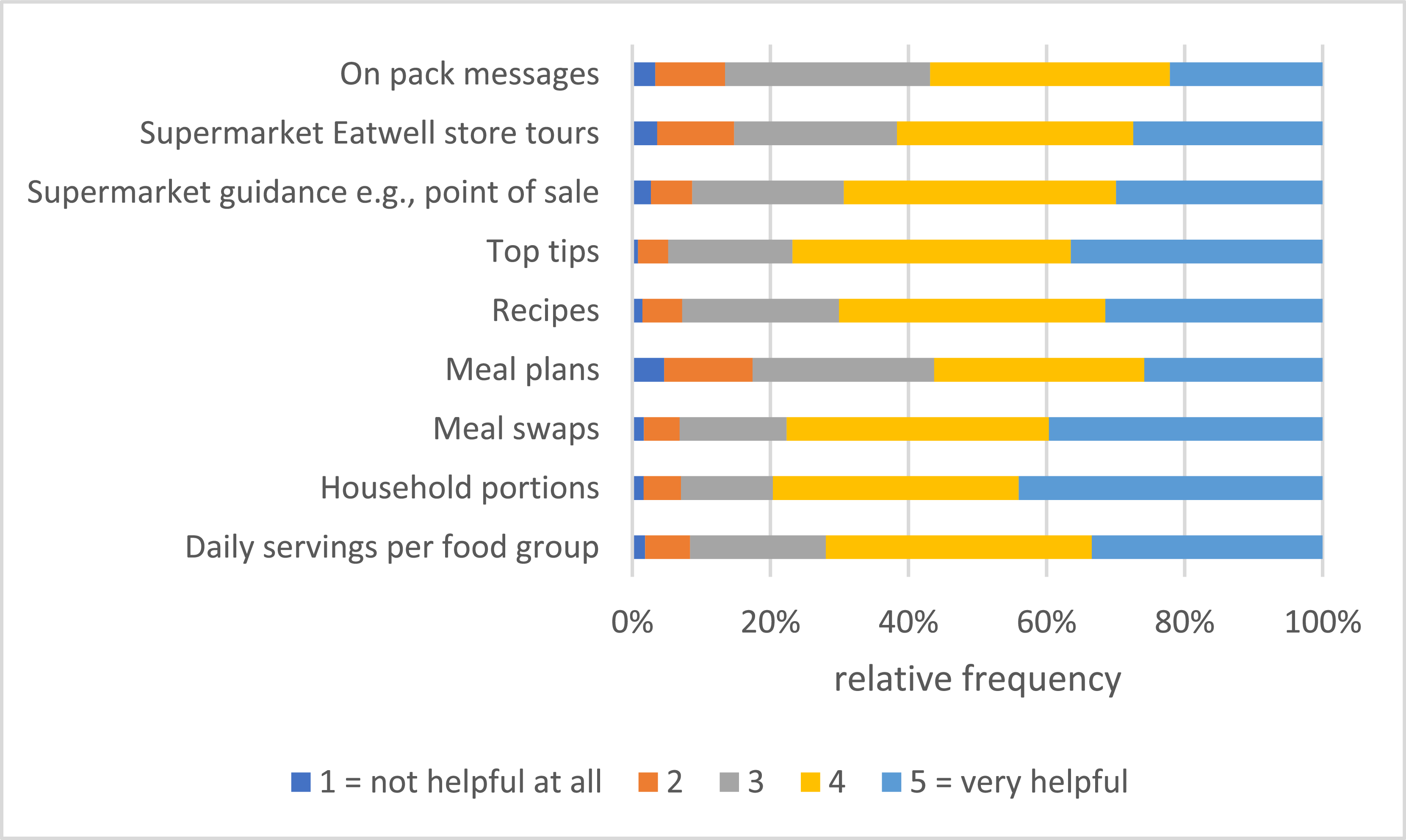
A national survey of health professionals(Reference Haffner, Bolt and Bauer28) emphasised the value of having a variety of practical tools and resources to communicate the messages of the Eatwell Guide effectively. Provided with a choice of nine resources, health professionals viewed guidance on portion sizes, meal swaps and top tips as the most helpful tools and resources, and inclusion of daily servings per food group, recipe suggestions, supermarket guidance at point of sale, supermarket Eatwell store tours – healthy-eating tours undertaken in food retail stores led by a dietitian or health coach trained by a dietitian, on-pack messages and meal plans were also found to be helpful, Fig. 2.
Tools and resources that health professionals would like to see included in an updated communication strategy of the Eatwell Guide(Reference Haffner, Bolt and Bauer28): bar plot highlighting the exact response patterns (from a survey carried out by MyNutriWeb and the British Dietetic Association of 2,357 health professionals in 2022 asking about their perspective on the Eatwell Guide: how can we better communicate it for better adherence?).

Fig. 2. Long description
The horizontal bar graph compares the relative frequency of health professionals’ preferences for various tools and resources to be included in an updated communication strategy of the Eatwell Guide. The x-axis represents the relative frequency in percentage, ranging from 0 to 100 percent. The y-axis lists different tools and resources: On pack messages, Supermarket Eatwell store tours, Supermarket guidance, Top tips, Recipes, Meal plans, Meal swaps, Household portions, and Daily servings per food group. Each bar is divided into segments representing different levels of helpfulness: 1 (not helpful at all), 2, 3, 4, and 5 (very helpful). The color scheme includes dark blue for 1, orange for 2, gray for 3, yellow for 4, and light blue for 5. The data shows that ‘On pack messages’ and ‘Supermarket Eatwell store tours’ have the highest frequency of being rated as very helpful (light blue), while ‘Meal swaps’ and ‘Household portions’ have a more balanced distribution across different helpfulness levels. All values are approximated.
FBDG from countries with communication strategies more favourably received by health professionals – most notably Canada, USA, Denmark, Ireland, France and Australia(Reference Haffner, Bolt and Bauer28) – feature user-friendly interactive websites presenting key messages displayed in a simple design and a diverse range of tools and resources.
Canada’s food guide(38), the most popular FBDG communication strategy amongst 36% of UK health professionals asking about views on how better to communicate the UK FBDG(Reference Haffner, Bolt and Bauer28), includes a visual of a plate with real foods and the ability to navigate from the homepage to click on each of the food segments to find out further information. Practical tools and resources include advice on using food labels, limiting highly processed foods, recipes, tips for healthy eating and a holistic approach to eating with captions such as ‘healthy eating is more than the foods you eat’ and ‘eat meals with others’.
The US MyPlate employs a similar approach, with a central interactive hub of resources with a focus on life stages, advice on eating healthily on a budget, recipes, guidance on reading labels and a menu of toolkits for health professionals(39).
Given the demand from health professionals to develop a national central hub of a greater variety of practical tools and resources, and the popularity of FBDG communication strategies from other countries which include a central interactive hub of resources for both citizens and health professionals, reviewing the communication strategy of the Eatwell Guide to incorporate these proposals could increase adherence to healthy eating guidelines and nutrition policies.
Need for guidance on portion sizes
The Eatwell Guides paucity of advice on portion sizes is a major drawback with health professionals(Reference Haffner, Bolt and Bauer28,Reference Kellow30,31) . Intended as a Guide suitable for use by most adults, the Eatwell Guide: How to Use in Promotional Material states that it would be misleading to provide specific advice on intake frequency or proportions given that people have individual requirements(12). As a result, portion size guidance is limited to a small number of recommendations including ‘eat at least 5 portions of a variety of fruit and vegetables every day’, ‘2 portions of sustainability sourced fish per week, one of which is oily’, ‘6-8 glasses of water, lower-fat milk, sugar-free drinks including tea and coffee’, ‘limit fruit juice and/or smoothies to a total of 150 ml a day’, and ‘no more than 70g of red or processed meat per day’(10,27) .
Health professionals, however, report confusion regarding portion sizes(29,40) , with individuals and communities often lacking a practical understanding of portion sizes expressed in grams, and the need for clearer guidance on appropriate portion sizes across a whole range of key recommended food groups(9).
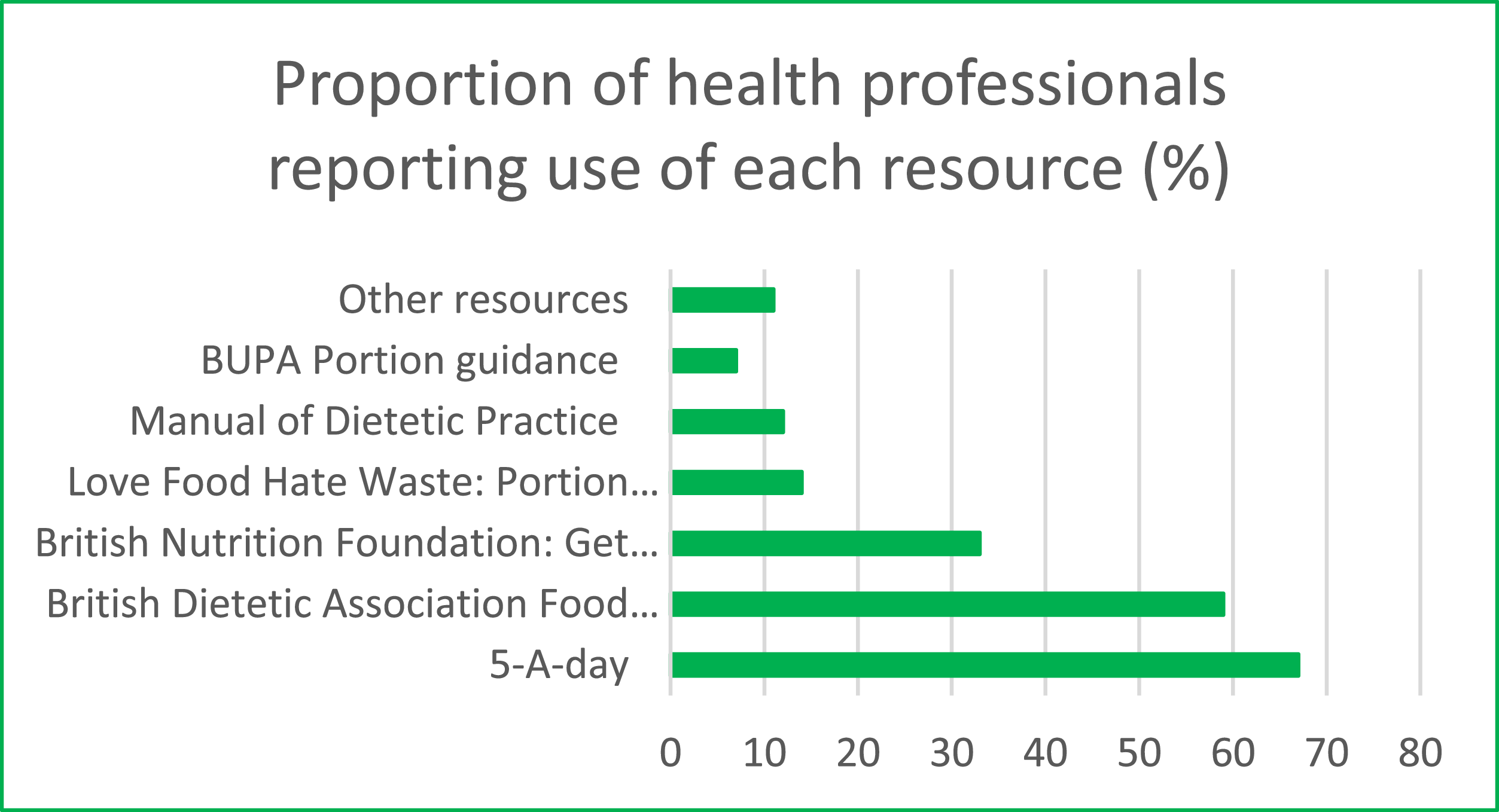
A national survey found that nearly 90% of health professionals who use the Eatwell Guide provide guidance on portion sizes, often using household measures such as hand or palm guides(Reference Haffner, Bolt and Bauer28). Given the limited guidance on portion sizes in the Eatwell Guide itself, health professionals rely on a range of other resources to provide the information(Reference Haffner, Bolt and Bauer28). The most popular resources include the ‘5-a-day’ portion sizes(41), the BDA Food Fact Sheet: Portion Sizes(42), the British Nutrition Foundation Get Portion Wise(43), and the Love Food Hate Waste Portion Planner(44), Fig. 3.
Health professionals reported use of resources providing guidance on portion sizes(Reference Haffner, Bolt and Bauer28). (from a survey carried out by MyNutriWeb and the British Dietetic Association of 2,357 health professionals in 2022 asking about their perspective on the Eatwell Guide: how can we better communicate it for better adherence?).

Fig. 3. Long description
The bar graph titled Proportion of health professionals reporting use of each resource percentage visually represents the proportion of health professionals reporting the use of various resources for guidance on portion sizes. The x-axis measures the percentage values, ranging from 0 to 80 percentage. The y-axis lists the different resources used by health professionals. The graph features seven horizontal bars, each representing a distinct resource and its corresponding percentage value. The resources include Other resources, B U P A Portion guidance, Manual of Dietetic Practice, Love Food Hate Waste Portion Size Guide, British Nutrition Foundation Get Your 5 A Day, British Dietetic Association Food Portion Sizes, and 5 A Day. The British Dietetic Association Food Portion Sizes resource shows the highest usage among health professionals, with a value around 60 percentage, followed closely by the 5 A Day resource at approximately 70 percentage. The other resources have lower usage values, ranging from around 10 to 30 percentage. The graph highlights the varying degrees of reliance on different resources by health professionals for portion size guidance. All values are approximated.
These resources present portion guidance in a variety of formats including grams, millilitres, pints, household measures and hand-based guides (e.g. one handful, a fist size). Some also combine formats such as specifying a ‘portion of baked beans is 150g or four tablespoons’; or dried fruit as ‘raisons is 30g or a small handful/one tablespoon’, and some include photographic measures of food portions to visualise on a dinner plate.
Developing guidance on portion sizes in an understandable format such as hands/palms and other household visual aids would support health professionals in providing clear and consistent advice on serving sizes and consumption frequency, thereby supporting individuals to meet their nutritional requirements and adhere to the Eatwell Guide.
Tailoring advice to increase adherence to the Eatwell Guide
A clear theme throughout the literature is that there is no universal ‘one correct diet.’ Tailoring and personalising FBDG is therefore important(9), with nutrition and healthy lifestyle messages aligned with nutritional recommendations for age, sex and life stage(45), personal dietary preferences, culture, faith, lifestyle, emotions and motivations(40) and environmental factors influencing dietary choices(9).
The Eatwell Guide is intended to represent the overall balance of a healthy diet, with health professionals expected to tailor their advice in consultations based upon the individual’s current diet and food preferences(12). The Eatwell Guide visual plate provides daily energy requirements for men and women(27), while the Eatwell Guide booklet includes recommendations for children from aged one(10). However, these nutrient recommendations may not be well understood by the majority of citizens(9).
An improvement to the Eatwell Guide communication strategy, supported by health professionals(Reference Haffner, Bolt and Bauer28–Reference Kellow30), could be to offer additional food-based recommendations aligned with nutrient requirements for age, sex and life stage which could include specific recommendations for pregnancy, babies, toddlers, children, teenagers, students, women, men and older people. FBDG communications from other countries have also focused on including nutritional guidance together with daily meal plans aligned with the recommendations for individuals age, sex, life stage and activity levels(39,45) .
In response to the Eatwell Guide not being tailored for those with personal dietary preferences, adaptations of the guidance have been developed with the creation of the Vegetarian Eatwell Guide(46), Vegan Eatwell Guide(47) and the Plant-based Eatwell Guide(48). These guides retain the visual plate format(46–48) with the protein segment adapted to replace fish and meat with meat-alternatives(46–48), and provide additional information about key nutrients to consider(46,47) , recommendations for using fortified foods and supplements, and additional information on healthy eating tips, sustainability tips, and a link to further information including guides for every stage of life(47,48) .
These adapted versions of the Eatwell Guide have not been recognised as part of the national FBDG. Further research is needed to evaluate these Guides for their potential inclusion as part of a ‘shake-up’ of the communication strategy, supporting adherence among individuals with personal dietary preferences.
Cultural diets and the need for diversity in UK FBDG
There is often a focus on the ‘Western/European’ diet to inform food policy and healthy eating guidance in the UK with the Eatwell Guide tailored to the Western culture and diet(49). Food policies and FBDG that lack representation of the diversity of cultures and foods available in local communities in the UK convey the wrong perception that healthy diets only include Western/European foods(29,35,40) . With 18.1% of the UK population identifying as an ethnic-minority, including 9.3% Asian/Asian British and 4.0% Black/African/Caribbean/Black British(50), health professionals working with these communities emphasise the need for ‘culturally appropriate resources’ that align with individuals lifestyles, beliefs and cultures(29,36,40,51) .
In the UK, ethnic-minority disparities in cardiometabolic diseases remains a considerable public health challenge(9). Black Caribbean, Black African and Pakistani populations are at a higher risk of developing hypertension(52), people of Pakistani ethnicity have the highest rates of diabetes, and women from Black Caribbean, Pakistani and Black African background are more likely to be overweight or obese compared with other ethnic groups, including the white British population(52).
With such huge public health challenges, there is a need for representation of the diversity of cultures and foods available in the UK to be in FBDSs to increase relatability and adherence in ethnic-minority communities in the UK(29,35,40,Reference Shannon, Townsend and Malcomson53) . Small studies have shown that 95.4% of South Asian communities and 95.8% of Black African and Caribbean communities have expressed that having a culturally specific Eatwell Guide would support individuals to make long-term healthy dietary choices(26,51,54) .
Efforts have been made by individual health professionals and organisations to produce culturally appropriate versions of the Eatwell Guide for African, Caribbean, South Asian and Polish communities in the UK(51,54,55) . Additionally, local authorities with diverse communities including Birmingham, Manchester and the London Borough of Enfield, have developed food strategies in partnership with the communities they service, producing culturally tailored resources, enabling healthcare professionals working in diverse communities to provide culturally sensitive recommendations including culturally appropriate foods(35,40,55) .
As the UK population becomes increasingly ethnically diverse, public health messages and resources must exist that resonate with a wider audience, with health and nutrition related resources that are both culturally relevant and sensitive. Health professionals advocate for the integration of local initiatives being incorporated into the national FBDS communication strategy(Reference Haffner, Bolt and Bauer28,29) . Further research is needed to review all existing adapted Eatwell Guides and consider adopting into national public health nutrition communication strategies.
Practical advice for healthy eating on a budget
Many of the key health behaviours notable to the development of chronic diseases, including obesity and unhealthy nutrition, are associated with socioeconomic deprivation(Reference Marmot56).
Diet is subject to vast socioeconomic disparities, with individuals in the most deprived quintiles consuming 37% less fruits and vegetables, 54% less fish and 17% less dietary fibre compared with those in the least deprived quartiles(22). Healthier foods are often more than twice as expensive per calorie than less healthy foods, and less available(23). A recent report by the Food Foundation Broken Plate 2025(23) highlighted that in order to afford the UK FBDG the most deprived fifth of the population would need to spend an ‘unrealistic’ 40% of their disposable income on food, rising to 70% for those households with children.
Health professionals working with individuals and communities struggling with food insecurity emphasise the need to address the barriers to eating healthily and to be able to tailor the Eatwell Guide to provide practical advice for eating on a budget(Reference Haffner, Bolt and Bauer28). There is a clear demand for practical strategies, tools and resources to support adherence to the UK FBDG among populations experiencing socioeconomic deprivation.
Communication strategy
A review by Culliford et al (2023) concluded that enhancing the communication strategy could drive better adherence to the Eatwell Guide(Reference Culliford, Bradbury and Medici8).
The internet and social media are now the primary way many individuals communicate and obtain information. Therefore, leveraging digital platforms should form a key part of the Eatwell Guide communication strategy, alongside traditional media including leaflets, printed newsletters and posters, TV, and radio(Reference Haffner, Bolt and Bauer28,Reference Kellow30,31,36) .
Health professionals consider engaging health eating communication strategies as important(Reference Ibitoye57). A national survey(Reference Haffner, Bolt and Bauer28) found that while the majority of health professionals (83%) use the Eatwell Guide poster image, far less utilise the NHS website (38%) or the Eatwell Guide YouTube videos (12%). When asked about resources that could help to communicate the Eatwell Guide better, interactive digital media platforms such as Apps, videos and social media were indicated by health professionals as the most popular channels by health professionals(Reference Haffner, Bolt and Bauer28).
There appears to be inconsistencies between what health professionals view as useful communication strategies (digital media platforms) and the resources they are using to support delivery of the Eatwell Guide. The evidence from the national survey(Reference Haffner, Bolt and Bauer28) suggests that the limited resources and tools available on the Eatwell Guide website and other interactive digital media platforms, particularly in relation to guidance on portion sizes and tailoring and personalising advice, is encouraging health professionals to use 3rd party information. It could also reflect the needs of more traditional media for the individuals and communities that they are supporting. A review of the communication strategy is needed to ‘shake up’ the current communication strategy to better support health professionals and adherence to the Eatwell Guide.
The UK government provides a number of health improvement campaigns, including Better Health: Adult Obesity, Better Health: Childhood Obesity and Healthier You NHS Diabetes Prevention Programme. As part of the resources available to support these campaigns, the NHS have eight Apps related to health including the NHS Food Scanner app and NHS Weight Loss Plan app providing advice on health eating and food swaps(58).
There is a need to re-assess the current UK FBDG communication strategy and having a joined-up communication strategy with government health campaigns to deliver the healthy eating messages is advised. Implementing this recommendation requires funding and support from policy makers as well as collaboration between health and sustainability professionals to ensure that the information provided is evidence-based and trustworthy(Reference Culliford, Bradbury and Medici8).
Communication style of nutrition messages
The communication style, including the language and tone, of nutrition messages is important for considering adherence to FBDG(Reference Culliford, Bradbury and Medici8). Health eating messages that are short, simple, specific and easy to understand are recommended(Reference Culliford, Bradbury and Medici8), alongside visuals that are simple, eye-catching, and colourful with images of foods and examples of whole meals(40).
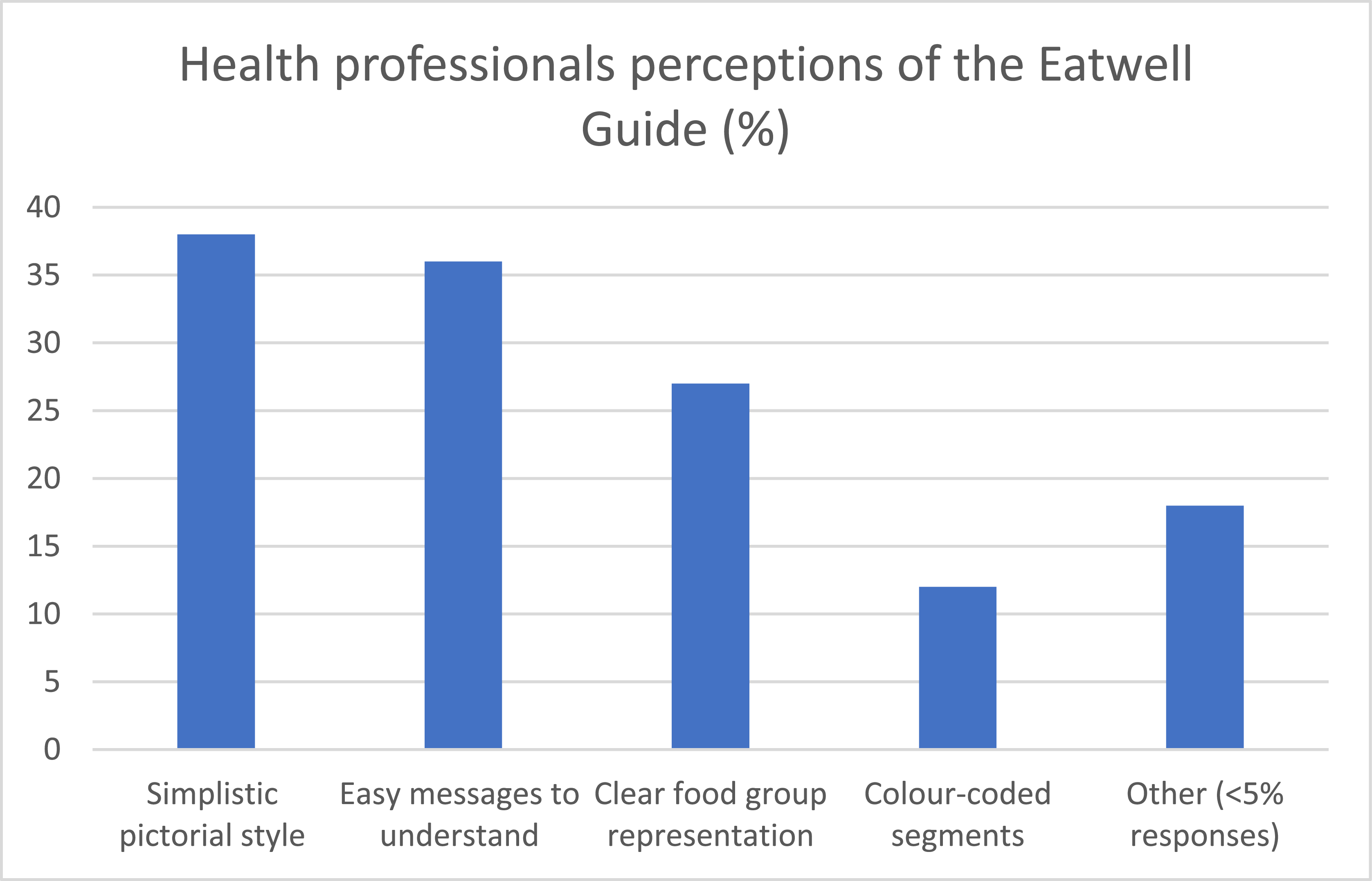
Health professionals have indicated that they like the simplistic pictorial style of the Eatwell Guide, with the clear food groups, colour-coded segments and messages that are easy to understand(Reference Haffner, Bolt and Bauer28), Fig. 4. However, professionals working with diverse ethnic communities report that individuals do not find the Eatwell Guide communication style easy(29,35,40) .
Health professionals reported perceptions of the Eatwell Guide(Reference Haffner, Bolt and Bauer28). (from a survey carried out by MyNutriWeb and the British Dietetic Association of 2,357 health professionals in 2022 asking about their perspective on the Eatwell Guide: how can we better communicate it for better adherence?).

Fig. 4. Long description
The bar graph compares health professionals’ perceptions of the Eatwell Guide across five categories: Simplistic pictorial style, Easy messages to understand, Clear food group representation, Colour-coded segments, and Other. The x-axis lists these categories, while the y-axis measures the percentage of respondents, ranging from 0 to 40. The bars are colored blue. The Simplistic pictorial style and Easy messages to understand categories have the highest percentages, both exceeding 35. Clear food group representation follows with around 25. Colour-coded segments is the lowest, just above 10. The Other category, which includes less than 5 percent of responses, is slightly above 15. All values are approximated.
A further limitation is that the Eatwell Guide is only available in the English language. In contrast, other countries have translated the national FBDG into many languages such as the Canadian FBDG which is available in 34 languages(38). The UK is a multicultural nation with 91.1% in England and Wales having English as first language(59). It is advised that any updated communication strategy for the Eatwell Guide considers translating the guidance into other languages widely spoken in the UK to increase adherence to the FBDG.
Sustainability and the Eatwell Guide
The environmental sustainability of the global food system is complex and the single biggest contributor to biodiversity loss, deforestation, freshwater pollution, drought and the collapse of aquatic wildlife. Further, it is the second-biggest contributor to climate change, after the energy industry(32).
Foods most detrimental to our health are often those with the highest emissions, pollution, land and water use(60). Guiding principles for sustainable healthy diets from the FAO and WHO outline that a shift towards a healthier diet rich in plant-based proteins and lower in meat, particularly red meat, is required to reduce greenhouse gas emissions and relieve environmental pressures(61). Conversely, a diet rich in plant-based proteins, increased fruit and vegetable intake and fibre, and lower in animal-source foods, fat, sugar and salt intake is recognised as beneficial for health, as outlined in the Eatwell Guide, and the environment(60).
With increasing evidence of the synergy between human and planetary health, the FAOs overarching suggestion is to incorporate sustainability into FBDGs(Reference Fisher and Garnett62). Many countries have responded by updating their guidelines to include sustainability modelling(Reference Halevy and Trewern63), with a 2022 review(Reference James-Martin, Baird and Hendrie64) finding that 37 countries (representing 17% of the world’s population) make a reference to environmental sustainability. These countries have generally published FBDG since 2014 and tend to be from upper-middle-income and high-income countries in Europe and Latin America, with Denmark and Belgium, published since 2019, referred to as ‘exemplary’ in their coverage of environmental sustainability.
The UK FBDG, however, are lagging behind. Whilst advising ‘eat more beans and pulses’, ‘two sources of sustainably sourced fish weekly (one of which is oily)’ and ‘less red and processed meat’, there is no explicit recommendation to adopt environmentally sustainable dietary patterns.
Since the publication of the Eatwell Guide, the UK government has recognised the need for the adoption of sustainable diets both for human health and planet health. The UK has committed to a target 100% reduction of all greenhouse gas emissions by 2050 compared with 1990 levels, the ‘net zero target’(65). The seventh Carbon Budget published by the Climate Change Committee outlined ambitious targets for a shift to lower-carbon foods, specifically reducing meat consumption by 25% by 2040 and 35% by 2050 compared with 2019 levels, and reducing dairy consumption by 20% by 2035(66), mainly replaced by alternative plant-based protein products, and in later years novel alternative proteins.
The UK National Food Strategy outlined changes needed to the national diet by 2032 to meet the UK Governments commitment on health, climate and nature. Recommendations included increasing fruit & vegetable (+30%) and fibre (+50%) intake and reducing HFSS foods (−25%) and meat (−30%) together with establishing and periodically updating a healthy and sustainable ‘reference diet’ for the nation, in line with health and sustainability goals(32).
In guidance for health and care professionals, the Office for Health Improvement and Disparities (OHID) All Our Health programme(60) advised encouraging people to adopt a balanced, sustainable diet that would ‘reduce the risk of environmental impact of food production and supply, as well as reduce the risk of diet-related disease’.
Health professionals support the evolution of the UK FBDG to incorporate sustainability modelling. Studies of healthcare professionals’ perceptions of the UK FBDG have concluded that dietitians agree that the Eatwell Guide should be updated to incorporate the latest sustainability understanding, and that revised guidelines prioritise more plant-based protein foods to support health and environmental considerations(Reference Roper, Lanza and Lewis67–Reference Asher, Doucet and Luke69).
The One Blue Dot project(70), commissioned by the BDA, has responded to the need to adopt more environmentally sustainable diets by providing practical evidence-based One Blue Dot toolkit of resources including some information on meal swaps, nutritional considerations, recipes and further links and resources for health professionals.
Developing a toolkit that supports industry to make changes also requires consideration. In response to The National Food Strategy(32) recommendation for the introduction of mandatory reporting for large food companies on sales of healthy and sustainable foods, a number of major UK food businesses have moved to disclose data or set new targets including % sales of high fat, salt and sugar foods, % of sales of fruit and vegetables and % of sales of types of protein (animal and protein)(71). Led by nutrition teams, industry and retailers are further assessing the healthfulness of foods considering the UK FBDG(72). Creating an Eatwell Guide toolkit to support industry and retailers could be impactful to drive companies towards increasing sales of healthy and sustainable foods.
Reviewing the dietary recommendations of the UK FBDG
Given the far-reaching potential of the Eatwell Guide to impact on human health and the environment, developing and integrating updated FBDG that promote plant-rich diets with revised recommendations, specifically relating to the protein segment, is a clear strategy.
Views of health professionals on the Eatwell Guide(Reference Haffner, Bolt and Bauer28) suggest support for redefining the size and foods included in the segments of the FBDG visual plate. An updated visual representation with half the plate being vegetables and fruits, one quarter of the plate wholegrain (carbohydrate) foods and the remaining quarter of the plate healthy protein foods has been one suggestion reiterated. This model reflects the FBDG visual representation of the US MyPlate(39) and Canadian food guide(38) whose FBDG communication strategy is popular with UK health professionals.
For the UK FBDG to have the greatest impact on diets, health and environment, policies from other governmental departments and ministries need to align with and not contradict updated dietary recommendations of the FBDGs – for example regarding national agricultural strategies, public-private partnerships and regulation of the food sector(17).
Despite the evidence and the urgent calls for the need to reduce intakes of meat and dairy, the opposition from within government to target a reduction in national meat consumption has been described by The National Food Strategy as ‘not politically feasible’(32). Furthermore, a UK parliamentary report outlined that the food industry has ‘disproportionate economic and political power’ that is directly and indirectly influencing food regulations, undermining science and framing and reframing public debate(73).
The Nutrition Source(Reference Harvard74) based at the Harvard T.H. Chan School of Public Health is a comprehensive user-friendly resource of science-based guidance on nutrition, and tools including a simple healthy eating plate. Free from industry influence or support, it has become a hub of independent, clear and unbiased advice in the US to support citizens adhering to healthy eating guidelines.
There is a need for food policymaking and future updating of UK FBDG to be protected from vested interest. Greater transparency about the influence of other government departments and industry in shaping policy on food, diet and obesity prevention is needed(73) with more scientific research that is independent of industry.
Conclusions and further research
It is evident that UK health professionals support a comprehensive ‘shake up’ of the Eatwell Guide and its communication strategy, aimed at improving adherence to a healthy diet that supports the sustainability of the planet.
Currently, less than 0.1% of the UK population eat a diet in line with the recommendations in the UK FBDG. A population-wide shift towards a diet aligned with the Eatwell Guide has the potential to lower rates of obesity, non-communicable diseases, and the environmental footprint of our diets.
This review highlights the perspectives of health professionals in calling for a ‘shake-up’ of the Eatwell Guide. The strengths of this review are that it is broad, exploring the views of the MyNutriWeb community of health professionals on the UK dietary recommendations and Eatwell Guide communication strategy. The review sets out key considerations of updating the UK dietary recommendations and communication strategy to include a government-created and funded central hub of practical tools and resources, integrating efforts from health professionals and organisations to support tailored and personalised dietary advice for individuals and communities.
A limitation of this review is the inclusion of ‘grey literature’, reflecting the current paucity of published research specifically addressing the views of health professionals on the Eatwell Guide. Further research is needed for a deep exploration of the tools and resources required to optimise communication and implementation of the UK FBDG.
To summarise, this review highlights that the UK FBDG and its communication strategy lag behind those of other high-income countries. Investment from the UK government, alongside engagement from health professionals and other non-bias independent stakeholders is required to ‘shake up’ the dietary guidelines to incorporate both nutrition and sustainability modelling, and to modernise the communication strategy. Together, such actions will be critical to improving the population’s adherence to a diet that is both healthy and supports the sustainability of the planet.
Acknowledgements
The authors would like to thank the 2,357 dietitians, nutritionists and other health professionals who participated in the MyNutriWeb and British Dietetic Association survey exploring perspectives on the Eatwell Guide. We are also grateful to the participants in the MyNutriWeb roundtable discussions whose insights helped inform the themes discussed in this review. Their engagement and willingness to share their experiences have made an important contribution to the understanding of how the UK Eatwell Guide and its communication could be strengthened.
Author contributions
TH conceived the research and conducted desk research. CDB conducted desk research and drafted the manuscript. TH and CDB both reviewed and edited the manuscript before approval for final submission.
Financial support
This research received no specific grant from any funding agency, commercial or not-for-profit sectors.
Competing interests
TH is the Founder of Nutrilicious Communications and MyNutriWeb Nutrition Education Hub.
CDB is a Public Health Nutrition Consultant at Nutrilicious. CDB has no conflicts of interest to declare.