Natural disasters, whether caused by nature or man, often impact health services worldwide.Reference Hertelendy, Howard and Sorensen 1 Asia is the most affected region, recording 40% of all disaster events, 49% of all fatalities, and 66% of all people affected. 2 A disaster is a significant and sudden decline in the functioning of a society that exceeds the ability of the affected areas to cope with their resources and requires external assistance.Reference Broby, Lassetter, Williams and Winters 3 , Reference Tintinalli, Stapczynski and Ma 4 Every hospital stands at the forefront of the health care system in the event of a disaster, providing life-saving care, comfort, and relief.Reference Chaffee and Oster 5 In academic hospitals, faculty and students also play a critical role in disaster response, ensuring that resources and expertise are readily available in times of crisis. Prevention and preparation for any disaster are crucial factors for appropriate management at all levels of health care.Reference Rattan, Gupta and Sharma 6 , Reference Fatiregun and Isere 7 However, in many nursing facilities in India, the focus is primarily on academics, while patient care is only included as part of their formal training in the clinical setting. As a result, teachers report significant gaps in disaster preparedness.Reference Aliakbari, Hammad and Bahrami 8
The nursing profession is multidimensional, interactive, interdisciplinary, and complex,Reference Smith 9 with predominantly female nurses in clinical and academic professions making up two-thirds of the healthcare workforce in India and elsewhere.Reference Kamalasanan, Subbarayalu and MR 10 Nursing education is in a transformational phase, with the goal of producing academic and well-qualified clinical professionals who can meet the needs of a changing society. Reference Francis-Baldesari and Williamson 11 There is evidence that nurses report significant gaps in disaster preparedness,Reference Matlock 12 and the challenge is to strive for higher levels of understanding, preparedness, mitigation efforts, and response mechanisms. This, in turn, needs to be supported by better coordination between different levels of government, academic institutions, the business sector, civil society, and citizens at large. Nevertheless, a systematic review of disaster education found that inadequate simulations and exercises, difficulty following guidelines, and problems accessing current educational resources lead to inadequate disaster preparedness.Reference Brinjee, Al Thobaity and Ahmari 13
When responding to disasters, nurses work with other health care providers to identify and plan for risks, engage in preparedness, education, and training, respond efficiently and effectively, and participate in recovery.Reference Al Harthi, Al Thobaity and Al Ahmari 14 For comprehensive disaster management in hospitals, nurses must actively prepare and activate the plan before, during, and after the response with exercises and simulations of various disaster scenarios. Overload during a disaster puts psychosocial strain on nurses due to professional and home demands.Reference Tyer-Viola 15 Therefore, Hospital Disaster Management (HDM) needs to be addressed in 3 contexts: the community disaster resulting in mass casualties in the hospitals, the hospital itself in the event of a disaster, and the community and the hospital in the event of a disaster. 16 Hence, HDM provides the opportunity to plan, prepare, and enable a rational response in the event of disasters or mass casualties. 17
For comprehensive disaster management in hospitals, nurses must actively prepare and activate the plan before, during, and after the response with exercises and simulations of various disaster scenarios. The lack of preparedness and competence to respond effectively to disasters can exacerbate the problem and cause irreparable harm to victims and society. Accordingly, health care providers must acquire and maintain the ability to effectively engage in service delivery systematically and efficiently through exercises and maneuvers. Therefore, it is necessary to assess the capability of health care providers before they appear in real-time disaster situations and address their shortcomings.Reference Aliakbari, Pirani and Heidari 18 Furthermore, integrating nursing education, research, and practice is necessary to ensure excellence in the nursing profession.Reference Rattan, Gupta and Sharma 6 By integrating these communities, nursing education faculty will be able to play an essential role in implementing plans that will enable the hospital to manage the crisis effectively.Reference Fatiregun and Isere 7
Given the increasing frequency of disasters worldwide, it is critical to emphasize the importance of training disaster preparedness skills for health workers and nurses, who are often on the front lines of disaster management.Reference Achora and Kamanyire 19 To ensure hospital readiness to provide care in the event of a disaster, hospital administrations and nursing schools should promote the training of nurses in disaster preparedness.Reference Baack and Alfred 20 Disasters and emergencies, both man-made and related to microorganisms, geographic and climatic disasters, confirm the need for nurses at all levels to be prepared and have a shared understanding of how to participate in preparation, response, and recovery. 21 Most disaster-related research is conducted among nurses, physicians, nursing students, and other emergency personnel and does not involve nursing educators. To address this gap, this study aims to evaluate the effectiveness of hospital disaster management competency training in improving the learning and behavior of nurse educators in hospitals using the modified Kirkpatrick assessment model.Reference Kirkpatrick and Kirkpatrick 22
Methods
Study Design and Setting
The study was based on a randomized controlled design with a control group before and after the test, with the outcome assessor blinded. It was conducted in 10 academic nursing institutions in the Thiruvananthapuram District, the capital of Kerala, India. These institutions offer academic programs such as diplomas and undergraduate and postgraduate courses affiliated with Health Science University. There were 12 colleges in the district, 10 of which granted permission for the research.
Study participants and sampling
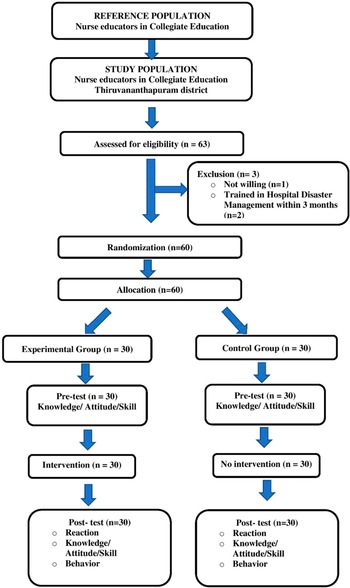
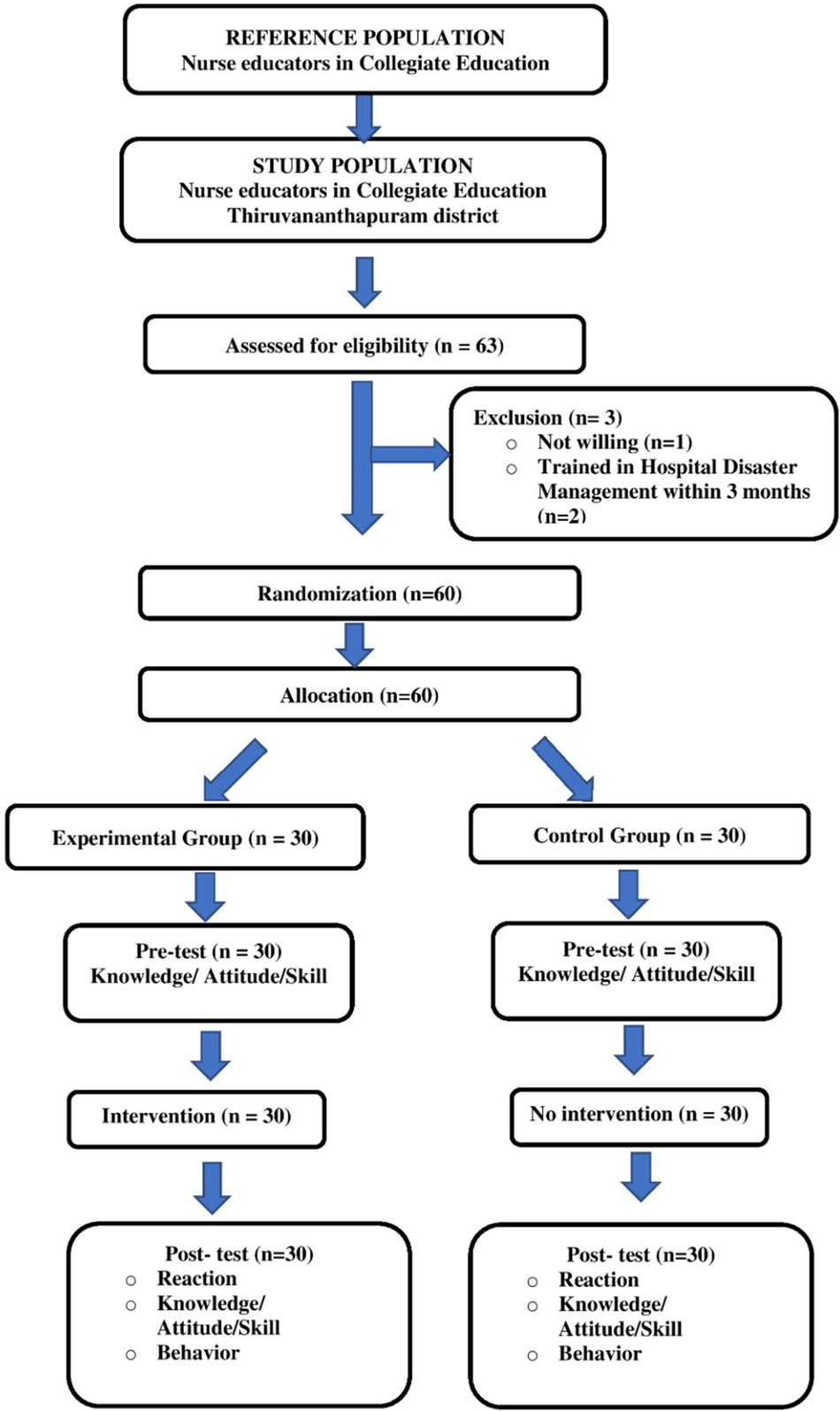
A power analysis conducted for the primary outcomes, such as knowledge, skills, and attitude, resulted in a required sample size of 30 participants in both experimental and control groups [assuming an attrition rate of 20%, a significance level of 5%, and a power of 80%].Reference Mirzaei, Eftekhari and Sadeghian 23 The sample included nursing educators from government and private nursing schools, excluding those with prior disaster management training (Figure 1). The sampling technique used was cluster random sampling, and within clusters, a simple random sampling technique was used to select the participants.
CONSORT Flowchart.
Randomization and blinding
The colleges served as clusters and were randomly divided into 5 experimental and 5 control groups with similar characteristics. Six nursing educators were randomly selected from each college using a simple random technique using computer-generated numbers while maintaining confidentiality. Allocation and enrollment occurred, and pre- and post-test assessments were conducted by a research assistant unaware of the study objectives or group assignments.
Intervention
The hospital disaster management training module was developed based on publications from the National Disaster Management Authority website, the Government of India, and other relevant disaster management resources. 24 , 25 The prepared module consisted of 17 units divided into 2 sections: the first section covered general aspects in 4 chapters, and the remaining 13 units were dedicated to specific HDM topics such as Introduction to Disaster Management, Major Disasters and their Impact on Health, Disaster Management Terminology, Disaster Management Cycle, Hospital Disaster Management, Stages of Hospital Disaster Management, Field Assessment and Accident Scene Safety, Mass Casualty Incident, Hospital Emergency Code, Emergency Ambulance, Triage Disasters, emergency management, psychological first aid, crowd response plan, hospital safety, special concerns in disasters, and the role of nurses in hospital disaster management.
Five nursing experts had considered the Skill Training Program (STP). The Delphi technique was used for further content validation by 16 experts from nursing, medicine, emergency medicine, surgery, and the state disaster control authority. The experts received the module, the Delphi matrix, and assessment guidelines. The matrix included learning objectives, instruction time, methods, and content details for each unit, rated on a 5-point Likert scale ranging from “Highly Appropriate (5)” to “Highly Inappropriate (1).” Experts could also provide comments for each unit within the Delphi matrix. The first round of Delphi reviews was assembled by 13 of 16 experts within 2 weeks. After responses with average scores of 4 or 5 (high appropriateness) were retained, a second round of Delphi was continued, and again, responses with average scores of 5 and 4 were retained. The theoretical teaching of HDM then took place via an online platform and a practical simulation. Enrollment had begun on May 5, 2022; the intervention and data collection period were from June 4, 2022-August 30, 2022.
Study Outcome and Tools
The main findings of the study included 2 dimensions: learning and behavior. Learning quantified trainees’ knowledge, skills, and attitudes through pre- and post-training assessment using a questionnaire. Participants completed a 51-point Likert-scale questionnaire to assess learning outcomes, which included 22 knowledge items, 17 skill items, and 12 attitude items—behaviorally assessed changes in performance 3 months after training using a 6-item dichotomous scale. The Internal Consistency Reliability (ICR) of the tools, Cronbach’s alpha, was as follows: knowledge 0.786, skill 0.611, attitude 0.79, and behavior 0.681. The ICR of all primary endpoints demonstrated the desired reliability. The pre-test for the theoretical part of the STP was carried out on HDM and was offered online. Recognized trainers conducted the skills portion through practical training. First, a pre-test was conducted, followed by the training program. Learning (knowledge, attitude, and skills) was assessed after 1 month. Behavior was assessed 3 months after training. For the control group, pre-and post-tests were conducted online. A research assistant who did not know the details of the study conducted the pre-and post-test assessments. There were no dropouts, and the outcome was measured among all enrolled participants.
Statistical analysis
Statistical analysis was performed using SPSS 27. The distribution was tested for normality, and data were reported as mean (standard deviation), frequency (percentage), or median (interquartile range). The outcome was measured as the mean difference in knowledge, skill, attitude, and behavior scores between the pretest and post-test of the experimental and control groups. Independent t tests were performed for normally distributed scores, and Mann-Whitney tests were performed for outcome variables with skewed distributions. A P value of <0.05 was considered statistically significant.
Ethical considerations
Ethical approval to conduct this research was obtained from the Institutional Human Ethics Committee of the Government College of Nursing, Thiruvananthapuram, Kerala, India (CNT/IEC/51/1/2021) before the commencement of the study. The study was also prospectively registered in the Clinical Trial Registry of India under reference number CTRI/2022/01/039259. Further, informed consent was sought from all the participants, detailing the study and assuring them of the confidentiality of information.
Results
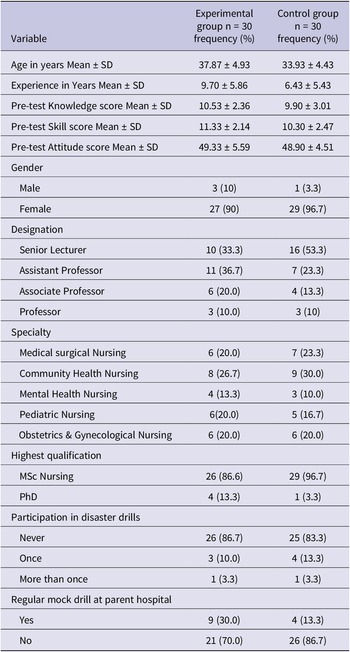
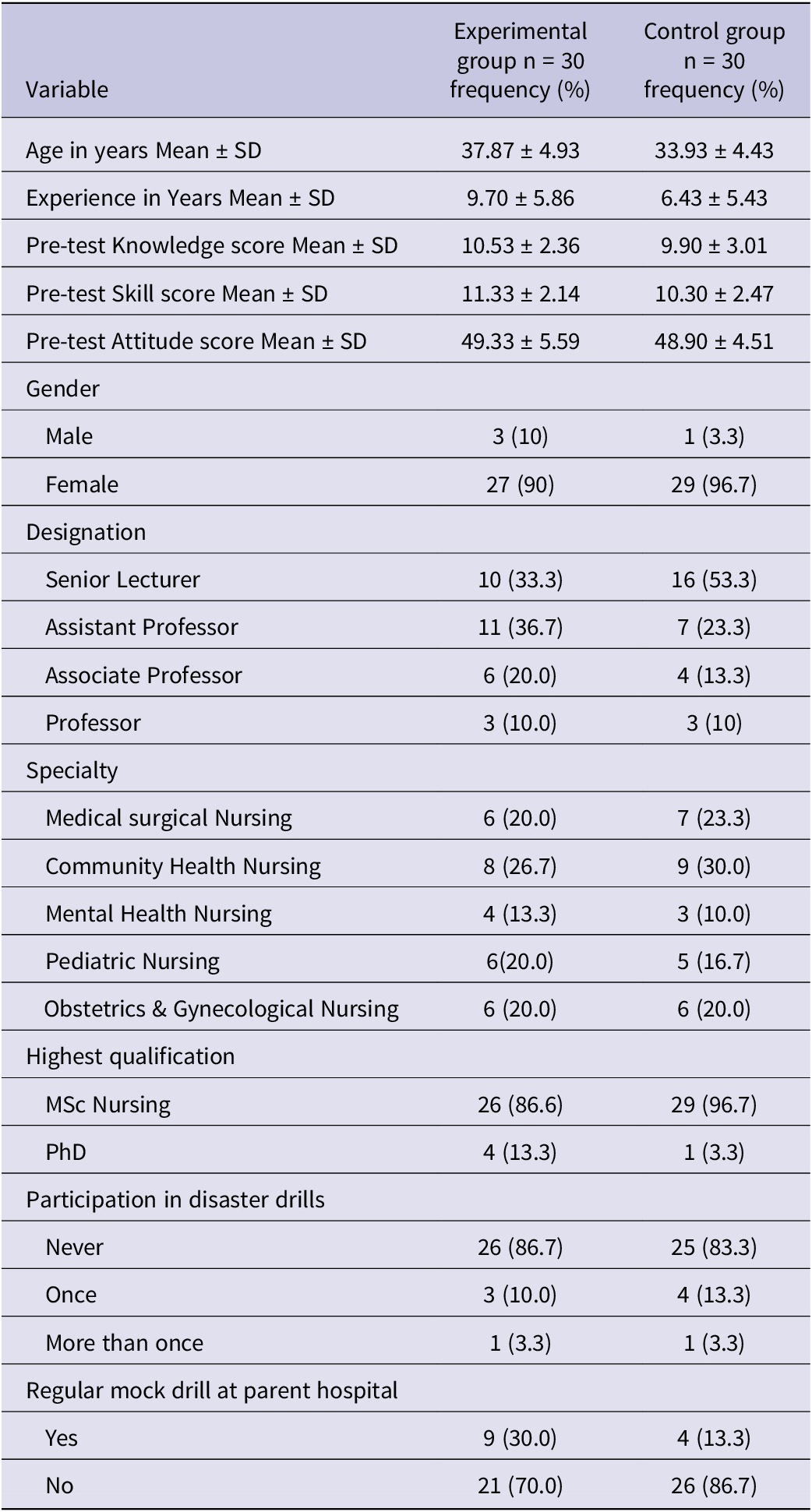
Sixty-three nurse educators were initially screened for eligibility, of which 3 were excluded: 1 did not wish to participate, and 2 had completed health education training within the past month (Figure 1). The 60 eligible participants were randomized in a 1:1 ratio. The experimental group (30) received the HDM intervention, and the control group (30) received no intervention. There were no losses to follow-up. The baseline characteristics of the participants are shown in Table 1.
Baseline characteristics of the experimental and control group
Knowledge
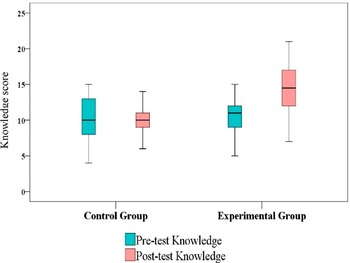
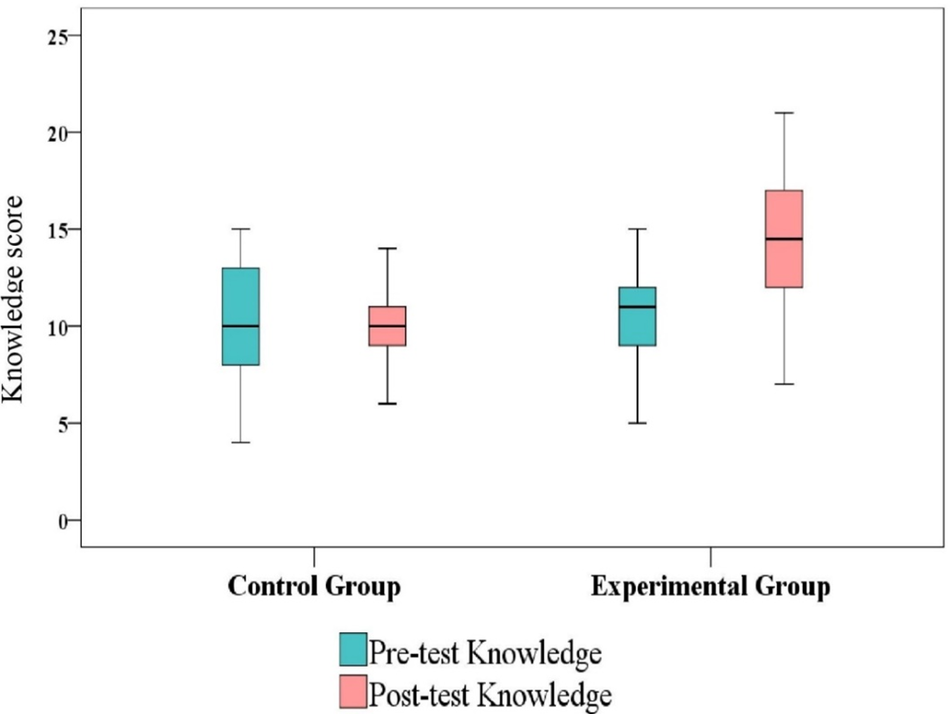
The learning assessment includes a 3-part assessment explicitly categorized according to knowledge, skills, and attitude (Figures 2-4). Figure 2 shows the knowledge point distribution. The control group’s pretest knowledge score (mean) of 9.90 (3.01) was similar to the post-test mean of 9.60 (3.38). In contrast, the experimental group’s knowledge score improved significantly before the test, from 10.53 (2.36) to a mean of 14.40 (3.77) after the test. The difference in knowledge between the experimental and control groups was 4.17, and tdf (58) = 4.581 (95% CI; 2.35-5.99, P = 0.001).
Box and whisker plot showing the scores of pre-test and post-test knowledge of control and experimental groups.
Skill
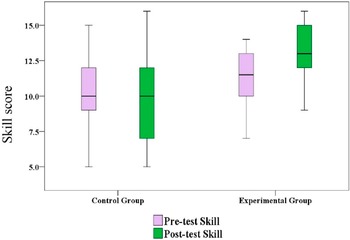
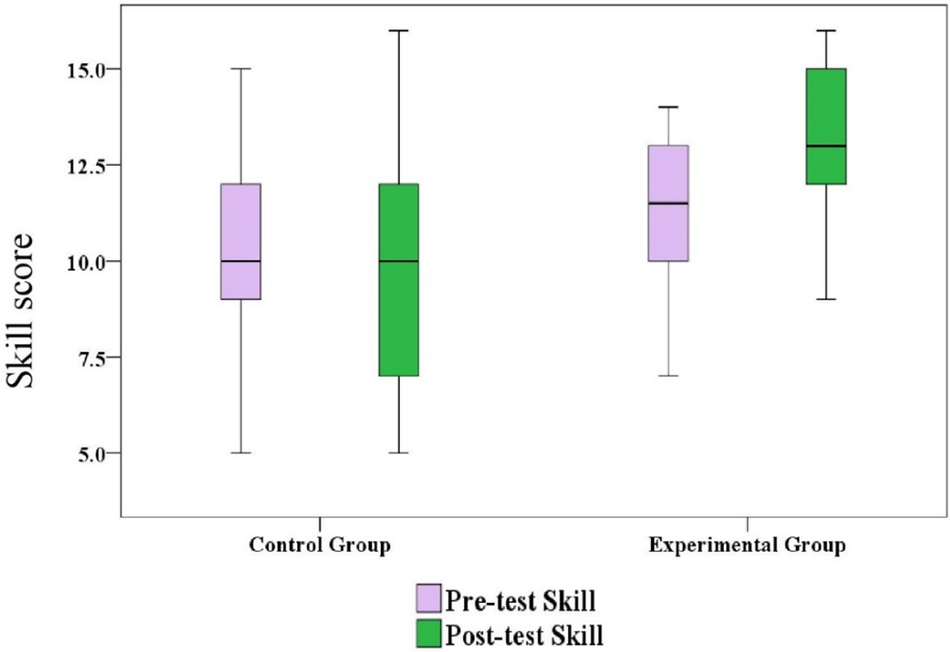
The control group’s pretest mean skill score (Figure 3) was 10.30 (2.47), and the post-test mean was 9.77 (3.06). The experimental group’s pretest skill scores were 11.33 (2.14), and the post-test mean was 12.93 (1.91). The difference in skill has an effect size of 2.13, and tdf =58 = 3.136 (95% CI: 0.77-3.50, P = 0.003).
Box and whisker plot showing the scores of pre-test and post-test skill of control and experimental groups.
Attitude
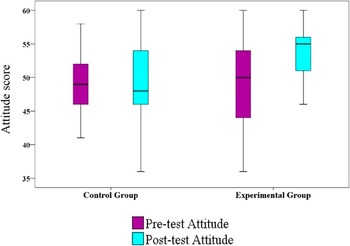
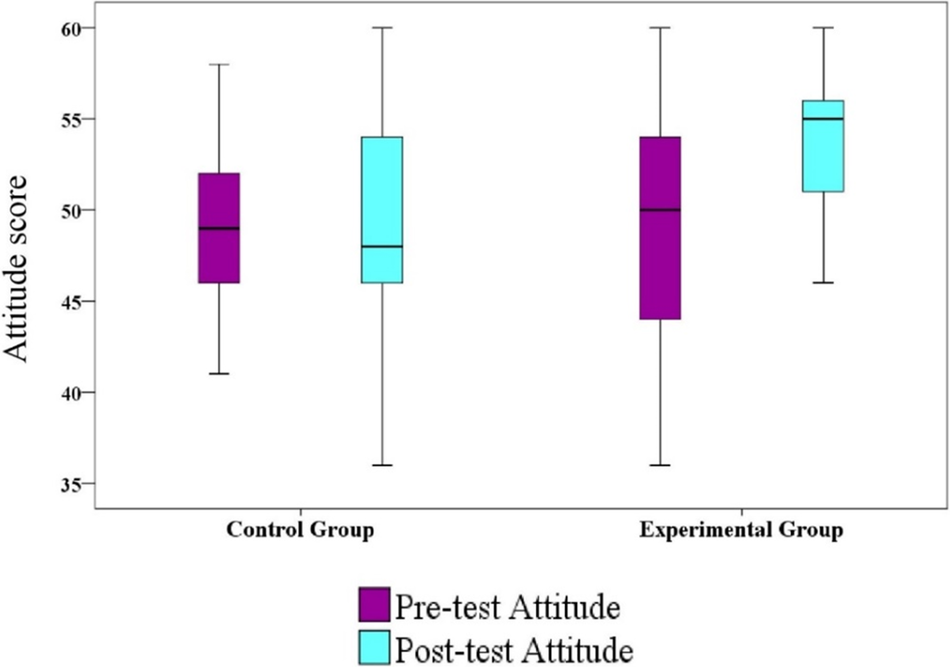
As shown in Figure 4, the control group’s pre-test attitude mean score was 48.9 (4.51), and the post-test mean was 49.17 (5.57). The experimental group’s pre-test attitude mean score was 49.33 (5.59), and the post-test mean was 52.8 (5.32). The difference in attitude has an effect size of 3.20, and tdf (58) = 2.093 (95% CI: 0.14-6.26, P = 0.003).
Box and whisker plot showing the scores of pre-test and post-test attitude of control and experimental groups.
Behavior
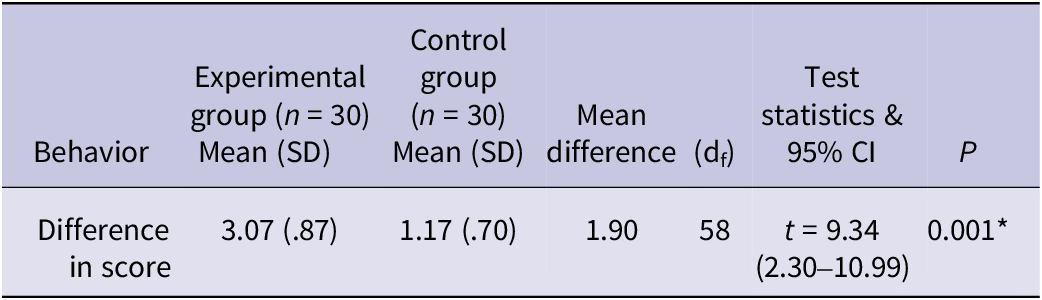
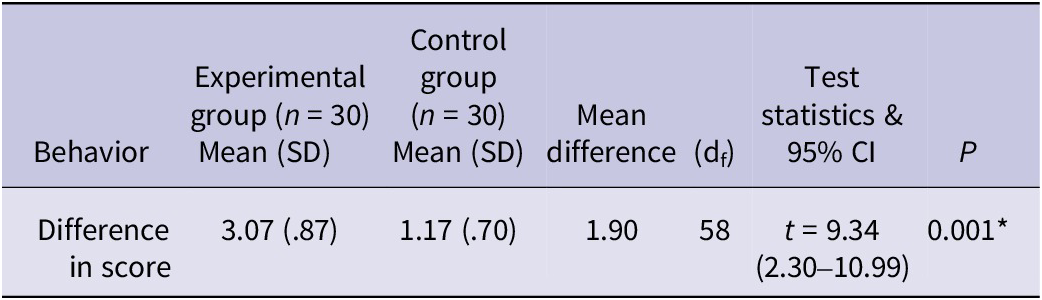
Behavior was assessed 3 months after training (Table 2). The difference in behavioral score has an effect size of 1.90 and tdf (58) = 9.34 (95% CI: 2.30-10.99, P = 0.001).
Comparison of pre-test and post-test behavior scores between experimental and control groups
Discussion
The study delves into preparedness and engagement in disaster management by recognizing the significance of nursing professionals, particularly nurse educators. Every disaster-prone country needs a robust disaster management plan with adequate training for the health care workforce. Considering the diverse range of disasters and the experience during COVID-19, it becomes imperative to equip all health care professionals with adequate skills and knowledge to manage the potential surge in patient load. Furthermore, the study evaluates the effectiveness of an STP on HDM among nurse educators, utilizing randomized controlled trial and evaluating knowledge, skill, attitude, and behavior. The training module, meticulously developed based on national disaster management documents, underwent rigorous validation by experts in HDM. The evaluation parameters were gauged through validated tools administered at different intervals pre- and post-training. An extensive literature review revealed that most STPs on HDM focus on nurses in clinical settings, and more studies must be conducted among nurse educators. In this study, the authors specifically focused on the target population, as the primary aim was to equip nursing educators to support hospitals during disasters. Their role can be as trainers for nurses and students or as members of a disaster management team.
The data revealed concerning trends: 85% of the participants had never participated in disaster drills before. In comparison, 78% of hospitals affiliated with nursing colleges in Kerala lacked disaster training simulations. This is consistent with a study on the knowledge, attitudes, and practices of frontline health care professionals, which revealed that most participants had never received training in disaster risk management.Reference Getenet, Waganew and Keney 26 In contrast, a study conducted among trauma care nurses in southeastern Iran reported a commendable participation rate, with 62% having undergone structured disaster management training.Reference Farokhzadian, Farahmandnia and Tavan 27 Another study in China involving 1893 university students demonstrated a significantly higher level of preparedness, with 77.8% of the participants having prior exposure to disaster awareness initiatives.Reference Tan, Liao, Su and Li 28
The findings of this research illustrate that the STP significantly influenced skill scores within the experimental group and impacted attitude scores. However, the existing literature lacks comprehensive investigations into the impact of similar interventions on the disaster management skills of nurse educators.Reference Songwathana and Timalsina 29 Similar to our findings, a study of nurses’ knowledge, skills, and disaster preparedness conducted in Bangladesh shows that the average disaster skills score was significantly higher among participants who received disaster training.Reference Hasan, Fahmi and Jisa 30 A study of deans and directors of nursing programs in the US to assess the level of disaster preparedness curricula showed that 75% of respondents had a prevailing belief that nursing faculty were not adequately prepared for disaster management, providing a foundation for possible future improvements to the curricula.Reference Stangeland 31 However, considering the dearth of specific studies within this population, this study has explored the need for an STP in the broader context of nurses and other health care professionals.
In addition, the profession requires constant updating, awareness, and willingness to assist in disasters. Therefore, leaders should prioritize ongoing preparedness, involve staff and nursing students in disaster planning, and ensure ongoing, accessible, and engaging education and training based on real-world disaster scenarios. Studies among nurses showed that nurses have a moderate level of disaster preparedness based on their knowledge and perceptions. The studies also show that the training improved the participants’ knowledge, skills, and competencies.Reference Masoumian, Masoumian and Qayumi 32 Therefore, training is crucial to improve the preparedness of nurses.Reference Songwathana and Timalsina 29
The study also reveals that the STP had a notable impact on behavior scores (t value of 9.34 and a P value of 0.001), where the experimental group exhibited a mean behavior score of 3.07 (SD = 0.87), while the control group scored 1.17 (SD = 0.70), resulting in a substantial mean difference of 1.90. The results are congruent with a study conducted by Masoumian et al.Reference Masoumian, Masoumian and Qayumi 33 comparing 2 methods of imparting crisis and disaster management education to nursing students regarding their behavior. They found that both interventions significantly improved behavioral scores. In addition, a comparative study on disaster response of nurses and self-efficacy also illustrates that enhancing nurses’ behavioral skills and emotional intelligence can improve the quality of disaster response and increase disaster response self-efficacy.Reference Doğan and Erdoğan 34 Because nurse educators play a pivotal role in shaping the future health care workforce, understanding the effectiveness of training programs tailored to their needs remains a critical area for investigation. By extrapolating results from studies conducted on skills training and disaster management among nurses and other health care professionals, we provide insights that could inform educational strategies for nurse educators. However, it is imperative to recognize the need for targeted research initiatives that address this profession’s unique challenges and educational needs. This approach acknowledges the limitations in the existing literature on nurse educators while emphasizing the importance of drawing parallels with studies conducted with similar health care professionals. It also highlights the need for further targeted research to fully address nurse educators’ educational needs.
The study’s strength lies in the randomization of participants and the collection of pre-test and post-test scores, which helped explore cause-and-effect relationships and reduce bias. The study involved nursing educators from both government and private institutions to enhance generalizability while excluding individuals with prior disaster management training to standardize baseline knowledge. The sampling strategy, including consideration of attrition rate and specific exclusion criteria, contributed to obtaining a representative sample and improving generalizability. Furthermore, the expert involvement in module development, using the Delphi process and expert opinions from various disaster management fields, lent credibility and relevance to the content of the intervention.
Some limitations include the scarcity of literature on nurse educators in disaster management, highlighting a significant gap in existing research and limiting direct comparisons within this population. Despite the randomization process, potential bias due to uncontrolled factors could influence outcomes, warranting careful consideration when interpreting the study’s findings. To enhance research on disaster management training’s impact on nurse educators, future studies should conduct multicentric research across diverse nursing institutions and locations, employ longitudinal studies with extended follow-up periods, compare training approaches, and integrate qualitative research. Implementing these recommendations can address limitations and significantly improve disaster preparedness in the health sector.
Conclusions
The skills development training program significantly improved nurse educators’ learning and behavior in disaster management and response. There is an urgent need to equip health care professionals, particularly nurses in clinical and academic settings, with the necessary skills to manage surges in disasters adeptly. However, the scarcity of research specifically focused on nurse educators in disaster management underscores the need for further targeted studies with a broader group of nurse educators to better address their unique challenges and educational needs. The study also emphasizes the importance of continuous preparation, active participation in disaster planning, and continuous competency development and training based on real-world disaster scenarios for nurse educators. The prepared module can be comprehensively implemented on a large scale to optimize disaster preparedness within nursing academia.
Acknowledgments
The authors acknowledge the invaluable support of Dr Thomas Mathew, Director of Medical Education, and Colonel K. J. Devasia (Retd), Project Head of Apex Trauma Care Centre, Thiruvananthapuram. The authors also acknowledge Professor DaiWai Olson and the Neuroscience Nursing Research Center in Dallas, TX, for all the support they offered.
Author contribution
Athirarani M. Rohini: Conceptualization, Methodology, Formal analysis, Investigation, Data Curation, Draft-writing; Ajayan Kamalasanan: Writing, Reviewing and Editing; Viswanathan K. Venkateswaran: Resources, Validation, Software; Sydna Sebastian: Validation, Software, Writing and Review; Ronu M. Elanjickal: Validation, Writing, Review and Editing Resources; Latha Mandal: Supervision, Funding acquisition, Project administration; Rosenara B. Thajudheen: Validation, Visualization; Rajamohanan K. Pillai: Conceptualization, Methodology, Visualization
Funding statement
The Nursing Research Society of India funded this study as part of the FNRS Fellowship.
Competing interests
All authors declare no conflicts of interest.