Changing lifestyles on a global scale leads to significant transformations in nutritional habits and health behaviours(Reference Kocatepe and Tiril1). While traditional dietary patterns are weakening due to the effects of industrialisation, urbanisation and modern working conditions, there is an increase in the consumption of energy-dense but low-nutrient ready-made foods(Reference Kocatepe and Tiril1,Reference Ambikapathi, Schneider and Davis2) . These changes, combined with a decrease in physical activity, an increase in processed food consumption and chronic stress, are increasing the prevalence of non-communicable diseases such as obesity, type 2 diabetes mellitus (T2DM) and metabolic syndrome (MetS). The WHO lists these diseases among the most serious public health threats of the twenty-first century(3).
T2DM is characterised by insulin resistance or secretory dysfunction(Reference Pinarli4), leading to high morbidity and mortality due to macrovascular and microvascular complications(Reference Ogurtsova, Guariguata and Barengo5). The global rise in T2DM(Reference Wild, Roglic and Green6) is also evident in Türkiye, with prevalence projected to reach 19·2 % by 2045(Reference Satman, Bayirlioglu and Okumus7). This trend indicates that MetS will also become widespread and emphasises the need for preventive strategies(Reference Grundy8). Considering the components of MetS, including abdominal obesity, dyslipidaemia, hypertension and impaired glucose tolerance(Reference Yokokawa, Fukuda and Yuasa9), it is known that it significantly increases the risk of both T2DM and CVD(Reference Alberti, Eckel and Grundy10). Although genetic predisposition contributes to disease development, nutritional behaviours and lifestyle choices are key modifiable risk factors(Reference Yılmaz, Çömlekçi and Ünal11,Reference Martin, Gowda and Smith12) . Therefore, access to reliable nutritional information and the ability to translate this information into practice are critical for preventive health(Reference Cullen, Hatch and Martin13).
The continuity of healthy lifestyle changes depends on individuals’ knowledge and awareness(Reference Erbakan, Bahadir and Gonen14), yet many T2DM and MetS patients do not adequately engage in self-care despite having this knowledge. These findings suggest that individuals have limited ability to make behavioural changes not only against the disease but also against the risk of T2DM and MetS and show that behavioural change cannot be achieved solely through the transfer of information(Reference Marciano, Camerini and Schulz15,Reference ALSharit and Alhalal16) . At this point, Food Literacy, a holistic concept encompassing the knowledge, skills and behaviours required for individuals to select, prepare and consume foods to meet their nutritional needs, comes to the forefront(Reference Poelman, Dijkstra and Sponselee17,Reference Truman, Lane and Elliott18) . Studies conducted particularly among individuals with diabetes have shown that these individuals experience a lack of nutrition knowledge appropriate to their age and health status, which leads to uncertainty in their eating behaviours(Reference Silva, Araújo and Lopes19,Reference Ertaş Öztürk, Kabalı and Açar20) . Moreover, it has been identified that lacking basic knowledge about food significantly increases the risk of developing chronic diseases such as obesity and T2DM(Reference Silva, Araújo and Lopes19,Reference Bojang and Manchana21) . In this context, food literacy has been defined as a key strategy for promoting and maintaining healthy eating habits(Reference Mohsen, Sacre and Hanna-Wakim22), and for achieving optimal glycaemic control, particularly in the management of T2DM(Reference Leone, Battezzati and Di Lello23). Although most existing studies address the effects of food literacy on individuals with T2DM and MetS, the number of studies examining its preventive effects on reducing risks remains quite limited(Reference Erkan24). In the literature, these two outcomes are often evaluated separately, although they share common modifiable risk factors such as unhealthy eating behaviours, physical inactivity and central obesity. Considering their strong bidirectional association and overlapping pathophysiological mechanisms, evaluating T2DM and MetS together is of critical importance. Such an approach provides a more comprehensive understanding of how food literacy may influence multiple non-communicable disease risks simultaneously and may offer valuable insights for the design of preventive strategies and public health interventions, particularly in developing countries such as Türkiye.
The effectiveness of nutritional interventions is closely linked to psychosocial factors, and long-term success requires individualised strategies with a psychological component(Reference Erbakan, Bahadir and Gonen14). At this point, mindful eating, based on conscious awareness, gains importance, focusing on hunger–fullness cues, conscious choices and resistance to external stimuli(Reference Brewer, Ruf and Beccia25,Reference Salvia and Quatromoni26) . Evidence shows that this approach is associated with many factors, such as BMI(Reference Carrière, Siemers and Knäuper27,Reference Zervos, Koletsi and Mantzios28) , increased diet quality(Reference Winkens, Elstgeest and Van Strien29), improved psychological well-being(Reference Khan and Zadeh30,Reference Shaw and Cassidy31) and awareness of sustainable food consumption(Reference Kawasaki, Akamatsu and Fujiwara32). In light of these findings, mindful eating is envisaged as an effective approach in the prevention and management of T2DM and MetS risk(Reference Iaccarino Idelson, D’Elia and Strazzullo33). However, the limited number of studies in our country and the scarcity of research examining the effectiveness of the mindfulness-based eating approach in preventing T2DM and MetS risks(Reference Erbakan, Bahadir and Gonen14,Reference Miller, Kristeller and Headings34) highlight the need for studies that will comprehensively evaluate this strategy. To clarify the potential benefits of the mindfulness-based eating approach in the prevention and management of T2DM and MetS, further research with larger sample sizes and long-term follow-up is required.
An important gap in the current literature is that there are very few studies focusing on the effects of food literacy and mindful eating skills on the risks of developing both diseases(Reference Erkan24), and these factors have not been addressed together. Therefore, this study aimed to assess the association between food literacy and mindful eating and the risk of developing T2DM and MetS. This study was conducted with 1091 adult participants, in line with the predetermined sample size requirements, aiming to ensure sufficient statistical power for the analyses and to contribute to the existing literature as well as provide a scientific basis for public health policies.
Material and methods
This cross-sectional study was conducted among 1091 adults aged 18–65 years between January 2025 and June 2025. Research data were collected through face-to-face interviews conducted by the researchers in Ankara Province, Türkiye, using the convenience sampling method. Participants were eligible for inclusion if they were aged between 18 and 65 years, had no chronic diseases and were willing to participate in the study voluntarily. Exclusion criteria included individuals younger than 18 or older than 65 years, those diagnosed with T2DM, hypertension, hyperglycaemia, hyperlipidaemia or other chronic diseases, and individuals who were pregnant or lactating. Prior to the study, ethical approval was obtained from the University of Health Sciences Gülhane Scientific Research Ethics Committee (Decision No: 2025/260). All study procedures adhered to the principles outlined in the Declaration of Helsinki. The survey collected data on participants’ demographic characteristics (sex, age, education level, marital status, income level and working status) as well as anthropometric measurements (body weight, height and waist circumference). Participants’ risk of T2DM and MetS, as well as their levels of food literacy and mindful eating, were assessed using validated scales.
Anthropometric measurements
Anthropometric measurements (body weight, height and waist circumference) were taken by the researchers. BMI was calculated by dividing body weight (kg) by the square of height (m2). A BMI of less than 18·50 kg/m2 was classified as underweight, 18·50–24·99 kg/m2 as normal weight, 25·00–29·99 kg/m2 as overweight and 30·00 kg/m2 or higher as individuals with obesity. According to sex-specific cut-off points, waist circumference values were classified as follows: for females, < 80 cm was considered low risk, 80–88 cm as increased risk and ≥ 88 cm as high risk; for males, < 94 cm was considered low risk, 94–102 cm as increased risk and ≥ 102 cm as high risk for chronic disease(Reference Gibson35).
Evaluation of the risk of type 2 diabetes
The risk of T2DM was assessed using the Finnish Diabetes Risk Score (FINDRISC) screening tool. Developed in Finland, FINDRISC is designed to estimate the 10-year risk of developing T2DM(Reference Lindstrom and Tuomilehto36). The questionnaire used by the International Diabetes Federation for community-based T2DM risk screening has been translated into Turkish by the Society of Endocrinology and Metabolism of Türkiye, which recommends its use for identifying adults at risk for prediabetes and T2DM(Reference Sönmez, Özdoğan and ARICI37). The tool consists of eight questions and yields a total score ranging from 0 to 26 points. Based on the total score, individuals are classified into five risk categories: < 7 points, very low risk; 7–11 points, low risk; 12–14 points, moderate risk; 15–20 points, high risk; and > 20 points, very high risk(Reference Lindstrom and Tuomilehto36).
Evaluation of the risk of metabolic syndrome
The assessment of MetS risk was conducted using the Metabolic Syndrome Index. This tool was developed in 2025 to evaluate the risk of MetS specifically within the Turkish population. The scale shows 100 % sensitivity and 85·43 % specificity. The tool consists of twenty-one questions and yields a total score ranging from 0 to 100. The scale has a cut-off score of 48, and individuals with scores above this threshold are considered to be in the risk group for MetS. Higher scores on the index indicate a greater risk of developing MetS(Reference Akeren and Apaydın38).
Food literacy
The Food Literacy Tool was utilised to evaluate food literacy. Originally developed by Rosas et al. in 2022(Reference Rosas, Pimenta and Leal39), its Turkish validity and reliability were established by Ertaş Öztürk et al. in 2024(Reference Ertaş Öztürk, Kabalı and Açar20). The instrument consists of twenty-four items, with each item scored from 0 to 3 points. The total score is calculated by summing all item scores. The overall scale demonstrated excellent internal consistency, with a Cronbach’s α coefficient of 0·927. Higher scores on the scale indicate greater levels of food literacy.
Mindful eating
Mindful eating was evaluated using the Mindful Eating Inventory. The original version of the scale was developed by Peitz et al. (Reference Peitz, Schulze and Warschburger40), and the Turkish validity study was conducted by Bozkurt et al. (Reference Bozkurt, Kocaadam-Bozkurt and Mengi Çelik41). The Turkish version of the inventory consists of twenty-eight items. Each item is scored on a scale from 1 to 6. The total score is calculated by summing the scores of all items and then computing the average. The scale demonstrated good internal consistency, with the Cronbach α coefficient reported as 0·82 and the McDonald omega coefficient as 0·83. An increase in the total score indicates a higher level of mindful eating.
Statistical analysis
The G*Power software (version 3.1.9.6) was used to analyse the sample’s size. The effect size of the study was aimed to be a weak to moderate correlation (r ≈ 0·20–0·30) between the food literacy level and the risk of MetS. Based on the effect size of |ρ| = 0·20 using a point-biserial correlation model, according to the two-tailed test, α of 5 %, power (1–β) = 0·95, the sample size was calculated to be 726. The post hoc analysis was performed after the study, and based on the analysis (r = −0·181), the statistical power (1–β) was found to be 99 % at a two-sided α level of 5 %.
All analyses were conducted using the Statistical Package for the Social Sciences software (version 22.0). Descriptive statistics, including mean, standard deviation, frequency and percentage, were used to evaluate the data. Data distribution was assessed using histograms, the CV, skewness, kurtosis and Kolmogorov–Smirnov tests. Relationships between variables were determined using Pearson’s correlation coefficient. Differences in mean values between groups were evaluated with the independent t test. For comparisons between two groups, the Student’s t test was employed, while one-way ANOVA was used for comparisons involving more than two groups. Linear regression analysis was performed to predict the risk of T2DM and MetS. The independent variables included in the multiple linear regression analysis were determined using the backward method. Age, BMI and waist circumference were included as independent variables in the regression models in addition to being components of the FINDRISC and Metabolic Syndrome Index scores.
Results
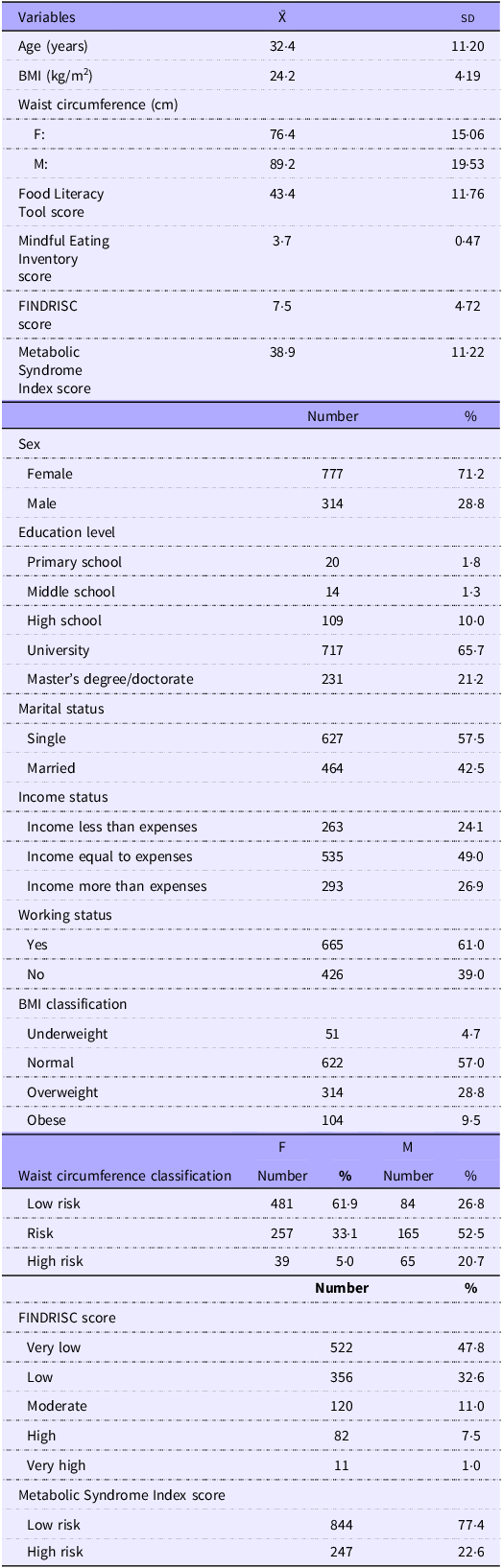
Table 1 presented the general characteristics and health-related scores of the participants. The study included a total of 1091 individuals, with a mean age of 32·4 (sd 11·20) years. The mean BMI was 24·2 (sd 4·19) kg/m2. The mean waist circumference was 76·4 (sd 15·06) cm in females and 89·2 (sd 19·53) cm in males. The mean scores of the participants were as follows: 43·4 (sd 11·76) for the Food Literacy Tool, 3·7 (sd 0·47) for the Mindful Eating Inventory, 7·5 (sd 4·72) for the FINDRISC and 38·9 (sd 11·22) for the Metabolic Syndrome Index. Among the participants, 71·2 % were female and 28·8 % were male. The majority had a university-level education (65·7 %), followed by those with a master’s or doctoral degree (21·2 %). Most participants were single (57·5 %) and reported that their income was equal to their expenses (49·0 %). Regarding employment status, 61·0 % were employed. In terms of BMI classification, 57·0 % of individuals were in the normal range, 28·8 % were overweight, 9·5 % individuals had obesity and 4·7 % were underweight. Waist circumference classification revealed that most females were in the low-risk category (61·9 %), whereas the majority of males were in the risk (52·5 %) or high-risk (20·7 %) categories. According to FINDRISC score, 47·8 % of participants were at very low risk of developing T2DM, while 32·6 % were at low risk, 11·0 % at moderate risk, 7·5 % at high risk and 1·0 % at very high risk. Based on the Metabolic Syndrome Index, 77·4 % of participants were classified as low risk and 22·6 % as high risk.
General characteristics of individuals
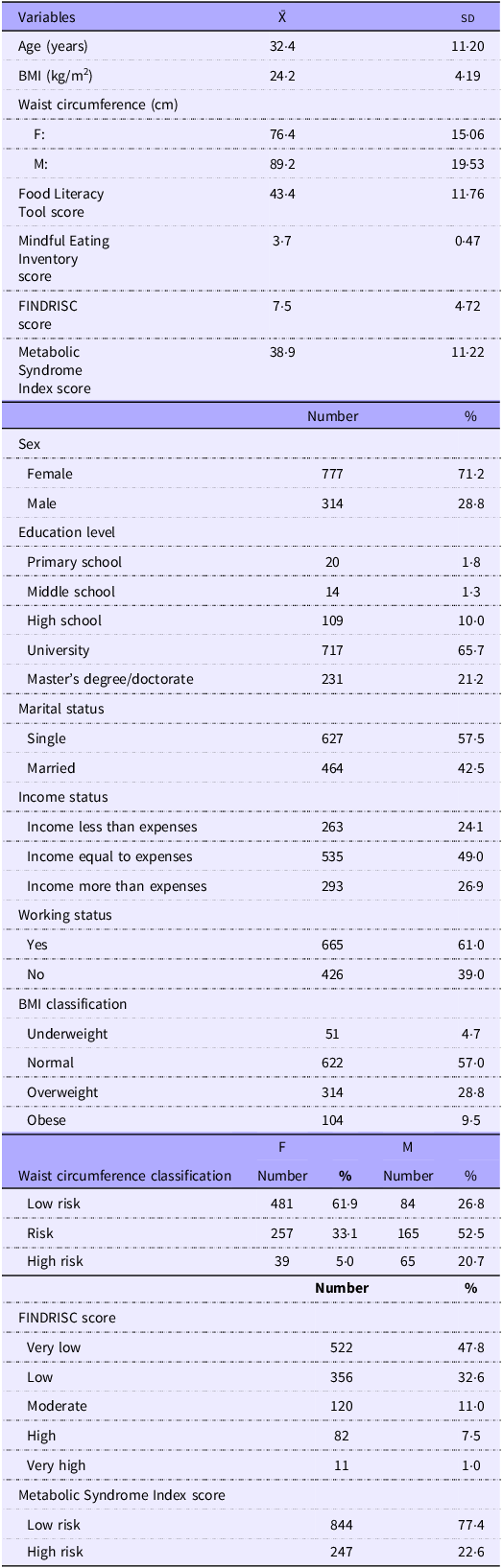
Table 1 Long description
The table presents the general characteristics and health-related scores of 1091 participants in a study. Key variables include age, BMI, waist circumference, and various health scores. The mean age of participants is 32.4 years with a standard deviation of 11.20. The mean BMI is 24.2 kg/m2 with a standard deviation of 4.19. Waist circumference averages 76.4 cm for females with a standard deviation of 15.06 cm and 89.2 cm for males with a standard deviation of 19.53 cm. The mean scores for the Food Literacy Tool, Mindful Eating Inventory, FINDRISC, and Metabolic Syndrome Index are 43.4, 3.7, 7.5, and 38.9 respectively, with corresponding standard deviations of 11.76, 0.47, 4.72, and 11.22. The table also categorizes participants by sex, education level, marital status, income status, working status, BMI classification, waist circumference classification, FINDRISC score, and Metabolic Syndrome Index score. Notable trends include a higher percentage of female participants (71.2%) compared to male participants (28.8%), and the majority of participants having a university-level education (65.7%). Most participants are single (57.5%) and report their income as equal to their expenses (49.0%). Regarding BMI classification, 57.0% of participants are in the normal range, while 28.8% are overweight, 9.5% are obese, and 4.7% are underweight. Waist circumference classification shows that most females are in the low-risk category (61.9%), whereas the majority of males are in the risk (52.5%) or high-risk (20.7%) categories. According to FINDRISC scores, 47.8% of participants are at very low risk of developing type 2 diabetes mellitus, while 32.6% are at low risk, 11.0% at moderate risk, 7.5% at high risk, and 1.0% at very high risk. Based on the Metabolic Syndrome Index, 77.4% of participants are classified as low risk and 22.6% as high risk.
FINDRISC, Finnish Diabetes Risk Score.
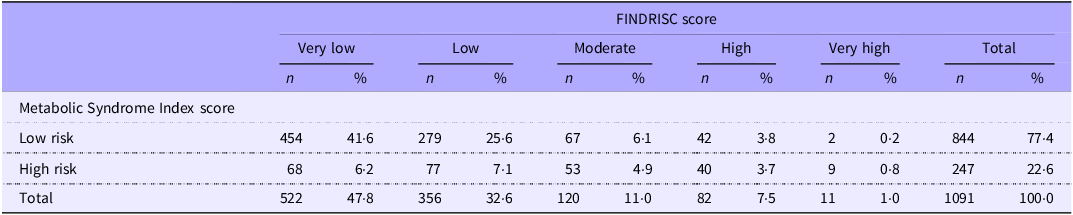
Table 2 presents the cross-tabulation of participants based on FINDRISC score categories and Metabolic Syndrome Index risk classification. Among participants with low MetS risk, the majority (53·8 %) were classified in the very low FINDRISC risk group, followed by low (33·1 %), moderate (7·9 %), high (5·0 %) and very high (0·2 %) risk groups, respectively. In contrast, among those with high MetS risk, 27·5 % were in the very low, 31·2 % in the low, 21·5 % in the moderate, 16·2 % in the high and 3·6 % in the very high FINDRISC risk category. These findings indicate a partial overlap between the T2DM and MetS risk classifications. While individuals with low MetS risk mostly exhibited low T2DM risk, those with high MetS risk were distributed across various FINDRISC risk categories. This suggests that these two risk indicators do not always fully overlap within the population and may vary depending on individual characteristics.
Cross-distribution of type 2 diabetes mellitus and metabolic syndrome risk levels (n, %)
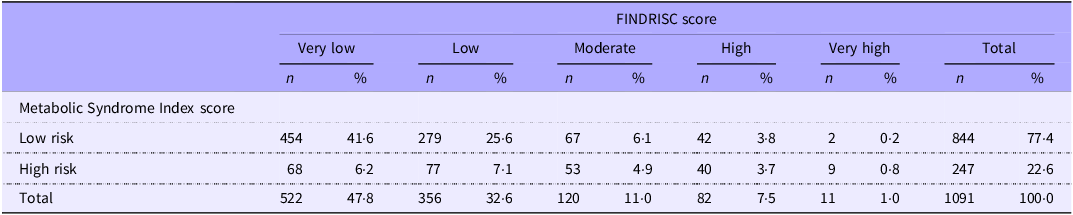
Table 2 Long description
The table presents the cross-distribution of type 2 diabetes mellitus and metabolic syndrome risk levels. It has five columns labeled Very low, Low, Moderate, High, and Very high, each with sub-columns for count (n) and percentage (%). The rows are labeled Low risk and High risk under the Metabolic Syndrome Index score. Row 1: Low risk, Very low, 454, 41.6 percentage, Low, 279, 25.6 percentage, Moderate, 67, 6.1 percentage, High, 42, 3.8 percentage, Very high, 2, 0.2 percentage. Row 2: High risk, Very low, 68, 6.2 percentage, Low, 77, 7.1 percentage, Moderate, 53, 4.9 percentage, High, 40, 3.7 percentage, Very high, 9, 0.8 percentage. Row 3: Total, Very low, 522, 47.8 percentage, Low, 356, 32.6 percentage, Moderate, 120, 11 percentage, High, 82, 7.5 percentage, Very high, 11, 1 percentage. The table indicates a partial overlap between the T2DM and MetS risk classifications.
FINDRISC, Finnish Diabetes Risk Score.
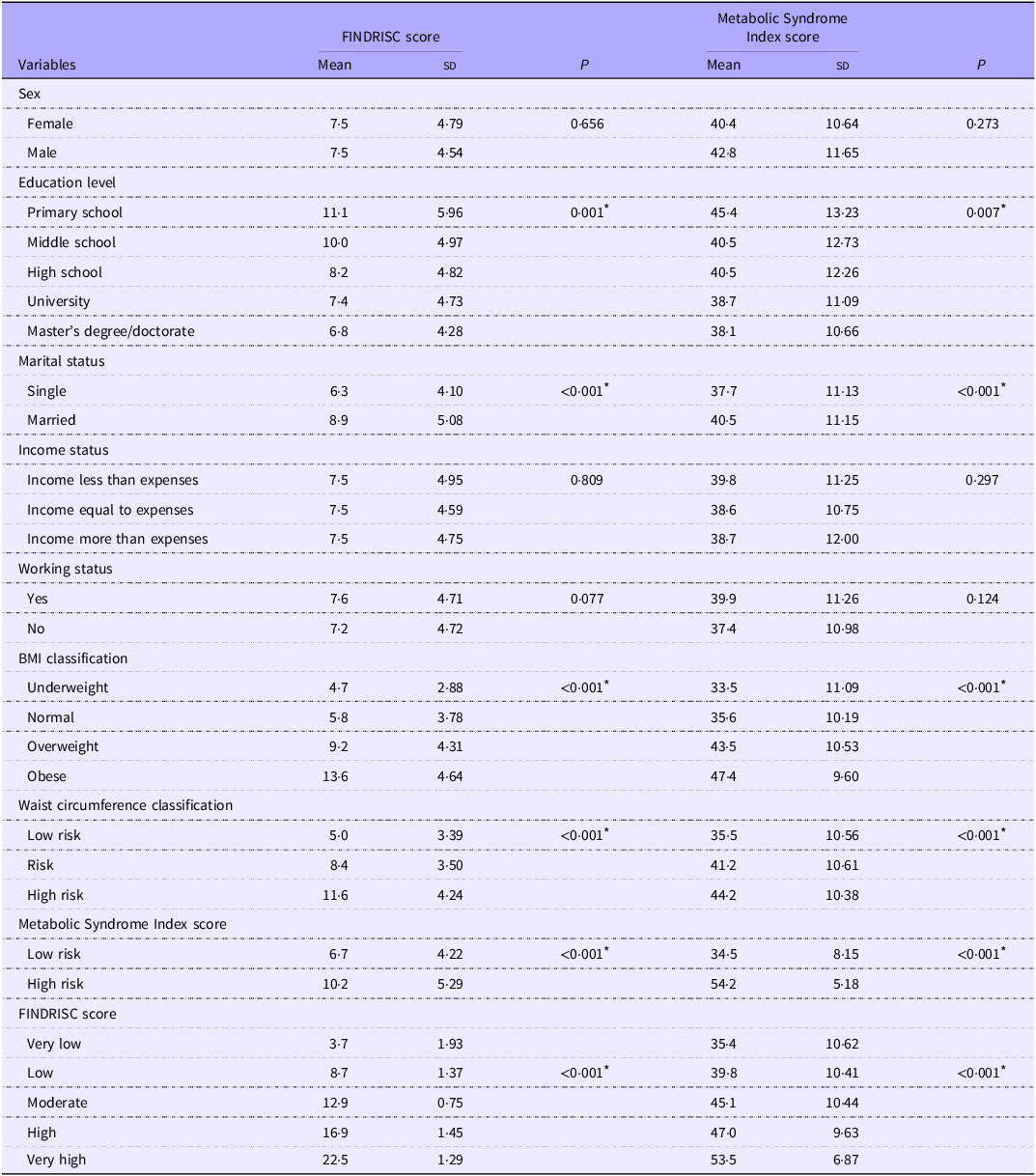
Table 3 showed the assessment of T2DM and MetS risk based on participants’ general characteristics. There was no significant difference in FINDRISC score or Metabolic Syndrome Index score between females and males (P = 0·656 and P = 0·273, respectively). Education level was significantly related to both FINDRISC and Metabolic Syndrome Index scores (P = 0·001 and P = 0·007, respectively), with the lowest risk scores observed in the highest education group and the highest risk scores found in the lowest education group. Marital status showed a significant relationship with risk scores. Married individuals had higher FINDRISC (8·9 (sd 5·08)) and Metabolic Syndrome Index (40·5 (sd 11·15)) scores than single participants (6·3 (sd 4·10) and 37·7 (sd 11·13), respectively), with P-values < 0·001 for both. Income status and working status did not significantly affect either risk score (P > 0·05). BMI classification was strongly associated with risk scores (P < 0·001). FINDRISC scores increased from underweight (4·7 (sd 2·88)) to individuals with obesity (13·6 (sd 4·64)), with similar trends observed in Metabolic Syndrome Index score (33·5 (sd 11·09) to 47·4 (sd 9·60)). Waist circumference classification also correlated significantly with risk scores (P < 0·001). Participants in the high-risk waist circumference category had the highest FINDRISC (11·6 (sd 4·24)) and Metabolic Syndrome Index (44·2 (sd 10·38)) scores compared with those in the low-risk category. Participants classified as high risk based on the Metabolic Syndrome Index had significantly higher FINDRISC scores (10·2 (sd 5·29) compared with those in the low-risk group (6·7 (sd 4·22)) (P < 0·001). There was a progressive and statistically significant increase in Metabolic Syndrome Index scores across the FINDRISC categories (very low to very high). Participants in the very low FINDRISC category had the lowest MetS Index scores (35·4 (sd 10·62)), while those in the very high risk group had the highest (53·5 (sd 6·87)) (P < 0·001). Likewise, FINDRISC scores increased linearly across MetS Index risk categories.
Assessment of type 2 diabetes mellitus and metabolic syndrome risk based on participants’ general characteristics
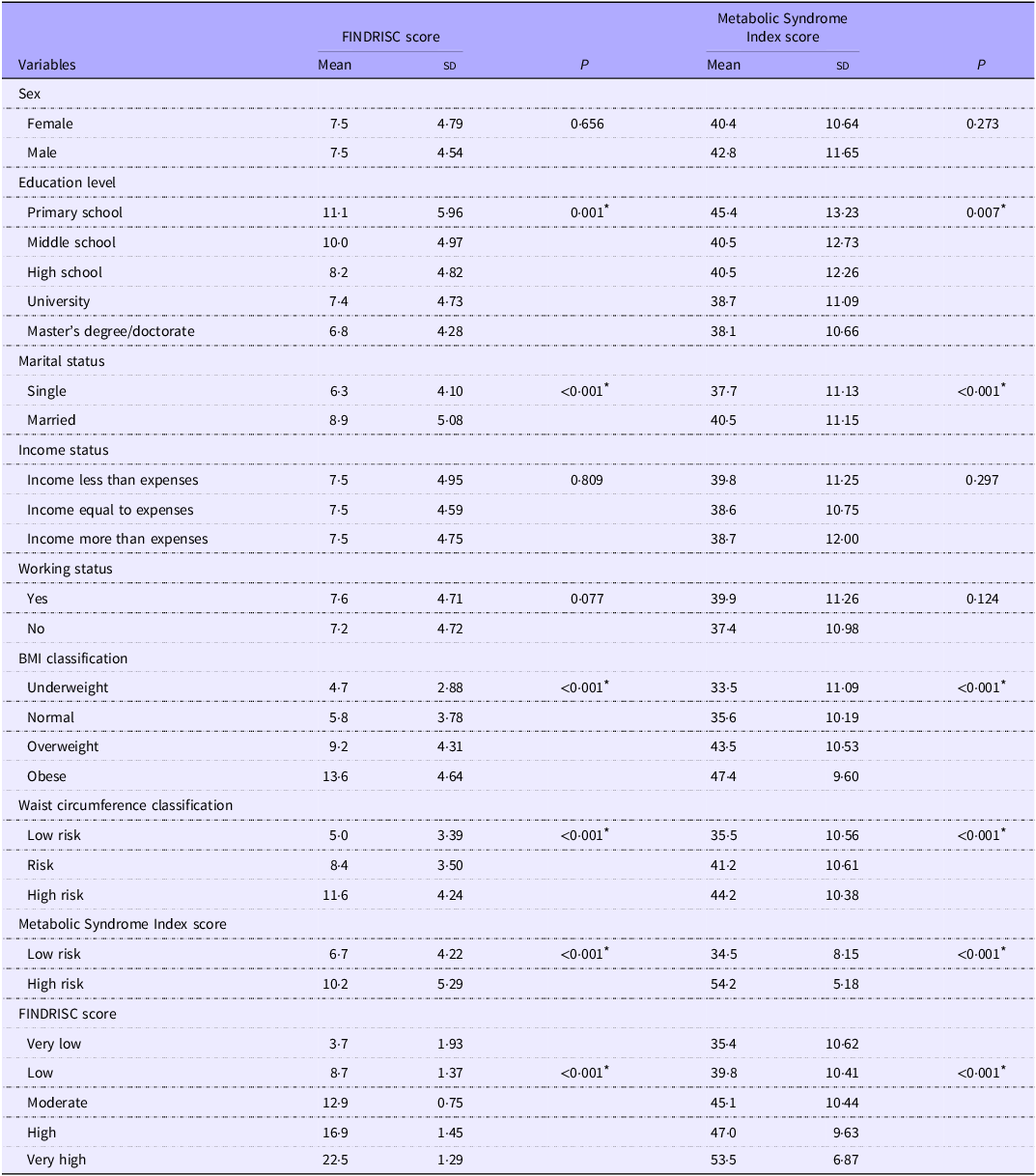
Table 3 Long description
The table presents an assessment of type 2 diabetes mellitus and metabolic syndrome risk based on various general characteristics of participants. It includes data on sex, education level, marital status, income status, working status, BMI classification, waist circumference classification, Metabolic Syndrome Index score, and FINDRISC score. The table has 15 rows and 8 columns, with columns for variables, FINDRISC score mean, standard deviation, P-value, Metabolic Syndrome Index score mean, standard deviation, and P-value. Notable trends include significant differences in risk scores based on education level, marital status, BMI classification, and waist circumference classification. For instance, participants with lower education levels and higher BMI or waist circumference classifications tend to have higher risk scores.
FINDRISC, Finnish Diabetes Risk Score.
* P < 0·05.
In addition to Table 3, the mean age of single individuals was 26·54 (sd 7·31) years, whereas the mean age of married individuals was 40·3 (sd 10·77) years, and a statistically significant difference was found between the groups in terms of mean age (P < 0·05). The mean BMI and waist circumference of single individuals were 23·3 (sd 3·95) and 76·4 (sd 16·78), respectively, while those of married individuals were 25·6 (sd 4·14) and 84·9 (sd 17·11), respectively. A statistically significant difference was observed between the groups in terms of both BMI and waist circumference (P < 0·05). No statistically significant difference was found between the groups in terms of mean Food Literacy Tool score and mean Mindful Eating Inventory score according to marital status (P > 0·05) (data not shown).
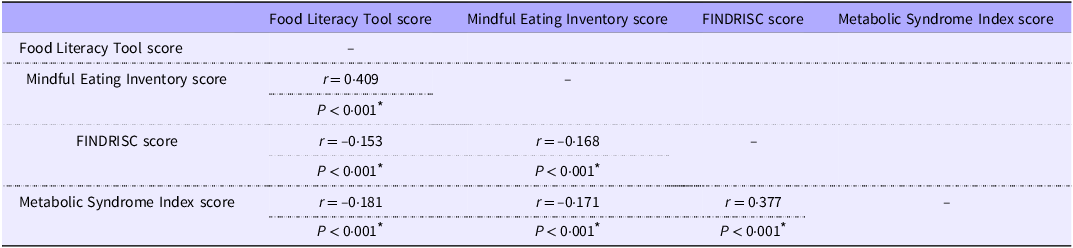
Table 4 showed significant correlations between food literacy, mindful eating and the risk of T2DM and MetS. Food Literacy Tool score was positively correlated with Mindful Eating Inventory score (r = 0·409, P < 0·001). Both food literacy and mindful eating scores showed significant negative correlations with FINDRISC score (r = −0·153 and r = −0·168, respectively; P < 0·001) and Metabolic Syndrome Index score (r = −0·181 and r = −0·171, respectively; P < 0·001). This indicates that higher levels of food literacy and mindful eating are associated with lower risks of T2DM and MetS. Additionally, FINDRISC score and Metabolic Syndrome Index score were positively correlated (r = 0·377, P < 0·001).
Correlation values between food literacy, mindful eating and the risk of type 2 diabetes and metabolic syndrome
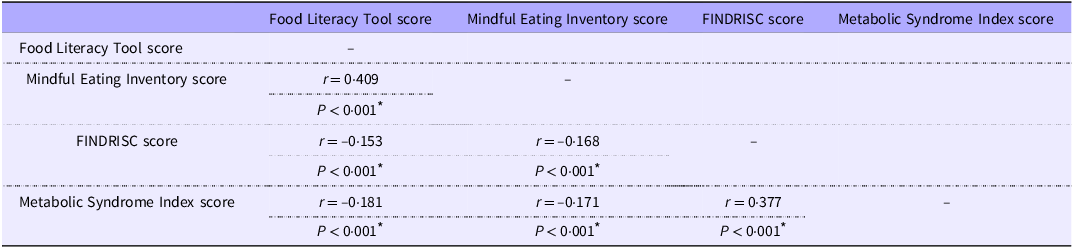
Table 4 Long description
The table presents correlation values between food literacy, mindful eating, and the risk of type 2 diabetes and metabolic syndrome. It consists of four rows and four columns. The columns are labeled as Food Literacy Tool score, Mindful Eating Inventory score, FINDRISC score, and Metabolic Syndrome Index score. The rows compare the correlations between these scores. The Food Literacy Tool score is positively correlated with the Mindful Eating Inventory score with a correlation value of 0.409 and a P value of less than 0.001. Both food literacy and mindful eating scores show significant negative correlations with the FINDRISC score, with correlation values of -0.153 and -0.168, respectively, and P values of less than 0.001. Similarly, they show negative correlations with the Metabolic Syndrome Index score, with correlation values of -0.181 and -0.171, respectively, and P values of less than 0.001. Additionally, the FINDRISC score and Metabolic Syndrome Index score are positively correlated with a correlation value of 0.377 and a P value of less than 0.001. This indicates that higher levels of food literacy and mindful eating are associated with lower risks of type 2 diabetes and metabolic syndrome.
FINDRISC, Finnish Diabetes Risk Score.
* P < 0·05.
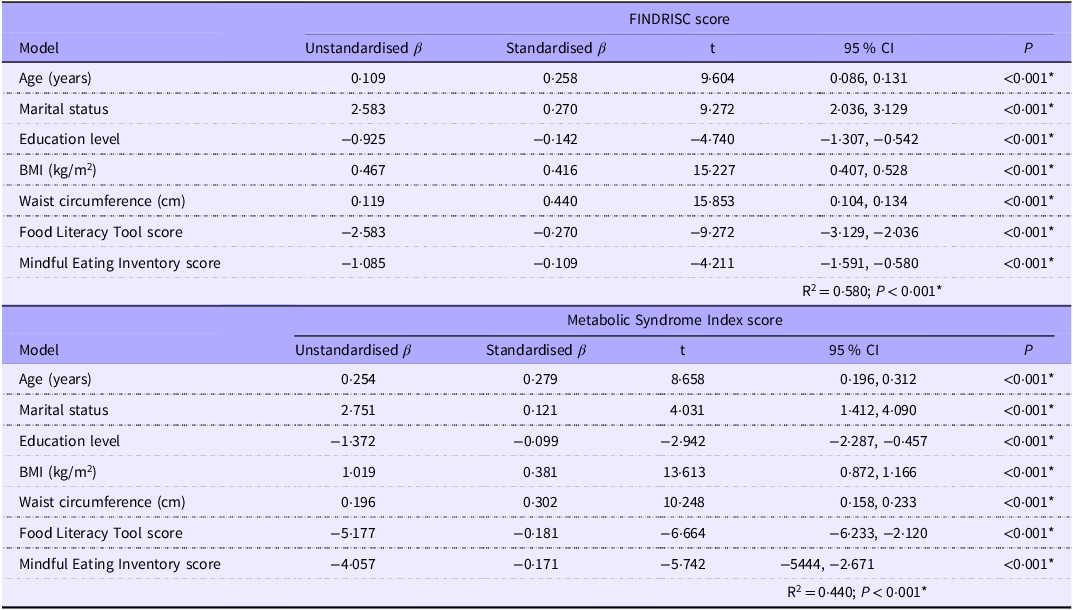
The findings from the linear regression model predicting the risk of T2DM and MetS are presented in Table 5. Linear regression analysis identified age, marital status, education level, BMI, waist circumference, food literacy and mindful eating as significant predictors of both T2DM risk (FINDRISC score) and MetS risk (Metabolic Syndrome Index score) (all P < 0·001). Age (β = 0·258), marital status (β = 0·270), BMI (β = 0·416) and waist circumference (β = 0·440) were positively associated with FINDRISC score, indicating increased T2DM risk with higher values. Conversely, education level (β = −0·142), Food Literacy Tool total score (β = −0·270) and Mindful Eating Inventory score (β = −0·109) were negatively associated with FINDRISC scores, suggesting a protective effect. Similarly, for MetS risk, age (β = 0·279), marital status (β = 0·121), BMI (β = 0·381) and waist circumference (β = 0·302) were positively related to the Metabolic Syndrome Index score. Education level (β = −0·099), Food Literacy Tool total score (β = −0·181) and Mindful Eating Inventory score (β = −0·171) showed negative associations, indicating that higher education level, food literacy and mindful eating were linked to lower MetS risk. The models explained 58% of the variance in FINDRISC score (R2 = 0·580) and 44% of the variance in Metabolic Syndrome Index score (R2 = 0·440), both statistically significant (P < 0·001).
Linear regression model for predicting the risk of type 2 diabetes mellitus and metabolic syndrome
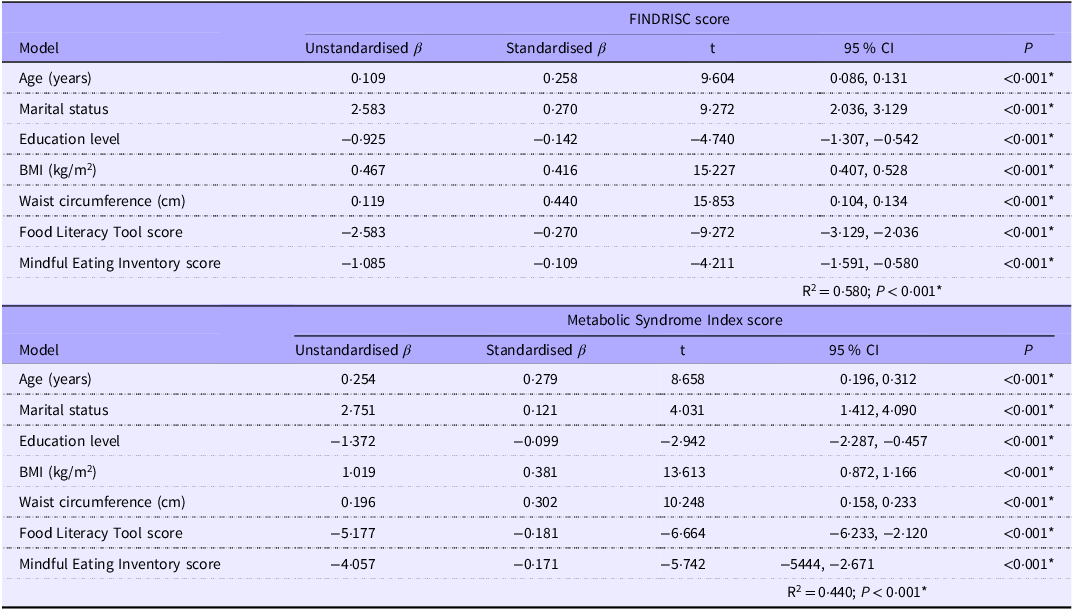
Table 5 Long description
The table presents a linear regression model predicting the risk of type 2 diabetes mellitus (FINDRISC score) and metabolic syndrome (Metabolic Syndrome Index score). It includes two sections: one for FINDRISC score and one for Metabolic Syndrome Index score. Each section lists factors such as age, marital status, education level, BMI, waist circumference, Food Literacy Tool score, and Mindful Eating Inventory score. The table provides unstandardised beta values, standardised beta values, t-values, 95% confidence intervals, and p-values for each factor. Age, marital status, BMI, and waist circumference are positively associated with both FINDRISC and Metabolic Syndrome Index scores, indicating increased risk with higher values. Education level, Food Literacy Tool score, and Mindful Eating Inventory score are negatively associated, suggesting a protective effect. The models explain 58% of the variance in FINDRISC score and 44% of the variance in Metabolic Syndrome Index score, both statistically significant.
FINDRISC, Finnish Diabetes Risk Score.
Variable values: marital status (married = 1, single = 0), education level (primary school graduate = 1, middle school graduate = 2, high school graduate = 3, university graduate = 4, master’s and doctorate graduates = 5.
*P < 0·05.
Discussion
This study evaluated the association between food literacy and mindful eating and the risk of T2DM and MetS. The main findings revealed that higher food literacy and mindful eating were associated with a reduced risk of T2DM and MetS. Additionally, the risk of T2DM and MetS was found to be associated with advanced age, marital status (being married), low education level, high BMI and increased waist circumference.
Although these additional analyses fall outside the primary objective of the study, they indicated that age, marital status, education level, BMI and waist circumference were associated with T2DM and MetS(Reference Maliszewska, Adamska-Patruno and Krętowski42–Reference Karimi, Binaei and Hashemi53). Consistent with previous research, advancing age was accompanied by an increased metabolic risk(Reference Hirode and Wong49–Reference Wang, Peng and Zhao52,Reference Yüksel54) . Regarding marital status, married individuals exhibited higher age, BMI and waist circumference values, which contributed to an elevated risk and were in line with earlier findings(Reference Nikolic Turnic, Jakovljevic and Strizhkova55–Reference Marks57). Higher educational attainment, typically associated with healthier lifestyle behaviours, was likewise linked to reduced T2DM and MetS risk in our study, consistent with previous literature(Reference Kim, Kwak and Kim58–Reference Özenoğlu, Gün and Karadeniz66).
Food literacy is a multidimensional concept that encompasses the knowledge, skills and awareness levels of individuals and societies about all processes from food production to consumption (cultivation, storage, preparation, consumption and content information)(Reference Velardo67). This concept also includes the level of awareness regarding the determination of appropriate food types and amounts for healthy nutrition(Reference Vidgen and Gallegos68). The findings of our current study revealed that high food literacy levels are significantly associated with lower T2DM and MetS risk. The basis of this relationship is that individuals with food literacy attach more importance to their diet and nutrition, pay more attention to food labels and the healthiness of the foods they buy and thus eat healthier and are more protected from diseases such as obesity, T2DM and MetS(Reference ER Döngel69). In addition, the fact that individuals with high food literacy have high skills in effectively applying this information in their daily lives also supports these findings(Reference Velardo67,Reference Uzdil, Çelebi and Öztürk70,Reference Murimi71) . Studies in the literature showed that individuals with high food literacy make more conscious decisions about food choices, increase their consumption of vegetables and fruits and develop healthy eating habits(Reference Uzdil, Çelebi and Öztürk70,Reference Begley, Paynter and Butcher72) . In contrast, it was reported that consumption of highly processed foods is associated with an increase in the prevalence of diet-related diseases such as obesity, T2DM and MetS in different populations on a global scale(Reference Rauber, Louzada and Steele73,Reference Nardocci, Leclerc and Louzada74) . In this context, food literacy components, including knowledge, skills and decision-making competencies, have been reported to reduce individuals’ tendency towards unhealthy, energy-dense and nutrient-poor foods, facilitate healthy food choices through effective management of financial and temporal resources, and are associated with unprocessed food consumption(Reference Colatruglio, Slater, Deer, Falkenberg, McMillan and Sims75,Reference Kabasakal-Cetin, Aksaray and Sen76) . In one study, the Mediterranean diet, which encourages a focus on unprocessed foods, fruits and vegetables, plant-based fats and protein sources, legumes, whole grains and nuts, was shown to be positively associated with food literacy(Reference Uzdil, Çelebi and Öztürk70). This finding showed that nutritional knowledge level is associated with diet quality(Reference Akkartal and Gezer77) and also suggests that the Mediterranean diet may play an important role in achieving glycaemic control and thus reducing the risk of T2DM and MetS and that it is supported by food literacy(Reference Uzdil, Çelebi and Öztürk70). In a study conducted on diabetic patients, improvement in HbA1c levels was observed in 9·9 % of individuals with high food literacy, while deterioration in HbA1c levels was found in 12·3 % of individuals with low food literacy(Reference Özdemir, Çakmak and Sert46). These findings can be attributed to the fact that food label literacy has a decisive effect on healthy eating behaviours(Reference Caswell78) and increases awareness of unhealthy ingredients, especially trans fats, added sugars and refined carbohydrates(Reference Genç79). In a randomised controlled education study specifically aimed at improving sugar literacy, participants were observed to have reduced added sugar consumption and significantly improved label reading behaviours(Reference Santaló, Gibbons and Naylor80). Considering that added sugar intake creates energy imbalance and increases adipose tissue accumulation, which in turn paves the way for the development of pathologies such as MetS and T2DM, food literacy is understood to be an important protective factor in preventing disease risks(Reference Bağdatli45,Reference Auerbach, Dibey and Vallila-Buchman81) . In addition to possessing nutritional knowledge, the ability to translate this knowledge into daily life is also essential. In this context, practical skills that influence individuals’ food choices and dietary habits may indirectly affect the risk of chronic diseases such as T2DM and MetS(Reference Fernandes, Bernardo and Fernandes82–Reference Massa, Sapp and Janisch84). Among these practical skills, cooking and food preparation have been particularly emphasised in the literature. It was determined that improving such skills increases the consumption of fresh fruits and vegetables and is associated with healthy eating habits(Reference Dezanetti, Quinaud and Caraher85). It is known that individuals with insufficient skills tend to prefer convenience and ready-made foods; this leads to low fruit and vegetable consumption, contributes to the weakening of general health status and increases obesity(Reference Dezanetti, Quinaud and Caraher85,Reference Özdemir and Mankan86) . Considering the determining role of obesity in T2DM and MetS(Reference Daniels, Arnett and Eckel87), it was understood that low food literacy levels negatively affect body weight management, which in turn increases the risk of metabolic diseases(Reference Rosenbaum, Clark and Convertino88). Especially in today’s conditions, where the tendency towards Western-type diets is increasingly prevalent, developing cooking and food preparation skills that encourage individuals to shift from processed and ready-made foods to home-cooked meals contributes to improving diet quality, supporting weight loss and maintaining blood glucose control, thereby reducing the risk of diabetes(Reference Williams, Shrodes and Radabaugh89). In light of all the data obtained, it can be concluded that food-related behavioural competencies have multifaceted effects on metabolic diseases such as T2DM and MetS, highlighting the broader role of food literacy in disease prevention(Reference Özdemir, Çakmak and Sert46).
Mindfulness of eating refers to a holistic approach that allows individuals to recognise physical hunger and satiety signals, distinguish the effects of emotional and cognitive processes on eating behaviour and focus on the current moment without judgement, independent of environmental factors(Reference Sayın, Kuşdemir and Büyüksütçü90). This method, which involves focusing on the foods consumed with full attention, contributes to the development of healthy eating habits by making individuals more conscious of their eating behaviours(Reference Forman, Shaw and Goldstein91). Neuroscientific findings showed that mindful eating behaviours increase prefrontal cortex activity and decrease amygdala activity, thus facilitating emotional regulation and reducing the tendency to emotional eating(Reference Creswell, Way and Eisenberger92). In contrast, inattentive eating behaviour is characterised by a lack of conscious awareness during meals, generally leading to excessive energy intake and impairing individuals’ ability to correctly evaluate hunger–satiety signals and environmental stimuli(Reference Forman, Shaw and Goldstein91), paving the way for the development of chronic diseases such as obesity, T2DM and MetS(Reference Powell-Wiley, Poirier and Burke93). In this regard, studies on mindful eating interventions showed that this behavioural approach is effective in reducing overeating behaviour, increasing healthy food preferences and improving metabolic parameters(Reference Brewer, Ruf and Beccia25,Reference Salvia and Quatromoni26) . In our study, it was observed that mindful eating practices reduced the risk of T2DM and MetS. These positive effects were associated with increased fruit and vegetable consumption(Reference Miller, Kristeller and Headings94,Reference Jordan, Wang and Donatoni95) , decreased intake of energy-dense foods(Reference Beshara, Hutchinson and Wilson96), decreased frequency and severity of overeating and a more balanced relationship with hunger, satiety and emotional states of individuals(Reference Kristeller and Hallett97); this situation is thought to have positive effects on glycaemic control(Reference Erbakan, Bahadir and Gonen14). Studies have shown that mindful eating practices improve glycaemic control and provide significant decreases in fasting plasma glucose levels and HbA1c values(Reference Miller, Kristeller and Headings94,Reference Sukchaisong, Pichayapinyo and Lagampan98) . These positive effects have been shown to occur particularly as a result of a decrease in emotional and binge eating behaviours and regression in depressive symptoms; it was reported that depression decreases and cortisol levels decrease, which improves insulin resistance(Reference Ulrich-Lai99,Reference Lindsay, Most and Buehler100) . Considering that chronic inflammation (IL-6, TNF-α and C-reactive protein (CRP)) contributes to metabolic disorders even at low levels(Reference Lumeng and Saltiel101), it was reported that mindful eating practice reduces stress and emotional eating behaviours and improves inflammatory markers(Reference Carrière, Khoury and Günak102,Reference Caspi, Sugden and Moffitt103) . In line with these mechanisms, it is clear that mindful eating practices have the potential to reduce the risk of developing T2DM and MetS. In addition, controlling eating speed stands out as an important component of this practice(Reference Mantzios104). Fast eating habits increase energy intake, suppress the feeling of satiety and negatively affect insulin sensitivity(Reference Ohkuma, Hirakawa and Nakamura105,Reference Yamane, Ekuni and Mizutani106) . In contrast, mindful eating interventions were known to regulate eating speed(Reference Monroe107) and provide improvements in body weight, abdominal obesity, HDL-cholesterol and fasting glucose levels; they were also shown to have positive effects on telomerase activity(Reference Guyot, Baudry and Hercberg108,Reference Daubenmier, Lin and Blackburn109) . In addition, a balanced gut microbiome has been found to support the immune system and reduce the risk of chronic diseases(Reference Gou, Zhang and Ren110). It was predicted that mindful eating practices may support the diversity and integrity of the gut microbiota by increasing fibre intake (fruit and vegetable consumption)(Reference Miller, Kristeller and Headings94), thus preventing the development of microbiota-related diseases such as T2DM and MetS. All these findings suggest that mindful eating practices offer an effective and multifaceted intervention strategy in reducing the risk of T2DM and MetS through both behavioural and biological mechanisms.
The main strength of this study is that it comprehensively evaluates the relationship between food literacy and mindful eating with the risk of developing both T2DM and MetS. In this regard, the study fills an important gap in the existing literature and provides a unique and valuable contribution. Furthermore, the potential contribution of the study results to public health policies can be considered another significant strength. On the other hand, the study also has certain limitations. First, the cross-sectional nature of the study does not allow inference of causality between food literacy, mindful eating and the risk of T2DM and MetS. In line with the findings, it is important that these relationships be examined in prospective and intervention-based studies within a cause–effect framework. The fact that the majority of participants were women (71·2 %) limited the gender balance of the results and prevented the risks in men from being fully reflected. In addition, the relatively young and highly educated nature of the sample represents another factor that restricts the generalisability of the findings. Moreover, the use of a convenience sampling method further limits the generalisability of the results, as it may not adequately represent the wider population. The use of a newly developed MetS index specific to Turkey also requires careful interpretation of the results. Furthermore, the assessment of dietary and lifestyle behaviours was based on self-report, which carries a risk of bias. Another major limitation is that participants’ dietary intake was not directly assessed; future studies should include a comprehensive evaluation of dietary consumption to better analyse the relationships between variables. Additionally, sub-dimensions of the Food Literacy and Mindful Eating scales were not analysed in this study, which could have provided stronger insights into which specific aspects of these behaviours are most strongly associated with risk reduction; this is acknowledged as a limitation of the study. Future research is also recommended to address other factors associated with T2DM and MetS, such as emotional eating, stress and sleep patterns. Finally, the fact that the study was conducted only with individuals residing in Ankara did not allow the consideration of cultural and socio-economic variations across different regions. Therefore, in order for these findings to be generalised to the overall population of Turkey, future studies should include participants from diverse regions and sociodemographic backgrounds.
Conclusion
This study revealed that both food literacy and mindful eating were important factors associated with the risk of T2DM and MetS. In addition, individual characteristics such as age, marital status, education level, BMI and waist circumference were found to be associated with the risk of T2DM and MetS. The findings show that better regulation of hunger–fullness signals, conscious eating behaviours, and the knowledge, evaluation, and application skills required for healthy nutrition can play an important role in reducing the risk of T2DM and MetS. Given the association between food literacy and mindful eating and the risk factors for T2DM and MetS, it is important that public health interventions consider and incorporate food literacy and mindful eating. The long-term effects of these interventions should be evaluated, and the adaptability of strategies to sociocultural contexts should be explored, thereby contributing to the effective global prevention and management of T2DM and MetS risk.
Acknowledgements
The authors are grateful to all the study respondents for giving their time to participate in the surveys. There was no funding or sponsoring organisation for this paper.
This research did not receive any specific grant from funding agencies in the public, commercial or not-for-profit sectors.
Ö. M. Ç.: Conceptualisation, Data Curation, Formal Analysis, Supervision, Validation, Writing – Original Draft and Writing – Review and Editing; Ü. G.: Conceptualisation, Data Curation, Writing – Original Draft and Writing – Review and Editing; N. A.: Conceptualisation, Data Curation, Writing – Original Draft and Writing – Review and Editing; A. Y.: Conceptualisation, Data Curation, Writing – Original Draft and Writing – Review and Editing; Ö. K.: Conceptualisation, Data Curation, Writing – Original Draft and Writing – Review and Editing; B. Ö.: Conceptualisation, Data Curation, Writing – Original Draft and Writing – Review and Editing; M. T.: Conceptualisation, Data Curation, Writing – Original Draft and Writing – Review and Editing; Z. D.: Conceptualisation, Data Curation, Writing – Original Draft and Writing – Review and Editing; M. Ş.: Conceptualisation, Data Curation, Writing – Original Draft and Writing – Review and Editing; B. K.: Conceptualisation, Data Curation, Writing – Original Draft and Writing – Review and Editing; H. Ş.: Conceptualisation, Data Curation, Writing – Original Draft and Writing – Review and Editing. Each author has reviewed and approved the final version of the manuscript.
The authors declare there are no conflicts of interest.