F. graminearum causes major economic losses owing to a reduction in the yield and quality of cereal grains such as wheat and barley (Pirgozilev et al. Reference Pirgozilev, Edwards, Hare and Jenkinson2003). In addition, F. graminearum elaborates zearalenone (ZEA), an oestrogenic mycotoxin. ZEA is usually considered a cereal-storage contaminant; and although the toxin can be naturally produced in the field, the majority of toxin production often occurs during cold-weather storage of high-moisture feeds carrying the mould (Hollinger & Ekperigin, Reference Hollinger and Ekperigin1999). In order to avoid these problems, several fungicides are used, which can, under certain conditions, stimulate the mycotoxins production (D'Mello et al. Reference D'Mello, Macdonald, Postel, Dijksma, Dujardin and Placinta1998; Marin et al. Reference Marin, Sanchis, Sanz, Castel, Ramos, Canela and Magan1999; Hope et al. Reference Hope, Colleate, Baxster and Magan2002).
During the last years, a new conscience arose concerning the need to replace chemical control agents, such as fungicides and insecticides, owing to their noxious effects on the environment as well as on human and animal health, with natural products. Accordingly, lactic-acid bacteria are known to produce organic acids, have antibacterial and antifungal capabilities, and bind mycotoxins (Ismaiel et al. Reference Ismaiel, Ghaly and El-Naggar2011; Gerez et al. Reference Gerez, Torres, Font de Valdez and Rollán2013; Londero et al. Reference Londero, Iraporda, Garrote and Abraham2015). In keeping with these characteristics, the kefir grains ferment milk producing a fermented beverage –kefir– of natural origin; which is a source of probiotics that exhibit antibacterial and antifungal activity (Garrote et al. Reference Garrote, Abraham and De Antoni2000; Caro & León, Reference Caro and León2014; Londero et al. Reference Londero, Iraporda, Garrote and Abraham2015). Kefir grains can ferment substrates other than milk, such as cheese whey (Londero et al. Reference Londero, Hamet, De Antoni, Garrote and Abraham2012) or panela (melasses obtained from sugar cane) (Caro & León, Reference Caro and León2014).
On the other hand, cheese whey is a by-product of dairy industries, which presents high pollutant characteristics and is produced in high amounts. It is estimated that 450 000 tons of liquid are generated annually in Argentine (Speranza, Reference Speranza2011). It has a high content of protein (1% w/v) and lactose (5% w/v), it is appropriate to use as a raw material for production of a variety of products (Feijoo et al. Reference Feijoo, Moreira, Roca and Lema1999; Maullu et al. Reference Maullu, Lampis, Basile, Infianni, Rossolini and Pompei1999; Rech et al. Reference Rech, Cassini, Secchi and Ayub1999). Some of the major products obtained from cheese whey are whey protein concentrates (Horton, Reference Horton1996). When producing protein concentrates, typically by ultrafiltration, a lactose-rich fraction, and so cheese whey permeate (WP), is obtained. Due to its composition whey permeate is a strong ambient contaminant (Horton, Reference Horton1996).
The objective of the study reported here was to examine the antifungal properties of the fermented whey permeates by kefir grains, those being low-cost industrial by-products. The underlying rationale for this investigation was the potential future development of preparations containing kefir metabolites that could act as preservatives for grains and cereal products.
Materials and methods
Fungal cultures and preparation of conidia inoculum
The fungal strains F. graminearum Fg36, Fg44, and Fg48 – provided kindly by Dr Teresa Alconada of the Centro de Investigacion y Desarrollo en Fermentaciones Industriales (CINDEFI) of the Universidad Nacional de La Plata – were maintained in soft agar (2 g/l agar in water). The inoculum was prepared by growing the fungi on synthetic nutrient-deficient agar (SNA: 2 g/l glucose, 2 g/l sucrose, 1 g/l monopotassium phosphate, 1 g/l potassium nitrate, 0·5 g/l magnesium sulphate heptahydrate, 0·5 g/l potassium chloride, 15 g/l agar) for 7 d at 25 °C. After incubation, 10 ml of a 0·001 g/l sodium lauryl sulphate in 10 g/l glucose solution were added to the tubes and spores were loosened by gently scraping with a spatula, and serial dilutions were made. The number of spores, about 5·0 × 105/ml was assessed by means of account in a Neubauer chamber (Molina & Giannuzzi, Reference Molina and Giannuzzi1999; León Peláez et al. Reference León Peláez, Serna, Quintero, Gamba, De Antoni and Giannuzzi2012).
Preparation of cell-free supernatants of whey permeate after fermentation with CIDCA AGK1 kefir grains
The kefir grains used for fermentation were CIDCA AGK1, originally characterised and maintained in milk at −20 °C at the Centro de Investigacion y Desarrollo en Criotecnología de Alimentos (CIDCA), UNLP. The grains were activated through two consecutive passages of fermentation in ultra-high-temperature–processed milk (Sancor™, Santa Fe, Argentina) (Garrote et al. Reference Garrote, Abraham and De Antoni2000). 50 g/l of whey permeate (WP) were diluted in sterile water and then, 100 g/l of the activated kefir grains were transferred to WP and incubated at 30°C until the WP reached a pH of 4·5, 4·0 and 3·5, respectively. The pooled fermentation products were next separated from the kefir grains by passage of the fermentation mixture through a sieve of 1-mm2 mesh size and the microorganisms present precipitated by centrifuging for 15 min at 14 000 g in an Eppendorf 5415D ultracentrifuge (Eppendorf, Hamburg, Germany). The resulting kefir-fermented–whey-permeate cell-free supernatant (KFWP CFS) was sterilised by passage through a microcellulose filter of 0·22-μm pore size (Sigma-Aldrich, St. Louis, USA) and stored at −20 °C until assayed for antifungal activity.
Effect of KFWP CFS preparations on the germination of F. graminearum
We conducted assays on the inhibition of conidial germination in the presence of KFWP CFS preparations and unfermented cell-free whey supernatants after the dilution and pH adjustment of those fractions. To 10 µl of a suspension 105F. graminearum conidia/ml in each well of a 96-well enzyme-linked–immunosorbent-assay (ELISA) plate (Cellstar, Frickenhausen, Germany), were added 190 µl of KFWP CFS either neat or diluted with unfermented WP to final concentrations of 70, 50, and 25% v/v. In addition, undiluted KFWP CFS samples at pH 3·5 were alkalinised with 0·1 M sodium hydroxide to pHs of 4·0, 4·5 or 5·0 (cf. Table 1). As a control, cell-free supernatant of WP was also tested for antifungal activity on the same concentration of conidia as used with the experimental samples. The plates were incubated for 48 h at 30 °C and the optical density (OD) at 580 nm in the wells was monitored with a Synergy HT™ ELISA reader from Biotek Instruments (Winooski, USA). The per cent inhibition was calculated by Eq. (1):
 $$\% {\rm Inhibition} = {\rm 100}\left( {{\rm O}{\rm D}_{{\rm control}} - {\rm O}{\rm D}_{{\rm treated}}} \right){\rm / O}{\rm D}_{{\rm control}}\; $$
The extent of inhibition obtained was scored semiquantitatively according to Gerez et al. (Reference Gerez, Torino, Rollán and Font de Valdez2009), where inhibitions of 20% or greater are considered positive, <40% low, ≥40% but <70% moderate, and ≥70% high. Each determination was made in quintuplicate.
Effect of KFWP CFS in solid medium on F. graminearum growth parameters
To 250-ml Erlenmeyer flasks containing the basal medium (BM) -malt extract (10 g/l) (Biokar, Beauvais, France), yeast extract (20 g/l) (Biokar, Beauvais, France) and agar (20 g/l) (Merck, Darmstadt, Germany)- were added different volumes of KFWP CFS in order to obtain final concentrations of 70, 50, and 25% v/v. The pH of each BM plus KFWP CFS was measured. The concentrations of undissociated acids were calculated as mentioned below (Eq. 3) with the determined pH, the acid concentration of KFWP CFS determined by HPLC (method described below) and the dilution performed.
Sterile Petri plates were filled with 20 ml of mixture (BM plus KFWP CFS). After solidification each plate was inoculated with 10 µl of a suspension de 105 conidia/ml of F. graminearum and incubated at 30 °C. The diameter of the developing fungal colony was measured daily until the growth reached the edge of the plate. In these assays, three different controls were included. In the first, the BM was used alone. In the second, in order to investigate the effect of filter-sterilised WP on fungal growth, the BM was supplemented with 70% (v/v) unfermented WP. In the last one, in order to investigate the effect of filter-sterilised WP and the low pH on fungal growth the BM was supplemented with 70% (v/v) unfermented WP but acidified by hydrochloric acid until WP pH of 3·50.
The growth rate, K D (mm/h), was calculated from the regression slope of colony diameter vs time during the linear growth phase, using the Sigma Plot 10.0® software. The latency (lag) phase was defined as the time in h required for the colony to grow beyond the inoculation zone (typically of diameter 5–7 mm). This value corresponded to the point on the abscissa where the regression line intersected the horizontal line representing the initial inoculation-zone diameter. Thus,
 $${\rm Lag}\;(h) = (D_0-{\rm} Y_0)/K_{\rm D} $$
Where D 0 = diameter of the inoculation zone, Y 0 = intersection of the regression line with the ordinate and K D = slope of the regression line (i.e. growth rate; Molina & Giannuzzi, Reference Molina and Giannuzzi1999).
The evaluation of the fungistatic and/or fungicidal effect of KFWP CFS was evaluated as follows. From the plates of the growth-inhibition experiment where no fungal development occurred, the agar in the central inoculation zone was cut out and placed in 80-mm plates containing unsupplemented BM in order to assess whether the inhibitory effect on fungal development had been fungicidal or simply fungistatic. The plates were then incubated for 30 d at 30 °C to investigate the fungal-growth capability upon removal from the source of inhibition. This determination was carried out after 7, 15 and 30 d of incubation. This experiment was performed in triplicate.
High-performance–liquid-chromatography analysis of the lactic and acetic acids in KFWP CFS
The concentrations of lactic and acetic acids in the KFWP CFSs were measured by high-performance liquid chromatography (HPLC) according to Garrote et al. (Reference Garrote, Abraham and De Antoni2000). Pure acetic acid (Merck, Darmstadt, Germany) at concentrations of 0·42, 0·83, 1·67, 3·33, 11·70, 25·00, and 66·10 mM and lactic acid (Carlo Erba®, Milan, Italy) at 5·55, 11·10, 44·40, 88·80, 111·00, 155·00 and 209·00 mM were used for the control curves. The concentrations of the undissociated acids were calculated by the following equation:
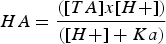 $$HA = \displaystyle{{([TA]x[H + ])} \over {([H + ] + Ka)}}$$
Where [HA]: total concentration of the undissociated acid (mM); [TA]: total concentration of the acid added to the medium (mM); [H+]: proton concentration in the medium (mM); Ka: equilibrium constant (where pKa.lactic, 3·79; pKa.acetic, 4·75).
Measurement of ZEA production by F. graminearum in the cultures
To investigate the effect of KFWP CFS on the biosynthesis of ZEA, ZEA was extracted from the used culture media in the growth-inhibition experiment and determined the concentration present with the Veratox™ (Neogen Corporation, Lansing, MI, USA) immunologic kit according to the manufacturer's instructions. Briefly, each sample was cut and mixed with a methanol (American Chemical Society certificated-Grade) solution 70%v/v with distilled water and the mixture was filtered through a Whatman No 1 filter paper. After that, each sample was measured.
Statistical analysis
All the growth parameters were analysed by the SIGMAPLOT 10.0® software. The results of the independent assays are presented as the mean values ± standard deviation (sd). Differences in growth kinetics were tested for significance by the analysis of variance (ANOVA) to determine effects significant at a P < 0·05 by means of the STATGRAPHICS Plus 5.1® software. All the experiments were performed at least in triplicate.
Results
Effect of KFWP CFSs on the conidial germination of different strains of F. graminearum
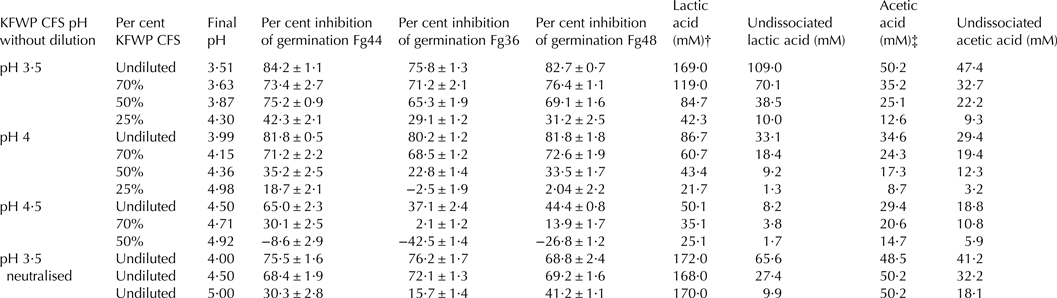
Table 1 summarises the per cent conidial-germination inhibition with the three strains of F. graminearum challenged with KFWP CFS at different pHs – either with or without alkalinisation – and at different dilutions. The percentages were calculated by Eq. (1).
Per cent inhibition of the germination of F. graminearum by four concentrations of KFWP CFS at different pHs

We determined the per cent inhibition of the germination of F. graminearum by KFWP CFS either without dilution or at concentrations of 70, 50, and 25% after dilution with sterile WP and by KFWP CFS alkalinised to pH 4·0, 4·5, and 5·0. The percentages were calculated by Eq. (1). Each treatment was performed in quintuplicate on two independent fungal cultures for each strain. The concentrations of lactic (†) and acetic (‡) acid in the undiluted KFWP CFS were measured by HPLC. Negative values of the inhibition per cent indicate growth stimulation: the fungi incubated under those conditions exhibited a lower inhibition than the controls.
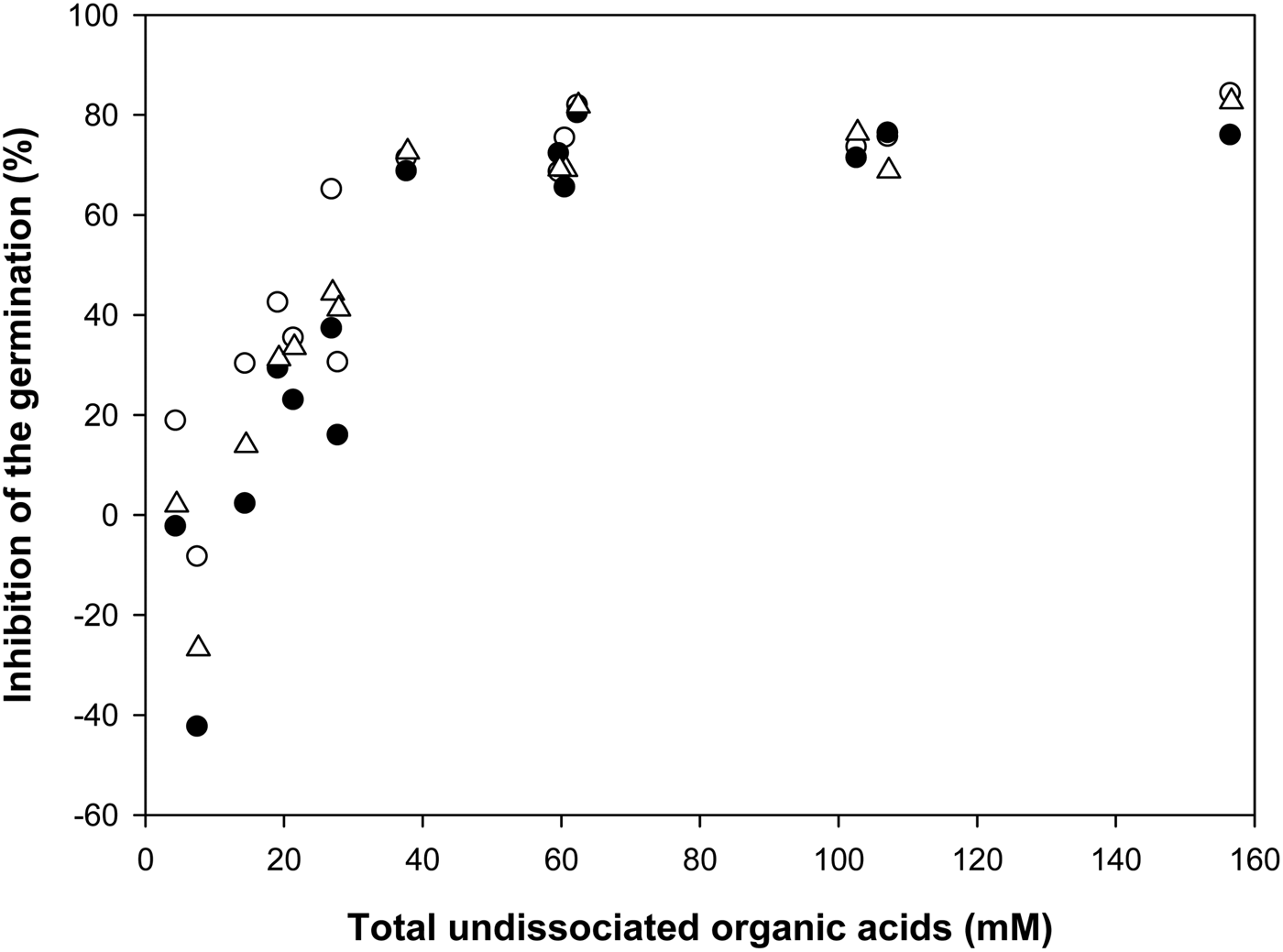
The KFWP CFS at the lowest pH produced the highest conidial-germination inhibition. This effect occurred in direct relationship to the organic-acid content of the fermented extract as determined by HPLC. The undiluted KFWP CFSs at pH 3·5 and 4·0 – those with the highest concentrations of undissociated acids – exerted a strong inhibition (>70%), while the undiluted supernatants at pH 4·5 – those having the lowest levels of undissociated acids – produced a moderate-to-weak inhibition. Similarly, successive dilutions or alkalinisation of the KFWP CFS, resulting in lower levels of the undissociated organic acids present, resulted in a lower inhibitory potency toward the conidial germination. The data in Table 1 indicate that the extent of conidial-germination inhibition decreased pari passu with the increase in pH affected by the different extents of alkalinisation, which result is consistent with the corresponding decreases in the contents of undissociated organic acids with increasing pH. Figure 1 illustrates the relationship between conidial-germination inhibition and the concentrations of total organic acids in the KFWP CFS. The increase in germination inhibition was found to be directly proportional to the total undissociated-acid concentration up to the maximum value reached between 70 and 80%, corresponding to about 40·0 mM acid, at which level the inhibition plateaued throughout the remaining acid-concentration range (up to 157·0 mM).
Per cent inhibition of the germination of F. graminearum assayed in strains Fg44 (○), Fg36 (•), Fg48 (∆) as a function of the concentration of total undissociated lactic and acetic acids in the KFWP CFS (mM). The data here for the per cent fungal-growth inhibition and the levels of total undissociated organic acids are taken from Table 1.
Effect of KFWP CFS on the growth parameters of F. graminearum on solid medium
We performed fungal-inhibition assays on plates with solid BM in order to study the effect of different concentrations of the KFWP CFS on the fungal-growth parameters (Table 2). The controls used were unsupplemented BM, BM containing 70% sterile unfermented-WP and BM containing 70% sterile unfermented-WP acidified until pH 3·5. The lag phases in those three control groups varied between 22·28 and 23·48 h, between 21·67 and 24·24 h, and between 24·71 and 25·79 h, respectively, depending on the strain, with these values being statistically equivalent. Likewise, the respective growth rates in the three controls varied between 0·40 and 0·42 mm/h, between 0·46 and 0·47 mm/h, and between 0·46 and 0·48 mm/h and were also not significantly different. Furthermore, the pHs of the first two controls, at 6·35 and 6·28, were only slightly different. These observations would indicate that unfermented WP, for its part, exhibits no growth-inhibitory activity. Moreover, the pH of third control (BM containing 70% sterile unfermented-WP acidified until pH 3·5) was 4·71. This result would suggest that pH per se exerts no growth-inhibitory activity.
Effect of KFWP CFS at different concentrations and pHs in the basal medium (v/v) on growth rate and the lag phase of F. graminearum
† Growth rate, K D (mm/h), was calculated from the regression slope of colony diameter vs time during the linear growth phase.
‡ Latency (lag) phase was calculated by Eq. (2). *, **Indicate statistical differences between the treatments into the same column.
Additionally, BM containing a mixture of lactic and acetic acids was assayed. We found that this mixture containing 5·3 and 6·6 mM of undissociated lactic and acetic acids showed fungicidal activity for three strains analysed.
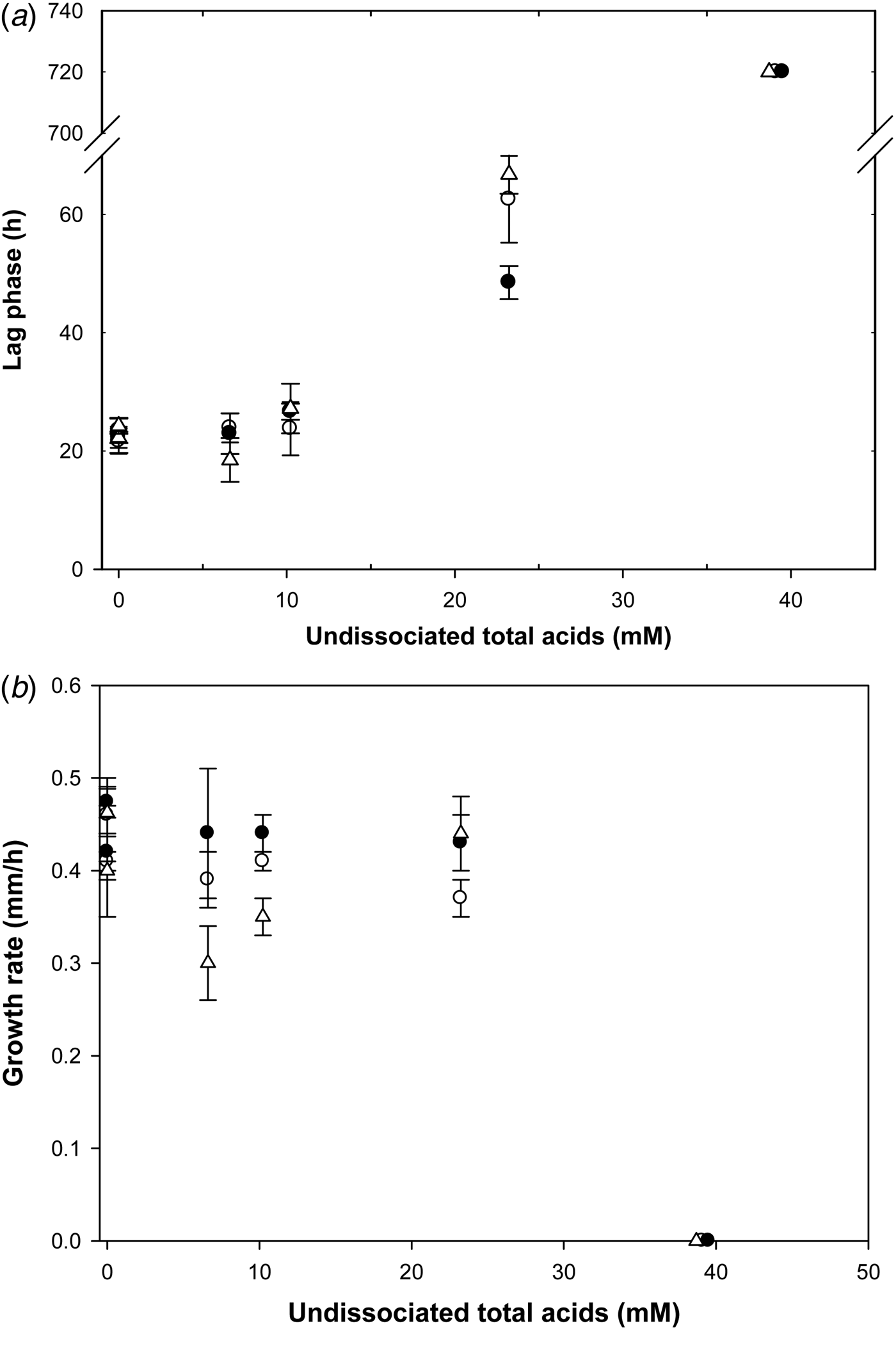
The BM containing KFWP CFS added at 70%, pH 3·5 triggered non-fungal-growth in all the studied strains. Otherwise the lower KFWP CFS concentrations allowed the fungal growth with rates between 0·30–0·44 mm/h and lag phases between 18·47–66·77 h.
The effect of total undissociated acids concentrations of each CFS on the fungal growth parameters are shown in Fig. 2. Lag phase was the fungal parameter more affected by KFWP CFS. Supplemented media with undissociated acids between 0–10·22 mM produced no significant changes on lag phases. Consequently, higher concentrations of undissociated acids triggered larger lag phases, being the highest one that corresponding to 39·10 mM of total undissociated acids. Under this condition, no-growth was observed during the complete assay (720 h). In summary, under this concentration (medium with 70% v/v KFWP CFS at pH 3·5) the fungal growth was completely inhibited for all the strains investigated (Fig. 2).
Growth parameters of F. graminearum Fg44 (○), Fg36 (•), Fg48 (∆) as a function of total concentration of undissociated lactic and acetic acids: growth rate (a) and lag phase (b). The concentrations of the organic acids in the KFWP CFS were measured by HPLC, and from those values and the associated pHs the concentration of undissociated species were calculated as indicated in Materials and methods.
Effect of KFWP CFS on the production of zearalenone by F. graminearum
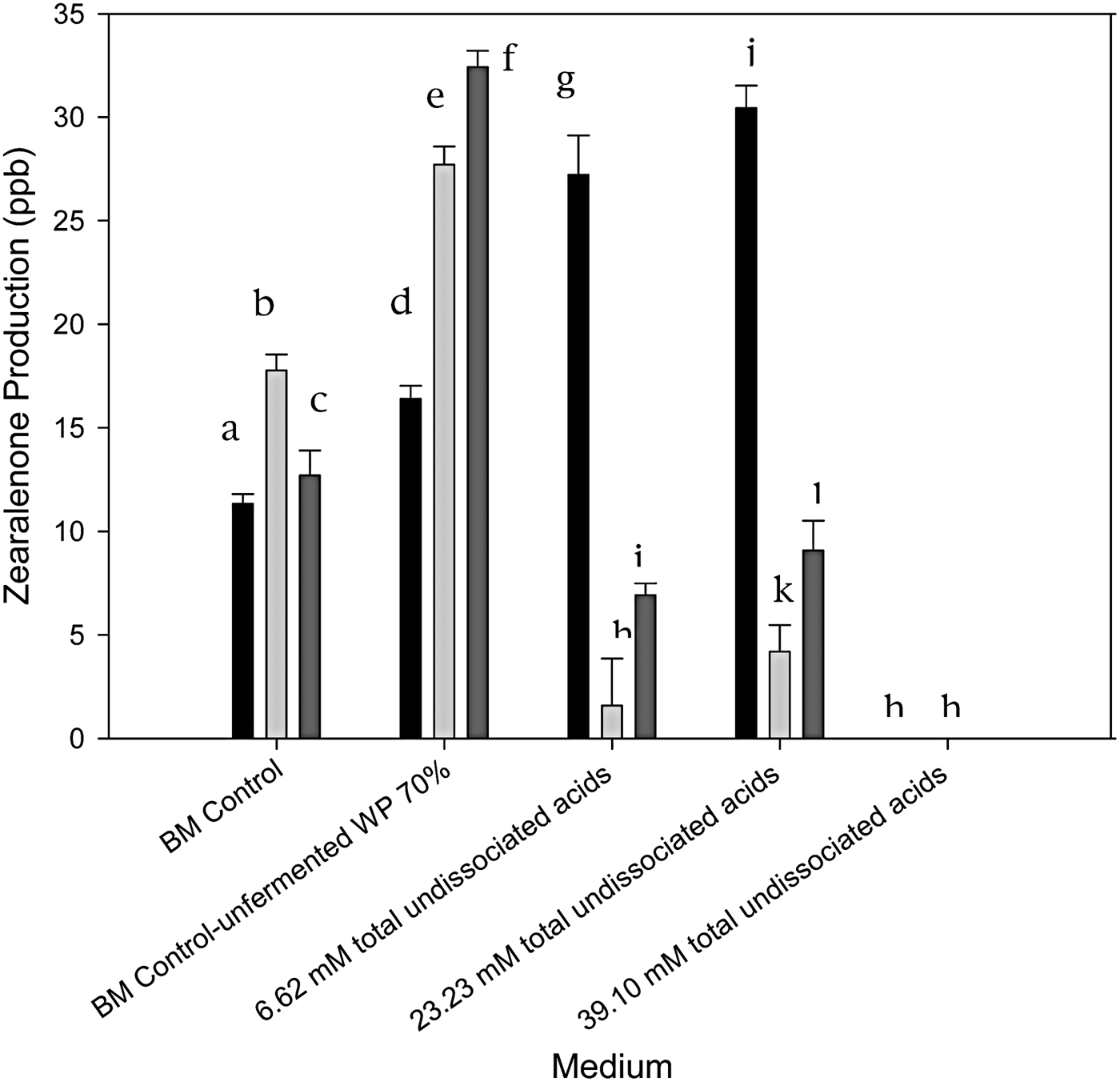
Figure 3 shows the effect of the total undissociated acids on the ZEA biosynthesis. Under all the conditions tested, except for exposure to 70% v/v KFWP CFS in BM at pH 3·5 – corresponding to the concentration where the fungus was killed – mycotoxin production continued. Of the two controls employed in the experiment, the BM supplemented with sterile WP contained higher levels of ZEA than the BM alone in all three fungal strains, suggesting that the WP present stimulated the output of the mycotoxin. The highest levels of ZEA in the entire experiment were measured in the WP control of Strain Fg48 at 32·40 ± 0·78 ppb, with that production occurring in the absence of the organic acids otherwise provided by the metabolism of the kefir microbes during fermentation. The different patterns of ZEA production observed during this experiment are notable: In Strain Fg44, mycotoxin output increased pari passu with elevations in the levels of undissociated acetic and lactic acids. In contrast, in strains Fg36 and Fg48, the ZEA biosynthesis in the media with KFWP CFS was always lower than in the controls, while mycotoxin production in the presence of 50% KFWP CFS was greater than in the medium with 25% KFWP CFS. This suggests that the mycotoxin biosynthesis is affected by the WP concentration added to the medium. At 50% v/v an antagonism takes place between the biosynthesis stimulation and the inhibitory effect on this metabolism. Further studies are necessary to clarify which components play each role in this process in order to inhibit fungal growth and mycotoxin biosynthesis. These differences suggested that the nature of ZEA production by F. graminearum was strain-dependent.
Effect of exposure to KFWP CFS at 30 °C on the production of ZEA on solid basal medium by F. graminearum strains Fg44 (black bars), Fg36 (light grey bars), and Fg48 (dark grey bars). The bars with different letters represent statistically different values as determined by ANOVA (P < 0·05). The production of ZEA in ppb is show on the ordinate.
Discussion
Milk fermented by kefir grains contains, in general, lactic and acetic acids, acetaldehyde, ethanol, carbon dioxide (in equilibrium with carbonic acid), B vitamins, and hydrocarbons such as diacetyl (Toba, Reference Toba1987). In our work the highest levels of lactic and acetic acids were observed in KFWP CFS at pH 3·5, 169·0 and 50·2 mM, respectively. The lactic acid concentration reported here was higher than that determined in fermented whey with kefir grains CIDCA AGK10 (96·6 mM). Acetic acid was not reported in the fermented whey (Londero et al. Reference Londero, De Antoni, Abraham and Garrote2011).
Additionally, there were reported lower concentrations of the acids in sugar cane solutions fermented with water kefir grains, between 23·3–36·0 and 6·4–7·8 mM of lactic and acetic acid respectively (Caro & León, Reference Caro and León2014). In concordance with our results, these supernatants exerted antifungal activity against A. ochraceus which was attributed at least partially to the presence of both acids.
We also calculated that the BM supplemented with 70% KFWP CFS at pH 3·5 used in the growth experiments contained 17·5 mM lactic and 21·5 mM acetic acid in the undissociated state. These concentrations were only 25 and 66% of the levels present in the same percentage of KFWP CFS employed to assay fungal germination, where the corresponding concentrations were 70·1 and 32·7 mM. These differences in concentration occurred since the pH of the former solid medium was 4·55 as opposed to the value of 3·63 for the 70% KFWP CFS. Those differing pHs, for their part, arose because in the germination assay the cell-free supernatants were diluted with unfermented WP, whereas in the plate-inhibition experiment the former were added to the BM before solidification, which mixing altered the pH of the KFWP CFS substantially.
Comparing the results obtained by using the method of inhibition in solid medium, we obtained the minimal fungicidal concentration of F. graminearum with KFWP CFS and with pure organic acids directly added to the culture media. From these concentrations, we calculated the undissociated lactic and acetic acid concentrations. These results showed that there is necessary a higher concentration of undissociated acids when KFWP CFS are used. This indicates that some compounds present in the CFS could have a protective effect against the fungal inhibition caused by the organic acids produced during fermentation. On the contrary, the absence of kefir metabolites in the media supplemented with pure organic acids, allows the fungal inhibition with lower concentrations of lactic and acetic acids.
The analytical methods currently used for zearalenone determination include HPLC (Krska & Josephs, Reference Krska and Josephs2001; De Saeger et al. Reference De Saeger, Sibanda and Van Peteghem2003; Nuryono et al. Reference Nuryono, Noviandi, Bohm and Razzazi-Fazeli2005) and rapid methods such as ELISA (Krska & Josephs, Reference Krska and Josephs2001; Nuryono et al. Reference Nuryono, Noviandi, Bohm and Razzazi-Fazeli2005; Zheng et al. Reference Zheng, Richard and Binder2006); with the latter having become one of the most useful tools for the rapid monitoring of mycotoxins, especially for the screening of unprocessed grains. Krska & Josephs (Reference Krska and Josephs2001) performed a comparative study in which they demonstrated that the ELISA method is a highly accurate analytical tool and as such preferential for ZEA detection. Through the use of this immunologic assay we determined that contact with the unfermented WP caused an increase in the production of that mycotoxin in all three strains of F. graminearum investigated. According with our results, Gwiazdowska et al. (Reference Gwiazdowska, Czaczyk, Filipiak and Gwiazsowki2008) reported that cell-free supernatants from two propionibacteria – those fractions containing propionic and acetic acids – significantly reduce the growth of F. culmorum in liquid medium and diminish the level of ZEA production by that fungus. In like manner, in the present experiments, 70% KFWP CFS in basal medium at pH 3·5 – it containing both lactic and acetic acids – not only was fungicidal towards F. graminearum but also eliminated the biosynthesis of ZEA.
We need to emphasise that our experiments were conducted with CIDCA AGK1 kefir grains grown in WP, an effluent and a nutritionally poor medium, which is obtained from whey desproteinisation by ultrafiltration. Kefir grains CIDCA AGK1 exhibited an impressive growth capability in a low-cost industrial by-product while at the same time showed a promising potential as a biopreservative.
In conclusion, the presence of KFWP CFS at a pH <4 caused the highest per cent inhibition of F. graminearum germination while this same supernatant at pH 3·5 exhibited a fungicidal capability with three strains of that fungus growing on solid BM. In contrast, the supplementation of medium with levels of KFWP CFS that were not fungicidal was associated with an enhancement of ZEA production by the fungus. In view of these differences in fungal dose-response, the possible application of KFWP CFS as a grain biopreservative will require future studies to heighten our understanding of the effect of kefir metabolites on fungal growth, physiology, and toxin production in both Fusarium and other toxin-producing fungal genera.
CIDCA is a research institute within the Department of Microbiology in the Facultad de Ciencias Exactas, Universidad Nacional de La Plata,. We are grateful to Dr Teresa Alconada for providing Fusarium strains and to Dr Donald F. Haggerty, a retired career investigator and native English speaker, for translating the manuscript into English from the original Spanish.