Regulation and policy outcomes in local China, especially in environment and energy, are often explained by binary concepts, such as centre–local, or principal–agent, relations. This article illustrates that such binary frameworks overlook important governance changes that have been manifesting in contemporary China, especially in localities away from major economic or political centres. Specifically, I detail a kind of post-hierarchical governance that makes distinctions like centre, local or centre–local less useful or germane. It is distinct in two broad dimensions. First, the principal–agent relations within the political hierarchy are giving way to professional community-building between actors across multiple levels and sectors. In particular, certain local state actors are increasingly crossing the boundaries of both the locality and the political hierarchy to form professional communitiesFootnote 1 with actors without. Second, beyond formal incentives, local governance is enacted through a set of community-driven practices between the protagonists, such as joint framework- (kuangjia 框架) or platform- (pingtai 平台) making, collective learning about local conditions, joint problem-solving, and peer review and social sanctioning. In short, I argue that there are policy instances in which local governance is increasingly becoming unbounded and pluralized in China.
I use two policy cases in two different localities to show how such a type of governance has impacted local outcomes. My findings are based on site-intensive fieldwork conducted primarily between 2010 and 2013, during which I carried out documentary and archival research, participatory observations, oral histories and semi-structured interviews in several localities in China.Footnote 2 Since the empirics below draw heavily from the 189 interviews, I provide the basic profile for them in Appendix 1.Footnote 3 In what follows, I briefly discuss approaches to understanding local governance in China. I then discuss conceptually a distinct architecture of governance that my empirical research informs. The rest of the article details empirical evidence.
Binarism in Understanding Governance
Explaining local governance in binary or dualistic terms, such as centre versus local and principal versus agent, has been a norm. The regulatory literature often features debates about relative merits of central versus local-level, or decentralized, regulation, as epitomized by the literature on regulatory or environmental federalism.Footnote 4 China scholars have studied regulation and governance using similar perspectives. The central question is about central control or coordination, or conversely local autonomy and deviation. The balance is a function of the system's capacity and its organizational principles founded on a set of formal incentives. A number of institutional mechanisms have been emphasized, including personnel control,Footnote 5 cadre evaluation system,Footnote 6 fiscal redistribution,Footnote 7 overriding or “mandatory punishment-based” (yipiao foujue 一票否决) targets,Footnote 8 and other kinds of rewards and sanctions. Such binarism is matched by dichotomous debates. Some have advanced a localist or decentralized view,Footnote 9 while others have advocated centralized, or anti-local, governance.Footnote 10
Binarism has been particularly pervasive in studies of environmental governance. The general regulatory failure has often been attributed to factors such as lack of the “right incentives”Footnote 11 in the system, lack of promotional opportunities based on environmental performance,Footnote 12 conflictual incentive structures facing local agents,Footnote 13 the system of horizontal and vertical hierarchies (tiao-kuai 条块) that tends to dilute the organizational power of formal incentives,Footnote 14 as well as the general weakness in state capacity or political will.Footnote 15 When it exists, the local state's regulatory responsiveness has been ascribed to similar factors. For instance, the relative success of energy conservation and emission reduction (jieneng jianpai 节能减排) programmes since the 11th Five-Year Plan has been attributed to the centre's institution of binding targets into the cadre evaluation system.Footnote 16 Those regulatory policies tied to “mandatory punishment-based” targets, such as social (in)stability, are said to receive more local emphasis.Footnote 17 Other studies have highlighted improved control, monitoring and evaluation.Footnote 18 In more nuanced approaches, the local actors are viewed as opportunistically balancing the weight of incentives and their secular priorities.Footnote 19 Yet, the tendency to make sense of local regulation in terms of dynamics between the centre and local remains largely intact.
Although they have contributed a great deal to our understanding, such frameworks are beginning to display a number of insufficiencies in explaining local governance in contemporary China. First, it leaves out new, non-traditional establishments and actors that have been emerging in recent years, many of whom operate outside the boundaries of the political hierarchy.Footnote 20 Hence, secondly, the ways and the extent to which those actors impact local governance and policy are little understood. Third, empirical phenomena that are difficult to explain by the binary approaches are arguably increasing in local China. It is not uncommon to find local actors carrying out policies that seem to bear little immediate political or material benefits. Even as environment-related performances occupy more weight in the local responsibility system, improvements in overall environmental conditions – not to mention the former's impact on the latter – remain elusive and debatable.Footnote 21 How do we explain the empirical realities that do not fit neatly into static binary models?
Neither Centre nor Local: a New Architecture of Local Governance
That authoritarianism remains a fixture in China does not necessarily mean that multiple forms of local governance are impossible. On the contrary, my empirical research informs a distinct form of local governance emerging in China that can potentially contribute to a rise of “regulatory pluralism.”Footnote 22 It can be distinguished along two main spectra: structure of governance and modalities of governance.
In terms of ostensible structure, the principal–agent relations between the centre and local are giving way to professional community-building between actors across different organizational boundaries. Crucially, certain local government actors are increasingly opening themselves up and creating and embedding themselves in professional societies and expert communities with extra-local and non-state actors. Local governance is increasingly taking place within this space – or what the protagonists usually refer to as professional “community” or “circle” (quanzi 圈子)Footnote 23 – that encompasses actors beyond the confines of the locality and the political hierarchy. Even though the architecture that the protagonists are building is far from being completely “open,” it is still comparatively more open, or “unbounded,” in the sense that policymaking and regulation are no longer the exclusive prerogative of the state.
The uniqueness of this emerging local governance lies also on its modalities and substance. Beyond the formal incentives mediated through predefined targets and metrics, local governance is enacted through a set of community-driven practices. They consist of several distinct processes and mechanisms through which policy goals and means are periodically defined and revised over a stretch of time. First, in contrast to the centre–local governance framework in which policy ends are determined by the hierarchical top, the protagonists set broad policy goals or directions together through joint discussion and deliberation. They usually refer to these as “rough” (dagai de 大概的) framework (kuangjia) or platform (pingtai).Footnote 24 What are being written down, either literally or figuratively, are common understandings and non-binding “agreements” (xieyi 协议).Footnote 25 Characteristically, they are left provisional, open to further revisions down the road.
Second, these frameworks are later filled with specific policy initiatives, which are set on the basis of joint “exploration” (tansuo 探索)Footnote 26 and discovery of the local conditions, contexts and capabilities. In other words, finding contextually appropriate policies is emphasized. Likewise, in the process of implementing the initiatives, interim milestones or evaluation metrics are also set collectively in light of the current local conditions. They are often set below what are considered optimal or best practices. Hence, such practices differ from the vertical imposition of mandates;Footnote 27 they also differ from the equally hierarchical imposition or “monocropping”Footnote 28 of international benchmarks (biaogan 标杆) and best practices frequently conducted by international organizations. The results of the initiatives are then put to the rigours of joint monitoring and review periodically. Lastly, in light of provisional outcomes, the actors are willing to step back and recalibrate any of the above: policy goals, specific projects, evaluation metrics and so on. At their best, these processes are ongoing, iterative and open-ended. The dynamic coordination in this governance architecture thus relies on open information or mutual transparency within the professional communities, joint monitoring and problem-solving, and reflexive interpretations, all of which are being enacted in relative absence of central steering.
I refer to this emerging architecture of local governance as “community-driven experimentalist governance” (CDEG) in this article. “Community-driven” refers to its structure – i.e. the enactment of governance through professional communities. “Experimentalist governance” refers to its recombinatory and recursiveFootnote 29 nature – i.e. the co-determinous interplay between policy ends, means and outcomes. In short, CDEG is all about creation of a shared social space that cuts across traditional organizational boundaries, within which non-linear processes of joint exploration, learning and adaptation take place.
Community-Driven Experimentalist Governance in Different Policy Contexts
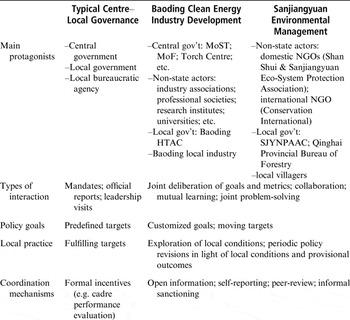
I present empirical findings from two different policy instances to illustrate the emergence and relevancy of CDEG in local China: industrial policy to develop green technologies in the National-Level High Technology Industrial Development Zone (“high-tech zone” [HTZ]) in Baoding (Hebei) and environmental management in southwestern China. Table 1 summarizes the main findings.
Main Features of Local Governance

Local governance and clean energy industry development
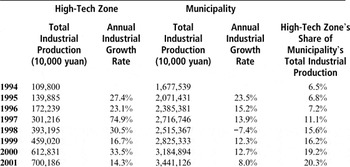
Baoding's HTZ was one of the original 53 HTZs ratified by the State Council in 1991 and 1992 under the umbrella of the “National Torch Plan” (Guojia huoju jihua 国家火炬计划).Footnote 30 Municipal documents and the internal archive of Baoding High-Tech Administrative Committee (HTAC)Footnote 31 – the local agency in charge of managing Baoding's HTZFootnote 32 – show that notwithstanding its rapid growth (Table 2), HTZ was a hodgepodge of labour-intensive, low-value-added activities throughout the first decade. In 1994, for instance, its biggest enterprises were a brick manufacturer, polyvinyl chloride (a type of plastic) manufacturer, and a paper mill.Footnote 33 The situation changed little in 1996. The most stand-out enterprises were a synthetic silk producer, battery storage producer, and beer and malt factories.Footnote 34 In the following year, new enterprises included even a tofu factory and a colour steel plate factory.Footnote 35 In other words, the rapid growth was achieved without significant indigenous innovation or high-tech development, antithetical to the very mission of the Torch Plan.
Economic Growth of Baoding High-Tech Zone in the 1990s

Source:
Baoding High-Tech Administrative Committee, Office of Statistics; Baoding Economic Statistical Yearbook, various years; China High and New Technology Zones, various months; China High Technology Industry Development Yearbook, various years; China High Technology Industry Statistical Yearbook, various years.
To reverse such policy outcomes, the HTAC began to move away from the kind of governance characterized by verticality, insularity and rule by targets in the 1990s, and ushered in a new kind of governance around 2001.
Governance unbounded
Structurally, the boundaries of the HTZ's governance were broken down vertically, horizontally and spatially. This can be seen in several areas. First, the HTAC opened an external branch institution outside Baoding: the “Beijing External Relations Office of Baoding High-Tech Zone” (BERO).Footnote 36 This dedicated institutional presence in Beijing was one of the first, and most critical, organizational moves that the HTAC carried out. It maintained a dedicated group of field officers in the BERO, and provided them with a significant amount of resources. Important mid-level managers and bureaucrats were dispatched. The executive-level officials regularly visited the BERO and sometimes were even stationed there for an extended period of time.
One of BERO's primary functions was to help the HTAC and other local actors, such as local entrepreneurs, “link up” (guagou 挂钩) with strategically important external actors. For instance, it is through the BERO that the HTAC was able to make linkages with various industry associations and professional societies. In the beginning, the BERO tried to network with as many of them as possible, regardless of which sector they belonged to. It reached out to those related to the broad categories of “high-tech” industries as defined by the Ministry of Science and Technology (MoST), including information and communication technologies, bio-technology, electronics, medical science, and energy-related industries. The immediate goal was to “understand the state of different industries, and see if any of them were suitable to our [Baoding's] conditions.”Footnote 37 As it narrowed itself down to clean energy technologies, the HTAC deepened its relations with a particular group of professional societies in the field, such as China Wind Energy Association (CWEA),Footnote 38 China Renewable Energy Industry Association (CREIA),Footnote 39 and China Solar Energy Society (CSES).Footnote 40 Often, the HTAC's top officials joined these organizations; in some cases, they even became executive officers. Some of these relations endured over a considerable period of time. For example, CWEA was headquartered inside the BERO, and when in 2005 it started publishing its flagship industry magazine, Wind Power (Fengneng 风能), they collaborated in its publication.
Even within the political hierarchy, the HTAC began to move decidedly beyond the local confines. Its interaction and engagement with higher-level authorities were extremely limited in the first decade. Starting in the early 2000s, however, this gave way to extensive and frequent engagement with key central-level actors, such as MoST and the Ministry of Finance (MoF). Operationally, this too was mainly conducted through the BERO. The mechanical and perfunctory exercises of sending reports and evaluations up and down the political hierarchy – which could take months either way – were replaced with face-to-face (mianduimian 面对面) exchanges (jiaoliu 交流) either at official functions or informal gatherings.Footnote 41 Such ties enabled access to other kinds of actors who proved to be just as instrumental to local imperatives: top-tier university laboratories, industry and technology experts, state-run research institutes, and, later on, even civil society actors. Indeed, some of the industry associations were initially introduced to the HTAC by central policymakers, and vice versa. Access to important research institutes,Footnote 42 policy think-tanks,Footnote 43 and university labsFootnote 44 often required reference letters (jieshaoxin 介绍信) or personal introduction, especially when the involved industries were related to national security or priority, such as energy.
In addition to establishing external linkages, there were other ways through which the governance architecture was rendered increasingly open. For instance, the HTAC dispatched a large number of officers to different parts of the country, including other national-level HTZs.Footnote 45 They extensively studied those regions’ industrial structure, local business milieu and industrial policies, and tried to understand why certain regions were more successful at developing particular industries.Footnote 46 Moreover, the HTAC began to require its officers regularly to attend industry conferences, technical workshops, and industry association meetings. One former officer shared his experience:
Especially in the beginning … our superiors were serious about this idea of learning from others outside of Baoding. Every year, we were told to attend many different industry conferences, workshop, meetings, etc.… Every time I attended one, I was almost always the only government actor, particularly from a small locality. And the industry people looked at me quite curiously.… Over time, we were able to acquire a good understanding of many things, including the state of industries and technologies, market conditions, investor networks, and national policy environments.Footnote 47
From Kaiyou 揩油Footnote 48 to partnership
The BERO was just as instrumental to the local firms in the HTZ, who also relied on it increasingly to operate outside the local confines. Although this applies generally to a number of start-up small and medium enterprises (SMEs), Zhonghang Huiteng's rise as the largest domestic wind turbine blade manufacturer by the mid-2000sFootnote 49 is a case in point. Its founders hailed from modest backgrounds unrelated to the sector or high-tech in general. Lacking the necessary know-how and technologies, they tried to initiate their first foray into the sector by acquiring foreign technologies. On two different occasions, they failed to secure cooperation with international counterparts, largely because of disagreements over contract details like terms of technology licensing. Exasperated and disheartened, Zhonghang then began to consider developing blade technologies on its own. However, this proved to be just as difficult. As a new player with little background, status and presence, the technological and market barriers were simply too high.
Its first breakthrough came via the BERO, albeit in a roundabout way. Zhonghang identified a local air force complex and its subordinate state-owned enterprise (SOE), Baoding Huiyang Aviation Propeller Factory, as a potential source of technology. Founded in the 1960s, Huiyang to date remains the only central-state-sponsored propeller research centre and manufacturer in China. By 2000, as a part of the National Key Science and Technology Project, it had developed a 60 kilowatt (KW) “large scale”Footnote 50 propeller blade. Zhonghang's problem was that, especially as a non-state enterprise, it was difficult to access a military institution and commence a business relationship on its own. The HTAC eased this by tapping into its growing network of professional and political communities in Beijing. The most pivotal were CWEA and its connections to various central policymakers as well as military-based research institutes. With such institutional support, Zhonghang was able to strike a deal with Huiyang in which it would be responsible for modifying and commercializing the latter's proprietary propeller technologies for civilian use. Soon afterwards, Zhonghang successfully modified the 60 KW blade (in collaboration with Huiyang), and began commercializing it.Footnote 51
Within the HTZ, the previous sharp separation between the HTAC and the industry gave way to a more porous relationship. First, to circumvent the well-entrenched discrimination faced by private entrepreneurs from the local state-owned financial system, the HTAC created an investment branch of its own, Baoding HTZ Development Investment Company. Since then, most of the initial investments for start-ups were made by this company. Second, the HTAC began to provide the so-called “one-stop service” (yizhanshi fuwu 一站式服务)Footnote 52 to the HTZ firms.Footnote 53 Previously, the firms had to go through several administrative departments in the municipal government to complete even the most mundane paperwork (e.g. business license, environmental impact application); various kinds of “service fees” were levied at each “stop.” Now, the HTAC began to step in as an institutional medium between the firms and the municipal government, and process various matters on behalf of the former. Not only did these practices expedite the logistics and lessen transaction costs for the firms, the latter also no longer had to worry about the usual bureaucratic murkiness and idiosyncrasies.Footnote 54 Lastly, when the HTAC officers attended industry conferences, workshops, and so on, they did so together with local firm representatives. Over time, this created a greater sense of camaraderie between the two, as the firms began to see the HTAC as their peer and partner.Footnote 55
Exploration and outsourcing of knowledge
The new and reconstituted relationships were accompanied by modalities of governance that were equally distinct from previous years. The HTAC's industrial policymaking itself is one of the best cases in point. In a sharp departure from the past, the agency's policymaking has been neither circumscribed by foregone conclusions (e.g. monotonously pursuing annual production targets) nor set adrift in aimlessness (e.g. blindly imitating famous high-tech clusters). Instead, it has been built on a new commitment: open-ended “exploration” (tansuo), routinely together with its newly linked-up peers.
The processes through which it ended up selecting green energy technologies as the local pillar industry illustrate this practice clearly. First, as mentioned above, both the highest-level officials and rank-and-file officers in the HTAC spent a significant amount of time in the other national-level HTZs, and studied them. Each visit was accompanied by extensive reports. When either the reports or officers themselves came back to Baoding, what followed was a level of discussion and debate about suitability of the studied industries for their own HTZ that had never been seen previously. The same ensued after attending industry conferences, meetings and workshops. A mid-level official recalled:
We knew we wanted a high-tech, but didn't know which one was most suitable (heshi 合适) for us. The first thing we did was to explore (tansuo) … learn the various options and possibilities that could work out. The second was, do we have the capabilities (nengli 能力) here [in Baoding] to develop those high-tech industries?… We discussed about these a lot.Footnote 56
In addition to this self-directed learning, the HTAC frequently formed ad hoc groups, platforms, and consortia with experts, academics, and industry leaders.Footnote 57 The HTAC invited them to visit Baoding to help it better understand the local economic characteristics, industry strengths and weaknesses, and potential competitive advantage. These professionals visited various local firms and entrepreneurs, held workshops with them, and analyzed the state of their business and technologies. In some cases, these activities were also conducted with local university faculty members, some of whom were (aspiring) entrepreneurs themselves.Footnote 58 Lastly, the HTAC's growing policy networks in Beijing played a critical role in steering its industry choice. Crucially, as it became increasingly immersed in them, the HTAC became much more attuned to the national political climate and policy orientation of central-level policymakers. As early as 2001, it learned that central leaders may begin preliminary discussions about drafting renewable energy laws.Footnote 59 Having learned from a relatively credible source that renewable energy would receive high-level political support, the HTAC felt it safer to commit its policy to this expensive and risky industry.
Joint practices, not targets
Likewise, fostering clean energy industry consisted of a number of joint processes. No other case illustrates this better than the solar industry's initial development. When the HTAC decided to make it one of the pillar industries, it took a “wait-and-see” approach rather than making a full commitment, especially since China as a whole still had very little experience with solar energy. Continuing support – e.g. essentially free land, heavily subsidized office space, reduced tax – was largely contingent upon local firms’ meeting a number of metrics or standards. Nevertheless, they were not arbitrarily determined by the HTAC alone, or set against benchmarks in the West. Rather, they were set jointly with other actors in the broader professional communities, not as an end goal in themselves, but as a provisional milestone. In other words, they were a moving target, periodically customized vis-à-vis changing conditions.
In the first few years, for example, Yingli, the first solar firm in the HTZ, produced no modules. It was a period of intense debate about and calibration of goals. The HTAC invited experts and policymakers in Beijing to help Yingli set technological goals that were ambitious, yet achievable in the near to mid-term. After several rounds of discussion, it was decided that module capacity of five megawatts (MW)Footnote 60 was needed to be achieved before commencing full-scale commercial production. In terms of efficiency, the polycrystalline modules were to achieve close to 15 per cent. Furthermore, given the prohibitively high cost at the time, to become commercially viable, it was thought that 15 to 20 years of life should be guaranteed. Because they were a broadly agreed “objective” consensus, the HTAC demanded that Yingli meet the above requirements within a couple of years; otherwise, it would not receive full support going forward. At the same time, the HTAC helped Yingli acquire substantial assistance from the broader professional communities. For example, prototype designs were sent to top-tier universities and research institutes and Yingli received constant feedback from them. Because there was no testing equipment or calibration facility in Baoding in the beginning, product testing was also usually conducted in public research laboratories in Beijing.Footnote 61
Aided by this support, Yingli was able to win a bid for a national solar energy technology demonstration project held in Sichuan. Although it successfully demonstrated ability to build solar modules, judged against the previously set metrics, Yingli failed completely. None of the specified goals was achieved. However, instead of expeditiously giving up on the solar technologies and related firms, new rounds of joint reflection and deliberation ensued, culminating in downgraded metrics. The module capacity requirement was reduced from five to three MW. The cell efficiency rating was reduced to around 10 per cent. Given the state of the domestic technology at the time, the expected product life was reduced to five years. Undoubtedly, Yingli and other local firms lobbied for such revisions. However, the HTAC also used technical feedback from its expert-peers in determining the level of reasonable revisions. By 2003, Yingli was able to meet most of the revised provisional metrics and began its first commercial module production. By the mid-2000s, when most of the original goals were achieved, the HTAC followed by upgrading the metrics and acquiring international certification.Footnote 62
Collective problem-solving and positive externalities
Naturally, joint monitoring, evaluation and problem-solving became an important part of interim goal-setting and, if deemed necessary, revisions. As a result, an interlocking system of accountability precipitated. For example, the HTAC provided funding to start-ups to invest in capital intensive equipment and facilities. In return, these were expected to be “collective” or “public” institutions that most firms in the HTZ could access, provided that they had legitimate products or technologies. The case of LED industry is telling. During the early years of its formation, one of the SMEs that the HTAC supported was Dazheng. One of the first tangible supports was to help Dazheng set up a photometric test laboratory. On paper, this was Dazheng's “in-house” private laboratory. Yet, in practice, it was open to use by other SMEs to test their own LED products. During my numerous visits to Dazheng, it was not uncommon to see technicians and representatives from other firms testing their products in the laboratory. In addition, the HTAC officials usually accompanied such exercises.
Such a practice gave the HTAC several benefits as a regulator. In the case of the photometric laboratory, it became a common ground for “objective” or “fair” technical goal-setting and monitoring. Through the lab, the HTAC was able to compare different firms and their products. Moreover, each knew the other's relative performance. Sometimes, they even tested their products together or one after another on the same day. By rendering their performance more publicly visible, the firms became more subject to informal peer review. The product-testing results were also frequently judged against what the HTAC had heard from other professional peers in Beijing to be an acceptable or achievable range. Hence, when the HTAC demanded increased performance from particular firms, it was not considered unreasonable or beyond the realm of possibility. At the industry level, what resulted from these practices were de facto, if only surrogate, industry standards and certification systems.
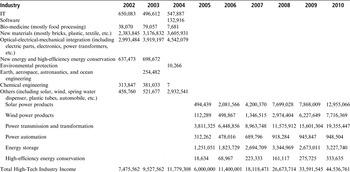
Under the newly defined governance in the 2000s, Baoding HTZ's industry became completely transformed (Table 3). From a hodgepodge of low value-added activities, by the end of the decade it came to be the largest green energy cluster. Today, it is home to over 160 clean energy technology enterprises, including 40 solar power equipment manufacturers, 50 wind power equipment manufacturers, and dozens of LED firms.
Growth of Clean Energy Industries in Baoding High-Tech Zone, 2002–2010 (Income in 1,000 yuan)

Source:
Baoding HTAC, Office of Statistics, internal data.
Local governance and environmental management
A similar kind of governance has been introduced to better manage the environment and natural habitat in rural areas of Sichuan Province and Qinghai Province. The protagonists refer to their own management practices as a “mutual agreement-based environmental protection” (xieyi baohu 协议保护) model. As the name suggests, it is founded on non-binding agreements that actors across different levels, spaces, and sectors willingly (ziyuan 自愿) sign up to. Principally, this case has involved local villagers, local government bureaus, local associations, a domestic non-governmental organization (NGO), and an international NGO. Beyond immediate environmental outcomes, the actors are just as interested in creating an ongoing platform (pingtai) through which actors in other localities can engage in similar practices. They collectively fill in the agreements with specific joint policy actions, and set provisional metrics through open deliberation. Self-reporting and cross-monitoring are embedded, and they periodically review outcomes on the ground together. Based on these, the original agreements and metrics are subject to further revisions or escalations; even entirely new ones are sometimes drafted for the next cycle of joint processes.
Breakdown of natural habitat
A prime example of the ongoing experiment with this governance model is in Sanjiangyuan National-Level Natural Preservation AreaFootnote 63 (SJYNPA hereafter). According to the local government actors, the main reason that they began to embrace a different governance model in 2006 was quite similar to the catalyzing process by which Baoding HTAC's governance was transformed: the failure of the previous governance models in managing SJYNPA's eco-system. As a national-level natural preservation area, the region had previously been governed by command-and-control, administrative fiat, and performance-target-based systems at various points in time. These governance models had a number of common characteristics. The central government set relevant national regulations, based on which a set of criteria or targets was selected. The local government bureau in charge of managing the area, SJYNPA Administrative Committee (SJYNPAAC),Footnote 64 was then instructed to fulfill these criteria. The bureau in turn enforced the target system uniformly throughout the numerous villages within SJYNPA.
Problems associated with such kinds of local governance were myriad. First, SJYNPA is a vast area – bigger than the whole of Germany – with a high degree of ecological variability from one place to another. One of its villages in which the new governance model was first introduced, Cuochi Village, is twice as big as New York City. Nevertheless, the local discrepancies were conveniently brushed aside in favour of one-size-fits-all targets and indicators (zhibiao 指标). A domestic NGO participant recalled:
The one-size-fits-all model just doesn't work in a large eco-system like this. Each locality has different kinds of problems and different things to protect. Some places are arid. Some places get a lot of rain and so flooding is more problematic. In some places, protection should be more about endangered species. In other places, it's about forestry, and not necessarily wild animals. You need to target (zhendui 针对) different things depending on different local conditions, but the government regulations seldom worked that way.Footnote 65
A limited number of broad aggregate mandates or performance targets were routinely imposed.Footnote 66 The local officials were singularly devoted to the indicators already on the books, even when it was obvious that other kinds of natural resources warranted more protection, even when local villagers cared more about certain types of conservation, and even when those targets were irrelevant for a particular locality. For instance, in some villages, illegal coal-mining was the single most environmentally damaging issue, but the SJYNPAAC used to pay it little attention.
A part of the reason why the SJYNPAAC was so focused on the mandated indicators was because of its serious lack of administrative capacity, especially in terms of personnel. It was tasked to manage the entire area with just 13 people. Given their limited capacity, the officials were happy to simply focus on fulfilling the pre-specified targets because doing so made their job easier. As one official explained, “it's impossible to go out to every village with only 13 people.”Footnote 67 When they did go out for audits or evaluations, the officials only took account of the things that were easy to tally or monitor. Reports were made and sent to their bureaucratic superiors only in regard to those targets that were already on the books, thereby perpetuating the same governance mechanisms.
In some instances, these kinds of regulatory practices led to serious conflicts with the local villagers. For example, in Cuochi Village, all of the villagers are of Tibetan heritage. Due to their traditional culture, they care deeply about wild yak and Tibetan antelope, more so than any other type of natural resource. In 2002, convinced that the animals were not getting sufficient attention from the local authorities, the villagers began to self-organize to protect them on their own. This in turn irritated the local officials, who believed that the villagers were neglecting more important mandates. Antagonism built up over time between the two sides.
Serious consequences precipitated for several years. According to a local official, “by all measures, the ecosystem, natural resources, and biodiversity were all deteriorating.”Footnote 68 Endangered species were disappearing, glaciers were drying up, and farming and animal husbandry were becoming increasingly difficult.
Externalizing governance, tapping into local knowledge
Similar to the case of Baoding, the change in organizational direction in this case was not necessarily intentional or deliberate. The local actors did not purposefully direct their efforts to building a particular governance framework because of any certainty that it would work. Rather, it is more accurate to say that there was an element of accident, as the protagonists stumbled upon the new governance approach and tried to enhance it in an incremental and experimental fashion. Frustrated with this aggravating situation, a few provincial officials began to have informal conversations with members of Shan Shui Conservation Centre, one of many less-heralded Chinese environmental NGOs in Beijing.Footnote 69 One of the suggestions was to think about “tapping into local knowledge. And the best sources of that are the local Tibetan villagers.”Footnote 70 Building on these initial discussions, together they proceeded to revamp local management practices. They began by gathering six parties to an informal forum in 2006: i) SJYNPAAC; ii) Sanjiangyuan Eco-System Protection Association,Footnote 71 a local non-state association; iii) village leaders from main villages; iv) Qinghai Provincial Bureau of Forestry; v) Shan Shui; and vi) Conservation International, an international NGO. The provincial officials and SJYNPAAC officials shared with others the ecological challenges and the goals they were trying to achieve, and the villagers were asked to share what they knew about their respective areas and their opinions on the local authorities’ regulatory practices. To many participants’ surprise, in some environmental areas, the villagers offered new local knowledge and corrected the officials’ (mis-)information.Footnote 72
What followed in the ensuing years has been quite remarkable for the local actors in these traditionally “backward” communities. At the end of the forum, a provisional agreement (xieyi) was “signed” by all of the parties involved.Footnote 73 The most important players were the SJYNPAAC, the villagers, Shan Shui, and Conservation International. This first agreement had two broad components. On the one hand, Shan Shui was able to procure a small grant through Conservation International (300,000 yuan) to help administer and implement the collaborative experiment. Apart from normal operating expenses, the grant was to be shared by the local villagers and the SJYNPAAC. Second, in return, the villagers agreed to actively participate in the experiment. They were asked to “study” and “investigate” the natural eco-systems within their own communities. They were to document what they thought were important natural resources and ecological matters in their communities, such as details of seasonal rainfall, kinds and number of different wild animals, changes in glaciers through different seasons, different species of plants, periods in which outside “visitors” are more likely to come and damage their eco-systems (e.g. illegal hunting), and so on. Preliminary findings were to be reviewed together at the next forum, which at the time was scheduled for March 2007. During the course of the year, Shan Shui, the local government, and Conservation International jointly held numerous workshops to provide the villagers with necessary technical and logistical training.
Joint evaluation and customized regulation
This ushered in a new era of local environmental governance in which a large portion of management responsibilities – and even prerogatives – was de facto transferred to the villagers themselves. In light of preliminary findings, a “formal” agreement was signed at the next forum in 2007.Footnote 74 Specific details of the project and evaluation criteria were spelled out. For example, after the joint review, the protagonists felt it ideal to have Cuochi Village divided into several sub-ecosystems, in line with particular natural resource endowments. The villagers were then divided into special teams accordingly, and each team was assigned to a particular sub-ecosystem. Altogether, there are now 18 wild animal “monitoring and enforcement areas” (jiance xiaoqu 监测小区), one climate variation monitoring and enforcement area, one glacier monitoring and enforcement area, nine households in charge of a phenology monitoring and enforcement area, and three centres for resolving “conflicts between wild animals and human” (yeshengdongwu yu ren chongtu 野生动物与人冲突). Likewise, a number of regulatory schemes were customized according to specific local conditions. For example, the villagers indicated that monitoring of certain wild animals was necessary only during a particular period of time in any given year; doing so in other times was merely wasteful. Similarly, for best accuracy, the local glaciers needed to be monitored annually in August. Such detailed, contextually-customized strategies had never been considered by local officials in the past as most regulations were uniformly and mechanically implemented.
A number of other characteristics were also noteworthy. First, in return for the villagers’ voluntary participation in this joint management – and crucially, for their help in alleviating its own capacity constraints – the SJYNPAAC agreed to share with the villagers a portion of the central government's annual funding for the area. Shan Shui and Conservation International were also able to secure further international grants for the project, which they continued to distribute to the local actors. For the villagers whose economic livelihood was affected by relevant regulations, these arrangements mitigated their material concerns. Second, the villagers were required to periodically report interim results and findings in their communities to the other protagonists. Sometimes, simple practices like picture-sharing were used as a form of joint monitoring and evaluation. Most importantly, they were sent to Shan Shui, who in turn received feedback from its own constituents like Conservation International. If deemed necessary after the joint evaluation, the details of the agreement, project goals, or metrics were adjusted and revised (tiaozheng 调整). Such a process of evaluation and revision could occur two or three times a year. Third, although only informal, cross-monitoring became a fixture and routine over time. For example, the villagers often monitored each other in the course of implementing the project, thereby reducing malfeasant behaviour. In addition, equipped with new knowledge and competence, they were also able to better monitor local officials. Hence, in an indirect fashion, the previous asymmetric power relationship between the two was also altered.
Redefining rules
Perhaps the most significant aspect of the new form of environmental governance has been that the criteria that are used to evaluate local outcomes have undergone a fundamental transformation. For the local protagonists, environmental management is no longer merely about fulfilling a set of pre-defined targets. This is not to suggest that the ultimate goal is no longer about conservation of nature or protection of the ecosystem. Rather, the question of how to get there – i.e. more process-oriented and interpretive objectives – has gained as much emphasis as has the end goal. This is clearly stipulated in the joint agreements. The evaluation criteria below prominently feature intangibles like “institutions” (zhidu 制度), “manner in which the project is implemented” (ruhe zhixing 如何执行), “discussions” (huiyi 会议), and “participation” (canyu 参与):
-
■ The degree to which the villagers identify with the rules;
-
■ Whether or not the specific implementations are adjusted in light of the local conditions;
-
■ Ways in which the rules are drafted and determined;
-
■ Local government's response to reports about illegal activities;
-
■ Local community's level of understanding about relevant regulations;
-
■ Number of discussions and meetings held;
-
■ The level of villagers’ participation in discussions and meetings.Footnote 75
Moreover, these are not unilaterally measured or collected by local officials alone. Rather, the villagers are asked to evaluate them as well, and these evaluations are then shared and reviewed jointly with the other protagonists.
While there are reports highlighting the project's positive environmental outcomes in SJYNPA,Footnote 76 it is premature to be able to conclude whether it is a success or failure. Likewise, one must be careful not to cavalierly draw a straight causal link between the new governance practices and the environmental outcomes. Nevertheless, impact in other areas has been generally positive. It is worth noting that the participants themselves have thus far shown a strong level of approval and satisfaction. This is particularly the case with the local regulators and villagers. From the local regulators’ perspective, the participation of various actors, especially the local villagers, rendered the previously impossible task of managing such a vast region with a mere 13 workers more tractable.Footnote 77 The relationship between the regulators and villagers has never been easy or smooth, and disagreements and tensions still transpire sometimes. However, the joint processes and closer interactions, especially the face-to-face varieties on a periodic basis, provided ways to alleviate some of the regulatory rigidities in the past in which the villagers were often treated as an object of regulation. A villager commented, “It's one thing to be ‘ordered’ (mingling 命令), another to be ‘explained’ (jieshi 解释).”Footnote 78 In other words, a certain level of regulatory “reasonableness” (you daoli 有道理 or heli 合理)Footnote 79 began to prevail. Such results were a welcome shift for one provincial official, who claimed that “in addition to some environmental improvements, the two [the local officials and villagers] have recovered harmonious (hexie 和谐) relationship.”Footnote 80 Since 2010, encouraged by the experiences in the first few localities, the protagonists began to widen the scheme to include other villages in Qinghai and Sichuan.
Discussion
In this article, I have used findings from qualitative site-intensive research to document a distinct form of governance that has been emerging in local China. In some policy areas, as regulatory issues become increasingly complex and solutions less known, binary governance frameworks are rendered less effective. The cases above indicate that CDEG tends to arise as a response to the failure of the traditional forms of local governance in delivering intended policy outcomes. In each case, it was the epic failure of “doing things the old way” (yiqian de zuofeng 以前的作风)Footnote 81 that served as a major catalyst in the need to search for a different kind of governance. For the protagonists involved then, there is always the spectre of other forms of governance, previous experience of which had proved untenable, lurking in the background; hence, the protagonists have a strong preference to avoid them.Footnote 82 Another major catalyst is an acute realization on the part of various protagonists that they cannot achieve what they want or need to achieve on their own, that they do not know how to achieve their goals, or that, alone, they have not even been able to identify what could be of benefit to them or what might be achievable and not achievable. The experimentalist architecture tends to arise “when actors … anticipate the joint gains from collaborative problem-solving under uncertainty.”Footnote 83 Nonetheless, that the actors involved have instrumental goals cannot be simply written off as atomistic utility maximization, for recognizing whether or not joint gains are possible itself presupposes a level of joint discovery. Hence, the protagonists appreciate and attach value to the open method of discovery and problem-solving itself. That is, joint collaboration takes on a normative value.
Undoubtedly, the two cases used to illustrate CDEG are ostensibly different from each other in several areas. To begin with, the geographical differences are obvious, and the two localities are far away from each other: SJYNPA is a rural natural habitat in western China; Baoding is a northern prefecture city. Policy contexts are also discrepant: one concerns environmental management, the other, industrial policy. A totally different set of actors was involved; more crucially, the particular types of actors were not always the same. For instance, central government actors were largely absent in the case of SJYNPA, whereas such actors as MoST and MoF were frequently involved in the case of Baoding. Similarly, unlike SJYNPA, Baoding's case did not involve international NGOs. In addition, not all governance practices were identical, such as the provisional technology benchmarking used in Baoding.
Nevertheless, as the detailed narratives and the summary in Table 1 show, the analytical components of governance – i.e. the distinct structure, mechanisms, and processes – are sufficiently comparable in characteristics when the two cases are juxtaposed. First, even though different sets and types of actors were involved, both cases point to a similar structural phenomenon: pluralization and cross-embeddedness of actors across different sectors and levels. Likewise, while not every specific practice was identical, the nature of the joint processes resonates between the two. For example, akin to the case of SJYNPA in which the actors involved deliberated over what is meant by local environment and which resources were worthwhile protecting, the actors in the case of Baoding went on to jointly define what kind of “high-tech” industry was appropriate in the local context. Doing so required the actors in both cases to expend sizable resources, foremost, on exploring (tansuo) and understanding local conditions and capabilities. Both eschewed fixed targets in favour of customized goals and moving targets, and both embraced the idea of flexible policy revisions in light of provisional outcomes. From a methodological perspective, such similarities in spite of the notable ostensible differences provide a certain level of relief. Analogous to the “most different” comparative research design,Footnote 84 the two cases demonstrate the possibility that CDEG may hold in a range of contrasting settings, i.e. the findings and implications presented in this article arguably may possibly be more generally applicable to other contexts. Of course, such a small-n case research design is not well suited to support wider, more generalizable claims.Footnote 85 Yet, it overcomes some of the more glaring limitations of single-case study.
The porous structure and joint processes in CDEG do not mean that it is devoid of politics, power relations, hierarchy, or tensions. Nor does it mean that it is unencumbered by other institutional difficulties and challenges. This is especially so in the context of China's authoritarian political system, in which formal power and authority are still channelled in a top-down manner. For one, the informal nature of CDEG makes it vulnerable to being marginalized or replaced with more traditional, top-down governance approaches.Footnote 86 In both cases, the ultimate policy priorities (e.g. “high-tech”) were undoubtedly set by the centre, even though the local actors’ actions mattered more about how they were enacted on the ground. Arguably, it was the threat – real or imagined – of punishment for failing to deliver expected policy outcomes that had initially driven the local actors to search for solutions to their governance problems. In addition, politics is everywhere when radical innovations like the above are involved. For instance, the actors involved in both cases had to overcome vested interests, especially at the local level (e.g. local leadership, prior industry interests, other bureaucratic agencies). This is one of the reasons why they often went to Beijing and tried to involve higher-level authorities or actors. In the case of Baoding, unsurprisingly, many local industry representatives and government leaders opposed clean energy industry in the beginning. By working closely with some of the more important central policymakers, the HTAC and its new industry allies had an easier time enlisting their help in undercutting the authority of local leaders. Sometimes, formal mechanisms like central “recognition” or “backing”Footnote 87 were needed to overcome local opposition. Similarly, in the case of SJYNPA, many local officials distrusted the local villagers’ knowledge as “unscientific” (bu kexue 不科学), “backward” (luohou 落后), or “superstitious” (mixin 迷信).Footnote 88 This is when “expert knowledge” from international NGOs, academics, or even the media became helpful. Authoritative “confirmation” (kending 肯定) from such actors as Conservation International played an important role in shaping the local discourse. Shan Shui, whose members include former journalists, enlisted the help of its media friends to portray the villagers in a favourable light in the national media.Footnote 89 All of these institutional challenges suggest that it remains to be seen whether or not, and the extent to which, CDEG can be scaled up as a broad governance framework in China.
Conclusion
The main objective in this article has been to empirically capture and theoretically synthesize the phenomenon of a nascent form of governance and the particular mechanisms through which it is constructed and enacted. I have argued that the distinct architecture and modalities of what I refer to as community-driven experimentalist governance (CDEG) merit a closer examination and documentation. Such a focus leaves several questions, the most critical of which is causality. Although the cases amply show that CDEG was related to – and contributed immensely to – particular local outcomes, they say little about causality or its direction. Likewise, it is difficult to judge whether other forms of local governance could have equally contributed to the same policy outcomes. Lastly, as mentioned above, one can only speculate about the degree to which these cases are representative of local governance in other policy or geographical contexts. While such issues are critical, the scope of this article rendered them less of a priority. Rather than analyzing why CDEG may lead to particular outcomes, this article has instead prioritized delineating how it facilitates those outcomes. Without a bigger empirical universe, it would be prudent to refrain from making bigger claims. Suffice it to point out that in both cases other structural conditions remained largely constant across time (e.g. relevant national policies and laws, local leadership structure, socio-economic conditions, bureaucratic structure),Footnote 90 rendering the internal validity of the findings rather non-trivial. I leave these critical issues to future research and papers.
Notwithstanding these limitations, I argue that identifying local governance frameworks like CDEG is imperative, because they raise serious questions about some of the more conventional explanations for the drivers of regulatory outcomes in local China – and perhaps beyond. For one, the empirical evidence suggests that local governance in contemporary China does not have to be a binary, dualistic interplay between the centre and the local. Nor is it manifested within the confines of the political hierarchy. Of course, such an implication must not be stretched too far, especially in the context of China's political system; nonetheless, it resonates well with more recent studies that have suggested an increasing level of “political pluralization”Footnote 91 and interplay between different types and levels of actors.Footnote 92 Moreover, the policy outcomes do not appear to be a simple epiphenomenon or aggregation of local agents’ atomistic maximization of incentives. The “system” – to the questionable extent that a single system even exists in China – seems to be able to espouse multiple governance forms. That CDEG matters in different policy and local contexts suggests that the existence and relevance of diverse forms of local governance could possibly be far more pervasive in contemporary China. In this article, I have identified one potentially robust variety, and I hope it points the way for identifying others in future research efforts.
Acknowledgement
I would like to thank Jonas Nahm, Nick Smith, Genia Kostka, Sarah Eaton, Benjamin van Rooij, and Edward Steinfeld for comments on earlier drafts. The research for this article was generously supported by the US Department of Education, Institute of International Education, Andrew W. Mellon Foundation, US National Security Education Program, US Department of State, Blakemore Foundation, and The MIT-Japan International Studies Fund. These institutions do not represent the views presented in this article. All errors are mine only. An earlier version of this article was presented at the Brown University-Hertie School Workshop on China Environmental Governance, 15–16 May 2015.
Biographical note
Kyoung Shin is an assistant professor at the Institute of Technology Management at National Tsing Hua University, Taiwan (ROC).
Appendix 1:
Descriptive Statistics of Interviews, 2008–2013