INTRODUCTION
Recent years have witnessed an increased interest in formulaic language, which includes such types as collocations (e.g., strong coffee), idioms (e.g., a blessing in disguise), or lexical bundles (e.g., on the other hand), in second language acquisition (SLA) research. Formulaic language is ubiquitous in both spoken and written discourse (e.g., Erman & Warren, Reference Erman and Warren2000) and has a positive relationship with second/foreign language (L2) proficiency (e.g., Boers et al., Reference Boers, Eyckmans, Kappel, Stengers and Demecheleer2006; Vu & Peters, Reference Vu, Peters, Derwing, Munro and Thomsonin press). In particular, collocations have attracted a great amount of attention (e.g., Laufer & Waldman, Reference Laufer and Waldman2011; Pellicer-Sánchez, Reference Pellicer-Sánchez2017).
Research has shown that collocations are a crucial feature of L2 language proficiency (e.g., Crossley et al., Reference Crossley, Salsbury and Mcnamara2014) that facilitates L2 production (Boers et al., Reference Boers, Eyckmans, Kappel, Stengers and Demecheleer2006). However, collocations, especially verb-noun collocations, are difficult to use (e.g., Laufer & Waldman, Reference Laufer and Waldman2011; Nesselhauf, Reference Nesselhauf2003) and learn (e.g., Peters, Reference Peters2016). For example, Laufer and Waldman (Reference Laufer and Waldman2011) found that L2 learners of three proficiency levels (basic, intermediate, and advanced) used fewer collocations in their writing than native speakers, showed slow development of collocation use, and produced a considerable number of infelicitous collocations. One possible reason is that L2 learners might have limited exposure to collocations in English as a foreign language (EFL) classrooms (Meunier, Reference Meunier2012). In addition, L2 textbooks do not always address collocations adequately (e.g., Brown, Reference Brown2011; Vu & Michel, Reference Vu and Michel2021) and formulaic language in L2 textbooks is not representative of native speaker formulaic language (Northbrook & Conklin, Reference Northbrook and Conklin2019). Therefore, other sources of input are needed for L2 learners to improve their knowledge of collocations.
A few studies have investigated the incidental learning of collocations from reading (e.g., Choi, Reference Choi2017; Pellicer-Sánchez, Reference Pellicer-Sánchez2017; Szudarski, Reference Szudarski2012; Szudarski & Carter, Reference Szudarski and Carter2016; Toomer & Elgort, Reference Toomer and Elgort2019; Vilkaitė, Reference Vilkaitė2017; Webb & Chang, Reference Webb and Chang2020; Webb et al., Reference Webb, Newton and Chang2013). However, previous studies were often one-off interventions and produced inconsistent findings. For instance, Pellicer-Sánchez (Reference Pellicer-Sánchez2017) found that reading-only resulted in significant incidental collocation learning, but Szudarski (Reference Szudarski2012) reported no significant effect of reading-only on the incidental learning of collocations. Additionally, little is known about learning collocations incidentally in different reading modes (e.g., Webb & Chang, Reference Webb and Chang2020). Previous research shows that reading with textual input enhancement can lead to more gains of single words than reading-while-listening and reading-only (e.g., Vu & Peters, Reference Vu and Peters2020), but it is unknown whether the same results also hold for collocations. Textual input enhancement might be particularly important for collocations as they might help learners to notice the partnership between the two components of collocations, which is often overlooked by L2 learners (Wray, Reference Wray2002). This study attempted to fill these gaps by examining the effects of reading-only, reading-while-listening, and reading with textual input enhancement (i.e., underlining) on the incidental acquisition of collocations among Vietnamese EFL learners.
BACKGROUND
INCIDENTAL LEARNING OF COLLOCATIONS FROM READING-ONLY
Incidental vocabulary learning is the process of learning vocabulary without intending to do so or while intending to do something else (e.g., reading) (Richards & Schmidt, Reference Richards and Schmidt2002; Schmidt, Reference Schmidt1994). Learning can be considered incidental either when learners are exposed to stimulus materials without instructions to learn and receive an unexpected subsequent retention test or when learners are instructed to learn the information that is not targeted for later retention tests (Hulstijn, Reference Hulstijn and Robinson2001). There has been a large amount of research providing evidence for incidental vocabulary learning (see Webb, Reference Webb and Webb2020 for a recent review). Mixed findings, however, have been reported for the effect of reading-only on incidental collocation learning (e.g., Pellicer-Sánchez, Reference Pellicer-Sánchez2017; Szudarski, Reference Szudarski2012; Szudarski & Carter, Reference Szudarski and Carter2016; Vilkaitė, Reference Vilkaitė2017).
Pellicer-Sánchez (Reference Pellicer-Sánchez2017) investigated the effect of reading-only on the incidental acquisition of collocations. Learners read one modified story that contained six target adjective-pseudoword collocations in a classroom. One week after the reading session, learners took a combination of paper-and-pencil and interview tests on the form, meaning, and collocation of the target items at recognition and recall levels. The results showed that knowledge of collocations was incidentally learned from reading at a similar rate to the form and meaning aspects of individual words. In a similar vein, Vilkaitė (Reference Vilkaitė2017) examined incidental collocation learning from reading academic texts in one reading session and found that collocations were incidentally learned at form recognition and form recall levels.
However, Szudarski (Reference Szudarski2012) did not find a significant effect of reading-only on incidental collocation learning. In 3 weeks, learners in the reading-only condition read three different short stories containing 10 target verb-noun collocations with delexical verbs (e.g., take a photo) while learners in a control group did not read any of the stories. The results from form recall and recognition tests showed no significant differences between the reading-only condition and the control group, which indicates that reading-only did not lead to much improvement in learners’ collocational knowledge. These results were corroborated by Szudarski and Carter (Reference Szudarski and Carter2016).
INCIDENTAL LEARNING OF COLLOCATIONS FROM OTHER READING MODES
Some research has compared the effectiveness of different modes of input: reading-only, listening-only, reading-while-listening, and reading with textual input enhancement, for incidental vocabulary learning (e.g., Brown et al., Reference Brown, Waring and Donkaewbua2008; Vidal, Reference Vidal2011; Vu & Peters, Reference Vu and Peters2020; Webb & Chang, Reference Webb and Chang2012). The findings suggest that reading-only and reading-while-listening tend to be more effective than listening-only (e.g., Brown et al., Reference Brown, Waring and Donkaewbua2008; Vidal, Reference Vidal2011). In addition, reading-while-listening results in more vocabulary gains than reading-only (e.g., Webb & Chang, Reference Webb and Chang2012) whereas reading with textual input enhancement leads to better vocabulary knowledge than both reading-while-listening and reading-only (e.g., Vu & Peters, Reference Vu and Peters2020). However, most research comparing the effects of different modes of input on incidental vocabulary learning has focused on single words. Very few studies have directly compared the incidental learning of collocations in different modes of input, such as reading-only versus reading with textual input enhancement (e.g., Sonbul & Schmitt, Reference Sonbul and Schmitt2013; Szudarski & Carter, Reference Szudarski and Carter2016; Toomer & Elgort, Reference Toomer and Elgort2019) or reading-only versus reading-while-listening and listening-only (e.g., Webb & Chang, Reference Webb and Chang2020).
Reading with Textual Input Enhancement
Several studies have shown that typographical enhancement, such as underlining, bolding, or italicizing, can improve the incidental acquisition of collocations from reading (e.g., Sonbul & Schmitt, Reference Sonbul and Schmitt2013; Szudarski & Carter, Reference Szudarski and Carter2016; Toomer & Elgort, Reference Toomer and Elgort2019).
Sonbul and Schmitt (Reference Sonbul and Schmitt2013) investigated the acquisition of collocations among advanced nonnative speakers in three learning conditions: the enriched condition (i.e., reading a text in which 15 target collocations were embedded three times each), the enhanced condition (i.e., reading a text in which target collocations were typographically enhanced with red, bold font), and the decontextualized condition (i.e., target collocations were explicitly taught). The results showed that all three conditions resulted in significant long-term gains of form recall and recognition of collocations. In particular, reading with textual input enhancement (i.e., the enhanced condition) led to significantly more gains of collocations than reading-only (i.e., the enriched condition).
A study by Szudarski and Carter (Reference Szudarski and Carter2016) investigated the effects of reading-only (i.e., input flood condition) and reading with input enhancement (i.e., underlining) on the incidental acquisition of infrequent verb-noun and adjective-noun collocations. Participants were divided into three groups: two treatment groups reading stories containing target collocations with or without input enhancement and one control group with no reading. The results showed that reading with textual input enhancement led to a significant improvement in the form recall and form recognition, but not meaning recall, of collocations while reading-only did not seem to improve learners’ collocational knowledge.
Most recently, Toomer and Elgort (Reference Toomer and Elgort2019) examined the incidental learning of collocations from reading-only, reading with textual input enhancement (i.e., bolding), and reading with textual input enhancement plus glossing in a conceptual replication of Sonbul and Schmitt (Reference Sonbul and Schmitt2013). Participants in the treatment group read nine texts containing 15 collocations in counterbalanced conditions and their gains were measured with a cued form recall and form recognition immediate and delayed posttest. Meanwhile, the control group only took the posttests without any reading treatments. Similar to Sonbul and Schmitt (Reference Sonbul and Schmitt2013), the findings revealed that reading with textual input enhancement resulted in better incidental collocation learning than reading-only in the explicit knowledge tests (but not in the implicit knowledge tests).
There are several possible reasons why reading with textual input enhancement can enhance incidental collocation learning. L2 learners might have difficulty distinguishing collocations from grammatically constructed word combinations (Wray, Reference Wray2002), so they might not easily recognize collocations encountered in meaningful input. Textual input enhancement might make target collocations more salient in texts and attract learners’ attention to those items. As a result, learners might notice those collocations in texts more easily and acquire them. This is in line with Schmidt’s (Reference Schmidt1990) noticing hypothesis, which postulates that noticing is required for input to be converted to intake. In addition, according to the depth of processing hypothesis (Craik & Lockhart, Reference Craik and Lockhart1972; Craik & Tulving Reference Craik and Tulving1975), an item will be more likely to be remembered if it is given more attention. Therefore, by directing learners’ attention to target collocations, textual input enhancement can enhance learners’ mental processing of those items and help learners memorize them better. Indeed, Choi’s (Reference Choi2017) eye-tracking study showed that learners who read enhanced texts spent significantly longer time processing target collocations than those reading unenhanced texts. This indicates that textual input enhancement attracted more attention to the target collocations, which was then reflected in larger gains of collocations.
Reading-While-Listening
As for reading-while-listening, Webb et al. (Reference Webb, Newton and Chang2013) was the first study to examine its effect on the incidental acquisition of collocations. L2 learners were assigned to four experimental groups and one control group. Each experimental group simultaneously read and listened to one of the four different versions of one modified graded reader with 18 target collocations encountered a different number of times: 1, 5, 10, and 15. Learners took one pretest on the form recognition of the collocations before the treatment and four posttests on the form recognition, form recall, meaning recognition, and meaning recall of the collocations after the treatment. The results showed statistically significant increases in learners’ knowledge of the form recognition of the target collocations from pretest to posttest, indicating that reading-while-listening resulted in incidental collocation learning. Differences between the experimental groups were also found in the form recall and meaning recall tests, but the results should be interpreted with caution because these aspects were not pretested. The authors suggest that the auditory input might have provided some indication of the form of the collocations because collocations are likely to be heard without pauses or hesitations between their component words (Bybee, Reference Bybee2002).
More recently, Webb and Chang (Reference Webb and Chang2020) investigated the effects of reading-only, listening-only, and reading-while-listening on the incidental learning of collocations. Participants in three experimental groups were exposed to 17 target collocations in a graded reader in one of the three modes of input while the control group only took the tests. Learning gains were measured by a pretest on form recognition 1 week before the treatment and posttests on form recognition and meaning recall immediately after the treatment (immediate posttest) and 4 weeks after the treatment (delayed posttest). The results indicated that reading-while-listening led to the highest learning gains while listening-only and reading-only modes did not differ significantly.
Evidence from psycholinguistic research can explain the benefits of reading-while-listening in terms of auditory word segmentation cues. By tracking the eye movements of L1 and advanced L2 speakers during reading-while-listening, Conklin et al. (Reference Conklin, Alotaibi, Pellicer-Sánchez and Vilkaitė-Lozdienė2020) showed that the eye movements of both L1 and L2 readers were generally ahead of the audio. They suggest that the written input provides learners with a visual cue for the auditory word segmentation, which might help learners identify words quickly, develop letter-sound correspondences, and link spoken and written forms of words. For collocations and other types of formulaic language, Conklin et al. (Reference Conklin, Alotaibi, Pellicer-Sánchez and Vilkaitė-Lozdienė2020) speculate that the audio might help learners divide the text into larger meaningful chunks.
In summary, previous research indicates that both reading-while-listening and reading with textual input enhancement seem to enhance the incidental learning of collocations. Yet, it remains unknown whether these two different reading modes affect incidental collocation learning differently, which leaves room for further research.
FACTORS AFFECTING THE INCIDENTAL LEARNING OF COLLOCATIONS
Research has shown that several learner- and item-related factors, such as prior vocabulary knowledge, congruency, frequency of occurrence, type of collocation, corpus frequency, and association strength, may affect collocation learning, even though the findings have been mixed (e.g., Pellicer-Sanchéz, Reference Pellicer-Sánchez2017; Puimège & Peters, Reference Puimège and Peters2019, Reference Puimège and Peters2020; Vilkaitė, Reference Vilkaitė2017; Webb & Chang, Reference Webb and Chang2020).
Learner’s Prior Vocabulary Knowledge
Similar to single words, research has indicated that learners’ prior vocabulary knowledge can play a role in the incidental learning of collocations (e.g., Puimège & Peters, Reference Puimège and Peters2019, Reference Puimège and Peters2020; Vilkaitė, Reference Vilkaitė2017). Vilkaitė (Reference Vilkaitė2017) found that prior vocabulary knowledge had a positive relationship with incidental collocation learning. She suggests that learners with larger vocabulary knowledge might be more proficient in language overall and could read more fluently and thus they might process the texts with a focus on longer chunks rather than individual words. Similarly, prior vocabulary knowledge was also found to predict incidental collocation learning from audiovisual input (Puimège & Peters, Reference Puimège and Peters2019, Reference Puimège and Peters2020). Nonetheless, in Toomer and Elgort’s (Reference Toomer and Elgort2019) study, learners’ prior vocabulary knowledge, as measured by a vocabulary size test, was not a significant covariate in L2 learners’ gains of collocations because, as the authors suggest, learners’ self-reported knowledge of target collocations might explain more variance.
Item-Related Factors
Congruency, which is “the presence or absence of a literal L1 [first language] translation equivalent” (Peters, Reference Peters2016, p. 114), was found to be a significant predictor of Vietnamese EFL learners’ knowledge of collocations (Nguyen & Webb, Reference Nguyen and Webb2017). Research has shown that congruency can affect the intentional learning of collocations (Peters, Reference Peters2016). Additionally, learners tend to have more difficulty producing correct incongruent collocations than congruent collocations (Laufer & Waldman, Reference Laufer and Waldman2011; Nesselhauf, Reference Nesselhauf2003). Hence, one might assume it can affect the incidental learning of collocations as well. However, Puimège and Peters (Reference Puimège and Peters2020) found that congruency was not related to the incidental learning of formulaic sequences from watching TV. They argue that other factors might play a more important role than congruency in the incidental learning of formulaic sequences.
Frequency of occurrence might be another factor that can influence incidental collocation learning. A recent meta-analysis by Uchihara et al. (Reference Uchihara, Webb and Yanagisawa2019) showed a medium effect of frequency of occurrence on incidental vocabulary learning, which indicates that the more a word occurs in a text, the more likely learners are going to learn it incidentally. Several studies on incidental learning of collocations have also revealed that frequency of occurrence has a positive relationship with learners’ uptake of collocations from reading (e.g., Toomer & Elgort, Reference Toomer and Elgort2019; Webb et al., Reference Webb, Newton and Chang2013; Webb & Chang, Reference Webb and Chang2020). However, Szudarski and Carter (Reference Szudarski and Carter2016) found that more encounters with collocations only significantly improved learners’ knowledge of form recall but not form recognition. Pellicer-Sanchéz (Reference Pellicer-Sánchez2017) also found that frequency of occurrence did not have a significant effect on incidental collocation learning. Both Szudarski and Carter (Reference Szudarski and Carter2016) and Pellicer-Sanchéz (Reference Pellicer-Sánchez2017) suggest that the frequency effect is complicated and other factors might play a role as well.
In addition, type of collocation might also have an effect on collocation learning. Even though Nguyen and Webb (Reference Nguyen and Webb2017) found that there was no difference in Vietnamese EFL learners’ knowledge of verb-noun collocations and adjective-noun collocations, corpus-based studies show that L2 learners produce a fairly large number of deviant verb-noun collocations compared with native speakers (Laufer & Waldman, Reference Laufer and Waldman2011; Nesselhauf, Reference Nesselhauf2003) while they can use a high proportion of appropriate frequent adjective-noun collocations (Siyanova & Schmitt, Reference Siyanova and Schmitt2008). Studies on collocation learning also indicate that verb-noun collocations are more difficult to learn than adjective-noun collocations (Peters, Reference Peters2016; Puimège & Peters, Reference Puimège and Peters2019, Reference Puimège and Peters2020). The difficulty of verb-noun collocations might lie in that “it is the noun in verb-noun collocations that usually carries most of the semantic weight of the unit, as the verb is often a multi-purpose, semantically rather vague item” (Boers et al., Reference Boers, Lindstromberg and Eyckmans2014). However, whether type of collocation could influence incidental collocation learning from different reading modes remains unanswered.
Previous studies have also taken other variables into account. Puimège and Peters (Reference Puimège and Peters2019, Reference Puimège and Peters2020) found that corpus frequency was related to the learning of formulaic sequences. Corpus frequency could represent learners’ previous encounters with target items, so learners might be more familiar with those items even though they may not be able to recall the form or meaning of the items. The association strength of collocations, which is often expressed in mutual information (MI) scores, can also be a factor. Boers et al. (Reference Boers, Demecheleer, Coxhead and Webb2014) suggest that “the pace of uptake of a collocation is likely to be influenced by the degree of substitutability of its constituents” (p. 48). In other words, the association strength of a collocation might affect its learnability. Nguyen and Webb (Reference Nguyen and Webb2017) found that MI scores significantly predicted learners’ knowledge of collocations. Similarly, Puimège and Peters (Reference Puimège and Peters2019, Reference Puimège and Peters2020) found a relationship between MI scores of collocations and their learning. However, the aforementioned variables have not been investigated in studies focusing on the incidental learning of collocations from different reading modes.
RATIONALE AND RESEARCH QUESTIONS
There are pedagogical and theoretical reasons why research on incidental collocation learning in different modes of reading is warranted.
From a teaching perspective, given the wide availability of L2 learning materials in both written and spoken (CDs or audio on the Internet) formats these days, L2 learners can read in different modes. Research on the effectiveness of different reading modes for L2 vocabulary acquisition can help L2 learners and teachers make informed decisions about the most beneficial reading mode. Theoretically, meaningful input is crucial for L2 learners’ vocabulary growth (Lightbown & Spada, Reference Lightbown and Spada2013) and mode of input might affect their vocabulary gains (e.g., Webb & Chang, Reference Webb and Chang2020). However, little research has directly compared the effects of different reading modes on incidental collocation learning.
In addition, most previous studies on the incidental learning of collocations from different reading modes were often one-off interventions, involving reading one text or a limited number of (short) texts over a short time. As a result, the long-term effects of extensive reading in different modes on the incidental learning of collocations remain unclear. Inconclusive findings about the factors that affect the incidental learning of collocations from reading also necessitate further research.
Considering the importance of collocations in L2 learning, the challenges in their learning and use, along with the current research gaps, this study can potentially contribute to existing research on incidental vocabulary learning from different modes of meaningful input and provide significant pedagogical implications for L2 learning and teaching.
This longitudinal study aimed to address the following research questions:
-
1. What is the effect of reading mode on the incidental learning of collocations?
-
2. To what extent do learner- (prior vocabulary knowledge) and item-related variables (congruency, frequency of occurrence, MI score, corpus frequency, and type of collocations) affect the learning gains?
METHODOLOGY
PARTICIPANTS
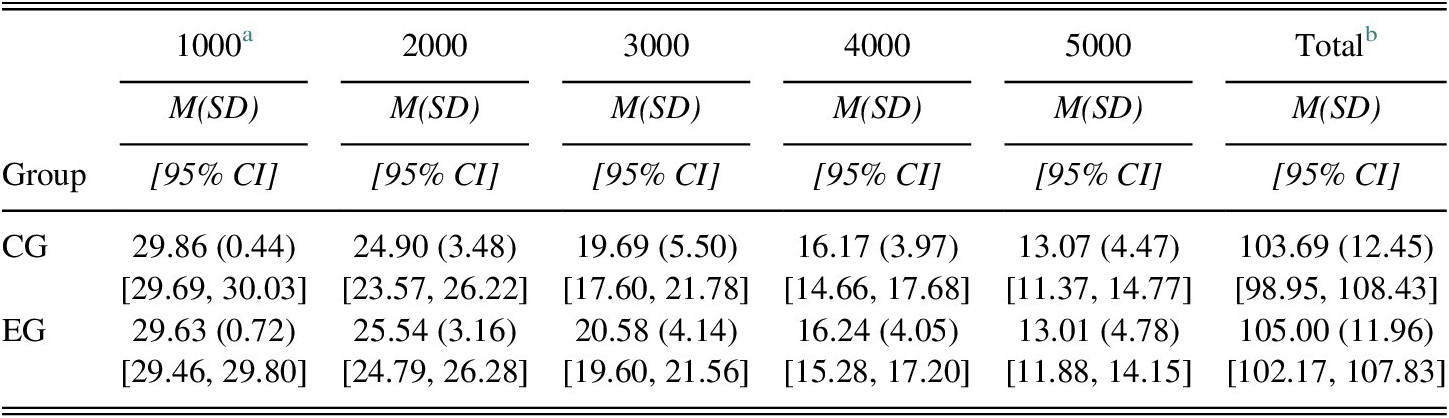
Initially, 150 Vietnamese EFL university students, aged 18, participated in the study. They came from different provinces in northern Vietnam and were majoring in different foreign languages (Korean, Chinese, Japanese, German). However, because some of the participants were absent in some sessions, their results were excluded from the analysis. As a result, only the data of 100 students (15 males, 85 females) were analyzed. The participants’ English proficiency was pre-intermediate (or B1 level according to the Common European Framework of Reference), as determined by a placement test at the university. The placement test, which lasted 75 minutes, was on listening comprehension, reading comprehension, grammar, and vocabulary. Because of the confidentiality of the test, the specific results of the participants were not provided. The participants were assigned to either a control group (i.e., no reading input, n = 29) or an experimental group (i.e., with reading input, n = 71). To evaluate their prior vocabulary knowledge, we administered the updated Vocabulary Levels Test (Webb et al., Reference Webb, Sasao and Ballance2017) (see Table 1). There was no statistically significant difference between the control group and the experimental group in terms of prior vocabulary knowledge; t(98) = .49, p = .62.
Descriptive statistics of the updated Vocabulary Levels Test

Note: CI = confidence interval; CG = control group; EG = experimental group.
a Max for each word level = 30.
b Max for all word levels = 150 (n = 100).
RESEARCH DESIGN
To investigate the effects of reading only, reading-while-listening, and reading with textual enhancement on the incidental learning of collocations, we adopted a longitudinal, counterbalanced, mixed design with input as a between-participants variable (input vs. no input) and reading modality as a within-participants variable (reading only, reading-while-listening, reading with textual enhancement). This means that all participants in the experimental group were exposed to all the three treatments under investigation. Such a design allows us to better control for individual variation (e.g., prior vocabulary knowledge) between the treatments. A pretest and a delayed posttest on the form recall of collocations were employed to measure learning gains. The sequence of the treatments and the items was counterbalanced to control for any order and recency effects. The control group was used to check for any learning that might have resulted from taking the tests or exposure to other sources (e.g., textbooks) outside the treatment sessions.
READING MATERIALS
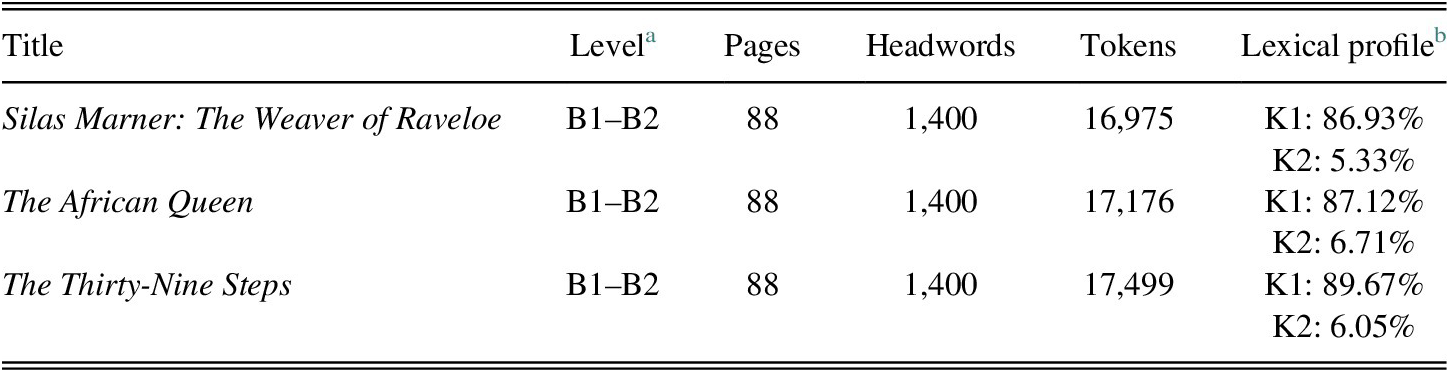
Graded readers, which are simplified texts for learners of foreign languages rather than texts created for research purposes, were selected to ensure the ecological validity of the study (see Table 2). The selected books were Silas Marner: The Weaver of Raveloe (#1), The African Queen (#2), and The Thirty-Nine Steps (#3), all of which were in the Oxford Bookworms Library series (level 4) published by Oxford University Press. Their selection was based on the participants’ English proficiency and vocabulary knowledge. According to the publisher, graded readers of level 4 with 1,400 headwords are aimed at learners of B1–B2 levels. Fiction books were chosen because they were assumed to be interesting to learners. Some pictures were included in the books, but they did not depict the target collocations and, therefore, were not removed. These graded readers were evaluated in terms of their suitability in a pilot study (n = 30) with learners of similar English proficiency before they were used in the actual study. Participants in the pilot study were asked to read all the three graded readers at their own pace and then report in informal follow-up interviews about the contents of the books as well as whether they enjoyed reading the books and had any difficulty with comprehending the books. They all reported no major difficulty and generally agreed that the books were enjoyable as well as appropriate for their English proficiency. In addition, the three books had a similar lexical profile (Table 2), indicating that the vocabulary of the books was appropriate for the learners.
Graded readers used in this study

Note: K1 = 1,000 most frequent word families; K2 = 2,000 most frequent word families.
a Level is according to the publisher.
b Lexical profile is computed with Lextutor (Cobb, Reference Cobbn.d.).
TARGET COLLOCATIONS
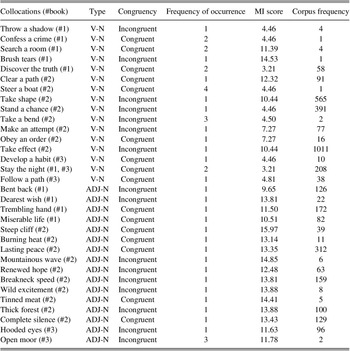
For the ecological validity of the study, real collocations taken from the graded readers were used as target items (see Table 3). All collocations had an MI score of 3 or higher, as suggested by Hunston (Reference Hunston2002). The target collocations were selected on the basis of a pilot study with learners of a similar English proficiency. Participants in the pilot study (n = 30) were given three tests on their knowledge of form recall, form recognition, and meaning recall of 80 collocations (40 verb-noun collocations and 40 adjective-noun collocations) found in the graded readers. The pilot showed that tests on form recognition and meaning recall were too easy for the participants, so we decided to only use a form recall test in the current study. The final selection consisted of 32 collocations (16 verb-noun collocations and 16 adjective-noun collocations) that were unknown at the form recall level to all participants. Most individual items in the target collocations belonged to the 2,000 most frequent word families in English, except the adjective “hooded” (in “hooded eyes”) and the noun “moor” (in “open moor”), which belonged to the 4,000 and 5,000 most frequent word families, respectively. We selected verb-noun and adjective-noun collocations to explore whether type of collocation could be a factor influencing their incidental learning. Except for seven collocations, the collocations occurred once in the graded readers (see Table 3). Because frequency of occurrence was different for the target collocations and previous research shows that it can influence the learning of collocations (e.g., Toomer & Elgort, Reference Toomer and Elgort2019; Webb et al., Reference Webb, Newton and Chang2013; Webb & Chang, Reference Webb and Chang2020), it was included as a variable in the analysis.
Target collocations

Note: V-N = verb-noun collocation; ADJ-N = adjective-noun collocation.
In addition, the target collocations included both congruent and incongruent collocations, which is ecologically valid as learners will encounter both types when reading texts. Congruency was determined by two experienced Vietnamese EFL teachers who were presented with a list of the Vietnamese equivalents of the component words of the target collocations and asked to translate those component words into English without being aware of the aims of the study. For example, “discover the truth” was considered a congruent collocation because the raters could translate the component words literally from Vietnamese into English, while “take effect” was rated as incongruent because its component words could not be translated literally from Vietnamese into English. Half the target collocations were congruent while the other half were incongruent. Because previous research indicates that congruency might affect collocation learning (Peters, Reference Peters2016), it was taken into account in the statistical analyses.
DATA COLLECTION INSTRUMENTS
Gains of collocations were measured in a form recall test in which the participants had to translate Vietnamese collocations into English with the first letters of each collocation provided as hints. We only measured form recall because the difficulty with collocations, which are usually semantically transparent due to their frequent component words, lies in their production (Laufer & Girsai, Reference Laufer and Girsai2008). L2 learners may not be able to distinguish collocations from grammatically constructed word combinations (Wray, Reference Wray2002), so they might not recognize a collocation in the input even if they know its component words. For example, the target collocation “make an attempt” should not be too difficult for learners to understand and translate into Vietnamese (i.e., meaning recall) if they already know the individual words “make” and “attempt.” It can, however, be more challenging to produce “make an attempt” as a collocation (i.e., form recall) because learners might not be aware that it is a collocation rather than a grammatically constructed word combination. The results from the pilot study also showed that form recognition and meaning recall tests were too easy for learners.
The test contained 32 target collocations and 20 distractors. The distractors were aimed to not draw too much attention to the target items and prevent the participants from intentionally memorizing them because the existence of distractors could reduce the possibility of learners remembering only the target items. According to Schmitt (Reference Schmitt2010), it is “useful to disguise the true targets of the research by adding ‘red herring’ distractor elements to the pretest” (pp. 177–178). The same form recall test was administered as a pretest and a delayed posttest, albeit with a different item order. Distractors were included in both the pretest and delayed posttest. Articles (a/an/the) were included in the hints because the focus was merely on the verb-noun and adjective-noun collocations.
Example of an item in the form recall test:
Translate the following verb-noun collocations into English
Tuân lệnh: o______________ an o___________
[Answer: obey an order]
PROCEDURE
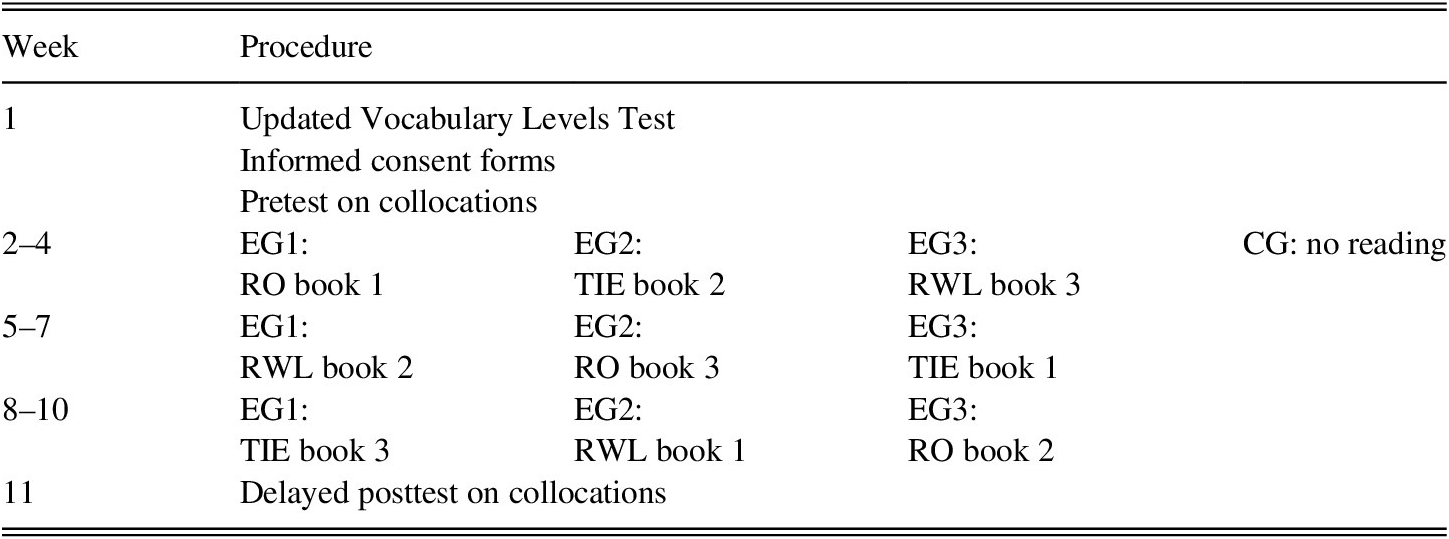
The experiment lasted for 11 weeks (see Table 4). In week 1, all participants completed the updated Vocabulary Levels Test (Webb et al., Reference Webb, Sasao and Ballance2017), the informed consent forms as well as the pretest on target collocations. From week 2 to week 10, the participants in the experimental group all read the selected graded readers at their own pace in one of the three reading modes (reading-only, reading-while-listening, and reading with textual input enhancement) in a counterbalanced fashion in weekly English classes. Depending on the group to which they were assigned, the participants engaged with the materials in the following order: reading only, reading-while-listening, reading with textual input enhancement (EG1), reading with textual input enhancement, reading-only, reading-while-listening (EG2), reading-while-listening, reading with textual input enhancement, and reading-only (EG3). They were instructed to focus on the content of the books and were not permitted to use mobile phones or dictionaries during the reading sessions. In each class, the participants read two to four chapters of the books depending on the length of the books. For reading-while-listening sessions, loudspeakers were used with the strict monitor of one of the researchers to guarantee that they all focused on both reading and listening simultaneously and they could not pause or replay the audio. Meanwhile, the participants in the control group had weekly English classes where they took lessons on English language skills (reading, writing, listening, and speaking) similar to the experimental group, but they only took the pretest and posttest without reading any graded readers. After 10 weeks, all participants took an unannounced delayed posttest.
Data collection procedure

Note: EG = experimental group; CG = control group; RO = reading-only; RWL = reading-while-listening; TIE = Reading with textual input enhancement (i.e., underlining).
SCORING AND ANALYSES
For the pretest and delayed posttest, 1 point was awarded for each correct response and 0 points for each incorrect one. The correct responses had to be the exact target collocations with correct word form and spelling. For example, only “tinned meat” would be considered correct while “tined meat” or “tin meat” would be marked as incorrect.
A generalized linear mixed-effects model was computed with items and participants as crossed random effects to evaluate the impact of the mode of reading on the incidental learning of collocations while mixed-effects logistic regression models (a type of generalized linear mixed-effects model; Breslow & Clatyon, Reference Breslow and Clayton1993) were used to determine the influence of learner- and item-related variables on the learning outcomes. Both of the analyses were performed in R software environment (version 4.0.1; R Core Team, 2020) with the glmer function (lme4 package, version 1.1.23; Bates et al., Reference Bates, Mächler, Bolker and Walker2015). Model assumptions (uniformity, dispersion, outliers) were met as checked through residual diagnostics with DHARMa package (Hartig, Reference Hartig2020; version 0.3.3.0). Multicollinearity among predictor variables was checked with vif function in the car package (Fox & Weisberg, Reference Fox and Weisberg2019). Marginal R 2, which indicates variance explained by fixed effects, and condition R 2, which indicates variance explained by fixed and random effects, were calculated with MuMIn package (version 1.43.17, Bartoń, Reference Bartoń2020) following Nakagawa and Schielzeth (Reference Nakagawa and Schielzeth2013). The emmeans function in the emmeans package (version 1.4.8; Lenth, Reference Lenth2018) was used to conduct pairwise comparisons among the treatment conditions.
For research question 1, to investigate the effect of reading mode on incidental collocation learning, we only included those items that were unknown in the pretest, that is, 162 observations were removed because they were correct responses in the pretest. The analyses were then conducted with the delayed posttest scores. In addition, we only analyzed data from the experimental group (n = 2174 observations) because the results of the control group (n = 864 observations) had near-zero variance, that is, there were almost no gains of collocations in the control group in the posttest compared with the pretest. A variable with near-zero variance should be removed from a model (Kuhn & Johnson, Reference Kuhn and Johnson2013).
For research question 2, we explored which learner- and item-related variables affect learners’ gains of collocations from reading modes. The item-related variables included congruency, frequency of occurrence, type of collocation, corpus frequency, and MI score, as findings about the effects of these factors on incidental collocation learning remain inconclusive (e.g., Pellicer-Sanchéz, Reference Pellicer-Sánchez2017; Puimège & Peters, Reference Puimège and Peters2019, Reference Puimège and Peters2020; Webb et al., Reference Webb, Newton and Chang2013; Webb & Chang, Reference Webb and Chang2020). Raw MI scores and corpus frequencies obtained from the Corpus of Contemporary American English (Davies, Reference Davies2008) were log transformed with base 10. The learner-related variable was the participants’ scores on the updated Vocabulary Levels Test. We centered the variable of Vocabulary Levels Test scores around the grand mean to reduce collinearity. We built the models following a three-step procedure following Sommet and Morselli (Reference Sommet and Morselli2017). To begin with, we ran empty models with random intercepts for target items and participants. The intraclass correlation coefficients (ICC) were .24 for target items and .027 for participants. This indicates that 24% of the odds of learning collocations were explained by differences between target items and 2.7% by differences between participants. To decide which random intercepts to be included in the model, empty models were compared using the ANOVA function in the lme4 package in R. The results revealed that adding the random intercept for participants contributed significantly to improving the model fit (
 $ \chi $
2(1) = 15.668, p < .001). Next, we ran models containing random intercepts for target items (= level one), participants (= level two), and all predictor variables. Finally, we adopted a backward elimination approach to remove parameters that did not significantly predict learning outcomes to obtain the main effects model. We also checked for confounding variables in the reduced models. If the removal of a variable in the reduced models resulted in a change of more than 20% in the coefficient of any other variables, that variable would be put back into the models (Hosmer et al., Reference Hosmer, Lemeshow and Sturdivant2013). To further understand the relationships among the variables, we added interaction terms between the significant variables to the main effects model. All models were fit using a maximum likelihood (Laplace Approximation) technique.
RESULTS
RESEARCH QUESTION 1: WHAT IS THE EFFECT OF READING MODE ON THE INCIDENTAL LEARNING OF COLLOCATIONS?
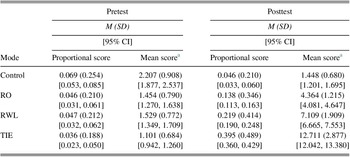
The descriptive statistics (mean, standard deviations, 95% confidence intervals) of learners’ collocational knowledge on the form recall pretest and posttest are reported in Table 5. As can be seen in Table 5, the posttest scores of the participants in the experimental group were higher than their pretest scores in all reading modes, which indicates that reading in any mode resulted in gains of collocations among learners. Gains were the highest in the reading with textual input enhancement mode, followed by the reading-while-listening mode. The control group did not improve their scores, which suggests that they did not learn the target items from taking the test or from weekly English lessons and any gains in the experimental group could be attributed to the reading treatment.
Descriptive statistics of the test results on form recall of collocations

a Max = 32.
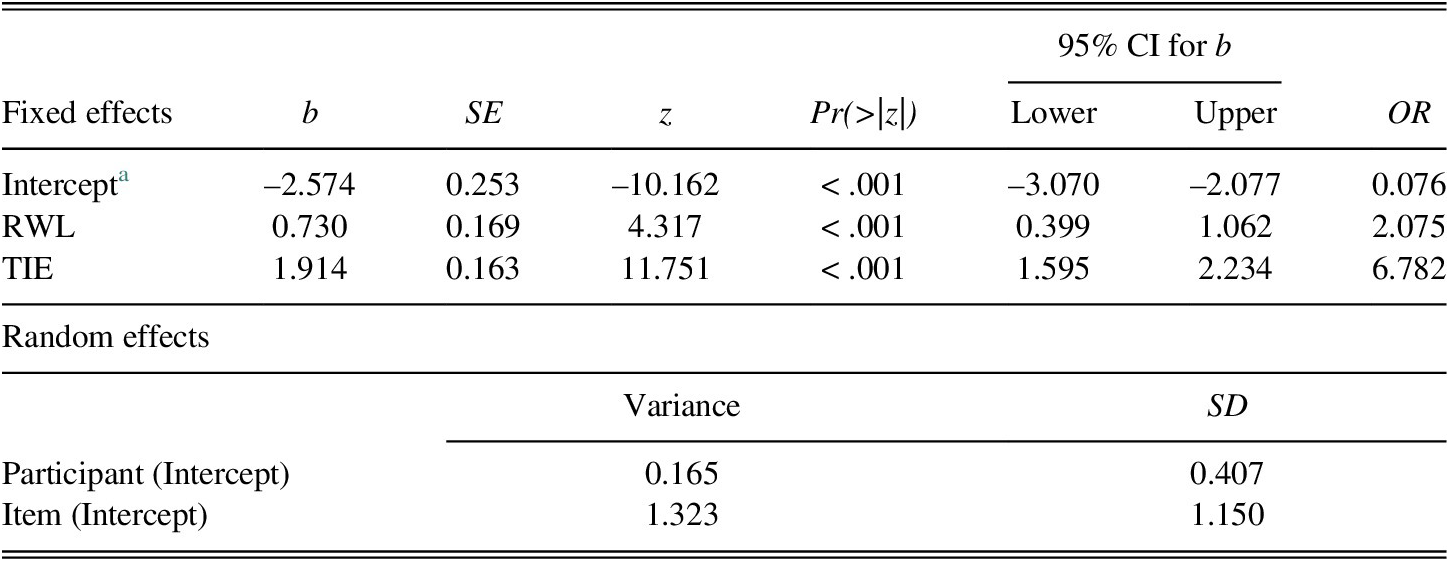
The generalized linear mixed-effects model (Table 6, R 2 marginal = .12, R 2 conditional = .39) revealed that reading mode had a significant effect on participants’ form recall of collocations. The odds of obtaining a correct answer in the reading-while-listening mode were two times the odds of obtaining a correct answer in the reading-only mode. The odds of obtaining a correct answer in the reading with textual input enhancement mode were almost seven times the odds of obtaining a correct answer in the reading-only mode.
Results of generalized linear mixed-effects model for form recall test

Note: OR = odds ratio.
a Intercept = reading-only (RO).
Pairwise comparisons of the reading modes with Tukey adjustment applied p < .05 (see Table 7) further revealed that the gains of collocations in the reading with textual input enhancement mode were significantly higher than those in the reading-while-listening (p < .001) and reading-only (p < .001) modes. In addition, the reading-while-listening mode resulted in significantly higher gains of collocations than the reading-only mode (p < .001).
Pairwise comparisons of different reading modes with Tukey correction p < .05

RESEARCH QUESTION 2: TO WHAT EXTENT DO LEARNER- AND ITEM-RELATED VARIABLES AFFECT THE LEARNING GAINS?
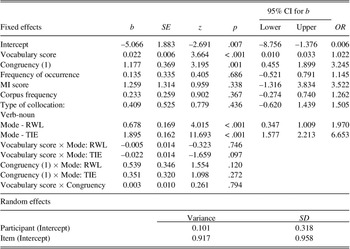
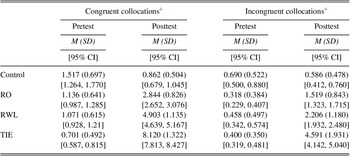
To understand the variables that could contribute to the incidental acquisition of collocations from the reading modes, we built mixed-effects logistic regression models (see Table 8; R 2 marginal = .20, R 2 conditional = .39). The results revealed that only the participants’ scores on the Vocabulary Levels Test and the congruency of collocations were significant predictors of incidental collocation learning. Participants with higher scores on the Vocabulary Levels Test had a slightly better chance of learning the form of collocations, with the odds of a correct response increasing by 2.2% when a participant’s score on the Vocabulary Levels Test increased by 1 unit. Further, congruent collocations were about three times more likely to be picked up than incongruent collocations (see Table 9 for the pretest and delayed posttest scores for congruent and incongruent collocations). The interactions between Vocabulary Levels Test score, congruency, and reading modes were not statistically significant, which indicates that the relationship between the mode of reading and incidental collocation learning did not depend on the learners’ prior vocabulary knowledge and the congruency of collocations.
Mixed-effects logistic regression model for form recall of target collocations

Note: Intercept levels: Congruency = incongruent collocations; type of collocation = adjective-noun collocation; mode = reading-only.
Descriptive statistics for the pretest and delayed posttest scores of congruent and incongruent collocations

a Max = 16.
DISCUSSION
This study makes several theoretical and pedagogical contributions on the incidental learning of collocations. Theoretically, it is the first longitudinal study that directly compares the effects of three reading modes: reading-only, reading-while-listening, and reading with textual input enhancement on the incidental acquisition of collocations. The results showed that reading with textual input enhancement resulted in the highest gains of collocations, followed by reading-while-listening. In addition, the study extends previous findings that have shown that learners with a larger vocabulary size tend to pick up more new collocations and that congruency affects incidental collocation learning from reading. Pedagogically, the findings on the effects of reading mode and learner- and item-related factors can offer useful implications for adopting extensive reading to expand learners’ collocational knowledge in EFL contexts and beyond.
WHAT IS THE EFFECT OF READING MODE ON THE INCIDENTAL LEARNING OF COLLOCATIONS?
Our study shows that all three reading modes resulted in significant gains of form recall of collocations, which suggests that extensive reading in any mode can be a potential source to improve L2 learners’ collocational knowledge.
The positive effect of reading-only on incidental collocation learning is in line with previous research (e.g., Pellicer-Sánchez, Reference Pellicer-Sánchez2017; Vilkaitė, Reference Vilkaitė2017), which indicates that learners can incidentally pick up collocations when reading-only. Even though the target collocations in this study had low frequencies and the form recall test could have been demanding, most of the constituent words of the selected collocations were 2,000 most frequent word families that might have been familiar to those learners mastering the 2000 word level. Knowledge of component words of collocations can facilitate collocation learning (Webb et al., Reference Webb, Newton and Chang2013). In addition, through reading-only learners had a chance to see the form of the target collocations in the texts, which could help them recognize and memorize them. Learning formulaic sequences is an incremental process (e.g., Puimège & Peters, Reference Puimège and Peters2020), so learners can develop their knowledge of collocations gradually if they are exposed to and recognize those collocations in L2 input. Nevertheless, our results differ from Szudarski (Reference Szudarski2012) and Szudarski and Carter (Reference Szudarski and Carter2016) who found no effect of reading-only, which might be explained by the type of target items used (infrequent collocations containing delexical verbs compared to our collocations mostly consisting of high-frequency words).
Reading-while-listening led to significantly more gains of collocations than reading-only, which corroborates Webb and Chang (Reference Webb and Chang2020). Seeing and hearing the items simultaneously in reading-while-listening mode could have left a stronger memory trace on learners than only seeing them in reading-only mode (e.g., Bird & Williams, Reference Bird and Williams2002). Another explanation might be that the recording could have helped learners segment the texts into larger meaningful chunks (Conklin et al., Reference Conklin, Alotaibi, Pellicer-Sánchez and Vilkaitė-Lozdienė2020). While the auditory input in the reading-while-listening mode might contain prosodic cues of collocations (Lin, Reference Lin2012) to help learners recognize the form of collocations and can help learners process the texts as chunks, the written input allows learners to see the collocations, which can help address the issue of phonological reduction of the collocations (Bybee, Reference Bybee2002) in the auditory input. For that reason, reading-while-listening can be more effective for incidental collocation learning than reading-only.
The superior effect of reading with textual input enhancement on incidental collocation learning compared with reading-only is consistent with previous studies (e.g., Choi, Reference Choi2017; Sonbul & Schmitt, Reference Sonbul and Schmitt2013; Szudarski & Carter, Reference Szudarski and Carter2016; Toomer & Elgort, Reference Toomer and Elgort2019). We assume that the textual input enhancement might have made the items in the texts more salient and drawn learners’ attention to the target collocations (e.g., Choi, Reference Choi2017). L2 learners generally may not always be able to recognize collocations or formulaic sequences in texts (Wray, Reference Wray2002). Therefore, the textual input enhancement might have helped learners notice the form of the target collocations in the texts more easily, which is crucial for their acquisition (Schmidt, Reference Schmidt1990). Besides, because the textual input enhancement might have attracted learners’ attention to the target collocations, it might have fostered deeper mental processing of those collocations and subsequently facilitated their memorization (Craik & Lockhart Reference Craik and Lockhart1972; Craik & Tulving Reference Craik and Tulving1975). For those reasons, reading with textual input enhancement can result in more gains of collocations than reading-only. This study also provides initial evidence for the advantage of reading with textual input enhancement over not only reading-only but also reading-while-listening, which is a novel contribution to the existing literature on incidental collocation learning from reading. However, there could be a possibility that although learners under the textual input enhancement condition might have done better in terms of learning the target collocations, they might have learned fewer of the nontarget vocabulary items incidentally as their attention was directed to the underlined collocations. In addition, text comprehension might have suffered from textual input enhancement. Lee (Reference Lee2007) found that learners who read enhanced texts recall significantly less information from the texts than those who read unenhanced texts, probably due to the allocation of additional cognitive resources to enhanced target items (Choi, Reference Choi2017).
TO WHAT EXTENT DO LEARNER- AND ITEM-RELATED VARIABLES AFFECT THE LEARNING GAINS?
Our findings are in line with previous studies that have shown that learner’s prior vocabulary knowledge is a significant predictor of the incidental learning of collocations (Puimège & Peters, Reference Puimège and Peters2019, Reference Puimège and Peters2020; Vilkaitė, Reference Vilkaitė2017), pointing to a Matthew effect (Stanovich, Reference Stanovich1986). Similar to Webb and Chang (Reference Webb and Chang2015a), we assume that the more words a learner knows, the higher lexical coverage of a text they have, the better they can process and comprehend the text, and also the more attentional resources they can devote to processing and acquiring new lexical items. According to the theory of automaticity in information processing (LaBerge & Samuels, Reference LaBerge and Samuels1974), meanings of known words and word groups are automatically activated during reading, so attentional resources can focus on extracting the overall meaning or other activities. Also, a larger vocabulary knowledge might have enabled learners to guess the meanings of unknown items from context more successfully (Liu & Nation, Reference Liu and Nation1985).
As for item-related factors, this study showed that congruency of collocations was a significant predictor of learning gains, which corroborates research into intentional collocation learning (Peters, Reference Peters2016). We hypothesize that L2 learners could recognize the form of congruent collocations in the texts based on the available L1 equivalents of their component words, which could subsequently help them recall those collocations successfully because previous research indicates that recognition knowledge is generally acquired before recall knowledge (González-Fernández & Schmitt, Reference González-Fernández and Schmitt2020). Meanwhile, incongruent collocations do not have L1 equivalents of component words, which could make it more difficult for learners to understand and memorize those collocations. According to Wolter and Gyllstad (Reference Wolter and Gyllstad2011), L2 learners may have little difficulty replacing L1 words with equivalent L2 words in congruent collocations while they might not easily do so for incongruent collocations due to a lack of L1 equivalents. For that reason, congruent collocations could have been better recognized and subsequently recalled from reading than incongruent collocations. It is important to emphasize that while there were larger gains for the congruent collocations, learning still happened for the incongruent items, though to a lesser extent, which is in line with research on the deliberate learning of collocations (Peters, Reference Peters2016). This indicates that the incidental learning gains of collocations reported in the present study resulted from the reading treatment and were not merely a function of the test format (i.e., translation from Vietnamese into English) and collocational congruency.
Interestingly, frequency of occurrence was not a predictor of the incidental learning of the form recall of collocations, which corroborates Pellicer-Sanchéz (Reference Pellicer-Sánchez2017) but differs from Webb et al. (Reference Webb, Newton and Chang2013) and Webb and Chang (Reference Webb and Chang2020). Frequency of exposure seems not to be the only factor driving incidental collocation learning and might be determined by other factors (Pellicer-Sanchéz, Reference Pellicer-Sánchez2017; Szudarski & Carter, Reference Szudarski and Carter2016), which also holds for incidental learning of single words (Uchihara et al., Reference Uchihara, Webb and Yanagisawa2019). It might also be the case that the range of frequency of the target collocations in this study was not wide enough to detect a significant effect. While the target collocations in Webb et al. (Reference Webb, Newton and Chang2013) had from 1 to 15 repetitions and those in Webb and Chang (Reference Webb and Chang2020) had from 1 to 16 encounters, the frequency of occurrence of the target collocations in the present study only ranged from 1 to 4. A larger frequency of occurrence might lead to larger gains (e.g., Webb & Chang, Reference Webb and Chang2015a, Reference Webb and Chang2015b). Also, the target collocations occurred in three books read over 9 weeks and learners took a delayed posttest 1 week after reading all three books. Such an experimental design might have diluted the effect of frequency of occurrence (e.g., Rodgers & Webb, Reference Rodgers and Webb2020), as intensive reading has been found to result in more vocabulary gains than spaced reading (e.g., Serrano & Huang, Reference Serrano and Huang2021).
Finally, no significant effect was found for MI score, corpus frequency, and type of collocation, which differs from Puimège and Peters (Reference Puimège and Peters2019, Reference Puimège and Peters2020). This difference might have resulted from the type of input (reading vs. viewing television), the nature of the intervention (one-off vs. longitudinal), or type of items (different types of formulaic sequences vs. collocations). However, our finding that type of collocation was not a significant predictor of their learning gains supports Nguyen and Webb’s (Reference Nguyen and Webb2017) study on collocational knowledge, which also involved Vietnamese EFL learners. Further research is required to confirm whether these factors might play a role in the incidental learning of collocations from different reading modes.
LIMITATIONS AND SUGGESTIONS FOR FUTURE RESEARCH
This study has several limitations that could lead to future studies. First, while the use of authentic collocations consisting of mostly high-frequency words from the reading materials might ensure the ecological validity, it might limit the generalizability of the study. The results might not be applicable for other kinds of collocations, such as collocations with all delexical verbs or infrequent words (as in Szudarski, Reference Szudarski2012; Szudarski & Carter, Reference Szudarski and Carter2016). Second, this study only assessed the gains of collocations at the level of form recall and did not address other aspects of collocational knowledge. Although such a design helps avoid additional exposure and drawing learners’ attention to the target collocations, it is unknown whether the incidental learning of other aspects of collocational knowledge, such as form recognition or meaning recall, can occur or differs in different reading modes, which leaves room for further research. Also, for some of the collocations, there was a lengthy delay between the treatment and testing, which might have affected their possibility of being recalled. However, our findings showed that learners significantly improved their knowledge of collocations after the treatment, which is promising. Also, we did not formally evaluate learners’ reading comprehension through tests. Future studies could consider investigating the effects of different reading modes on learners’ reading comprehension and the relationship between reading comprehension with incidental collocation learning.
CONCLUSION
This article reports on a longitudinal study that investigated the effects of reading-only, reading-while-listening, and reading with textual input enhancement (i.e., underlining) on the incidental learning of collocations among Vietnamese EFL learners. The experiment showed that all three reading modes resulted in significant gains of collocations. The most learning gains were obtained in the reading with textual input enhancement mode, followed by reading-while-listening. The study corroborates previous findings that collocations can be learned incidentally from exposure to meaningful input, indicating extensive reading as a potential source for L2 learners to improve their collocational knowledge. In addition, the findings revealed that prior vocabulary knowledge and congruency of collocations were significant predictors of the learning gains.