Introduction
Dementia, a syndrome caused by diseases of the brain, is characterized by a progressive loss of cognitive function and can affect emotions, behavior, and motivation (World Health Organisation, 2012). Globally, the prevalence of dementia is increasing. In 2013, it was estimated that 44.35 million people were living with dementia rising to 75.62 million by 2030 (Alzheimer's Disease International, 2013). Worldwide, care provided by unpaid family and friends (often known as informal care) is an essential component of overall care provision (Alzheimer's Disease International, 2009) and therefore the needs of carers, not just people with dementia, also require consideration.
The prevalence of dementia increases with age and is seen more frequently in older than younger adults (Davies et al., Reference Davies, Doran and Larner2011). Dementia diagnosed in people under the age of 65 years is variously known as EOD (Johannessen and Moller, Reference Johannessen and Moller2011), YOD (Rosser et al., Reference Rossor, Fox, Mummery, Schott and Warren2010), and working age dementia (Rudman et al., Reference Rudman, Oyebode, Jones and Bentham2011). Confusion over terminology is acknowledged in the literature but recently the term YOD has grown in popularity (Koopmans and Rosness, Reference Koopmans and Rosness2014) and will therefore be adopted here.
The prevalence of YOD is difficult to determine because some studies rely on registry based statistics but it is thought to affect about 156 people out of every 100,000 in the 60–64 age group (World Health Organisation, 2012). However, underestimation is probable, as many people do not present early for help (Jeffries and Agrawal, Reference Jefferies and Agrawal2009; Prince et al., Reference Prince2014).
Dementia is unexpected in younger people, adding to the challenges of diagnosing this disorder. The breadth of differential diagnosis, the presentation of neuro-psychiatric symptoms, and the potential clinical differences between young onset and late onset dementia add complexity (Mendez, Reference Mendez2006; Rosser et al., Reference Rossor, Fox, Mummery, Schott and Warren2010; Armari et al., Reference Armari, Jarmolowi and Panegyres2012). Although there is some debate in the literature about the differences between young onset and late onset dementia (Davies et al., Reference Davies, Doran and Larner2011; Panegyres and Chen, Reference Panegyres and Chen2013) some authors suggest that the decline may be more rapid with YOD, highlighting the importance of earlier diagnosis and intervention (Panegyres and Chen, Reference Panegyres and Chen2013). Misdiagnosis is not uncommon and can result in further delays before diagnosis (Mendez, Reference Mendez2006). This, in turn, can have psychosocial consequences for both people with YOD and their carers (Johannessen and Moller, Reference Johannessen and Moller2011; Ducharme et al., Reference Ducharme, Kergoat, Antoine, Pasquier and Coulombe2013; Lockeridge and Simpson, Reference Lockeridge and Simpson2013; Cabote et al., Reference Cabote, Bramble and McCann2015).
Alzheimer's disease, vascular dementia, and frontal lobe/frontotemporal dementia (FTD) are the most common types of dementia found in people with YOD (Viera et al., Reference Veira, Caixeta, Machado, Silva and Nardi2013). FTD is more common in younger than in older people (Davies et al., Reference Davies, Doran and Larner2011) and involves changes in personality, behavior disturbance, reduced empathy, and motivation (Jeffries and Agrawal, Reference Jefferies and Agrawal2009). Such symptoms, which frequently present early in the disease, can cause considerable concern and distress to families and are a major source of difficulty for carers (Ducharne et al., Reference Ducharme, Kergoat, Antoine, Pasquier and Coulombe2013) and can often trigger help seeking.
Spouses and children of people with YOD experience many emotional and psychological challenges pre and post diagnosis. Issues of grief and loss are paramount in both (Cabote et al., Reference Cabote, Bramble and McCann2015). The whole family may experience a gradual loss of social contact as they deal with the stigma of a dementia diagnosis (Clemerson et al., 2013; Lockeridge and Simpson, Reference Lockeridge and Simpson2013; Hutchinson et al., Reference Hutchinson, Roberts, Kurrle and Daly2014). The children of people with YOD may still be of school age or be young adults and the difficulties they face are often different to those of people with older onset dementia. Hutchinson et al. (Reference Hutchinson, Roberts, Kurrle and Daly2014) explored the experiences of children (aged between 8 and 24 years) with a parent with YOD. They found they had to grapple with many issues including trying to protect and preserve their parent's dignity, coming to terms with their parents being unable to function fully in the parental role and loss of future relationships. This disruptive experience can be aligned to that of “biographical disruption” that was first acknowledged by Bury (Reference Bury1982) in people living with chronic illness and a recognized experience of carers of people with later onset dementia (Zimmerman, Reference Zimmerman2013). It may well be even more pertinent for younger family members supporting someone with YOD. All these experiences are difficult for anyone but even more challenging for children and young adults.
Furthermore, the often long duration of caregiving, coupled with the lack of specialist support services may add to their psychological distress (Arai et al., Reference Arai, Matsumoto, Ikeda and Arai2007).
The behavioral and psychological symptoms in people with YOD may lead to reduced job performance and it may mean the person is placed on sick leave, reassigned roles, resigns, or in some cases has their employment terminated (Johannessen and Moller, Reference Johannessen and Moller2011; Roach and Drummond, Reference Roach and Drummond2014). This sudden departure from employment can have wide reaching social consequences, for example, strained marital and family relationships, increased financial pressures, poor self-esteem, and reduced sense of purpose, leading to an undermining of personhood (Roach and Drummond, Reference Roach and Drummond2014). Added to the disruption of the life cycle, loss of dignity and a sense of adult competency, these challenges of YOD are all arguably less obvious facets of the condition (Johanneseen and Moller, Reference Johannessen and Moller2011; Pipon-Young et al., Reference Pipon-Young, Lee, Jones and Guss2011; Clemerson et al., 2013). Their less obvious nature may add to their difficulties of coping with dementia.
This diverse range of behavioral and psychological needs of people with YOD and their families is complex and support often requires input from a range of professionals (Jeffries and Agarwi, Reference Jefferies and Agrawal2009). A variety of support programmes for both people with YOD and their carers have been developed including psychosocial interventions such as educational packages, support groups, and counseling (Beattie et al., Reference Beattie, Daker-White, Gilliard and Means2004; Goldberg, Reference Goldberg2011; Pipon-Young et al., Reference Pipon-Young, Lee, Jones and Guss2011). Despite the international recognition that those with YOD and their carers have some differences in experiences compared to people with late onset dementia, there is still no universally accepted model of provision aimed at supporting those with YOD and their carers (Jeffries and Agrawal, Reference Jefferies and Agrawal2009; Chaston, Reference Chaston2011; Gibson et al., Reference Gibson, Anderson and Acocks2014). Frequently, services center around diagnosis irrespective of age and specialist provision is lacking, often age insensitive and mainly focused on older adults (Roach et al., Reference Roach, Keady and Bee2012). Furthermore, evidence suggests that people with YOD and their families have additional practical concerns, including wanting assistance with transportation, volunteer opportunities, supported employment, social activities, and help for families especially those with young children (Alzheimer's Association, 2006).
The National Institute for Clinical Excellence (NICE) and Social Care Institute of Excellence (SCIE) reviewed the efficacy and economic benefits of pharmacological and psychosocial interventions for people with dementia and their carers. They recommended cognitive stimulation approaches for people with dementia and Cognitive Behavior Therapy (CBT) based approaches in the treatment of depression in people with dementia and also highlighted the benefits of support groups to reduce the emotional impact of diagnosis. The report also suggested there was evidence that carer support groups, educational interventions and CBT could benefit carers (National Collaborating Centre for Mental Health, 2007).
More recently, a review by Van Mierlo et al. (Reference Van Mierlo, Meiland, Van Der Roest and Dröes2012) examined the effectiveness of psychosocial interventions for carers of people with dementia. They identified various demographic groups of carers (for example in terms of gender, relationship, characteristics of the person with dementia) and reported positive outcomes for some of these groups. Another review (Brodaty and Arasaratnam, Reference Brodaty and Arasaratnam2012) used meta-analysis of non-pharmacological interventions for neuropsychiatric symptoms of dementia. They also concluded that carer interventions could significantly reduce these symptoms, in addition to reducing the negative reactions often experienced by carers. However, neither study examined YOD specifically and did not provide evidence for the impact of these interventions on people with YOD and their carers. Although some of the available evidence shows that the experiences of people with dementia are similar irrespective of age, equally there is evidence that some challenges faced by them can be different. For this reason, it is important to review the literature for the impact of psychosocial interventions specifically for people with YOD, their carers and families.
Methods
Aim
This systematic review aimed to identify and synthesize the published literature relating to psychosocial interventions specifically for people with YOD and their carers.
The research questions were:
-
1. What psychosocial interventions are effective/not effective for people with YOD and who benefits most?
-
2. Are psychosocial interventions effective in improving outcomes such as cognitive ability, functional performance, self-esteem, memory, communication, quality of life, well-being, and progression of dementia?
-
3. How effective are these interventions in supporting carers of people with YOD in terms of reducing, for example, burden, stress and anxiety, supporting caregiving, and promoting carers’ quality of life and well-being?
The review followed PRISMA guidelines (Moher et al., Reference Moher, Liberati, Tetzlaff and Altman2009). The systematic review protocol was registered with PROSPERO (International database of prospectively registered systematic reviews in health and social care) PROSPERO 2015: CRD42015016056 [Greenwood et al., Reference Greenwood2015].
Search strategy
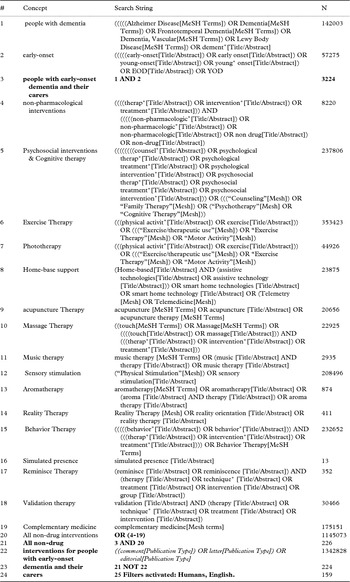
The search strategy included a systematic search of electronic databases, supplemented by hand searching relevant journals and reference checking of key publications. A MEDLINE search strategy was developed without time limitations with only articles published in English language. This was adjusted to run on seven other databases (EMBASE, The Cochrane Library, PsycINFO, CINAHL, Applied Social Sciences Index and Abstracts (ASSIA), Healthcare Management Information Consortium (HMIC) and Social Care On-line). For an example of the search strategy (Medline) see Appendix 1. Additional articles were obtained from reference lists of included studies and key publications and from hand searching the previous five years’ publications of three journals (Aging & Mental Health; Dementia: The International Journal of Social Research and Practice; and International Journal of Geriatric Psychiatry). These journals were selected because they include many papers on YOD.
Inclusion/exclusion criteria
In this review, the term “carers” (also known as caregivers) refers to anyone (often spouse, partner or adult child) “. . . who cares, unpaid, for a friend or family member who due to illness, disability, a mental health problem or an addiction cannot cope without their support.” (Carers Trust, 2015).
YOD refers to dementia that occurs before the age of 65 years (Jefferies and Agrawal, Reference Jefferies and Agrawal2009). “Psychosocial interventions” refer to interventions involving interaction between people to improve psychological and/ or social functioning (Vernooij-Dassen and Moniz-Cook, Reference Vernooij-Dassena and Moniz-Cook2014).
Research articles were included if they:
-
(a) focused on people with YOD and/or their carers (i.e. the population of interest); (b) evaluated the outcomes of psychosocial interventions; and (c) reported the results of peer-reviewed research based either on quantitative studies, qualitative studies, or mixed methods studies.
Articles were excluded if they:
-
(a) did not meet the inclusion criteria (e.g. the population of interest); if (b) they did not report empirical findings; or (c) were not written in English.
Full details of the search strategy can be found in Appendix 1.
Data extraction and quality appraisal
The screening process was conducted in three stages: duplicate removal; screening titles/abstracts; and full text screening. Two reviewers from the review team independently screened all titles and abstracts; any discrepancy was resolved by a third reviewer. Finally, full-paper articles of any relevant titles/abstracts were obtained and reviewed independently by two reviewers with reasons for exclusion annotated and tracked. Again, any discrepancy was resolved by a third reviewer. For each included study, two reviewers independently extracted the following data:
-
a. General information about the intervention under investigation, the study population, study characteristics (e.g. study design, location, and year)
-
b. Results information, (e.g. the main findings and outcomes).
-
c. The quality of included papers was evaluated using a quality checklist suitable for both quantitative and qualitative studies (Kmet et al., Reference Kmet, Lee and Cook2004). This was undertaken independently by two members of the review team, with disagreements resolved through discussion until consensus was reached.
Strategy for data synthesis
We conducted a narrative synthesis to integrate findings from all included studies (quantitative, qualitative, and mixed methods).
Results
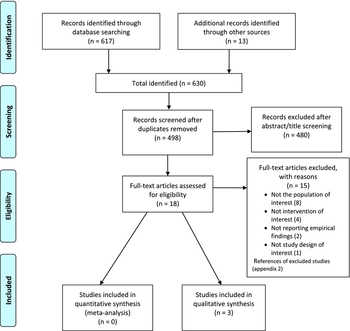
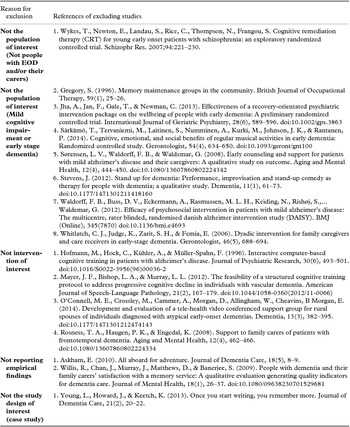
After duplicate removal, the initial search identified 498 records (Figure 1). Of these, 480 records were not eligible based on the title or abstract, and 15 were eliminated based on the full-text scrutiny. Appendix 2 provides a list of citations for the excluded studies in the final stage of the selection process. The search strategy was updated in July 2015 but no additional studies were identified. Thus, the final sample included three studies (Kenney et al., Reference Kinney, Carry and Reddecliffe2011; Hewitt et al., Reference Hewitt, Watts, Hussey, Power and Williams2013; Robertson et al., Reference Robertson, Evans and Horsnell2013).
Flow chart showing number of articles selected for systematic review.

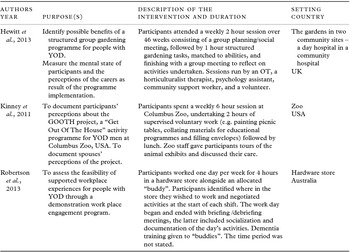
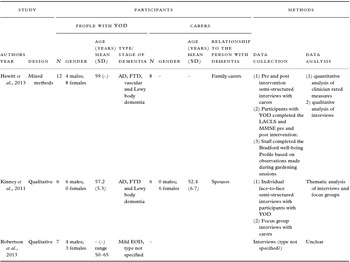
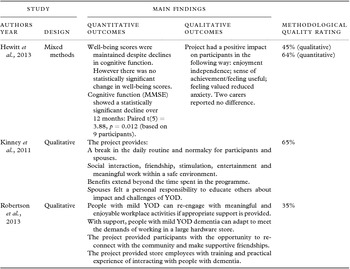
A summary of each included study is presented below in three subsections: (1) methodological quality, (2) intervention characteristics, and (3) effectiveness of the psychosocial interventions. The main intervention and evaluation characteristics are reported in Table 1 and the relevant features of included studies (participant characteristics, data collection, and analysis methods) are provided in Table 2. Details of the main findings of each paper are summarized in Table 3.
Aims, intervention characteristics, and settings

Note. UK = United Kingdom; USA = United States of America; OT = Occupational Therapist.
Summary of methodological features

Note. AD = Alzheimer's disease; FTD = Front temporal dementia; LASCL = Large Allen Cognitive Levels Screening Examination; MMSE = Mini-Mental State Examination; N = Total number; SD = Standard deviation.
Main findings

Note. MMSE = Mini-Mental State Examination.
All three studies were work-based and took place in the West (USA, Australia, and UK). The combined sample of the three studies was 25 individuals (14 men and 11 women) with YOD (ranging from 6 to 12 participants per study). Two studies included men and women with YOD as intervention participants (Hewitt et al., Reference Hewitt, Watts, Hussey, Power and Williams2013; Robertson et al., Reference Robertson, Evans and Horsnell2013) whilst Kenney et al. (Reference Kinney, Carry and Reddecliffe2011) included only white males. None of the studies focused on investigating the impact of the intervention on carers. Neither Robertson et al. (Reference Robertson, Evans and Horsnell2013) nor Hewitt et al. (Reference Hewitt, Watts, Hussey, Power and Williams2013) provided details of carer characteristics or of the ethnicity of participants with YOD.
Methodological quality
Although similar, the dimensions rated for the qualitative and quantitative studies during quality appraisal were mostly different to reflect their different methodological approaches. For example, dimensions for both types of study include assessment of whether the research question/objective was sufficiently described and whether the conclusions were supported by the results. Unlike the quantitative assessment, the qualitative assessment also included evaluation of whether the context of the study was clear and if there was evidence of reflexivity in the account. Only the assessment of the quantitative study includes evaluation of whether the sample size was appropriate and whether the analysis method was appropriate. The studies were of variable methodological quality, receiving between approximately one and two-thirds of the possible marks (Table 3). Looking at the quality of the qualitative elements of the studies first: Kinney et al. (Reference Kinney, Carry and Reddecliffe2011) received two thirds (65%), Hewitt et al. (Reference Hewitt, Watts, Hussey, Power and Williams2013) received less than half (45%) and Robertson et al. (Reference Robertson, Evans and Horsnell2013) only received approximately a third (35%) of the possible marks. Although the research question was clearly described in all studies, particularly with Hewitt et al. (Reference Hewitt, Watts, Hussey, Power and Williams2013) and Robertson et al. (Reference Robertson, Evans and Horsnell2013) information about, for example, study methods and context was often lacking. None considered researcher reflexivity. Only Hewitt et al. (Reference Hewitt, Watts, Hussey, Power and Williams2013) used quantitative methods. Although the study scored more highly for the quantitative (64%) than the qualitative element, the score reflects insufficient information about sampling and lack of control for possible confounders.
Intervention characteristics
The included studies addressed cognitive/emotion-oriented interventions. No behavioral interventions were selected. All three interventions were age-relevant, work-focused activities designed for individuals with YOD. In each case, social activities were built into the structure of the work day and participants were supported by either workplace buddies (Kenney et al., Reference Kinney, Carry and Reddecliffe2011; Robertson et al., Reference Robertson, Evans and Horsnell2013) or therapists (Hewitt et al., Reference Hewitt, Watts, Hussey, Power and Williams2013):
-
1. The “Get Out of the House” project (Kenney et al., Reference Kinney, Carry and Reddecliffe2011) offered participants supervised manual/practical work within a local zoo. Participants were collected from their homes by communal transport. At the zoo, they assisted with simple administrative or manual tasks such as filling envelopes or painting picnic tables. Lunch and a behind the scene visit to the animals featured as part of each day.
-
2. The group gardening project provided weekly structured gardening activities (Hewitt et al., Reference Hewitt, Watts, Hussey, Power and Williams2013). Sessions commenced with group meetings used for planning and socializing followed by one hour of structured gardening tasks allocated according to individual abilities. Examples cited included one-step tasks such as sweeping leaves or more complex activities such as digging and planting out bulbs. The Pool Activity Level tool for occupational profiling (Pool, 2011) and the Large Allen Cognitive Level Screen (Allen et al., 2007) were used to identify suitable activities for each participant. The sessions concluded with a group meeting to discuss progress and promote group belonging. The day's activities were documented with writing and photographs in a communication book which participants took home.
-
3. The Side-By-Side project (Robertson et al., Reference Robertson, Evans and Horsnell2013) provided participants with supported, negotiated work duties within a hardware store. The day consisted of a preparatory session (briefing, safety checks, and coffee), a four hour shift of negotiated work duties alongside an allocated work “buddy”. The day ended with group activities which included a debriefing, recording the day's events and socializing. Participants wore uniforms to promote group identity.
In all three studies, the numbers of participants were small (6–12 participants) reflecting the resource intensive nature of the interventions; all three interventions were provided on a once-per-week basis. The duration of the intervention was reported by only one study (Hewitt et al., Reference Hewitt, Watts, Hussey, Power and Williams2013).
Summary of main findings
All three papers presented both participants’ and carers’ perspectives on the impact and value of the projects. Cross-comparison of interview findings collected from participants with YOD indicated that the workplace/occupational interventions gave identity and a sense of purpose to them. Participants reported enhanced self-esteem, a sense of value, purpose, self-worth, and social inclusion. They described how the activities made them feel important, useful and appreciated. Two studies (Kinney et al., Reference Kinney, Carry and Reddecliffe2011; Robertson et al., Reference Robertson, Evans and Horsnell2013) identified the work-based interventions as a means through which participants were able to reconnect with the community and form friendships. Hewitt et al. (Reference Hewitt, Watts, Hussey, Power and Williams2013) measured participant well-being scores and these scores were maintained despite a decline in cognitive functioning (see Table 3).
None of the included studies assessed the impact of the projects on carers. Interviews with carers generated information on the feasibility of the interventions, practical aspects, and anecdotal comments on the value of the interventions (Kinney et al., Reference Kinney, Carry and Reddecliffe2011; Robertson et al., Reference Robertson, Evans and Horsnell2013), although in most cases these were not evaluated. The safe, supervised activity offered through the projects provided a valued weekly break for carers (Kinney et al., Reference Kinney, Carry and Reddecliffe2011; Robertson et al., Reference Robertson, Evans and Horsnell2013). They considered the projects to provide useful, enjoyable and meaningful age-specific work which met the participants’ needs, unlike other provision which tended to be geared towards older age groups.
In all three studies carers reported benefits for the participants, which extended beyond the hours spent participating in the intervention, for example enhanced sleep, mood, and orientation. The activities and the various means used to document them, provided a focus for family communication and a valued means for enhancing communication in situations where this was becoming more difficult (Kinney et al., Reference Kinney, Carry and Reddecliffe2011).
Discussion
Research suggests that one of the main challenges for people with YOD and their families is the loss of employment (Johannessen and Moller, Reference Johannessen and Moller2011; Roach and Drummond, Reference Roach and Drummond2014). Despite undertaking a rigorous, wide reaching review of the literature, only three published studies fitting the inclusion criteria could be identified which limits the conclusions that can be drawn. Our review was based primarily on qualitative evidence but demonstrates that work-based interventions which provide safe, supported, meaningful work outside the home, and include a social dimension can have a positive impact on people with YOD. Moreover, the benefits extended beyond the participants to include the people they worked with, including increased community awareness of dementia and the acquisition of practical skills in interacting with those who have dementia (Robertson et al., Reference Robertson, Evans and Horsnell2013).
Importantly, there was no evidence to indicate negative effects of the reported interventions. Qualitative evidence (Kinney et al., Reference Kinney, Carry and Reddecliffe2011; Robertson et al., Reference Robertson, Evans and Horsnell2013) showed that the structured programmes increased well-being and a sense of purpose for people with YOD and offered a means through which participants reconnected with the community and formed meaningful friendships. One study (Hewitt et al., Reference Hewitt, Watts, Hussey, Power and Williams2013) included quantitative data, reporting no statistically significant changes in well-being scores. Scores were maintained despite declines in cognitive function. This highlights the need for future mixed methods research in this area.
Although not specifically aimed at benefitting carers, these interventions often gave them valued breaks and provided topics for conversation outside dementia, providing a sense of normalcy for families. This points to the need for further research on interventions that benefit both people with YOD and their carers. Similarly, there is a gap in research into the needs and interventions for children of people with YOD.
People with YOD and their families often require support with practical issues such as transport (Alzheimer's Association, 2006). This demonstrates the need for careful consideration of logistical issues for these projects but also serves as a reminder of the potential costs of such services. None of the selected studies investigated cost-effectiveness. Although difficult, this assessment is an important consideration if effective, value for money interventions are to be offered.
Our review highlights the importance of careful allocation of tasks to current levels of functioning. How this was achieved in the selected studies varied, ranging from detailed structured assessment of abilities (Hewitt et al., Reference Hewitt, Watts, Hussey, Power and Williams2013) to allowing participants to choose the tasks (Robertson et al., Reference Robertson, Evans and Horsnell2013). Clearly in a condition such as dementia, with an expected gradual decline in function, matching abilities to tasks is important especially over the long-term and may require regular adjustment to maintain participation and maximize the benefits of the intervention.
A significant limitation of the available research is the failure to investigate the longer-term impact of these interventions. This is an important omission given the downward progression of dementia and the fact that many people with dementia live with their condition for many years. This will have unexplored implications for the person with YOD and their families, including relatively young children.
Many such projects are limited by short-term funding making assessment of the long-term impact difficult (Beattie et al., Reference Beattie, Daker-White, Gilliard and Means2004). Due to the trajectory of this condition, it is inevitable that with time, the level of engagement and the tasks that can be undertaken will change. Therefore, alternative activities need to be planned. The interventions here were all relatively short-term but the impact on participants and their families, of interventions that ended after a relatively short period, were unclear. Strategies for their evaluation need careful consideration.
Future policy should focus on fewer, effective, longer term interventions; however, this may not always be feasible because of the lack of clear evidence for the impact of such supportive interventions. This is further compounded by the frequent lack of theoretical bases for many interventions despite the fact that some evidence suggests that interventions without a theoretical basis are less likely to be effective (Dickens et al., Reference Dickens, Richards, Greaves and Campbell2011). Furthermore, those designing such interventions need to involve service users and carers in service development to ensure that interventions are acceptable, practical and that the outcomes selected are meaningful for them (Williamson, Reference Williamson2012).
An additional limitation of the research reported here was the inclusion of carers primarily as providers of information and in describing the impact on the person with dementia, rather than the impact on themselves. This is disappointing given the major role played by families in supporting people with dementia (Alzheimer's Disease International, 2009).
Furthermore, it is disappointing that although interventions for supporting people with YOD such as carer support groups, counseling, and educational programmes are not infrequently provided by, for example, the voluntary sector, evaluations and research about these interventions appear not to be being reported in peer reviewed journals. Potential reasons for this include few organizations evaluating the services or poor quality evaluations that are not of sufficient quality to be published in such journals.
In order to provide useful information to inform development of psychosocial support for people with YOD and their carers, future interventions, and their evaluations should use mixed methods in order to capture both quantitative outcome measures and users’ experiences (Greene et al., Reference Greene, Caracelli and Graham1989). Sample sizes need to be increased with more focus on the interventions people with YOD and their families want and need, from diagnosis, along the entire illness trajectory.
Limitations of the review
Although the review was rigorous and wide reaching, only three published studies fitting the inclusion criteria could be identified. This did not include the grey literature and given the evidence that publication is biased towards those studies reporting positive, significant findings (Dikersin, Reference Dikersin1990) many studies may not have been identified.
Only research published in English was included and all the included studies were conducted in Western countries making it impossible to be confident about generalizing the findings to different countries and healthcare systems. Finally, the included papers were very heterogeneous, and since only one included a quantitative component, meta-analysis was impossible.
Conclusions
It is acknowledged that there are weaknesses in methodologies used in dementia care research (Vernooij-Dassen and Moniz-Cook, Reference Vernooij-Dassena and Moniz-Cook2014) and therefore there is a need for more psychosocial intervention research of robust quality to inform the development and provision of care and support for carers and people with YOD.
Current policy focus is on “living well with dementia” (Department of Health, 2009; Pot and Petrea, Reference Pot and Petrea2013; Sansoni et al., Reference Sansoni, Duncan, Grootemaat, Samsa, Capell and Westera2014). Projects such as those included in this review are closely aligned with such strategies and provide a sense of purpose and well-being for people with YOD. Future projects focusing on interventions to keep those with YOD in employment for longer may help to contribute to lengthening the time they can live well with their condition. This may mean providing “training” for employers as well as considering appropriate interventions for those with YOD.
Embedding a strategy for promoting decision making including people with YOD in the process could lead to better outcomes particularly when selecting tasks to be undertaken. Involvement of carers and family members in developing such projects will ensure greater impact and benefits for all concerned. Evidence suggests that former carers of people with dementia enjoy and benefit from supporting other carers (Greenwood et al., Reference Greenwood, Habibi, Mackenzie, Drennan and Easton2013), therefore locating these schemes in the voluntary sector and encouraging former carers to mentor other carers may be an ideal approach.
Conflict of interest
None.
Description of authors roles
All authors contributed refinement of the research questions and the study design, article screening, article selection, data collection and analysis and read the final version of the paper. Supervised by N. Greenwood, F. Pelone undertook the literature searches. A. Richardson led on drafting the paper and A. Richardson, G. Pedley, F. Pelone, N. Greenwood and W. Muleya drafted individual sections of the paper.
Acknowledgments
We are grateful to Jane Bott and Denise Forte for their help early on in the project.
Search strategies for individual databases Medline (PubMed): searched on 2/09/2014.

Excluded studies