Introduction
The incidence of cardiovascular disease (CVD) has shown a rapid increase over the last decade. In 2012, there were an estimated 17.6 million deaths from CVD, accounting for 31.43% of global mortality.Reference Andraweera, Dekker, Arstall, Bianco-Miotto and Roberts1 Emerging evidence demonstrates an association between gestational diabetes mellitus (GDM) and CVD with risk factors for CVD being more prevalent among women who experienced gestational diabetes (GDM) compared to those who did not.Reference Andraweera, Dekker, Arstall, Bianco-Miotto and Roberts1,Reference Bellamy, Casas, Hingorani and Williams2
Prevalence of GDM varies between populations, but it is estimated to affect one in seven pregnancies.3 The definition of GDM has changed over recent years, as it has become apparent that mild glucose intolerance in pregnancy which was not formerly considered as GDM increases the risk of developing type 2 diabetes mellitus (T2DM) and CVD in later life.Reference Metzger, Lowe and Dyer4 A recent meta-analysis showed a 7.5-fold increase in the risk of T2DM among women who experience GDM.Reference Bellamy, Casas, Hingorani and Williams2
Emerging evidence also suggests that children born after pregnancies complicated by GDM may also be at increased risk of CVD in adult life. Tam et al. showed that for every 1-SD (standard deviation) increase in maternal glycemic level, there was an increase in the adjusted odds ratio for impaired glucose tolerance in the offspring.Reference Tam, Ma and Ozaki5 A meta-analysis conducted by Aceti et al. and colleagues demonstrated that systolic blood pressure (SBP) was higher in offspring of women who experienced GDM than controls.Reference Aceti, Santhakumaran and Logan6
At present, there is no systematic review comparing the main conventional CVD risk factors between offspring exposed to GDM in utero compared to controls. Both vascular and metabolic CVD risk factors constitute metabolic syndrome which is a well-established risk factor for CVD.Reference Andraweera, Dekker, Arstall, Bianco-Miotto and Roberts1 Therefore, synthesizing evidence on all CVD risk factors will provide important information that can guide preventive strategies to reduce the global burden of CVD.
The primary objective of this study was to conduct a comprehensive systematic review and meta-analyses of all relevant studies published until October 2018 to assess conventional CVD risk factors including SBP and diastolic blood pressure (DBP), body mass index (BMI), lipids, blood glucose, and insulin levels. As a secondary objective, we aimed to assess all relevant studies that assessed microvascular function.
Methods
Search strategy
All studies describing the association between GDM and offspring CVD risks were identified by searching the following electronic databases: PubMed CINAHL, SCOPUS, and EMBASE with an end of search date of April 18, 2018. Subsequently, we updated the literature search to include all relevant articles published until October 17, 2018. The review protocol is registered in PROSPERO (CRD42018094983). No amendments have been made to the current protocol.
The review was undertaken with reference to the PRISMA guidelines.Reference Moher, Liberati, Tetzlaff and Altman7 The search strategy is as follows: (“gestational diabetes*” OR “pregnancy induced diabetes” OR “diabetic pregnancy”) AND (offspring OR newborn OR baby OR babies OR children OR infant OR neonate* OR adolescent* OR adult) AND (“blood pressure” OR diabetes OR cardiovascular OR metabolic OR hypertension OR BMI or “body mass index” OR obesity OR overweight OR lipids OR lipid OR cholesterol OR triglyceride* OR glucose OR insulin OR vascular). We included case–control studies, cohort studies, and clinical trials. Conference abstracts were also screened. Previous systematic reviews and meta-analyses on relevant topics were identified, and references from eligible reviews were checked for additional studies. All identified studies were assessed for relevance by two independent authors (MMP and PHA). Data were independently extracted by two authors (MMP and PHA). Discrepancies were resolved by discussion.
Inclusion criteria
The population of interest and exposure were offspring at any follow-up visit born to women who experienced GDM during pregnancy. We selected studies that assessed conventional CVD risk factors in offspring exposed to GDM in utero compared to offspring not exposed to GDM in utero. The CVD risk factor outcomes were blood pressure, BMI, serum and cord blood lipids, and serum and cord blood insulin and glucose.
We included studies that defined GDM based on the IADPSG. However, as diagnostic criteria have recently changed, we included studies that used prior diagnostic criteria of GDM including the 1999 World Health Organization definition, and other regional definitions. The definitions of GDM of included studies are detailed in Table 1. Studies that did not have the above definition/s of GDM, those that did not define study groups, and those that compared GDM and another risk group collectively were excluded. Studies that compared offspring exposed to GDM with offspring exposed to impaired glucose tolerance in utero were included in the review but were not included in the meta-analysis. The data from these studies are presented in Supplementary Table S1.
Characteristics of the included studies

IGT, impaired glucose tolerant; NDDG, National Diabetes Dat`a Group; OGTT, oral glucose tolerance test; SDS, Standard Deviation Score; ADA, American Diabetes Association; BG, blood glucose; CTRL, control; LGA, large for gestational age; AGA, average for gestational age; SGA, small for gestational age; PGDM, previous gestational diabetes mellitus; PREGDM, previous GDM; NDM, nondiabetic mothers; PG, plasma glucose; HOMA-IR, homeostatic model assessment of insulin resistance; FDM, frank diabetic mothers; ODF, offspring of diabetic fathers.
a Birthweight centiles used rather than birthweight.
b Abstract only.
c (n=) not known for GDM or non-GDM group.
Data were extracted independently and in duplicate for outcomes SBP, DBP, BMI, serum and cord lipid levels (total cholesterol, low-density lipoprotein (LDL) high-density lipoprotein (HDL), non-HDL, and triglycerides), blood glucose, fasting insulin, and measures of vascular/endothelial function. When the same cohort was reported in multiple publications at different ages, the study reporting on the older age group was included in the meta-analysis. We considered both studies published in English and studies that could be translated to English. We contacted authors via email for missing information or data clarification if necessary, and if authors did not respond, then any relevant data from their respective studies are included in Supplementary Table S1.
Statistical analysis
The following data were collected from each included study: definition of GDM, age of offspring at follow-up, number of cases/exposed to GDM in utero and controls/not exposed to GDM in utero, and birthweight and gestational age at birth of cases and controls. For each outcome measure, mean and SD were used in meta-analyses. When mean and SD were not reported, standard error of mean and 95% CI were converted to SD via statistical software.Reference Drahota8 For studies reporting using median and interquartile range, the results are detailed in Supplementary Table S1. The standard mean difference (SMD) or mean difference (MD) and the 95% CI were calculated using a random-effects model. SMD was used when the outcome was measured in different units across trials and MD when units were consistent.
The meta-analysis was performed using Cochrane Collaborations RevMan software (Review Manager, Version 5.3, The Nordic Cochrane Centre, Copenhagen) based on an inverse variance method. As per protocol, the random-effects model was selected to account for the variation in different criteria used to diagnose GDM among the studies. However, to ensure that the results were not influenced by the choice of model, each analysis was repeated using a fixed-effects model. No difference in results was seen between the two models (results not shown). Substantial heterogeneity was considered when I 2 statistic exceeded 50%, and the χ 2 P value was less than 0.1. To assess publication bias, funnel plots were used. The methodological quality and risk of bias were assessed using Newcastle–Ottawa Quality Assessment Scale (Supplementary Table S2).Reference Wells, Shea, O’Connell, Peterson, Welch and Losos9 Sensitivity analyses were performed to evaluate heterogeneity for outcomes when omitting low-quality studies. Two authors (MMP, PHA) independently assessed the quality of each study included in the review. The discrepancies were resolved through discussions.
Results
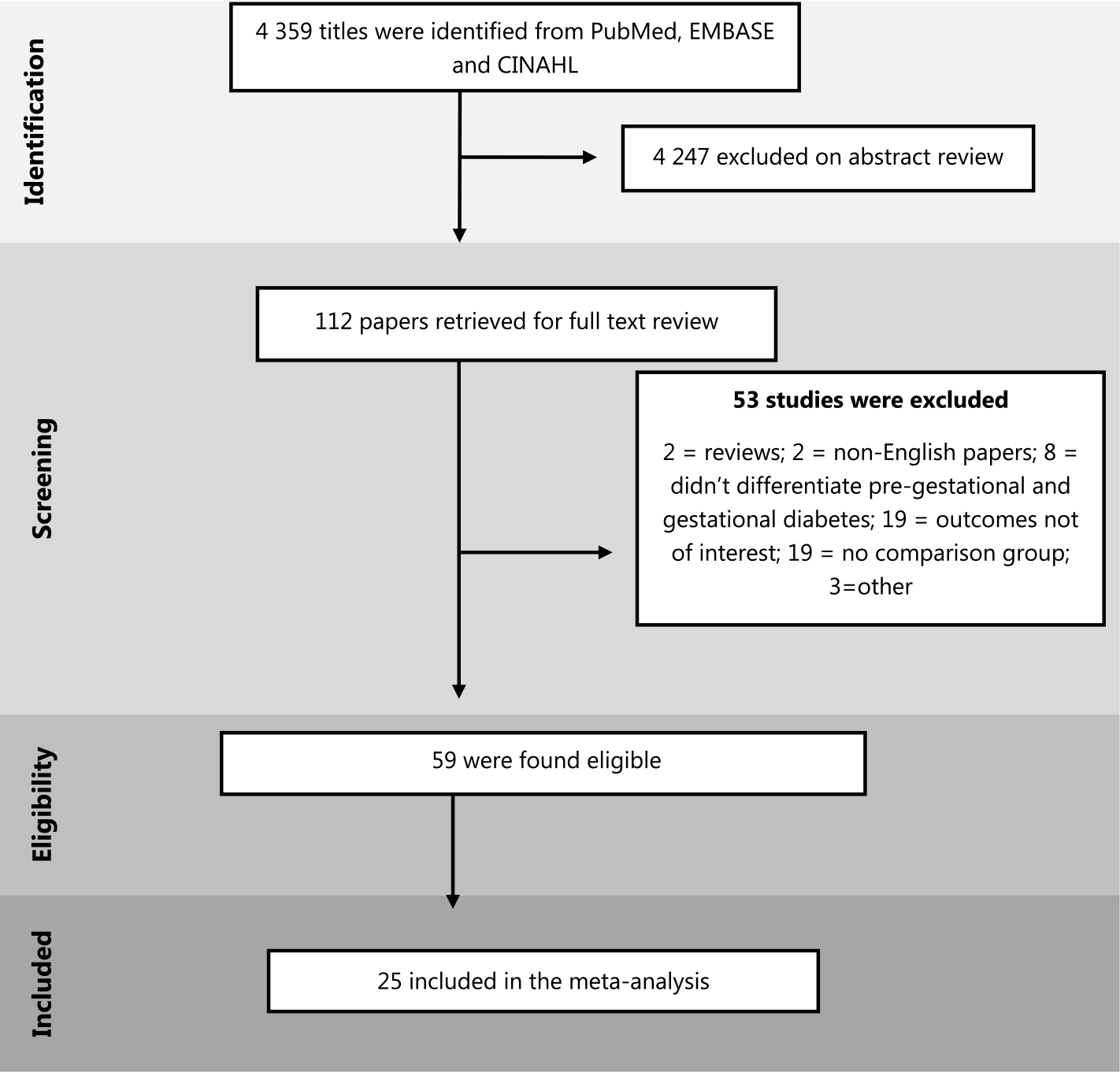
A total of 4359 articles were identified from the literature search. One hundred and twelve articles were eligible for full-text review. Of these, 59 were included in the review and 25 were included in the meta-analyses. The reasons for excluding 53 studies are detailed in Fig. 1. We contacted nine authors for additional data, with responses from four authors (44.4% response); however, the authors of these four studies did not have data that could be used in the meta-analyses and hence are included in Supplementary Table S1.
PRISMA flow diagram of study selection.

The assessment of methodological quality identified 25 studies of high quality (scored 7–8), 25 studies of moderate quality (scored 4–6), and 9 studies of low quality (scored 1–3) (Supplementary Table S2). No publication bias was evident for relevant outcomes. Studies were found for all relevant outcomes, except microvascular function, and therefore, we could not report on this outcome in the review.
Systolic blood pressure
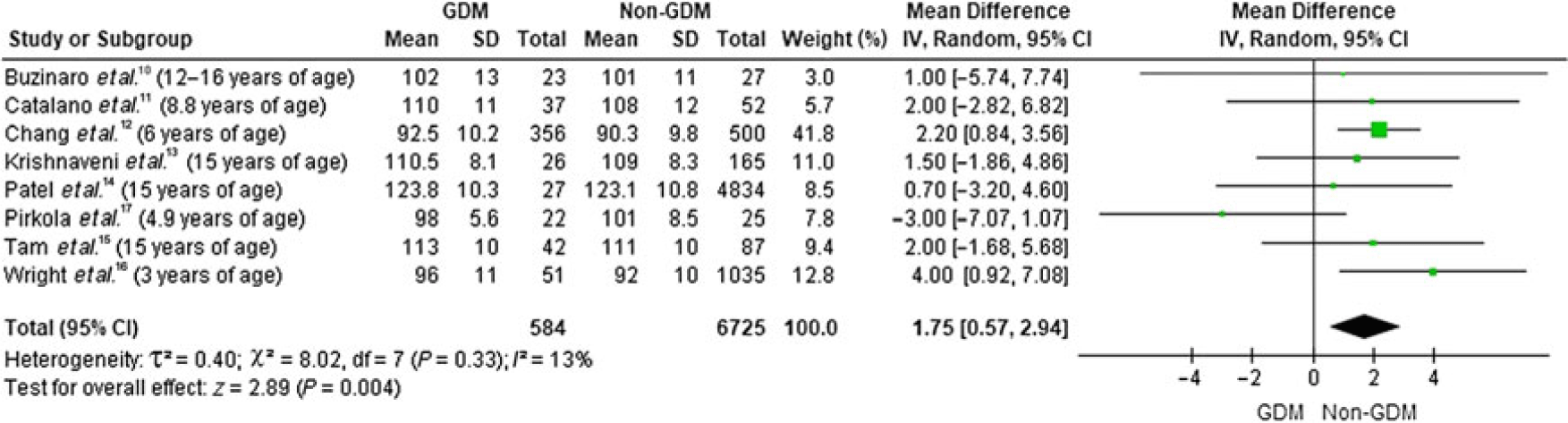
SBP data were available from 15 studies, of which 8 were included in the meta-analysis. The age of follow-up of offspring ranged from 3 to 16 years. Based on quantitative summary measures, the meta-analysis demonstrated that offspring exposed to GDM in utero have 1.75 mmHg (95% CI 0.57–2.94) higher SBP compared to controls (n(total) = 7309, n(exposed to GDM) = 584; P = 0.33, I 2 = 13%) (Fig. 2).Reference Buzinaro, Berchieri, Haddad, Padovani and Pimenta Wde10–Reference Pirkola, Vaarasmaki and Leinonen17 Sensitivity analyses were not performed as no low-quality studies were included in the analysis. Of the seven studies not included in the meta-analysis,Reference Tam, Ma and Ozaki5,Reference Krishnaveni, Veena, Hill, Kehoe, Karat and Fall18–Reference Vääräsmäki, Pouta and Elliot23 four reported a significant increase in SBP among offspring exposed to GDM compared to controls (Supplementary Table S1).Reference Tam, Ma and Ozaki5,Reference Krishnaveni, Veena, Hill, Kehoe, Karat and Fall18,Reference Tam, Ma and Yang21,Reference Tsadok, Friedlander and Paltiel22
Mean difference in systolic blood pressure (mmHg) in those exposed to GDM in utero and controls.

Diastolic blood pressure
DBP data were available from 13 studies of which 6 were included in the meta-analysis. The age at follow-up ranged between 8 and 16 years. The meta-analysis demonstrated no difference in DBP among GDM-exposed offspring and controls (MD −0.24, 95% CI −2.33 to 1.85; n(total) = 5367, n(exposed to GDM) = 177; P = 0.08, I 2 = 50%Reference Buzinaro, Berchieri, Haddad, Padovani and Pimenta Wde10,Reference Catalano, Farrell and Thomas11,Reference Krishnaveni, Veena and Jones13–Reference Tam, Ma and Yang15 ; Supplementary Fig. S1). Sensitivity analyses were not performed as no low-quality studies were included in the analysis. Seven studies were not included in the meta-analysis,Reference Tam, Ma and Ozaki5,Reference Pirkola, Vaarasmaki and Leinonen17–Reference Vääräsmäki, Pouta and Elliot23 of which two reported a significantly higher DBP in GDM offspring compared to controls (Supplementary Table S1).Reference Tam, Ma and Yang21,Reference Tsadok, Friedlander and Paltiel22
Body mass index
BMI data (i.e., BMI z-score, BMI (kg/m2), and/or BMI percentile, BMI peak, BMI SD) were available from 48 studies. BMI z-score and BMI (kg/m2) are reported in the meta-analysis, and other BMI data are reported in the nonmeta-analysis (Supplementary Table S1).
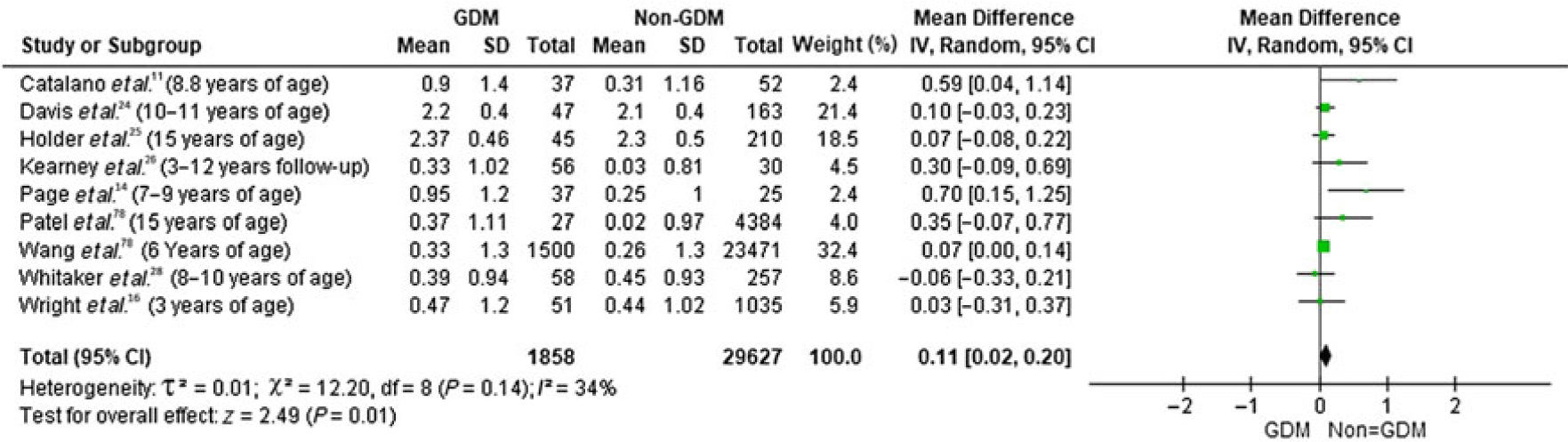
BMI z-score data were reported in 14 studies, of which 9 were included in the meta-analysis. The age at follow-up ranged from 3 to 15 years. Offspring exposed to GDM in utero showed an increase in BMI z-score compared to controls (MD 0.11, 95% CI 0.02–0.20; n(total) = 31,485, n(exposed to GDM) = 1858; P = 0.14, I 2 = 34%)Reference Catalano, Farrell and Thomas11,Reference Patel, Fraser and Smith14,Reference Wright, Rifas-Shiman, Rich-Edwards, Taveras, Gillman and Oken16,Reference Davis, Gunderson, Gyllenhammer and Goran24–Reference Whitaker, Pepe, Seidel, Wright and Knopp28 (Fig. 3). Five studies were not included in the meta-analysis,Reference Page, Romero, Enriquez, Xiang and Buchanan20,Reference Baptiste-Roberts, Nicholson, Wang and Brancati29–Reference Retnakaran, Ye and Hanley32 with two reporting significantly higher BMI z-scores in GDM-exposed offspring compared to controlsReference Baptiste-Roberts, Nicholson, Wang and Brancati29,Reference Page, Romero, Enriquez, Chirikian, Buchanan and Xiang31 (Supplementary Table S1). Sensitivity analysis showed no difference in heterogeneity when removing low-quality studies (Supplementary Table S3A).
Mean difference in BMI z-score in those exposed to GDM in utero and controls.

BMI (kg/m2) data were available from 31 studies. Sixteen studies were included in the meta-analysis, with the age at follow-up ranging broadly from <48 h after birth to 25 years. Quantitative summary measures obtained through meta-analysis showed a 1.06-kg/m2 increase in BMI among those exposed to GDM in utero compared to controls (95% CI 0.40–1.73; n(total) = 23,864, n(exposed to GDM) = 2154; P < 0.00001, I 2 = 95%; Supplementary Fig. S2).Reference Buzinaro, Berchieri, Haddad, Padovani and Pimenta Wde10–Reference Krishnaveni, Veena and Jones13,Reference Tam, Ma and Yang15,Reference Wright, Rifas-Shiman, Rich-Edwards, Taveras, Gillman and Oken16,Reference Davis, Gunderson, Gyllenhammer and Goran24–Reference Page, Romero, Buchanan and Xiang27,Reference Eslamian, Akbari, Marsoosi and Jamal33–Reference Li, Zhu and Yeung37 Sensitivity analysis showed no difference in heterogeneity when removing low-quality studies (Supplementary Table S3B). Fifteen studies were not included in the meta-analysis,Reference Tam, Ma and Ozaki5,Reference Krishnaveni, Veena, Hill, Kehoe, Karat and Fall18,Reference Lee, Jang, Park and Cho19,Reference Tam, Ma and Yang21,Reference Vääräsmäki, Pouta and Elliot23,Reference Baptiste-Roberts, Nicholson, Wang and Brancati29,Reference Page, Romero, Enriquez, Chirikian, Buchanan and Xiang31,Reference Zhao, Liu and Qiao36,Reference Krishnaveni, Hill and Leary38–Reference Vohr, McGarvey and Tucker44 of which seven studies showed significantly higher BMI among offspring exposed to GDM compared to controlsReference Krishnaveni, Veena, Hill, Kehoe, Karat and Fall18,Reference Tsadok, Friedlander and Paltiel22,Reference Baptiste-Roberts, Nicholson, Wang and Brancati29,Reference Page, Romero, Enriquez, Chirikian, Buchanan and Xiang31,Reference Zhao, Liu and Qiao36,Reference Krishnaveni, Hill and Leary38,Reference Silverman, Rizzo, Cho and Metzger42 (Supplementary Table S1). Krishnaveni et al. reported a significant association between females exposed to GDM in utero compared to female controls (P < 0.001).Reference Krishnaveni, Veena, Hill, Kehoe, Karat and Fall18 One study that showed statistical significance did not report on the sample size for either GDM or control groups.Reference Silverman, Rizzo, Cho and Metzger42
BMI percentiles were reported in 21 studies. Of these, five reported a higher BMI within obese/overweight BMI percentiles among those exposed to GDM in utero compared to controls (i.e., ≥85th percentile)Reference Tam, Ma and Ozaki5,Reference Baptiste-Roberts, Nicholson, Wang and Brancati29,Reference Farfel, Rabinovitz and Kampino45–Reference Le Moullec, Fianu and Maillard47 (Supplementary Table S1).
Lipids
Studies on cord blood and serum lipids (i.e., total cholesterol, LDL, HDL, and triglycerides) were included.
Total cholesterol
Total cholesterol data were available from 12 studies (9 serum cholesterol and 3 cord blood cholesterol). Five studies on total serum cholesterol were included in the meta-analysis. The age of follow-up ranged from 8 to 16 years. There was no significant difference in total serum cholesterol between GDM and control groups (SMD −0.01, 95% CI −0.28 to 0.25; n(total) = 662, n(exposed to GDM) = 251; P = 0.07, I 2 = 54%; Supplementary Fig. S3A).Reference Buzinaro, Berchieri, Haddad, Padovani and Pimenta Wde10,Reference Catalano, Farrell and Thomas11,Reference Krishnaveni, Veena and Jones13,Reference Tam, Ma and Yang15,Reference Teng, Xia, Qu and Yu48 The four studies that were not included in the meta-analysis showed no difference in total cholesterol between those exposed to GDM and controls (Supplementary Table S1).Reference Tam, Ma and Ozaki5,Reference Lee, Jang, Park and Cho19,Reference Tam, Ma and Yang21,Reference Vääräsmäki, Pouta and Elliot23 Sensitivity analyses were not performed as no low-quality studies were included in the analysis.
Three studies on cord blood total cholesterol were included in the meta-analysis. Quantitative summary measures did not show a significant difference in total cord blood cholesterol between GDM and control groups (SMD −0.90, 95% CI −2.41 to 0.61; n(total) = 374, n(exposed to GDM) = 164; P < 0.00001, I 2 = 96%; Supplementary Fig. S3B).Reference Eslamian, Akbari, Marsoosi and Jamal33,Reference López Morales, Brito Zurita, González Heredia, Cruz López, Méndez Padrón and Matute Briseño49 Sensitivity analyses were not performed as no low-quality studies were included in the analysis.
LDL cholesterol
LDL cholesterol data were available from 10 studies (8 serum LDL cholesterol, 2 cord blood cholesterol).
Four studies on serum LDL cholesterol were included in the meta-analysis. The age of follow-up ranged from 8 to 16 years. There was no difference in serum LDL cholesterol between those exposed to GDM and controls (SMD −0.03, 95% CI −0.44 to 0.38; n(total) = 5129, n(exposed to GDM) = 129; P = 0.01, I 2 = 73%; Supplementary Fig. S4A).Reference Buzinaro, Berchieri, Haddad, Padovani and Pimenta Wde10,Reference Catalano, Farrell and Thomas11,Reference Patel, Fraser and Smith14,Reference Tam, Ma and Yang15 Four studies that were not included in the meta-analysis showed no difference in LDL between GDM and control groupsReference Tam, Ma and Ozaki5,Reference Tam, Ma and Yang21,Reference Vääräsmäki, Pouta and Elliot23,Reference Retnakaran, Ye and Hanley32 (Supplementary Table S1). Sensitivity analyses were not performed as no low-quality studies were included in the analysis.
Two studies on cord blood LDL were included in the meta-analysis. Quantitative summary measures did not show a significant difference in cord blood LDL between GDM and control groups (SMD −0.60, 95% CI −1.57 to 0.38; n(total) = 298, n(exposed to GDM) = 126; P = 0.01, I 2 = 84%; Supplementary Fig. S4B).Reference López Morales, Brito Zurita, González Heredia, Cruz López, Méndez Padrón and Matute Briseño49,Reference Miettinen, Rono, Koivusalo, Eriksson and Gylling50 Sensitivity analyses were not performed as no low-quality studies were included in the analysis.
HDL cholesterol
HDL cholesterol data were available from 15 studies (12 serum HDL cholesterol, 3 cord blood HDL cholesterol).
Six studies on serum HDL cholesterol were included in the meta-analysis. The age of follow-up ranged from 8 to 16 years. Quantitative summary measures showed no significant difference in serum HDL cholesterol between those exposed to GDM and controls (SMD 0.08, 95% CI −0.07 to 0.24; n(total) = 5073, n(exposed to GDM) = 278; P = 0.77, I 2 = 0%; Supplementary Fig. S5A).Reference Buzinaro, Berchieri, Haddad, Padovani and Pimenta Wde10,Reference Catalano, Farrell and Thomas11,Reference Krishnaveni, Veena and Jones13–Reference Tam, Ma and Yang15,Reference Teng, Xia, Qu and Yu48 Sensitivity analyses were not performed as no low-quality studies were included in the analysis. Six studies were not included in the meta-analysis.Reference Tam, Ma and Ozaki5,Reference Krishnaveni, Veena, Hill, Kehoe, Karat and Fall18,Reference Lee, Jang, Park and Cho19,Reference Tam, Ma and Yang21,Reference Vääräsmäki, Pouta and Elliot23,Reference Retnakaran, Ye and Hanley32 Of these, one reported lower serum HDL cholesterol in the GDM group compared to controls (Supplementary Table S1).Reference Tam, Ma and Yang21 Three studies on cord blood HDL were included in the meta-analysis. Quantitative summary measures showed no difference in cord blood HDL between GDM and controls groups (SMD −0.13, 95% CI −0.84 to 0.59; n(total) = 374, n(exposed to GDM) = 164; P = 0.0006, I 2 = 87%; Supplementary Fig. S5B).Reference Eslamian, Akbari, Marsoosi and Jamal33,Reference López Morales, Brito Zurita, González Heredia, Cruz López, Méndez Padrón and Matute Briseño49,Reference Miettinen, Rono, Koivusalo, Eriksson and Gylling50 Sensitivity analyses were not performed as no low-quality studies were included in the analysis.
Triglycerides
Triglyceride data were available from 14 studies (11 serum triglycerides and 3 cord blood triglycerides). Six studies on serum triglycerides were included in the meta-analysis. The age at follow-up ranged from 7 to 16 years. Quantitative summary measures showed no difference in the level of serum triglycerides between GDM and control groups (SMD 0.50, 95% CI −0.14 to 1.14; n(total) = 5523, n(exposed to GDM) = 278; P < 0.00001, I 2 = 93%; Supplementary Fig. S6A).Reference Buzinaro, Berchieri, Haddad, Padovani and Pimenta Wde10,Reference Catalano, Farrell and Thomas11,Reference Krishnaveni, Veena and Jones13–Reference Tam, Ma and Yang15,Reference Teng, Xia, Qu and Yu48 Sensitivity analyses were not performed as no low-quality studies were included in the analysis. Five studies that were not included in the meta-analysis also showed no significant difference in serum triglycerides in GDM and control groups (Supplementary Table S1).Reference Tam, Ma and Ozaki5,Reference Krishnaveni, Veena, Hill, Kehoe, Karat and Fall18,Reference Lee, Jang, Park and Cho19,Reference Tam, Ma and Yang21,Reference Vääräsmäki, Pouta and Elliot23 Three studies on cord blood triglycerides were included in the meta-analysis. There was no difference in cord blood triglycerides in the GDM group compared to controls (SMD 0.02, 95% CI −0.67 to −0.71; n(total) = 374, n(exposed to GDM) = 164; P = 0.001, I 2 = 86%; Supplementary Fig. S6B).Reference Eslamian, Akbari, Marsoosi and Jamal33,Reference López Morales, Brito Zurita, González Heredia, Cruz López, Méndez Padrón and Matute Briseño49,Reference Miettinen, Rono, Koivusalo, Eriksson and Gylling50 Sensitivity analyses were not performed as no low-quality studies were included in the analysis.
Insulin
Data for fasting serum insulin were collected for 20 studies (16 serum insulin and 4 cord blood insulin).
Four studies on serum insulin were included in the meta-analysis. The age at follow-up ranged from 8 to 15 years. The meta-analysis showed no difference in insulin between the two groups (SMD −0.02, 95% CI −0.70 to 0.67; n(total) = 5136, n(exposed to GDM) = 131; P < 0.00001, I 2 = 89%; Supplementary Fig. S7A).Reference Catalano, Farrell and Thomas11,Reference Patel, Fraser and Smith14,Reference Davis, Gunderson, Gyllenhammer and Goran24,Reference Chandler-Laney, Bush, Granger, Rouse, Mancuso and Gower51 Sensitivity analyses showed no difference in heterogeneity when poor-quality studies were omitted (Supplementary Table S4)
Twelve studies were not included in the meta-analysis,Reference Tam, Ma and Ozaki5,Reference Krishnaveni, Veena and Jones13,Reference Krishnaveni, Veena, Hill, Kehoe, Karat and Fall18–Reference Tam, Ma and Yang21,Reference Vääräsmäki, Pouta and Elliot23,Reference Jaber34,Reference Chandler-Laney, Bush, Granger, Rouse, Mancuso and Gower51–Reference Plagemann, Harder, Kohlhoff, Rohde and Dorner55 of which five reported significantly elevated insulin levels in the GDM group compared to controlsReference Krishnaveni, Veena and Jones13,Reference Krishnaveni, Veena, Hill, Kehoe, Karat and Fall18,Reference Jaber34,Reference Plagemann, Harder, Kohlhoff, Rohde and Dorner54,Reference Plagemann, Harder, Kohlhoff, Rohde and Dorner55 (Supplementary Table S1). Two of these studies showed a significant difference in fasting insulin between offspring exposed to pre-GDM (i.e., diabetes diagnosed before pregnancy) and GDM.Reference Plagemann, Harder, Kohlhoff, Rohde and Dorner54,Reference Plagemann, Harder, Kohlhoff, Rohde and Dorner55 Two studies were included in a meta-analysis on cord blood insulin; however, there was no difference between the GDM and control groups (SMD −4.74 95%, CI −14.99 to 5.51; n(total) = 123, n(exposed to GDM) = 60; P < 0.00001, I 2 = 99%; Supplementary Fig. S7B).Reference Pirkola, Vaarasmaki and Leinonen17,Reference López Morales, Brito Zurita, González Heredia, Cruz López, Méndez Padrón and Matute Briseño49 Sensitivity analyses were not performed as no low-quality studies were included in the analysis.
Glucose
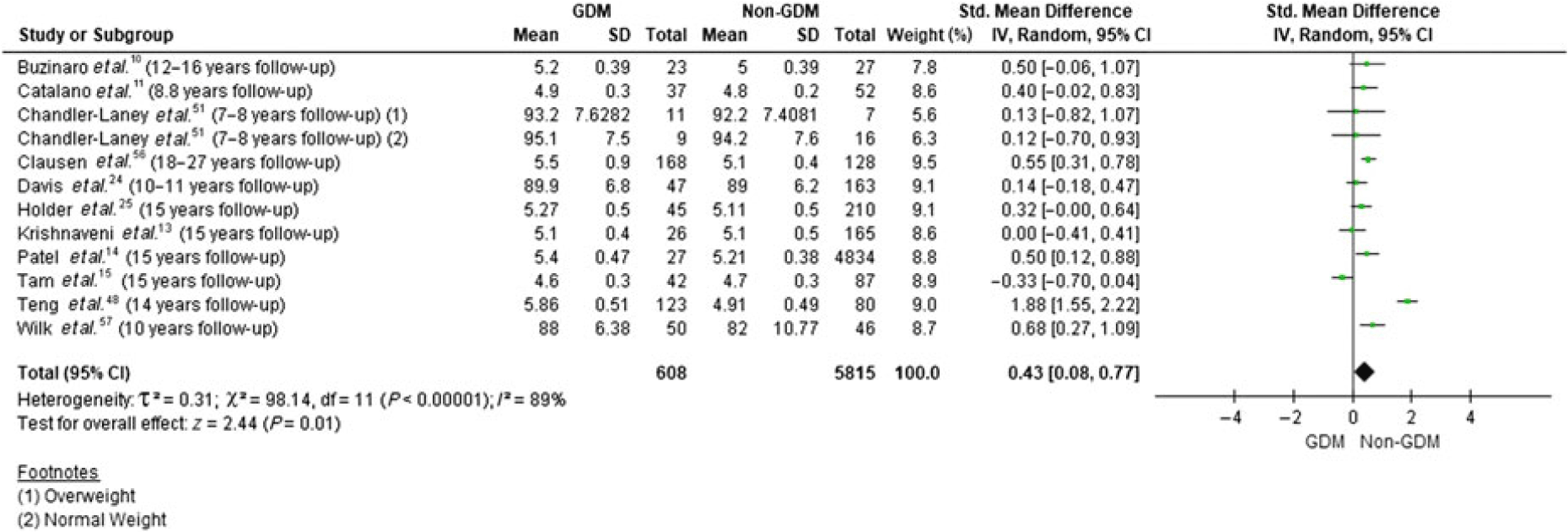
Glucose data were available from 25 studies (23 serum glucose and 2 cord blood glucose). Eleven studies on serum glucose were included in the meta-analysis, in which the age at follow-up ranged from 8 to 27 years. Based on quantitative summary measures, the meta-analysis showed an increase in glucose in offspring exposed to GDM in utero compared to controls, demonstrating a 0.43 SMD (95% CI 0.08–0.77; n(total) = 6423 n(exposed to GDM) = 608; P = 0.00001, I 2 = 89% (Fig. 4).Reference Buzinaro, Berchieri, Haddad, Padovani and Pimenta Wde10,Reference Catalano, Farrell and Thomas11,Reference Krishnaveni, Veena and Jones13–Reference Tam, Ma and Yang15,Reference Davis, Gunderson, Gyllenhammer and Goran24,Reference Holder, Giannini and Santoro25,Reference Teng, Xia, Qu and Yu48,Reference Chandler-Laney, Bush, Granger, Rouse, Mancuso and Gower51,Reference Clausen, Mathiesen and Hansen56,Reference Wilk, Horodnicka-Jozwa and Moleda57 Sensitivity analysis showed no difference in heterogeneity when removing low-quality studies (Supplementary Table S5). Twelve studies were not included in the meta-analysis.Reference Tam, Ma and Ozaki5,Reference Krishnaveni, Veena, Hill, Kehoe, Karat and Fall18–Reference Tam, Ma and Yang21,Reference Vääräsmäki, Pouta and Elliot23,Reference Retnakaran, Ye and Hanley32,Reference Jaber34,Reference Krishnaveni, Hill and Leary38,Reference Vohr, McGarvey and Tucker44,Reference Borgoño, Hamilton and Ye52 One study reported significantly higher serum glucose in the GDM group than controls.Reference Page, Romero, Enriquez, Xiang and Buchanan20 One study reported a significantly lower serum glucose value in those exposed to GDM compared to controls.Reference Jaber34 Two studies assessed cord blood glucose with both newborn cohorts;Reference Eslamian, Akbari, Marsoosi and Jamal33,Reference López Morales, Brito Zurita, González Heredia, Cruz López, Méndez Padrón and Matute Briseño49 however, no difference was seen between the GDM and non-GDM groups (MD −2.69, 95% CI −5.80 to 0.42; n(total) = 346, n(exposed to GDM) = 149; P = 0.19, I 2 = 42%; Supplementary Fig. S8).Reference Eslamian, Akbari, Marsoosi and Jamal33,Reference López Morales, Brito Zurita, González Heredia, Cruz López, Méndez Padrón and Matute Briseño49 Sensitivity analyses were not performed as no low-quality studies were included in the analysis.
Standard mean difference in fasting glucose in those exposed to GDM in utero and controls.

Discussion
This systematic review aimed to assess the prevalence of conventional cardiovascular risk factors in those exposed to GDM in utero compared to those not exposed to GDM. There is an established link between pregnancy complications and vascular outcomes such as elevated markers of inflammation and impaired fetal aortic intimal media thickness (aIMT).Reference Visentin, Londero and Bellamio58,Reference Visentin, Lapolla and Londero59 Many reviews on GDM focus on cardiovascular endpoints including myocardial infarction and coronary heart disease. Identifying risk factors for CVD is vital in planning screening strategies to identify those at risk of future CVD with the aim of targeting preventive interventions. Hence, this review is a comprehensive synthesis of evidence from published studies comparing the main conventional cardiovascular risk factors in those born after pregnancies complicated by GDM compared to controls and includes outcomes that have not been recently reviewed in the literature such as serum and cord blood lipids.
Our meta-analysis showed that offspring exposed to GDM in utero have 1.75 mmHg higher SBP than controls (95% CI 0.57–2.94, n = 7309, eight studies). Aceti et al. showed a similar association for offspring of GDM pregnancies (1.39 mmHg, 95% CI 0.00–2.77); 10 studies, P = 0.05).Reference Aceti, Santhakumaran and Logan6 They also showed a smaller, nonsignificant increase in DBP for GDM offspring (0.75 mmHg, 95% CI −0.47–1.97; nine studies, P = 0.23).Reference Aceti, Santhakumaran and Logan6
This meta-analysis primarily consists of adolescent cohorts (i.e., 10–19 years) with one 3-year-old cohort. Therefore, the existing literature is not sufficient to show the trend in blood pressure throughout childhood and adolescence. These trends have been previously reported in a few large cohort studies. Krishnaveni et al. demonstrated that SBP remains elevated in those exposed to GDM compared to unexposed controls throughout ages 5, 9.5, and 13.5 years.Reference Krishnaveni, Veena and Jones13,Reference Krishnaveni, Veena, Hill, Kehoe, Karat and Fall18,Reference Krishnaveni, Hill and Leary38 A similar association was seen in another cohort at ages 8 and 15.Reference Tam, Ma and Yang15,Reference Tam, Ma and Yang21 Therefore, it is important to assess childhood cohorts to affirm any trends seen in long-term cohort studies.
Blood pressure that is elevated in childhood and adolescence is predictive of adult hypertension.Reference Chen and Wang60 Raitakari et al. found a positive correlation between SBP at 12–16 years with carotid artery intima medial thickness (C-IMT), which is a predictive factor of future CVD.Reference Raitakari, Juonala and Kähönen61 The association was weaker in males at 3–9 years age, but not among females. In a study by Oikonen et al., two abnormal child or youth blood pressure observations were shown to predict risk for hypertension in adulthood.Reference Oikonen, Nuotio and Magnussen62 While the effect size in our meta-analysis is small and blood pressure for all studies is generally within normal reference range, it is known that even a 2-mmHg increase in SBP is associated with 10% higher mortality from stroke, and 7% higher mortality from ischemic heart disease in middle age.Reference Lewington, Clarke, Qizilbash, Peto and Collins63 Therefore, offspring exposed to GDM may benefit from frequent blood pressure monitoring throughout childhood and adolescence. Dietary interventions during gestation, such as implication of a low glycemic index (GI) diet, may benefit offspring and reduce the risk of high blood pressure. It has been demonstrated that children at 12 months old born to mothers at risk of GDM with a low GI diet have significantly thinner aIMT than those children whose mothers had a standard high fiber diet.Reference Kizirian, Kong and Muirhead64
Among 31,485 participants, it was shown that BMI z-score is marginally higher in those exposed to GDM offspring compared to controls (MD 0.11, 95% CI 0.02–0.20, n = 31,485, nine studies). We also observed a higher BMI in those exposed to GDM compared to controls (Supplementary Fig. S2); however, BMI is not an accurate predictor of childhood obesity. As an indicator of adiposity, BMI varies greatly based on fat and muscle mass; hence, it may be accurate for fatter children but not those who are lean.Reference Freedman and Sherry65 The findings of this meta-analysis on BMI z-scores are consistent with the findings reported in the review by Kawasaki et al. (pooled MD 0.14, 95% CI 0.04–0.24, seven studies).Reference Kawasaki, Arata and Miyazaki66
Higher BMI in youth is associated with dyslipidemia, hypertension, and reduced insulin sensitivity.Reference Jago, Mendoza, Chen and Baranowski67 Jago et al. showed that a change in BMI z-score at ages 11–14 was associated in a change in cardiovascular risk factors including an increase in SBP and DBP, HDL-C, LDL-C, and triglycerides at the same age.Reference Jago, Mendoza, Chen and Baranowski67 The results of this meta-analysis support previous findings of higher BMI in those exposed to GDM in utero compared to controls.Reference Tam, Ma and Ozaki5,Reference Davis, Gunderson, Gyllenhammer and Goran24,Reference Farfel, Rabinovitz and Kampino45 GDM is associated with newborn fat mass, indicative of the intrauterine environment in the final trimester of pregnancy.Reference Dissanayake, Anderson and McMullan68,Reference Enzi, Inelmen, Caretta, Villani, Zanardo and DeBiasi69 Higher birthweight is associated with markers of subclinical atherosclerosis such as mean carotid IMT.Reference Skilton, Siitonen and Wurtz70 Therefore, those who are exposed to GDM in utero appear to have risk factors for CVD very early in life. We could not assess the age distribution in very young children as majority of published studies were in adolescence. Hence, more studies among young children are required to support the association between gestational diabetes and increasing BMI z-score in offspring.
Our meta-analysis demonstrated that those exposed to GDM in utero have marginally higher fasting blood glucose levels (SMD 0.43, 95% CI 0.08–0.77, n = 6423, 11 studies), but not fasting insulin compared to controls. Kawasaki et al. showed no difference in fasting plasma glucose among 7–10 and 15 year olds exposed to GDM compared to controls.Reference Kawasaki, Arata and Miyazaki66 Plasma glucose was significantly higher at age 20 years among those exposed to GDM compared to controls (MD 0.4 mmol/l, 95% CI 0.25–0.55, seven studies).Reference Kawasaki, Arata and Miyazaki66 Our meta-analysis showed a similar association in predominantly childhood–adolescent cohorts, with one cohort during adulthood. We can support an association between exposure to GDM in utero and impaired glucose tolerance in offspring; however, as the effect size is minimal, further studies are required to support this association.
Abnormal plasma glucose is a requisite for prediabetes, and if untreated and coupled with increasing obesity may lead to early onset T2DM, which progresses at a faster rate in children and adolescence than in adults.Reference D’Adamo and Caprio71 Adolescents diagnosed with T2DM are predicted to lose 15 years from their life expectancy compared to those without T2DM.Reference Rhodes, Prosser, Hoerger, Lieu, Ludwig and Laffel72 Hence, frequent fasting blood glucose monitoring in those exposed to GDM in utero may reduce the risk of T2DM in the future. Also, interventions during pregnancy may be beneficial as evidenced by studies showing that infants born to mothers with diet or insulin controlled GDM have lower fasting blood glucose than controls.Reference Jaber34
We acknowledge some limitations of our analyses. Both GDM and CVD are multifactorial diseases, influenced by genetic and environmental factors. Smoking during pregnancy is shown to have significant effects on childhood adiposity and elevated blood pressure.Reference Li, Peters and Gama73,Reference Riedel, Fenske and Muller74 High prepregnancy BMI is associated with elevated SBP and DBP in offspring.Reference Gademan, van Eijsden, Roseboom, van der Post, Stronks and Vrijkotte75 GDM is shown to cluster in families, and variants of different genes are associated with increased risk of GDM.Reference Shaat and Groop76 We could not adjust for such important covariates due to limitations in the data that were available. We were unable to examine female and male subgroups due to lack of power; however, it may be of interest for future studies to consider this as Li et al. showed that male offspring of GDM pregnancy had higher BMI than male controls and an increased risk of obesity, while there was no significant association in the cohort of females exposed to GDM compared to female controls.Reference Li, Zhu and Yeung37
We did not identify any studies that looked at microvascular function in offspring of GDM. West et al. found that offspring of diabetic pregnancies had increased levels of circulating cellular adhesion molecules such as E-selectin and VCAM1, even when adjusted for maternal prepregnancy BMI.Reference West, Crume, Maligie and Dabelea77 Therefore, further studies on this topic are required.
Most of the studies that we assessed in the meta-analysis are follow-up at adolescence, there were few studies that conducted follow-up during early childhood as well as in adulthood, therefore, we are unable to show age distributions in outcomes assessed.
Observational studies may be subject to publication bias, although visual analysis of funnel plots for BMI and glucose showed a low chance of publication bias (Supplementary Fig. S9). However, these outcomes showed high heterogeneity based on I 2, and hence need to be interpreted with caution. We performed sensitivity analysis for relevant outcomes; however, we observed no difference in heterogeneity for the outcomes assessed (Supplementary Tables S3–S5).
Conclusion
Offspring exposed to GDM in utero demonstrate risk factors for CVD in childhood and adolescence, including elevated SBP, BMI z-score, and fasting plasma glucose that are evident from early life. These outcomes at a young age, if not monitored, can lead to adverse vascular and metabolic health parameters resulting in CVD in adulthood. Regular blood pressure monitoring and weight control from a young age may benefit offspring exposed to GDM. Further long-term cohort studies also need to be established, which can adjust for important covariates and allow for affirmation of effect sizes.
Supplementary Material
To view supplementary material for this article, please visit https://doi.org/10.1017/S2040174419000850.
Acknowledgements
None.
Financial Support
Supported by the Faculty of Health Sciences Divisional Scholarship (MMP), NHMRC Australian Public Health and Health Services Fellowship (APP1141382) (ZSL), Lloyd Cox Professorial Research Fellowship (CTR), and NHMRC Peter Doherty Bio Medical Postdoctoral Fellowship (APP1090778).
Conflict of Interest
None.