Introduction
Despite Antarctica's vast area, < 1% of the continent is ice free (Convey & Peck Reference Convey and Peck2019). While these ice-free ‘oases’ are largely free of vascular plants, mosses and lichens are common (Convey et al. Reference Convey, Chown, Clarke, Barnes, Bokhorst and Cummings2014), as well as an increasingly studied ‘microflora’ of protists, bacteria and fungi (Zhang et al. Reference Zhang, Thibaut, Terauds, Wong, van Dorst, Tanaka and Ferrari2019). Antarctic bryophytes (including mosses and liverworts) and lichens are limited in growth and distribution by extremes in wind, temperature and photoperiod (Wasley et al. Reference Wasley, Robinson, Lovelock and Popp2006a, Reference Wasley, Robinson, Lovelock and Popp2006b, Clarke et al. Reference Clarke, Robinson, Hua, Ayre and Fink2012, Robinson et al. Reference Robinson, King, Bramley-Alves, Waterman, Ashcroft and Wasley2018), as well as bioavailable (liquid) water and nutrients (Convey et al. Reference Convey, Chown, Clarke, Barnes, Bokhorst and Cummings2014). Nonetheless, Antarctica features ~100 bryophyte and 200 lichen species (Chown et al. Reference Chown, Clarke, Fraser, Cary, Moon and McGeoch2015), which have been extensively studied throughout East Antarctica (Schroeter et al. Reference Schroeter, Green, Pannewitz, Schlensog and Sancho2011, Ball & Virginia Reference Ball and Virginia2014). Additionally, terrestrial Antarctic mosses in particular have long been understood to provide suitable microclimates that harbour a diverse community, including arthropods (Nielsen & King Reference Nielsen and King2015), green algae, cyanobacteria and diatoms (Ohtani Reference Ohtani1986).
Diatoms are ubiquitous across Antarctica, being present within both the marine environment and terrestrial and benthic freshwater habitats (Kellogg & Kellogg Reference Kellogg and Kellogg2002). The non-marine Antarctic diatom flora is composed of a high number of endemic taxa specific to particular bioregions, reflecting both sensitivity to physiochemical parameters and their geographical isolation (Sakaeva et al. Reference Sakaeva, Sokol, Kohler, Stanish, Spaulding and Howkins2016, Zidarova et al. Reference Zidarova, Kopalová and de Vijver2016). Because of the species-specific responses of diatoms to their environment, diatoms have been used to assess the ecological status of Antarctic lakes (Spaulding et al. Reference Spaulding, van de Vijver, Hodgson, McKnight, Verleyen, Stanish, Smol and Stoermer2010) and streams (Stanish et al. Reference Stanish, Nemergut and McKnight2011). Moss-associated diatoms have been well characterized on the sub-Antarctic islands, such as the Prince Edward Islands (Van de Vijver et al. Reference Van de Vijver, Gremmen and Smith2008) and Ile de la Possession (Crozet Archipelago, Van de Vijver et al. Reference Van de Vijver, Frenot and Beyens2002). Further work has focused on the Maritime Antarctic Region, such as Livingston Island and James Ross Island (Kopalová et al. Reference Kopalová, Ochyra, Nedbalová and van de Vijver2014). However, despite the wealth of historical sources, biogeographical and ecological studies on the Antarctic Continent have generally examined diatoms and mosses separately (Opalinski Reference Opalinski1972), without investigating potential relationships between mosses and their associated diatom communities. Even less is known about diatoms inhabiting lichens, which have been largely unexplored save for the recent work of Chattová (Reference Chattová2018) on James Ross Island in the Antarctic Peninsula.
The formation of ‘microclimates’ within the vegetation matrix may be a major factor supporting diatom inhabitation of mosses and lichens by providing sufficient water availability and shelter from the external environment (Beyer et al. Reference Beyer, Bölter and Seppelt2000 and references therein). Previous work has found moisture content to be an influential variable for epiphytic diatom communities within the Maritime Antarctic (Kopalová et al. Reference Kopalová, Ochyra, Nedbalová and van de Vijver2014) and the sub-Antarctic islands (Van de Vijver et al. Reference Van de Vijver, Frenot and Beyens2002, Reference Van de Vijver, Gremmen and Smith2008). Increased water availability and associated habitat connectivity is anticipated for Antarctica in the future through a reduction of ice and permafrost cover within coastal areas (Lee et al. Reference Lee, Raymond, Bracegirdle, Chades, Fuller, Shaw and Terauds2017), which probably also coincides with increased nutrient liberation (Convey & Peck Reference Convey and Peck2019). A warmer, wetter climate in the Windmill Islands, East Antarctica, may furthermore result in the regeneration and expansion of moss beds based on species-specific differences and indirect effects of climate change (Wasley et al. Reference Wasley, Robinson, Turnbull, King, Wanek and Popp2012, Robinson et al. Reference Robinson, King, Bramley-Alves, Waterman, Ashcroft and Wasley2018).
Within close proximity to Casey Station, Wasley et al. (Reference Wasley, Robinson, Lovelock and Popp2006a) tested for bryophyte and lichen community responses to in situ water and nutrient additions based upon projected changes in these resources due to climate change. The test area originated at the edge of a meltwater lake, spanning from bryophyte-dominated to lichen-encrusted moss communities up a hill, and included four vegetation types: 1) healthy bryophytes, 2) moribund bryophytes, 3) crustose lichens and 4) lichens belonging to the genus Usnea Dillenius ex Adanson. Vegetation responses were examined by measuring chl a, total water content (TWC), carbon (C), nitrogen (N) and phosphorus (P) content and δ13C and δ15N stable isotope ratios, among other variables (Wasley et al. Reference Wasley, Robinson, Lovelock and Popp2006a). Increased productivity was observed for healthy bryophyte and Usnea lichen vegetation with the combined addition of water and nutrients. Nutrient additions appeared to elicit a stronger response than water (Wasley et al. Reference Wasley, Robinson, Lovelock and Popp2006a). This suggests that Antarctic bryophyte communities will respond to anticipated changes to their environment and may, in turn, create carryover effects to their associated epiphytes (Robinson et al. Reference Robinson, King, Bramley-Alves, Waterman, Ashcroft and Wasley2018) such as diatoms, although these impacts have not been investigated.
In the current study, we characterize diatom communities inhabiting the bryophyte and lichen samples from the experiment conducted by Wasley et al. (Reference Wasley, Robinson, Lovelock and Popp2006a) in order to gain further insights into the potential impacts of increases in water and nutrient availability in East Antarctica. Our research questions were threefold: first, do diatom communities differ among different bryophyte and lichen vegetation types? Second, do nutrient and water additions impact diatom communities? And third, do diatom communities correspond to differences in bryophyte and lichen physiological characteristics? Given the results of Wasley et al. (Reference Wasley, Robinson, Lovelock and Popp2006a), as well as past studies linking epiphytic diatom community structures to the characteristics of their environment (Kopalová et al. Reference Kopalová, Ochyra, Nedbalová and van de Vijver2014), we expected that water and nutrient additions would have a strong structuring effect on epiphytic diatoms growing on mosses and lichens in this experiment.
Methods
Study area and sampling
The study site was located within Antarctic Specially Protected Area (ASPA) 135, ~1 km away from Casey Station on Bailey Peninsula, Windmill Islands (Wilkes Land), East Antarctica. The Windmill Islands are collectively one of the most extensively studied areas on the continent and are known for their well-developed lichen and bryophyte vegetation (Robinson et al. Reference Robinson, King, Bramley-Alves, Waterman, Ashcroft and Wasley2018). This vegetation is due to a long history of nutrient and salinity inputs by numerous penguin colonies, creating strong gradients of both water and nutrient availability (Melick et al. Reference Melick, Hovenden and Seppelt1994). At present, there are a number of penguin breeding sites in the area, which strongly impact the surrounding flora due to increased nutrient inputs (Melick et al. Reference Melick, Hovenden and Seppelt1994, Beyer et al. Reference Beyer, Bölter and Seppelt2000).
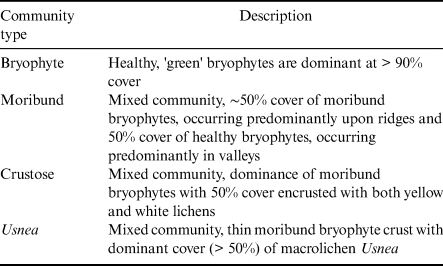
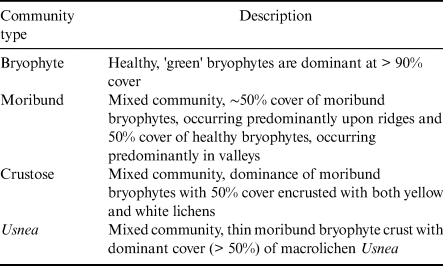
The experimental site was located near to an abandoned penguin rookery on the western edge of a meltwater lake originating from a snow slope, of north-easterly aspect, above Thala Valley (66°116.03′S, 110°132.53′E), located at the northern boundary of ASPA 135. This site featured a vegetation gradient starting at the edge of a meltwater lake and continuing up a ridge, with an eastern aspect, away from the lake. Vegetation was categorized based on the percentage coverage of four major types: healthy bryophytes, moribund bryophytes, crustose lichens and lichens of the genus Usnea (Table I). The order of these four vegetation types reflects their proximity to the meltwater lake, respectively, with healthy bryophytes being more common at the edge of the lake, whereas the Usnea community was located closer to the ridge, farthest from the lake. The dominant bryophyte across the site was the Antarctic endemic Schistidium antarctici Cardot (Wasley et al. Reference Wasley, Robinson, Lovelock and Popp2006a), previously identified as Grimmia antarctici (Cardot) L.I. Savicz & Smirnova (Robinson et al. Reference Robinson, King, Bramley-Alves, Waterman, Ashcroft and Wasley2018).
Characteristics of the bryophyte and lichen vegetation types within the experimental site, including descriptions of individual attributes.
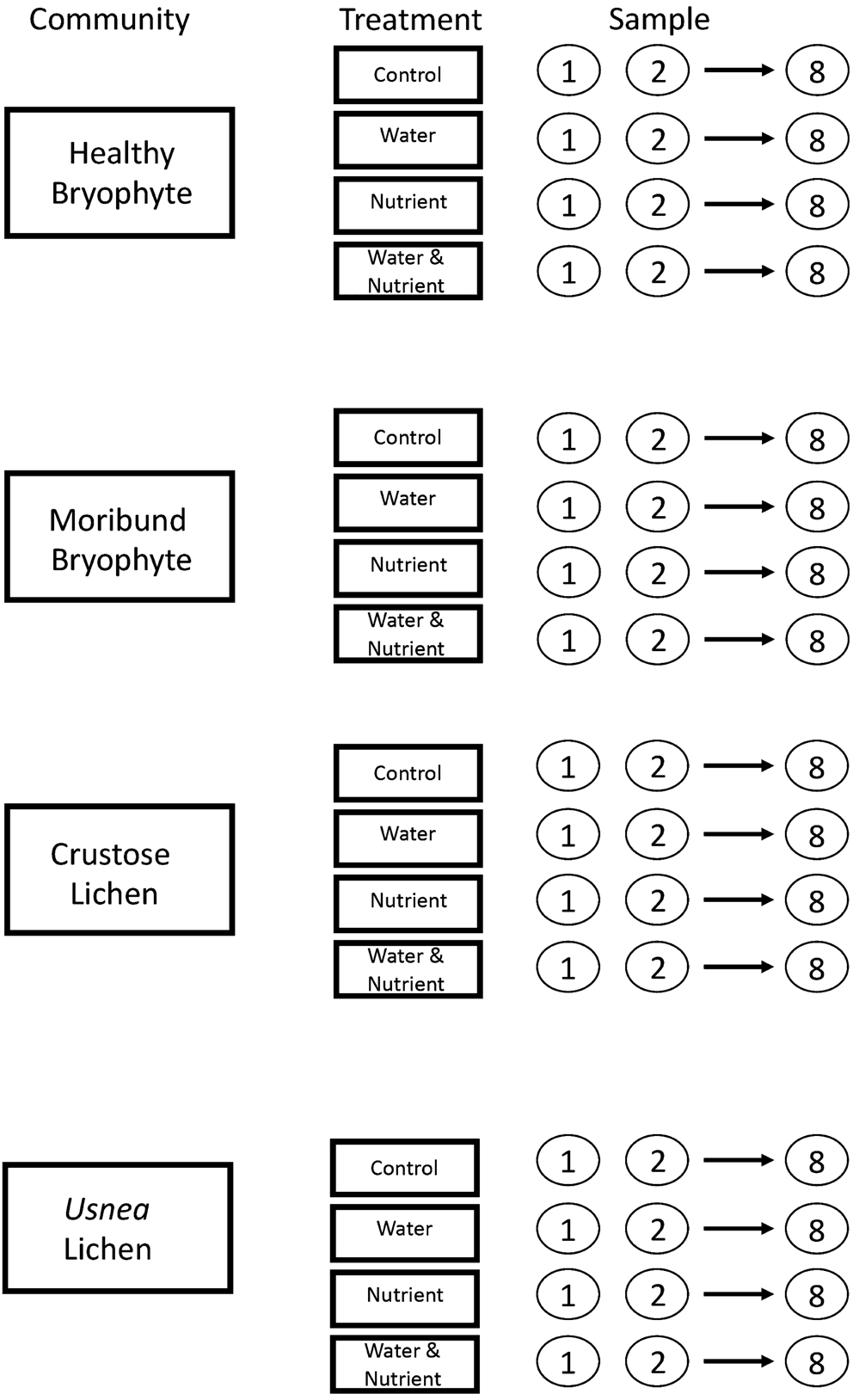
Our samples originated from a field manipulation experiment (supplemented nutrient and water regimes along the transect) performed by Wasley et al. (Reference Wasley, Robinson, Lovelock and Popp2006a) to simulate predicted water and nutrient increases due to climate change and to examine the physiological responses generated within each bryophyte and lichen community across treatments. In the present study, we retain the overall experimental design, and the sample coding scheme indicated in parentheses originates from Wasley et al. (Reference Wasley, Robinson, Lovelock and Popp2006a) (Fig. 1).
Experimental design displaying the four vegetation types (healthy bryophyte, moribund bryophyte, crustose lichen and Usnea lichen) alongside randomly assigned treatments (Control, Water, Nutrients and Water + Nutrients).
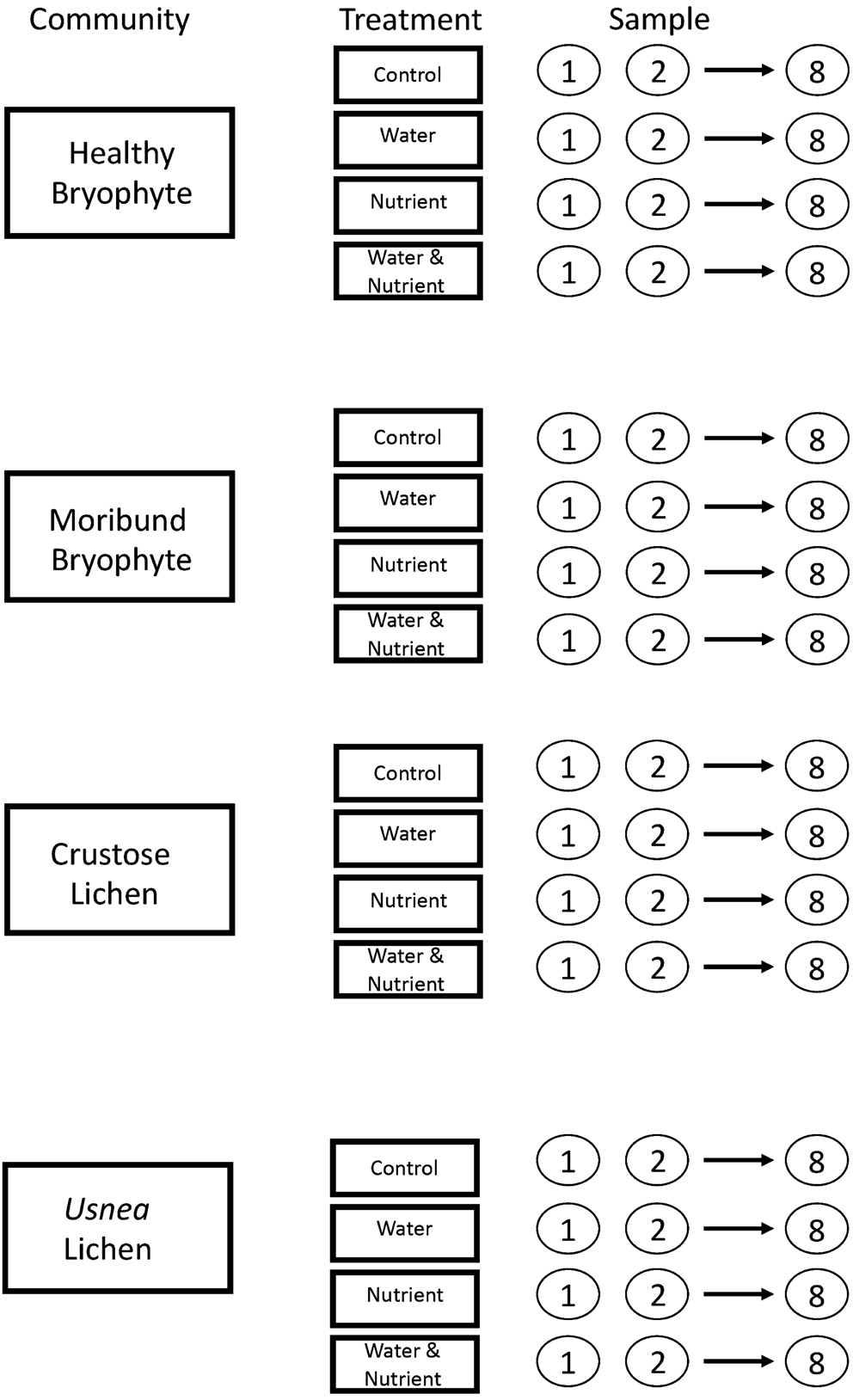
Briefly, 32 quadrats (25 × 25 cm) within each community were randomly assigned to one of the following four treatments: 1) Control (no treatment; C), 2) Water only (W), 3) Nutrient only (N) or 4) Water + Nutrient (WN). From December to February over two consecutive summer seasons (1998–99 and 1999–2000), the two water addition treatments (W and WN) received applications of 500 ml of lakewater approximately every 2 days. At the start of the treatment period (15 December 1998), 10 g of slow-release fertilizer beads (Osmocote, Scotts Australia Pty Ltd, Castle Hill, NSW, Australia) was applied to quadrats marked to receive nutrient additions. A low-phosphorous Osmocote variety was chosen, which was composed of 18.0% nitrogen, 4.8% phosphorous and 9.1% potassium.
Representative community samples were collected at the end of the treatment period (3–8 March 2000). A sample from each of the 16 treatment and community groups was collected, one sample from each replicate from each community and treatment type. Samples of ~4 cm2 were collected from the centre of each quadrat. In order to quantify the physiological responses of the vegetation within the transect, TWC, chl a concentration, nutrient content (%N, %C and %P) and stable isotopes (δ13C and δ15N) were measured. For a more detailed description of the experimental and analytical methods, see Wasley et al. (Reference Wasley, Robinson, Lovelock and Popp2006a). An aliquot for diatom community characterization was also taken, dried and archived until analysis. Thus, for our diatom study, one sample is equal to one quadrat.
Sample preparation and analyses
A total of 128 samples were originally collected (Table SI), but only 99 of these were successfully analysed due to limited amounts of material and processing failures for several samples. Samples were prepared for light microscopy (LM) observation following the method described in van der Werff (Reference Van der Werff1955). Subsamples of dried bryophytes or lichens were transferred into 50 ml beakers and soaked for 10–14 days in 37% (v/v) H2O2. Once organic matter was oxidized, the sample was boiled for ~1 h or until the total volume was reduced to < 10 ml. The liquid was left to cool for 1 h before the addition of KMnO4 to remove undigested moss material. The resultant liquid was then ‘cleaned’ with ~2–5 ml of 10% (v/v) HCl to complete the reaction. Following digestion and centrifugation (three times for 10 min at 3500 g), cleaned diatom valves were mounted on glass microscope slides using Naphrax for further LM observation.
Light microscopy was performed on an Olympus BX43 equipped with a differential interference contrast (Nomarski) optic at 1000× magnification with oil immersion. Images were taken using an Olympus PD27 colour camera with CellSens Entry 1.15 software. Diatom valves were counted in full fields of view along random transects, with at least 400 valves counted per sample (Table SII). Only in two samples was it not possible to reach 400 valves: Sample 84 (63 valves) and Sample 9 (36 valves). Due to the low overall diversity observed in the samples, these were nonetheless included in the analyses.
Taxonomic affiliations and biogeographical data were compiled based primarily on Sabbe et al. (Reference Sabbe, Verleyen, Hodgson, Vanhoutte and Vyverman2003), Van de Vijver et al. (Reference Van de Vijver, Frenot and Beyens2002, Reference Van de Vijver, Tavernier, Kellogg, Gibson, Verleyen, Vyverman and Sabbe2012), Kohler et al. (Reference Kohler, Kopalová, van de Vijver and Kociolek2015) and Zidarova et al. (Reference Zidarova, Kopalová and de Vijver2016). In the event of ambiguous or uncertain taxa, images were taken and corresponding measurements of valve length, valve width at mid-valve and stria density per 10 μm were obtained. When the identity of a taxon could not be confirmed based on the existing literature, the designations ‘cf.’ or ‘sp.’ were indicated alongside a proposed generic and/or species affiliation. In the study, a large number of Luticola D.G.Mann specimens were encountered as complete valves within girdle view, making them impossible to definitively attribute to a particular known taxon. During data collection, these specimens were thus only identified to the genus level. During data analysis, these unidentified Luticola were assigned to species (if possible) by multiplying them by the proportion of positively identified co-occurring Luticola taxa in the sample. In samples where unidentified Luticola did not co-occur alongside other Luticola taxa, they remain identified only to the genus level (< 1% of counts).
Statistical analyses
Count data were first transformed to relative abundances by dividing individual counts by the total number of valves counted for the corresponding sample. From these, diversity indices including genera and species richness, evenness and Shannon's diversity (log10 based) were calculated as described previously (Sakaeva et al. Reference Sakaeva, Sokol, Kohler, Stanish, Spaulding and Howkins2016). A series of two-factor analysis of variance (ANOVA) tests were performed to examine whether the treatments (C, W, N and WN), vegetation type (healthy bryophytes, moribund bryophytes, crustose lichens and lichens of the genus Usnea) or their interactions significantly influenced diversity metrics. Significant results were followed by applying Tukey's honest significant difference (HSD) test in order to compare directly the means between categories. Statistical significance was designated at α = 0.05 and P-values are reported.
Four genera dominated the dataset and accounted for a large majority of the total valves counted. As such, the relative abundances of these four genera were extracted for each sample in order to test their response to the different treatments and vegetation types using ANOVA and Tukey's HSD test, as described above. The dataset is composed of Luticola D.G.Mann (12 taxa), Humidophila R.L. Lowe, Kociolek, Johansen, Van de Vijver, Lange-Bertalot & Kopalová (5 taxa), Psammothidium Buhtkiyarova & Round (3 taxa) and Pinnularia Ehrenberg (1 taxon).
Initial exploration of community data began with the creation of dot plot diagrams and continued with the creation of ordinations. Rare taxa were filtered from the dataset, excluding taxa occurring at < 1% relative abundance. Diatom relative abundance data were Hellinger transformed (Legendre & Gallagher Reference Legendre and Gallagher2001), and redundancy analyses (RDAs) constrained the dataset separately by treatment and for each individual vegetation type in order to quantify their role in explaining community structure using the vegan package, version 2.5-6 (https://CRAN.R-project.org/package=vegan) in R. In order to test whether diatom community structure differed significantly between vegetation types and treatments, permutational ANOVA (PERMANOVA; Anderson Reference Anderson2001) was performed, with significance designated at α = 0.05.
In order to determine whether the physiological characteristics of the bryophyte and lichen vegetation would influence diatom communities, 76 samples of the total of 99 included in this study, which contained the full suite of variables examined by Wasley et al. (Reference Wasley, Robinson, Lovelock and Popp2006a), were analysed further. These raw data (Table SIII) were examined and, if needed, transformed in order to induce a normal distribution. The TWC and δ15N underwent a logarithmic transformation (log10 based), whereas %N, %P and chl a concentration were transformed using the natural logarithm (loge based). Lastly, δ13C data were transformed by taking the absolute value of the term, applying log10 transformation and multiplying the values by negative one (-1) in order to maintain the sign and directionality from the original data. Only one variable, %C, was left untransformed.
A principal component analysis (PCA) was performed in order to investigate the large-scale relationships between the variables with the calculated diversity indices. In order to investigate the individual relationships of measured vegetation characteristics with diatom communities, a distance-based RDA (db-RDA) using Hellinger-transformed relative abundance data was performed using vegan. An ANOVA test was performed on the individual terms of the db-RDA using 999 permutations in order to test the statistical significance of the individual terms within the model. All visualizations and statistical analyses were performed using the R console, version 3.5.0 (https://www.R-project.org).
Results
Diatom flora
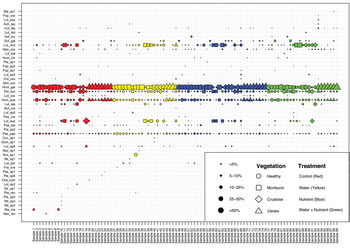
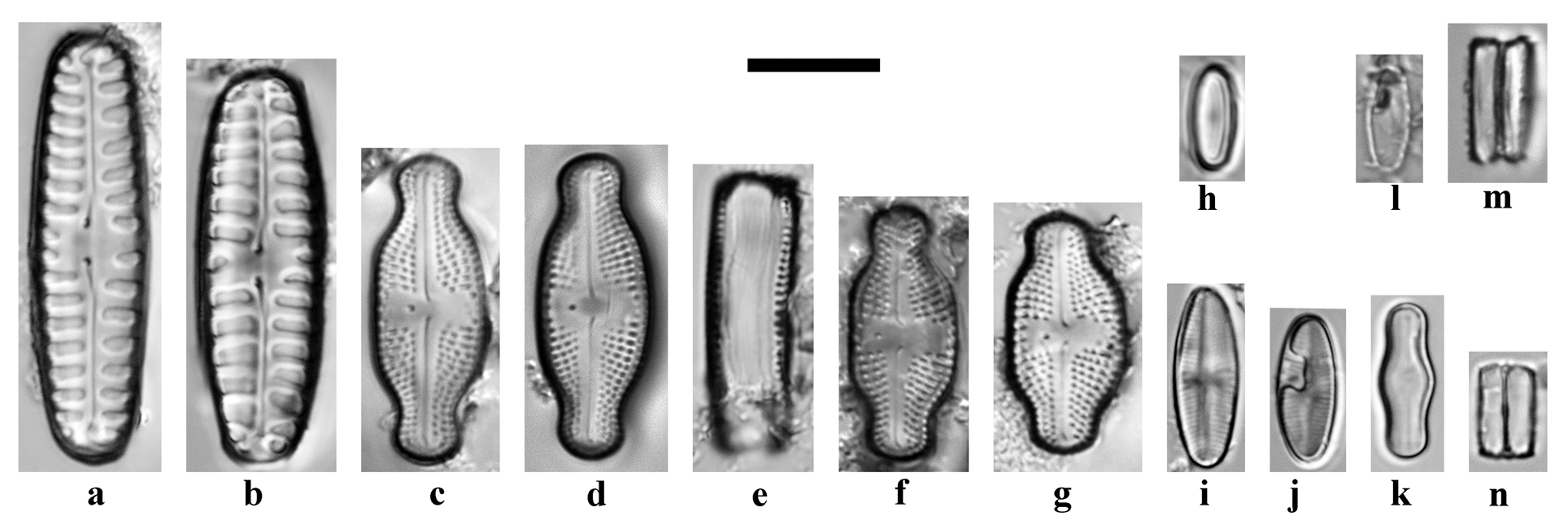
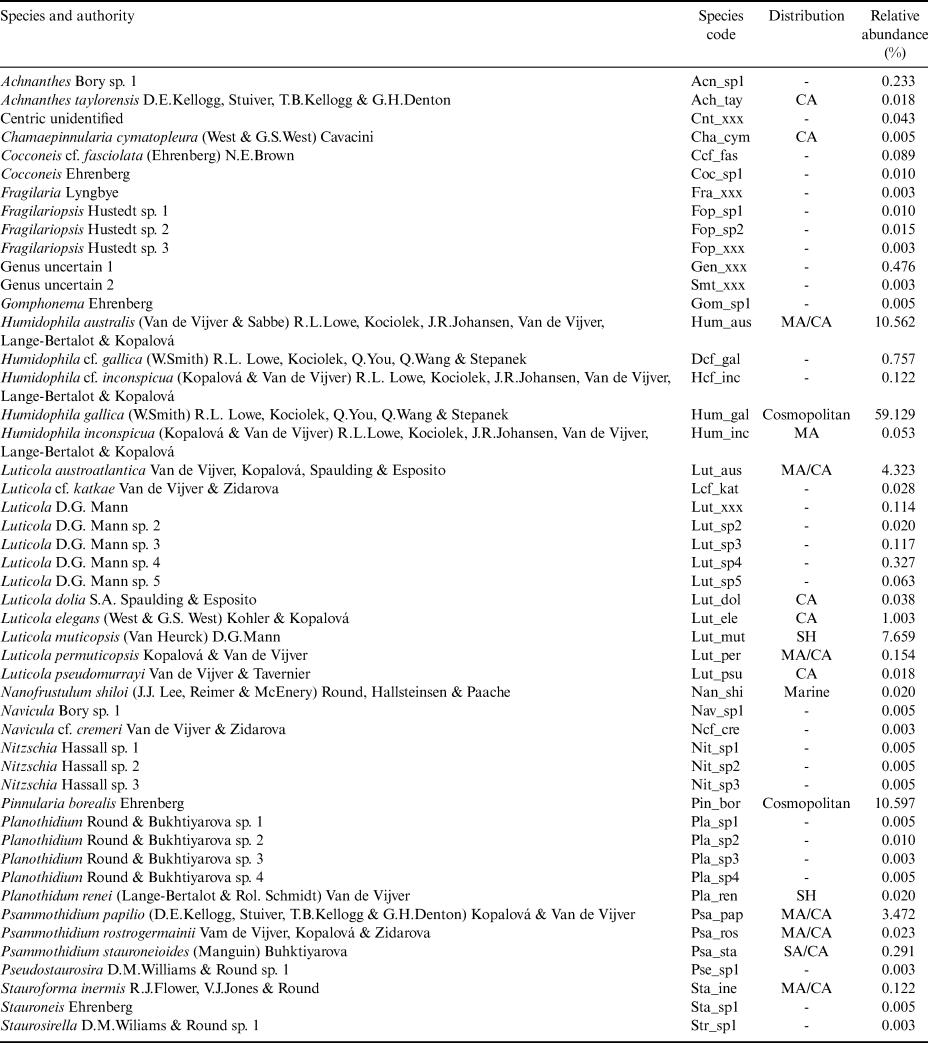
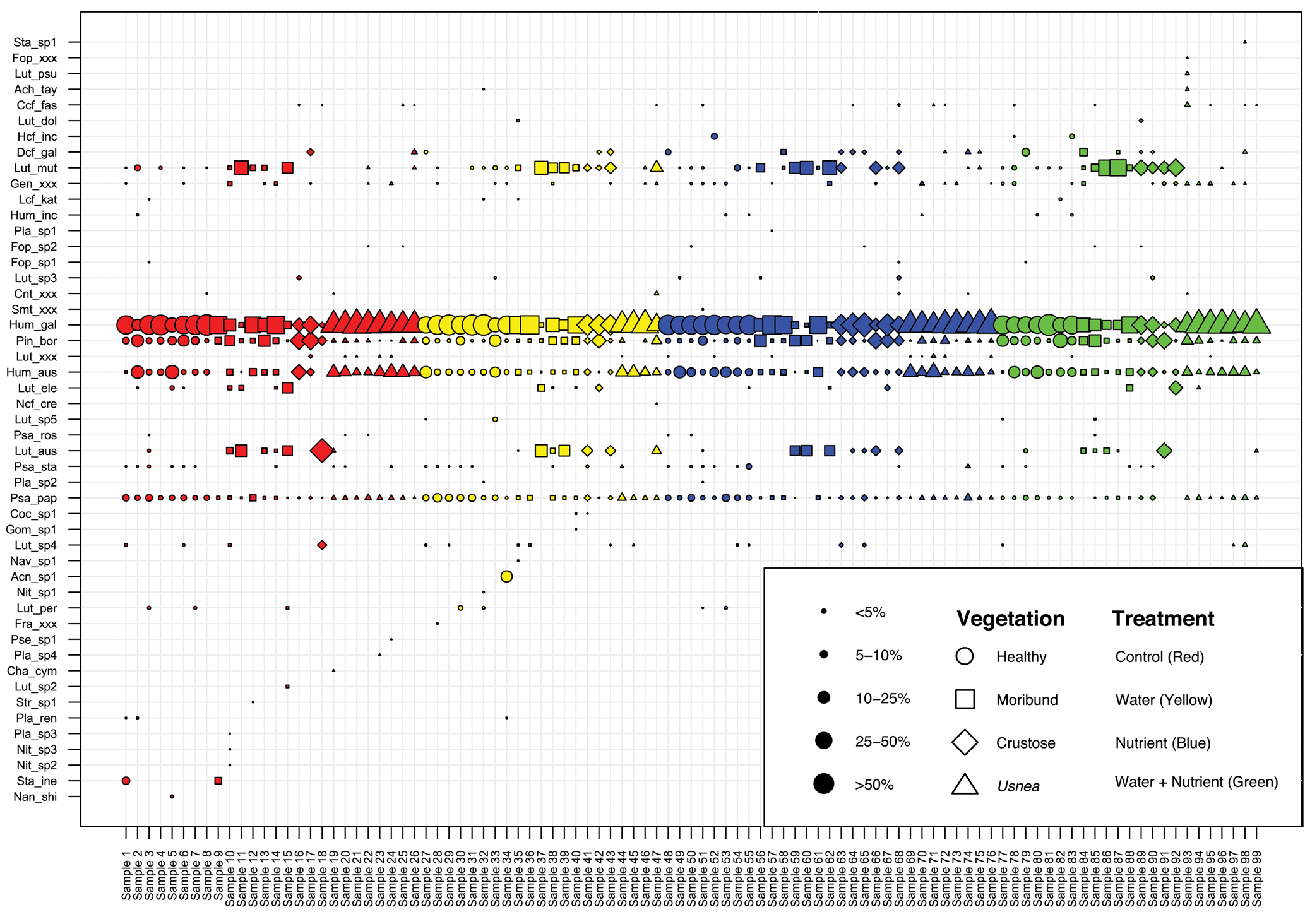
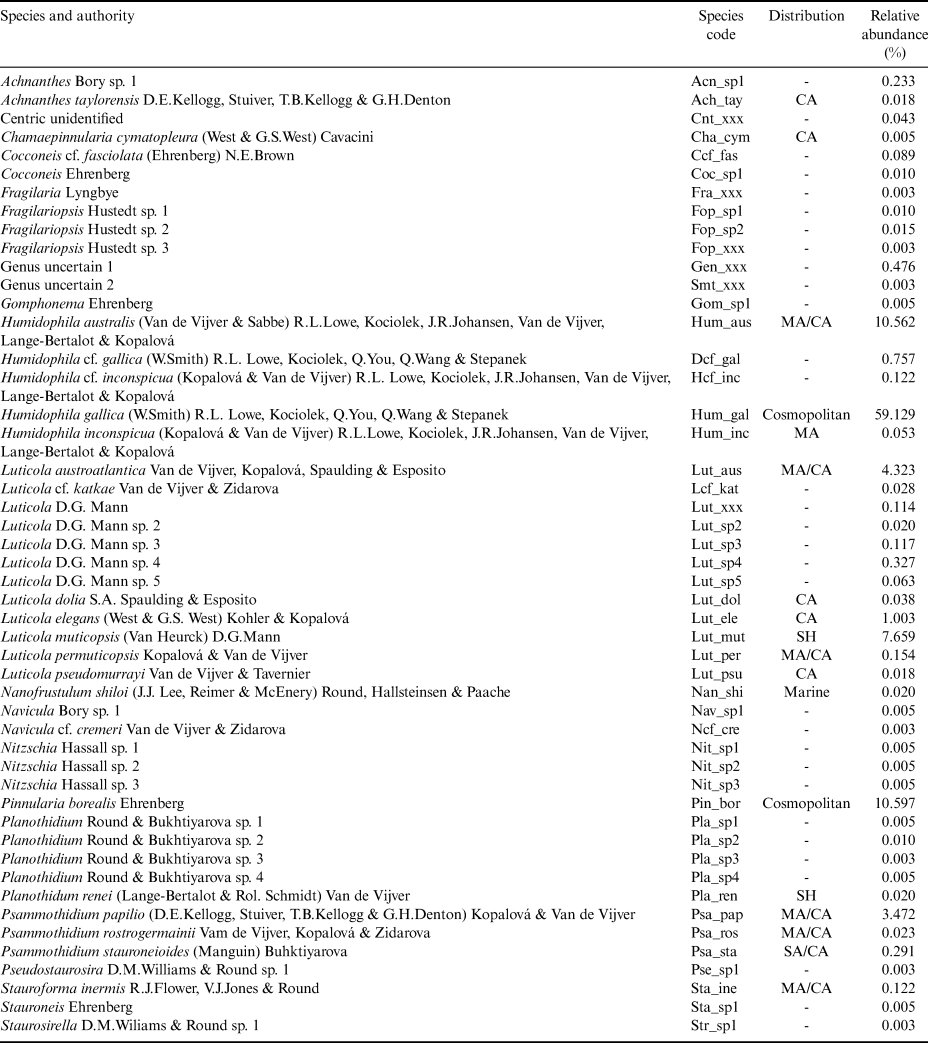
Overall, 49 taxa belonging to 20 genera were observed. Table II presents all diatom taxa as species, forms and varieties encountered within the study. The genera Luticola (12 taxa) and Humidophila (5 taxa) were the most diverse, and together with Pinnularia and Psammothidium constituted the four most abundant genera. The five most abundant taxa, representing ~92% of all valves counted within the analysis, are: Humidophila gallica (W.Smith) R.L. Lowe, Kociolek, Q.You, Q.Wang & Stepanek (59%), Humidophila australis (Van de Vijver & Sabbe) R.L.Lowe, Kociolek, J.R.Johansen, Van de Vijver, Lange-Bertalot & Kopalová (~11%), Pinnularia borealis Ehrenberg (~11%), Luticola muticopsis (Van Heurck) D.G.Mann (8%) and Luticola austroatlantica Van de Vijver, Kopalová, Spaulding & Esposito (4%). At least one of these five most abundant taxa occurred in each sample (Fig. 2), and only eight taxa occurred with a relative abundance of > 1% in the study as a whole (Fig. 3).
Dot plot diagram of all diatom taxa across all samples within the study. Diatom species codes shown on the y-axis are defined in Table II. Treatments are colour coded within the plot: Control (red), Water (yellow), Nutrients (blue) and Water + Nutrients (green). Vegetation type is coded by shape: circles (healthy bryophyte), squares (moribund bryophyte), diamonds (crustose lichen) and triangles (Usnea lichen).
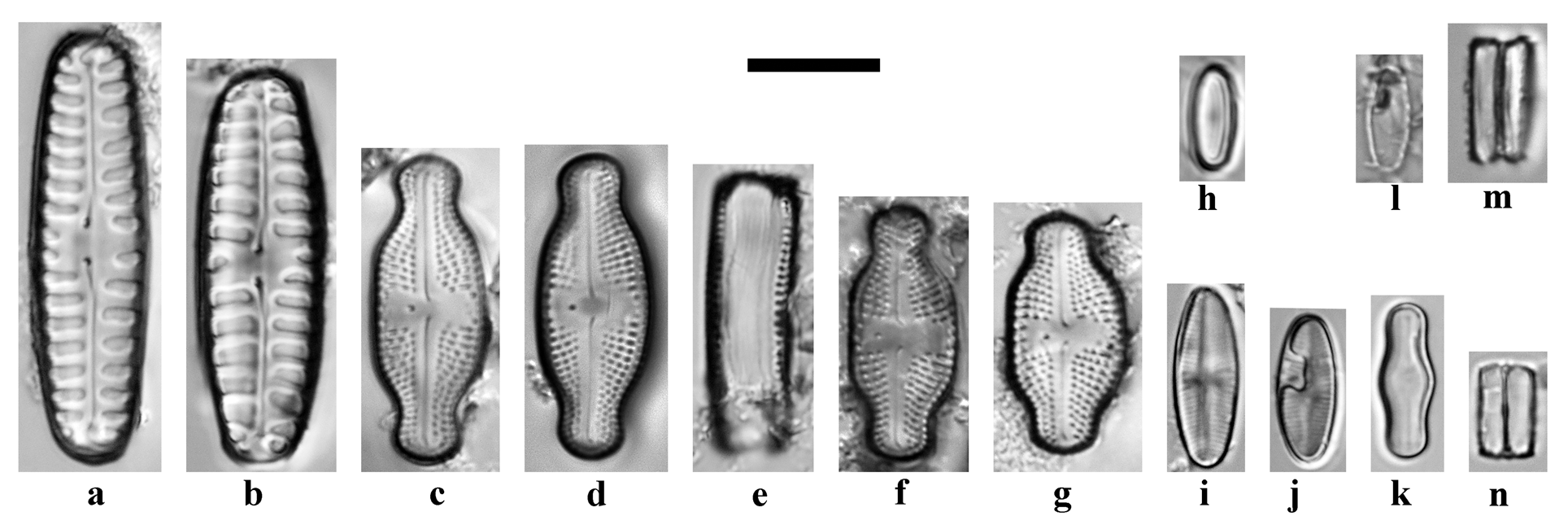
Common diatom species associated with bryophyte and lichen vegetation types. All taxa shown occurred at ≥ 1% relative abundance across samples. a. & b. Pinnularia borealis. c. & d. Luticola austroatlantica. e. Luticola in girdle view. f. & g. Luticola muticopsis. h. Humidophila cf. gallica. i. & j. Psammothidium papilio. l. & m. Humidophila gallica. k. & n. Humidophila australis. Central 10 μm scale bar applies to all images.
Diatom species, authorities and geographical distribution for taxa observed within the study. Distribution data codes are as follows: Continental Antarctica (CA), Maritime Antarctica (MA), sub-Antarctica (SA), globally distributed (Cosmopolitan), Southern Hemisphere (SH) and marine species (Marine).
Diversity metrics
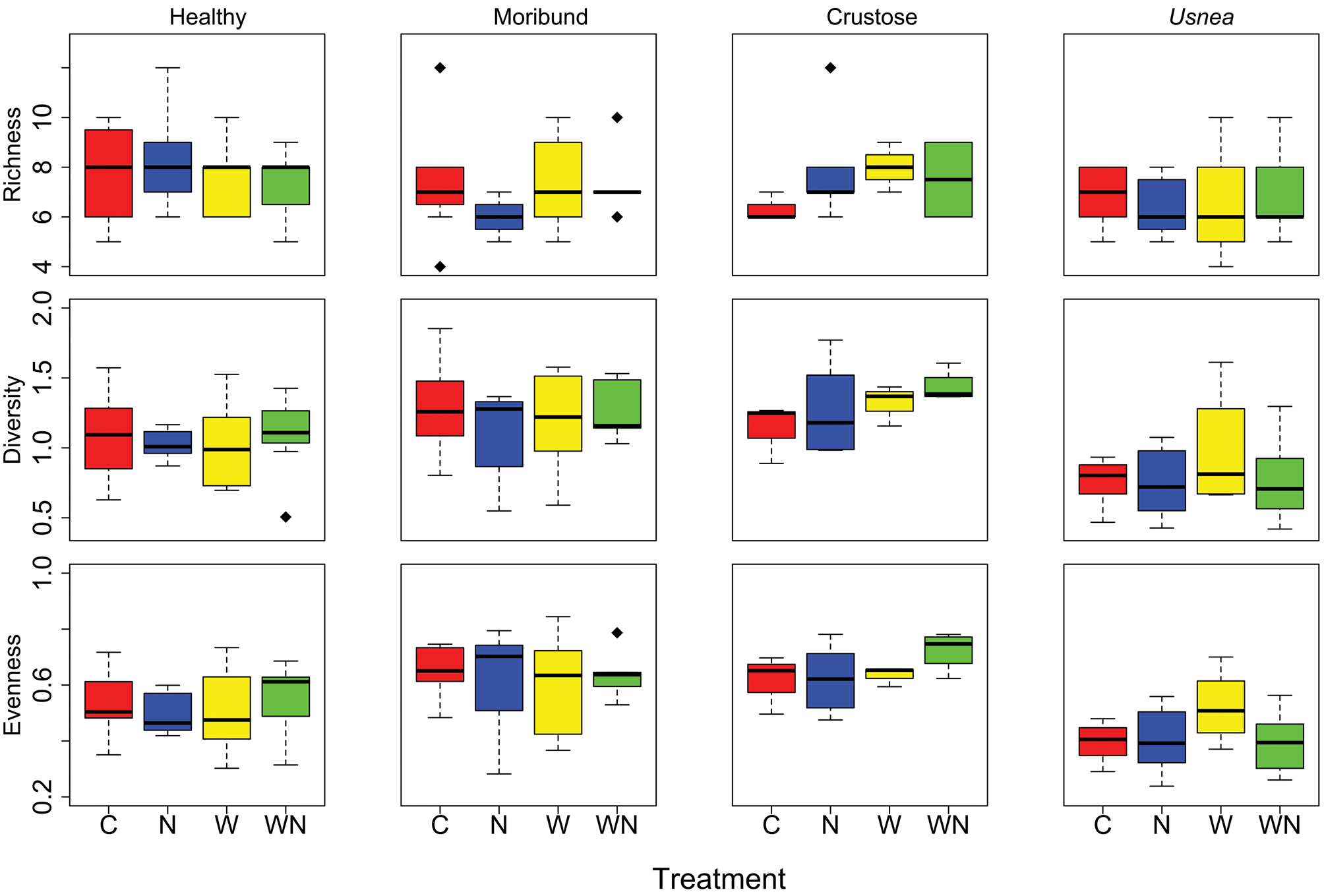
Box plots displaying species richness, Shannon's diversity and evenness, grouped by vegetation type and separated by treatment (Fig. 4), show species richness ranging between 4 and 12 taxa per sample. An average of seven taxa (median = 7) was observed across the samples. Shannon's diversity, ranged between 0.4 and 1.8 for all samples, and the majority possessed a value of ~1. Evenness scores for the majority of samples were between ~0.2 and 0.8, with the upper extreme value of 0.8 being observed only once.
Box plots of species richness, Shannon's diversity index and evenness arranged by vegetation type and treatment. Treatments are colour coded, with abbreviations, within the plot: Control (red, C), Water (yellow, W), Nutrients (blue, N) and Water + Nutrients (green, WN). Vegetation types follow the designations ‘Healthy’ (healthy bryophyte), ‘Moribund’ (moribund bryophyte), ‘Usnea’ (Usnea lichen) and ‘Crustose’ (crustose lichen).
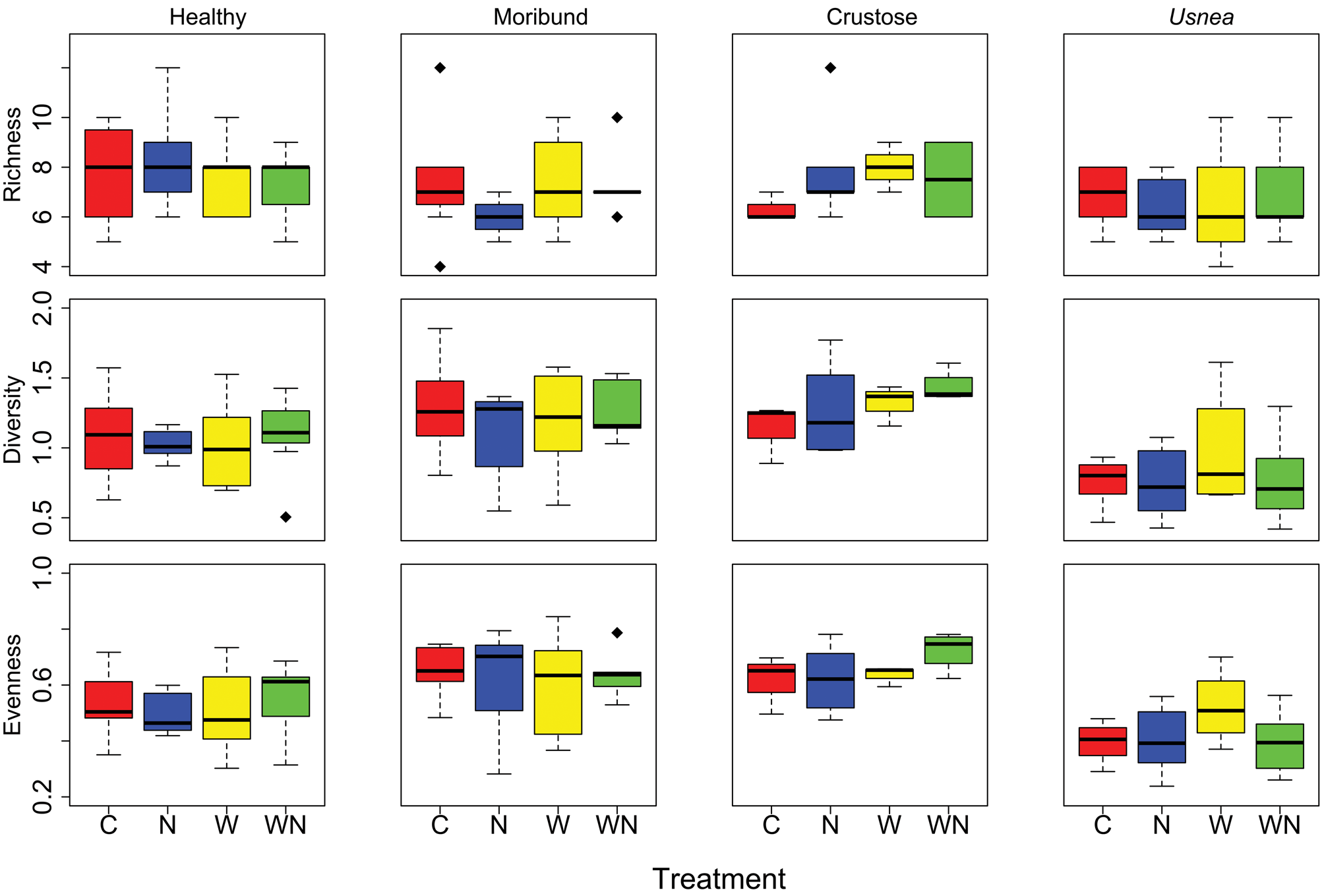
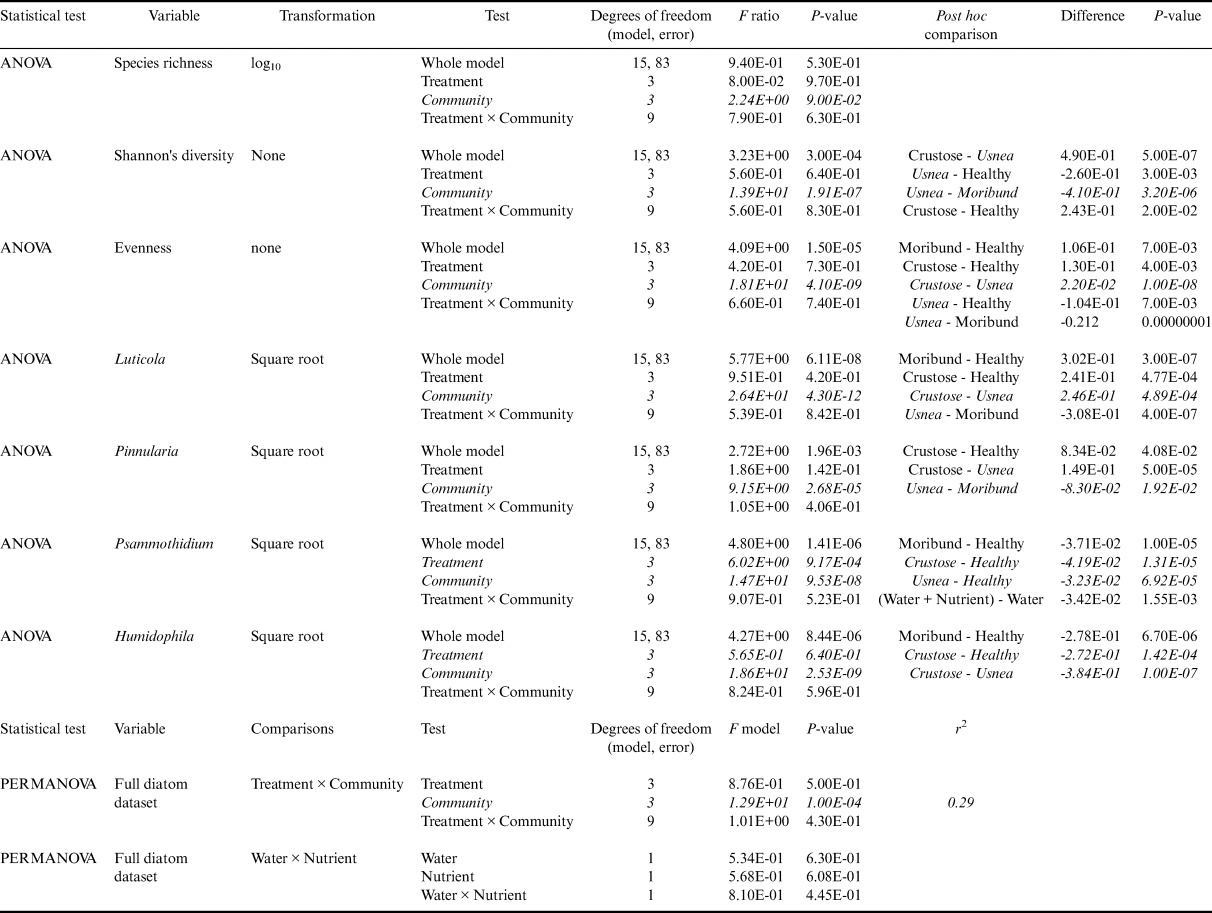
Across all three diversity metrics, neither treatment nor the interaction between treatment and vegetation type was significant (Table III). While vegetation type also did not have a significant effect on species richness, it did have a significant effect on Shannon's diversity (P < 0.01) and evenness (P < 0.01). Specifically, Usnea vegetation had lower Shannon's diversity than healthy (P = 0.003) and moribund (P < 0.01) bryophytes, and crustose lichens had significantly greater Shannon's diversity than Usnea (P < 0.01). Post hoc analysis of evenness between vegetation types showed that both moribund bryophytes (P = 0.007) and crustose lichens (P = 0.004) had significantly greater values than healthy bryophytes. Crustose lichen diatom community evenness was also greater than in Usnea (P < 0.001), and Usnea evenness values were lower than in healthy bryophytes (P = 0.007).
The results of the analysis of variance (ANOVA), permutational analysis of variance (PERMANOVA) and redundancy analysis (RDA) models. Significant results are in italics.

Patterns between the four most abundant genera
Relative abundances of the genera Luticola, Pinnularia and Humidophila were significantly different between vegetation types, although there were no significant differences among treatments when examined with two-way ANOVA (Table III). Only the genus Psammothidium showed significantly different relative abundances between vegetation types and among treatments. Specifically, healthy bryophytes contained more Psammothidium taxa than did moribund (P < 0.01), Usnea (P < 0.01) and crustose (P < 0.01) vegetation types. Post hoc analysis of treatment categories showed that the WN treatment had lower relative abundances of Psammothidium than the W treatment (P < 0.01).
Moribund (Tukey's HSD test, P < 0.01) and crustose (P < 0.01) vegetation types had greater relative abundances of Luticola than healthy bryophytes. Relative abundances of Luticola were also greater in crustose lichens than in Usnea (P < 0.01), but lower in Usnea than in moribund bryophytes (P < 0.01). Larger relative abundances of Pinnularia were observed upon crustose lichens than in both healthy bryophyte (P = 0.04) and Usnea (P < 0.01) vegetation. Pinnularia relative abundances were lower on Usnea than moribund bryophyte vegetation (P = 0.02). Lastly, Humidophila showed lower relative abundances on moribund bryophytes than for healthy bryophytes (P < 0.01) and Usnea (P < 0.01) vegetation, while relative abundances on moribund bryophytes were lower than healthy bryophytes (P < 0.01).
Community analyses
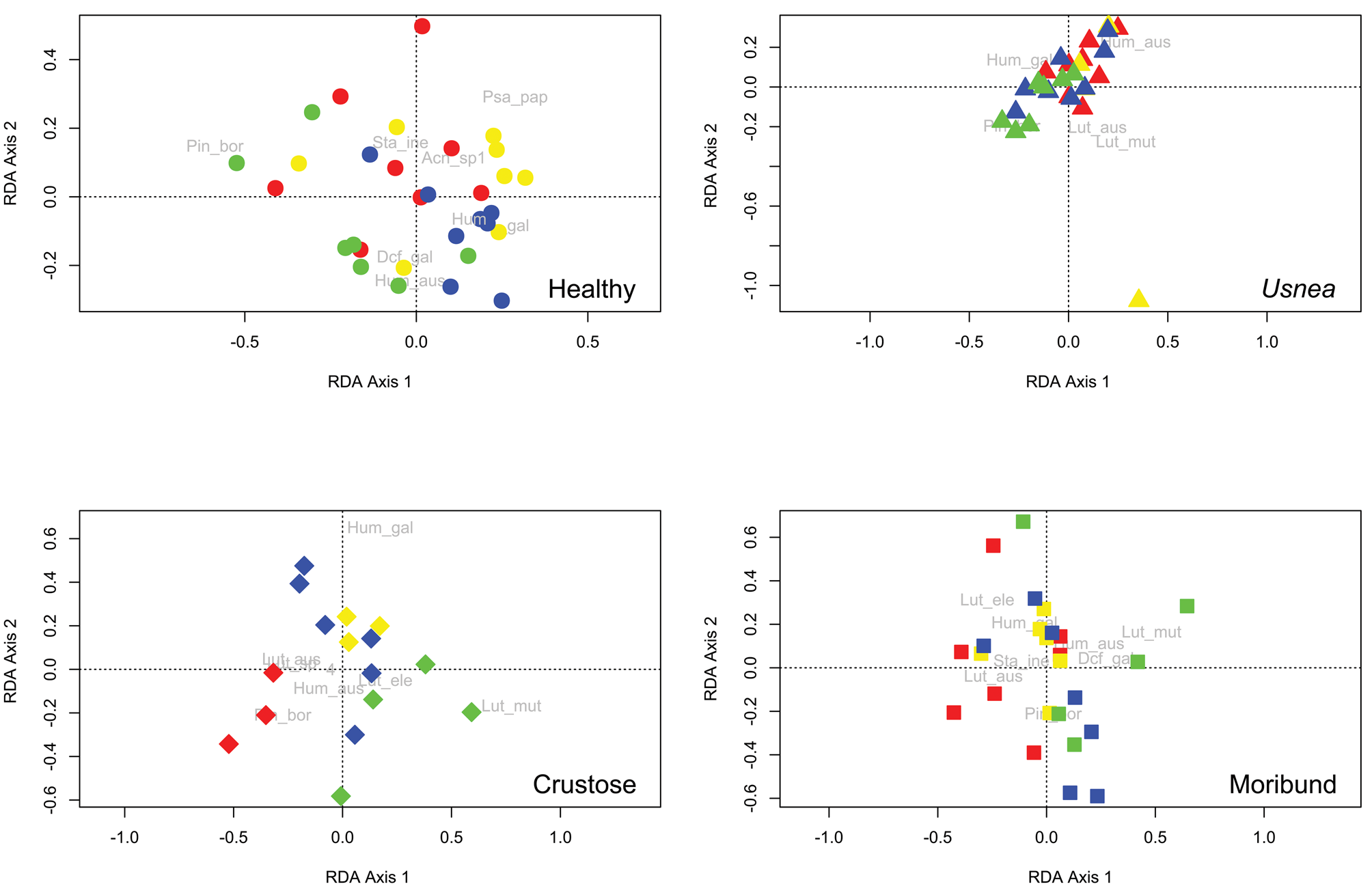
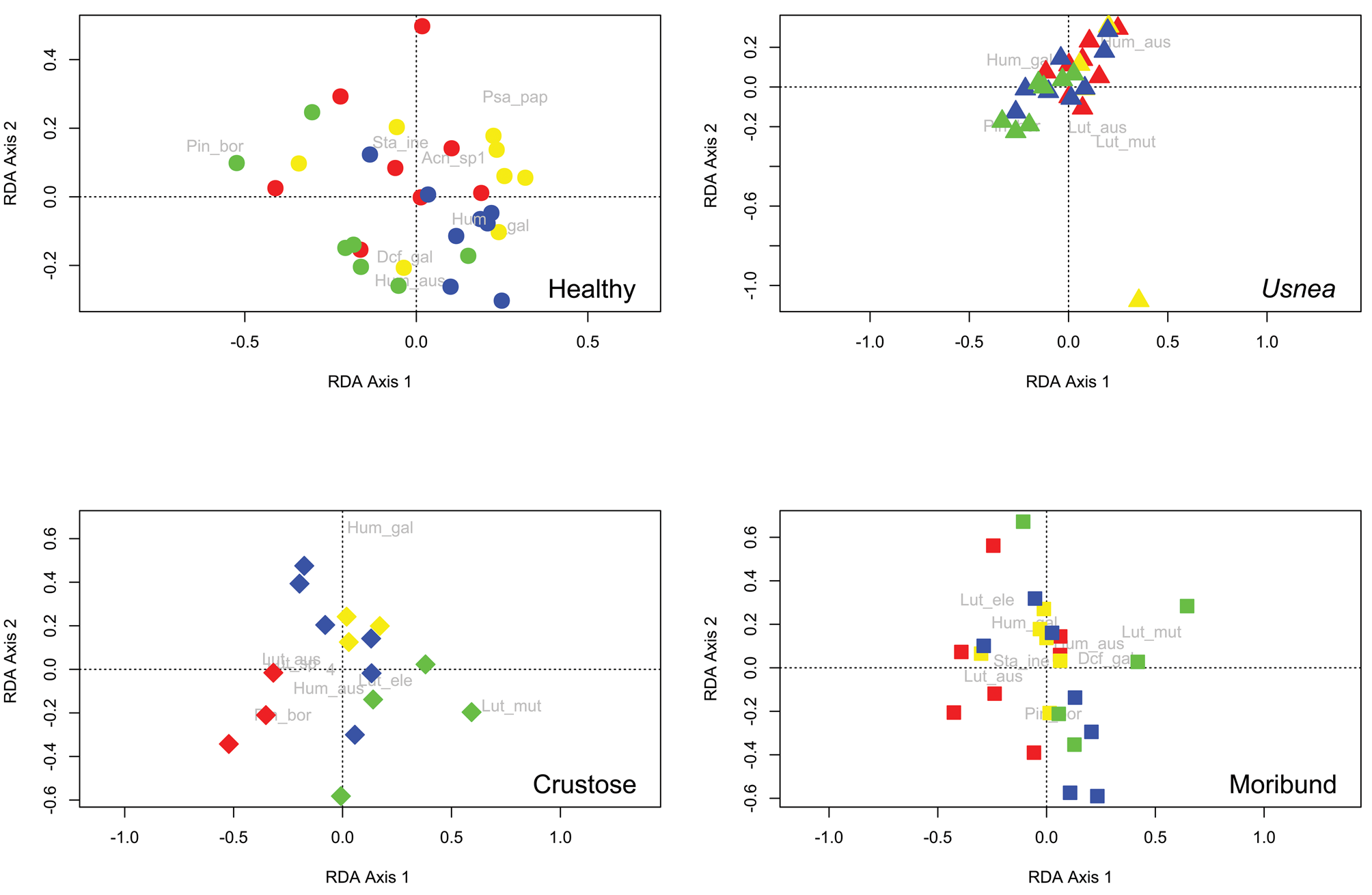
Overall, the most conspicuous differences in diatom species between vegetation types were for two species of Luticola. Specifically, both Luticola muticopsis and Luticola austroatlantica were primarily associated with moribund bryophytes and crustose lichens (Fig. 2). The PERMANOVA showed that diatom communities were significantly different among the different vegetation types (P < 0.01, r 2 = 0.29; Table III). To investigate the differences between these vegetation types as a function of nutrient/water treatment, separate RDAs were performed for each vegetation type, where diatom relative abundance data were constrained against treatments (Fig. 5). However, no apparent ‘groupings’ of samples or species by treatment were present, and the total variance explained for each RDA was between 3% for Usnea and 23% for moribund vegetation types. Furthermore, when tested with PERMANOVA, diatom communities were not statistically different between treatments or when explained with the combined effect of treatment and vegetation type (Table III).
Results of redundancy analyses (RDAs) grouped by vegetation type, displaying diatom taxa (codes defined in Table II) aligned against treatment. Individual vegetation types are labelled within the corner of each RDA. Vegetation type is coded by shape: circles (healthy bryophyte), squares (moribund bryophyte), diamonds (crustose lichen) and triangles (Usnea lichen). Treatments are colour coded within each plot: Control (red), Water (yellow), Nutrients (blue) and Water + Nutrients (green).
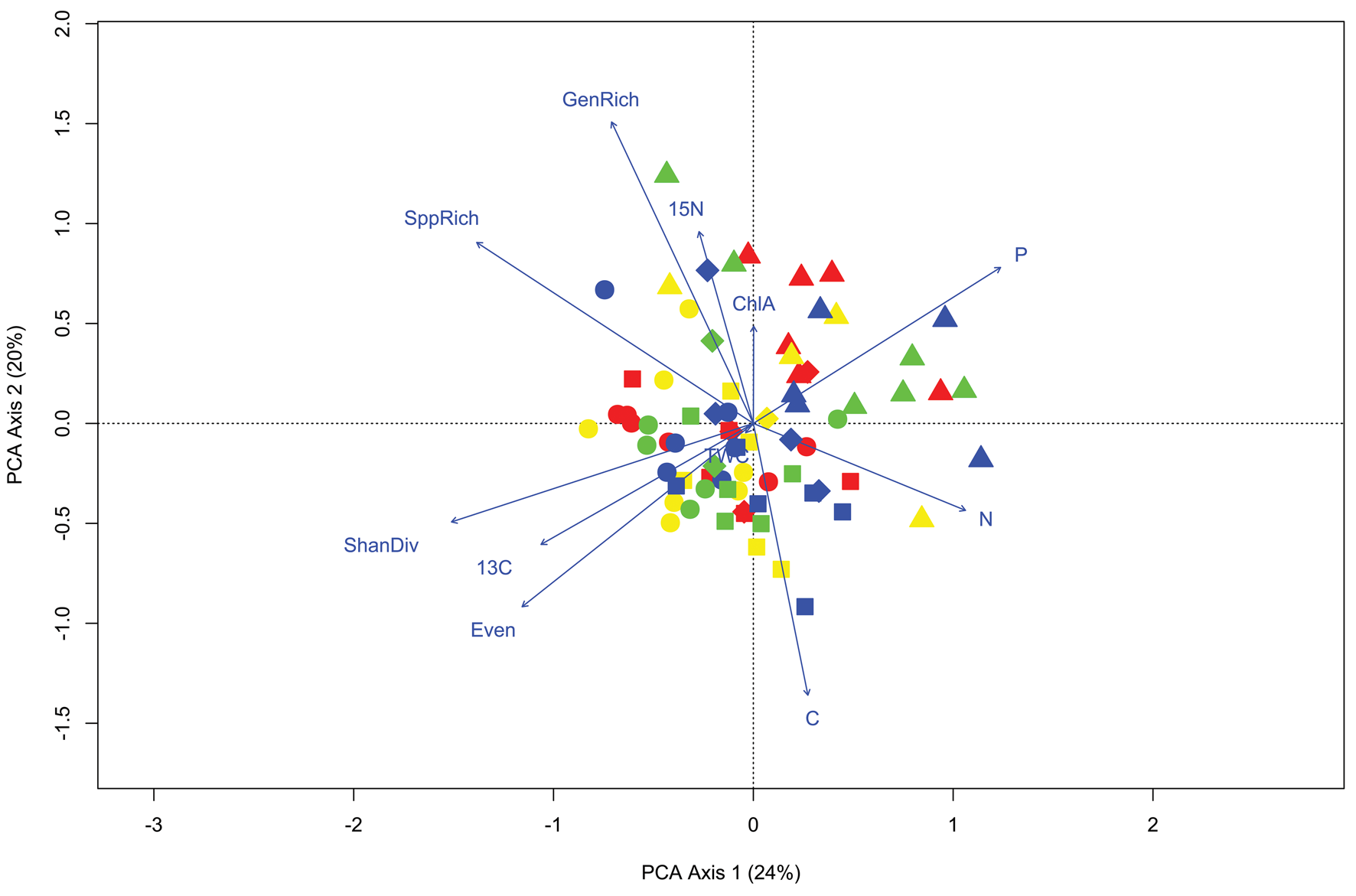
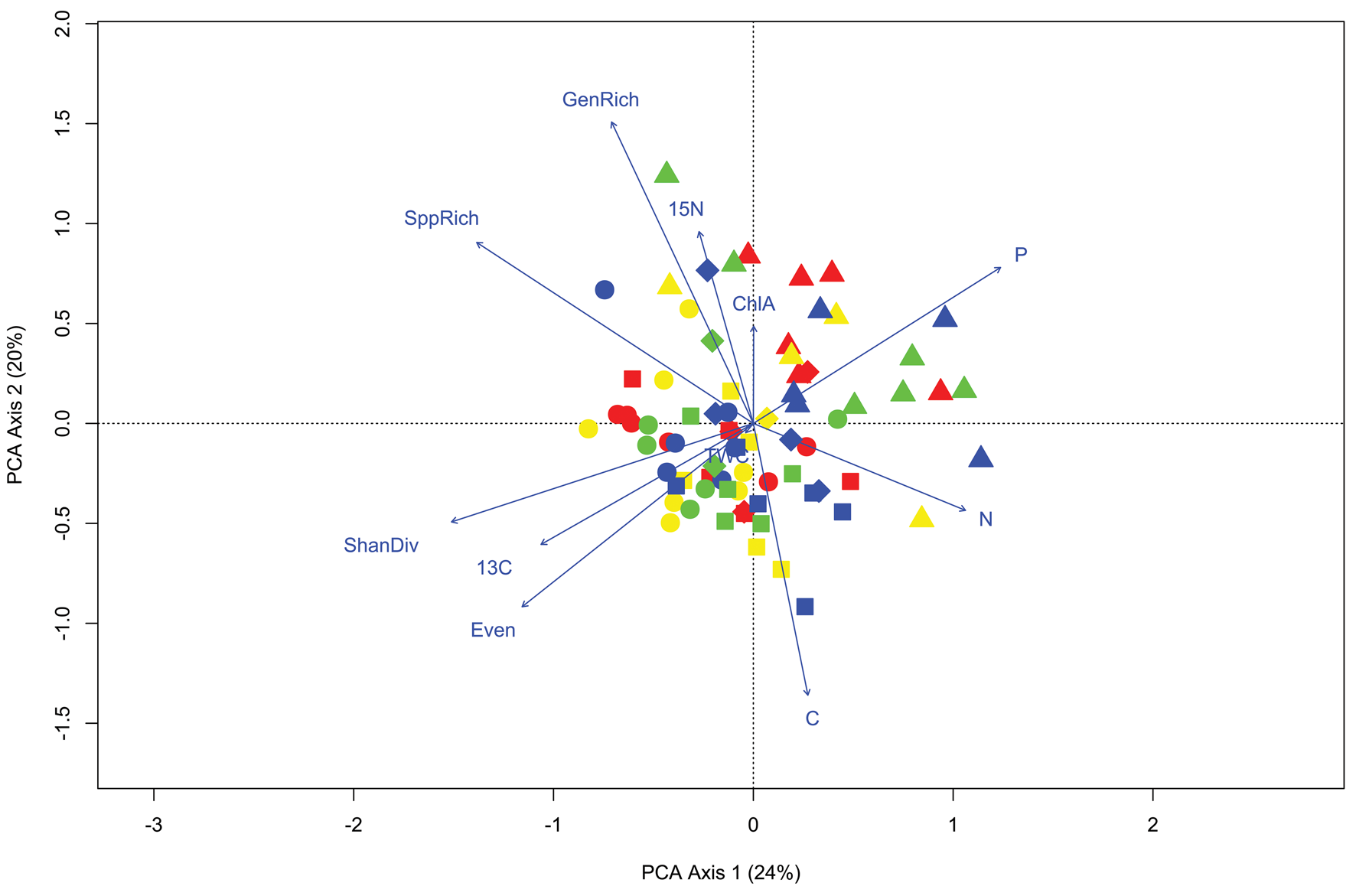
The results of the PCA (Fig. 6) comparing vegetation physiological characteristics and diatom diversity variables showed a number of important relationships, with the primary and secondary axes accounted for 24% and 20% of the total variation explained, respectively. In general, bryophyte communities (squares and circles in Fig. 6) were arranged more towards the bottom-left of Fig. 6, while lichens (triangles and diamonds in Fig. 6) appeared more towards the top-right of Fig. 6. Thus, %P was positively associated with lichen communities, and with Usnea in particular, while δ13C was positively related to healthy bryophytes. Furthermore, moribund bryophytes and crustose lichens showed positive associations with %N, while healthy bryophytes were negatively associated with %N. Diversity indices were overall inversely correlated with the nutrient content of the host vegetation, with Shannon's diversity and evenness both being negatively correlated with %P (and thus positively related to δ13C and bryophyte vegetation), and both species and genera richness were negatively correlated with %N. Overall, chl a and TWC explained very little of the overall variability.
The results of a principal component analysis (PCA) comparing bryophyte and lichen physiological variables (%P (P), %N (N), %C (C), chl a content (ChlA), total water content (TWC) and stable δ13C (13C) and δ15N (15N)) and diatom diversity data (Shannon's diversity index (ShanDiv), evenness (Even), species richness (SppRich) and genera richness (GenRich)). Vegetation type is coded by shape: circles (healthy bryophyte), squares (moribund bryophyte), diamonds (crustose lichen) and triangles (Usnea lichen). Treatments are colour coded within the plot: Control (red), Water (yellow), Nutrients (blue) and Water + Nutrients (green).
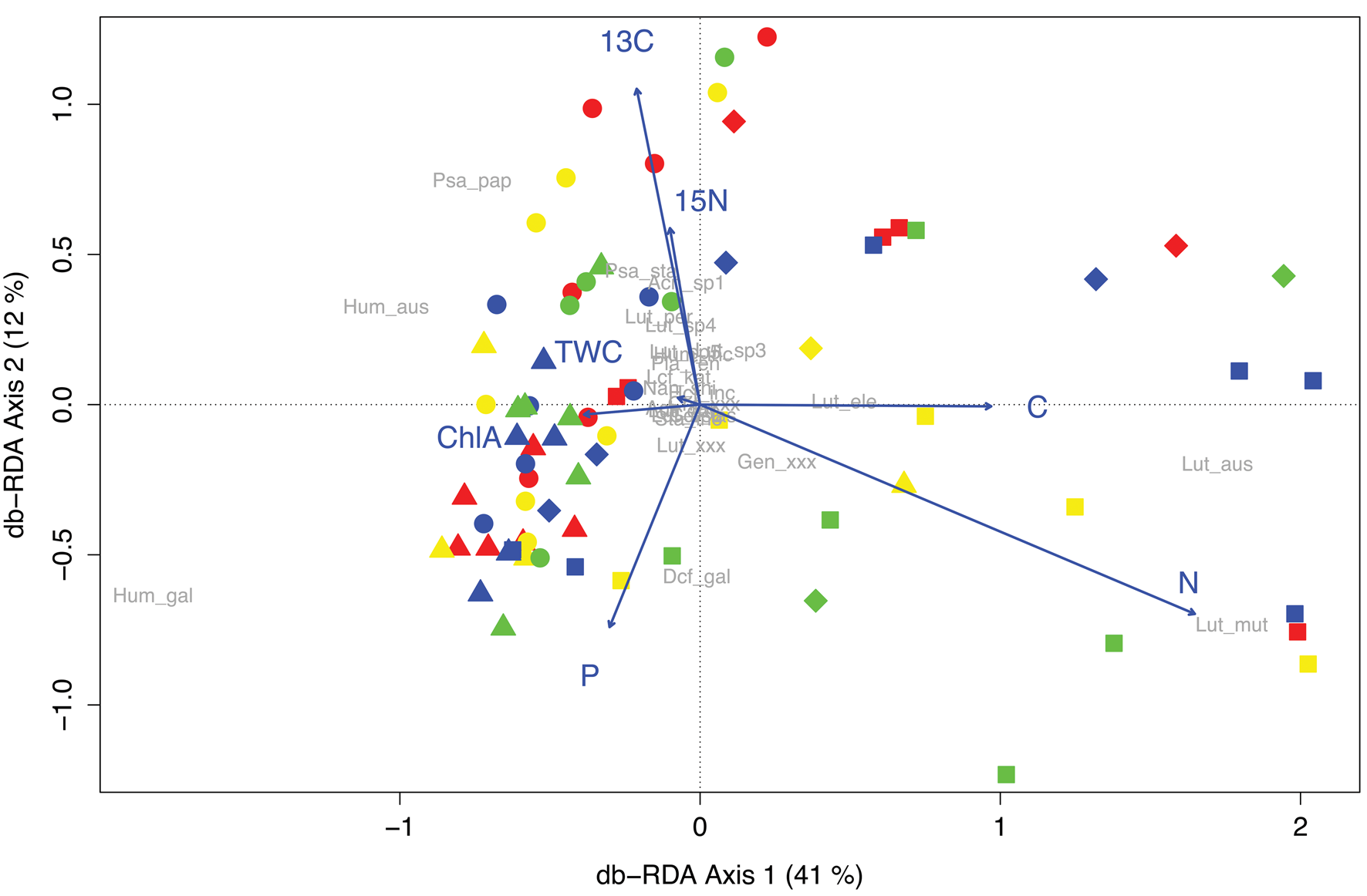
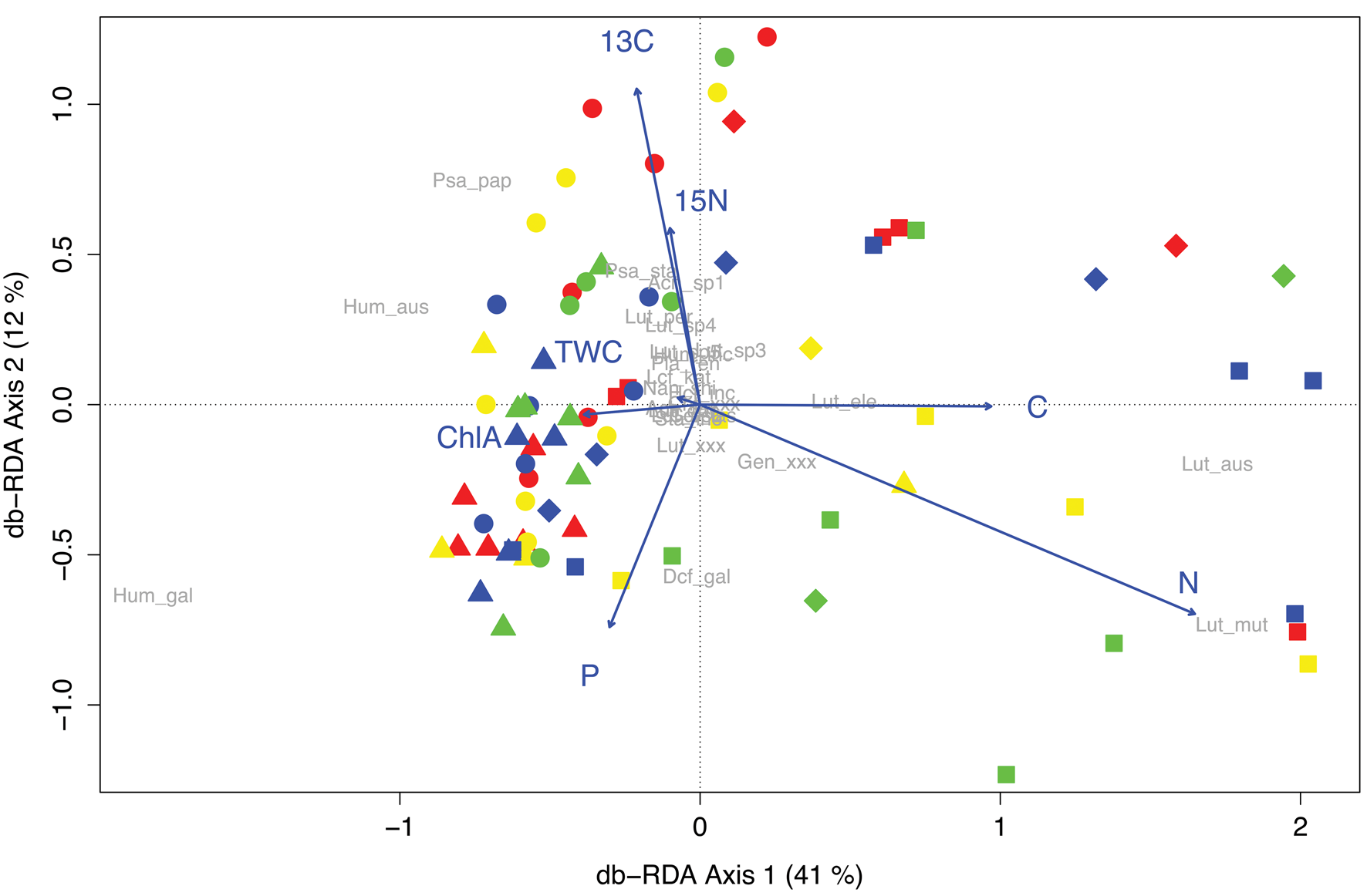
Diatom species relative abundance data were also compared with vegetation characteristics using a db-RDA, which explained a total of 53% of the variability in the dataset (Fig. 7). Overall, the primary and secondary axes explained 41% and 12% of the variation, respectively. The ANOVA revealed that only two terms, %N (P = 0.003) and %P (P = 0.024), were individually significant within the model. The most prominent relationship was between the %N content of vegetation and L. muticopsis (Lut_mut) on the primary axis of the ordination (Fig. 7), and perhaps to a lesser extent L. austroatlantica. Other diatom species such as H. australis and Psammothidium species, such as Psammothidium stauroneioides (Psa_sta) and Psammothidium papilio (Psa_pap), were negatively correlated with %N, and H. cf. gallica (Dcf_gal) was positively associated with vegetation %P. Lastly, P. stauroneioides and P. papilio were both positively associated with δ13C and δ15N.
The results of a distance-based redundancy analysis (db-RDA) using Hellinger-transformed relative abundances constrained against moss physiological variables (%P (P), %N (N), %C (C), chl a content (ChlA), total water content (TWC) and stable isotopes δ13C (13C) and δ15N (15N)). Vegetation type is coded by shape: circles (healthy bryophyte), squares (moribund bryophyte), diamonds (crustose lichen) and triangles (Usnea lichen). Treatments are colour coded within the plot: Control (red), Water (yellow), Nutrients (blue) and Water + Nutrients (green). Diatom species codes are defined in Table II.
Discussion
In this study, we examined the epiphytic diatom communities of four terrestrial vegetation types (healthy and moribund bryophytes as well as crustose and Usnea lichens) that received four different treatments (C, W, N and WN). We found vegetation type to be a highly influential factor for both diatom diversity metrics and community structure, but we did not observe a significant effect of the different treatments. However, relationships between diatom community structure and vegetation physiological characteristics suggest that the long-term availability of water and nutrients is still important, if only indirectly, by favouring different vegetation types. These results suggest that conditions favouring diatom habitat loss or gain via bryophyte and lichen vegetation contraction/expansion may have widespread implications for terrestrial diatom diversity and distributions in Antarctica.
Terrestrial diatom communities within the Antarctic realm
The current study provides some of the first observations of diatoms associated with bryophyte and lichen vegetation types from the Windmill Islands of East Antarctica. Previous studies throughout the Windmill Islands have examined benthic diatoms within marine bays (Cunningham & McMinn Reference Cunningham and McMinn2004) and lake and pond sediments (Roberts et al. Reference Roberts, McMinn, Johnston, Gore, Melles and Cremer2001), although the current study differs from these in both its ecological setting and the observed flora. In the present work, the predominant taxa belong to the genera Luticola, Psammothidium, Pinnularia and Humidophila, and the flora is markedly different than that reported from moss diatom communities from both the Maritime Antarctic and sub-Antarctic biogeographical regions, as well as other East Antarctic localities.
For example, the McMurdo Dry Valleys Long Term Ecological Research (LTER) Project has maintained a database of diatom counts from throughout the McMurdo Dry Valleys (MDV) spanning several decades (http://mcm.lternet.edu). Here, the predominant moss-inhabiting genera include Hantzschia Grunow and Nitzschia Hassall, and common species include Hantzschia amphioxys (Ehrenberg) Grunow, known to be a species complex (Souffreau et al. Reference Souffreau, Vanormelingen, van de Vijver, Isheva, Verleyen, Sabbe and Vyverman2013), and Nitzschia australocommutata Hamsher, Kopalová, Kociolek, Zidarova & Van de Vijver. These taxa are often present at ~30% and 40% relative abundances, respectively (http://huey.colorado.edu/diatoms), although they were effectively absent from our study, highlighting major biogeographical differences between continental Antarctic localities. However, similar to the present study, sites within the MDV still contain overall species richness values of 10–20 species per site.
Observed species richness is much greater from the Maritime Antarctic region, including Livingston and James Ross islands, with 123 and 57 moss diatom species reported, respectively (Kopalová et al. Reference Kopalová, Ochyra, Nedbalová and van de Vijver2014). Although the Maritime Antarctic and continental Antarctic regions share common genera, they are far more speciose in the former. On Livingston Island, Humidophila (reported as Diadesmis Kützing), Muelleria (Frenguelli) Frenguelli, Navicula Bory and Nitzschia all contained 7 species each, whereas the dominant genera Pinnularia, Luticola and Psammothidium contained 16, 13 and 9 species, respectively. Upon James Ross Island, Luticola, Diadesmis and Pinnularia featured 11, 6 and 5 species, respectively, with the species complex Pinnularia borealis (Pinseel et al. Reference Pinseel, Kulichová, Scharfen, Urbánková, van de Vijver and Vyverman2019), Hantzschia amphioxys and Nitzschia perminuta Grunow appearing at 24.6%, 10.7% and 8.9% relative abundances across sites, respectively (Kopalová et al. Reference Kopalová, Ochyra, Nedbalová and van de Vijver2014). In contrast to the mosses, Chattová (Reference Chattová2018) reported 56 diatom species from lichens on James Ross Island, with Luticola, Hantzschia and Pinnularia being the most common genera, and with richness ranging from 7 to 23 species per sample.
Diatom vegetation-type preferences
Our findings that diatom community composition is largely determined by the underlying vegetation type is informative and has implications for potential habitat loss (or gain), as different moss and lichen species may shift in their abundance due to ongoing climate change. For example, the response of three bryophyte species (Schistidium antarctici, Ceratodon purpureus (Hedwig) Bridel and Bryum pseudotriquetrum (Hedwig) P.G.Gäertner, B.Meyer & Scherbius) to desiccation and submergence was examined in Wasley et al. (Reference Wasley, Robinson, Lovelock and Popp2006b), and of these, the endemic S. antarctici was shown to be less tolerant of desiccation, while being highly tolerant of submergence (Wasley et al. Reference Wasley, Robinson, Lovelock and Popp2006b). Within the current study, S. antarctici is the major component of the healthy bryophyte vegetation type and the dominant bryophyte across the remainder of the experimental gradient. Within close proximity to the current study site, the dominant bryophyte S. antarctici occurred at > 90% relative abundance within the bryophyte communities and was present within the ‘transitional’ (equivalent to the moribund community) and crustose lichen communities at ~40% and 20% relative abundances, respectively (Wasley et al. Reference Wasley, Robinson, Turnbull, King, Wanek and Popp2012).
Robinson et al. (Reference Robinson, King, Bramley-Alves, Waterman, Ashcroft and Wasley2018) detailed a drying trend within recent years in the Windmill Islands and a concomitant reduction in the abundance of S. antarctici, whereas the abundances of the more desiccation-tolerant (and submergence-intolerant) cosmopolitan moss species C. purpureus and B. pseudotriquetrum increased. Within this adjacent study site (ASPA 135 melt puddle), the proportion of moribund moss also increased. Given the observed differences in relative abundances of the four diatom genera among different vegetation types, an increase in moribund vegetation may preferentially favour Luticola, whereas healthy bryophyte vegetation (stands composed predominantly of S. antarctici) may demonstrate greater abundances of Humidophila and Psammothidium. Given that the samples analysed here date from nearly two decades ago, it is not unreasonable to suggest that the diatom communities may have already undergone change since this field experiment took place.
The ‘turf morphology’, or the degree of complexity and undulation within vegetation, of S. antarctici, C. purpureus and B. pseudotriquetrum has been previously suggested to be an avenue of water retention, thereby preventing vegetation desiccation (Wasley et al. Reference Wasley, Robinson, Lovelock and Popp2006b). As both temperature and water levels have been shown to vary within the fine-scale microclimate of mixed bryophyte vegetation types of Ceratodon Brisson and Bryum Hedwig (Lewis Smith Reference Lewis Smith1999), the accessibility of this turf morphology may serve as a selective pressure acting upon diatoms, potentially influencing dispersion/colonization between patches, especially if S. antarctici is in decline. Our results suggest that P. borealis and Humidophila species (such as H. gallica and H. australis) may be particularly suited to inhabiting a broad range of conditions (or be better competitors therein), including variable nutrient availability, site topology and bryophyte and lichen vegetation types, as these widely distributed taxa demonstrate a wide range of environmental preferences and were ubiquitous in our counts.
Effects of water and nutrient availability
In this study, we analysed diatoms from samples collected from an experiment examining the physiological responses of bryophyte and lichen communities to water and nutrient additions (Wasley et al. Reference Wasley, Robinson, Lovelock and Popp2006a). Although these treatments were not targeted at diatoms directly, it is reasonable to assume that any experimental additions affecting the physiological characteristics of the host vegetation, and by extension its microclimate, will also bear influence on its resident epiphytes. Furthermore, given the previously reported importance of moisture in structuring moss diatom communities within the Maritime Antarctic (Kopalová et al. Reference Kopalová, Ochyra, Nedbalová and van de Vijver2014) and the sub-Antarctic (Van de Vijver et al. Reference Van de Vijver, Frenot and Beyens2002, Reference Van de Vijver, Gremmen and Smith2008), we expected that the water additions alone should have produced noticeable effects. Yet, it is interesting to note in our analysis that water additions did not appear to influence diatom community structure. While we know that water is critical for diatoms, as well as for the maintenance of lichen and bryophyte vegetation types and their capacity to form robust microclimates, it may be that after a certain threshold is met, water quantity provides only limited selection pressure for the aerophilic taxa observed here.
However, another possibility is that the ambient gradient in water availability, with or without our water additions, has already fundamentally structured these diatom communities, although perhaps in a more indirect way. As explained in Wasley et al. (Reference Wasley, Robinson, Lovelock and Popp2006a), the healthy bryophytes primarily occupied the area near the meltwater pond, in contrast to the lichen vegetation types, which were located with greater distance from the pond up the ridge. These differences in proximity to the pond are reflected in the more enriched δ13C signatures of bryophytes, which is probably a result of more frequent submergence in water, which in turn produces a greater diffusion limitation of CO2. In line with this, diversity and evenness, as well as small-bodied diatom species from the genus Psammothidium, were positively correlated with δ13C in our work and may reflect this long-term availability of liquid water. Whether the differences between diatom communities across vegetation types reflect this fundamental difference in the abundance of water or some other distinguishing factor between vegetation types remains an open question and represents an interesting avenue for further study.
Similarly, epiphytic diatom communities did not respond to the experimental nutrient additions. This suggests that either nutrients at the soil-vegetation interface are not directly available to the epiphytic diatom community or that these communities are not limited in their nutrient supply and therefore not responsive to fertilization. While both of these scenarios are possible, Wasley et al. (Reference Wasley, Robinson, Lovelock and Popp2006a) found large responses of healthy bryophytes and crustose lichens to nutrient treatments (which also exhibited the most enriched δ15N signatures, indicating greater nutrient recycling), casting the generalization of the latter possibility into doubt. However, as previously discussed for water availability, a natural gradient in nutrient availability was also present at the experimental site, with concentrations increasing up the ridge towards the abandoned penguin rookery. As a result, nutrient availability is elevated for lichen vegetation and moribund bryophytes, and indeed Wasley et al. (Reference Wasley, Robinson, Lovelock and Popp2006a) reported greater %N for these vegetation types (and more depleted δ15N signatures) than for healthy bryophytes.
Interestingly, we found that diatoms from the genus Luticola, especially L. muticopsis, were highly correlated with vegetation %N. However, L. muticopsis was also the most common in moribund bryophytes and crustose lichens, which also contained the most N. Thus, it is not clear whether this association is indeed due to the nutrient content or the vegetation type. Luticola muticopsis is often found at great abundances in close proximity to penguin rookeries (Sakaeva et al. Reference Sakaeva, Sokol, Kohler, Stanish, Spaulding and Howkins2016), which generally have elevated concentrations of N, and therefore it would make sense if N availability was driving the relative abundance of this diatom. However, L. muticopsis was also (in general) negatively associated with vegetation δ13C, which may indicate an aversion to repeated or prolonged submergence for this aerophilic diatom (e.g. as for healthy bryophytes). If %N is responsible for explaining patterns in diatom communities, it is also unclear how these stored nutrients are made available to diatom cells, although it is reasonable to expect that greater vegetation %N is probably accompanied by greater N recycling within the vegetation matrix. Future experimental work should be aimed towards disentangling the mechanisms behind these scenarios, such that we can improve our understanding of how microbial life will respond to climate change.
Conclusions
Within this study, we characterized diatom communities from four vegetation types that received added nutrients and water within the projected range expected due to climate change. Our hypothesis that these additions would directly influence diatom community structure was not supported. Instead, vegetation type best explained differences in diatom community composition, indicating that, at most, water and nutrient treatments may have indirectly influenced diatom community structure through favouring the establishment of these different vegetation types. These results inform larger trends within microbial and macroflora diversity within Antarctica, as future expansion and/or contraction of different vegetation types may therefore affect terrestrial diatom distributions and abundances. However, the effects of climate change upon microbial life in Antarctica are not well understood, especially when coupled with other concomitant threats such as invasive species. As such, this study represents an important dataset for informing the management and preservation of Antarctic diatom communities.
Supplemental material
Three supplemental tables will be found at https://doi.org/10.1017/S0954102020000620.
Acknowledgements
The authors wish to thank the editor and two anonymous reviewers for their detailed comments, which greatly improved the manuscript.
Author contributions
JW and SAR performed the fieldwork and collected the samples. KK subsampled the collections. JMB processed bryophyte and lichen samples within the laboratory and prepared and counted slides. JMB, KK, BVDV and TJK contributed equally to identifying diatom taxa, statistical analyses and data interpretation. The manuscript was written with significant input and editing from all authors.
Financial support
Fieldwork in Antarctica was supported by the Australian Antarctic Division, with funding provided by the Antarctic Science Advisory Committee (ASAC), under ASAC grant 1087 awarded to SAR. JW was supported by an Australian Postgraduate Award during fieldwork and subsequent laboratory (nutrient) analyses. This work has been supported by the Charles University Research Centre (programme No. 204069) and the Charles University Grant Agency (GAUK) Project 1460218. JMB also benefitted from the Charles University, Faculty of Science STARS Fellowship. KK was further supported by the Charles University Mobility Fund. Funding for this research was provided by Australian Research Council Discovery projects DP180100113, Australian Antarctic Science projects 1087, 1313 and 4516 and the UOW Global Challenges Program (JW, SAR, MJW).