Introduction
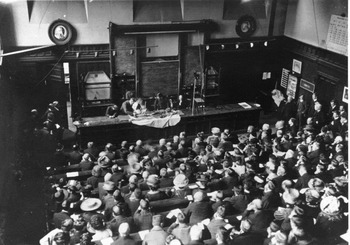
On Thursday, 7 May 1908, The Manchester Guardian reported the unveiling of human remains in the Chemistry Theatre at Manchester University. As the “peering collection” of men and women looked on,
[the ancient mummy] Khnumu Nekht was bared of his wrappings and brought once more to the light of day. . . . Near the body the linen sheets had rotted, and they fell to pieces at a touch. The bones, however, were more or less perfect. There were traces of flesh on them. It was on the whole a gruesome business, and one or two people left early. (“Mummy of Khnumu Nekht” 1908)Footnote 1
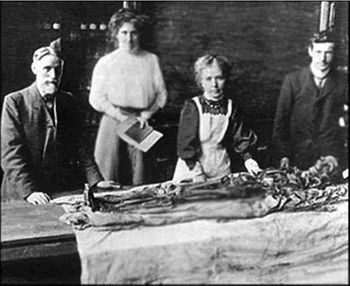
Margaret Alice Murray, who was leading the “gruesome business” at the front of the theatre, wore a white pinafore apron and her hair, uncovered, was neatly pinned back. A few notes survive from the unwrapping in the archives of the Manchester Museum.Footnote 2 The only detailed report of the investigation, The Tomb of the Two Brothers, was published two years later and remains today one of the leading studies of the mummification processes and human remains of Middle Kingdom Egypt (Murray Reference Murray1910).Footnote 3 The book, like the unwrapping itself, was directed at both a scholarly audience – those who stood to gain important information about the history of medicine, disease, culture, society, and religion of a previously little-known period – and the general public – those who Murray specifically hoped to engage in the topic so they could learn more about Egyptian history and human history in general. Through the lecture and the book, the ancient bodies and the mysteries they could unravel were revealed to scholars and the public alike. These activities therefore changed the sites where archaeological knowledge was created, thus allowing the public to participate in the “exotic” archaeological fieldwork and the scholarly process of science. Scholars have long acknowledged the significance of this unwrapping to mummy studies, to the history of the Manchester Museum, and in Murray's long career; however, acknowledgment is largely where the discussion ends. In this article, for the first time, Murray's activities not only as the first woman to publicly unwrap a mummy in England, but also as an archaeologist and a teacher, will be analyzed in a larger historical and disciplinary context.
Historiographically, this episode contributes to the narratives of both scientific spectacles and professionalizing science. Until now, it has been overlooked in this framework. An exciting exhibit geared towards the interested general public, the unwrapping of ancient remains in a crowded lecture hall was undoubtedly a sight to behold for laypeople and academics alike. Therefore, I argue that this scene is set conspicuously at the end of a long line of public spectacles which displayed mummified remains as objects of curiosity and which dated back to before the sixteenth century. It was during the Victorian period that the public began to encounter science in a variety of dazzlingly entertaining ways which included panoramas, displays at the Crystal Palace, and enjoyable magazines and books.Footnote 4 These types of spectacles were highly engaging shows in which people were, to a certain degree, educated about different aspects of science both by showmen and by scientists (Lightman Reference Lightman2007a, 167–218). On the other hand, the new knowledge created about the preservation of human remains during the Middle Kingdom period was important to the studies of the scholars present as well as a point of interest for the regular crowd. Significantly, Murray's public lecture, the unrolling of the mummies, and the written report were situated between the time of the Victorian spectacular sciences and the specializing science of the early twentieth century. Thus placed between spectacles and science, they were also firmly entrenched in the scientific realm of the “cultural marketplace” as discussed by Aileen Fyfe, Bernard Lightman, and others (Fyfe and Lightman Reference Fyfe and Lightman2007a). Fyfe and Lightman argue that the marketplace was made up of various places, sights, and experiences of which science was an integral part (Fyfe and Lightman Reference Fyfe, Lightman, Fyfe and Lightman2007b). Scientific attractions brought curious people and passersby to see interesting and instructive exhibits. As consumers, people had a choice as to which attractions to see, thus influencing the lecturers and directors of these shows to make them as stimulating as possible and bring in audiences. Together, the consumer-driven marketplace and the science it was in the business of selling defined the spaces in which and the manners by which people were learning, living, and being entertained in the nineteenth century.
While Science in the Marketplace focuses on the natural sciences in the late nineteenth century, I apply the framework to the human and social sciences of Egyptology and archaeology in the early twentieth century for three reasons. First, the natural sciences occupied such a large part of the cultural and social experience of nineteenth-century citizens because it was in the process of professionalizing, thus being withdrawn from the public view. Egyptology, archaeology, and other social sciences did not do this until the early twentieth century. Here I shed light on a key turning point in the discipline of Egyptology: as more serious scholarship was done in the subject, so the public was more excluded from the knowledge-creation process. Analyzing the unwrapping from this perspective makes it possible to apply many of the same assumptions about the nineteenth-century natural sciences to a slightly later period and to a different type of investigation. Next, Egyptology has consistently engaged a large part of the public imagination, therefore it is culturally in-demand both as marketable entertainment and as a topic of scientific study.Footnote 5 Finally, Science in the Marketplace deals only with the natural sciences, but the editors call for further study and the application of their ideas to the social sciences as well. Furthermore, they place emphasis on the variety of roles played by the sites, experiences, and the creation of knowledge (ibid., 4–5). Here, I aim to begin to answer this call by arguing that Murray's endeavors brought the creation and discovery of knowledge from the field to the lab, moving the site of experiencing science from the trowel's edge to the laboratory table.
Murray's work at Manchester particularly shows her passion for educating the public, revealing to them new knowledge about the mysteries of Egypt, while at the same time adding new perspectives and information to academic scholarship through research and discovery. G. A. Wainwright, archaeologist and professor at Oxford University, remarked in a later review of her work that Murray's life-long anthropological approach to Egyptology allowed for “a peculiarly intimate view of life in ancient Egypt” (Wainwright Reference Wainwright and Murray1950, 120). Furthermore, he argued that Murray's approach to writing for the public provided “human interest” in Egypt's past which “differentiates it from most accounts” (ibid.). Her ambition of sharing science in this way for the purpose of public interest and edification was clearly demonstrated in the work she did at the Manchester Museum when she invited a diverse audience into the realm of the usually exclusive Chemistry Theatre and introduced them to a particular ancient Egyptian.
The unwrapping and the publications and events that followed can be seen as both Egyptomania and Egyptology. I argue here that Murray, who is often discussed only in terms of archaeology, was in fact attempting to navigate the area between the academy and the public. She was able to do so successfully because of the fluid boundaries that usually define a professionalizing science. It will become clear that Murray herself sits unmistakably between two oftentimes opposing audiences: the public and the academy. Elliot Colla argues that “in the official history of Egyptology, there is a long-standing delight in the tension between the pure scientism of archaeological research and the fact that Egyptological discoveries have always aroused widespread curiosity and intense aesthetic interest” (Colla Reference Colla2007, 179). The contention between the two audiences, Colla maintains, is that the scientist has always tried to “‘purify’ Egyptology's science from popularizing influences of culture and politics. That is, to make sure that the unreason of Egypto-mania does not contaminate the rationality of Egyptology” (ibid., emphasis in the original). I argue that although this may have been true for many Egyptologists, Murray had a different goal. From her unique vantage point, she did not necessarily want to purify Egyptology as much as she wanted to involve the public in the scientific inquiry with the aim of correcting popular misconceptions. In other words, rather than separate the mania from the -ology, she wanted instead to bring reason and understanding to the mania.
One final important claim I make here is that studying Murray's career at this point in time is essential to understanding another distinction in the discipline of Egyptology – domestic instruction and exotic fieldwork. Until quite recently, historians of archaeology have focused on the archaeologist's work in the field as being the main activity that allows the science to gain knowledge and that creates new ideas. During this particular period in the history of archaeology (1850s-1920s), many times we see men in the role of heroic field worker, interpreting peculiar finds for the public imagination and science and then passing the objects to female assistants to be labeled, drawn, cataloged, and stored or displayed. As a result, the scientific activity that takes place in a laboratory or classroom setting goes unrecognized in more general histories of Egyptology and even by Murray herself – she did not mention her time at Manchester or the mummy unwrapping in her own autobiography.Footnote 6 However, the unwrapping must be seen as central to her career, to the history of British Egyptology, to the history of mummy studies, and to current mummy studies (see for example David Reference David2000 and Reference David2008a). It is therefore necessary to highlight Murray as an instructor in this situation. She was performing as a spectacular demonstrator, but more than that she was instructing students in new methods, in new information, and in a new field of study. This validates the idea that knowledge creation happens not only at the field site, but also in the classroom or lecture hall (see for example Livingstone Reference Livingstone2003 and Livingstone Reference Livingstone2010). However, as a woman Murray stepped into this gendered role of “field worker” by translating the exotic, ancient information for a mixed audience of scholars and the public, men and women. It was not necessarily her sex that made the transition from classroom instructor to field archaeologist seamless, but instead it was her drive to educate that made it so.Footnote 7 Not only did Murray become the first woman to lead a public mummy unwrapping in England, but she also brought the Manchester Museum into the public eye in a way that Flinders Petrie, her mentor and a heroic field archaeologist himself, never had.Footnote 8 In this piece of scholarship, I reveal how Murray must move from the margin of this history into the center and I highlight her place between the field and the lab, between the academy and the public, between spectacle and science.
Egypt in the Public Eye
The perception of Ancient Egypt by the public was and still is varied and complex: it is, at once, “scholarly, aesthetic, morbid, sensational, occult, dotty,” exotic and familiar, exciting and routine (MacDonald and Rice Reference MacDonald, Rice, MacDonald and Rice2003, 2). Scholars have long had to contend with public perceptions of Egypt in what Sally MacDonald and Michael Rice have recently termed the “conjunction” or “confrontation” of these different audiences (ibid., 1–2). The question of what the scholar's response should be to the public invasion of his or her domain is problematic. Is it an invasion? Most Egyptologists recognize – and some lament – the fact that “no other academic discipline is obliged to maintain such a degree of dialogue with the lay public” (ibid., 2). Yet at the same time, it is argued that the recognition and the inclusion of the public are what have allowed for the continued “economic viability” of the study of ancient Egypt (ibid.). Furthermore, as Andrew Wheatcroft argues,
it is understood by historians of Egyptology that long before the development of scientific archaeology, Egypt was familiar to Europe. This in itself was unusual, [making] Ancient Egypt unique in one special sense. The “wonderful things” that [Howard] Carter saw [in King Tutankhamun's tomb] are equally interesting to scholars and to the interested general reader. There are no inherent barriers between one level of knowledge and another. (Wheatcroft Reference Wheatcroft, MacDonald and Rice2003, 161–162)
The educational, cultural, and social barriers present in other disciplines such as physics, or even Classical archaeology, had never been created in the study of Egypt in the first place. Egyptologists have long contributed to the creation and management of public knowledge about Egypt's history – through museum displays, books, exhibitions, public lectures and more – thus removing the intellectual barriers between scholars and the public.
In Stephanie Moser's investigation of the acquisition and display of Egyptian antiquities at the British Museum from the mid-eighteenth to the mid-nineteenth century, she argues that “the [British] museum actively constructed a set of distinct identities for ancient Egypt” in a number of ways, and that “the museological representations made an active contribution toward defining [Egypt]” (Moser Reference Moser2006, 217). The mysterious and foreign sandy-colored, angular construction of Egyptian sculpture and art were displayed in the same galleries as the more well-known and better understood white marble, idealized and “essentially aesthetic” Greek and Roman works (ibid., 217–221). This organizational scheme thus “reduced the Egyptian sculptures to nothing other than inferior works of art. . .[and] the Egyptian displays were instantly relegated to secondary importance” (ibid., 221). Furthermore, Moser argues, this arrangement by scholars made Egypt a “source of amusement rather than of serious contemplation” for the public (ibid., 225). Egyptian antiquities were therefore seen as “wondrous curiosities” and “colossal monstrosities” and “thus served to satisfy the desire within visitors to be entertained by the unusual or strange” (ibid.). Most importantly, the arrangement of artifacts served to set the study of Egypt in opposition to the study of Greece, because “while classical art satisfied the tastes of the learned and enlightened, Egyptian art was designated to serve popular interest – it was the poor man's domain of antiquity” (ibid.). Therefore, Egyptian history and ancient culture could be more “easily digested or consumed by those who did not possess the prerequisite knowledge to appreciate the works of classical antiquity”; unlike Greece and Rome, then, Egypt became “an accessible alternative for those who felt intimidated or excluded by the intellectualism associated with classical art” (ibid., 230–231). In particular, the British Museum's display of mummies and other funerary rituals “served to define ancient Egyptian culture as one that engaged in bizarre religious and mortuary practices, and thus ancient Egypt was cast as an aberrant civilization suitable for ghoulish relish rather than as an exemplary culture demanding serious contemplation” (ibid., 226–227). It is clear that, from early on, Egypt's place in England was constructed as a pattern of entertainment and enjoyment for the masses that deserved less serious consideration and research by scholars.
Accessibility, curiosity, and the perception of a peculiar, deviant Egypt can be seen more concretely in the mummy fiction that became popular in the mid-nineteenth century and to a large extent remains popular today. The growing numbers of the reading public in this period led to a proliferation of reading material, which meant that semi-fictitious travel accounts from far-off places and sensational novels about mysterious happenings both at home and abroad packed the shelves of bookstores and private libraries. Egyptologists and leisurely travelers alike published fictional and factual accounts of their journeys up and down the Nile. For example, traveler Edward Lane's Manners and Customs of the Modern Egyptians (Lane Reference Lane1836) gives readers a close and detailed view of the daily life of Egyptians in the early nineteenth century. Lane's sister, Sophia Lane Poole, came to Egypt to live with Lane at his request in order to help him get a woman's perspective of daily life. She was in Egypt for more than three years, and she published her correspondence from that time in which she discussed her own experience as a woman living in Egypt in The Englishwoman in Egypt (Lane Poole Reference Lane Poole1844–46). Journalist-turned-Egyptologist Amelia Edwards’ travelogue, A Thousand Miles Up the Nile (Edwards Reference Edwards1877), is a richly illustrated, thoroughly researched, delightfully entertaining nonfictional read about her experience traveling to see archaeological sites throughout the Nile valley.Footnote 9
Novels and stories about Egypt and Egyptian themes were slightly different from travelogues in their approach: they certainly entertained their audiences, but they did not necessarily contain reliable information. Beginning in the 1820s, “Mummymania” fiction painted the picture of those aspects of the popular imagination “dealing with living mummies and curses” and, as Carter Lupton and other scholars argue, “might be seen as a curse itself, a potential threat to an appreciation of legitimate Egyptology by a broad public” since “much of the lay person's ‘familiarity’ with Egypt and its mummies derives from popular fiction and film, which are often at odds with standard Egyptological interpretations” (Lupton Reference Lupton, MacDonald and Rice2003, 23; see also Bernstein and Studlar Reference Bernstein and Studlar1997; and Day Reference Day2006). There is a wide variety of examples in this genre of literature, and the numbers continue to grow. Widely recognized as the earliest literary work about mummies, Jane Webb Loudon's The Mummy—A Tale of the 22nd Century, was published in the early nineteenth century (Loudon [1827] Reference Loudon1995). It featured a reanimated Kheops, the Pharaoh from the Old Kingdom who is credited with building the Great Pyramid, whose purpose was to give his opinion on the state of the government in the England of 2127 and how to fix its problems by using his own past political experience. Many later works, such as Theophile Gautier's short story “Le Pied de momie,” or “The Mummy's Foot” (Gautier [1840] Reference Gautier and Cruzet1992), and, later, his longer Romance of a Mummy (Gautier [1856] Reference Gautier1908), were not political but instead featured romantic stories between mummified, reanimated Egyptians and contemporary Europeans (for a more in-depth study of this work, see Fortin Reference Fortin2004). In Grant Allen's “My New Year's Eve Among the Mummies” (Allen Reference Allen and Allen1884), the main character did the opposite of most Europeans in this genre by agreeing to become a mummy himself, so that he might live forever with his beloved mummy princess. For a while, the living mummies were benign – offering help, advice, or love – but all of that changed with Sir Arthur Conan Doyle's short story, “Lot No. 249” (Doyle Reference Doyle1892). Doyle introduced one of the first stories in the Mummymania genre that actually featured “a physically active mummy as a tool of vengeance motivated by another's will” (Lupton Reference Lupton, MacDonald and Rice2003, 27). In this tale, an Oxford student named Bellingham buys a mummy at an auction and brings it back to life “through a combination of reading an ancient papyrus and burning certain leaves” (ibid.). The reanimated mummy then ventures out to hurt and kill those whom Bellingham believed were his enemies. Doyle's story marked the turning point in mummy fiction – no longer were mummies slightly scary, they were now forces of evil who could and would kill innocent people. A final and important place where readers found a plethora of mummy fiction were the short and serialized stories in popular magazines. Lupton argues that “the early twentieth century saw the rise of pulp magazines, cheaply produced periodicals featuring genre fiction. Dozens, if not hundreds, of mummy stories were featured in many of these pulps, particularly those dedicated to fantasy, science fiction, mystery and the occult” (ibid., 39). Whether or not readers could afford books, or indeed had the time to read them, they certainly had access to inexpensive, popular periodicals containing easily digested short stories and poems. That these stories were so widespread demonstrates public interest in the exotic and the excitement that it can cause. Furthermore, it shows how widespread was the idea of fearful beings called mummies and the damage which they were believed to be capable of causing.
Early-twentieth-century readers, then, were imbibing the idea that Egypt, Egyptian history, and the artifacts associated with it were not only wondrous or curious, but also mysterious, unknowable, frightening, and even life-threatening. Early on, Murray recognized that these various types of fiction were detrimental to the public's understanding of Egypt. She argued that it was disappointing that the only means that the public had of “obtaining knowledge [of Egypt] is apparently through magazine stories in which a mummy is the principal character” (Murray [1913] Reference Murray1920, 7–8). However, she did not see this genre's popularity as a curse, but instead she saw it as an opportunity to engage the public in learning the truth through participating in rigorous scientific investigation. Murray wanted to change the means by which the public obtained knowledge about Egypt's history: she wished to throw open the doors to the scientific laboratory and invite the public in. To do so, she started with the well-established tradition of unwrapping mummies for an audience.
Public Mummy Unwrapping
The public has indeed been involved with mummy studies for centuries, in one way or another. Unfortunately, there is not a lot of published scholarship that focuses on mummy unwrappings specifically, except as introductions to works that discuss the discovery and scientific study of a particular specimen, the results from that or other studies, or even the history of the outlandish treatment of mummies once they have arrived in the West.Footnote 10 Since the start of this long tradition, the activity of revealing mummified remains has vacillated between being an academic pursuit and a public spectacle, drawing the interest of doctors, surgeons, and historians as well as the general, curious public. The Greeks were the first to study mummification processes of the Egyptians, regarding their techniques of preserving bodies and their beliefs in the afterlife as “a source of profound if mysterious wisdom” (Tait Reference Tait, Ucko and Champion2003, 23). Throughout the centuries that followed, mummies have been plundered for jewelry and amulets; ground up and used as medicines, known as mumia; used as a pigment base for paint, called “mummy brown”; celebrated as spoils of war; exploited as status symbols of the rich; and tapped as inspiration for fantastical literature and legend.Footnote 11 In the early seventeenth century, Pietro della Valle excavated and brought mummies from Giza and Saqqara to Rome as additions to the Papal collections (Curran Reference Curran, Ucko and Champion2003, 126). It has been recognized that Della Valle's account of these mummies is “perhaps the earliest Egyptological ‘excavation report’ in western literature, and is remarkable for its detail and display of critical acumen” (ibid.). However, not all Europeans were so careful in their excavation, transportation, and treatment of mummies.Footnote 12 Most remains in this period were not used for learning about ancient Egypt, but instead used for establishing one's social status as a collector of rare and exotic objects.
By the late eighteenth century, the medical community had become more interested in mummies as scientific specimens. Through the work of Giovanni Belzoni, Henry Salt, and others, more mummies entered England and were available to the public and to scholars for purchase in auctions – mummy exhibitions began en masse (Dunand and Lichtenberg [1998] Reference Dunand and Lichtenberg2006, 134; Abdel-Hakim Reference Abdel-Hakim, Starkey and El Kholy2002, 126). Dr. John Hadley produced one of the first publications about a surgical mummy unwrapping in 1763 (Wortham Reference Wortham1971, 45; Aufderheide Reference Aufderheide2003, 7).Footnote 13 He had dissected it at his home, with “a large number of surgeons and interested spectators” in attendance in order to learn more about the embalming process (Wortham Reference Wortham1971, 45). Large crowds soon became “an integral part of mummy dissections” from then on, due to interested scholars and curious audiences (ibid.). Crowds of the genuinely, although morbidly, interested public turned mummy unwrappings into spectacles, again pushing mummy studies slightly into the fantastical public realm.
This change notwithstanding, it is clear that by this time unwrapping mummies had opened up a whole new area of Egyptology, first by correcting inaccurate information about embalming from such trusted Greek historians as Strabo and Herodotus, and second by allowing for the realization of previously unknown religious practices. By the middle of the nineteenth century, witnessing a mummy being unwrapped was an extremely popular event among the upper-middle and upper classes. One of the most well-known practitioners of these events was Thomas Pettigrew, Professor of Anatomy at Charing Cross Hospital (Abdel-Hakim Reference Abdel-Hakim, Starkey and El Kholy2002).Footnote 14 Pettigrew semi-publicly dissected mummies in order to learn not only about Egyptian mummification, but also to learn more about ancient disease and medicine. He sold tickets to his mummy dissections, which were, for the most part, performed in the Charing Cross Hospital surgical theatre and therefore attended by an audience that was a mixture of academics and the interested public audience who could afford tickets, and who had the proper social connections to obtain them (ibid., 130–131; Dunand and Lichtenberg [1998] Reference Dunand and Lichtenberg2006, 134; David Reference David and David2008b, 3). Examinations of ancient remains were both semi-public displays of experimental studies as well as the raison d'etre of private parties in homes of the well-to-do. Many times they were performed by hired doctors or by antiquaries who professed an interest in studying mummies, such as Pettigrew, and exclusive to those of certain social standing who held a private invitation (Abdel-Hakim Reference Abdel-Hakim, Starkey and El Kholy2002, 139).
It is almost certain that most unrollings would have had the potential to produce significant information about Egyptian history; however, Pettigrew was one of the few investigators who published many of his findings. In his magnum opus, descriptively titled A History of Egyptian Mummies, and an Account of the Worship and Embalming of the Sacred Animals by the Egyptians (Pettigrew Reference Pettigrew1834), he argued that although human mummified remains were of great interest and curiosity to most people, there was indeed much scientific information available in them as well. He employed an interdisciplinary team to help him in his pursuits, and the publication demonstrated his desire to fully understand the remains and mummification in the context of Egyptian history and modern medicine. He wrote:
The practice of embalming the dead is deeply interesting, were it to rest upon its antiquity alone; but when it is considered in relation to the history of the human species, and to the condition of the arts and sciences of so remote a period, it rises in importance and it is remarkable that there should not exist in any language, as far as I have been able to ascertain, any work devoted expressly to the treating of this subject in all its branches. (Ibid., xv)
It is clear that by the 1850s the scientific value of mummies from Egypt was recognized by academic circles. However, the unrolling events themselves were still an activity that Pettigrew and others performed to engage the interest of the wealthy and socially-connected who appreciated the entertainment value and could likely donate money to their pursuits.
During this period it is difficult to place these unrollings outside the context of a private salon. They were scientific gatherings on a grand scale; and there is no doubt that they were significant Victorian social events – places to see and be seen. These exhibitions were indeed similar to the Victorian scientific conversaziones in that they drew large crowds of interested people, and there was a certain amount of socializing done there. Samuel Alberti's examination of the conversazione defines one broadly as “a ‘social gathering held by learned or art society’ – [and] was a ubiquitous culture event of tremendous significance and popularity, a medley of Victorian urban middle-class life” (Alberti Reference Alberti2003, 208). While mummy spectacles were similar to conversaziones in that they were both popular social gatherings for intellectual benefit and polite society, both private and public mummy unrollings had relatively exclusive audiences. The private parties were most likely more social than scientific – much like the conversaziones – and the public exhibits attempted to create knowledge as opposed to simply displaying it for consumption.Footnote 15 Even then, the audiences for these gatherings were so socio-economically exclusive that they can hardly be called broadly public or popular.Footnote 16
The shift of spectacles from private salons into the public marketplace did not occur until scientific disciplines “began to cultivate the strategy of professionalization . . . [thus committing] them to privileging select spaces in which to practice legitimate science, such as the laboratory above all else” (Lightman Reference Lightman, Fyfe and Lightman2007b, 126). The selectivity of sites in which professionalizing science would share knowledge allowed for more and different spaces for scientific lectures to become available to large crowds of all classes, guaranteeing therefore that science would be consumed by the public in theaters, museums, shows, and demonstrations (ibid.). As performances for the public within the cultural marketplace, it can also be argued that the “ancient embalmed mummies . . . were conveyed to England as texts that were read, given meaning and made intelligible to a wider public of discourse consumers” (Abdel-Hakim Reference Abdel-Hakim, Starkey and El Kholy2002, 122). Murray, therefore, was a scientific lecturer who took advantage of these new public sites of doing science in order to aim the scientific conversation at both professionalizing scholars and the wondering public. The lack of inherent pedagogic barriers around ancient Egyptian objects aided her in her pursuit, but she also battled the mania associated with them. On these unstable foundations, Murray investigated particularly mysterious objects with the intention of displaying her scientific authority and creating knowledge about them.
The Tomb of the Two Brothers
Murray began her career in Egyptology at University College, London [UCL], in 1894 at the age of 30. She started as a student and assistant to W. M. Flinders Petrie, the amateur-turned-professional under whose direction the department at UCL had opened just two years earlier. By 1898, Murray had joined UCL faculty as a junior lecturer and over the next four decades she contributed a substantial amount of scholarship to the discipline of Egyptian archaeology.Footnote 17 Through her work at UCL, she quickly established herself as a skilled illustrator, a knowledgeable linguist, a successful author, a talented teacher, and an intrepid explorer in her own right. Egyptologist and author of the centennial history of the department at UCL, Rosalind Janssen stated: “It is indeed remarkable that, in between all her duties, Margaret Murray still managed to produce such an enormous output of high quality studies” (Janssen Reference Janssen1992, 31).Footnote 18 While she was active within the department at UCL, Murray also pursued a broad range of interests and performed what some consider the invisible tasks in the discipline – teaching, training, translating, organizing, and administrating – however, she was indeed visibly shaping the way future academic research would be done as well as the way in which the public understood Egypt.
Her brief appointment at Manchester, from c. 1906–1908, began as a part-curatorial, part-administrative position, helping the Manchester Museum to organize and display its growing Egyptian collection (David Reference David2000, 169). Her work culminated in the first public mummy unrolling in decades, and the first to be led by a woman (Dunand and Lichtenberg [1998] Reference Dunand and Lichtenberg2006, 137).Footnote 19 Assisted by scholars from other disciplines, Murray slowly and diligently removed the linens from the remains of Khnum-Nakht, a Middle Kingdom figure discovered as part of a tomb group by Petrie's crew in 1907. She geared her investigation to the large audience of students, scholars, and paying Mancunians who witnessed the show. The report that soon followed shared this mixed audience. In Tomb of the Two Brothers, Murray detailed the remains of the tomb group and introduced both Egyptologists and non-specialists to important funerary and cultural knowledge from the then little-known Middle Kingdom period (c. 2030–1750 BCE). The remains of the two brothers had come from a Middle Kingdom tomb group that Petrie had excavated in 1907 at Deir Rifeh, in Upper Egypt (Petrie Reference Petrie1907, 12; Drower [1985] Reference Drower1995, 306). Most of the tombs in the area where Petrie dug with his crew had “been plundered anciently,” but “a few unopened tombs were found” (Petrie Reference Petrie1907, 12).Footnote 20 The “greatest prize of the season” that year was the tomb of “Nekhtankh son of Aa-khnumu,” found by Ernest Mackay, one of Petrie's young recruits (Drower [1985] Reference Drower1995, 305–306; Petrie Reference Petrie1907, 12). The burial was remarkably untouched and contained many fine examples of Middle Kingdom funeral furniture and decorations (Petrie Reference Petrie1907). Petrie recognized the importance of this find to Egyptology and wished for the whole group to remain together and go to England; Gaston Maspero, then head of the Egyptian Antiquities in Cairo, acquiesced (Drower [1985] Reference Drower1995, 306). Petrie, who had been giving annual lectures at the Manchester Museum regarding his excavations, wrote a letter to the museum saying that if the museum could “contribute the sum of £500 to the coming excavations at Memphis, [Petrie's] Committee would allot to it this group, and give it a first claim on the results of the excavation” from the next season (Hoyle Reference Hoyle and Murray1910, 4). The board of trustees came up with the money in short order and received the group happily, according it “pride of place in the collection,” which it still holds today (Drower [1985] Reference Drower1995, 306).
Newspapers widely advertised the Museum's exhibition of the tomb discovery, which opened in October 1907 and highlighted the unwrapping which would take place eight months later. Upon the exhibition's opening, the Manchester Guardian reported: “One can gaze upon the very cerements that wrap the mummied bodies of these fabulously aristocratic brothers and even catch a glimpse of the earthly remains themselves” (“Ancient Egypt” 1907). There was considerable public interest in the remains, with numerous newspaper articles, advertisements, and even a “cordial invitation” to attend the show. One such invitation in The Evening Chronicle informed readers: “The Chairman and Committee of the Manchester Museum request the pleasure of your company at the unrolling of the Mummy of Khnuma Nekht of the XIIth Dynasty on Wednesday, May 6th, beginning at 2–30 p.m.” (“4,500-Year-Old Mummy” 1908). About 500 people attended the “eerie ceremony of unrolling the mummy” and the audience consisted mostly of the public, who had to buy tickets, but many were members of the academy interested in the study of ancient human remains (ibid.). Countless more people from all classes and places toured the exhibits and other parts of the museum in the months leading up to and following the event, making it a truly public display.
Rosalie David and others lament the fact that “no detailed account . . . of the procedures involved in unwrapping the mummy survives” (David Reference David2007, 103). What does survive are two archival photographs showing Murray and the team unwrapping Khnum-Nakht (see figs. 1 and 2), a few brief accounts in The Manchester Guardian, The Manchester Evening Chronicle, and other periodicals, a small collection of correspondence at the Manchester Museum archives, and the published account of the process. Even though the details about what happened during the Manchester unveiling are scanty, it is possible to shed light on the events of the day by looking to these sources, as well as to Pettigrew's detailed work about unveiling Egyptian remains. Implicitly, and surely consciously, following Pettigrew's earlier example for the study of preserved bodies and in the publication of the results, Murray brought together a team of scholars who came from various disciplines such as textile studies, medicine, chemistry, and linguistics (David Reference David2000, 169; Dunand and Lichtenberg [1998] Reference Dunand and Lichtenberg2006, 137). The men and women who aided Murray in the experiment were employees of the museum and colleagues of Murray's: Mr. Standen, Mr. Wilfred Jackson, Miss Wilkinson, and Miss Hart-Davis (David Reference David2007, 103).
Margaret Murray and team unwrapping Khnum-Nakht in the Chemistry Auditorium (Photograph © The Manchester Museum, University of Manchester).

Margaret Murray, third from left, and team after unwrapping Khnum-Nakht (Photograph © The Manchester Museum, University of Manchester).

The purpose of this seemingly morbid spectacle was indeed for “the acquisition of knowledge” for archaeology in particular and for all sciences in general, as well as for the education of the “General Reader,” although there were a few who disagreed with the practice (Murray Reference Murray1910, 7). Prior to the unwrapping, there were letters of protest written to the editors of several papers, addressing Murray personally and asking her if she had considered “what the poor mummy thought about those who had so wantonly disturbed the slumber of the centuries in order that it might be dragged forth to be the butt and the jest of a crowd of students” (“A Protest” 1908). Another critic found expression in a more literary way, with the poem “Khnumu Nekht” published in the Evening Chronicle (1908):
In response to these protests from people against the violation of human remains in the name of science, in the introduction to Tomb of the Two Brothers Murray specifically informed both the general reader and the scholar that “every vestige of ancient remains must be carefully studied and recorded without sentimentality and without fear of the outcry of the ignorant” (Murray Reference Murray1910, 8). She continued, pulling directly from Petrie's writings, saying that “to ensure the fullest knowledge . . . the most complete preservation of things should be the real aim” (Petrie Reference Petrie1904, 180–182; quoted in Murray Reference Murray1910, 8).Footnote 21 She was not simply putting on a show, instead she made it clear that she was doing serious study.
The public presentation only displayed the remains of the younger brother, Khnum-Nakht, because, as Murray later explained, Nakht-Ankh's “body had fallen to pieces in a great measure before unrolling, but the bones were intact and in position. . . . The remains were quite moist, and many of the bandages were as wet as though they had been dipped in water” (ibid., 31). In spite of all of this, the remains of Nakht-Ankh were fairly well-preserved, as Murray continued to describe:
The skin was perfectly preserved on the face, and the hair remained on the head and on the sides of the face. The hair was dark brown, turning grey, and the length of it on the head was three-quarters of an inch. The nails of the fingers and toes were wrapped with thread to keep them from coming off when the body was lifted out of the preserving bath. Great numbers of a small brown beetle, Gibbium scotias, were found in the inner bandages, especially about the head, and many of the bandages were perforated with their holes. (Ibid.)
Murray may not have chosen to display Nakht-Ankh simply because his body was fragile; it was also true that the wetter, stickier remains may have been difficult to separate from the linens that wrapped them.Footnote 22 Pettigrew had had a chance to work with a similar particularly difficult wet case about which he wrote: “It was a task of no little difficulty, and required considerable force to separate the layers of bandage from the body. . . . levers were absolutely necessary to raise the bandages, and develope [sic] the body” (Pettigrew Reference Pettigrew1834, xvi). He maintained, of course, that “this, however, was most effectively and perfectly done” (ibid.). For Murray, on the other hand, Khnum-Nakht “was absolutely dry, and the tissues had resolved into a fine powder which rose in clouds when the mummy was handled” (Murray Reference Murray1910, 32). Although Khnum-Nakht was not as well preserved as his older brother – Murray wrote that it seemed that “no special care had been taken” with him – he was chosen for the experiment because his body was relatively intact and dry (ibid.). One particular specimen Pettigrew studied was similar in condition to Khnum-Nakht, being “in a very sound and dry condition . . . The bandages were very neatly applied, and were of a fine texture. The unrolling was a work of great ease” (Pettigrew Reference Pettigrew1834, xvii). Pettigrew described the linen wrappings of a second dry mummy, this time a female, that “they were indeed so pure, so dry, and had altogether such an air of freshness about them, that many were disposed to suspect the genuineness of the specimen” (ibid.). Indeed, dry specimens seemed to be the preferred variety with which to work in public. It may follow, then, that Murray also had relative ease with the dry Khnum-Nakht, since it was he and not his wetter brother who was chosen to be revealed in public.
The day of the unwrapping, one reporter described walking into the scene and seeing at the front of the room, “laid on the lecturer's table, covered with a white sheet, was what at first glance might have been taken for a ‘subject’ on which a professor of anatomy was to lecture to medical students. It was, however, what were the earthly remains of a priest of a princely family of Egypt” (“Scene in Manchester” 1908). There was, it seemed, some nervous energy coming from the audience, as a correspondent for the Manchester Evening News wrote that a “number of the undergraduates at the back of the chemistry theatre, in which the proceedings took place, were at first inclined to treat the whole affair as a joke,” but after a strong “hint” from the chairman of the Museum Committee they “maintained a decorous silence” (“Novel Ceremony” 1908). Murray then began the experiment by giving a short lecture regarding the importance of exposing the ancient remains, the main reason being that it would aid in the study of a little-known time period in Egyptian history, the Middle Kingdom (“Scene in Manchester” and “Novel Ceremony” 1908). Furthermore, she argued, it would help archaeologists to understand more fully what the ancient Egyptians believed about their future lives after death and their immortality (“Scene in Manchester” 1908). Over the next hour Murray and her team painstakingly removed 26 long pieces of preserved and delicate linen from the body. Each of Khnum-Nakht's linens was removed in order and numbered (Murray Reference Murray1910, 54–58). Later on, behind closed doors, Nakht-Ankh's wet linens were removed as well. Various reports claimed that, by the end of the procedure, Khnum-Nakht's bones had turned to dust, but in fact his body remained intact. One reporter, manufacturing a drama, wrote: “as the last wrap left his forehead his head turned slowly over, and his sightless eyeholes looked full on the silenced onlookers before him. Then he lay still again. The clang of a passing tram startled all but him” (“Mummy of Khnumu Nekht” 1908). After the body had been laid bare, it is unclear whether or not the audience was invited to ask questions. However, Murray made a few closing remarks about the state of preservation, concluding that because the body had simply been dried out before being wrapped, Khnum-Nakht was not technically a mummy, but in fact he was a very well-preserved body. The audience then filed to the front to record their names and addresses in order to receive a free souvenir from the day: a piece of linen that had been pulled from the body (ibid.).
Not witnessed by the public but in addition to the public examination, Murray's further experiments and conclusions were written up in The Tomb of the Two Brothers, published two years later. Beginning with an in-depth discussion of the historical, cultural, and spiritual context of the mummies, she spent over half of the book detailing the tomb, its contents, and the coffins, as well as including a large section for the transliteration and translation of the funerary inscriptions. Dr. John Cameron wrote a chapter about the anatomy of the mummies (Cameron Reference Cameron and Margaret1910, 33–47); Dr. Paul Haas, Professor H. B. Dixon, and Dr. E. Linder wrote about the chemistry of the mummy remains (Haas Reference Haas and Murray1910, 48–50; Dixon Reference Dixon and Murray1910, 50; Linder Reference Linder and Murray1910, 50–53); Thomas Fox delivered a detailed analysis of the linen wrappings of the mummies (Fox Reference Fox and Murray1910, 65–71); and Professor Julius Hübner wrote a brief chapter about the pigments used in the coloring of the textiles (Hübner Reference Hübner and Murray1910, 72–79).
Cameron's chapter gave details about approximate age, height, weight, health, and other vital statistics of the mummies. He also devoted a large section to their ethnic origins, for the brothers’ skeletal structures betrayed their different ethnicities (Cameron Reference Cameron and Margaret1910, 34–38).Footnote 23 Using skull measurements, and the science of the facial angles, it was determined that the two mummies were indeed of differing ethnic descent (ibid.). However, based on the inscriptions on both coffins, it was and still is believed that they were, in fact, brothers (Murray Reference Murray1910, 19–30; David Reference David2007, 61–83).Footnote 24 The writings on one coffin state: “O worthy one, son of a hatia-prince, Nekht-Ankh, born of Khnum-Aa,” and, on the other brother's coffin: “The great uab-priest, son of the son of the hatia-prince, Khnumu-Nekht, born of the lady of a house, Khnumu-aa,” respectively (Murray Reference Murray1910, 19; 28; David Reference David2007, 70; 79). These thus reveal the possibility that they were sons of the same mother, but of two different fathers: Nakht-Ankh's father was a hatia-prince, Khnum-Nakht's was the son of a hatia-prince (Murray Reference Murray1910, 19; 26; David Reference David2007, 3).
The chapters written by the three chemists revealed some of the elements used in the mummification rituals that took place in the Middle Kingdom. Because Khnum-Nakht was very well-preserved but not a traditional mummy, Murray, her team, and later archaeologists worked to ascertain what types of preservation were used in this period.Footnote 25 These methods consisted of quicklime, sodium and chloride salts in the case of Khnum-Nakht, and in the case of Nakht-Ankh, sulphates, soda and chlorides were present (Haas Reference Haas and Murray1910, 49). It became clear, then, that “the method of embalming adopted in the two cases was not the same” (ibid.). Murray concluded that since “they were brothers and buried in the same tomb . . . there can only be a few years’ difference in date (not long enough for any change to take place in the methods of embalming);” therefore, it must be true that the difference in their preservation states was because of the use of different preservatives: “impure common salt in one case, lime in the other” (Murray Reference Murray1910, 53n). David and others have since concluded that Khnum-Nakht likely died earlier, poorer, and unexpectedly and that the wealthier Nakht-Ankh gave his younger brother the best after-life preparation he could on such short notice (David Reference David2007, 4–5). After these various analyses, the book closed with details about the bandaging of each mummy, each bandage having a number and a line-item description regarding the placement of the bandage on the body and the order in which it was removed, thus demonstrating again the minute details Murray thought were important for further study. She drew few broad conclusions in this report because her goal was, primarily, the preservation of data for future researchers and information for public interest.
Spectacular Science
I have shown that, in general, the public learned about Egypt through skewed museum displays, fictional stories, and fantastic travelers’ accounts and that the academy, while benefitting somewhat from these sources, largely tried to fight against them. Therefore, to place Murray's work at Manchester within the rich heritage of spectacular shows allows us to view her as a scientific authority as well as a public lecturer who, as part of the academic world, targeted the interested public and put on a display of scientific inquiry and expertise for a large audience. Successful spectacular scientists explained the reality of the natural world to their audiences by demonstrating in an extravagant and entertaining way, and in doing so established their scientific authority (Lightman Reference Lightman2007a, 167–218; Morus Reference Morus, Fyfe and Lightman2007). Murray did the same, only with human artifacts. Both benefitting from and railing against the genre of Mummymania fiction, Murray quite literally exposed mummies for what they really were: dead, preserved, ancient humans. As an authoritative scientific lecturer, Murray's main purpose was not only to entertain, of which displaying the mummy was a major part, but also to instruct. Lecturers with considerable expertise, such as Murray, were “selective about the sites in which they would communicate the results of their research” and they were sensitive “to the nature of the sites in which they delivered their lectures” (Lightman Reference Lightman, Fyfe and Lightman2007b, 126, 102; Morus Reference Morus, Fyfe and Lightman2007, 365). Hence, Murray wished to heighten the effects of her “distinctive blend of instruction and amusement” by choosing her venue wisely (Lightman Reference Lightman, Fyfe and Lightman2007b, 99, 102–103). Exhibiting in a domestic lecture hall instead of in a tomb at the exotic field site demanded the attention of more people than had ever been able to witness such a display. She was able to bring the public to the site of knowledge construction to demonstrate that the nature of mummified Egyptians should no longer be fearful or mysterious and that the true character of Egypt was not strange or unknowable. Although it is clear that she did not choose the particular site of her examination – she was indeed limited by where the mummies were deposited by Petrie – she used the large lecture hall in Manchester to her advantage and was thus able to reach and to teach the biggest public audience to witness a mummy unwrapping at that time. Murray's lecture, unwrapping, and subsequent book are thus central to an understanding of the ways in which both the academy and the public experienced Egyptology in the early twentieth century.
Unwrapping a mummy in itself was a wonderful sight, but to allow a large mixed crowd of people to witness it empowered the public and scholars alike to participate and respond in a variety of ways. Largely, it was passive participation. While people listened and took part in the “multimedia experience” of “hearing, smelling, and touching . . . scientific specimens,” there is little evidence, thus far, that shows that the audience was able to ask questions or react in an active way – with the notable exception of financial donations (Fyfe and Lightman Reference Fyfe, Lightman, Fyfe and Lightman2007b, 12). The two brothers were instant celebrities and the Manchester Museum was the focus of nationwide attention. Pictures and likenesses of Khnum-Nakht and Nahkt-Ankh appeared in numerous newspapers, magazines, and political cartoons.Footnote 26 The Museum itself was highlighted as needing more money – which it always had required – and more space to store and properly conserve and display the two brothers and the other Egyptian antiquities they owned. In March of 1911, two and a half years after the unwrapping and less than a year after the publication of The Tomb of the Two Brothers, the Manchester Evening Chronicle reported that Manchester businessman Jesse Haworth had given over £5000 to the museum for the purpose of expanding the exhibition and study space (“Manchester Museum Extension” 1911). The Chronicle reporter wrote: “One can only hope that the work will be early completed” (ibid.). The expansion was finished by the following year, and officially opened to the public on 30 October 1912. The brothers were displayed prominently then as they are now: “in a large glass case in the centre of the fine room, and can be seen from all sides” (“Back of Time” 1912). Murray herself became somewhat of a minor celebrity, as shown in a few newspaper prints, hailing her as “Lady Egyptologist Unwraps a Mummy 4,400 Years Old!” (“Lady Egyptologist” 1908).
Egyptologists had more opportunity, and a more public stage, to respond to Murray's work. Murray acknowledged the fact that scholars had little knowledge of the mummification rituals and of the history of the Middle Kingdom in general at the time she wrote. Most notable Egyptologists also argued that, in terms of the history of Egypt, the tomb of the brothers in itself, the man-made contents of the tomb, and the mummies inside, were “as fine as anything known of this period,” and were thus exemplary and useful for comprehensive study of the Middle Kingdom (Petrie Reference Petrie1907, 12; David Reference David2007, 9). Mummy scholars today recognize the importance of the project led by Murray and its immediate outcomes, for, “a remarkable amount of information was generated by the study” (Aufderheide Reference Aufderheide2003, 15). While the information gleaned by Murray and her team was no doubt crucial to the understanding of Egyptian civilization and to the future of the Manchester Museum, the impact of her experiment is also apparent in the “new attitude towards the investigation of mummies which had begun to emerge at the beginning of the 20th century” (David Reference David2007, 100). In part because of Murray's work at Manchester, the scientific study of mummified remains began to reveal new knowledge about palaeopathology, ancient diseases, and ancient medicinal practices. Some historians argue that “the next significant step” in this research program was the Manchester Mummy Project, which began in earnest in the 1970s (Aufderheide Reference Aufderheide2003, 15). Essentially first begun with Murray, the Project has continued (with a sixty-year hiatus) to produce more results on the two brothers, as well as other mummies that come from all over the world to Manchester for further study.Footnote 27
The most recent study done on the brothers is Rosalie David's The Two Brothers: Death and the Afterlife in Middle Kingdom Egypt (David Reference David2007). In it, David confirms—through more technologically advanced means – much of what Murray's team had concluded 100 years before. While David's study implemented CAT scans, MRIs, microscopic and chemical analyses of fibers and human tissue, Murray's team had only “the use of morbid anatomy” which we have seen consisted of “a naked-eye study of mummies by autopsy and an anatomical study of parts of the mummies” (ibid., 103–104). Murray's original influence can also be seen clearly in the structure of other published examinations of mummies, such as John H. Taylor's Unwrapping a Mummy: The Life, Death and Embalming of Horemkenesi (Taylor Reference Taylor1996). Much like Murray's team, the team Taylor employed to unwrap a mummy at the Bristol Museum consisted of scholars with specializations in linguistics, anatomy, archaeology, textiles, chemistry and more. The goal was “to recover as much data as possible” from a mummy who had “a number of interesting features which it was thought might repay investigation,” and to publish a record of it (ibid., 71). A final similarity is the organization of Taylor's publication, which, like The Tomb of the Two Brothers, introduces the mummy's life and context, the funerary practices of the period, the tomb in which it was found, as well as detailing the unwrapping of the mummy and the important conclusions from the procedure.
Finally, mummymania fiction continued to flourish in the early twentieth century with stories of reanimated mummies, curses of revenge, and death. It was especially after the discovery of King Tutankhamen's tomb in 1922 by Howard Carter and the subsequent mysterious death of Lord Carnarvon, who had attended the opening of the tomb, when the stories of curses and death associated with Egyptian mummies proliferated (Daly Reference Daly1994, 42). The cinema was quick to absorb and portray the fictional literature, the most famous of which may be the 1932 film, The Mummy, starring Boris Karloff as an ancient Egyptian looking for his lost love (Freund 1932). The film rode on the tails of the discovery of the famous tomb; many more films and books have since done the same (Sommers 1999; Sommers 2001). Six months after the discovery of King Tut's tomb, Murray wrote to Winifred Crompton, the newly-appointed assistant curator of Egyptology at the Manchester Museum, about it: “I have been very busy with lecturing & writing since I came back. Tut has certainly increased the interest in Egyptology to an extraordinary extent, & the number of lectures that are being wanted is also extraordinary” (Murray to Crompton, 25 April Reference Murray1923). At the age of 60, Murray undoubtedly kept busy because she wished to guide students and the public into a deeper knowledge of Egypt, thus combating the exotically fearful view of it while taking advantage of the curiosity surrounding it. She relished the increased public interest and continued to experiment and to instruct in such a way that the public demanded it and the academy could profit from it. Murray did this in a number of ways, including teaching correspondence and night courses for working people and publishing books aimed strictly at the general public's interest.Footnote 28 It was her public lecturing and scholarly writing that gave her the predominant position in the context of the marketplace of science. Although Murray never explicitly claimed this as her purpose, the underlying truth was that her work aided in revealing knowledge about the sometimes fearful, always exciting, riddle that was the history of the ancient Egyptians.
Acknowledgments
Earlier versions of this essay were delivered at the Colloquium in the History of Science Department at the University of Oklahoma in 2009, and as part of my doctoral dissertation. I am grateful for the comments and questions I received, especially from Piers Hale, Sandie Holguín, Catherine Kelly, Cornelia Lambert, Suzanne Moon, Gabriel Moshenska, Katherine Pandora, Pamela Jane Smith, Daniel Snell, and Julie Stidolph. Thanks also go to the editors of Science in Context for their helpful thoughts. Any mistakes are my own.