Psychosis was traditionally viewed as a bimodal construct, with the majority of the population having no symptoms and a small minority having severe symptoms that reach clinical significance (Johns & van Os, Reference Johns and van Os2001). However, recent evidence suggests that psychotic symptoms vary along a continuum, with a distribution that is continuous, but only half-normal (i.e., the majority of the population have low values, but a significant proportion has non-zero values). At the lowest end of the continuum are individuals with psychotic-like experiences (PLEs). A significant proportion of the general population falls into this category, reporting lifetime psychotic experiences that typically do not occur frequently, do not worsen in severity over time, and do not cause distress (Kelleher & Cannon, Reference Kelleher and Cannon2011). These individuals, by definition, are neither help-seeking nor at immediate risk for transition, and they do not necessitate treatment or contact with the medical system (Linscott & van Os, Reference Linscott and van Os2010).
In contrast, in the middle of the severity continuum, are those at clinical high-risk (CHR) for developing a psychotic disorder. These individuals meet criteria for a prodromal syndrome or schizotypal personality disorder (Addington et al., Reference Addington, Cadenhead, Cannon, Cornblatt, McGlashan, Perkins and Heinssen2007). Unlike individuals with PLEs, CHR individuals are considered to be at imminent high risk for psychosis. Inclusion criteria involve recent onset and/or escalating positive symptoms, as evidenced by increasing severity, frequency, distress, and conviction, as well as socio-occupational decline and cognitive impairment (McGlashan, Miller, Woods, Hoffman, & Davidson, Reference McGlashan, Miller, Woods, Hoffman, Davidson, Miller, Mednick, McGlashan, Libiger and Johannessen2001; Miller et al., Reference Miller, McGlashan, Rosen, Cadenhead, Ventura, McFarlane and Woods2003; Rosen, Woods, Miller, & McGlashan, Reference Rosen, Woods, Miller and McGlashan2002; Yung & McGorry, Reference Yung and McGorry1996; Yung, Philips, Yuen, & McGorry, Reference Yung, Phillips, Yuen and McGorry2004). Reflective of these signs, approximately 15%–30% of CHR individuals will transition to a psychotic disorder within 2 years (Cannon et al., Reference Cannon, Cadenhead, Cornblatt, Woods, Addington, Walker and Heinssen2008; Cannon et al., Reference Cannon, Yu, Addington, Bearden, Cadenhead, Cornblatt and Kattan2016; Fusar-Poli et al., Reference Fusar-Poli, Cappucciati, Rutigliano, Schultze-Lutter, Bonoldi, Borgwardt and McGuire2015). As a result, it is possible to make loose inferences about vulnerability and disease-related differences between clinical help-seeking samples and those with PLEs, although additional research with a large sample and multiple follow-up time points is necessary before any definitive conclusions can be drawn.
At the highest end of the severity continuum are those with a diagnosable psychotic illness. A key differentiating factor between CHR and a diagnosable illness involves the level of conviction and frequency of psychotic experiences. Full conviction and moderate or greater frequency of psychotic symptoms mark the transition from an at-risk state to formal illness (McGlashan et al., Reference McGlashan, Miller, Woods, Hoffman, Davidson, Miller, Mednick, McGlashan, Libiger and Johannessen2001).
Studies examining processes that predict symptoms across the continuum of psychosis vulnerability stages have the potential to inform the understanding of pathogenesis and identify targets for novel interventions. One area of focus is affective functioning; however, given that the stages of psychosis vulnerability span many years, such developmental studies face the challenge of distinguishing group differences that are attributable to age and maturation from those that are attributable to psychopathological factors. Despite this challenge, many features of affective disturbance have emerged and seem to supersede developmental factors and predict psychiatric outcomes. Increased stress reactivity is one component of affective disturbance that cuts across the continuum of psychotic experiences and increases vulnerability for illness (Corcoran et al., Reference Corcoran, Walker, Huot, Mittal, Tessner, Kestler and Malaspina2003; Walker, Mittal, & Tessner, Reference Walker, Mittal and Tessner2008; Walker et al., Reference Walker, Trotman, Pearce, Addington, Cadenhead, Cornblatt and Tsuang2013). Emotion regulation, defined as the use of strategies to decrease the frequency, intensity, or duration of emotional response, is a second aspect of emotional functioning that predicts risk for a number of psychiatric diagnoses (Aldao, Nolen-Hoeksema, & Schweizer, Reference Aldao, Nolen-Hoeksema and Schweizer2010). It is unclear, however, whether emotion regulation abnormalities predict vulnerability for psychosis, in particular.
Emotion regulation strategy use is most commonly evaluated using self-report measures, such as the Emotion Regulation Questionnaire (ERQ) (Gross & John, Reference Gross and John2003), which assesses the reported use of reappraisal and suppression to regulate positive and negative emotions. Reappraisal involves the reinterpretation of an event or stimulus to control an emotional response, whereas expressive suppression involves the intentional reduction of outward emotional expressivity for the purpose of reducing the emotional experience.
Few studies have examined emotion regulation in the schizophrenia (SZ) spectrum, and their results have been inconsistent. For example, several studies have found that individuals with SZ report significantly greater use of expressive suppression (Horan, Hajcak, Wynn, & Green, Reference Horan, Hajcak, Wynn and Green2013; Kimhy et al., Reference Kimhy, Vakhrusheva, Jobson-Ahmed, Tarrier, Malaspina and Gross2012; van der Meer, van't Wout, & Aleman, Reference van der Meer, van't Wout and Aleman2009) and less use of reappraisal (Horan et al., Reference Horan, Hajcak, Wynn and Green2013; Kimhy et al., Reference Kimhy, Vakhrusheva, Jobson-Ahmed, Tarrier, Malaspina and Gross2012, Livingstone, Harper, & Gillanders, Reference Livingstone, Harper and Gillanders2009; van der Meer et al., Reference van der Meer, van't Wout and Aleman2009) than controls (CN), whereas other studies have found no group differences in reported strategy use between SZ and CN groups (Badcock, Paulik, & Maybery, Reference Badcock, Paulik and Maybery2011; Henry, Rendell, Green, McDonald, & O'Donnell, Reference Henry, Rendell, Green, McDonald and O'Donnell2008; Perry, Henry, & Grisham, Reference Perry, Henry and Grisham2011). Similar inconsistencies arise in psychosis-risk studies. In a study by Kimhy et al. (Reference Kimhy, Gill, Brucato, Vakhrusheva, Arndt, Gross and Girgis2016), CHR youth reported strategy use proportionate to SZ, and both groups reported lower reappraisal than CN. In contrast, van der Meer et al. (Reference van der Meer, Swart, van der Velde, Pijnenborg, Wiersma, Bruggeman and Aleman2014) found no differences in strategy use between SZ, non-affected siblings of individuals with SZ (i.e., those at CHR due to a genetic predisposition), and CN. The cause for inconsistent findings across studies is unclear, because there is no distinct pattern of similarity among studies with null and significant results in terms of demographic characteristics, symptom severity levels, or neuropsychological impairment among the samples.
At this time, the relationship between emotion regulation strategy use and clinical outcomes is also uncertain. Multiple studies have reported that poor social functioning is related to a less habitual use of reappraisal and/or greater use of suppression (Gross & John, Reference Gross and John2003; Henry et al., Reference Henry, Rendell, Green, McDonald and O'Donnell2008; John & Gross, Reference John and Gross2004; Kimhy et al., Reference Kimhy, Vakhrusheva, Jobson-Ahmed, Tarrier, Malaspina and Gross2012; Perry et al., Reference Perry, Henry and Grisham2011; Strauss et al., Reference Strauss, Kappenman, Culbreth, Catalano, Ossenfort, Lee and Gold2015), even among CHR youth (Kimhy et al., Reference Kimhy, Gill, Brucato, Vakhrusheva, Arndt, Gross and Girgis2016). Likewise, a greater self-reported use of suppression has been associated with increased severity of positive and general psychiatric symptoms (e.g., mood, anxiety; Badcock et al., Reference Badcock, Paulik and Maybery2011; Horan et al., Reference Horan, Hajcak, Wynn and Green2013; John & Gross, Reference John and Gross2004), and a greater self-reported use of reappraisal has been associated with a decreased severity of negative symptoms and depression (Henry et al., Reference Henry, Rendell, Green, McDonald and O'Donnell2008; John & Gross, Reference John and Gross2004; Perry et al., Reference Perry, Henry and Grisham2011).
Although associations between emotion regulation strategy use and symptoms or functional outcome are evident throughout most of the literature, the patterns of association vary, and no conclusions can be made about the nature of these relationships at present. Inconsistent findings in the literature may reflect limited power among prior studies to detect small and medium effect sizes, as well as heterogeneity of demographics, diagnoses (e.g., proportion of SZ vs. schizoaffective, see Kimhy et al., Reference Kimhy, Vakhrusheva, Jobson-Ahmed, Tarrier, Malaspina and Gross2012), and symptom and developmental profiles.
An important consideration for studies comparing groups of differing clinical profiles (e.g., PLE vs. CHR vs. SZ) is the influence that age and brain development may have on emotion regulation strategy use apart from the illness phase. Specifically, research shows that an individual's ability to recruit prefrontal regions during emotion regulation improves with age, allowing for more successful regulation through reappraisal in older compared with younger individuals (John & Gross, Reference John and Gross2004; Martin & Ochsner, Reference Martin and Ochsner2016; McRae et al., Reference McRae, Gross, Weber, Robertson, Sokol-Hessner, Ray and Ochsner2012; Silvers et al., Reference Silvers, McRae, Gabrieli, Gross, Remy and Ochsner2012; Theurel & Gentaz, Reference Theurel and Gentaz2018). However, it should be noted that most of the research on emotion regulation and life span development focuses on healthy, non-psychiatric samples, and, when evaluating the frequency of strategy use rather than strategy success, studies show no effect of age (Gullone & Taffe, Reference Gullone and Taffe2011; Theurel & Gentaz, Reference Theurel and Gentaz2018). The latter findings indicate that the success or failure of a strategy does not necessarily predict the frequency in which it is implemented, and therefore studies evaluating the frequency of strategy use rather than strategy success may not be confounded by age. Additionally, Silvers et al. (Reference Silvers, McRae, Gabrieli, Gross, Remy and Ochsner2012) reported no effect of age on emotion regulation success after age 18 years, which suggests that age may be even less of a concern between CHR and SZ samples. Nonetheless, age should be taken into consideration, and a proportion of the inconsistencies between studies may reflect differences in age and development between samples.
In summation, although there is some evidence for aberrant emotion regulation strategy use in youth at CHR for psychosis and adults in the chronic phase of SZ, the current literature is inconsistent, and no stable conclusions can be drawn about the nature of these emotion regulation abnormalities or their clinical correlates.
To advance the literature on emotion regulation across the psychosis continuum, three studies were conducted to evaluate differences in emotion regulation across different levels of psychosis vulnerability, including a community sample of youth with PLEs, clinical help-seeking CHR youth, and outpatients diagnosed with SZ. Given that the majority of prior studies found group effects (Horan et al., Reference Horan, Hajcak, Wynn and Green2013; Kimhy et al., Reference Kimhy, Gill, Brucato, Vakhrusheva, Arndt, Gross and Girgis2016; Kimhy et al., Reference Kimhy, Vakhrusheva, Jobson-Ahmed, Tarrier, Malaspina and Gross2012; Livingstone et al., Reference Livingstone, Harper and Gillanders2009; van der Meer et al., Reference van der Meer, van't Wout and Aleman2009), we first hypothesized that PLE, CHR, and SZ would report less reappraisal and greater suppression than CN. Moreover, based on previous findings that stress reactivity follows a psychosis vulnerability trajectory (Fusar-Poli et al., Reference Fusar-Poli, Tantardini, De Simone, Ramella-Cravaro, Oliver, Kingdon and Galderisi2017; Walker et al., Reference Walker, Trotman, Pearce, Addington, Cadenhead, Cornblatt and Tsuang2013), we hypothesized that psychosis vulnerability would influence emotion regulation strategy use, such that PLE > CHR > SZ for reappraisal, and PLE < CHR < SZ for suppression. Given mostly consistent evidence for correlations between strategy use and symptom severity (Badcock et al., Reference Badcock, Paulik and Maybery2011; Horan et al., Reference Horan, Hajcak, Wynn and Green2013; Perry et al., Reference Perry, Henry and Grisham2011), as well as social functioning (Gross & John, Reference Gross and John2003; Kimhy et al., Reference Kimhy, Gill, Brucato, Vakhrusheva, Arndt, Gross and Girgis2016; Kimhy et al., Reference Kimhy, Vakhrusheva, Jobson-Ahmed, Tarrier, Malaspina and Gross2012; Perry et al., Reference Perry, Henry and Grisham2011; Strauss et al., Reference Strauss, Kappenman, Culbreth, Catalano, Ossenfort, Lee and Gold2015), we also hypothesized that greater use of suppression and lower use of reappraisal would be associated with greater severity of positive, negative, and general psychiatric symptoms, as well as poorer functional outcome in PLE, CHR, and SZ samples. Further, considering that symptoms, by definition, are more severe in SZ than CHR or PLE, we expected associations between symptoms and strategy use to be strongest in the SZ group. Last, based on past findings of sex differences in the reported strategy use (Balzarotti, John, & Gross, Reference Balzarotti, John and Gross2010; Gross & John, Reference Gross and John2003; Gullone & Taffe, Reference Gullone and Taffe2011; Livingstone et al., Reference Livingstone, Harper and Gillanders2009; McRae, Ochsner, Mauss, Gabrieli, & Gross, Reference McRae, Ochsner, Mauss, Gabrieli and Gross2008), we hypothesized that males would score higher on suppression and reappraisal than females within the psychosis groups.
Method
Study 1: community school sample
Participants
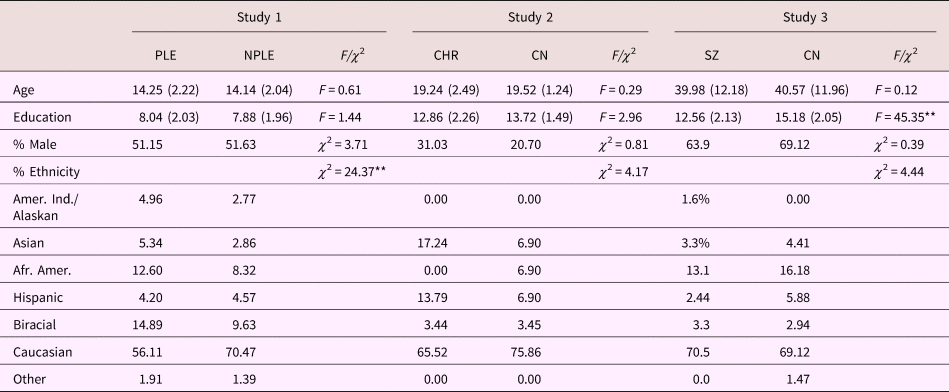
Participants included 1,488 middle and high school students in the northeastern United States (see Table 1 for demographics). The study used passive consent from parents and active assent from youth. Parents of all students received a letter detailing the study. Those who did not wish that their child participate were asked to sign the form and return it to the school. Following this, students were asked to give their assent to participate in the study by signing an active assent form. Participation was limited to students whose parents had provided passive consent and who themselves provided active assent.
Demographics for Studies 1–3

Note. **p < .01; PLE = psychotic-like experiences; NPLE = no psychotic-like experiences; CHR = clinical high-risk; CN = controls; SZ = schizophrenia outpatients; Amer. Ind. = American Indian; Afr. Amer. = African American.
Procedures and measures
Participants completed a series of online questionnaires in their school computer laboratories via Survey Monkey with supervised administration. Questionnaires required approximately 1 hour to complete and included the (a) Emotion Regulation Questionnaire for Children and Adolescents (ERQ-CA) (Gullone & Taffe, Reference Gullone and Taffe2011), (b) Youth Psychosis At-Risk Questionnaire–Brief (YPARQ-B) (Ord, Myles-Worsley, Blailes, & Ngiralmau, Reference Ord, Myles-Worsley, Blailes and Ngiralmau2004), and (c) Strengths and Difficulties Questionnaire (SDQ) (Goodman, Reference Goodman1997).
The ERQ-CA is the adapted version of the ERQ (Gross & John, Reference Gross and John2003), modified for children and adolescents. Like the ERQ, the ERQ-CA comprises 10 items, assessing the reported use of reappraisal (6 items) and suppression (4 items); however, the language has been simplified, and self-reports are made on a 1 (strongly disagree) to 5 (strongly agree) scale. The ERQ-CA was developed on a sample of 827 participants, ranging in age from 10–18 years. Alpha reliability coefficients for the total sample were 0.83 for reappraisal and 0.75 for suppression (Gullone & Taffe, Reference Gullone and Taffe2011).
The YPARQ-B is a 28-item questionnaire that measures psychotic experiences. Responses are scored as Yes (present) or No/Uncertain (absent). A cutoff score of > 11 indicates meeting CHR criteria for developing a psychotic disorder. This cutoff yielded a sensitivity of 0.82 and a specificity of 0.99 in the original scale development study in 648 high school students (Ord et al., Reference Ord, Myles-Worsley, Blailes and Ngiralmau2004). In a subsequent study by Kline et al. (Reference Kline, Wilson, Ereshefsky, Denenny, Thompson, Pitts and Schiffman2012; N = 49), the cutoff > 11 had poorer sensitivity (0.65) and specificity (0.76), and the cutoff > 13 offered the same sensitivity (0.65) and better specificity (0.90). Using the more conservative cutoff of > 13 (Kline et al., Reference Kline, Wilson, Ereshefsky, Denenny, Thompson, Pitts and Schiffman2012), we identified 262 (17.61%) psychosis risk (PLE) and 1,226 (82.39%) comparison CN (NPLE) subjects. The PLE and NPLE groups did not differ in age, sex, or grade; however, the PLE group had a lower proportion of Caucasian participants than the NPLE group (see Table 1).
The SDQ assesses social and behavioral strengths and difficulties in young children and adolescents, and has adequate reliability and validity (Goodman, Reference Goodman2001). It has subscales for emotional symptoms, conduct problems, hyperactivity, peer problems, and prosocial behavior.
Study 2: CHR sample
Participants
This study included 29 CHR and 29 CN participants. CHR participants were recruited from a psychosis risk evaluation program, which received referrals from local clinicians to perform diagnostic assessment and monitor evaluations for youth displaying psychotic experiences. CHR individuals were also recruited via print and online advertisements, in-person presentations to community mental health centers, and calls or in-person meetings with members of the local school system. CHR participants were included if they met criteria for a prodromal syndrome on the Structured Interview for Psychosis-Risk Syndromes (SIPS) (Miller et al., Reference Miller, McGlashan, Rosen, Cadenhead, Ventura, McFarlane and Woods2003; Miller et al., Reference Miller, McGlashan, Woods, Stein, Driesen, Corcoran and Davidson1999). SIPS criteria included (a) attenuated positive symptoms (i.e., SIPS score of at least 3–5 on at least one positive symptom item, with worsening symptoms over the past year; n = 27) and (b) the genetic risk and deterioration syndrome (i.e., a first-degree relative with a psychotic disorder and decline in global functioning over the past year; n = 2). CHR participants did not meet lifetime criteria for a DSM-IV-TR psychotic disorder as determined by the Structured Clinical Interview for DSM (SCID) (First, Spitzer, Gibbon, & Williams, Reference First, Spitzer, Gibbon and Williams2002).
CN participants were recruited from the local community using posted flyers, newspaper advertisements, and electronic advertisements. CN had no current Axis I or Axis II Schizophrenia-Spectrum DSM-IV-TR diagnoses as established by the SCID-I (First et al., Reference First, Spitzer, Gibbon and Williams2002) and the Structured Clinical Interview for DSM Axis II disorders (SCID-II) (Pfohl, Blum, & Zimmerman, Reference Pfohl, Blum and Zimmerman1997), no family history of psychosis, and were not taking psychotropic medications. All participants were free from lifetime neurological disease. Groups did not significantly differ on age, ethnicity, sex, or personal education (see Table 1). Four of the CHR participants had been prescribed a second-generation antipsychotic.
Procedures and measures
Prior to completing the questionnaires, examiners who were trained to reliability standards (interclass correlation coefficient, ICC > 0.80) conducted a structured diagnostic interview with all participants to complete the SCID-I, SCID-II, and SIPS. CHR participants were also rated on the Prodromal Inventory of Negative Symptoms (PINS) (Pelletier-Baldelli, Strauss, Visser, & Mittal, Reference Pelletier-Baldelli, Strauss, Visser and Mittal2017), which is the CHR adapted version of the Brief Negative Symptom Scale (BNSS) (Kirkpatrick et al., Reference Kirkpatrick, Strauss, Nguyen, Fischer, Daniel, Cienfuegos and Marder2011), and completed the YPARQ-B.
Self-reported habitual emotion regulation strategy use was evaluated using the ERQ (i.e., the adult version; Gross & John, Reference Gross and John2003). The ERQ is a 10-item questionnaire that measures the extent to which participants report using reappraisal (6 items) and expressive suppression (4 items) strategies to increase or decrease their positive and negative emotions, respectively. Self-reports are made on a 1 (strongly disagree) to 7 (strongly agree) scale. Higher scores ostensibly reflect greater dispositional tendencies toward using specific strategies across time and different contexts. The ERQ was developed on four undergraduate samples (N = 1,483). Psychometric properties have been considered adequate, with averaged alpha reliability scores of 0.79 for reappraisal and 0.73 for suppression, and test-retest reliability of 0.69 (Gross & John, Reference Gross and John2003).
Study 3: SZ sample
Participants
Participants included 61 individuals diagnosed with SZ and 67 CN. Individuals with SZ were recruited from outpatient community mental health centers. Patients were evaluated during periods of clinical stability marked by no changes in medication type or dosage for at least 4 weeks. A best-estimate approach was used for consensus diagnoses based on multiple clinical interviews and psychiatric history. The diagnoses were subsequently confirmed using the SCID-I (First et al., Reference First, Spitzer, Gibbon and Williams2002).
CN subjects were recruited by random digit dialing, print and online advertisements, and word-of-mouth from recruited participants. CN had no current Axis I or II diagnoses as established by the SCID-I and SCID-II, no family history of psychosis, and were not taking psychotropic medications. All participants denied a history of neurological injury or disease and substance use disorders within the last 6 months. Written informed consent was obtained for all participants for a protocol approved by the local university institutional review boards.
The CN and SZ groups did not significantly differ in age, gender, or ethnicity; however, SZ had fewer years of personal education than CN. On average, patients displayed moderately severe positive and negative symptoms at the time of testing. Forty-seven of the SZ patients were prescribed a second generation antipsychotic, 3 were prescribed a first generation antipsychotic, 6 were prescribed a combination of first and second generation antipsychotics, and 5 were stably unmedicated (see Table 1).
Procedures and measures
Participants completed a battery of measures designed to assess emotion regulation, symptoms, and functional outcome. Emotion regulation was assessed using the same version of the ERQ administered in Study 2. A clinical interview was performed to assess symptom severity and functional outcome, after which the BNSS (Kirkpatrick et al., Reference Kirkpatrick, Strauss, Nguyen, Fischer, Daniel, Cienfuegos and Marder2011; Strauss et al., Reference Strauss, Keller, Buchanan, Gold, Fischer, McMahon and Kirkpatrick2012), the Brief Psychiatric Rating Scale (BPRS) (Overall & Gorham, Reference Overall and Gorham1962), and the Level of Function Scale (LOF) (Hawk, Carpenter, & Strauss, Reference Hawk, Carpenter and Strauss1975) were rated. Raters were trained to reliability standards (ICC > 0.80) using gold-standard clinical rating videos.
Data Analysis
A similar analytic approach was used to evaluate hypothesis 1 in relation to each study. First, a 2 Group x 2 Emotion Regulation Strategy repeated measures analysis of variance (ANOVA) was used to determine whether PLE/CHR/SZ and NPLE/CN groups reported different patterns of reappraisal and expressive suppression strategy use. One-way ANOVAs were performed to follow up all significant interaction effects. To evaluate hypothesis 2 regarding changes in emotion regulation strategy use across the continuum of psychosis vulnerability, Z-scores were calculated separately for the psychosis group of each study using the mean and standard deviation of their respective CN/comparison group and a 3 Group x 2 Strategy repeated measures ANOVA was conducted. The Z-score approach was necessary to account for the use of two different versions of the ERQ (the child/adolescent version in Study 1 and the adult version in Studies 2 and 3), which use different scales (0–5 versus 0–7, respectively). These analyses were then repeated using sex as an additional between-subjects factor. To evaluate hypothesis 3, Spearman correlations were calculated to determine associations between emotion regulation strategy use and clinical outcomes. Last, one-way ANOVAs were used to compare mean strategy use between males and females within and between psychosis groups. ERQ data have not previously been published on any of these samples, although data on other measures have been published from these samples for studies on SZ, CHR, and PLE (Strauss & Chapman, Reference Strauss and Chapman2018; Strauss, Raugh, Mittal, Gibb, & Coles, Reference Strauss, Raugh, Mittal, Gibb and Coles2018; Strauss, Ruiz, Visser, Crespo, & Dickinson, Reference Strauss, Ruiz, Visser, Crespo and Dickinson2018; Sullivan & Strauss, Reference Sullivan and Strauss2017).
Results
Control versus psychosis group differences in strategy use
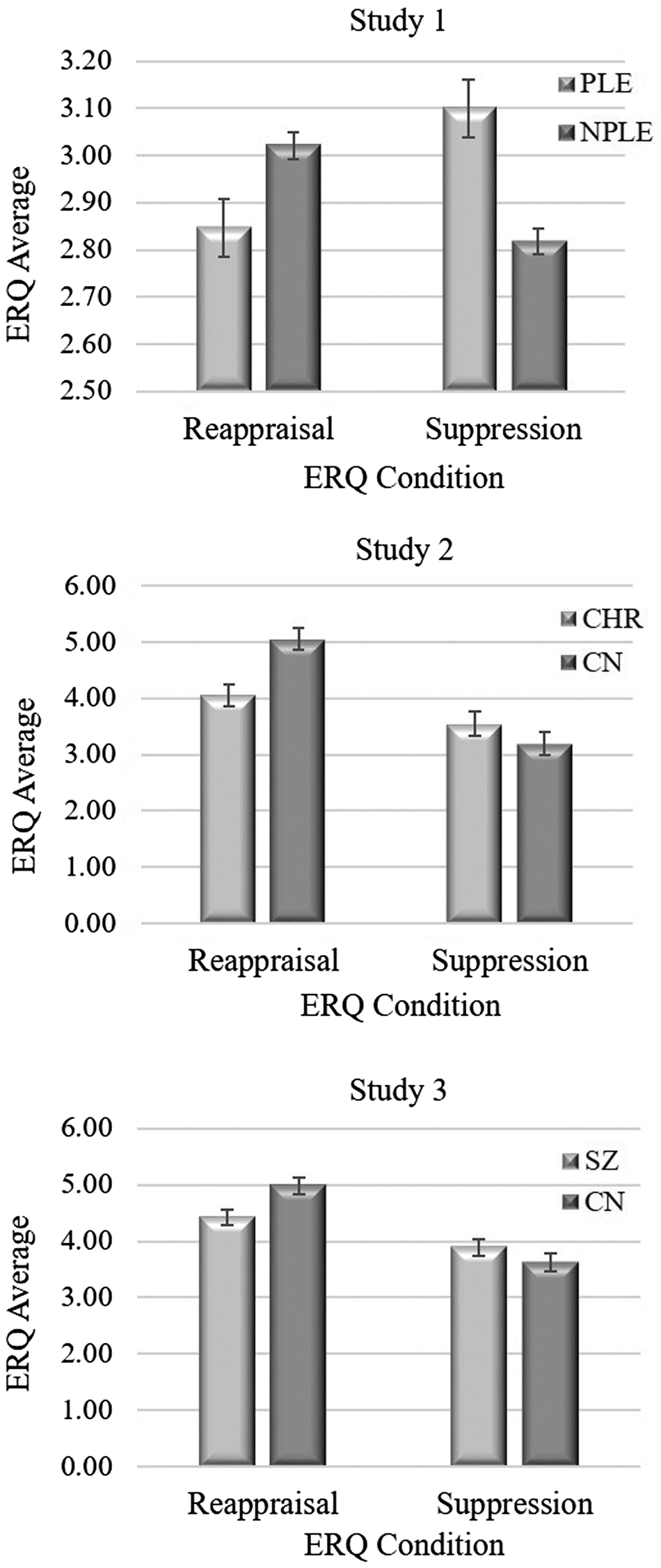
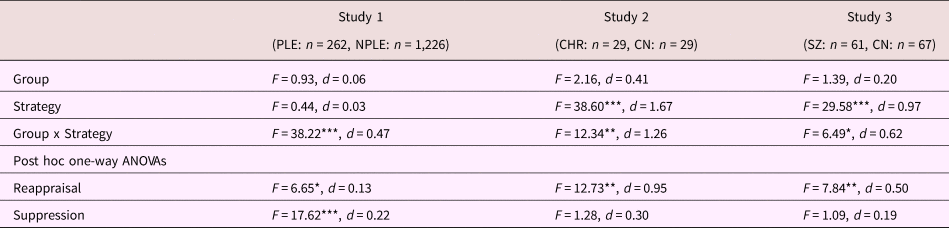
Table 2 presents ANOVA results for each study. Figure 1 presents group means and standard errors for ERQ variables in each study. In Study 1, there was a significant Group x Strategy interaction; however, the main effects of Group and Strategy were nonsignificant. Post hoc one-way ANOVAs indicated that PLE reported significantly less reappraisal and more suppression than NPLE. In Studies 2 and 3, the main effect of Strategy and the Group x Strategy interaction were significant, but the main effect of Group was not. In both studies, post hoc one-way ANOVAs indicated that SZ and CHR reported significantly less reappraisal than CN, but there was no group difference for suppression.
Mean self-reported strategy use for studies 1–3. Study 1 used a rating scale from 1 to 5. Studies 2 and 3 used a rating scale from 1 to 7. Higher scores reflect greater strategy use. ERQ = Emotion Regulation Questionnaire; PLE = psychotic-like experiences; NPLE = no psychotic-like experiences; CHR = clinical high-risk; CN: controls; SZ = schizophrenia outpatients.

ANOVA results for Studies 1–3

Note. ***p < .001; **p < .01; *p < .05; PLE = psychotic-like experiences; NPLE = no psychotic-like experiences; CHR = clinical high-risk; CN = controls; SZ = schizophrenia outpatients.
Effect of psychosis vulnerability
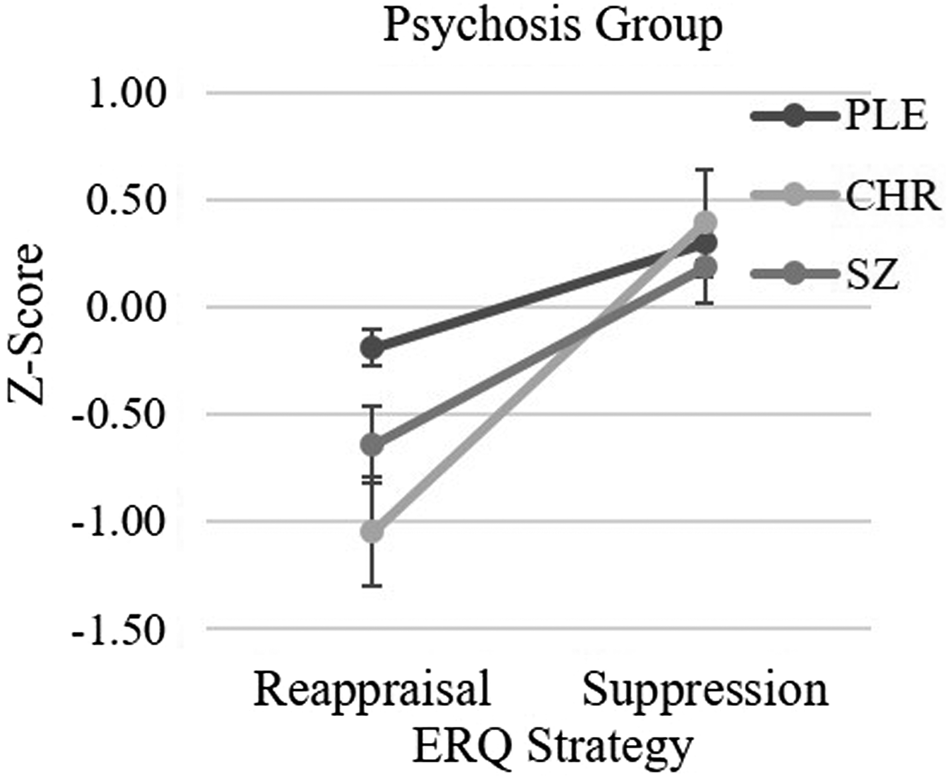
Figure 2 presents mean reappraisal and suppression Z-scores for each psychosis group relative to their respective CN sample. There was a significant Psychosis Group (PLE, CHR, SZ) x Strategy (Reappraisal, Suppression) interaction. Additionally, the main effect of Strategy was significant; however, the main effect of Group was nonsignificant. Follow-up one-way ANOVAs indicated that the three groups differed on reappraisal, but not suppression. Post hoc LSD contrasts conducted on reappraisal indicated that PLE reported more use of reappraisal than CHR (p < 0.01) or SZ (p < 0.03); however, CHR and SZ did not differ (p = 0.20).Footnote 1 Thus, there was evidence that reappraisal was specifically associated with vulnerability for psychosis, with scores declining as risk vulnerability increased from PLE to CHR states. Reappraisal did not differ between CHR and SZ, suggesting that use of reappraisal does not decrease with illness onset.Footnote 2
Reappraisal and suppression z-scores by psychosis vulnerability group. ERQ = Emotion Regulation Questionnaire; PLE = psychotic-like experiences; CHR = clinical high-risk; SZ = schizophrenia outpatients.

Sex differences in emotion regulation strategy use
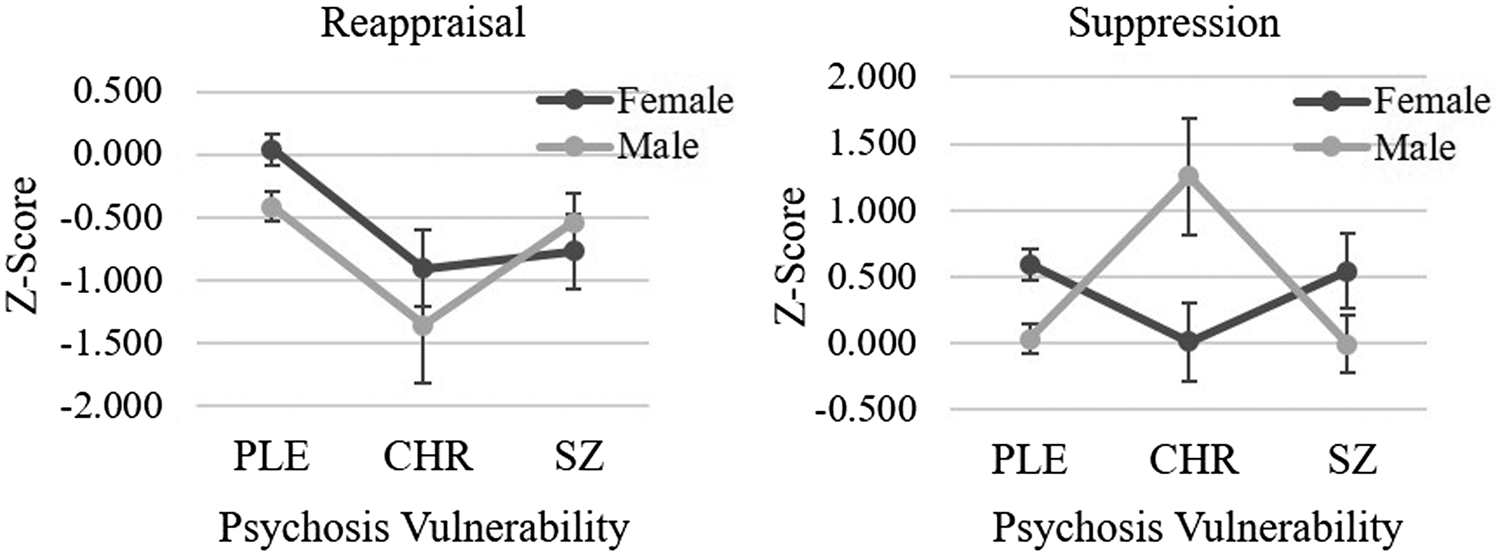
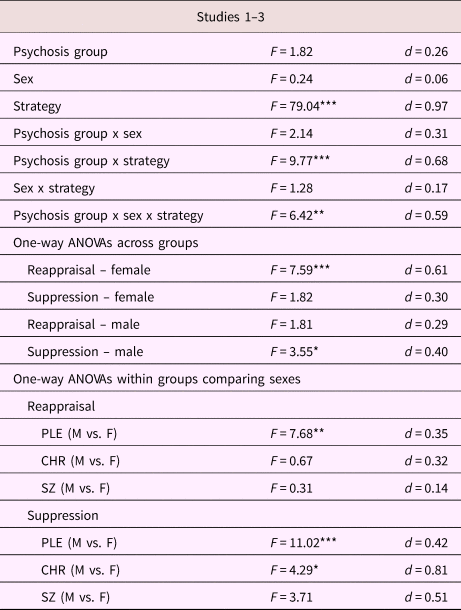
One-way ANOVAs indicated that PLE males scored significantly lower on reappraisal and suppression than PLE females. Among CHR, males scored significantly higher on suppression than females, but sex differences for reappraisal were nonsignificant. Similarly, the SZ group revealed no differences between males and females for either strategy. The Psychosis Group (PLE, CHR, SZ) x Strategy (reappraisal, suppression) x Sex (female, male) interaction was significant. Follow-up one-way ANOVAs were conducted separately per sex. For females, there was a significant effect of Psychosis Group for reappraisal, but not suppression. Post hoc LSD contrasts indicated that females with PLEs reported using reappraisal more than CHR or SZ females (ps < 0.01); however, female CHR and female SZ did not differ on reappraisal (p = 0.73). For males, the psychosis groups did not differ on reappraisal, but did differ on suppression. Post hoc LSD contrasts calculated for suppression indicated that male CHR reported more suppression than male PLE or SZ (ps < 0.02). However, male PLE and SZ did not differ on suppression (p = 0.87, see Table 3 and Figure 3).
Strategy use by sex. PLE = psychotic-like experiences; CHR = clinical high-risk; SZ = schizophrenia outpatients.

Strategy use by psychosis vulnerability and sex

Note. ***p < .001; **p < .01; *p < .05; PLE = psychotic-like experiences; NPLE = no psychotic-like experiences; CHR = clinical high-risk; CN = controls; SZ = schizophrenia outpatients; M = males; F = females.
Correlations with clinical outcomes
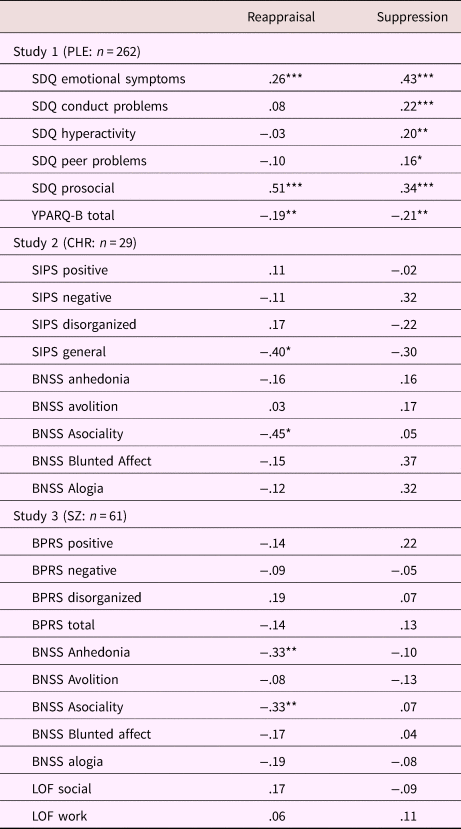
Table 4 presents correlations between ERQ and symptom variables for each study. When examining the effect of vulnerability in PLE and CHR through the YPARQ-B, greater severity of psychosis was associated with less use of reappraisal (r = −.26, p < .001) and suppression (r = −.19, p = .001). Interestingly, this effect was driven by the PLE group (reappraisal: r = −.19, p < .01; suppression: r = −.21, p < .01), as the correlations were nonsignificant in CHR (reappraisal: r = .16, p = .46; suppression: r = .03, p = .88). In Study 1, lower use of reappraisal was also associated with more severe emotional symptoms and less prosocial behavior on the SDQ, and lower use of suppression was associated with more severe emotional symptoms, conduct problems, hyperactivity, peer problems, and less prosocial behavior on the SDQ.
Correlations with clinical outcomes for Studies 1–3

Note. ***p < .001; **p < .01; *p < .05; PLE = psychotic-like experiences; CHR = clinical high-risk; SZ = schizophrenia outpatients; SDQ = Strengths and Difficulties Questionnaire; SIPS = Structured Interview for Psychosis-Risk Syndromes; BNSS = Brief Negative Symptom Scale; BPRS = Brief Psychiatric Rating Scale; LOF = Level of Function Scale.
In Study 2, lower use of reappraisal was significantly associated with asociality on the BNSS and general psychiatric symptoms on the SIPS. Follow-up item-level correlations indicated that the correlation with the SIPS general subscale reflected an association between lower reappraisal and more severely impaired tolerance to normal stress. There were no significant correlations with suppression.
In Study 3, reappraisal was significantly associated with greater severity of BNSS asociality and anhedonia. There were no significant correlations with suppression.
Discussion
Across three experiments, we examined self-reported emotion regulation strategy use in groups differing in level of vulnerability for psychosis. Groups included a community sample of youth with PLEs, youth at CHR for psychosis, and adults diagnosed with SZ. As predicted, each of the psychosis-spectrum groups reported using reappraisal significantly less than their comparison CN group. Additionally, there was evidence for lower reappraisal in CHR than PLE, consistent with a vulnerability-related, dose-dependent decrease. In contrast, mean reappraisal levels were similarly severe in CHR and SZ, suggesting that once individuals reach a clinical help-seeking prodromal stage, reappraisal abnormalities are firmly in place and do not worsen with illness onset. Age was not a significant covariate in the analyses comparing groups within each study. Prior research suggests that reappraisal increases with age in healthy samples (John & Gross, Reference John and Gross2004; Martin & Ochsner, Reference Martin and Ochsner2016; McRae et al., Reference McRae, Gross, Weber, Robertson, Sokol-Hessner, Ray and Ochsner2012; Silvers et al., Reference Silvers, McRae, Gabrieli, Gross, Remy and Ochsner2012); however, we found higher reported use of reappraisal in the youngest group of participants (i.e., PLE). Thus, although there is strong evidence for effects of age on emotion regulation in adolescence, these effects did not supersede the impact of psychosis. Sex, however, may moderate reappraisal differently across phases of illness, with a more pronounced effect on males at the lower end of the psychosis continuum that dissipates in those with diagnosable illness.
With regard to suppression, we hypothesized that all three psychosis groups would report more suppression than CN. Findings were inconsistent with this hypothesis across studies. Youth at CHR for psychosis and adults with SZ did not differ from CN in suppression, whereas youth with PLEs reported using suppression more than NPLE youth. There was also no evidence for a vulnerability-related, dose-dependent effect of suppression, which may be due to insufficient power. However, sex had a moderating effect on vulnerability, with female PLEs and SZ reporting more suppression than males, and the opposite pattern in CHR. This effect of sex on vulnerability should be interpreted with caution given the low number of male participants in the CHR group.
These findings help clarify inconsistencies in group effects among prior studies, which may reflect demographics (e.g., sex, age), symptom profiles, and power. In particular, the proportion of males versus females in a sample may influence whether group differences are observed on reappraisal versus suppression subscales. Additionally, our effect sizes were small to moderate, indicating that prior studies with insufficient sample sizes may not have been adequate to detect potential effects.
Consistent with several past studies, significant associations between emotion regulation strategy use and clinical outcomes were observed (Badcock et al., Reference Badcock, Paulik and Maybery2011; Horan et al., Reference Horan, Hajcak, Wynn and Green2013; Kimhy et al., Reference Kimhy, Gill, Brucato, Vakhrusheva, Arndt, Gross and Girgis2016; Kimhy et al., Reference Kimhy, Vakhrusheva, Jobson-Ahmed, Tarrier, Malaspina and Gross2012; Perry et al., Reference Perry, Henry and Grisham2011). In all three studies, lower use of reappraisal was associated with asociality. These findings are consistent with some prior studies examining adults with SZ and CHR youth. In the PLE and CHR groups, lower use of reappraisal was associated with greater severity of general psychiatric symptoms. In adults with SZ, lower use of reappraisal was associated with greater severity of anhedonia. These findings indicate that, across the continuum of psychotic experiences, lower use of reappraisal is associated with negative and general symptoms. In contrast, suppression only showed significant correlations with clinical variables in the community sample of youth with PLEs, where associations were found with psychosis and general psychiatric symptoms. This suggests that greater severity of psychosis may be driving associations with emotion regulation, regardless of vulnerability status. These findings are consistent with some prior literature indicating that poor clinical outcomes are more strongly associated with abnormalities in reappraisal than suppression (Kimhy et al., Reference Kimhy, Vakhrusheva, Jobson-Ahmed, Tarrier, Malaspina and Gross2012; Perry et al., Reference Perry, Henry and Grisham2011; Strauss et al., Reference Strauss, Kappenman, Culbreth, Catalano, Ossenfort, Lee and Gold2015), although other studies have found stronger associations with suppression (Aldao et al., Reference Aldao, Nolen-Hoeksema and Schweizer2010; Badcock et al., Reference Badcock, Paulik and Maybery2011; Horan et al., Reference Horan, Hajcak, Wynn and Green2013; Kimhy et al., Reference Kimhy, Gill, Brucato, Vakhrusheva, Arndt, Gross and Girgis2016; Perry et al., Reference Perry, Henry and Grisham2011).
Despite the strengths of the current studies, certain limitations should be considered. First, the differences in age and psychosis vulnerability between samples necessitated using common but different measures across the studies. The child version of the ERQ (i.e., the ERQ-CA) was used in Study 1, and the original ERQ was used in Studies 2 and 3. These versions have slightly different scale characteristics and psychometric properties. Direct statistical comparisons that were made among the psychosis vulnerability states should be interpreted with this limitation in mind. Additionally, clinical scales used across studies varied, complicating the interpretation of symptom associations. Second, although the SZ and PLE samples were relatively large, the CHR sample was not, particularly for analyses examining sex differences in relation to psychosis vulnerability. Given that there were only nine males in the CHR group, sex difference findings should be considered preliminary until replicated. Third, Z-scores were used to compare the clinical samples on reappraisal and suppression. These are influenced by sample size, which was much larger in the community sample than the CHR or SZ samples. Larger samples are more representative and less prone to influences of extreme scores, and therefore, sample size may have influenced group comparisons using Z-scores, making the CHR sample, in particular, more influenced by variations in individual differences. CHR findings should be interpreted with this limitation in mind. Fourth, we did not administer a measure of emotional awareness along with the ERQ. Prior studies have demonstrated that emotional awareness is a significant mediator of the association between emotion regulation and clinical outcomes (Kimhy et al., Reference Kimhy, Vakhrusheva, Jobson-Ahmed, Tarrier, Malaspina and Gross2012). Future studies should explore the role of emotional awareness in emotion regulation abnormalities across the psychosis continuum. Fifth, each of the studies used a cross-sectional design. In future studies, it will be important to follow community and CHR groups over time using a prospective longitudinal design to determine whether emotion regulation abnormalities worsen with illness onset. Longitudinal studies are necessary to inform etiological models and highlight novel biomarkers. Sixth, the effects of antipsychotic medication were not systematically evaluated across studies, and it is currently unknown whether antipsychotics contribute to the emotion regulation abnormalities observed in the SZ spectrum. Finally, emotion regulation was evaluated through self-report alone, which can reflect biases regarding gender stereotypes and fails to observe underlying components of emotion regulation (e.g., cognitive demand) that may contribute to emotion regulation abnormalities (McRae et al., Reference McRae, Gross, Weber, Robertson, Sokol-Hessner, Ray and Ochsner2012; McRae et al., Reference McRae, Ochsner, Mauss, Gabrieli and Gross2008). Future studies should implement neurophysiological and psychophysiological assessments to explore potential mechanisms underlying self-reported abnormalities.
Despite these limitations, findings have important treatment implications. There are now psychosocial interventions developed for emotion regulation, which have proven effective in several psychiatric disorders (Fresco, Mennin, Heimberg, & Ritter, Reference Fresco, Mennin, Heimberg and Ritter2013; Renna, Quintero, Fresco, & Mennin, Reference Renna, Quintero, Fresco and Mennin2017); however, these interventions have yet to be evaluated in the SZ spectrum to determine their utility for prevention or symptom reduction. The current findings suggest that interventions targeting reappraisal may be particularly beneficial.
Author ORCIDs
Hannah C. Chapman 0000-0002-1437-0251.
Financial support
This work was supported by the National Institute of Mental Health, Grant K23-MH092530, and the Transdisciplinary Areas of Excellence grant from the State University of New York, Binghamton.