Introduction
Across Europe, throughout the English-speaking countries and beyond, welfare states have been reformed to ‘activate’ the behaviour of benefit recipients to stimulate job entry (van Berkel, Reference Van Berkel2010; Handler, Reference Handler2004). Such policies raise a series of issues in relation to the conceptualisation and exercise of human agency, which are analysed in this article in relation to UK welfare-to-work reforms, but have implications for all countries engaged in activation. Since 1996, there has been a remarkable degree of consistency in the direction of travel taken in welfare reform by all three UK ruling political parties − Conservative, Labour and, in coalition, the Liberal Democrats. For fifteen years, priority has been given to cost-cutting, mounting compulsion, reducing eligibility and increasing job-seeking conditionality for wider claimant groups. Overall, this has made it more difficult to claim benefits, which are worth less in relative terms, are available for shorter durations and are more likely to be means-tested than based on earned contributions. Similarly, a consensus has developed on the desirability of a particular form of governance that mixes contractualism, managerialism and marketisation. Over the last generation, the logic and operation of the UK's social security system has fundamentally shifted. This shift is one that has individualised culpability and attributed personal responsibility for one main solution – entry into paid employment, often low paid and insecure in nature. The processes for ensuring this aim involve elaborate systems for monitoring and controlling behaviour. Welfare-to-work policies have therefore brought issues of motivation, choice and behavioural change to the forefront of policy design and public debate.
However, agency remains under-developed in the academic social policy literature, which has been skewed towards considering the intentions of benefit recipients and, to a lesser extent, front-line workers, but has largely overlooked the motivation and behaviour of more powerful social actors, such as policy-makers and employers. The principal aim of this article is to examine understandings of ‘agency’ in the welfare-to-work policy process. The initial focus is on conceptualisations of human agency in social policy and social theory, where there is no single agreed definition of the concept. Key themes from this literature are then applied to the analysis of welfare-to-work policies, in relation to morality and ‘bad agency’, differentiating agency and enacting agency and creating context (interconnectedness, interaction and intersubjectivity).
Conceptualising agency
How we conceive of self in relation to others is a matter of great consequence. As a ‘magpie subject’ (Blakemore, Reference Blakemore2003: 3), social policy has thrived on adopting ideas, evidence and ‘ways of knowing’ from a range of allied disciplines. Whilst this necessary eclecticism has generated a wealth of insights, it has also created disorientation about the extent to which social actors can exercise agency, particularly in relation to how people are motivated and make choices that affect their wellbeing, and the ways in which social structures can be seen to determine, enable or constrain personal action in everyday life. Broadly, ‘agency customarily refers to purposive human action or behaviour’ (Deacon, Reference Deacon2004: 447). As a discipline, social policy has ‘no single model of agency [that] can yet be regarded as complete’ (Deacon, Reference Deacon2004: 454) and is caught in the middle of competing viewpoints, including, for example, the seductive simplicity of economic rationality, the possibilities for causation in political science and the complexities of deep ongoing debate at the heart of sociology. The resulting ontological mishmash has formed an inadequate base for the critique of welfare-to-work policies that are underpinned by untested assumptions about personal responsibility and individual behavioural change. This section outlines the development of understandings of agency in social policy literature.
Developing understandings of agency in social policy analysis
Whilst the discipline of social policy has always been concerned centrally with how people's lives are influenced, for example, by patterns of inequality and policy interventions, consideration of the ways in which human action relates to social structures has often been implied or overlooked. It has been recognised for some time that research has tended to:
neglect the differentiated nature of vulnerability and risk among individuals and the role of creative human agency in responding differentially to threats to wellbeing across the lifespan. (Titterton, Reference Titterton1992: 2)
Although understandings have been better developed in some fields (e.g. disability studies, cf. Barnes et al., Reference Barnes, Oliver and Barton2002), this puzzle of how to balance the active agency of individuals with the experience of groups in the context of structural forces has haunted social policy analysis. An ongoing challenge is to make sense of the relationship between two disputed concepts: ‘structure’ and ‘agency’ (Harrison and Davis, Reference Harrison and Davis2001; Musolf, Reference Musolf2003), which cannot be separated from one another (Giddens, Reference Giddens1984). The traditionally social democratic stance of many writing in the field has been criticised for treating service users, such as benefit recipients, with a ‘subtle mixture of diminution and patronage’ (Fennell et al., Reference Fennell, Phillipson and Evers1988: 6). Similarly, Williams et al. (Reference Williams, Popay and Oakley1999: 14) noted that ‘in much welfare research it remains the case that the notions of individual agency and subjectivity are not generally well-developed’. It has been arguedFootnote 1 that this discomfort with examining agency in relation to structures, especially with regard to acknowledging ‘bad’ agency,Footnote 2 left a gap in knowledge that was filled by individualistic and morally judgemental interpretations of human action, such as the discredited but nonetheless popularised ‘underclass’ theory that demonised benefit recipients (Deacon and Mann, Reference Deacon and Mann1999; Deacon, Reference Deacon2004). This left analysts without the conceptual leverage to engage effectively with policy developments when, notably for social security since 1996, increasing emphasis began to be placed on the devolution of responsibility to welfare users (and in some cases front-line workers) to comply with instrumental solutions to social problems by punishing or rewarding individual behaviour (see below).
Reviving agency
Since the 1990s, there has been renewed interest in developing better understandings of agency for social policy analysis, particularly to acknowledge the ‘active’ (Williams et al., Reference Williams, Popay and Oakley1999: 669) and ‘creative, reflexive welfare subject’ (Williams et al., Reference Williams1999: 7). Deacon (Reference Deacon2004: 448) identified three emerging trains of thought: how people make choices as welfare ‘consumers’ in relation to quasi-markets (e.g. Le Grand and Bartlett, Reference Le Grand and Bartlett1993); how people act morally, interdependently and relationally (e.g. Finch and Mason, Reference Finch and Mason1993); and responsible behaviour regarding ‘welfare dependency’ and ‘new paternalism’ (Mead, Reference Mead1992, Reference Mead1997). A key reference point in is Le Grand's (1997: 149) article on human behaviour, which posited that front-line workers in welfare services could no longer be viewed as ‘public spirited altruists (knights)’ and neither were recipients passive ‘pawns’ – instead both sets of actors needed to be understood as ‘self-interested (knaves)’.
This approach, and its later version which recast recipients as candidates for empowerment through incentives into ‘queens’ (Le Grand, 2003), is interesting in its attempt to cast light on issues of motivation in relation to rewards. However, it established a tradition of looking ‘downstream’ at the motivation and action of front-line workers and service users, whilst having a blind spot towards the processes and consequences of ‘upstream’ (McKinlay, Reference McKinlay, Enelow and Henderson1975) intentions and behaviour of, for example, policy-makers, business people or employers. For example, policy-makers were taken to be rational and neutral actors, who ‘fashion policies on the assumption that those affected by the policies will behave in certain ways and they will do so because they have certain motivations’ (Le Grand, 1997: 153). Curiously, this model portrays those who are generally seen as having the most power as having the narrowest and most benevolent interests and the least capacity to exercise agency. This version of events also rests on the shaky assumption that market forces enhance respect, rather than reinforce inequalities. Nevertheless, Le Grand's (1997, 2003) conceptualisation has dominated understandings of agency in social policy literature, in which the analytical lens is weighted firmly downwards towards the least powerful, without recognition of wider influences on the causes of adverse personal circumstances.
Differentiating agency: morality and identities
Although Le Grand's work is most readily associated with agency and motivation, understandings were much improved around the same time by two contributions that have received less recognition than they deserve: Duncan and Edwards’ ground-breaking research (1997, 1999), which demonstrated that ‘gendered moral rationalities’, rather than ‘individualised economic rationality’ (Edwards and Duncan, Reference Edwards and Duncan1997: 37) influenced lone parents’ decisions about entering paid work, and Harrison and Davis’ (2001) study on housing policy and difference. In the first of these, Duncan and Edwards (Reference Duncan and Edwards1999) provided evidence that lone mothers felt their responsibilities keenly, but that it was necessary for them to balance the rewards and demands of raising their children with the benefits and pressures of paid employment. This approach offered three major improvements on previous conceptualisations of agency, such as Le Grand's (1997) or Murray's (1990, 1994), which had assumed that intentions and choices were experienced and enacted at an individual level, free from social context, for the purpose of self-gratification and economic maximisation. Firstly, Duncan and Edwards (Reference Duncan and Edwards1999) emphasised the centrality of identity, in this case as a ‘mother’, to ‘individual and collective understandings about what is best and morally right’ (Edwards and Duncan, Reference Edwards and Duncan1997: 38) and the primacy of socially acceptable morality over economic benefits and costs in decision-making (Duncan and Edwards, Reference Duncan and Edwards1997: 30). In this they highlighted the particular context within which motivation and action took shape, where powerful shared beliefs exist about what it means to be a ‘good mother’. Secondly, they identified variation in balancing the roles of mother and worker (i.e. those artificially collectivised into administrative categories do not all experience or respond in the same ways). Thirdly, Duncan and Edwards (Reference Duncan and Edwards1999) showed decision-making to involve complex and interconnected process of negotiation between the needs and desires of mothers and their children, reinforcing earlier feminist recognition of the interdependency of family life (Finch and Mason, Reference Finch and Mason1993; cf. Dean, Reference Dean2003a). This provided strong evidence against Murray's (1990, 1994) assertion of a separate amoral ‘underclass’. Agency therefore emerges from this analysis as context-specific, negotiated and differentiated in relation to identities, as well as rational in the sense that it involves logic and reflective thought (including, but not exclusively, in relation to financial considerations). This differentiation of lived experience, multipositionality and multifaceted relationship with identities was further developed by Harrison and Davis (Reference Harrison and Davis2001) in their analysis of ‘difference within difference’. In contrast to Le Grand's (1997, 2003) unitary representation of sets of actors with relatively homogenised experiences, positions, motivations and actions, Duncan and Edwards (Reference Duncan and Edwards1999) and Harrison and Davis (Reference Harrison and Davis2001) provide a more nuanced account of agency as situational and variable, produced and negotiated through contextualised interaction. This literature also raises questions over the extent to which agency is influenced, or perhaps even causally determined, by external factors.
Contextualising agency: relating action to ‘structures’
Harrison and Davis’ (2001) contribution was also valuable in dealing head on with the meaning of ‘structure’ and ‘agency’ and their interrelationships. They highlighted the implications of long-term continuity in interests and command over resources, assets and power. Harrison and Davis (Reference Harrison and Davis2001) considered the diversity of experience between and within categories such as disability, gender and ethnicity and encouraged the development of ideas of agency that recognise ‘people's distinctive experiences are nonetheless strongly affected by matters that are determined outside spheres of household or locality’ (2001: 4). Thus, difference is regulated and choice is mediated, ‘produced and reproduced through an ongoing complex interplay of agency/action with structure’ (Harrison and Davis, Reference Harrison and Davis2001: 7). In this sense, actors are attached and can contribute, to greater or lesser extents, to long-standing contexts of privilege and disadvantage. This approach benefits from more extensive use of sociological insights than some of the discussion about agency within social policy literature. Sociology is certainly an ideal reference point since the relationship between structure and agency has sustained such breadth and depth of debate for the topic to be claimed as the defining problematic of the discipline (O'Donnell, Reference O'Donnell and O'Donnell2010: xxiii).
Within social theory, a wide range of theoretical positions (based on a mix of ontological, epistemological and methodological assumptions) have developed in the century and a half since Marx’ observation that people:
make their own history, but they do not make it just as they please; they do not make it under circumstances chosen by themselves, but under circumstances directly encountered, given and transmitted from the past. (Reference Marx and McLellan1977[1852]: 300)
This live debate continues to question the balance between agency and structure, evolving in four directions that are relevant for social policy analysis. Firstly, there are a mixture of theoretical and empirical developments based on the application of key concepts from late Twentieth Century work, such as Bourdieu's ‘habitus’ and ‘social suffering’ or Giddens’ ‘structuration theory’, which have usefully regenerated analysis of the relationship between structure and agency in relation to specific groups and social problems (e.g. Frost and Hoggett, Reference Frost and Hoggett2008; Greener, Reference Greener2002). Secondly, alongside this, new theoretical writing has come from critical realists (cf. Archer, Reference Archer1995) who view agency and structure as distinct, but seek to better reconcile them. Thirdly, a group of interactionists see the critical realist integration project as misconceived, instead opting to understand the social world as grounded in everyday experience (Martin and Dennis, Reference Martin, Dennis, Martin and Dennis2010). Fourthly, ‘in so far as identity (or identities) defines the self, the agency/structure debate is carried over into the theorisation of self and self-identity’ (O'Donnell, Reference O'Donnell and O'Donnell2010: xxvi). Here a range of theoretical positions question the coherence of ‘self’ (McRobbie, Reference McRobbie1994) and highlight the multiplicity and fluidity of identities (e.g. Laclau and Mouffe, Reference Laclau and Mouffe2001).
Archer (Reference Archer1995) warned against conflating individuals and social aggregates, which is an error she believes is evident in the work of a range of theorists, especially Giddens’ structuration theory (1984). Instead, she advocates her own ‘morphogenetic’ approach as an explanatory methodological solution:
the ‘morpho’ element is an acknowledgement that society has no pre-set form or preferred state: the ‘genetic’ part is a recognition that it takes its shape from, and is formed by, agents, originating from the intended and the unintended consequences of their activities. (Archer, Reference Archer1995: 5)
Martin and Dennis (Reference Martin, Dennis, Martin and Dennis2010) and colleagues, do not seek to reconcile agency with structure, because they do not believe there is any evidence to suggest that these positions have ever been separated. They argue that to ‘place analytical emphasis on either the individual or society is to miss the point’ (Martin and Dennis, Reference Martin, Dennis, Martin and Dennis2010: 5). Instead, they advocate an approach that ‘social life must be understood as enacted by real people in real situations’ (Martin, Reference Martin, Martin and Dennis2010: 34) with a focus on the ongoing creation of meaning (Martin, Reference Martin, Martin and Dennis2010: 15). Indeed, this is certainly part of what Giddens originally intended in his structuration theory, which posited that ‘structure only exists in and through the activities of human agents’ (Giddens, Reference Giddens, Held and Thompson1989: 256).
Although definitions of individual and collective action remain contested and controversial (O'Donnell, Reference O'Donnell and O'Donnell2010: xxv), this long-standing sociological debate is useful for social policy analysis in several ways. Most importantly, it re-emphasises a basic observation that human agency (including matters of motivation, choice, decision-making, responsibility, action and non-action) is social. That is to say, no human actor can operate on a purely individual basis. We are all connected to others in creating meaning relating to motivation and identities (e.g. ‘responsible citizen’, ‘profit-maker’, ‘policy-maker’, ‘mother’ or ‘worker’). Social policy analysts can fruitfully consider Jenkins’ (2010: 145) problematic of ‘how to reconcile individual human agency with the constraints produced by human collectivity’. Perhaps it is impossible to satisfy competing views of ‘higher order’ collective structures, which Jenkins (Reference Jenkins, Martin and Dennis2010: 139) dismisses as ‘imaginary’ and Archer is accused of reifying. However, even if policy analysts choose not to view aspects of collectivity as causal determinants, there is still value in considering them as processes enacted in lived reality, rather than overlooking them entirely as ‘unknowable’. Regardless of whether ‘structures’, such as inequalities or institutions, have a life of their own in any palpable sense, or operate only as normative markers (Martin and Dennis, Reference Martin, Dennis, Martin and Dennis2010: 15), there remains a need to:
chart the mechanisms, practices and influential assumptions through which people's varied lives and plans are constrained, confirmed, supported, conditioned, or even liberated. (Harrison and Davis, Reference Harrison and Davis2001: 4)
Enacting agency: interconnectedness, interaction and intersubjectivity
The lived reality of the welfare subject can be viewed in terms of ‘situated interactions’ (Martin and Dennis, Reference Martin, Dennis, Martin and Dennis2010: 16). This section outlines two views of enacted agency: Lister's (2004) analysis of poverty and the concept of interdependency within the ethics of care literature. Firstly, Lister's (2004) conceptualisation of forms of agency exercised by people experiencing poverty identified personal and political responses operating at everyday and strategic levels: ‘getting by’, ‘getting (back) at’, ‘getting out’ and ‘getting organised’. As well as recognising the creative and active agency of welfare recipients, this approach provided an antidote to pathologising narratives of social problems by contextualising agency within existing power relations in terms of the ‘politics of redistribution and of recognition and respect’ (Lister, Reference Lister2004: 187). Lister (Reference Lister2004) highlighted, for example, the symbolic importance of ‘othering’ practices that stigmatise and disempower disadvantaged groups. Secondly, the ethics of care literature (Tronto, Reference Tronto1993; Svenhuijsen, Reference Svenhuijsen1998; Williams, Reference Williams2001) has emphasised the interdependency of human life. From this perspective, social actors are not in essence solitary figures, but connected beings enmeshed in relationships of interdependency, caring and being cared for, in ways that hold meaning and significance beyond those aspects of life that can be reduced to economic exchange. Taken together, Lister's (2004) approach and the literature on the ethics of care highlight the importance of taking into account the subjective and interconnected aspects of human experience – the ways in which we are bonded to others.
In order to understand agency as enacted, another concept from interpretive sociology is useful – namely, intersubjectivity (cf. Hoggett, Reference Hoggett2000). This concept views the generation of subjective reality as an ongoing collective endeavour that involves being influenced and influencing others simultaneously. From this perspective, social life is ‘conducted in and through patterns of collaborative interaction’ (Martin and Dennis, Reference Martin, Dennis, Martin and Dennis2010: 5). Crucially, producing meaning and enacting agency must be understood as collective practices. Agency is connected firmly to shared perceptions and meanings (as in the case of motherhood, above), illustrating ‘the extent to which people are constrained by the social environments in which they must think and act’ (Martin and Dennis, Reference Martin, Dennis, Martin and Dennis2010: 11). Even the inner worlds of emotion and consciousness cannot be considered as entirely ‘individual’ because of the malleability of the self in relation to others (cf. Elias, Reference Elias2000), since:
much human action and experience arises out of dialogical situations or systems which are irreducible to individual human subjects. (Crossley, Reference Crossley1996: 24)
‘Bad’ agency, self and reflexivity
These insights have contributed to better understandings of agency, but the thorny issue of ‘bad’ agency still remains, with a need to ‘confront the subject's refusal of agency or the assertion of forms of agency which are destructive towards self and other’ (Hoggett, Reference Hoggett2001: 38). In addressing this, Hoggett (Reference Hoggett2000, Reference Hoggett2001) drew from psychology and sociology to recognise that in addition to the multiple identities (highlighted by Harrison and Davis, Reference Harrison and Davis2001), each social actor has not one, but multiple selves and that an unfamiliar self can act non-reflexively. This means that it is possible to lack awareness or insight into things we believe, say or do and their impact on ourselves and others. These processes are, by their nature, subconscious and at least to some extent closed off from the actor whose agency is in question. This ‘splitting of the subject’ is perhaps most evident in cases of harm to others, for example domestic violence, which can be denied at the time of the act and in later accounts of it (Hoggett, Reference Hoggett2001: 41). However, some theorists argue that there is ‘no fixed or real self at all’ (O'Donnell, Reference O'Donnell and O'Donnell2010: xxvi), whilst others see the agent as knowledgeable and reflexive (Giddens, Reference Giddens1984: 2) with ‘continuity of the self in memory and in the interpretation of social narratives and the construction of narratives of self’ (O'Donnell, Reference O'Donnell and O'Donnell2010: xxvi).
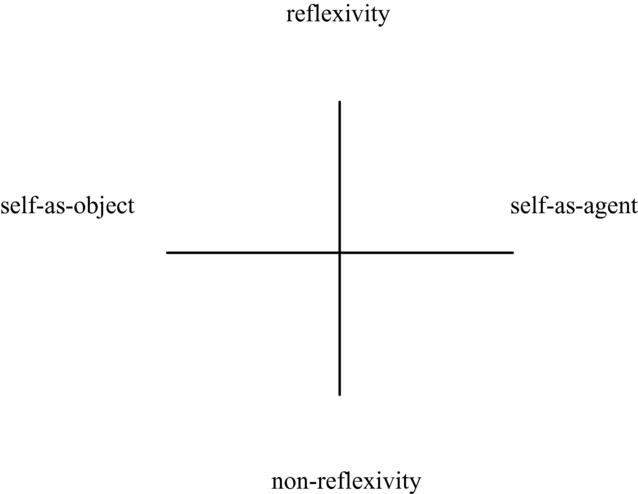
There is another under-acknowledged dimension of lived experience that involves gaps between intentions, actions, effects and accounts relating to them. Drawing on Bauman (Reference Bauman1993), Hoggett argues for understanding choice ‘in the context of both an impulsive and passionate subject and of a world characterised by ambivalence, messiness, ambiguity and tragedy’ (2001: 40). These issues further highlight the inadequacy of the prevailing economic rationality model and challenge definitions of agency used within social policy, which rely on action being ‘purposive’ (Deacon, Reference Deacon2004: 447). Hoggett (Reference Hoggett2001: 48) proposed an alternative model of agency (applicable to any social actor) that recognises continuums between reflexivity and non-reflexivity; and degrees of empowerment between self-as-object (acknowledging the possibility of a ‘collapse of agency’, for example in the experience of depression) and self-as-agent (see Figure 1).

In summary, in the late twentieth and early twenty-first centuries, conceptualisations of agency for social policy analysis have developed within the discipline in several important respects. The current state of understanding is that: everyday experience is inherently inter-connected (Williams, Reference Williams2001), especially in relation to care and interdependency; each ‘agent’ has a multiplicity of selves (Hoggett, Reference Hoggett2001) and multipositionality of resources and interests (Harrison and Davis, Reference Harrison and Davis2001); identities and morality influence decision-making (Duncan and Edwards, Reference Duncan and Edwards1999); and actors contribute to contexts as well as being influenced by them (Harrison and Davis, Reference Harrison and Davis2001). Social theory offers wider and deeper debate on the relationship between agency and structure. I have shown that one concept, ‘intersubjectivity’, appears to offer insights for social policy analyses of agency. ‘Intersubjectivity’ recognises the blurred boundaries between self and others, offering a view of agency as profoundly enmeshed with shared expectations and accomplished in everyday life through interaction. The next section examines the ways in which agency has been conceived of in welfare-to-work policies in comparison with conceptualisations of agency that have been reviewed in the previous section.
Agency and welfare-to-work policy
Welfare-to-work policies are based on assumptions about how benefit recipients and employment advisers are motivated and make decisions. Not only this – they are explicitly designed to change motivation and decision-making, with rewards for profit-making delivery agencies (including outcome payments of up to £14,000 per short-term job entry under the 2011 Work Programme − DWP, 2010a) and the harshest ever sanctions to punish the non-compliance of universal credit recipients (up to three years of disallowance under the universal credit − DWP, 2010b). The dominance of such instrumental intervention is unprecedented. The question is: how does this approach relate to academic knowledge about agency? This section outlines the key components of welfare-to-work policies; identifies the assumptions they encapsulate about agency; and relates these to findings from the themes overviewed in the previous section: moralising agency (the moral dimensions of decision-making and ‘bad’ agency), differentiating agency (accounting for multiplicity of identities, selves and multipositionalty) and interconnecting agency (contextualisation and enactment).
Assumptions within existing policy
Since the Conservative government legislated for jobseeker's allowance in 1996, increasing emphasis has been placed on individual efforts to take and declare specific action to look for paid employment. Reforms intensified under the Labour governments (1997–2010), signalling a watershed in the perceived purpose of income maintenance policies. Eligibility was tightened, job-seeking conditions were applied to widening client groups, sanctions were toughened and benefit levels, already below-poverty levels, declined in real value (Sutherland et al., Reference Sutherland, Evans, Hancock, Hills and Zantomio2008). These changes were of particular significance for groups previously exempt from job-seeking activities, which became subject to new forms of conditionality (Dwyer, Reference Dwyer2010). For disabled people, rules of transition from incapacity benefit to employment support allowance involved a new work capacity assessment, which led to narrower entitlement and a majority of claimants being redefined as ‘fit for work’ (DWP, 2011b; Patrick, Reference Patrick2011; Roulstone, Reference Roulstone2011). Similarly, lone parents were transferred from income support to jobseeker's allowance and faced increased work-related interventions (Wright, Reference Wright, Betzelt and Bothfeld2011b). The new predominantly ‘work first’ (Lindsay et al., Reference Lindsay, McQuaid and Dutton2007) priorities became: to reduce benefit expenditure (presented within a discourse of culpability and dependency); to raise the employment level (presented as necessary because fertility rates have dropped below replacement levels for an ageing population; and in response to perceived pressures of globalisation); and to eradicate child poverty (DWP, 2006, 2007, 2008). Both the policy content the accompanying discourse reinforced and individualised ‘personal responsibility’ of benefit recipients, who were charged with solving their problems by looking for a job. One commissioned review established that:
The over-arching objective is to influence the behaviour of as many working age benefit recipients as possible in order to move them into work, avoid long-term benefit receipt and protect the taxpayer. (Gregg, Reference Gregg2008: 10)
Apart from reducing the prominence of the goal to eradicate child poverty, the 2010 coalition government has continued further down the path originally broken by the earlier Conservative government and established by Labour. Whilst Labour's policies were tempered, at least to some extent, by more rewarding and enabling elements (e.g. National Minimum Wage, tax credits and efforts to increase affordable childcare), the coalition government's reforms have taken a distinctly more punitive turn (DWP, 2010a, 2010b). Benefits have become harder to claim than at any point since the establishment of the post-war welfare state, worth even less than before in relative terms and backed up by the harshest ever sanctions.
These changes have gone hand-in-hand with the shift to marketise the delivery of employment services. The increased reliance on private providers instilled by Labour (particularly following the recommendations of banker David Freud's non-expert review in 2007) have been thoroughly endorsed by the coalition government (who made Freud, by then a peer, Parliamentary Under-Secretary of State for Work and Pensions). This system allows private providers to dominate the market and accumulate profit from outcome payments when a benefit recipient finds her/himself a job. This approach can be contextualised within an international ‘incentive paradigm’ (Van der Veen and Trommel, Reference Van der Veen and Trommel1999), which views behaviour as driven overwhelmingly by individual economic gain. Thus, the principles of punishment and reward to alter behaviour have been firmly established. However, this policy approach is out of step with current knowledge about agency. The following sections consider reforms in light of the agency literature reviewed above.
Moralising agency
Morality is perhaps the trickiest aspect of agency to untangle, especially in relation to welfare-to-work policies. The problem is that the whole business of motivation and action is saturated with moral significance. All social actors are moral actors, meaning that: in exercising agency all social actors refer to moralities, which, whilst shared, are not universal or preset; decisions about desert are related to moral judgements about how others exercise agency; and all social actors are capable of exercising agency in ways that are harmful to others, with varying degrees of awareness and reflexivity (Hoggett, Reference Hoggett2001).
‘Bad’ agency and welfare-to-work
The ‘bad’ agency of benefit recipients that fixates politicians and the media has found endorsement in hardened public attitudes towards unemployment since 1997 (Sage, Reference Sage2012), ironically at a time when actual unemployment rates were stable at their lowest rate since the post-war period (Nickell, Reference Nickell, Gregg and Wadsworth1999). Academics have tended to be polarised in their positions, with Murray (Reference Murray1990, Reference Murray1994) and Mead (Reference Mead1992) driven by the desire to correct and prevent the ‘bad’ behaviour of ‘the poor’, whilst many mainstream social policy analysts have avoided moral judgementalism (Deacon, Reference Deacon2004) by focussing on the lived reality of poverty (Lister, Reference Lister2004) or barriers to employment. However, no conceptualisation of agency is complete without incorporating the issues of bad intentions, actions and consequences. Furthermore, it is essential that this darker side of agency is attributed to all social actors, rather than confined to the least powerful, whose motivations and actions are most easily scrutinised.
Policy-making and bad agency
Policy-making is not, as Le Grand (Reference Le Grand1997, Reference Le Grand2003) implies, a neutral process. It is a political process within which agency is exercised in relation to competing interests. Policy-makers are not impartial rational economic actors, but moral beings with personal and shared preferences, whose decision-making is influenced by factors including ‘selective response to interests’ and ‘the power structure’ (Levin, Reference Levin1997: 29–65). In the design of welfare-to-work policies, it has been demonstrated that ideology has consistently outweighed evidence (Newman, Reference Newman2011). Policy-makers have, either wilfully or neglectfully, favoured representations of ‘the problem’ that are disconnected from accounts of the lived experience of workers in precarious jobs or of benefit recipients. Policy-makers have pressed ahead with reforms regardless of evidence that policies are unlikely to have the stated intended effects.
For example, the ‘work first’ strategy of stimulating short-term job entry has been shown to be ineffective in adverse economic conditions when there are fewer vacancies than jobseekers in local labour markets (Theodore and Peck, Reference Theodore and Peck1999; Walker and Greenberg, Reference Walker, Greenberg, Cebulla, Ashworth, Greenberg and Walker2005). Rather than increasing the employment rate, the likely result is a large proportion of jobseekers ‘churning’ between temporary low-paid jobs and unemployment (Bruttel and Sol, Reference Bruttel and Sol2006; Hasluck and Green, Reference Hasluck and Green2007). Even in more buoyant times, the type of entry level jobs that benefit recipients moved into were often unsustainable, without additional skill development, employability or advancement (Finn and Gloster, Reference Finn and Gloster2010; Griffiths and Durkin, Reference Griffiths and Durkin2007; NAO, 2007; Yeo, Reference Yeo2007). Neither do welfare-to-work policies solve poverty since in-work poverty has continued to rise steadily to its highest level for thirty years (Kenway, Reference Kenway2008) and 58 per cent of children experiencing poverty live with a working parent (DWP, 2011a). Similarly, the marketisation of employment services has ignored a wealth of international research. Evidence has shown that whilst contractual controls and incentives can impact heavily on provider behaviour, this ultimately results in barely any of the intended advantages: innovation is rare; ‘creaming’ of those easiest to place and ‘parking’ of the most disadvantaged jobseekers are widespread and persistent; and there are limited, if any, improvements in job outcomes when compared with public services (Davies, Reference Davies2008; van Berkel, Reference Van Berkel2010; Wright, Reference Wright, van Berkel, de Graaf and Sirovatka2011a). Evidence of the detrimental effects, including perverse changes to front-line adviser behaviour to meet targets (Guardian, 2011; Wright, Reference Wright and Clasen2002), does not appear to have made any impact on policy-making. Despite reassurances that the design of the Work Programme will avoid these pitfalls (DWP, 2010a), it could be the case that such detrimental effects are inherent to the logic of marketised provision (van Berkel, Reference Van Berkel2010). Both strategies, ‘work first’ and marketisation, appear to be unsuitable for the most acute and multiply disadvantaged (Dean, Reference Dean2003b), who are increasingly the target of intervention.
Furthermore, the disingenuous discourse surrounding welfare reform (including ‘no-one losing out’, the ‘right to work’, and ‘no-one written off’) has very skilfully manipulated perceptions and disarmed would-be opponents. For example, Labour's focus on shifting people ‘off benefits and into work’ (DWP, 2007) detracted from the reality that, pre-recession, employment rates were peaking at an all-time high and were amongst the most successful in the world (Eurostat, 2008; OECD, 2007). This means that welfare reforms have been justified largely in relation to a non-existent problem; only a tiny proportion of people who can work do not do so. Nine out of ten jobseekers find themselves employment before a year of claiming benefits without contact with employment programmes (Freud, Reference Freud2007) and those who remain are either severely disadvantaged, ill, disabled, have substantial caring obligations or are committing fraud. However, in policy rhetoric, the lived reality of claiming benefits and looking for work is largely ignored in favour of a version of events that magnifies the worst examples of misbehaviour (e.g. fraud or laziness) and generalises this to all benefit recipients. The focus on ‘tackling dependency’ has bred stigmatisation and ‘othering’ (Lister, Reference Lister2004) by dismissing structural causes of unemployment (such as global recession) and ignoring involuntary individual constraints in favour of the premise that coercion is necessary because of the perceived moral or motivational deficiencies of benefit recipients. This discourse of culpability:
conceals the contradiction between an explicit model of autonomous subject and an implicit distrust in this subject's motives. (Serrano Pascual, Reference Serrano Pascual2005: 135)
The design of policy, the lack of engagement with research evidence and the public misrepresentation of ‘the problem’ are all shaped by active moral agents. At the same time, non-action − for example, in the provision of suitable jobs, appropriate childcare, meaningful training or basic living standards − constitutes a ‘silent silencing’ (Stevens, Reference Stevens2011; Mathiesen, Reference Mathiesen2004) of well-documented, but politically unpalatable, causes, which block the development of effective polices. In these ways, policy-makers exercise agency to the detriment of others – whether with or without awareness or intent.
Differentiating agency
Having acknowledged the ubiquity of morality and the capacity of all actors in the welfare-to-work process to exercise agency in ways that are ‘destructive towards self and others’ (Hoggett, Reference Hoggett2001: 38), the next step is to consider the ways in which agency is differentiated. That is to say, agency is variable – both externally in the sense that people exercise agency in different ways and to varying degrees, and internally in the sense that each actor is not a unitary fixed self, but is comprised of a multiplicity of fluid selves and identities (connected to multipositionality), which interact with varying degrees of reflexivity about motivations and actions (Harrison and Davis, Reference Harrison and Davis2001; Hoggett, Reference Hoggett2000, Reference Hoggett2001).
Hoggett's (2001: 37) rejection of the ‘unitary and knowledgeable subject’ reveals the fallacy of attributing ‘personal responsibility’ strictly to individuals (benefit recipients or indeed policy-makers or front-line advisers). A non-unitary view of the self implies that rudimentary techniques for behavioural change (i.e. carrots and sticks) will always be limited in their efficacy because they reduce multifaceted selves to one dimension. However, rather than interacting differentially with varied identities, welfare-to-work policies appear to constrain and punish recipients by imposing a spoiled identity of ‘welfare dependent’ (Goffman, Reference Goffman1963), prescribing only one viable alternative: ‘worker’. Thus meaningful activities which may be central to identities (e.g. ‘mother’, Duncan and Edwards, Reference Duncan and Edwards1997) are crowded out. Especially since 2002, the direction of policy change has travelled away from differentiation. ‘Unemployment’ has been redefined as ‘worklessness’ in order to generalise actively seeking work conditions. This ‘work for all’ approach neutralises and de-legitimises the varied lived realities of non-employment, thereby imposing a model of human motivation and action that is artificially individualised and rationalised.
In this way, welfare-to-work policies seek to squeeze the messy reality (Hoggett, Reference Hoggett2001) of everyday experience into an androcentric mould, as if life events (such as redundancy, relationship breakdown or the onset of illness) are predictable, avoidable and impact-free. This fictional version of invincible humanity makes no concessions for influential or debilitating emotions (such as love, fear, denial, anger, hatred), or physical and psychological affects (pain and suffering, conflicts or complexity). Similarly, insufficient account is made for gaps between intentions, action, effects and accounts of them. On the other hand, front-line advisers are charged with coercing the ‘potential worker’ part of their service user's self/identity to comply with basic steps to look for vacancies (which may be non-existent or inappropriate) to fit with employer preferences, regardless of intractable labour market inequalities.
Enacting agency and creating context: interconnectedness, interaction and intersubjectivity
Agency, then, is intrinsically moral and thoroughly differentiated (by identities, multiplicity of selves, multipositionality and varying degrees of reflexivity). However, agency still needs to be contextualised (Greener, Reference Greener2002). An under-acknowledged feature of context is that agency is continually enacted in ‘an irreducible interworld of shared meanings’, within which we can view ‘human subjectivity as necessarily intersubjective’ (Crossley, Reference Crossley1996: 24). Agency is enacted in everyday life through interconnected and interdependent processes of social interaction. All social actors are, at least to some extent, active and reflexive context creators who establish and maintain the conditions within which others experience, form motivations, come to decisions and interact. Our ‘selves’ are malleable and open to the imprint of others. In relation to ‘welfare’ and ‘work’, this means that developing a motivation, intention or taking action (or non-action) can never be purely individual, but part of an ongoing process related to the needs, perspectives, actions and emotions of others, especially those with whom we share close interdependencies. These shared aspects of agency are central to social life, but are not easily compatible with the individualised model of action signified by the policy focus on attributing ‘personal responsibility’ and mandating jobseeking. Furthermore, the process of context creation is one in which:
the ‘less visible’ agency of the better-off may be a crucial obstacle to the agency of others, and if it takes a consistent direction and has powerful effects over time, it can be construed as part of the structural constraints those others face. (Harrison and Davis, Reference Harrison and Davis2001: 42)
The accepted parameters of, for example, employment practice or policy making are not predetermined, but created and maintained, sometimes over long periods of time, for example in relation to gender ‘norms’ such as unequal pay. This is the context within which agency is enacted in relation to welfare and work. Politicians, policy-makers, employers and front-line workers all enact agency to create the context within which benefit recipients experience claiming benefits, engage with employment services and look for work. At front-line service level, users and advisers jointly create a dynamic mix in which motivations and behaviours are intertwined, interdependent and intersubjective. Benefit recipients respond to the enacted versions of policy and employers’ practices rather than their idealised forms. Overall, welfare-to-work policies overestimate the extent to which individuals can control their biographies (Johansson, Reference Johansson, van and Valkenburg2007). Similarly, the use of job placement targets overestimates the scope that either recipients or advisers have to secure ‘successful’ job outcomes.
Conclusion
This article has outlined two parallel developments since the late 1990s: a revival in academic interest in the concept of agency, and a shift towards policy interventions that seek to change the behaviour of benefit recipients and employment advisers instrumentally. Conceptual and empirical insights have pointed towards a model of agency that accounts for morality, differentiation and interconnectedness. The enactment of agency has been presented as contextual, emergent, contingent, relational and dynamic, rather than strictly individual, unitary, rational or purposive. This presents a fundamental challenge to several aspects of the existing model of agency enshrined in UK welfare-to-work policies (1997–2011) and has important implications for both international policy making and research.
The weight of evidence about agency, welfare-to-work policies and the marketisation of employment services demands a rethink of policy priorities, principles and front-line practice. Rather than continuing to base policies on inaccurate oversimplifications about how ‘others’ act, policy-makers, as reflexive agents, have the opportunity to accept personal responsibility to rethink the carrot and stick approach of behavioural instrumentalism. There is scope for a new approach to the social security system, grounded in the lived experience from users’ perspectives, which could better engage with the soft edges of the self and recognise connections to intersubjective context by legitimising the multitude of non-individual causes of being out of work. Since ‘bad’ agency is already overemphasised on the part of benefit recipients, the moral judgementalism of discourse and conditionality could be replaced by more compassionate debate and voluntary support services, especially for groups like lone parents and ill and disabled people, offering meaningful advice and guidance for a range of outcomes beyond immediate job entry. Longer interviews and more flexible support could allow front-line advisers to better appreciate the lived reality of looking for work and deal more holistically with problems by recognising variation between individuals and groups in their orientations, motivation and actions. Greater variety in the definition of successful outcomes could allow better appreciation of multifaceted agents, with multiple identities/selves, gaps between motivation, intention and action and degrees of reflexivity.
For researchers, there is a job to be done in designing projects that break free from the conventions of thought on behavioural conditionality to capture the more nuanced aspects of agency – neither overstating the agency of some or all actors nor understating the implications of enduring patterns and processes of advantage and disadvantage. Since the analytical lens has tended to point downwards, substantial scope still exists to investigate differentiation, interconnectedness and morality, including ‘bad’ agency in the motivations, intentions and actions of more powerful actors, including politicians, senior administrators, journalists, business people, employers and employment advisers. In this highly politicised field, the challenge for researchers is to fight back up the ‘hierarchy of credibility’ (Becker, Reference Becker1967: 245) to ensure that robust evidence, grounded in lived experience, feeds into policy-making.
Acknowledgements
I am very grateful for comments made by the two anonymous reviewers and Prof. Nick Ellison. Special thanks are due to Dr Madhu Satsangi for encouragement and support during the writing process.