Introduction
Around one in six individuals with Parkinson's disease (PD) who receive dopamine replacement therapy (DRT) will develop impulse control disorders (ICDs) (Weintraub et al., Reference Weintraub2010a). ICDs are defined as “a failure to resist an impulse or temptation to perform an act that may be harmful to the person or to others” (American Psychiatric Association, 2013), although the phenotype involves a complex and unresolved interplay of impulsivity, compulsivity and reward valuation and decision-making (Dagher and Robbins, Reference Dagher and Robbins2009). They include, but are not limited to, pathological gambling (PG), hypersexuality (HS), compulsive shopping (CS), and compulsive eating (CE) (Mestre et al., Reference Mestre, Strafella, Thomsen, Voon and Miyasaki2013).
ICDs in PD are most strongly associated with dopamine agonists (DAs) (Lee et al., Reference Lee, Kim and Jeon2011; Mestre et al., Reference Mestre, Strafella, Thomsen, Voon and Miyasaki2013), with over 17% of PD patients taking DAs developing one or more ICDs (Weintraub et al., Reference Weintraub2010a). Second generation DAs are commonly used to treat PD (e.g. cabergoline, pramipexole) and are involved in 93% of cases of ICD (Dodd et al., Reference Dodd, Klos, Bower, Geda, Josephs and Ahlskog2005). In contrast to levodopa and older DAs like bromocriptine, these drugs have a relatively high affinity for the dopamine D3 receptors that are predominantly localized to the ventral striatal limbic system of the mesocorticolimbic reward pathway, and involved in phasic rather than tonic neuronal activity (Sokoloff et al., Reference Sokoloff, Giros, Martes, Bouthenet and Schwartz1990; Gurevich and Joyce, Reference Gurevich and Joyce1999; Gerlach et al., Reference Gerlach, Double, Arzberger, Leblhuber, Tatschner and Riederer2003). Stimulation of D3 receptors is therefore believed to mediate psychiatric manifestations, in addition to motor responses responsible for antiparkinsonian effects. Pramipexole, for example, has been shown to alleviate PD motor symptoms (Parkinson Study Group, 1997), and to improve depressive symptoms in PD (Barone et al., Reference Barone2010). Over activation of DA receptors, specifically D3, are likely to be involved in triggering ICDs, behavioral addictions and substance use disorders (Broen et al., Reference Broen, Duits, Visser-Vandewalle, Temel and Winogrodzka2011). Higher levels of depressive, anxious, and novelty seeking traits are seen in PD patients with ICDs compared to PD patients without ICDs (Voon et al., Reference Voon2011). These co-morbid psychiatric symptoms can also interfere with the management of ICDs, either by contributing to the accentuated drive to engage in these behaviors, or by preventing adherence to treatment strategies such as the withdrawal of DAs.
The most common treatment of ICDs is a reduction or withdrawal of the DA or change to a different type of DA (Bermejo et al., Reference Bermejo, Ruiz-Huete and Anciones2010; Callesen et al., Reference Callesen, Scheel-Kruger, Kringelbach and Moller2013; Macphee et al., Reference Macphee, Chaudhuri, David, Worth and Wood2013; Mestre et al., Reference Mestre, Strafella, Thomsen, Voon and Miyasaki2013). However, this approach is not effective in all patients, due to the re-emergence of motor disturbances following discontinuation (Bermejo et al., Reference Bermejo, Ruiz-Huete and Anciones2010) or the development of mood disturbances, such as depression, apathy, and anxiety, and suicidal behavior as part of a dopamine agonist withdrawal syndrome (DAWS) (Rabinak and Nirenberg, Reference Rabinak and Nirenberg2010). Alternative treatment options are therefore urgently required (Mestre et al., Reference Mestre, Strafella, Thomsen, Voon and Miyasaki2013). We review the evidence for alternative pharmacological treatments, deep brain stimulation (DBS), and psychotherapeutic interventions.
DRT can cause a number of other addiction-related behaviors, namely, dopamine dysregulation syndrome (DDS) – patients’ addictive use of their DRT – and punding, repetitive stereotyped movements that are also seen in some chronic amphetamine users. These behaviors are mostly seen with L-dopa use. We therefore restrict our review to the behavioral addictions that are typically described as ICDs.
Method
We searched pubMED using the following terms: (Parkinson* Disease) AND ((ICD*) OR gambling OR shopping OR buying OR internet OR sex OR compuls* or HS OR binge OR addiction) AND (treatment OR DBS OR (DBS) OR SSRI OR antipsychotic* OR anticonvulsant* OR amantadine OR naltrexone OR nalmefene OR cyproterone OR finasteride OR donepezil OR psychotherapy OR CBT OR (cognitive behavioral therapy)) using the “humans” and “English” language filters. We included the names of specific treatments that we knew to have been trialed for this indication. This search returned 1,680 papers. We excluded papers that simply examined specific scientific aspects of ICDs in PD (e.g. impact on cognition) and only included those papers that evaluated some form of treatment of ICDs in PD. We excluded case studies (e.g. Hardwick et al., Reference Hardwick, Ward, Hassan, Romrell and Okun2013) where larger clinical trials or observational studies were available. This resulted in 23 primary papers that were included in this review.
Results
We identified three case studies, seven case series, three open label trials, four prospective observational studies, three retrospective chart reviews, one retrospective database review, and two randomized-controlled trials.
Psychopharmacological treatment of ICDs in PD
The pharmacological approaches to the treatment of ICDs are grouped into three broad categories. Those: (1) that allow DA agonist adjustments (withdrawal, dose reduction, or replacement); (2) reducing impulses to engage in impulsive behavior; or (3) limiting the harms caused by ICDs (e.g. antiandrogens).
Dopaminergic treatment of ICDs
The most common treatment of ICDs in PD is to reduce or withdraw the current DA medication. This may be facilitated by switching to alternative dopaminergic agents, such as L-dopa. Not all PD patients with ICDs can be treated by withdrawing DA medication. Some patients experience significant worsening of motor function after discontinuing DAs (Nirenberg, Reference Nirenberg2013). Patients may also be unwilling to discontinue DA use if they are enjoying their dysregulated behavior (Delaney et al., Reference Delaney, Leroi, Simpson and Overton2012) or have a pronounced hedonic psychotonic effect from DA use (Lim et al., Reference Lim, Evans and Miyasaki2008).
The withdrawal of DAs may precipitate DAWS and restless legs symptoms in some patients (Macphee et al., Reference Macphee, Copeland, Stewart, Grosset and Grosset2009). DAWS has been reported in 16% to 19% of individuals with PD after discontinuing DA (Mestre et al., Reference Mestre, Strafella, Thomsen, Voon and Miyasaki2013), but they are particularly prevalent in those with an ICD (Nirenberg, Reference Nirenberg2013). These symptoms will often only respond to DA repletion, and are refractory to L-dopa or other dopaminergic medications (Rabinak and Nirenberg, Reference Rabinak and Nirenberg2010). In order to minimize DAWS, DA should be gradually withdrawn, and patients carefully monitored so that any emergent psychiatric symptoms can be managed (Mestre et al., Reference Mestre, Strafella, Thomsen, Voon and Miyasaki2013). Treatment of DAWS is extremely difficult and this significant therapeutic challenge can severely complicate ICD treatment. Monoamine-oxidase B (MAO-B) inhibitors or increased levodopa dosages may alleviate the worsened motor function precipitated by DA withdrawal and improve DAWS-related mood symptoms (Connolly and Fox, Reference Connolly and Fox2012).
Amantadine
Amantadine is a non-competitive NMDA (N-methyl-D-aspartate) glutamate receptor antagonist that is used to reduce movement impairments in early PD (Crosby et al., Reference Crosby, Deane and Clarke2003; Weintraub et al., Reference Weintraub2010b). The evidence of the effectiveness of amantadine in treating ICDs in PD is contested and its precise mechanisms of action in treating ICDs are unknown.
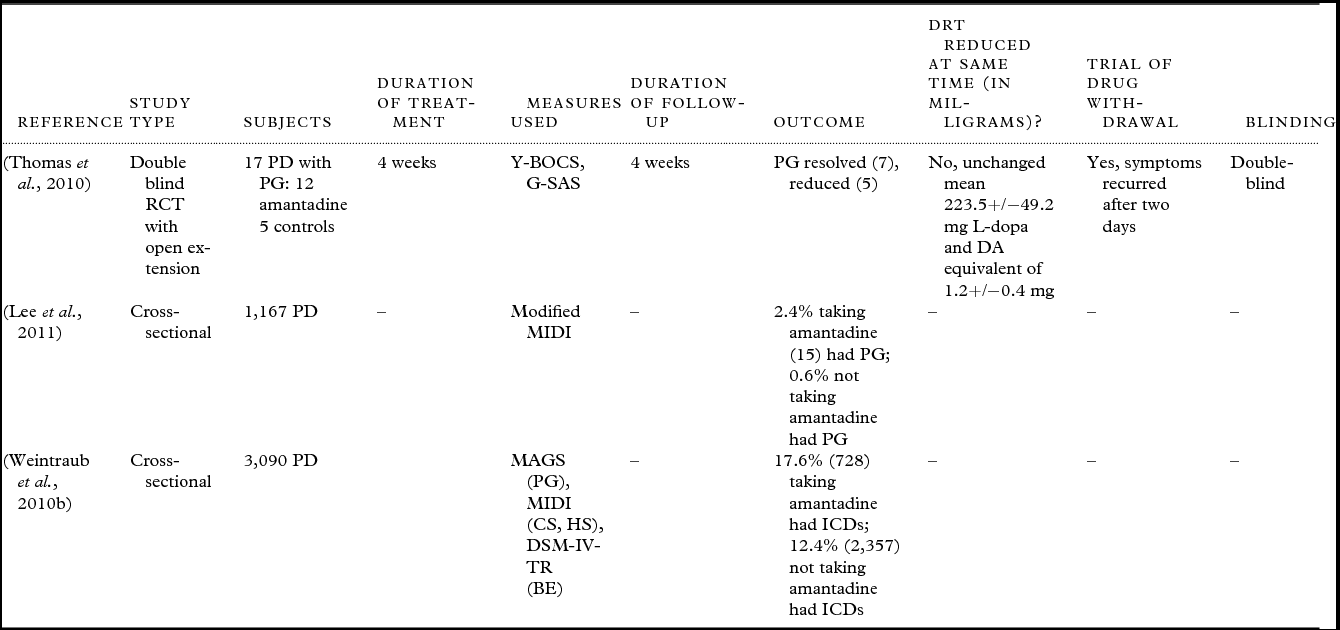
A randomized double-blind trial of amantadine with an open crossover extension reduced impulsive behaviors in 12 patients with intractable PG; PG was resolved in seven and reduced in the remaining five patients (Thomas et al., Reference Thomas, Bonanni, Gambi, Di Iorio and Onofrj2010). Symptoms returned after cessation of amantadine, suggesting that it attenuated PG symptoms. This study has been criticized for not investigating the effects of amantadine in patients with long disease durations, having low statistical power and not examining the long-term effects of amantadine on PG (Lee et al., Reference Lee, Kim and Jeon2011). This finding also contradicts large observational studies that have found a significant association between ICDs and amantadine in PD patients (Lee et al., Reference Lee, Kim and Jeon2011; Weintraub et al., Reference Weintraub2010b) (see Table 1). There are also reports of ICDs developing after starting amantadine and resolving on its discontinuation (Walsh and Lang, Reference Walsh and Lang2012).
Studies of the effects and clinical correlates of amantadine on impulse control disorders in Parkinson's disease ordered by study type

PD – Parkinson's disease.
PG – pathological gambling.
RCT – randomized controlled trial.
Y-BOCS – yale-brown obsessive compulsive scale.
G-SAS – gambling-symptom assessment scale.
MIDI –minnesota impulsive disorders interview.
DSM-IV-TR – diagnostic and statistical manual 4th edition – text revised.
MAGS – massachusetts gambling screen.
Atypical antipsychotics
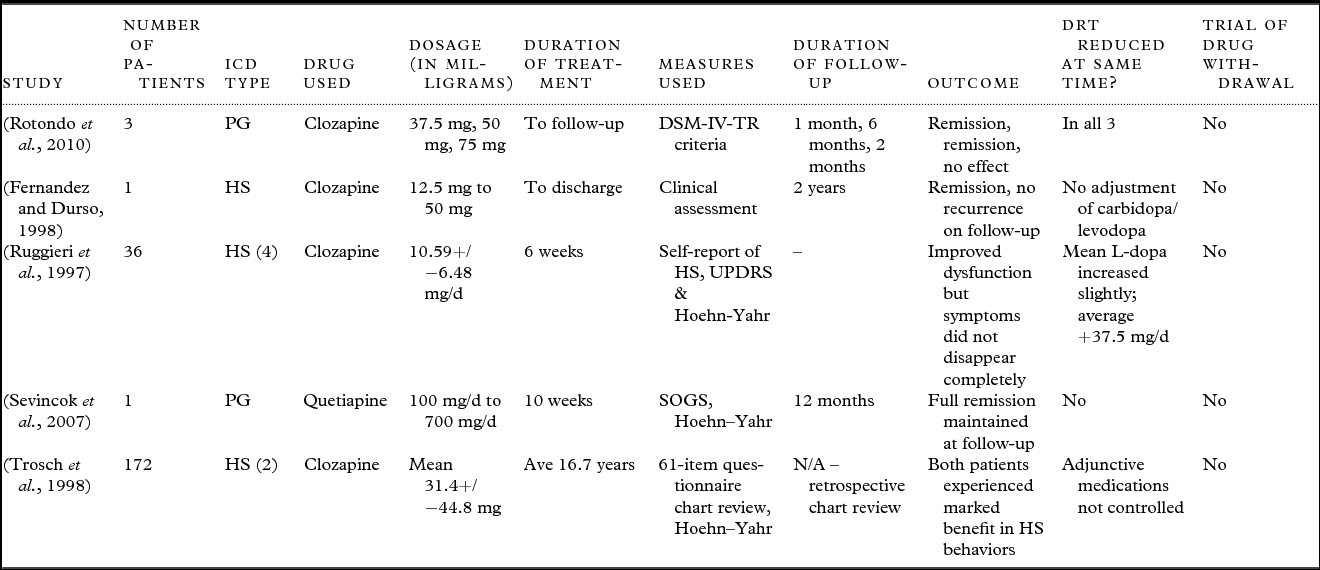
There have been case studies of the use of atypical antipsychotics, such as quetiapine and clozapine, in the treatment of ICDs in PD (Mestre et al., Reference Mestre, Strafella, Thomsen, Voon and Miyasaki2013) (see Table 2). Fernandez and Durso described the use of clozapine in a male patient with PD who developed HS after starting DRT (Fernandez and Durso, Reference Fernandez and Durso1998). Administration of clozapine without carbidopa/levodopa adjustment reduced his aberrant behaviors and he had no recurrence two years after discharge while continuing clozapine (Fernandez and Durso, Reference Fernandez and Durso1998).
Studies on the effect of antipsychotic drugs on impulse control disorders in patients with Parkinson's disease

DSM-IV-TR – diagnostic and statistical manual 4th edition – text revised.
UPDRS – unified Parkinson's disease rating scale.
SOGS – south oaks gambling screen.
In an open-label study of clozapine treatment for dopaminergic psychosis (n = 36), four patients reported HS before treatment commenced. They reported improved control of sexual behavior, but HS persisted (Ruggieri et al., Reference Ruggieri, De, Bonamartini, Vacca and Stocchi1997). Clozapine produced remission of PG in two other PD patients with PG (Rotondo et al., Reference Rotondo, Bosco, Plastino, Consoli and Bosco2010). The third patient in this study showed no improvement after two months of daily clozapine. Clozapine was also used to treat two other PD patients with HS, both improved without reporting any severe side effects (Trosch et al., Reference Trosch1998).
The use of antipsychotics in PD is complicated by their mechanism of action. Dopaminergic blockade may worsen the motor symptoms of PD. Due to their rapid dissociation from the D2 receptor, quetiapine and clozapine are the antipsychotics of choice in PD, being least likely to induce extrapyramidal symptoms. However, both of these antipsychotics have significant additional side effects that limit their utility. Clozapine is associated with life-threatening cardiotoxicity and agranulocytosis necessitating considerable medical oversight (Fernandez and Durso, Reference Fernandez and Durso1998; Schneider et al., Reference Schneider, Corrigall, Hayes, Kyriakopoulos and Frangou2013) while quetiapine may be associated with sedation, postural hypotension and may nonetheless cause a worsening of motor symptoms (Bermejo, Reference Bermejo2008). There have been no randomized clinical trials of atypical antipsychotics in the treatment of ICDs and their use in this off-label context is not recommended.
Anticonvulsants
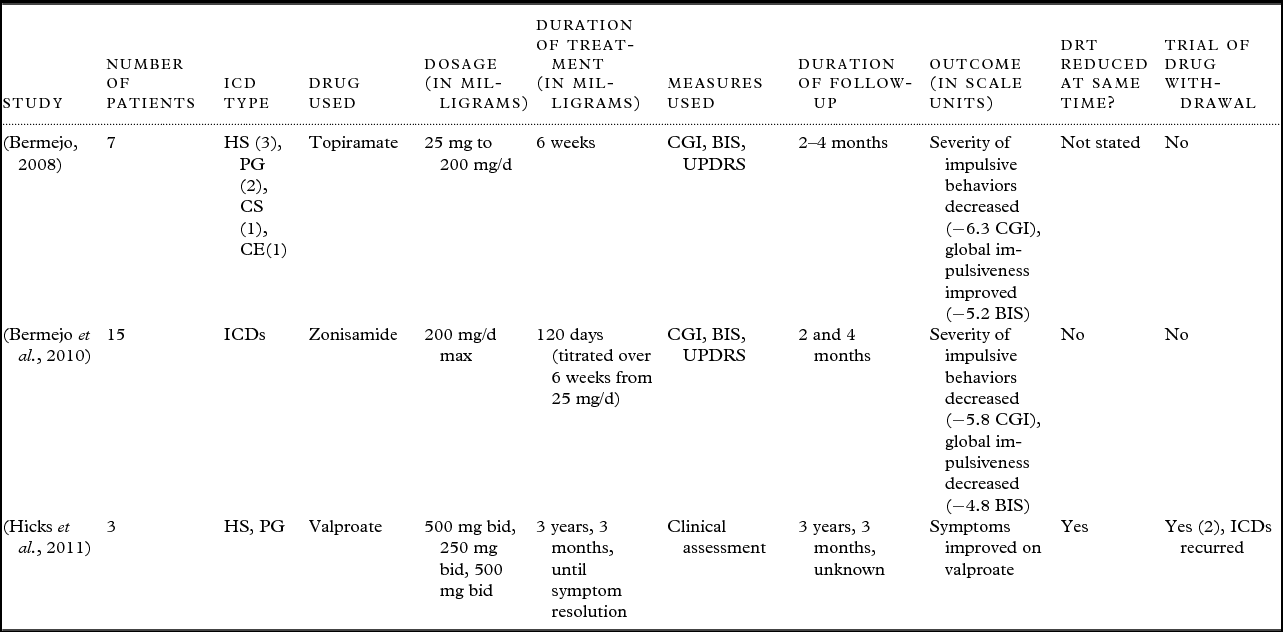
Anticonvulsants, such as topiramate and valproate have been reported to improve ICDs in a small case series. Anticonvulsants increase GABA-ergic inhibition, possibly alleviating ICD symptoms by facilitating control of stimulus-reward associations (Hicks et al., Reference Hicks, Pandya, Itin and Fernandez2011). In addition to its anticonvulsant effects, valproate also decreases signal transduction by dopamine D2-like receptors at moderate doses (Hicks et al., Reference Hicks, Pandya, Itin and Fernandez2011) (see Table 3).
Case series and open label trials on the effect of anticonvulsants drugs on impulse control disorders in patients with Parkinson's disease

CGI – clinical global impression.
BIS – barratt impulsiveness scale.
UPDRS – unified Parkinson's disease rating scale.
An open-label study of topiramate for the management of ICDs in PD has been investigated in seven patients (Bermejo, Reference Bermejo2008). The major side effects reported were paraesthesia, somnolence, and weight loss, but there was no significant change in motor function. The severity of impulsive behaviors decreased and global impulsiveness improved.
Valproate was found to be effective in treating three PD patients with medication-induced ICDs in another open-label case study (Hicks et al., Reference Hicks, Pandya, Itin and Fernandez2011). The change in their symptoms was attributed to valproate because DRTs were reduced only after behavioral improvements and discontinuation of valproate produced a recurrence of the ICD (Hicks et al., Reference Hicks, Pandya, Itin and Fernandez2011). The study relied on subjective clinical assessments rather than formal scales to grade motor function and behavior. These results need to be replicated in larger controlled studies using standardized measures. Caution is also warranted because valproate can produce reversible cognitive and motor deterioration in PD (Armon et al., Reference Armon1996).
Zonisamide, a sulphonamide analogue anticonvulsant, was initially used to treat motor complications of PD in Japan. The severity of impulsive behaviors and global impulsiveness decreased markedly in a prospective open-label trial in 15 patients receiving zonisamide treatment (Bermejo et al., Reference Bermejo, Ruiz-Huete and Anciones2010). Zonisamide was associated with minor concentration difficulties, fatigue, and paraesthesia that were fairly well tolerated.
Opioid antagonists
Opioid antagonists, such as naltrexone and nalmefene, have been trialed with limited success in a range of behavioral addictions, including PG, in non-Parkinsonian individuals (Schreiber et al., Reference Schreiber, Odlaug and Grant2011). Nalmafene significantly improved PG in a multicenter RCT of non-PD patients (Grant et al., Reference Grant, Odlaug, Potenza, Hollander and Kim2010).
In a recent single-site RCT of 50 patients, naltrexone did not significantly reduce impulsivity on a clinical global assessment that uses a dichotomous scale, but it reduced symptom severity on the (continuous) QUIPS-RS ICD (Questionnaire for ICDs in PD-Rating Scale) (Papay et al., Reference Papay2014). The discrepancy in the findings may be attributable to differences in the scale or heterogeneity in the ICDs in the sample (Liang et al., Reference Liang, Shanker and Groves2015).
Selective serotonin reuptake inhibitors
The degeneration of serotonergic neurons in PD is another possible cause of ICDs in PD (Callesen et al., Reference Callesen, Scheel-Kruger, Kringelbach and Moller2013). Reduced levels of serotonin (5-HT) are associated with an inability to wait for rewards and with the development of addictive and compulsive behaviors (Callesen et al., Reference Callesen, Scheel-Kruger, Kringelbach and Moller2013). Some studies suggest that SSRIs reduce the urge to gamble in non-Parkinsonian pathological gamblers (Hollander et al., Reference Hollander, DeCaria, Finkell, Begaz, Wong and Cartwright2000), and may be useful in treating PG in PD. SSRIs are already used clinically to treat ICDs in the general and PD populations despite limited evidence of efficacy (Weintraub et al., Reference Weintraub2010b; Delaney et al., Reference Delaney, Leroi, Simpson and Overton2012). Patients receiving SSRIs reported remission of ICD symptoms, although these changes may also be explained by reduced doses of DA and L-dopa (Sohtaoglu et al., Reference Sohtaoglu, Demiray, Kenangil, Ozekmekci and Erginoz2010). Depression and anxiety are common non-motor complications of PD, and many of these patients are already prescribed SSRIs to treat these symptoms (Seppi et al., Reference Seppi2011; Macphee et al., Reference Macphee, Chaudhuri, David, Worth and Wood2013). Changes in ICD behavior may therefore be the result of effective treatment of co-morbid affective disorders.
Antiandrogens
Antiandrogens, such as cypoterone and finasteride, have been used to reduce libido in non-Parkinsonian persons with severe HS (Thibaut et al., Reference Thibaut, De, Gordon, Cosyns and Bradford2010). Two small studies have investigated their use in treating ICDs in patients with PD. In a case study, cyproterone was found to attenuate HS in one patient with PD (Evans et al., Reference Evans2004), although the improvement could also be attributed to the decrease in DRT. Finasteride, a steroid 5α-reductase (S5αR) inhibitor, reduced symptoms of PG in open-label trial in two male patients with PD, who had shown no improvement after DA adjustment (Bortolato et al., Reference Bortolato, Cannas, Solla, Bini, Puligheddu and Marrosu2012). The urges to gamble returned following finasteride discontinuation and persisted until finasteride was resumed, and was maintained up to 15 months follow-up. The other patient showed complete remission over six months (see Table 4).
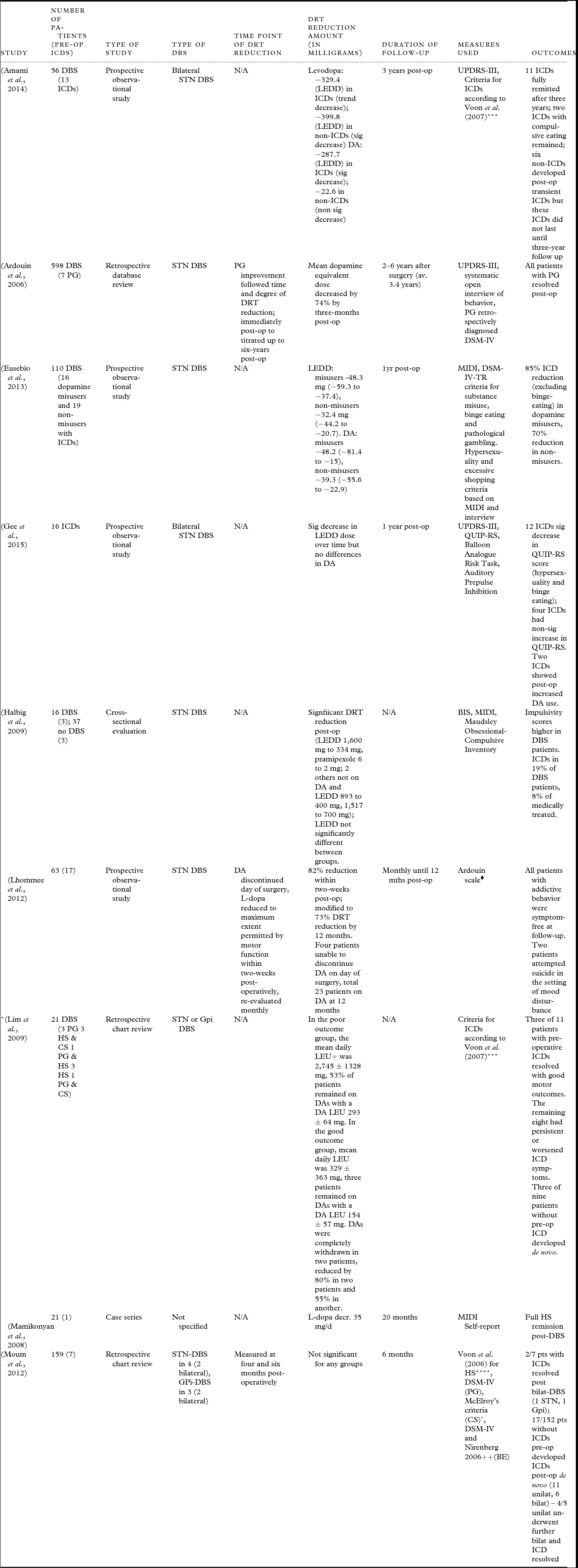
Studies on the effect of deep brain stimulation on impulse control disorders in patients with Parkinson's disease

*Some data omitted in the study.
**Dopamine misusers: Rapid increase in dopaminergic drug dosage, automedication, inability to reduce dopaminergic drugs, marked ‘OFF’ dysphoria, ‘ON’ euphoria, and hypomania (Eusebio et al., Reference Eusebio2013).
***Voon et al. (Reference Voon2007).
****Voon et al. (Reference Voon2006).
^McElroy et al. (McElroy et al., Reference McElroy, Keck, Pope, Smith and Strakowski1994).
++Nirenberg et al. (Nirenberg and Waters, Reference Nirenberg and Waters2006).
◆Ardouin et al. (Ardouin et al., Reference Ardouin2009).
LEU+: levodopa equivalent unit.
DSM-IV-TR – diagnostic and statistical manual 4th edition – text revised.
GPi – internal globus pallidus.
MIDI – minnesota impulsive disorders interview.
MMSE – Mini-Mental State Exam.
HAM-D – Hamilton rating scale for depression.
QUIP – questionnaire for impulsive-compulsive disorders in Parkinson's disease.
STN – subthalamic nucleus.
UPDRS – unified Parkinson's disease rating scale.
Other pharmacological treatments
Ivanco and Bohnen treated a Parkinson's patient with treatment-refractory HS with the acetylcholinesterase inhibitor, donepezil, significantly reducing compulsive behaviors in the absence of any adverse motor effects (see Table 4) (Ivanco and Bohnen, Reference Ivanco and Bohnen2005). The selective noradrenergic re-uptake inhibitor, atomoxetine, has been shown to improve decision-making, and reduce impulsivity and risk-taking in 25 PD patients on neuropsychological tests in a double-blind RCT (Kehagia et al., Reference Kehagia2014). This finding suggests that atomoxetine may reduce impulsivity in PD patients with ICDs. N-acetylcysteine (NAC) is a glutamate-modulating agent that has shown some promise in the treatment of various substance and behavioral addictions (Grant et al., Reference Grant, Kim and Odlaug2007; Schreiber et al., Reference Schreiber, Odlaug and Grant2011). Several other drugs such as memantine and tolcapone have been trialed in the treatment of ICDs in non-Parkinsonian populations (Mestre et al., Reference Mestre, Strafella, Thomsen, Voon and Miyasaki2013).
Neurosurgical intervention: deep brain stimulation
DBS provides a relatively constant and predictable improvement in the motor symptoms of PD. It is indicated when the benefits of dopaminergic medication begin to fluctuate (Silberstein et al., Reference Silberstein2009) and there is evidence that patients receiving DBS at this stage may have better outcomes than those receiving drug therapy alone (Schuepbach et al., Reference Schuepbach2013). DBS involves neurosurgery to position electrodes in deep brain nuclei attached to implanted pulse generators. These emit continuous high frequency stimulation that modulates disordered basal ganglia activity resulting from the degeneration of dopaminergic projections. DBS has become standard therapy in management of advancing PD in many parts of the world.
Studies examining the effect of DBS on ICDs have focused on stimulation of the subthalamic nucleus (STN), because this typically permits a substantial reduction in drug therapy, which is hypothesized to be driving ICDs in some patients. Other brain regions also targeted for the treatment of PD include the globus pallidus (GPi) and thalamus, but these are not often examined in the context of ICDs because maintenance drug therapy usually remains relatively constant (Lim et al., Reference Lim2009; Moum et al., Reference Moum2012).
There is evidence that DBS can both exacerbate and ameliorate ICDs in PD (see Table 4). Some patients show remission of ICDs after STN-DBS. This may be due to the reduction in DA therapy that STN-DBS affords (Ardouin et al., Reference Ardouin2006; Weintraub, Reference Weintraub2008; Shotbolt et al., Reference Shotbolt2012; Eusebio et al., Reference Eusebio2013; Mestre et al., Reference Mestre, Strafella, Thomsen, Voon and Miyasaki2013). Four of the studies reviewed suggest that the reduction in ICD symptoms in DBS-treated patients was due to the significant reduction in DRT medication following neurosurgery (Ardouin et al., Reference Ardouin2006; Frank et al., Reference Frank, Samanta, Moustafa and Sherman2007; Thobois et al., Reference Thobois2010; Amami et al., Reference Amami2014). ICD symptoms resolved in patients who significantly reduced their DRT medication; they persisted in those with smaller reductions in DA medication. A 73% reduction in DRT over one year was associated with complete symptom resolution (Thobois et al., Reference Thobois2010). Patients reluctant to discontinue their medication experienced poorer motor and psychiatric outcomes and were on higher L-Dopa equivalent daily doses (Lim et al., Reference Lim2009). These findings were replicated in 30 patients with pre-operative addictive behavior (DDS and ICD) at one year after DBS (Lhommee et al., Reference Lhommee2012). In four other patients with addictive behaviors before bilateral STN-DBS, only one had a recurrence of ICD symptoms 18 months post-operatively. It was managed by further drug reduction (Shotbolt et al., Reference Shotbolt2012). In DA misusers, the incidence of ICDs, excluding binge eating (BE), decreased from 90% pre-operatively to 6% after DBS, and from 20% to 6% non-misusers (Eusebio et al., Reference Eusebio2013). However, as in the non-surgical population, the withdrawal of DAs may precipitate serious psychiatric symptoms such as suicidal behavior in the context of a withdrawal syndrome (Lhommee et al., Reference Lhommee2012).
DBS has also been reported to induce ICDs in some patients or worsen ICDs in others with a history of impulsive behaviors (Lu et al., Reference Lu, Bharmal and Suchowersky2006; Frank et al., Reference Frank, Samanta, Moustafa and Sherman2007; Smeding et al., Reference Smeding, Goudriaan, Foncke, Schuurman, Speelman and Schmand2007; Halbig et al., Reference Halbig2009; Lim et al., Reference Lim2009; Amami et al., Reference Amami2014; Gee et al., Reference Gee2015). Moum et al. (Reference Moum2012) found that DBS worsened ICDs in two of seven PD patients with pre-operative ICDs while 17 patients developed ICD post-operatively (Moum et al., Reference Moum2012). However, post-operative DA and DRT doses were not significantly different to pre-operative doses in these cases, which is not standard practice. Only two patients experienced remission of ICD symptoms following DBS in this series. However, in a further series, five out of 39 patients who underwent STN-DBS developed PG de novo, in spite of DA reduction (Lu et al., Reference Lu, Bharmal and Suchowersky2006).
DBS of the STN can bias impulsive responding in PD patients, and therefore exacerbate or induce ICDs in vulnerable individuals (Hershey et al., Reference Hershey, Revilla, Wernle, Gibson, Dowling and Perlmutter2004; Witt et al., Reference Witt2004; Frank et al., Reference Frank, Samanta, Moustafa and Sherman2007; Thobois et al., Reference Thobois2007; Cavanagh et al., Reference Cavanagh2011; Obeso et al., Reference Obeso2011; Green et al., Reference Green, Bogacz, Huebl, Beyer, Kuhn and Heekeren2013). The anatomy of the STN confers vulnerability to unintended psychiatric and cognitive effects from stimulation. It is densely innervated by neural projections from a wide area of the cerebral cortex and feeds a global, inhibitory “No-Go” signal into the cortico-subcortical networks of the basal ganglia (Doll and Frank, Reference Doll, Frank, Dreher and Tremblay2009). A gradient of representations exists within the STN, with motor activity located in the dorsolateral aspect of the nucleus, cognitive-associative circuits in the intermediate zone and limbic circuits in the ventromedial region (Lambert et al., Reference Lambert2012; Haynes and Haber, Reference Haynes and Haber2013). The small size of the STN means that spread of current from electrodes in the dorsolateral region may inadvertently modulate networks implicated in mood, thinking, and reward, even if the electrode is accurately placed. It is clear that alterations in DBS electrode configuration and stimulation parameters influence non-motor activity including impulsivity and this may, in part, explain the conflicting results regarding ICD after DBS.
Psychotherapeutic approaches
ICDs can be effectively managed through patient and caregiver education (Bermejo et al., Reference Bermejo, Ruiz-Huete and Anciones2010). Practical measures include: checking medication compliance, reporting behavior typical of ICDs, monitoring internet access and transferring control of financial affairs to a partner or other family members (Macphee et al., Reference Macphee, Chaudhuri, David, Worth and Wood2013). PD patients without strong social supports are most vulnerable to ICDs (Mestre et al., Reference Mestre, Strafella, Thomsen, Voon and Miyasaki2013). They lack support during the medication reduction and for the behavior modification that is required to reduce impulsive behaviors (Connolly and Fox, Reference Connolly and Fox2012; Mestre et al., Reference Mestre, Strafella, Thomsen, Voon and Miyasaki2013). Some authors suggest this lack of support, combined with increased depression, anxiety, boredom, and loneliness, can lead to ICDs, especially PG, serving as a coping strategy (Delaney et al., Reference Delaney, Leroi, Simpson and Overton2012).
There have been surprisingly few studies of psychotherapeutic treatments (e.g. CBT, acceptance and commitment therapy, or dialectical behavior therapy) to the management of ICDs. Most evidence comes from isolated case reports of ICDs resolving after counseling or attending support groups for inpatients whose disorders did not respond to changes in DRT (Kurlan, Reference Kurlan2004; Weintraub et al., Reference Weintraub2006). We could only identify one clinical study of psychotherapeutic treatment of ICDs in PD. Okai et al. conducted an RCT that compared CBT plus standard medical care with standard medical care alone (Okai et al., Reference Okai2013). It found the combined treatment more effective in reducing the severity of ICDs. Symptom severity (measured on the Clinical Global Impression (CGI) index) was significantly reduced in 75% of the CBT group compared with only 29% in the control group. The frequency and impact of ICDs after CBT treatment was less than those receiving standard medical care. Six months after treatment, 44% of patients treated with CBT no longer met criteria for an ICD diagnosis compared to 29% of the control group. They also observed improvements in anxiety and depression. Medication was kept constant unless adjustments were clinically indicated. A follow-up study found that greater CGI was predicted by fewer ICDs, a lower L-dopa equivalent dose of DAs, higher social functioning and lower scores on the Neuropsychiatric Inventory index before treatment (Okai et al., Reference Okai, Askey-Jones, Samuel, David and Brown2015).
Discussion
This narrative review aimed to clarify the state of the literature with regard to the management of ICDs in PD. The reduction or discontinuation of DA, where possible, and increased compensatory L-dopa, can successfully manage ICDs in many patients with PD. What remains unclear is how best to respond to patients who are unable to comply with this advice or whose ICDs persist despite DRT dose reductions.
There are no evidence-based treatment guidelines for ICDs in patients with PD because there have been no well-designed RCTs of any of the interventions that have shown suggestive benefits in open-label trials of small numbers of patients. The majority of pharmacological treatments that have been used clinically are based on small, poorly controlled case series in which it is difficult to disentangle the specific effects of the drugs from the benefits of concurrent reductions in DRT medication.
A number of very small open-label trials have shown suggestive benefits of amantadine, and naltrexone in treating ICDs in PD patients. Larger randomized, placebo-controlled trials are needed before these pharmacotherapies can be recommended for routine use. The evidence for the use of anticonvulsants is of limited clinical utility. There is insufficient evidence of the effectiveness of antipsychotics to justify their clinical use in the treatment of ICDs, particularly given the significant side-effects associated with these medications. Amantadine arguably has the best evidence since it has been investigated in a small RCT. However, its use is also positively associated with ICDs in cross-sectional surveys of large cohorts of PD patients.
The role of DBS in PD patients with ICDs is unresolved and controversial. The question of whether ICDs should be seen as an indication or a contraindication for DBS remains open. Factors such as the extent of post-operative DA reduction and the precise site of stimulation are likely to be important modulatory factors. Given the detrimental impact of ICDs on social and financial aspects of PD patients, it is essential that patients and families are thoroughly educated about the possible emergence or worsening of an ICD before they start DRT and/or undergo STN-DBS.
Further research is urgently needed on the efficacy of psychosocial therapies, such as cognitive behavioral therapy. There is a surprising lack of research aimed at developing effective psychotherapeutic interventions for this population. There is a strong argument for greater engagement with professionals with significant experience in the treatment and management of addictive disorders, such as psychologists.
There are a number of general limitations of the literature we reviewed. For example, there is often no mention of concomitant tapering of DAs or switching to a different DA at a lower dose. This makes it difficult to separate any effects of treatment from the effects of lowering DA dose or switching DAs. In addition, some studies define ICDs in line with the present review, while others include compulsive behaviors such as punding and DDS. There is also no uniform approach to informants (i.e. patient self-report or patients and family/caregiver reports). Follow-up periods have also been inadequate in many studies. These are significant design limitations that should be overcome in future work.
This narrative review is also limited in a number of respects. First, this review is narrative, rather than systematic, in nature. Our aim was to be more descriptive of the research conducted to date; however, we were required to include studies of weaker evidence when more rigorous studies existed. The limitations of these studies are explicitly noted. Future systematic reviews should be conducted as more studies emerge and the field progresses.
Conclusions
In summary, we recommend that DA agonist administration is reduced or discontinued and L-dopa administration increased. If this is not feasible, patients’ caregivers should take sensible practical measures to avoid the potentially devastating outcomes associated with ICDs. CBT appears promising as a psychotherapeutic intervention, but initial findings need to be extended with long follow-up periods. Presently, we are unable to recommend pharmacological treatments or DBS, but note that amantadine represents a potentially promising pharmacological treatment requiring rigorous investigation in larger RCTs in the future.
Conflict of interest
Susan Zhang: None.
Dr Dissanayaka is a recipient of the Lions Medical Research Foundation fellowship, and has received grants from the Royal Brisbane and Women's Hospital Foundation and Parkinson's Qld Inc.
Dr O'Sullivan serves on advisory boards for Boehringer Ingelheim, Hospira, Novartis, and Solvay; has consultancies with Novartis and Clinical Network Services; and honoraria with Novartis, Boehringer Ingelheim, and Hospira. Dr O'Sullivan has received grants from Allergan, Hospira, Ipsen, Novartis, and Solvay.
Dr Mosley: None.
Prof Hall: None.
Andrew Dawson: None.
Dr Carter has provided paid expert evidence to a law firm representing Parkinson's patients with ICDs in a class action against the manufacturer of DAs.
Description of authors’ roles
AC designed the scope of the review and supervised the analysis. The initial literature review and analysis was performed by SZ, who also provided an initial draft manuscript. ND, AD, JO'S, PM, WH, and AC provided critical review of the analysis and assisted with the drafting of the paper. AD provided a critical revision of the literature review and analysis.
Acknowledgments
Andrew Dawson is funded by an Australian Postgraduate Award. This research is funded by an Australian Research Council Discovery Early Career Research Award to Adrian Carter (DE140101097).