In January 2020 Mastercard released its first music single. For the multinational financial services corporation, this foray into popular music might prove a prescient move in contemporary branding. The song, ‘Merry Go Round’, stems from the brand's collaboration with Swedish songwriter and producer Niclas Molinder, features the vocals of Swedish singer Nadine Randle and debuted at an iHeartRadio event at the Consumer Electronics Show in Las Vegas. All this is part of Mastercard's sonic brand, introduced in 2019 as a three-second melody to be integrated across 7.6 million payment points in 210 countries (Ely Reference Ely2020). That a brand associated mostly with credit cards should so heavily invest in a sonic identity speaks to how leading brands now compete for cultural space, mindshare and consumer spend – and the role sonic branding plays in this.
Sonic branding has become a major consideration for marketers and advertisers globally, and sits at the intersection of phenomena distinct to both contemporary media technologies, as well as a specific political-economic milieu. It underscores the panoramic pervasiveness of immersive, experiential communication (Rikakis et al. Reference Rikakis, Kelliher and Lehrer2013), the hyper competitiveness of branding today and the ubiquitous commerce that now characterises the Internet of Things, or IoT. Put most simply, the IoT refers to the connectedness of basically any device to the Internet, from cellphones and watches to fridges and washing machines (McGuigan and Manzerolle Reference McGuigan and Manzerolle2015, pp. 1833–34). At its core, sonic branding captures the sonic expression of a brand's identity, the audio signature that serves and sustains the brand's distinctiveness from competitors, through perceivable differences in personality, tone, voice and image. There are two main reasons why this manifests now with such urgency. The first is the rapid uptake of technologies that hinge on voice activation (Boonrod and Ketavan Reference Boonrod and Ketavan2018), especially virtual assistants (VAs), smart speakers and voice-searches on smart phones. It is forecast that VA use alone will increase by around 50% every year until 2024. The roll-out here has been transformative and seminal: in 2007 Microsoft introduced speech recognition through its Windows Vista OS; in 2010, Apple launched VA Siri as a standalone app; in 2014, Amazon unveiled its VA Alexa; a year later, Amazon released Echo to all US consumers; and in 2016, Google launched its own smart speaker – Home, powered by Google Assistant. Since then there has been Apple's HomePod and Little Fish from China's Baidu. By 2017, smart speakers were being used by over 50 million adults worldwide and 39 million adults just in the US (Boonrod and Ketavan Reference Boonrod and Ketavan2018). The more that users rely on such devices to organise everyday consumer activities (Rettberg Reference Rettberg2014, p. 54) – from finding the nearest café or florist to booking flights or hotel rooms – the more that brands will need to ‘game the algorithm’ to ensure that they are ‘top of mind’ for Alexa, Suri et al. By January 2019, over 3500 brands were using Amazon's Alexa platform, up from 1200 only one year earlier. The other reason for the recent interest in sonic branding, and the focus of this article, is that consumers increasingly ‘hear’ a brand across new media technologies, and in ‘smart’ commercial spaces – specifically, domains defined and determined by the IoT. In this way, sonic branding refers to how brands both imbue their audio presence with brand narrative, values and identity, and at the same time create soundscapes that produce commercially beneficial activities and associations – both of which can be (depending on context and aim) surveilled, monetised, massaged and manipulated. The point is, and in this schema, sonic branding belongs to the aesthetic infrastructure of everyday consumption.
This article shows how sonic branding was lassoed into the marketing arsenal of two iconic global brands, Mastercard and HSBC, to mobilise consumers’ attention in commercially agreeable ways, underscore an ostensible shift in brand direction and sync with the aesthetic infrastructure of contemporary capitalism. As promotional cues permeate a widening array of spaces and times, and often through devices that privilege sound as a dominant communication mode, sonic branding appears a smart extension of brand identity. Still, as Mastercard and HSBC overlay their cultural presence with a sonic signature that is designed to be as memorable and attractive as any of their other brand assets, they demonstrate a more critical point to be made. Namely, as it surfaces in contemporary capitalist societies, sonic branding extends, refines and augments the stealth and sophistication by which brand advertising co-opts sonic elements for promotional advantage. The use of music and sound has long been a dominant feature of consumer culture, but now coincides with enhanced capacities to track, interpret and monetise consumer activity, since this now occurs primarily through the IoT. On one hand, this can be explained as an obvious adjunct to experiential marketing, as brands punctuate cultural sites with multisensorial ‘activations’, that is, novel events, pop-ups and collaborations that are designed to be fed back into Facebook and Instagram. Here, a sonic element complements and completes the brand's ‘story’ – and, it is hoped, resonates with the consumer on an emotional level. On the other hand, though, this trend towards sonic branding speaks to the enfolding of all cultural activity into the logic and language of brand-based capitalism. As advertisers vie for attention, reputation and the consumer dollar, their messaging is now carried by devices ever more personal and personalised, drawing data from consumers who are – if not oblivious, resistant or indifferent to the cacophony of marketing – engaging with brands at more physical touchpoints and on multiple sensorial levels. As such, sonic branding is part of the aesthetic infrastructure of everyday consumption, an instrument to advertise the brand, organise consumers and harness the symbolic value of emotional affect. All the while, as consumers engage with brands on more sensory levels, and across more contexts, they provide a seemingly endless stream of data that furnish marketers with behavioural insights that are increasingly granular and individual. So, the emotional rhetoric of sound and music not only conjures a particular narrative for the brand, but the immersive, ambient and often opaque nature of such marketing actively obscures the extent to which consumer activities inevitably produce a core economic asset: data.
The rise of sonic branding
Sound has long been viewed as a necessary and important component of a brand's media presence, connecting emotionally with customers as part of broader strategies of acquisition and retention; the value of memorable jingles, mnemonics and catchphrases is hardly novel or surprising. Indeed, in modern marketing communication, the role of sound has been recognised at least since the rise of radio and television as popular broadcast media (Chang and Chang Reference Chang and Chang2013, p. 7493). Brands have for some time been using the emotional power of music, pivoting off the cultural capital of musicians, which in turn, has provided new forms of patronage for those musicians. M&C Saatchi's ‘Can’ campaign for Commbank featuring soul artist and ‘The Voice’ finalist Steve Clisby is a case in point: in this advertisement, 2:58 minutes is dedicated entirely to showcasing Clisby's music. It is not until the final two seconds of the advertisement that we see Commbank's logo, preceded by the tag ‘when you believe, you can – You Can’. Similarly, Converse Rubber Tracks studios, a dedicated space in Brooklyn (New York) where musicians can apply for free studio time, speaks to the premium that this brand placed on associating itself and being associated with popular music genres.Footnote 1 Sonic branding, however, registers differently, as it embeds sounds into dominant theories of brand design and frames audio as equivalent to the brand's logo, packaging and personality in building brand equity. Brand equity refers to the brand's value as perceived by consumers, and the extent to which the brand resonates with them and fosters loyalty and attachment (Aaker Reference Aaker1992). As such, and while communication studies have focused on the ‘visual turn’ in media over the last few decades, the advertising world has, of late, approached sound as the ‘new screen’. Since consumers increasingly inhabit multimedia spaces that envelop and involve the individual in highly customised, programmatically determined flows and feeds (Gonzálvez and Mochón Reference Gonzálvez and Mochón2016, pp. 7–8), there is corresponding pressure on brands to craft a presence that resonates on multiple levels, and that einforces brand identity at every sensory touch point. Herein lies the importance of sonic branding, given the growing popularity of those technologies that privilege sound and its properties. Besides the prevalence of smart phones, smart speakers and VAs, all powered by artificial intelligence, there is also the global popularity of podcasts, audio-books and music streaming. In short, the worldwide uptake of both voice-activated interfaces and audio media has been swift and significant. This article thus charts this development by situating sonic branding within discursive parameters specific to the last two decades; it shows how the concept has grown and evolved within advertising research and practice; and it unpacks the critical significance of its growth for sound and popular music studies.
Sonic branding as an audio signature
Until the last decade or so, few major brands had developed a strong and readily identifiable sonic signature, at least not in the way the term is used here: as the creation of a brand expression in sound and the strategic use of that sound across multiple consumer touch points. While many television commercials had, say, a jingle or catchphrase that might become popular and memorable, there was little in the way of concerted, integrated efforts to design a cohesive sonic identity that was consistent and flexible, one that could be strategically parlayed across myriad media contexts: personal devices, VAs, call centres, advertisements, and so on. A striking exception here is tech giant Intel, which owns what is arguably the most successful sonic logo in the world (Jackson Reference Jackson2003, p. 3; see also Phillip Tagg's (Reference Tagg2008) analysis of the Intel sonic logo). Developed in 1991, Intel's 3-second mnemonic achieves a trifecta of brand attributes: memorable, distinctive and original. On that last point, and as evidenced by Mastercard, the current thinking around sonic branding puts a premium on exclusivity – or the extent to which the brand ‘owns’ its sonic calling card (Arnese Reference Arnese2019). For marketers, sonic branding is a strategic response to the growing diversity of consumer touch points, and the degree to which these involve sound and voice activation. In turn, it (literally) pays to have an audio signature that performs much like a visual one – easy to recognise, highly differentiated and symbolically rich (Krishnan et al. Reference Krishnan, Kellaris and Aurand2012, p. 276). The pay-off here is purely commercial: increased consumer loyalty, the emotional enrichment of the retail experience and the extension of brand narrative into sound (Gustafsson Reference Gustafsson2015, p. 21; Carruthers Reference Carruthers2017).
In this way, and as it is treated here, sonic branding requires actual investment in and protection of an audio signature, much as a visual logo or name is covered by copyright. As such, this differs from how a brand like Starbucks, for example, has designed its sound. In crafting a cozy, relaxed third-space vibe (Scerri Reference Scerri2002), Starbucks stores across the US are invariably filled with easy-listening, jazzy, soulful music. In the early 2000s, some stores even sold these as customisable CDs, and around 1 million of these CDs were sold each year (Mortimer Reference Mortimer2005, p. 25). In one respect, these music bars act as sonic branding for Starbucks, since they sustain the brand's editorial voice. At the same time, though, this might also be classed as a form of brand leveraging, whereby Starbucks ‘borrows’ or piggybacks the connotations of the featured music. As such, whatever boost to brand equity that Starbucks enjoys is at least partly attributable to external brand work – the image, appeal and associations already created and carried by music that was not produced in-house. Effectively, there is little separating Starbucks's use of sound from how music has conventionally permeated and organised commercial retail spaces, ‘to set a particular tone and construct particular webs of associations with branded merchandise’ (Meier Reference Meier2011, p. 404). The most famous example here is Muzak, the much-derided background music that fills commercial spaces to this day (see Bradshaw and Holbrook Reference Bradshaw and Holbrook2008, p. 26; Fairchild Reference Fairchild2008, p. 112).
Whether generic and indistinct (such as Muzak) or curated and considered (like Starbucks), music has thus been used widely, and has been critiqued accordingly, as an instrument of capitalist power and control. As captured by Mastercard and Intel, though, sonic branding achieves something else: the brand identity is ostensibly distilled into a bespoke sound to advertise the brand, trigger positive associations and immerse the consumer in an emotional and personal encounter across a variety of physical, digital and psychosocial sites. In turn, it is worth stressing that what is meant here by sonic branding is best understood as a brands’ strategic response to historically transformative technologies, emerging commercial challenges and novel marketing opportunities. In this respect, Mastercard is a textbook example.
Mastercard and the sound of two circles
In 2016, Mastercard released its first new logo in over 20 years. The interlocking circles of yellow and orange were simplified to solid, overlapping blocks of colour (they had previously ‘cut’ into each other to jagged effect), and the name Mastercard was changed to all lowercase, including – indeed, especially, the ‘c’ in ‘card’. Looking back, it is clear that Mastercard was preparing consumers for new kinds of brand engagement, and the lower case ‘c’ was a big clue. As explained by Raja Rajamannar, chief marketing and communication officer at Mastercard, this was conceived ‘as a visual cue to de-emphasize how we are not just a card or a piece of plastic in your wallet’ and ‘to create a bold distinctive look and feel across every touch point, a new brand identity that unmistakably is recognized as Mastercard, no matter where you are in the world or what device you are on’ (quoted in Olenski Reference Olenski2016). In February 2019, the brand went further: not only did it drop text altogether from the logo, backed by internal research that over 80% of people recognised the brand by the circles alone (Bourne Reference Bourne2019), but it also announced that it was debuting a sonic identity. At 7.6 million payment points around the world (Ice Reference Ice2019), every time a consumer used Mastercard at point-of-sale, the branded ‘ding’ would not only confirm a successful transaction, but presumably generate positive brand associations that have been cultivated over decades – most importantly, trust and reliability. The sound would also be heard when consumers used Mastercard on VAs like Amazon Alexa (Stewart Reference Stewart2019).
Aptly enough, Mastercard announced its new sonic brand via an Audio Press Release YouTube (2019). The script is repeated here verbatim because it captures the industry-side view of sonic branding so succinctly, and so completely:
Sonic brand: that’s right! It’s the sound equivalent of our iconic red and yellow circles. From the music you hear in our commercials, to the acceptance sound in shopping, our unique melody will reinforce our brand every time a consumer interacts with Mastercard … Why sonic? And why now? From connected cars, to voice shopping, the modern way we live, shop and pay, continues to change and impact the way we engage with the world around us, including the role of brands. Sound adds a new dimension to our brand identity. It is a powerful way to connect to people, and a critical component to how people recognize Mastercard today, and in the future. Let’s take a listen! [plays sonic signature]. What you just heard was the sound of Mastercard. That core melody acts as the foundation for our entire sonic brand architecture. It will be adapted globally, in many different versions to ensure local relevancy. And, we’ll extend it across many styles and assets, from musical scores, sound logos, and ringtones, to hold music, and point of sales acceptance sounds.
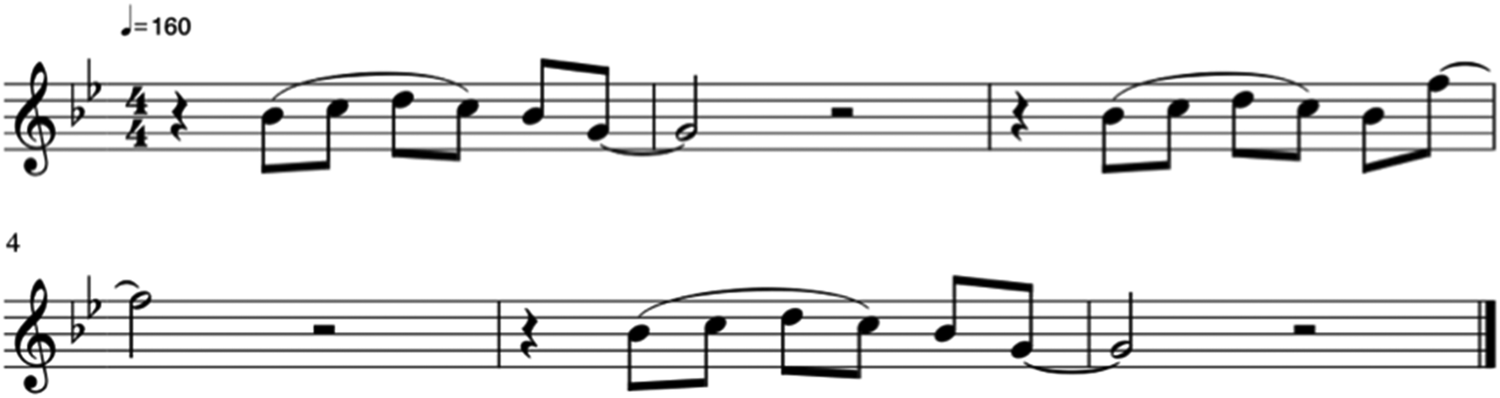
Mastercard's sonic branding exemplifies the typical strategies and uses of sound to convey the sonic identity of a brand, in such a way that this identity is both adaptable and cohesive. Figure 1 presents a descriptive (rather than prescriptive) transcription of the Mastercard core melody.
Mastercard core melody.

The core melody (Figure 1) featured in this press release is a simple pop riff played on an acoustic guitar in an indie rock style. The short and melodically predictable six bar motif is rhythmically grounded by a galloping delay riff, reminiscent of Temper Trap's ‘Sweet Disposition’ or U2's ‘Where the Streets Have No Name’ (Mastercard News 2020). The A section begins on the tonic with a diatonic scalar ascent to the third and then descent to the relative minor. The B section repeats the first five notes, however the sixth note deviates, ending on the dominant scale degree in the upper register, providing a single melodic climax. The simplicity is intentional; in popular music terms, it is a ‘hook’, designed to lodge in the memory of Mastercard's customers. What Burns wrote of the role of ‘hooks’ in popular music back in the 1980s is still true today, ‘the hook is “what you are selling”’ (Burns Reference Burns1987, p. 1). In popular music songs, the hook encourages the purchase/download/stream of the song in question; in the case of Mastercard, the hook is still encouraging consumption, although it is consumption through a different means. For Mastercard, the hook is used to encourage consumption by building brand equity, by sonically massaging the relationship between the user and the brand itself. The simplicity of Mastercard's hook also facilitates its adaptability, as the melody is readily transferred and rearranged in different genre contexts to ensure both continuity and difference. So, whether across physical, digital or sonic environments, Mastercard aims for seamless familiarity.
Developed with musicians, artists and agencies from around the world, including Linkin Park's Mark Shinoda, the sound sees Mastercard ensure an audio presence in a future where a visual one cannot be assumed. According to Mastercard's press release: ‘With voice shopping set to hit [US] $40 billion by 2022, audio identities not only connect brands with consumers on a new dimension, they are tools enabling consumers to shop, live, and pay in an increasingly digital and mobile world’ (quoted in Wilson Reference Wilson2019). One challenge though was designing a melody that suited various cultures and genres, as well as different consumption spaces. As such, while the 20 versions of the Mastercard melody vary in tempo, instrumentation and localised inflection, the six-note acceptance sound is consistent at every point-of-sale. According to Rajamannar, while ‘the Mastercard melody you will hear during MLB All-Star Week will be different from the one you hear at one of our events at Carnegie Hall’, there must be coherence overall: ‘Over time, we want you to instantly recognize the melody as Mastercard just as you visually recognize our interlocking circles. At the same time, we want to provide a highly personalized and contextually relevant sound experience that feels natural in the environment you're in’ (quoted in Kite-Powell Reference Kite-Powell2019). In this way, Mastercard provides a masterclass in sonic branding, inasmuch as it has designed and executed an audio signature that speaks to both contemporary consumer practices (mobile, personalised and digital), as well as emerging platforms and devices (integrated, voice-activated and smart).
Sonic branding and the personal information economy
Logically, sonic branding is where sensory branding – branding to the senses (Wardlaw Reference Wardlaw2019) – meets experiential marketing – marketing that involves the consumer in ‘real life’ (branded) activations (Carah and Angus Reference Carah and Angus2018). In this way, and to build on points made earlier, whatever enhancement to brand image was once presumed to flow from effective sound and music design has now been overlaid with these three realities: the shift from screen to sound as the dominant (or at least emerging) site for consumers’ media engagement; the subsequent role that sound now plays in how brands are both conceived and experienced; and the degree to which such engagement elicits commercially valuable information for brands, in the form of highly specific data (Carah Reference Carah2017).
It is thus difficult to separate sonic branding from the cultural logic of contemporary capitalism and the extent to which its needs are designed into our built environments, our social encounters and our performances of self. That this ‘sonic turn’ (Patterson and Larsen Reference Patterson and Larsen2019, pp. 106–8) should surface so soon after the ‘visual turn’ arguably addresses the senses that have been historically privileged in Western thought and epistemology (see Stoller Reference Stoller1989, pp. 3–9). As it is understood here though, the sonic turn also represents further encroachment of capitalism into the everyday, its tentacular claims over the human body and the willingness of consumers to have their sensory faculties dominated in exchange for convenience, accessibility and the short-term thrills of commodity fetishism.
Sonic branding does not just carry commercial sound into consumers’ everyday lives; it also and necessarily augments advertisers’ reach into consumers’ profiles. In the personal information economy, consumers regularly trade personal data for the speed and ease of use that characterise contemporary media devices (Perri Reference Lace2005, p. 17). This elicits for brands a ‘digital panoptic’ (Pridmore and Zwick Reference Pridmore and Zwick2011, p. 271), a seemingly endless pool of valuable consumer information, ‘streaming intelligence’ for geo-locative specificity and real-time contextual insights. With interfaces that are both hands-free and screen-free, the potential for emotional engagement thus shifts to sound – it is how brands both ‘speak’ and ‘listen’ to consumers. This exchange pivots on the defining feature of contemporary surveillance capitalism (Turner Reference Turner2018: 54): brands encourage certain social behaviours that are then monitored, mapped and integrated into (or sold onto) further commercial activities (Manzerolle and Smeltzer Reference Manzerolle and Smeltzer2011, pp. 323–324).
A kind of ‘brand theatre’ is thus created wherein the entire consumer experience is part of the brand's communication strategy (Fulberg Reference Fulberg2003, p. 195), which in turn renders retail a medium that collects information as it delivers entertainment. Sports brand Nike has perfected this with its Nike Town concept, which sees flagship stores around the world fashioned into multimedia, multimodal sensory experiences (Penaloza Reference Penaloza1998, p. 341), and visitors are immersed in a carefully arranged suite of brand triggers, including music. Through this ‘aestheticization of consumption’ (Szmigin Reference Szmigin2006, p. 108), music effectively functions as an ‘auditory territorial marker’ (Atkinson Reference Atkinson2007, p. 1910) that is designed to be noticed, unlike the ‘audio wallpaper’ of, say, Muzak or elevator music. Moreover, and in these ‘smart’ milieus of the IoT, mobility itself, invariably surveilled, is a source of value. Consumers move across stores and between sites, and all the while these markers of lifestyle and identity are captured, catalogued and analysed (Arvidsson Reference Arvidsson2004, pp. 457–8). Today, consumers inhabit spatial and temporal spaces that record increasingly nuanced snapshots (and soundbites) of their every move. To be sure, situating the role of sound within the basic infrastructure of contemporary capitalism is not new. Indeed, writing about the use of ambient music in American malls, Sterne saw it as ‘an architectural element of a built space devoted to consumerism’, designed for ‘the production and consumption of consumption’ (Sterne Reference Sterne1997, p. 25). Grafted onto the ‘smart’ spaces of today though, this intrusion is even more insidious. Ubiquitous and seductive, sonic branding today can ‘fill in the gaps’ with remarkable ease and dexterity. So, while the renaissance of audio media – podcasts, audio books, music streaming, VAs – provides consumers with welcome relief from screen saturation, and eases the cognitive load of that, it also opens up new opportunities for brands in the sensory-led experience economy (Pine and Gilmore Reference Pine and Gilmore2011).
The art-commerce nexus of sonic branding
Given that sonic branding is determined primarily by commercial needs rather than artistic aims, there are obvious implications for professional musicians and sound designers working in this field, and with these technologies. Indeed, in light of current trends and tendencies, the challenge of this art–commerce nexus is two-fold. First, the size of personal music collections has never been greater, with the growth of digital networks, storage systems and portable devices (Lange Reference Lange, Hracs, Seman and Virani2016, p. 239). In turn, musicians and record labels are increasingly aware of their need to incorporate sonic strategies in order to successfully integrate music within the political economies of new media technologies. At a time when consumers are more likely to ask Alexa or Siri to play a particular band, or genre, or artist that ‘sounds like’ another, musicians and record labels have realised that they have to have a sonic strategy integrated into their overall marketing strategy. They must understand how sonic cues generated by the consumer tap into both the taxonomies (genres dictated by the platforms themselves) and folksonomies (user generated labels and genres, most often produced through the use of hash-tags) that can make or break an artist's success in the world of online streaming (Besseny Reference Besseny2020). Second, and closer to the focus of this article, there is the extent to which musicians must tailor their art for specific branding purposes – sonic messaging that must work across devices, platforms, contexts and continents.
This presents a novel challenge that captures much of what has been discussed so far: a sonic brand designed to foster emotional, immersive engagement, that can be parlayed widely and diversely, that conveys narrative in a consistent and resonant way, across countries and cultures and that inspires brand loyalty through positive associations, such as trust, quality and likeability. Attention turns now to a recent example of sonic branding that covers all of these points. Like Mastercard, it neatly shows how sonic branding has been drawn into the contemporary marketing toolkit. As part of a brand's ‘bigger story’, though, it also spotlights how sonic branding can be used to strategically reset consumers’ perceptions, shift a conversation and contrive a new point of difference. Here, sonic branding sits within a strategy of radical rebranding. As such, it shows how sound and music enable brands to extend and diversify the means by which they tell a story, and deftly skew public attention.
HSBC – a bruised brand
In June 2019 multinational investment bank HSBC overhauled its brand for a new 360o identity, its first rebranding in 17 years. After suffering a period of pronounced brand decline (for reasons discussed shortly) HSBC set out to completely redefine the breadth and diversity of the consumer journey – across television ads, social media, ATMs, mobile phone apps and high-street branches – and this was done sonically (Newman Reference Newman2019). HSBC recruited French electro-music pioneer Jean-Michel Jarre to create sonic themes based on a single melody and hook – reduced to a single mnemonic – and produce a sound board of over 40 audio effects to be used everywhere that HSBC has any kind of presence. This collaboration is doubly significant. First, by commissioning Jarre to create its signature motif, HSBC shows how big brands approach sonic branding now – as a serious investment in an aesthetic code. Second, and in light of how bruised and battered the HSBC brand was after a scandal that made global headlines, the rebranding efforts warrant even closer examination, insofar as the emotional, connotative value of sound and music are clearly servicing mood and memory in highly targeted ways. Here, sonic branding is not so much about reinforcing brand associations, but creating new ones
To see why the (sonic) rebranding of HSBC was needed, some backstory is required. In July 2012, the US Department of Justice (DOJ) concluded an investigation into HSBC (the Hong Kong and Shanghai Banking Corporation) into possible criminal activity dating back to the early 2000s. HSBC was one of four banks that had taken advantage of the North American Free Trade Agreement between the US and Mexico, resulting in the foreign ownership of 85% of Mexico's local banks by 2002 (Marshall Reference Marshall2017, pp. 263–4). The investigation found that HSBC had either ignored practices of money laundering or actively and knowingly sought to do business with high-risk companies, banks and nation states (including Tunisia, Iran and the Al Rajhi Bank in Saudi Arabia) known to have links to terrorist organisations (Levin and Coburn Reference Levin and Coburn2012; Marshall Reference Marshall2017, p. 275). Mexican journalist Annabel Hernandez estimates that since 2002, over 100,000 people have been killed by the cartels, including her own father (Jacobsen Reference Jacobsen2018). In her 2010 book Los Señores del Narco (later published in English as Narcoland: the Mexican Druglords and their Godfathers), Hernandez (Reference Hernandez, Bruce and Fox2012) makes a direct link between the activities of HSBC and these murders, since the criminal activity was facilitated by the bank's transfer of drug money from Mexico to the US. Indeed, and as tabled in the Levin Report for the DOJ, HSBC had, despite the known risks, enabled money to be laundered between Mexico and the US, and thus allowed Mexico’s Sinaloa cartel and Columbia’s Norte de Valle cartel to ‘clean’ an estimated US$881 million (Viswanatha and Wolf Reference Viswanatha and Wolf2012). HSBC had also allowed US$60 trillion in wire transfers annually through the US without conducting due diligence (Marshall Reference Marshall2017: 276). Considering the scale of illegal activity that was being conducted in this period, HSBC was either negligent in its responsibilities as a financial institution or a knowing beneficiary of the narcotics trade.
Once in court, HSBC did not deny either the accusations or the evidence; instead, the bank conceded its failings and pledged to do more to prevent similar events from occurring in the future. However, this was a promise that had been made twice earlier, in 2003 and 2010. HSBC was fined a record penalty of US$1.9 billion (Marshall Reference Marshall2017, p. 276). Remarkably though, despite an obvious case of negligence and/or complicity, senior staff were spared criminal charges. The bank could still trade, pending systemic changes to its dealings with high-risk or questionable individuals and organisations. In December 2017, the DOJ formally ended the Deferred Prosecution Agreement, stating that HSBC had effectively complied with its terms and had sufficiently transformed its protocols to prevent further financial crime. Indeed, the case showed the Breuer Doctrine in action, the company's size deemed ‘too big’ for prosecution on account of the wider collateral consequences (Marshall Reference Marshall2017, p. 276). Put simply, banks like HSBC are ‘too big to fail’ (Hardouin Reference Hardouin2017; Marshall Reference Marshall2017, p. 264). These events have since been profiled in the Netflix documentary Cartel Bank (2018), directed by Kristi Jacobsen.
It is hard to overstate how this case damaged the HSBC brand. Links to drug cartels, terrorist organisations and money laundering are dire for any corporation – but especially one that trades on a public face of trust, reliability and security. Suffice to say, while dirty deals have no doubt infiltrated banks of all hues around the world, this was a high-profile story that effectively defined HSBC as the dirty bank. HBMX (an affiliate of HSBC Mexico, HSMX) was recommended by one Mexican drug lord on record as ‘the place to bank’ (quoted in Levin and Coburn Reference Levin and Coburn2012, p. 68). While members of the local Mexican population were across HSBC's complicity in criminal activity, this reputation for years of criminal profiteering rippled out to the broader financial community and the general public. Moreover, the brand image was damaged around the world for two main reasons. First, its illicit activities spanned the globe, from Iran to Mexico. Second, HSBC is a truly global institution: with services split across personal and business banking, HSBC is the largest credit card provider in the world, issuing cards in 18 countries (as of 2017), with a strong share of total card payment transactions in 14 of these.
The sonic (re)branding of HSBC
Given the size and severity of the HSBC scandal, it makes sense that the bank would not just tweak or update its image, but completely rebrand. Speaking at the Festival of Marketing in October 2018, the bank's UK Head of Insight and Marketing, Sam Fletcher, told the audience: ‘Like many financial services brands we'd lost the trust of many of [the] communities that we serve. We'd also seen that consumers’ expectations of modern brands were changing’ (quoted in Barley Reference Barley2018). Fletcher explained that the challenge was to reimagine how HSBC could convey its brand personality – that is, the personal characteristics that had informed and underpinned the HSBC brand, and imbued its imagining with human traits that consumers could relate to (Aaker Reference Aaker1997). For HSBC, its brand personality was defined as Open, Dependable and Connected; in light of sinking consumer faith in the banking sector generally, and HSBC specifically, the rebranding challenge was therefore both formidable and necessary. In mid 2019, the first phase of this process focused on its visual identity, which entailed a redesign of its white and red hexagon logo with the goal of providing a consistent global image for the bank (Visard Reference Visard2019). Next on the list, and most pertinent here, was sound: HSBC made a bold and ambitious bid for a new sonic identity, one that was virtually guaranteed to make (the right kind of) headlines. Andrea Newman, global head of brand at HSBC, commissioned French electronic composer Jean-Michel Jarre to compose an audio signature for the bank.
A conservatoire-trained musician, having studied in the late-1960s electro-acoustic studio of Pierre Schaeffer (Ware Reference Ware2016: 32), Jarre is widely credited as a pioneer of synthesised electronic music. His global hits include Oxygène in 1976 (which sold 15 million copies), Équinoxe in 1978, and Les Chants Magnétiques in 1981. He is also well known for putting on spectacular outdoor concerts in exotic locations around the world (Palmer Reference Palmer1998: 269), including the Pyramids in Cairo, the Sahara Desert and Place de La Concorde in Paris, and he was the first Western musician to be invited to perform in the People’s Republic of China in 1981. These mega-events have attracted some of the largest crowds on record, including the 1997 ‘Oxygéne in Moscow’ performance, celebrating the 850th anniversary of Moscow, which was attended by 3.5 million people, a feat matched only by Rod Stewart's performance at Copacabana Beach in 1994 (Economic Times 2015). Hiring Jarre to compose the sonic brand of HSBC was therefore a grand gesture, and allowed the bank to pivot off Jarre's own brand – avant-garde, ambitious, iconoclastic, cosmopolitan and a musician that already enjoys global mass appeal (Romano Reference Romano2017). Moreover, Jarre is a respectable figure. Besides wide recognition as a pioneer and innovator of electronica (Bonner Reference Bonner2000), he is the president of the International Confederation of Societies of Authors and Composers, and lobbies on its behalf to policymakers around the world (Jarre Reference Jarre2015); he has also been a UNESCO Goodwill Ambassador since 1993 and, more recently, has become a UNESCO Ambassador and Spokesperson for Environment and Education. By association, HSBC effectively co-opts Jarre's prestige and acclaim.
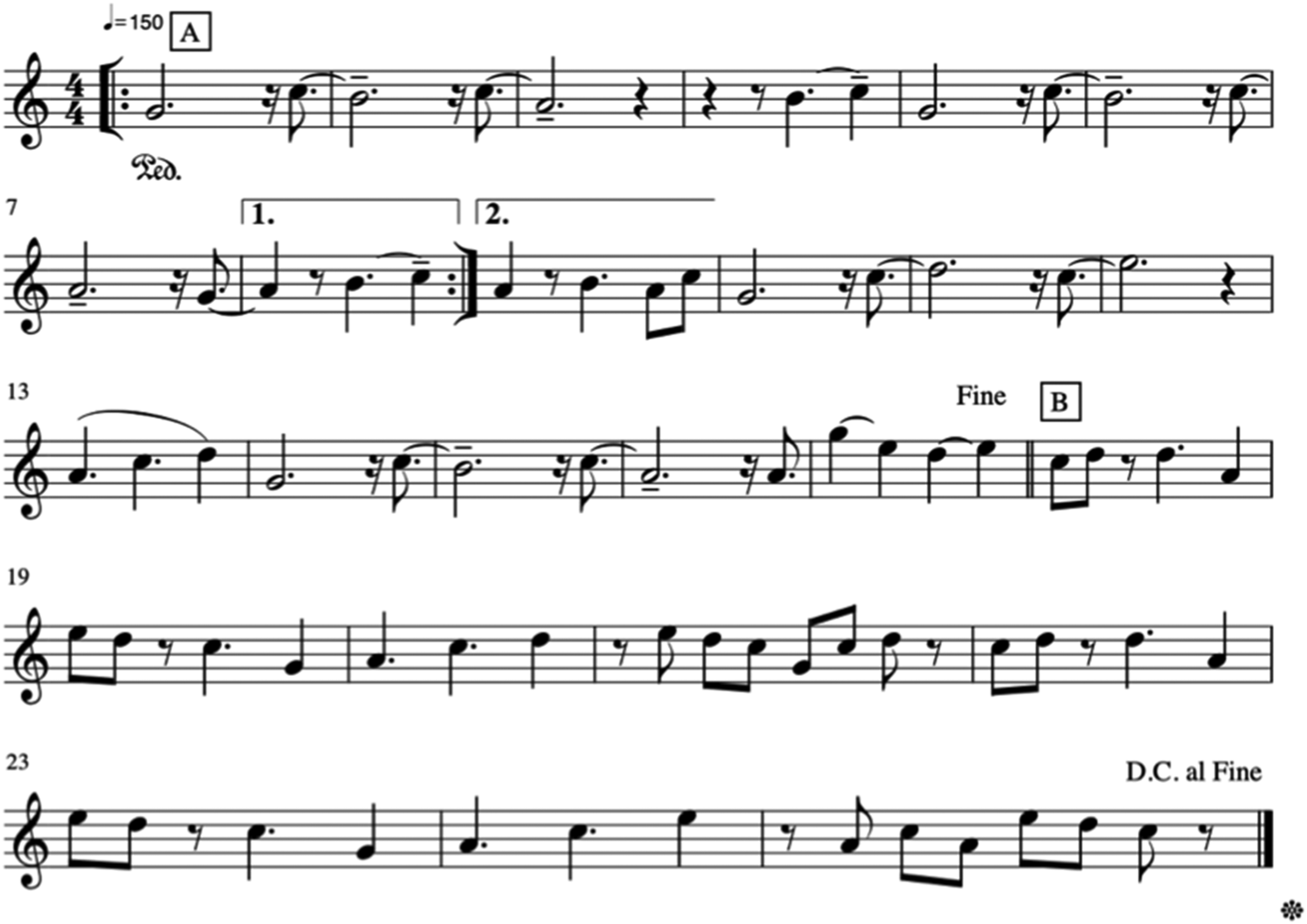
Once commissioned by HSBC, Jarre composed a sound identity for the bank, with seven different versions, or ‘edits’, designed to reflect and suit different sonic contexts – television, corporate seminars, international sporting events, airport lounges, internet advertising and ‘on-hold’ audio. These edits are all posted on HSBC's YouTube channel (HSBC 2019) and include: ‘Stadium’, an edit with a four-to-the-floor dance feel; ‘In Flight’, a slightly faster edit (150 bpm) with a trap beat feel; ‘Inspiration’, a rhythmically half time feel with the main piano melody featuring an ambient, wet reverb/delay; ‘Wayfoong’, where the main melody sounds aesthetically akin to a plucked Asian instrument (for example a pipa or guzheng), with delay and reverb accompanied by visuals clearly identifying with southeast Asia (in fact, ‘way foong’ is the Cantonese name for HSBC, which means ‘plentiful harvest’); ‘Mindfulness’, a much longer piece (at 12 minutes) that nods to the ‘mindfulness’ trend in corporate sectors; ‘Orchestral’, which provides a predictably ‘in-the-box’ midi orchestral arrangement of the theme; and finally, ‘Connecting’. This last piece is noteworthy as the timbre of the main melody reflects the aural environment of commuters, almost imitating the sounds one might hear on a train station on the cusp of an announcement (see Giuffre and Sharp Reference Giuffre and Sharp2014), backed by visuals of transportation, commuters and shipping containers.
The important thing to stress about these core melodies (Figure 2) is that the transcriptions are not exact, nor are they prescriptive in the sense that they would be performed as written in each scenario. In fact, the core melodies are frequently adapted and manipulated to suit different genres and moods; the dynamics are open to interpretation, as are its rhythmic elements. This compositional flexibility reflects how a sonic brand operates: it has a recognisable contour, an identifiable melodic signature that can be adapted and manipulated depending on the sensory touch points at which consumers connect with businesses.
HSBC's core melodies.

In a ‘Behind the Scenes’ look at the composition process for HSBC's sonic identity, also posted to YouTube, Jarre explains how he saw his role in the (rebranding) process: ‘What is important these days for any brand, is an audio identity. And then we tried to find a theme, quite simple, but able to be arranged, to be used with total[sic] different contexts’ (HSBC 2019). For Jarre, the tone had to be not so ‘happy’ as to seem ‘cheesy’, but not so somber that it was depressing. Instead, he aimed for a sonic identity that was both uplifting and layered. Seemingly inspired by HSBC's motto, ‘Together, we thrive’, Jarre says: ‘HSBC is more than a bank, it's trying to develop this community spirit’ (HSBC 2019).
In this sonic rebranding of HSBC, Jarre's job was to help rehabilitate the bank's reputation. In light of highly publicised activities that saw HSBC privilege profits over the collective good of entire populations, the symbolic power of sound is brought into sharp relief. The affiliation with Jarre is strategically inspired to reset the associations by which HSBC is known and recognised. His style bodes well for a brand desperate for corporate legitimacy, by virtue of an aesthetic that aligns nicely with those commercial fields, values and practices that cumulatively carry the brand: sports stadiums, wealth management, global travel and hospitality – with a soundtrack that, via Jarre, taps into the pseudo spirituality of a corporate ‘mindfulness’ that is fashionable for most organisations and crucial for this one. The sonic rebranding of HSBC thus harnesses the power of sound to recover the trust of consumers and the business community alike, so that the reassurance of its executives – ‘the HSBC of today is a fundamentally different organisation from the one that made those mistakes’ (Viswanatha and Wolf Reference Viswanatha and Wolf2012) – might prove convincing.
As much as HSBC tries to convince customers that the bank has evolved in philosophy and ethics, and in turn the rebranding can be read as the market-facing expression of this, there is another factor at play here. The brand's rebirth coincides with its massive investment in digital mobile services for both corporate customers and retail banking. In early 2017 HSBC launched the PayMe app in Hong Kong to facilitate peer-to-peer payments via social media; in 2019, a business version of the app was developed; it has developed digital services in mainland China to compete with the market dominance of WeChat and Alipay; and it has also innovated Open Banking apps for the UK market. In other words, HSBC's move into digital spaces more or less compels a sonic brand, by the same logic that Mastercard has one: increasingly, customers will experience the brand through a mostly audio sensory touch point – hands free, screen free. Moreover, the fact that HSBC won a suite of industry prizes in 2018 and 2019 (including the Euromoney Award for Excellence) suggests that the market has moved on from ‘those mistakes’ (Euromonitor 2019: 26).
Conclusion
It is not suggested here that sonic branding alone secured HSBC's turnaround; rather, it is relayed only to underscore the wider dynamic of all branding initiatives – to assert a believable story, and convert positive associations into consumer behaviour. Therein lies the commercial efficacy of sonic branding, insofar as it is designed to both engineer a particular type of engagement with the brand, and steer consumers’ sensory perceptions in predictable, commodifiable ways. This has always been the job of branding; this article then has charted how this now works sonically – not because marketers are necessarily creative or curious, but because messaging is invariably contoured by context and platform. Mastercard and HSBC are motivated less by art than by business; in capitalist settings, it would be naïve to expect otherwise. As such, we consider how sound works in this framework, as a conduit for brand narrative and part of the aestheticised infrastructure through which consumers’ lives are monitored, analysed and transformed into tradeable information.
Given that the datafication of (consumer) culture has been amply noted and critiqued elsewhere (Kennedy Reference Kennedy2018), the focus here is on how sound has been used in a mosaic of cultural, economic and technological reinforcement. As consumers engage more with voice-activated, screen-free interfaces, it behooves brands to adjust how they address consumers, to craft their identity sonically and thus guarantee a seamless transition to emerging technologies. At the same time, this shift has significant commercial benefits, insofar as the more that consumers interact with aesthetically appealing digital media, the more data they feed to hungry algorithms – which are both lucrative and revealing, as seemingly endless sources of exchangeable information. In this way, sonic branding is part of the commercial infrastructure of everyday aesthetics, designed to be ‘safely’ distinctive – atypical enough to signpost brand personality, but not so ambitious that it inspires an (unintended) exit from the consumerist mindset. As such, sonic branding must be seen as part of the ideological imperative of contemporary capitalist culture, whereby every opportunity for commercial gain is seized and promotional messaging is tailored for dominant (or emerging) modes of consumer engagement. Insofar as personal media devices are increasingly amenable to interfaces that are screen free and hands free, it follows that brands must shift towards new kinds of cultural cut-through. In contexts where physical and/or visual presence is not guaranteed or privileged, and audio is the only marketing option, sonic branding is the obvious go-to.
Since consumers’ interaction with digital media (whether through VAs, social media or the IoT) produces commercially lucrative data, it makes sense to move branding in this direction – since an aestheticised mediasphere is arguably more appealing and seductive for users/consumers. While this holds true for most media, the work of sonic branding is especially significant. Since all branding strategies strive for perception management, and try to generate marketable points of difference that register favourably with consumers (Bastos & Levy Reference Bastos and Levy2012), sonic branding is yet another sensory point for advertisers to tap; what was once realised through advertising imagery, celebrity endorsements and artful packaging is now (also) manufactured in sound – an audio signature that signposts distinction and reassurance. It might well be a semiotic pretension, but that is the role of branding: to traffic cultural symbols in predictable, profitable ways (de Chernatony and Riley Reference de Chernatony and Riley1998; Keller Reference Keller2016). The two examples canvassed here – Mastercard and HSBC – could be applauded as early innovators in this space, both having crafted exclusive sounds that perform much like trademarked logos. These both shed light on how sonic branding is supported by obvious technological incentives (namely, harnessing the promotional opportunities of new media devices and platforms). At the same time, and by taking a closer look at HSBC especially, it is also clear that sonic branding is still branding – its ultimate aim is to control consumers’ perceptions, build brand equity and inspire positive associations and practices – eventually, securing the intention to buy. In this way, sonic branding nods to the agility and adaptability of major brands, as they find new ways to connect with consumers wherever they are and whatever they are doing.