Introduction
The increase in migration toward Europe as a result of wars, political persecution, endemic poverty, and the hope of a better life has called on Western countries to provide a civil and political response to a problem that has now taken on global dimensions.1 Although it may surprise us today, a settled way of life has been the exception rather than the rule in the history of the human race. Humans have always been a nomadic species, perpetually in motion. Every immigration should be viewed as comprising, and preceded by, emigration. Prior to examining emigrants as people who arrive in a country new to them, an effort should be made to consider adopting a reversed vision of the phenomenon, which begins with their departure from their homeland. To achieve a correct perspective on the migratory phenomenon, two points of view should be simultaneously present: that of the country of origin and that of the country of destination. “The reasons why an immigrant has decided to leave” and “how an immigrant integrates into the social fabric of the host country” are the corresponding themes. Over time, these points of view have almost become opposites, by focusing on who the immigrant is, almost to the point of eliminating the complementary terms of “emigrant” and “immigrant,” in favor of “migrant” alone.Reference Pacini2
People who choose to emigrate more often, in particular, those that typify an act of “solitary migration,” have temperamental traits that correspond to the hyperthymic type, that is, high self-esteem, high levels of energy, enthusiasm, extroversion, but we might also add the traits of being adventurous, resourceful, and reckless. Akiskal et al discovered that such temperamental traits are implicated in the genesis of bipolar disorder (BD). Several studies indicate that such patients do indeed more frequently encounter episodes of a manic/hypomanic type and are therefore to be considered, immediately, as belonging to a “soft” subtype of BD.Reference Kesebir, Vahip, Akdeniz, Yuncu, Alkan and Akiskal3–Reference Akiskal, Hantouche and Allilaire7 The interesting element in the migrant history is the recurrence of this concept of the initial phase of hyperadaptation (overcompensation), euphoria and migratory optimism, which may represent nothing more than a euphoric tendency linked to physiological or minor physiological affective syndromes (of bipolar type) in the migrants who are prominent in some populations.
Migration is becoming a process that carries intense levels of stress that can overwhelm human adaptive capacity and trigger mental or physical problems, symptoms, or illnesses.Reference Bustamante, Cerqueira, Leclerc and Brietzke8 Stress and trauma have been robustly associated with risks arising from mental disorders, including but not limited to post-traumatic stress disorder (PTSD), major depressive disorder, psychosis, anxiety disorders, and an increased tendency to somatization (whereby psychological distress is expressed as physical symptoms) and suicide. PTSD is a severe, psychologically disruptive, often chronic condition that is triggered by traumatic life events that lead to symptoms such as persistent re-experiencing of the event, avoidance of feelings, thoughts, adverse alterations in cognition and mood, hyperarousal. In recent years, scientific attention has been focused on the relationships between PTSD and maladaptive, risk-taking behaviors, above all, on the strong connection between PTSD and substance use disorder (SUD).Reference Elbogen, Wagner and Fuller9–Reference Brown and Wolfe12
The V.P. Dole Research Group at the University of Pisa, Italy, has studied the possible definition of a specific psychopathological dimension in SUD. In heroin use disorder (HUD) subjects, using factor analysis of the 90 items included in the SCL90 questionnaire, a 5-factor solution had been found. The first factor accounted for a depressive “Worthlessness/Being Trapped” (W/BT) dimension; the second factor picked out a “Somatic Symptoms” (SS) dimension; the third identified a “Sensitivity/Psychoticism” (S/P) dimension; the fourth a “Panic Anxiety” (PA) dimension; and the fifth a “Violence/Suicide” (V/S) dimension.Reference Maremmani, Pani and Pacini13
In our previous research project, we succeeded in defining a psychopathology that would appear to be specific for the SUD and would be stable and independent of many factors and variables, such as the choice of treatment (eg, agonist opioid treatment versus therapeutic community),Reference Pani, Trogu and Vigna-Taglianti14 the “status” of active substance user (detoxified versus nondetoxified patients),Reference Pani, Maremmani and Trogu15 the presence of lifetime psychiatric problems,Reference Pani, Maremmani and Trogu16 the choice of used substances (heroin versus cocaine versus alcohol),Reference Pani, Maremmani and Trogu17 and ethnicity.Reference Maremmani, Lovrecic, Lovrecic and Maremmani18, Reference Carbone, Tagliarini and Ricci19
Aim of the present study is to analyze the migration process influence on clinical expression of HUD comparing at univariate and multivariate level, migrant HUD (M-HUD), and age/gender-matched Italian HUD (IT-HUD) patients, at treatment entry, regarding demographic, anamnestic, psychopathological, behavioral, and stress reactivity data.
Methods
Design of the study
The present study was a naturalistic case–control study, with a single evaluation of M-HUD patients who, after matching for age and gender, were compared with IT-HUD patients. All M-HUD subjects entering treatment were evaluated at the Italian NHS Drug Addiction Treatment Unit “ASL Rome 1,” Italy, by referring to the psychopathological symptomatology of the previous week. As a control group, IT-HUD patients presenting for treatment were selected from the PISADDICTION dataset. In this database, data collected at treatment entry included individual information that were left anonymous after its initial collection for clinical or other research purposes at the PISA-V.P. Dole Dual Disorder Unit, Italy. We did not use specific criteria for the inclusion of patients in this database other than their “wish to be treated” and having said they “wanted to participate” in a future survey. Each patient could reach an independent decision on whether to accept or decline his/her inclusion in the database. The decision to accept or decline did not in any way affect the care the patient received. The patient could withdraw his/her consent at any time without giving any explanation. The data entered in the dataset came from research protocols approved by the ethics committees of the centers participating in the various studies.
Sample
Criteria of inclusion for M-HUD were: (a) presence of HUD according to the fifth edition of the Diagnostic Statistic Manual of Mental Disorders (DSM-5) diagnostic criteria; and (b) absence of pharmacological or somatic treatments. Criteria of exclusion were limited to the impossibility of giving informed consent. Thirty M-HUD patients were included in the study. Twenty-five (83.3%) of these patients were males and five (16.7%) females. Age was 37.90 ± 7.3 years, min 23, max 51. The IT-HUD group was selected from 1055 subjects evaluated at their treatment entry (PISADDICTION dataset). Inclusion criteria comprised a diagnosis of heroin addiction according to various DSM criteria and illness lasting for at least 1 year. For details, see Maremmani et al.Reference Maremmani, Pani and Pacini13 After matching for age and gender, 30 IT-HUD patients were included in the study.
Instruments
Heroin addiction history
Heroin addiction history was recorded by the Drug Addiction History Questionnaire (DAH-Q).Reference Maremmani and Castrogiovanni20 The DAH-Q is a multidimensional questionnaire that comprises the following eight areas: (a) physical health, (b) mental status, (c) social adjustment and environmental factors, (d) typology of used substances, (e) substance use modalities (heroin intake, modality of use, stages of illness, nosography), (f) treatment history, and (g) addiction history (age at first contact, age at onset of continuous use, dependence length, and age at first treatment). The questionnaire comprises 10 presence–absence items: (a) somatic comorbidities, (b) abnormal mental status, (c) unsatisfactory work activity, (d) unsatisfactory household situation, (e) unsatisfactory romantic involvement, (f) unsatisfactory social and leisure time, (g) drug-related legal problems, (h) polysubstance use, (i) previous treatment, and (j) combined treatments. For further details, see Lovrecic et al.Reference Lovrecic, Lovrecic and Rovai21
Psychopathology
To record psychopathological symptoms, we used the Symptomatologic Check List (SCL90). Developed by Derogatis et al,Reference Derogatis, Lipman and Rickels22 the SCL90 is made up of 90 items, each rated on a 5-point scale of distress. It is a self-report clinical rating scale oriented toward the symptomatic behavior of psychiatric outpatients. In the case of SUDs, the 90 items reflect five primary symptom dimensions that are believed to underlie the large majority of symptom behaviors observed in this class of patients. The primary symptom dimensions are W/BT, SS, S/P, PA, and V/S.Reference Maremmani, Pani and Pacini13 These five dimensions have been empirically established and primarily validated on a sample involving over 2500 SUD patients.Reference Pani, Trogu and Vigna-Taglianti14, Reference Pani, Maremmani and Trogu15, Reference Pani, Maremmani and Trogu17, Reference Maremmani, Rovai and Maremmani23 Based on the highest z scores obtained on the five SCL90 dimensions, subjects can be assigned to one of five mutually exclusive groups.
Behavioral covariates of heroin craving
The presence and the severity of addictive behaviors were recorded by utilizing Craving for Heroin (CRAV-HERO), an inventory for assessing the behavioral covariates of craving in HUD patients. Thirteen behaviors were selected. We clustered the 13 behaviors in 6 operating models. (a) Exchange-related addictive behaviors (EXC-BEHAV) that aim to reveal the hierarchical approach applied by a subject to his/her values; (b) time-related addictive behaviors (TIME-BEHAV) that test the subject’s ability to wait and manage the substance, and how much time is taken up thinking about the substance; (c) risk-related addictive behaviors (RISK-BEHAV) that are linked to the theme of risk in which the choice of whether to use a substance directly involves the patient’s health and even life; (d) cue-induced/environmental-related addictive behaviors (CUE/ENV-BEHAV; (e) reward-craving-induced behaviors (REW-BEHAV); and (f) relief-obsessive craving-induced behaviors (REL/OBS-BEHAV). Based on the highest z scores obtained on the five SCL90 dimensions, subjects can be assigned to one of five mutually exclusive groups. For details see Maremmani et al.Reference Maremmani, Rovai and Bacciardi24
Post-traumatic stress disorder spectrum
The severity of emotional responses to life events was documented by the “trauma and loss spectrum” (TALS) questionnaire. The TALS includes 116 items exploring the lifetime experience of a range of loss and/or traumatic events and lifetime symptoms, behaviors, and personal characteristics that might be manifestations and/or risk factors for the development of a stress response syndrome.Reference Dell’Osso, Carmassi and Rucci25, Reference Dell’Osso, Shear and Carmassi26 For details and the use of this questionnaire in HUD patients, see Dell’Osso et al.Reference Dell’Osso, Massimetti and Rugani27
Data analysis
At the univariate level, the t-test and chi-squared were used for the comparison of continuous or categorical variables, respectively (Mann–Whitney and Fisher exact test when appropriate). At multivariate level, the continuous and the categorical variables that were found to be significant in differentiating between groups were used as predictors for a discriminant analysis or logistic regression analysis, respectively, using nationality as the grouping factor.
Results
Demographic and heroin addiction history
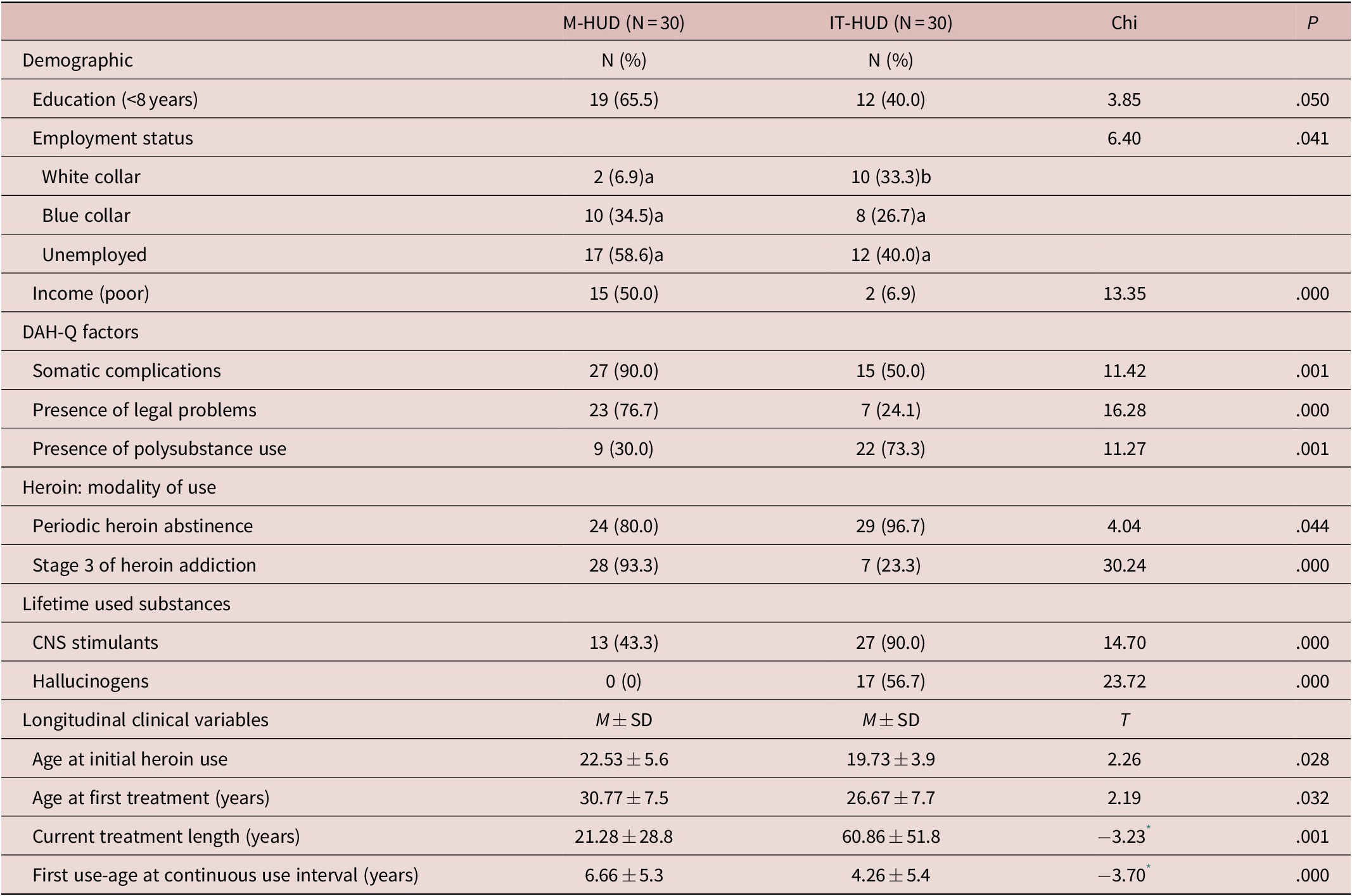
Table 1 reports only significant demographic and clinical differences according to nationality.
Significant Demographic and Clinical Differences Emerging from the Study of Age- and Gender-Paired HUD Migrant and Italian Patients.

* Z of Mann–Whitney U and Wilcoxon W test.
Abbreviations: CNS, central nervous system; HUD, heroin use disorder patients; IT-HUD, Italian heroin use disorder patients; M-HUD, migrant heroin use disorder patients.
Each letter denotes a subset of categories whose column proportions do not differ significantly from each other at the .05 level.
Regarding demographic data, whether about low (<8 years) education level (48.3% in the total sample), single civil status (68.3%), having welfare benefits (1.7%) and living alone (36.7%), no significant differences were observed. Migrants were less frequently white collars and showed poorer income. By discriminating IT-HUD from M-HUD, stepwise logistic regression showed that the presence of adequate income (OR = 13.92; CI 2.13-90.83; P = .006) can correctly classify our patients at 71.7%; adding low level (<8 years) of education (OR = 9.09; CI 1.94-42.48; P = .005) and white-collar job (OR = 8.80; CI 1.09-70.61; P = .041); the percentage of correct classification can reach 80.0% (chi-squared = 34.12; P = .000).
As to the presence of dual disorders (50.0% in the total sample), M-HUD and IT-HUD did not differ significantly.
Regarding heroin addiction history at treatment entry, the presence of altered mental status (60.0% in the total sample), having an unsatisfactory situation at work (77.6% among those with a job), in the household (51.7% in the total sample), in love relationships (25.0%), during social leisure (28.3%), and the age at their first treatment (3.3%) did not differ significantly between groups. All patients needed a comprehensive bio-psychosocial treatment. More M-HUD participants than IT-HUD ones reported somatic complications and legal problems. More IT-HUD patients than M-HUD ones were poly-users. By discriminating IT-HUD from M-HUD, stepwise logistic regression showed that the presence of legal problems (OR = 0.10; CI 0.02-0.45; P = .003) can correctly classify our patients in 76.7% of all cases; by adding polysubstance use (OR = 9.71; CI 2.08-45.15; P = .004) and somatic complications (OR = 0.14; CI 0.02-0.79; P = .027), the frequency of correct classification can reach 81.7% (chi-squared = 34.12; P = .000).
Regarding heroin use modalities at treatment entry, daily or more frequently than daily heroin intake (85.0% in the total sample), and stable modality of use (48.3%) did not differ between the groups. Every single M-HUD participant presented for treatment during stage 3 of their illness, and with a more frequent history of continuous intake without periodic heroin abstinence. By discriminating IT-HUD from M-HUD, stepwise logistic regression showed that the presence of a stage 3 of the illness (OR = 0.01; CI 0.00-0.11; P = .000) can correctly classify our patients with 85.0% accuracy; when adding periodic heroin abstinence (OR = 26.20; CI 1.07-637.99; P = .045), the correct classification did not further improve (chi-squared = 39.45; P = .000).
Regarding the copresence of other substances, the use of alcohol (43.3% in the total sample), central nervous system (CNS) depressants (36.7%), cannabinoids (81.7), and inhalants (3.3%) did not differ between groups. M-HUD was less prone to lifetime use of CNS stimulants and hallucinogens. By discriminating IT-HUD from M-HUD, stepwise logistic regression showed that the lifetime presence of the use of stimulants (OR = 11.76; CI 2.91-47-45; P = .000) is alone sufficient to discriminate our patients at a frequency of 73.3%.
Regarding longitudinal heroin addiction history, age of continuous heroin use (23.65 ± 5.3 years in the total sample), dependence duration (11.20 ± 6.5 years), timespan between first use and first treatment interval (7.46 ± 5.7 years), and between age of continuous use and first treatment interval (5.46 ± 5.5 years) did not differ between groups. M-HUD patients were older than IT-HUD ones at their first use of heroin and their first treatment, showed a shorter duration of their current treatment and a longer latency between their age of first and continuous use of heroin. Discriminant analysis successfully (Wilks’ lambda = 0.73; chi = 17.81; df = 2; P = .000) indicated older age at first contact with heroin (discriminant function load = −0.63) with lower duration of current treatment (0.88) the most important clinical longitudinal characteristics to discriminate at 70.0% M-HUD (group centroid: −0.59) from IT-HUD (group centroid: 0.59).
Heroin craving-related addictive behaviors
The total score of CRAV-HERO (17.38 ± 13.4 scores in total sample), the severity of EXC-BEHAV (1.27 ± 1.1), TIME-BEHAV (1.23 ± 1.2), RISK-BEHAV (1.00 ± 1.0), CUE/ENV-BEHAV (1.32 ± 0.9), REW-BEHAV (1.32 ± 0.9), and REL/OBS-BEHAV (1.30 ± 0.9) did not differ between groups. Addictive behavior typology too, which, considering all patients, was comprised 15.0% of EXC-BEHAV, 11.7% of TIME-BEHAV, 26.7% of RISK-BEHAV, 1.7% of CUE/ENV-BEHAV, 20.0% of REW-BEHAV, and 25.0% of REL/OBS-BEHAV predominant subjects did not differ (chi = 3.18; P = .671).
Psychopathology specific to HUD
The total score assessed using SCL90 (48.86 ± 10.5 PT scores in the total sample), comprising W/BT (47.69 ± 9.6), SS (48.14 ± 9.4), S/P (50.67 ± 9.7), PA (50.05 ± 8.7), and V/S (50.33 ± 10.4) dimension T scores, did not differ between groups. Psychopathological typology too, which, considering all patients together, consisted of 10.0% of W/BT, 16.7% of SS, 36.7% of S/P, 25.0% of PA, and 11.7% of V/S predominant subjects, did not differ either (chi = 1.53; P = .821).
PTSD spectrum
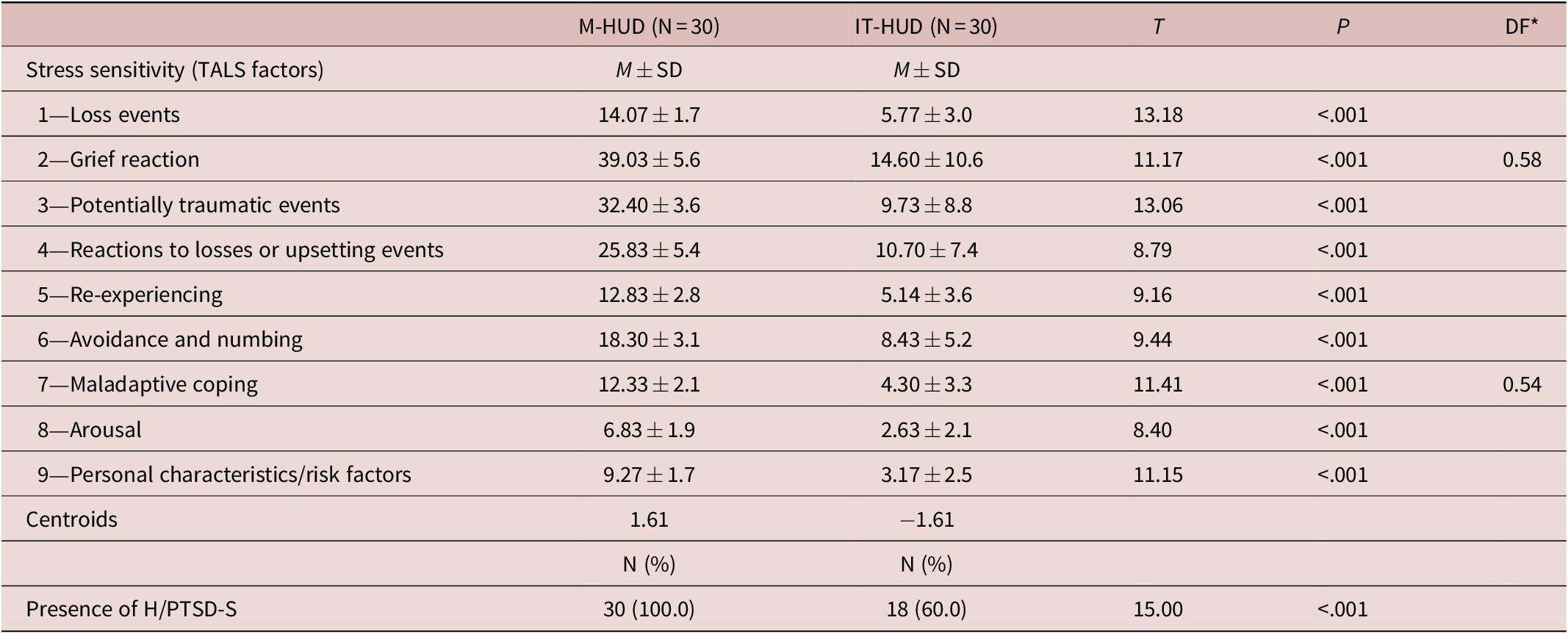
Table 2 shows the differences between groups concerning emotional reactivity to trauma and loss events. M-HUD patients showed all the severity of their emotional reactivity through the same score measure that differentiated the survivors of the earthquake that hit L’Aquila in 2009 and who subsequently developed a clinical PTSD, from those who did not. As many as 60% of the IT-HUD participants presented this characteristic. M-HUD patients showed all the dimensions of TALS more severely than those in the IT-HUD sample and more frequently considered life events as a loss that was potentially traumatic. They had more severe grief reactions, more frequent reactions to losses or upsetting events, re-experiencing life events with avoidance and numbing, showing maladaptive coping, arousal symptoms, and risk factors. Multivariate analysis indicated high values for grief reaction and maladaptive behavior as the most important PTSD spectrum characteristics, allowing 93.3% discrimination of M-HUD participants from IT-HUD ones.
Emotional Reactivity to Trauma and Loss Events in HUD Patients According to Nationality.

Discriminant function statistics: Wilks’ lambda: 0.27; chi: 74.28; DF: 2; P = .000; 93.3% of original grouped cases correctly classified.
Abbreviations: DF, discriminant function; H/PTSD-S, heroin post-traumatic stress disorder spectrum; IT-HUD, Italian heroin use disorder patients; M-HUD, migrant heroin use disorder patients; TALS, trauma and loss spectrum.
Discussion
At treatment entry, M-HUD patients were less frequently white collars and showed poorer income; these two criteria were sufficient to discriminate the great majority of them. They more frequently reported somatic complications and legal problems, but they were less frequently poly-users. Legal problems were the most important characteristic. Every single member of the M-HUD sample presented for treatment during stage 3 of his/her illness, and, with much greater frequency, had a history of continuous intake without periodic heroin abstinence. Being at stage 3 of HUD (called the “revolving door”) was the most important characteristic. M-HUD patients were also less prone to lifetime use of CNS stimulants. Older age at first use of heroin, together with a lower duration of current treatment, were the two most prominent anamnestic characteristics of M-HUD patients. Heroin craving-related addictive behaviors and psychopathology specific to SUD did not differ between the two groups. All M-HUD participants showed the severity of their emotional reactivity through the same score measure that differentiated the survivors of the earthquake that hit L’Aquila in 2009 and who subsequently developed a clinical PTSD, from those who did not. In addition, they were distinguished by high values for grief reaction and maladaptive behavior.
The job activity and the poverty that differentiated M-HUD from IT-HUD is not surprising if we consider that the absence of stable work and poverty is often the primum movens of migrants. An estimated 244 million people worldwide have migrated from their countries of origin, fleeing war or poverty, or pursuing the dream of a better life.Reference Bustamante, Cerqueira, Leclerc and Brietzke8 The search for a radical change in people belonging to a society arises not only from a state of necessity, or from the wish to live a better life. The “movement” occurs when people have less than what they aspire to. Knowing that beyond the world there is a “promised land” can make the thought of remaining in a homeland that does not change, improve, or evolve intolerable. This frustration is a crucial element in the decision to take the big step to emigrate. According to this thesis, those most likely to emigrate to the promised land are not, as it turns out, the poorest and neediest, but the most intolerant—those who present a combination of compelling aspirations and life experiences. Emigration of this type is, therefore elective, rather than obliged or induced by environmental conditions.
Adaptation is to be understood as a dynamic process by which the individual’s thoughts, feelings, behavior, and physiological mechanisms continually change to fit a changing environment. When the adaptive resources of the organism are overwhelmed, a mental disorder can prevail, with specific symptoms and associated behaviors, potentially including severely high-risk behaviors. As constant adaptation to a new environment is required, the migration process is generally assumed to be a significant chronic environmental stressor. A migration project, a prevailing profile made up of temperamental traits and the associated vulnerability to mental illness (affective, depressive) would thus become the optical definition of the same phenomenon. Thus, in bipolar syndromes, there are windows to be “kept closed” for those thinking of emigration (when one is depressed, when one is psychotic, when one is agitated), and windows to be “left open” (when one is euphoric but not excessively so).Reference Ritsner, Modai and Ponizovski28, Reference Ritsner, Ponizovsky and Ginath29
Although migration can be a form of personal development and help to expand an individual’s opportunities for choice and action, on the other hand it exposes the migrant to many strains and risk factors. This is a fragile population with special needs. In addition to the trauma experienced before and during the migratory journey itself, the discriminatory behaviors they experience once they arrive in their destination countries, associated with a general lack of opportunities, can lead to increased vulnerability among these people and facilitate a shift toward mental health issues that may take a variety of different forms.1, Reference Llosa, Ghantous and Souza30, Reference Lester, Tait, England and Tritter31
Despite the fact that there has, for some time, been a strong consensus that the migration process can influence the onset, course, development, outcome, and even the symptomatological expressiveness of psychiatric pathologies, the history of HUD in our M-HUD patients shows strong similarities with that of IT-HUD. In particular, heroin craving-related addictive behaviors and psychopathology specific to SUD did not differ between the two groups.
Our research group considers that the natural history of HUD develops through three stages.Reference Maremmani, Popovic and Maremmani32 The first is the time spent in the “honeymoon” stage characterized by markedly positive feelings of well-being. The next level is distinguished by the intermediate or “dose-increasing” stage. The “revolving door” stage is the third and last stage, in which the subject is totally oriented toward substance seeking by any means. This third stage is when the ordeal of relapsing behavior begins. The “revolving door” situation is a dramatic sequence of being treated, quitting the treatment, falling out, being arrested, being hospitalized, going back to treatment, and so on. Stage 3 of HUD is present without exception in all migrants, and it cannot be excluded that the prospect of access to treatment, which is needed at this stage, is one of the reasons that lead these subjects to move to Italy.Reference Volkow, Poznyak, Saxena and Gerra33 In fact, while in many migrants’ countries of origin, the treatment of heroin addiction is considered from a criminal justice viewpoint and the use of substitution medications (methadone and buprenorphine) is prohibited; in Italy, these treatments are public, free of charge even for non-European citizens who request it, and are implemented according to the recommendations of international agencies.Reference Volkow, Medina-Mora Icaza, Poznyak, Saxena and Gerra34 This hypothesis is reinforced by the fact that migrants are, less frequently, polydrug users (stimulants and hallucinogens) and that for them, therefore, the harmful use of heroin, without periodic heroin abstinence, is the main problem.
What seems to mark out migrants, rather than the history of heroin addiction, seems to be the way migrants adapt to the disease itself. The PTSD spectrum of migrants is vastly more compromised than that of their Italian peers. The relationship between SUD and PTSD is well known.Reference Gerra, Somaini, Zaimovic, Sher and Vilens35 The prevalence of SUD among people with PTSD is estimated to be in a range of 21% to 43%,Reference Jacobsen, Southwick and Kosten36 while the prevalence of PTSD among SUD patients ranges from 26% to 52%Reference Evren, Can, Evren, Saatcioglu and Cakmak37–Reference Mills, Lynskey, Teesson, Ross and Darke39 and is three times higher than in the general population.Reference Driessen, Schulte and Luedecke40, Reference Kessler, Berglund, Demler, Jin, Merikangas and Walters41 Although several explanations of PTSD/SUD comorbidity have been proposed,Reference Jacobsen, Southwick and Kosten36 none of them is enough by itself to adequately explain this frequent relationship, suggesting a complex interplay of pathways contributing to PTSD and SUD comorbidity. The “self-medication” hypothesis, in which PTSD came first, was initially postulated by Khantzian.Reference Khantzian42 It states that substances are used to relieve the painful symptoms of PTSD, and, consequently, subjects develop a SUD. The “high-risk” hypothesis suggests that a dangerous lifestyle induced by SUD increases a subject’s exposure to loss and traumatic events, and therefore raises the likelihood of PTSD.Reference Brown and Wolfe12, Reference Jacobsen, Southwick and Kosten36 The “shared vulnerability” hypothesis states that a shared pathway or substrate predisposes PTSD and SUD subjects to develop these two disorders.Reference Haller and Chassin43–Reference Yehuda, McFarlane and Shalev45 PTSD could be best understood, in our view, through a dimensional conceptualization viewed alongside the spectra of symptom severity, nature of the stressor and responses to trauma adopting a unified perspective.Reference Moreau and Zisook46 Besides, we think that a HUD/PTSD combination may be the consequence of long exposure to heroin.Reference Maremmani, Maiello and Carbone47 We had previously found positive correlations between the severity of heroin addiction, the dose of opioid medication, and the severity of the PTSD spectrum. In HUD, patients are characterized by the lifetime absence of exposure to actual or threatened death, serious injury, or sexual violence; this kind of PTSD spectrum resulting from the addictive process may display a high degree of severity. We studied the reactivity of the post-traumatic spectrum to loss and traumatic events, in people exposed to catastrophic events (eg, the 2009 L’Aquila earthquake), where the survivors experienced or not a clinical PTSD and we found that 32 was the cut-off dividing these two groups. Then, by investigating a group of long-lasting HUD subjects who had never been exposed to catastrophic incidents, we found that their emotional reactions turned out to be similar to those of PTSD subjects who were themselves earthquake survivors. In other words, HUD patients seem to over-react to stress.Reference Dell’Osso, Massimetti and Rugani27 At the same time, the long-lasting methadone medication normalized responses to stress.Reference Kreek, Khuri and Fahey48, Reference Kreek, Schuster and Kuhar49
In our M-HUD patients, this kind of reaction to stress, called by us the “heroin PTSD spectrum” (H/PTSD-S), could be related to two overlapping situations, the PTSD due to the migration process and the H/PTSD-S itself. In this way, we would have a sort of H/PTSD augmentation and the difference between M-HUD and IT-HUD patients would be higher. In other words, we can postulate a “double damage” hypothesis in M-HUD patients.
To fully understand the PTSD spectrum shown by our sample of M-HUD patients, and the differences in severity and typology of their emotional reactivity to trauma and loss events with respect to that shown by IT-HUD patients, we have to consider the impact of the migratory process together with that of HUD on migrants’ ability to withstand potentially traumatic events. When we talk about reactivity to stressful life events, we must consider that not all subjects respond in the same way if and when they are exposed to identical stressors. Why do some trauma-exposed people develop a variety of psychological or physical concerns, whereas others with similar forms of exposure remain relatively unscathed? What is the explanation for this phenomenon? Resiliency has been suggested to explain this variation in the pathology expressed in trauma-exposed people. Resilience is an interactive phenomenon that is inferred from findings indicating that some individuals have a relatively good outcome despite having experienced severe forms of stress or adversity—their outcome is better than that of other individuals who have been through the same experiences.Reference Rutter50–Reference Greenberg52 A dynamic system can withstand or recover from significant challenges that threaten its stability, viability, or development.Reference Sapienza and Masten53 It is unlikely that there exists a single cause of many adverse outcomes to trauma exposure, such as mental illness, substance abuse, the migratory experience itself or high-risk sexual behaviors, among others.
We can consider the HUD as a “first hit.” We previously showed the strength and wide-ranging nature of the relationship between the severity and progression of HUD and the related severity of PTSD spectrum symptomatology in a sample of methadone-treated HUD patients, suggesting a unitary perspective capable of allowing an understanding of these two disorders.Reference Dell’Osso, Rugani, Maremmani, Bertoni, Pani and Maremmani54 The patients who displayed maladaptive behaviors and the re-experiencing of events with symptoms of numbing and arousal were those with the longest-lasting HUD, a finding, which confirms the view that sensitivity to traumas and stressful life events rises progressively throughout addiction history.Reference Gerra, Zaimovic and Giucastro55–Reference Sinha58 We demonstrated that heroin addictive behavior could have a similar overall effect to that of a single exposure to an extreme traumatic event such as an earthquake.Reference Smith, Zimmerman and Williams59–Reference Ostacoli, Carletto and Borghi65 HUD may be able to induce greater sensitivity and susceptibility to traumatic events, and thus the onset of severe symptoms of PTSD through a chronic dysregulation of the neurobiological systems, including the endogenous opioid system. In this connection, the persistent, stress-induced activation of the dynorphin/K opioid receptor is likely to play a crucial role in the maladaptive and pro-addictive effect of chronic stress, as shown by previous studies.Reference Van’t Veer and Carlezon66–Reference Carroll and Carlezon68
It is, therefore, possible that HUD, by affecting the ability to react to potentially traumatic events, exposes subjects to showing a more complex PTSD spectrum. Assuming this as our hypothethical “first hit,” it is logical to think that the migratory process, a highly stressful event in itself, can further complicate the eventual PTSD spectrum. This reasoning is valid in a bilateral way, since the migration process can expose the subject to presenting symptoms of the PTSD spectrum, such as high-risk behaviors including the use of substances, which in predisposed subjects may lead to the development of SUD at full expression.
The Migration Process is the “second hit.” The migration process, as previously mentioned, constitutes a highly stressful factor capable of altering any migrant’s emotional reactivity to trauma and loss events, so weakening his/her resilience. From a historical perspective, migrants are exposed to risks encompassing three groups of traumas and stressors: premigration, peri-migration, and postmigration events. They include lack of essential goods, war, detention and imprisonment, racial persecution, religion persecution, political persecution, physical violence, sexual abuse, exploitation, economic hardship, servitude, extortion, life-threatening exodus conditions, separation from close figures, the journey itself, detention in reception centers, dread of expulsion orders, uncertainty about being granted asylum, the outcome of official applications, social isolation, stigma, racism, and xenophobia.
In many cases, it has to be considered that the clinical presentation and the PTSD spectrum symptoms that may be present in migrants worsen further, after their arrival in the host country. Those who have previously been “hit” by a potentially stressful event have an increased vulnerability, and, if exposed to further stress factors, they are likely to present a more severe PTSD spectrum, which results in cumulative damage. Traumatized migrants are thus not only more fragile as immigrants because their vulnerability factors outweigh their resilience factors, but they are also particularly at risk from psycho-traumatology. Migration acts as a retraumatizing event in three main circumstances: the creation of a de-culturalizing context, social solitude, and exposure to challenging stimuli.Reference Mazzetti69 In this area too, the link between migratory syndrome and SUD is very close, because, for all the reasons listed above, the migration process can either worsen a SUD already present at the time of migration, or exacerbate a previous SUD, and in the end, expose migrants to a greater risk of using substances; in predisposed subjects, that predicament can trigger a SUD.
Therapeutic implications
Could agonist opioid medications reinforce salience? Symptoms of PTSD denote alterations in several neurobiological systems including the opioid system.Reference Bailey, Cordell, Sobin and Neumeister70–Reference Sinha, Catapano and O’Malley74 When PTSD patients were compared with controls, significantly lower levels of plasma beta-endorphins were observed in PTSD patients than in the control group, suggesting that a chronic endogenous opioid depletion may play a role in the pathogenesis and perpetuation of PTSD.Reference Hoffman, Burges Watson, Wilson and Montgomery75 Consistently, with these data, one positive therapeutic effect of morphine documented during trauma care was that of lowering the risk of the subsequent development of PTSD after serious injury.Reference Holbrook, Galarneau, Dye, Quinn and Dougherty76 From more recent investigations it has emerged that the dynorphin/κ opioid receptor (κ-OR) might be of particular interest, as it has been implicated in several brain disorders, including SUD, and it seems to play an important role in the expression of stress-induced behaviors.Reference Van’t Veer and Carlezon66, Reference Carroll and Carlezon68, Reference Bruchas, Land and Chavkin77–Reference Saladin, Brady, Dansky and Kilpatrick79 Hence, these further studies confirm the possible implication of alterations affecting the opioid system in the etiology of PTSD.Reference Bailey, Cordell, Sobin and Neumeister70, Reference Khozhenko80 In the light of all these considerations, it may be assumed that H/PTSD-S severity could be used as an indicator of the severity of the HUD, with important therapeutic implications, including the use of opioid agonists to restore normal sensitivity to stressful events. In this regard, in our previous study, we demonstrated the usefulness of long-acting opioid medication in the treatment of HUD and in reducing H/PTSD-S spectrum symptoms.Reference Dell’Osso, Rugani, Maremmani, Bertoni, Pani and Maremmani54 Past studies have also documented a normalization of the HPA axis with long-term methadone maintenance therapy.Reference Schluger, Borg, Ho and Kreek81, Reference Kreek, Ragunath, Plevy, Hamer, Schneider and Hartman82 Furthermore, future studies will have to shed greater light on the possible role of an early opioid agonist treatment in enhancing the ability to inhibit the progressive development of post-traumatic stress symptoms in HUD patients. At present, only a few studies have documented the protective effects of administering opioid analgesics at an early stage to subjects exposed to violent traumas.Reference Holbrook, Galarneau, Dye, Quinn and Dougherty76, Reference Bryant, Creamer, O’Donnell, Silove and McFarlane83, Reference Stoddard, Bergdal, Conn and Levin84 In addition, this study, in suggesting a strict correlation between the opioid system and H/PTSD-S symptomatology, further confirms, as already discussed in two publications by our group,Reference Dell’Osso, Rugani, Maremmani, Bertoni, Pani and Maremmani54, Reference Rugani, Maremmani and Rovai85 the importance of including the H/PTSD-S symptomatology as an integral part of the psychopathology of addiction. Our results, when integrated with the literature and with similar data that emerged from our previous studyReference Dell’Osso, Rugani, Maremmani, Bertoni, Pani and Maremmani54 encourage the use of agonist opioid medications for the treatment of PTSD, especially in HUD patients. Lastly, the investigation of PTSD spectrum symptoms could be proposed as an indicator of the chances of recovery for HUD patients during an opioid agonist treatment.
Limitations
The small number of M-HUD patients and the heterogeneity of patients’ countries of origin are the main limitations on this study.
Conclusions
The migrant process does not seem to correlate with addictive behaviors and psychopathology specific to HUD. It partly affects HUD history and correlates specifically with emotional reactivity to loss and traumatic life events, so suggesting that in M-HUD the link between the migratory syndrome and HUD is very close.
This study suggests the possible role of an early opioid agonist treatment in enhancing the ability to inhibit the progressive development of post-traumatic stress symptoms in HUD patients.
Author Contributions
A.G.I.M., P.C., and I.M. revised the literature and conceived the methodology of the study (sample selection, statistical analyses), discussed results, and wrote the preliminary report. M.G.C., C.T., M.R., A.M.L., L.S., and A.C. recruited data. All authors discussed results, revised, and approved the final form of the manuscript.
Disclosures
All authors declared no conflict of interest; Dr. Maremmani reports grants and personal fees from Molteni, grants and personal fees from Indivior, personal fees from Angelini, grants from CT Sanremo, grants from Gilead, grants from Merck, grants from Camurus, personal fees from Lundbeck outside the submitted work.