Severe sepsis is a life-threatening systemic response to infection representing the most common cause of death in intensive-care patients, with mortality rates in the region of 20 to 56 percent (4;11;34). The incidence of severe sepsis in the first 24 hours of intensive care in the United Kingdom is reported at 27.1 percent (34), equivalent to 21,191 cases in England and Wales per year, and this common condition accounts for significant resource use in the intensive-care unit (ICU).
Drotrecogin alfa (activated), the recombinant form of human activated protein C (rhAPC), is an adjunctive therapy to best standard care for patients with severe sepsis, modulating the inflammatory and coagulatory responses to infection that characterize sepsis. It has been licensed in the European Union (August 2002) for the treatment of adult patients with severe sepsis with multiple organ failure when added to best standard care. It was previously similarly approved by the Food and Drug Administration (FDA) in the United States for the reduction of mortality in adult patients with severe sepsis who have a high risk of death (e.g., as determined by Acute Physiology and Chronic Health Evaluation II [APACHE II] score) (6). Drotrecogin alfa (activated) is one of only a few treatments to show an improved short-term outcome in severe sepsis, and its licensing approval has been based on findings from the Recombinant Human Activated Protein C Worldwide Evaluation in Severe Sepsis (PROWESS) study (7), which demonstrated an absolute risk reduction (28-day survival) of 6.1 percent, a 19.4 percent reduction in the relative risk of death.
It has been estimated that between 10,000 and 21,000 patients per year in England and Wales might be eligible to receive drotrecogin alfa (activated) (34;35), but the uptake of this new therapeutic option has been slow in the United Kingdom to date. Factors such as the estimated cost of treatment (around £5,000 per therapeutic course), the potentially large patient group, and the differences between license indication between the United States and Europe, may have contributed to its limited use in UK intensive-care patients. The National Institute for Clinical Excellence (NICE) in the United Kingdom, which provides patients, health professionals, and the public with guidance on current best practice, was asked to provide national guidance on the use of drotrecogin alfa (activated) (31). This study reports the results of a systematic review and economic evaluation commissioned to assist NICE in their deliberations.
METHODS
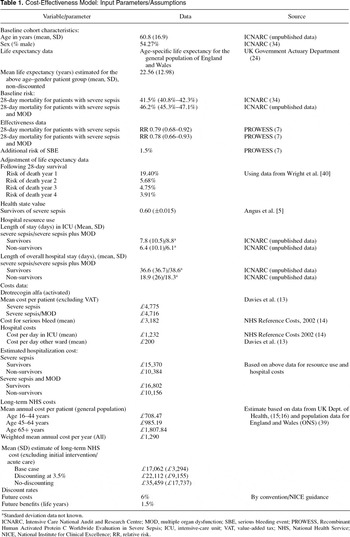
We report a cost-effectiveness analysis based on a decision-analytic model (a Markov-type model) comparing drotrecogin alfa (activated) plus conventional care versus conventional care alone, in a UK cohort of adult patients with severe sepsis. The development and structure of the cost-effectiveness model have been informed by a systematic review of the clinical- and cost-effectiveness literature. Detail of the systematic review methods has been reported elsewhere (26). The model estimates cost-effectiveness in adult patients with severe sepsis as defined using the inclusion criteria for the PROWESS study (7) and for those patients with severe sepsis and multiple organ failure. The perspective of the cost-effectiveness analysis is that of a third party payer, that is, the National Health Service (NHS) in England and Wales. Costs associated with patient care from the NHS and the personal social services are included in the analysis, together with all known patient benefits. Table 1 presents an overview of the main input parameters and assumptions in the cost-effectiveness analysis.

Effectiveness
The evidence on the effectiveness of drotrecogin alfa (activated) for the treatment of severe sepsis comes primarily from one large pivotal randomized controlled trial—the PROWESS study (7). Additional data are available from a non-blinded and non-comparative (open-label) extension of the PROWESS study (8;27) and a cumulative review on safety and efficacy (9). The PROWESS study demonstrated a statistically significant absolute reduction in 28-day all-cause mortality of 6.5 percent (95 percent confidence interval [CI], −10.7–2.2), equivalent to a relative risk of death of 0.79 (95 percent CI, 0.68–0.92), based on intention-to-treat analysis. Longer-term follow-up of PROWESS patients (2) indicates that the survival benefit is maintained to 90 days (p=.048); at 9 months, there is still a trend toward increased median survival, but this trend is no longer statistically significant (log rank p=.097).
The PROWESS study was not powered for subgroup analysis; however, prospective and non-prospective subgroup analyses have been reported across a wide range of subgroups, for example, by age, sex, site and type of infection, by co-morbid conditions, surgical status, presence of septic shock, use of vasopressor support, and disease severity (17;19). A priori subgroup analyses show a progressive reduction in the relative risk of death with increasing number of organ failures, from 0.92 (95 percent CI, 0.63–1.35) in patients with one organ failure at baseline to 0.60 (95 percent CI, 0.33–1.11) in those with five organ failures. Results presented by the number of organ dysfunctions are not statistically significant, but when mortality rates are combined for patients with two or more organ failures, the relative risk for all-cause mortality (28-days) is significantly lower in those treated with drotrecogin alfa (activated) compared with placebo (0.78, 95 percent CI, 0.66–0.92) (17).
Among findings from subgroup analyses, results presented according to APACHE II score have been widely discussed in the context of categories of disease severity (APACHE II quartiles). The original PROWESS study report indicated that results were consistent across APACHE II subgroups; however, subsequent post hoc subgroup analysis (6) reports that, for patients with an APACHE II score below 24 (1st and 2nd quartile), the mortality benefits were not statistically significant, with a combined relative risk of 0.99 (95 percent CI, 0.75–1.30). For those patients with an APACHE II score of 25 or greater, the relative risk is reported at 0.71 (95 percent CI, 0.59–0.85) (20). The FDA in an unprecedented move issued approval of drotrecogin alfa (activated) for use in patients at a high risk of death, suggesting that the APACHE II score be used to consider risk of death. Yet, the APACHE II scoring system is not designed to provide an indication of disease severity or outcome for individual patients, it only reflects outcomes for populations of patients (37).
PROWESS findings report a difference in serious bleeding events (SBE) between treatment and placebo groups, with 3.5 percent of those patients treated with drotrecogin alfa (activated) experiencing an SBE, and 2 percent of those in the conventional-care cohort experiencing an SBE (with the majority of events occurring during infusion). This difference (1.5 percent) was not statistically significant (p=.06); however, it is regarded as clinically meaningful. Excluding SBEs, there were no significant differences between drotrecogin alfa (activated) and placebo groups in the incidence of serious adverse events.
Patients
The baseline patient group in the cost-effectiveness model have been selected to reflect the potential in-practice patient group in the United Kingdom. The cohort is defined according to the PROWESS criteria for severe sepsis and the PROWESS inclusion criteria but does not reflect the PROWESS exclusion criteria. Data on this baseline population are from the Intensive Care National Audit and Research Centre (ICNARC), London (unpublished data, 2003). Applying the exclusion criteria as used in PROWESS would further refine this patient group, but it is not clear how criteria will be applied in practice; therefore, the patient group meeting the license indication have been used as a baseline in the model.
Model Effects/Outcomes
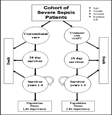
Presently, trial data are limited to findings on short-term all-cause mortality. To estimate the cost-effectiveness of treatment with drotrecogin alfa (activated), it is necessary to extrapolate from effectiveness data from the PROWESS trial (i.e., short-term 28-day survival data) to longer term outcomes reflecting life years and quality-adjusted life years (QALYs) gained. Given the similar hospital treatment and experiences of PROWESS patient groups, which is supported by intensive-care physicians, we consider the longer term implications of treatment for those patients surviving at 28-days. Using effectiveness data on relative risk of death from PROWESS, we model estimates of the long-term survival benefits from conventional care plus drotrecogin alfa (activated) versus conventional care alone. The model structure is described in Figure 1.

Flow diagram showing basic structure of the cost-effectiveness model.
Using data from ICNARC on baseline patient characteristics (e.g., age, gender) and life expectancy data (by age, gender) for the general population of England and Wales (24), we estimate the mean life expectancy for the patient group (22.56 years non-discounted; SD 12.98) as an input to the cost-effectiveness model (discounted where appropriate). To allow for the fact that the life expectancy for survivors of severe sepsis is not the same as that of the general population, the model structure transits 28-day survivors through a period of 4 years at an increased risk of death (compared with the general population), using data from Wright et al. (40). Wright and colleagues show a greater risk of death in critically ill intensive-care patients through years 1 to 4 after ICU discharge. Estimates of adjusted life expectancy show an adjustment factor of approximately 70 percent using this methodology (i.e., 28-day survivors in our model have a life expectancy that is 30 percent shorter than age–gender-matched general population statistics). In sensitivity analyses, we also take a different methodological approach to the estimation and adjustment of life expectancy for survivors of severe sepsis, applying findings from Quartin et al. (36) of an adjustment factor of 0.51 to all 28-day survivors, to show life expectancy of survivors of severe sepsis at 51 percent of that of the general population norm (age- and gender-matched).
We adjusted life expectancy for quality-of-life using health state values. A systematic search of the literature was undertaken, but no published studies were identified with data on health state values for survivors of severe sepsis; one abstract was identified (18). Given the limitations in the empirical literature, we applied the data reported by Angus et al. for the quality of life of a sample of patients with acute respiratory distress syndrome (at 12 months) to quality-adjusted life year gains (0.60±0.015) (5). Data from Drabinski et al. (18), reporting a health state value for severe sepsis at 0.69 (at 180 days), derived from the EuroQol health state classification instrument (EQ-5D), was applied in sensitivity analyses.
Applying the above methods, we modeled the experiences of a cohort of patients for both conventional care and conventional care plus drotrecogin alfa (activated) to consider the differences between the two treatment options. We use probabilistic modeling (Monte Carlo methods) to run simulations for our patient cohort model, capturing mean incremental effects from treatment with drotrecogin alfa (activated).
Costs
The additional costs associated with drotrecogin alfa (activated) in patients with severe sepsis comprise the acquisition cost of the drug, an additional cost associated with an increased risk of severe bleeding episodes, those hospitalization costs associated with additional survivors of severe sepsis, and where deemed appropriate, the long-term health-care costs associated with additional survivors of severe sepsis. The 28-day intervention cost comprises the acquisition cost for drotrecogin alfa (activated), and an allowance per patient for the cost for the additional risk of SBEs. We apply estimates of the mean cost for drotrecogin alfa (activated) in the PROWESS severe sepsis trial group (£4,775 excluding UK value-added tax [VAT]), and for PROWESS trial patients with two or more organ dysfunctions (£4,716 excluding VAT) (13). Cost data for SBEs have been taken from the NHS reference costs, produced by the Department of Health in the United Kingdom (14).
The cost for hospitalization (excluding drotrecogin alfa) comprises costs associated with days spent in intensive care and days spent in hospital in a non–intensive-care setting. We estimated costs using data on resource use (length of stay) from ICNARC (unpublished data, 2003), multiplied by ICU unit costs (cost per day) (14), and an estimate of non-ICU unit costs (cost per day) (13). Length-of-stay data from ICNARC, by survival status, are from patients with severe sepsis defined according to PROWESS criteria. We estimate the mean hospital cost for severe sepsis survivors to be £15,640 and the mean cost for non-survivors to be £10,384. For survivors and non-survivors of severe sepsis and multiple organ failure, we estimate mean hospital costs of £16,802 and £10,156, respectively. There is considerable uncertainty around both the cost per day and the number of days per hospital stay; therefore, we have introduced uncertainty surrounding hospital cost by applying a standard deviation of 20 percent to the point estimate and allowing it to vary in our probabilistic approach to the modeling of cost-effectiveness.
Where patients survive severe sepsis, they will continue to use NHS resources over their life time, and an estimate of these future health care costs has been included in the current analysis, to reflect an NHS (third party payer) perspective for the United Kingdom. Estimates are based on UK data on annual NHS expenditure on hospital and community health services (15), with hospital episode statistics by age group (16) and population data by age group, for England and Wales (39), used to attribute an annual cost per person, by age group. These estimates are crude and reflect what we regard as a conservative estimate for patients surviving an episode of severe sepsis, as the sparse literature on longer term survival after sepsis and quality of life associated with critically ill patients suggests that these patients are generally in worse health over time compared to the general population (1). The use of longer term health care costs in cost-effectiveness analysis is controversial, and there is no agreement among health economists on their inclusion in economic evaluations (23). Coughlin and Angus (12), in their review of methods for the economic evaluation of new therapies for critical illness, argue in favor of including longer term health care costs (including those unrelated to the therapy being evaluated) for additional survivors.
Discount rates of 6 percent and 1.5 percent have been applied to future costs and benefits, respectively. These rates are used by convention in economic evaluations in the United Kingdom and are in line with the (then) guidance from NICE. Other discount rates have been applied in sensitivity analyses (0 percent and 3.5 percent).
Cost-Effectiveness Analysis
Presentation of Results
Cost-effectiveness findings are presented for two patient groups: (i) UK patients with severe sepsis matching the PROWESS inclusion criteria, for simplicity referred to here as severe sepsis patients; and (ii) UK patients with severe sepsis matching the PROWESS inclusion criteria, who also have multiple organ dysfunction. We report findings on the mean incremental gain in life years (QALYs), and mean incremental cost per treated patient, based on a cohort analysis of 1,000 patients (trial) and a simulation of 1,000 trials. Probabilistic analysis is undertaken to incorporate uncertainty in the model input parameters, applying a distribution around mean input parameter values. This approach has been discussed in detail elsewhere (10) and is applied here to offer a measure of uncertainty around cost-effectiveness estimates. We estimate the incremental cost per life year gained and incremental cost per QALY. Using the mean incremental benefits and cost per trial, we estimate the net benefit associated with treatment and plot a cost-effectiveness acceptability curve (CEAC), showing the probability of a positive net benefit based on a range of threshold values for the willingness to pay per QALY. The net benefit statistic is an alternative decision rule for cost-effectiveness analysis; where if the net monetary benefit (in this instance) is greater than zero, the intervention is regarded as a cost-effective use of resources (i.e., you are getting value for money, by paying less than you would be willing to pay). We have undertaken sensitivity analysis to address methodological and structural uncertainty, parameter uncertainty, and heterogeneity in patient groups.
RESULTS
Base-Case Analyses
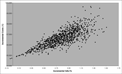
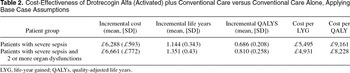
Cost-effectiveness results, applying base case assumptions, are presented in Table 2. For drotrecogin alfa (activated) plus conventional care versus conventional care alone, the cost per life year and cost per QALY for patients with severe sepsis are £5,495 and £9,161, respectively. For patients with severe sepsis and multiple organ dysfunction, the cost per life year and cost per QALY are £4,931 and £8,228. Figure 2, the cost-effectiveness plane, presents data on the model simulations for mean incremental cost and incremental affects.

Cost-effectiveness plane showing incremental costs and quality-adjusted life years (QALYs) for the cohort simulations of patients with severe sepsis and multiple organ dysfunction.

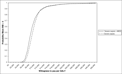
As cost-effectiveness ratios are not suited for the estimation of confidence intervals, we use the net monetary benefit approach to characterize the uncertainty surrounding the results of the cost-effectiveness analysis. Where the NHS is prepared to pay £20,000 per additional QALY, drotrecogin alfa (activated) is shown to be cost-effective in 98.7 percent of trials in patients with severe sepsis and multiple organ dysfunction, and 96.8 percent of trials in patients with severe sepsis. Figure 3 presents the CEAC, which plots the findings for net monetary benefit, for a range of values on the willingness to pay per QALY.

Cost-effectiveness acceptability curve for drotrecogin alfa (activated) in patients with severe sepsis alone and severe sepsis with multiple organ dysfunction (MOD). QALY, quality-adjusted life year.
Sensitivity Analysis
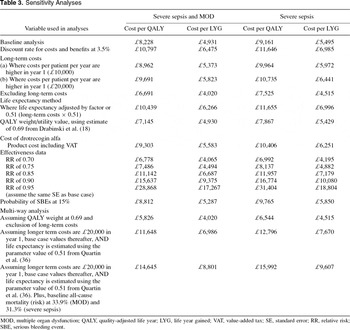
Findings from sensitivity analyses are reported in Table 3. Sensitivity analysis has been undertaken to consider the effect of uncertainty on the estimated cost-effectiveness of drotrecogin alfa (activated) across the two patient groups (i.e., severe sepsis, severe sepsis plus multiple organ failure).

Methodological and Structural Uncertainty
We report sensitivity analysis on the use of a different method for the adjustment of life expectancy for survivors of severe sepsis. Where life expectancy is adjusted using the parameter of 0.51, commonly cited from the study by Quartin et al. (36) (i.e., patients are attributed 51 percent of the life expectancy of age–gender-matched population norms), the cost per life year and cost per QALY increase over the base case findings, that is, cost per QALY increases from £8,228 to £10,439 in the patient group with severe sepsis and multiple organ failure. (In this sensitivity analysis, we also make an adjustment to the longer term patient costs calculated and used in the base case analysis, using a factor 0.51. We accept that this factor will underestimate the true long-term costs for the period of life expectancy in question, but we believe it is sufficiently accurate to help guide the present analysis). In sensitivity analyses to consider different methods for the estimation of longer term NHS costs, for additional survivors of severe sepsis, cost-effectiveness results are robust to the change in assumptions on longer term costs.
Where several changes are made to the assumptions in the model simultaneously, with base case assumptions altered to reflect (i) a follow-up NHS cost of £20,000 per survivor in the first year after the severe sepsis episode, (ii) life expectancy adjusted to 0.51 of the population norm (as in Quartin et al. [36]), and (iii) baseline risk of death altered to reflect the 28-day mortality rate in the PROWESS placebo group (i.e., 31.3 percent and 33.9 percent, for the two patient groups), the cost per QALY increases to £14,645 in patients with severe sepsis and multiple organ dysfunction (and £15,992 for patients with severe sepsis). In this multi-way sensitivity analysis, the net monetary benefit statistic indicates that, where the NHS is prepared to pay £20,000 per QALY, the intervention is cost-effective in 83.1 percent of trials (patients with severe sepsis and multiple organ dysfunction), and where the threshold is £30,000 per QALY, the intervention is cost-effective in 95.8 percent of trials.
Parameter Uncertainty
Applying a QALY weight of 0.69 per life year gained (base case is 0.60) results in a slightly lower cost per QALY. An increase in the expected rate of SBEs, using a probability of 15 percent (base case is 1.5 percent) increased the cost-effectiveness ratios slightly. An increase in the acquisition cost of drotrecogin alfa (activated) to reflect a price including VAT results in an increase in the cost-effectiveness estimates, for example, to £9,303 per QALY for patients with severe sepsis and multiple organ dysfunction. Where we assume a less-favorable effectiveness profile for drotrecogin alfa (activated), using a relative risk of 0.85, or 0.90, the cost per life year/QALY increases substantially, for example, from a base case of £8,288 to £11,142 and £15,637, respectively, per QALY in patients with severe sepsis and multiple organ failure.
DISCUSSION
Findings in this analysis indicate that drotrecogin alfa (activated) is a cost-effective use of resources in the UK NHS. The cost-effectiveness estimates presented are much lower than those in studies published for the United States (3;21) and Canada (30), but are reflective of studies published on the cost-effectiveness of drotrecogin alfa (activated) in a European setting (33;38), [plus other published European abstracts (13;28;29) ]. Frampton and Foster (22) have reported a comprehensive review of the cost-effectiveness literature, highlighting methodological differences between studies published in a North American and European context, that contributes to the observed differences between the cost-effectiveness estimates presented (e.g., licensed indication, perspective, cost inputs). Most of the European studies have been supported by the manufacturer and use similar methods (e.g., applying absolute risk data from PROWESS, excluding long-term costs). Importantly, this UK study is based on an independent assessment commissioned to inform the NICE technology appraisal process and is free from any manufacturer involvement. The analyses reported here have applied relative risk data to a patient group thought to reflect the UK treatment-eligible patient group, applying UK-specific cost estimates, and allowing for longer term NHS costs. There are limitations with the cost-effectiveness model due to a scarcity of published data on costs, life expectancy, and health state values for severe sepsis patients, and the absence of long-term follow-up data on morbidity and mortality in severe sepsis. Given these limitations, we have had to extrapolate from 28-day mortality data using several assumptions. However, sensitivity analysis has been undertaken to explore the impact of these parameter uncertainties and assumptions, with results robust within sensitivity analysis, only resembling the magnitude of the cost-effectiveness results reported in the North American studies when multi-way sensitivity analysis, with higher level (less-favorable) parameter inputs, has been undertaken.
Although presented as a cost-effective treatment strategy, due to the therapeutic cost of drotrecogin alfa (activated), it will have an impact on the UK prescribing budget at a national and an institutional level. At an estimated cost of £4,905 (excluding VAT) for a full course of treatment (in a 70-kg patient), we suggest that, in England and Wales, the overall annual drug acquisition cost for a treatment-eligible patient population could be as high as £86.9 million, excluding VAT (£97.1 million including VAT). This estimate is based on data from ICNARC, who report an estimated prevalence of severe sepsis (in the first 24 hours) at 27.1 percent of ICU admissions, with 83.6 percent of these patients having multiple organ dysfunction (and an annual estimate of 21,191 patients with severe sepsis, in the first 24 hours of intensive-care admission, in England and Wales) (34). Obviously, not all treatment-eligible patients will be prescribed drotrecogin alfa (activated), for example, due to contraindication where there is risk of serious bleeding, but given that many patients will have severe sepsis outside an ICU setting and after intensive care, and as we are uncertain how PROWESS inclusion and exclusion criteria will translate to an in-practice setting, this upper cost estimate offers an indication of the impact of the intervention on the NHS prescribing budget.
In summary, NICE in the United Kingdom recently has recommended the use of drotrecogin alfa (activated) in adult patients who have severe sepsis that has resulted in multiple organ failure (32), with analysis presented in this study forming part of the NICE technology appraisal process. The analysis presented here has demonstrated that the use of drotrecogin alfa (activated) in accordance with the license indication is a cost-effective treatment in UK clinical practice. Decision-makers are encouraged to consider the cost-effectiveness profile of drotrecogin alfa (activated) rather than its apparently high therapeutic cost.
CONTACT INFORMATION
Colin Green, MSc (c.green@soton.ac.uk), Principle Research Fellow, Southampton Health Technology Assessments Centre (SHTAC), Jacqueline Dinnes, MSc (j.dinnes@soton.ac.uk), Research Scientist in Evidence Synthesis, Wessex Institute for Health Research and Development, University of Southampton, Boldrewood, Southampton SO16 7PX, UK
Andrea L. Takeda, PhD (A.L.Takeda@soton.ac.uk), Research Fellow, Southampton Health Technology Assessments Centre (SHTAC), Wessex Institute for Health Research and Development, University of Southampton, Boldrewood, Southampton SO16 7PX, United Kingdom
Brian H. Cuthbertson, MD (b.h.cuthbertson@abdn.ac.uk) Clinical Senior Lecturer, Health Services Research Unit, Institute of Applied Health Sciences, University of Aberdeen, Polwarth Building, Foresterhill, Aberdeen AB25 2ZD, UK
This article is considered a work of the UK government and not subject to copyright within the United Kingdom.
This study was funded by the UK National Health Service (NHS) R&D Health Technology Assessment Programme and was commissioned on behalf of the National Institute for Health and Clinical Excellence (NICE). The views and opinions expressed therein are those of the authors and do not necessarily reflect those of the Department of Health. The authors thank colleagues Liz Payne, Debbie Hartwell, Carolyn Cave, and Jonathan Shepherd for their help with the systematic literature review. Thanks also to Dr. Tony Brady from ICNARC, London, for assistance with data on severe sepsis in the United Kingdom.