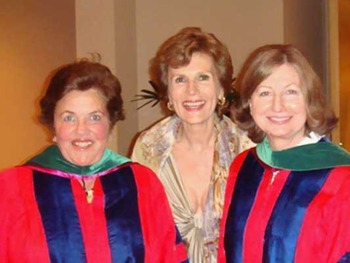
We have neither rules nor guidelines for admission to our Hall of Fame. Few would argue that a cardiologist, who has invented a new sub-speciality within our field, been awarded the Gold Medal of the European Society of Cardiology, and the Distinguished Service Award of the American College of Cardiology for services to cardiovascular medicine (Fig 1), does not deserve this honour. These are some of the achievements of Jane Somerville. All should recognise that it is mainly due to her continued pioneering efforts that there is an ever-increasing interest in the medical care, worldwide, for those who grow up with congenitally malformed hearts. The new speciality is now recognised by many on the basis of the acronym GUCH, her own invention for grown-ups with congenital cardiac disease. For those working primarily in paediatric cardiology, her battles to establish the first World Congress of Paediatric Cardiology in 1980 are as important, along with her enlistment of the help of John Kirklin, in 1988, during the first Paediatric Cardiac Surgical Congress in Bergamo, to combine the efforts of cardiologists and surgeons, and have but one congress for paediatric cardiology and paediatric cardiac surgery. During her career, she has witnessed most of the advances in the management of those born with malformed hearts, contributing herself to many of them. It is our privilege, therefore, to welcome Jane as the second woman to our Hall of Fame. She is worthy to take her place with Helen Taussig, mother of our speciality.Reference Neill and Clark1
Jane photographed with two of her previous fellows, Patrizia Presbitero in the middle, and Carole Warnes at the presentation of the Distinguished Service Award of the American College of Cardiology.

Childhood, education, and early career
Jane was born in Edwardes Square, Kensington, London, in January of 1933. There were no doctors in the family. Both parents were journalists, with father a theatre critic for The Tatler. Mother was small, intelligent, and blonde, who believed that girls must be educated. Quick-witted, her mother was expelled from several schools, yet was able to win a scholarship to Bedford College, London, where she read Anglo-Saxon and Mathematics. One day, during the First World War, she saw an advertisement in The Times of London, asking for volunteers to go to France to establish the Women’s Army behind the lines. Her application was accepted, and she became Sergeant of the Women’s barracks. Are the same genes in the daughter?
Jane was brought up in London with a strict Irish governess, as mother worked to keep the home in Park Square, now the site of the Princes Trust. Before the outbreak of the Second World War, in 1939, father had “departed”, encouraged to take this step by older step-brother Michael, a consultant veterinary surgeon for racehorses. The happy childhood was soon disturbed by the blitz of London, when all children were ordered from the capital. She found herself in a preparatory school for boys, moved from East Anglia, where invasion was expected, to the safer haven of Portmeirion, the Italianate village built by Clough Williams-Ellis in remote North Wales. For 3 years, she was one of six girls among 70 boys, playing as far as she considered possible within the rules established for boys. She comments that the proportion of girls to boys was appropriate not only for good education, but also for a good life! The experience moulded her lifelong attitudes to men, who she considered not much different from boys, needing gangs to be effective. It taught her to hold her own among large groups of men, not always to their comfort. “I was much better educated than most girls, learning to play cricket, and even being selected for the second eleven. I had an advantageous start to life, knowing how to survive the wiles and constant economies with the truth employed by my schoolmates”.
Jane returned to Edwardes Square in 1944, when London was under attack by Hitler’s new secret weapons, the V1s, or “Doodle-bugs”. Mother and the headmaster concurred that it was time for conventional education, so she was enrolled at Queen’s College in Harley Street, the first school to be established, in 1848, to give girls the higher education they needed to enter the professions. Over 160 years, it has produced the first British woman doctors, literary giants, explorers, and some real renegades. The classes were small, there were few rules, no prizes nor orders of merit in class, and good teaching of Science and Latin. Jane was also small, and was considered potentially disruptive by the principal in view of her earlier education. The principal could hardly have imagined that, 50 years later, Jane would become Chairman of the Governing Council, and help in opening a sister preparatory school in Portland Place. Spending holidays in the country with her aunt, a physiotherapist once married to a general practitioner, who took 16 years to qualify, she read medical books on the shelves, and at the age of 13 years resolved to study medicine.
It was while studying for the equivalent of the Higher School Certificate, then aged 16 years, that she met the dashing Walter Somerville in the house of the next-door neighbour. He had recently returned from the War, and was working as a postgraduate doctor in Hammersmith Hospital with Paul Wood and other luminaries. “The girl next door was crazy about him, but he seemed more interested in her mother’s cooking” says Jane. “He was devastatingly handsome and full of intense charm”. One day, after school, he took her to tea at the Orange Café in Wigmore Street, showing her the premises of the Royal Society of Medicine, and promising also to take her there one day. He tried to discourage her from going directly to medical school, arguing that she should first go to Oxbridge for a proper education. Mother was eager, nonetheless, that Jane should qualify, considering that dalliance would become inevitable with any prolonging of education. So, with recommendations from Walter, Jane applied for entry to Guy’s Hospital, where she was interviewed by the formidable one-eyed dean, Sir Rowan Boland, whose black monocle dropped unexpectedly to expose an empty orbital socket. He asked her how she would manage with so many men around. She assured him that, based on her experiences at school, this would create no problems. At 17 years, therefore, with the necessary distinctions, she was able to enter the second year of medical school at Guy’s Hospital, where no more than one-tenth of the students were female, all disapproved of by the woman-despising influential senior physician.
Medical student years passed quickly. It was during her student years that she heard Alfred Blalock who, as part of an exchange with Johns Hopkins, came to Guy’s. She listened enthralled to his description of the operation for blue babies, and decided to be a cardiac surgeon, electing in the last 3 months to join the firm of Sir Russell Brock. It was at this time she met her lifelong professional friend, Donald Ross, who was working as a research fellow in the dog laboratory to establish venovenous cooling for hypothermic open-heart surgery.
By 1954, she had qualified with the conjoint diploma awarded by the Royal Colleges, and then in 1955, she obtained the degrees of bachelor in medicine and surgery from the University of London. In an exceptional year of good and industrious students, she was not highly rated, and failed, on her initial application, to obtain a pre-registration position at Guy’s Hospital. She remembers tears and frustration shared with Walter, and decided the time had arrived to make more effort. To her surprise, and that of others, she won the Treasurer’s Gold Medal in clinical surgery, which carried with it an obligation for the desired pre-registration appointment at Guy’s Hospital. She found herself appointed house physician to the department of medicine, with the additional requirement to function as resident pathologist. This led to the first of several narrow escapes, which threatened to end her embryonic career. A surgical patient became deeply jaundiced because of wrong cross matching of the blood. Summoned to the lair of the consultant haematologist, known for his disdain for anything female, she was threatened with expulsion. Jane pointed out that it was a bad system that employed inexperienced doctors to perform tests with neither training in pathology, nor any support. No more was made of the incident, although she was told that the whole Consultant body had been informed at lunch of the iniquities of having women as junior staff at Guy’s Hospital.
After an adventurous 6 months, she expressed a wish to become the house surgeon to Sir Russell Brock. This created a problem, requiring a change in the status of the post, but Jane, strongly supported by the physicians for whom she had worked, was rewarded with her goal. On the first morning of her appointment, she made one of the many needed trips to the public mortuary. Deaths on the operating table were common in 1956, and she became entranced with cardiac pathology, meeting Donald Teare, the pathologist who subsequently made the classic description of hypertrophic cardiomyopathy on the basis of the heart from one of her patients.Reference Teare2 At one of the visits, she also encountered Keith Simpson, the eminent forensic pathologist, who reported her for ignorance and incompetence in not knowing the diagnosis. When interviewed by the Superintendent of Guy’s the next morning, she told him, “The stated diagnosis is often not present at operation and I don’t understand what’s going on in the hearts”. Brock agreed with her, and intervened on her behalf. By now she was thrilled with life, in love with congenitally malformed hearts, cardiac surgery, and Walter. Although nights off were few and far between, in 1956, after many clandestine meetings in the colonnade of Guy’s, he asked her to marry him. She requested from Brock permission to stay another 6 months and he, astonished and pleased, agreed to her request. She met all the visiting great cardiac surgeons of the day, witnessing all the advances and disasters of early cardiopulmonary bypass. There was no intensive care, nor any knowledge of it, and patients returned to the end of a long ward with Jane sleeping in the next bed! This incredible learning experience was helped by Ross, now the senior registrar, and she became preoccupied with the need for accurate diagnosis before surgery. To this day she believes passionately that the autopsy should be obligatory, and throughout her professional years, she always made personal efforts to obtain such examinations. She was concerned about what was told to the patients or relatives before the operation, as reality was so awful and could not be revealed, and was left to her, the house officer, who knew nothing. As she remarks, this unequivocally was uninformed consent!
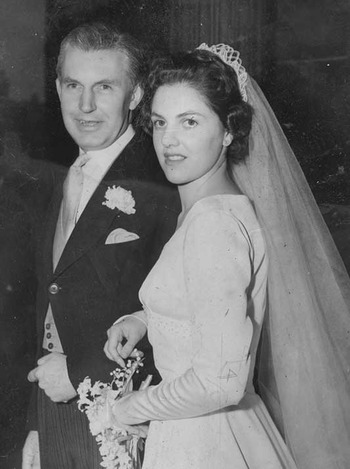
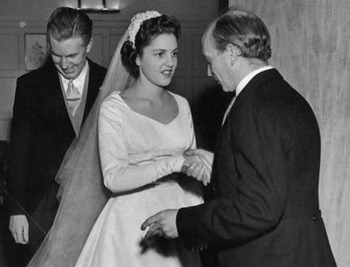
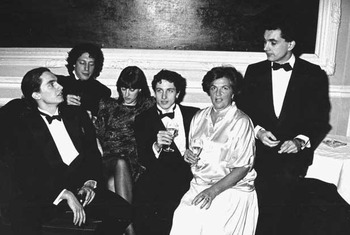
By now, the glamour of cardiac surgery was fading, as the hours were so long in the operating room, often with a return in the night, accompanied by many deaths. Most of all, nonetheless, she recognised that she was clumsy. She decided, therefore, to be a cardiologist specialising in patients with congenitally malformed hearts. The benefits of her training in cardiac surgery were immense, giving her advantages over her colleagues following a similar path, since she had already learnt many anatomical secrets from her experience with living pathology. Most of all, she had acquired an insight into the needs and habits of cardiac surgeons. She understood how surgeons reported their results of new procedures, which were “to be taken with a pinch of salt”, and she was able to become friends with the best, and the most handsome, over the next 50 years. “Perhaps”, she comments, “this made me too harsh and outspoken a critic”. She became the first female medical registrar at Guy’s Hospital, obtaining the needed membership of the Royal College of Physicians at her second attempt, and started to writing reports on patients with congenitally malformed hearts, beginning with the aorto-pulmonary windows.Reference Somerville3 Uninspired by her medical mentors, she depended on the sincere support and protection offered by Walter in her pursuit to be a consultant cardiologist. They were married in 1957, in Westminster Cathedral (Fig 2). Then, in 1959, she was appointed to the National Heart Hospital, considered to be the power house of cardiology. The fact that the senior physician was less than enthusiastic about women in medicine was counter balanced by the presence of the inspiring and magnetic Paul Wood (Fig 3).
Jane and Walter photographed on the day of their wedding.

Jane and Walter greeting Paul Wood at the reception for the wedding. Note the cigarette in the hand of Wood.

The National Heart Hospital
When she arrived at the National Heart Hospital, Jane already possessed several of the attributes required for success. As a surgeon manqué, she was ready for any challenges offered by adult cardiology. As already emphasised, besides a good knowledge of general medicine, she had already learnt cardiac pathology and anatomy. She was assigned as registrar to Evan Bedford, an outstanding physician, senior cardiologist, and shy of women. He had appointed Walter as consultant at the Middlesex Hospital in 1953, but neither Bedford, nor his vociferous wife, had approved of Walter’s marriage to one who certainly would not take care of the home or his increasing practice. Evan Bedford, witty and cantankerous, was also an outstanding clinician. He taught Jane that laboratory reports were not as important as his opinion, and that administrators were there to make his life easier. These became her lessons for life. The two got on well, much to the surprise of the other consultants. Under his guidance, she started her thesis for Doctor of Medicine on the subject of atrioventricular defects,Reference Somerville4 her own term, which took 5 years and two pregnancies to complete, and was awarded finally in 1965. Evan shared with her his remarkable medical library, now bequeathed to the Royal College of Physicians in London, taught her about Rokitansky, and supported her rise in the ranks of the junior staff. At this time, the cardiological juniors, increasing in numbers around the country, had promoted the activities of the junior cardiac club, started by Walter, along with Lawson McDonald, in 1950. Jane soon made her name in this environment, giving papers and challenging colleagues. The excitements of cardiac surgical innovations, and increasing knowledge of haemodynamics in the setting of congenitally malformed hearts, were a constant source of interest. Pacemakers, computers, and cardioversions had yet to be introduced. The deft Sir Thomas Holmes Sellors, surgeon at the Middlesex Hospital, and the first to perform pulmonary valvotomy, was closing holes within the oval fossa using hypothermia and occlusion of the circulation, providing 5–6 minutes of operating time. The diagnosis, therefore, had to be correct. At this time, of course, open-heart surgery using bypass was in its infancy. Surgery was not performed at the Heart Hospital; therefore physicians could refer to whoever and where they wanted. Wood referred to the Brompton Hospital, thus establishing long-term rivalry with Hammersmith. Jane, when possible, went to see the operations on all her patients.
Always drawn towards the star of cardiology, Jane applied successfully to become the junior of the two senior lecturers supporting Paul Wood in the new Institute of Cardiology. The senior was Malcolm Towers, who did his best to keep her out of trouble. Wood was remarkably skilled at interpreting cardiac physiology at the bedside, and his diagnoses were usually accurate. He was most challenged by patients with congenitally malformed hearts, predicting the need for drugs to treat the vasoconstriction of the pulmonary arterioles nearly 50 years before one became available. He had less interest in the precision of the anatomical detail, but was sometimes impressed by Jane’s unusual ideas. She absorbed his methods and skills, keeping meticulous records, just as he did, about patients with congenitally malformed hearts.
Throughout the 1960s, many adults and adolescents with congenitally malformed hearts came to the National Heart Hospital, referred in particular from Richard Bonham Carter, who worked at Great Ormond Street. Peter Kerley, famous Irish radiologist, was also influential, giving magical teaching on the chest X-ray, and arriving every Thursday afternoon with a tankard of champagne, from which he frequently sipped. Jane could not get excited about coronary arterial disease, but was aware that the real casualties of the congenital cardiac malformations were neonates and infants, patients she could not see in the Heart Hospital. This was possible at Great Ormond Street where, working along with Bonham Carter, was David Waterston, gentle and quiet, but producing successful results in the surgical treatment of infants and children. Jane, therefore, established links with those working at Great Ormond Street. Wood disapproved of these regular escapes and forbade them, as he considered that the paediatricians did not understand either cardiology or cardiac physiology. Jane, however, was determined to see and understand the congenital malformations where they began, and to witness these advances in cardiac surgery. She also missed Guy’s Hospital, so collaborated with Charles Baker, a cardiologist who preferred opera to work, to produce a paper on the results of the transventricular aortic valvotomy pioneered by Brock.Reference Baker and Somerville5 One warm evening in July of 1962, while Jane was at Guy’s, she was summoned by Paul Wood, who had been afflicted with severe chest pain while consulting in Wimpole Street. Fortunately, he could not find Jane, and his secretary, instead, found Walter. Walter arranged for Wood to be admitted to the Middlesex Hospital, where sadly he died 48 hours later, aged 56 years, having forbidden open cardiac resuscitation. Walter and his house physician observed helplessly as ventricular tachycardia degenerated to fibrillation. Jane rescued the recording of his last outpatient letters, which she played back to end at the inaugural first Paul Wood Lecture she gave 30 years later to the British Cardiac Society. In his funeral oration, Evan Bedford stated, “a light has gone out in Cardiology”. Indeed, it had, not only for the world, but for Jane.
Continuing to strive in the Institute of Cardiology, yet seemingly not advancing, she was told by the Dean “You can never be one of us”. By then, she had produced Kate in 1961, Lorne in 1963, and Rowan in 1966, named after her first mentor and protector, the one-eyed Dean at Guy’s Hospital. “Life was hectic and Walter, wonderful, providing a full-time nanny, and an amazing, wise, Irish housekeeper, full of wisdom and compassion to this day. It was she, and my mother, who made life possible”. Fortunately, all her children were healthy. In her opinion, a chronically sick child could kill the career of even the most determined professional woman.
Wood had appreciated that the Heart Hospital could not survive without cardiac surgery, and had tried to woo Brian Barrett Boyes from New Zealand. Brian deferred, so Donald Ross, already known for extraordinary surgical innovations at Guy’s Hospital, including the insertion of the first aortic homograft for calcific aortic stenosis, was appointed. His appointment initiated the golden years at the Heart Hospital, with so many new advances, both medical and surgical, including the insertion of the aortic homograft in the right ventricular outflow tract for the treatment of tetralogy of Fallot with pulmonary atresia in 1966,Reference Ross and Somerville6 the pulmonary autograft in 1968,Reference Gonzalez-Lavin, Geens, Somerville and Ross7 total placement of the aortic root with re-implantation of the coronary arteries, the initial arterial switch procedure attempted in the United Kingdom,Reference Ross, Rickards and Somerville8 and the first cardiac transplantation in this country. Throughout these heady times, Jane remained closely tied to the surgeons, being deeply involved in post-operative care. She became horrified by the results in conditions such as tetralogy with pulmonary atresia and systemic-to-pulmonary collateral arteries. This constellation had always intrigued her, since she recognised it was the lungs that were the challenge, and not the heart.Reference Somerville, Saravalli and Ross9 Her interest has been retained over her lifetime. She decided that some patients would live longer without surgical intervention, so she stopped referring patients for surgery until clinical need arose.
Her challenging views did not endear her to the cardiac surgeons, but led to invitations for international travel. The first big invitation came from Santiago, Chile, where she presented a teaching course over 2 weeks, accompanied by Walter. This began a romance and lifelong intrigue with Latin America.
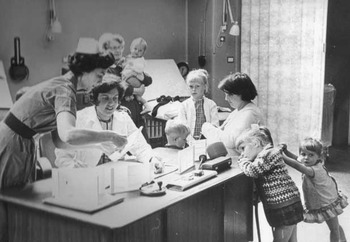
Professional life at this time was not easy and, combined with domestic life, not exactly bliss. Wood had been followed as Director of the Institute of Cardiology by several physicians, and then by Peter Harris, the first Professor of Cardiology, whose special interest was pulmonary hypertension, a subject about which Wood had already advanced thinking. The vision of Harris for building a prestigious academic unit did not include clinical cardiology, congenital cardiac malfunctions, nor the failures and successes of cardiac surgery. Tension developed, with Harris determining that, in 1968, Jane should leave at the end of her existing contract. Suddenly, however, the university gave tenure to clinical senior lecturers and Jane was saved. In 1972, she was appointed as consultant physician for congenital heart disease to the National Heart Hospital, an appointment then unique, and one that carried no age limits. It solved the problem of Peter Harris trying to get rid of her. For the first time, she had control of her own destiny, and the freedom to develop her own unit. She was told, however, that if she wanted an office, she must provide the money to pay for the area given to the four paediatric beds. With the help of one of Walter’s patients, she was given the money, and the plans were approved. The first adolescent cardiac ward opened in 1975 (Fig 4), including teaching rooms, a kitchen, and, most importantly, a roof garden, an essential feature of her working environment, as she loved the sun and plants. The ward was named for Paul Wood.
Jane, surrounded by young patients, in her new ward at the National Heart Hospital.

Development of worldwide interests
With her innovative lateral thinking, combined with her imagination and ability to charm, she had become in demand worldwide. She travelled when she could. “It was difficult to build a family and a practice”. During these trips, her concepts of the importance of time and changes in form and functionReference Somerville10 were aided by an outstanding Argentinian pathologist, Luis Becu. With the help of Becu, Anton Becker, and later Bob Anderson, she acquired the appropriate pathological material denied to her in the Heart Hospital. Becu had already described changes in the medial wall of the aorta and cardiac muscle dysplasia in congenital heart disease. Intrigued by his observations, Jane asked Donald Ross to biopsy the ascending aorta during surgery on left ventricular outflow tract lesions, sending the sections to Buenos Aires. They showed the same disorders, which she christened the ‘higgledy-piggledy’ arrangement. The concept of congenital cardiovascular disease influencing clinical outcomesReference Becu, Somerville and Gallo11 was but one of many emerging from her riotous imagination. She established in the late 1970s her strong friendship with Bob Freedom, with whom she shared her professional difficulties, and whose support for her never waned (Fig 5). She laughed with those who laughed at her, and smiled again when, after an interval of 25 years, Perloff and his colleagues rediscovered this aspect of aortic pathology in congenital cardiac disease.Reference Niwa, Perloff and Bhuta12 In 1977, she was invited as one of five cardiac physicians to attend the second Henry Ford Symposium, held in Detroit, and attended by all the established famous world cardiac surgeons. This was so exciting, everyone was there, and Adib Jatene brought them all to a standing ovation when he described his success with the first successful arterial switch procedure.
Jane photographed with the late Robert Freedom at his retirement home in Granville Ferry, Nova Scotia.

This has been her favourite conference. It was there that she was to meet another who would influence her thinking, namely Aldo Castaneda, recently appointed as chief paediatric cardiac surgeon to the Children’s Hospital in Boston. She had equally strong surgical support at the Heart Hospital through the 1970s and 1980s, Donald Ross was at his height, and he was joined by Magdi Yacoub. “Every day was challenging, stimulating, and wonderful”.
Students and Congresses
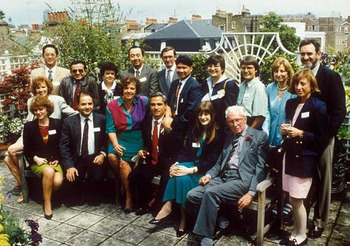
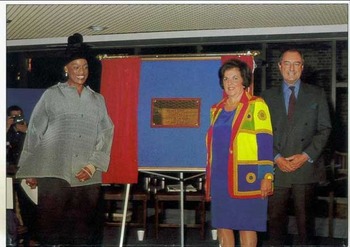
With the opening of her new unit in 1975, help came from Richard Bonham Carter, who referred many patients. The study of the congenitally malformed heart flourished because of successful surgery. From this arose the concept of need for continued care into and throughout adult life. She had always been concerned about the future of the claimed successes, and never believed in the so-called total correction. Her fame as a teacher spread, and many came to work with her from around the world. She did not disappoint them, hoping they would return to their countries to provide better medicine and care for those with congenitally malformed hearts. Including many Latinos, the group of fellows from around the world retained their togetherness, calling themselves the Unicorns (Fig 6). The name was suggested by Horacio Capelli, the organiser of the successful congress in Buenos Aires, in 2005, where Jane was feted as President. Capelli said the name came from one of Jane’s aphorisms, concerning the need for imagination when seeing new medicine. “I have never seen a unicorn, but if I did, I could recognise it”. This anecdote summarises well her direct approach to teaching. She insisted they learnt to say, “I do not know”, to admit, count and study mistakes, write down the diagnosis and not fear being wrong. She always retained her official links with Great Ormond Street, fulfilling consultant sessions, which continued when the Heart Hospital joined the Brompton Hospital. At Great Ormond Street, with Fergus MaCartney, she established a school of paediatric cardiology. As scientific secretary of the Association of European Paediatric Cardiologists, she worked to raise scientific standards, and better presentations. She battled for space for congenital heart disease in World and European Congresses of Cardiology. It was in 1975 that she had a Eureka moment in the bath. She decided that paediatric cardiology should have its own World Congress, and she would organise it! She designed the logo and notepaper, and was stunned when the concept was rejected by the International Federation of Cardiology. She decided to ignore these obstructions. Enlisting Fergus MaCartney as Scientific Secretary, and James Taylor as Treasurer, they met weekly after finishing seeing outpatients at Great Ormond Street. The First World Congress took place in London over the period June 1 through 6 in 1980, with Jesse Edwards as President, and Gerry Brom and Alexander Nadas as Vice-Presidents. It was a resounding success, setting the scene for future congresses around the world, leading to the present event just held in Cairns, Australia. All are a testament to the strength of her vision and tenacity. The final session in 1980 in London was devoted to the future. Jane spoke on “Triumphs and Disasters in Adolescents”. Thus began her new campaign for attention to the care of the long-term survivors whose abnormalities were far from total correction. Although she attracted support around the world, she encountered many difficulties at home in establishing the service. Her biggest professional sadness was the closure of the Heart Hospital, which was forced to join on site in 1989 with the Brompton Hospital, which successfully negotiated its Royal attachment. After nearly a year, she decided to re-establish her unit, and seek to develop services for grown-ups with congenitally malformed hearts in the United Kingdom. This new spirit was helped by having acquired an office with a space and building outside for a garden on the terrace of the old Chelsea Hospital for Women. At the same time, it was made clear that she must also find the money. This she did, and after a few years, the Somerville Unit was opened, in 1997, by her close friend Jessye Norman (Fig 7). The year before, the Grown-up Congenital Heart Patients Association had been launched by Jane, as she thought patients should share problems, learn from each other, and become a lobbying force. This has been a help in establishing a proper National Service for grown-ups with congenitally malformed hearts.
Jane, Walter, and Marc de Leval pictured with a gathering of the Unicorns on the roof terrace of Jane’s office at Royal Brompton Hospital. Jane is sitting on the lap of Horacio Capelli.

Jane pictured with her close friend, Jessye Norman, and Sir Philip Otton, at the opening of the Jane Somerville GUCH Unit at the Royal Brompton Hospital.

Another interest was to try and help the women in European cardiology. She was not keen, as she has never eschewed the cause of feminism, but felt that women often got a raw deal, and needed promotion in the European Society of Cardiology as in the American College of Cardiology. Sadly, this proved to be one of her projects that did not work.
Retirement and thereafter
Jane retired from the Royal Brompton in 1999, but was retained to help John Deanfield establish services for grown-ups with congenitally malformed hearts at the Middlesex Hospital, this unit now being sited in the Heart Hospital, where it all started. She still finds cardiology to be great fun, and her colleagues very supportive. Since retiring, Jane has also continued to travel widely, helping establish services for grown-ups with congenitally malformed hearts in unusual places, chairing the Council of Queen’s College, maintaining a monthly clinic in Malta, and enjoying London and her family.
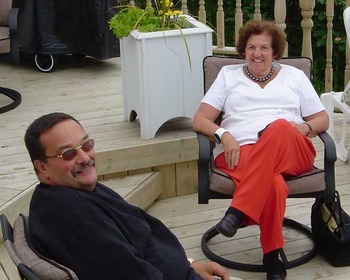
Jane recognises that she has been blessed. She had a great start to life, was guided by a remarkable, intelligent mother, received a good education, and made a fortunate marriage. She was constantly supported by Walter, along with Maggie Conlon, her housekeeper, who really brought up the children. She had the ability and opportunity to do what she wanted, had adequate looks, good health, a great sense of humour, and an appetite for life, wine, food and fun, and freedom. She has enjoyed them all. She is thrilled with her four handsome, healthy, intelligent children (Fig 8), and four amusing grandchildren, travels the world, and retains amazing friendships. She believes she has achieved something despite the battles and silly feuds. Does she have some regrets? “Oh yes”, as she says, “Walter was right about so much”. She could, and should, have been more prudent, more tolerant, less excitable, and not always have chosen to take on the boys. “After all, it’s the mothers who make the boys so bad”!! But what more can she personally have asked for? “It has been happy and wonderful, and I don’t deserve so much. It is only a pity that it cannot last forever”.
Jane pictured with her sons, Lorne, Rowan, and Crispin, and her daughter Kate along with her son-in-law.

A recommended selection of further reading is provided.Reference Somerville13–Reference Burn, Brennan and Little41