The field of auxological epidemiology has long acknowledged growth during childhood as a sensitive indicator of the environment, in recognition of the small size among children and adults alike living in poor circumstances.Reference Tanner 1 Appreciation of maternal health and well-being as an environmental exposure, and the identification of these effects on prenatal growth, has been more nuanced. Maternally derived influences on fetal development ranging from genetics to growth-regulating substancesReference Hammond 2 were postulated in early investigations. Animal studies documented the importance of maternal environment over genetics in classic cross-breeding experiments (e.g., horsesReference Walton and Hammond 3 ), identifying restrictive effects on offspring size from maternal size and litter size (e.g., rabbitsReference Hammond 2 , Reference Gregory 4 ) and limitations in intrauterine blood supply (e.g., miceReference McLaren and Michie 5 ). Observations among humans recognized that smaller infants are born to smaller mothers with influences from interactions between maternal age, infant birth order and placental size on fetal growth rate,Reference Cawley, McKeown and Record 6 – Reference McKeown and Record 10 as well as parental economic circumstances, which exert effects on both birth size and the likelihood of death during infancy.Reference Gibson and McKeown 11 , Reference Lowe and McKeown 12 The specific relationships between infant size and placental size and functionReference McKeown and Record 10 , Reference Gruenwald 13 contributed to the formalization of the maternal constraint conceptReference Ounsted 14 , Reference Ounsted and Ounsted 15 and supported an emerging clinical focus on fetal growth retardationReference Wigglesworth 16 as the field of neonatology emerged in the 1960s.Reference Philip 17
An appreciation for poor growth as a predictor of adult morbidity and mortality has been more recent. Observations of high mortality from cardiovascular disease in later life among people born into regions characterized by high infant mortality rates led to speculations that poor infant,Reference Barker and Osmond 18 , Reference Buck and Simpson 19 childhood and adolescent environmentsReference Forsdahl 20 might be causal. One interpretation of this association is that a cumulative biological effect of poor circumstances across the lifespan leads to higher mortalityReference Ben-Shlomo and Smith 21 through allostatic load.Reference McEwen and Stellar 22 Another viewpoint on these correlations is that high infant mortality results from reduced fetal growth and lower birthweight neonates who have increased susceptibilities as a product of generations of poorly nourished mothers.Reference Barker and Osmond 23 In this scenario, it is not neonatal smallness itself that underlies the link, but how the infant became small that generates both early survival challenge and later health risk. Small infants may be constitutionally different, in ways that increase their susceptibility to cardiac stress across the lifespan. In lieu of general allostatic load stress, the mortality correlations were postulated to reflect specific patterns of altered prenatal organ growth, subsequently tried by the rapid postnatal growth in length and weight following small birth sizeReference Cawley, McKeown and Record 24 – Reference Ounsted, Cockburn, Moar and Redman 27 and exacerbated in the face of potentially abundant resources thereafter.Reference Forsdahl 20 , Reference Eriksson, Forsén and Tuomilehto 28 – Reference Forsén, Eriksson and Tuomilehto 30 Gennser et al.Reference Gennser, Rymark and Isbert 31 postulated a specific mechanistic link to explain increased diastolic blood pressure among young adults who had been born small for gestational age (SGA). They suggested that increased fetal circulatory pressure to sustain placental perfusion during vulnerable stages of fetal development predisposes individuals to higher blood pressure in later life. This work brought a new level of mechanistic specificity to studies on the developmental origins of health and disease by 1988, subsequently extended by Barker et al.
Investigations focusing on relationships between specific diseases and causal pathways set down during critical growth periods led to the clarification that (1) not all diseases share the same developmental causal pathways, (2) not all organs are equally susceptible across all time frames and (3) it is imperative to outline biological plausibility between growing body dimensions and disease emergence.Reference Barker, Osmond and Law 32 Discriminating between pre- and postnatal timing of environmental effects provides a critical lens for understanding both the deleterious consequences of poor maternal nutrition during pregnancy and potential protective effects provided by a well-nourished maternal past. For example, at a time of destitution and strict rationing in London, neonatal morbidity and mortality rates were low in the face of high infant mortality. David Barker proposed that this reflected the protective effects for fetal growth from the previously well-nourished bodies of immigrant women.Reference Barker, Osmond and Law 32 , Reference Barker, Osmond and Pannett 33 This work emphasized the concept of ‘fetal programming’ as not an inherently pathological process, but one reflecting maternal conditions before and during pregnancy, both of which have long-term implications for offspring health. This truth – that maternal conditions always influence infant health – is sometimes overlooked. The inevitability of this relationship reflects the biology of fetal growth.
Growth semantics
The developmental origins of health and disease framework hinges on a link between early growth and later health risk. A plethora of studies have both supported and claimed to invalidate this relationship. Conflicting findings reflect poor specificity and sensitivity regarding how growth is defined, which diseases are chosen, and the plausibility of the biological linkage between them.
Measurement
Anthropometry is the traditional method of documenting growth with different measurements developed to assess distinct body dimensions. These variables were defined with the objective of capturing the disparate elements of the bony skeleton, the cranium and the soft tissues that comprise the human body.Reference Cameron 34 The various body dimensions (e.g., limb lengths and breadths; head, torso and limb circumferences; total body length and weight) are not interchangeable variables for describing ‘growth.’ Different body parts grow at different temposReference Tanner 35 and specify interrelated, but distinctive systems within different biological contexts.Reference Stevens, McClain and Truesdale 36 , Reference Lampl and Mummert 37 Length, for example, reflects progress among long bone and skeletal dimensions, while weight represents energetic status above and beyond its role as a summary of both skeletal and soft tissue. These aspects of sensitivity and specificity among body dimensions are fundamental considerations for research seeking predictions or outcomes deriving from ‘growth’ parameters.
Size v. growth
A survey of the first 100 published articles cataloged by PubMed under the tag ‘human developmental origins’ reveals that in over 50% of these articles, the analytic variable being utilized to calibrate ‘growth’ is birthweight or, at later ages, body weight. While birthweight summarizes the outcome of fetal growth, it is nonspecific and cannot by itself differentiate the long and lean baby from the short and plump. It reveals nothing about developmental timing, body composition or organ functionality – the actual mechanistic linkages between size and health. Weight at later ages is an even less specific growth proxy, influenced by nutritional, metabolic and overall energetic status. Other variables commonly employed as ‘growth’ proxies in the published literature include length/height, prevalent in ~25% of the articles, and an assortment of parameters such as head, waist, chest or arm circumferences and various ratios that together comprise all but ~5% of the referenced studies. This small remaining percentage employed actual growth variables – that is, change in size. By definition, growth is the change in size experienced by an individual across time and cannot be assessed by static measurements of size.Reference Tanner 35 Investigations of how change in size, such as length accrual, is related to subsequent health are far less common in the literature.
The importance of these fundamental distinctions is exemplified by findings from the Helsinki Birth Cohort, in which death from coronary heart disease in adulthood was predicted by postnatal growth rate conditioned on size at birth, with differences that were sex-dependent (ponderal index among men and birth length among women).Reference Eriksson, Forsén and Tuomilehto 28 , Reference Forsén, Eriksson, Tuomilehto, Osmond and Barker 38 It was the dynamics of change in size across time, or actual growth, not static size at one time that captured the health risk, conditioned on the outcome of a fetal experience that was inferred by different dimensions among males and females.
Because of the unique relationships between body parameters and functional physiologies, a lack of correlation between some size parameters and certain diseases across populations does not invalidate the fundamental proposition that early growth patterns predispose to later health risks. There is no scientific basis for the expectation that any and all measurements of body size will map onto causal pathways for any and all diseases. As each body parameter has different times of rapid growth, the periods during which they are most vulnerable to environmental perturbations vary.
Growth v. development
Understanding the developmental pathway through which environmental influences can alter growth contributing to potentially life-long health consequencesReference Godfrey and Barker 39 requires an appreciation of what has been proposed as criticalReference Widdowson and McCance 40 or sensitiveReference Lorenz 41 periods. While the evidence that an individual’s characteristics may be most strongly influenced by a given event at a certain stage of development is clear for both behavioral and biological outcomes,Reference Bornstein 42 the plasticity or flexibility of these effects is debated. Whether these effects occur through imprinting,Reference Spalding 43 developmental conditioning,Reference Hanson and Gluckman 44 programmingReference Dorner 45 or biological embedding,Reference Hertzman 46 and are rigidly deterministic or have a wide bandwidth of responsivity, understanding how growth influences later health can provide gateways to health improvement.
While many of the details for how these processes are organized through growth and development remain to be clarified, acknowledging that growth is expressed across a developmental program is fundamental. The growth of organs is time-sensitive. Thus, choosing a ‘growth’ parameter as a predictor of later disease outcome represents a hypothesis about which functional anatomical/physiological parameters link a developmental period to later health consequences. Not all predictor variables (e.g., birthweight, length or the trajectory of fat mass accrual over time) have a meaningful physiological relationship to all outcomes of interest (e.g., cardiovascular disease or osteoporosis). Empirical tests of specific hypotheses need to be grounded in biological reality. Without this, it is not difficult to falsify a general proposition that ‘growth is linked to later disease.’
Derived growth proxies
Lack of specificity in growth parameter choice is a study design issue that is further conflated by the use of derived parameters.
Ratios
Ratios, for example, are notoriously poor variables for assessing size, much less growth. Despite its prolific use,Reference Koplan, Liverman and Kraak 47 body mass index (BMI), for instance, has been found to have high specificity but low sensitivity as a predictor of obesity.Reference Bedogni, Iughetti and Ferrari 48 This is because it provides no information on the distribution and amount of adiposity,Reference Lee, Wu and Fried 49 the actual physiological target of interest and is highly sensitive to developmental stage.Reference Prentice and Viner 50 In general, the use of ratios like BMI confounds meaning between the variables that appear in the numerator and denominator, contributing to a general lack of specificity as to what is being assessed.
Clinical categories
An extension and further complication in many studies has been the adoption of clinical categories as proxies for growth. The classification of SGA infants, characterized as birthweight below the 10th percentile of what is appropriate for gestational age, 51 is a commonly used proxy for restricted fetal growth. Problematically, SGA is a categorical variable that does not capture the true biological variability inherent in birthweight as a continuous variable. While seeking to discriminate infants subjected to a pathological process retarding fetal growth, such as impaired prenatal nutrition,Reference Butler and Bonham 52 SGA does not achieve this with sensitivity and specificity.Reference Altman and Hytten 53 By definition, SGA confounds individuals who are constitutionally small, and are actually the smallest 10% of individuals, with those who have been restricted during prenatal development. The simple binary attribution imposed by this definition leaves a wide bandwidth of potential for error in terms of sensitivity and specificity.
Discussions of ‘fetal growth’ effects that use SGA as a proxy often do not distinguish the nature of the evidence employed, referring to the discrete clinical dichotomy with the same conceptual frame as if the analyses had been conducted on a range of continuous birthweight measurements.Reference Widdowson and McCance 40 Investigations that aim to identify health risks in later life due to early growth effects are best served with continuous data from individuals, as individuals are the units of growth. The loss of birthweight due to fetal growth perturbations need not reach the level of clinical SGA to result in health effects. An infant may have experienced growth perturbation and be delivered at the 11th percentile instead of the 80th, carrying health risks that would be lost in a categorical analysis. Limiting inquiry to the discrete case of infants above and below the 10th percentile of birthweight for gestational age, like categorical analyses in general, makes it more difficult to detect true effects.Reference Royston, Altman and Sauerbrie 54 It also focuses attention on reduced size as the primary marker of insult, ignoring the fact that influences acting to restrict fetal growth perturb all fetuses, not just small ones.Reference Wilcox 55 There is no doubt that this analytic approach has contributed to debates in the literature about the validity of fetal growth restriction as a predictor of several later health outcomes.Reference Kramer, Martin and Bogdanovich 56 , Reference Dearden and Ozanne 57
SGA has been further dichotomized to represent either asymmetric or symmetric intrauterine growth restriction (IUGR),Reference Campbell and Thoms 58 reflecting an appreciation for variabilities in critical period timing during early development. Defined by the ratio of head circumference to abdominal circumference (HC/AC), asymmetric growth restriction encompasses infants whose HC/AC ratio is above the 95th percentile, with a larger head relative to abdomen, whereas symmetric growth restriction captures those with an HC/AC ratio below the 95th percentile. This reflects a model of fetal growth by which symmetric growth restriction is thought to represent a global insult early in pregnancy,Reference Campbell and Thoms 58 while asymmetric growth restriction results from complications later in pregnancy.Reference Nardozza, Júnior and Barbosa 59
Such a simple categorical approach to estimate timing of insults incurred in utero would seem useful. The simplicity, however, presents a problem. The combination of statistical modeling and arbitrarily defined cut-points (i.e., the choice of the 95th percentile rather than the 90th percentile) results in only two categorical possibilities. This presents a situation similar to a ‘Simpson’s Paradox’ problem whereby the choice of grouping, or lack of grouping, strengthens or weakens associations between factors.Reference Weinberg 60 Evidence of limitations with this approach includes the conflicting estimates in the literature for the prevalence of symmetric v. asymmetric IUGR, which vary almost four-fold, and the subsequent risk in using them to make causal assumptions.Reference Lin and Santolaya-Forgas 61 , Reference Dashe, McIntire, Lucas and Leveno 62 Contiguous with this discrepancy is debate over whether asymmetric or symmetric IUGR is associated with worse perinatal outcomes. For example, Lin et al.Reference Lin, Su and River 63 reported that symmetric IUGR is associated with more preterm deliveries, a higher neonatal morbidity rate and smaller placentas. Dashe et al.,Reference Dashe, McIntire, Lucas and Leveno 62 in contrast, reported that asymmetric IUGR infants are more likely to have major congenital anomalies. Thus, sampling characteristics significantly influence outcomes.
Categorical variables designed to assist clinical decision-making do not capture the spectrum of variability in growth experienced at the level of the individual fetus. The subtle nuances of time-specific perturbations in fetal growth that may be related to functional anatomical bases for later disease are richerReference Lampl, Kusanovic and Erez 64 , Reference Lampl, Kusanovic and Erez 65 than bimodal outcome variables can provide.
How growth actually occurs and the questionable utility of growth patterns as predictors
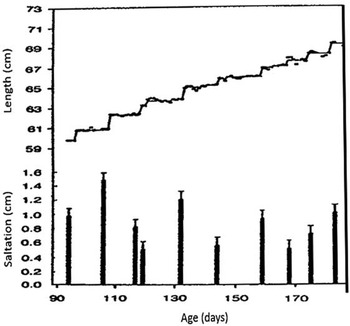
James Tanner wrote that, “children, no less than rockets, have their trajectories governed by control systems of their genetic constitution and powered by energy absorbed from the environment.”Reference Tanner 35 The notion that individuals have a specific path to follow in order to reach their ‘growth potential’ is long held and reflects a belief in a general biological phenomenon of canalization underpinning growth and maturation.Reference Prader, Tanner and von Harnack 66 , Reference Prader 67 The specific path of optimal growth and, hence, the pace at which canalization proceeds, is generally assumed to mirror the curves on classic growth charts. These charts are designed by calculating statistical distributions of size at each age and fitting a polynomial function through similar percentiles across sequential ages.Reference Borghi, de Onis and Garza 68 , Reference Lampl 69 This construction portrays growth as a continuous biological process of day-to-day accrual according to a constantly ticking clock. If individuals do not grow by such a biological process, their data will not appear to be in line with the proposed ‘optimal growth’ pattern. This is exactly what happens: the model of optimal growth portrayed on a growth chart is problematic as children do not, in fact, grow like the statistical models underlying the charts. Instead, they grow by saltation and stasis – accruing body length and head circumference, for example, discontinuously and only episodically.Reference Lampl, Veldhuis and Johnson 70 – Reference Caino, Kelmansky, Adamo and Lejarraga 73 Figure 1 illustrates this process with data from a male infant measured daily between 3 and 6 months of age, during which time he grew on only 10 days, accruing between 0.5 and 1.4 cm/length saltation. According to the WHO growth standards, these unique growth events took him from the 30th percentile in relation to boys at 3 months of age to the 85th percentile by 6 months of age. 76 Individuals vary in both the amount of growth that occurs at a saltation and the timing of each event. Animal models support saltatory growth at the cellular level but the mechanisms controlling how much, and when, individuals grow by saltation and stasis are not yet known.Reference Noonan, Farnum and Leiferman 77 , Reference Goldsmith, Fisher, Waterman and Johnson 78 Insights into how growth may be involved in subsequent health and disease at the individual level are not likely to emerge by reference to how children compare to one another on a statistical distribution of size for age, or their relative positions on a growth chart. Mechanistic biological insights are more likely to emerge from the study of how the organism utilizes resources to build a body during discrete organizational times devoted to growth saltations.
Normal growth is saltatory. Between 3 and 6 months of age, the total growth in body length for one male infant measured daily (top panel) occurred on only 10 days by saltatory increments ranging in magnitude from 0.5 to 1.4 cm separated by durations of 2–18 days during which no growth occurred, or stasis intervals (bottom panel). The data illustrated here were modeled by the saltation and stasis growth algorithmReference Johnson and Lampl 74 and are statistically better fit by the saltation and stasis model than alternative models of growth, ranging from the infant component of the Infant-Child-Puberty (ICP) model, continuous growth between saltations or series of continuous ‘mini growth spurt’ functions.Reference Lampl 75 Saltation amplitudes and stasis durations are variable within and between children.Reference Lampl, Veldhuis and Johnson 70

Percentile-crossing
As a result of discontinuous growth biology, many individuals’ serial size data exhibit plateaus and jumps that vacillate across percentile lines when plotted on growth charts.Reference Lampl and Thompson 79 More than 60% of infants in the 1st year of life display these types of so-called percentile-crossing patterns, often involving several percentiles.Reference Mei, Grummer-Strawn, Thompson and Dietz 80 Such patterns reflect the wide bandwidth in individual growth patterns due to the individuality in amplitude and timing of growth saltations. Percentile-crossing itself is not a robust proxy for pathognomic growth patterns indicative of either present perturbation or future health risks and should not be assumed to be useful predictors.Reference Taveras, Rifas-Shiman and Sherry 81
Catch-up v. compensatory growth
Clinical studies among individuals with endocrine disorders, metabolic disorders, malnutrition and prenatal growth retardation identified extended plateaus on growth charts followed by a characteristic rebound in growth after alleviation of the causal factors for the growth arrest.Reference Prader, Tanner and von Harnack 66 , Reference Prader 67 This type of relative acceleration was termed ‘catch-up growth.’ While often theorized to be the result of canalization re-taking command, the mechanisms responsible remain to be delineated. This ‘righting’ function is often confused with ‘compensatory growth.’ Initially used by zoologists to suggest the compensation of growth in the remaining organ of a pair in which one was removed,Reference Bohman 82 compensatory growth is conceptually distinct from catch-up growth. The term ‘compensatory growth’ describes the type of growth that occurs after the loss of an actual mass of tissue, whereas catch-up growth ‘compensates’ for the loss of potential tissue.Reference Williams 83 The two concepts reflect different types of perturbation and recovery. These may or may not share mechanistic pathways and may be associated with different features in terms of the quality of tissue, altered metabolic characteristics and downstream consequences. Catch-up growth is often assumed to be synonymous with compensatory growth, as in the conclusion that, “After a period of undernutrition and reduced growth children may undergo accelerated or so called catch-up or compensatory growth.”Reference Forsén, Osmond, Eriksson and Barker 84 Clarifying the physiological distinction narrows the lens for identifying mechanisms by which altered growth underlies later disease.
Understanding how the environment writes a script through growth for later health requires further clarification. As the specifics of the pathway from fetal growth to later disease remain to be elucidated, understanding the biology by which postnatal ‘catching-up’ may be involved is important. Speculations involving considerations of short-term benefits and long-term costs in the form of increased chronic disease risk remain in need of evidence.
Growth as an adaptive strategy linking early survival and later disease
Numerous interpretive schemas have emerged from the concept that health for a lifetime begins before birth, with a memory laid down through growth. Explanatory frames with their mechanistic postulates have been wide ranging. A common theme among several address growth as a broad phenomenon through which evolution acts on fitness. Hales and BarkerReference Hales and Barker 85 suggested the concept of a thrifty phenotype resulting from selection for metabolic efficiency in challenging environments. In this construct, natural selection works on phenotypes for resourceful growth. When environments are less challenging, this phenotypic selection results in chronic disease susceptibilities among the bearers of the corresponding genotypes. This type of model posits developmental origins of disease as an outcome of a mismatch arising from selection on growth strategies.Reference Raubenheimer, Simpson and Tait 86
Other views envision growth in line with life history theory where trade-offs are made in the interest of future fitness advantages, as for example, the action of predictive adaptive responses.Reference Gluckman, Hanson and Spencer 87 Here, the centrality of growth as a process is less evident. Similarly, the life course health development framework has embraced intrauterine and postnatal experiences, represented in body size, as contributory to long-term well-being.Reference Halfon and Hochstein 88
More precision regarding the causal pathways involving growth has come from experimental work. Evidence for early growth trajectories determined by environmental exposures to the ovaReference Fleming, Velazquez and Eckert 89 and divergent paths associated with ‘building block’ shifts under normal and challenging conditions in the heartReference Thornburg and Challis 90 exemplify these approaches. Likewise, pathways that are upstream of growth manifestations are also being described to help focus more precisely on the roles played directly by growth v. other more fundamental pathways,Reference Phillips and Barker 91 , Reference Danielson, McMillen, Dyer and Morrison 92 such as the autonomic nervous system, that may mediate challenges during fetal development with health repercussions later in life.
In general, this mechanistic work emphasizes the importance of variability as the source of adaptation. The flexibility by which individuals survive challenging environments and grow to adult form is wide and reflects a fundamental panoply of genetics, enriched by epigenetic choreographyReference Jirtle 93 in time- and place-specific circumstances. There is not one fetal adaptive strategy. There is an inherent diversity of biological possibilities by which any fetus traverses the journey from single egg to whole organism.
Fetal growth variability
Decades of research on human growth variability document the reality of flexibility in the human growth process across age and developmental stage.Reference Eveleth and Tanner 94 These data testify to the importance of diversity in the paths by which the process of growth occurs. Variability itself is the adaptive strategy by which peoples living in different times and places have navigated size increases and maturational attainment across age. There is no single ‘right way’ to grow and the known variations are not merely an array of pathological paths taken by peoples who lack the best environments. Ethnic differences in fetal growth timing and development are well documentedReference Kierans, Joseph and Luo 95 , Reference Lampl, Lee and Koo 96 and growth unfolds with individuality even between identical twins. Some of this diversity reflects the well-documented importance of intergenerational effects.Reference Painter, Osmond and Gluckman 97
The inherent documented variability in growthReference Eveleth and Tanner 94 is in contrast to a conceptual trend prevalent in clinical and public health-motivated constructions of fetal growth presently underway. Several approaches assume that all individuals grow similarly and a generic unfolding of fetal growth rates can be predicted if maternal conditions, for example, are known. This belief underlies the predictions of both proposed customized fetal growth curvesReference Gardosi 98 and the more recently released INTERGROWTH-21st International Fetal Growth Standards.Reference Papageorghiou, Ohuma and Altman 99 These approaches assume that maternal influences have prenatal effects that can be either accounted for by regression coefficients, as in the former, or controlled for by selecting samples from ‘optimal conditions’ as in the latter. Both are problematic approaches in assuming a similarity across individuals in the effects of maternal size; the latter goes so far as to exclude fetal sex 100 as a factor for consideration. Data evidencing the reality of sex- and gestational time-specific interactions with the mother’s body size on timing in fetal growth dimensionsReference Lampl, Gotsch and Kusanovic 101 counter the appropriateness of these types of simple predictions.
The notion that there is one optimal biological path of fetal growth applicable to all humans of both fetal sexes, as proposed by the INTERGROWTH-21st Standards,Reference Papageorghiou, Ohuma and Altman 99 is contrary to the acknowledged variability in the tempo of growth as an adaptive strategy that is the hallmark of much of David Barker’s work. The methodological approach of the INTERGROWTH-21st Fetal Ultrasound Standards has not been without critique.Reference Steer 102 – Reference Albert and Grantz 104 The rigid maternal inclusion criteria are unrepresentative of the vast known variation in female body size and proportionsReference Eveleth and Tanner 94 and it has been suggested that the criterion for creating a pooled sample was too liberal, increasing the risk of over- and under-diagnosis of poor growth among select populations. It is unclear what interventions should be undertaken, for example, among the small infants of the relatively smaller populations.Reference Yajnik, Fall and Coyaji 105 , Reference Johnson, Vazir and Renandez-Rao 106 Population differences in adult size and morphology reach beyond present nutritional and socio-economic circumstances to include outcomes that reflect long-term adaptations to local environments associated with distinctive growth patterns linked to genetically unique physiologies.Reference Giussani, Phillips, Anstee and Barker 107 , Reference Bigham and Lee 108 The notion that optimal maternal conditions can be defined simply in terms of nutrition, education and socio-economic status in a manner to ‘control’ their effects across broad geographical and historically diverse socio-cultural settings, and thereby set a standard by which prenatal growth occurs, is counter to a broad range of evidence. As more is learned about fetal growth biology, these are important issues to be further considered.
Developmental origins and the rise of fetology
The concept that health and disease risk are linked in early development is a line of thinking that has captivated interest in learning more about the process of fetal growth. A first wave of expanding scientific attention to human fetal growth corresponded to clinical advancements in ultrasound technology, preterm care and the medicalization of neonatal and infant size in the 1960s and 1970s.Reference Philip 17 Since 1986 when David Barker first published his hypothesis of a relationship between adult mortality and past infant mortalityReference Barker and Osmond 18 linked by fetal growth, the number of publications on the topic of human fetal growth registered on PubMed has increased five-fold. The desire to explore the potential roles played by fetal growth in the developmental origins of health and disease brought to the forefront the absence of available longitudinal data documenting the fetal growth process and the limited scope of inquiry focused solely on the study of the human fetus. Fetology is emerging, and the expansion of traditional growth inquiries focused on the prenatal period is enhancing our understanding of health in later life with particular attention to diseases responsible for our greatest present morbidity and mortality.Reference Johnson, Hayes, Brown, Hoo and Ethier 109
The central role that fetal growth plays in lifespan health potential was underestimated before David Barker’s work. His original construction of the developmental origins propositions sought a precision in terms of time- and place-specific influences on growth that might link specific body parameters to subsequent health and disease in biologically meaningful ways. Translations and subsequent applications of his theoretical models often failed to capture this level of specificity and sensitivity. A significant body of work stimulated by the perspective has not leveraged the long-standing methods and knowledge base of auxology. This includes a fundamental problem stemming from a lack of precision in terms of how ‘growth’ has been assessed. A myriad of growth indicators have been used as both predictor and outcome variables, ranging from nonspecific anthropometric measurements and dichotomous clinical categories to ideas of normality based on derived proxies.
A number of critiques of developmental origins posit that the idea itself was originally too vague,Reference Paneth and Susser 110 , Reference Susser and Levin 111 creating opportunities for Type I error through over-testing of a nonspecific hypothesis. From the auxological viewpoint, it is not the specificity of the original proposal itself that is troubling. Instead, the use of vague predictor parameters with questionable biological relationships to disease outcomes has enhanced the likelihood of falsification. Further investigations need to increase attention to these fundamental issues.
Conclusion
David Barker opened the world to a paradigm shift in health and medicine, turning the focus of disease causality away from a single eye on contemporary environmental influences to the consideration of earliest growth as a time when functional anatomy and physiology set in place structures for a lifetime. This line of thinking captivated interest in learning more about the process of fetal growth. The importance of growth perturbation timing to discrete periods during fetal and/or postnatal life is crucial for identifying specific mechanisms for tangible disease-specific health-promoting interventions. That health and well-being across the lifespan has its earliest roots not only in our mother’s womb but also in the wombs of our grandmothers brings new opportunities for public health interventions.Reference Barker, Barker, Fleming and Lampl 112
Acknowledgments
The authors thank the MRC Lifecourse Epidemiology Unit for bringing together scientists for the Commemorative Meeting in honor of David Barker.
Financial Support
This research received no specific grant from any funding agency, commercial or not for profit sectors.
Conflicts of Interest
None.